Whisky Galore!
The Levenmouth Rail Link has carried freight in the past.
Mainly in the past, it was coal to the now-demolished Methil power station.
But it has been known to carry whisky for Diageo.
This Google map shows the area.
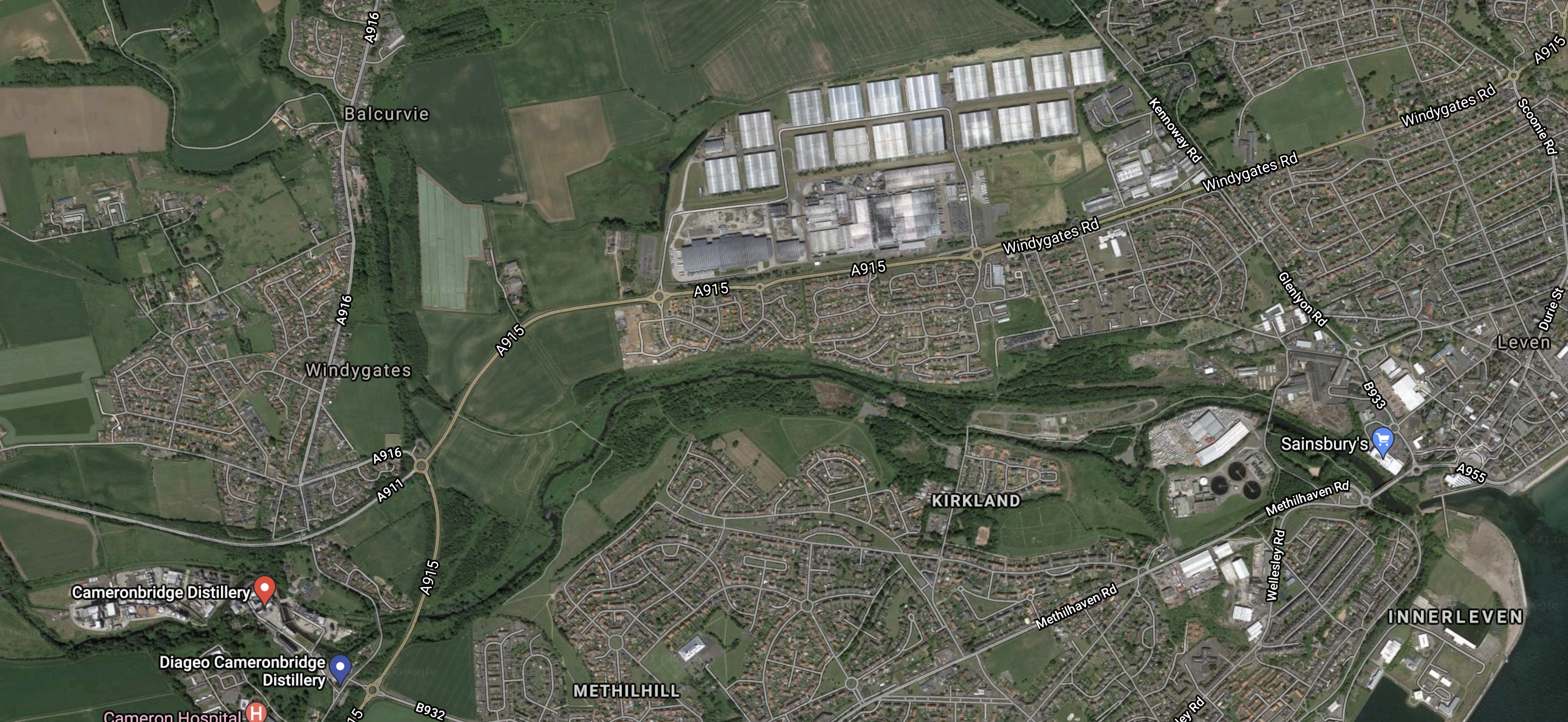
Note.
- The blue dot marking Sainsbury’s by the bew Leven station, by the mouth of the River Leven.
- The railway follows the river with Cameron Bridge station to the East of the A915 and the two Camero Bridge distilleries.
- The silver warehouses at the North side of the map are labelled Diageo Global Supply.
I wonder, if a siding can be provided for the distribution of products stored in the warehouses?
Companies are looking to lower their carbon-footprint and I wouldn’t be surprised, if Diageo were looking at rail distribution.
Modern Rail Freight Distribution
Companies are converting redundant electric multiple units into fast parcel delivery trains to replace diesel trucks.
- Typically, four-car trains are used.
- Trains have a 100 mph capability and can be 240 metres in length.
- Eversholt Rail Group are proposing adding battery power. This would be ideal to reach Cameron Bridge over the Forth Bridge.
These trains would be ideal for the delivery of Scotch Whisky.
They might even be capable of exporting product through the Channel Tunnel.
I don’t think the capacity of the Levenmouth Rail Link would be a problem, as it is a double-track railway, that can probably handle over four trains per hour and there is plenty of capacity for a number of freight trains.
Conclusion
I think freight will play a use in the future of the Levenmouth Rail Link.
Related Posts
The New Leven Station On The Levenmouth Rail Link
The New Cameron Bridge Station On The Levenmouth Rail Link
North From Thornton Junction
This Google Map shows how all the railways connect at Thornton junction.
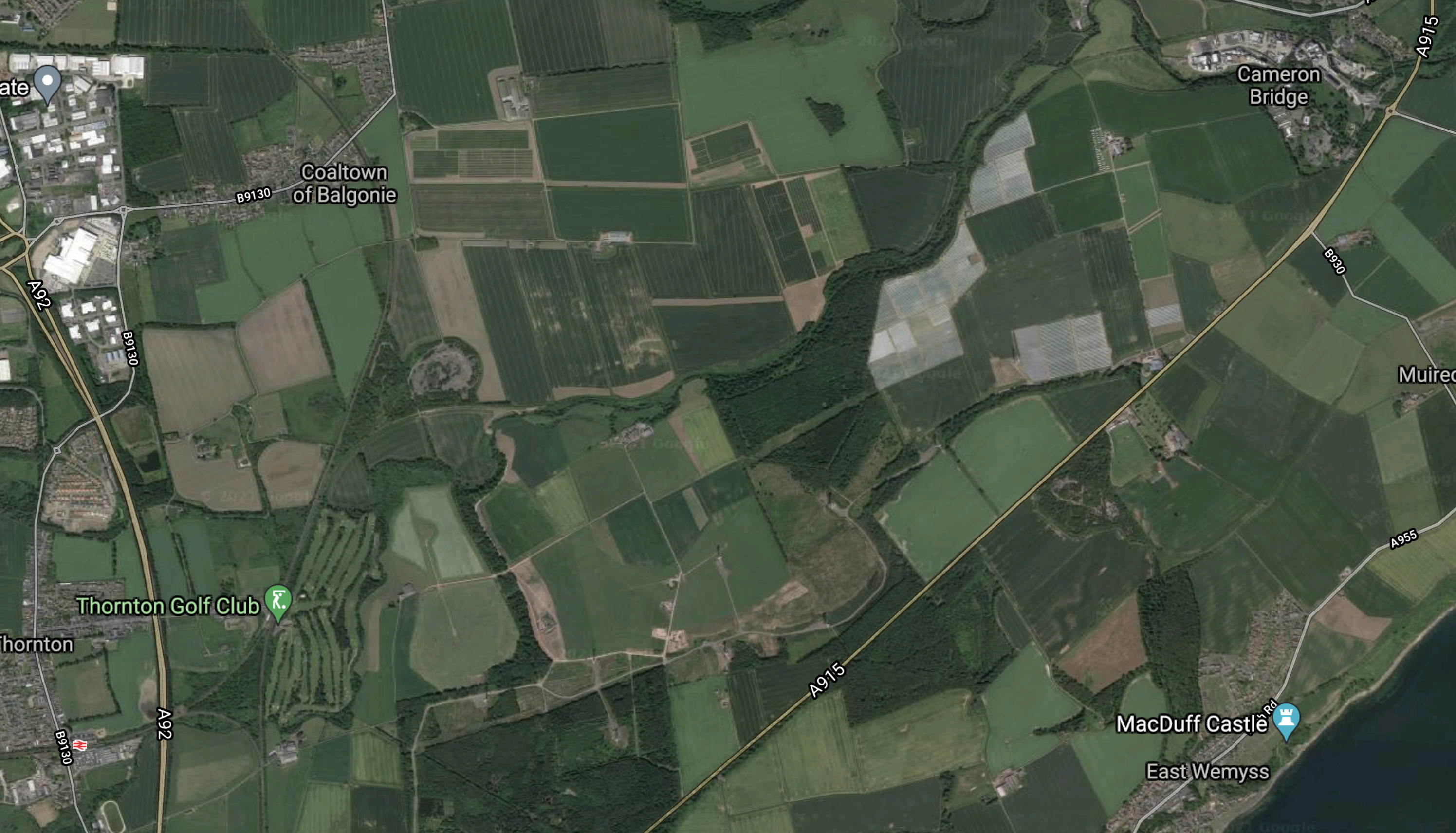
Note.
- The village of Cameron Bridge is in the North-East corner of the map.
- The A 915 running diagonally across the map and to the East of the village of Cameron Bridge.
- In The New Cameron Bridge Station On The Levenmouth Rail Link, I showed how Cameron Bridge station was positioned to the East of the A915 and the village.
- The Levenmouth Rail Link would appear to pass to the South of the village, according to a Network Rail map in the related post.
Thornton junction is a large triangular junction in the South-West corner of the map.
- Thornton North junction is close to Thornton Golf Club, which is shown by the green marker.
- Glenrothes with Thornton station is at the Eastern point of Thornton junction.
- Trains going West from Glenrothes with Thornton station go through Dunfermline and over the Forth bridge to Edinburgh.
- Thornton South junction is South of Thornton Golf Club and leads South through Kirkcaldy station and over the Forth bridge to Edinburgh.
This second Google Map shows the main Edinburgh and Dundee rail line between Thornton Golf Club (Thornton North junction) and Markinch station, which is the next station to the North.
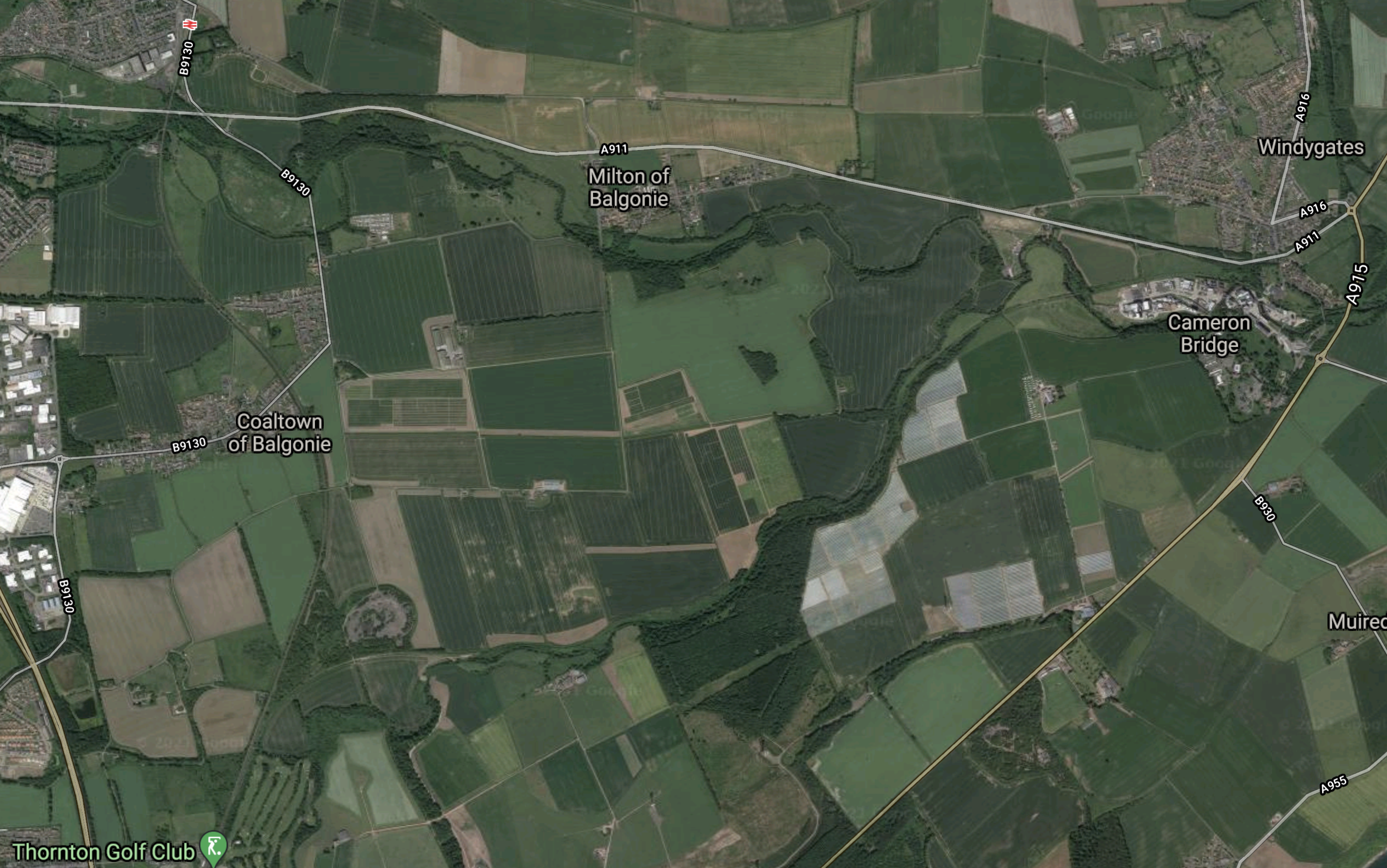
Note.
- The village of Cameron Bridge in the East of the map.
- Markinch station is in the North-West corner of the map.
- Thornton Golf Club (Thornton North junction) is in the South-West corner of the map.
Looking at various maps, Thornton Junction appears very complicated.
- The North-South leg of the junction is at least double-track.
- The North-East leg of the junction appears to be single-track.
- The South-East leg of the junction appears to be single-track.
- The former Levenmouth Rail Link appeared to join the main line at a single-track junction to the North of Thornton North junction
- There is lots of space.
.I’m sure Network Rail can come up with an efficient track layout, that will enable the following.
- Trains can go between Glenrothes with Thornton and Kirkcaldy stations in both directions, as they do now.
- Trains can go between Glenrothes with Thornton and Levenmouth Rail Link in both directions.
- Trains can go between Kirkcaldy station and Levenmouth Rail Link in both directions.
This would enable the service provision, that was specified in Service Provision On The Levenmouth Rail Link.
What Will Be Electrified At Thornton Junction?
This page on the Network Rail web site, says this about the trains that will run the service on the Levenmouth Rail Link.
And while the line will be electrified with overhead wires, services will be operated initially by battery electric units in order to reduce the number of diesels operating on the network as early as possible.
I wouldn’t be surprised to see full electrification between Glenrothes with Thornton and Leven stations, to make sure that the battery-electric trains had full batteries for the run South to Edinburgh.
- The other two legs of Thornton junction would also be fully electrified to give all passing trains a good charge.
- The distance between Kirkcaldy and Markinch stations is 7.3 miles and trains take about ten minutes. I suspect most of this section of the Edinburgh and Dundee line will be electrified. There looks to be about six overbridges that might need raising, but I suspect it would be nothing too terrible, with about the same degree of engineering difficulty as electrifying the Gospel Oak to Barking Line in London.
- I feel with good engineering and guile, enough electrification can be added to the route through Kirkcaldy to get the trains to the South.
- West of Glenrothes with Thornton station, the track looks to be good territory for electrification and enough wires can be added, so that by Cardenden station, there is enough power in the batteries to get the trains to the South.
I have a feeling that by intelligently using the two routes via Kirkcaldy and Dunfermline, Network Rail can increase the frequency of trains over the Forth Bridge.
- This probably partly explains, why trains to Leven go alternatively via Kirkcaldy and Dunfermline.
- 100 mph battery-electric trains help too with their sparkling acceleration.
- Who’d have thought, that at the age of one hundred and thirty, the Forth Bridge will be at the heart of an electrified local train network?
And the only new electrification is based on Thornton junction, over twenty miles to the North.
Electrification Between The Forth Bridge And Edinburgh
Without doubt, the electrification to the South of the Firth of Forth must reach as far North as possible.
Dalmeny station is the most Northerly station South of the bridge and I feel that this could be a practical place for the electrification to end.
Distances from Dalmeny to stations further North include.
- Leuchars – 41.4 miles
- Leven – via Dunfermline – 28.2 miles
- Leven – via Kirkcaldy – 27.3 miles
- Dundee – 48.8 miles
- Perth – 47.4 miles
All these destinations would be within range of Hitachi Regional Battery Trains, which are described in this Hitachi infographic.

Note that the range on battery power alone is 90 km or 56 miles.
Given that the battery-electric trains would be able to grab a battery charge as they passed through Thornton junction, I am fairly certain that Hitachi Regional Battery Trains could reach Leuchars, Dundee or Perth.
An Electric Service Between Edinburgh And Dundee
Dundee is a new station and I doubt, that it was rebuilt without provision for full electrification.
It has two through platforms for Aberdeen and Edinburgh services.
There are also two South-facing bay platforms for regional services from the South.
This picture shows the two bay platforms with an Edinburgh-bound train to the left.
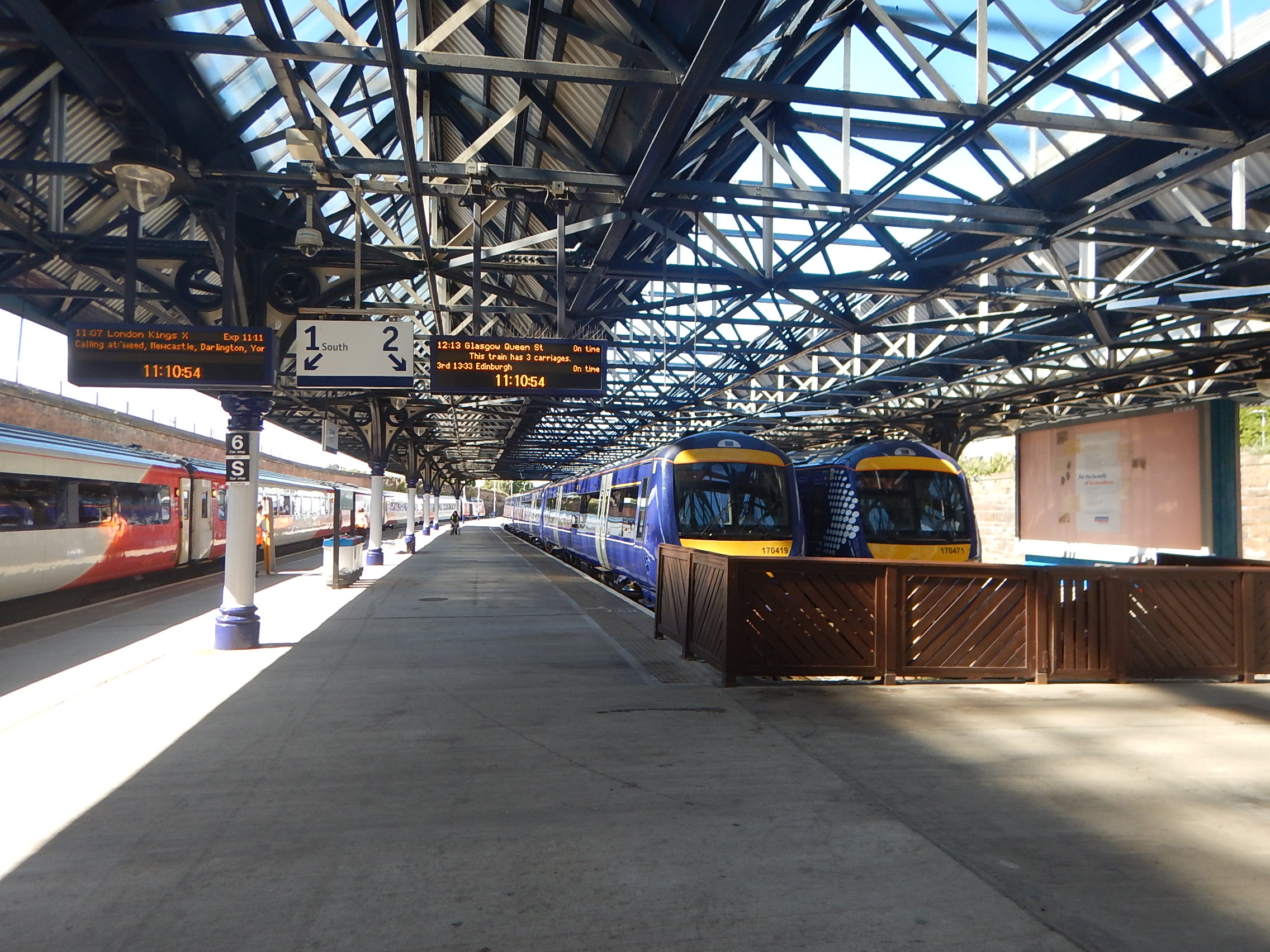
Note.
- In the picture the two Class 170 diesel trains will be going to Edinburgh or Glasgow.
- Scotrail’s plans include an hourly train to both of Edinburgh and Glasgow.
If these two bay platforms were electrified with 25 KVAC overhead wires, these battery-electric services will be possible.
- Edinburgh and Dundee via Haymarket, Kirkcaldy, Thornton junction and intermediate stations.
- Glasgow Queen Street and Dundee via Stirling, Dunblane, Perth, Gleneagles and intermediate stations.
I suspect other routes battery-electric will be possible.
An Electric Service Between Dundee And Aberdeen
The distance between Dundee and Aberdeen stations is 72 miles.
In Solving The Electrification Conundrum, I described techniques being developed by Hitachi Rail and Hitachi ABB Power Grids to electrify routes like Dundee and Aberdeen.
With Hitachi looking to give battery-electric trains a range of over forty miles, it could be just two hops between Dundee and Aberdeen.
I suspect Montrose could be the charging point, as it is forty miles South of Aberdeen.
Conclusion
It appears that the proposed electrification of Levenmouth Rail Link creates an electrification island at Thornton junction, that enables battery-electric trains to reach Dundee.
Coupled with plans to electrify between Stirling and Perth, this means that both Perth and Dundee will be connected to Scotland’s electrified rail network.
I suspect it is also possible to easily extend battery-electric trains all the way to Aberdeen, with only short sections of carefully positioned overhead wires.
Related Posts
The New Leven Station On The Levenmouth Rail Link
The New Cameron Bridge Station On The Levenmouth Rail Link
Service Provision On The Levenmouth Rail Link
Service Provision On The Levenmouth Rail Link
The reinstated Levenmouth Rail Link, will have two stations; Leven and Cameron Bridge.
According to this section in Wikipedia, which is entitled Service Provision, this will be the service.
The expected level of services is two trains per hour between Leven railway station and Edinburgh Waverley. Both will call at Cameron Bridge. One train will travel via Kirkcaldy and along the coast, while the other train will travel via Dunfermline along the inner Fife Circle Line.
In the Wikipedia entry for Leven station, it says that the service will take just over an hour.
Consider.
- Services between Edinburgh and Glenrothes with Thornton take about an hour whether the go via Kirkcaldy or Dunfermline.
- The current timings are based on Class 158 or Class 170 diesel trains.
- If as I surmise in Trains On The Levenmouth Rail Link, the trains are battery-electric Class 385 trains, these trains with their electric power will at least match the schedules of the diesel trains.
- Network Rail will design the track layout at Thornton junction, so that trains will clear the junction efficiently.
- Glenrothes with Thornton station is only half a mile from Thornton Junction.
- Leven station is only 5.9 miles from Thornton Junction.
I can see battery-electric trains moving smoothly and quietly up and down the Levenmouth Rail Line and around Thornton junction to provide a very efficient service to Edinburgh.
Could we even see trains from Edinburgh take this route?
Edinburgh, Haymarket, Edinburgh Gateway, Dalmeny, North Queensferry, Inverkeithing, Dalgety Bay, Aberdour, Burntisland, Kinghorn, Kirkaldy, Cameron Bridge, Leven, Cameron Bridge, Glenrothes with Thornton, Cardenden, Lochgelly, Cowdenbeath, Queen Margaret, Dunfermline, Dunfermline Town, Rosyth, Inverkeithing, North Queensferry, Dalmeny, Edinburgh Gateway and Haymarket.
Note.
- A second service would run in the opposite direction.
- Trains would reverse and the drivers would change cabs at Leven station.
- Trains would charge batteries on the Levenmouth Rail Link and at Edinburgh.
- Every station on the route would get two trains per hour (tph) in both directions.
The hourly service between Edinburgh and Cowdenbeath could continue.
The Bridges Across The Firth Of Forth
There would be a battery-electric train every thirty minutes in both directions across the Forth Bridge.
This Google Map shows the three bridges across the Firth of Forth.
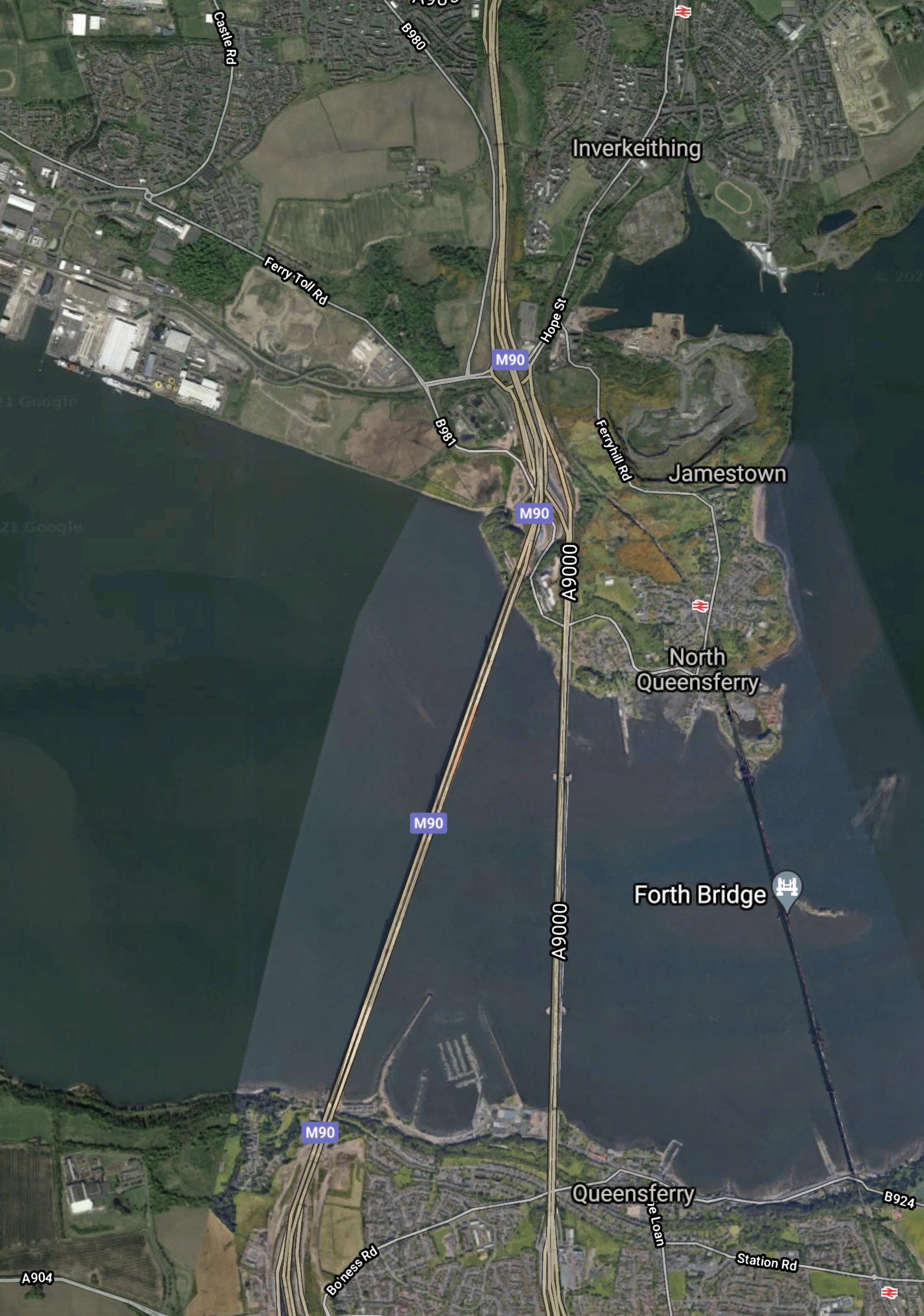
Note.
- The most Westerly bridge is the Queensferry Crossing, which carries the M90 and was opened in 2017.
- The bridge in the middle is Forth Road Bridge, which opened in 1964.
- The Forth Bridge is the most Easterly bridge and it opened in 1890.
- North Queensberry station is to the North of the bridge and Dalmeny is to the South.
After opening of the Levenmouth Rail Link, there could be a battery-electric train every thirty minutes in both directions across the Forth Bridge.
This sounds like an opportunity to develop the bridge with its battery trains as a tourist attraction.
Battery-electric trains could run from Edinburgh to the following places.
- Dundee
- Perth
- St. Andrews
And that’s just for starters.
Conclusion
There is a lot more to the Levenmouth Rail Link, than just a double-track railway to Leven, as it enables so much.
Related Posts
The New Leven Station On The Levenmouth Rail Link
The New Cameronbridge Station On The Levenmouth Rail Link
Trains On The Levenmouth Rail Link
Trains On The Levenmouth Rail Link
This page on the Network Rail web site, says this about the trains that will run the service.
And while the line will be electrified with overhead wires, services will be operated initially by battery electric units in order to reduce the number of diesels operating on the network as early as possible.
The obvious battery-electric trains to be used will be Hitachi Regional Battery Trains, which are described in this Hitachi infographic.
Note that the range on battery power alone is 90 km or 56 miles.
ScotRail currently run a fleet of the following Hitachi trains.
- 46 x three-car Class 385 trains.
- 24 x four-car Class 385 trains.
Hitachi have indicated that these trains can be fitted with batteries
Could some of these trains be fitted with batteries to work the Fife Circle Line and the Levenmouth Rail Link?
Distances involved include.
- Haymarket and Glenrothes-with-Thornton via Kirkcaldy – 29.6 miles
- Haymarket and Glenrothes-with-Thornton via Dunfermline – 30.5 miles
- Leven and Thornton junction – 5.9 miles
If between Haymarket and Dalmeny stations were to be electrified, this would reduce distances on battery power by over eight miles.
It would appear that if between Leven station and Thornton junction were to be electrified, then with a battery range of forty miles, the battery-electric trains could reach Haymarket station with ease.
Conclusion
It looks to me, that Baldrick’s Scottish cousin has developed a cunning plan!
But it does show how one short length of easy electrification on a new track – Leven and Thornton Junction, can avoid a more difficult electrification – Haymarket and Glenrothes-with-Thornton, which goes over the culturally-sensitive World Heritage Site of the Forth Bridge.
North From Thornton Junction
It should be noted that Haymarket and Dundee via Kirkcaldy is 57.9 miles.
- I have just flown my virtual helicopter on the route and much of it is flat farmland.
- Electrification to the North of Thornton Junction could use the same power feed as that used for the Levenmouth Rail Link.
- A good proportion of the battery-electric trains, that are pencilled in for Edinburgh and Aberdeen have been or will be built by Hitachi.
I would expect that Hitachi’s techniques, that I talked about in Solving The Electrification Conundrum could be used to enable battery-electric Class 385 and Class 80x trains to run between Edinburgh and Dundee.
I have a feeling, that electrifying the Levenmouth Rail Link, may only be 5.9 miles of double-track electrification, but that with a few miles of electrification North of Thornton Junction, it can enable electric trains to run the following routes.
- Edinburgh and Leven via Kirkcaldy.
- Edinburgh and Leven via Dunfermline.
- Edinburgh and Dundee
- Edinburgh and Perth
Note that as Dunblane is electrified, battery-electric trains might be able to reach Dundee from Glasgow with some charging at Perth.
It does appear that electric trains could be serving Dundee.
Related Posts
The New Leven Station On The Levenmouth Rail Link
The New Cameron Bridge Station On The Levenmouth Rail Link
Service Provision On The Levenmouth Rail Link
The New Cameron Bridge Station On The Levenmouth Rail Link
The reinstated Levenmouth Rail Link, will have two stations; Leven and Cameron Bridge.
This Google Map shows the River Leven and the remains of the old railway as they run West from Leven.
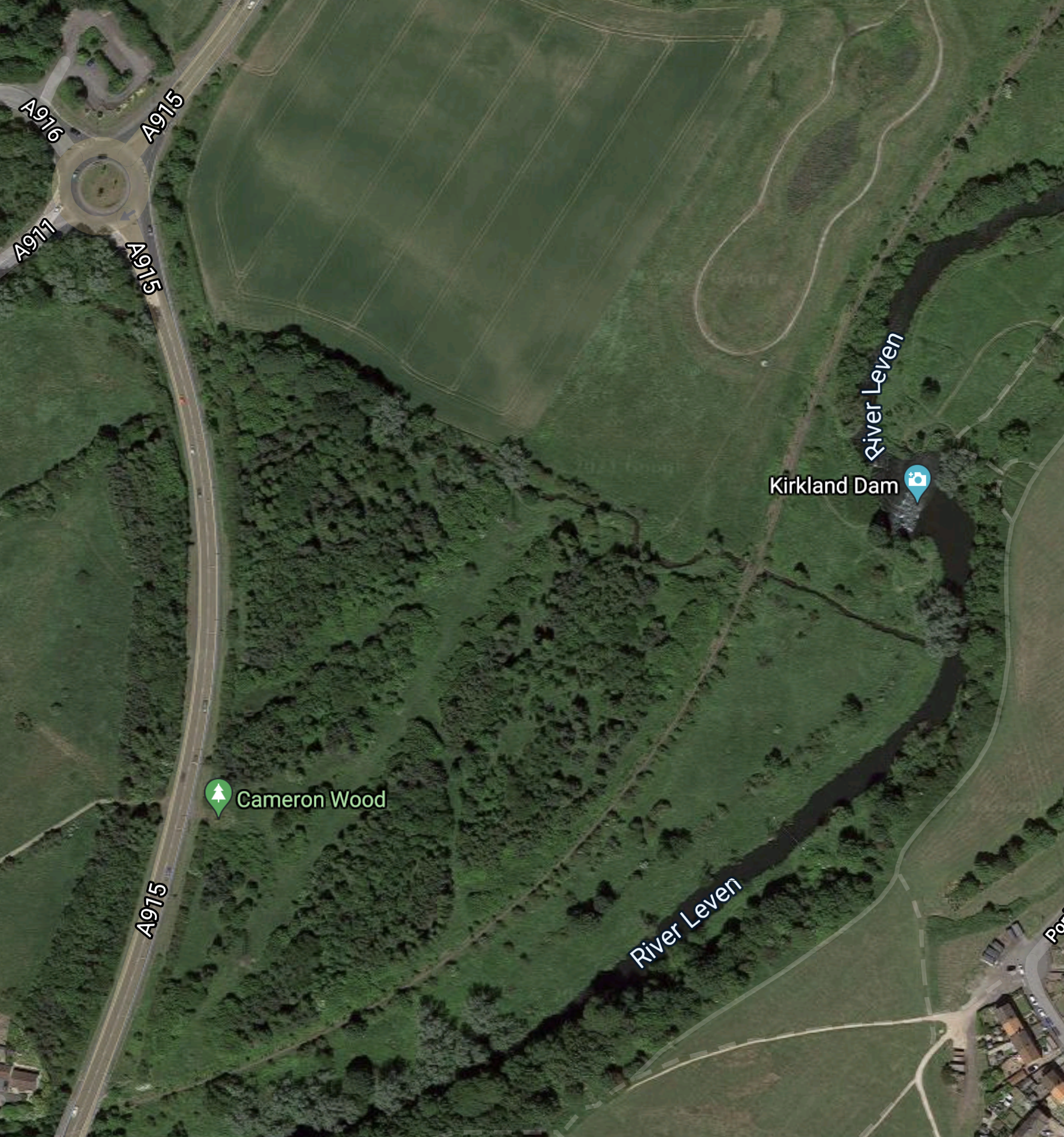
Note.
The River Leven runs South-West to North-East across the map.
The track of the old rail link runs towards Leven along the North Bank of the river.
This Map from this page on the Network Rail web site, shows the location of the new Cameron Bridge station.
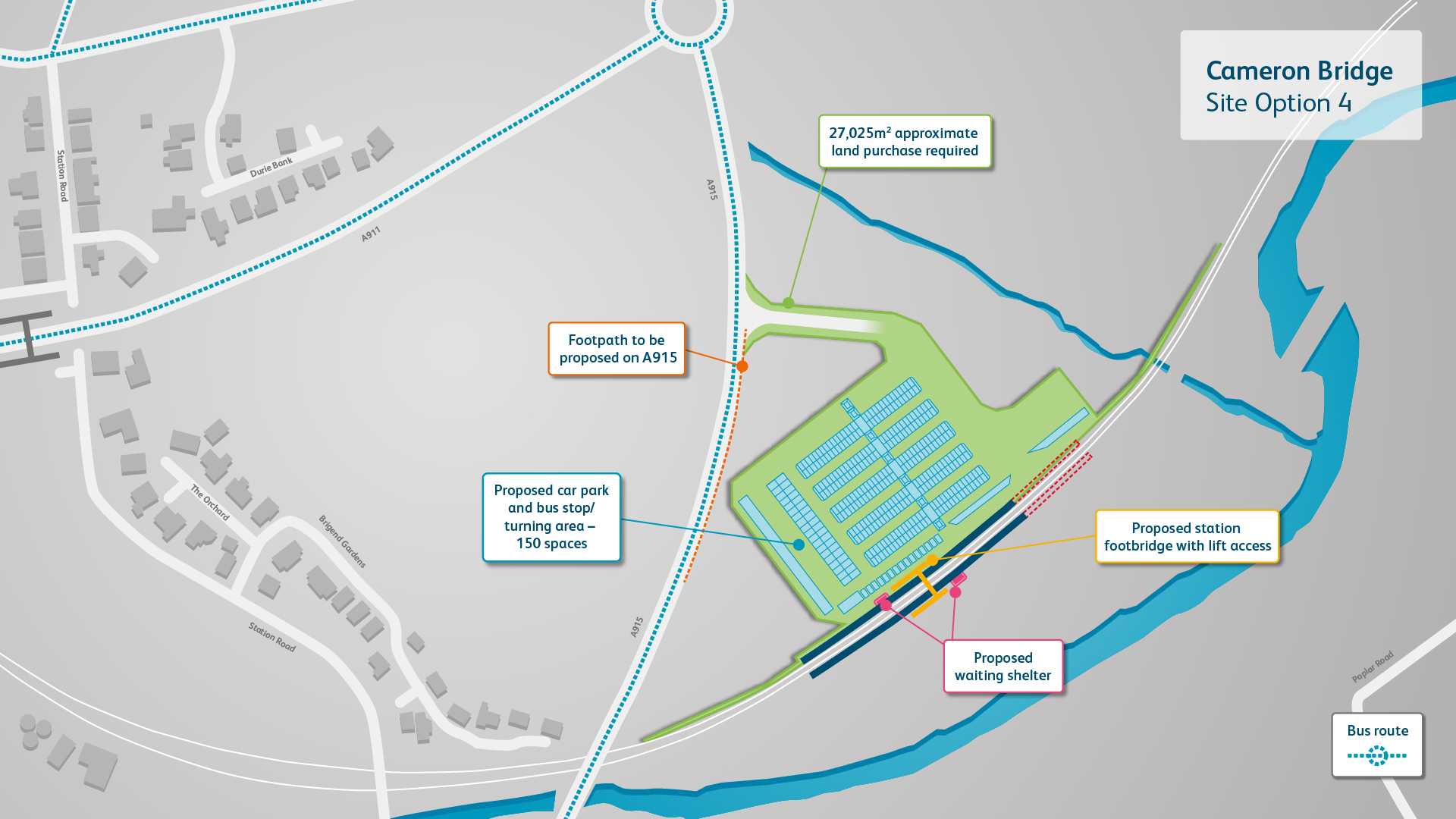
Note.
- The station will be to the East of the A915 road.
- Cameron Bridge station will have two platforms.station has two platforms.
- There will be 150 car parking spaces.
- There is space for a bus stop and turning area.
- There will be two waiting shelters.
- The platforms look like they could be extended if needed.
Unlike Leven station, there will be a bridge with lifts for passengers.
Related Posts
The New Leven Station On The Levenmouth Rail Link
Service Provision On The Levenmouth Rail Link
Trains On The Levenmouth Rail Link
The New Leven Station On The Levenmouth Rail Link
The reinstated Levenmouth Rail Link, will have two stations; Leven and Cameron Bridge.
This Google Map shows the mouth the the River Leven.
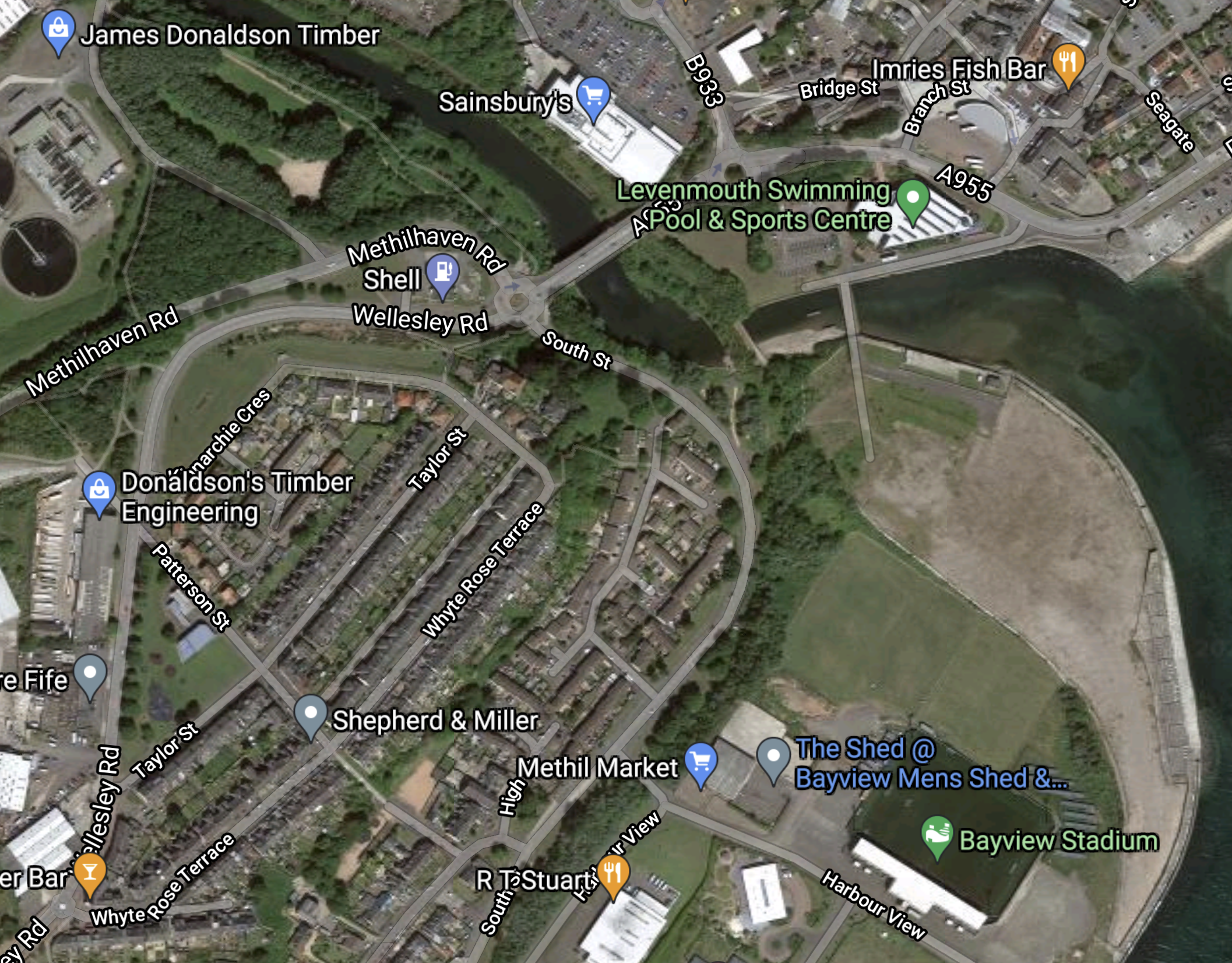
The key point to note is the Sainsbury’s supermarket, which is to the North of the Riven Leven, close to the A955 bridge across the river.
This Map from this page on the Network Rail web site, shows the location of the new Leven station.
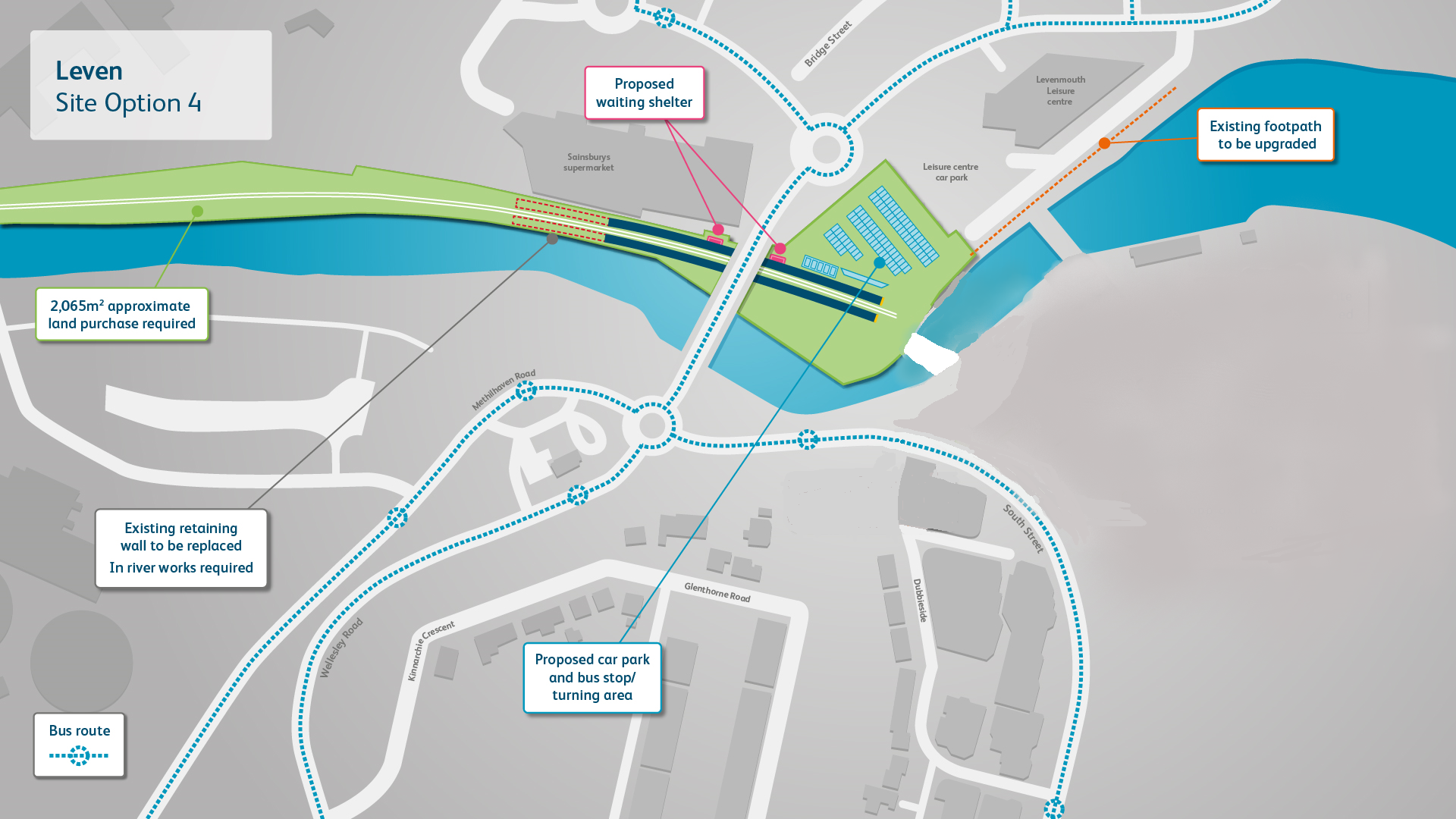
Note.
- Leven station has two platforms.
- There is a car park.
- There is space for a bus stop and turning area.
- There are two waiting shelters, both on the same platform
- The platforms look like they could be extended if needed.
It appears that passengers will cross the line by walking past the end of the line.
This map shows a close-up of the bridge over the River Leven.
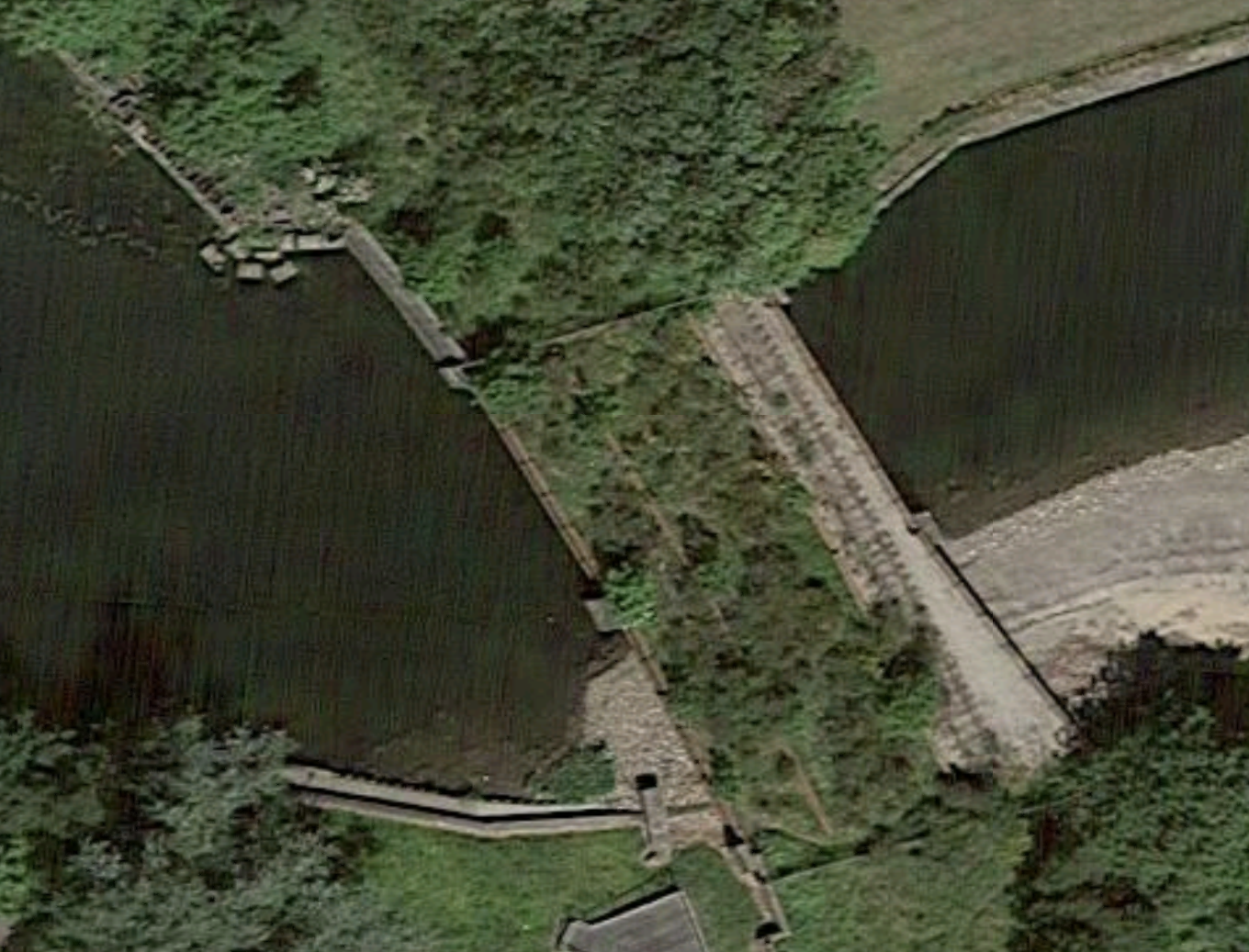
It used to connect the railway to the coal-fired Methil power station.
Some of the track is still visible.
Is provision being made in the design of Leven station, so that the rail link can be extended across the River Leven to a second station near the Bayview stadium or to allow the development of housing or industrial sites along the Forth of Firth?
Conclusion
It looks to be a good scheme, which connects to the centre of the town and could be developed with bus and walking links for onward travel.
Related Posts
The New Cameron Bridge Station On The Levenmouth Rail Link
Service Provision On The Levenmouth Rail Link
Air Products, Cummins To Accelerate Hydrogen Integration In Fuel Cells Trucks
The title of this post, is the same as that of this article on H2 View.
This is the first two paragraphs of the article.
Air Products and Cummins jointly announced the signing of a memorandum of understanding today (July 26) to work together to accelerate the integration of hydrogen fuel cell trucks around the world.
Cummins is expected to provide hydrogen fuel cell electric powertrains integrated into selected OEM partners’ heavy-duty trucks for Air Products, as the company begins the conversion of its global fleet of distribution vehicles to hydrogen.
Note.
- In 2020, Air Products had a turnover of nearly $9 billion.
- Air Products used to provide the liquid hydrogen and liquid oxygen for the Space Shuttle.
- According to Wikipedia, Air Products have a good Environmental Record.
- In 2020, Cummins had a turnover of nearly $20 billion.
- Cummins have been reported to be testing hydrogen-fueled internal combustion engines.
Have two of the biggest beasts joined together to exploit they technology, by initially developing hydrogen-powered trucks for Air Products global distribution?
To my mind, this could be a deal to watch.
- Cummins have both the fuel cell development and manufacture. under their control.
- Air Products have the production of the hydrogen under their own control.
- Hydrogenics, who Cummins took over in 2019, are manufacturers of both fuel cells and electrolysers.
Wrapped round it all are two of America’s largest companies, who trade globally.
But what better way is there to demonstrate hydrogen-powered trucks is there, than to use them to distribute your own products?
ORR Authorises Merseyrail ‘777s’
The title of this post, is the same as that of this article on Rail Magazine.
This is the first paragraph.
Merseyrail’s 52 Class 777 trains have been authorised for passenger use by the Office of Rail and Road.
I can’t wait to get up to Liverpool to have a ride.
But it will be a few weeks yet!
On the other hand, these trains will be as valuable to Merseyside as Crossrail will be to London.
First Passenger Journey In The UK With mtu Hybrid PowerPack
The title of this post, is the same as that of this press release from Rolls-Royce.
This is the first paragraph.
The mtu Hybrid-PowerPack has passed another milestone successfully: In the UK, a train with mtu hybrid drive carried passengers for the first time as part of a special journey.
So how did mtu, a German manufacturer of large diesel engines for trains and ships, end up in bed with Rolls-Royce?
Wikipedia says this.
MTU Friedrichshafen remained a subsidiary of DaimlerChrysler until 2006 when it was sold off to the EQT IV private equity fund, becoming a part of the Tognum Corporation.
Rolls-Royce Holdings and Daimler AG acquired Tognum in 2011. In 2014, Tognum was renamed Rolls-Royce Power Systems, having become a 100 per cent subsidiary of Rolls-Royce Holdings.
A bit tortuous, to say the least!
This paragraph from the press release describes the journey.
The journey of the train – called HybridFLEX – was part of celebrations to mark the 25th anniversary of UK rail operator Chiltern Railways, which will use the train on its routes. It is a converted Turbostar DMU, which was previously equipped with a conventional mtu drive system.
It doesn’t sound very special, but it’s the equivalent of taking your BMW, Jaguar or Mercedes from twenty years ago and converting it to a full hybrid car with batteries, to assist the diesel engine.
Fuel and emission savings of 25 per cent are claimed, with the additional benefit that the train will not use the diesel engines in stations or sensitive areas.
In HybridFLEX Battery-Diesel Train Continues Programme Of Testing, I said this.
In the UK, the following diesel multiple units are fitted with modern MTU engines and could be candidates from a replacement power pack.
-
- Class 168 train – 19 trains – 82 diesel engines
- Class 170 train – 136 trains – 350 diesel engines
- Class 171 train – 20 trains – 56 diesel engines
- Class 172 train – 39 trains – 93 diesel engines
- Class 195 train – 58 trains – 149 diesel engines
- Class 196 train – 26 trains – 80 diesel engines
- Class 197 train – 77 trains – 180 diesel engines
That is a total of 990 diesel engines.
As some of the Class 196 and Class 197 trains have yet to be delivered, I do wonder, if it would be sensible to deliver them as diesel-battery hybrid trains.
That is a lot of diesel engines, that could be replaced by MTU Hybrid Power Packs.
Conversions of other trains are also ongoing in Germany and Ireland.
This article from Rolls-Royce, is entitled Hybrid Train Trials and gives a lot more details.
This is a quote from the article on fuel savings.
A fuel saving of 15 per cent is a
fantastic result and means that under
optimum conditions, 20 to 25
per cent should be possible.
The savings certainly fit with Chiltern’s findings.
I have a few questions.
Can Locomotive Size PowerPacks Be Built?
As an engineer, I don’t see why not!
And there is certainly a need for them to cut diesel usage and carbon emissions with locomotives.
Conclusion
These conversions could be a very good interim solution.
Zhengzhou Henan: Chest-High Flooding Hits China Trains And Roads
The title of this post, is the same as that of this article on the the BBC.
This is the first two paragraphs.
Roads and subway stations have been submerged across China’s Henan province as heavy rain has brought severe floods.
One region in Henan has recorded 40cm (15 inches) of rainfall. In Zhengzhou, the city’s entire subway system was forced to close.
I feel sorry for those that died and their friends and families, not only for their loses, but also because they will have probably no say in the stopping of building of hundreds of coal-fired power station, which are certainly one of the factors in all the extreme weather around the world.
Let’s hope at COP26, if the Chinese turn up, other nations make the point that their pro-global warming policies are killing their own people.
 The Anonymous Widower