SBB To Sell Bitcoin
The title of this post is the same as that of an article in Global Rail News.
If you don’t know; SBB stands for Swiss Federal Railways.
It’s an interesting development to say the least!
Especially, when you read the last paragraph.
And you can’t buy SBB train tickets using your shiny new currency, it isn’t an accepted payment method by SBB.
I wonder how long it will be before, I can buy and use bitcoin on a UK rail station?
The Eurostar Platforms At Waterloo Station Are Being Brought Back Into Use
When travelling to Shepperton, I walked from Waterloo East station to the balcony at Waterloo station.
You get a good view of the disused Eurostar plaforms, which are being brought back into use.

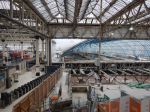

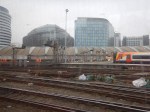
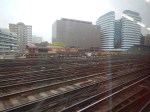
I also took a few as my train left the station.
At least this monument to bad planning of the Channel Tunnel Rail Link, is being put to a laudable use of providing more capacity at Waterloo.
There’s some more pictures from before the work started in Waterloo’s Blue Elephant.
Exploring The Shepperton Branch Line
The Shepperton Branch Line could be incorporated into Crosssrail 2, so when I went to Fulwell station to look at the drainage works, I looked at the rest of the branch.
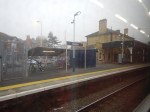











I’ve separated my thoughts into sections.
Fulwell Station
The pictures I took at Fulwell station, are shown separately in Fulwell Station And The Drainage Works.
It is very much a simple suburban station, but because it is next to Fulwell bus garage, it appears to be well served by buses.
Shepperton Station
Shepperton station wasn’t intended to be the terminus of the branch. Wikipedia talks of original plans crossing the Thames, to the East of Chertsey Bridge, but this plan was abandoned in 1862.
Looking at maps, there wouldn’t be any space between the houses to extend the line, over a 150 years later.

Around Shepperton Station
The station is South of the well-marked Sunbury Golf Course.
It is in some ways, a curious mix.
- A long single platform.
- No toilets, coupled with none on the trains.
- Not a great deal of car parking.
- Services for the passengers are only minimal.
- Although only one train per hour runs on Sundays, the single line branch can handle more.
But it has a large modern station building.
I needed the toilet, so I went round the corner to a Costa and had a coffee and did my business.
Kempton Park Station
Kempton Park station is not one of the best on the line.
I would suspect that the racecourse would welcome this station being on Crossrail 2.
Crossrail 2
If Crossrail 2 comes to the Shepperton Branch Line, it will have effects on the line its stations and the surrounding area.
This document on the TfL web site is entitled Crossrail 2 factsheet: Services between Norbiton, Kingston and Shepperton, gives details.
This is said.
On the Shepperton branch up to 8 trains per hour, in each direction, would serve Norbiton, Kingston and Hampton Wick stations. 4 trains per hour, in each direction, would run west of Hampton Wick to Shepperton, calling at all stations.
The delivery of Crossrail 2 will be accompanied by station improvement work at a number of locations, including platform work and the installation of new lifts or ramps where there is currently no step-free access.
It is also proposed that a second platform at Shepperton station is provided.
Obviously, with up to eight trains an hour (8 tph) in each direction, there will need to be a second platform at Shepperton station.
This Google Map shows the station area in detail.
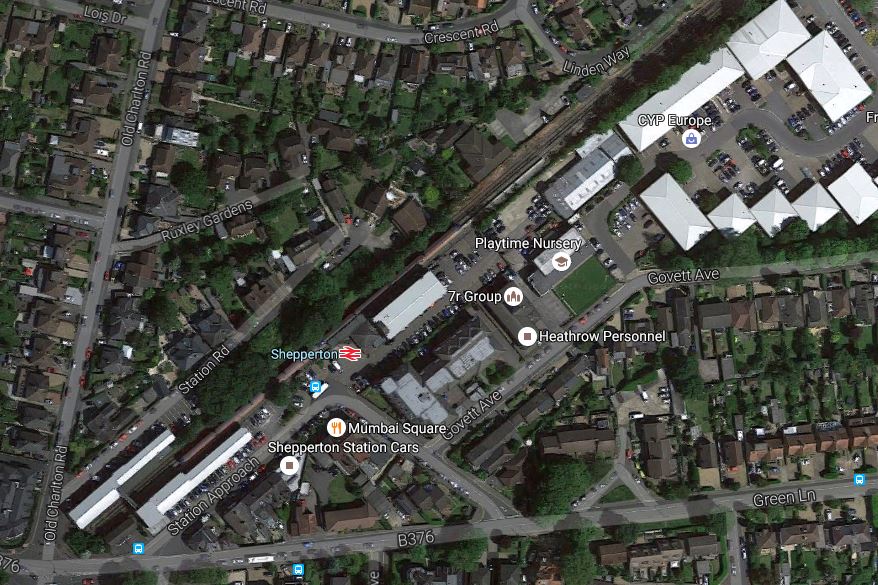
Shepperton Station
Note.
- The White-roofed building to the North-East of the station symbol, is the new station building.
- The station will get four tph of 1500-capacity Crossrail, with perhap 2 tph going to Waterloo in the Peak.
- A second platform could be a tight fit, but it is probably possible.
Some will argue, that Shepperton, doesn’t need this massive increase in capacity.
,There would appear to be few places on the Shepperton Branch to reverse the trains.
This Google Map shows.Teddington station.
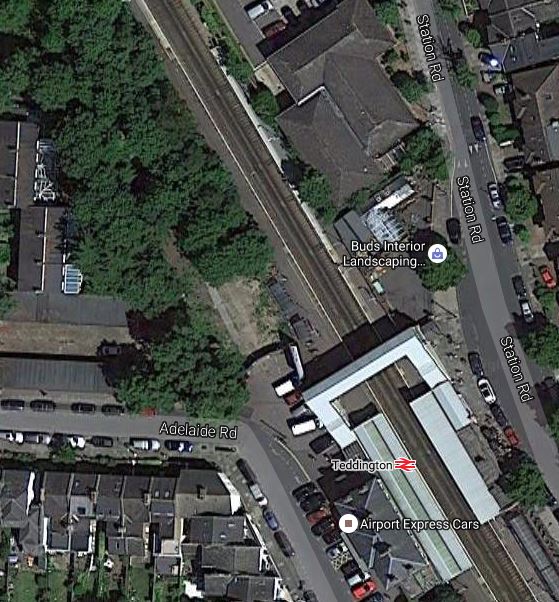
Teddington Station
A rebuilt or remodelled Teddington station would be a serious possibility.
- The station has some space.
- A reversing siding or a bay platform could be squeezed in.
- The trains could also use a siding at Strawberry Hill Depot to reverse.
- Reversing 4 tph could probably be easily handled at Teddington.
The Wikipedia entry for Crossrail 2, says this.
Shared use of the Shepperton Branch Line with 6-8 train per hour to Teddington and 4 trains per hour to Shepperton.
So perhaps to Crossrail 2, using Teddington station is more than a possibility.
Crossrail 2’s biggest problem on this line is not the trains or stations, but the level crossing at New Malden, that I wrote about in A Very Bad Level Crossing Problem.
Fulwell Station And The Drainage Works
On my way back to Waterloo on the Shepperton Branch Line, I just had to visit Fulwell station and the drainage work, I wrote about in If Your Train Is Late Should You Blame Henry The Eighth?.
I took these pictures.
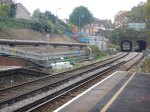

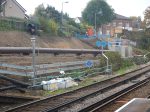
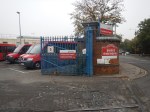


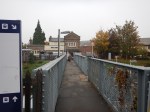

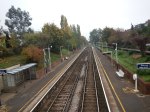
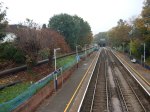
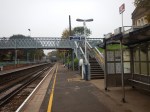
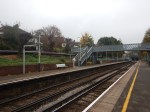
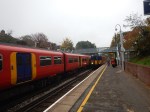






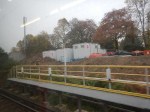
It is a substantial piece of engineering.
- The water is collected from the area of the tunnel into a large tank on the station side of the tunnel.
- The water is then pumped to the lagoons at Fulwell Junction.
- When there is available capacity, the water is drained away, using the drains under the Kingston Loop Line through Teddington.
- The electricity requirement was high and required a separate supply and sub-station.
- The pipework isn’t small.
According to this press release from Network Rail, the works are costing £6 million. This picture of flooding at Fulwell station is from the document.
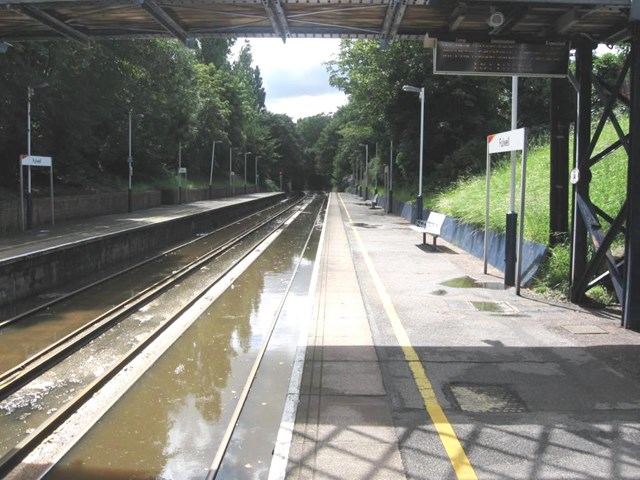
Flooding At Fulwell
This map from carto.metro.free.fr, shows the lines in the area.
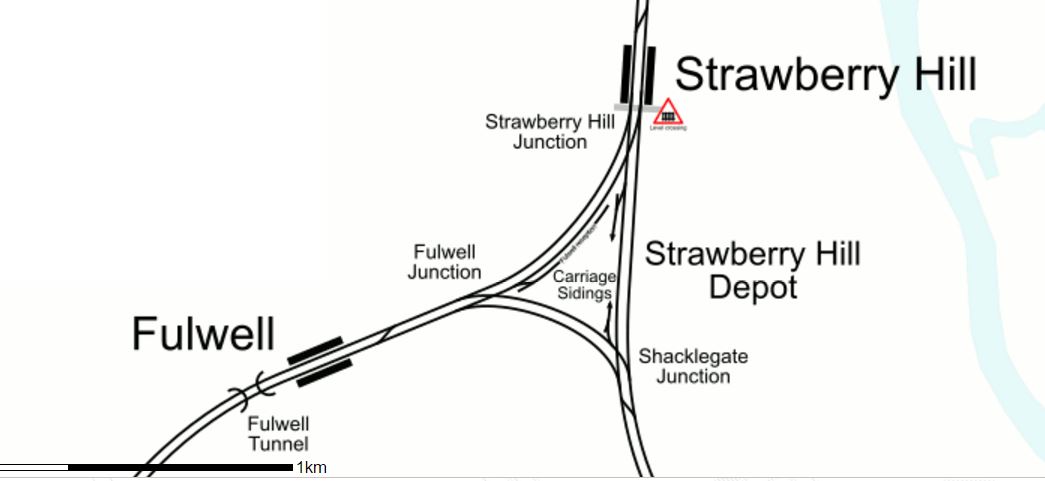
Lines At Fulwell Station
I heard comments like these, from several of the locals.
- The flooding has been terrible at times in recent years.
- If the works cure the flooding they’ll be very pleased.
- They’ll be glad to get the footpath reopened.
- But I didn’t hear any complaints of too much noise.
It does seem to me, that a November 2016 completion date could be possible.
If you were an engineer working on this project, would you want a dry winter or a very bad one, to give the system the sternest test, the Devil can devise?
Final Thoughts
I suppose the only other thing that could be to clean the water and use it for watering one of the golf courses in the area. But probably the cost of the treatment plant, which would be something like the Old Ford Water Recycling Plant, would be too much.
As to hiding or burying the pipe, I suspect that there is a plan for this, possibly using nature’s camouflage and/or lots of soil.
The station is also a good example of traditional cable ducting, but the design probably predates the system I wrote about in Keeping Your Wiring Tidy.
I’ll go back in a couple of years and have a take a butcher’s.
Hopefully, it will still look like a job that has been well done!
Using Southern Crossrail Lite
On my trip to Shepperton today, I went from and to Waterloo station for the Shepperton Branch Line.
For both journeys, I used the route between London Bridge and Waterloo East stations, that some want to use as part of Southern Crossrail.
Going to Waterloo, I started at Farringdon, and this waan’t a good place to start, as I didn’t have a clue to the best way and neither did the London Underground staff.
So I took the Metropolitan to Moorgate and hopped South on the Northern Line to London Bridge, from where I had three routes.
- Jubilee Line
- Train from London to Waterloo East.
- Bus
At a pinch, I could walk along the Embankment
I suspect that when Crossrail and Thameslink are fully open, there will be a better route, between Farringdon and Waterloo.
- Crossrail to Paddington, then Bakerloo Line to Waterloo.
- Crossrail to Tottenham Court Road, then Northern Line to Waterloo.
- Thameslink to London Bridge, then train to Waterloo East.
As a special Crossrail-Bakerloo pedestrian tunnel is being built at Paddington, that may be the best way. I wrote about this in Paddington Is Operational Again.
My route to Waterloo worked today, as did the route home after a raid on the excellent Marks and Spencer at Waterloo. The only problem was that a 141 bus to my house, had broken down and I had to wait at London Bridge.
I tend to use a 141 bus to and fropm London Bridge, as one stop is in the forecourt of the station and the other is less than a hundred metres from my house.
So how could this abbreviated Southern Crossrail Lite route be improved?
- The London Bridge end works well, as generally all trains for Waterloo East station turn up on Platforms 8 or 9, which are the two sides of the same island.
- Only one up escalator at London Bridge was available and I have a feeling, there could be a bit of a reliability issue.
- I used a lift to go down coming back, to avoid walking to the escalator, and the lift was the sort of size the Victorians used because escalators weren’t in common use until later.
- The lift was certainly big enough for a cricket team and all their kit.
- There needs to be better connection between main line and Underground at London Bridge. I suspect this will get better, as more of the station opens.
- For this route four trains per hour, as you get on a Sunday, aren’t enough.
- At Waterloo East, the walking route could be improved.
- Waterloo East needs a Next Train To London Bridge Indicator.
- Waterloo has twin up and down escalators between the main concourse and the walking route, which is more than enough. Especially, as they were all working!
But I did notice several passengers used the route from London Bridge to Waterloo East stations, including at least two couples with children in pushchairs.
This new Southern Crossrail Lite is going to prove an invaluable alternative to the Jubilee Line.
Smithfield’s Iceberg
One Central London Crossrail station, that doesn’t seem to make the headlines is Farringdon station.
This article on bdonline.co.uk is entitled Crossrail prompts Farringdon makeover plans, brought the station into my mind.
Like some other Crossrail stations, Farringdon is a long double-ended station, stretching almost from Barbican station to the current Farringdon station, where Thameslink and the Sub-Surface Lines cross.
Wikipedia says this about Crossrail development at the station.
The Farringdon Crossrail station is being built between Farringdon and Barbican Underground stations and it will have interchanges with both of them.[19] Access at the Farringdon end will be via the new Thameslink ticket hall. Work is anticipated to be completed in 2018. Crossrail will link Farringdon to London City Airport and London Heathrow Airport, the Olympic Park in Stratford, Canary Wharf, Bond Street and Oxford Street, and Maidenhead in the west and Shenfield in the east. The station will also be a hub for cross-London travel, being the only station to be on both the north-south Thameslink service and the east-west Crossrail service.
This Google Map shows the area.
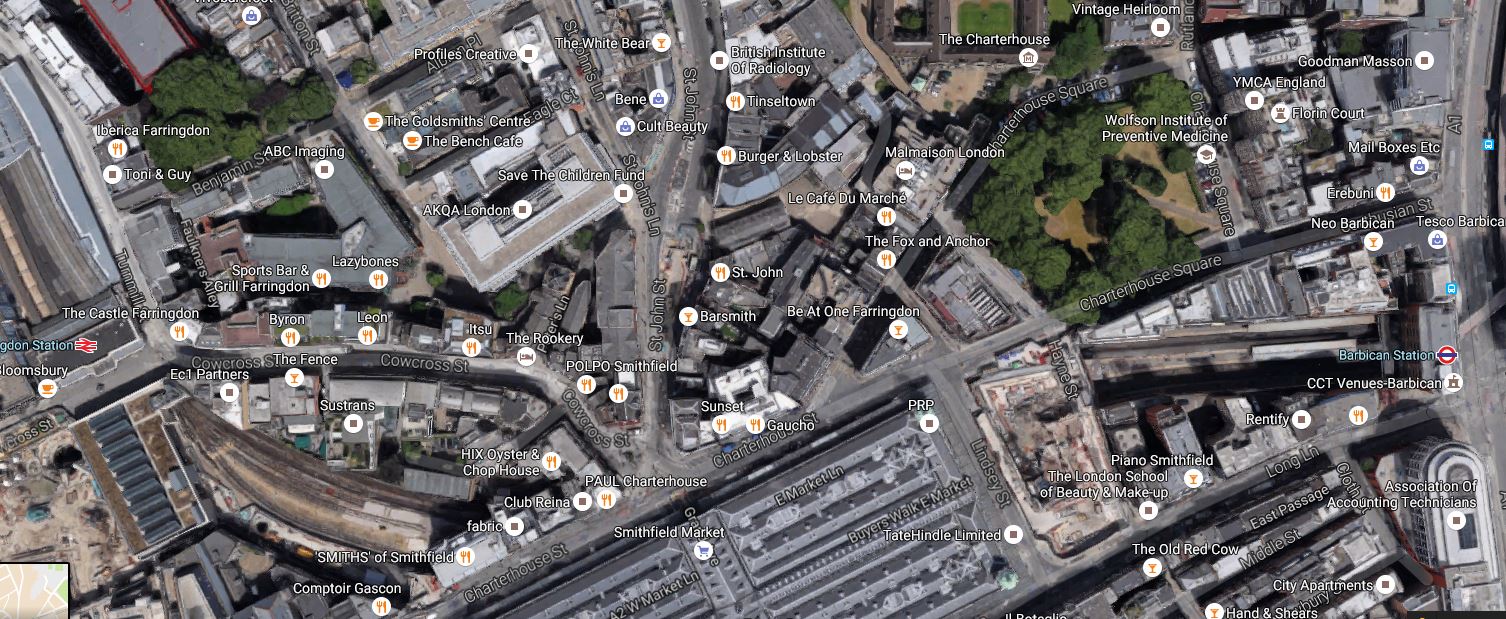
farringdon And Barbican Stations
Station Entrances
There would appear to be station entrances in Long Lane at the Barbican end and Cowcross Street at the Farringdon end, according to this page on the City of London web site, which contains these details of Farringdon station.
The station will include two ticket halls. The eastern hall will be located within the City at Lindsey Street and the western hall (shared with Thameslink, and which opened in December 2011) is be located at Cowcross Street in the London Borough of Islington. The eastern ticket hall will also provide a second entrance to London Underground’s Barbican station.
The entrance to the eastern ticket hall will be via a double height space, occupying most of the frontage on Long Lane and part of the frontage on Lindsey Street. The remaining frontage will be formed by future over-site development. Part of the frontage is also required for the discharge of Smithfield Market car park ventilation and escape stair.
Access to the platforms will be by means of escalators and there will be a number of lifts to provide step-free access to the Crossrail platforms and the London Underground platforms at Barbican station.
Preliminary discussions have commenced with Crossrail about the need for complementary measures such as improved crossing facilities and streetscape improvements to handle the projected increase in pedestrians in this area when the station opens. Crossrail have been advised that the over-site development will have to complement the settings of the listed market buildings and the Smithfield Conservation Area.
Rail Lines
It is interesting to look at this map of the rail lines through Farringdon from carto.metro.free.fr.

Lines Through Farringdon Station
Note how the two Crossrail tracks appear to move apart through the area. It will certainly allow lots of escalators at each end of the Crossrail platforms.
Platform Length
Crossrail platforms are long, to accept the Class 345 trains, which are two hundred metres long.
But this article on the Crossrail web site, which is entitled Current Works At Farringdon Station, contains this paragraph.
A new ticket hall is being constructed at the eastern end adjacent to the London Underground Barbican Station. It is linked to the Cowcross Street Ticket Hall by two platform tunnels which are among the longest on the route at 350 metres, more than double the length of the Hammersmith and City line platforms.
As the crow-flies distance between the two Sub-Surface Line stations is around 500-600 metres, these are seriously long platforms.
Obviously, this length of 350 metres is deliberate, but why?
I can think of the following reasons.
- Longer platforms might be needed to connect to the two ticket halls.
- Because the platforms appear to curve apart, they would need to be longer.
- Passenger access to the various walkways, escalators and lifts, might be better.
- There could be some safety reason.
- Two trains could both be partly in the Farringdon platforms at one time, to perhaps transfer passengers from a stalled train.
But whatever the reason, it could be a long walk,, if you get in the wrong end of a train for the exit at your destination.
A Gallery
Early on a Sunday morning, I walked between Barbican and Farringdon staions.





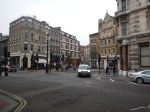

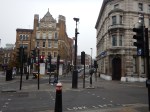




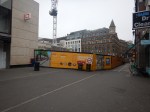
I’ll split comments into sections..
Barbican Station
Note the following about Barbican station.
- It has some excellent brick walls enclosing the station.
- The station was unsympathetically remodelled by the Nazis.
- You can still see the remains of a steel and glass roof , that was removed in the 1950s.
- There will be an entrance to the Barbican end of the Crossrail station at Farringdon from the Western End of the central platform.
My thoughts on Barbican station.
- When as a family we lived in the Barbican, we used this station extensively and I suspect that the humble entrance to and from the station will be heavily used by Crossrail passengers.
- If the central island platform proves to be too narrow for a walking route, it could always be widened, by using some of the space, where the trains used to run to Moorgate.
- Will an entrance be built on the other platform to Crossrail, so that passengers going East on the Sub-Surface Lines will have an easy step-free interchange with Crossrail?
On a personal travel point, Barbican might be my entrance to Crossrail/Thameslink, as I’d just take a 56 bus from round the corner from where I live.
The Long Lane Entrance To Farringdon Crossrail Station
This Google Map shows Barbican station and the building that will contain the Long Lane entrance to Farringdon Crossrail station.
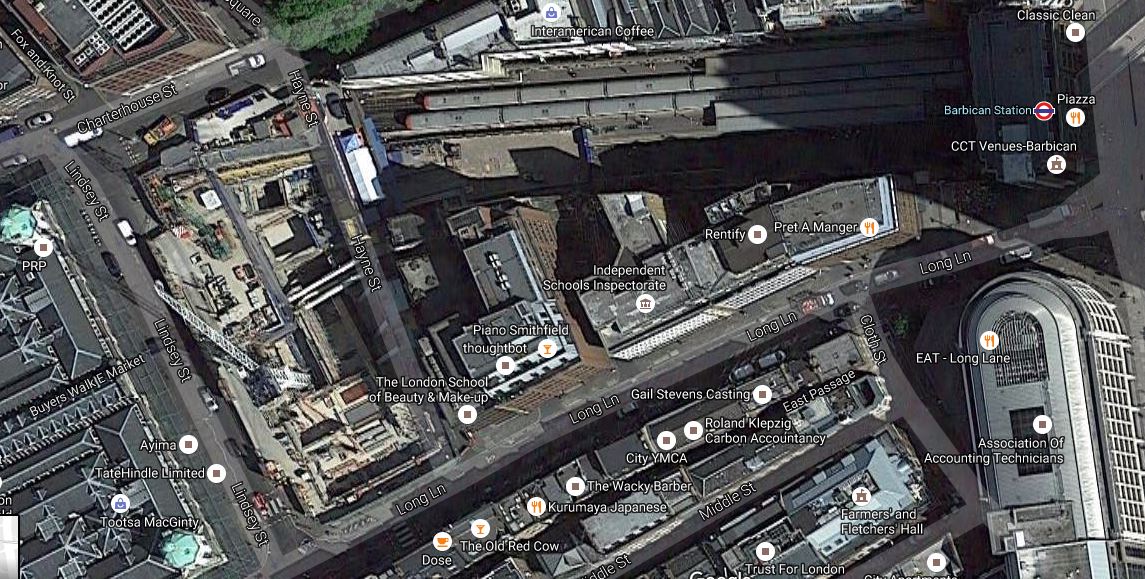
Barbican Station
This map is a very informative one.
- You can actually see behind the hoardings on the platform at Barbican station.
- There are two trains in the station.
- There is a gap in the buildings on the South Side of the station along Long Lane, that I labelled a development opportunity in the gallery.
- You can see the two domes on the Eastern end of Smithfield Market.
This image shows how the Long Lane entrance to Farringdon Crossrail station and Barbican station, will end up being treated as one station by travellers.
This is an image from the Farringdon station page on the Crossrail web site.
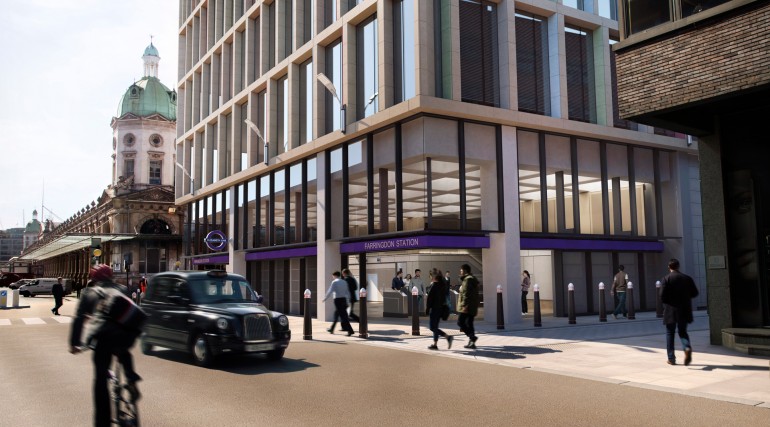
And this is my picture taken on my walk.

I think that the angles are similar, but I probably needed to stand further out.
This second image from the Crossrail web site, shows the view from just round the corner.
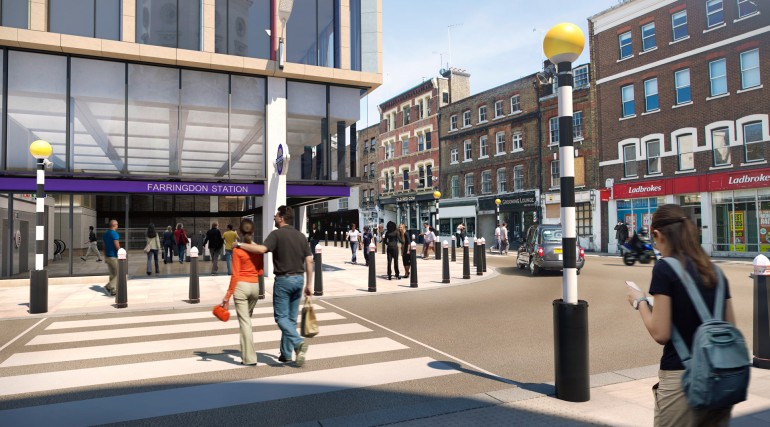
This is the nearest picture I have.

Note the zebra crossing, which appears on both images.
The Cowcross Street Entrance To Farringdon Crossrail Station
This Google Map shows the Cowcross Street site in relation to the current station.
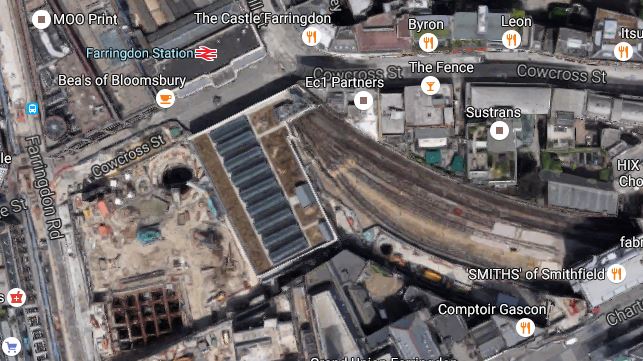
Farringdon Station
The site with the obvious hole and what looks to be a large grating is where the Cowcross Street entrance is being built. If you go into the Thameslink Ticket Hall and look to your right, you’ll see that the wall is not of the highest quality. It could be just temporary, until the Crossrail station is built.
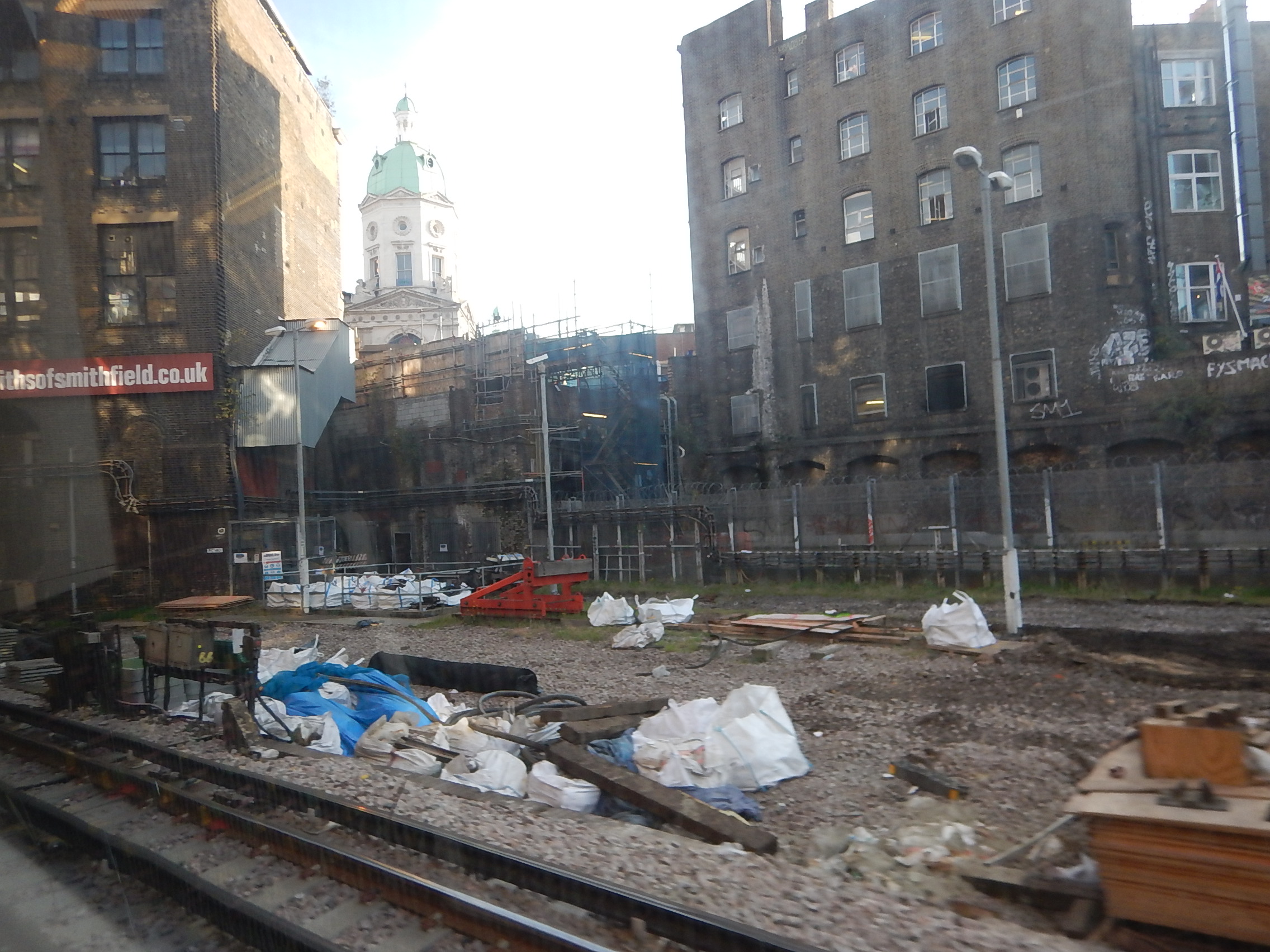
Between Comptoir Gascon and Smiths of Smithfield, is a small Crossrail site, which is shown in the gallery. Is it just a delivery and work site, or is it for something more substantial?
I think it could be the former, as from a Metropolitan Line train, little is visible, as this picture shows.
Behind The Hoardings On Charterhouse Street
This Google Map shows quite good detail.
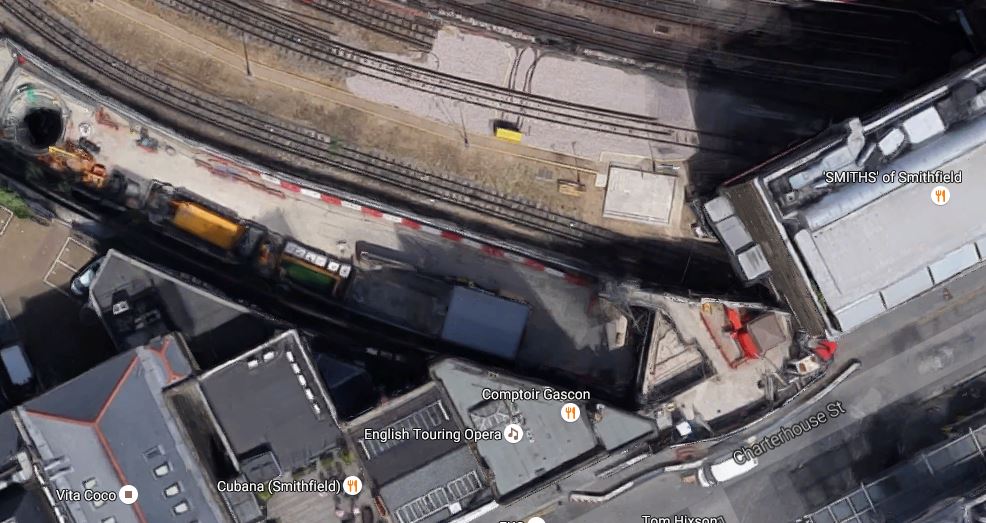
Behind The Hoardings On Charterhouse Street From Above
The hole shown in the top-left corner of the second image is shown on some drawings,labelled as Network Rail Lift Shift.
But, I can’t help thinking that with the development of Smithfield and especially the new Museum of London, that an entrance to Farringdon station at this location, would be beneficial,
The New Museum Of London
This is being built in West Smithfield. This Google Map shows the area.
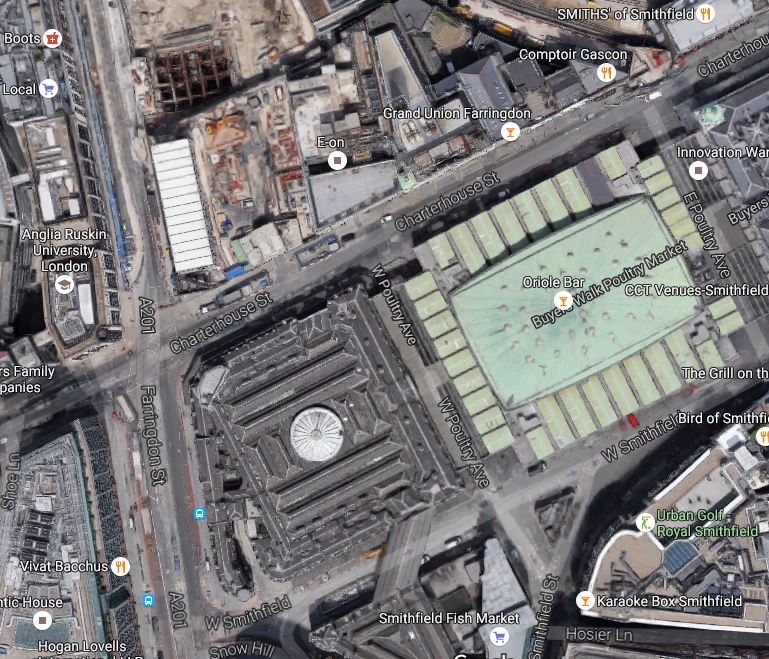
The New Museum Of London Site
This article in the Guardian is entitled Off to market: Museum of London shows off its new Smithfield site.
Read the article and this third paragraph is an ambitious vision.
“Our job is to make this the best museum in the world,” Ament said, carefully stepping around pigeon droppings and pools of water in the old market, which has been empty for the last 30 years while developers and conservationists fought over its fate. “I’m desperate to keep the train line running through it – nobody else has one of those. Just imagine the people on the trains looking out and seeing a museum around them, and the people in the museum seeing the trains go by.”
Surely, one of the best cities in the world, needs one of the best museums in the world to explain itself.
This map from carto.metro.free.fr shows the railway lines in the area.
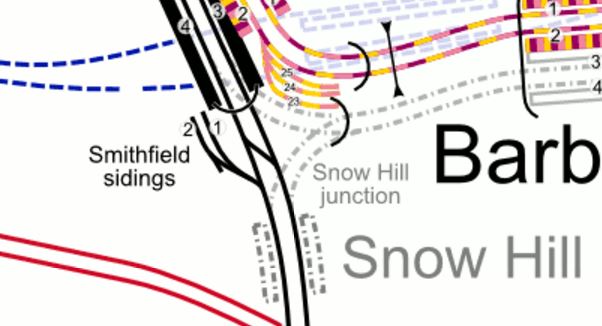
Snow Hill station would have been just South of the Museum site, but it is known that under the market there are numerous railway lines and sidings, where animals were brought to the market.
These must create ideas for the architects.
There are more notes on Snow Hill station on this page of the Disused Stations web site.
The train line refereed to in the Guardian article previously, is of course Thameslink, running in the Snow Hill Tunnel.
Certainly, the future development of the area must provide a decent connection between the Museum and Farringdon station.
I don’t think that Snow Hill station will be reopened, but there must be ways to connect the museum to the Thameslink platforms at Farringdon.
A Walk from City Thameslink Station Through The New Museum Site To Farringdon Station
I started the walk at City Thameslink station, as I wanted to see if the new Class 700 trains, changed voltage smoother than the Class 319 trains. I felt that three decades of progress had improved matters.












The Museum site needs work and some good architects. This is one proposal.

There is more in this article on the Dezeen web site.
The Future Of The Widened Lines To Moorgate
Trains from North of London used to go to Moorgate station along the Widened Lines until 2009, when platform lengthening for Thameslink at Farringdon station meant they couldn’t be used.
Two platforms at Moorgate are still used in busy times, but two platforms at Moorgate and Barbican stations are unused.
The only thing, I can find about the future of these lines is they could be used for storing Metropolitan Line trains.
If this is done, then let’s hope there is worthwhile oversite development!
Some spaces are quite large as this picture from East of Farringdon station shows.
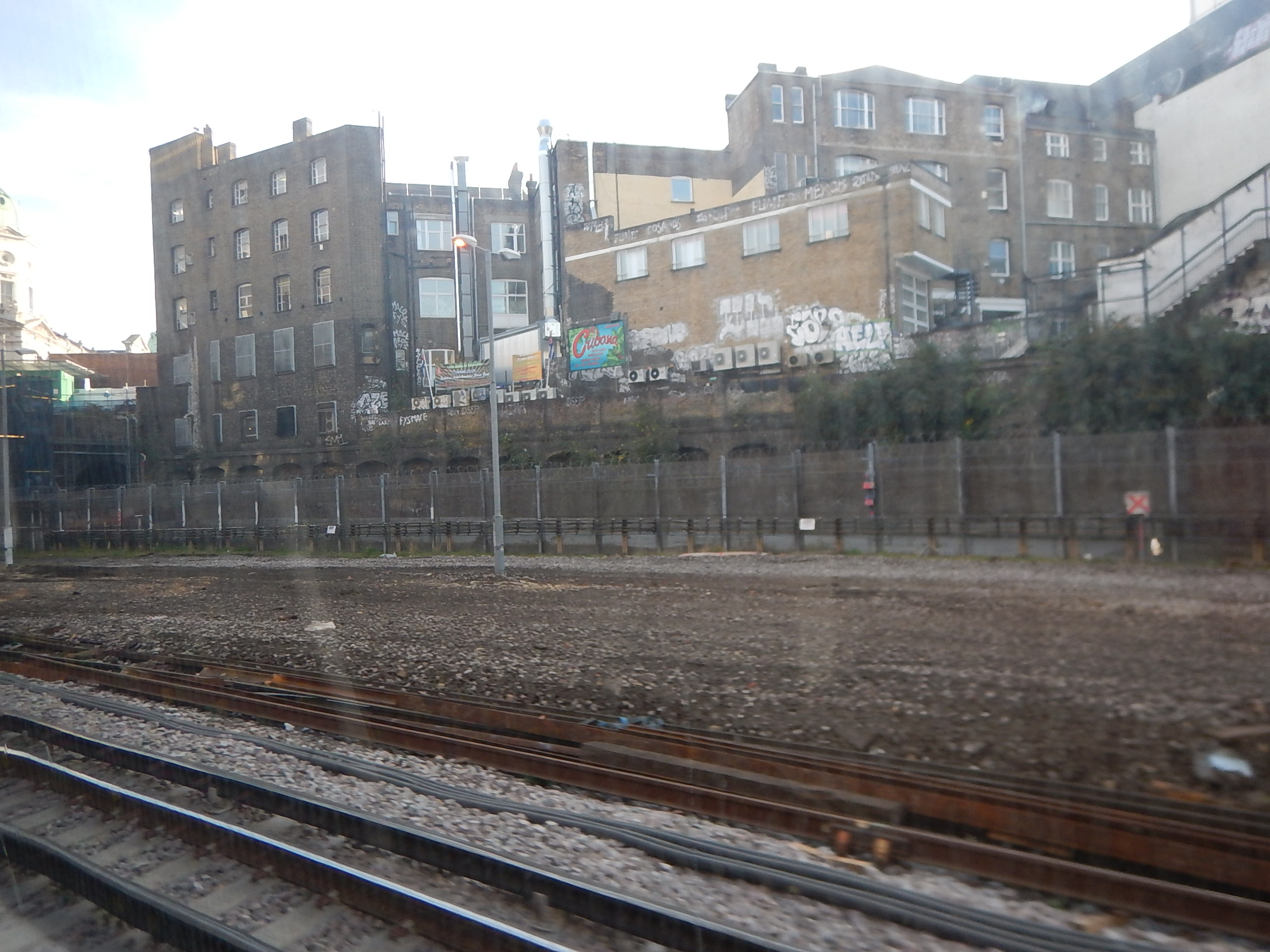
Space East Of Farringdon
You could store a lot of trains there.
London’s Future Air Terminal
This article on the Network Rail web site is entitled Farringdon Station: London’Newest Transport Hub.
This is said.
From 2018 Farringdon will be the only station where Thameslink, Crossrail and tube services meet. Passengers will have the choice to travel north-south, east-west or around London.
With up to 24 trains an hour running in each direction on Thameslink and Crossrail, including tube trains Farringdon will be served by over 140 trains an hour.This will relieve pressure from the Tube and deliver more seats for commuters.
Farringdon will provide direct links to three of London’s major airports, Heathrow, Gatwick, and Luton, and to St Pancras International for Eurostar services.
I have a feeling some of the spaces and oversite development in the area of Farringdon station, could become visitor-friendly ones, like hotels, cafes and restaurants.
Get it right and long-haul passengers into Heathrow and Gatwick, might prefer a night to refresh and enjoy themselves around Farringdon, before travelling out a day or so later.
The area will have a lot going for it in a few years.
- The Barbican Centre
- St. Paul’s Cathedral
- Hatton Garden
- The best church in London; St. Batholomew-The-Great
- The new Museum of London
- A short walk to the Thames.
- Direct links to Gatwick, Heathrow and Stansted airports.
- Direct links to Kings Cross, Liverpool Street, London Bridge, Old Oak Common, Paddington and St. Pancras stations.
- One-change links to City and Stansted airports and Euston, Marylebone, Victoria and Waterloo stations.
- Good restaurants
- Superb urban walks.
If it all goes wrong, you can always visit the Wife Market.
As some places like Iceland and Dubai market themselves as a journey break, why can’t London? Or do passengers prefer ice, geysers, sand and anonymous concrete and glass buildings?
Not that London doesn’t have a few of the latter!
Conclusion
The area round Farringdon station will be a new centre for London.
I wonder what my Huguenot grandfather, who was born in 1870, a couple of hundred metres to the North, would have thought?
If Your Train Is Late Should You Blame Henry The Eighth?
I have just read this fascinating article in the Rail Engineer, entitled Fulwell’s Blue Lagoons.
This is the first paragraph.
What do we have to thank – or blame – King Henry the Eighth for? The Church of England? Some very ruined abbeys? The fashion for padded shoulders? Flooding and subsequent train delays on the Shepperton branch?
Yes, they’re all down to him.
Henry’s need for water at Hampton Court Palace, meant that a whole series of problems were left for Victorian railway engineers, when they built the Shepperton Branch, that have persisted to the present day.
Read the article to find out how Network Rail have hopefully solved the problems.
This Google Map Shows the area around Fulwell and Strawberry Hill stations.
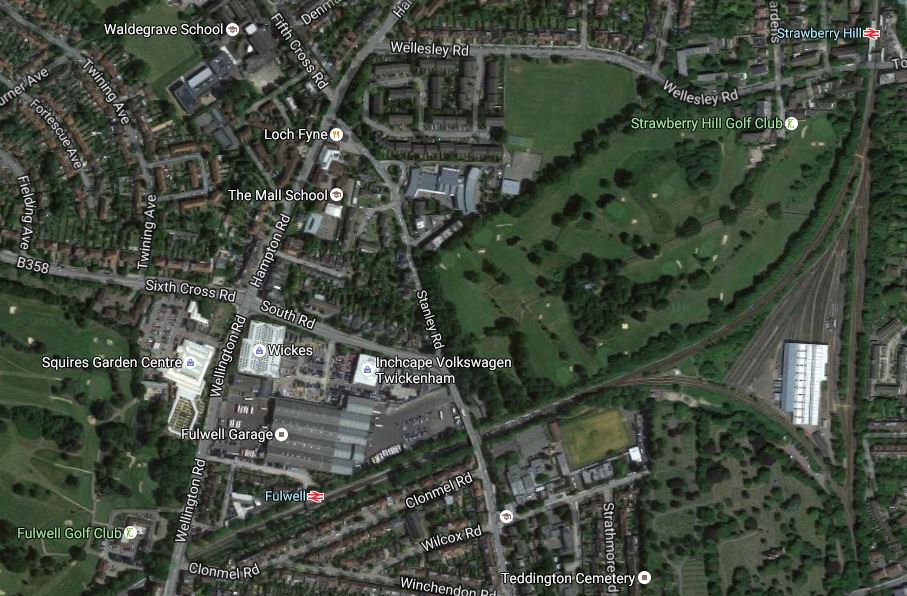
Between Fulwell and Strawberry Hill Stations
The tunnel talked about in the article is to the West of Fulwell station.
Could Old Oak Common Be London’s Super Hub Station?
Old Oak Common station is going to be a very important rail hub in the future, with all the services that various companies and organisations would like to see serving the proposed station.
This map shows some of the existing and proposed rail lines in the area.
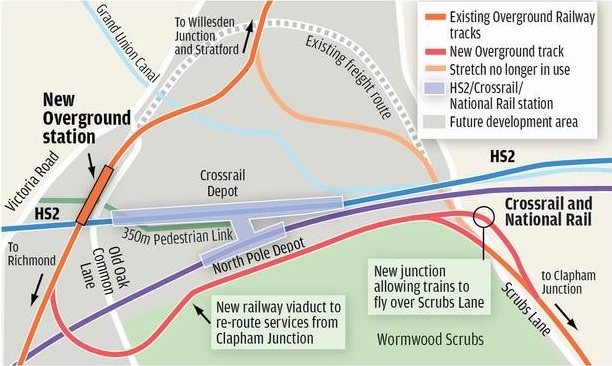
Rail Lines At Old Oak Common
Current Plans
I’ll now list the lines shown in the map or that go through the area. and are listed in Wikipedia, as having connections at the proposed Old Oak Common station.
1. Bakerloo Line
The Bakerloo Line will call
2. Central Line
The Central Line will call.
The Central Line acts as a loop from Crossrail through Central London, serving stations not on the direct route, in Central London between Stratford and Bond Street.
I wrote about the relationship between Crossrail and the Central Line in Ducking And Diving Between Crossrail And The Central Line.
3. Crossrail
Crossrail goes through the area and development of a station has been proposed.
4. Great Western Main Line
The Great Western Main Line goes through the area and local and other services may call.
5. HS2
HS2 will be building a station at Old Oak Common.
6. North London Line
The North London Line is consulting on a new station as I wrote about in Should An Overground Station Be Built At Hythe Road?
The North London Line acts as another East-West line across London and will probably have a frequency of upwards of the current 4 trains per hour (tph) between Richmond and its Eastern connection to Crossrail at Stratford.
7. West Coast Main Line
The West Coast Main Line goes through the area and local and other services may call.
8. West London Line
The West London Line will call and this line gives an easy route to Balham, Clapham Junction and East Croydon stations, which by-passes Central London.
I suspect that the frequency of trains on this route will be increased.
Eight lines is an large amount of connectivity.
Other Possibilities
If that isn’t enough connectivity, there are also these extra possibilities.
1. Chiltern Railways
Chiltern Railways have ambitions to use Old Oak Common station as another London terminus, with perhaps 2 tph.
I wrote about it in Linking Chiltern To Crossrail.
2. Dudding Hill Line
The Dudding Hill Line, runs to the West of Old Oak Common station. It could be electrified and have a station that is connected to Old Oak Common station.
For various reasons, both the Brent and Cricklewood \curves would be electrified, thus giving fully electrified access to and from North and South on the Midland Main Line.
3. Gospel Oak To Barking Line
Transport for London have published ideas to extend the Gospel Oak to Barking Line along an electrified Dudding Hill Line.
Suggestions have talked about 4 tph between Hounslow and Gospel Oak stations.
4. Heathrow Express
Heathrow Express uses the Crossrail route, so it could call.
5. Midland Main Line
If Chiltern can justify using Old Oak Common station, I suspect that services on the Midland Main Line can make the same arguments for using Old Oak Common station as a terminal.
Consider.
- Electrification of the Dudding Hill Line makes this possible.
- St. Pancras which is very much A Fur Coat And No Knickers Station, is short of capacity.
It would give passengers from the East Midlands much better access to London and the South East.
6. Thameslink
There are no plans to link Thameslink to Old Oak Common station, but why not?
I proposed this in Will The Third Runway At Heathrow Be Actually Built In The Near Future?
Under Integration With Both HS1 And HS2, I said this.
It would be possible to do the following.
- Arrange for Heathrow Express and/or Crossrail to call at Old Oak Common for HS2.
- Terminate some Thameslink services at Old Oak Common, thus linking HS1 and HS2.
- Build an easy entrance at St. Pancras to Thameslink close to Eurostar.
- It goes without saying, that Old Oak |Common will make interchange easy between the umpteen lines meeting there.
The Dudding Hill Line would be electrified.
This proposal and the related electrification of the Dudding Hill Line would do the following.
- Give Chiltern, Crossrail, GWR and Heathrow Express a connection to HS1.
- Give Thameslink a better connection to HS2 and the West Coast Main Line
- Create a fast ink between HS1 and HS2.
What could a Thameslink service to Old Oak Common station look like?
- I would terminate 4 tph trains at Old Oak Common to give an adequate level of service.
- It might be advantageous to use eight-car Class 700 trains on this route, so that all trains North of Cricklewood could be twelve-car trains.
- Could the trains going to Old Oak Common be the Wimbledon Loop trains?
- There could be advantages in having 2 tph between Old Oak Common and London Bridge.
Obviously, passenger statistics would determine the services required.
Old Oak Common As An Airport Hub
If all or some of these plans come to pass, Old Oak Common station will be well-connected to the following airports.
- Birmingham – Under 50 minutes by HS2.
- City – Under 20 minutes by Crossrail
- Gatwick – Under 50 minutes by Thameslink
- Heathrow – Around 20 minutes by Crossrail and around 15 minutes by Heathrow Express
- Luton – Under 30 minutes by Midland Main Line.
- Manchester – Around an hour by HS2.
- Southend – Around 80 minutes by Crossrail and Greater Anglia.
- Stansted – Around 55 minutes by Crossrail and Stansted Express.
The figures are very much my best estimates, as the Thameslink and HS2 web sites don’t have simple journey time calculators as does the Crossrail web site.
But these timings do show some interesting facts, that will effect the developments of airports in Southern England.
- Birmingham Airport is a practical alternative for those living with easy access to the HS2 stations at Euston or Old Oak Common.
- Gatwick access needs to be faster to compete with Heathrow and Luton.
- When HS2 reaches Manchester Aiorport, it will be a practical alternative for Middle England.
- Southend Airport will be good for those East of London, but the journey time needs to be cut, by running faster trains to London.
- Stansted Airport needs a faster connection to London and they will push for the four-tracking of the West Anglia Main Line.
There will be a massive battle for passengers and Network Rail will be under tremendous pressure to perform.
Rail Companies, Lines And Terminals, Without A Direct Connection To Old Oak Common Station
There is quite a few, even if you cut out train operators like Arriva Trains Wales, Scotrail, Northern and TransPennine, that don’t serve London.
1. Caledonian Sleeper
With all its connectivity, would Old Oak Common be the logical destination for the Caledonian Sleeper?
Could Old Oak Common, be London’s hub for all sleeper trains?
2. Circle, District And Metropolitan Lines
There are various ways to get on the Circle, District and Metropolitan Lines depending on where you want to go.
Just as the Central Line acts as a loop from Crossrail, the Sub-Surface Lines have various loops running parallel to Crossrail through Central London.
- Circle and Metropolitan Lines, running North of Crossrail, from Paddington to Whitechapel.
- Circle and District Lines, running South of Crossrail, from Paddington to Whitechapel.
- District Line, running, South of Crossrail, from Ealing Broadway to Whitechapel.
My prediction in Is Whitechapel Station Going To Be A Jewel In The East?, seems to becoming true.
3. c2c
As I said in Will c2c Push For Access To Stratford And Liverpool Street?, c2c needs a connection to a station on Crossrail.
With some reorganisation of services, I believe that it might possible to have a 4 tph service to Stratford and Liverpool Street stations, which would give passengers in the c2c area, access to Crossrail
4. East Coast Main Line
These are routes between Old Oak Common and Kings Cross station for the East Coast Main Line.
- Crossrail to Farringdon and then the Metropolitan Line
- North London Line to Highbury and Islington and then the Victoria Line.
- Bakerloo Line to Oxford Circus and then the Victoria Line.
- Crossrail to Tottenham Court Road and then a 10, 73 or 390 bus.
- Narrow boat on the canals.
- If Thameslink should in the future serve Old Oak Common, that can be taken to St. Pancras Thameslink, followed by a walk.
None of the routes are of the best.
If you had plenty of time, Tottenham Court Road station and then a bus would be a good route, as the bus drops you in the front of Kings Cross station, with totally flat access to the trains. If you’re early and it’s sunny, you can sit in the best Waiting Room at a London station.
For local services on the East Coast Main Line, there are two slower alternatives.
- Crossrail to Moorgate and then use the Great Northern Metro.
- Thameslink to St. Pancras Thameslink, cross to the other platform and take Thameslink to Cambridge or Peterborough.
The second route, would be much easier, if St. Psncras had an island platform for Thameslink. At least it’s only escalators and lifts.
There is one development, that might happen, that could improve journeys to and from Kings Cross station. That is the reopening of Maiden Lane station.
5. Jubilee Line
The Jubilee Line has interchanges with Crossrail at Bond Street, Canary Wharf and Stratford stations, with an interchange with Thameslink at London Bridge station.
It also has a step-free interchange with the Bakerloo Line at Baker Street station.
The Jubilee Line also acts as a loop from Crossrail serving stations away from the main route through Central London between Stratford and Bond Street.
6. London Bridge, Cannon Street And Charing Cross
I have grouped all these three stations together as the rebuilding of London Bridge station and the Thameslink Programme have connected these three stations in a way that will change passenger patterns dramatically for users of these three stations.
For myself, it will mean that to access any trains from Cannon Street and Charing Cross or on Thameslink going South, I will probably use a bus to the superb London Bridge station with all its escalators and lifts, rather than fight my way through Central London.
Others will also choose to go direct to London Bridge, possibly by using the Jubilee or Northern Linse. It will be interesting to see how passenger usage changes at Cannon Street and Charing Cross stations.
London Bridge shows what could have been done, if they’d spent the money wisely at the dreadful St. Pancras.
There are four main routes between London Bridge and Old Oak Common stations.
- Bakerloo Line to Waterloo and then the Jubilee Line.
- Crossrail to Bond Street and then the loop of the Jubilee Line.
- Crossrail to Farringdon and then Thmeslink
- If Thameslink serves Old Oak Common, there could even be a direct train.
I suspect there are other routes and it will all be down to personal preference and where you catch your next train in London Bridge.
Cannon Street station could almost be considered a London Bridge North station.
- It has seven terminal platforms. Try fitting more into London Bridge.
- It is within easy walking distance of much of the City of London.
- On a nice day, many might even walk from Cannon Street to Moorgate for Crossrail, as this route could be pedestrianised.
- It has access to the Circle and District Lines, which with a change at Paddington give access to Crossrail and Old Oak Common station.
- In a few years time, it will have good access to the Northern and Central Lines at Bank station.
Cannon Street station will become more important, as Network Rail and the various operators learn how to use the new infrstructure.
Sometimes, I struggle to see the point of Charing Cross station, but as it’s a very busy station others certainly see the station’s purpose.
It’s on the Bakerloo, Circle, District and Northern Lines, so getting to Old Oak Common won’t be a problem.
Transport for London are looking to take over South London inner suburban routes, so I think we’ll see changes in the management of Cannon Street and Charing Cross stations if this happens.
7. Northern Line
Both branches of the Northern Line are directly connected to Crossrail.
- Tottenham Court Road station connects to the Charing Cross Branch.
- Moorgate station connects to the Bank Branch.
Connections to the Northern Line might improve, if two separate lines are created
8. Piccadilly And Victoria Lines
The Piccadilly and Victoria Lines share three interchanges, but unfortunately they have no interfaces with Crossrail and only one poor one with Thameslink.
The best bet is to get on the Bakerloo Line and change at either Oxford or Picadilly Circus.
9. Victoria
Victoria station is another tricky station from which to get to and from Old Oak Common.
- Bakerloo Line to Oxford Circus and then Victoria Line.
- Crossrail to Paddington and then Circle or District Line.
As some services out of Victoria stop at stations served by the West London Line, it is possible to use that line to by-pass Central London.
10. Waterloo
Like London Bridge, Waterloo station is very well connected to Crossrail and the Old Oak Common hub.
- Bakerloo Line direct.
- Crossrail to Bond Street and then the loop of the Jubilee Line.
- Crossrail to Tottenham Court Road and then the Northern Line.
As some services out of Waterloo stop at stations served by the West London Line, it is possible to use that line to by-pass Central London.
Conclusions
I have come to the following conclusions.
Everybody will want to be connected to Old Oak Common station.
Groups of lines across London are emerging.
- East to West – Crossrail, Central, District, Metropolitan, North London, Gospel Oak To Barking, Dudding Hill.
- North to South – Thameslink, West London,East London, Northern.
- North-East to South-West – Crossrail 2, Piccadilly, Victoria.
- North-West to South-East – Bakerloo, Jubilee
A very strong grid with good interchanges is probably the main objective.
Looking at these groups, makes me think, that actions are suggested, that would strengthen the network.
- Build Crossrail 2
- Increase the capacity on the Bakerloo Line
- Split the Northern Line into Charing Cross and Bank branches.
London will quickly fill the extra capacity.
Linking Chiltern To Crossrail
In the November 2016 Edition of Modern Railways, there is an interview with Dave Penney of Chiltern Railways, as the company is opening their service to Oxford station on the twelve of December.
In Connecting To Crossrail, this is a summary of what is said or implied.
- Chiltern could get a couple of platforms at Old Oak Common station, sandwiched between the Crossrail platforms.
- Access to Northolt Junction is possible, to allow services to connect to the Chiltern Main Line using the Acton To Northolt Line.
- Marylebone is almost at capacity.
- Old Oak Common would give Chiltern a second London terminus and access to Crossrail.
- Two trains per hour (tph) could start from Old Oak Common.
- Aylesbury and High Wycombe could get access to Crossrail.
Chiltern would also get access to all the services calling at Old Oak Common.
I think it is an exciting concept.
A Fur Coat And No Knickers Station
St. Pancras station is not my favourite.
My hate affair with the station started when I wrote Could St. Pancras Thameslink Station Have Had An Island Platform?, where I first called the dreadful concoction a fur coat and no knickers station. I said this.
St. Pancras is very much a fur coat and no knickers station!
Show on top and draughty and lacking at the bottom!
I don’t take back one word of what I said.
The station is the interchange between the following lines.
- Metropolitan and Circle Lines of the Underground
- Midland Main Line to Corby, Derby, Leicester, Nottingham and Sheffield.
- Piccadilly Line of the Underground
- South-Eastern Highspeed services to Kent.
- Thameslink between Bedford and Brighton
- Victoria Line of the Underground.
So to say the least it’s complicated.
Problems For Train Operators
The three main operators of the services in the above ground station, must despair at how few platforms, they have been allocated.
If you catch a Midland Main Line train to Nottingham say, you often have to walk to the second train in the platform. If they had a couple more platforms, then this walk would be avoided and extra services like a Luton Airport Express, that I wrote about in Luton Trains Its Eye On Sub 30-Minute Express, would become possible.
It’s the same with South-Eastern Highspeed services on the other side of the station.
Eurostar is perhaps better. But, if other operators wanted to run services, is there the space to accommodate their trains and the services they require?
Endless Walking For Passengers
Problems for passengers are very much concerned with the difficulty of changing between the various lines at the station.
I’ll give exchanging between the Victoria Line and Thameslink as an example.
It’s a very long walk down a tunnel to get from the Victoria Line to St. Pancras station and then you have to descend into Thameslink.
I wonder how many trains out of St. Pancras are missed because first-time passengers, assume that the time they’d habitually allow at Waterloo, London Bridge or Euston, is totally inadequate?
Thameslink Is Not An Island Platform
Thameslink needs this so that passengers on the Bedford branch can easily walk across the platform to get the Cambridge/Peterborough branch.
But it’s all too late now to do anything.
Elizabeth Line
It is a mistake that the Elizabeth Line doesn’t call at King’s Cross St. Pancras station for Eurostar and East Coast services.
Crossrail 2
How do you fit Crossrail 2 into this mess?
What Would I Do?
I would ask a friendly earthquake to completely destroy the complex, so it is rebuilt as a properly functioning station.
My serious ideas follow.
Short Term Improvements To St. Pancras
These would mainly be concerned with handling passengers.
- Thameslink needs a link at the Southern end of the platforms to the Metropolitan Line Ticket Hall.
- The Metropolitan Line Ticket Hall is decluttered and just serves as an interchange between lines.
- Eurostar needs to educate its passengers, so they use contactless bank card ticketing or Oyster.
- Perhaps Eurostar in-train staff, should sell a suitably-valued Oyster on board.
- Less shopping and more ticket machines and staff to handle passengers from and to Eurostar.
- More escalators are needed to the Midland Main Line platforms.
I suspect all operators have their own pet projects.
A Luton/Gatwick Express
Four Thameslink trains an hour between Gatwick and Luton Airports could be dedicated as Luton/Gatwick Expresses.
- Paint them red, so passengers don’t end up in Peterborough instead of Luton.
- Use trains with tables, wi-fi and space for luggage.
- Run them between Bedford and Brighton.
- Stop at Luton, Luton Airport Parkway, St. Albans City, West Hampstead Interchange, St. Pancras, Farringdon, City Thameslink, Blackfriars, London Bridge, East Croydon, Gatwick Airport, Three Bridges and Haywards Heath or whatever travel patterns say.
This would give Luton Airport the service they desire, without needing any extra platforms in the Midland Main Line station.
Since the opening of the Luton DART, services to Luton Airport have improved.
It would be interesting to see the passenger patterns to and from the airports. Do they have a different pattern than that of commuters, so some degree of smoothing numbers, will be naturally applied?
A Heathrow Express
Four trains per hour to Heathrow via West Hampstead Interchange and Old Oak Common for HS2, would be what Heathrow and HS2 needs.
But where do you find the single platform to turn the trains at St. Pancras?
More Platforms At St. Pancras
On resource grounds alone this is essential.
Conclusion
The architects who created this mess, shouldn’t be let near a station again.
 The Anonymous Widower