A Waste Of Valuable Resources Between Paddington And Heathrow
Much of my working life was spent in writing project management software.
I like to think, I was an expert at writing software to juggle resources.
I wrote my first piece of software in that field in ICI, to get my boss out of trouble, after he’d promised the department a program to allocate the department’s office space more efficiently.
Unfortunately, the student, who’d written the software, without leaving anything that worked or any decent instructions.
So I told my boss;Colin, that I’d have a go.
In my previous position at ICI in Runcorn, I’d worked out an algorithm to decode mass spectrometer traces, which started with a rough idea of what was there, which was entered by an operator and then used permutations and combinations to fit the output.
I used the algorithm in every resource scheduler, I ever wrote and it worked a treat.
So when I see a waste of resources, I get angry, as I know those who devised the system could have done a lot better.
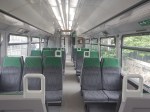
Look at these pictures, I took of a Heathrow Express, that I took today.
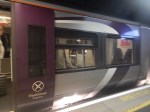
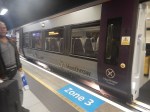
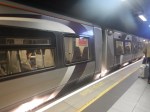

It is barely ten percent full.
It has become a waste of resources; train, valuable paths in the Heathrow tunnel, and platform space at Paddington.
These are a few thoughts.
Capacity To And From Heathrow
Consider.
- Heathrow Express uses twelve-car Class 387 trains, with a capacity of 672 seats, that run at a frequency of four trains per hour (tph), which is 2,688 seats per hour.
- The Elizabeth Line uses nine-car Class 345 trains, with a capacity of 454 seats, that run at a frequency of six tph, which is 2,724 seats per hour.
- The Class 345 trains can also carry another 1046 standing passengers on each journey, which adds up to a maximum of 6276 standees per hour.
- The Piccadilly Line uses 73 Stock trains, with a capacity of 684 seats, that run at a frequency of twelve tph, which is 8,208 seats per hour.
This gives a capacity of 19,896 passengers, staff and visitors per hour, or which 13,620 get seats.
Expressed as percentages, the four modes of transport are as follows.
- Heathrow Express – 13.5 %
- Elizabeth Line – Sitting – 13.7 %
- Elizabeth Line – Standees – 33.8 %
- Piccadilly Line – 41.2 %
In Effects Of The ULEZ In West London, I said this about journeys to and from the airport.
Heathrow Airport is one of the world’s busiest airports and 76,000 people work at the airport, with many more employed nearby.
The airport handled 61.6 million passengers in 2022, which is a few short of 170,000 per day.
If you consider that those that work at the airport do two trips per day and passengers generally do one, that means there are 322,000 trips per day to or from the airport.
But as it now so easy to get to the Airport using the Elizabeth Line will more people use the new line to meet and greet and say goodbye to loved ones or business associates. Since the Elizabeth Line opened, I’ve met a couple of friends at Heathrow, who were passing through.
I wonder, if that daily journey total of 322,000 could be nearer to 350,000 or even 400,000.
If the ULEZ charge makes some passengers and staff switch from their car to using a bus or train, this probably means that public transport to and from the airport, will need to be boosted by a substantial amount.
322,000 trips per day is 13,416 per hour assuming a 24 hour day.
Consider.
- The ULEZ will drive employees and passengers to trains to Heathrow.
- A lot of would-be travellers to Heathrow have had a tough couple of years.
- Because of the Elizabeth Line more meeters and greeters will go to the airport.
- The Elizabeth Line is making it easy to get to Heathrow for a large proportion of those living in the South-East.
- There have been numerous car parking scandals at Heathrow and other airports.
- Are there enough charging points for electric cars in Heathrow’s parking?
- Parking at Heathrow is expensive.
- Taxis to the airport are very expensive.
- Passengers with large cases can use the Elizabeth Line.
- Good reports of the Elizabeth Line will push people to use it.
- The Elizabeth Line serves the City, Canary Wharf and the West End.
- The Elizabeth Line has a step-free connection with Thameslink.
- Passengers seem to travel with very large cases.
- Passengers seem to be deserting Heathrow Express, as I wrote in Elizabeth Line Takes Fliers Away From Heathrow Express.
Note.
- The train, I took back from Heathrow this morning was full with all seats taken and quite a few standees.
- And it was a Sunday morning!
- We won’t know the effect of the ULEZ until August, but I believe it will be significant.
Obviously, I’m only using rough figures, but they lead me to believe that in a few months, the Elizabeth Line will be at full capacity to and from Heathrow.
Heathrow Express’s Train Paths Should Be Re-Allocated To The Elizabeth Line
This would increase hourly passenger capacity from 19,896 to 23,208 or by seventeen percent.
Great Western Railway would get two extra platforms at Heathrow and the Class 387 trains could be reallocated.
Where Would Great Western Railway Run Trains From Two Extra Platforms?
Consider.
- Various government levelling up funding has been allocated to Wales and the West.
- I talk about the Mid-Cornwall Metro in Landmark Levelling Up Fund To Spark Transformational Change Across The UK.
- The Mid-Cornwall Metro could include direct trains between London and Newquay.
- There are also plans for a new station at Okehampton Parkway.
- Given all the wind farm development in the Celtic Sea, I can see more trains between London and Pembrokeshire.
- Cardiff and Bristol would probably welcome extra services.
I don’t think Great Western Railway will have problems finding destinations to serve from two extra platforms.
What Will Happen To The Class 387 Trains?
Currently, twelve Class 387 trains are used for Heathrow Express.
In The Future Of The Class 387 And Class 379 Trains, I said this.
The Battery-Electric Class 379 Train
I rode this prototype train in 2015.

An Outwardly Normal Class 379 Train
I think it is reasonable to assume, that as battery technology has improved in the seven years since I rode this train, that converting Class 379 trains to battery-electric operation would not be a challenging project.
Creating A Battery-Electric Class 387 Train
If the Class 387 train is as internally similar to the Class 379 train as it outwardly looks, I couldn’t believe that converting them to battery-electric operation would be that difficult.
I could see a lot of the Class 379 and Class 387 trains converted to 110 mph battery-electric trains.
Would Heathrow Express Completely Disappear?
If the Elizabeth Line trains are going between Heathrow Airport and Central London, at a frequency of 10 tph or one train every six minutes, I feel there may be scope for marketing and operational reasons to create a sub-fleet of the Class 345 trains.
The trains would be identical to the Elizabeth Line’s current fleet, except for livery, seating and some internal passenger features.
- Perhaps, they could be called the Heathrow Train boldly on the outside, so even the dimmest passenger didn’t get on a Reading train instead of a Heathrow one.
- All trains would have wi-fi and 4G connectivity. These features have been promised for the Class 345 trains.
- Some coaches would be fitted with luggage spaces for the outsize cases people carry.
I could envisage the Heathrow Trains terminating at a wide number of places in addition to Abbey Wood and Shenfield. Possibilities must include Beaulieu Park, Ebbsfleet, Gravesend, Northfleet and Southend Victoria
Shenfield To Heathrow – 21st May 2023
Today, is the first day, when Elizabeth Line trains are running direct between Shenfield station and Heathrow.
I took the 10:41 train from Shenfield and it arrived at Heathrow Terminals 2 & 3 station at 12:02.
I took these pictures on the route.
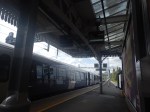
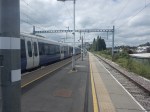

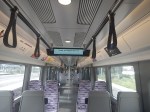
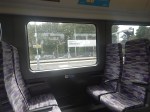
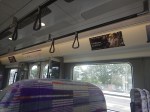
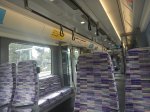
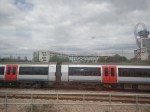
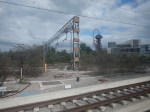
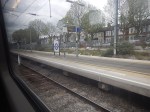
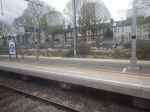



Note.
- The busiest section of the journey was between Ilford and Liverpool Street, when all seats were taken.
- It was also reasonably busy after Ealing Broadway.
- Are passengers going to Heathrow Airport with a change at Ealing Broadway?
Given the crowds of passengers, that I keep seeing on the Elizabeth Line, I keep thinking that the sixteen trains per hour (tph) Off Peak frequency needs to be increased.
The First Elizabeth Line Train From Shenfield To Heathrow Leaves At 07:26 Tomorrow
The National Rail timetable is showing that tomorrow, Elizabeth Line trains will leave Shenfield at four minutes to the half-hour.
They take ninety minutes to get to the airport.
Zero/Low-Emission Locomotive Global Roundup
The title of this post, is the same as that of this article on Railway Age.
This is the introduction.
By 2050, in accordance with the Paris Climate Agreement, zero-emission locomotives may have completely replaced conventional diesel-powered equipment on the railways of the world.
Current development of zero-emission switcher locomotives, combined with practical operating experience, increases this likelihood in the foreseeable future.
It will be increasingly possible to determine the optimal type or types of zero- or low- emission locomotives to replace conventional diesel units.
They then give a roundup, which includes American, Canadian Chinese, French, Indian and Polish locomotives.
There was no mention of Clean Air Power‘s conversion of a Class 66 locomotive to dual-fuel operation, that I wrote about in Clean Air Power Adds Hydrogen To Class 66 Fuel Mix.
Plans Submitted For Hydrogen Pilot Plant At Humber Power Station
The title of this post, is the same as that of this article on Business Live.
This is the sub-heading.
HiiRoc and Centrica partnership at Brigg moves forward as consent sought.
These two paragraphs complete the original article.
Plans for a hydrogen pilot plant to sit alongside Centrica’s Brigg Power Station have been submitted to North Lincolnshire Council.
The low carbon fuel is set to be blended with gas at the peaking plant, in a tie-up between the energy giant and green-tech start up HiiRoc, in which it has invested. The well-backed Hull-based firm is pioneering a new production method, and was named as KPMG’s Global Tech Innovator for 2022.
I have very high hopes for HiiROC, who in addition to Centrica, have Hyundai and Kia as investors.
Endorsement from KPMG is surely positive.
A Diversion To Severn Beach
After my trip to Cardiff yesterday was curtailed by a signalling problem, I ended up at Bristol Temple Meads station.
After checking the timetable, it occurred to me, that it would be easy to take a diversion to Severn Beach station before I took a train back to London.
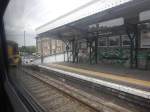
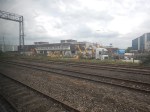
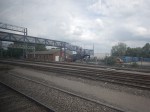
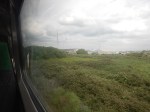
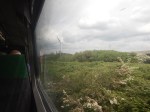
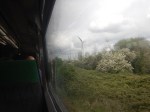
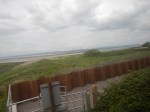
I took these pictures on the journey.
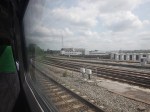
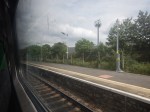
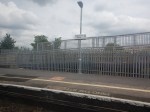
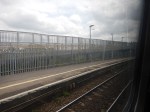


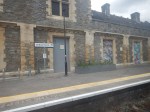
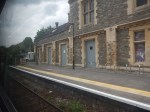
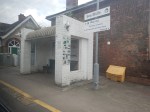

















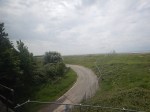










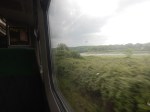


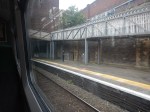
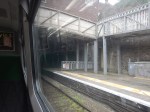



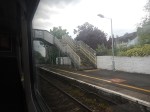
Note.
- Stapleton Road station has massive ramps.
- Stations like Redland and Avonmouth have interesting art works.
- The Avon, several wind turbines and the Secon Severn Crossing can all be seen.
This Google Map shows the location of Severn Beach station.
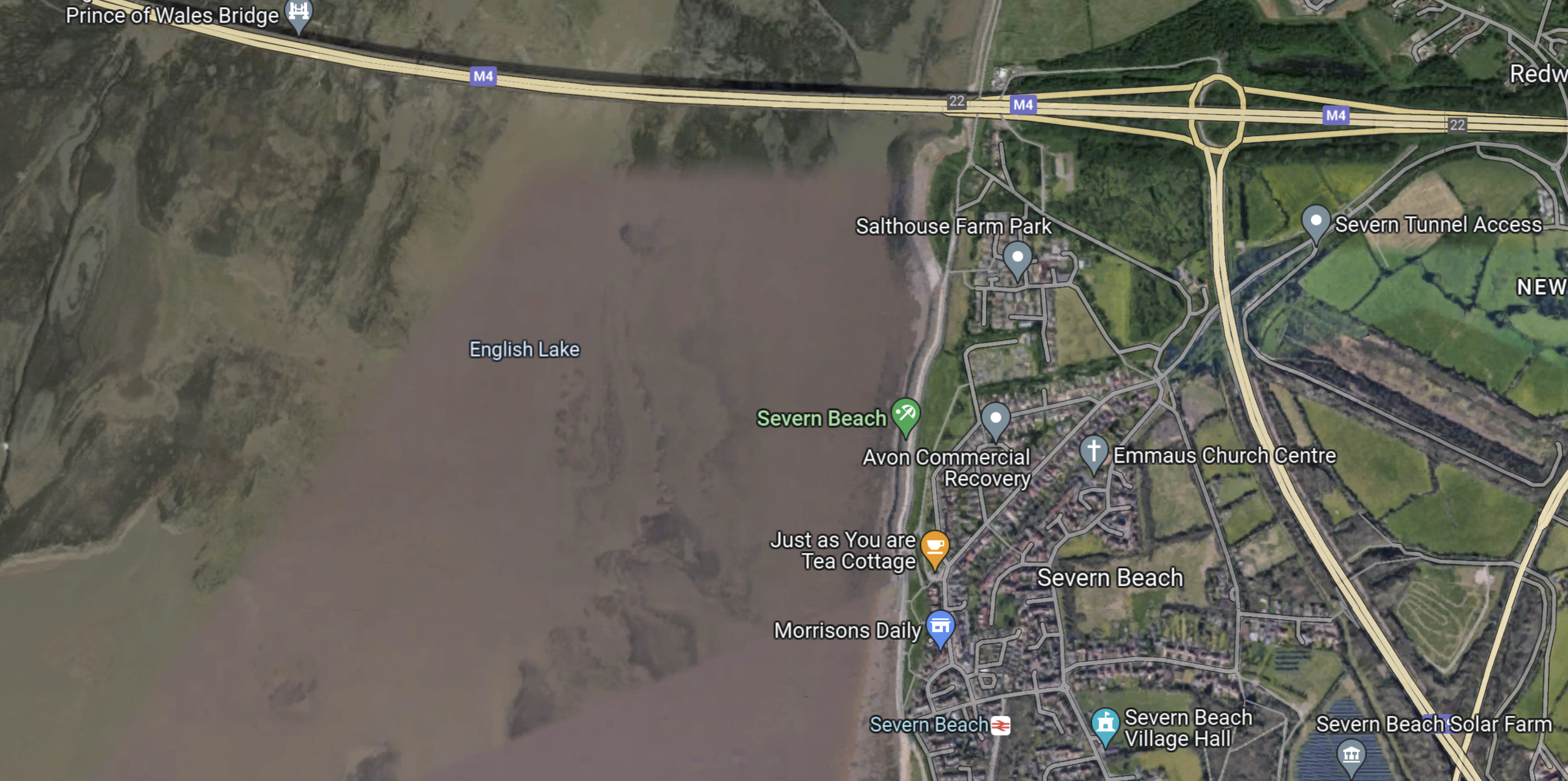
Note.
- The M4 and the Second Severn Crossing are at the top of the map.
- The rail station icon marking Severn Beach station at the bottom of the map.
This second Google Map shows the area of the station.
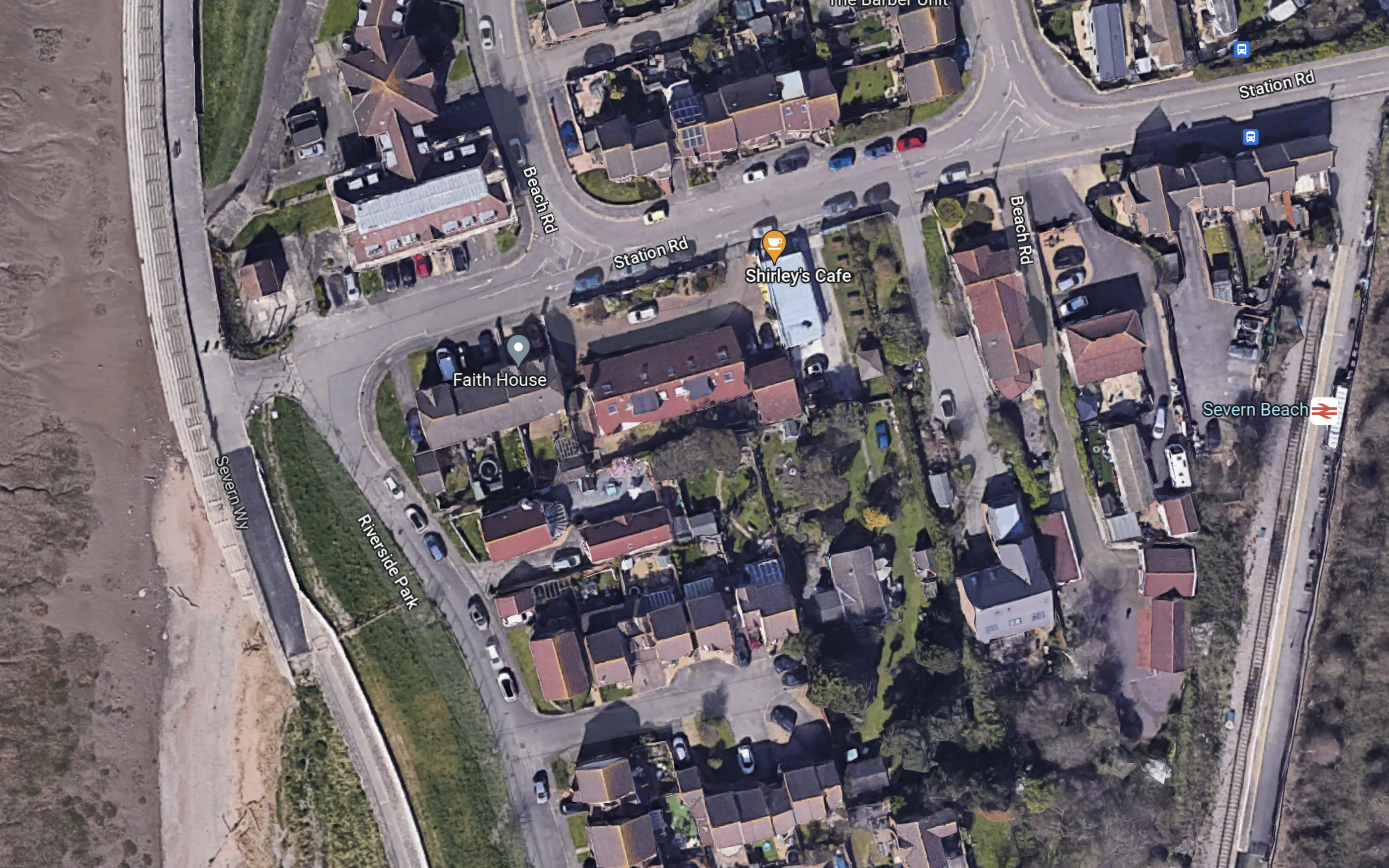
Note.
- Shirley’s Cafe, where I bought my ice cream.
- The cafe does gluten-free breakfasts.
- The promenade, where I took the pictures of the Second Severn Crossing.
- The long platform in the station.
- The fare from Bristol Temple Meads was only £1.95 for a return with my Senior Railcard.
Severn Beach looks to be a good place to go for a walk.
These are pictures I took at and around the station.

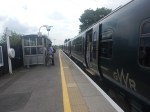
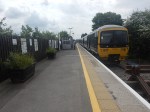
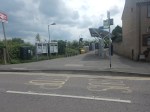
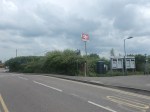
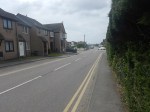
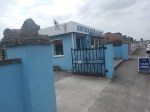
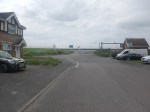



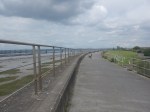

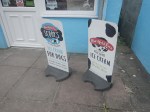

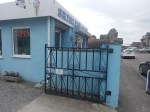
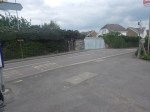
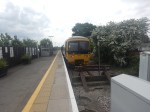


We need more ice cream sellers in or near stations.
Portway Park & Ride Station
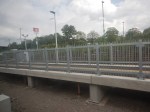
Portway Park & Ride station is a new station currently under construction.
I took these pictures as the train passed.

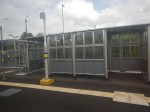
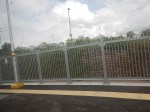
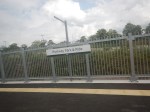
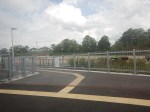
This Google Map shows the location of the station.
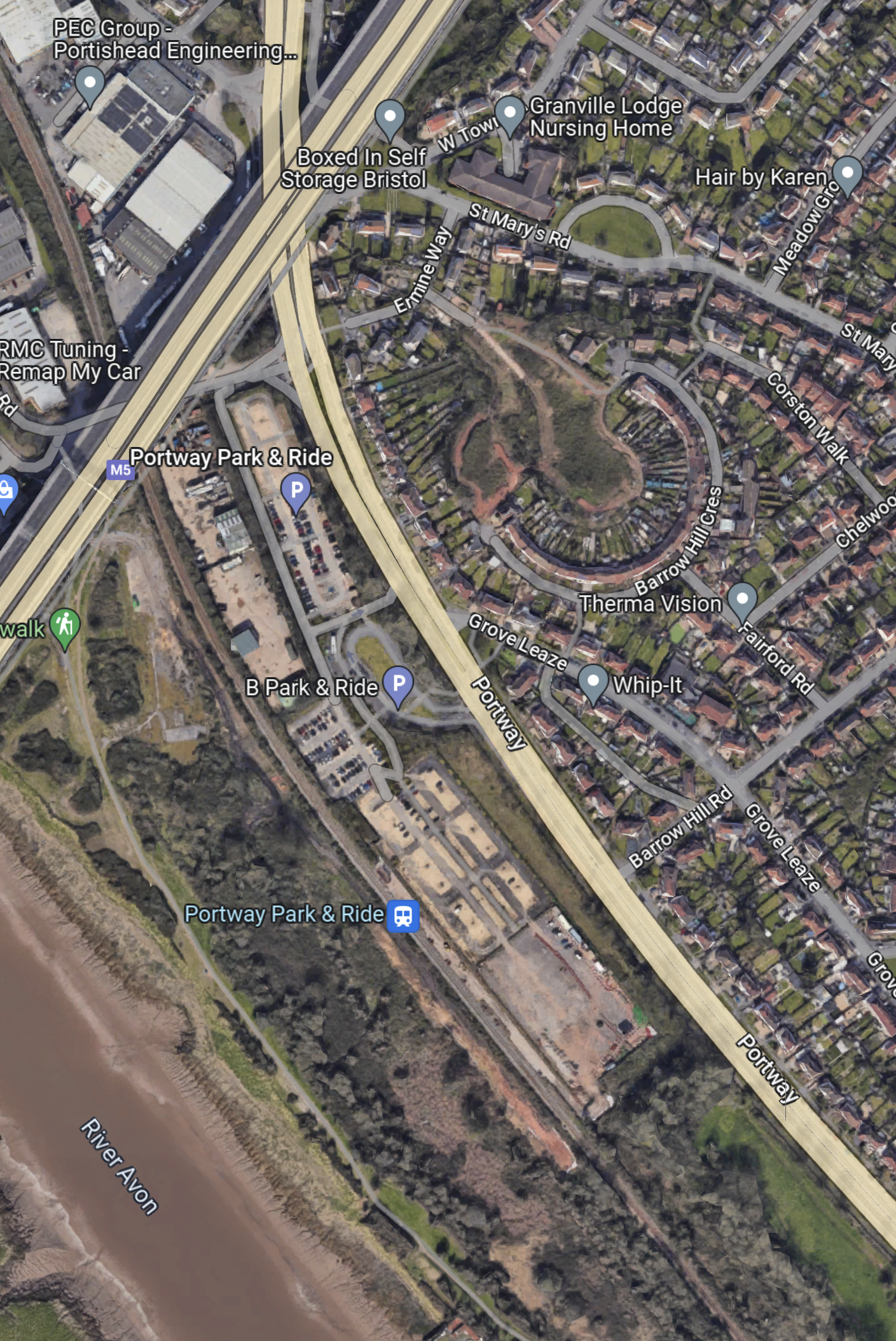
Note.
- The parking is to the South of where the M5 and A4 cross.
- The blue dot at the South of the site marks the single-platform station.
- The buses from the Park & Ride run every twelve minutes.
- The trains are only an hourly service.
From the pictures, it looks like the station will be opening soon.
I would hope that the access to the parking from the major roads is good.
Improving The Line
I was a bit worried that I’d miss the train back, so I only had an ice cream, but if the trains were more frequent, I might have had a drink in the cafe as well.
Under Future in the Wikipedia entry for the Severn Beach Line, the following is said about train frequency.
Improved services along the line are called for as part of the Greater Bristol Metro scheme, a rail transport plan which aims to enhance transport capacity in the Bristol area. There is an aspiration for half-hourly services, however due to the large sections of single-track and the congested main line from Temple Meads, such frequency is not currently feasible. However, it is expected that with the four-tracking of Filton Bank, including the Severn Beach line between Temple Meads and Narroways Hill Junction, that there will be sufficient capacity to allow half-hourly services.
Two trains per hour (tph) would be a good improvement.
This is also said.
Plans also call for the reopening of the Henbury Loop Line, which could allow a service from Temple Meads to Bristol Parkway via the Severn Beach line.
After my experiences yesterday, a more frequent route between the two major Bristol stations must be a good idea.
Zero-Carbon Trains
Given the route and its length and location, the Severn Beach Line must be a candidate for battery or hydrogen power.
Vineyard Wind To Deploy US-Based Supplier’s Bubble Curtain During Foundation Installation
The title of this post, is the same as that of this article on offshoreWIND.biz.
This is the sub-heading.
Vineyard Wind, a joint venture between Copenhagen Infrastructure Partners (CIP) and Avangrid building the first large-scale offshore wind farm in the US, has signed an agreement with the US company ThayerMahan for a pilot programme to deploy and test a secondary bubble curtain during the installation of foundations
This is the first paragraph.
A bubble curtain mitigates noise created during foundation installation by absorbing and dampening sound. First, the curtain’s large, perforated hoses are placed on the seafloor around the monopile. Then, the hoses are filled with compressed air which, once the hoses are inflated, escapes through the perforations and creates a barrier of bubbles that reduce noise.
Nothing is said, as to how the bubbles cut the noise.
I’m fairly certain that I know why.
- The speed of sound in air on a standard day at sea level static conditions, is about 340 metres/second.
- In water it’s about 1500 metres/second.
So what would the speed of sound in a bubbly mixture of air and water be?
I asked this question of Google and got this answer.
Surprisingly, in a two- fluid mixture, the measured speed of sound can be one order of magnitude smaller than that of its constituents. For example for water and air in normal conditions the speed of sound in the mixture can be about 23m/s while it is 1500m/s in water and 330m/s in air.
I even made money out of this phenomena, by backing two guys, who used it to develop an aerosol valve that used nitrogen as a propellant.
This research indirectly led to the development of the Respimat inhaler for asthma drugs.
So how does it cut the noise?
I’m not sure of this, but we do know the noise of the piling will have to go through areas of water with different speeds of sound. So is the sound attenuated as it passes through the bubble curtain by the slow speed?
I have other ideas for this interesting phenomenon and if anybody is interested please contact me. One use may have applications in mixing dissimilar fluids.
Spirit Energy Welcomes Licence Award For World-Leading Carbon Storage Facility
The title of this post, is the same as that of this news item from Centrica.
This is the sub-heading.
Spirit Energy and its shareholders, Centrica Plc and Stadtwerke München GmbH (SWM), welcome licence award for world-leading carbon storage facility
These are the first two paragraphs.
Spirit Energy – with the support of majority shareholder Centrica Plc, and Stadtwerke München GmbH (SWM) – has today (18 May) been granted a carbon storage licence by the North Sea Transition Authority (NSTA). This represents a further step towards their net zero vision of repurposing the North and South Morecambe gas fields for carbon capture and storage.
Today’s announcement places the companies at the forefront of the decarbonisation efforts in the UK, with the MNZ (Morecambe Net Zero) Cluster having the potential to be one of the UK’s biggest carbon storage hubs. It will be able to store up to a gigaton of carbon dioxide – the equivalent of three years’ worth of current UK CO₂ emissions. It could initially store above 5MTPA of CO₂, scaling in time to 25MTPA. The MNZ Cluster will be able to accept CO₂ transported by pipeline, ship and rail.
Note.
- I would assume MTPA is megaton per annum.
- In the long-term, I believe we’ll find productive uses for a substantial amount of the CO₂ we create, in agriculture, manufacturing construction materials, animal foods and textiles and in other uses.
- The MNZ Cluster is very large and will be a superb partner for Carbon Capture and Use.
- The partners will invest over £1 billion in this project pending the outcome of the Track 2 process.
Neil McCulloch, CEO of Spirit Energy, finished the news item like this.
Spirit Energy has ambitions for the two gas fields to form the core of a green super-hub. This would explore opportunities like direct air capture, the manufacture of blue hydrogen, the production of green hydrogen, the integration of other renewable power generation facilities, and energy storage – all of which would put Barrow and the North West on the map as a centre for low-carbon innovation.
It is a good vision.
BlueFloat, Renantis Ink Exclusivity Agreements For Scottish Floaters
The title of this post, is the same as that of this article on offshoreWIND.biz.
This is the sub-heading.
The BlueFloat Energy and Renantis partnership has signed exclusivity agreements with Crown Estate Scotland to develop its Sinclair and Scaraben innovation projects which will now be part of a phased delivery of the partnership’s Broadshore project
This is the first two paragraphs.
The two 99.5 MW floating offshore wind farms will now be developed as part of a phased delivery of the partnership’s Broadshore project, located 47 kilometres north of Fraserburgh.
Sinclair and Scaraben will explore innovative foundation technologies, associated fabrication works, and mooring systems with a view to maximise opportunities for the Scottish supply chain, driving local investment and job creation, said the partners.
This would seem to be very sensible for manufacturing and project management reasons.
One Of The Worst Train Journeys I’ve Had In The UK Since The 1960s
I started out with a simple objective, in that I intended to go to Cardiff Central station and then explore the Cardiff Valley Lines to look at the progress of the electrification. I had also arranged to possibly have a drink, with an old acquaintance at Rhymney station.
For the first time, I took the Elizabeth Line from Moorgate to Paddington to catch a long distance train. It is so much easier than taking the Underground.
I bought a Super Off Peak Return ticket to Cardiff Central station for £62.15 with my Senior Railcard.
This was the journey I took today.
- I left Paddington on the 10:18 train for Cardiff Central.
- The train arrived at Bristol Parkway at 11:34½.
- Real Time Trains says this about the rest of the journey. “This service was cancelled between Bristol Parkway and Cardiff Central due to a problem with signalling equipment (J3)”
- I was advised by a member of staff, that I wouldn’t be going to Cardiff in the near future and he advised taking a CrossCountry train to Bristol Temple Meads and then going back to London using my Return ticket.
- I left Bristol Parkway at 12:12¼ and arrived in Bristol Temple Meads at 12:20½, after taking the CrossCountry train.
- At Bristol Temple Meads to salvage something of a wasted day, I took a diversion to Severn Beach for the princely sum of £1.95 with my Senior Railcard, arriving back at Bristol Temple Meads at 14:48½.
- I then caught the next train to London, which turned out to be the 16:00, as both the 15:00 and 15:30 were cancelled due to an incident at Didcot.
- The train left Bristol Temple Meads at 16:03 and arrived at London Paddington at 18:00, which was twenty minutes late.
Note.
- I never got to Cardiff.
- If I’d waited at Bristol Parkway and caught the next train, I’d have got to Cardiff at 16:15¼, which would have been four hours later, than if the first train hadn’t been cancelled and had been on time.
I’ve just tried to phone Great Western Railway, but their Contact Us page only gives details of Facebook, Twitter and What’s App. I don’t use any of those!
Conclusion – Added On 5th June 2023
I just received an e-mail saying the cheque will be the post!
 The Anonymous Widower