Recovering A Broken Down Battery-Electric Train
I was on a bus recently, where the brakes locked on and we had to all get off and wait to be rescued, by the next service.
To aid recovery on trains, it is usual for a broken-down train to be able to be rescued by another train of the same type.
But how do you rescue a battery electric train?
There will be two main groups of failures.
- Those where even the world’s most powerful locomotive will be unable to move the train.
- Those where a train with enough power can move the train to safety.
Let’s assume we have a four-car battery electric train.
- Trains can run for 40 miles, when starting with a full battery.
- Trains can run as pairs to provide higher capacity services or recover trains.
It is running on a ten-mile single-track branch line with a terminal station at the remote end.
It would be reasonable to assume, that the train could do two round trips before it needed a recharge.
The battery could also be said to have a capacity 160 car-miles.
Suppose a train broke down for some reason at the remote end, with a fault, that still allows the train to be moved, by towing.
- A second train can be used to remove the first train.
- It will use up 40 car-miles of energy to reach the first train.
- This leaves 120 car-miles of energy in the battery.
- When the two trains are connected, they are an eight-car train.
120 car-miles of energy in the battery, should be able to move the pair of trains fifteen miles.
I suspect that track layouts for battery-electric trains are designed with care, so that one train has enough battery capacity to rescue another.
US Utility Xcel To Put Form Energy’s 100-hour Iron-Air Battery At Retiring Coal Power Plant Sites
The title of this post is the same as that of this article on Energy Storage News.
This is the first two paragraphs.
‘Multi-day’ battery storage startup Form Energy’s proprietary iron-air battery is set to be deployed at the sites of two US coal power plants due for retirement.
Form Energy said yesterday that definitive agreements have been signed with Minnesota-headquartered utility company Xcel Energy for the two projects, one in Minnesota and the other in Colorado.
On their Technology page, they say this about their battery storage technology.
Our first commercial product is an iron-air battery capable of storing electricity for 100 hours at system costs competitive with legacy power plants. Made from iron, one of the most abundant minerals on Earth, this front-of-the-meter battery will enable a cost-effective, renewable energy grid year-round.
They also seem to be very much into grid-modelling technology. As I’ve build mathematical models for sixty years, I like that!
It does seem Form Energy is on its way.
How Many Entrances And Exits Does A Station Need?
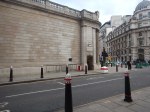
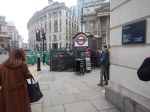
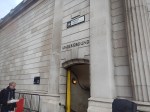
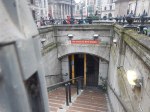
I took a walk round the entrances of the combined Bank and Monument stations, this afternoon.


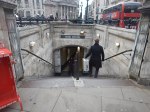

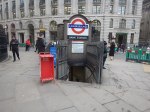



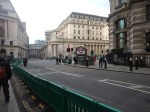








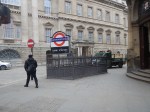

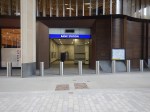

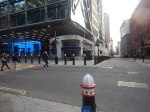
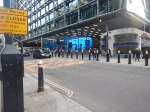

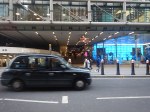


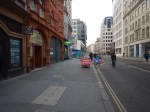



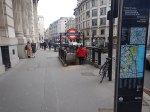


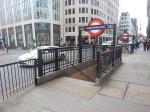
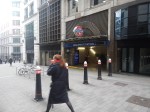
Note.
- There are a total of twenty entrances.
- Five are double entrances, with a pair of stairs leading to a single entrance tunnel.
- Only three are step-free entrances. Two are new; Bloomberg Building and Cannon Street, although the latter is yet to open.
- One entrance is currently closed.
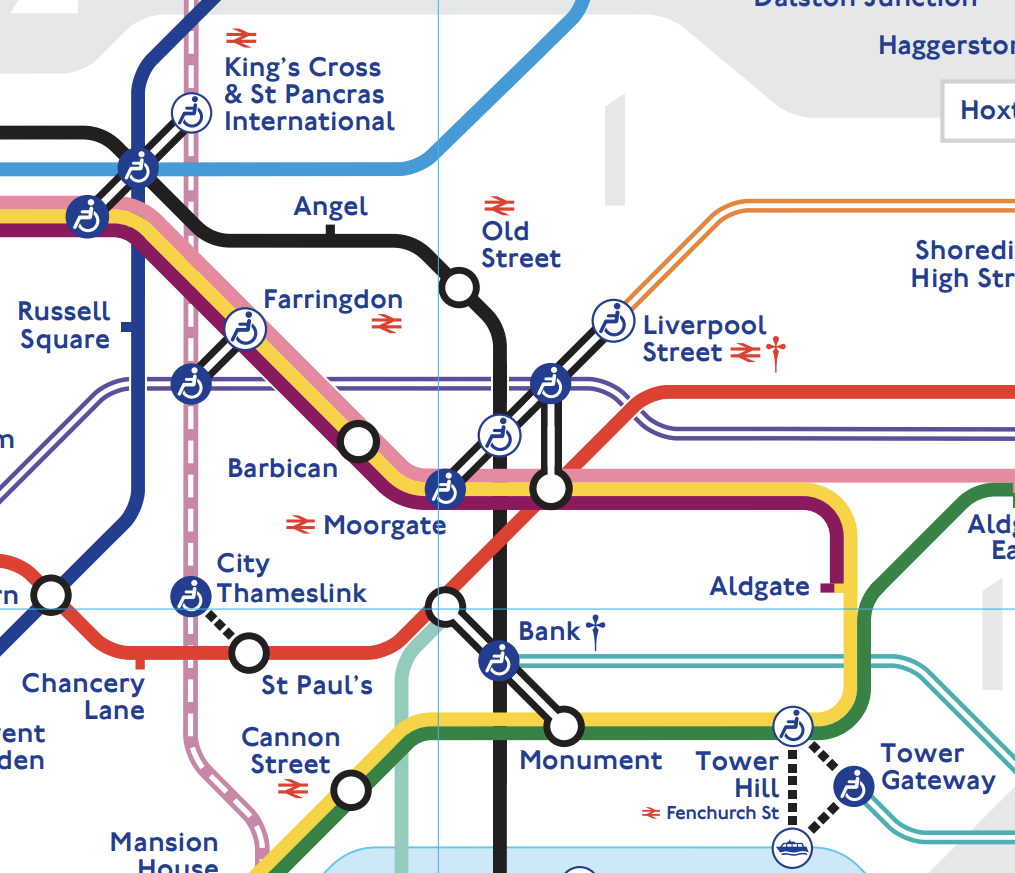
This section of the tube map, that was clipped in January 2023, shows which connections at Bank and Monument are step-free.
Note.
- At Bank, only the Northern Line and the Docklands Light Railway are fully step-free.
- At Liverpool Street, only the Elizabeth Line is fully step-free.
- At Monument, nothing is shown step free
- At Moorgate, nothing is shown fully step free, although the Elizabeth Line is fully step-free, even if it is a bit tortuous.
Let’s hope some of the gaps are filled, when the Bank Station Upgrade is completed.
There is also no full step-free entrance to the Central Line at the Bank Junction.
Cummins’ First Female Engineer Retiring After Nearly 40 Years In A Pioneering Role
The title of this post, is the same as that of this article on Commercial Carrier Journal.
The article was picked up by my Google Alert for the Cummins X15H, which is their new hydrogen internal combustion engine for large trucks.
This is the first paragraph.
Amy Boerger, Cummins vice president and general manager of on-highway for North America, is retiring in March following a nearly 40-year career. Srikanth Padmanabahn, president of Cummins’ engine business segment, said Boerger has been critical to the company’s success and leaves behind a legacy that will propel the company ahead. “She is a trusted partner and advisor and has strengthened many customer relationships that are more important than ever as they look to us for the solutions of today and tomorrow during this period of energy transition,” Padmanabahn said.
The article is an interesting long read for anybody, who is interested in the future of large diesel engines and the thinking of one of the world’s biggest players in the diesel engine industry.
This is an important paragraph.
“When we go to customers and they ask us ‘Hey, is electric for me?’ or ‘Is hydrogen for me?’ we try to steer them away from those questions,” said Samperio, who serves . “Instead, why don’t we start with the question on what are you trying to achieve. What are your goals? How do you operate? And then after we understand that, then we’ll be in a better position to say (whether) this technology fits your operation a little better or … that technology fits your operation a little better. That way, I think it allows us to just have a conversation more about what they’re trying to achieve rather than picking winners and losers.”
Samperio will be the lady’s successor.
Green Hydrogen Powered, Off-Grid Data Center-As-A-Service Is A World First
The title of this post, is the same as that of this article on Hydrogen Fuel News.
This is the first paragraph.
ECL has announced the world’s first off-grid Datacenter-as-a-Service, fully powered by green hydrogen, with 99.999% uptime at a much lower cost compared to traditional colocation data centers.
This paragraph gives details of an installation.
It runs with zero emissions at very low noise levels. The data center’s modularity combined with having no need to depend on local utilities means that it can be designed and delivered far more rapidly than other companies’ data centers. Instead of typical construction cycles that take between 18 – 24 month, ECL’s data centers take between six and nine months.
The product looks like a promising development.
I think this is the company’s web site.
Is The City Of London Moving Towards One Giant Station?
Bank and Monument Stations
When I was growing up in the 1950s and 1960s, there used to be an anomaly shown on Harry Beck’s iconic London Tube Map, that stood out as a bit different.
It was between Bank and Monument stations and was marked as an Escalator Connection, which connected the Northern Line at Bank to the District and Circle Lines at Monument.
This link was opened in 1933 and has its own section in Wikipedia labeled Monument Link, 1933.
This link has been joined by more tunnels, lifts and escalators over the last eight decades.
- In 1960, the Waterloo & City Line was connected to the main entrance of Bank station by two moving walkways.
- In 1991, the Docklands Light Railway was extended to the complex, with escalators to both the Bank and Monument entrances to the station complex.
- In November 2018, the new Bloomberg or Wallbrook entrance to the station opened, and I wrote about it in The Bank Station Walbrook Entrance Opened Today.
Bank and Monument stations have been developing as a pair of twin stations for eighty years.
The latest phase of the Bank Station Upgrade has added the following to the complex.
- A new and much large Southbound platform for the Northern Line.
- A moving walking between the Northern Line at Monument station and the Central Line at Bank station.
- Escalators between the Central Line and the Bank station end of the new moving walkway.
- Escalators between the Northern Line and the Docklands Light Railway.
The upgrade will be completed by a new entrance to the station complex on Cannon Street.
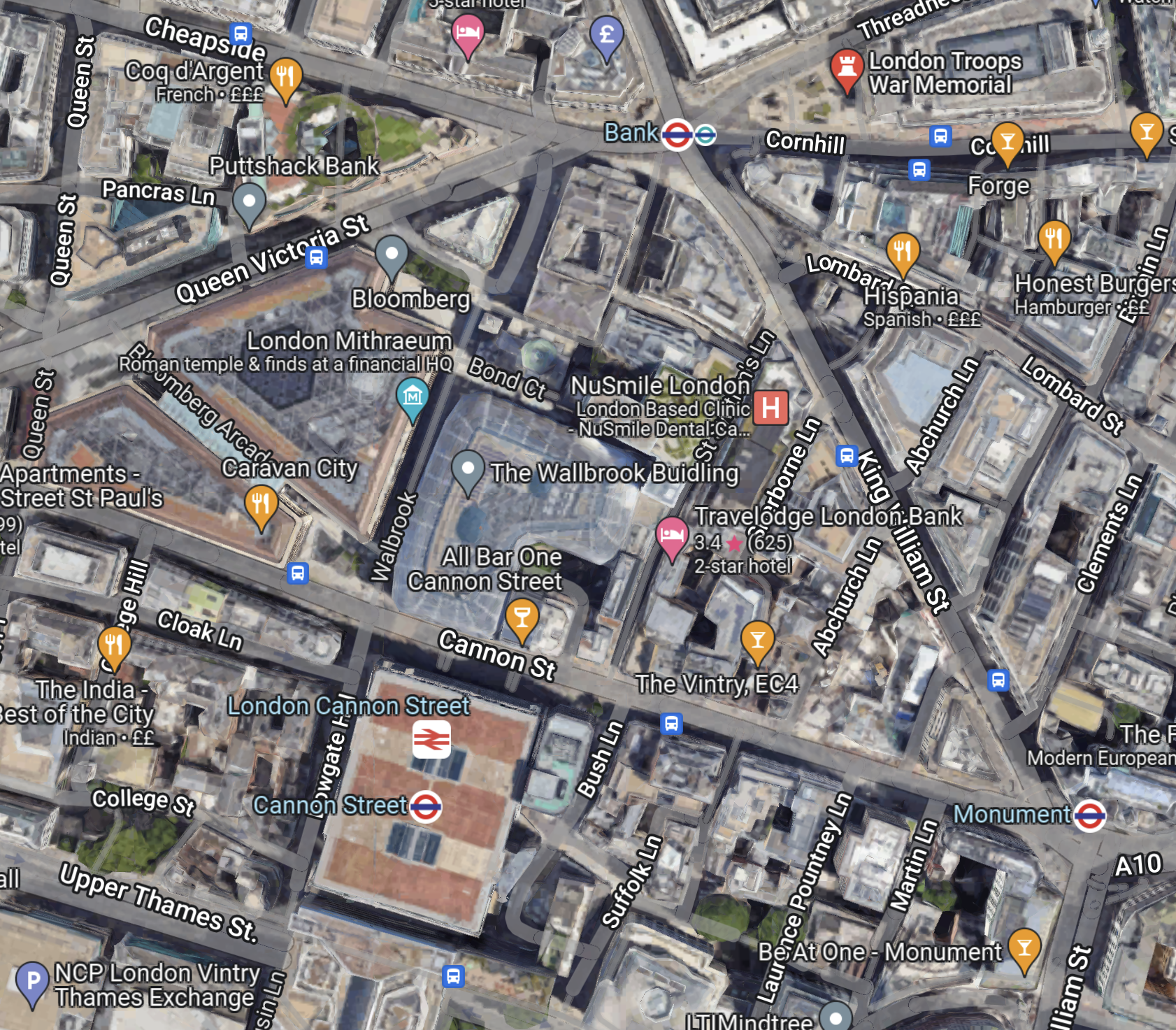
This Google Map shows the area of the station.
Note.
- The main Bank station entrance the top of the map, by the Bank of England with multiple entrances to the station.
- The main Monument entrance in the South-East corner of the map.
- The Cannon Street entrance will be in the triangle formed by Abchurch Lane, Cannon Street and King William Street.
- The Wallbrook entrance is under the Wallbrook Building.
The station has spread over a wide area, and I wouldn’t be surprised to see more entrances in the future.
Liverpool Street And Moorgate Stations
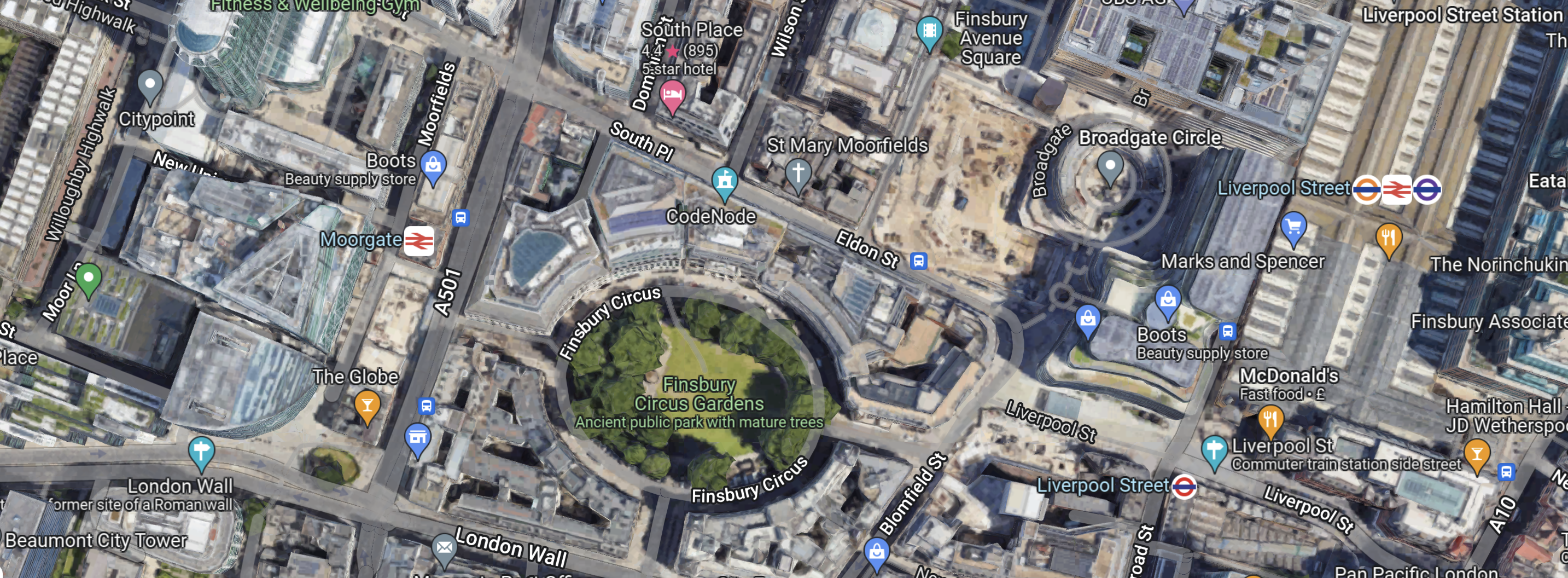
This Google Map shows Liverpool Street and Moorgate stations.
Note.
- The green space is Finsbury Circus Gardens.
- Moorgate station is to the West on the A501 or Moorgate.
- Liverpool Street station is to the East on the A10 or Bishopsgate.
There is now a tunnel between the two stations, as part of the double-ended Liverpool Street Elizabeth Line station.
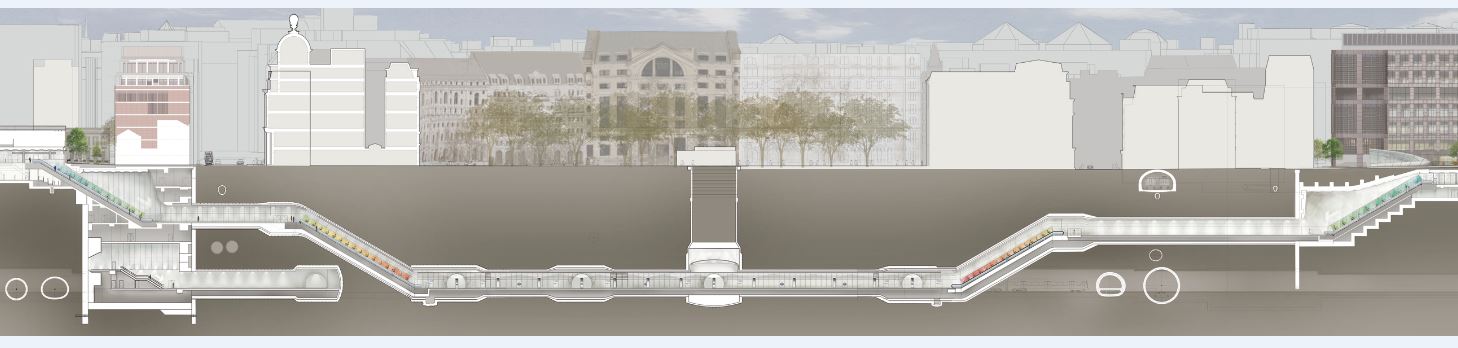
The drawing from Crossrail shows a cross-section of the Liverpool Street Elizabeth Line station.
Note.
- Moorgate station is on the left.
- Liverpool Street station is on the right.
- In the middle looking like a giant juicer is the ventilation shaft in Finsbury Circus.
- The Crossrail tunnels, which consist of two running tunnels and a pedestrian walkway between them are at the deepest level.
- There are escalators and lifts all over the place.
If it’s raining it’s a good way between the two stations.
The Rail Lines At Liverpool Street And Moorgate Stations
These routes serve the two stations.
- National Rail – Liverpool Street to Essex, Suffolk and Norfolk
- National Rail – Moorgate to North London and Hertfordshire
- Central Line – Liverpool Street
- London Overground – Liverpool Street to North-East London and Hertfordshire
- City, Hammersmith & City and Metropolitan Lines – Liverpool Street and Moorgate
- Elizabeth Line – Liverpool Street and Moorgate
- Northern Line – Moorgate
Note.
- The Circle, Hammersmith & City and Metropolitan Lines have separate stations and platforms in both Liverpool Street and Moorgate.
- The Elizabeth Line station at Liverpool Street is a double-ended station with entrances in both the original Liverpool Street and Moorgate stations.
- You can walk between Liverpool Street and Moorgate stations using the connecting tunnel of the Elizabeth Line station.
- Both Liverpool Street and Moorgate stations are well-served by buses.
These connections mean that if you arrive in either of Liverpool Street or Moorgate and need to leave from the other main station, you can catch a train on the Circle, Hammersmith & City and Metropolitan Lines for one stop or walk through the Elizabeth Line tunnel or on the surface.
The Triangle Of Lines In The City Of London
The City of London effectively has three main Underground stations, that connect to all the important lines through the City.
- Bank/Monument station connects to the Central, Circle, District and Northern Lines
- Liverpool Street station connects to the Circle, Elizabeth, Hammersmith & City, Metropolitan and Northern Lines.
- Moorgate station connects to the Central, Circle, Elizabeth, Hammersmith & City and Metropolitan Lines.
All three stations have direct Underground connections.
- Bank and Liverpool Street via Central Line.
- Monument and Liverpool Street via Circle Line.
- Bank and Moorgate via Northern Line.
- Monument and Moorgate via Circle Line.
- Liverpool Street and Moorgate via Circle, Hammersmith & City and Metropolitan Lines.
Note.
- All interconnecting services are frequent.
- The Circle at six trains per hour (tph) is the least frequent
- The connections at Bank have much improved recently, due to the Bank Station Upgrade.
It is also possible to walk between the three stations.
In Where The City Of London Leads The Rest Will Follow!, I laid out the plans of the City of London to cut vehicles in the City, impose a 15 mph speed limit and improve cycling and walking routes.
If all goes to plan, then this will open up more routes between the three stations.
Conclusion
Bank, Liverpool Street, Monument and Moorgate will evolve into one large interconnected City of London station, that is served by the Central, Circle, Elizabeth, Hammersmith & City, Metropolitan and Northern Lines.
The most important thing that must be done is improve the information.
At least though, the vast walls that have been created in the Bank Station Upgrade and the Elizabeth Line stations, will be up to the task of informing passengers, the routes they need to take.
The other important thing, is to provide step-free and wheelchair-friendly routes between, Bank, Liverpool Street, Monument and Moorgate, so that passengers with reduced mobility can safely get on their way.
After the current round of construction and upgrades, I don’t think any of the rail routes between the stations are step-free.
Germany Pinpoints 36.5 GW Of Offshore Wind Areas, Publishes Development Plan
The title of this post is the same as that of this article on offshoreWIND.biz.
This is the sub-heading.
Germany’s Federal Maritime and Hydrographic Agency (BSH) has published a new area development plan for the expansion of offshore wind energy. The plan maps out the build-out of offshore wind by 2030, by when the country is to reach 30 GW of capacity connected to its grid, and sets the stage for further deployment of wind turbines at sea, with the 2035 target of 40 GW estimated to be exceeded.
30 GW of offshore wind by 2030 and 40 GW by 2035 are ambitious targets, but how do we compare?
This news story on the UK Government web site is entitled UK Signs Agreement On Offshore Renewable Energy Cooperation, contains this statement.
The initiative is expected to support the UK’s ambitious targets to increase offshore wind fivefold to 50GW, and deliver 18GW of electricity interconnector capacity – up from 8.4 GW today – by 2030.
I don’t think we compare badly.
Leyton Station – 26th January 2023
Leyton station on the Central Line, is going to be upgraded as I wrote about in Leyton Station Set For £14m Upgrade.
I said this in the related post.
Leyton Station will receive step-free access and a new ticket hall and concourse thanks to £14 million from the government’s Levelling Up Fund.
I took these pictures today.


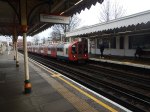
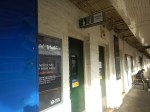

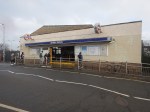
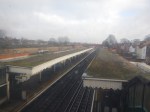


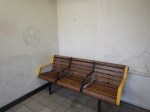


Note.
- The station has two waiting rooms and at least one toilet.
- The London-bound platform has a unique cloisters with a glass roof.
- A new ticket office and concourse, would improve the look of the station.
- Well-designed step-free access improves any station.
- The platforms are long.
I think it is a station with the potential to be one of the best.
These are a couple of thoughts.
The Red Bridge At The Eastern End Of The Station
This Google Map shows the station.
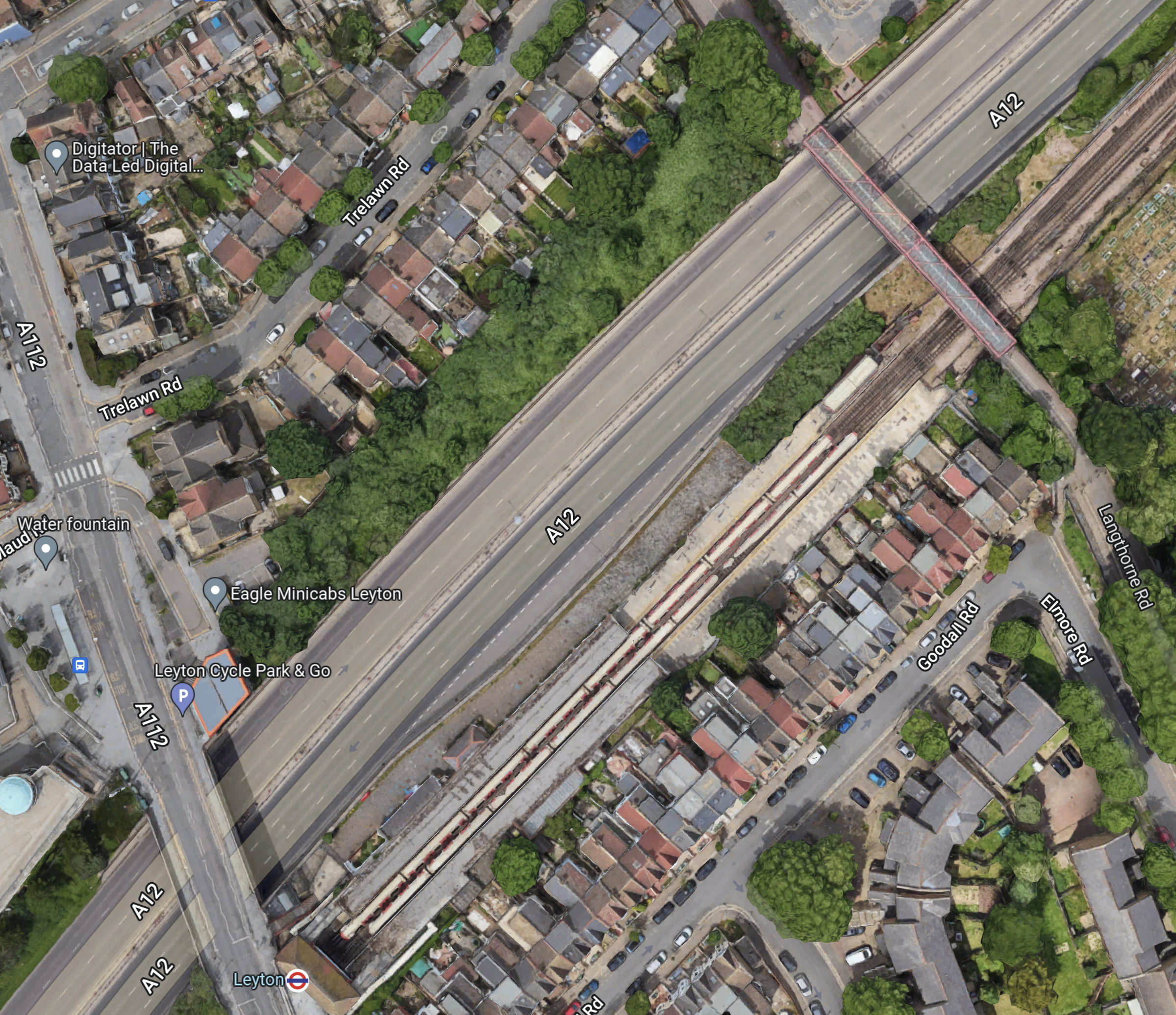
Note.
- The station buildings are in the South-West corner of the map.
- The red bridge is in the North-East corner of the map.
- Two trains are in the station, with plenty of space at both ends.
Would it be worthwhile and possible to add access to the station from the bridge?
Step-Free Access Between Train And Platform
This picture shows the current access between train and platform.
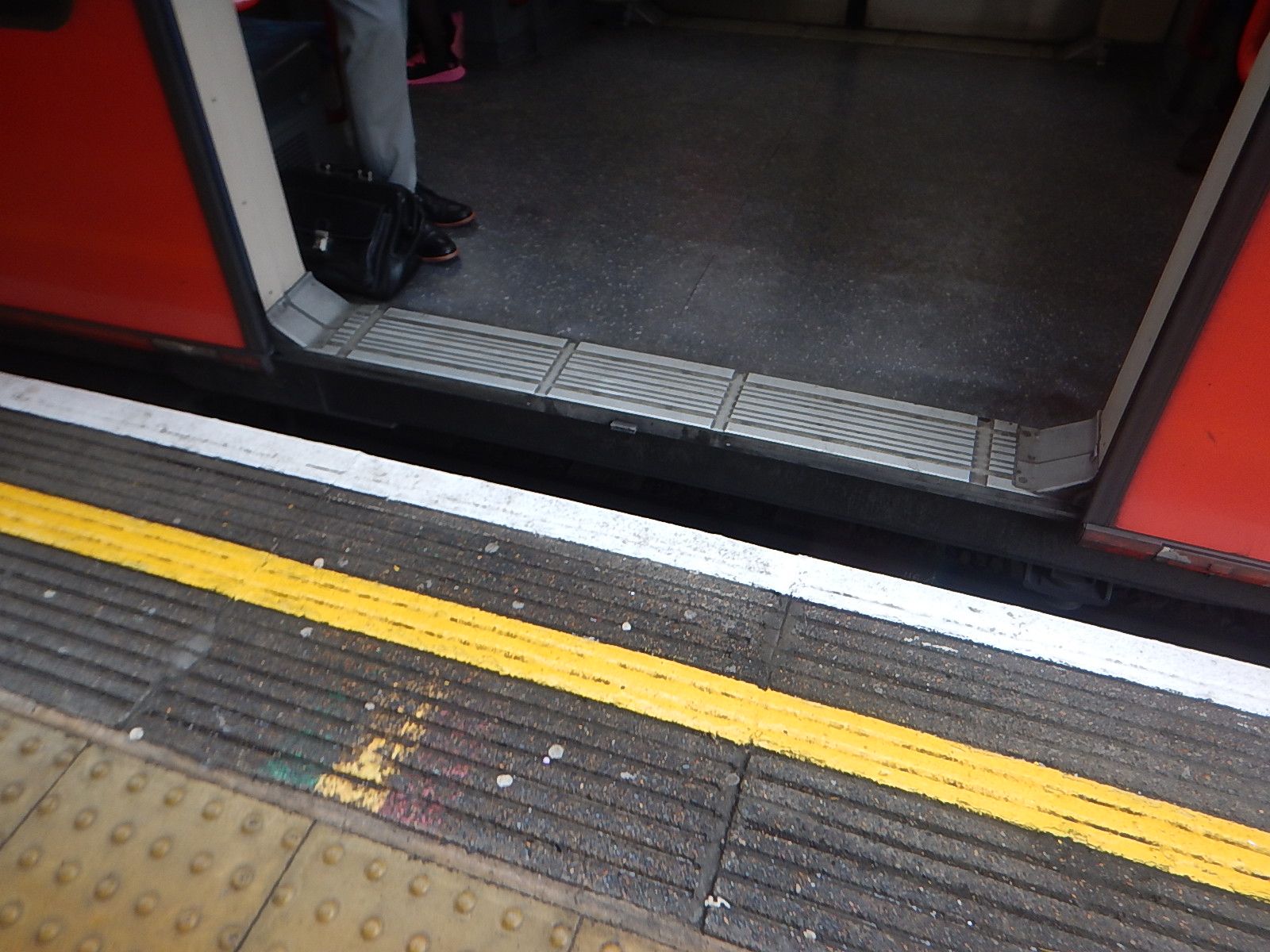
As the edge of the platforms will probably be realigned, would it be sensible to make the access better?
A Trip Along The Central Line – 26th January 2023
Today, I took a trip on the Central Line from Leyton station in the East to Ealing Broadway station in the West.
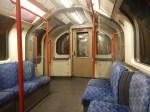
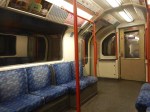
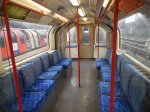

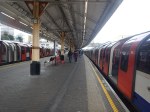
The trip was about eleven this morning and one aim was to assess how busy the line was.
For much of the journey between Leyton and Marble Arch, the train had about half the seats taken, but by the time we got to Ealing Broadway, there were only two of us in my carriage.
After arriving, I had a short chat with the cheery Scots lassie, who had driven us across London.
- She said, that passenger levels had held up on the Central Line, despite the competition from the Elizabeth Line.
- But she also said that large numbers of passengers transfer from the Elizabeth Line to the Central Line at Stratford in the Morning Peak.
- She didn’t say, but there is probably an opposite change in the Evening Peak.
With the exception of a couple of ladies with babies in buggies, most passengers were not travelling with any heavy luggage.
Elizabeth Line: Commuters Say Service ‘Not What Was Promised’
The title of this post, is the same as that of this article on the BBC.
This is the sub-heading to the article by Tom Edwards.
All of the huge modernist stations are now open and it is architecturally impressive, but what has service on the Elizabeth line been like since it opened in the summer?
These three paragraphs talk about how passengers have reported problems to Tom.
Many say it has been hit and miss, and commuters in West Ealing have been in touch with me to highlight some of the problems.
They recorded some of their journeys for BBC London, and it doesn’t look pleasant.
Many are really fed up with the delays and cancellations and above all the overcrowding.
As with many new railways, like the London Overground, the Borders Railway and the Dartmoor Line, the passenger numbers on the Elizabeth Line have exceeded projections.
The main reasons are probably.
- Convenience of the new route and its stations.
- Curiosity about the new infrastructure.
- The improved access to the trains with heavy cases.
But in the case of the Elizabeth Line two other factors also apply.
Are Passengers Changing From the Piccadilly to the Elizabeth Line?
Consider.
- The Piccadilly Line trains are smaller than the Elizabeth Line trains.
- The Piccadilly Line trains are not air-conditioned.
- Heathrow Central to Holborn is 62 minutes on the Piccadilly Line and several minutes quicker using the Elizabeth and Central Lines with a change at Bond Street or Tottenham Court Road.
Many passengers, who previously used the Piccadilly Line may swap to the Elizabeth Line for a quicker journey on a more comfortable and spacious train.
The new Piccadilly Line trains will have more space, walk-through carriages and air conditioning, so may well tempt passengers back.
Bond Street And All Stations To the East On the Elizabeth Line Are Only Five Minutes Slower By Elizabeth Line Direct
Consider.
- Heathrow Central and Bond Street is 38 minutes using Heathrow Express and the Elizabeth Line with a change at Paddington.
- Using the Elizabeth Line all the way takes 43 minutes.
- The figures for Liverpool Street are 46 and 51 minutes respectively.
- The figures for Canary Wharf are 53 and 58 minutes respectively.
Note.
- The direct route avoids the change at Paddington.
- The change at Paddington between Heathrow Express and the Elizabeth Line is not onerous.
- Routes using Heathrow Express are fifteen pounds more expensive.
- If you’re desperate for a coffee, you can pick one up, when you change at Paddington using Heathrow express.
I believe a regular traveller to Heathrow, who has easy access to an Elizabeth Line station and in the past has used Heathrow Express will give the Elizabeth Line a chance.
The Jewel In The East Is On The Elizabeth Line
In 2014, I wrote Is Whitechapel Station Going To Be A Jewel In The East?.
Consider.
- The Elizabeth Line will go through the station with a frequency of up to 24 trains per hour (tph).
- The two Eastern branches of the Elizabeth Line split to the East of Whitechapel station.
- There will be four tph between Heathrow and Whitechapel.
- The East London Line of the London Overground goes through the station with a frequency of 16 tph, that will be raised to at least 20 tph in a few years.
- The District Line goes through the station with a frequency of upwards of 12 tph.
- The Hammersmith and City Line goes through the station with a frequency of 6 tph.
- The station has large numbers of lifts and escalators.
Passengers from all over the Eastern half of London will change at Whitechapel on their journey to and from Heathrow.
Farrington station Connects Thameslink And The Elizabeth Line
Consider.
- The Elizabeth Line will go through Farringdon station with a frequency of up to 24 tph.
- The Circle, Hammersmith and City and the Metropolitan Lines will go through the station with a combined frequency of up to 24 tph.
- Thameslink will go through the station with a frequency of up to 14 tph.
Passengers from Thameslink’s catchment area will change at Farringdon on their journey to and from Heathrow.
Overcrowding On The Elizabeth Line
It is not a surprise to me, that the Western end of the Elizabeth Line is overcrowded.
I noticed it in November 3022, when I wrote So Many Cases On A Train!.
What Can Be Done To Ease The Overcrowding?
These are possible ways to ease the overcrowding.
Increase The Number Of Trains To Heathrow
I would feel the obvious way to increase the number of trains to Heathrow, would be to run direct trains between Shenfield and Heathrow.
Currently, there are these trains.
- 4 tph – Heathrow Express – Paddington and Terminal 5
- 2 tph – Elizabeth Line – Abbey Wood and Terminal 4
- 2 tph – Elizabeth Line – Abbey Wood and Terminal 5
But is there the capacity to add extra trains between Hayes & Harlington and Heathrow through the tunnel?
Run A Service Between Shenfield And Hayes & Harlington
This would add capacity in West London, where it is needed, but wouldn’t add any extra trains through the tunnel to Heathrow.
By timing this service in combination with the Elizabeth Line services to Heathrow, I suspect a very efficient service between Heathrow and both Eastern terminals could be devised.
- As four tph run between Abbey Wood and Heathrow, four tph would be run between Shenfield and Hayes & Harlington.
- Going towards Heathrow, the train from Shenfield to Hayes & Harlington would be a few minutes in front of the train from Abbey Wood to Heathrow. Passengers going from Shenfield to Heathrow would be instructed to change at any station between Whitechapel and Southall, by waiting a few minutes for the following train.
- Coming from Heathrow, passengers wanting to go to Shenfield would walk across the platform at Hayes & Harlington to catch the waiting train to Shenfield. The Shenfield train would follow a few minutes behind the Abbey Wood train.
Note.
- The two train services would run as a pair, a few minutes apart.
- No new infrastructure would be required.
Currently, there are eight tph between Whitechapel and Hayes & Harlington.
Four tph between Shenfield and Hayes & Harlington would increase the following.
- The capacity between Whitechapel and Hayes & Harlington by fifty percent.
- The train frequency in the central tunnel to twenty tph or a train every three minutes.
- The frequency between Paddington and Shenfield to twelve tph.
There would still be four tph available for more services.

