Riding The Bakerloop BL1 – 28th September 2025
The Bakerloop BL1 is a new express bus route in London, that runs between Waterloo station and Lewisham Town Centre.
This article on the BBC, which is entitled New Bus Route Launches With Free Fares In Week One, announced the route.
This is the sub heading.
A new bus route that links parts of south-east London has launched with free fares for its first week of operation
These two paragraphs describe the service in more detail.
The Bakerloop will run between Waterloo station and Lewisham every 12 minutes during the day from Monday to Saturday and every 15 minutes in the evenings and on Sundays.
Electric double-decker BL1 services will operate between 05:00 BST and 00:30 along the proposed Bakerloo Tube line extension route, stopping at Elephant and Castle, New Cross Gate and Lewisham stations.
I took these pictures as I rode from Waterloo station to Lewisham Town Centre.

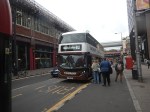






























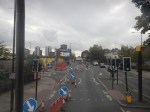


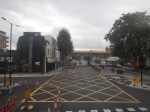









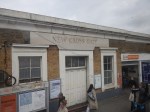



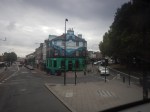



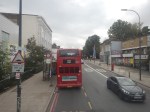






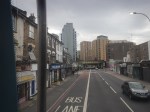
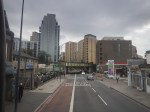

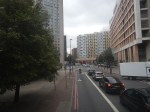
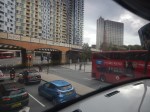





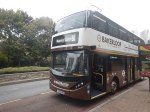





Note.
- The route starts at Stop D in Waterloo Road on the East side of Waterloo station.
- If you leave the station by Exit 2 and then cross Waterloo Road on the light-controlled crossing, then Stop D is less than thirty metres to your right.
- Pictures 15-24 were taken as the bus went over Bricklayers Arms flyover.
- Picture 23 is a close up of one of the trees along the route. Is it a London Plane.
- Despite the Summer, most trees seem to be in a reasonable condition.
- Crossing the roads and the information could be better in Lewisham Town Centre.
I have some further thoughts.
Trains And Bakerloop BL1 Compared
Consider.
- The bus takes a few minutes over half-an-hour.
- The train takes 19 minutes.
- The train runs twice an hour.
- The bus runs at least four times per hour.
The bus is probably the more affordable option, but the train is faster.
Is The Bakerloop BL1 Fast Enough?
Consider.
- The bus certainly takes almost twice as long as the trains.
- But then it is more frequent.
- The route doesn’t seem particularly hilly.
- The Alexander-Dennis bus didn’t seem slow.
- The bus would probably attract more passengers, if it was faster.
It will be interesting to see how this route develops.
Would Hydrogen Buses Help?
Two of the hydrogen buses, I have ridden have been on longer routes and they have used their undoubted extra power to accelerate and climb hills faster.
Their longer range probably allows them to work for much of a day, without refuelling.
So I wouldn’t rule out hydrogen buses on this route, at some point in the future, because of the route’s length.
Is Bakerloop The Right Name?
I don’t think so, as a certain class of tourist, will assume the bus goes to Baker Street and the Sherlock Holmes Museum.
Perhaps, it should have been called something descriptive like the Waterloo-Lewisham Express.
Is Bakerloop BL1 Being Used As A Pathfinder For The Bakerloo Line Extension To Lewisham?
I’ve read somewhere that it is.
It wouldn’t be a new idea and a properly structured trial could give valuable information about how many people would use the new rail route.
Surely, a similar approach could be taken to provide projections for passenger usage on the West London Orbital Railway.
Could Other Routes Use A Similar Philosophy?
In Riding Birmingham’s New Hydrogen-Powered Buses, I rode a route across Birmingham, that was run to a similar philosophy to the Bakerloop BL1 route, except thast it used hydrogen buses.
So I’m pretty sure the answer is in the affirmative.
Will Three-Axle Double-Deck Buses Be Useful For Routes Like BakerLoop BL1?
I asked Google AI, if three axle electric and hydrogen double-deck buses were being developed and received this reply.
Yes, Wrightbus and Wisdom Motor have developed and are producing three-axle zero-emission double-decker buses, including both battery-electric and hydrogen fuel-cell models. Wrightbus recently unveiled its 6×2 Streetdeck prototype, and Wisdom Motor partnered with Citybus to develop a three-axle hydrogen double-decker (DD12) for Hong Kong’s bus fleet.
I believe that a three-axle bus may have a greater payload, so for routes like Bakerloop BL1, they may be very useful, if only to carry bigger batteries.
The Three Baltic Countries Sign The Largest Railway Electrification Agreement In History
The title of this post, is the same as that as this news item on the LTG Group web site.
This is the sub-heading.
Today in Vilnius, the institutions of the three Baltic countries responsible for implementing the Rail Baltica project signed a historic agreement on railway electrification. The contract, valued at €1.77 billion (excluding VAT), has been awarded to COBELEC Rail Baltica – a consortium formed by the Spanish companies Cobra Instalaciones y Servicios S.A. and Elecnor Servicios y Proyectos S.A.U.
These three paragraphs add more detail.
The electrification of the Rail Baltica European railway is considered the largest cross-border railway electrification initiative in Europe, implemented as a single, joint project.
“Rail Baltica is more than just infrastructure – it is an economic and security link to the West. This contract is particularly important for our integration into the European railway network, enabling smooth passenger and freight transport while strengthening the resilience of the Baltic region. It is our strategic pathway to the future,” said Eugenijus Sabutis, Acting Minister of Transport and Communications of Lithuania.
One of the largest contracts in the history of the Baltic States was signed by the institutions responsible for implementing the project: LTG Infra, the infrastructure company of the LTG Group; Eiropas Dzelzceļa Līnijas in Latvia; and Rail Baltic Estonia in Estonia. Representatives from the ministries of transport and communications of all three countries also gathered in Vilnius for the occasion.
Note.
- The electrification will be to the European standard of 25 KVAC overhead.
- There will be a total of 2,400 km. of electrification.
- High-speed passenger and freight trains will operate on the full length of the route.
- It is planned that the electricity used will be generated from renewable energy sources.
- I feel everybody will be pleased except Putin.
The Russian dictator and war-monger won’t like it, as the railway will not be built to Russian standards.
The Garden At 120 – 27th September 2025
The Wikipedia entry for Fen Court has this section, which has a brief description of The Garden At 120.
In 2019, a mixed use building of 15 storeys built by Generali Real Estate with Eric Parry Architects, called One Fen Court or 120 Fenchurch Street, opened alongside the east side of Fen Court. The building has a publicly accessible roof garden named The Garden at 120, and is 69 metres (226 ft) high. A pedestrian route parallel to Fen Court runs through an undercroft in One Fen Court, with a ceiling-mounted public artwork.
As the helpful man on the entrance to the Garden at 120, said that I could see the tower of All Hallows Staining, I went back today and took these pictures.


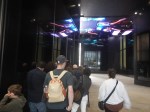






















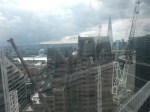







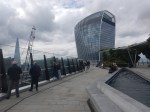


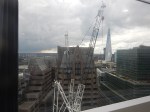




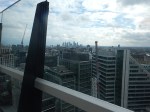

















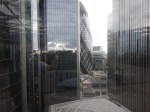






Note.
- The Shard, Guerkin and Walkie-Talkie can be easily identified.
- Canary Wharf, St. Paul’s Cathedral and the River Thames can be seen in the distance.
- Pictures 16-21 give views of the tower of All Hallows Staining.
I shall be taking more pictures as Fifty Fenchurch Street grows.
Rail Vehicle Dispensation: Great Western Railway Class 230 Fast Charge Unit
The title of this post, is the same as that of this page on the UK Government web site.
The page is an interesting read, but I do feel, that it marks a big step on introducing the Class 230 trains on the Greenford Branch between West Ealing and Greenford stations.
I should say, that I’ve used the Class 230 trains several times and there are trains and platforms with worse passenger access problems on the UK network.
Where Have The Special Characters Gone In WordPress?
I have just written Ørsted In Talks To Sell Half Of Huge UK Wind Farm To Apollo, where of necessity I have used Ørsted more than a few times.
There used to be an omega character in WordPress, that you used to access the special characters, but it seems to have disappeared.
Does anybody know where it’s gone?
TIA!
Ørsted In Talks To Sell Half Of Huge UK Wind Farm To Apollo
The title of this post, is the same as that as this article in The Times.
This is the sub-heading.
The US investment giant is eyeing a 50 per cent stake in the Danish energy company’s £8.5 billion Hornsea 3 project off the Yorkshire coast
These are the first three paragraphs, which add more detail.
An American investment giant is negotiating a deal to buy half of what will be the world’s largest off-shore wind farm off the coast of Yorkshire from the troubled Danish energy company Ørsted.
New York-based Apollo, which oversees assets of about $840 billion, is in talks with Ørsted about acquiring a 50 per cent stake in Hornsea 3, an £8.5 billion project that started construction in 2023 and will be capable of powering more than three million UK homes.
A transaction would be a boost for Orsted, which has come under pressure in recent months from rising costs and a backlash against renewables in the United States by President Trump. Orsted started the process of selling a stake in Hornsea 3 in 2024 and said last month that it had an unnamed preferred bidder for the asset, which the Financial Times first reported was Apollo.
I have written several times about Ørstedregularly building a large wind farm and then selling it, so they must be doing something right.
In World’s Largest Wind Farm Attracts Huge Backing From Insurance Giant, I wrote about how Aviva bought Hornsea 1 from Ørsted.
One of the guys at Aviva explained that these sort of investments gave the right sort of cash flow to fund insurance risks and pensions.
Now that Trump has attempted to give his kiss of death to wind power in the United States, will US funds be looking for quality investments like Hornsea 3 in the UK and other large wind farms in France, Germany, Norway, Japan and Korea?
Already, Blackrock are investing billions to build a massive data centre at Blyth, where there are Gigawatts of offshore wind power and an interconnector to Norway, so that UK and Norwegian wind can be backed up by UK nuclear and Norwegian hydropower.
Highview Power And Ørsted
I wrote Highview Power, Ørsted Find Value In Integrating Offshore Wind With Liquid Air Energy Storage in November 2023.
I would have thought, that by now a battery would have been announced in one of Ørsted’s many projects.
I asked Google AI if Highview Power and Ørsted were still talking about liquid air energy storage and received this reply.
Yes, Highview Power and Ørsted are still actively involved in Liquid Air Energy Storage (LAES), having completed a joint study in late 2023 on combining LAES with offshore wind to benefit the UK grid, and the findings were presented to the government for its long-duration energy storage (LDES) consultation. They believe LAES can reduce wind curtailment, increase energy productivity, and support grid resilience, with potential projects aligned with offshore wind farm timelines.
Perhap’s Ørsted are getting their finances aorted first?
Conclusion
The Times They Are A-Changing!
Just Attempted To Book King’s Cross To Glasgow On Lumo
Lumo starts their King’s Cross and Glasgow service on the 14th December 2025, which is the day the timetable changes.
- All the tickets for the first few days have gone.
- But tickets can be booked into February.
- It also appears that most of the offered direct services have sold out already.
- Are Scots showing their frugal side?
This was a typical ticket, I could have booked using my Senior Railcard for the 7th January 2026.
- Leave King’s Cross at 05:45.
- Arrive Glasgow Central at 11:22.
- Journey Time is 5:37.
- Cost £23.10
Note.
- There was a change of train to ScotRail at Edinburgh Waverley.
- The price included a ticket on the shuttle bus between Glasgow Queen Street and Glasgow Central.
- Serving both main Glasgow stations with one ticket is probably what ScotRail offer.
The service looks convenient and well-priced.
Will Trains Be Faster After The Timetable Change On 14th December 2025?
These are times for two early morning trains, between King’s Cross and Edinburgh, where the first is before the timetable change and the second is after.
- 23rd October 2025 – 05:48 – 10:09 – 04:19
- 17th December 2025 – 05:45 – 09:57 – 04:12
Seven minutes is only the first saving of what I believe will be several.
Historic Church Tower Suspended On Stilts To Make Way For London Skyscraper
The title of this post, is the same as that of this article in The Times.
This is the sub-heading.
The remaining part of the 700-year-old All Hallows Staining, off Fenchurch Street, will be the centrepiece of the public square below Axa’s £1 billion office
These three paragraphs add more details.
A700-year-old church tower is being suspended on 45ft stilts while developers clear the ground beneath to make way for the City of London’s newest skyscraper.
The tower, which is all that remains of All Hallows Staining close to Fenchurch Street station, is being preserved and will be the centrepiece of the public square at the base of 50 Fenchurch Street — the £1 billion office tower being built by the investment arm of Axa, the French insurer.
More than 125,000 tonnes of earth has been cleared from underneath and around the church — which survived the Great Fire of London in 1666 — into which the foundations will be laid and a basement level built.
The Wikipedia entry for All Hallows Staining, starts with this paragraph.
All Hallows Staining was a Church of England church located at the junction of Mark Lane and Dunster Court in the north-eastern corner of Langbourn ward in the City of London, England, close to Fenchurch Street railway station. All that remains of the church is the tower, built around AD 1320 as part of the second church on the site. Use of the grounds around the church is the subject of the Allhallows Staining Church Act 2010 (c. v).
Note.
- The Wikipedia entry gives a lot of history and other details about the tower.
- It was named “Staining”, which means stone, to distinguish it from the other churches of All Hallows in the City of London, which were wooden.
- The old church survived the Great Fire of London in 1666 but collapsed five years later in 1671.
- The church appears to have been cheaply rebuilt in 1674.
- In 1870 the parish of All Hallows Staining was combined with that of St Olave Hart Street and All Hallows was demolished, leaving only the tower.
- All Hallows Staining seems to have survived World War Two, but St Olave Hart Street suffered serious damage.
- Between 1948 and 1954, when the restored St Olave’s was reopened, a prefabricated church stood on the site of All Hallows Staining. The tower of All Hallows Staining was used as the chancel of the temporary church.
- The remains of All Hallows Staining were designated a Grade I listed building on 4 January 1950.
The tower of All Hallows Staining seems to have a very strong survival instinct.
This web page gives more details of Fifty Fenchurch Street,
This morning, I went to take some pictures of the tower and the construction site.







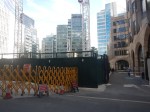

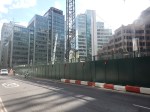



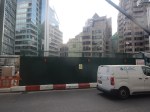
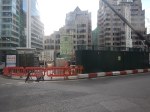




Note.
- I walked around the site from the forecourt of Fenchurch Street station.
- The last three pictures were taken from the top deck of a Westbound 25 bus.
- There appears to be no accessible bar or roof-top from which you can look down on the site.
So for the present time, the 25 bus seems to give the best views.
This afternoon, I took a train to Fenchurch Street station and looked at the Eastern and Northern sides of the site.







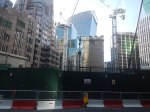


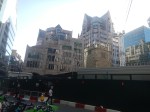





Note.
- The first picture was taken through the upper windows of the front of Fenchurch Street station.
- I think I might have got a better view out of the window of Fenchurch Street station, if Great Socialist Railways had cleaned the windows.
- In pictures three to nine, the “Walkie-Talkie” towers over All Hallows Staining.
- Some pictures were better than those I took in the morning, as the truck had moved.
- The last picture shows the sign for the Garden at 120.
The area isn’t short of geometric shapes to photograph.
Offshore Construction Work Resumes On Revolution Wind After US Judge’s Ruling
The title of this post, is the same as that of this article on offshoreWIND.biz.
This is the sub-heading.
A US judge in Washington has cleared the way for work to resume on the 704 MW Revolution Wind offshore wind farm after granting a temporary injunction that lifted the federal stop-work order imposed in August.
These two paragraphs add details to the post.
On 22 August, the US Department of the Interior’s (DOI) Bureau of Ocean Energy Management (BOEM) issued a stop-work order halting all offshore construction activities on the 704 MW project, which is already 80 per cent completed, according to its developers, Ørsted and Skyborn Renewables.
A few days later, the joint venture challenged the stop-work order in the US District Court for the District of Columbia, while Connecticut and Rhode Island filed their own lawsuits against the decision on the same day.
I’ve written about this project before in ‘This Has Nothing To Do With National Security’ | Revolution Wind Halt Leaves Connecticut Leaders Demanding Answers
 The Anonymous Widower