A First Look At SEGRO Logistics Park Radlett – 26th February 2026
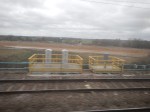
The site of SEGRO Logistics Park Radlett can really only be seen from a train on the Midland Main Line going between Radlett and St Albans City stations.
I took these pictures from a Thameslink train going North.




































I took these pictures from a Thameslink train going South.



















Note.
- Most of the work at present is site clearance and landscaping.
- The Midland Main Line crossed over the M25 and goes under A414.
- Veralum Golf Course is on your left as you approach St Albans.
The Logistics Park is going to cover a large area.
I shall be following this project regularly.
New Baltic Sea Interconnector On Horizon As Lithuania, Latvia, and Germany Plan Cross-Border Link
The title of this post, is the same as that of this article on offshoreWIND.biz.
This is the sub-heading.
Lithuania, Latvia, and Germany are planning a joint offshore interconnector that would enable electricity trading between the Baltic countries and Germany and allow for the integration of up to 2 GW of offshore wind capacity in Lithuania and Latvia
These first two paragraphs add more detail to the article.
The energy ministers of the three countries signed a joint declaration of intent on 18 February, paving the way for the development of the Baltic-German PowerLink interconnector, which would, in addition to electricity trading and offshore wind capacity integration, also enable the expansion of onshore renewable energy capacity.
The Lithuanian, Latvian, and German transmission system operators (TSOs) – Litgrid, Augstsprieguma tīkls and 50Hertz – agreed to assess the feasibility of the hybrid electricity interconnection.
As Germany, has the following connections under development in the West.
- AquaVentus to Aberdeen, Humberside, Denmark, Norway and The Netherlands.
- NeuConnect to the Isle of Grain In England.
- GriffinLink, which is an offshore link to England.
The Germans seem to be putting themselves at the centre of an energy distribution system, that has the capability to stabilise European and UK electricity for thousands of years. Especially, if the network grows to include more countries.
This paragraph says this about the Baltic-German PowerLink project.
The Baltic-German PowerLink project concept developed by Litgrid, Augstsprieguma tīkls, and 50Hertz includes a 2 GW, approximately 600 kilometres long hybrid offshore connection, with the connection point in the Baltic States planned to be on the border between Lithuania and Latvia. The exact location is to be determined after technical studies.
Note.
- The interconnectors may be long, but they are not longer than anything built successfully before in European waters.
- The UK and the Island of Ireland are well-linked.
- There would appear to be no need for challenging projects like the Morocco-UK Power Project
I suspect that Germany will get the energy it needs and the British Isles will get a nice little earner.
If Europe is generating large amounts of wind and solar energy with its variable output it will need lots of energy storage.
What Countries Have The Terrain For Pumped Storage Hydro In Europe?
I asked Google AI and received this answer.
Key countries with ideal, high-elevation terrain and significant existing or planned capacity include:
Alpine Region (The Heart of European Pumped Storage):
Switzerland: Extremely high capacity due to steep, mountainous landscapes and significant water sources, hosting the world’s oldest working pumped storage plant.
Austria: Heavily mountainous, it is a major player in PSH expansion and modernization.
France: Home to one of Europe’s largest, the Grand Maison hydroelectric power station.
Italy: Holds high capacity with numerous planned projects.
Germany: Strong existing infrastructure.
Southern Europe:
Spain: Features some of Europe’s largest plants (e.g., La Muela/Cortes-La Muela).
Portugal: Significant recent investment in large-scale projects like the Tâmega complex.
Other Potential Areas:
Norway: High potential due to its mountainous, water-rich terrain.
United Kingdom: High project volume currently under construction.
Balkans & Central Europe:
Countries like Bulgaria, Romania, and the Czech Republic have suitable terrain for further development.
These countries benefit from significant hydraulic head (steep drop) and natural or artificial reservoir potential, making them ideal for storing energy for peak consumption hours.
Note.
- As expected, the Alpine region is Top of the League.
- The UK is holding its own despite its small mountains.
- There is a lot of potential to be developed.
But then Electric Mountain in Snowdonia is certainly at the top table of pumped storage systems despite being built in the 1980s.
What Countries Have The Terrain For Hydrogen Storage In Europe?
I asked Google AI and received this answer.
Key European countries with suitable geological terrain—specifically salt caverns and depleted gas fields—for large-scale, underground hydrogen storage include Germany, the Netherlands, Denmark, the United Kingdom, and France. Other significant regions for storage potential include Spain, Hungary, and Austria, which are developing porous storage facilities.
Key Regions & Terrain Types:
Salt Caverns (North-Western Europe): Germany, the Netherlands, Denmark, France, and the UK have substantial salt deposits suitable for creating caverns, identified as cost-efficient for large-scale storage.
Depleted Gas Fields (Porous Rock): The Netherlands, Germany, and parts of Central/Southern Europe (Spain, Hungary) have significant capacity in existing porous storage, particularly in the North Sea region.
Specific Projects: Germany (Uniper’s Krummhörn project), Netherlands (HyStock), and France (HYPSTER at Etrez) are active, with Spain and Denmark emerging as major hydrogen hubs.
Capacity Potential: The Netherlands, for instance, holds massive potential (35-60 TWh) due to its offshore and onshore depleted fields.
Salt cavern projects, which offer high-deliverability storage, are heavily concentrated in the North-Western European industrial corridor.
I was lucky enough have a tour of ICI’s salt mine in Cheshire, when I worked there in the 1960s and I remember these facts from those days.
- There was enough salt in the ground under Cheshire to last several thousand years.
- Most salt was extracted from boreholes, for making chlorine using electrolysis and the Castner-Kellner process.
- Hydrogen was a by-product and much of it was mixed with coal gas to raise steam for the works.
The same technique used to make boreholes to extract the salt, is used to hollow caverns in the salt to store gases like hydrogen.
Once, when they were digging salt out of the salt mine at Winsford, a worker broke into an unmarked borehole and ICI nearly lost the mine because of the water rushing in.
Two stories stand out from the rescue of the mine.
- There was a need for dry clothes for all the workers, so ICI took a truck to Marks & Spencer in Northwich and emptied it of anything they might need. I was told the story enriched with plagues of locusts.
- A Ford Transit was found to have travelled a few thousand miles underground in axle deep salt slurry. Rather, than scrap it and buy another, it was offered back to Ford, who were delighted to swap it for a new one. I heard that Ford said, that the accelerated corrosion research would have taken many years, if done on the roads.
Always think out of the box.
To Sheffield In An East Midlands Railway Class 810 Train
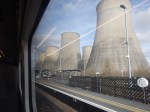
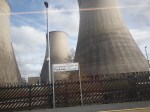
I took these pictures on the journey.



















































































































































Note.
- Five-car Class 222 And Class 810 trains Have similar lengths, so they can share platforms at St. Pancras – Nice Thinking!
- The Trainspotters will be able to see East Midlands Railway, Eurostar and Southeastern Highspeed.
- The Wymington Deviation was a Victorian fix for a steep gradient. I suspect all trains like it.
- Leicester, Loughborough, East Midlands Parkway and Long Eaton stations are quite close together.
Global Investor Joining RWE On Two Norfolk Vanguard Offshore Wind Projects, FID Expected in Summer
The title of this post, is the same as that of this article on offshoreWIND.biz.
This is the sub-heading.
Global investment firm KKR and RWE have signed an agreement under which KKR acquire a 50 per cent stake in each of RWE’s Norfolk Vanguard East and Norfolk Vanguard West offshore wind projects, totalling 3.1 GW in installed capacity. The wind farms were just awarded Contracts for Difference (CfDs) in the UK’s seventh CfD allocation round (AR7).
These three paragraphs add a few more details.
The two Norfolk Vanguard projects, which RWE bought from Vattenfall in March 2024, have already secured seabed rights, grid connections, development consent orders (DCOs) and all other key permits.
On 14 January, RWE said it launched the process to raise non-recourse project finance debt for the projects and that it expects the closing of the partnership transaction and the project financing, as well as the final investment decision (FID), in the summer of 2026.
Located 50 to 80 kilometres off the coast of Norfolk, the two offshore wind farms are planned to be commissioned in 2029 (Norfolk Vanguard West) and 2030 (Norfolk Vanguard East).
RWE do seem to be lining up everything ready for that final investment decision in the summer of 2026.
- I suspect that with KKR on board, that they have got the money ready and I wouldn’t be surprised to see these two projects quickly progress to a completion.
- I also think it was significant that we have Goldman Sachs involved in Highview Power, who may have a solution to affordable energy storage and now we have KKR getting involved with one of the most professional offshore wind power developers in the world.
- Are Goldman Sachs and KKR placing bets against Trump’s anti wind power stance?
The Germans will certainly need a lot of energy and British offshore wind power, would appear the only place, where it is available easily in quantity to the Germans.
I await the next few months with a lot of interest.
Do British And German Offshore Wind Farm Generate Maximum Power At Different Times
In National Grid, TenneT Germany Launch GriffinLink, A First Of A Find Project To Maximise Offshore Wind, I discussed GriffinLink, which will be an offshore link between British and German offshore wind farms.
Somebody has asked me if wind farms are in phase with each other, as obviously this would effect how they perform and are are controlled.
So I asked Google AI, the question in the title of this post and received this reply.
Yes, British and German offshore wind farms often generate their maximum power at different times, although they are both located in the North Sea and share similar peak seasons. The variations in generation are driven by localized weather patterns, specifically the movement of low-pressure systems.
Key Differences in Generation Times:
Regional Weather Patterns: While North Sea wind farms are often closely correlated, significant differences arise when weather systems move from west to east. Wind often hits the UK’s North Sea sites first, meaning they may hit maximum generation capacity hours before German or Danish sites, which are further east.
Time of Day (Diurnal Differences): Because UK wind farms are located in the Irish Sea, the Scottish coast, and the North Sea, they can exhibit different diurnal (daily) peak times compared to German sites in the North Sea and Baltic Sea.
Seasonal Peaks: Both countries experience the highest output during winter months (e.g., December). However, during specific, localized, long-lasting high-pressure systems (“Dunkelflaute”), one country might experience a complete drop in wind while the other continues to produce, or vice versa.
Why They Differ:
Geography: The UK’s extensive, spread-out coastline (Irish Sea, Atlantic coast, North Sea) offers a different wind profile than the more concentrated German offshore projects in the North Sea and Baltic Sea.
Correlation Challenges: Research shows that while North Sea countries have similar wind profiles, there is not 100% correlation. Meteorological differences in how wind speeds behave across the North Sea allow for complementary production.
This difference is highly advantageous for European energy security, as it allows for the balancing of intermittent wind power across the region.
The conclusion from Google AI, is almost predicting that GriffinLink will be developed. From my experience of mathematical modelling the cost and financial benefits should be fairly easy to predict.
Will The UK And The Republic Of Ireland Link Their Offshore Wind Farms To Improve Efficiency?
This may seem an obvious idea, especially as UK and Republic of Ireland are heavily interconnected.
So I asked Google AI, the question in the title of this section and received this reply.
Yes, the United Kingdom and the Republic of Ireland are taking significant, active steps to link their offshore wind farms and electricity grids to improve efficiency, increase renewable energy production, and enhance energy security. Following a Memorandum of Understanding (MoU) signed in September 2023, the two countries are collaborating on developing subsea energy infrastructure in the Irish and Celtic Seas.
Here are the key details regarding this cooperation:
Deepened Collaboration: As of March 2025, the UK and Ireland are working on a new data-sharing arrangement to lay the groundwork for directly connecting offshore wind farms to each other’s national energy networks.
Offshore Hybrid Assets (OHAs): The plans include developing offshore hybrid assets, which are subsea cables that directly link offshore wind farms to both countries’ grids, reducing infrastructure costs and maximizing efficiency.
Subsea Mapping & Interconnection: Both nations are mapping the Celtic Sea to identify optimal locations for interconnectors and to improve the interoperability of their grids.
Existing & New Projects: While Ireland’s current interconnection to the UK is limited (approx. 500MW), capacity is planned to increase significantly. Specific projects like Mares Connect (linking North Wales and Ireland) are being developed to provide750MW of additional capacity.
Regional Cooperation: Ireland is also participating in the “Hamburg Declaration” (signed Jan 2026), joining the UK and other North Sea countries to commit to 300GW of offshore wind by 2050 through shared, regional infrastructure.
This cooperation aims to allow Ireland to export its surplus renewable energy during high generation, while benefiting from the UK’s robust grid during lower wind conditions.
Will The UK AndNorway Link Their Offshore Wind Farms To Improve Efficiency?
As we have interconnectors with Norway, I asked Google AI, the question in the title of this section and received this reply.
Yes, the UK and Norway are actively planning and implementing initiatives to link their offshore wind farms and electricity grids to improve efficiency, energy security, and grid balancing. Following a series of agreements, including a major pact in January 2026, the two countries are collaborating on “hybrid” projects that connect offshore wind sites directly to multiple countries.
It does look like that the co-operations between the UK and Germany, Norway and the Republic of Ireland are setting examples that should be copied all over the world.
But then, you should always follow the mathematics.
But somehow, I can’t see President Trump signing any windmill co-operation with his neighbours.
Does The UK Need More Passenger Rail Capacity Between London And Glasgow?
I asked Google AI this question and received this answer.
Yes, the UK requires more passenger rail capacity between London and Glasgow to meet growing demand and combat overcrowding, with key improvements and new services planned on the East Coast Main Line (ECML) through 2025. Despite previous capacity constraints on main routes, rail has overtaken air as the preferred mode of travel for these journeys, necessitating increased frequency.
Key details:
Capacity Expansion: The Office of Rail and Road (ORR) approved new services for late 2025, including Lumo extending London-Edinburgh services to Glasgow.
Growing Demand: Passenger numbers on West Coast routes showed significant growth, with a 29% increase in Glasgow-London travellers reported between 2013 and 2019.
Infrastructure Constraints: While demand increases, the ORR has rejected some service proposals due to insufficient capacity on the existing, congested lines.
Future Upgrades: HS2 is expected to improve connectivity, targeting reduced journey times to under 3 hours 40 minutes by 2033.
Sustainability Shift: Increased capacity supports shifting travellers from air to rail, reducing environmental impact.
I posed this question out of curiosity, but Google AI gave me, what I think is a well-reasoned answer.
In The Last Three Months, These Two Improved Anglo-Scottish Services Have Started
In Lumo Will Extend Its King’s Cross And Edinburgh Service To Glasgow, I talk about Lumo’s extended service to Glasgow, which started on December 14th, 2025.
In Man In Seat 61: My Nail-Biting Journey To Orkney By Train And Ferry, I describe a trip by the Man In Seat 61 (Mark Smith) in the new Birmingham-Scotland Sleeper.
There Is A Third New Anglo-Scottish Service To Come
In Lumo To Expand Scotland’s Rail Network With New London-Stirling Rail Route From Spring 2026, I describe Lumo’s new Euston and Stirling open access rail route.
Does Lack Of B12 Make You Sneeze?
I asked Google AI this question and received this answer.
Based on available research, a lack of vitamin B12 is not typically a direct cause of sneezing. However, B12 deficiency can cause symptoms that mimic allergies, such as a runny nose, nasal congestion, and increased sensitivity to histamine, which might lead to symptoms like sneezing in some individuals.
Key Findings on B12 and Respiratory/Allergy-like Symptoms:
Histamine Increase: When B12 is deficient, the body’s methylation process slows down, leading to higher histamine concentrations in the blood. This can result in allergy-like symptoms, including a runny nose, itchy eyes, and itchy skin, even without traditional allergens.
Chronic Cough: B12 deficiency has been linked to chronic, unexplained coughs due to increased Nerve Growth Factor (NGF) levels, which can cause sensory neuropathy in the airways.
Other Symptoms: A lack of B12 is more commonly associated with extreme fatigue, shortness of breath, dizziness, headaches, pale skin, tingling (pins and needles), and cognitive issues.
While a runny nose or increased sensitivity is possible, sneezing is not a hallmark symptom of B12 deficiency. If you are experiencing persistent sneezing along with fatigue or tingling, it is best to consult a healthcare professional.
Memories Of An Unhealthy Childhood
I was a very unhealthy child and my father used to joke about me as hacking Schmidt, whoever he was, because I coughed a lot?
But I can remember the following.
- Always seeing our GP ; Dr. Egerton White; both at his surgery and at our house.
- Being given lots of various medicines; Including penicillin.
- Catching scarlet fever.
- Missing large amounts of school due to illness.
Unfortunately, my early medical notes have got lost.
Was “Hacking Schmidt” A Pun On George Hackenschmidt?
These are the first two paragraphs of George Hackenschmidt’s Wikipedia entry.
George Hackenschmidt, was an Estonian strongman, amateur and professional wrestler, writer, and sports philosopher. He is recognized as professional wrestling’s first world heavyweight champion.
Hackenschmidt was the only professional wrestling champion who is not known to have taken part in fixed matches, which were pervasive even in his day.
My father was very much a punsmith and his punning nickname for me, could have come from someone, who was very much famous, when he was growing up.
Liverpool Street Station – 20th February 2026
I took these pictures this morning.



































Note.
- There are not enough lifts and escalators.
- It is a station with three monumental clocks and a couple of digital ones.
- There are certainly a lot of shopping, but much of it is tired.
- The Leon in the station isn’t there anymore.
- There is not a gluten-free restaurant in the station, that I would trust enough to use, but there is a Marks & Spencer Food outlet.
This is a visualisation of the upgraded station from Network Rail.
Man In Seat 61: My Nail-Biting Journey To Orkney By Train And Ferry
The title of this post is the same as that of this article in The Times.
This is the heading.
Now the Caledonian Sleeper connects the Midlands to Scotland in style. Mark Smith travels to the UK’s most northerly rail station and beyond
These are the first two paragraphs.
In January the Caledonian Sleeper added Birmingham to its route from London to Scotland — its first new stop in 30 years. With a ticket for one of the first departures and a bucket-list desire to see the historic naval anchorage that is Scapa Flow, I would ride the sleeper to Inverness, take Scotland’s scenic Far North Line to Britain’s northernmost station and then sail across the Pentland Firth to Stromness. I could leave my Buckinghamshire home in the evening and reach Orkney 24 hours later without setting foot on a plane. It sounded like a plan.
The Highland sleeper (which travels to the Highlands; there is also a Lowland sleeper that travels to Edinburgh and Glasgow) rolled into Birmingham International at 10.42pm on the dot. I was greeted at the door by a steward with a friendly Scottish accent and my room key. He jotted down my breakfast reservation and I headed for room 4 in car L. The Cal Sleeper is rightly proud of its Scottish-made mattresses and fluffy duvets and I drifted off to sleep in my cosy berth to the sound of steel wheel on steel rail.
I feel adding a Birmingham International stop is a masterstroke, as it gives so many travel options.
- You could of course still join in London.
- I might go to Birmingham on Chiltern, as I prefer the trains to Avanti West Coast.
- There are lots of shows and exhibitions in Birmingham.
- If you had a relative in Scotland and you lived in the far South-East of England and Wales, half of the journey would be in a comfortable bed.
- Birmingham International has regular connections to Aberystwyth, Bournemouth, Pwllheli, Shrewsbury and Wrexham General.
- Some journeys might be easier with a change between plane and sleeper train at Birmingham International.
The list is endless and will grow as travellers have other ideas.
More imagination needs to be added to train journeys.
My first thoughts are.
There needs to be a Lumo-style service between Birmingham and Scotland and a sleeper between Birmingham and Penzance.
Two Thirds Of Sofia Wind Turbines Installed
The title of this post, is the same as that of this article on offshoreWIND.biz.
This is the sub-heading.
Seventy wind turbines have been installed at RWE’s Sofia offshore wind farm in the UK, according to a Notice to Mariners recently issued by the project team.
These two paragraphs give more details of the installation process.
The first of the project’s 100 Siemens Gamesa SG 14-222 DD wind turbines was installed in March 2025, and the work reached the halfway mark in September last year. The vessel deployed for the work is Cadeler’s Wind Peak, which is carrying components for six turbines per trip, operating from the port of Hull.
IWS service operation vessel (SOV) IWS Seawalker is supporting the wind turbine installation work.
Note.
- Sofia is being installed by German Company ; RWE.
- Sofa will use 14 MW Siemens Gamesa wind turbines, some of which have recyclable blades.
- The installation process is being carried out nearly 200 kilometers out to sea on the Dogger Bank.
The power will be connected to the grid at Lackenby substation, which is near the Wilton chemical works, which can certainly you the electricity.
Does Wilton Chemical Works Have A Power Station?
I asked GoogleAI, the question in the title of this section and received this reply.
Yes, the Wilton International industrial site (formerly associated with ICI chemical works) has multiple power stations and significant on-site energy generation, operated primarily by Sembcorp Utilities UK. The site features a biomass power station (Wilton 10), a further biomass unit (Wilton 11), and an energy-from-waste plant, supplying electricity and steam to chemical and industrial businesses on-site.
Note.
- Wilton 10 opened as a biomass power station in 2002.
- Wilton 11 opened as a biomass power station in 2016.
I seem to remember, that one of these power stations was there on my visits to Wilton for ICI in the 1970s.
Key details regarding power generation at Wilton:
Biomass & Waste-to-Energy:
The site transitioned from coal-fired units to renewable biomass and waste-to-energy, utilizing wood and other byproducts for power and heat generation.
Sembcorp Utilities:
Sembcorp operates the site’s energy infrastructure, which includes five different generation assets and a private wire network.
Capacity: The site hosts significant generation capacity, including a 52MW biomass unit and a 35MW unit.
Future Projects: The site is involved in developments for net-zero emissions, including the Whitetail Clean Energy project, which is planned as the UK’s first Net Zero emissions power plant with Carbon Capture and Storage (CCS).
The site serves as a “plug and play” industrial location offering on-site, cost-effective energy.
Conclusion
This would appear to be a sensible small power system providing 1400 GW of wind power, backed up if needed be by the two biomass units, which total 87 MW.
Note, that ICI were storing gases under the site for many years, so I suspect, that Carbon Capture and Storage, might work well at this location.
I can see other places, where a wind farm, is combined with energy from waste for backup.
Are Wind Farms Being Backed Up By Energy From Waste Units In The UK?
I asked GoogleAI, the question in the title of this section and received this reply.
Yes, but only in a limited, complementary capacity, rather than as a direct, large-scale substitute for wind power.
Energy from Waste (EfW) units—commonly known as incinerators—are increasing in the UK, but their role in the grid is different from how we “back up” wind.
Here is a breakdown of how it works:
1. The Role of EfW (Baseload, not Backup)
Baseload Generation: EfW plants run 24/7 to burn waste. They provide a steady, consistent, predictable “baseload” of electricity (about 2–3% of UK supply).
Intermittency: Because they run constantly, they cannot ramp up and down quickly when the wind stops blowing. Therefore, they are not a “flexible” backup in the same way gas power plants are.
Partial Renewable: Around 50% of the energy produced by EfW is considered renewable (organic waste), helping the UK hit green targets.
2. What Actually Backs Up Wind?
When wind farms stop producing power during low-wind periods (often called “dunkelflaute”), the UK relies on other sources:
Natural Gas Plants: These are the primary, flexible backup that can ramp up instantly to fill gaps in renewable production.
Interconnectors: Imported electricity from other countries (e.g., Norway, France).
Battery Storage: Growing, but still small-scale compared to total demand.
3. How EfW Helps the Grid
EfW does assist the grid by providing system inertia and consistent, low-carbon, on-demand energy, reducing the need for more fossil fuels to be burnt at certain times. They are particularly useful for providing power when the grid is congested, but they do not specifically act as a “spare tire” for wind farms.
4. Future Trends
The government is looking to attach Carbon Capture and Storage (CCS) to EfW units, which would make them a low-carbon, dependable, and sustainable part of the energy mix by the 2030s.
In summary: EfW plays a part in supporting a greener grid, but it is not a direct substitute for the flexibility required to back up intermittent wind power.
5. Hydrogen Power
This is a section, that artificial intelligence has unsurprisingly left out, as no country has yet built the hydrogen storage and the power stations to generate the electricity, when it is needed.
But Note.
- SSE are building a big hydrogen store in Yorkshire at Aldbrough.
- Centrica are converting the Rough gas storage to a hydrogen store.
- SSE are building a 910 MW hydrogen-powered power station at Keadby.
- SSE are building a 1200 MW hydrogen-powered power station at Ferrybridge.
I suspect if you were building a chemical plant and Wilton fitted your budget, you would take a look.

