Shawton Energy Joins Up With The Co-Op For Rooftop Solar
The title of this post, is the same as that of this article on Solar Power Portal.
These two paragraphs describe the agreement.
Renewable technology developer Shawton Energy has signed an agreement with the Co-Op group to help support the retail giant’s rollout of rooftop solar PV.
Working with Sol PV as a delivery partner, Shawton Energy will design, develop, fund, and manage rooftop solar PV systems at key Co-op locations using a power purchase agreement (PPA) model. This allows Co-op to make significant energy and cost savings without having to put forward any upfront investment. Co-op will now purchase the power from Shawton Energy at a flat, discounted rate. While this rollout currently only covers some of the Co-Op’s over 2,500 retail locations, there remains potential for expanding this partnership in the future.
This looks to me to be a deal, where all parties benefit.
- Co-op have thousands of locations, that could have solar roofs, which would be good green publicity.
- I suspect that the Co-op own a lot of their properties, so the collateral is there, if the deal goes wrong.
- I suspect many buildings are very similar, so design and installation costs could be reduced.
- Co-op get reduced-cost electricity.
- Shawton Energy can add other technologies like batteries and rooftop turbines to the deal.
From my experience of both sides of the leasing of multiple systems, I believe, that this would be the sort of deal, that reputable banks and finance houses would be very happy to fund.
It looks like the sort of deal that can be replicated.
Especially, as Shawton Energy have already done a deal with the Bannatyne Group, according to these two paragraphs from the article.
This is not the first significant deal with a well-known British chain that Shawton Energy has agreed this year. The company announced in March of this year that it had made an agreement with health and wellness club operator the Bannatyne Group, which has installed solar panels on the rooftops of a number of its health clubs, hotels and spas under a similar PPA agreement to that Shawton Energy has made with the Co-Op.
According to the Bannatyne Group, the installations, which consist of 967 panels and 11 inverters across eight sites around the UK, have already provided significant energy savings to the group. Since their completion, each of the eight sites has reportedly secured energy savings of up to 25%.
Savings of 25 % are worth having.
A Day Trip To Leven From London
On Thursday, the 15th of May, I shall be taking a day trip by train from London King’s Cross to Leven in Fife.
I shall be doing it for the following reasons.
- To see the new Levenmouth Rail Link and its two new stations : Cameron Bridge and Leven.
- To prove that it is possible to do trips like these.
- To prove that it is still possible for me to do trips like these.
- To see a couple of old friends, who live North of the Border.
- I shall probably also ride the new section of the Edinburgh Tram.
I shall be leaving London on the Lumo service at 05:48 and returning on the 16:13, which gives me around six hours in Scotland.
More Trains For Fife As ScotRail Enhance Leven Services In May 2025 Timetable
The title of this post, is the same as that of this press release from ScotRail.
This is the sub-heading.
ScotRail is set to introduce significant timetable improvements from Sunday, 18 May 2025, with a major focus on enhancing rail connections for Fife.
This first paragraph gives more details of the improvements to services.
The new timetable will include more frequent services to and from Leven, improving access to and from Edinburgh, and better connecting communities throughout Fife. Additional carriages are also being added to some trains at the busiest times to provide more seats for customers.
It sounds to me, that services to Leven have got a bad case of London Overground Syndrome, which I define in this post, which unsurprisingly is called London Overground Syndrome. I define it like this.
This benign disease, which is probably a modern version of the Victorian railway mania, was first identified in East London in 2011, when it was found that the newly-refurbished East London Line and North London Line were inadequate due to high passenger satisfaction and much increased usage. It has now spread across other parts of the capital, despite various eradication programs.
It keeps appearing across the UK and I suspect it happens in other countries too!
As ScotRail had a severe dose of London Overground Syndrome, when they reopened the Borders Railway, you’d have think that they’d have been prepared this time.
Ambitious £3bn Pumped Hydro Project At Loch Ness Moves Forward
The title of this post is the same as that of this article on Sustainable Times.
These are the two introductory paragraphs.
A £3 billion pumped storage hydro (PSH) project near Scotland’s iconic Loch Ness is one step closer to becoming a reality. Glen Earrach Energy (GEE) confirmed on April 25th that it has officially submitted the planning application for its ambitious 2gw scheme.
If greenlit, this project would represent nearly three-quarters of the total PSH capacity planned for Loch Ness, contributing 34 GWh of the region’s 46 GWh storage goal. But it’s not just the storage that stands out. This development would also account for two-thirds of the generating capacity, all while using just half of the water previously considered. To put it into perspective, the project’s capacity would be on par with the combined output of around 800 onshore wind turbines scattered throughout the Highland Council area.
Note.
- The generating and pumping capacity for this ambitious scheme is given as 2 GW. Only three in China and one in the United States are larger.
- The storage capacity of 34 GWh will make it the largest in the UK, possibly the second largest in Europe to Ulla-Førre in Norway and one of the ten largest in the world.
- A projected 10% reduction in the UK grid’s carbon footprint is claimed.
- The cost of three billion is high, but compare that with the tens of billions quoted for the 3.26 GW Hinckley Point C.
The Glen Earrach scheme is not short on superlatives and the article in Sustainable Times is worth a thorough read.
Fifth Hydro Project Proposed At Loch Ness, is based on a BBC article of the same name.
These were my thoughts in the related post.
The Existing Hydro Schemes On Loch Ness
According to the BBC article, there are two existing hydro schemes on Loch Ness.
- Foyers is described on this web site and is a reasonably modern 305 MW/6.3 GWh pumped storage hydroelectric power station, that was built by SSE Renewables in the last fifty years.
- Glendoe is described on this web site and is a modern 106.5 MW conventional hydroelectric power station, that was built by SSE Renewables in the last twenty years.
Foyers and Glendoe may not be the biggest hydroelectric power stations, but they’re up there in size with most solar and onshore wind farms. Perhaps we should look for sites to develop 100 MW hydroelectric power stations?
The Proposed Hydro Schemes On Loch Ness
According to the BBC article, there are four proposed hydro schemes on Loch Ness.
- Coire Glas is described on this web site and will be a 1.5GW/30 GWh pumped storage hydroelectric power station, that is being developed by SSE Renewables.
- Fearna is described on this web site and will be a 1.8GW/37 GWh pumped storage hydroelectric power station, that is being developed by Gilkes Energy.
- Loch Kemp is described on this web site and will be a 600MW/9 GWh pumped storage hydroelectric power station, that is being developed by Statera.
- Loch Na Cathrach is described on this web site and will be a 450MW/2.8 GWh pumped storage hydroelectric power station, that is being developed by Statktaft.
In addition there is, there is the recently announced Glen Earrach.
- Glen Earrach is described on this web site and will be a 2GW/34 GWh pumped storage hydroelectric power station, that is being developed by Glen Earrach Energy.
Note.
- The total power of the seven pumped storage hydroelectric power stations is 4.76 GW.
- The total storage capacity is 89.1 GWh.
- The storage capacity is enough to run all turbines flat out for nearly nineteen hours.
I estimate that if 2 GW/34 GWh of pumped storage will cost £3 billion, then 4.76 GW/89.1 GWh of pumped storage will cost around £7-8 billion.
Gatwick To Accept ‘Stricter Limits’ On Plane Noise
The title of this post, is the same as that of this article on the BBC.
This is the sub heading.
Gatwick Airport has said it will accept stricter limits on aircraft noise and has put forward what it called improved plans in response to the government’s approval for a second runway.
These two introductory paragraphs give a bit of detail about the deal that seems possible.
Last month Transport Secretary Heidi Alexander said that she was “minded” to give consent for the airport to bring its second runway into use.
Gatwick has now responded to the Secretary of State’s letter with what it called an “improved noise scheme for local residents.”
This certainly appears to be a fruitful start to negotiations.
The airport also seems to have put forward a package of proposals.
- The airport said it accepts a requirement to have 54% of passengers using public transport before it brings the Northern Runway into operation. – but it needs support.
- Gatwick said it needs help from others, including the Department for Transport, to meet the target.
- The full Gatwick Express train service should be reinstated.
- If the 54% public transport target is not achieved then an alternative cars-on-the-road limit should be met instead.
- If neither the public transport mode share or the cars-on-the-road limit are met, then the second runway would be delayed until £350m of road improvements have been completed.
- The airport also responded on sustainable design and reducing emissions.
I also think, we should note, that Heidi Alexander was seen at Newton Aycliffe, at the launch of Grand Central’s new trains, which I wrote about in Arriva Group Invests In New Battery Hybrid Train Fleet In Boost To UK Rail Industry.
It does seem, that after one trip to Hitachi’s factory in the North-East and she has softened her attitude on open access operators.
Perhaps, the sushi was excellent?
Since that trip to the North-East, Arriva Group have put in another application for an open access service, which I wrote about in Arriva Group Submits Open Access Rail Application To Connect Newcastle And Brighton, Via London Gatwick.
This proposal could mean the following.
- Lots of neglected places between Newcastle and Brighton get an improved and better connected rail service.
- Gatwick gets extra trains, which will increase the proportion of passengers going to Gatwick by train.
- Arriva Group’s owner ; I_Squared meet one of their corporate objectives of improving transport links.
- This could help the airport meet the conditions for a new runway.
- Hitachi get an order for a few more trains.
- An optimist, might even think, that this deal could result in some exports of Hitachi trains.
Being a politician, Heidi will claim the credit, if it all works out well.
What A Difference Eight Days Makes
Every week, I usually order a Marks & Spencer gluten-free spaghetti carbonara in my weekly Ocado shop.
I order it for these reasons.
- It is gluten-free and I am coeliac.
- I can cook it easily in the microwave.
- I can also eat it directly from the tray it is packed in, so if I’m careful, I only have to wash up the fork, I ate it with.
But above all I like spaghetti carbonara.
Last week, I didn’t eat the spaghetti carbonara, that was delivered last Saturday.
So I had two spaghetti carbonaras in my fridge for supper tonight, which are shown in these pictures.





Note.
- The different sizes of the two packs.
- The larger pack is last Saturday’s and is dated the 22nd of April.
- The smaller pack is today’s and is dated the 30th of April.
- Both packs are labelled 400 g.
It looks like the packaging could have been shrunk, but not the product inside!
I have just eaten last Saturday’s pack and have had no ill effects, despite it being four days out of date.
Incidentally, it looks like Ocado are still showing the larger pack on their website.
I Am Not Watching Crystal Palace And Aston Villa
I must be the only person in the UK, who can’t watch the FA Cup semi-final. on his main television.
- I can watch it on my computer using iPlayer.
- I can watch it on the TV in my bedroom on Freeview.
- I can watch it on the TV in my bathroom on Freeview.
As I want to use my computer, I am listening to the Radio 5 commentary on BBC Sounds.
My main television is driven by a BT/EE system, that works on broadband and all it shows is this screen.
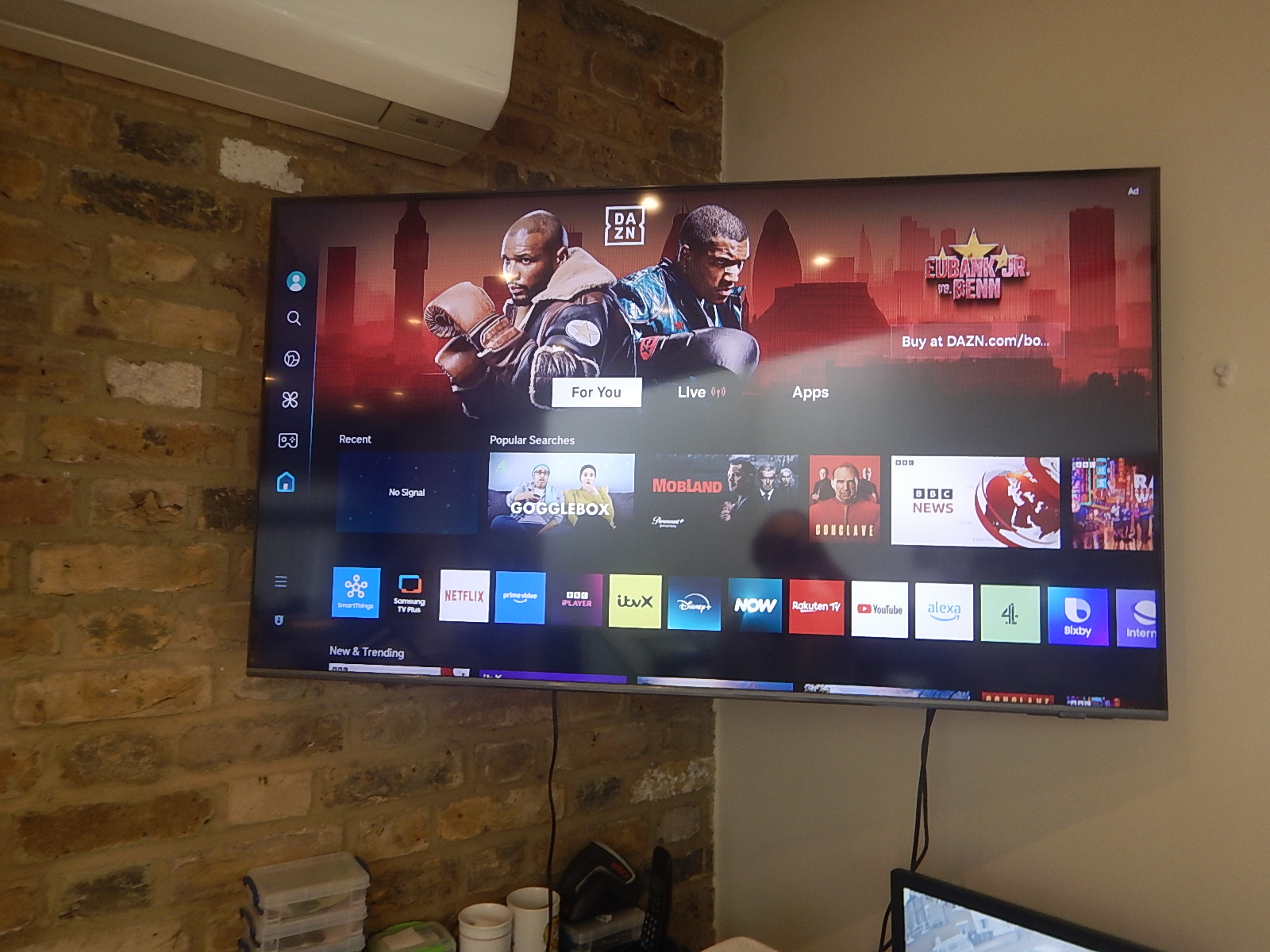
This is an enlarged view of the bottom-left section of the screen.

Can I please have a signal?
The signal is supposed to come through my broadband, but because everybody is watching the football, there’s nothing left for me.
But how come I can watch the football using iPlayer on my computer.
As an experienced programmer, it looks like a bug to me. Or it could be a broken cable.
This third picture shows the Freeview picture in my bedroom.
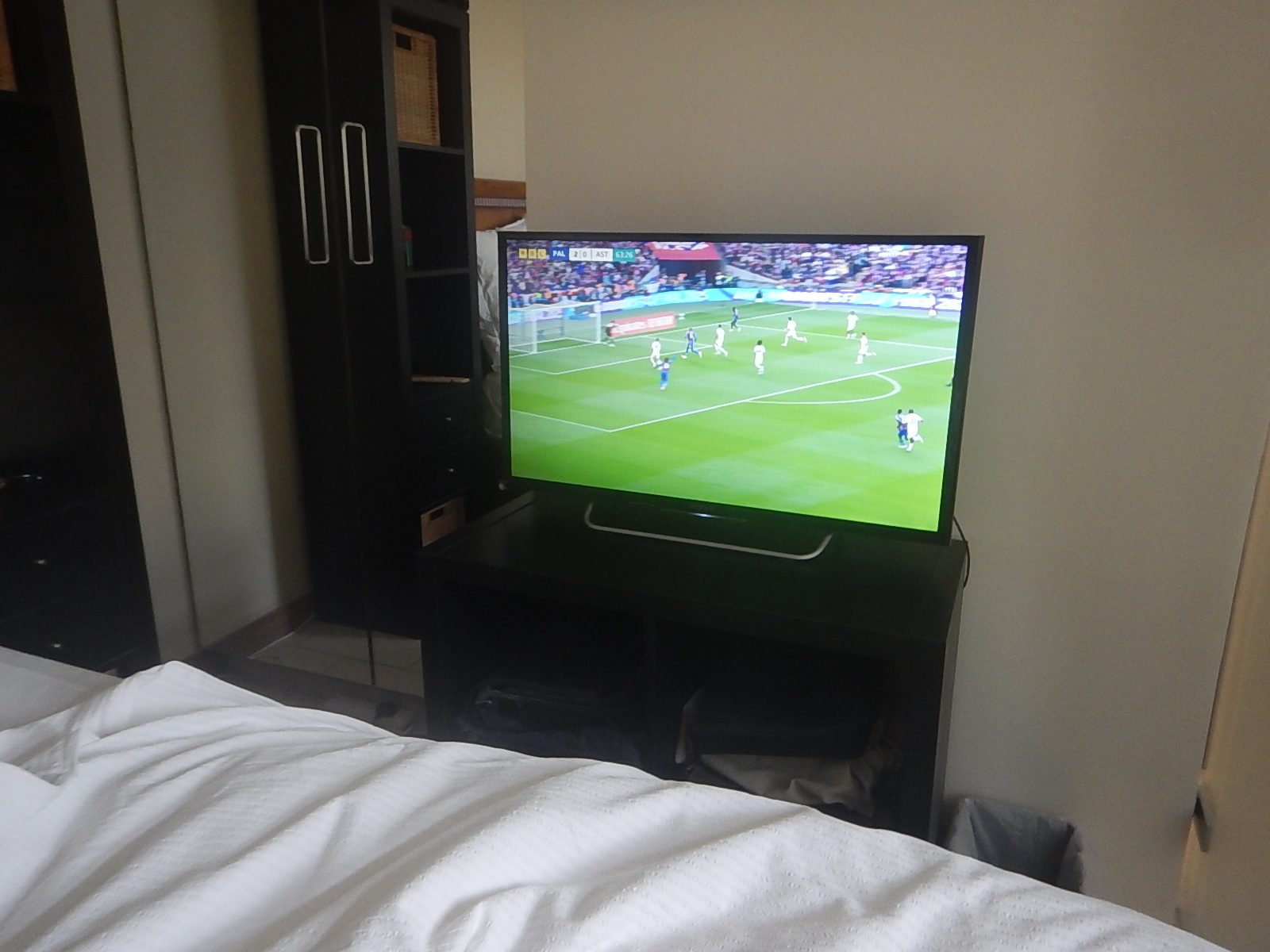
Nothing wrong with that!
But now at 82:30, I’ve got my signal back and I’m able to watch and listen to the match. But not in high-definition. Although, that is now back at 87:16.
I seem to have a demonic touch with hardware and if it fails with anyone, it will fail with me.
Milestone Reached As 250,000th Passenger Journey Made On Northumberland Line
The title of this post, is the same as that of this news item from Northumberland County Council.
These three introductory paragraphs add detail?
Passengers who have made more than 250,000 journeys on Northumberland Line services are being reminded they can beat the queues for tickets by buying online.
Northern said the major milestone was reached this week, after it began running passenger trains on the line in December, for the first time in 60 years.
Services call at Newcastle, Manors and new stations in Seaton Delaval, Newsham and Ashington, with a journey along the entire route taking around 35 minutes and a single fare costing no more than £3.
This is a good leveling-up story, so why hasn’t the government got a pipeline of shovel-ready new rail projects?
These projects could be for starters.
The West London Orbital
This page on the Transport for London web site gives the current progress and starts with this paragraph.
We’re making plans for a new rail service on existing, underused rail lines in west London that would become part of the London Overground network. The West London Orbital rail service would run from Hounslow towards Hendon and West Hampstead in the north.
The Mayor and Transport for London are probably spending most of their time, thinking of a silly woke name, that no-one will remember and just cause confusion.
The Ivanhoe Line
This article on the BBC is entitled Disappointment As Reopening Of Railway Line Halted.
This is the sub-heading.
The restoration of a passenger rail link through the Midlands has been stopped in its tracks.
These three paragraphs give more detail.
A business case for reopening the Ivanhoe Line rail link from Burton-upon-Trent to Leicester had been submitted before the election, with campaigners hopeful that work could begin in 2024.
But on Monday, Chancellor Rachel Reeves said the Treasury needed to find £5.5bn of savings in 2024 and a further £8.1bn in 2025.
Speaking in the House of Commons, the Chancellor said that the previous government’s entire Restoring Your Railway programme would be scrapped, saving £85m.
Note.
- I don’t believe this government believes in improving the rail infrastructure in the UK.
- But how do they expect people to get around, given their preferred transport mode of electric cars are ridiculously overpriced?
- The article on the BBC is a must-read.
- Last week Arriva Group announced a new Newcastle and Brighton open access service, that will call at Burton-on-Trent, which is planned to be the Western terminus of the Ivanhoe Line. See Arriva Group Submits Open Access Rail Application To Connect Newcastle And Brighton, Via London Gatwick for more details.
For more on the Ivanhoe Line, read the Campaign to Reopen the Ivanhoe Line web site.
Arriva Group Submits Open Access Rail Application To Connect Newcastle And Brighton, Via London Gatwick
The title of this post, is the same as that of this press release from Arriva Group.
These three bullet points act as sub-headings.
- New services operated by Arriva’s Grand Central would introduce a direct rail connection between the Northeast and Midlands to London Gatwick and the South Coast.
- Making better use of available network capacity, the proposed route would connect underserved communities in the UK and enhance long-distance connectivity without the need to interchange through London.
- The application reflects Arriva’s wider European strategy to connect people and places through sustainable transport solutions, strengthening regional economies and supporting modal shift.
This introductory paragraph provides more details.
Arriva Group has today announced it is submitting an open access application to the Office of Rail and Road (ORR) to introduce a new direct rail service between Newcastle and Brighton, via London Gatwick, providing vital connectivity for underserved communities along the route.
Other points to note include.
- There will be five trains per day in each direction.
- The proposed service would call at Durham, Darlington, Northallerton, York, Doncaster, Sheffield, Derby, Burton-on-Trent, Birmingham New Street, Warwick Parkway, Banbury, Oxford, Reading, Wokingham, Guildford, Redhill, London Gatwick and Haywards Heath.
- The service would be operated by Grand Central.
- The service could be introduced from December 2026.
It will be the be the first direct service between Newcastle and Brighton.
This final paragraph outlines where the service fits in Arriva’s wider philosophy.
The plans are part of Arriva Group’s broader commitment to strengthening regional connectivity and making better use of available rail capacity. By opening up new travel corridors, Arriva is helping to connect more people to jobs, education and leisure opportunities – and to encourage a greater shift from private cars to public transport.
There are certainly plenty of places in Europe, that could use a service like this one between Brighton and Newcastle.
In The Ultimate Open Access Service, I describe a possible open access service between Amsterdam and Hamburg, which is about the same distance as Brighton and Newcastle, which is 372.8 miles by Arriva’s proposed route.
These are some of my thoughts in no particular order.
A High-Class Service Between Oxford And Brighton Could Be An Interesting Development In Its Own Right
Governments, rail operators and passenger groups of all persuasions and flavours have warmly welcomed the planned reopening of the rail route between Oxford and Cambridge.
I suspect an Oxford and Brighton service would be equally welcomed.
Brighton may not be an academic powerhouse yet, but it does have one thing that Oxford and Cambridge lack ; the sea.
Gatwick Airport Will Surely Welcome The Extra Connectivity
Gatwick Airport will expand and extra rail services will do the following for the airport.
- Make it easier to get the planning permission for the second runway.
- Make it easier for passengers and airport and airline staff to get to the airport.
- Surely, the more direct rail connections the airport has, will increase the likelihood, that families and other groups, will choose to fly from Gatwick.
- More train services could cut the amount of car parking per flight needed at the airport.
Gatwick Airport station has recently rebuilt and added extra capacity, so I doubt there will be trouble accommodating another ten trains per day.
Would The Army Welcome The New Service?
Two of the British Army’s main training areas are in North Yorkshire and in Surrey.
Would they find a train service between the two areas useful?
What Trains Will Grand Central Trains Use For The New Service?
In Arriva Group Invests In New Battery Hybrid Train Fleet In Boost To UK Rail Industry, I talked about how Grand Central will be acquiring Hitachi trains for their routes between London and Bradford and Sunderland.
- These will be Hitachi tri-mode trains.
- The trains will have a range of over forty miles on batteries.
- They will probably be serviced in Yorkshire or the North-East.
- The trains will be built by Hitachi at Newton Aycliffe, with batteries from Turntide Technologies in Sunderland.
- The first trains will be delivered in 2028.
As Arriva intend to start services from December 2026, they would probably use diesel trains to start with.
I would expect that Grand Central would go for a unified fleet, which would mean more Hitachi tri-mode trains.
For convenience, they could all be serviced at Doncaster, which all Grand Central services will pass through.
What Sections Will Not Be Electrified Between Brighton and Newcastle?
As far as I can see from OpenRailwayMap, the following sections of the route are not electrified.
- Two sections of the North Downs Line – 29 miles.
- Didcot and Birmingham New Street – 80.9 miles
- Birmingham New Street and Derby – 41.3 miles
- Derby and Sheffield – 36.4 miles
- Sheffield and Doncaster – 18.4 miles
Note.
- Electrification South of Reading will be third rail, so some trains will need to have third-rail shoes.
- The length without electrification is a total of 206 miles.
- As Newcastle and Doncaster, Redhill and Brighton, Reading and Didcot, and Birmingham New Street station are all electrified, the longest sections the trains would run without electrification would be between Didcot and Birmingham New Street and between Birmingham New Street and Doncaster.
- The planned electrification between Derby and Sheffield would make life easier.
It appears that trains capable of handling a hundred miles of unelectrified railway are needed.
Hitachi have shown that a five-car train with one battery will travel 70 km (43.5 miles) on a full battery, so one with three batteries should be able to manage the hundred miles needed in a few years.
Will Any Extra Electrification Be Needed?
I think Birmingham New Street station will be the critical point.
- The next electrification on the route to the South of Birmingham New Street is at Didcot, which is 80.9 miles away.
- The next electrification on the route to the North of Birmingham New Street is at Doncaster, which is 96.1 miles away.
These battery ranges should be possible, but an alternative would be to provide an electrified platform at one or more intermediate stations to be safe.
Stations that could be equipped to the South would include Oxford and Banbury and to the North would include Burton-on-Trent, Derby and Sheffield.
Perhaps electrifying a single platform at these stations, should be the first thing to be done, so that battery-electric trains can run on some useful routes as soon as they are delivered and approved.
Electric Trains, Even Battery-Electric Ones, Will Be Quick Off The Mark
Electric trains have good acceleration and I wonder, if this acceleration will enable stops, that are not feasible with diesel trains to be fitted in with electric trains, without having to take the same time penalty.
This might allow useful stops to be added to the service.
- Chesterfield is not mentioned, but most trains passing through stop.
- As I said, Farnborough North could be a useful stop for the Army.
- There might be a case for selective stopping patterns.
Battery-electric trains stop without any noise or pollution.
Connection To The Ivanhoe Line At Burton-on-Trent
The proposed Ivanhoe Line is intended to link Burton-on-Trent and Leicester.
As it is intended that the Newcastle and Brighton service will call ten times per day at Burton-on-Trent station, this must surely improve the economics of the Ivanhoe Line.
Are there any other new or reopened rail schemes, that will be helped by the proposed Brighton and Newcastle service?
Updated Frequencies At Sheffield
Currently, trains at Sheffield have these daily frequencies to the towns and cities on the proposed Newcastle and Brighton route.
- Newcastle – 18
- Durham – 16
- Darlington – 15
- Northallerton – 0
- York – 19
- Doncaster – 64
- Derby – 58
- Burton-on-Trent – 9
- Birmingham New Street – 21
- Warwick Parkway – 0
- Banbury – 0
- Oxford – 3
- Reading – 4
- Wokingham – 0
- Guildford – 0
- Redhill – 0
- London Gatwick – 0
- Haywards Heath – 0
- Brighton – 0
Note.
- Sheffield gets five trains per day (tpd) direct connections to nine new destinations.
- Other useful destinations will get five more tpd.
- Reading is a useful interchange for Wales and the West.
- Guildford is a useful interchange for Portsmouth, Southampton and West Surrey.
- Reading and Guildford have coach services to Heathrow.
There are also a large number of universities along the route.
Hitachi Can Offer A One-Supplier Battery-Electric Train Solution
It should be noted that Hitachi can offer a complete package including battery-electric trains and all the electrification, transformers and other electrical gubbins needed.
So perhaps for the Chiltern Main Line, which is used for part of the route between Didcot and Birmingham, Hitachi could deliver a one-supplier solution, that would also electrify Chiltern’s services between Marylebone and Birmingham Moor Street.
Remember, Chiltern are another Arriva Group company.
If Hitachi get this right, I can see other lines being electrified in this way.
Could This One-Supplier Battery-Electric Solution Be Exported?
I discussed this in Arriva Group Invests In New Battery Hybrid Train Fleet In Boost To UK Rail Industry, where I suggested that the United States could be a market.
- Arriva Group are ultimately American-owned.
- Hitachi’s battery technology is also American-owned.
In these days of Trump’s tariffs, these could prove useful facts.
As Arriva Group used to be owned by Deutsche Bahn, they may be another interested party, especially as they have a lot of lines, where I believe Hitachi’s solution would work.
Conclusion
A battery-electric railway service of nearly four hundred miles would certainly attract the passengers.
I Seemed To Have Improved My Left Knee
My left knee has always been weaker than my right.
- What really made it bad was living with C and our three children in a fourth floor walk-up flat with no lift.
- I usually carried the double-pushchair up the stairs a couple of times a day.
- It should also be born in mind, that my left humerus was broken by the school bully, when I was fifteen.
Our GP at the time, we were living in the flat, thought I should have an operation on the knee, but luckily I didn’t as another GP a few later gave me a set of exercises, that improved it to a certain extent.
Since my stroke and returning to London, I have relied on buses and trains, as I can’t drive and don’t even have a car.
My knee seemed to be getting worse and I reasoned it wasn’t being helped, by the high step in and out, you get on some trains and buses.
This picture shows the high step into a Northern Line train at Moorgate station.
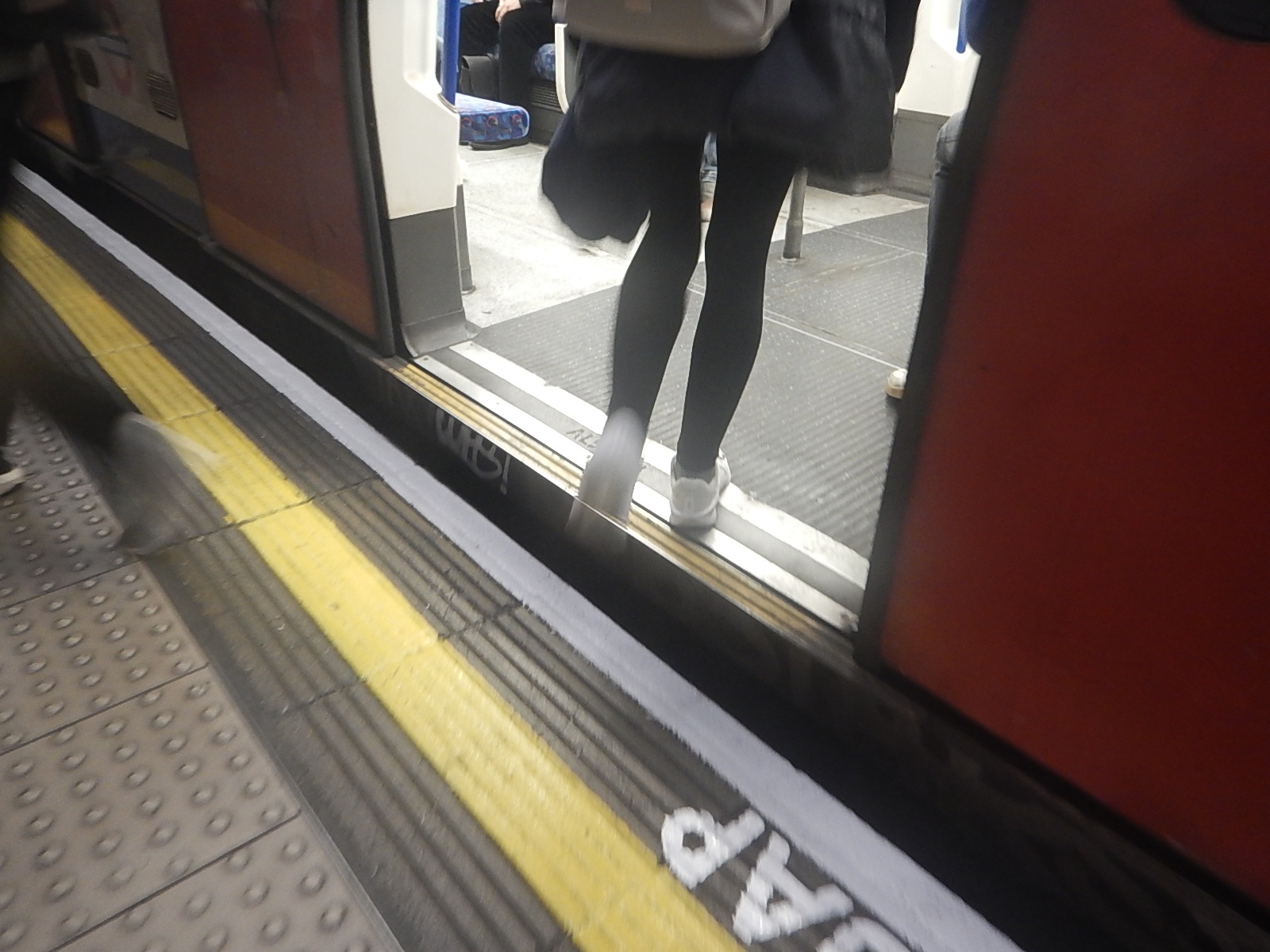
I found that the step-down here, gives a bang on my knee every time I get out of the train.
This second picture shows Bank station, which is a new platform and level.
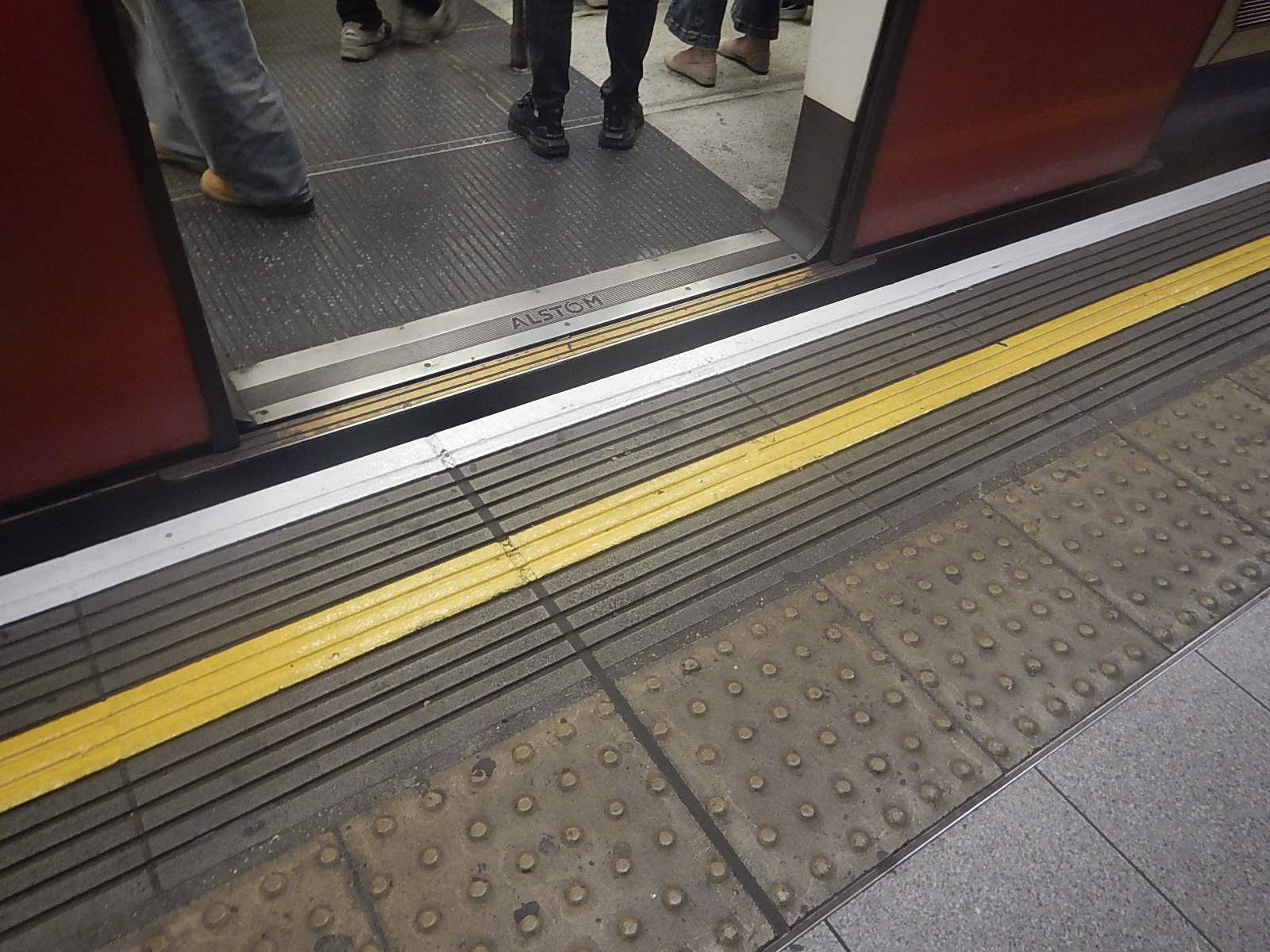
It’s surely very much a matter of GCSE mathematics and geometry, with a bit of money to get many more train and bus entries level.
So I have developed a maneuver to get out of the train or bus.
- Most doors have a vertical rail on either side. You can see one rail in the first picture.
- As I want to avoid hurting my left leg any more, I grab the rail on the left side of the door going out, with my left hand.
- I have my bag in my strong right hand. If I have two bags, one is usually My Faithful Servant, so I can hold them both in my right hand.
- I then swing around the vertical rail holding on with my left hand.
- So far, every time I’ve landed safely and lightly on my right foot.
My left knee seems to be improving.
Surprisingly, the extra pulls on my left arm don’t seem to harm it.
 The Anonymous Widower