Meridian Water Station Is To Be Upgraded
In the Wiukipedia entry for Meridian Water station, this is said.
In August 2019, it was announced that funding had been approved for construction of a fourth platform and a new section of track between Tottenham Hale and Meridian Water to enable up to 8 trains per hour to serve the station at peak times.
This must be the earliest upgrade in history, after a new station has opened.
I have searched the Internet and can’t find anything more about the loose statement, I quoted above.
Space has been left for the fourth platform, which will be numbered 1, on the East side of the station, as this picture taken from the island platform 2/3 shows.
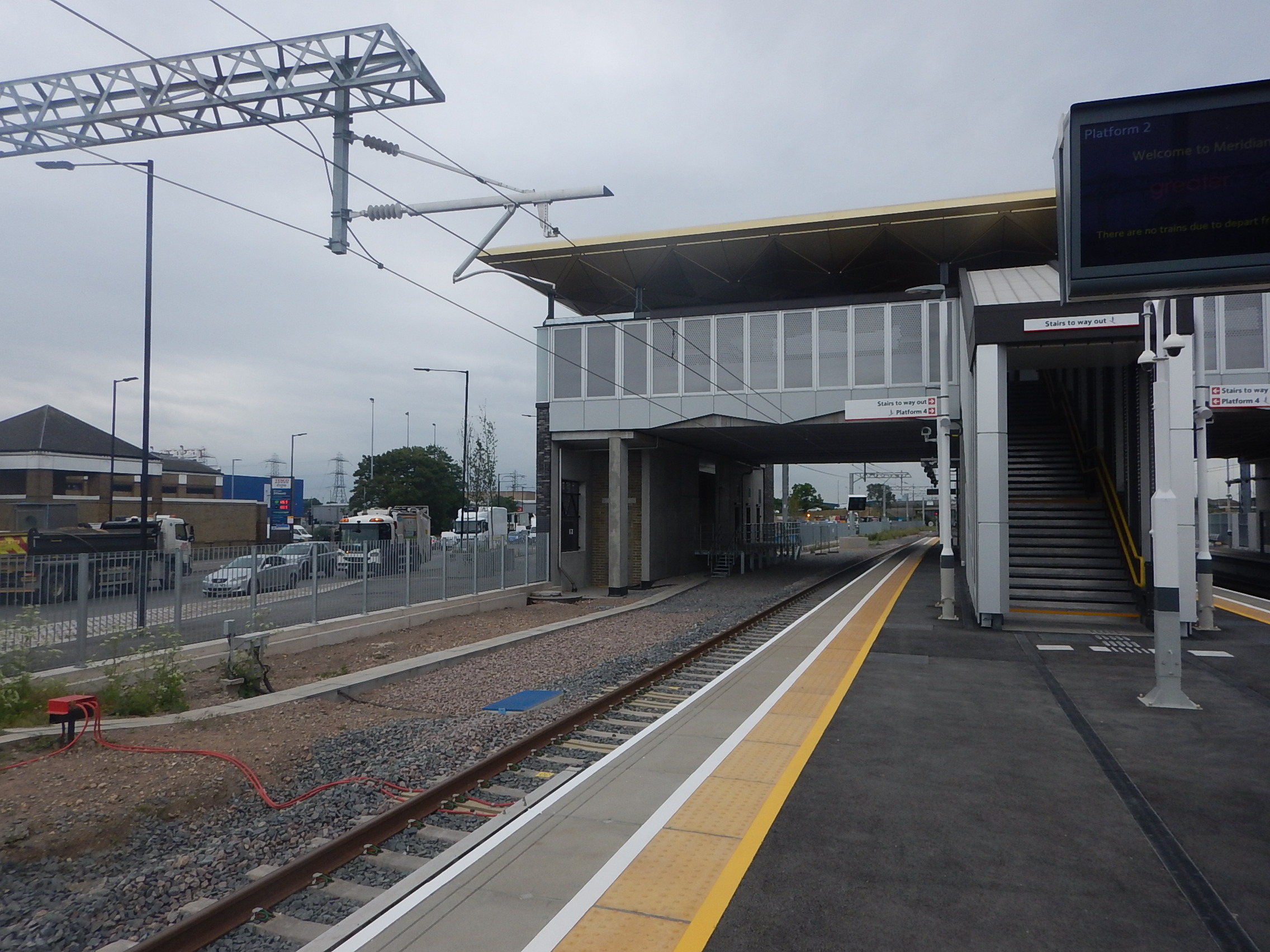
Will platform 1 be a terninal platform or will it be a through platform.
A through platform connected to a loop around the island platform would allow Southbound trains to split to the North of the station.
- Trains for Liverpool Street would call in Platform 3 and continue as now to Liverpool Street.
- Stopping trains for Stratford would call in Platform 1 and take the proposed extra track to Tottenham Hale.
- Express trains for Stratford could call in Platform 3 and continue as now to Stratford.
- Platform 2 would still be a bay platform to handle shuttle trains from Stratford.
Eight trains per hour (tph) in both directions calling at the station could be as follows.
- Platform 1 – Two tph from Bishops Stortford to Stratford
- Platform 2 – Two tph Meridian Water to Stratford
- Platform 3 – Two tph from Hertford East to Liverpool Street
- Platform 3 – One tph from Cambridge to Liverpool Street
- Platform 3 – One tph from Cambridge North to Liverpool Street
- Platform 4 – Two tph from Stratford to Bishops Stortford
- Platform 4 – Two tph from Liverpool Street to Hertford East
- Platform 4 – One tph from Liverpool Street to Cambridge
- Platform 4 – One tph from Liverpool Street to Cambridge North
Four tph go to and from each of Stratford and Liverpool Street.
The Extra Track
As I said earlier, the extra track could be a loop through the station with the following layout.
- Start to the North of Meridian Water station, around the area of the former Angel Road station.
- Go through Platform 1 at Meridian Water station.
- Continue South to the East of the other three tracks.
- Go through Northumberland Park station, where provision has been made to add a new Platform 1.
- Continue South.
- It would probably then join with the new Northbound track and go into Platform 2 at Tottenham Hale station.
- Continue South on the recently-built third track to Lea Bridge and Stratford stations.
The operation of the route looks complicated with the number of tracks as follows.
- Between Stratford and Lea Bridge Junction via Lea Bridge station – Two tracks
- Between Lea Bridge Junction and Tottenham Hale station – One track – Bi-directional
- Between Tottenham Hale and Meridian Water via Northumberland Park station – Two tracks
This would enable a four tph service between Stratford and Meridian Water stations.
Would It Not Be Better To Extend The Fourth Track To Lea Bridge Junction?
Possibly!
But by only having a single extra bi-directional track South of Tottenham Hale, they can achieve the required service without replacing the Ferry Lane Bridge and possibly with a simpler track layout at Lea Bridge Junction.
How Would And Stratford and Stansted Airport Services Fit In?
What I think the eight tph service could be, means that on the third track between Tottenham Hale and Lea Bridge stations, there are four Southbound and two Northbound trains in every hour. This can probably be handled by bi-directional running on the single track section.
But other arrangements would probably have to be made to squeeze some more services into the section between Tottenham Hale and Lea Bridge stations.
Perhaps digital signalling would allow Stansted trains to use the main route and only stopping trains would use the new third track. This could probably mean that Stratford had the following services along the West Anglia Main Line.
- 2tph – Shuttle to Meridian Water
- 2 tph – Semi-fast to Bishops Stortford
- 2 tph – Stansted Express
Would some or all of the train use the High Meads Loop to turn round, as some Stansted services to Stratford have done in the past?
Will A Stratford And Stansted Service Be An Extension Of The Norwich and Stansted Service?
This would be possible and Greater Anglia have enough Class 755 trains to run it.
- It would add a fourth service in each hour between London and Norwich.
- It would add a direct service between Cambridge and Stratford.
- If run at a frequency of 2 tph it would greatly improve connectivity up the West Anglia Main Line to Cambridge and Stansted Airport
Passenger numbers will decide what happens.
Train timings are interesting.
With the current Class 170 trains, I suspect that they could run between Norwich and Stansted in just under two hours, to make a round trip in four hours possible but tight. So can the bi-mode Class 755 trains using electricity South of Ely easily achieve the very convenient four hour round trip?
- The bay platform at Cambridge would be released for other services.
- Just four trains would be needed for an hourly service.
Between Stansted and Stratford a limited stop Express would be comfortably under the hour, especially if the High Meads Loop were to be used.
- Stansted and Stratford would need four trains to run a two tph service,which would probably be Class 720 trains.
- Norwich and Stratford via Stansted would need six trains for an hourly service and twelve for two tph.
The numbers of extra trains required for a joined-up two tph service between Norwich and Stratford, probably make it unlikely.
I think the service will be as follow.
- Hourly Norwich and Stansted using Class 755 trains.
- 2tph Stansted and Stratford using Class 720 trains.
But if the Norwich and Stansted via Cambridge service is as successful, as I think it will be, the passenger numbers might prompt Greater Anglia to add a second train on every hour.
The only problem would be if the new services generated a lot of journeys between Cambridge and Stratford and Greater Anglia felt there should be at least an hourly service.
Will Stansted Services Stop At Meridian Water?
Why not!
- It is going to be a community of ten thousand houses.
- Businesses in the are will increase and could be attracted by an Airport service.
- Modern trains have a very short dwell time.
It will depend on the passenger numbers.
The Shuttle Starts
The station should be receiving the first shuttle trains on Monday the 9th of September,, as I said in The Shuttle Train Between Stratford And Meridian Water Stations Has Appeared In The Timetable.
Looking at the timetable fo Monday from around 14:00, Strastford services through Tottenham Hale station appear to be.
- 13:56 in Platform 3 – Bishops Stortford (13:15) to Stratford (14:10) – Doesn’t use the third track.
- 14:13 in Platform 4 – Stratford (14:00) to Bishops Stortford (14:56) – Doesn’t use the third track.
- 14:13 in Platform 2 – Meridian Water (14:08) to Stratford (14:23) – On the third track between 14:08 and 14:16
- 14:25 in Platform 2 – Stratford (14:16) to Meridian Water (14:31) – On the third track between 14:22 and 14:31
- 14:43 in Platform 3 – Bishops Stortford (13:47) to Stratford (14:40) – Doesn’t use the third track.
- 14:43 in Platform 4 – Stratford (14:30) to Bishops Stortford (15:23) – Doesn’t use the third track.
- 14:43 in Platform 2 – Meridian Water (14:38) to Stratford (14:53) -On the third track between 14:38 and 14:46
- 14:55 in Platform 2 – Stratford (14:46) to Meridian Water (15:01) – On the third track between 14:52 and 15:01
- 14:56 in Platform 3 – Bishops Stortford (14:15) to Stratford (15:10) – Doesn’t use the third track.
- 15:13 in Platform 4 – Stratford (15:00) to Bishops Stortford (15:56) – Doesn’t use the third track.
Note.
- The first time in each entry, is the time at Tottenham Hale.
- All Stratford services from Tottenham Hale leave from the island platform 2/3.
It would appear that the two tph to Bishops Stortford and 2tph to Meridian Water are intertwined.
I can follow the first train through the services in the table.
- The first train leaves Bishops Stortford at 13:15 and arrives at Stratford at 14:10
- It leaves for Meridian Water at 14:16, where it arrives at 14:31
- It returns to Stratford at 14:38, where it arrives at 14:53.
- The train finally leaves for Bishops Stortford at 15:30, where it arrives at 16:23
The 14:10 arrival at Stratford left Bishops Stortford at 13:15 and that the 15:30 arrives back at Bishops Stortford at 16:23, where it forms the 16:47 back to Stratford.
The round trip is three and a half hours and it would need seven trains.
What Trains Will Be Used For The Shuttle?
The current services between Stratford and Bishops Stortford are pairs of Class 317 trains, forming an eight-car train.
These will work well for the time being, but what happens when the new Class 720 trains arrive.
These are five- and ten-car trains and will they be a suitable length to run the Stratford/Bishops Sortford/Meridian Water services?
Five-car may be too short and ten-car may be too long!
The only four-car trains in the area are the Class 710 trains of the London Overground.
Conclusion
There are a lot of questions to answer.
I shall add to this post, when I see what is happening next week.
Could We Bore A Double-Track Railway With A Tunnel Boring Machine?
There is one inevitability about construction projects.
As buildings get taller, foundations get deeper, structures get heavier, machines like cranes get bigger and more able to lift heavy loads.
I remember how in the 1970s, a project manager was eulogising about how the latest floating cranes that could lift 4,000 tonnes wee revolutionising the construction of oil platforms in the North Sea.
Crossrail may be a railway under London, where people think the tunnels are massive.
This page on the Crossrail web site describes the tunnels.
A network of new rail tunnels have been built by eight giant tunnel boring machines, to carry Crossrail’s trains eastbound and westbound. Each tunnel is 21 kilometres/13 miles long, 6.2 metres in diameter and up to 40 metres below ground.
But they are not the largest tunnels under London.
The Thames Tunnel, built by the Brunels, opened in 1843.
- It is eleven metres wide.
- It is six metres high.
- It carries the double track railway of the East London Line, which runs Class 378 trains, which are very much a typical British loading gauge.
There is also the Thames Tideway Tunnel, which is being dug to be a 7.2 wide circular tunnel.
And then there’s Bertha!
This description is from Wikipedia.
Bertha was a 57.5-foot-diameter (17.5 m) tunnel boring machine built specifically for the Washington State Department of Transportation’s (WSDOT) Alaskan Way Viaduct replacement tunnel project in Seattle.[1] It was made by Hitachi Zosen Sakai Works in Osaka, Japan, and the machine’s assembly was completed in Seattle in June 2013. Tunnel boring began on July 30, 2013, with the machine originally scheduled to complete the tunnel in December 2015.
It looks like London’s tunnels should be considered small.
Cross section areas of various tunnels are.
- Thames Tuideway Tunnel – 40.7 square metres.
- Thames Tunnel – 66 square metres
- Seattle Tunnel – 240 square metres.
- 8 metre circular tunnel – 50.3 square metres
- 10 metre circular tunnel – 78.6 square metres
- 12 metre circular tunnel – 113 square metres
The Seattle Tunnel shows what is possible today.
I am led to the obvious conclusion.
It would be possible to build a tunnel to take a full-size double-track UK railway using a tunnel boring machine.
Whether you would want to is another matter, as two single tunnels may be more affordable and better operationally.
Does Anybody Know Of An On-Line Bank Account, Where You Can Annotate The Statement?
I have looked at several on-line bank accounts and none offers me a feature I want.
I check my statement every morning, as this is one of the best ways to guard against fraud.
- If there is an unexpected transaction, you spot it early.
- If banks used AI to classify your access, then it might be possible for them to flag-up possible illegal access.
So what feature is missing?
Imagine if against each line in the statement, there was the ability to add extra data.
Two fields come to mind.
- A comment.
- A costcode, such as Gas, Electricity, StatePension etc.
You could also add fields of your own, like say CustomerNumber, SupplierNumber or InvoiceNumber.
The bank statement would show the extra data, when you displayed or printed the statement.
I would use it every day!
But it would also allow you to total values against against any cosde field between two dates.
If you used standard costcodes and other fields, the bank could even calculate your accounts.
I first talked about such a system with an accountant in the 1970s, where you would have entered the cost code on a cheque or bank deposit.
Banks! bGrrrr! \They haven’t changed their mindset since the 1870s! Or should that be the 1570s?
HS2 Railway To Be Delayed By Up To Five Years
The title of this post is the same as that of this article on the BBC.
These first few paragraphs indicate the current situation.
The first phase of the HS2 high-speed railway between London and Birmingham will be delayed by up to five years, Transport Minister Grant Shapps says.
That section of the line was due to open at the end of 2026, but it could now be between 2028 and 2031 before the first trains run on the route.
HS2’s total cost has also risen from £62bn to between £81bn and £88bn, but Mr Shapps said he was keeping an “open mind” about the project’s future.
The second phase has also been delayed.
What are the short term consequences of this delay in the building of High Speed Two?
- No Capacity Increase Between London And Birmingham., until three or five years later.
- Capacity increases to Glasgow, Hull, Leeds, Liverpool, Manchester, Nottingham and Preston will probably be five years or more later.
Are there any other things we can do to in the meantime to make the shortfall less damaging to the economy?
East Coast Main Line
Much of the East Coast Main Line (ECML) has been designed for 140 mph running. Wikipedia puts it like this..
Most of the length of the ECML is capable of 140 mph subject to certain infrastructure upgrades.
Wikipedia also says that Greengauge 21 believe that Newcastle and London timings using the shorter route could be comparable to those using HS2.
Track And Signalling Improvements
There are a number of improvements that can be applied to the ECML, with those at the Southern end summed up by this paragraph from Wikipedia.
Increasing maximum speeds on the fast lines between Woolmer Green and Dalton-on-Tees up to 140 mph (225 km/h) in conjunction with the introduction of the Intercity Express Programme, level crossing closures, ETRMS fitments, OLE rewiring and the OLE PSU – est. to cost £1.3 billion (2014). This project is referred to as “L2E4” or London to Edinburgh (in) 4 Hours. L2E4 examined the operation of the IEP at 140 mph on the ECML and the sections of track which can be upgraded to permit this, together with the engineering and operational costs.
Currently, services between London and Edinburgh take between twenty and forty minutes over four hours.
Who would complain if some or even all services took four hours?
To help the four hour target to be achieved Network Rail are also doing the following.
- Building the Werrington Dive-under.
- Remodelling the station throat at Kings Cross.
- Adding extra tracks between Huntingdon and Woodwalton.
- Devising a solution for the flat junction at Newark.
Every little helps and all these improvements will allow faster and extra services along the ECML.
Obviously, running between London and Edinburgh in four hours has implications for other services.
In Changes Signalled For HS2 Route In North, I said this.
Currently, the fastest non-stop trains between London and Doncaster take a few minutes over ninety minutes. With 140 mph trains, I think the following times are easily possible.
- London and Doncaster – 80 minutes
- London and Hull – A few minutes over two hours, running via Selby.
- London and Leeds – A few minutes less than two hours, running on the Classic route.
For comparison High Speed Two is quoting 81 minutes for London Euston and Leeds, via Birmingham and East Midlands Hub.
I suspect that North of Doncaster, improving timings will be more difficult, due to the slower nature of the route, but as services will go between Edinburgh and London in four hours, there must be some improvements to be made.
- Newcastle – Current time is 170 minutes, with High Speed Two predicting 137 minutes. My best estimate shows that on an improved ECML, times of under 150 minutes should be possible.
- York – Current time is 111 minutes, with High Speed Two predicting 84 minutes. Based on the Newcastle time, something around 100 minutes should be possible.
In Wikipedia, Greengauge 21 are quoted as saying.
Upgrading the East Coast Main Line to 140 mph operation as a high priority alongside HS2 and to be delivered without delay. Newcastle London timings across a shorter route could closely match those achievable by HS2.
My estimate shows a gap of thirteen minutes, but they have better data than I can find on the Internet.
Filling Electrification Gaps East Of Leeds And Between Doncaster And Sheffield
In Changes Signalled For HS2 Route In North, I said this.
These are the lines East of Leeds.
- A connection to the East Coast Main Line for York, Newcastle and Edinburgh.
- An extension Eastwards to Hull.
These would not be the most expensive sub-project, but they would give the following benefits, when they are upgraded.
- Electric trains between Hull and Leeds.
- Electric trains between Hull and London.
- Electric access to Neville Hill Depot from York and the North.
- An electric diversion route for the East Coast Main Line between York and Doncaster.
- The ability to run electric trains between London and Newcastle/Edinburgh via Leeds.
Hull and Humberside will be big beneficiaries.
In addition, the direct route between Doncaster and Sheffield should be electrified.
This would allow the following.
- LNER expresses to run on electricity between London and Sheffield, if they were allowed to run the route.
- Sheffield’s tram-trains could reach Doncaster and Doncaster Sheffield Airport.
A collateral benefit would be that it would bring 25 KVAC power to Sheffield station.
Better Use Of Trains
LNER are working the trains harder and will be splitting and joining trains, so that only full length trains run into Kings Cross, which will improve capacity..
Capacity might also be increased, if Cambridge, Kings Lynn and Peterborough services were run with 125 mph or even 140 mph trains. GWR is already doing this, to improve efficiency between Paddington and Reading.
Faster Freight Trains
Rail Operations Group has ordered Class 93 locomotives, which are hybrid and capable of hauling some freight trains at 110 mph.
Used creatively, these might create more capacity on the ECML.
Could the East Coast Main Line be the line that keeps on giving?
Especially in the area of providing faster services to Lincoln, Hull, Leeds, Huddersfield,Bradford Newcastle and Edinburgh.
Conclusion On East Coast Main Line
There is a lot of scope to create a high capacity, 140 mph line between London and Edinburgh.
An Upgraded Midland Main Line
Plans already exist to run 125 mph bi-mode Hitachi trains on the Midland Main Line between London and Leicester, Derby, Nottingham and Sheffield.
But could more be done in the short term on this line.
Electrification Between Clay Cross North Junction And Sheffield
This 15.5 mile section of the Midland Main Line will be shared with High Speed Two.
It should be upgraded to High Speed Two standard as soon as possible.
This would surely save a few minutes between London and Sheffield.
140 mph Running
The Hitachi bi-modes are capable of 140 mph, if the signalling is digital and in-cab.
Digital signalling is used by the Class 700 trains running on Thameslink, so would there be time savings to be made by installing digital signalling on the Midland Main Line, especially as it would allow 140 mph running, if the track was fast enough.
Extension From Sheffield To Leeds Via New Stations At Rotherham And Barnsley
Sheffield and Transport for the North are both keen on this project and it would have the following benefits.
- Rotherham and Barnsley get direct trains to and from London.
- A fast service with a frequency of four trains per hour (tph) could run between Leeds and Sheffield in a time of twenty-eight minutes.
This extension will probably go ahead in all circumstances.
Use Of The Erewash Valley Line
The Erewash Valley Line is a route, that connects the Midland Main Line to Chesterfield and Sheffield, by bypassing Derby.
It has recently been upgraded and from my helicopter, it looks that it could be faster than the normal route through Derby and the World Heritage Site of the Derwent Valley Mills.
The World Heritage Site would probably make electrification of the Derby route difficult, but could some Sheffield services use the relatively straight Erewash Valley Line to save time?
Faster Services Between London And Sheffield
When East Midlands Railway receive their new Hitachi bi-mode trains, will the company do what their sister company; Greater Anglia is doing on the London and Norwich route and increase the number of hourly services from two to three?
If that is done, would the third service be a faster one going at speed, along the Erewash Valley Line?
I suspect that it could have a timing of several minutes under two hours.
Conclusion On An Upgraded Midland Main Line
There are various improvements and strategies, that can be employed to turn the Midland Main Line into a High Speed Line serving Leicester, Derby, Nottingham and Sheffield.
West Coast Main Line
The West Coast Main Line is not such a fruitful line for improvement, as is the East Coast Main Line.
Digital signalling, 140 mph running and faster freight trains, may allow a few more trains to be squeezed into the busy main line.
Increasing Capacity Between London and Birmingham New Street
I’ve seen increased capacity between London and Birmingham quoted as one of the reasons for the building of High Speed Two.
Currently, both Virgin Trains and West Midlands Trains, have three tph between London and Birmingham New Street.
- This is probably not enough capacity.
- The line between Birmingham New Street and Coventry stations is probably at capacity.
These points probably mean more paths between London and Birmingham are needed.
High Speed Two is planned to provide the following services between London and Birmingham after Phase 2 opens.
- Three tph – London and Birmingham Curzon Street stations via Old Oak Common and Birmingham Interchange (2 tph)
- Fourteen tph – London and Birmingham Interchange via Old Oak Common.
That is a massive amount of extra capacity between London and Birmingham.
- It might be possible to squeeze another train into each hour.
- Trains could be lengthened.
- Does Birmingham New Street station have the capacity?
But it doesn’t look like the West Coast Main Line can provide much extra capacity between London and Birmingham.
Increasing Capacity Between London and Liverpool Lime Street
Over the last couple of years, Liverpool Lime Street station has been remodelled and the station will now be able to handle two tph from London, when the timetable is updated in a year or so.
Digital signalling of the West Coast Main Line would help.
Increasing Capacity Between London and Manchester Piccadilly
Manchester Piccadilly station uses two platforms for three Virgin Trains services per hour to and from London.
These platforms could both handle two tph, so the station itself is no barrier to four tph between London and Manchester.
Paths South to London could be a problem, but installing digital signalling on the West Coast Main Line would help.
Conclusion On The West Coast Main Line
Other improvements may be needed, but the major update of the West Coast Main Line, that would help, would be to use digital signalling to squeeze more capacity out of the route.
The Chiltern Main Line
Could the Chiltern Main Line be used to increase capacity between London and Birmingham?
Currently, there are hourly trains between Birmingham Moor Street and Snow Hill stations and London.
As each train has about 420 seats, compared to the proposed 1,100 of the High Speed Two trains, the capacity is fairly small.
Increasing capacity on the route is probably fairly difficult.
Digital Signalling
This could be used to create more paths and allow more trains to run between London and Bitmingham.
Electrification
The route is not electrified, but electrifying the 112 mile route would cause massive disruption.
Capacity At Marylebone Station
Marylebone station probably doesn’t have the capacity for more rains.
Conclusion On The Chiltern Main Line
I don’t think that there is much extra capacity available on the Chiltern Main Line between London and Birmingham.
Conclusion
I have looked at the four main routes that could help make up the shortfall caused by the delay to High Speed Two.
- Planned improvements to the East Coast Main Line could provide valuable extra capacity to Leeds and East Yorkshire.
- The Midland Main Line will increase capacity to the East Midlands and South Yorkshire, when it gets new trains in a couple of years.
- Planned improvements to the West Coast Main Line could provide valuable extra capacity to North West England.
- The Chiltern Main Line probably has little place to play.
As Birmingham has been planning for High Speed Two to open in 2026, some drastic rethinking must be done to ensure that London and Birmingham have enough rail capacity from that date.
Hydrogen Truck Startup Nikola’s Valuation Jumps To $3 Billion With Investment From CNH Industrial
The title of this post is the same as that of this article on Forbes.
This is the first paragraph.
Nikola Motor, an Arizona startup that wants to shake up the trucking world with zero-emission hydrogen and battery-powered semis, is making progress toward a $1 billion fundraising goal to get its technology on the road as CNH Industrial committed to a quarter of that amount.
Note that CNH is the company, that owns Iveco.
If you read the whole article, you will find the following.
- Nikola Motor have a simple model based on hydrogen-powered trucks and a network of zero-carbon hydrogen filling stations.
- They are backed by large well-known companies like Bosch.
- Hydrogen-powered trucks should be lighter in weight than battery-powered ones like the Tesla Semi.
Given the financial backing seems to be flowing to Nikola Motor and the simple business model, I feel the company’s objectives may be attained.
Would Nikola Motor’s Business Model Work In The UK?
Consider.
- UK heavy trucks may be smaller than some American big rigs, but are very similar, if not the same to those used all over Europe, with the driver’s seat on the other side.
- Many large users of heavy trucks, deliver goods from a large distribution centre, seaport or airport.
- The UK’s power network is generally reliable and is increasingly powered by renewable sources.
- Parts of the UK are developing a hydrogen network.
Because of our electrical grid and hydrogen availability, Nikola Motor’s filling station concept in a densely-populated smaller UK, might be a modified version of that used in the wide-open spaces of North America.
I can’t see any reason why if Nikola Motor’s hydrogen-powered trucks are successful in North America, they wouldn’t be successful in the UK.
A Zero-Carbon Distribution System For A Large Retailer
Retailers like Asda, Marks & Spencer, Sainsbury, Tesco and many others distribute product to their stores by heavy truck, usually from a large distribution centre in the middle of the country.
Tesco even make a lot of fuss about creating less CO2, by moving goods up and down the country by rail.
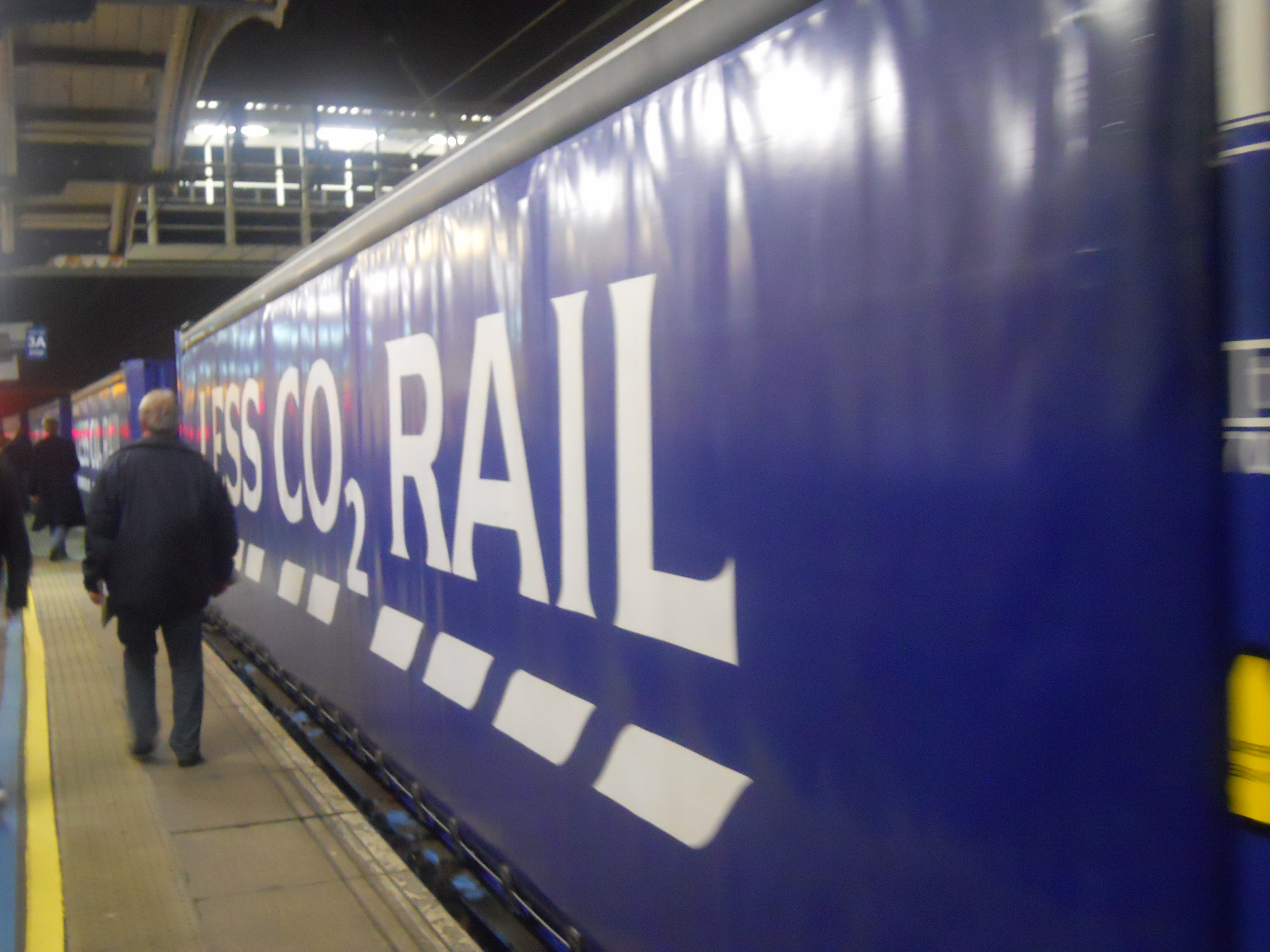
A Tesco-Branded Train
Because of retailers’ centralised model based on trucks from a distribution depot, using hydrogen-powered trucks, would not require a great change in the method or operation.
- Diesel traction would be replaced by hydrogen traction.
- The depot would have a hydrogen filling station, either using locally-created or piped hydrogen.
- Trucks would leave the depot with enough hydrogen to do a full delivery without refuelling and return to base.
But think of the advertising, if all the company’s heavy trucks displayed proudly that they were hydrogen-powered and emitted no CO2.
As supermarkets are like sheep and follow each others’ good ideas, if it worked for the first company, it wouldn’t be long before several others went down the hydrogen-powered route.
Would Hydrogen P{ower Work With Other Vehicle Fleets?
Many vehicles that I see in London and other large cities are members of large fleets based in those cities.
- Buses
- Taxis
- Delivery vans
- Cement trucks.
- Refuse trucks.
If cities are going to effectively ban diesel, there are only two alternatives battery and hydrogen.
Some vehicles will be better suited to battery power, especially if they could be charged overnight at the central depot, but other like double-deck buses and cement trucks may be better suited to hydrogen.
Cement trucks could be a niche market, where Nikola Motor could produce a very attractive package of trucks and a filling station.
Conclusion
If Nikola Motor is successful in the next few years, they could prove that hydrogenpowered vehicles are not a novelty, but a serious zero-carbon alternative, that is affordable.
Farringdon Station – 3rd September 2019
These pictures show the Barbican station end of the Crossrail entrance at Farringdon station.





I showed this entrance in Farringdon Station – 7th July 2018.
The London Cablet
I took these pictures outside Carluccio’s in Smithfield.





It is called the London Cablet.
Construction Of The Luton Direct Air-Rail Transit (DART) Has Started
The Luton DART will connect Luton Airport to Luton Airport Parkway station.
This map from the London Luton Airport web site shows the route.

It is comprehensive with three planned stations.
- Luton Airport Parkway station.
- Central Terminal
- as it is planned to build a stop at the Mid-Stay car park, at a later date.
Note how the DART runs along the Airport side of the Midland Main Line before crossing over into the Airport on the Gateway Bridge, which is shown as an inset on the map.
These pictures show the construction of the DART underway at Luton Airport Parkway station.

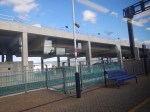

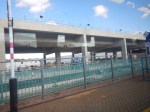

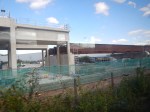

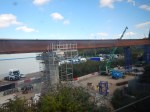
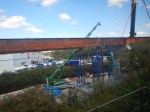
It certainly looks substantial.
According to Wikipedia, it will open in 2021.
The New Bathgate Depot
As I passed through Bathgate station, I took these photographs of the new Bathgate depot.

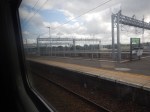
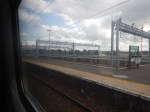

This Google Map shows the station with its extension car parking and the depot.
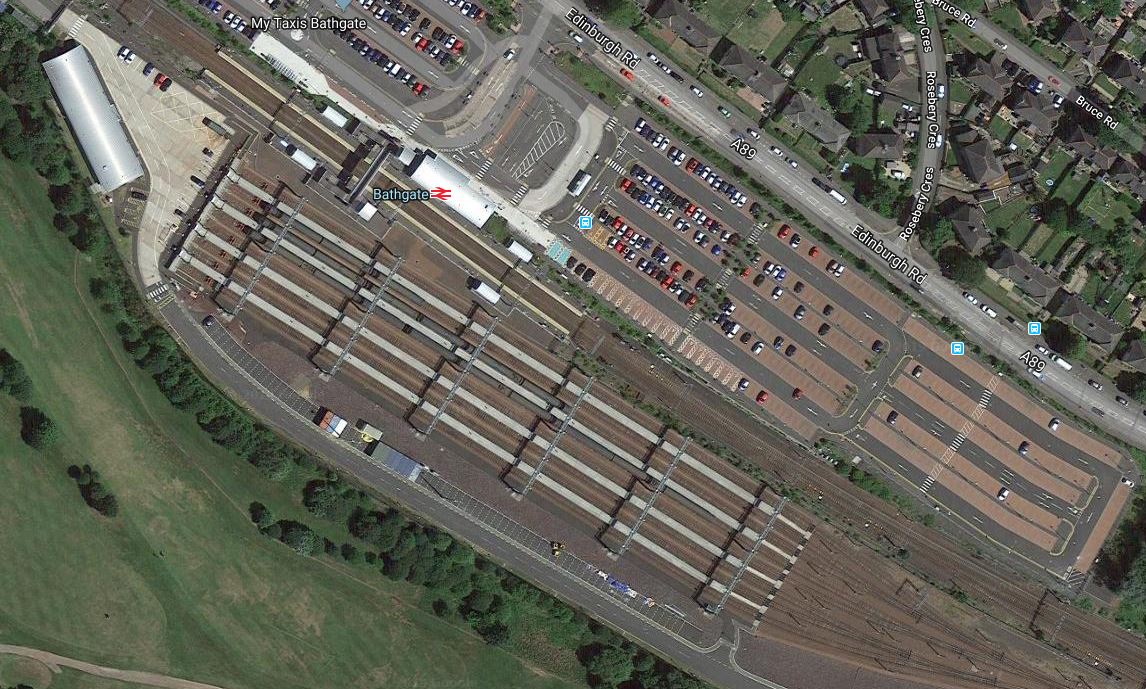
Note how the layout is so much simpler, than most depots in the UK, which were designed over a hundred years ago.
 The Anonymous Widower