The Truly Dreadful Platform-Train Access At Lewisham Station
These pictures show the truly dreadful platform-train access at Lewisham station.
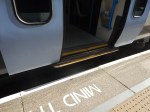
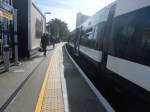
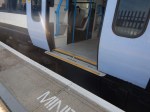
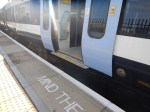
I should say there is even worse access at the front of platform 2.
I should say that Lewisham station has lifts, which are welcome. But it seems to me that if you’re putting in lifts, you should probably fix the station, so that someone in a wheelchair, should be able to wheel themselves on and off the train.
It’s all down to the long, curved platforms.
Surely, if they rebuild this station for the Bakerloo Line Extension, then these platforms will be consigned to the dustbin of history.
Abbey Wood Station – 7th October 2018
I took these pictures at Abbey Wood station.
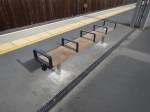
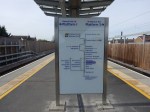
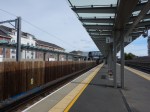
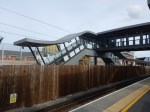
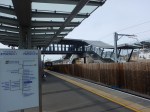
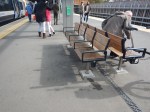
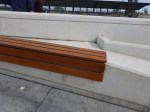
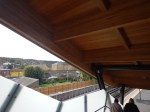
It is now nearing completion and there are some nice details.
- There are some elegant wood seats and other details.
- The signage is clear and an update on current London Underground designs.
- There are lots of stairs, escalators and lifts.
- It must also be the only station with a wooden safety fence between the tracks.
All it needs now is some Crossrail trains.
Let’s hope the other stations are as good.
Connecting The Bakerloo Line Extension At Lewisham To The Hayes Line
This map from carto.metro.free.fr shows the lines in the area of Lewisham station.
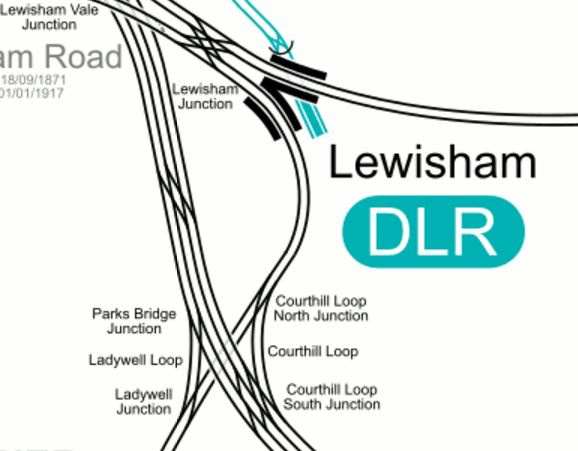
Note.
- The multi-track line going North-West to South-East is the South Eastern Main Line .
- The double-track line going South-West to North-East is the Hayes Line.
- The double-track going East are the North Kent & Bexleyheath Lines
- I think it is quite likely that the overrun tunnels for the Bakerloo Line Extension will be under the Hayes Line.
The platforms are as follows.
- Platform 1 is the Up platform on the Hayes Line.
- Platform 2 is the Down platform on the Hayes Line.
- Platform 3 is the Up platform on the North Kent & Bexleyheath Lines.
- Platform 4 is the Down platform on the North Kent & Bexleyheath Lines.
They are numbered from bottom to top in the map.
Services running through the area include.
- Slow London to Hayes via Platform 1
- London to Orpington via Platform 1 and the Courthill Loop
- Slow Hayes to London via Platform 2
- Orpington to London via the Courthill Loop and Platform 2.
- Dartford to London via Platform 3
- Slade Green to London via Platform 3
- London to Dartford via Platform 4
- London to Slade Green via Platform 4
- Fast London to Hayes via the Ladywell Loop
- Fast Hayes to London via the Ladywell Loop
If the Hayes Line were to be directly connected to the Bakerloo Line Extension, some services would be difficult to run.
But suppose the tunnels were connected to the Hayes Line between Courthill Loop North Junction and Ladywell Junction, the following services would still be possible.
- London to Orpington via Platform 1 and the Courthill Loop
- Orpington to London via the Courthill Loop and Platform2.
- Fast London to Hayes via the Ladywell Loop
- Fast Hayes to London via the Ladywell Loop
The slow services between London and Hayes would use the Bakerloo Line Extension.
Services On The Hayes Line
Currently, there are two trains per hour (tph) to both Charing Cross and Cannon Street. Some fast services avoid Lewisham, but all services stop at London Bridge.
In the Wikipedia entry for Hayes station, this is said.
In 2004, the Strategic Rail Authority proposed withdrawing services to Charing Cross from the Hayes Line. Following a campaign led by local Councillors and the Hayes Village Association, the plans were withdrawn.
So the locals have form in getting what they want.
Intriguingly, Charing Cross station has two Underground stations; Embankment and Charing Cross, on the Bakerloo Line.
But it will surely lose some of the National Rail services, if Hayes station becomes part of the Underground.
Some must stay, as if all were discontinued, getting to the City could mean a roundabout route and I suspect another campaign would be started by the good burghers of Hayes.
In Thoughts On The Power System For The New Tube for London, I felt that changing to a conventional three-rail electrification could be possible on the deep-level Underground lines.
At Hayes station, it would enable both National Rail and Underground services to both serve the station.
The design of the new Tube for London could well sort out that problem!
Beckenham Junction
This map from carto.metro.free.fr shows Beckenham Junction station and its connection to the Hayes Line at New Beckenham station.
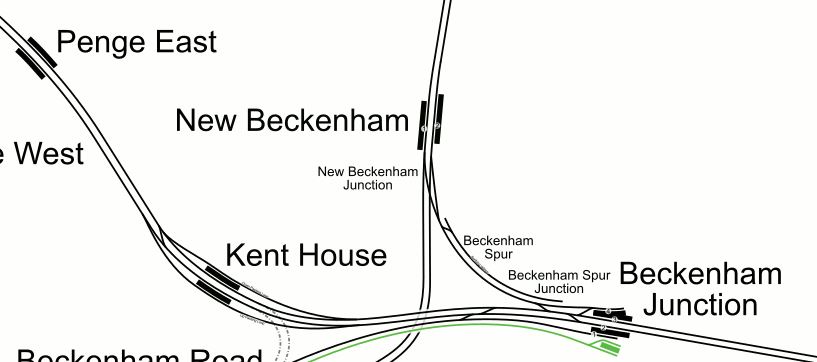
In some ways Beckenham Junction station would make a good terminus for the Bakerloo Line Extension.
- Platform 1 could be converted to use by the Underground.
- There is a four tph service between Victoria and Bromley South stations.
- There is a two-platform station for Tramlink.
But would the flat New Beckenham Junction, where trains join the Hayes Line, have the capacity to handle all the trains and Tubes, going hither and thither?
At the very least use of Beckenham Junction as a terminal for the Bakerloo Line, would need a lot of innovative thinking.
In Could Beckenham Junction To Birkbeck Be Run Using Third-Rail Tram-Trains?, I proposed using tram-trains with a third-rail capability.
This would allow the Birkbeck to Beckenham Junction section of the route to become a conventional railway again and have a higher capacity.
This was my conclusion in the post.
By replacing the trams to Beckenham Junction station with tram-trains, capable of running on both 750 VDC types of electrification and with a limited battery capabilty, would simplify operation at Beckhenham Junction and enable Tramlink services to be extended to Bromley South station.
The collateral benefit, is that Bromley town centre could get a Tramlink connection.
Going East from Beckenham Junction station, the track is only double, but if the New Tubes for London were fast enough, they could gp on to Bromley South station.
What Will Be The Operating Speed Of The New Tube for London?
Transport for London have said that the New Tube for London will definitely be deployed on the Piccadilly, Central and Bakerloo Lines.
These three lines have sections at one or both ends, where the lines run through the countryside and the stations are farther apart.
Only the 1992 Stock of the Central Line have their operating speed given in Wikipedia.. It is 62 mph, which is the same as the S Stock for the sub-surface lines.
The 2009 Stock of the Victoria Line, despite being similar to the S Stock have an operating speed of only 50 mph.
Because of the nature of the ends of the Piccadilly, Central and Bakerloo Lines, will 62 mph be the optimum operating speed for these trains.
I’ll look at the factors on these lines separately.
Piccadilly Line
The Piccadilly Line will be self-contained, after the sorting of the shared sections West Rayners Lane and between Ealing Broadway and Acton Town, that I discussed in Thoughts On The Power System For The New Tube for London.
I suspect the operating speed of the New Tubes for London on the Piccadilly Line, will be decided on what is best for that line.
Central Line
The Central Line is also self-contained and the best operating speed for the line will be chosen.
Bakerloo Line
The Bakerloo Line could be a problem, as currently Class 378 trains run on the same trcks. These have an operating speed of 75 mph.
These Class 378 trains will be replaced by Class 710 trains, which could have a faster performance.
Surely for optimum running, the trains should need similar performance.
The Benefit Of Automatic Train Control
On all the lines on which New Tubes for London will operate, there will be Automatic Train Control.
The operating speed will be set by the control system, whereas the maximum operating speed will be set by the trains design.
So I think we could see a maximum operating speed of 75 mph or even higher for the New Tube for London, so that it could run on faster lines and not slow the other faster trains.
More Speed Means More Powerful Trains And Improved Acceleration And braking
To go faster, you probably need more powerful trains, but the motors required would give better acceleration and braking, that would speed up services, by executing station stops in a shorter time.
Conclusion
I would expect from y Control Engineering training, that the New Tube for London could have a maximum operating speed in-line with the Class 710 train. So around 75-90 mph.
Could we even see an Underground train, that is capable of 100 mph?
It would only rarely, if ever, run at that speed on current plans, but it might enable Underground and National Rail services to share tracks in surprising places.
Will The Extended Bakerloo Line Be Twenty-Seven Trains Per Hour All The Way?
There are two major projects that will be implemented on the Bakerloo Line in the next decade or two.
- The replacement of the current 1972 Stock trains with the New Tubes for London.
- The extension of the line to Lewisham station.
I certainly feel, that the two projects will bring the Bakerloo Line into the twenty-first century
The Planned Train Frequency
Under Current And Future Infrastructure, the Wikipedia entry for the Bakerloo Line says this.
Transport for London proposes to upgrade the line eventually, but not until other deep-level lines have been dealt with. This will include new signalling and new trains, enabling a maximum frequency of 27 trains per hour. TfL currently expects these to be in place by 2033.
Twenty-seven trains per hour (tph) seems very much in line with other deep-level Underground Lines.
- Central Line – 35 tph
- Jubilee Line – 30 tph
- Northern Line – 24 tph for each branch
- Piccadilly Line – 33 tph after upgrade.
- Victoria Line – 36 tph
Perhaps, it is a bit lower, but the engineers usually manage to squeeze more out of a line.
The Bakerloo Line Extension To Lewisham
The planning is underway to extend the Bakerloo Line to Lewisham station.
The Bakerloo Line Extension looks like it will be a four-station extension, with interchanges at Elephant & Castle, New Cross and Lewisham.
This map from Transport for London, shows the extension.
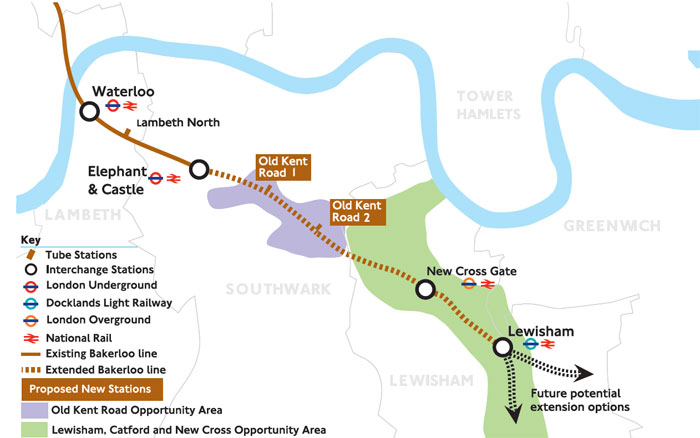
I think it will be highly likely, that the extension will be built using a similar design and techniques to that of the Northern Line Extension to Battersea.
- It will be double-track.
- There are unlikely to be any junctions.
- The Lewisham station will have two platforms with overrun tunnels.
- There appears to be no depot planned.
I have come to some conclusions about the design.
Planned Frequency
If the track layout of the extension and particularly at Lewisham follows the layouts of the Victoria Line termini, I can see no reason, why the proposed frequency of twenty-seven tph can’t be achieved.
I also suspect that provision will be made, so that the frequency can be increased.
A higher frequency would also be expected if the Bakerloo line, were to be further extended to two separate branches, as the map indicates.
Number Of Trains
I suspect that for the extension to work in an optimum manner new trains will be needed.
Project Timescale And Cost
The Northern Line Extension to Battersea appears to be taking about six years from sign-off to completion.
This extension is twice as long and has double the number of stations, but is probably not as grand.
I would put my money on a seven year project and a couple of billion.
As it is unlikely, that the required new trains will not be available until 2033, the project probably has a sign-off date of around 2025.
The project could be pulled forward.
- The trains could be built after those for the Piccadilly Line.
- An early decision could be made.
Saying go in 2022 would enable a finish in 2029.
The Northern Section Between Queens Park And Watford Junction
North of Queens Park station, the line is double-track all the way to Watford Junction station.
Queens Park Station
At Queens Park station itself, it’s a lot more complicated.
This map from carto.metro.free.fr shows the track layout at Queens Park station.
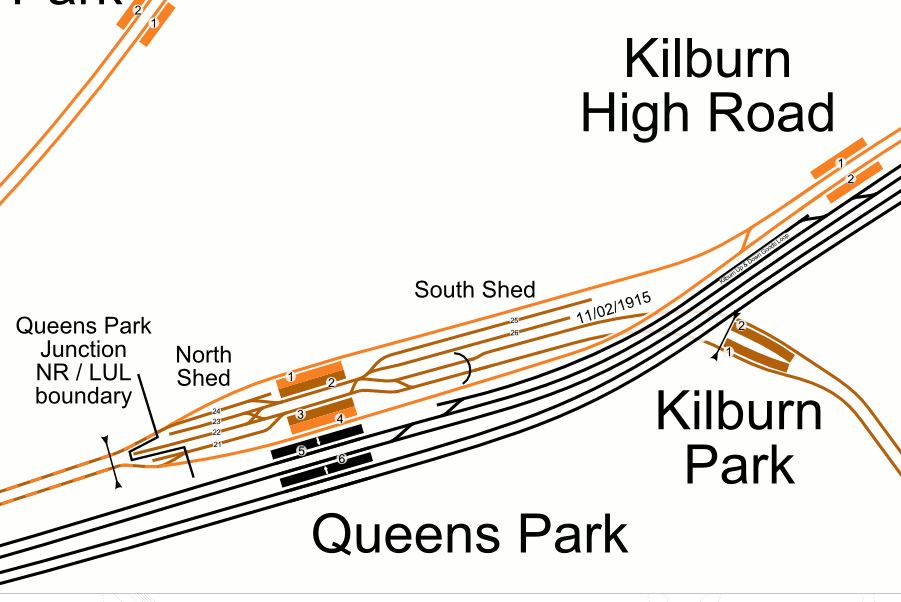
Note.
- The Watford DC Line of the Overground is shown in orange and runs through Kilburn High Road and Queens Park stations.
- The Bakerloo Line is shown in brown and runs through Kilburn Park and Queens Park stations.
- There are reversing sidings to the West of Queens Park station for the Bakerloo Line.
The following services go through or terminate at Queens Park station.
- Three tph between Euston and Watford Junction on the London Overground.
- Six tph between Harrow & Wealdstone and Elephant & Castle on the Bakerloo Line.
- Three tph between Stonebridge Park and Elephant & Castle on the Bakerloo Line.
- Eleven tph between Queens Park and Elephant & Castle on the Bakerloo Line.
It is also likely that the Overground service will go to four tph.
So this means that services will be as follows.
- Four tph on the Watford DC Line run through Kilburn High Road station.
- Twenty tph on the Bakerloo Line run through Kilburn Park station.
- Nine tph on the Bakerloo Line run through Queens Park station.
- Four tph on the Watford DC Line run through Queens Park station.
- Eleven tph on the Bakerloo Line terminate at Queens Park station.
Thirteen tph will continue to various destinations towards Watford Junction.
What Is The Capacity North Of Queens Park Station?
So how many trains could the double-track line between Queens Park and Wartford Junction stations handle?
Consider.
- All services on the line are london Overground or London Underground.
- There are no junctions, where services divide and join.
- There is a turnback facility at Harrow & Wealdstone station, that can handle six tph.
- The Overground trains are being replaced with Class 710 trains, which must be able to be made compatible with digital signalling.
- Watford Junction station has four platforms connected to the Watford DC Line.
- Good design should be able to make the stations step-free for both Class 710 trains and New Tube for London.
- The Watford DC Line service, always seems to terminate in platform 9 at Euston.
- London Underground have run thirty-six tph on the Victoria Line for about a year now.
I suspect that if the trains are digitally signalled, with a degree of Automatic Train Control, that there could be as many as thirty-six tph between Queens Park and Watford Junction stations.
I also think it is significant that the New Tube for London, specifies that the Bakerloo Line will run at twenty-seven tph. Why not more, if the theoretical capacity North of Queens Park is thirty-six tph?
But a single platform at Euston can probably handle six tph, so add 27 and 6 and you get thirty-three tph, which is the proposed core frequency of the Piccadilly Line.
Will The Bakerloo Line Run All The Way To Watford Junction?
Suppose too, that all Bakerloo services ran all the way to Watford Junction, as has been proposed in the past.
- This would simplify operation and especially at Queens Park, Stonebridge Park and Harrow & Wealdstone stations.
- Digital signalling would easily handle the frequency.
- The platform arrangement at Queens Park would be unchanged, with Euston services on the outside and Bakerloo services in the middle.
Watford Junction would have superb thirty-three tph service to two destinations in London.
Will The New Tube for London Run The Euston Service?
I will speculate, that the Watford DC Line service could be run by New Tubes for London..
- One type of train would be easier to handle for staff and passengers.
- All platform heights could be the same.
- All services would be step-free between train and platform.
- Digital signalling could easily handle thirty-three tph along the shared route.
In Thoughts On The Power System For The New Tube for London, I proposed that the New Tube for London could run on a conventional third-rail system.
This would further mean the following for the Bakerloo Line.
- New Tubes for London could use the existing track to access Euston, without serious modification.
- If the Bakerloo Line is extended to Hayes, Beckenham Junction or Bromley North stations, the existing tracks could continue to handle existing third-rail trains to provide other services.
- Only one type of train would be needed to run all services on the Bakerloo Line to its various destinations.
Use of New Tubes for London on all routes may be possible to create a service on the Northern section of the Bakerloo Line with the following characteristics.
- Twenty-seven tph between Watford Junction and Elephant & Castle stations.
- Six tph between Watford Junction and Euston stations.
- All stations would be step-free between platform and train.
- All trains would be identical New Tubes for London.
- All trains would run under Automatic Train Control, as does the Victoria Line.
All passengers on the existing Bakerloo and Watford DC Lines would see a better service.
The Bakerloo Line Extension to Lewisham
Note, that I have said nothing about the Bakerloo Extension to Lewisham.
In my view, that extension does what it says on the tin and creates a new twenty-seven tph service between Elephant & Castle and Lewisham stations, which brings new services to an area of South-East London, where they are much needed.
Effectively, the Bakerloo Line would become two twenty-seven tph lines, that happen to connect back-to-back at Elephant & Castle station to enable cross-London journeys.
Could Bakerloo Line Services Still Be Turned Back At Harrow & Wealdstone?
The following could be argued.
- Watford Junction doesn’t need twenty-seven tph on the Bakerloo Line and six tph to Euston.
- Watford needs a cross-Watford service like the in-limbo Croxley Rail Link.
So could a few trains be turned back using the existing facility at Harrow & Wealdston station to create paths to allow an appropriate service between say Watford Junction and Amersham stations?
More Frequent Services
If we look at the Victoria Line, where the frequency has increased over the last few years by the addition of various improvements, I would not be surprised to see the frequency of twenty-seven tph increased.
After all London Underground’s engineers have been squeezing Dear Old Vicky for half a century, so they must know more tricks, than Paul Daniels knew at the peak of his success.
Conclusion
Undoubtedly, the New Tube for London could run at twenty-seven tph all the way between Watford Junction to Lewisham stations.
Whether that frequency is needed all the way is another matter.
Thoughts On The Power System For The New Tube for London
Obviously, very little has been said about the power system of the New Tube for London.
London Underground Electrification
This description of Lundon Underground electrification comes from Electrification in the Wikipedia entry for London Underground Infrastructure.
The lines are electrified with a four-rail DC system: a conductor rail between the rails is energised at −210 V and a rail outside the running rails at +420 V, giving a potential difference of 630 V. On the sections of line shared with main line trains, such as the District line from East Putney to Wimbledon and Gunnersbury to Richmond, and the Bakerloo line north of Queen’s Park, the centre rail is bonded to the running rails, as the electrical return from National Rail trains is via the wheels. This was first used in the early 20th century, the isolated traction current return allowing a train’s position to be detected using DC track circuits, and reduced any earth leakage currents that could affect service pipes and telephone cables.
This picture shows a typical London Underground track on the Central Line at Bank station.

Note the suicide pit under the rails.
This layout is rather unusual and different to the third rail system used by National Rail services in London and the South East and on Merseyrail.
Battery Power
This article on Rail Engineer is entitled London Underground Deep Tube Upgrade.
This is an extract.
More speculatively, there might be a means to independently power a train to the next station, possibly using the auxiliary battery, in the event of traction power loss.
Batteries in the New Tube for London would have other applications.
- Handling regenerative braking.
- Moving trains in sidings and depots with no electrification.
It should be born in mind, that battery capacity for a given weight of battery will increase before the first New Tube for London runs on the Piccadilly line around 2023.
Conversion To A Conventional Third-Rail System
Given, that space in the deep tunnels is limited, I wonder if removing the third rail in the middle and going to a third-rail 630 V DC system will give more space under the train, that could be used for equipment and a lower floor.
The following lines could eventually be converted to the New Tube for London.
- Bakerloo – Shared running with the Watford DC Line to the North of Queens Park station.
- Central – No shared running
- Jubilee – No shared running
- Northern – No shared running
- Piccadilly – Shared running with the Metropolitan Line to the West of Rayners Lane station and the District Line to the West of Acton Town station.
- Victoria – No shared running
- Waterloo & City – No shared running
So could the shared running be eliminated to make conversion easier.
The Bakerloo Line North of Queens Park Station
The New Tube for London must be able to share the track with the Class 710 trains working the Watford DC Line.
There would be no problem with traction, as both types of trains could use conventional third-rail track.
But there would be a problem with platform height.
Between Rayners Lane and Uxbridge Stations
In Can Between Rayners Lane And Uxbridge Stations Be Step-Free?, I investigated the line between these two stations, including these possibilities.
- Unattended Train Operation (UTO) on the Piccadilly Line, which may mean platform edge doors.
- Terminating The Piccadilly Line At Rayners Lane Station
- Terminating The Metropolitan Line At Rayners Lane Station
- A Piccadilly Line Service Be Run Between Uxbridge and Ealing Broadway Stations
- Extending The Central Line To Uxbridge
I came to this conclusion.
There are a lot of possible improvements that can be done to the train service to Uxbridge.
That is probably a bit of a cop-out, but then there are a lot of possibilities, some of which eliminate the Piccadilly and Metropolitan Lines sharing the track to Uxbridge.
Between Acton Town And Ealing Broadway Stations
This map from carto.metro.free.fr shows the lines Between Acton Town and Ealing Broadway stations.
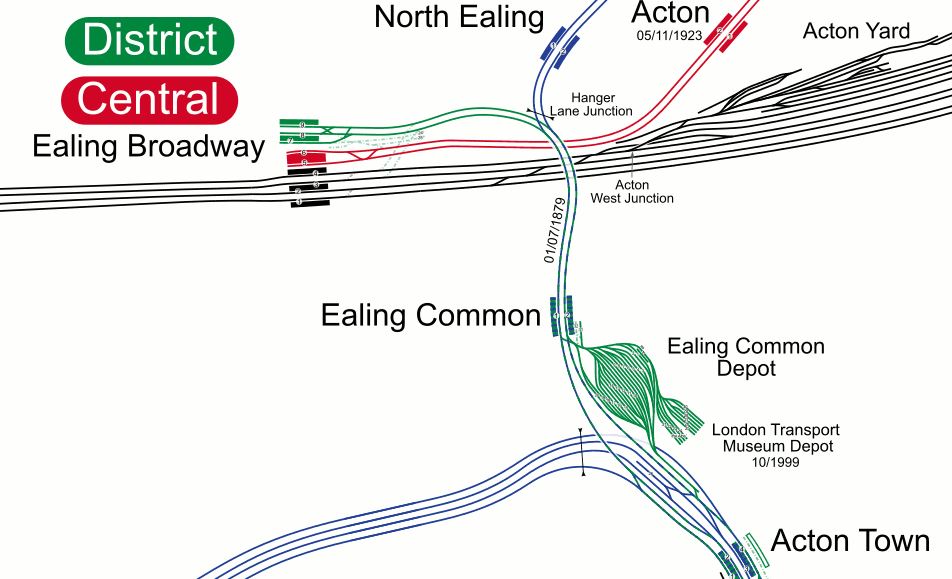
Note how the Piccadilly and District Lines share tracks from Ealing Common station, which then split with District Line trains going to Ealing Broadway station and Piccadilly Line trains going to Rayners Lane and Uxbridge stations.
Transport for London are suggesting the following.
- Ealing Broadway is served by the Piccadilly Line, rather than the District Line.
- District Line trains would terminate at Richmond and Wimbledon stations instead of Ealing Broadway.
- East of Acton Town, Piccadilly Line trains would call at Turnham Green, Ravenscroft Park and Hammersmith
- District Line trains would call at a relocated Chiswick Park, Turnham Green, Stamford Brook, , Ravenscroft Park and Hammersmith.
- East of Hammersmith, both District and Piccadilly Line routes would be unchanged.
Passengers needing to travel between Ealing Broadway and stations between Victoria and Whitechapel, would change at Turnham Geen, Ravenscroft Park or Hammersmith, by walking across the platform.
If this change is implemented, there will be no shared running between the Piccadilly and District Lines.
National Rail Shares Tracks With The Metropolitan And District Lines
There is some shared running on the Metropolitan and District Lines but that would be unaffected.
Conclusions On Conversion To A Conventional Third-Rail System
It looks to me, that it would be possible to convert the deep-level Underground Lines to conventional third-rail, by eliminating sharing with other lines.
But would such a radical change to the electrification of London’s deep-level Underground lines be feasible and economic?
Conversion From Four Rails To Three
I suspect that when the New Tube for London is introduced on a line, the track will be renewed or at the least given a good refurbishment.
Some years ago, I obtained a database of all the faults on the London Underground for a year. Very few of the faults were down to track faults and the only problems in tunnels seemed to be water ingress.
So I think we can assume, that the track foundations are probably in good condition. If they aren’t I suspect London Underground know all about the problems.
My project management knowledge leads me to believe that a well-planned series of track closures should be possible to convert the track.
Safety
At all stations, the rail in the centre of the track would not be there anymore and the only electrified rail could be placed on the far side from the platform in deep-level stations.
This is another picture from Bank station.
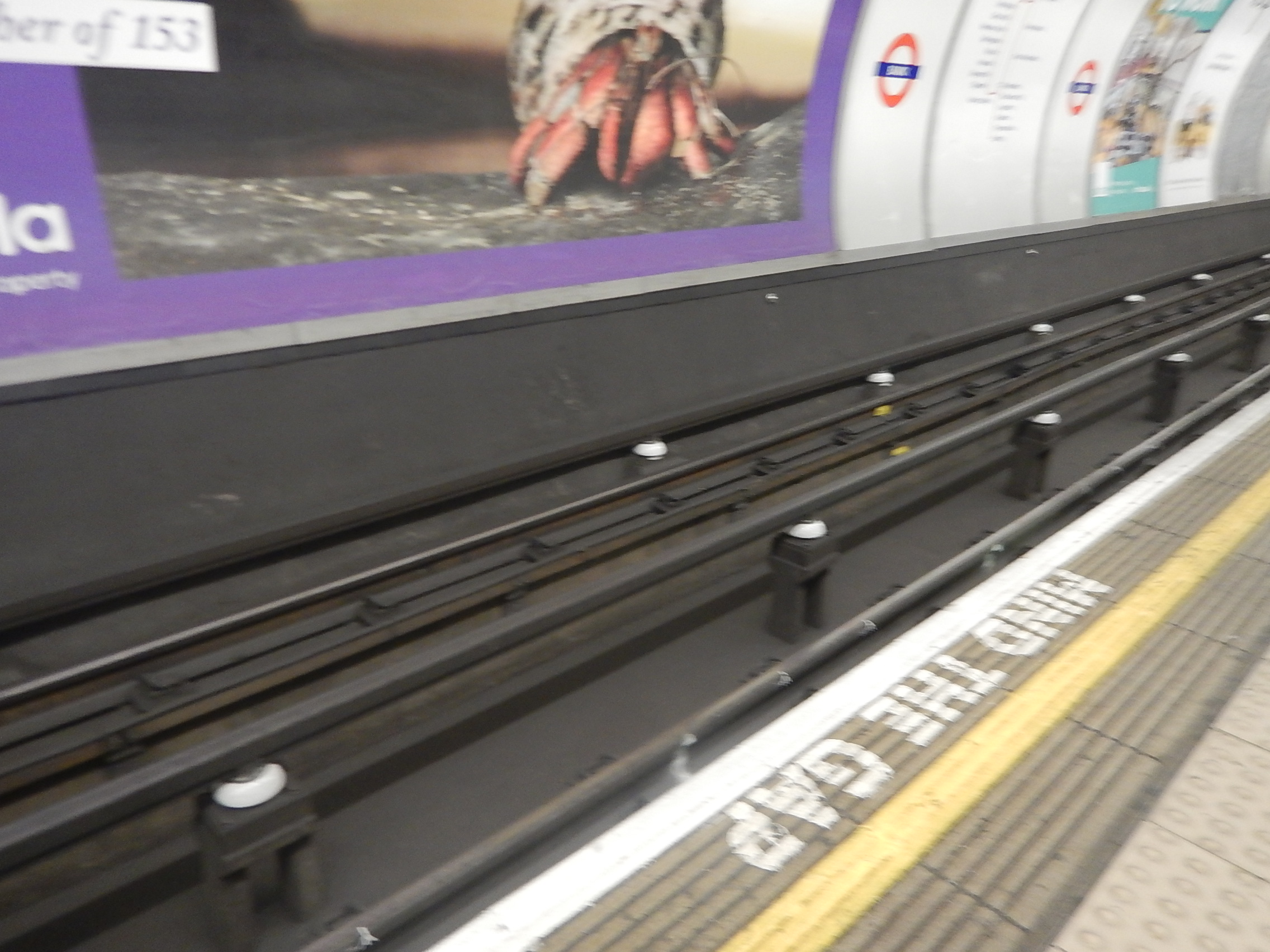
Note.
- The +420 VDC power rail sitting on insulators close to the wall
- The -210 VDC power rail sitting on insulators on posts in the suicide pit.
- How the two running rails neatly fit on ledges on either side of the suicide pit.
Imagine how it would look with the negative power rail removed.
The single rail could also be shielded, by perhaps an insulating board on both sides of the rail.
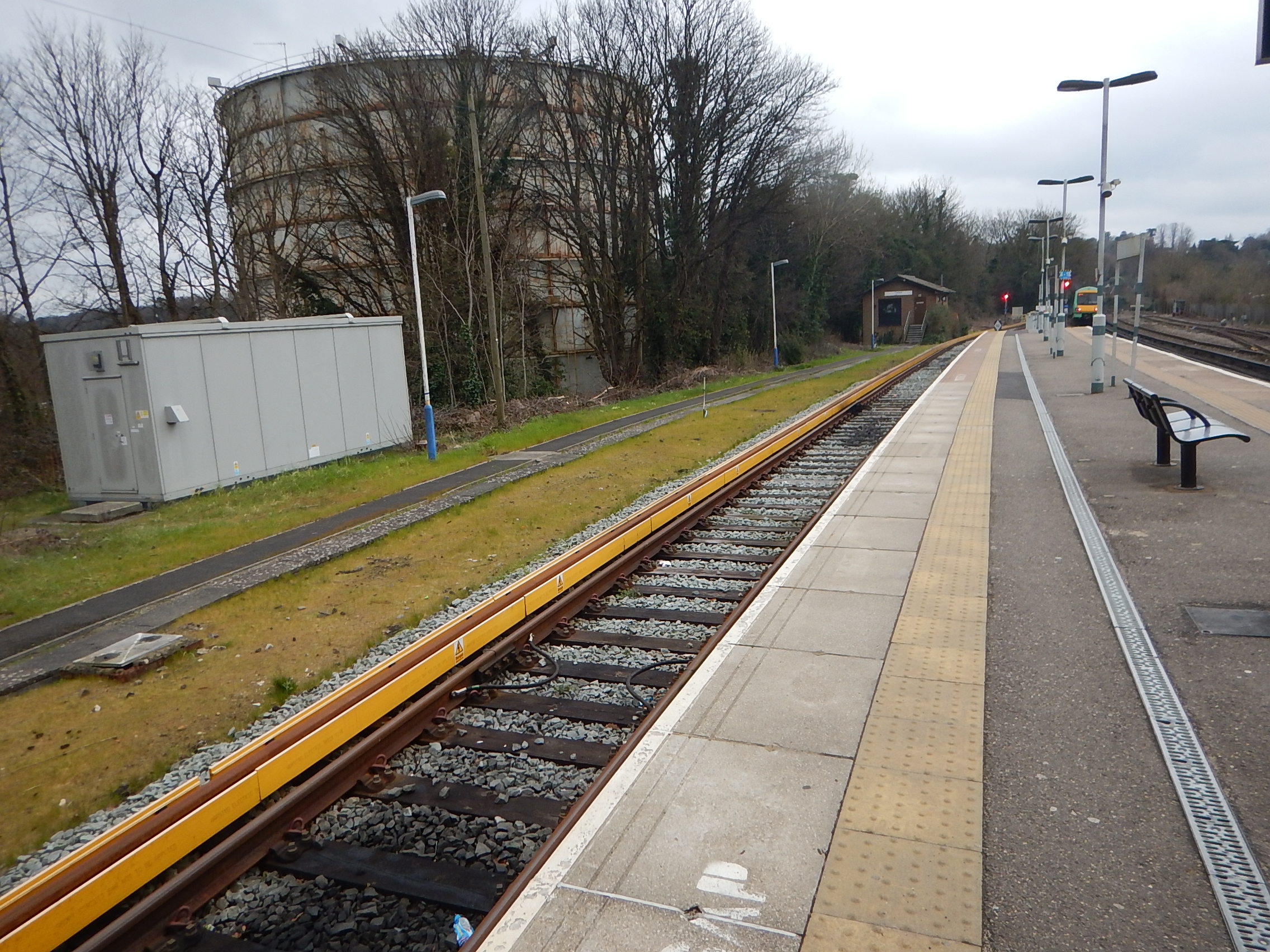
This picture shows an insulated third rail at Oxted station. The yellow insulator is wood, that has been painted.
I would extrude the insulator using recycled plastic. After all polythene’s first major use was as an insulator in radar during World War II.
I believe that a three-rail track could be designed, that would surely be much safer than the current track, should anybody fall or be pushed off the platform.
There is also the possibility of using battery power in some or even all stations. Power would only be supplied to the trains between stations, where batteries would be charged.
The third rail would stop perhaps forty metres at either side of a station and the gaps would be bridged by battery power.
It might be possible to make stations, with no electrified rails visible or accessible.
Eliminating The Gap
I would imagine that the design of the New Tube for London will make sure that the doors are aligned with the platform, as these doors on a Class 378 train are with the platform on the London Overground.
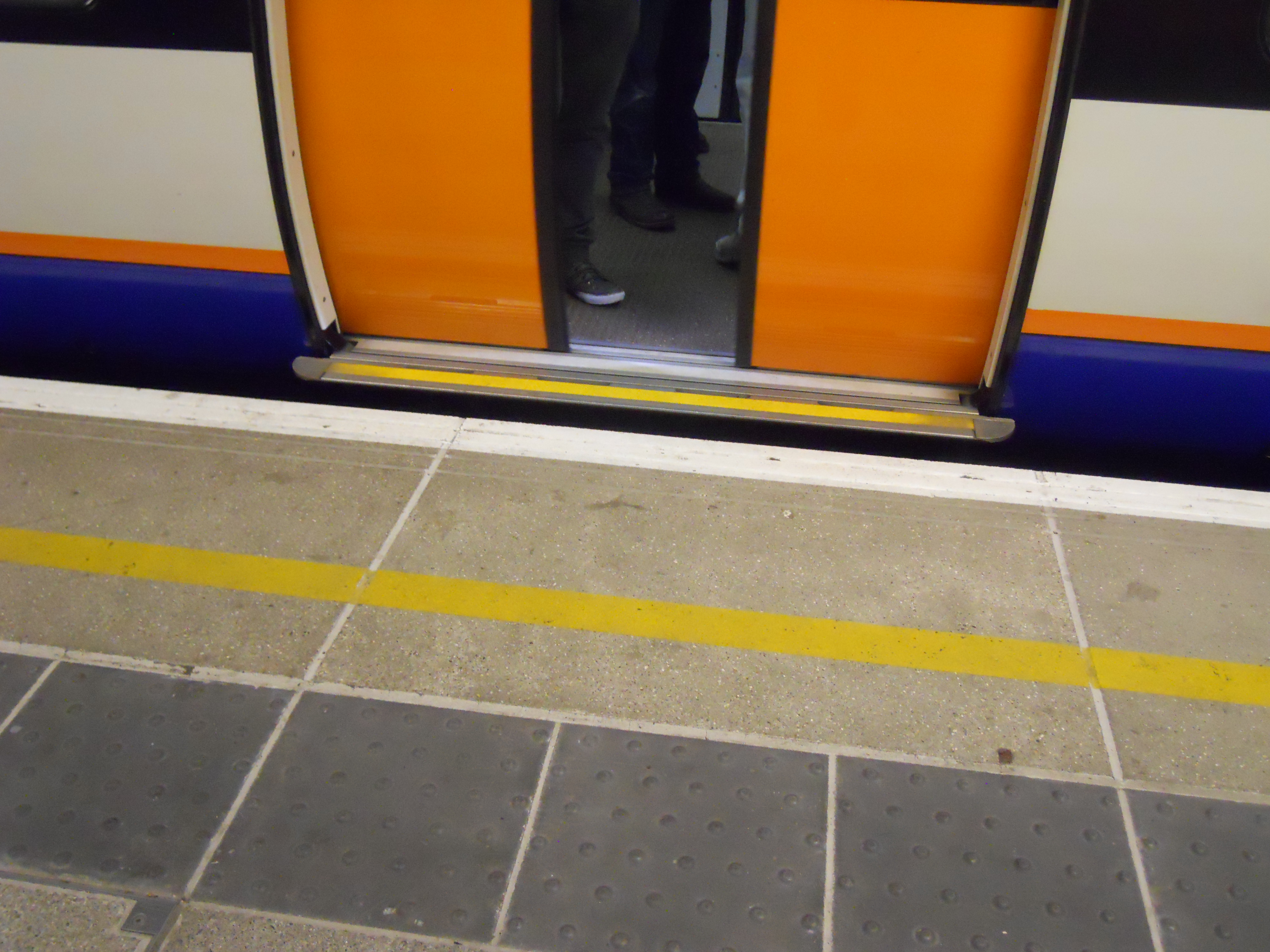
I would imagine, that by making certain that the running rails are correctly adjusted, then step-free access between train and platform can be achieved.
I’ve certainly seen passengers in wheel-chairs push themselves in and out of trains at Dalston Junction station.
Electrolytic Corrosion
Mark said this in a comment.
There is a very important reason why the tube uses two power rails. It was quickly discovered that using a ground return on a DC circuit lead to the return current actually coming back via te cast iron tunnel lining rings and electrolysis and electrolytic corrosion of the lining.
Transport for London’s engineers would be very aware of any problems, and I suspect that they have a viable solution.
This article on Rail Engineer is entitled New London Underground Slab Track Cast In-Situ.
It describes how they are using slab track cast in the tunnel to fit problems in short tunnels. They also expect the solution to last a hundred years.
Such a solution would surely work in the cast-iron deep-level tunnels to allow new track to be installed in whatever format was desired.
There Is One Major Problem
The New Tube for London won’t be able to run on the existing track and the current 1973 Stock won’t be able to run on the future track.
So London Underground sensible policy of phasing in the new trains alongside the old ones, as was done on the Victoria Line would not be possible.
The first line to be equipped with New Tube for London trains will be the Piccadilly Line, which has the following characteristics.
- There are two depots; Cockfosters and Northfields, which are conveniently at each end of the line.
- There are sidings at Arnos Grove, South Harrow and Uxbridge.
- Trains can be turned back to the West at Acton Town, Arnos Grove and Wood Green
- Trains can be turned back to the North at Acton Town, Barons Court, Green Park and Rayner’s Lane.
- There are crossovers at Hatton Cross, Hounslow Central and Kings Cross St. Pancras.
There are many more sidings, turnbacks and crossovers than most other lines.
These may enable a phased conversion of the line to the new track design, signalling and trains.
Conclusion
I believe it is feasible to convert London’s deep-level Underground lines to a conventional third-rail system, as used in the rest of London, the South East and Merseyrail.
This would give these advantages.
Running On Coventional Third-Rail Tracks
New Tube for London trains could run on the following lines and share with trains like Aventras, Desiro Cities, Electrostars and Networkers equipped for third-rail operation.
Routes where this might be useful include.
- Extending the Bakerloo Line along the Watford DC Line, to the North of Queens Park station.
- Extending the Bakerloo Line Extension to the South of Lewisham station to Beckenham Junction, Bromley North and Hayes stations.
Route 2 would release paths into an overcrowded London Bridge station.
Look at this map from carto.metro.free.fr, which shows the new terminus of the Northern Line at Battersea Power Station station.
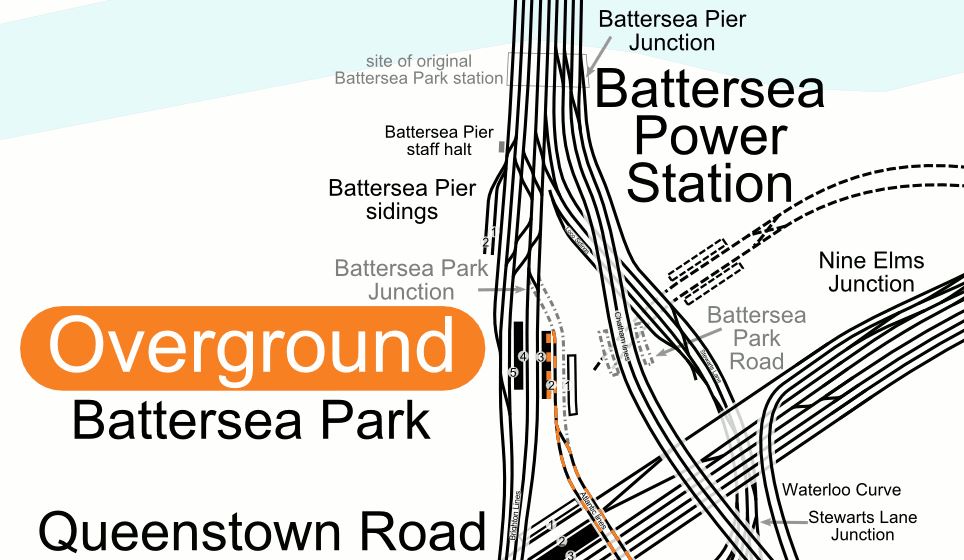
The under-construction Northern Line Extension is shown dotted.
Could Northern Line services come to the surface, join the surface lines and run to Clapham Junction station and possibly beyond?
Creating More Space And A Level Floor In The New Trains
Removing the centre rail will give more space in the limited tunnels of the deep-level Underground lines and must make it easier to squeeze in all the equipment that has been specified for the new trains.
Increasing Safety
It is my view, that the suicide pit under the train will be wider and will not be guarded by an electric rail.
The main power supply will be right out of the way in stations and could even be eliminated from stations by the use of batteries.
SuperSaturday On Southeastern
This article on IanVisits is entitled Cheap Train Tickets On Southeastern Railway This Weekend.
This is the first three paragraphs.
This weekend is SuperSaturday on Southeastern railway and they’re offering unlimited travel across their entire network for just £20. You can also add up to four children for £1 each.
You have to book a ticket from a set departure station, but beyond that, you are free to travel to as many stations as you like on the day.
It also includes travel on High Speed One out of St Pancras.
What a brilliant marketing idea!
Perhaps other train operating companies should do the same thing.
If Greater Anglia did it on a day when several of Cambridge United, Colchester United, Ipswich Town, Norwich City, Peterborough United and Southend were at home, what would it do to gates and travel around East Anglia.
Obviously, Northern couldn’t do it, as the RMT strike on Saturdays.
Will Brexit Result In A Secure Irish Border?
I have been to Ireland many times and also have had several good friends from Southern Ireland.
One tale I heard was from a respectable farmer, was about how during the Second World War he helped his father smuggle food into the North. As he said, “We couldn’t let fellow Irishmen starve!”
It is tales like this, that have always made me believe that Ireland may not politically be one country, but economically and personally, it is a closer relationship.
I also remember tales from a couple of decades ago, where because of different prices across the border, people would shop or trade, where there was a financial advantage.
I’ve actually never driven across the Irish border, as I’ve only been to both countries in the same trip once and I crossed the border by train.
But as with the borders between Wales and England or Scotland and England, I suspect only the locals know on which side they are standing.
One of the main reasons many voted for Brexit was to keep out immigrants.
What is to stop would-be immigrants to the UK, after Brexit going to Ireland and then being smuggled across the porous border, just as food was in the Second World War?
Surely, the only way to stop the smuggling of immigrants is a secure border!
Capacity Of Cross London Rail Routes
I shall start by looking at the current and future capacity of various rail routes across London.
Bakerloo
The Bakerloo Line has a frequency of twenty trains per hour (tph) between Queen’s Park and Elephant & Castle stations.
The current 1972 Stock trains have a capacity of 700 passengers.
This gives a capacity a 14,000 passengers per hour (pph) in each direction.
In the Wikipedia entry for the New Tube for London, this is said.
Bakerloo line capacity could be increased by 25% with 27 trains per hour at peak times by 2033.
This gives a future capacity of 17,500 pph in each direction.
Central
The Central Line has a frequency of thirty-five tph between White City and Leytonstone stations.
The current 1992 Stock trains have a capacity of 930 passengers.
This gives a capacity a 32,550 pph in each direction.
In the Wikipedia entry for the New Tube for London, this is said.
Central line capacity increased by 25% with 33 trains per hour at peak times by 2030.
This gives a future capacity of 40,687 pph in each direction.
Crossrail
Crossrail is planned at present to have twenty-four tph between Paddington and Whitechapel stations.
Each of Crossrail’s Class 345 trains can hold 1,500 passengers.
This gives a capacity a 36,000 pph in each direction.
It has been said in several places that Crossrail has a future frequency of thirty tph.
If this could be achieved this would increase capacity to 45,000 pph in each direction.
District
The District Line has a combined frequency with the Circle Line of twenty-four tph between Gloucester Road and Tower Hill stations.
The current S7 Stock trains have a capacity of 865 passengers.
This gives a combined capacity a 20,760 pph in each direction.
The Wikipedia entry for the District Line talks about a future frequency of thirty-two tph.
This could increase the future capacity to 27,680 pph in each direction.
East London
The East London Line has a frequency of sixteen tph between Dalston Junction and Surrey Quays stations.
The current Class 378 trains have a capacity of 840 passengers.
This gives a capacity of 13,440 pph in each direction.
London Overground are planning to increase the frequency to twenty tph in the next couple of years.
This would give an increased capacity if 16,800 pph in each direction.
Gospel Oak To Barking
The Gospel Oak To Barking Line has a frequency of four tph across North London,
The current Class 172 trains have a capacity of 120 seats, with perhaps a total capacity of 300.
This would give a capacity of 1,200 pph in each direction.
The new Class 710 trains have a capacity around 700, according to various reports.
This would give a future capacity if 2,800 pph in each direction.
Hammersmith & City
The Hammersmith & City Line has a combined frequency with the Circle Line of twelve tph between Paddington and Liverpool Street stations.
The current S7 Stock trains have a capacity of 865.
This gives a combined capacity of 10,380 pph in each direction.
Jubilee
The Jubilee Line has a frequency of thirty tph between North Greenwich and Willesden Green stations.
The current 1996 Stock trains have a capacity of 875 passengers.
This gives a capacity of 26,250 pph in each direction.
With Siemens new trains, I suspect that this value could be increased by perhaps fifteen percent to 30,187 pph in each direction.
Metropolitan
The Metropolitan Line has an Off Peak frequency of sixteen tph between Baker Street and Liverpool Street stations.
The current S8 Stock trains have a capacity of 1003.
This gives a combined capacity a 16.048 pph in each direction.
With the Metropolitan Line Upgrade, we can probably see some more capacity.
A not unreasonable twenty percent would raise the future capacity to 19,257 pph in each direction.
Northern
In the Peak both branches of the Northern Line have a frequency of twenty-four tph between Camden Town and Kennington stations.
This is reduced to twenty tph in the Off Peak.
With the addition of the Extension to Battersea, these figures are unlikely to get lower.
The current 1195 Stock trains have a capacity of 662 passengers.
This gives a capacity of 31,776 pph in each direction.
With Siemens new trains, I suspect that this value could be increased by perhaps fifteen percent to 36,542 pph in each direction.
North London
The North London Line has a frequency of eight tph between Willesden Junction and Stratford stations.
The current Class 378 trains have a capacity of 840 passengers.
This gives a capacity a 6,720 pph in each direction.
London Overground are possibly planning to increase the frequency to twelve tph in the next couple of years.
This would give an increased capacity if 10,080 pph in each direction.
Piccadilly
As we don’t know the capacity of the new Siemens trains, this is a best estimate, for when they are in service around 2023-2025.
Currently, the Piccadilly Line is running at a frequency of twenty-four tph between Barons Court and Arnos Grove stations.
The current 1973 Stock trains, each have a capacity of 684 passengers.
This gives a current capacity of 15,416 pph in each direction.
In the Wikipedia entry for the New Tube for London, this is said.
Piccadilly line capacity could be increased by 60% with 33 trains per hour at peak times by 2025.
This gives a 2025 capacity of 24,666 pph in each direction.
Dividing the 24,666 by 33 gives a train capacity of 750 passengers for a New Tube for London.
Thameslink
Thameslink will have a frequency of twenty-four tph between St. Pancras and Blackfriars stations.
Half of these will be twelve-car Class 700 trains with a capacity of 1754 and the other half will be eight-car trains with a capacity of 1146.
This gives a capacity of 34,800 pph in each direction.
It has been stated that Thameslink will be able to handle thirty tph in the future, which would raise the capacity to 43,500 pph in each direction.
Victoria
The Victoria Line is currently running at a frequency of thirty-six tph.
The current 2009 Stock trains, each have a capacity of 876 passengers.
This gives a capacity of 31,536 pph in each direction.
I think it is reasonable to assume that the Victoria Line is at capacity.
But I wouldn’t be surprised, that with station improvements, which would include a double-ended Walthamstow Central station, engineers on Dear Old Vicky managed to squeeze forty tph out of the old girl.
This would give a capacity of 35,040 pph in each direction.
I also wouldn’t rule out replacing the current trains with the New Tube for London, if the new trains have proved an outstanding success on all the other lines. But that probably wouldn’t be to well into the 2030s.
Current And Future Summary And Total Capacity
The current figures in passengers per hour can be summarised as follows.
- Bakerloo – 14,000
- Central – 32,550
- Crossrail – 36,000
- District – 20,760
- East London – 13,440
- Gospel Oak To Barking – 1,200
- Hammersmith & City – 10,380
- Jubilee – 26,250
- Metropolitan – 16,048
- Northern – 31,776
- North London – 6,720
- Piccadilly – 15,416
- Thameslink – 34,800
- Victoria – 31,536
This gives a total current capacity of 290,876
Reasonable projections for future figures can be summarised as follows.
- Bakerloo – 17,500 (25% Increase) – New Tube for London/New Signalling
- Central – 40,687 (25% Increase) – New Tube for London/New Signalling
- Crossrail – 45,000 (25% Increase) – 30 tph from 24 tph
- District – 27,680 (33% Increase) – New Signalling
- East London – 16,800 (25% Increase) – 20 tph from 16 tph
- Gospel Oak To Barking – 2,800 (133% Increase) – New larger trains
- Hammersmith & City – 10,380
- Jubilee – 30,187 (15% Increase) – New Tube for London
- Metropolitan – 19257 (20% Increase) – New Signalling
- Northern – 36,542 (15% Increase) – New Tube for London
- North London – 10,080 (50% Increase)
- Piccadilly – 24666 (60% Increase) – New Tube for London/New Signalling
- Thameslink – 43,500(25% Increase) – 30 tph from 24 tph
- Victoria – 31,536
This gives a total future capacity of 356615
Or a capacity increase of around twenty-three percent.
What Do These Figures Show?
My figures are very much rough estimates, based on what is proposed to happen.
New Tube for London
Five of the improvements in capacity require the replacement of the current trains with the New Tube for London. Three of these replacements will need new signalling and only the Piccadilly Line trains have actually been given the go-ahead.
If these train replacements and signalling are done sequentially, they would show these overall capacity improvements.
- Piccadilly – 3.2%
- Central – 2.6%
- Bakerloo – 1.1%
- Jubilee – 1.3%
- Northern – 1.5%
Overall, these five projects will increase capacity by 10.2%
Some of these figures may appear small, compared to the Piccadilly and Central, but then with the exception of the Bakerloo, the other lines already have Automatic Train Control and high-frequency services.
The great thing about the effects of the New Tube for London on capacity, is that it is a rolling program and as each line is converted, more capacity will continue to be added, benefiting many parts of London.
Digital Signalling
Increasingly, lines in London are digitally-signalled with a degree of Automatic Train Control.
In a few years time, these lines will be controlled this way in Central London.
- Central
- Circle
- Crossrail
- District
- Hamersmith & City
- Jubilee
- Metropolitan
- Northern
- Piccadilly
- Thameslink
- Victoria
All these lines are or will be carriers of high numbers of passengers.
In A North London Line With Digital Signalling, I looked at the benefits of installing digital signalling on the North London Line. This was my conclusion.
It looks to me, that they’ll come a time, when digital signalling to squeeze the required number of trains along the North London Line.
Digital signalling will have to be applied to all the other lines in my list to make the most of the train lines we have in London.
Bakerloo
These lines will be given new signalling
- Bakerloo – 17,500 (25% Increase)
- Central – 40,687 (25% Increase)
- District – 27,680 (33% Increase)
- Hammersmith & City – 10,380
- Metropolitan – 19257 (20% Increase)
- Piccadilly – 24666 (60% Increase)
Of the deep level Underground lines, the Bakerloo Line is well below the capacity in passengers per hour (pph) of the other lines, through Central London.
The easiest way to increase the capacity would be to increase the frequency of the trains, by the application of digital signalling.
Earlier in the section on the Piccadilly Line, I calculated the capacity of each New Tube for London on that line as 750.
So if the Bakerloo Line could handle the thirty-six tph currently running on the Victoria Line, this would give a capacity of 23,333 pph in each direction.
Like the Victoria Line, the Bakerloo is a simple double-track without junctions through Central London.
At the Southern end the line terminates in the two platforms at Elephant & Castle station. If Brixton and Walthamstow Central stations can handle thirty-six tph, then surely with modern trains and digital signalling, this number of trains can be handled at Elephant & Castle station.
But at Queen’s Park station, it’s more difficult.
This map from carto.metro.free.fr shows the track layou at Queens Park station.
Note.
- The Watford DC Line of the Overground is shown in orange and runs through Kilburn High Road and Queens Park stations.
- The Bakerloo Line is shown in brown and runs through Kilburn Park and Queens Park stations.
- There are reversing sidings to the West of Queens Park station for the Bakerloo Line.
The following services go through or terminate at Queens Park station.
- Three tph between Euston and Watford Junction on the London Overground.
- Six tph between Harrow & Wealdstone and Elephant & Castle on the Bakerloo Line.
- Three tph between Stonebridge Park and Elephant & Castle on the Bakerloo Line.
- Eleven tph between qQueens Park and Elephant & Castle on the Bakerloo Line.
It is also likely that the Overground service will go to four tph.
So this means that services will be as follows.
- Four tph on the Watford DC Line run through Kilburn High Road station.
- Twenty tph on the Bakerloo Line run through Kilburn Park station.
- Nine tph on the Bakerloo Line run through Queens Park station.
- Four tph on the Watford DC Line run through Queens Park station.
- Eleven tph on the Bakerloo Line terminate at Queens Park station.
Thirteen tph will continue to various destinations towards Watford.
So how many trains could the double-track line between Queens Park and Wartford Junction stations handle?
Consider.
- All services on the line are london Overground or London Underground.
- There are no junctions, where services divide and join.
- There is a turnback facility at Harrow & Wealdstone station, that can handle six tph.
- The Overground trains are being replaced with Class 710 trains, which must be able to be made compatible with digital signalling.
- Watford Junction station has four platforms connected to the Watford DC Line.
- Good design should be able to make the stations step-free for both Class 710 trains and New Tube for London.
- The Watford DC Line service, always seems to terminate in platform 9 at Euston.
- London Underground have run thirty-six tph on the Victoria Line for about a year now.
I suspect that if the trains are digitally signalled, with a degree of Automatic Train Control, that there could be as many as thirty-six tph between Queens Park and Watford Junction stations.
I also think it is significant that the New Tube for London, specifies that the Bakerloo Line will run at twenty-seven tph. Why not more, if the theoretical capacity North of Queens Park is thirty-six tph?
But a single platform at Euston can probably handle six tph, so add 27 and 6 and you get 33 tph, which is the proposed core frequency of the Piccadilly Line.
Suppose too, that all Bakerloo services ran all the way to Watford Junction.
- This would simplify operation at Queens Park, Stonebridge Park and Harrow & Waldstone.
- Digital signalling would easily handle the frequency.
- The platform arrangement at Queens Park would be unchanged, with Euston services on the outside and Bakerloo services in the middle.
Suppose too, that the Watford DC Line service were to be run by New Tube for London trains.
- All platform heights could be the same.
- All services would be step-free between train and platform.
- Digital signalling could easily handle 33 tph along the route.
This last section has very much been speculation on my part, but it shows how it may be possible to create a service on the Bakerloo Line with the following characteristics.
- Twenty-seven tph between Watford Junction and Elephant & Castle stations.
- Six tph between Watford Junction and Euston stations.
- All stations would be step-free between platform and train.
- All trains would be identical New Tube for London trains.
- All trains would run under Automatic Train Control, as does the Victoria Line.
Note, that I have said nothing about the Bakerloo Extension to Lewisham.
In my view, that extension does what it says on the tin and creates a new twenty-seven tph service between Elephant & Castle and Lewisham, which brings new services to an area of South-East London, where they are much needed.
Effectively, the Bakerloo Line could become two twenty-seven tph lines, that happen to connect back-to-back at Elephant & Castle station to enable cross-London journeys.
If we look at the Victoria Line, where the frequency has increased over the last few years by the addition of various improvements, I would not be surprised to see the frequency of twenty-seven tph increased.
After all London Underground’s engineers have been squeezing Dear Old Vicky for half a century, so they must know more tricks, than Paul Daniels knew at the peak of his success.
Crossrail
Taking the figures in the current table, Crossrail will add 36,000 pph in both directions across London, to a current capacity of 254,876.
This is a increase of fourteen percent on the current total capacity.
Increasing the frequency from twenty-four to thirty tph, adds another 9,000 pph in each direction, which is an increase of seventeen percent on the current total capacity.
It is very likely, that Crossrail has been designed, so that the train length can be changed as required.
The initial trains have been supplied as seven-car trains and when the line opens nine-car trains will be used.
I have read somewhere that the trains could be extended to ten cars, but eleven might be a bit difficult.
So what would be the effect on capacity of ten-car trains.
I will assume each ten-car train has a capacity of 1500 *10 / 9 = 1667.
This means that Crossrail capacity is increased as follows with ten-car trains.
- 24 tph gives a capacity of 40,000 pph in each direction. Or sixteen percent on the total current capacity!
- 30 tph gives a capacity of 50,000 pph in each direction. Or twenty percent on the total current capacity!
It looks like Crossrail might have been built to be expanded.
East London Line
It is my view that the East London Line will eventually be digitally signalled and there could be an increase in frequency from the proposed twenty tph.
It has been stated in the past, that the East London Line will eventually have a service based on six-car trains, running at a frequency of twenty-four tph.
Six-car trains could be a problem, as some of the stations like Canada Water, Shadwell, Wapping and Rotherhithe are a bit short for five-car trains and use selective door opening.
The hopefully high-capacity connection to Crossrail at Whitechapel station will surely drive more passengers to use the East London Line.
So increasing the frequency to twenty-four tph using digital signalling would be an option to increase the capacity.
There are four separate services on the East London Line.
- Dalston Junction and New Cross
- Dalston Junction and Clapham Junction
- Highbury & Islington and Crystal Palace
- Highbury & Islington and West Croydon
Each currently has a srvice of four tph, but it is planned that six tph will run to Crystal Palace and Clapham Junction before 2020.
Note that all services terminate in a dedicated platform, that is not shared with other services.
With modern signalling and good driving, these platforms should be able to handle six tph.
If all services went to six tph, that would mean twenty-four tph, through the core of the East London Line.
This would mean that the capacity of the line would be 20,160 pph in each direction, which would be a fifty percent increase on current capacity.
There may even be space for more trains through the core, as thirty tph is certainly possible with digital signalling. But where would the trains terminate?
Extra tunnel-capable Class 378 trains to run the extra services shouldn’t be a problem, as new Class 710 trains, will displace the older units from the Watford DC and the North London Lines.
North London Line
It is my view that the North London Line will eventually be digitally signalled to allow a more intensive passenger service than eight tph, amongst all the freight trains.
I have said that twelve tph between Willesden Junction and Stratford will be possible, within a few years.
But this could be the limit for the following reasons.
- Terminating twelve tph in the two platforms at Stratford is probably possible but difficult.
- Clapham Junction with one platform can probably handle six tph but no more.
Only Richmond has enough capacity for extra trains.
Conclusion
It looks to me that digital signalling and well-designed new trains can improve the capacity across London. Or Liverpool, Newcastle or Berlin to name just three major cities.
Battery Train To Make Debut In Scotland
The title of this post is the same as this article in The Scotsman.
Vivarail are taking their demonstration battery-powered Class 230 train to the Bo’Ness and Kinneil Railway, from the 10th to the 12th of October, when members of the public have been invited to view the train.
It is an interesting marketing concept for a train.
The train will also be tested on gradients and under leaf fall conditions.
 The Anonymous Widower