Bombardier Introduces Talent 3 Battery-Operated Train
The title of this post is the same as that of this article on InsideEVs.
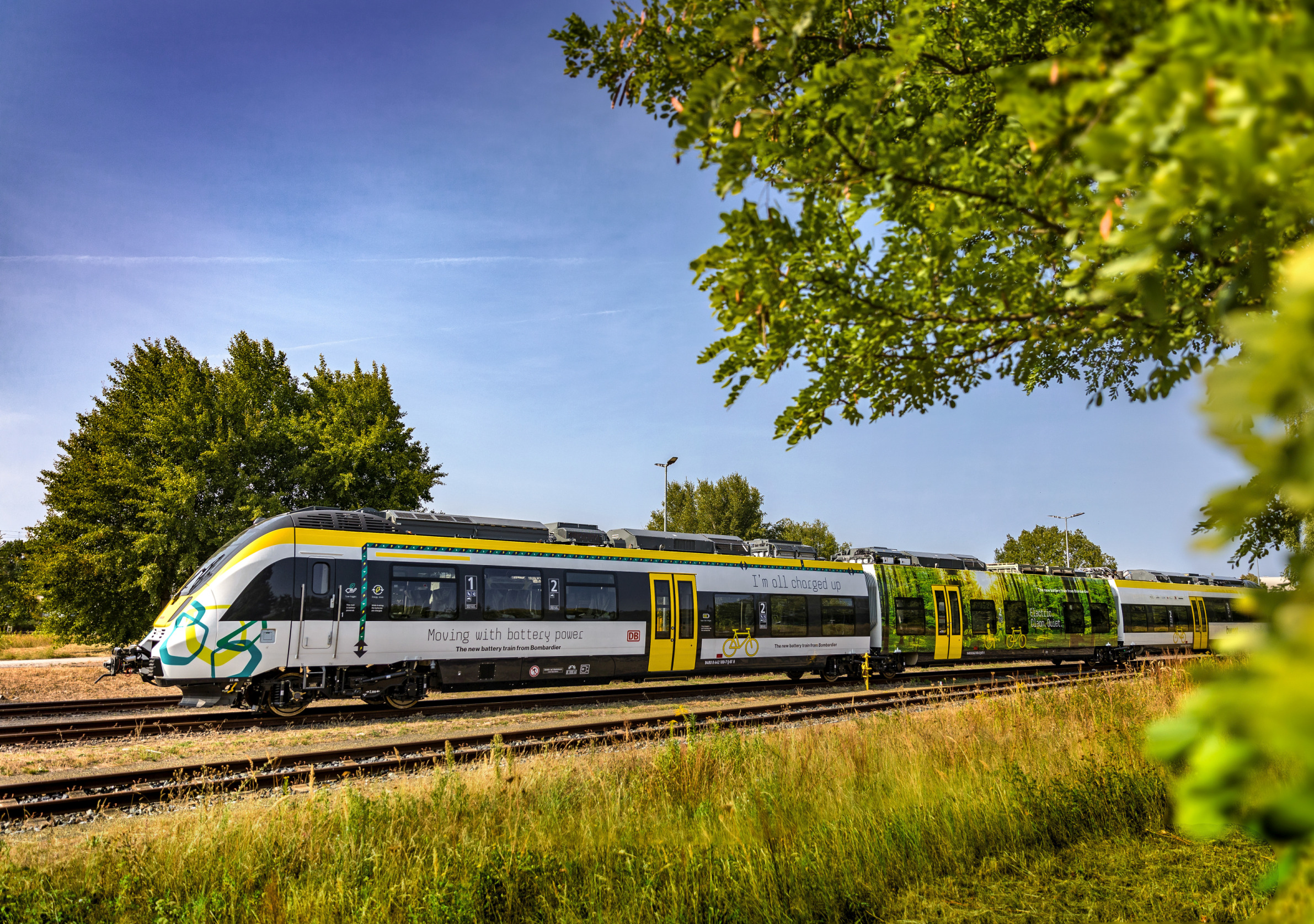
This picture of the train is from Bombardier’s web site.
This is said.
Bombardier recently presented the Talent 3, which according to the press release, is the first of its kind to enter passenger operation in Europe in over 60 years.
The first prototype has a range of 40 km (25 miles), but the second one scheduled for 2019 will go 100 km (62 miles) on a single charge.
There’s even a nifty little video.
All the features and benefits of the train are detailed.
- Bridging gaps in electrification.
- Modular batteries, so more can be added to increase range.
- Regenerative braking to save energy.
- Lower infrastructure costs.
- Electric instead of diesel trains under city centres.
- Low noise.
- No CO2 emissions.
- Low cost of ownership.
But this is all about a Talent 3 train, that is designed to a Continental loading gauge. Wikipedia says this about the design.
The Talent 3 is based on the earlier Talent and Talent 2 designs, with a wider carbody, larger doors, and a lower floor to increase capacity and improve passenger flow at station stops. Depending on the intended service pattern, the Talent 3 can be specified with either a 160 kilometres per hour (99 mph) or 200 kilometres per hour (120 mph) top speed. Talent 3 trainsets can vary in length based on customer requirements—ÖBB ordered six-car sets with a passenger capacity of 300, while Vlexx ordered three-car sets that carry up to 160 passengers.
The picture and the video look like a three-car train.
How Large Are The Batteries On A Talent 3?
What do we know about the train?
- It appears to have three cars.
- According to this page on the Bombardier web site, the train has four batteries.
- I estimate that according to weights in Wikipedia, a three-car Talent weighs 86.5 tonnes
- A three-car Talent 3 can carry 160 passengers.
My calculation is as follows.
- 160 passengers at 90 Kg each with baggage, bikes and buggies weigh 14.4 tonnes.
- I’ll assume each battery weighs a tonne.
- This gives a total train weight of 104.9 tonnes.
At a speed of 160 kph, the Omni Kinetic Energy Calculator gives a kinetic energy of 28.8 kWh.
So four batteries of 25 kWh each would be sufficient to handle the regenerative braking energy.
What about the UK?
Bombardier’s equivalent product for the UK is the Aventra, which unlike the Talent 3 is a substantially all-new design, although it does use proven technology from previous trains.
It has also received six orders for a total of over 400 trains.
I have always thought, that after the successful BEMU trial with a Bombardier Class 379 train, that batteries will become an important part of rail technology and they will feature in the design of the Aventra.
You may think, that looking at the video, that we’ll have trouble with the UK’s small loading gauge putting the batteries on the roof of the train, but the actual size of batteries is not large and they can go underneath.
I sometimes wonder, If the reason for the delay of the Class 710 trains, is that when they are successfully running, Bombardier will finally come clean in the UK, about how batteries are used on the Aventra. You wouldn’t want the trains to be unreliable, so they are making sure that all systems, including the important batteries are 100 % reliable.
In Don’t Mention Electrification!, I state why I believe that the Barking Riverside Extension of the Gospel Oak to Barking Line could be built without electrification.
So I’m fairly certain that the Class 710 trains are designed to run this section of the route on battery power.
Taste Of Nature Bars
Finding gluten-free snacks was difficult in Switzerland, but I did find these.
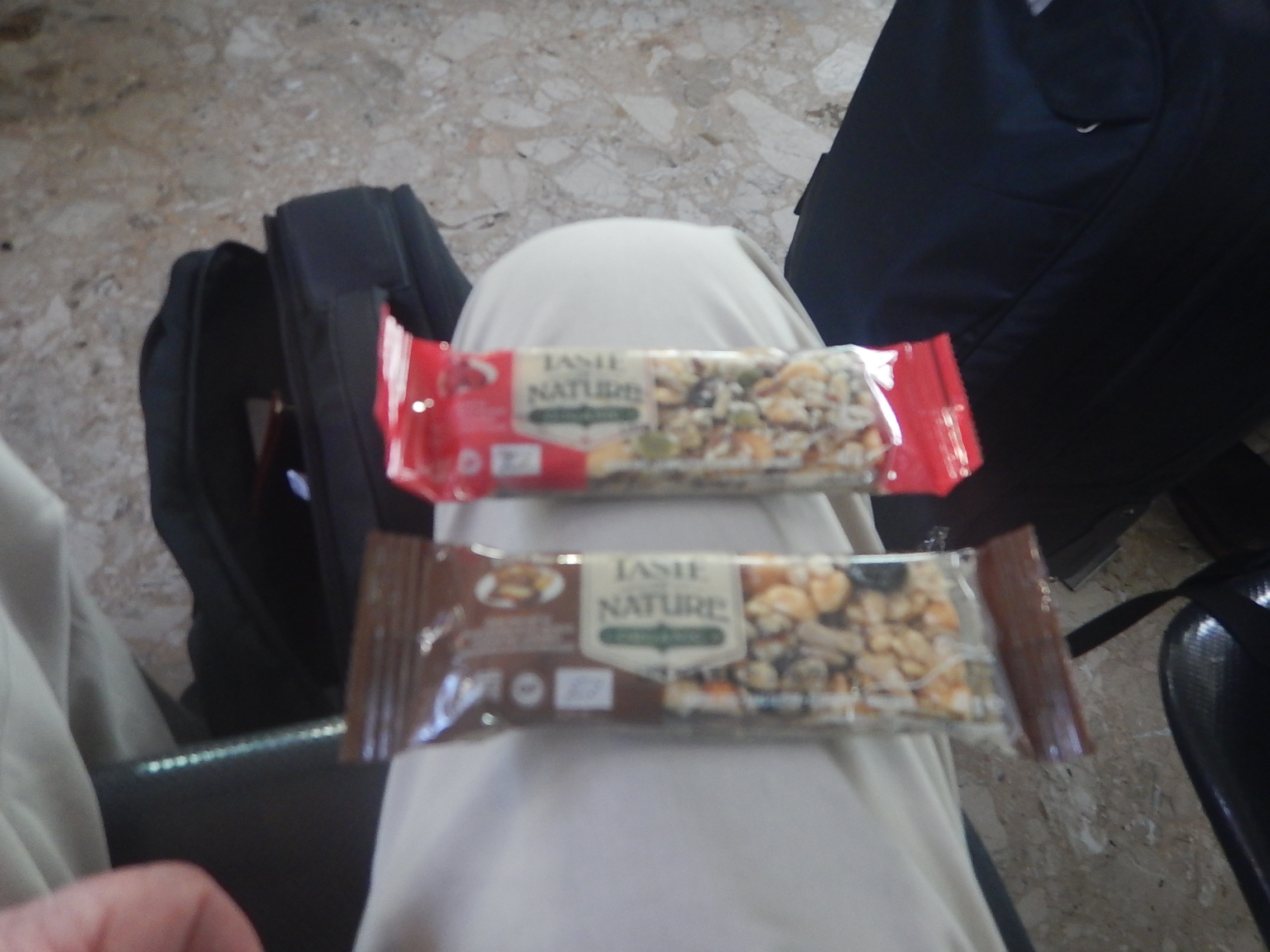
I bought this pair at Geneva Airport on the way home.
They were very similar to some Eat Natural bars.
I usually take about two UK bars for each day of travel.
The Naming Of Swiss Trains
Unlike most countries, a high proportion of Swiss trains seemed to have names.
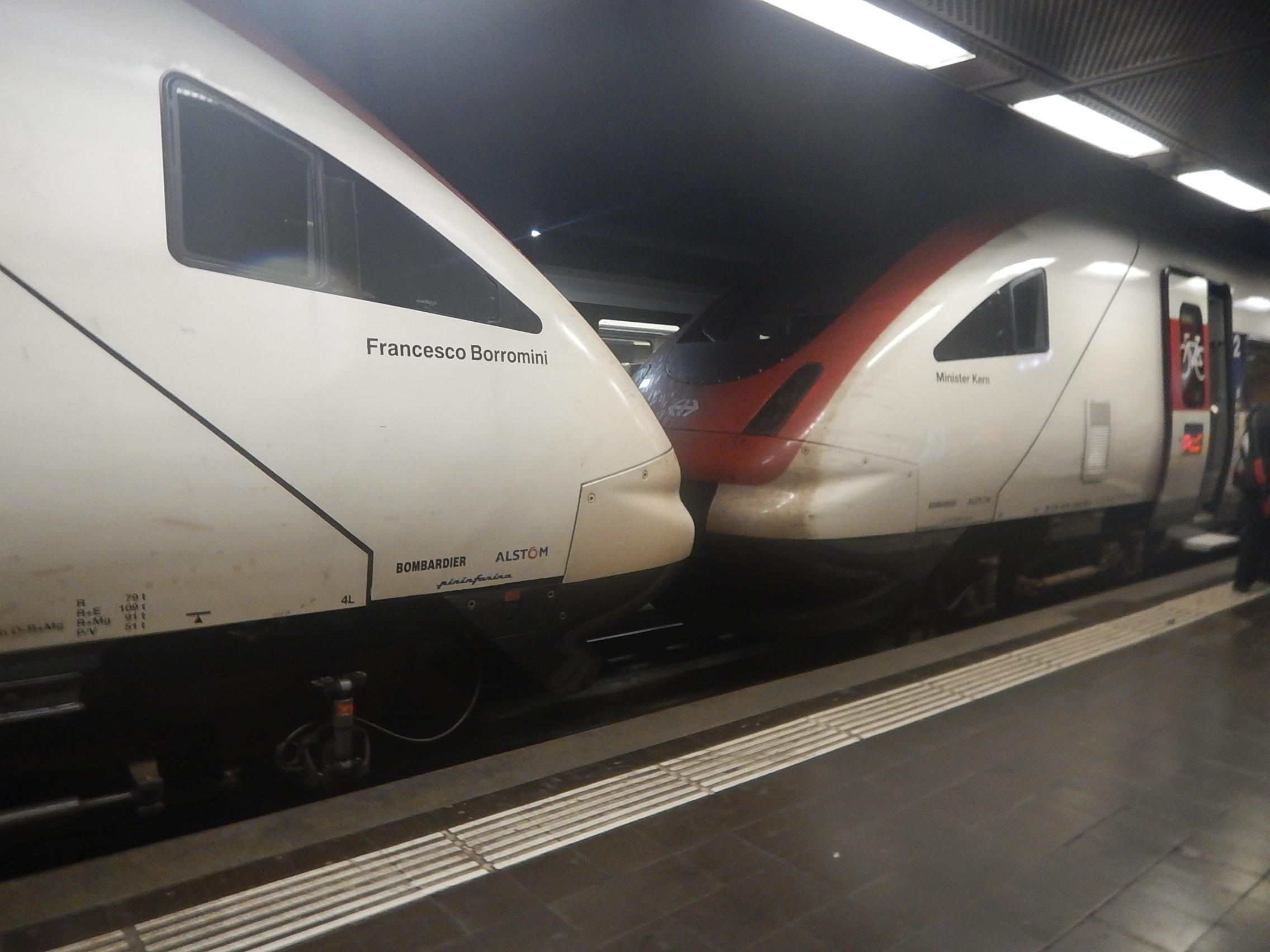
I like the idea, but there was no explanation on the trains, as to who these people are or were.
A Design Crime – Charging Devices On Swiss Trains
I didn’t find a Swiss train with well-designed designed charging points.
I did find a few and they seemed to be for three-pin plugs and high-up above the window.
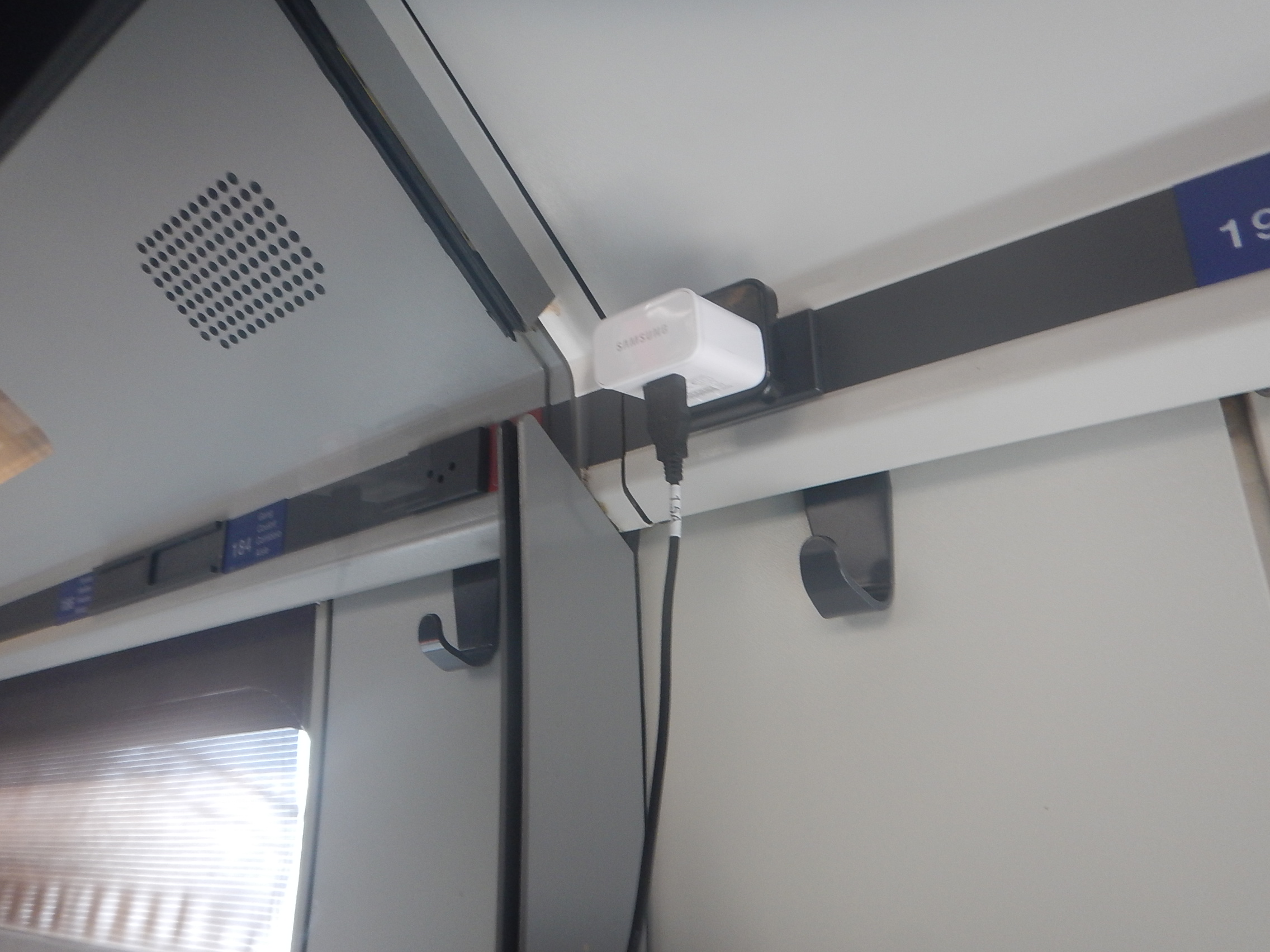
My adapter has only two pins and kept falling out, as my phone cable wasn’t long enough to place the phone on the table or the seat.
In the end, I put it in my top pocket to get it charged.
It was a bit difficult to use, as there wasn’t enough space for me in the pocket.
I didn’t see a USB port on any train.
In my view these are the way to go, as they will work for all users, from every country.
Alstom And Eversholt Rail Develop Hydrogen Train For Britain
The title of this post, is the same as that of this article in the International Rail Journal.
This is the first paragraph.
Alstom confirmed on September 11 that it is working with British rolling stock leasing company Eversholt Rail to refit class 321 EMUs with hydrogen tanks and fuel cells for hydrogen operation, in response to the British government’s challenge to eliminate diesel operation on the national network by 2040.
Other points about the conversion of Class 321 trains include.
- Alstom will convert trains in batches of fifteen.
- The first trains could be ready by 2021.
- Up to a hundred trains could be converted..
- A range of up to 1000 km on a tank of hydrogen.
- A maximum speed of 160 kph.
The article also suggests that the Tees Valley Line and Liverpool to Widnes could be two routes for the trains.
A few points of my own.
- Fifteen is probably a suitable batch size considering how Class 769 trains have been ordered.
- Hydrogen is produced in both areas for the possible routes and could be piped to the depots.
- In Runcorn it is plentiful supply from the chlorine cell rooms of INEOS and that company is thinking of creating a pipeline network to supply the hydrogen to users with high energy needs.
- As the maximum speed of the hydrogen train is the same as the current Class 321 trains, I would suspect that it is likely that the hydrogen-powered train will not have an inferior performance.
- I’ve now travelled in Class 321 Renatus trains on three occasions and in common with several passengers I’ve spoken to, I like them.
- I hope the Class 321 Hydrogen trains have as good an interior!
I very much feel that there is a good chance that the Class 321 Hydrogen could turn out to be a good train, powered by a fuel, that is to a large extent, is an unwanted by-product of the chemical industry.
A Comparison Between The Alstom Coradia iLint And The Class 321 Hydrogen
It is difficult for me to compare the Alstom Coeadia iLint or even a bog-standard iLint , as I’ve never rode in either.
Hopefully, I’ll ride the iLint in the next few weeks.
The following statistics are from various sources on the Internet
- Cars – 321 – 4 – iLint – 2
- Electric Operation – 321 – Yes – iLint – Not Yet!
- Loading Gauge – 321 – UK – iLint – European
- Operating Speed – 321 – 160 kph – iLint – 140 kph
- Range – 321 – 1000 km. – iLint – 500-800 km.
- Seats – 321 – 309 – iLint – 150-180
Although the Class 321 Hydrogen will be a refurbished train and the iLint will be new, I suspect passengers will just both trains as similar, given the experience with refurbished trains in the UK.
In some ways, they are not that different in terms of performance and capacity per car.
But the Class 321 Hydrogen does appear to have one big advantage – It can run at up to 160 kph on a suitable electrified line, This ability also means the following.
- Hydrogen power is not the sole way of charging the battery.
- On some routes, where perhaps a twenty kilometre branch line, which is not electrified, is to be served, the train might work as a battery-electric train.
- A smaller capacity hydrogen power unit could be fitted for charging the battery, when the train is turned back at a terminal station and for rescuing trains with a flat battery.
- The depot and associated filling station, doesn’t have to be where the trains run most of their passenger services.
I also suspect that a Class 321 hydrogen could run on the UK’s third-rail network after modification, if required.
If you were an operator choosing between the two trains, you would probably find that because of your location, there would be a strong preference for one of the two trains.
I also doubt we’ll see iLints running in the UK because of the loading gauge problem.
Will the platform height scupper the running of Class 321 Hydrogen trains in Europe?
In Riding Docklands Light Railway Trains In Essen, I reported on seeing redundant Docklands Light Railway trains running in Essen.
For this reason, I wouldn’t totally rule out Class 321 Hydrogen trains invading Europe!
When Did I Last Ride A Trolleybus?
The final leg of my descent from Mount Pilatus was a trolleybus from the walk down from the cable-car station to Lucerne station.

They are certainly a bit different to the ones I rode in London in the 1950s.
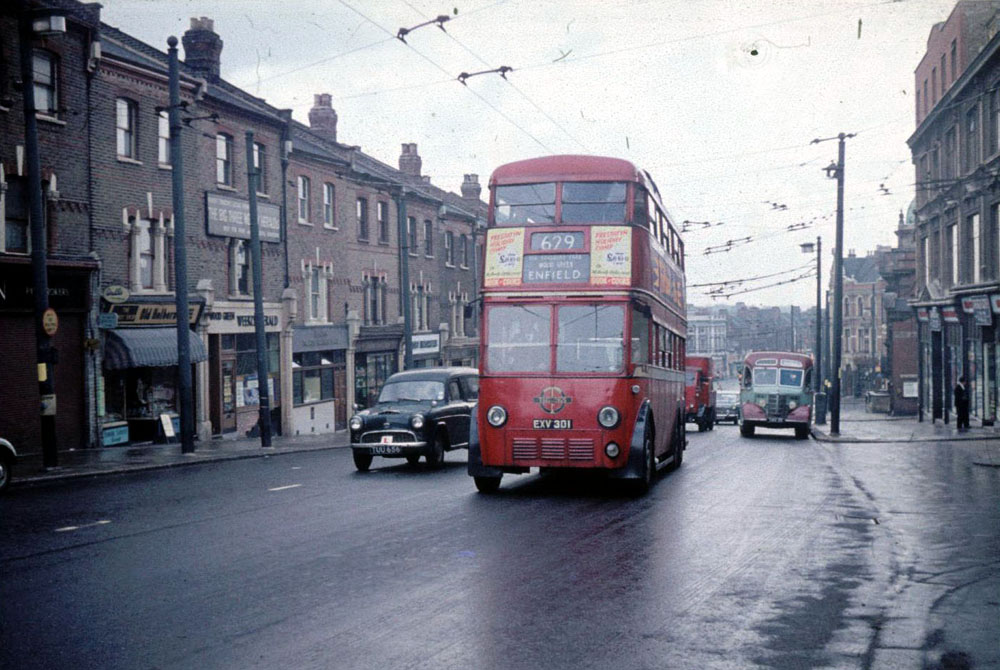
Trolleybus Ascending Jolly Butchers Hill in Wood Green
Will we see more trolleybuses in the future?
Londoners of my age, all have memories of trolleybuses.
- They had faster acceleration than diesel buses.
- They were generally reliable.
But they were sometimes a nightmare to turn round. Near where I live now, you can still see the wide junction between Southgate Road and Ardleigh Road where 641 trolleybuses turned at Mildmay Park.
But the development of battery technology and fast charging stations will mean that battery buses will be able to do the same trip without any wires.
The 641 trolleybus in North London was replaced by the 141 bus, which still runs regularly between London Bridge and Palmers Green.
It was the first route in London to be run using hybrid buses and will probably be one of the first long routes to be run by electric buses.
Up And Down Pilatus
These pictures document my trip up the Pilatus Railway and then down to Lucerne by cable-car.



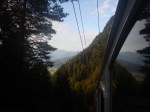

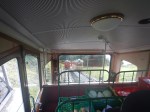
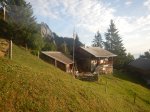




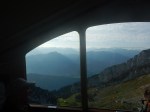

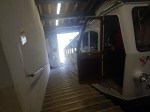
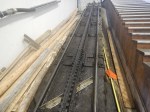

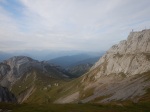
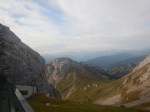
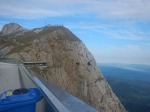




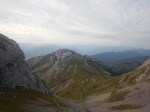

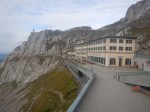

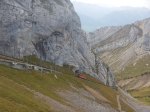
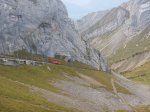
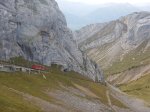
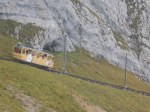


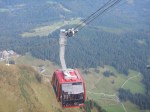





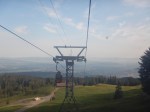


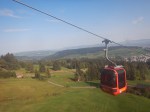


Note.
- I started from Alpnachstad station, which is about twenty minutes from Lucerne station.
- The round trip took just under two hours.
- It cost me half price of 36 CHF, with my Swiss Pass.
I probably went up rather too early in the day, as the views would have been better later on.
Up And Down On The Schynige Platte Railway
These pictures document my trip up and down on the Schynige Platte Railway.
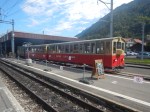

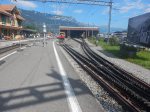
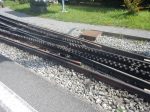
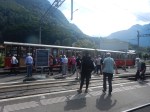



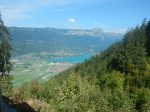




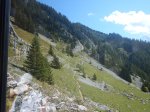

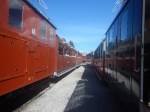
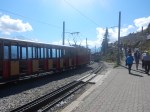


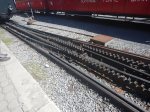
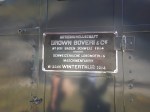
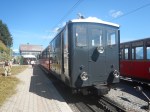
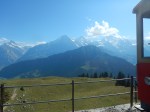
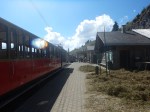


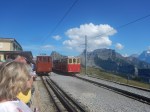
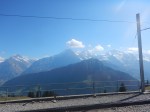
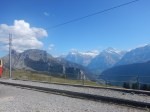





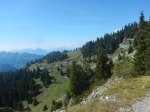

Note.
- I started from Wilderswil station, ehich is on the Berner Oberland Bahn, whose trains operate services to Interlaken Ost, Grindelwald and Lauterbrunnen.
- The trip up and down the mountain took about two hours and a bit.
- It cost me half price of 32 CHF, with my Swiss Pass.
The views from the top were worth it.
Between Lucerne And Interlaken Ost Stations On Die Zentralbahn
The Zentralbahn is the scenic railway, that connects Lucerne and Interlaken Ost stations along the Brünig Line. Wikipedia says this about the ownership of the railway.
The Zentralbahn is a Swiss railway company that owns and operates two connecting railway lines in Central Switzerland and the Bernese Oberland. It was created on January 1, 2005, with the acquisition of the independently owned Luzern–Stans–Engelberg line, and the Brünig line of the Swiss Federal Railways.
I don’t know, but as the railway is metre rather than standard gauge, I do wonder, if it was to Swiss Federal Railways, a bit like the Settle-Carlisle Line was to British Rail; Expensive to run, loved by locals and tourists and in need of new investment.
These pictures show the railway.
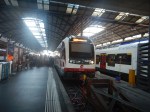
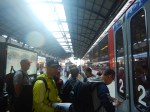
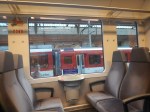
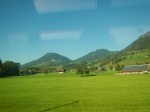

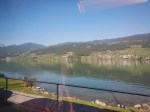
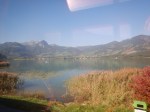


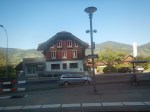
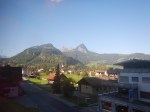
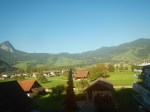
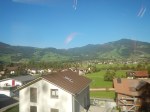

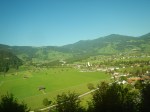
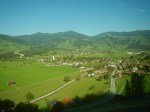
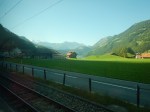
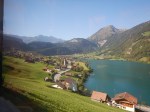
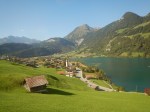
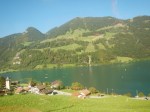
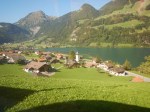
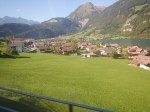
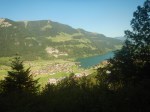
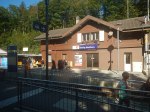

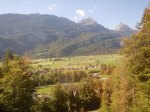
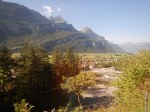
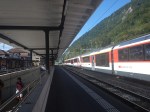
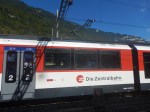
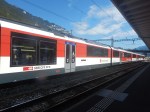
As some of the pictures show, the line was busy in places. and judging by the number of Asian groups on the train, a lot were tourists.
The trains are modern Stadler SPATZ trains.
- Fully-electric.
- Metre gauge.
- They are able to use sections of the line which have a rack to assist climbing.
- Large panoramic windows for good views.
It appears that the three-car train has been designed with all the electrical gubbings in the middle car, with the end sections similar to the Stadler GTW.
Stadler seem to be able to shuffle their ideas and especially, the central power-pack to produce trains for all purposes.
Greater Anglia’s Class 755 trains, and the tri-mode Flirts of the South Wales Metro, will be just more variations on the same theme.
Next Time I Go To The Area
There are two groups of mountain railways grouped at Interlaken and Lucerne, which are linked by the
Brünig Line. The route is not simple and there is a reverse about half-way at Meiringen station.
Searching the web, it appears that there is reasonably-priced accommodation in and around Meiringen.
With a Swiss Pass, which gives a worthwhile discount on the expensive mountain trains, I shall be staying around there on my next trip to Switzerland.
Consider.
- You could fly in to Zurich Airport and buy your Swiss Pass there.
- Lucerne and Interlaken are about an hour away on the scenic Brünig Line.
- Bern and Zurich are close enough for a day trip.
I didn’t explore Meiringen, so check the guides first. But it looked OK from the train.
The View From The Schilthorn
These pictures were taken from the viewing platform by the side of the Piz Gloria restaurant on the Schilthorn.
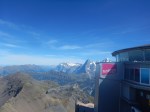

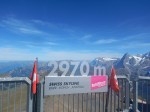


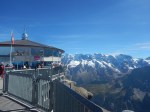
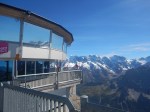

It was certainly worth going up to the top of the Schilthorn.
 The Anonymous Widower