A Walk Across Birmingham City Centre
I took this walk across Birmingham City Centre to look at the works on the Midland Metro Extension to Egbaston.
These are some of the pictures I took.
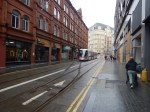


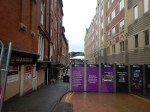
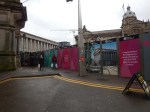

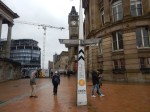



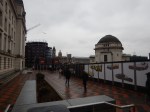

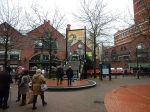

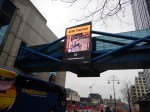
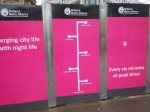
There’s certainly a lot of work going on.
It will be interesting to see how the trams get from New Street station to Victoria Square. It could be power up one hill and gravity down another.
The tram extension is to be finished in 2019.
Bombardier Bi-Mode Aventra To Feature Battery Power
The title of this post is the same as this article in Rail Magazine.
A few points from the article.
- Development has already started.
- Battery power could be used for Last-Mile applications.
- The bi-mode would have a maximum speed of 125 mph under both electric and diesel power.
- The trains will be built at Derby.
- Bombardier’s spokesman said that the ambience will be better, than other bi-modes.
- Export of trains is a possibility.
Bombardier’s spokesman also said, that they have offered the train to three new franchises. East Midlands, West Coast Partnership and CrossCountry.
In some ways, I am not surprised about what is said in this article.
Another article on Christian Wolmar’s web site, is entitled Bombardier’s Survival Was The Right Kind Of Politics.
This is said.
Bombardier is not resting on its laurels. Interestingly, the company has been watching the problems over electrification and the fact that more of Hitachi’s new trains will now be bi-mode because the wires have not been put up in time. McKeon has a team looking at whether Bombardier will go into the bi-mode market: ‘The Hitachi bi-mode trains can only go 110 mph when using diesel. Based on Aventra designs, we could build one that went 125 mph. This would help Network Rail as it would not have to electrify everywhere.’ He cites East Midlands, CrossCountry and Wales as potential users of this technology.
The article was published in February 2017 and mentions, 125 mph on diesel and two of the companies in the recent article.
The Design Of The Trains
My thoughts are as follows.
The Starting Point
I’m pretty certain that if you wanmt to create a 125 mph bi-mode train, you start with a 125 mph electric train, if you want a high degree of commonality between the two trains.
Bombardier haven’t yet built any of their Aventras for West Midland Trains, but as they will use the West Coast Main Line extensively, will they be 125 mph trains and not 110 mph trains, as is said in Wikipedia?
Aventras And Battery Power
I will believe until Bombardier say I’m wrong, that Crossrail’s Class 345 trains, which are Aventras, use batteries for the following purposes.
- To handle regenerative braking.
- To limp the train out of the tunnel or to the next station or safe exit point, if there should be a catastrophic power failure.
- To lessen the amount of electricity fed to the trains in the tunnels.
- To allow features like remote wake-up, which need a train to have some form of power at all times.
- To move trains in sidings and depots without having live electrification.
- To run passenger features, when the power fails.
Effectively, the Class 345 trains have electricity as a main power source and batteries for energy storage and a secondary or emergency power source.
I talked to one of their staff, who was training drivers on Crossrail’s Aventras. The conversation went something like this.
- Me: “What happens, when the Russians hack the power supply?”
- Driver-Trainer: “We switch the train to emergency power!”
- Me: “You mean batteries?”
- Driver-Trainer: (Pause, then something like) “Might be!”
Can anybody think of another way to have emergency power on the train?
Electric Traction, Regenerative Braking and Batteries
Bi-mode trains and Alstom’s hydrogen-powered Coradia iLint are electrically powered at all times.
This means that under electric, diesel or hydrogen power, the traction motors can generate electricity to brake the train.
On an electric train, this electricity is returned through the overhead wire or third rail to power other nearby trains. This electricity could also be stored in an onboard battery, just as it is in a hybrid or battery-electric vehicle.
Driving A Bi-Mode Train With Batteries
The bi-mode Aventra could have electricity from one of four power sources.
- 25 KVAC overhead electrification.
- 750 VDC third-rail electrification.
- An onboard electricity generator powered by diesel fuel or hydrogen.
- Batteries
So will the driver need to keep switching power sources?
I am a Control Engineer by training and optimising the best power to use is a typical problem for someone with my training and experience.
The train’s computer would take all the information about the route, timetable, signal settings, battery charge level, train loading, weather and other factors and drive the train automatically, with the driver monitoring everything thoroughly.
Aircraft have been flown in a similar fashion for decades.
I look in detail, at the mathematics of a bi-mode Aventra with batteries in Mathematics Of A Bi-Mode Aventra With Batteries.
I came to the following conclusions.
I am rapidly coming to the conclusion, that a 125 mph bi-mode train is a practical proposition.
- It would need a controllable hydrogen or diesel power-pack, that could deliver up to 200 kW
- Only one power-pack would be needed for a five-car train.
- For a five-car train a battery capacity of 300 kWh would probably be sufficent.
From my past professional experience, I know that a computer model can be built, that would show the best onboard generator and battery sizes, and possibly a better operating strategy, for both individual routes and train operating companies.
Obviously, Bombardier have better data and more sophisticated calculations than I do.
Note, that everything I proposed, is well within the scope of modern engineering, so other companies like CAF and Stadler, who are actively involved in rail application of battery technology, could join the party.
This picture is a visualisation of a Stadler Class 755 train, which they are building for Greater Anglia.
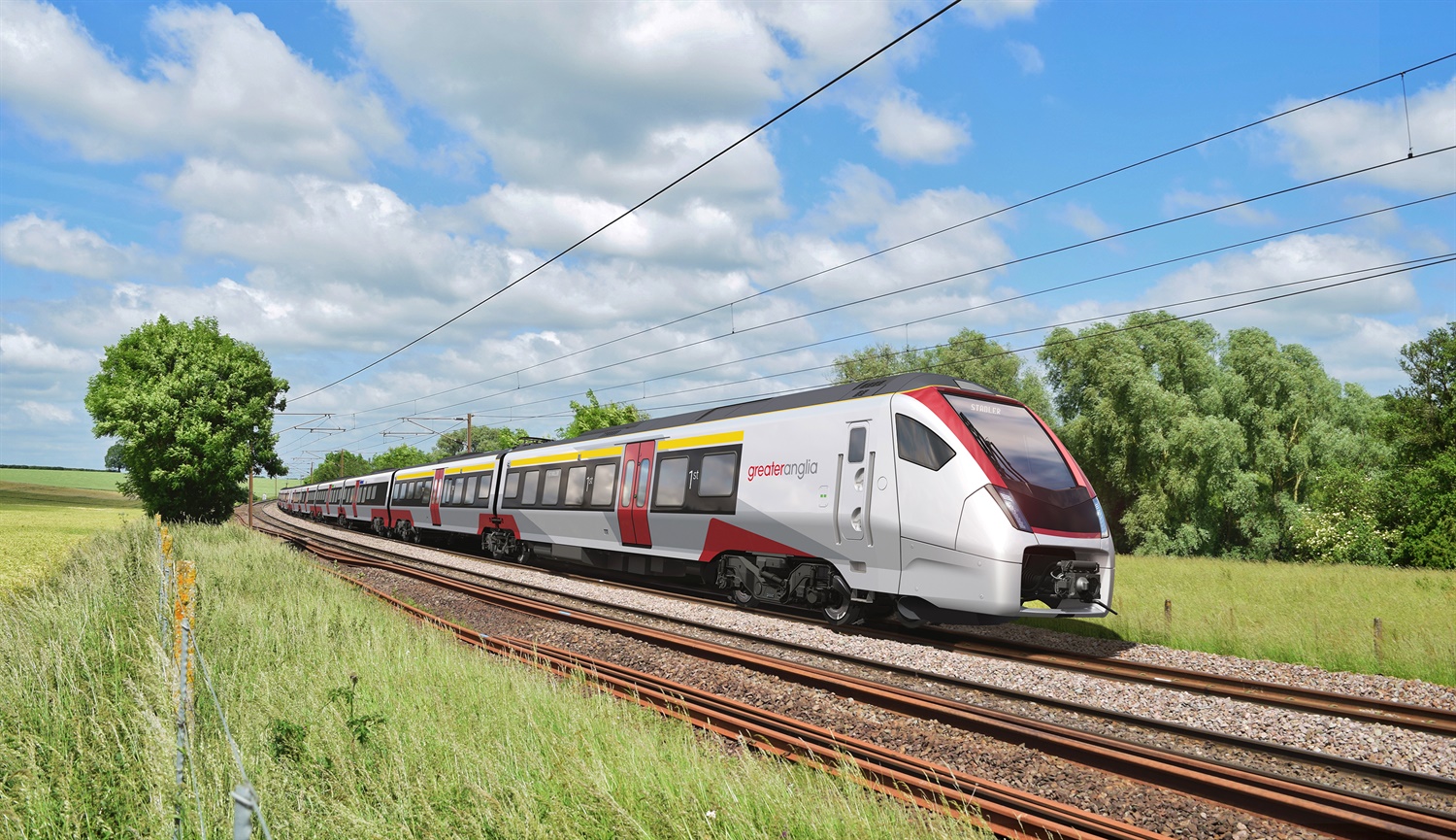
Note the smaller third car, which contains the diesel engine of this hybrid train. Is there room for batteries as well?
I can’t find any information on the web about the power train of the Class 755 train, but this article in the Railway Gazette, describes another Stadler bi-mode Flirt, that Stadler are building for Italy.
This is said.
The units will be rated at 2 600 kW with a maximum speed of 160 km/h when operating from 3 kV DC electrification, and 700 kW with a maximum speed of 140 km/h when powered by the two Stage IIIB compliant Deutz TCD 16.0 V8 diesel engines.
There is provision to add up to two more cars if required to meet an increase in ridership. Two more engines could be added, or the diesel module removed if only electric operation is needed.
Note.
- The Deutz diesel engines are rated at 520 kW.
- As 700 kW is the power of the train, I suspect each engine generator creates 350 kW of power.
- 160 km/h would be ideal for the Great Eastern Main Line
- 140 km/h would be more than adequate for roaming around East Anglia
I suspect that if batteries were used on this train, that the engines would be smaller.
We will see in May 2019, when the trains enter service.
Diesel Or Hydrogen Generator
Electricity generation using a diesel generator and electricity generator from a hydrogen fuel cell, each have their own advantages.
- Diesel fuel has a higher energy density than hydrogen
- Diesel engines create a lot of noise and vibration and emit carbon dioxide, noxious gases and particulates.
- Hydrogen fuel cells can be silent and only emit water and steam.
- Ballard who are a Canadian company and a leading manufacturer of hydrogen fuel-cells, manufacture one for use in rail applications which has an output of 100 kW, that weighs 385 Kg.
- MTU make the diesel engine for a Class 800 train, which has an output of over 600 kW, that weighs 5000 Kg.
- Hydrogen storage is probably heavier and more complicated than diesel storage.
- Both generators can be fitted into convenient rectangular power packs.
I would envisage that in the future, hydrogen electricity generators will get more efficient, lighter in weight and smaller in size for a given power output.
I don’t think it is unreasonable to believe, that within a reasonable number of years, hydrogen generators and their hydrogen storage tank, will be comparable in weight and size to current diesel generators and fuel tanks.
Accelerating A Bi-Mode Train With Batteries
The major use of electricity on a 125 mph train, will be in accelerating the train up to line speed. The energy needed will be.
- Proportional to the mass of the train. This is why your car accelerates better, when it’s just you in the car and you don’t have your overweight mother-in-law in the back.
- Proportional to the square of the velocity.
I have calculated that a five-car bi-mode Aventra, carrying 430 passengers and travelling at 125 mph, will have a kinetic energy of 91.9 kWh.
Obviously, using electricity from electrification is the best way to accelerate a train.
- Electricity from electrification is probably cheaper and more convenient, than that from an onboard electricity generator.
- If diesel is not used to power the train, there is no noise and vibration from an onboard diesel generator.
- A route with a lot of running on onboard fuel, means more fuel has to be carried.
Using electricity stored in batteries on the train, is also a good way to accelerate a train, but the batteries must have enough charge.
The onboard electricity generator will be used, when there is no electrification and the power stored in the batteries is approaching a low level.
|When Bombardier’s spokesman says, that the ambience will be good, control of the train’s power sources has a lot to do with it.
Could he have been hinting at hydrogen, as hydrogen fuel cells do not have high noise and vibration levels?
Cruising A Bi-Mode Train With Batteries
Newton’s First Law states.
Every body continues in its state of rest or uniform motion in a straight line, unless impressed forces act on it.
If you have a train on a railway track moving at a constant speed, the following forces are acting to slow the train.
- Aerodynamic forces, particularly on the front of the train.
- Rolling friction of the steel wheel on a steel rail.
- Bends and gradients in the track.
- Speed limits and signals.
So the driver and his control system will have to feed in power to maintain the vrequired spreed.
I have sat on the platform at Stratford, whilst an Aventra has gone past at speed. I wrote about it in Class 345 Trains Really Are Quiet!
This was my conclusion.
Bombardier have applied world class aviation aerodynamics to these trains. Particularly in the areas of body shape, door design, car-to-car interfaces, bogies and pantographs.
Remember too, that low noise means less wasted energy and greater energy efficiency.
In addition steel wheel on steel rails is a very efficient way of moving heavy weights. Bombardier have a reputation for good running gear.
Once a train has reached its cruising speed, appropriate amounts of power will be fed to the train to maintain speed.
But compared to the power needed to accelerate the train, they could be quite small.
For small amounts of power away from electrification, the control system will use battery power if it is available and can be used.
The onboard electricity generator would only be switched in, when larger amounts of power are needed or the battery power is low.
Slowing A Bi-Mode Train With Batteries
The regenerative braking will always be used, with the energy being stored in the batteries, if there is free capacity.
Imagine the following.
- A bi-mode making a stop at Leicester station on the Midland Main Line.
- It is doing 100 mph before the stop on the main line.
- It will be doing 100 mph after the stop on the main line.
The energy of the train after Leicester will be roughly the same as before, unless the mass of the train has changed, by perhaps a large number of passengers leaving or joining the train.
Let’s assume that the energy at 100 mph in the train is X kWh
- When the train brakes for Leicester this energy will be transferred to the train’s batteries, if there is capacity.
- On accelerating the train, it will need to acquire X kWh. It couldn’t get all of this from the batteries, as for various reasons the overall efficiency of this sort of system is about seventy to ninety percent.
- The onboard electricity generator will have to supply a proportion of the energy to get the train back up to 100 mph.
But in a diesel train it will have to supply all the energy to get back to 100 mph.
Where Would I Put The Batteries?
Aventras seem to have a lot of powered-bogies, so to keep cable runs short to minimise losses and maximise the efficiency of the regenerative braking, I would put a battery in each car of the train.
This would also distribute the weight evenly.
Where Would I Put The Electricity Generators?
Diesel engines always seem to be noisy, when they are installed under the floor of a train. I’ve travelled a lot in Bombardier’s Turbostars and although they are better than the previous generation, they are still not perfect.
I’ve also travelled in the cab of a Class 43 locomotive, with a 2,250 hp diesel engine close behind me. It was very well insulated and not very noisy.
As I said earlier, the most intensive use of the onboard generators will come in accelerating a train to operating speed, where no electrification or battery power is available. There is only so much you can do with insulation!
Stadler, who are building the Class 755 train for Greater Anglia, have opted to put a short diesel generator car in the middle of the train.
This was an earlier train, where Stadler used the technique.
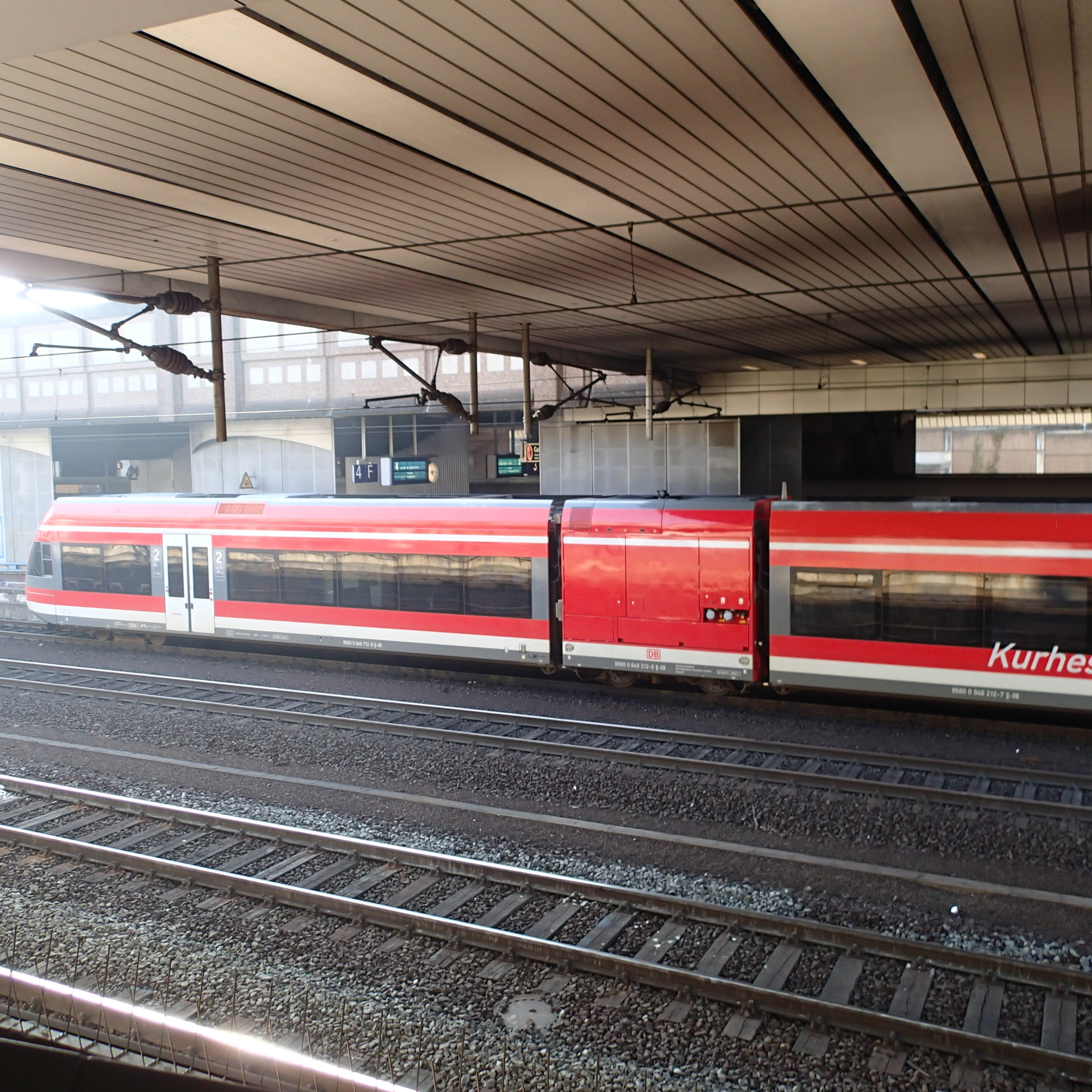
There are reports in Wikipedia, that the ride wasn’t good, but I’m sure Stadler has cracked it for their new 100 mph bi-mode trains.
Creating a bi-mode by adding an extra motor car into the middle of an electric train could be a serious way to go.
- The dynamics are probably better understood now
- A powerful diesel engine could be fitted.
- Batteries could be added.
- Insulating passengers and staff from the noise and vibration would surely be easier.
- There could be a passage through the car, to allow passengers and staff to circulate.
In an ideal world, a four-car electric train could be changed into a five-car bi-mode train, by adding the motor car and updating the train software.
In Mathematics Of A Bi-Mode Aventra With Batteries, I came to the conclusion, that if the batteries are used in conjunction with the power-pack, that a single power-pack of about 200 kW could be sufficient to power the train. This would be smaller and lighter in weight, which would probably mean it could be tucked away under the floor and well-insulated to keep noise and vibration from passengers and staff.
In this article in Global Rail News from 2011, which is entitled Bombardier’s AVENTRA – A new era in train performance, gives some details of the Aventra’s electrical systems. This is said.
AVENTRA can run on both 25kV AC and 750V DC power – the high-efficiency transformers being another area where a heavier component was chosen because, in the long term, it’s cheaper to run. Pairs of cars will run off a common power bus with a converter on one car powering both. The other car can be fitted with power storage devices such as super-capacitors or Lithium-ion batteries if required.
This was published six years ago, so I suspect Bombardier have refined the concept.
So could it be that Bombardier have designed a secondary power car, that can be fitted with a battery and a diesel engine of appropriate size?
- Using a diesel engine with batteries means that a smaller engine can be used.
- The diesel engine could also be replaced with a 200 kW hydrogen fuel cell.
I won’t speculate, but Bombardier have a very serious idea. And it’s all down to the mathematics.
What Would Be The Length Of A 125 Mph Bi-Mode Aventra?
Long distance Aventras, like those for Greater Anglia and West Midlands Trains, seem to be five and ten car trains.
This would fit well with the offerngs from other companies, so I suspect five- and ten-cars will be the standard lengths.
Could There Be A Bi-Mode Aventra for Commuter Routes?
The London Overground has ordered a fleet of four-car Class 710 trains.
The Gospel Oak to Barking Line is being extended to a new Barking Riverside station.
In an article in the October 2017 Edition of Modern Railways, which is entitled Celling England By The Pound, Ian Walmsley says this in relation to trains running on the Uckfield Branch, which probably has a terrain not much different to the lines to London.
A modern EMU needs between 3 and 5 kWh per vehicle mile for this sort of service.
The new extension is about a mile, so this would need 20 kWh each way.
This could easily be done with a battery, but supposing a small diesel engine was also fitted under the floor. Would anybody notice the same 138 kW Cummins ISBe diesel engine that is used in a New Routemaster hybrid bus?
I doubt it.
It is a revealing to calculate the kinetic energy of a fully-loaded Class 710 train. I estimate that it under 50 kWh, if it was travelling at 90 mph, which would rarely be achieved on the Gospel Oak to Barking Line.
Could Bombardier Be Serious About Exporting Bi-Mode Aventras?
In my opinion, the Aventra is a good train an it seems to sell well in its electric form to train operating companies in the UK.
But would it sell well in overseas markets like the United States and Canada, India and Australia?
They obviously know better than I do, so we should take their statements at face value.
The Prospective Customers
The Rail Magazine article mentions three prospective customers.
I deal with them and other possiblilities in Routes For Bombardier’s 125 Mph Bi-Mode Aventra.
This was my conclusion.
If Bombardier build a 125 mph bi-mode Aventra with batteries, there is a large market.
It looks like the company has done a lot of research.
Conclusion
Bombardier are designing a serious train.
Heathrow Southern Railway’s Proposed Service Between Weybridge And Heathrow 5
In an article in the December 2016 Edition of Modern Railways about the Heathrow Southern Railway, Chris Stokes proposes a service between Weybridge and Heathrow Terminal 5 stations.
With the addition of a chord at Staines, it would also be potentially possible to operate a half-hourly Weybridge – Virginia Water – Egham – Terminal 5 service, providing a further attractive local link to Heathrow.
In this post, I will look at the various issues associated with this proposal.
Weybridge Station
Currently, Weybridge station is serviced by the following trains on the South Western Main Line.
- Four trains per hour (tph) to London Waterloo.
- Two tph to Woking.
- Two tph to Basingstoke via Woking.
In addition two tph use the Chertsey Branch Line to go to London Waterloo via Virginia Water, Staines and Hounslow.
This Google Map shows the staion on the South Western Main Line.
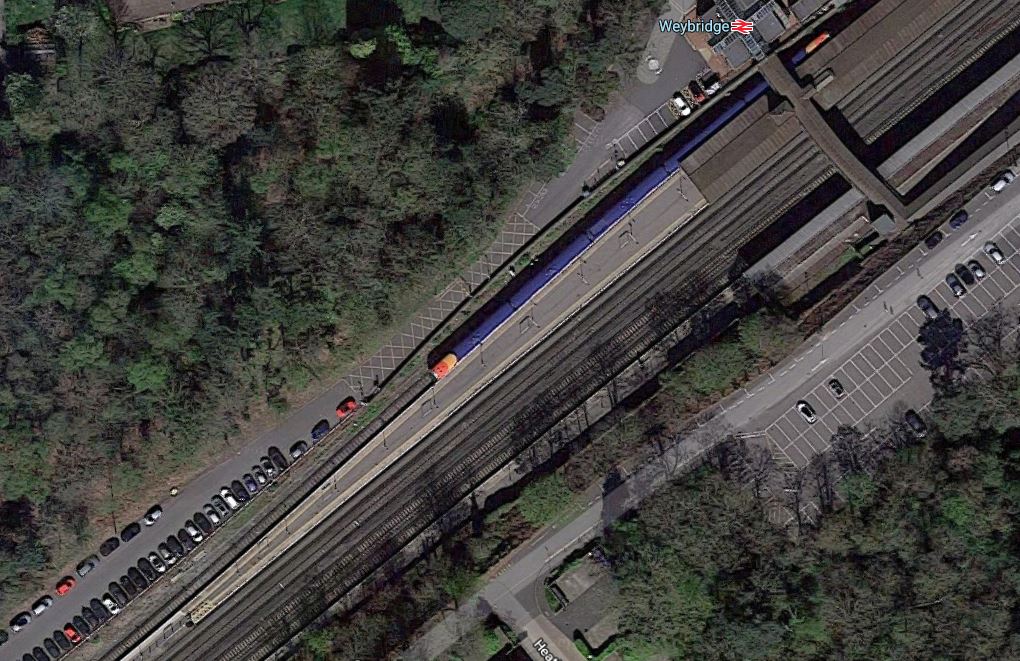
Note the train that will use the Chertsey Branch Line in Platform 1, which shares an island with the London-bound Platform 2.
This would have been convenient for me, as I arrived from Woking, with the intention of taking the branch line to Staines and Feltham.
But as there are only two tph on the Chertsey Branch, I had to wait twenty-five minutes. Luckily, the train has a long turnround at Weybridge, so I was able to sit in a comfortable seat for much of the wait.
These are a few pictures of the station.
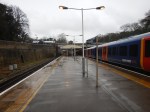
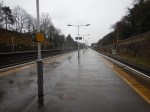


The bridge is an interesting structure, which has a set of new lifts.
Wikipedia says this about the use of the station.
Up and Down platforms serve the slow lines; there is a bay platform on the up side, from which trains operate on the Chertsey or Weybridge Branch of the Waterloo to Reading Line. Stops on this line include the main towns and villages of Runnymede and it gives Weybridge’s longer route to Waterloo via Staines. This service can also be used to provide a cheaper and quicker route to the Great Western Main Line, by changing at Virginia Water for the service to Reading, Berkshire from Waterloo, for passengers on or by the South West Main Line but not near the North Downs Line.
In the middle of a wet Thursday, there weren’t many people waiting for a train for the Chertsey Branch.
Trains On The Chertsey Branch Line
This Google Map shows the station and the triangular junction between the South Western Main Line and the Chertsey Branch.
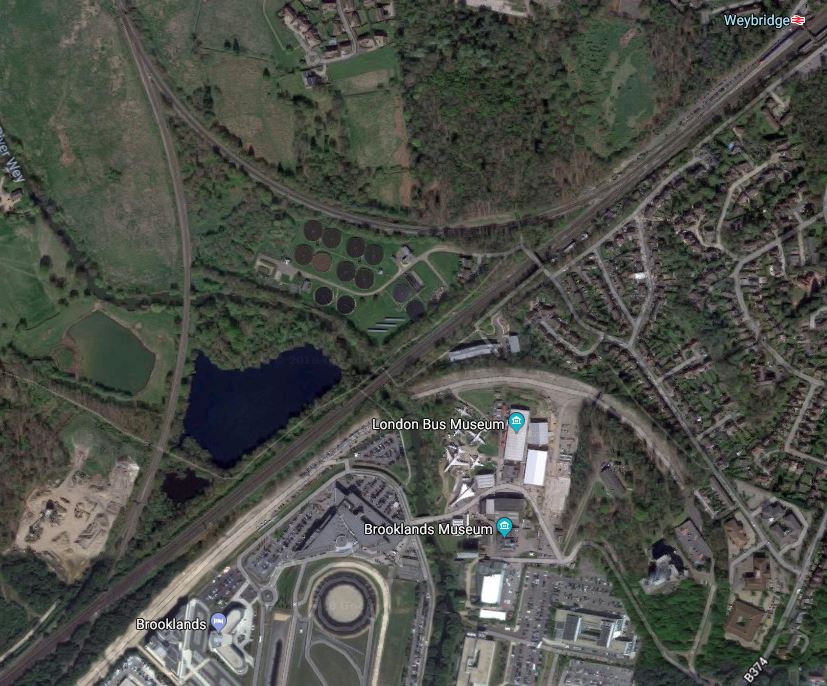
Note, the historic motor-racing circuit of Brooklands to the South of the South Western Main Line and the triangular junction.
The connection between the Chertsey Vranch Line and the South Western Main Line is a flying junction, so I don’t think there’ll be any issues with Heathrow Express trains using Heathrow Southern Railway’s new railway to Woking.
Going towards Weybridge and London, there appears to be a single track connecting the Chertsey Branch to Platform 1 in Weybridge station.
There may be need for small changes to the track, but this simple layout should be able to easily handle four tph.
Looking at Real Time Trains, shows that in the hour I travelled, only four passenger services passed, through Addlestone station on the branch, with three other freight and stock movements.
So it is not a busy line.
If Heathrow Southern Railway is built and Heathrow Express runs to Working, passenger trains in each direction will become.
- 2 tph – London Waterloo to Weybridge – Calling at Addlestone, Chertsey, Virginia Water, Egham and Staines.
- 4 tph – Heathrow Express – Non-stop between Terminal 5 and Woking, joining the Chertsey Branch Line, just to the North of Chertsey station.
- 2-4 tph – Freight trains and stock movements.
There would appear to be enough paths to squeeze in two extra trains between Terminal 5 and Weybridge, which call at Addlestone, Chertsey, Virginia Water and Egham, and use the new chord at Staines, that I talked about in Heathrow Southern Railway’s Proposed Chord At Staines.
Should Services Between Weybridge and Terminal 5 Stop At Staines?
This would need a platform or platforms on the chord.
This Google Map shows the area of the chord.
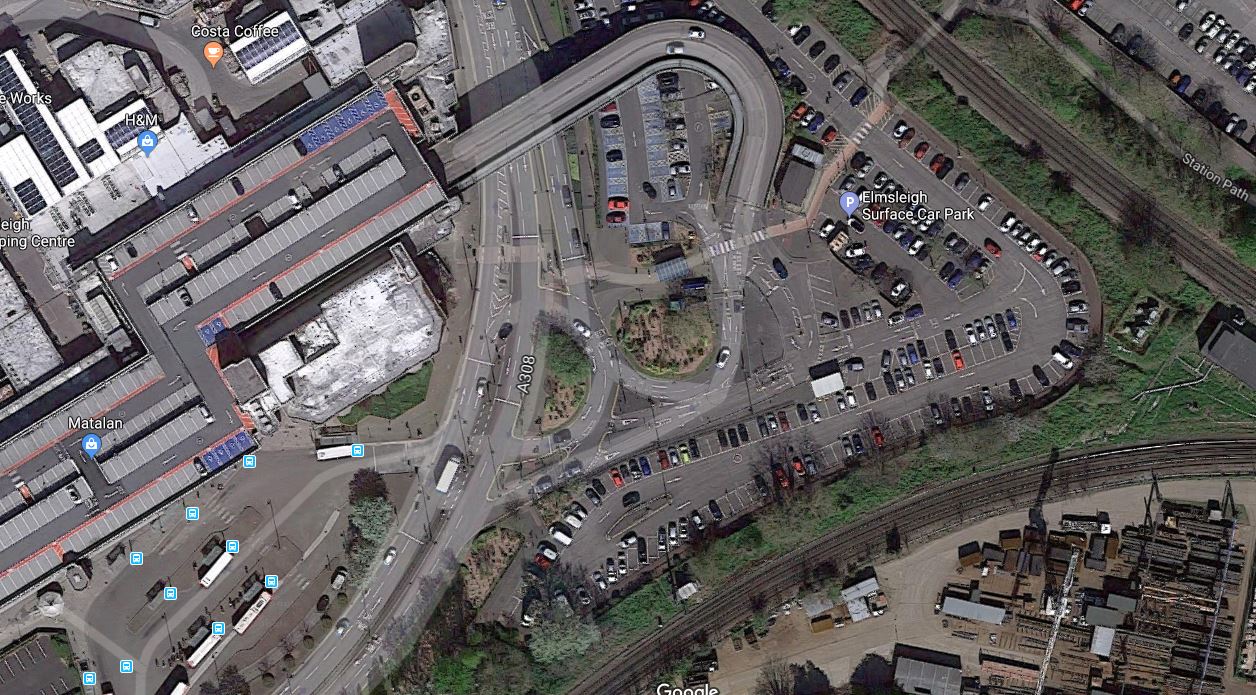
Note.
- There is a vehicle ramp to gain access to a multi-story car park.
- Much of the space to the East of the ramp is surface car parking and in my view, wasted space.
- There appears to be a bus station.
I think there is sufficient space to create an innovative transport interchange.
It could even be very simple.
- Single platform long enough for one of South Western Railway’s five car Class 701 trains, which are possibly around 120 metres.
- Bi-directional working.
- Walking routes to the bus station and the main station.
The most complicated piece could be a step-free bridge to the rest of the station.
Terminal 5 Station
Heathrow Terminal 5 station was built with two Westward-facing terminal platforms.
As each has a capacity of probably four to six tph, there shouldn’t be any problems of capacity.
Conclusion
A Weybridge to Terminal 5 service seems a serious possibility.
But I can’t help wondering, if it should be four tph and the direct service to Waterloo via Chertsey should be discontinued.
But a platform at Staines to interchange should be provided.
I’ll be interested to see the final proposals.
Heathrow Southern Railway’s Proposed Chord At Staines
In an article in the December 2016 Edition of Modern Railways about the Heathrow Southern Railway, Chris Stokes proposes a new chord at Staines to connect the lines to Reading and Windsor.
This map from carto.metro.free.fr shows the chord.
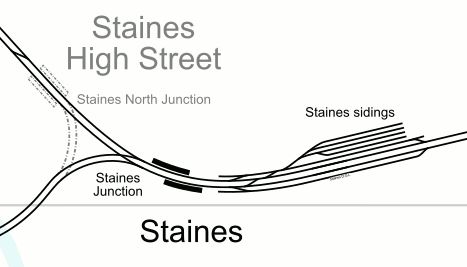
Note.
- London trains take the lines to the East.
- Windsor and Heathrow trains take or will take the lines to the North-West.
- Reading trains take the lines to the South-West.
The chord is shown as a pair of dotted lines between the Windsor and Reading Lines.
These pictures taken from a train from Egham to London, show how the chord has been developed.


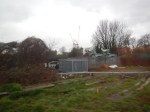
In the article this is said about how the chord could be used.
With the addition of a chord at Staines, it would also be potentially possible to operate a half-hourly Weybridge – Virginia Water – Egham – Terminal 5 service, providing a further attractive local link to Heathrow.
If this service were to be added, that raised the problem of putting the chord through the development.
West Drayton Station – 29th March 2018
These pictures show the progress at West Drayton station.
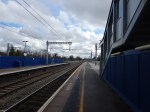

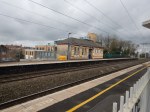
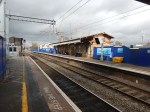
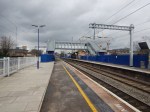
There’s still quite a bit of work to do.
GWR Announces Plans To Replace Class 332s As It Takes Over Heathrow Express Service
The title of this post, is the same as that of this article on Global Rail News.
In some ways, I was surprised that Heathrow Airport are handing over the running of Heathrow Express to Great Western Railway (GWR).
But.
- It seems, that the main problem, in that HS2 want their depot for construction of their new line.
- GWR will use twelve Class 387 trains to run the service as opposed to the the current fourteen Class 332 trains.
- The new trains will be updated with First Class, high speed wi-fi and more luggage space.
- The deal seems to run to 2028.
I do think, that the main reason could be, that this gives FirstGroup or MTR Corporation a say in all the railways, serving or going near Heathrow Airport.
- GWR is owned by FirstGroup.
- Crossrail is operated by MTR on begalf of Transport for London.
- South Western Railway is a joint venture between FirstGroup and MTR.
The operation of Heathrow Express by GWR completes the set.
My post; MTR Vying To Join Heathrow Southern Rail Bid, could link MTR to the proposed Heathrow Southern Railway, who are hoping to create a link into Heathrow Airport from the South.
One of the plans of Heathrow Southern Railway is to create a new Basingstoke/Guildford – Woking – Heathrow – Paddington service.
- This would have a frequency of two trains per hour (tph) between Paddington and both Basingstoke and Guildford.
- This would mean there would be a four tph Frequency between Paddington and Woking via Heathrow Terminal 5, Heathrow Terminal 2/3 and Old Oak Common.
- Creating the new service by extending Heathrow Express, means that the new service can take-over the paths used by Heathrow Express, to and from Paddington.
- It is also worth noting that the Class 387 trains, that GWR are proposing to use on Heathrow Express are dual-voltage and can run on tracks with third-rail electrification.
Heathrow Express will become a double-ended service, in much the same way that Gatwick Express takes passengers from both London and Brighton to the airport.
GWR taking over Heathrow Express must make the operation of trains to and from Heathrow Airport easier.
Why Change The Trains?
I think there are various reasons.
Operation And Maintenance
Obviously, if GWR uses only Class 387 trains on their shorter electrified routes from Paddington, this gives advantages in terms of operation, maintenance and staff utilisation and training.
I suspect too, that GWR have the depot space and sidings, to accommodate all the Class 387 trains they need.
Increasing Fleet Size
There are two published plans y to increase rail services to Heathrow.
- Heathrow Southern Railway would like to extend Heathrow Express to Woking and ultimately to Basingstoke and Guildford.
- Western access to Heathrow could also be a route for Heathrow Express to perhaps Reading and Oxford.
In the future there could be other services.
- Developments could mean that a Heathrow-Gatwick service could be possible and worthwhile.
- There is speculation in the media, about a direct service between Heathrow and Southampton.
Any expansion of services would probably need more trains.
If they need more Class 387 trains in the future, there are two operators, who have small fleets of Class 387 trains.
- Great Northern have twenty-nine trains.
- c2c have six trains.
Some of these might become available, as the operators consolidate and update their fleets.
Acquiring more Class 332 trains could be problematical.
The Class 387 trains route, means that Heathrow Express will remain a fleet of identical trains.
Operation On Routes With Third Rail Electrification
Any expansion of Heathrow Express to the Western side of Terminal 5 could connect to the extensive network of third-rail electrification.
For this reason, a Heathrow Express fleet without the capability to use third-rail electrification, would be limited in its market.
The Class 387 trains have been designed as dual voltage units and could work on third-rail networks by adding third-rail shoes.
Can Class 332 trains work on third-rail routes?
Operating Speed
The Class 387 trains are also 110 mph trains, whereas the operating speed of the Class 332 trains is 100 mph.
The faster operating speed must help operation on the busy fast lines to and from Paddington, where the Class 800 trains are 125 mph capable.
Train Length Issues
Consider.
- The current Class 332 trains, run as nine-car trains, consisting of one four-car and one five-car trainset.
- Class 387 trains are basically a four-car trainset, which can run as four, eight or twelve-car trains.
- To complicate matters, Crossrail, which will use the same platforms at Heathrow are planning to nine-car Class 345 trains, but these could be lengthened to ten or even eleven cars.
These probably cause no problems with the current service, as running eight-car Class 387 trains would probably provide enough capacity.
Would a twelve-car Class 387 train need some platforms to be lengthened?
A four-car Class 387 unit is 80.77 metres long, so a twelve-car train would be 243 metres long.
This compares with the following.
- Heathrow Express Class 332 – Nine cars – 206 metres.
- Crossrail Class 345 – Nine cars – 205 metres
- High Speed Train running with eight carriages – 220 metres
- Inter-City 225 running with nine carriages – 246 metres
- Two five-car Class 444 trains running togeyther – 230 metres
- Two five-car Class 800 trains running together – 260 metres
A twelve-car Class 387 train is long, but not wildly out of line.
As the pairs of Class 800 trains work into Paddington,, I suspect twelve-car Class 387 trains can do the same.
If there is a problem, it will be in the Hathrow stations.
Alternatively, could some extra cars be built by Bombardier to create five-car trains, that would work as ten-car units, which would be around two hundred metres long?
Joining And Splitting Of Trains
Could Heathrow Express benefit from trains with the ability to split and join?
When there are more than one route to the West from Terminal 5, there may be advantages for trains to split and join in Terminal 5 station, to serve more than one destination to the West of the airport.
This picture was taken, as I watched two Class 387 trains joining together.
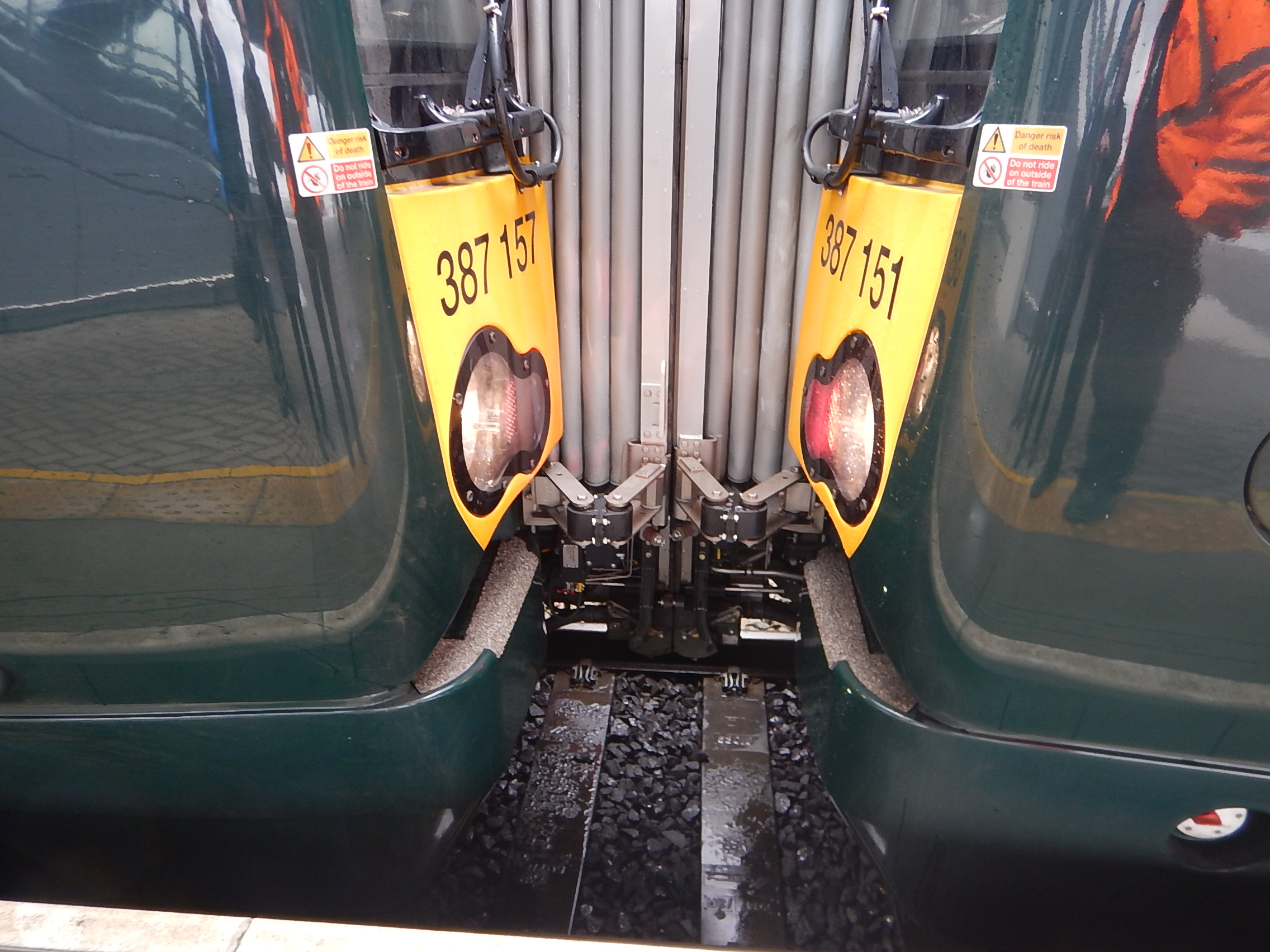
Note the driver in the cab on the right, controlling the process.
There is also a gangway between the two Class 387 trains, which the Class 332 trains don’t have.
Updating The Trains
The production of Class 387 trains has only just finished at Derby, but the Class 332 trains were built twenty years ago.
So could it be, that creating a modern fleet with all the features needed is easier with the later trains?
Suitability For Use With Heathrow Southern Railway Proposal
There are various issues here.
These concern fleet size and capacity
- Any extensions to the South and West will need more trains.
- If express services between Basingstoke, Guildford and Woking, and Paddington via Heathrow are successful, this could lead to calls for more services and other destinations, which could need more trains.
- If five-car units were needed, then Bombardier could probably oblige.
- There may be a need to lengthen platforms at the Heathrow stations.
Expanding a Class 387 train fleet would be easier.
There are also line speed issues.
- What would be the design operating speed of Heathrow Southern Railway’s tracks alongside the M25? – 90, 100 or even 125 mph!
- Could the operating speed of the Chertsey Branch Line be increased to the same speed, as there are only two stations; Chertsey and Addlestone?
The 110 mph maximum speed of a Class 387 could be a serious advantage, as speed sells!
How Many Trains Would Need To Be Converted?
Currently, there are fourteen Class 332 trains working Heathrow Express services.
They usually work in pairs, so there are seven trains.
If these are replaced by twelve-car Class 387 formations, that means up to twenty-one trains will be needed for the airport services from their current fleet of forty-five trains.
Eight-car formations would need fourteen trains.
Conclusion
It appears to me, that it is good decision to change the fleet for Class 387 trains.
Overall Conclusion
It’s all coming together for Heathrow Southern Railway.
Charging For Single Use Plastic. Aluminium And Glass Drinks Containers
I’m all for this, but I feel we should look at how the empties are returned and refunds are obtained.
The Norwegians seem to have solved this by means of expensive machines, which give vouchers back.
But there must be something simpler.
A few of my thoughts.
Marking Chargeable Containers
All containers for which a deposit is made, should be clearly marked with symbol, which says that it is worth something to return.
Returning To Shops
Obviously, people will want to do this, but I suspect a lot of smaller shops will ask shoppers to take the empties elsewhere.
They might install a machine, but many shops couldn’t afford the expense.
Collecting For Charity Or Local Causes
Suppose, you had a simple steel bin with holes in the top, like those we had in Suffolk for bottles.
Anything that had the correct symbol could be put in the bin.
These bins would then be collected and sorted automatically at a large plant.
By weighing each bin and knowing its location and owner, it would be possible to apportion the refunds to the charity.
National charities might put recycling bins in car parks or prominent places.
But supposing, your area has a run down children’s playground, that everybody wants to improve.
A recycling bin is placed by the playground and everybody is asked to use it for bottles and other containers. All proceeds would go to the playground fund, with a collateral benefit, that the area of the playground wasn’t strewn with empty bottles.
Automatic Sorting Of Containers
If you have a large plant sorting the containers, it can do a better job, than the most expensive machine on the street.
- It would be able to sort plastic, glass and aluminium containers.
- I suspect technology exists to remove labels
- Glass would probably be washed and crushed.
- It could also sort out ordinary rubbish like fast food wrapping and boxes, newspapers and disposable nappies.
- Any washing water would be collected and reused.
The plant would calculate the various combination of materials and if the weight of the rubbish would known, could calculate the return.
Extending The System
There must be other containers, that are also recyclable. In my cupboard, I have a large glass mayonnaise jar, which would probably be recyclable if washed and the top is removed.
So perhaps the system could accept this bottle without its top. It would be washed and crushed, so it could be used instead of quarried aggregate.
Conclusion
There are much better ways to handle the charge on a drink container.
I would reckon, that some of the biggest recycling organisations in the UK are working on a solution, that benefits us all and is as widespread as possible.
A Scoop For Train-Spotters
Various news sources are reporting that Kim Jong-Un’s visit to China was first noticed by train spotters.
This article on the Washington Post, says this.
The detective work started Monday when train spotters and North Korea watchers noticed two suspicious developments: tight security at the China-North Korea border and train delays across the northeast.
The article also says that a popular Chinese nickname for the North Korean dictator is Fatty the Third.
New Passenger Rail Routes In The West Midlands
Looking for possible privately-funded rail projects, I have come acrossseveral proposed rail route re-openings and improvement schemes in the West Midlands on Wikipedia.
Birmingham-Peterborough Line
The Birmingham-Peterborough Line is a major route between Birmingham and the East.
I am including it, as there are aspirations to add new stations at Castle Bromwich and Fort Parkway.
Between Birmingham and Nuneaton must be a candidate for in-fill electrification, especially as this section has two freight terminals.
Camp Hill Line
The reopening of the Camp Hill Line across Birmingham has been a long term ambition of the City Council for years.
The current status of the proposed development of the Camp Hill Line is given in Wikipedia under Future Plans.
This is the last part of that section.
In 2017, the newly elected Mayor of the West Midlands Andy Street pledged to get work started on restoring services to the line by 2020. And officials were said to be investigating the business case for a fourth station at Balsall Heath (previously called Brighton Road) This would mean Lifford and Camp Hill would be the only stations not to be reopened.
In August 2017, West Midlands Trains announced plans as part of their franchise deal that the line would reopen by December 2019 as part of a £1 billion investment in the West Midlands. This included a new station at Moseley.
In February 2018, Mayor of the West Midlands, Andy Street, said that the viaduct would not be needed, as Hereford to Birmingham New Street trains could be diverted along this line, meaning that extra capacity at Birmingham New Street was not required to open this line.
Note that the original completion date for this scheme was 2025 and it has now been moved forward to December 2019.
The current scheme seems to include the following.
- Four new stations at Balsall Heath, Moseley, Kings Heath and Hazelwell.
- A possible connection into Birmingham Moor Street station.
- Birmingham New Street to Worcester services would use the Camp Hill Line.
It seems that this scheme provides a rail service to a new part of the city and also releases capacity at Birmingham New Street. I think there’s some Brummie cunning at work and that a simpler scheme is being created, that could involve.
- The new stations.
- None or very little new electrification, track and signalling.
- No connection to Moor Street station.
- Services from Birmingham New Street to Kings Norton, Redditch and Bromsgrove using new Aventra trains running on batteries on the Camp Hill Line, which would call at all stations.
- An improved Birmingham New Street to the new Worcester Parkway station using new CAF Civity diesel trains, along the Camp Hill Line.
- Will CrossCountry’s Cardiff-Nottingham service be rerouted via the Camp Hill Line?
The New Street to Worcester services could be rerouted earlier, if it was necessary to squeeze more capacity out of New Street station.
Note that if all services stopped at Bromsgrove, when it gets its electric service on the Cross-City Line in May 2018, passengers for a lot of destinations, would surely change at Bromsgrove, rather than New Street!
Darlaston Loop
The reopening of the Darlaston Loop has been suggested by Andy Street, who is now Mayor of the West Midlands.
I suspect that this reopening fits within a larger overall scheme.
South Staffordshire Line
Network Rail and Midland Metro, both seem to have aspirations to run services on the South Staffordshire Line.
Re-opening Proposals in the Wikipedia entry gives full details of the proposals. Included are.
- Freight trains on a single track.
- Midland Metro on a single track with passing places.
- National Rail services.
- Tram-trains sharing with freight trains.
This is the last entry.
In September 2017, the new franchise operators, West Midlands Trains, plans to restore disused railway lines including the South Staffordshire Line which would be an extension of the existing Birmingham to Stourbridge Junction service which it plans to extend to Brierley Hill in the future.
On the Wikipedia entry for the Midland Metro, under Wednesbury and Merry Hill – Extension, this is said.
From Line 1 in Wednesbury, the Brierley Hill Extension (WBHE) would follow the disused South Staffordshire Line, through Tipton to the vicinity of the former Dudley Town station (which closed in 1964 and was later the site of a freightliner terminal), then on-street into Dudley town centre. It would leave Dudley alongside the Southern Bypass to access the railway corridor, leaving it at the approach to the Waterfront/Merry Hill area and Brierley Hill and then on to Stourbridge.
Centro has stated that the WBHE would provide 10 trams per hour, alternately serving Wolverhampton and Birmingham. Journey time from Brierley Hill to West Bromwich was stated as 31 minutes.
There are a lot of possibilities.
Various things might help in the design.
- There is space for two tracks. It has been suggested that one is for trams and one for freight.
- Midland Metro’s trams can run on battery power, so no electrification is required, if all other trains are diesel-powered.
- Midland Metro’s trams and West Midlands Trains’s new diesel trains are both built by CAF, so are they compatible enough to share a track?
- Modern signalling gets better and better.
I think we might see a very innovative plan for the use of this line.
Sutton Park Line
The Sutton Park Line is another line in the est Midlands area, that could be re-opened.
Re-opening in the Wikipedia entry gives full details of the proposals.
In February 2008 it was announced that Birmingham City Council, Network Rail and Centro were launching a feasibility study to assess the possibility of re-opening the line to passenger services. In January 2015 the line was put on hold for reopening to passenger trains. In April 2017, the proposals were being looked at again as part of a spin-off to the HS2 scheme. In December 2017, it has been proposed that the line could reopen as part of the Governments plans to reopen lines closed in the 1960s and later cuts by British Rail.
I would think, that one of the main reasons, this line is being reopened is that is connects several of the other suburban lines in Birmingham. It also allows freight trains to by-pass Birmingham New Street station.
Walsall-Wolverhampton Line
This is said about reopening a passenger service on the Walsall-Woverhampton Line in Wikipedia under Future Plans.
The West Midlands Combined Authority have announced their intention to restore a passenger service to the line by 2027, along with new stations at Willenhall and Darlaston James Bridge.
Note.
- At the present time, this route is for freight.
- It has had passenger services on and off for fifty years.
- It can be used as a diversion route around engineering works.
If a direct service were to be reinstated it would take just twelve minutes, as opposed to an hour via Birmingham New Street station.
It strikes me that this would be a simple route to upgrade.
Walsall and Wolverhampton stations are electrified.
The route is surely short enough to be handled by a battery-powered train.
Signalling is probably up-to-date.
There is also this report in the Wolverhampton Express and Star, which is entitled Spring Satement: £350m Housing Deal For The West Midlands, which says this.
The deal comes after ministers revealed plans to bring the line between the town and city back into use, including new railway stations at Willenhall and James Bridge, Darlaston.
Things seem to be happening on this route.
Possible New Stations
I’ll summarise the possible new and reopened stations.
- Aldridge – Sutton Park
- Balsall Heath – Camp Hill
- Castle Bromwich – Birmingham – Peterborough
- Darlaston James Bridge – Walsall-Wolverhampton
- Fort Parkway – Birmingham – Peterborough
- Hazelwell – Camp Hill
- Kings Heath – Camp Hill
- Moseley – Camp Hill
- Pelsall – South Staffordshire
- Willenhall Bilston Street – Walsall – Wolverhampton
Could a common design be created, so that the cost of stations is reduced?
Is There A Plan?
The West Midlands Combined Authority and the train operation company for the area; West Midlands Trains, seem at a first look, taken all the freight and disused routes and seeing how they can be linked into a network to the benefit of Birmingham.
But I think it is more than that!
The trains and trams are a varied fleet.
- CAF Urbos trams. – Can be fitted powered with batteries
- Bombardier Aventra trains in three- and five-car units. – Might be possible to be powered with batteries
- CAF Civity diesel-multiple units in two- and four-car units.
Full details have not been given about the Aventras, but it could be that all trams and trains are capable of moving for perhaps a dozen miles under their own power. Obviously, the CAF Civitiies can go a lot further on diesel fuel.
I have some questions.
- Could all these trains, mean that the lines can be added to the current network without installing too much electrification?
- Is it only the South Staffordshire Line and the Darlaston Loop, where new track needs to be laid?
- CAF are a company noted for innovation, who are opening a factory in Wales. Have they got a Spanish Surprise to help the WMCA create a world-class network?
- Are architects and engineers working on a unique platform design, that all trains can share?
- Could the Camp Hill Line and the Walsall-Wolverhampton Line have a passenger service, as soon as there are trains to run the service?
I wonder if there is a plan to bring in new routes continuously!
- Electric trains on the Chase Line to Rugeley Trent Valley station and to Bromsgrove station will be first in 2018.
- Walsall and Wolverhampton using the Wallsall-Wolverhampton Line
- New Street and Worcester using the Camp Hill Line.
- New Street and Bromsgrove using new stations on the Camp Hill Line.
- Coleshill Parkway tand Walsall using the Sutton Park Line.
- Walsall and Stourbridge Junction using the South Staffordshire Line and diesel trains.
- Wednesbury and Merry Hill using the South Staffordshire Line and trams.
Note.
- The early bonus of the new electrification.
- Walsall and Bromsgrove will develop into well-connected hubs.
- Euston and Walsall will be introduced by West Midlands Trains.
- As the network expands, new trains are delivered.
- Stations will be added continuously.
- All parts of Greater Birmingham will benefit.
Is this the way, Andy Street will market the network to his customers?
Swansea Bay Metro
Looking for possible privately-funded rail projects, I have come across the Swansea Bay Metro on Wikipedia.
Wikipedia outlines the project like this.
- A new line from Baglan to Swansea station diverting the mainline from the current route via Neath, reducing journey times to Cardiff to 30 Minutes
- The new Main Line would have stations at Swansea Bay Campus and SA1
- Reopening of the current freight only Neath Valley Line to passengers with new stations at Jersey Marine, Neath Abbey, Neath (shown as Neath 2) and Aberdulais
- A new line from Neath to Llansamlet Interchange via a new station at Llandarcy
- New stations on the existing Swansea to Baglan at Llansamlet Interchange, Phoenix and Morfa
- New stations at M4 J45, Morriston, M4 J46 and Pontlliw
- A new station on Station Road.
It is a comprehensive project that would probably cost over a £1 billion.
This could just be the sort of project that Chris Grayling felt could be developed.
This study document from Professor Mark Barry gives more details of a possible proposal.
This map is included.
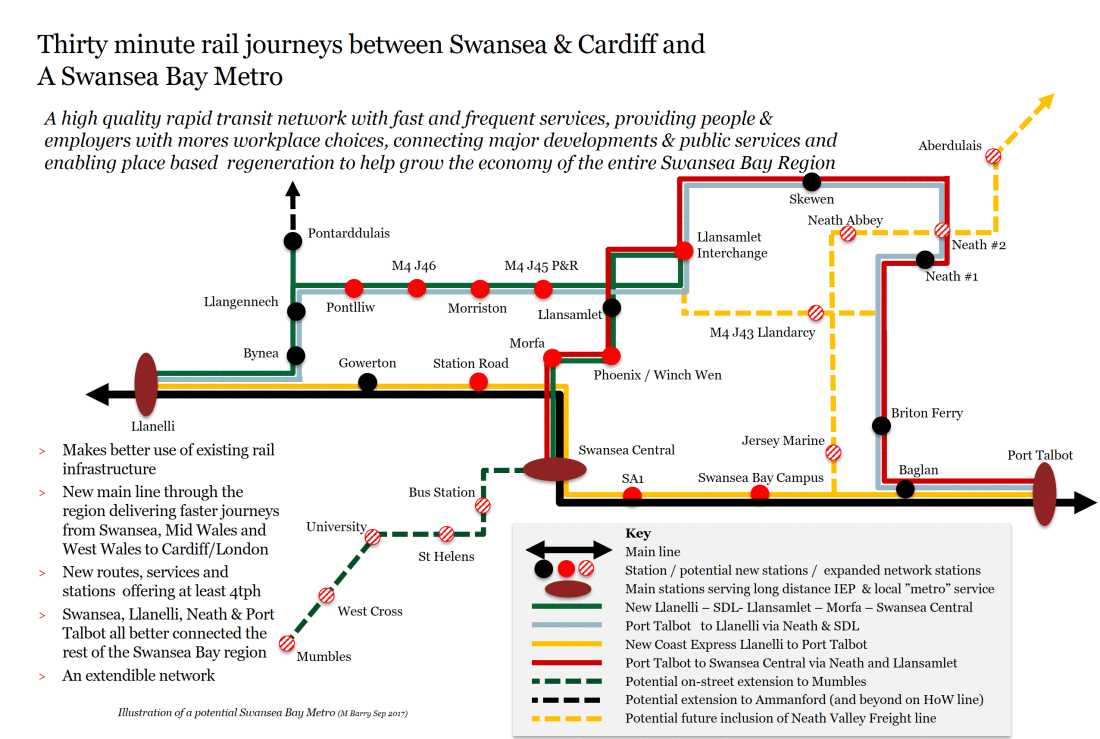
It certainly is a comprehensive project.
 The Anonymous Widower