Sheffield Station – 14th October 2026
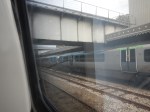
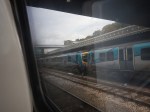
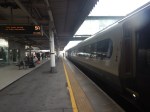
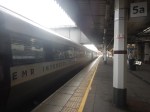
I went to Sheffield station and took these pictures.


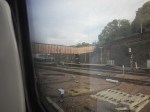
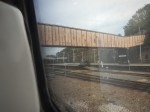
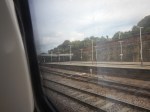
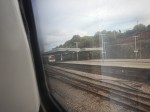
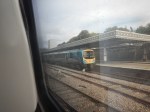
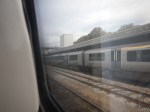
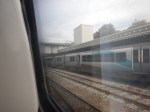
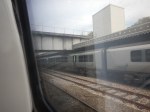
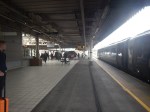
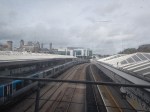
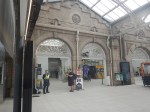
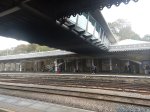
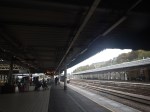
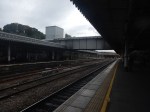
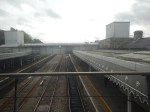
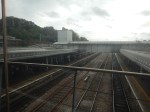
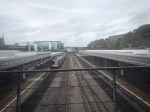
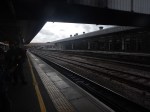
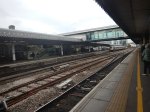
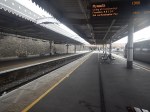
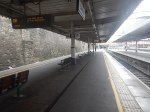
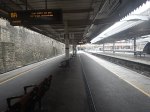
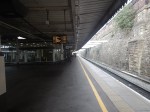
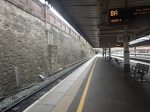
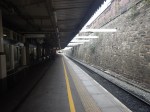
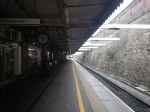

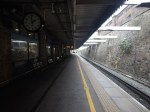
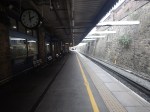
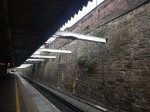
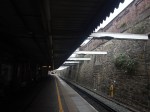
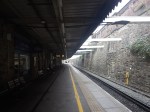
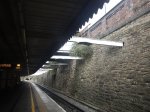
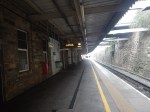
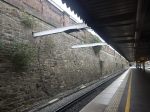
Note.
- The tram electrification clearly shows, where the Sheffield Supertram runs above the railway.
- My Class 222 trains arrived in Platform 5 from London.
- A five-car Class 810 train is 120 metres long.
- Platform 8 is a 378 metre through platform.
- What is the purpose of the white iron beams over the track, in the pictures of Platform 8?
- The beams are fairly substantial
- Platform 7 is a 135 metre bay platform.
- There are also similar shorter beams over the bay Platform 7.
- The platforms are well-provided with lifts.
- In the past, I have used Platform 7 to take a train to Manchester Piccadilly station along the Hope Valley Line. This could be an ideal route for battery-electric trains, as it is scenic and only 42.1 miles long.
If these beams are to hold overhead electrification cables to charge battery-electric trains, then the bay Platform 7 could charge a single train and Platform 8 could charge a pair of trains.
I have some thoughts and questions.
Could Sheffield Station With A Charger In Platform 8, Return a Class 810 Battery-Electric Train To London?
In Electrification Project’s Major Milestone Delivered On Time And Under Budget, I had a section, which was entitled Battery-Electric Trains Between St. Pancras And Sheffield Stations, where I said this.
Real Time Trains reveal the following about current St. Pancras and Sheffield services, that are run by the new Class 810 trains.
- Trains switch between electric and diesel power at Kilby Bridge junction.
- Between Kilby Bridge junction and St. Pancras station, overhead electrication provides train power.
- Between Kilby Bridge junction and Sheffield station diesel generators provide train power.
- Kilby Bridge junction and Sheffield station are 71.4 miles apart.
This would mean.
- For a one-way journey a battery range of 71.4 miles would be needed.
- For a return journey a battery range of 142.8 miles would be needed.
- Leicester, Loughborough, East Midlands Parkway, Long Eaton, Derby and Chesterfield stations would be served on battery power.
I suspect charging could be installed if required at Sheffield station.
This charging would need to put enough electricity in the batteries to get back to Kilby Bridge junction.
It certainly looks like.
- Platform 7 is long enough to charge a five-car train.
- Platform 8 is long enough to charge a ten-car train.
I don’t think the world’s first battery-electric 125 mph battery-express train is far away.
Could Two Trains Be Charged At The Same Time?
I don’t see why not, if the electrification has enough capacity.
Could Rigid Overhead Conductor Rails As At St. Pancras Thameslink Station Be Used?
These pictures show those rails.
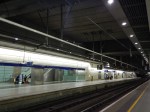
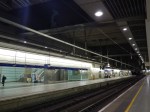
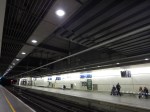
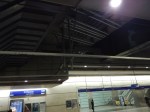
I don’t see why not.
How Long Will Trains Take Between London St. Pancras And Sheffield?
I asked Google AI, how long the current trains take and received this reply.
East Midlands Railway (EMR) trains between London St Pancras International and Sheffield Station take an average of 2 hours and 12 minutes to 2 hours and 15 minutes, with the fastest direct services completing the journey in 1 hour and 57 minutes to 2 hours 1 minute.
I suspect that for marketing reasons, all services will be a minute or so, less than two hours.
Will The Trains Be Five- Or Ten-Cars?
As it appears, that trains of both lengths can be charged at both ends of the route, East Midlands Trains can run the trains, so that they maximise the numbers of passengers.
But I suspect, it will be a two trains per hour, guaranteed two hour service between London St. Pancras and Sheffield.
Could Trains Between London St. Pancras And Sheffield Be Extended To Leeds?
Consider.
- According to Google AI, historically, there have been trains that have run between between London St. Pancras and Leeds via Sheffield and the Midland Main Line.
- Trains would use Platform 8 at Sheffield, as it is an electrified through platform.
- The route between Sheffield and Leeds would be something like Meadowhall, Rotherham Central, Swinton, Bolton-on-Dearne, Moorthorpe, Fitzwilliam, Westfield Westgate and Outwood.
- Trains could also charge their batteries at Leeds, if required.
- Sheffield and Leeds is only 39 miles
Note.
All the intermediate stations between Sheffield and Leeds, would get direct services to Chesterfield, Derby, Long Eaton, East Midlands Parkway, Loughborough, Leicester and London St. Pancras.
- Trains would not leave Sheffield until the batteries were full.
- As my pictures show that Sheffield will have two platforms capable of fully-charging trains for London St. Pancras, I suspect that Sheffield will still have two trains per hour to London St. Pancras.
- As Platform 8 at Sheffield can handle ten-car trains, five- and 10-car trains can be run between London St. Pancras and Leeds.
Could Manchester And Sheffield Trains Along The Hope Valley Be Run By Battery-Electric Trains?
Consider.
- The Hope Valley Line between Manchester Piccadilly and Sheffield is only 42.1 miles.
- The service is currently hourly.
- The Hope Valley Line has recently been upgraded.
- Could the upgrade allow two trains per hour?
- Some trains between Manchester Piccadilly and Sheffield already use Platform 7 in Sheffield station.
Note.
- The Hope Valley Line is a scenic route.
- The service would use Platform 7 at Sheffield station.
- All platforms at Manchester Piccadilly station are electrified, so could top up the battery-electric trains.
- A two trains per service would have a cross-platform interchange with London trains in Platform 8.
- I’m sure that Hitachi could create a battery-electric version of their Class 185 train.
- I also suspect that CAF would be able to provide a battery-electric version of their Class 332 train, that Northern uses.
I believe that travellers using the Hope Valley Line would welcome an improved service.
Could A Battery-Electric Train With A Range Of 70 Miles Run A London And Nottingham Service?
In Electrification Project’s Major Milestone Delivered On Time And Under Budget, I had a section, which was entitled Battery-Electric Trains Between St. Pancras And Nottingham Stations, where I said this.
Real Time Trains reveal the following about current St. Pancras and Nottingham services, that are run by the new Class 810 trains.
- Trains switch between electric and diesel power at Kilby Bridge junction.
- Between Kilby Bridge junction and St. Pancras station, overhead electrication provides train power.
- Between Kilby Bridge junction and Nottingham station diesel generators provide train power.
- Kilby Bridge junction and Nottingham station are 33.1 miles apart.
This would mean.
- For a one-way journey a battery range of 33.1 miles would be needed.
- For a return journey a battery range of 66.2 miles would be needed.
- Leicester, Loughborough, East Midlands Parkway and Beeston stations would be served on battery power.
I suspect charging could be installed if required at Nottingham station.
But would it be needed, as the battery range for for Sheffield is more than that needed for a return journey to Nottingham?
Are The Class 387 Trains For Heathrow Express Ready To Roll?
These pictures show the refurbished Class 387 trains, that will be used by Heathrow Express.


They will replace Class 332 trains.
Are they ready to roll? I hope they are not going to cover. what I think is an attractive livery, with hideous advertising!
GWR Announces Plans To Replace Class 332s As It Takes Over Heathrow Express Service
The title of this post, is the same as that of this article on Global Rail News.
In some ways, I was surprised that Heathrow Airport are handing over the running of Heathrow Express to Great Western Railway (GWR).
But.
- It seems, that the main problem, in that HS2 want their depot for construction of their new line.
- GWR will use twelve Class 387 trains to run the service as opposed to the the current fourteen Class 332 trains.
- The new trains will be updated with First Class, high speed wi-fi and more luggage space.
- The deal seems to run to 2028.
I do think, that the main reason could be, that this gives FirstGroup or MTR Corporation a say in all the railways, serving or going near Heathrow Airport.
- GWR is owned by FirstGroup.
- Crossrail is operated by MTR on begalf of Transport for London.
- South Western Railway is a joint venture between FirstGroup and MTR.
The operation of Heathrow Express by GWR completes the set.
My post; MTR Vying To Join Heathrow Southern Rail Bid, could link MTR to the proposed Heathrow Southern Railway, who are hoping to create a link into Heathrow Airport from the South.
One of the plans of Heathrow Southern Railway is to create a new Basingstoke/Guildford – Woking – Heathrow – Paddington service.
- This would have a frequency of two trains per hour (tph) between Paddington and both Basingstoke and Guildford.
- This would mean there would be a four tph Frequency between Paddington and Woking via Heathrow Terminal 5, Heathrow Terminal 2/3 and Old Oak Common.
- Creating the new service by extending Heathrow Express, means that the new service can take-over the paths used by Heathrow Express, to and from Paddington.
- It is also worth noting that the Class 387 trains, that GWR are proposing to use on Heathrow Express are dual-voltage and can run on tracks with third-rail electrification.
Heathrow Express will become a double-ended service, in much the same way that Gatwick Express takes passengers from both London and Brighton to the airport.
GWR taking over Heathrow Express must make the operation of trains to and from Heathrow Airport easier.
Why Change The Trains?
I think there are various reasons.
Operation And Maintenance
Obviously, if GWR uses only Class 387 trains on their shorter electrified routes from Paddington, this gives advantages in terms of operation, maintenance and staff utilisation and training.
I suspect too, that GWR have the depot space and sidings, to accommodate all the Class 387 trains they need.
Increasing Fleet Size
There are two published plans y to increase rail services to Heathrow.
- Heathrow Southern Railway would like to extend Heathrow Express to Woking and ultimately to Basingstoke and Guildford.
- Western access to Heathrow could also be a route for Heathrow Express to perhaps Reading and Oxford.
In the future there could be other services.
- Developments could mean that a Heathrow-Gatwick service could be possible and worthwhile.
- There is speculation in the media, about a direct service between Heathrow and Southampton.
Any expansion of services would probably need more trains.
If they need more Class 387 trains in the future, there are two operators, who have small fleets of Class 387 trains.
- Great Northern have twenty-nine trains.
- c2c have six trains.
Some of these might become available, as the operators consolidate and update their fleets.
Acquiring more Class 332 trains could be problematical.
The Class 387 trains route, means that Heathrow Express will remain a fleet of identical trains.
Operation On Routes With Third Rail Electrification
Any expansion of Heathrow Express to the Western side of Terminal 5 could connect to the extensive network of third-rail electrification.
For this reason, a Heathrow Express fleet without the capability to use third-rail electrification, would be limited in its market.
The Class 387 trains have been designed as dual voltage units and could work on third-rail networks by adding third-rail shoes.
Can Class 332 trains work on third-rail routes?
Operating Speed
The Class 387 trains are also 110 mph trains, whereas the operating speed of the Class 332 trains is 100 mph.
The faster operating speed must help operation on the busy fast lines to and from Paddington, where the Class 800 trains are 125 mph capable.
Train Length Issues
Consider.
- The current Class 332 trains, run as nine-car trains, consisting of one four-car and one five-car trainset.
- Class 387 trains are basically a four-car trainset, which can run as four, eight or twelve-car trains.
- To complicate matters, Crossrail, which will use the same platforms at Heathrow are planning to nine-car Class 345 trains, but these could be lengthened to ten or even eleven cars.
These probably cause no problems with the current service, as running eight-car Class 387 trains would probably provide enough capacity.
Would a twelve-car Class 387 train need some platforms to be lengthened?
A four-car Class 387 unit is 80.77 metres long, so a twelve-car train would be 243 metres long.
This compares with the following.
- Heathrow Express Class 332 – Nine cars – 206 metres.
- Crossrail Class 345 – Nine cars – 205 metres
- High Speed Train running with eight carriages – 220 metres
- Inter-City 225 running with nine carriages – 246 metres
- Two five-car Class 444 trains running togeyther – 230 metres
- Two five-car Class 800 trains running together – 260 metres
A twelve-car Class 387 train is long, but not wildly out of line.
As the pairs of Class 800 trains work into Paddington,, I suspect twelve-car Class 387 trains can do the same.
If there is a problem, it will be in the Hathrow stations.
Alternatively, could some extra cars be built by Bombardier to create five-car trains, that would work as ten-car units, which would be around two hundred metres long?
Joining And Splitting Of Trains
Could Heathrow Express benefit from trains with the ability to split and join?
When there are more than one route to the West from Terminal 5, there may be advantages for trains to split and join in Terminal 5 station, to serve more than one destination to the West of the airport.
This picture was taken, as I watched two Class 387 trains joining together.
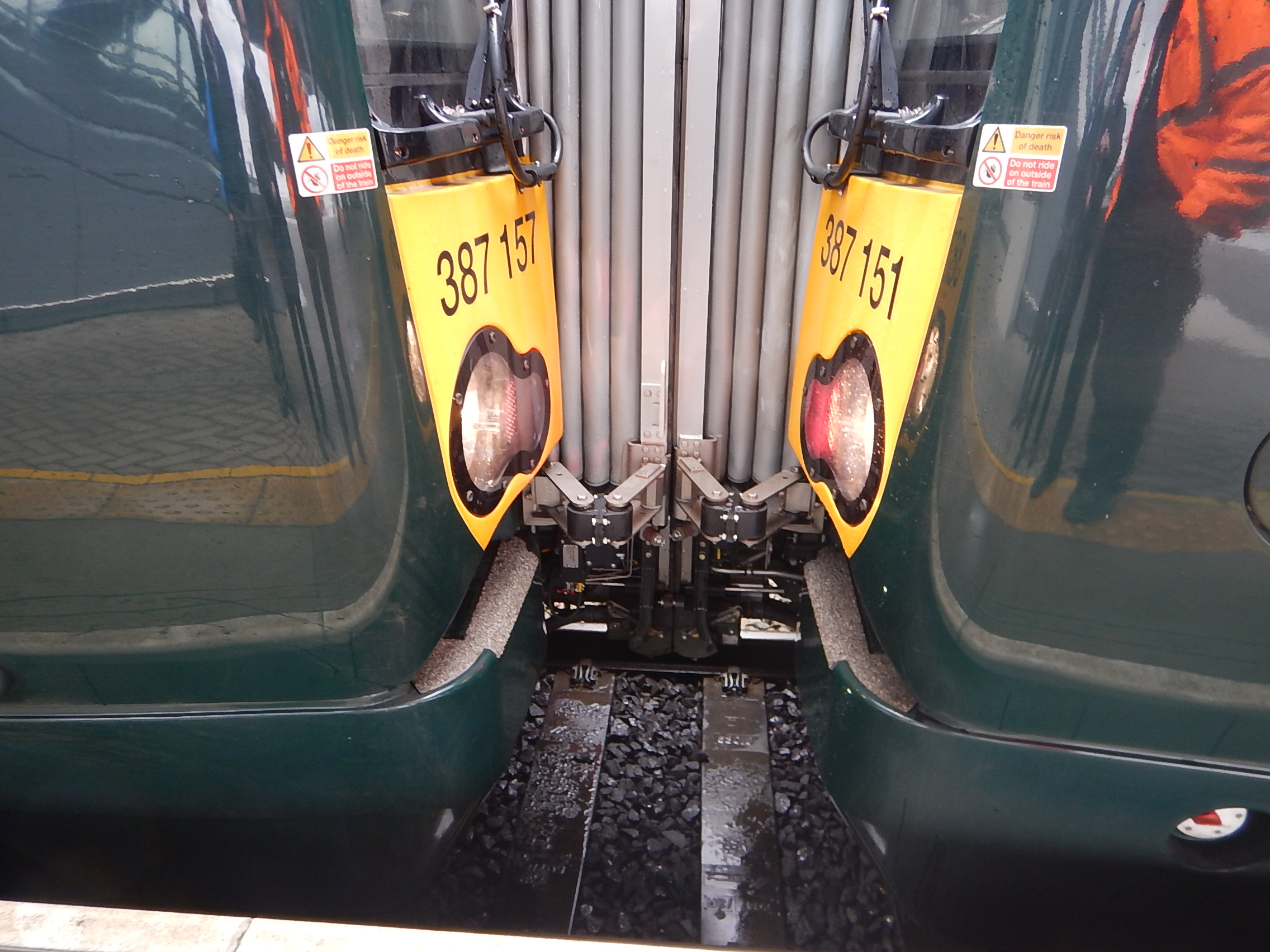
Note the driver in the cab on the right, controlling the process.
There is also a gangway between the two Class 387 trains, which the Class 332 trains don’t have.
Updating The Trains
The production of Class 387 trains has only just finished at Derby, but the Class 332 trains were built twenty years ago.
So could it be, that creating a modern fleet with all the features needed is easier with the later trains?
Suitability For Use With Heathrow Southern Railway Proposal
There are various issues here.
These concern fleet size and capacity
- Any extensions to the South and West will need more trains.
- If express services between Basingstoke, Guildford and Woking, and Paddington via Heathrow are successful, this could lead to calls for more services and other destinations, which could need more trains.
- If five-car units were needed, then Bombardier could probably oblige.
- There may be a need to lengthen platforms at the Heathrow stations.
Expanding a Class 387 train fleet would be easier.
There are also line speed issues.
- What would be the design operating speed of Heathrow Southern Railway’s tracks alongside the M25? – 90, 100 or even 125 mph!
- Could the operating speed of the Chertsey Branch Line be increased to the same speed, as there are only two stations; Chertsey and Addlestone?
The 110 mph maximum speed of a Class 387 could be a serious advantage, as speed sells!
How Many Trains Would Need To Be Converted?
Currently, there are fourteen Class 332 trains working Heathrow Express services.
They usually work in pairs, so there are seven trains.
If these are replaced by twelve-car Class 387 formations, that means up to twenty-one trains will be needed for the airport services from their current fleet of forty-five trains.
Eight-car formations would need fourteen trains.
Conclusion
It appears to me, that it is good decision to change the fleet for Class 387 trains.
Overall Conclusion
It’s all coming together for Heathrow Southern Railway.

