Crystal Palace Subway – 1st December 2024
This is the sub-heading on the Crystal Palace Subway web site.
The Grade II* listed Crystal Palace Subway is a beautifully designed and crafted relic of Victorian construction, built to provide access to the Crystal Palace for first-class rail passengers. In September 2024 a major restoration project was completed, just in time for its 160th anniversary in 2025.
These two paragraphs outline the relationship of the two stations at Crystal Palace.
The Palace was originally served by two railway stations: Crystal Palace Low Level station (still in use), which opened in 1854, and the High Level Station, designed by Charles Barry Junior, which opened in 1865 on the western side of Crystal Palace Parade.
It was intended that first-class passengers should enter the Palace through groined arches of coloured brick and stone, leading to a vestibule roofed with glass and iron, the grandeur of which was considered a fitting approach to the Crystal Palace.
These pictures give a flavour of the current Crystal Palace station.


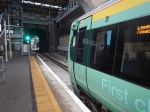

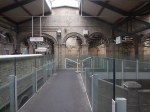
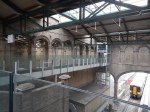
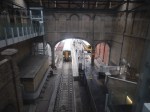





Note.
- It is served by both Southern and London Overground services.
- The station has several good lifts.
- There are toilets in the station by the gate line.
- The station is in excellent condition.
- The cafe in the station has a good reputation and I’ve used it several times.
If like me today, you are going up the hill to the bus station, Crystal Palace Parade or Crystal Palace Subway, there is a convenient bus stop on the other side of the road from the station. Any bus going to Crystal Palace should do.
These pictures document my visit to the Crystal Palace Subway.




























Note.
- Some of the ie Trams were running.
- The people were turning up.
- The restoration is top class.
And all despite the weather.
Old Street Station – 29th November 2024
I went back to the station today and took more pictures of the parts, I didn’t photograph yesterday.













Note.
- I arrived in and left from Silicon Roundabout via City Road to the South.
- There is a single lift on the North-East side of the roundabout to give access to the lower level.
- There is no lift access to the platforms.
This map from Transport for London shows the future layout of Old Street Roundabout.
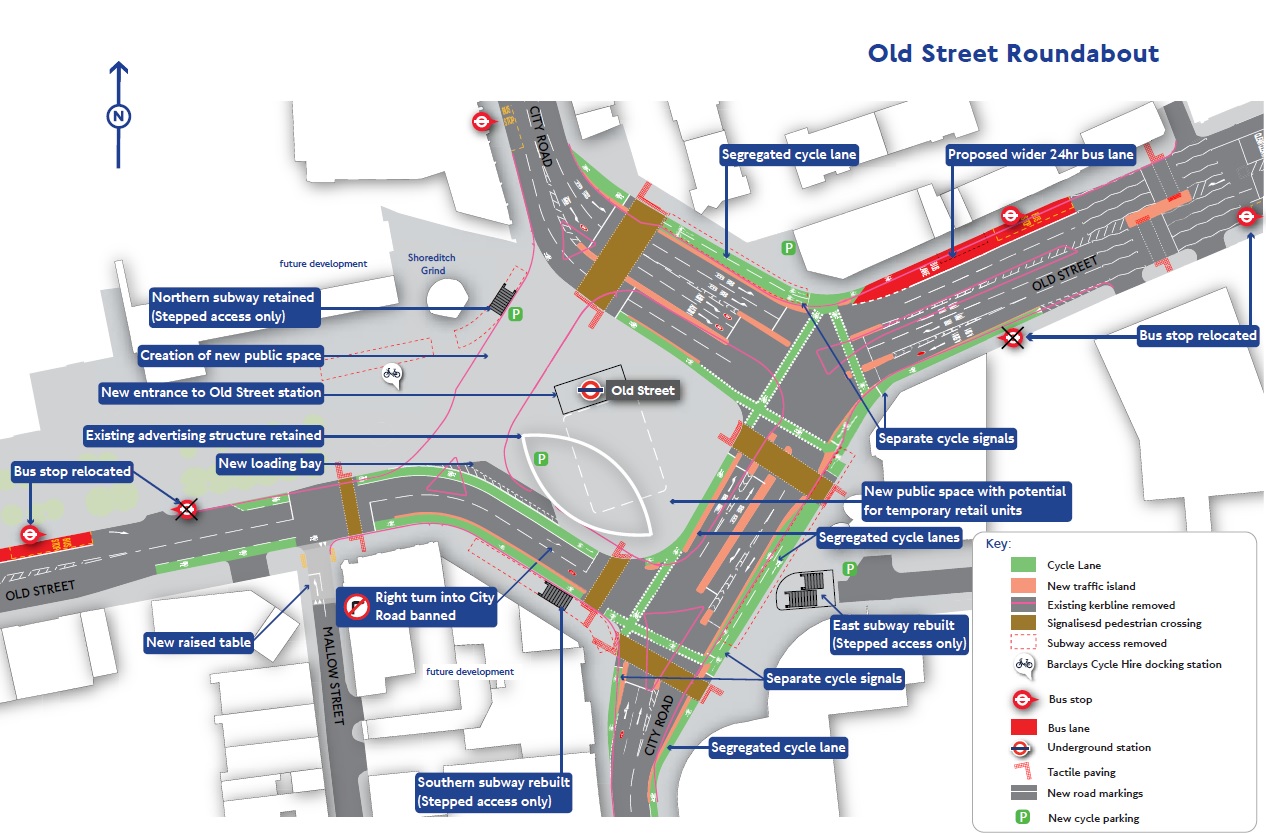
The step-free access could be better.
A Result With A Spam R-Mail
About eleven last night, I received a spam e-mail from an American e-mail address saying, if I invested a few thousand dollar with them, I’d get a good return.
It was as fraudulent as a ten-bob note.
So I forwarded it to report@phishing.gov.uk!
Around midnight, I received another e-mail saying from America saying I’d unsubscribed. It was a professional job with a Re-subscribe button.
It looks to me, that phishing.gov.uk has removed the scammer.
Old Street Station – 28th November 2024
The Central Entrance appears to be more or less finished.





Note.
- The green line leading to Moorfields Eye Hospital.
- Towers around the roundabout are sprouting skywards.
- The Victorian terracotta building on the North-West corner.
- The White Collar Factory on the South-West corner.
This map from Transport for London shows the future layout of Old Street Roundabout.
The construction has taken a long time.
Are Too Many Pharmaceuticals Round And White?
Last week one of the nine pills I take was changed from a small plain cream pill to one that was white, slightly larger with a slash on it.
I now take nine pills daily of which five are white and round, with two having slashes on them.
It didn’t cause any confusion with the dispensing, as I made sure I only pre-loaded a week’s drug containers. But, when I went to fill up Tuesday’s and Wednesday’s containers for this week, I couldn’t find the new drugs, as I’d confused them with the other drug with a slash and put them in the wrong drawer of the cabinet, where I store the drugs.
I put the confusion down to two many similar white drugs.
As a child, I used to build radios and amplifiers, so to avoid mistakes electricians and engineers started to use colour-coded wires, for all the different signals.
It became important, as some voltages used in high-power amplifiers could kill you. As Keith Relf of the Yardbirds was!
But then white drugs are cheap, just like grey cables.
New Tram-Like Bus Involved In Crash On Launch Day
The title of this post, is the same as that of this article on the BBC.
This is the sub-heading.
Transport for London (TfL) has said it is investigating after one of its new electric “tram-like” buses collided with a car on the day the new fleet was launched.
These are the three paragraphs of the article.
The Go-Ahead London bus was reportedly involved in the crash on Sevenoaks Road in Orpington, south-east London, on 20 November, when the new 358 buses came into service.
During a Bromley Council meeting, Labour councillor Kathy Bance said the bus collided with a car belonging to a Bromley Labour councillor’s wife.
A TfL spokesperson said no-one was injured and it was understood the collision was minor.
It appears to be very embarrassing, but not as serious, as it might have been.
If you go back to Edwardian times, there are tales of horses being startled by new-fangled motor-cars and charabancs, so could the councillor’s wife have been confused by this unusual looking bus?

I think it best to keep a watching brief, as to whether the bus did confuse the lady.
Buccleuch Group Submits Plans For 39MW Solar, 10MW Storage Development
These are the two introductory paragraphs.
Solar and storage developer Buccleuch Group has submitted a planning application for a new solar plus storage development near Kettering, Northamptonshire.
The Oakley Bush solar and battery energy storage system (BESS) project is a proposed 39MW solar development, with a 10MW BESS proposed for the site. The application area, which covers 150 hectares of land on the Boughton Estate, could play host to as many as 130,000 ground-mounted solar modules, positioned around 3.5 metres above the ground.
The development is interesting for two reasons.
It Is Being Built With Both Solar Panels And A BESS
As a Control Engineer, I believe renewable power systems should have a battery, to even out the power.
The Batteries Could Be Vanadian Flow Batteries
The article says this about, the use of vanadium flow batteries.
According to the application documentation provided to Kettering District Council, two BESS technologies are being considered for use on-site: lithium-ion batteries or vanadium flow batteries. If vanadium flow batteries are used, the site could have an energy capacity of up to 50MWh, although this will be lower if lithium-ion batteries are used.
In a presentation given at a public information event for the project earlier this year, the developers noted that vanadium flow battery technology is being considered due to its significantly lower fire risk and longer lifespan than lithium-ion batteries. An operational lifespan of 40 years is expected for the site, with construction expected to take 18 months if planning consent is granted.
Note.
- Vanadium flow batteries appear to be larger.
- Vanadium flow batteries have a lower fire risk.
- Vanadium flow batteries have a longer life span, than lithium-ion.
With other batterers coming through, I wouldn’t be surprised to see costs, performance and reliability of batteries improve.
BP’s Morven Wind Farm At Risk Of Missing Start Date
The title of this post, is the same as that as this article in The Times.
This is the sub-heading.
A lengthening queue for grid connection could scupper plans to provide energy for three million homes from a development in the North Sea by the end of the decade
These two paragraphs introduce the article.
One of the largest wind farms in the UK risks missing its 2030 target to start generating power, due to lengthy grid connection queues and supply chain shortages.
The Morven Wind Farm being developed by BP, which is to be located 38 miles off the coast of Aberdeen, will have capacity of 2.9 gigawatts, which is expected to be capable of powering three million homes in Britain.
The delays in getting a grid connection and obtaining various electrical parts could derail BP’s plans.
The Morven wind farm is one of three being developed by a partnership of BP and a German company, which is outlined in this paragraph.
Morven is one of three UK wind farms being built by BP in a joint venture with Energie Baden-Württemberg AG (EnBW), the German energy company. The other two, Mona and Morgan, are being developed in the Irish Sea and have already secured grid connections.
These are my thoughts on the problems with the Morven Wind Farm.
Everybody is assuming that there will be a large cable to bring the 2.9 GW of electricity to the Scottish coast somewhere near Aberdeen.
Cables can be a problem as the article indicates, with connection to the grid and the erection of large numbers of pylons being major ones.
But the energy from Morven doesn’t necessarily need to go to Scotland.
It can be converted into hydrogen using an offshore electrolyser and sent to where it is needed by pipeline or a tanker ship.
I have also noted that BP’s partners are German and Germany has a massive need for zero-carbon energy to replace the large amount of coal they burn.
The Germans are building a massive pipeline called AquaVentus, from their North-West coast to the Dogger Bank, to collect hydrogen created by up to 10 GW of offshore wind farms in the German Ocean or their part of the North Sea to the shore.
I introduced AquaVentus in this post called AquaVentus.
This video shows the structure of AquaVentus.
I clipped this map from the video.

Note.
- The thick white line running North-West/South-East is the spine of AquaVentus, that will deliver hydrogen to Germany.
- There is a link to Esbjerg in Denmark, that is marked DK.
- There appears to be an undeveloped link to Norway, which goes North,
- There appears to be an undeveloped link to Peterhead in Scotland, that is marked UK.
- There appears to be a link to just North of the Humber in England, that is marked UK.
- Just North of the Humber are the two massive gas storage sites of Aldbrough owned by SSE and Brough owned by Centrica.
- Aldbrough and Rough gas storage sites are being converted into two of the largest hydrogen storage sites in the world!
- There appear to be small ships sailing up and down the East Coast of the UK. Are these small coastal tankers, that are distributing the hydrogen to where it is needed?
When it is completed, AquaVentus will be a very comprehensive hydrogen network.
- Pipelines from Denmark, Norway, The Netherlands and the UK will feed directly into AquaVentus.
- Will enBW and BP build a giant offshore electrolyser at Morven and send the hydrogen to Germany via the spine of AquaVentus?
- Will AquaVentus use the vast hydrogen storage North of Hull to store excess hydrogen?
- Will connections be built between AquaVentus and the UK’s Northern gas terminals at St Fergus and Easington?
If AquaVentus works as intended, Germany’s Russian gas will be replaced by zero-carbon hydrogen, a large proportion of which will come from the UK’s waters.
Where Will We Get Our Electricity From?
If the energy from Morven is sold to the Germans as hydrogen, where will we get the energy we need?
Morven is just one of several large wind farms and being developed around the North of Scotland and we’ll probably use the energy from another wind farm.
- Wind farms that can best send their energy to the grid, will do so.
- Wind farms that can best send their energy to one or more of the large Scottish pumped storage hydro-electric power-stations, will do so.
- Wind farms that can best send their energy to Germany as hydrogen, will do so.
- Wind farms that can best send their energy to Scotland or another country as hydrogen, will do so.
The hydrogen will get distributed to those who need it and can pay the appropriate price.
Where Will The Turbines And the Electrical Gubbins Come From?
I’m sure that if Morven was sending a couple of GW of hydrogen to Germany, Siemens could build the turbines and the associated electrical gubbins needed at a favourable price, with an acceptable delivery date.
Conclusion
Germany will likely be pleased, in that they will be able to close a lot of very dirty coal-fired power stations, by replacing coal with green hydrogen.
The UK should be pleased, as the Germans will pay us for the hydrogen.
As for Putin, who knows, what the mad Russian will do?
The Incredible £7m Hydrogen Train To Be introduced In ‘Fastest Growing’ Country
The title of this post, is the same as that of this article in the Express.
This is the sub-heading.
Each hydrogen train is priced at £7 million and can run up to 621 miles (1,000km) on a single tank, reaching speeds of 87mph (140 km/h).
These two paragraphs add more details.
India is the fastest-growing economy among G20 nations and is set to launch its first hydrogen-powered train this December.
The groundbreaking train will debut on the Jind-Sonipat route in Haryana and will mark a massive step toward eco-friendly rail travel.
If you look at the article, there is an impressive looking picture, but it may be a visualisation.
This page on etnow.in has an interesting paragraph.
- In this context, the launch of Hydrogen trains deserves special mention. The national transporter has envisaged running 35 Hydrogen trains under “Hydrogen for Heritage” on various heritage and hill routes.
Does that mean that Indian Railways are using hydrogen-powered trains to avoid spoiling the scenery with overhead wires?
Hydrogen-powered trains in India could be a story to watch.
Do Coeliacs Like Ocado?
I have been doing most of my food and grocery shopping with Ocado for a few months now!
My first shop was on the 16th of August this year and I have now done a total of fourteen shops.
What is interesting, is that all substitutions made by Ocado has involved products that are gluten-free.
So do coelics and those on a gluten-free diet use Ocado a lot?
That would explain why gluten-free products run out more often. This also applies to products that don’t have a gluten-free label, but are known to be gluten-free from the ingredients.
 The Anonymous Widower