What Are Greater Anglia Going To Do With A Problem Like The Crouch Valley Line?
This post is effectively a series of sub-posts describing the problems of the Crouch Valley Line.
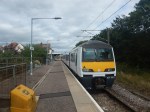
Platform 1 At Wickford Station
These pictures show Platform 1 at Wickford station, where services on the Crouch Valley Line terminate.
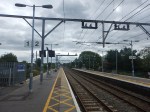

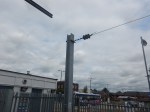
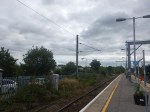
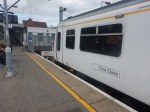
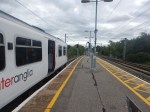
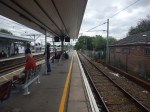

The train in the platform is a four-car Class 321 train, which is almost exactly eighty metres long.
After Greater Anglia has renewed the fleet, the shortest electric train they will have will be a five-car Class 720 train, which is over one hundred and twenty metres long.
I don’t think one of these shiny new trains will fit into the current platform.
Electrification
These pictures show the electrification at Burnham-on-Crouch station.
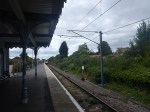
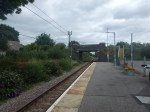
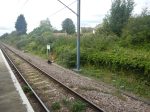
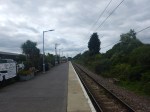
And these show Southminster station.
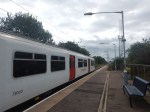
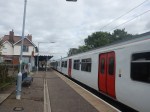
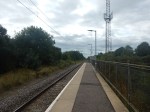
The overhead electrification on the Shenfield to Southend Line is being renewed and this section is supposedly finished. But it does look very similar to pictures I took in 2016, that are posted in Wickford Station. As the 25 KVAC overhead electrification was installed in 1979, when the line was converted from 6.25 KVAC, I do wonder about the age of some of the gantries.
On the trip, where I took these pictures staff were still complaining about the unreliability of the wires, as they have done before.
There doesn’t appear to have been any work done on the Crouch Valley Line, although the conductor did say that the route was being closed at times for work in the near future.
I do question, whether the overhead wires on the Crouch Valley Line are of a sufficient high and modern standard to be both reliable and easy and affordable to maintain.
Can the electrification handle regenerative braking?
The Timetable
The timetable East of Shenfield is as follows.
- Three trains per hour (tph) between Liverpool Street and Southend Victoria stations.
- A train every forty minutes between Wickford and Southminster stations.
- There are also some direct services between Southminster and Liverpool Street in the Peak.
Every time, I go use the line it seems, I always have a long wait at Wickford station.
Current services take thirty minutes between the two end stations with generous turnround times of about ten minutes at each end of the route.
Two trains are needed for the service, which are single-manned with a conductor checking and selling tickets appearing to float between the trains.
A New Nuclear Power Station At Bradwell
There is a possibility of building.of a new nuclear power station at Bradwell.
This Google Map shows the area.
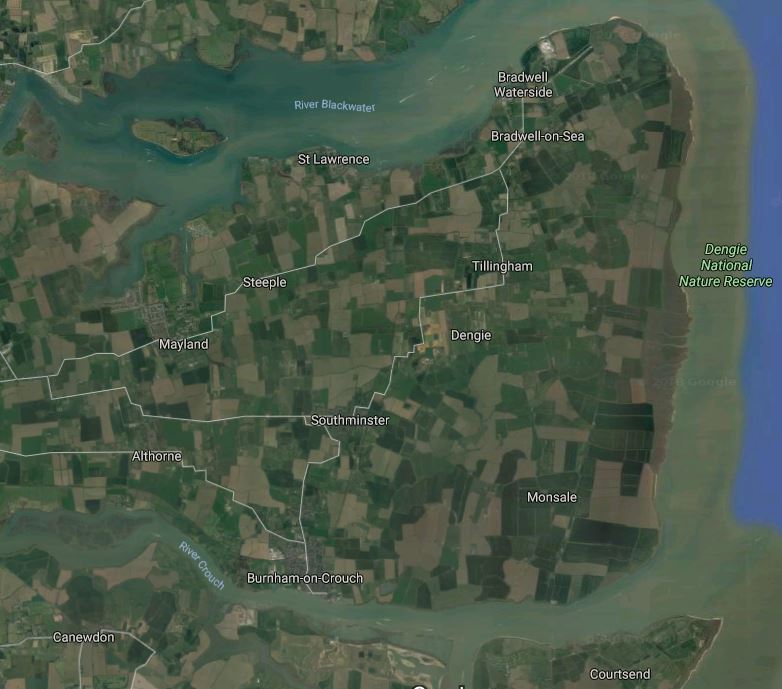
Note.
- Burnham-on-Crouch is the large village on the North Bank of the River Crouch.
- Southminster is a couple of miles to the North of Burnham on Crouch.
- Bradwell is in the North-East corner of the map alongside the River Blackwater.
- You can just see the World War 2 airfield, which was the site of the original Bradwell nuclear power station.
If a new power station is built at Bradwell, I doubt that it will require rail freight access at Southminster, as did the original station.
Transport technology has moved on and heavy goods will surely be taken in and out by barge from the River Blackwater.
But a new station or more likely ; a cluster of small modular reactors will require transport for staff, contractors and visitors.
Although, on balance, with the growth of renewable energy, I don’t think that many more nuclear power stations will be built.
A Battery Storage Power Station At Bradwell
I also wouldn’t rule out the use of Bradwell for a battery storage power station for the electricity generated by wind farms like Gunfleet in the Northern section of the Thames Estuary.
The number and size of these wind farms will certainly increase in the coming years.
Battery storage power stations are ideal partners for wind farms, as they help turn the intermittent wind power into a constant flow of electricity.
Currently, the largest battery storage power station is a 300 MWh facility that was built in 2016, at Buzen in Japan.
Energy storage technology is moving on fast and I would not be surprised to see 2000 MWh units by the mid-2020s.
Bradwell could be an ideal place to put a battery storage power station.
Passenger Numbers
Passenger numbers on the line over the last few years seem to have been fairly level although there appears to have been a drop in the last year or so. But this drop has happened in lots of places!
Various factors will effect the passenger numbers on the Crouch Valley Line in the future.
- New housing along the route.
- A large energy-based development at Bradwell will atract passengers.
- New trains will attract passengers.
- Will the Internet and new working practices affect passenger numbers?
- A two tph clock-face service will attract passengers.
- Faster and more frequent services between Liverpool Street and Wickford will make the line easier to access.
There is also the possibility of more visitors and tourists to the area. The RSPB have spent a lot of money developing Wallasea Wetlands, which is opposite Burnham-on-Crouch.
In future years, how many people will reach Wallasea, by ferry from Burnham-on-Crouch?
Adding up all these factors, I come to two conclusions.
Predicting the number of passengers will be difficult..
There will always be passengers who need this rail service.
It looks to me that Greater Anglia will have to plan for all eventualities from very low numbers of passengers to a substantial increase.
New Trains
Shenfield-Southend services and those on the Crouch Valley Line will be run using new Class 720 trains.
Bettween Liverpool Street And Southend Victoria
Currently, this service on the route is as follows.
Trains have a frequency of three tph.
- Each train takes an hour for the journey.
- All trains stop at the seven stations between Shenfield and Southend Victotria, Shenfield and Stratford.
- One train in three has an extra stop at Romford.
The new trains have a faster acceleration of 1 metre per second², as opposed to the current trains which can only manage 0.55 metre per second².
This property and their modern design, probably means that the new trains, can do a complete round trip between Liverpool Street and Southend Victoria stations in under two hours.
- The journey time between the two stations will be around fifty minutes.
- A three tph frequency will need a fleet of six trains.
- A four tph frequency will need a fleet of eight trains.
This service will be faster than the fastest services between Fenchurch Street and Southend Central stations.
I can certainly see a time, when the frequency between Liverpool Street and Southend Victoria stations is increased to four tph.
Passenger numbers are rising strongly at Southend Victoria station.
Southend Airport have big expansion plans and would welcome a better rail service, to and from their very convenient station.
At present times to their London termini from various airports are as follows.
- Gatwick Airport – 31 minutes (Express)
- Luton Airport – 28 minutes
- Southend Airport – 53 minutes
- Stansted Airport – 46 minutes
I think that Southend Airport times with the new trains could be about 43 minutes or less, which because of the closeness of the station to the terminal building could allow Southend Airport to claim faster times to Liverpool Street than Stansted Airport.
If the service does go to four tph, there will be a massive increase in capacity.
There will be 1145 seats in the new trains, as opposed to 927 in the current Class 321 trains.
With four tph. this would mean an increase in capacity of 40%.
I don’t think anybody in Southend will be complaining.
Between Wickford And Southminster
As I said earlier, the new longer Class 720 trains will have difficulty running the current service, as they don’t fit into Platform 1 at Wickford station.
Working the same timetable the new trains with their 544 seats will offer a 76% increase in train capacity.
Trains take thirty minutes with five intermediate stations.
Given the better acceleration and modern nature of the new trains, I wonder, if they will be able to do a round trip in an hour.
If they can do this, then it would be possible to run a two tph service on the route.
But it will be a tough ask!
That still leaves the problem of turning back the trains at Wickford.
Currently, trains between Liverpool Street and Southend Victoria going in opposite directions, pass at Wickford station.
If this could be arranged with four tph, then there would be up to fifteen minute windows, where no train was passing through Wickford station.
Suppose the Liverpool Street and Southend services passes through at XX:00, XX:15. XX:30 and XX:45.
Would it be possible for the Southminster trains to leave Wickford at XX:10 and XX:40 and arrive back at XX:05 and XX:35, thus giving five minutes for the driver to get to the other end.
As I said, it would be a tough ask!
But I suspect there is a plan to get two tph between Wickford and Southminster.
- The track could be improved.
- Some level crossings could be closed.
- Operating speed could be faster.
- Better step-free access could probably be arranged at the intermediate stations.
- A step-free bridge could be built at Wickford.
If two tph can be achieved, then this would increase capacity on the route by 134 %.
The Passing Loop At North Fambridge Station
This Google Map shows the station and passing loop at North Fambridge station.

Measuring from the map, I estimate the following.
- The length of the platforms are 160 metres.
- The length of the passing loop is in around 400 metres.
I also suspect that to save money was the line was singled in the 1960s, British Rail made the passing loop as short as possible to cut costs.
The current loop can handle eight-car Class 321 trains, so it can certainly handle a five-car Class 720 trains.
I do wonder if the passing loop were to be lengthened, this would ease operation on the line.
There might even be a length, that enable a two tph service with the current four-car Class 321 trains.
Thoughts On Speed Limits
The speed limit on the line is 60 mph between Battlesbridge and North Fambridge stations and 50 mph at both ends of the line.
Summarising sections of the line, their length and speed limits give.
- Wickford and Battlesbridge – 2 miles 38 chains = 4356 yards = 3983 metres – 50 mph
- Battlesbridge and North Fambridge – – 5 miles 67 chains = 10274 yards = 9395 metres – 60 mph
- North Fambridge and Southminster – 8 miles 15 chains = 14410 yards = 13177 metres – 50 mph
This gives totals of 17160 metres with a 50 mph limit and 9395 metres with a 60 mph limit.
- At 50 mph, the train would cover the 17160 metres in 12.8 minutes
- At 60 mph, the train would cover the 17160 metres in 10.7 minutes
- At 75 mph, the train would cover the 17160 metres in 8.5 minutes
Increasing the speed limit to 60 mph would save two minutes.
Network Rail must have all the figures and costs, but this could be a cost-effective way to save a couple of minutes.
But it does seem if the operating speed of the line were to be increased, time saving could be achieved, that would make a two tph timetable a reality.,
Could Electrification Be Removed From The Crouch Valley Line?
If the track is going to be improved with respect to line speed, level crossings and passing loops, then there will have to be changes to the layout of the overhead electrification.
Most of the serious changes that could be carried out, would be to the East of North Fambridge station.
Would it be sensible if the Class 720 trains have a battery capability, to remove the electrification to the East of North Fambridge station?
- 13.2 km. of single-track would have the electrification removed.
- Some of this electrification will need replacing soon.
- Trains could swap between power sources in North Fambridge station.
- The batteries would be charged between Wickford and North Fambridge stations.
- Only 16 miles in each round trip would be on batteries.
Removing some electrification would cut the cost of any works.
Conclusion
I’m sure Greater Anglia have a solution and it’s probably better than my rambling.
Did The Queen Ever Ride In This Train?
These pictures show the British Rail BEMU, which was an experimental two-car battery electric multiple unit, that ran on the Deeside Railway between Aberdeen and Ballater stations, in the late 1950s and early 1960s.
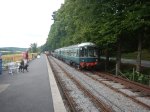
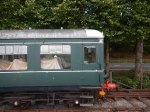
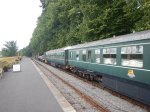
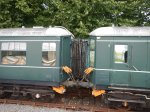
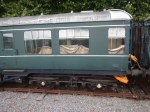
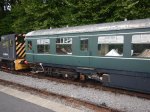


It is now parked at the Royal Deeside Railway awaiting restoration.
As the bodywork is aluminium, it struck me that it wouldn’t be an impossible restoration project.
Someone, I spoke to, said the biggest problem and probably expense were the batteries.
Perhaps, they could use some recycled batteries from electric buses or other vehicles, which some companies are going to use as house storage batteries.
A Memory From A Lady
I travelled to the Royal Deeside Railway on a bus and sat up front on the top deck. Next to me was a lady, who was perhaps in her seventies like me, who remembered using the train several times.
From what she said, it appeared to work reliably for a number of years.
Did Her Majesty Ever Use The Train?
No-one at the Royal Deeside Railway has any proof, that the Queen ever rode in the train.
But they are pretty sure, that the Queen Mother used the train. Apparently, she liked the steady speed as it proceeded through the countryside.
Conclusion
With the current developments in battery transport, I feel that this prototype might well be worth restoring to operation condition.
A Railway That Needs Electric Trains But Doesn’t Need Full Electrification
This article on Rail Magazine is entitled ScotRail Targets Further Electrification Schemes.
This is the first paragraph.
The five years from 2019 could feature more wiring in Scotland, with ScotRail Alliance Managing Director Alex Hynes telling RAIL: “I’d love to see more electrification – Stirling to Perth, East Kilbride and the Edinburgh South Suburban.”
In this post, I will look at electrification of the Busby Railway to East Kilbride station.
- The station is 11.5 miles from Glasgow Central station.
- The station has an altitude of 504 feet.
- It is a single platform station.
- The route to Glasgow is double-track, except for the last section from Busby station, which is single track, with a passing loop at Hairmyres station.
- A two trains per hour (tph) service is provided between Glasgow Central and East Kilbride using two two-car diesel Class 156 trains.
This picture shows East Kilbride station.
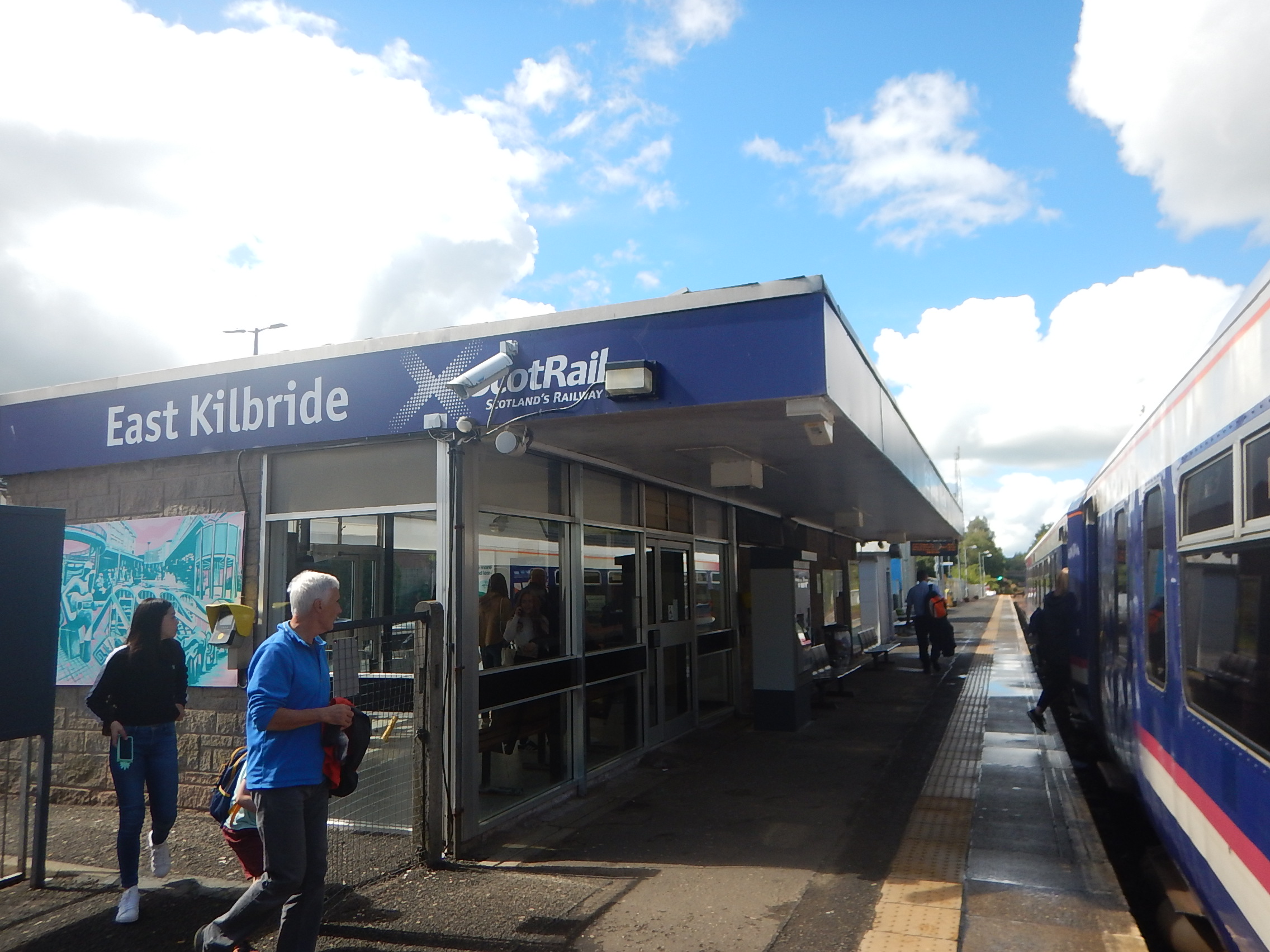
Nothing complicated at this station and it comfortably handles two tph.
In the UK, there are several stations where four tph are handled using a single platform.
- Chester, Kirkby and Ormskirk on Merseyrail.
- Clapham Junction, Dalston Junction, Highbury & Islington, New Cross and West Croydon on the London Overground.
Transport for Wales also intend to run four tph to several single-platform stations including Rhymney, which is high in the valleys.
I suspect that with modern signalling and driver aids, Glasgow’s drivers would be capable of running four tph between Glasgow Central and East Kilbride stations.
Judging by my trip on the route, there is certainly a need for more capacity, as if every seat is taken at two in the afternoon, two-car trains running at a frequency of two tph is just not enough.
So surely running new four-car electric trains to the current timetable, would be the standard solution for this route?
But!
Look at these pictures of the route..

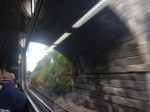
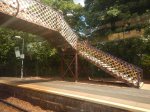
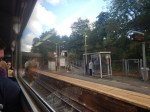
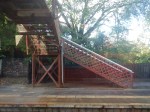
It wouldn’t be a nightmare to electrify, but because of the stone bridges and the steel footbridges, it would be expensive and very disruptive.
The following should also be noted.
- The railway has never gone further than East Kilbride station.
- There is no freight on the line, except for that needed for maintenance.
I am very much drawn to the conclusion, that to electrify the whole route would use money that would probably be better spent on improving step-free access at some of the stations.
Electric Trains To East Kilbride Without Full Electrification
Before I detail the solutions, I shall look at the energy required to raise a train from Glasgow to East Kilbride station.
Consider.
- A four-car electric train like a Class 321 train weighs 138 tonnes.
- This train has 309 seats, so could probably accommodate 400 passengers.
- Assuming each weighs 90 kg with buggies, baggage, bicycles and bagpipes, this gives a train fully-loaded train weight of 174 tonnes.
Using Omni’s Potential Energy Calculator, it would take 73 kWh of energy to raise the train to the 504 feet altitude of East Kilbride station.
It should also be noted that Glasgow Central station and the approaches to the station are fully electrified almost as far as Crossmyloof station.
What solutions are available to have as-new electric trains running between Glasgow Central and East Kilbride station?
The Rhymney Line Solution
The Rhymney Line runs between Cardiff Central and Rhymney stations.
In the design of the new South Wales Metro, the highest section of this line between Ystrad Mynach and Rhymney stations will be run on battery power.
- This section is about eleven miles long.
- It is a mixture of single and double-track.
- The height difference is 410 feet.
This is very similar in severity to the Busby Railway.
Transport for Wales are proposing to use Tri-Mode Stadler Flirt trains on this route.
These trains would be able to handle the East Kilbride route without any modification to the track or electrification.
It would just mean.
- Trains identical to those on the South Wales Metro.
- Building and delivering the trains.
- Training the drivers and other staff.
There would be other advantages.
- Stadler trains seem to be one of the best for step-free access, with automatic gap fillers between platform and train.
- They are 100 mph trains.
- They are ready for modern signalling.
- They can change mode at line speed.
These trains which will be Class 755 trains in Abellio Greater Anglia service, have a central power-pack, that can incorporate diesel or battery power to supplement power from the electrification.
Good engineering design would probably mean.
- The four slots in the power pack, can be fitted with a diesel engine, battery or perhaps even a hydrogen fuel cell to give a power profile tailored to the route.
- The battery would weigh a similar amount to the Deutz diesel engine, which would give a battery capacity of perhaps 100-120 kWh.
- There is an intelligent computer system controlling the power and braking systems.
- The trains come in various lengths from three-cars upwards.
This is a summary of the Stadler multi-mode trains ordered for the UK.
- Abellio Greater Anglia – Electric/Diesel – 14 x three-cars – Two Deutz diesel engines
- Abellio Greater Anglia – Electric/Diesel – 24 x four-cars – Four Deutz diesel engines
- Trains for Wales – Electric/Diesel – 11 x four-cars – Four (?) Deutz diesel engines
- Trains for Wales – Electric/Diesel/Batteries – 7 x three-cars – One Deutz diesel engine and three batteries (?)
- Trains for Wales – Electric/Diesel/Batteries – 17 x four-cars – One Deutz diesel engine and three batteries
I’m sure Abellio Greater Anglia won’t leave Abellio ScotRail, short of operational information.
In addition, they might be ideal for other routes in the Glasgow area.
- The Glasgow South Western Line to Kilmarknock, Dumfries and Carlisle.
- The Ayrshire Coast Line to Ayr and Stranraer.
- The West Highland Line to Oban and Mallaig.
They would use the electrification, when close to Glasgow.
I can’t see any reason, why another version of the Tri-Mode Stadler Flirt won’t be able to run services between Glasgow Central and East Kilbride stations.
The Battery Solution
Transport for Wales intend to run their Tri-Mode Stadler Flirts on battery from Ystrad Mynach to Rhymney. I can’t see any reason why a well-designed battery train can’t do the similar climb to East Kilbride station.
Of the major train manufacturers, only Stadler seem to have declared their hand with the Rhymney Line proposal.
- Bombardier have run prototypes in the UK and Germany, but are very protective with solid information.
- CAF have run battery trams and will introduce them to the UK in the next year or so.
- Hitachi use batteries in their trains and have run battery trains in Japan.
Also, consider that between Glasgow Central and Pollokshields East stations is electrified and extending this electrification to say Busby Junction. where the Busby Railway leaves the Glasgow South Western Line, would have the following benefits.
- The distance to run on batteries would be reduced by about three miles.
- There would be more electrification to ensure that train batteries were full before the climb to East Kilbride.
- If bi-mode trains were to run to Kilmarnock, Dumfries and Carlisle, they would have more electrified line to use.
This short section of electrification would certainly improve the mathematics of running battery trains to East Kilbride.
As Busby Junction to Kilmarnock is around twenty miles, it might even make it possible to run battery trains between Glasgow Central and Kilmarnock stations.
I have no doubts that, a battery train can be built to handle services between Glasgow Central and East Kilbride.
The Hydrogen Solution
I tend to think of trains powered by a hydrogen fuel cell, as battery trains with an environmentally-friendly onboard power source.
The Busby Line route is ideal for battery trains, especially, if there is a few miles of new electrification at the Glasgow Central end of the route.
Alstom’s proposed hydrogen-powered Class 321 train, could also be ideal for this route.
Four-car trains with a decent interior, would certainly solve the overcrowding on the route.
In A Class 321 Renatus, a comment was put, that says that the hydrogen-powered Class 321 trains will share the Renatus interior.
I’d suspected that would be the case, as why would the train’s owners; Eversholt Rail Group, design two different interiors for the same purpose?
The train would be able to leave Glasgow Central station with a full battery and with the help of electricity from the hydogen fuel cell, it would be able to climb to East Kilbride.
Coming down, the train would be partly powered by the battery, but mainly by gravity. Energy generated by the regenerative braking would be stored in the battery.
Alstom will be building a mathematical model of the train and its performance on various routes, so they will know the energy flows, when the train is working.
I said earlier that the following routes would be ideal for Stadler’s bi-mode trains.
- The Glasgow South Western Line to Kilmarknock, Dumfries and Carlisle.
- The Ayrshire Coast Line to Ayr and Stranraer.
- The West Highland Line to Oban and Mallaig.
I feel the same logic applies to Alstom’s hydrogen trains.
Conclusion
All three solutions, I outlined in this post, could be possible.
The solutions have several things in common.
- All will be fully tested elsewhere on the UK rail network.
- None need any electrification between Busby Junction and East Kilbride.
- All would benefit from a few extra miles of electrification between Busby Junction and Glasgow Central station.
- All solutions are backed by respected train building companies.
I think there will be a very keen contest to see who supplies the trains for this and other related routes from Glasgow.
What Is The Battery Size On A Tri-Mode Stadler Flirt?
The power-pack in the middle of a Tri-Mode Stadler Flirt, would appear to have four slots, each of which could take.
- A V8 16-litre Deutz diesel that can produce 478 kW and weighs 1.3 tonnes.
- A battery of about 120 kWh, which would probably weigh about 1.2 tonnes.
Would future versions of these trains accept a hydrogen fuel cell?
Note that, I estimated the battery size, by using typical battery energy densities for a battery of similar weight and physical size to the diesel engine.
I’ve Been Published In Rail Magazine
Over the years, I’ve had various articles published in newspapers and magazines.
Recently, I wrote, what I intended to be a letter to Rail Magazine. They obviously liked it, as they asked me to expand it, so they could publish it as a article, under the title of Battery Benefits.
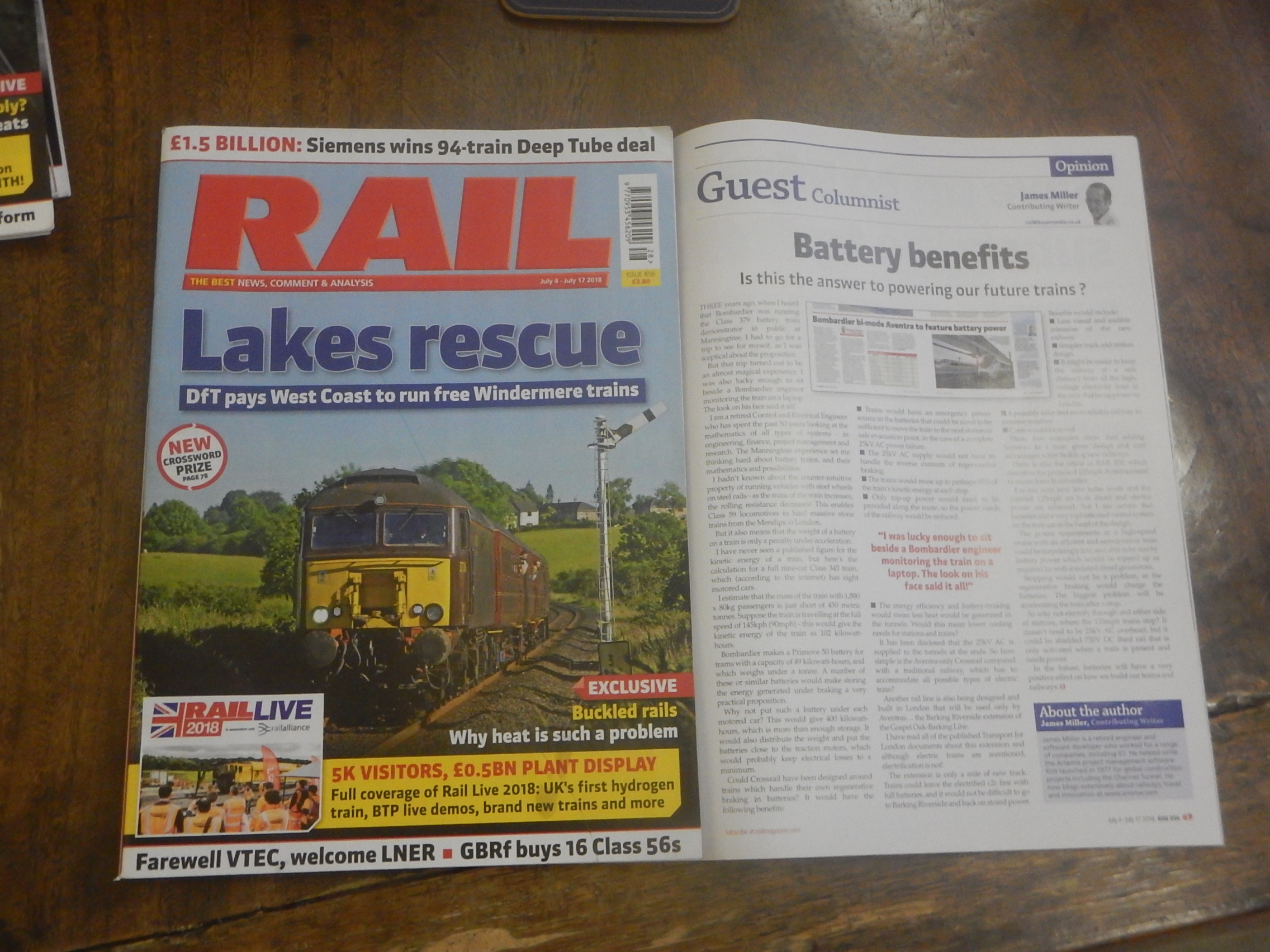
If you read this blog regularly, you will notice that I sometimes calculate the kinetic energy of a train.
I say this in the article.
I have never seen a published figure for the kinetic energy of a train!
So I laid out a calculation for a Class 345 train and the benefits of using an appropriately sized battery in electric trains in general.
I have the article as a Word Document, if anybody can’t get a hold of the magazine, which was published on July 4th.
Northern’s Latest Class 319 Trains
I took these pictures of the interior of a couple of Northern’s latest Class 319 trains.
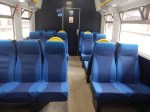

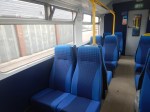
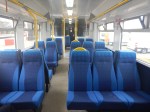
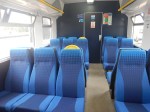

The train companies certainly seem to be improving their refurbishments, as these posts show.
- A Class 321 Renatus
- A Very Smart Class 319 Train
- Is This Really A Pacer In A New Outfit?
- It’s Not A New Train
- What Train Is This?
Personally, I hope I stick around long enough to get a ride in the following trains, that are in the line for substantial rebuilding.
- Alstom/Eversholt’s hydrogen-powered Class 321 train
- South Western Railway’s Class 442 train
- Porterbrook’s Class 769 train
- Vivarail’s Class 230 train
And of course, I want a ride in one of Great Western Railway or ScotRail’s short-formation InterCity 125.
Will We See Any Other Substantial Rebuilds?
It would be unfair not to ask this question.
I think it would be reasonable to say that if refurbishment of the quality that has been applied to Class 319 and Class 321 trains, then train owners and their engineers could probably bring the Networkers and Voyagers, up to scratch.
If nothing else, batteries could be fitted to harness the braking energy and use if for hotel power on the train.
Bombardier have hinted, they will be doing this to Voyagers and I wrote about it in Have Bombardier Got A Cunning Plan For Voyagers?
Grayling Confirms Electrification Will Form Part Of £3bn TransPennine Upgrade
The title of this post is the same as that of this article on Rail Technology Magazine.
his is a key section of the article.
But now, in a letter to the Railway Industry Association (RIA), Grayling has finally confirmed that the TransPennine upgrade will be a “rolling programme of enhancements,” including both major civil engineering projects and electrification.
He wrote: “The key to delivering improved journey times on what is a very circuitous route through the Pennines involves rebuilding and relaying most of the track bed from Manchester to York.
“We are awaiting Network Rail’s final project plan, but we have instructed them to prioritise those elements which bring the quickest passenger benefits. This will include things like straightening lengths of track to improve line speed.”
If nothing else Chris Grayling’s comments appear to have been measured ones and not a quick response to ht out to shout down the various groups for whom nothing short of full electrification is an acceptable solution.
The Routes Across The Pennines
There are three main routes across the Southern section of the Pennines. From North to South they are.
The Calder Valley Line from Manchester Victoria and Preston in the West to Leeds, Selby and York in the East via Hebden Bridge, Halifax and Bradford.
The Huddersfield Line from Manchester Airport, Piccadilly and Victoria in the West to Leeds, Hull and York in the East via Stalybridge, Huddersfield and Dewsbury.
The Hope Valley Line from Manchester Piccadilly in the West to Sheffield in the East.
Note.
- The three routes are much of a muchness with operating speeds in the region of 70-90 mph.
- There are good connections in the West with Blackpool, Chester, Liverpool and the West Coast Main Line.
- There are good connections in the East with Hull, Newcastle, York and the East Coast Main Line.
- Some connecting routes like the East and West Coast Main Lines are electrified 125 mph routes, but others like the connections to Chester, Hull and Scarborough are slower diesel routes.
- Some electrified routes like Liverpool to Manchester via Chat Moss, although they are electrified need speed improvements.
- The four major cities served by the three cross-Pennine routes; Leeds, Liverpool, Manchester and Sheffield all Have sizeable local tram or rail services.
If all these routes could be improved, they would create a core network of cross-Pennine routes.
There is also two other secondary routes that could be improved or created as diversion routes, whilst work is carried out on the main routes.
- A conductor pointed out to me, that passenger trains can go between Blackburn and Leeds via the Ribble Valley Line and Skipton with a reverse at Hellifield station.
- And then there’s the reopening of the route between Sklipton and Colne, which appears to be top of a lot of politicians and train companies lists.
Surely, these could be used to provide extra capacity if one of the Calder Valley or Huddersfield Lines was closed for improvement.
Some suggestions, I’ve seen about the Skipton to Colne Line, even say it could be used for freight.
I believe that with some measure of careful planning, the number of train paths across the Pennines can be increased, to an extend that would ease the improvement of the three main routes.
The Project Has A High Degree Of Difficulty and Complexity
The biggest upgrades of a UK railway in my time has been the electrification of these three main lines from London.
- West Coast Main Line, which was modernised and electrified by British Rail in the 1960s and 1970s.
- East Coast Main Line, which was electrified by British Rail in the 1980s.
- Great Western Main Line, which has been undergoing a tortuous and expensive upgrade and electrification for several years.
So how did Network Rail mess up on the Great Western, when British Rail completed the other lines without massive amounts of trouble?
Various reasons have been put forward, but I believe it has a lot ot do with the change of attitudes on the public’s behalf and new regulations in the intervening forty years.
As an example consider the electrification of the Grade II* Listed Digswell Viaduct in the 1970s. British Rail just did it and I don’t even know, if there were any objections.
Today, the Heritage lobby and various other pressure groups, would have had a field day. In the 1970s, most people accepted that the Government and Bitish Rail knew best.
Forty years ago, passengers accepted the disruption caused by works on the railways. Now they don’t and there are millions more regular travellers to complain.
Upgrading the main routes across the North have a lot of problems that will rear their ugly heads as the routes are upgraded.
- Many of the routes are double-track lines hemmed in by cuttings, villages and towns.
- There are large numbers of bridges, viaducts and level crossings on the routes.
- Many of the routes have speed limits around 80 mph.
- How good is the documentation of the routes?
- Sitting in the middle of the routes is the Grade I Listed Huddersfield station and the Grade II Listed Hebden Bridge station.
To see the problem of these lines take the following trains.
- Blackburn to Hebden Bridge
- Hebden Bridge to Leeds
- Leeds to Huddersfield
- Huddersfield to Manchester Airport.
Take a break at the three intermediate stations.
- Hebden Bridge station is a gem of a Victorian station.
- Leeds is a modern station overflowing with passengers.
- Huddersfield station is one of the North’s great buildings.
In addition, note the number of arched stone bridges, that are probably not high enough for electrification.
To upgrade and electrify these lines is not the simpler project of say electrifying the Midland Main Line, where much of the route is in flat open country.
Throw Every Possible Proven Technique At The TransPennine Improvement
If ever there was a project, where one method doesn’t fit all, then this is that project.
Every sub-project of the work must be done in the best way for that sub-project.
Decisions must also be taken early, about factors that will influence the overall project.
I believe that Crossrail and the new South Wales Metro were designed using an holistic approach.
- New trains have been designed in conjunction with the route.
- Electrification has been simplified by innovations, like batteries on the trains.
- Trains and platforms will fit each other.
- Station design has evolved for efficient train operation.
- Signalling will be digital to allow higher frequencies.
Because of the complexity and importance of the overall TransPennine project, only the best solutions will do!
Some will definitely not be invented here!
A few of my thoughts follow!
A Rolling Programme Of Improvements
This would be a good idea, as improvements can be done in what is the best order for all the stakeholders.
For instance there might be a bridge that will need to be replaced because it is too low and/or structurally, it is approaching the end of its life.
- But it will cause massive disruption to replace.
- On the other hand once replaced it might cut perhaps ten minutes from journeys passing through, as the track can be straightened.
Perhaps it will be better to bite the bullet and get this project done early? In the past, I feel Network Rail has often delayed tackling difficult projects. But if they did a good on-time job, it might help to convince people, that they mean what they say in future.
Improving The Tracks
I said earlier, that Chris Grayling wrote this.
The key to delivering improved journey times on what is a very circuitous route through the Pennines involves rebuilding and relaying most of the track bed from Manchester to York.
No building, no matter how humble or grand can be built without sound foundations.
What Chris Grayling said would be a good way to start the project.
It would give the following benefits.
- Operating speeds might be raised in places.
- Important loops and crossovers, that have been needed for decades could be added.
- Structures like bridges, past their useful life could be replaced.
- Some level crossings could be removed.
If it were done thoroughly, passengers would see reduced journey times.
The new rolling stock that is already on order for the route would be able to work the various TransPennine routes when they are delivered.
At the end of the work, Network Rail would also have a fully-surveyed railway in tip-top condition.
Electrification
It is my belief that to electrify a new or well-surveyed rebuilt existing railway, is much easier than electrifying an existing route.
If parts of the improved route are to be electrified, it would be like electrifying a new railway.
These points should be noted.
- Old mine workings and other Victorian horrors were found, when trying to electrify through Bolton.
- On the Gospel Oak to Barking Line in North London, they found an undocumented sewer.
- To sort out the electrification between Preston and Blackpool, Network Rail shut the route and rebuilt the railway before electrifying it.
A similar approach to Preston and Blackpool might help on sections of the main TransPennine routes.
It may be a more expensive process with all the surveying and rebuilding, but it would appear to a more safety-first approach.
The Stone Bridges And Discontinuous Electrification
I’d be very interested to know how many of those bridges could be handled using discontinuous electrification.
The wires go through the bridge in the normal way, but the section under the bridge that possibly could be a safety hazard, is earthed so that there is a dead section of wire.
The section is insulated from the 25 KVAC wires on either side by something like a ceramic rod, so that the trains’ pantographs can ride through easily under the bridge.
The disadvantage is the trains need batteries for power, where there is none coming from the overhead wire.
The technique has already been earmarked for the electrification of the South Wales Metro.
Tunnel Electrification
Crossrail and the Severn Tunnel do not use conventional electrification. A rail is fixed in the roof and the pantograph runs on the rail.
The TransPennine routes have numerous tunnels and I believe that many could be electrified in this way.
It might even be possible to automate the process, as it was in the Crossrail tunnels. But they were modern concrete tunnels, not Victorian ones with uneven surfaces.
On the other hand there are a lot of old tunnels in the UK, that need to be electrified.
Viaduct Electrification
This picture shows Bank Top Viaduct in Burnley
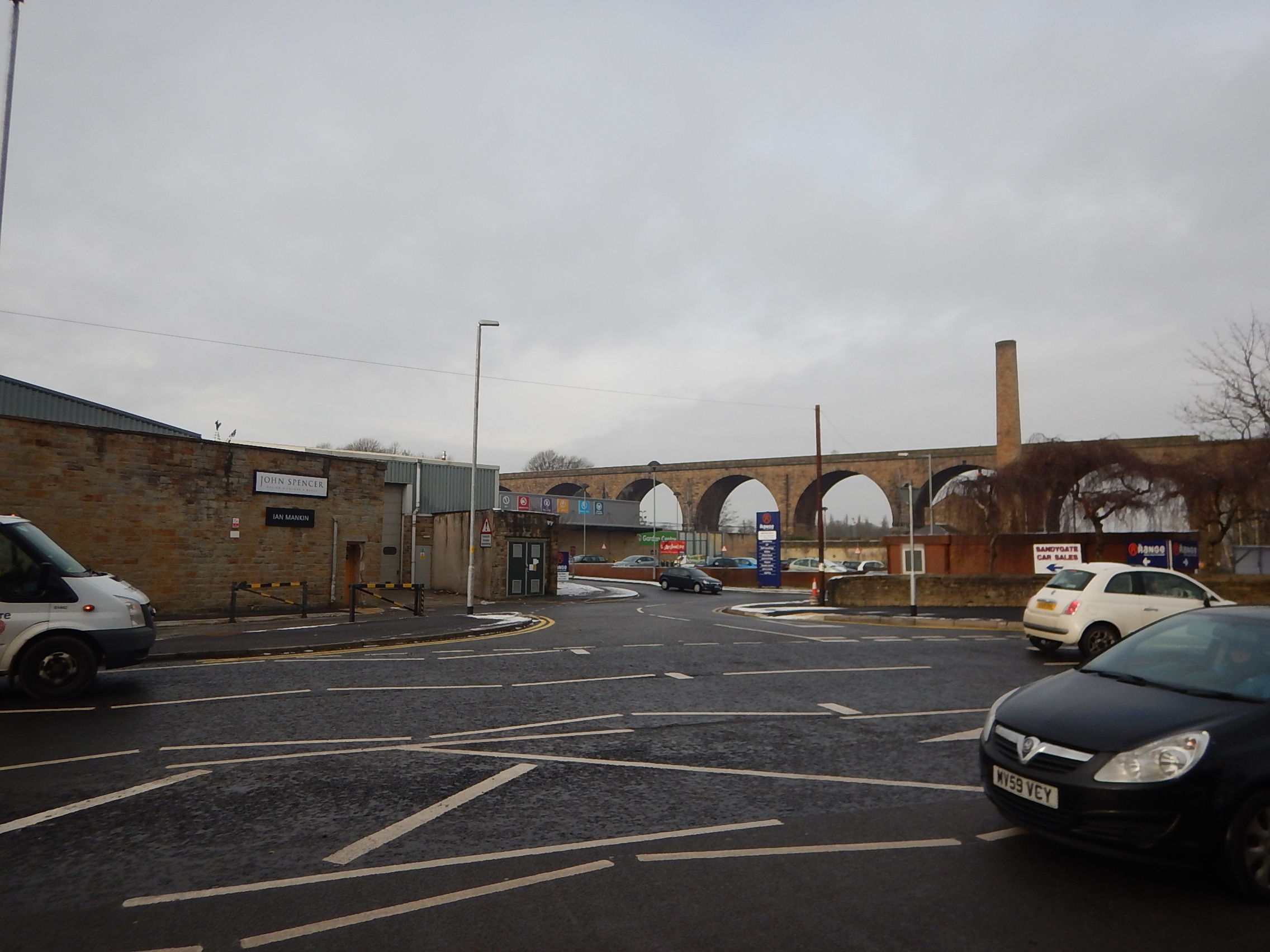
I can’t understand why, viaducts like these aren’t electrified using a third-rail.
- Third rail electrification works for most applications as well as overhead.
- Working on overhead electrification on a viaduct, is not a job for some.
- There is no visual intrusion with third rail.
- The power could only be switched on, when a train is connected.
On the other hand dual-voltage trains, that could switch quickly between systems at line speed would be needed.
Station Electrification
I also think that third-rail electrification can be used in stations where overhead electrification would be difficult or intrusive.
Battery,Bi-Mode And Hydrogen Trains
Train manufacturers are not stupid and want to increase their profits.
- Alstom are developing fleets of hydrogen trains.
- Bombardier are developing 125 mph bi-mode trains with batteries.
- CAF are developing battery and bi-mode trains.
- Stadler are developing trains with batteries and/or diesel power.
I suspect all these companies and others, see more trains can be sold, if innovative trains can run without the necessity of full electrification.
I also suspect many rail operators would prefer to spend money on shiny new trains, than on disruptive and ugly electrification.
Remember too, that batteries will improve.
Conclusion
I can see several techniques that could be applied to make electrification of some parts of the TransPennine routes.
Will Greater Anglia Fit Batteries To Their Class 755 Trains?
Greater Anglia have ordered the following Class 755 trains.
- 14 x three-car trains with two diesel engines in the power-pack
- 24 x four-car trains with four diesel engines in the power-pack
The power-pack would appear to have four slots, each of which could take.
- A V8 16-litre Deutz diesel that can produce 478 kW and weighs 1.3 tonnes.
- A battery of about 120 kWh, which would probably weigh about 1.2 tonnes.
I estimated the battery size , by using typical battery energy densities for a battery of similar weight to the diesel engine.
The KeolisAmey Wales Tri-Mode Flirts
The Tri-Mode Flirts ordered by KeolisAmey Wales can use either electric, diesel or battery power.
From the pictures it appears that these trains have the same basic structure as the Class 755 trains.
In the July 2018 Edition of Modern Railways, there is an article entitled KeolisAmey Wins Welsh Franchise.
This is said about the Stadler Tri-Mode Flirts on the South Wales Metro.
The units will be able to run for 40 miles between charging, thanks to their three large batteries.
So does this mean that these Flirts have just one Deutz diesel engine of 478 kW and three batteries in the four slots of the power-pack?
These trains will run between Penarth and Rhymney stations.
- I estimate about half the route will be electrified.
- Penarth to the electrification at Cardiff is under ten miles.
- The trains will work on battery power from Ystrad Mynach to Rhymney, which is ten miles up the hill.
- Coming down from Rhymney, Newton’s friend will give assistance.
This seems a challenging task, but it must be possible, even after an important rugby match in Cardiff.
I think it is true to say, that these Tri-Mode Flirts are no wimps.
Greater Anglia’s Flirts And Batteries
Four-Car Flirts
The four-car Class 755 trains don’t have a spare slot, as they have four engines.
I also suspect the four-car trains will tend to serve the longer routes or those with more passengers.
- Colchester and Peterborough
- Stansted Airport and Norwich
- Ipswich and Cambridge
- Lowestoft and London via Ipswich
- Norwich and Lowestoft
- Norwich and Great Yarmouth
Consider.
- These routes are partially-electrified.
- These routes don’t have challenging terrain.
- Except for Lowestoft and Great Yarmouth, all end stations are electrified.
- A short length of electrification could be installed at Lowestoft and Great Yarmouth stations.
I wonder if one of the diesel engines were to be replaced with a battery, by capturing and reusing the regenerative braking energy, this could improve the economics of running the services.
In Tri-Mode Stadler Flirts, I estimated the following.
- A four-car Tri-Mode Flirt will weigh around 150 tonnes.
- I will assume 250 passengers at 90 Kg. each with all their baggage, which gives a weight of 22.5 tonnes.
- This gives a total rain weight of 172.5 tonnes.
- The train is running at 100 mph.
This gives a kinetic energy of 48 kWh.
This would mean that a single 120 kWh battery could easily handle the regenerative braking and use the energy for the following purposes.
- Hotel power, which includes the power to run passenger and train systems.
- Traction power on sections, where low noise is important.
- Traction power, if there is overhead electrification failure.
- Short movements in depots and sidings.
I think that once Stadler have got their Tri-Mode Flirts working, that replacing one diesel with a battery in four-car Class 755 trains may be a sensible decision.
Lowestoft And London Via Ipswich
When the Class 755 trains are running services, there will be four direct trains per day from Lowestoft to London via Ipswich.
I will assume the following.
- There will also be four trains in both directions.
- An hourly service operates between Lowestoft and Ipswich
- Lowestoft to Ipswich will take the current 90 minutes.
- Greater Anglia will meet their promise of Ipswich to London in 60 minutes.
- The first train currently leaves Lowestoft just after five in the morning.
- The last train currently arrives at Lowestoft just before midnight.
For one train to do four round trips between five in the morning and midnight would need a round trip of around four hours and thirty minutes, which would mean that a time of around seventy minutes is needed between Ipswich and Lowestoft.
That is extraordinarily challenging.
But I think that could be Greater Anglia’s ultimate aim.
- There must be savings of a minute or two at each of the nine stations between Ipswich and Lowestoft.
- Some trains could be limited stop.
- The current maximum speed on the East Suffolk Line is just 55 mph and could probably be increased in places.
- The 100 mph Class 755 trains are quicker and probably accelerate and stop faster, than the current 75 mph Class 150 trains.
- Trains turn at Liverpool Street in under five minutes.
If it can be done, then the four trains per day between Lowestoft and London can be run with just one train.
Would batteries help the achievement of this aim?
They might do! But they would certainly improve the electrical efficiency and cut the amount of running of the diesel engines.
Three-Car Flirts
The three-car Class 755 trains have two spare slots, as they have two engines.
I would expect that the three-car trains would be used on the shorter routes and those with less passengers.
- Colchester Town and Sudbury
- Ipswich and Felixstowe
- Norwich and Sheringham via Cromer
To my mind the first two routes stand out for battery operation.
Ipswich and Felixstowe
Consider the following about the service between Ipswich and Felixstowe stations.
- The Felixstowe Branch is just over twelve miles long.
- There is one train per hour (tph) each way.
- It takes the current trains abut 26-29 minutes to do the journey.
- Currently, one train can provide the service.
In The New Trimley Freight Loop And Trimley Station, I talk about how a 1.4 km loop is being built to allow more freight trains to use the branch.
I also feel that there could be a second path in each hour for passenger trains, which would help reliability
But it also might make it possible to run a two tph service with two trains.
I also think, that if it was felt worthwhile, that this route could be run on battery power, charging at Ipswich and possibly with a short length of electrification in Felixstowe.
The advantages would be
- Diesel-free running.
- Less noise.
- The environmentally friendly trains may attract new passengers.
As with the trains on the South Wales Metro, they’d probably have one diesel engine and three large batteries.
Knowing the bicycle-friendly contours of the centre of Ipswich and Felixstowe as I do, the trains would probably need adequate capacity for bikes.
Colchester Town And Sudbury
I am sure that this new route between Colchester Town and Sudbury stations has been designed for a battery train.
Consider.
- A direct run between Colchester Town and Sudbury would probably take 45 minutes.
- Over half the route would be electrified.
- The Gainsborough Line is just eleven miles long.
- A silent battery train would be ideal for the rural route.
A Class 755 train could leave the Great Eastern Main Line at Marks Tey with full batteries, go both ways on the branch and then return to Colchester Town using the electrification.
Norwich And Sheringham Via Cromer
At thirty miles, the Bittern Line is probably too long for running totally on batteries.
But one battery handling regenerative braking would make the train more environmentally friendly.
Conclusion
Batteries would make the Class 755 trains more economical and environmentally-friendly to run, but with the exception of the Felixstowe and Sudbury branches, I suspect that the routes are too long for pure battery power.
I do believe that Greater Anglia knew about Stadler’s concept for fitting batteries on Class 755 trains before they ordered the trains.
As this opens up possibilities for the future and the ability to be more environmentally-friendly and fiscally efficient, I suspect it was a factor in their decision to buy the trains.
.
Will The Trains On High Speed Two Have Batteries For Regenerative Braking?
Regenerative braking is being fitted to most modern trains with an electric transmission.
So the proposed trains on High Speed Two will definitely use the technique.
But what will be done with the energy generated, when a train brakes?
It won’t be turned into heat, by passing the electricity through resistors on the train roof. It’s just not efficient!
Could it be returned through the electrification system to power nearby trains?
- I think this is unlikely as you can’t always be sure there is a nearby train.
- It also makes electrification more expensive.
So I’m pretty certain, that if possible, the energy created by braking will be stored on the train in batteries.
Modern high speed trains like Siemens Velaro have lots of powered axles, as this distributes the traction and braking forces along the train.
The AVE Class 103 is a member of the Velaro family and has these characteristics, which are given by Wikipedia.
- Eight cars, of which six are powered.
- Cab car length – 25.7 metres
- Intermediate car length – 24.2 metres
- Service speed – 310 kph
- Capacity – 404 passengers
- Train weight – 425 tonnes
Can this data be used to estimate the energy of a train on High Speed Two?
I will calculate the energy for an individual car.
- I know the cab cars will be heavier, but dividing the train weight by eight should give an estimate.
- So the car weight is 53.125 tonnes.
- Each car will have fifty passengers.
- So assuming each passenger weighs 90 Kg with bags etc, this gives a passenger weight of 4.5 tonnes.
- The line speed is 400 kph.
This gives a kinetic energy for a single car of 98.8 kWh.
A Bombardier Primove 50 kWh battery, which is built to power trams and trains, has the following characteristics.
- A weight of under a tonne.
- Dimensions of under two x one x half metres.
- The height is the smallest dimension, which must help installation under the train floor or on the roof.
I conclude that the train designer won’t have any problems sourcing batteries with sufficient capacity to handle the regenerative braking, that can be fitted into the train.
I would distribute the batteries along the train.
Thoughts On The New Tube For London
This article on the BBC is entitled East Yorkshire Factory Wins £1.5bn Tube Train Deal.
This is the second paragraph.
Transport for London (TfL) said the 94 trains will be designed and built by Siemens Mobility at its planned £200m facility in Goole.
But what else do we know of the design?
In 2013, I went to an exhibition of Siemens’ early design study, which I wrote about in Siemens’ View Of The Future Of The Underground.
These are the pictures I took at the time of the mock-up in the exhibition.
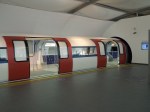
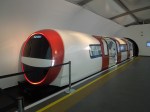
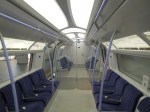
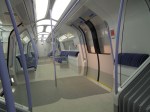
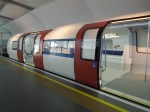
From my visit, I ascertained the following.
- The cross section appears taller and wider than the current deep-level trains.
- It has been designed so that someone of 2.6 metres can stand without stooping.
- The trains are designed to be articulated with a walk-through gangway.
- Access appears to be level between train and platform.
Will the new trains be like the mock-up?
This article on Rail Engineer is entitled London Underground Deep Tube Upgrade.
It gives some useful information and clues about the design of the New Tube for London (NTfL).
- The press release mentioned longer, walk through trains and air conditioning.
- An illustration with the press release shows all double doors.
- It is possible to provide an inter-car gangway by using an articulated configuration with more, shorter carriages.
- Bogies appear to be shared between cars.
- Bogie positioning allows all doors to be double.
- Rail Engineer’s view is that there are ten cars to a train.
- Most axles motored to deliver Victoria Line traction and braking performance.
- A 100 kph speed is quoted, as, opposed to 80 kph for current 2009 Stock on the Victoria Line.
- There might be a battery to power the train in case of power failure.
Taking all of these clues, what can I deduce?
Safe Platform Area
Before continuing, I will define what I mean as the safe platform area.
Usually on most Underground platforms without platform-edge doors, there are barriers at both ends of the platform beyond, which passengers are not allowed.
These limit the end of what I define as the safe platform area, where passengers can freely circulate and enter and leave the trains.
These pictures show the ends of various Underground platforms.
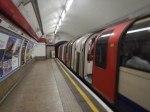
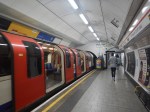
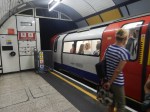
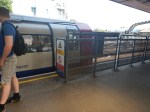
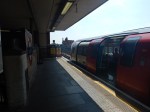
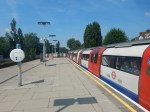


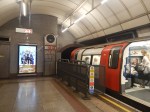


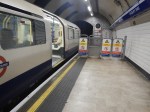

Each picture is identified with Station, Line, Direction and Train End.They all seem fairly similar.
Train Length And Car Length
The press release says the new trains will be longer.
The current length of the 1973 Stock on the Piccadilly Line is 106.8 metres.
This length is determined by the underground platforms, where if the driver stops, so that they can get off into the protected area, at the forward end of the platform, the rear end of the train is still in the tunnel.
The end passenger doors are of course in the safe area of the platform.
From looking at trains at Kings Cross station and judging it against the known length of a 1973 Stock train, I estimate that the length of the safe area is around ninety-five metres.
Looking at the picture of the cab in the mock-up, there is no driver’s door. So I will assume that drivers will access the cab from the passenger compartment. This probably means that the trains could be a little bit longer and still give access to all cars on the train.
The Rail Engineer article speculates that the trains will have ten sections of which two must have cabs on one end.
I think this will mean the following.
- There will be nine bogies between cars.
- There will be an end bogie under the cab of both driving cars.
- Each passenger car and the passenger section of the driving cars, will have two double doors on either side.
- I believe that the interiors of the passenger cars and the passenger sections of the driving cars will be virtually identical.
- The driving cab would be perhaps four metres long and could have a plant room behind it.
- The driving cab and its structure would probably incorporate a crush zone.
If the end pair of doors behind the driver’s cab, were locked out on underground platforms, this would not cause inconvenience to passengers. It certainly doesn’t now, when selective door opening is used at various stations on the Underground, like Baker Street station on the Sub-Surface Lines.
So perhaps, the safe platform area will go to the middle of the passenger compartment in the driving cars?
This will mean that.
- At some stations only one door can be used in the end cars.
- Access will always be available through the second door of the car or the two doors in the next car.
- The driver can easily access the cab, through the bulkhead door between the cab and passenger compartment.
This will also mean that there will be eight passenger cars and two half passenger sections from the driving cars in the safe platform area.
It should be noted that on the Victoria Line trains have always stopped automatically in the correct position, so this wouldn’t be difficult to arrange with automation of this function on the NTfL
Suppose the safe platform area can be stretched to 108 metres, this would mean.
- The passenger cars would be 12 metres long
- The passenger sections of the driving car would be 12 metres long.
- The driving cars would be perhaps 16 metres long.
This would give a total train length of 128 metres, with a passenger compartment that is 120 metres long.
Obviously, these lengths are speculative and others will work.
- 12.5 metre passenger cars would result in a 133 metre long train and would need a 112.5 metre safe platform area.
- 13 metre passenger cars would result in a 138 metre long train and would need a 117 metre safe platform area.
- 14 metre passenger cars would result in a 148 metre long train and would need a 126 metre safe platform area.
I do think the figures show, that if trains can overhang the safe platform area, then trains can be longer and train capacity can be increased.
It also shows, that if the safe platform area can be lengthened, so can the trains, which would further increase capacity.
But lengthening platforms, especially in tunnels can be very expensive!
Train Length On Other Lines
These trains must also fit the Bakerloo, Central, Jubilee, Northern and Waterloo & City Lines.
These lines all have different length trains.
- Bakerloo – 114 metres
- Central – 133 metres
- Jubilee – 126 metres
- Northern – 108 metres
- Waterloo & City – 66.5 metres
To further complicate matters, some stations on the Jubilee Line have platform-edge doors.
The Rail Engineer article states that the NTfLwill have ten articulated segments.
If all the passenger cars are identical, then a longer or shorter train should be able to be created by fitting an appropriate number of passenger cars between the two driving cars.
Train Length On The Waterloo & City Line
A five-car train with twelve metre segments and sixteen metre driving cars, would be 68 metres long and could fit the simple platforms of the Waterloo & City Line.
Train Capacity
The capacity of the 1973 Stock is 228 seated and 684 standing passengers.
The most modern deep tube trains on the Underground are the 2009 Stock of the Victoria Line.
These trains accommodate 252 seating and 1196 standing passengers in a train length of 133.3 metres, which is 10.85 passengers per metre.
A better comparison might be the S7 Stock of the Circle Line, as they have similar a seating arrangement to the NTfL.
These trains accommodate 865 sitting and standing passengers in a length of 117.5 metres, which is 7.36 passengers per metre
As the passenger section of the proposed design for the NTfL is 120 metres,
- This gives a capacity .of 1302 passengers using the 2009 Stock figure.
- This gives a capacity .of 883 passengers using the S7 Stock figure.
The actual figure is probably somewhere in the middle. I shall use 1100, which is an increase of twenty percent over the current trains.
Train Weight
Obviously, I don’t have the weight of the proposed NTfL.
A 2009 Stock train weighs 197.3 tonnes and is 133.3 metres long.
My guess for the length of a proposed NTfL is 128 metres.
The best I can come up with is to say that the NTfL is the same weight per metre as the 2009 Stock.
This gives the weight of the NTfL as 189.5 tonnes.
I would put an error of 25 tonnes on that figure either way.
Train Kinetic Energy
The value of the kinetic energy of the train is important, as it determines the energy that must be.
- Transferred to the train to accelerate it up to speed.
- Absorbed by the braking system, when the train stops.
Consider.
- The basic train weight is 189.5 tonnes.
- There are 1100 passengers.
- With bags, buggies and other things passengers bring on, let’s assume an average passenger weight of 90 kg, this gives an extra 99 tonnes.
- This gives a total train weight of 288.5 tonnes
If the train is travelling at 100 kph, this gives a kinetic energy of 30.9 kWh.
Regenerative Braking
The S Stock trains of the sub-surface lines have regenerative braking.
This saves energy and it will certainly be applied on the proposed NTfL.
The regenerative energy system on the S Stock returns the electricity through the electrification to power other trains nearby. This means a braking train effectively powers one that is accelerating.
The Rail Engineer article about the NTfL, says that most axles will be powered.
- This gives good acceleration and smooth regenerative braking.
- I would not be surprised to see a small battery of about 5 to 10 kWh in each car to handle the regenerative braking.
- When the train brakes the traction motors will pass their generated energy to the battery.
- On acceleration, the traction motors would use the energy stored in the battery.
One of the great advantages of using batteries with regenerative braking in tunnels, is that it reduces the amount of heat that a train emits into the trunnel.
Electrical System
I wouldn’t be surprised to see each car designed like a serial hybrid bus.
- The third-rail electrification and energy from regenerative braking would charge the battery.
- Each car might have its own pickup shoes.
- The battery would power the car’s traction motors and other systems.
An intelligent computer system would control each car and the whole train.
Effectively, the train could be a connected string of ten independently powered cars.
Think liberty horses with a ringmaster in charge.
Keeping The Tube Cool
This article on IanVisits is entitled Cooling The Tube – Engineering Heat Out Of The Underground.
Read it and you’ll find all the methods Transport for London are employing to make Underground travel better.
The first thing that must be done is to make sure that the proposed NTfL do not increase the heat input into the tunnels and trains to make the experience hotter
The train must be well-insulated, so that if the temperature in the train is at the required level for passengers, it tends to stay there and only change slowly.
The second thing that must be done is that the train should be designed so that it puts a minimum level of heat into the tunnels.
- Regenerative braking to batteries will help, as it will mean that braking should be heat-free and the train will be taking less traction current from the rails.
- An aerodynamic train will produce less heat from friction.
- Traction motors and other electrical systems will produce heat.
I suspect Siemens will look at every component of the train and heat production will be one of the criteria.
I also believe that the design of an intelligent air-conditioning system is important.
Suppose you are trying to use air-conditioning to cool a 30 °C train in a 30 °C tunnel. All you’ll do is heat the tunnel even more.
Take the Piccadilly, Jubilee and Central Lines, which all have surface sections at both ends.
So why not cool the trains on the surface to say 22 °C, before they enter the central tunnels?
- There will be no problem venting the heat to air.
- The outside air temperature on the surface, will probably be less than in the tunnels
- If the trains are well-insulated, this will help.
By the time the trains get to the other end of the tunnel, the train’s temperature will have risen and then the cycle is ready to start again.
Some trains spend thirty minutes or more running on the surface in a round trip of more than an hour.
Emergency Train Recovery Using Battery Power
If there is sufficient battery capacity, then this must be possible.
Conclusion
These trains could be very different than the trains they replace.

