Boralex Commissions BESS At Wind Farm In France In EU-Supported Demonstration Project
The title of this post, is the same as that of this article on Energy Storage News.
These two paragraphs outline the project.
Canada-based renewable energy firm Boralex has turned on a 3.3MWh battery storage unit attached to a wind farm in France.
The battery storage project has been installed at the site of the Plouguin wind farm, an 8MW generating facility in the Finistere department of Brittany, northwest France.
Note.
- The project was co-financed by the European Union through its European Regional Development Fund (ERDF).
- The project was launched to demonstrate the technical feasibility of a hybrid wind-plus-storage project.
- Boralex added in its announcement that the project will contribute to the stability of the French electricity grid.
There will be a lot of projects like this in the future.
This paragraph makes an interesting point about using batteries with solar and wind power.
Wind farms are less frequently hybridised with energy storage than solar PV because of the larger minimum project size and less predictable variability, with sharper peaks meaning heavier battery cycling and potentially faster degradation.
My control engineering knowledge and experience says that larger power sources and those that are highly variable will need batteries with more capacity for the same stability and quality of power output.
This sounds to me like a very good reason for developing larger and more affordable batteries, like those of Cheesecake Energy, Energy Dome, Gravitricity and Highview Power.
It also probably means that to stabilise several gigawatts of wind power, you need a very large amount of storage, that can only be provided by pumped storage hydroelectricity.
Conclusion
A very large amount energy storage is going to be needed.
Projects like these are essential to make sure we use them to their full possibilities.
New South Wales Plans Three Batteries
This article on Energy Storage News is entitled Shell Battery Project In New South Wales Would Add 1GWh Energy Storage To Growing Market.
The three batteries are.
- Shell – 500MW/1,000MWh BESS project in Wellington, in Central West NSW.
- Waratah Super Battery 700MW/1,400MWh transmission system “shock absorber”
- A proposed 500MW/2,000 MWh BESS from energy generator-retailer EnergyAustralia.
Note.
- All batteries appear to be lithium ion.
- This gives a total output of 1.7 GW and a total storage capacity of 4.4 GWh.
- The NSW government is targeting 12GW of renewable energy capacity by 2030.
- 3 GW of utility-scale wind and solar in development, construction, or already in operation, in the state.
The state seems to be making a good start.
New Octopus Energy Makes First Investment To Develop UK’s Largest Battery
The title of this post, is the same as that of this article on Renewable Energy Magazine.
This is the first paragraph.
Octopus Energy Group has launched its new renewables fund Octopus Energy Development Partnership (OEDP) which has just made its debut investment in renewables developer Exagen to build new green energy and rapidly grow the UK’s energy storage capacity.
These three paragraphs outline the deal with Exagen.
This latest multi-million pound deal sees OEDP take a 24 percent stake in Exagen, which is working on large-scale solar and battery facilities, partnering with farmers, landowners and local communities to build projects that help bring energy security.
This deal includes the option to purchase one of the UK’s largest batteries at 500 MW/1 GWh located in the Midlands, England, scheduled to be operational by 2027. This standalone battery would be the UK’s largest, and with the capacity to export the equivalent electricity usage of 235,000 homes in a single day. Batteries provide grid-balancing services by storing cheap green energy when it is abundant, and releasing it when it is needed.
As part of the agreement, OEDP has also acquired three solar farms with batteries on-site in the Midlands and North East of England, which Exagen is currently developing. The solar farms have a combined capacity of approximately 400 MW. Exagen already has 2 GW of solar and battery storage projects in their pipeline, which Octopus will be able to invest in once they’re ready to build.
I am intrigued about the 500 MW/1 GWh battery!
Will it be lithium-ion?
The largest lithium-ion battery in the world is currently the 400 MW/1.6 GWh battery at Moss Landing Power Plant in California, which offers more storage capacity, but less output than Exagen’s proposed battery.
Exagen’s battery needs to be operational by 2027, which means that there is almost five years for an alternative technology to be thoroughly tested.
Highview Power say this about their proposed CRYOBattery in Yorkshire, on their web site.
Highview Power’s second commercial renewable energy power station in the UK is a 200MW/2.5GWh facility in Yorkshire. This is the first of 18 sites for UK wide deployment strategically located to benefit from the existing transmission infrastructure.
A battery similar to Highview’s proposed battery in Yorkshire, would surely be big enough.
Exagen’s battery could be one of the eighteen mentioned on Highview Power’s web site.
As Highview are currently building their first commercial system at Carrington in Manchester and hope to commission it this year, there should be enough time to debug the design.
But there are other companies, who may have the capability to build a large enough battery in the timescale.
On the other hand, lithium-ion would be the conservative choice.
Expansion Plan To Take World’s Biggest Battery Storage Project To 3GWh Capacity
The title of this post, is the same as that of this article on Energy Storage News.
These are the first two paragraphs.
Plans to nearly double the output and capacity of the world’s biggest battery energy storage system (BESS) project to date have been announced by its owner, Vistra Energy.
The Texas-headquartered integrated utility and power generation company said it wants to add another 350MW/1,400MWh BESS to the Moss Landing Energy Storage Facility in California’s Monterey Bay.
The project is based at the Moss Landing Power Plant, which was once the largest power plant in the state of California, with a generation capacity of 2560 MW.
There appear to be three phases.
- Phase 1 is 300MW/1,200MWh and went online at the end of 2020
- Phase 2 is 100MW/400MWh and went online in August 2021.
- Phase 3 will be 350MW/1,400MWh.
This gives a maximum power output of 750 MW and prospective total capacity of 3 GWh. At full power, the battery could supply 750 MW for four hours.
For comparison, the two Scottish batteries I talked about in Amp Wins Consent For 800MW Scots Battery Complex, have a combined output of 800 MW and a total capacity of 1600 MWh, which would give a full power run of two hours.
Could the difference be that Scotland has 9.3 GW of installed windpower, whereas the much larger California has only 6 GW?
Both Scotland and California also have some pumped storage power stations.
- Drax Group who own the 7.1 GWh Cruachan power station, plan to increase its generating capacity from 440MW to 1040MW.
- California has two larger stations at Castaic and Helms.
- After writing about the Western HVDC Link in Amp Wins Consent For 800MW Scots Battery Complex, I wonder if when the wind is blowing in Scotland and it isn’t in Wales, that electricity can be exported from Scotland to Wales for storage.
This all shows the complex integrated nature of electricity networks.
Amp Wins Consent For 800MW Scots Battery Complex
The title of this post, is the same as that of this article on renews.biz.
These are the first two paragraphs.
Canadian storage player Amp Energy has revealed that its 800MW battery portfolio in Scotland has secured planning consent.
The portfolio is due to be operational in April 2024 and will comprise two 400MW battery facilities, each providing 800 megawatt-hours of energy storage capacity.
Some other points from the article.
- The two facilities will be located at Hunterston and Kincardine.
- They will be the two largest grid-connected battery storage facilities in Europe.
- The two batteries will be optimised by Amp Energy‘s proprietary software.
This Google Map shows the Hunterston area.
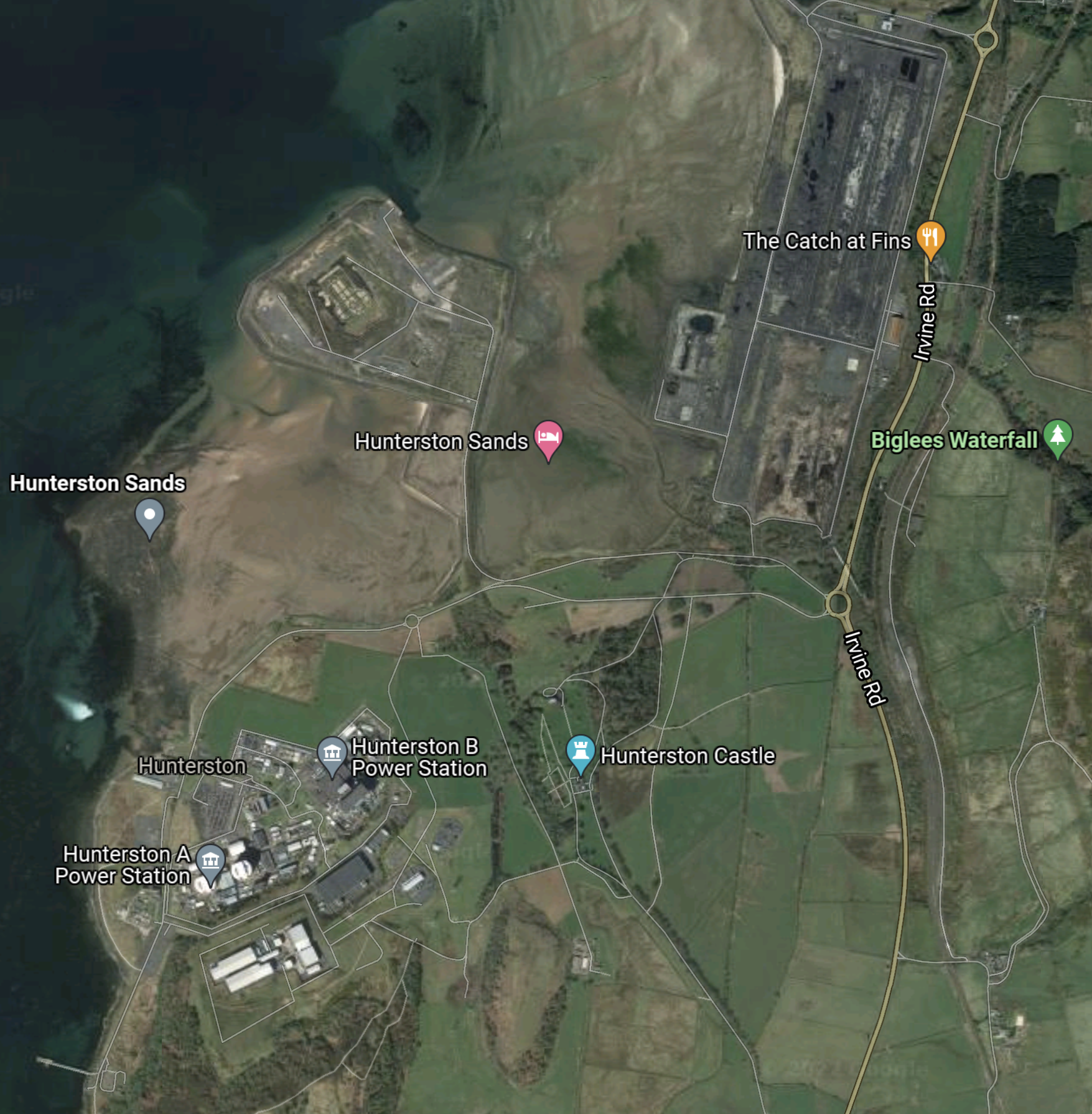
Note.
- The Hunterston A and Hunterston B nuclear power stations, which are both being decommissioned.
- Hunterston B only shut down on the 7th of January, this year.
- There is also a large brownfield site in the North-East corner of the map.
This second Google Map shows the South-East corner of the nuclear power station site.
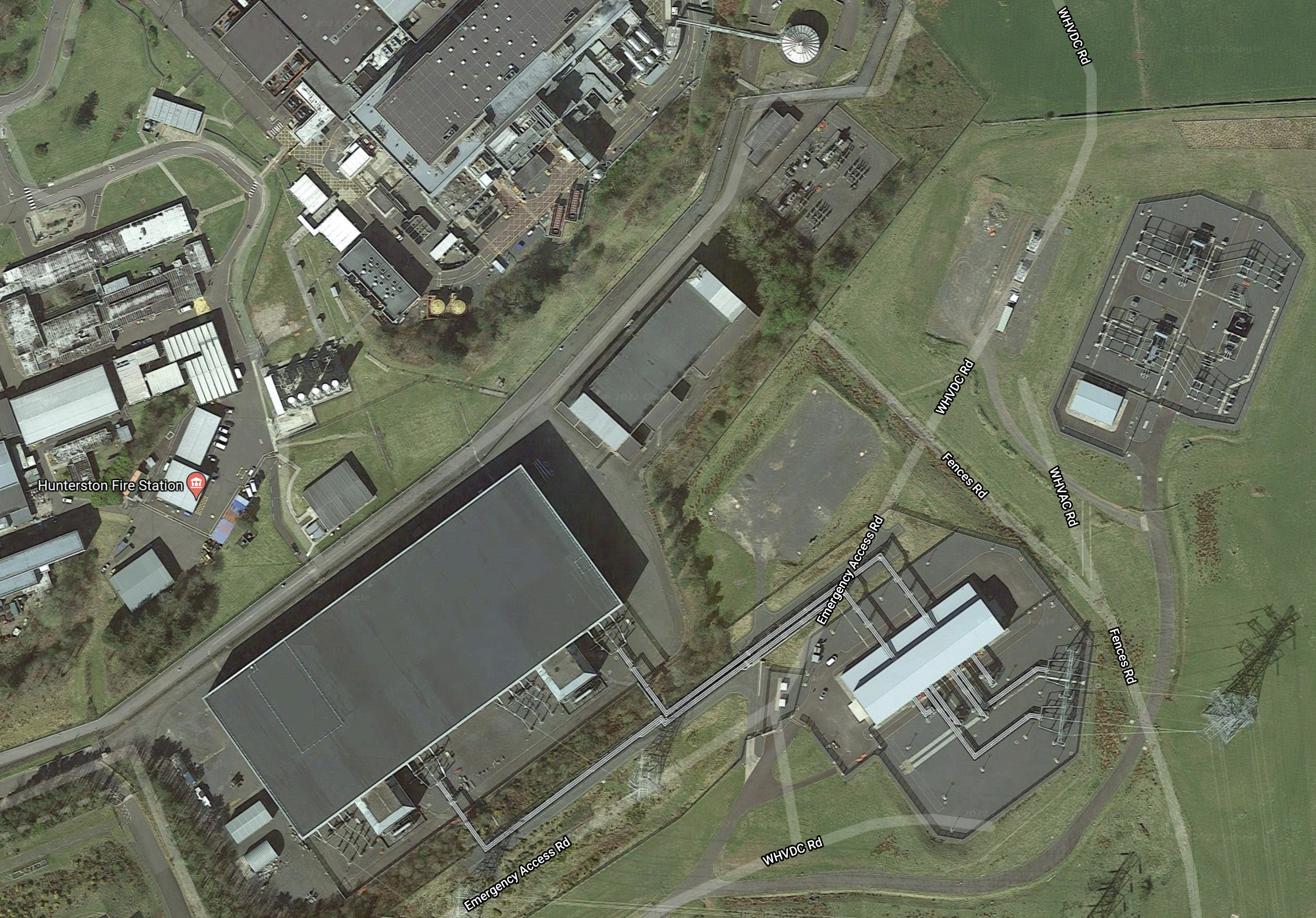
It’s certainly got a good grid connection.
But then it had to support.
- The Hunterston A nuclear power station rated at 360 MW.
- The Hunterston B nuclear power station rated at 1.2 GW.
- The Western HVDC Link, which is an interconnector to Connah’s Quay in North Wales, that is rated at 2.2 GW.
I’m sure that National Grid has a suitable socket for a 400 MW battery.
This Google Map shows the Kincardine area.
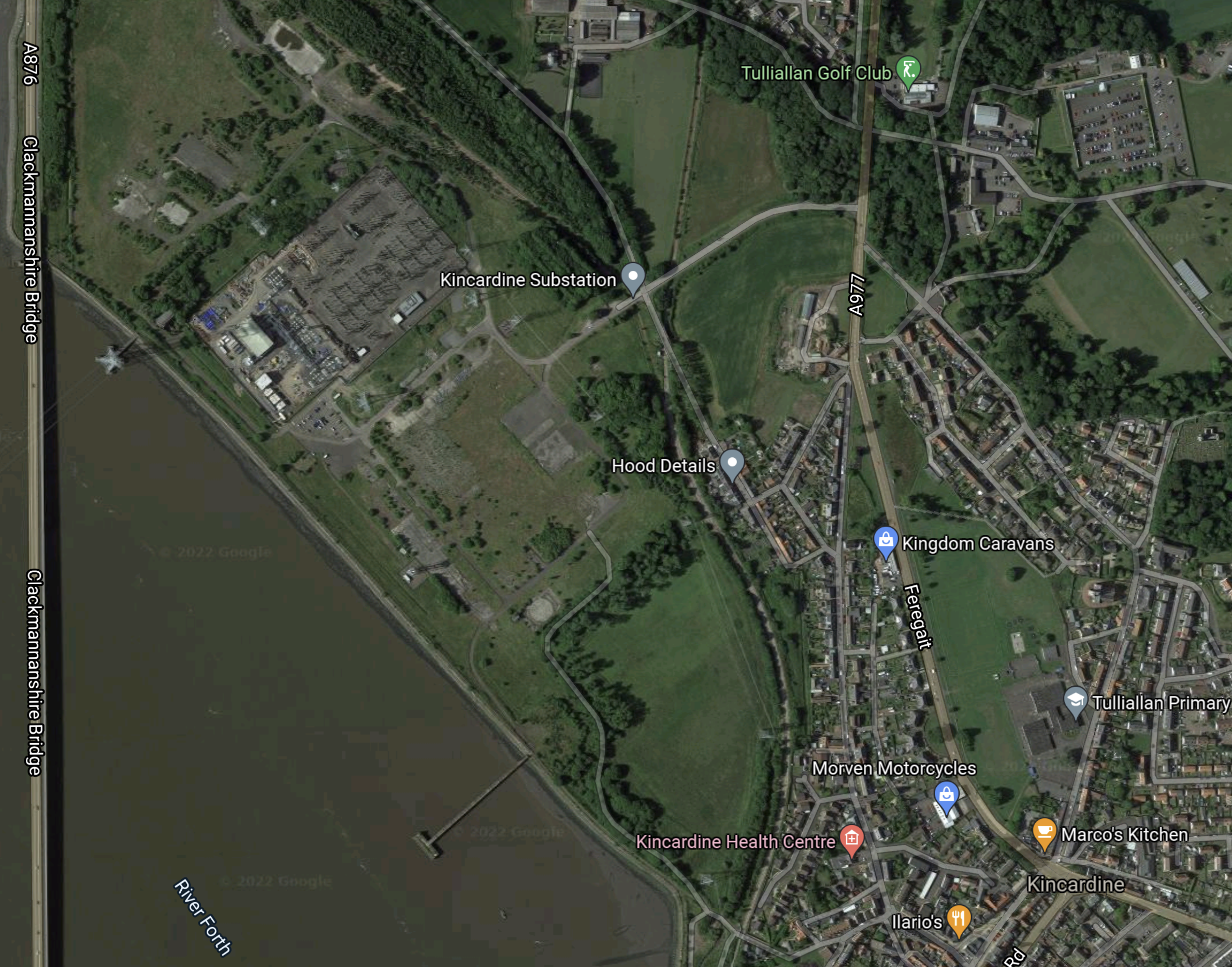
Note.
- The Clackmannanshire Bridge down the Western side of the map.
- The Kincardine Substation to the East of the bridge close to the shore of the River Forth.
- The 760 MW Kincardine power station used to be by the substation, but was demolished by 2001.
As at Hunterston, I’m sure that National Grid could find a suitable socket for a 400 MW battery.
Amp Energy’s Philosophy
As a trained Control Engineer I like it.
- Find a well-connected site, that can handle upwards of 400 MW in and out.
- Put in a 800 MWh battery, that can handle 400 MW in and out.
- Optimise the battery, so that it stores and supplies electricity as appropriate.
- Throw in a bit of artificial intelligence.
Old power station sites would seem an ideal place to site a battery. Especially, as many demolished coal, gas and nuclear stations are around 400-600 MW.
It should be noted that Highview Power are building a 50 MW/400 MWh CRYOBattery on an old coal-fired power station site in Vermont.
The Western HVDC Link
I mentioned earlier that the Northern end of the Western HVDC Link, is at Hunterston.
The Wikipedia entry for the Western HVDC Link, says this about the link.
The Western HVDC Link is a high-voltage direct current (HVDC) undersea electrical link in the United Kingdom, between Hunterston in Western Scotland and Flintshire Bridge (Connah’s Quay) in North Wales, routed to the west of the Isle of Man.[2] It has a transmission capacity of 2,250 MW and became fully operational in 2019.
The link is 262 miles long.
This Google Map shows the Connah’s Quay area in North Wales.
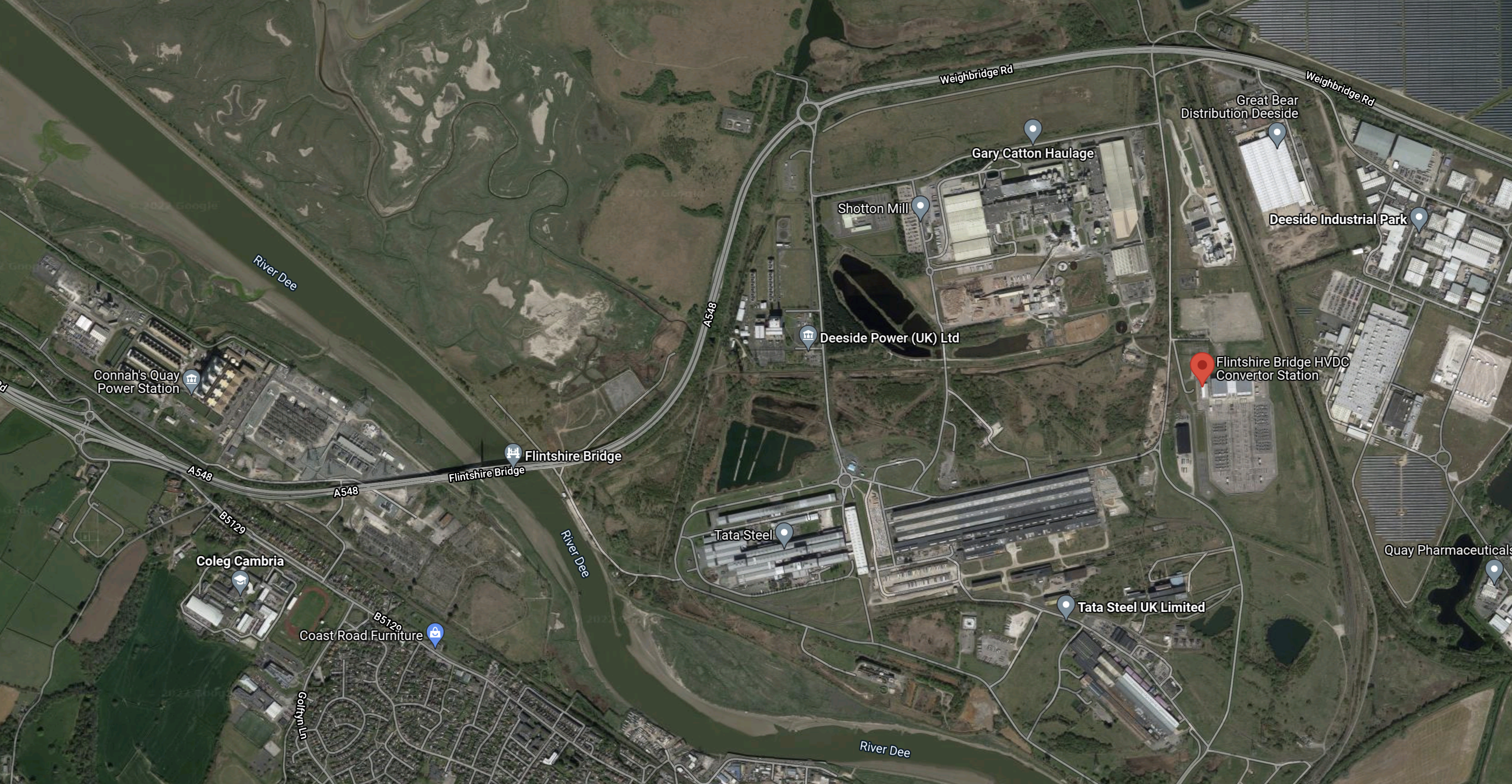
Note.
- The red arrow indicates the Flintshire Bridge HVDC converter station, which is the Southern end of the Western HVDC Link.
- The Borderlands Line between Liverpool and Chester, runs North-South to the East of the convertor station.
- To the East of the railway are two solar farms. The Northern one is Shotwick Solar Park, which at 72 MW is the largest solar farm in the UK.
- To the West of the converter station, just to the East of the A 548 road, is the 498 MW Deeside power station.
- Follow the A548 road to the West and over the River Dee, the road passes South of the 1420 MW Connah’s Quay Power station.
- The two power stations burn gas from Liverpool Bay.
- There are a lot of wind turbines along the North Wales Coast and Liverpool Bay.
The map also shows a lot of high electricity users like Tata Steel.
I can certainly see why the Western HVDC Link was built to connect Scotland and North Wales.
- There is a lot of renewable energy generation at both ends.
- There are heavy electricity users at both ends.
- The Scottish Central Belt is at the North.
- Greater Merseyside is at the South.
The Western HVDC Link is an electricity by-pass, that must have avoided expensive and controversial construction on land.
I wouldn’t be surprised to see another 400 MW/800 MWh battery at the Southern end.
Conclusion
The Canadians seem to have bagged two of the best battery sites in Europe.
- Both sites would appear to be able to handle 400 MW, based on past capabilities.
- There is lots of space and extra and/or bigger batteries can probably be connected.
- Scotland is developing several GW of wind power.
I can see Amp Energy building a series of these 400 MW sites in the UK and around Europe.
This is the big news of the day!
Catalyst Capital Makes First Move In GBP 300m Battery Storage Strategy
The title of this post, is the same as that of this article on Renewables Now.
This is the first paragraph.
Fund manager Catalyst Capital has acquired a site to build a 100-MW battery in Yorkshire, northern England, in the first of a series of planned deals under a GBP-300-million (USD 406.1m/EUR 358.9m) strategy to develop diversified UK battery energy storage systems (BESS) facilities.
£300 million, says to me that the finance industry, now finds battery storage to be a worthwhile investment.
Skelton Grange Power Station
This Google Map shows the location of the Skelton Grange power station site, where the battery will be developed.
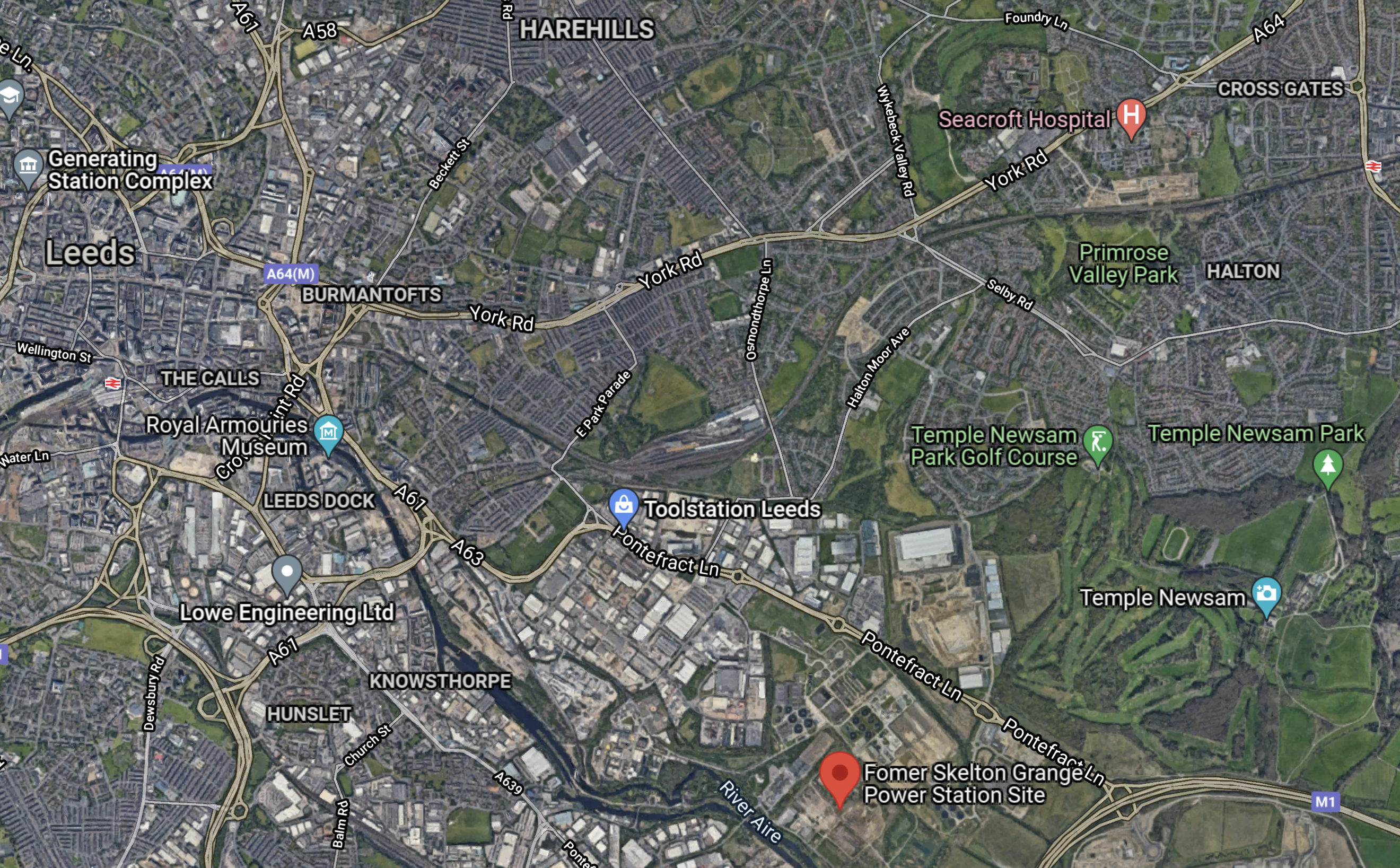
And this second Google Map shows the site in more detail.

Note that there is still a sub-station on the site.
The article states that planning permission was received in 2021 and they hope to have the facility on-line in the first quarter of this year.
That appears quick to me. Is it because the electrical connection already in situ?
It should also be noted, that the battery output of 100 MW is much less than that of the former coal-fired power station in the mid-1980s, which was at last 480 MW.
I also wonder, if the site could host a hydrogen fuelling station for buses.
- It is not far from the centre of Leeds.
- It has a good connection to the National Grid.
- An electrolyser like the one built by ITM Power at Tyseley Energy Park uses 3 MW of electricity to produce around 1.5 tonnes of hydrogen per day.
I also feel that the site could host a wind turbine up to about 10 MW.
Conclusion
Catalyst Capital seems to have made a big entry into the market. They won’t be the last to do this, as the returns are there and the battery storage is needed.
 The Anonymous Widower