London Bridge And West Croydon By London Overground
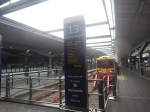
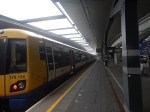
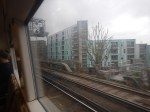
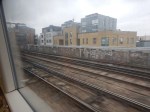
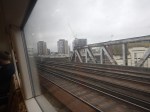
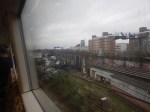
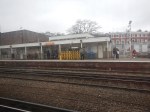
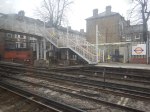
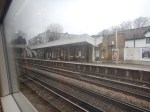
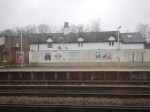
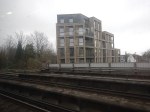
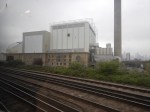
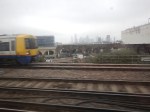
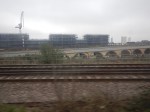
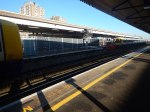
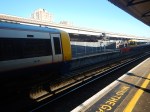
This morning, I took a London Overground train between London Bridge and West Croydon stations.
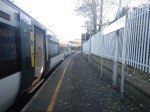
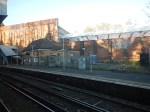
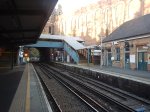
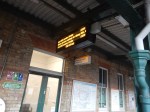
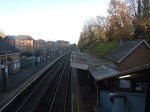
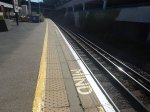
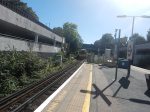
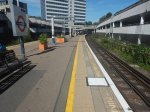
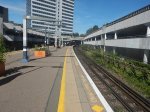
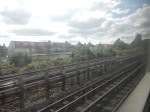
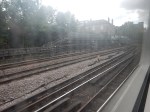
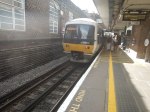
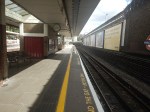
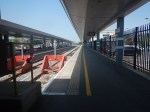
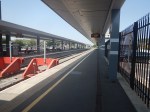
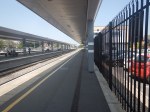
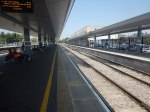
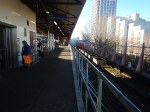
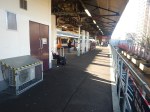
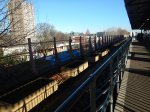
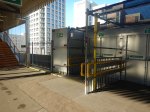
I took these pictures on the route.
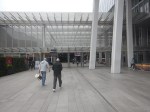
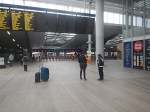
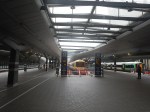
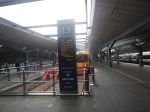
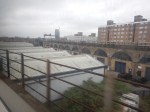
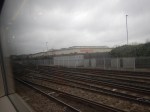

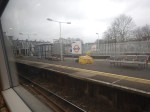
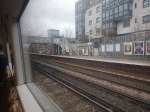
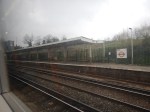
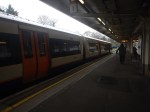
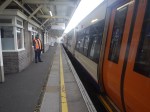
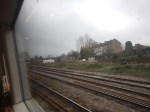

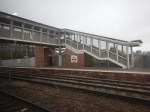
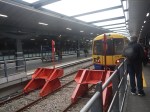
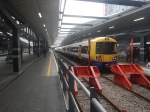
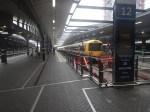
Note.
- It appears there are no London Overground services running through the Thames Tunnel.
- The only service in South London is two trains per hour (tph) between London Bridge and West Croydon stations.
- The service seemed to be working well, with no significant delays.
- The 10:24 from London Bridge wasn’t very busy, but the return at 11:03 was very crowded and there were no spare seats.
It was certainly better than a Rail Replacement Bus.
These are some further thoughts.
Could West Croydon Station Handle Six Trains Per Hour?
- West Croydon station has a bay platform 1, that handles all the London Overground services.
- Typically, a train leaves the platform about 8-9 minutes after it arrives.
- 6 x 8 is 48 minutes.
It would be tight, but possible.
Before the bay platform was extended, trains used to reverse using a turnback facility to the West of the station, which I described in How Trains Reverse At West Croydon. As this facility appears to be still there, it can probably act as a substitute bay platform for London Overground trains, if the service gets disrupted.
If in the future, it was decided to have a service, which ran say 4 tph to Highbury & Islington station and 2 tph to London Bridge station, I believe this would be possible.
Were Transport for London Training Drivers?
One or possibly both of the trains, that I rode had two drivers.
This is not unusual, but one of the drivers was wearing a Southern Day-glo vest.
So was he instructing the London Overground driver on the route, that the London Overground, doesn’t normally use?
Charging Battery-Electric Trains At London Bridge Station
This Google Map shows the roof of London Bridge station over platforms 10-15.

Note.
- The three gaps in the roof are above platforms 10-15.
- There are roof supports over the tracks.
- Platforms 10 and 11 are at the top, platforms12 and 13 are in the middle and platforms 14 and 15 are at the bottom.
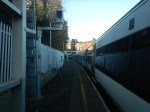
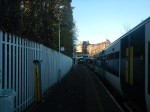
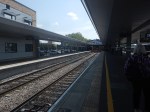
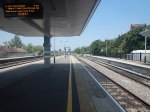
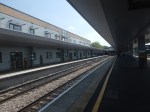
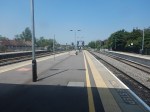
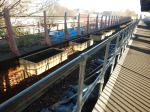
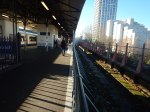
My train used Platform 13 as these pictures show.
Note the roof supports over the tracks.
If the Uckfield or another service needed to be run by battery-electric trains, the trains might need to be charged at London Bridge station, as there may be issues charging using third-rail electrification.
These pictures show rigid overhead conductor rails over the Thameslink platforms at St. Pancras station.
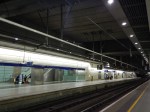
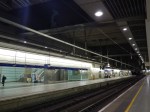
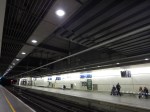
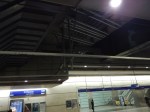
Could rails like these be installed over some or all of the bay platforms to London Bridge station, so that battery-electric trains could be charged?
- If the battery-electric trains were converted Class 377 or Class 387 trains, these are available as dual-voltage.
- Uckfield services use Platform 10 at London Bridge station.
- A round trip to Uckfield station is only 2 x 24.7 miles or 49.4 miles of unelectrified track.
- Short lengths of 25 KVAC overhead electrification could be installed at Uckfield station and the bay platform at Oxted station if needed.
A dual-voltage battery-electric train with a range of say just over 50 miles could handle Uckfield services.
Jobs, Homes And The Economy: Bakerloo Line Upgrade And Extension To Be Transformational For London
The title of this post, is the same as that of this article on Rail Technology Magazine.
This is the sub-heading.
The government has been urged to use the upcoming spring budget to commit to upgrading and extending the Bakerloo line after a new impact assessment found its effects could be transformational.
These three paragraphs introduce the article.
The impact assessment – commissioned by Central London Forward, a partnership of 12 central London boroughs – finds that such a move would boost the economy, unlock new homes, create new jobs, and more.
The upgrade would centre around new trains and signalling, while the extension would take the terminus to Lewisham in the first phase, and eventually to Hayes – adding 14 new stations.
The impact assessment concludes that the extension and upgrade of the Bakerloo line would create 9,700 jobs, 190,000 square metres of commercial floorspace, as well as generate £1.5bn of GVA.
The article is a must-read and eloquently puts the case for the Bakerloo Line Extension.
I have a few thoughts.
A Loop At Brixton For The Victoria Line
This has been proposed and the Wikipedia entry for the Victoria Line has this paragraph.
Proposals have been made to extend the line one stop southwards from Brixton to Herne Hill, a significant interchange in south London providing access to Kent, Blackfriars, London Bridge and Sutton. The latter station would be on a large reversing loop with a single platform removing a critical capacity restriction eliminating the need for trains to reverse at Brixton and provide a more obvious route for passengers who look for the nearest tube station before any other transport options.
I like this idea.
- It will make it easier to run the full frequency of 33 trains per hour (tph) between Brixton and Walthamstow Central stations.
- Loops at Heathrow and Liverpool seem to work very well.
- A single-platform with platform-edge doors has a high level of safety.
- Only one tunnel boring machine (TBM) would be needed.
- Large lifts could be used between the surface and the platform.
- It is a more affordable option.
But perhaps most importantly, I am sure, the loop could be built whilst other services at Brixton and Herne Hill were running almost without disruption, as services did at Kennington, whilst the Battersea Extension of the Northern Line was built.
A Loop At Elephant And Castle For The Bakerloo Line
I have spent forty years involved in project management, writing software for project managers and generally listening to some of the thoughts and experiences of some of the best engineers from all over the world.
One common thread, which is best illustrated by how the size of lift possible increased in the North Sea in the 1970s, is that as time has progressed machines have got bigger and more capable, and the techniques of using them has improved immeasurably.
The Crossrail tunnel boring machines (TBM) make those used on the Jubilee Line extension or the Channel Tunnel look like toys. But not only are the TBMs bigger and faster, they have all the precision and control to go through the eye of the smallest needle.
If we look at the proposals for the Bakerloo Line Extension, there have been several differing ideas. Some envisage going under Camberwell and in others the trains terminate on the Hayes line.
Transport for London (TfL), obviously know the traffic patterns, but do we really want to take the chance of say connecting the Hayes line to the Bakerloo and then finding that it’s not the best solution?
What we should do is augment the services in the area, by providing a good alternative transport route, that links to some of the traditional rail lines to give even more flexibility. We certainly shouldn’t repeat the grave mistake that was made at Brixton in the 1960s by not connecting the Victoria line to the surface rail lines.
This is Transport for London’s indicative map of the extension.

I have reason to believe that the Northern Line Extension may be being built as an extension to the Kennington Loop.
So could we design the Bakerloo Line Extension as a loop starting and finishing at Elephant and Castle calling at important stations?
A possible route could be.
- Elephant and Castle – Interchange with Northern Line and National Rail including Thameslink
- Old Kent Road 1 – Proposed on Map
- Old Kent Road 2 – Proposed on Map
- New Cross Gate – Interchange with London Overground and National Rail
- Lewisham – Interchange with Docklands Light Railway and National Rail including Hayes Line
- Catford Bridge – Interchange with Catford station and National Rail including Hayes Line and Thameslink
- Peckham Rye – Interchange with London Overground and National Rail
- Camberwell – Interchange with National Rail including Thameslink
- Elephant and Castle
The advantages of this simple design are.
- The tunnel would be excavated in one pass by a single TBM.
- The line could be deep under any existing infrastructure.
- Most stations would be simple one-platform affairs, with perhaps only large lifts and emergency stairs, to give unrivalled step-free access for all from the street to the train. Surely lifts exist, that are large and fast enough to dispense with escalators.
- For safety, passenger convenience and flows, and other reasons, the stations could have two entrances, at opposite ends of the platform.
- The simple station entrances would be much easier to position on the surface, as they wouldn’t need to be much bigger than the area demanded by the lifts.
- A single loop would only need half the number of platform edge doors.
- At stations like New Cross Gate, Lewisham, Catford and Peckham Rye the lifts would surface within the confines of the existing surface stations.
- The route has interchanges with the Brighton Main Line, East London Line, Hayes Link, Thameslink and other services, so this would give lots of travel possibilities.
- Trains do not need a terminal platform, as they just keep going on back to Elephant and Castle.
- The loop would be operationally very simple, with no points to go wrong. TfL have aspirations to run twenty-seven trains per hour on the Bakerloo and a simple reversing loop , which would mean the driver didn’t have to change ends, must certainly help this. It would probably be a lot more difficult to get this capacity at the northern end of the line,where Harrow and Wealdstone doesn’t have the required capacity and the only possibility for a reversing loop would be north of Stonebridge Park.
- Elephant and Castle would need little or no modification. Although it would be nice to have lifts to the Bakerloo Line.
- Somewhere over two billion pounds has been quoted for the extension. A single loop with simple stations must be more affordable.
The main disadvantage is that the loop is only one-way.
But making even part of the loop two-way would create all the operational difficulties of scheduling the trains. It would probably be better, less costly and easier to make the trains go round the loop faster and more frequently.
But if a passenger went round the loop the wrong way and changed direction at Elephant and Castle that would probably only take a dozen minutes or so.
Alternatively, I’m sure some New Routemasters would step up to the plate and provide service in the other direction between the stations.
Future Rolling Stock For The Bakerloo Line
This has a section in the Wikipedia entry for the Bakerloo Line, where this is said.
In the mid 2010s, TfL began a process of ordering new rolling stock to replace trains on the Piccadilly, Central, Bakerloo and Waterloo & City lines. A feasibility study into the new trains showed that new generation trains and re-signalling could increase capacity on the Bakerloo line by 25%, with 27 trains per hour.
In June 2018, the Siemens Mobility Inspiro design was selected.[ These trains would have an open gangway design, wider doorways, air conditioning and the ability to run automatically with a new signalling system.[35] TfL could only afford to order Piccadilly line trains at a cost of £1.5bn. However, the contract with Siemens includes an option for 40 trains for the Bakerloo line in the future. This would take place after the delivery of the Piccadilly line trains in the late 2020s.
A loop from Elephant and Castle with a train every 2¼ minutes, is not going to be short of passengers.
The Catford Interchange
Catford and Catford Bridge stations are not far apart.
In An Opportunity At Catford, I talked about what could be done to create a full step-free interchange, which could be connected to the Bakerloo Line loop underneath.
Would It Be Possible For The Bakerloo And Watford DC Lines To Use The Same Trains?
I answered this question in a post with the same name and this was my conclusion.
A common fleet used by the Bakerloo and Watford DC Line would appear to give advantages and it has been done successfully before.
But what the Bakerloo Line, the Watford DC Line, the Abbey Line and the Bakerloo Line Extension need is a good dose of holistic design.
The current trains on the Watford DC Line would be moved to the London Overground. They could be ideal for the future West London Orbital Railway.
Would There Be Advantages In Creating The West London Orbital Railway And Extending The Bakerloo Line As One Project?
Consider.
- The two lines will have an interchange station at Harlesden, which will need to be rebuilt.
- The current trains on the Watford DC Line could be cascaded to the West London Orbital Railway.
- As new trains are delivered to the Piccadilly Line, some of the current trains could be cascaded to the Bakerloo Line.
- Major work for the Bakerloo Link Extension includes a new tunnel, updated signalling and at least seven underground stations.
- Major work for the West London Orbital probably includes track refurbishment, new signalling and updated stations.
I believe that with good project management, that if these two lines were to be created together, this would be advantageous.
Conclusion
I have only outlined how the two projects might be done together.
But I am absolutely certain, that someone with full knowledge of both projects could build the two at a very affordable cost.
Overground To London Bridge Under Consideration
The title of this post, is the same as that of a short article in the December 2023 Edition of Modern Railways.
This is the text of the article.
Transport for London is considering introducing London Overground services between Crystal Palace and London Bridge to help relieve overcrowding on the Sydenham corridor during the morning peak.
The move is one of two options outlined in a response to Lewisham’s Public Transport Liason Committee meeting on 4 October. The other is operating additional services on the existing route via the East London Line to Dalston Junction/Highbury & Islington. TfL acknowledges the London Bridge service would ‘represent a new routing for London Overground services that would necessitate significant changes to operational arrangements and driver testing’ and therefore further work is required ‘to establish the feasibility and business case for this change.’ There are no timescales for the implementation of either option.
The overcrowding follows the reduction by Govia Thameslink Railway of its Southern service to two trains per hour last September, when it replaced its East Croydon to London Bridge via Forest Hill stopping service with a Victoria to London Bridge via Forest Hill stopping service. In its response to the committee, GTR says the context to these changes is ‘the continued need to respond to the gap between our costs and revenues’, which it says is in the region of £15 million a year, with both demand and revenue having stabilised at around 80 % of pre-pandemic levels. It says its aim is to make ‘the most efficient use of the resources available to us,’ with the Victoria to London Bridge service designed to provide capacity for journeys to both stations’.
GTR says the current service has sufficient capacity and is lightly loaded outside peak times, and that while it will continue to keep passenger and feedback under review an increase from two to four trains per hour would require an increase in funding.
These are my thoughts.
Transport for London’s Long Term Plans
Plans exist to increase the frequency on various London Overground services and this graphic sums up what was planned a few years ago.
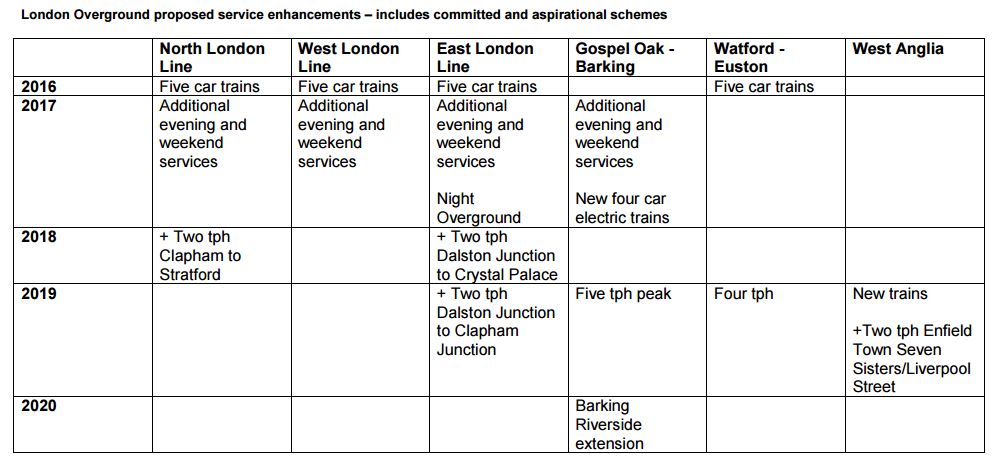
Note the extra two trains per hour (tph) between the following stations.
- Clapham Junction and Stratford
- Dalston Junction and Crystal Palace
- Dalston Junction and Clapham Junction
- Enfield Town and Liverpool St. via Seven Sisters
I think only Route 1 services have been increased.
I know signalling updates are holding up the extra trains on the East London Line, but are more trains needed to fully implement the extra services?
- Routes 2 and 3 services will need Class 378 trains because of the tunnel and these would be transferred from the North London Line.
- Route 4 would need Class 710 trains, as the service already uses them.
So there may be a need for more Class 710 trains.
This plan sees another two trains per hour (tph) running between Dalston Junction and Crystal Palace, which would help to reduce Lewisham’s overcrowding.
Would A London Bridge And Crystal Palace Service Be Easier To Implement?
It looks like the extra Dalston Junction and Crystal Palace services have been held up by two possible reasons.
- The required signalling update on the East London Line, that is needed to increase Crystal Palace and Clapham Junction services has not been performed.
- There are not a sufficient number of Class 378 trains to run the service through the Thames Tunnel. These will be released by running more Class 710 trains on the North London Line.
If two tph were to be run between London Bridge and Crystal Palace, this service would have these advantages.
- The train paths are available.
- The service would not be going through the Thames Tunnel, so the signalling upgrade would not be needed and the trains would not need to be able to evacuate passengers in the tunnel.
- The service could be run by any suitable third-rail trains.
- The service could be run by any length of train, that would fit all the platforms.
I believe the service could be run by eight-car trains to really get a hold on the current overcrowding.
How Many Trains Would Be Needed?
Looking at other services between London Bridge and Crystal Palace, I believe that the journey time would be about 24 minutes.
If the service were run efficiently, I suspect two trains would be needed to provide the required service of two tph.
An eight-car service would required four x four-car trains.
What Trains Could Be Used?
If the numbers are available, then third-rail versions of both London Overground’s Class 378 and Class 710 trains would be suitable.
But this would probably mean a number of Class 710 trains to be manufactured by Alstom. This would not be a short-term solution.
In Liverpool last week, I rode in a Class 319 train and these could be an interesting stop-gap.
- Several will soon be available as West Midlands Trains renews its fleet.
- They are already fitted with third-rail gear.
- They are 100 mph trains.
- Drivers seem to like them.
I believe they could fill in until more Class 710 trains were available.
Crystal Palace Station
This Open RailwayMap shows the platform layout at Crystal Palace station.
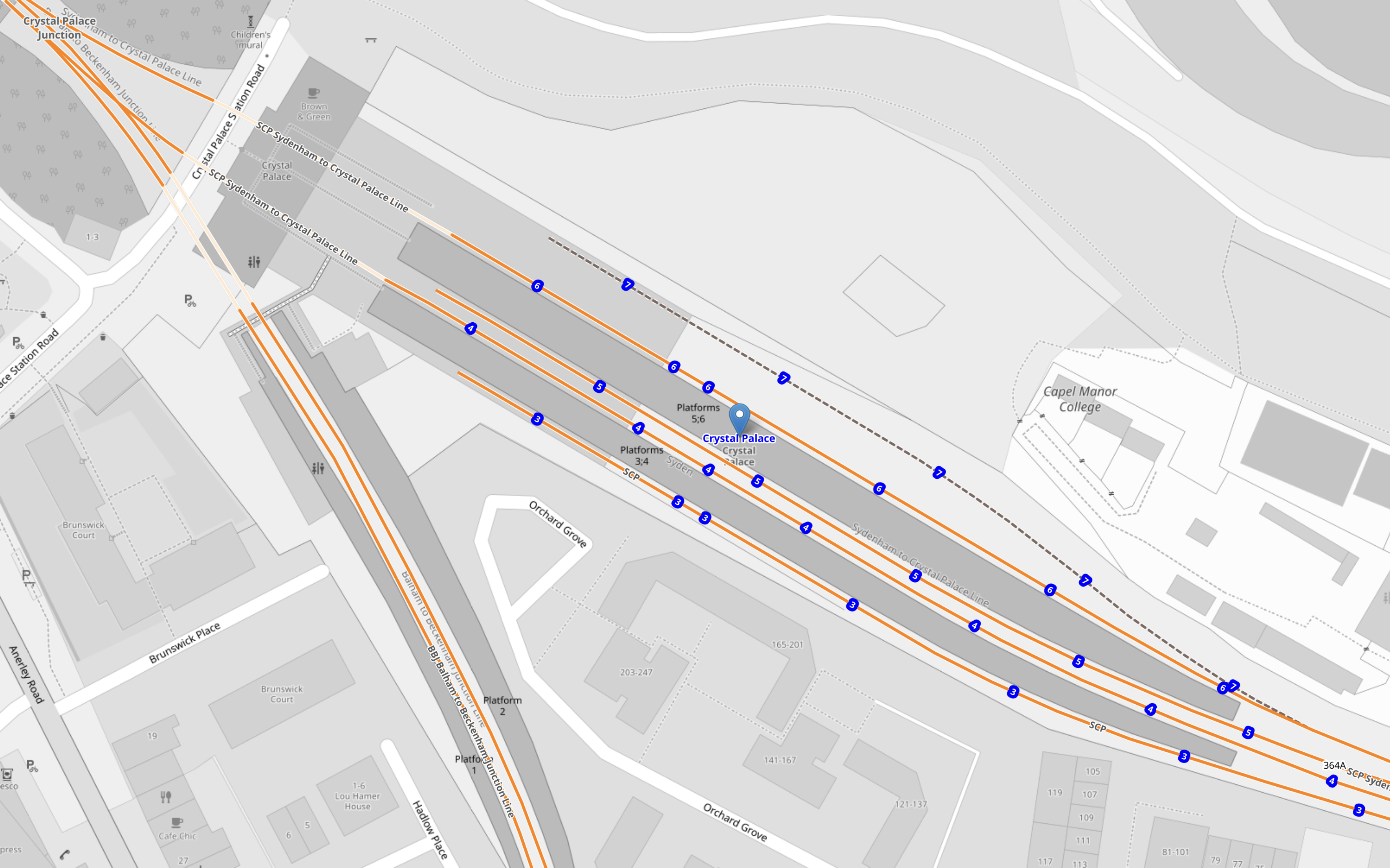
Note.
- Platforms 1 and 2 cross the South-West corner of the map and handle services like London Bridge and Beckenham Junction, London Bridge and London Victoria, and West Croydon services.
- Platform 3 is a little used bay platform, that can terminate trains from the East London Line or London Bridge.
- Platform 4 handles services between London Bridge and London Victoria.
- Platform 5 is a bay platform, that can terminate trains from the East London Line.
- Platform 6 handles services between London Victoria and London Bridge.
- Platform 7 is a disused bay platform.
These pictures show Crystal Palace station.
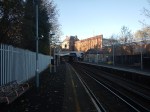
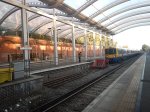
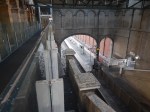
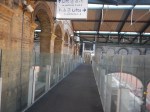
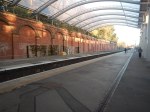
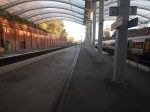
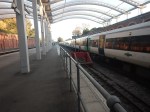

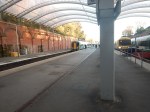
Crystal Palace station has an adequate number of platforms.
Conclusion
A service between London Bridge and Crystal Palace looks to be a sound plan.
Cunning Electrification On The North London Line
I took a trip on the North London Line from Highbury & Islington station to Richmond station.
I took various pictures on the way.
25 KVAC Overhead Electrification
East of Acton Central station, typical 25 KVAC overhead electrification is used.
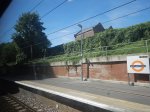

It may need to be beefed up, if more large electric locomotives haul freight trains along the North London Line.
Gunnersbury Station
Gunnersbury station is a two-platform station with London Underground four-rail electrification.

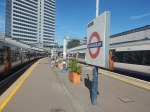

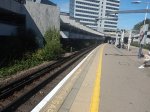
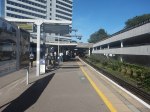
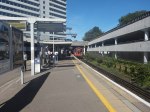

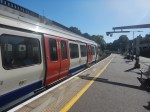
It can be used by London Underground S-Stock and London Overground Class 378 trains.
It must help that both trains were built by Bombardier in Derby.
Kew Gardens Station
Kew Gardens station is a two-platform station with London Underground four-rail electrification.
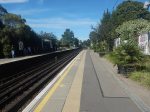

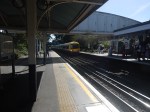

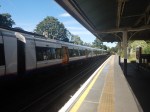
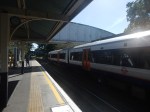
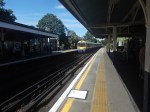
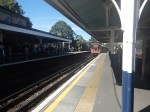
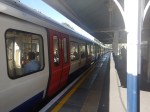
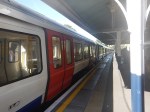
As with Gunnersbury station, both types of train can use both platforms.
Richmond Station
Richmond station is both a through and terminal station.

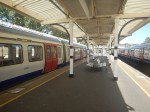
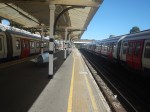

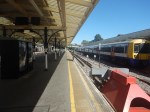
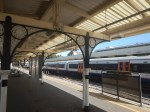
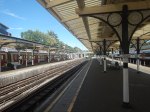
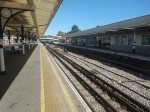
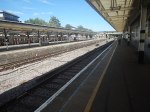
Note.
- Platforms 1 and 2 are through platforms for South Western main line services.
- Platforms 3 to 7 are for terminating London Underground and Overground services.
- Platforms 1 to 3 have traditional third-rail electrification.
- Platforms 4 to 7 have London Underground four-rail electrification.
- If needed, it may be possible to add another platform between platforms 3 and 4.
It looks like a lot of flexibility has been built in.
I have a few general thoughts.
Getting The Voltages Right
London Underground’s system used to use 630 VDC for its four-rail system, whereas Network Rail’s system uses 750 VDC.
I wouldn’t be surprised to find out that both trains use quality power electronics that can work on a range of voltages. This would enable London Underground to up their voltage to the same 750 VDC as used by Network Rail.
In Chiltern Sets Out New Fleet Ambitions, I talked about how Chiltern Railways could use London Underground’s four-rail electrification between Harrow-on-the-Hill and Amersham stations to charge the batteries.
As an electrical engineer, I don’t think this is outrageous.
Chiltern Sets Out New Fleet Ambitions
The title of this post is the same as that of an article in the September 2023 Edition of Modern Railways.
These are the first three paragraphs.
Chiltern Railways deserves to be the next operator to order new trains, its Managing Director Richard Allan has told Modern Railways.
On 7 August the operator published a tender notice seeking proposals for the supply of between 20 and 70 new or converted low-emission trains. This followed the unveiling on 19 July of its ‘RightRoute’ vision setting out the case for investment in new trains, which was presented to stakeholders and parliamentarians in Westminster.
Chiltern is prioritising replacement of its Class 165 DMU fleet, which comprises 89 vehicles. It carried out a pre-market engagement exercise last Autumn, and Mr. Allan said the view is that a battery train would be suitable for the Marylebone to Aylesbury route, either operating solely on battery power or additionally picking up power from the London Underground four-rail system South of Amersham.
These are my thoughts.
Electrification At Amersham
This OpenRailwayMap shows the electrification at Amersham station.
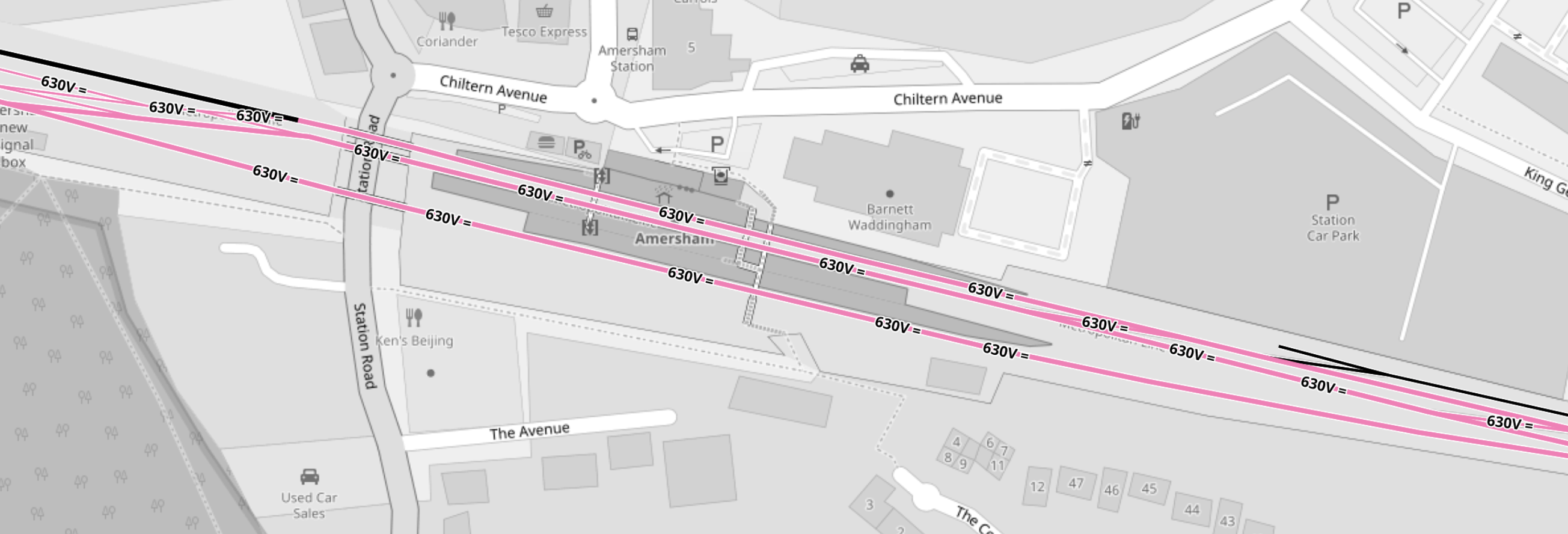
Note.
- Tracks shown in pink are electrified with the London Underground four-rail system.
- Tracks shown in black are not electrified.
- All three platforms are electrified.
The track layout allows both Chiltern and London Underground trains to pass through Amersham station on electrified lines.
Electrification Between Amersham And Harrow-on-the-Hill
This OpenRailwayMap shows the electrification at Northwood station.
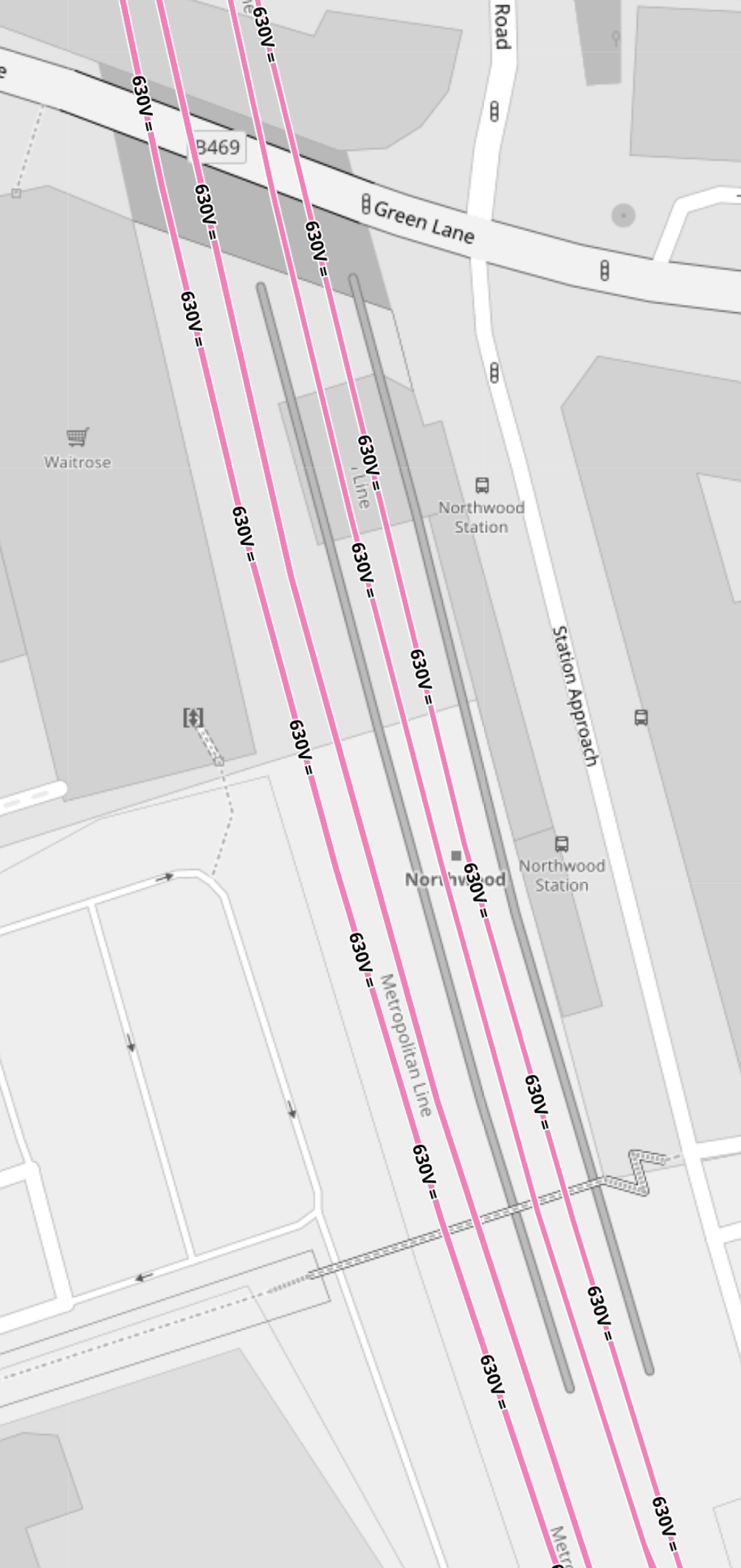
Note.
- Tracks shown in pink are electrified with the London Underground four-rail system.
- All four platforms are electrified.
- Some sections are only double-track.
All tracks between Amersham And Harrow-on-the-Hill stations are electrified.
Electrification At Harrow-on-the-Hill
This OpenRailwayMap shows the electrification at Harrow-on-the-Hill station.
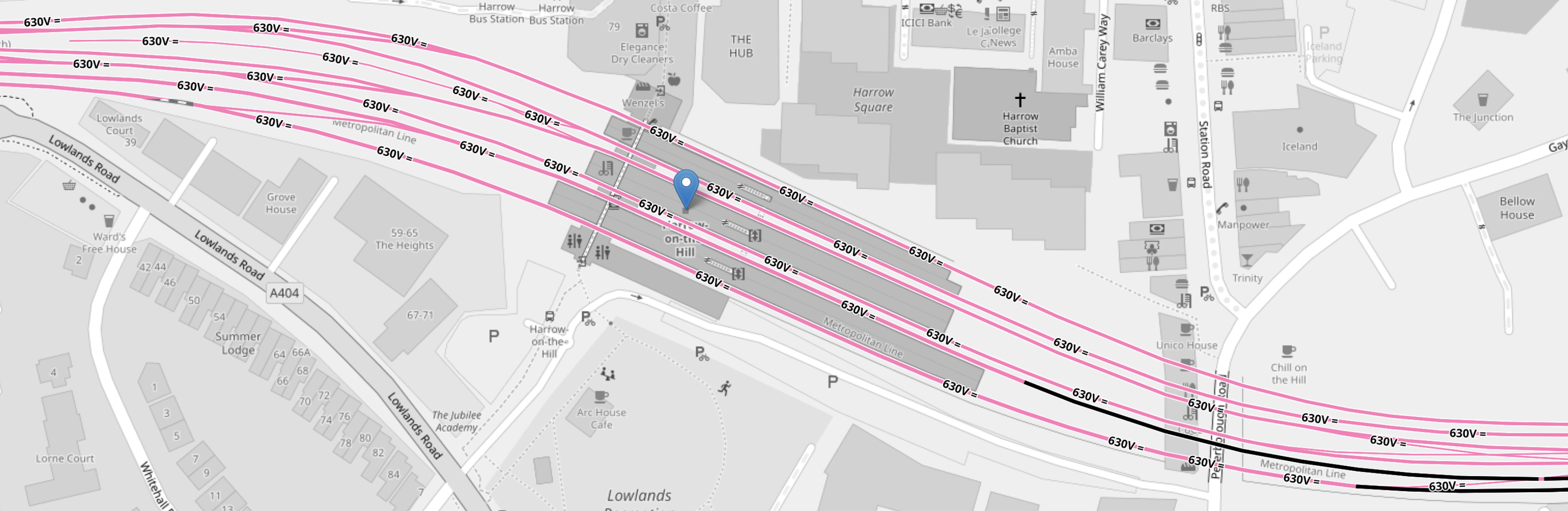
Note.
- Tracks shown in pink are electrified with the London Underground four-rail system.
- Tracks shown in black are not electrified.
- All six platforms are electrified.
The track layout allows both Chiltern and London Underground trains to pass through Harrow-on-the-Hill station on electrified lines.
Electrification Between Harrow-on-the-Hill And Finchley Road
Willesden Green station is typical of the stations on this section
This OpenRailwayMap shows the electrification at Willesden Green station

Note.
- Tracks shown in pink are electrified with the London Underground four-rail system.
- Tracks shown in black are not electrified.
- The two tracks South of the station are the Chiltern tracks.
- All Chiltern Trains along this route use these two separate tracks, that are not electrified.
Stations with this layout include Northwick Park, Preston Road, Wembley Park, Neasden, Dollis Hill, Willesden Green, Kilburn and West Hampstead.
The Chiltern Tracks Alongside The Metropolitan Line
I took these pictures as I journeyed from West Hampstead to Harrow-on-the-Hill.
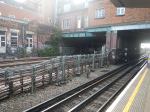
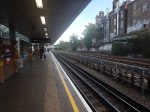

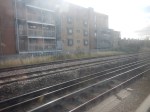
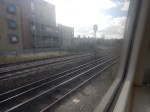
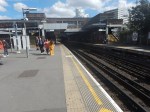
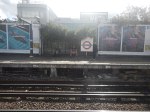
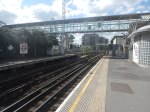
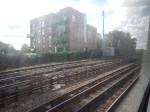


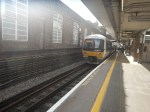
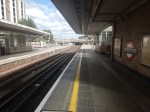
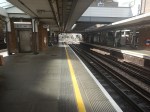
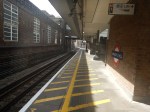
Note.
- The Chiltern Tracks are those farthest from the train without electrification.
- There also seemed a lot of graffiti, where the tracks weren’t electrified.
- Platforms 1 and 2 at Harrow-on-the-Hill station are electrified and used by Chiltern’s diesel trains.
Finding a Jubilee or Metropolitan Line train with clean enough windows for photography was difficult.
Distances Between Stations
These are the distances, times and electrification, between selected stations, between Marylebone and Aylesbury Vale Parkway.
- Marylebone and Harrow-on-the-Hill – 9.2 miles – 13 minutes – Not Electrified
- Harrow-on-the-Hill and Amersham – 14.3 miles – 24 minutes – Electrified
- Amersham and Aylesbury – 15.3 miles – 23 minutes – Not Electrified
- Aylesbury and Aylesbury Vale Parkway – 2.3 miles – 7 minutes – Not Electrified
Note.
- The 24 minutes between Harrow-on-the-Hill and Amersham, should be enough to fully-charge the batteries.
- Harrow-on-the-Hill to Marylebone and return is 18.5 miles.
- Amersham to Aylesbury Vale Parkway and return is 35.2 miles.
As Merseyrail’s Class 777 trains have achieved 83.9 miles on battery power, I am fairly sure that Marylebone and Aylesbury Vale Parkway could be achieved by a battery electric multiple unit, that has been designed for the route.
Rolling Stock
Bombardier built the Class 378 Electrostar train, so that it would run on the London Underground four-rail system to Richmond. so I’m sure that Alstom could build Aventras, that could use the Underground electrification.
I’m also sure that other UK trains manufacturers and suppliers like CAF, Hitachi, Siemens and Stadler have the expertise.
The article mentions between twenty and seventy trains. The number probably depends on the train length.
I think we’ll see some interesting bids.
Train Charging Issues
The main charging will be done between Harrow-on-the-Hill and Amersham using the London Underground four-rail system already installed for the Metropolitan trains between London and Amersham and Chesham.
As the electrification will be powering six trains per hour in both directions between Harrow-on-the-Hill and Amersham and charging the batteries on the Chiltern trains, I wouldn’t be surprised to find, that the power system will be uprated.
I also suspect, that the trains could have the ability to use 25 KVAC overhead electrification, as this could allow short lengths of electrification to be used to charge the trains at terminal stations.
Speed Issues
If you look at the speeds and times, you get the following.
- Current Chiltern Class 165 trains are 75 mph trains.
- Current Underground S Stock trains are 62 mph trains.
- Chiltern take 33 minutes between Amersham and Marylebone.
- Trains in both services run every half hour.
- There is also an every half hour service between Chesham and Aldgate, which means there are six trains per hour between Chalfont & Latimer and Harrow-on-the-Hill.
- I suspect Chiltern set the timetable, by going through first with the slower Amersham and Chesham services following.
- This means that if the new Chiltern trains are 100 mph trains, it shouldn’t make much difference to the operation of the trains.
But the faster Chiltern trains could knock eight minutes off the time between Amersham and Harrow-on-the-Hill stations.
In an ideal world, where TfL had more money, faster Underground trains would allow more services to the area.
Leamington Spa Services
Chiltern Railways run two local services from Leamington Spa station.
- One service goes to Stratford-on-Avon, which is a distance of 15.3 miles.
- The other service goes to Birmingham Moor Street, which is a distance of 22.7 miles.
- Both services are run by Class 165 diesel trains.
- Both services have a frequency of one train per two hours.
I suspect that these services could be run using battery-electric trains with charging at Leamington Spa.
Timescale
This is said about timescale.
Under the plans set out in its ‘RightRoute’ prospectus, Chiltern wants to agree scope and funding for new trains this year and launch the first new trains by 2027 between London and Aylesbury, and upgrade infrastructure and trains on the West Midlands route between 2028 and 2035.
West Midlands Route
This is said about the West Midlands route.
Mr Allan said that after ‘165’ replacement consideration would be given to the best solution for the main line between London and the West Midlands, including whether this would involve partial or full electrification, with a rolling stock solution to succeed the Class 168 DMUs and loco-hauled sets to be devised accordingly. Chiltern’s Interim Engineering & Safety Director Tim Sayer told Modern Railways one potential option the Government and Network Rail are keen on is third party funding of electrification, which could be built into a manufacturer’s contract for new stock.
Note.
- I must admit that I like the idea of bundling rolling stock and electrification in one contract.
- After all, rolling stock and maintenance have been bundled together for some years and it seems to work.
- I disclose some of Hitachi’s thinking in Solving The Electrification Conundrum, which is based on an article in Modern Railways.
I wonder if Hitachi will come up with a solution something like this.
- A number of five-car battery-electric trains.
- High quality interiors.
- They would serve Birmingham Moor Street, Oxford and Stratford-on-Avon.
- Short lengths of electrification in terminals and perhaps at strategic locations in the middle. Banbury?
- Automation as needed.
It could be a service that’s a viable alternative to High Speed Two for some passengers.
Charging At London Marylebone Station
I recently took these pictures at Marylebone station.
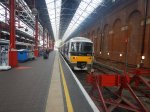
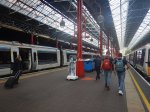
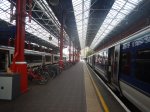
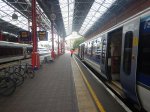
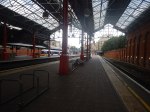

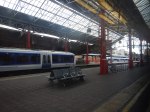


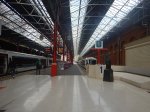
Note.
- It is a surprisingly spacious station and I feel that Furrer+Frey or some other specialist company could add some form of charging to the platforms.
- In its simplest form it would be a short length of 25 KVAC overhead electrification.
- Charging would be performed using the train’s pantograph.
It appears that the turnround time in Marylebone is typically twelve minutes or more, which should be adequate to fully charge a train.
Charging At Oxford Station
These pictures show the bay platforms at Oxford station, where Chiltern services terminate.
I wouldn’t be surprised, if these two platforms were designed for future 25 KVAC overhead electrification.
Marylebone And Oxford Services
Marylebone and Oxford are only 66.7 miles apart and I believe that a battery electric train would be able to shuttle between the two terminals, charging as required after each journey.
Charging At Birmingham
These pictures show the bay platforms at Birmingham Moor Street station, where some Chiltern services terminate.
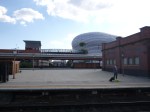
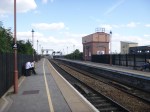
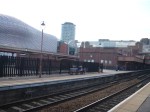
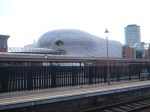
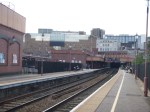
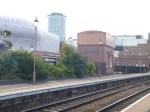
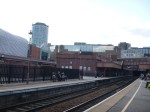

Note.
- Currently, Birmingham Moor Street station has two through platforms and two bay platforms.
- None of the platforms are electrified.
- Some plans include adding two more bay platforms to the station.
- Electrifying the bay platforms 3 and 4, would allow the charging battery electric trains from London.
The two through platforms could also be electrified to help Birmingham’s local trains decarbonise and allow London services to reach Birmingham Snow Hill station.
Marylebone And Birmingham Services
Consider.
- Marylebone and Birmingham Moor Street are only 111.7 miles apart.
- Birmingham Moor Street and Birmingham Snow Hill stations are only 0.6 miles apart.
- Birmingham Moor Street and Birmingham Snow Hill stations could be easily connected by an electrified line.
- Stadler are talking of battery-electric trains having a range of over 125 miles.
- It might be sensible to electrify Banbury to give the batteries a top up.
I believe that a battery electric train would be able to shuttle between Marylebone and Birmingham, charging as required after each journey.
Conclusion
It seems a sound plan!
Are The Elizabeth Line Trains Ready To Be Lengthened?
When Transport for London updated the North and East London Lines of the London Overground in the early years of this century, they felt that four-car Class 378 trains would have enough capacity for the lines. But the lines proved more popular than, they had expected and the trains were very overcrowded. So it was decided to lengthen the trains to the five cars they are today.
This wasn’t as easy as it seems, as platforms at several stations had to be lengthened, which was disruptive and expensive.
One day last week, I was in Farringdon station and took these pictures of the platform edge doors at the back end of a Class 345 train.
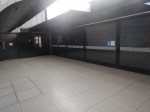
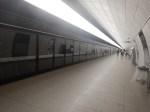
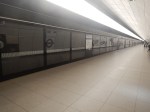
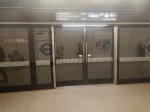
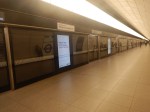
Note how, that when a train is in the station, it doesn’t reach to the end.
But this is not always the case, as this picture from Paddington station shows.
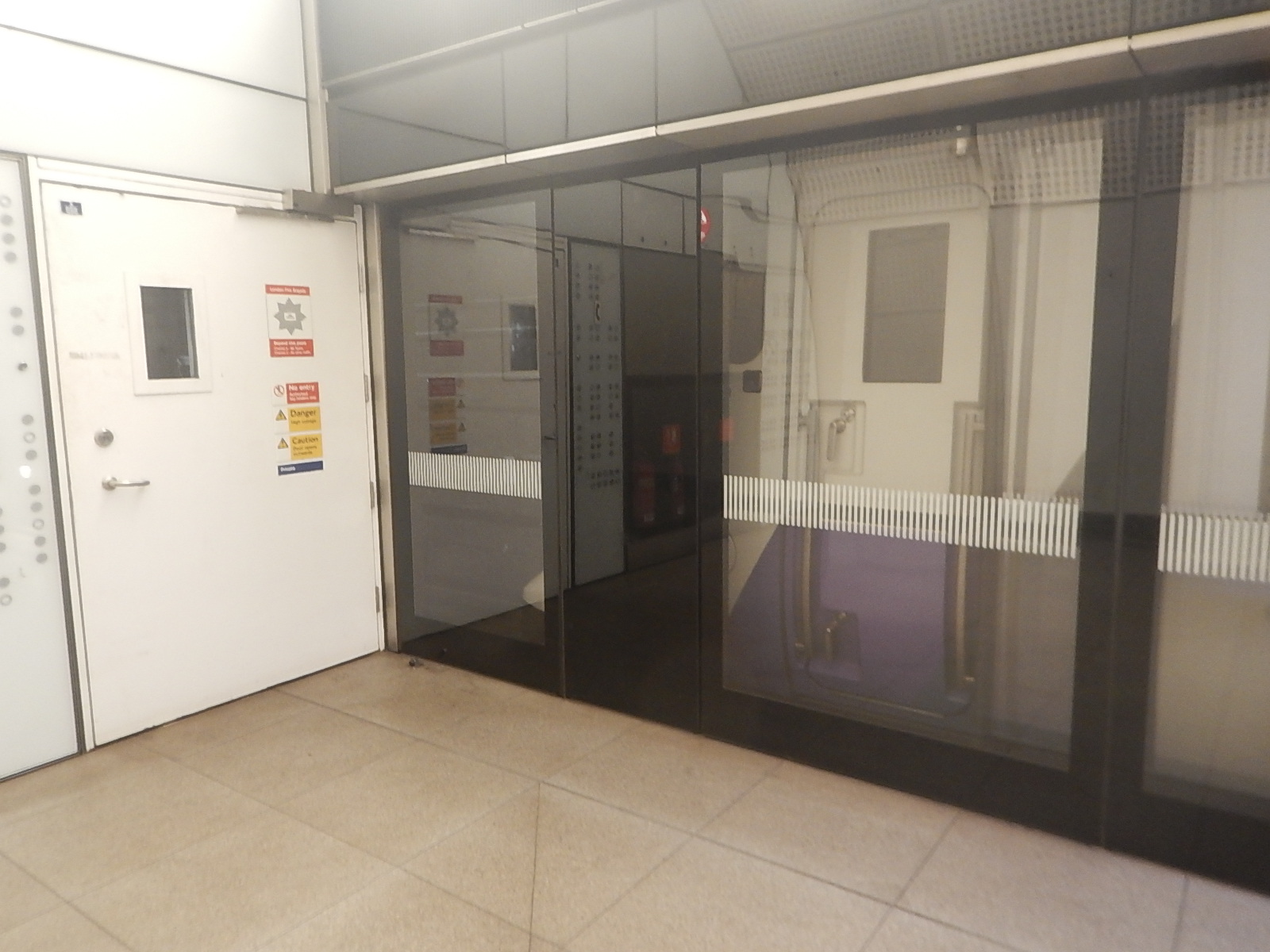
Does this mean that some underground Elizabeth Line platforms are longer than others?
In Bombardier’s Plug-and-Play Train, I discuss the plug-and-play design of Aventras.
- This plug-and-play design allows trains to be lengthened or shortened by adding or removing carriages.
- Class 345 trains are actually two half-trains, with a trailer car in between them.
So is this why Class 345 trains have run services as both seven-car and nine-car trains?
The former have three-car half-trains and the latter have four-car half-trains, with an extra MS car.
Talk Of Eleven-Car Trains
If you search the Internet, you’ll find forums and web pages speculating about. whether the trains will be lengthened to ten-cars or even eleven-cars.
Consider.
- The current trains are 204.73 metres long.
- Extra intermediate cars are all 22.5 metres long.
- The trains also are probably fitted with selective door opening or can be as most modern trains have it.
This would mean, that a ten-car train would be 227.23 metres long and an eleven-car train will be 249.73 metres.
The eleven-car figure is just 27 centimetres short of 250 metres.
I wouldn’t me surprised if the maximum train length was given to Bombardier as 250 metres.
I certainly feel, that if it should be decided to lengthen the trains by adding another carriage or two, that this will not be a problem.
The Elizabeth Line’s Two Problems
These posts talk about the two problems.
In TfL Needs More Elizabeth Line Trains Because Of HS2 Delays At Euston, I talked about what happens, if High Speed Two doesn’t link initially to Euston.
In Elizabeth Line: Commuters Say Service ‘Not What Was Promised’, I talked about problems of overcrowding at the Western end of the line.
The solutions to both problems are either more trains or adding more carriages to existing trains.
In this article on Ian Visits, which has the same title as the first post, Ian says this about ordering more trains.
Although HS2 isn’t expected to open until some point between 2029-33, TfL is warning that it will need to place the orders for the new trains soon, as the cost of doing so later will be significantly more expensive. That’s because the factory lines to build Elizabeth line trains at Alstom’s factory in Derbyshire are still in place, but will be demobilised soon. If the trains aren’t ordered before that happens, then the cost of reactivating the factory lines has to be included in the bill.
I suspect, it probably applies to an order for extra carriages as well.
Problems For Alstom
But will a substantial order for more Class 345 trains or carriages cause problems for Alstom at Derby?
This extract from the Wikipedia entry for High Speed Two rolling stock, describes how the Hitachi-Alstom joint venture will build the Classic-Compatible trains for High Speed Two.
Vehicle body assembly and initial fitting out of the trains will take place at the Hitachi Newton Aycliffe factory, the bogies will be manufactured at the Alstom factory in Crewe, and final assembly and fit-out, including the interiors, electronics and bogies, will take place at Alstom’s factory in Derby.
If more Class 345 trains are to be built at Derby, does it mean a rethink by the joint venture?
In Battery EMUs Envisaged In Southeastern Fleet Procurement, I talked about how Southeastern were looking for new trains. Given that Aventras from Alstom could be in the frame for these new trrains for Southeastern, does that give Alstom more complications?
Thoughts On Watford DC Line Electrification At Euston Station
I was in Euston station this morning and took these pictures of the electrification on Platform 9.
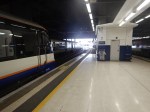
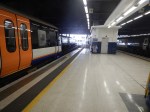
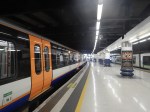
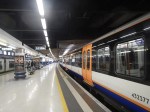
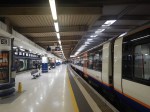
Note.
- Watford DC Line trains usually use Platform 9.
- The first two pictures show the 750 DC third rail electrification.
- The last three pictures show the 25 KVAC overhead electrification.
- The train is a five-car Class 710/3 train, which is a dual-voltage train.
The train’s pantograph was in the down position, as far as I could see.
This Google Map shows the ends of Platforms 6 to 11 at the station.

Note.
- The platforms have their numbers painted on the end.
- The train in the top-left corner of the image is in Platform 5.
- Platforms 9 and 10 appear to be fitted with 750 VDC third-rail electrification.
- All Platforms also seem to have 25KVAC overhead electrification.
So platforms 9 and 10 appear to be able to handle trains which need either form of electrification. When I took the first set of pictures, there was a Class 350 train in Platform 10.
These dual voltage platforms 9 and 10, may help with the operation of the station.
I have some questions.
Do TfL Intend To Increase Watford DC Line Services?
Currently, the services on the Watford DC Line are as follows.
- Four trains per hour (tph) between Euston and Watford Junction stations.
- In the last few weeks, I’ve seen both four-car Class 378 and five-car Class 701 trains on the route.
- All trains that work the route appear to be dual voltage.
This TfL infographic illustrates their plans.
It says Watford and Euston would be run by five-car trains at a frequency of four tph.
TfL have ordered six five-car Class 701/3 trains for the Watford DC service.
Will The Watford DC Platforms Be Moved In The Euston High Speed Two Rebuild?
The operation of the Watford DC Line works well at present, but as Euston station is going through a major rebuild for High Speed Two, the platforms could be moved or rebuilt.
Would Health and Safety object to laying third-rail electrification and insist that Watford DC services used 25 KVAC to access Euston?
They could do this, as all trains running on the Watford DC Line are dual-voltage trains.
Would Removing Third-Rail Electrification From Euston Station Improve Safety?
Health and Safety would say it did and as the trains are dual-voltage, they could transition at Queen’s Park or South Hampstead stations.
An Alternative To Changing The Electrification
The distance between Euston and Queen’s Park stations is just under four miles.
In Will London Overground Fit On-board Energy Storage To Class 378 Trains?, I asked whether it would be worthwhile.
I finished with these two sentences.
I have no idea how much electricity would be saved by regenerative braking on the London Overground, but various applications of regenerative braking technology talk of electricity savings of between ten and twenty percent.
I think it is only a matter of time before the technology is proven to be sufficiently reliable and the numbers add up correctly for the Class 378 trains to be fitted with on-board energy storage.
What would be the advantages from fitting on-board energy storage?
- There would be the savings of electricity by the use of regenerative braking to the batteries.
- Trains could be rescued from the Thames Tunnel, if there was a power failure.
- Hotel power would be maintained, if there was a power failure.
- Trains can be moved in depots and sidings without power.
- Trains would be able to move in the event of cable theft.
- The battery would probably have sufficient capacity to move the train into and out of Euston.
There could be a saving in train operating costs and safety would be improved.
TfL Considers Replacing Over Half Of London Overground Trains Within The Next 4 Years
The title of this post, is the same as that of this article on MyLondon.
This is the sub-heading.
The trains were specially built for the dimensions of the Overground network
This paragraph outlines, why the trains may be replaced.
The 57 Class 378 ‘Capitalstar’ trains which provide the majority of services on London Overground could disappear as soon as June 2027, as Transport for London (TfL) officials decide what to do with them as their leases expire. The five carriage walkthrough trains have helped revolutionise the Overground network, being built to special dimensions to fit the unique profile of the suburban routes they run on – notably the East London line, where trains use the narrow single-bore Thames Tunnels.
Note.
- The Class 378 trains, which I use regularly, still seem to be performing well!
- They could do with a lick of paint and a tidying up in places.
- Would it be too much to ask for power sockets and wi-fi?
- The other London Overground trains, the Class 710 trains can’t run through the Thames Tunnel on the East London Line, as they have no means to evacuate passengers in the tunnel in an emergency.
- More Class 378 trains are needed for the East London Line to increase services, but these can be obtained by transferring trains from the North London Line and replacing those with new Class 710 trains.
I live near the two Dalston stations on the London Overground and the thing we need most is more capacity.
I have some thoughts on London Overground’s future trains.
Increased Services On The Current Network
Plans exist to increase the frequency on various London Overground services and this graphic sums up what was planned a few years ago.
Note the extra two trains per hour (tph) between the following stations.
- Clapham Junction and Stratford
- Dalston Junction and Crystal Palace
- Dalston Junction and Clapham Junction
- Enfield Town and Liverpool St. via Seven Sisters
I think only Route 1 services have been increased.
I know signalling updates are holding up the extra trains on the East London Line, but are more trains needed to fully implement the extra services?
- Routes 2 and 3 services will need Class 378 trains because of the tunnel and these would be transferred from the North London Line.
- Route 4 would need Class 710 trains, as the service already uses them.
So there may be a need for more Class 710 trains.
West London Orbital Railway
The graphic doesn’t mention the West London Orbital Railway.
- There would be two routes between West Hampstead and Hounslow and Hendon and Kew Bridge using the Dudding Hill Line.
- The tracks already exist.
- Some new platforms and stations would be needed.
- The route would probably need improved signalling.
- Four tph on both routes would probably be possible.
- The West London Orbital Railway would connect to the Great Western Railway, the North London and Elizabeth Lines and High Speed Two at Old Oak Common station.
I believe it could be run by battery-electric versions of either the Class 378 or Class 710 trains. This would avoid electrification.
As some commentators have suggested that the West London Orbital Railway and the Gospel Oak and Barking Line would be connected, I would expect that new battery-electric Class 710 trains would be used.
Adding On-board Energy Storage To The Class 378 Trains
In Will London Overground Fit On-board Energy Storage To Class 378 Trains?, I asked whether it would be worthwhile.
I finished with these two sentences.
I have no idea how much electricity would be saved by regenerative braking on the London Overground, but various applications of regenerative braking technology talk of electricity savings of between ten and twenty percent.
I think it is only a matter of time before the technology is proven to be sufficiently reliable and the numbers add up correctly for the Class 378 trains to be fitted with on-board energy storage.
What would be the advantages from fitting on-board energy storage?
- There would be the savings of electricity by the use of regenerative braking to the batteries.
- Trains could be rescued from the Thames Tunnel, if there was a power failure.
- Hotel power would be maintained, if there was a power failure.
- Trains can be moved in depots and sidings without power.
- Trains would be able to move in the event of cable theft.
- Short route extensions might be possible.
- Could battery power be used to serve Euston during the rebuilding process for High Speed Two?
- Do Network Rail want to remove third-rail electrification from Euston station for safety or cost reasons?
There could be a saving in train operating costs.
We know the trains are coming up for a new lease.
Suppose the leasing company fitted them with new batteries and some other customer-friendly improvements like new seat covers, better displays, litter bins, power sockets and wi-fi.
- The leasing company would be able to charge more, as they have added value to the trains.
- TfL would be saving money due to less of an electricity bill.
- The passenger numbers might increase due to the extra customer-friendly features.
- Electrification might be removed from places where theft is a problem.
- Third-rail electrification could be removed from Euston station. It’s only 2.8 miles to South Hampstead station, where third-rail electrification already exists.
Get it right and passengers, TfL, Network Rail and the leasing company would all be winners.
A Thought On The Prospects For Crossrail
Someone asked the question, in a discussion group, that I visit, if Crossrail will be a success.
I believe that you only have to look at the success of the London Overground to realise that Crossrail will be a success.
When the North London Line reopened as the first route of the London Overground with new Class 378 trains, it used to run four-car trains at a frequency of six trains per hour (tph) between Stratford and Willesden Junction stations.
Now the line runs eight tph on that route and the trains are five cars.
That is a capacity increase of 66% in terms of cars per hour.
And still at times, the trains are full and Transport for London are looking at ways of adding extra trains and/or cars.
Crossrail will have the factors going for it, which helped to make the Overground that success. It is new and has a novelty value, but above all like the Overground, it is built for full-sized people, who could be pushing bikes and buggies and trailing baggage.
Crossrail, also increases options for alternative routes for Londoners , who are World Champions at ducking-and-diving.
Crossrail has also been designed so that the trains can be extended.
If Crossrail has a problem, other than the lateness and budget overrun, it is that it doesn’t connect to the Victoria or Piccadilly Lines.
Barriers And Planters On The London Overground Platforms At Clapham Junction Station
To get home from Feltham station, after my visit this morning to see the new bridge, which I wrote about in The Completed Bridge At Feltham Station, I changed trains at Clapham Junction station.
I noticed that a barrier has been put up between the current two Overground platforms; 1 and 2.
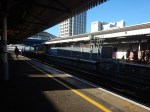
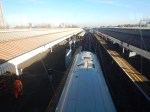
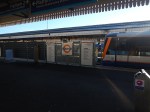
.I suspect it is for safety reasons, as it will certainly stop passengers falling off the platform.
I also noticed that planters had been placed where I suspect that the new Platform 0 will be built.
Note.
- If the track is to placed between the planters and the platform, the space could be a bit small.
- Or is the platform going to be rebuilt a bit narrower?
- It also looks like the platform won’t be long enough for the planned eight-car train.
I also took these pictures of what looks to be a Fire Exit.
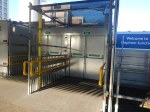
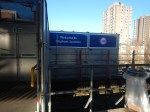
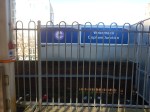
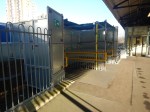
Could it be a temporary entrance, that will be used if there is a lot of work going on about the Grant Road entrance to create the new platform?
I also took these pictures of the Eastern end of the platform.
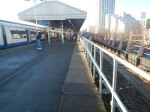
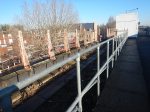
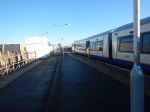
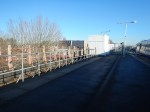
Considering, that the Class 378 train is five cars and an eight-car train would be sixty percent longer, it looks to me, that they will have to extend the platform, behind the temporary entrance or perhaps further towards the East.
Or could Network Rail have called up Baldrick, and asked him for one of his cunning plans?
Consider.
- Currently, there is a one train per hour (tph) between Milton Keynes and Clapham Junction stations, run by Southern.
- The service used to run between Milton Keynes and South Croydon stations.
- There surely is a need for a high-frequency service between the High Speed Two station at Old Oak Common and Clapham Junction station.
- Currently, there is no planned link between Crossrail and the West London Line.
Hythe Road station is planned to be on the West London Line and will serve the High Speed Two station at Old Oak Common.
This Transport for London map, shows the position of the proposed Hythe Road station with respect to High Speed Two and Crossrail.
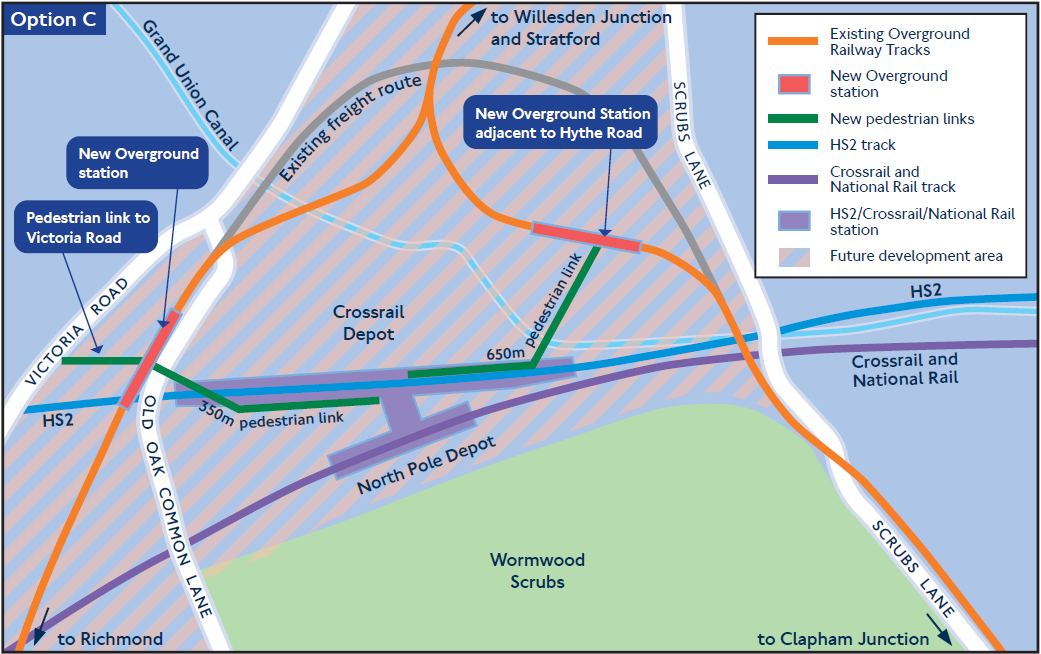
Note.
- The West London Line to and from Clapham Junction goes down the East of the map.
- The North London Line to and from Richmond goes down the West of the map.
- The current Milton Keynes and Clapham Junction service doesn’t go through the site of Hythe Road station, but somehow sneaks round on the freight line in the map.
Wikipedia describes the proposal for Hythe Road station like this.
Hythe Road railway station would be situated about 700 metres (770 yards) from the mainline Old Oak Common station. Construction work would involve re-aligning the track along a new railway embankment (built slightly to the north of the existing line) and demolishing industrial units along Salter Street, on land currently owned by a vehicle sales company (‘Car Giant’). The station structure will sit on a viaduct, with a bus interchange underneath. The station will incorporate 3 platforms, allowing through services between Stratford and Clapham Junction with an additional bay platform to accommodate terminating services from Clapham Junction.
I can envisage an eight tph service between Clapham Junction and Hythe Road stations, made up something like this.
- Four tph between Stratford and Clapham Junction stations
- One tph between Milton Keynes and Clapham Junction stations
- Three tph between Hythe Road and Clapham Junction stations
Note.
- Services would stop at Shepherd’s Bush, Kensington (Olympia), West Brompton and Imperial Wharf.
- Two platforms at Clapham Junction station could easily handle eight tph.
- The London Overground’s five car Class 378 trains would probably be long enough for the shuttle.
- There is even the possibility of running the Milton Keynes and Clapham Junction service with five car trains, to void the expense of creating an eight-car platform at Clapham Junction station.
It would be better if the Milton Keynes and Clapham Junction service could go through Hythe Road station. But this might be difficult to arrange.
Conclusion
An eight tph service through Old Oak Common could be a nice little add-on for both High Speed Two and Crossrail.
 The Anonymous Widower