Do Coeliacs Have A Sweet Tooth?
I am certainly coeliac and often, when I have a coffee or a hot chocolate, when I’m travelling, I will ask if the cafe has a gluten-free cake to go with it.
Increasingly, I am getting disappointed. But then chains that speciallised in gluten-free like Carluccios and Leon have had a hard time lately and the rise of Greggs, Gails and Pret, who don’t do gl;uten-free doesn’t help.
Usually, whilst I watch, the BBC ten o’clock news, I will have a mug of decaffeinated tea, in which I will dunk, three M & S gluten-free ginger snaps.
After I was diagnosed as a coeliac, my late wife, once said she thought I would eat more biscuits and cakes.
So what does Google AI think, when I ask it the question in the title of this post?
This was the answer I received.
Yes, many people with coeliac disease have a sweet tooth, and it is a common experience to experience intensified sugar cravings after starting a gluten-free diet.
Here is why this happens and how it is managed:
Intensified Cravings: After eliminating gluten, some coeliacs experience strong cravings for sugar, ice cream, and chocolate.
This can occur because the body is suddenly deprived of high-carb foods, or due to underlying imbalances in gut bacteria.
Nutrient Absorption: In the early stages of a gluten-free diet, the body may be absorbing nutrients better for the first time, which can trigger intense hunger and cravings.
Hidden Sugar in GF Foods: Many processed gluten-free products—like biscuits and cakes—contain more sugar to improve taste and texture, which can satisfy, but also encourage, a sweet tooth.
Gut Health Factors: Some individuals suspect that sugar cravings are linked to candida (yeast) overgrowth, which is sometimes associated with coeliac disease.
I suspect with me sometimes, it can be, just because I’m hungry due to low availability of gluten-free snacks.
This week, when I went to Blackpool North, I changed trains at Wigan North Western station, where I bought a delicious lemon tart in the coffee stall.
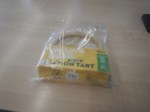


Note.
- The delicious lemon tart came in the aluminium tray it was baked in. Could this be for protection, as the tart was still in one piece, after some time in my brief case.
- My pictures don’t do the tart justice.
- The coffee stall is on the Northbound platform.
- The toilets are under the Southbound platform, but are some of the cleanest, I’ve found on UK railways.
- Wigan North Western station is fully step-free.
- Wigan North Western station could be ready for High Speed Two trains.
Wigan North Western and Wigan Wallgate stations are only a short walk apart, so it is a well used interchange to get to Northern parts of Merseyside and Greater Manchester, from London and the South.
A Crossing For Coeliacs?
I have been getting increasingly frustrated with the roadworks at the crossroads of Moorgate and Ropemaker Street and at the weekend, I wrote How Not To Resurface An Intersection.
But at last order is beginning to emerge and today, I took these pictures of the new diagonal crossing.
















Note.
- The diagonal crossing is in use.
- At the North-Eastern end of the crossing, is the Marks and Spencer on Finsbury Pavement, with its coeliac-friendly food department in the basement.
- At the South-Western end of the crossing on Moorgate is a branch of LEON, which serves excellent gluten-free food.
- The crossing also provides a shorter route between the Southbound bus stop and Moorgate station.
The work on the crossing appears to be more or less complete. Or will it be zebraed?
Does Zero-Alcohol Beer Help Phlegm?
As a child, I suffered badly from phlegm and regularly had days off school. Sometimes, it was even whole terms.
How I passed the 11-plus is probably a mystery!
But my father also had breathing problems, which he controlled with catarrh tablets and strong peppermints. That remedy never worked for me!
My father’s father died at around fifty of acute pneumonia and asthma. Although most of my father’s descriptions of my grandfather include the fact that he was a drunk.
Which leads me to my first question for Google AI – Can Storms Bring On Phlegm?
Google AI gave me this answer.
Yes, storms and the associated weather shifts can bring on increased phlegm, congestion, and respiratory issues. Stormy weather often causes a rapid decrease in barometric pressure, high humidity, and increased wind, all of which can trigger excess mucus production.
Here is how storms affect your respiratory system:
Thunderstorm Asthma & Allergies: Thunderstorms can rupture pollen grains and mold spores, spreading tiny, easily inhalable particles in the air. These microscopic particles travel deeper into the lungs, triggering allergic reactions, phlegm, and asthma-related symptoms.
Barometric Pressure Shifts: When a storm approaches, air pressure drops, causing the air-filled sinuses to expand. This can cause sinus membranes to swell and produce extra mucus, leading to congestion and post-nasal drip.
High Humidity and Mold: High humidity and rainy weather create ideal conditions for mold growth, which is a major allergen that can trigger phlegm and respiratory congestion.
Wind and Pollen: Strong winds before or during a storm can stir up pollen and dust, triggering symptoms even in people who do not have chronic allergies.
If you notice increased coughing, wheezing, or phlegm during storms, it is often due to these environmental changes forcing the airways to narrow and produce more mucus.
Some of that may apply to me.
Note.
- My father and grandfather used to go to Biarritz for the winter, when the family had money.
- The only time, I went to Biarritz, I felt wonderful.
- I love being at altitude.
- I never had phlegm living in Liverpool or Suff0lk or with C.
- I felt better last week in South Wales, despite the rain.
My breathing was probably best, when I worked on chemical plants.
Zero-Alcohol Beer seems to help and I drink a lot of it, which leads me to my second question for Google AI – Does Zero-Alcohol Beer Help Phlegm?
Google AI gave me this answer.
Yes, zero-alcohol (non-alcoholic) beer can potentially help with phlegm and respiratory issues, primarily due to its anti-inflammatory properties, rather than acting as a direct cough suppressant.
Here is how it can help, based on research:
Reduces Inflammation and Respiratory Illness: Studies on marathon runners found that non-alcoholic beer, rich in polyphenols (natural plant compounds), reduced inflammation and lowered the incidence of upper respiratory tract infections.
Anti-inflammatory and Antiviral Properties: The polyphenols found in non-alcoholic beer offer anti-inflammatory and antiviral properties that can help manage inflammation in the airways.
Hydration: Unlike alcoholic beer, which can dehydrate you and make phlegm thicker, non-alcoholic beer acts as an isotonic, hydrating beverage. Staying hydrated is essential for thinning mucus and making it easier to clear.
Immune System Support: Regular consumption of non-alcoholic beer has been shown to improve immune response and reduce the severity of colds.
Could the fact that most zero-alcohol beers are also gluten-free help with the last point?
How Much Vitamin B12 Is There In A Leon Full English Breakfast Egg Pot?
I asked Google AI, the title of this post and received this answer.
Based on the ingredients of a LEON Full English Breakfast Egg Pot—which includes a poached egg, Cumberland sausage, bacon, and baked beans—this breakfast provides a substantial amount of Vitamin B12.
Estimated B12 Content: A single large egg contains roughly 0.6 micrograms (mcg) of vitamin B12. When combined with the pork sausage and bacon in the Full English pot, the total content likely provides a significant portion of the UK adult daily requirement of 1.5 mcg.
Key B12 Sources in the Pot: The primary sources of B12 in the pot are the free-range egg (specifically the yolk) and the meat (bacon and sausage).
Other Nutritional Highlights: The Full English Pot contains 25-28g of protein and 371-398 calories.
It certainly looks that this Leon egg pot gives a significant portion of the UK adult daily requirement of vitamin B12.
How Much B12 In A Portion Of Chilli-Con-Carne?
I asked Google AI, the title of this post and received this answer.
A standard 1-cup (approx. 240g–250g) portion of homemade or canned chilli con carne typically contains between 0.68 mcg and 1.6 mcg of Vitamin B12. This amount represents approximately 28% to 67% of the recommended daily intake (DV) for adults.
Vitamin B12 Content Breakdown:
Homemade with Beef (Approx. 250g): ~1.6 mcg (67% DV).
Canned Entree (1 cup/242g): ~0.68 mcg (28% DV).
Chilli with Rice (450g meal): ~2.28 mcg (57% DV).
Key Factors Affecting B12 Levels:
Meat Quantity: A higher ratio of ground beef increases the B12 content, as 3 ounces of lean ground beef alone provides 2.4 mcg (100% DV).
Serving Size: A larger, restaurant-sized portion (e.g., 12 oz) will contain significantly more than a standard 1-cup serving.
Chilli con carne is considered an excellent source of Vitamin B12 due to the beef content, which helps meet the daily requirement of 2.4 mcg for adults.
I generally eat, one Marks and Spencer’s Count on Us chilli-con-carne and rice, every week. It doesn’t say on the packaging if it is gluten-free, but my highly-tuned gut says it is.
What Does Google AI Say In Answer To Is Marks And Spencer’s Count On Us Chilli Con Carne And Rice Gluten Free?
The M&S Count On Us Chilli Con Carne and Rice is generally considered safe as it does not list gluten-containing ingredients, but it is not explicitly labeled as “gluten-free” and may have risks of cross-contamination. While many M&S “Count on Us” meals are considered “accidentally” gluten-free, it is advised to check the label for “may contain” warnings before consuming.
I used to have a ginger Glaswegian friend, who had a Michelin star (Not him, one of the others!) He told me that chilli con carne should be gluten-free.
How Do B12 Levels Affect Pain In Knee Joints?
I asked Google AI, the title of this post and received this answer.
Low Vitamin B12 levels can cause or worsen knee joint pain primarily through nerve damage (peripheral neuropathy), which causes sensations of pain, tingling, or numbness in the legs. Deficiency also increases homocysteine, a pro-inflammatory amino acid linked to joint inflammation and, in some cases, accelerated cartilage deterioration.
Key Connections Between B12 and Knee Pain:
Neuropathic Pain: A lack of B12 damages the myelin sheath protecting nerves, leading to pain, pins and needles, or burning sensations often felt in the extremities, including the knees.
Inflammation and Joint Damage: Low B12 levels are associated with higher homocysteine levels, which can cause inflammation, swelling, and increased friction in the joints.
Deficiency Symptoms: Along with joint pain, B12 deficiency commonly causes fatigue, muscle weakness, and numbness.
Improvement with Supplementation: Studies suggest that maintaining adequate B12 levels, or using supplements, can reduce joint pain and improve mobility.
If you are experiencing persistent joint pain or numbness, it is advisable to have your B12 levels checked.
From my own experience, I would also get tested for coeliac disease.
Does Lack Of B12 Degrade Your Eyesight?
I asked this question of Google AI and received this answer.
Yes, a lack of vitamin B12 can degrade your eyesight, typically by causing a condition known as nutritional optic neuropathy. This occurs because B12 is essential for maintaining a healthy nervous system, and a deficiency can damage the optic nerve, which transmits visual information from the eye to the brain.
Here is how a B12 deficiency can impact your eyes and vision:
Optic Neuropathy: A, often painless, progressive, bilateral, and symmetrical reduction in visual acuity.
It often results in blurred or disturbed vision, central or cecocentral scotomas (blind spots), and reduced color vision.
Vision Loss: Severe, long-term B12 deficiency can lead to permanent vision loss if not treated promptly.
Retinal Damage: B12 deficiency can cause retinal hemorrhages (bleeding in the retina), known as Roth’s spots.
Eye Movements: In rare cases, it can cause involuntary eye movements (nystagmus) or uncontrollable eye twitching.
Dry Eye Disease: Some evidence suggests B12 deficiency can cause severe dry eye issues and pain.
Reversibility
Vision problems caused by B12 deficiency are often reversible with prompt treatment.
However, if the damage is allowed to become chronic, the vision impairment can be permanent.
Risk Groups
Those at higher risk of B12 deficiency leading to vision issues include:
- Strict vegetarians and vegans.
- Older adults (60+).
- Individuals with pernicious anemia.
- People with gastrointestinal conditions (Crohn’s disease, celiac disease) or who have had weight-loss surgery.
I am in two of these groups, as I’m 78 and coeliac.
My First Eye Test
This was performed in about 1993, by a friend’s father, who was a retired Senior Eye Surgeon from Heath Road Hospital in Ipswich.
At the time, I wasn’t coeliac.
He said, that I’d got the driest eyes he’d ever seen. I actually told my last GP, so it may be in my notes.
Misearable Weather And My Eye Sight
In January, I wrote this post called Does Miserable Weather Deplete Your B12?
Is this why my eyes and especially my left eye, have been bad ladely?
Do Coeliacs Suffer Badly From Sepsis?
As everybody seems to be getting this these days, I just had to ask Google AI the question in the title of this post.
This is the reply I received.
Sepsis Outcome: While celiac patients are more likely to get sepsis, studies indicate that celiac disease does not significantly influence the survival or prognosis once a patient has developed sepsis.
Do B12 Injections Help Stroke Recovery?
A friend, who thinks I’ve made a good recovery from a stroke, asked me if there is anything I could recommend, for another of his friends, who has just had a stroke.
As a coeliac, am I in a group with a higher risk of a stroke?
So, I asked Google AI, the question, if this were true and received this answer.
- Initial Higher Risk: Some studies suggest a slightly increased risk of stroke (roughly a 10-15% increased likelihood). This risk is highest in the first year after diagnosis.
- Effect of Gluten-Free Diet: After 5 years on a strict, gluten-free diet, the risk of stroke for people with coeliac disease is virtually the same as that of the general population.
- Overall Risk: While some studies have suggested a link, others, including a 2023 UK Biobank study, found no clear evidence of an association between coeliac disease and stroke, although they did find an overall increased risk of cardiovascular disease (27% higher).
- Mechanism: The potential for a higher risk is likely due to the chronic inflammation associated with untreated coeliac disease, rather than traditional risk factors like high blood pressure or smoking.
- Children: A 2023 study found that coeliac disease plays a minimal role in the risk of stroke in children, but recommended that doctors consider it a potential factor in cases of stroke with unknown causes.
Conclusion:
While untreated coeliac disease may slightly increase the risk of stroke due to chronic inflammation, adhering to a gluten-free diet helps manage this risk.
This study by coeliacUK and Oxford University, was the source of the findings by Google AI.
Do B12 Injections Help Stroke Recovery?
For nearly thirty years, ever since I was diagnosed as coeliac, I have had regular three-monthly B12 injections. So ever since my stroke in 2011, I have had B12 injections.
So now AI is available, I felt I should ask Google AI to see if it says anything useful.
This is the answer I received.
- Nerve Repair & Axonal Growth: B12 aids in repairing damaged nerve fibers (axons) and regenerating nerve cells, vital for restoring lost function after a stroke.
- Reduces Inflammation: It helps calm the harmful inflammatory response (neuroinflammation) in the brain after an ischemic stroke, notes this ScienceDirect article.
- Improves Brain Communication: B12 supports neurotransmitter production, allowing brain cells to communicate more effectively and speeding up healing, according to this Flint Rehab article.
- Lowers Stroke Risk: By reducing homocysteine levels, an amino acid linked to stroke, B12 can help prevent recurrent strokes, reports this Flint Rehab article and this NIH article.
- Supports Microglia Function: It helps functionalize microglia (brain immune cells) to reduce injury and promote recovery, states this ScienceDirect article.
- To Boost Recovery: For those with moderate deficiencies, injections or supplementation can improve neurological function, notes this NIH article.
Conclusion
B12 injections seem to have done me no harm.
I also have them on the NHS, at no cost to myself.
If the NHS said I couldn’t have them, I’d pay for them.

