How Much Pumped Storage Hydro Will Be Operational In The UK By 2030?
Pumped Storage Hydro is the Bank of England-standard for energy storage.
I asked Google AI, the question in the title of this post and received this answer.
The UK currently has approximately 3 GW (roughly 26-28 GWh) of operational pumped storage hydro (PSH) capacity. By 2030, this capacity is expected to increase, driven by new projects in the pipeline that aim to meet a government goal of up to 8 GW of long-duration energy storage by that year.
Key Projects Expected Online by 2030-2031:
Coire Glas (SSE): A major project in Scotland with a planned capacity of 1.3 GW / 30 GWh, expected to be operational around 2030–31.
Cruachan Expansion (Drax): A 600MW plant in Scotland that has received approval, with construction expected to contribute to the 2030 goal.
Glenmuckloch: Projected to be operational by 2029. In
Other Developments:
Total Pipeline: Developers have identified up to 10 GW of potential projects in the Scottish Highlands and Wales, though not all will be operational by 2030.
Future Growth: The total installed capacity of PSH is expected to grow significantly, with one projection suggesting a rise from 26.7 GWh currently to over 122 GWh by 2034.
To support these projects, the UK government has confirmed a “cap and floor” investment framework to stimulate development of long-duration energy storage (LDES).
For a relatively small island we do seem to be an ideal place to develop pumped storage hydro!
The Coire Glas Pumped Storage Scheme
In The Coire Glas Pumped Storage Scheme, I give more details of this scheme.
The Glenmuckloch Pumped Storage Scheme
In The Glenmuckloch Pumped Storage Scheme, I give more details of this scheme, which is based on a disused open cast coal mine.
Addition Of Pumped Storage Hydro By 2030
This looks to be around 5 GW, but it is just a foretaste of the shape of things to come!
Renewable Power By 2030 In The UK
I am doing this to see what the total output will be by the net election.
Offshore Wind Power
I shall start with offshore wind power.
- Operational in July 2025 – 16,035 MW
- 2025 – Dogger Bank A – 1,235 MW
- 2026 – Sofia – 1,400 MW
- 2026 – Dogger Bank B – 1,235 MW
- 2026 – East Anglia 1 North – 800 MW
- 2026 – East Anglia 3 – 1,372 MW
- 2027 – Dogger Bank C – 1,218 MW
- 2027 – Hornsea 3 – 2,852 MW
- 2027 – Inch Cape – 1,080 MW
- 2027 – Llŷr 1 – 100 MW
- 2027 – Llŷr 2 – 100 MW
- 2027 – Norfolk Boreas – 1,380 M
- 2027 – Whitecross – 100 MW
- 2028 – Aspen – 1008 MW
- 2028 – Morecambe – 480 MW
- 2028 – Ossian – 2,610 MW
- 2028 – Stromar – 900 MW
- 2029 – Beech – 1008 MW
- 2029 – East Anglia 2 – 967 MW
- 2029 – Green Volt – 400 MW
- 2029 – Mona – 1,500 MW
- 2029 – Morgan – 1,500 MW
- 2029 – Norfolk Vanguard East – 1,380 MW
- 2029 – Norfolk Vanguard West – 1,380 MW
- 2029 – North Falls – 504 MW
- 2029 – West of Orkney – 2,000 MW
- 2030 – Awel y Môr – 500 MW
- 2030 – Bellrock – 1,200 MW
- 2030 – Berwick Bank – 4,100 MW
- 2030 – Caledonia – 2,000 MW
- 2030 – Cedar – 1008 MW
- 2030 – Five Estuaries – 353 MW
- 2030 – Morven – 2,907 MW
- 2030 – N3 Project – 495 MW
- 2030 – Outer Dowsing – 1,500 MW
- 2030 – Rampion 2 Extension – 1,200 MW
This gives these yearly totals, if I use pessimistic dates.
- 2025 – 1,235 MW
- 2026 – 4,807 MW
- 2027 – 5,350 MW
- 2028 – 4,998 MW
- 2029 – 9,631 MW
- 2030 – 15,263 MW
This adds up to a total of 58,897 MW.
Solar Power
For solar power, I just asked Google AI and received this answer.
The UK government aims to have between 45 and 47 gigawatts (GW) of solar power capacity by 2030. This goal is set out in the Solar Roadmap and aims to reduce energy bills and support the UK’s clean power objectives. The roadmap includes measures like installing solar on new homes and buildings, exploring solar carports, and improving access to rooftop solar for renters.
Let’s assume that we only achieve the lowest value of 45 GW.
But that will still give us at least 100 GW of renewable zero-carbon power.
Energy Storage
For pumped storage hydro, I asked Google AI and received this answer.
The UK’s pumped storage hydro (PSH) capacity is projected to more than double by 2030, with six projects in Scotland, including Coire Glas and Cruachan 2, potentially increasing capacity to around 7.7 GW from the current approximately 3 GW. This would be a significant step towards meeting the National Grid’s required 13 GW of new energy storage by 2030, though achieving this depends on policy support and investment.
It looks like there is about another 5 GW of capacity to find.
Mountain Marvel: How One Of Biggest Batteries In Europe Uses Thousands Of Gallons Of Water To Stop Blackouts
The title of this post, is the same as that of this article on The Guardian.
This is the sub-heading.
Much-loved’ Dinorwig hydroelectric energy storage site in Wales has a vital role to play in keeping the lights on
These are the first three paragraphs of the article.
Seconds after a catastrophic series of power outages struck across the UK in the summer of 2019, a phone rang in the control room of the Dinorwig hydropower plant in north Wales. It was Britain’s energy system operator requesting an immediate deluge of electricity to help prevent a wide-scale blackout crippling Britain’s power grids.
The response was swift, and in the end just under one million people were left without power for less than 45 minutes. While trains were stuck on lines for hours and hospitals had to revert to backup generators, that phone call prevented Britain’s worst blackout in a decade from being far more severe.
Almost six years later, the owners of Dinorwig, and its sister plant at Ffestiniog on the boundary of Eryri national park, formerly Snowdonia, are preparing to pump up to £1bn into a 10-year refurbishment of the hydropower plants that have quietly helped to keep the lights on for decades.
This is one of the best articles, I have read about pumped storage hydroelectricity.
It is very much a must read.
Ambitious £3bn Pumped Hydro Project At Loch Ness Moves Forward
The title of this post is the same as that of this article on Sustainable Times.
These are the two introductory paragraphs.
A £3 billion pumped storage hydro (PSH) project near Scotland’s iconic Loch Ness is one step closer to becoming a reality. Glen Earrach Energy (GEE) confirmed on April 25th that it has officially submitted the planning application for its ambitious 2gw scheme.
If greenlit, this project would represent nearly three-quarters of the total PSH capacity planned for Loch Ness, contributing 34 GWh of the region’s 46 GWh storage goal. But it’s not just the storage that stands out. This development would also account for two-thirds of the generating capacity, all while using just half of the water previously considered. To put it into perspective, the project’s capacity would be on par with the combined output of around 800 onshore wind turbines scattered throughout the Highland Council area.
Note.
- The generating and pumping capacity for this ambitious scheme is given as 2 GW. Only three in China and one in the United States are larger.
- The storage capacity of 34 GWh will make it the largest in the UK, possibly the second largest in Europe to Ulla-Førre in Norway and one of the ten largest in the world.
- A projected 10% reduction in the UK grid’s carbon footprint is claimed.
- The cost of three billion is high, but compare that with the tens of billions quoted for the 3.26 GW Hinckley Point C.
The Glen Earrach scheme is not short on superlatives and the article in Sustainable Times is worth a thorough read.
Fifth Hydro Project Proposed At Loch Ness, is based on a BBC article of the same name.
These were my thoughts in the related post.
The Existing Hydro Schemes On Loch Ness
According to the BBC article, there are two existing hydro schemes on Loch Ness.
- Foyers is described on this web site and is a reasonably modern 305 MW/6.3 GWh pumped storage hydroelectric power station, that was built by SSE Renewables in the last fifty years.
- Glendoe is described on this web site and is a modern 106.5 MW conventional hydroelectric power station, that was built by SSE Renewables in the last twenty years.
Foyers and Glendoe may not be the biggest hydroelectric power stations, but they’re up there in size with most solar and onshore wind farms. Perhaps we should look for sites to develop 100 MW hydroelectric power stations?
The Proposed Hydro Schemes On Loch Ness
According to the BBC article, there are four proposed hydro schemes on Loch Ness.
- Coire Glas is described on this web site and will be a 1.5GW/30 GWh pumped storage hydroelectric power station, that is being developed by SSE Renewables.
- Fearna is described on this web site and will be a 1.8GW/37 GWh pumped storage hydroelectric power station, that is being developed by Gilkes Energy.
- Loch Kemp is described on this web site and will be a 600MW/9 GWh pumped storage hydroelectric power station, that is being developed by Statera.
- Loch Na Cathrach is described on this web site and will be a 450MW/2.8 GWh pumped storage hydroelectric power station, that is being developed by Statktaft.
In addition there is, there is the recently announced Glen Earrach.
- Glen Earrach is described on this web site and will be a 2GW/34 GWh pumped storage hydroelectric power station, that is being developed by Glen Earrach Energy.
Note.
- The total power of the seven pumped storage hydroelectric power stations is 4.76 GW.
- The total storage capacity is 89.1 GWh.
- The storage capacity is enough to run all turbines flat out for nearly nineteen hours.
I estimate that if 2 GW/34 GWh of pumped storage will cost £3 billion, then 4.76 GW/89.1 GWh of pumped storage will cost around £7-8 billion.
Earba 1.8GW Pumped Storage Hydro Project Secures Approval
The title of this post, is the same as that of this article on the Solar Power Portal.
These three paragraphs introduce the article.
Gilkes Energy has been awarded planning consent for its Earba Pumped Storage Hydro (PSH) scheme.
The Earba PSH scheme is set to be the largest project of its kind in the UK, with an installed capacity of 1.8GW and a storage capacity of 40GWh, meaning that it can provide 22 hours of storage at full power. The planning application for the project was submitted to the Scottish government in early March 2024.
The project will be located at Loch Earba in the Scottish central Highlands. Gilkes Energy states that this location was chosen because the area has an ideal combination of geology and topography, which the firm states will make it one of the most economically viable PSH projects under development in the UK.
In Gilkes Reveals 900MW Scottish Pumped Storage Plan, I said that Loch Earba was a 900 MW/33 MWh PSH scheme, but now it appears a it is 1.8 GW/40 GWh scheme, which will probably put it in the largest twenty PSH schemes in the world.
It will be one of four PSH schemes under development in Scotland.
- Coire Glas – 1.3 GW/30 GWh
- Loch Earba – 1.8 GW/40 GWh
- Loch na Cathrach (formerly known as Red John) – 450 MW/2.8 GWh
- Loch Sloy – 160 MW/16 GWh
In addition.
- Cruachan is being extended to 1 GW/7 GWh.
- Highview Power are planning to build two 200 MW/2.5 GWh of their liquid air batteries in Scotland.
Everything totals up to 5.1 GW/100.8 GWh, which compares with a UK electricity production as I write this article of just under 29.5 GW.
I wouldn’t be surprised to see some high-energy industries moving to Scotland because of all this renewable and hopefully reliable power.
UK Government Sets 8-Hour Minimum For LDES Cap-And-Floor Sheme
The title of this post, is the sa,e as that of this article on Energy Storage News.
This is the sub-heading.
The UK government has published a Technical Decision Document confirming crucial aspects of its long duration electricity storage (LDES) cap-and-floor scheme, which includes increasing the minimum duration required from six hours to eight
These paragraphs give full details.
The document, released by regulator Ofgem on 11 March, details the final overarching rules and requirements for the scheme as well as how it will be implemented, though significant detail still remains to be worked out.
The scheme will provide a cap-and-floor revenue protection for 20-25 years that will allow all capital costs to be recoverable, and is effectively a subsidy for LDES projects that may not be commercially viable without it. Most energy storage projects being deployed in the UK today are lithium-ion battery energy storage systems (BESS) of somewhere between 1-hour and 3-hour in duration (very occasionally higher).
One of the most significant new details of the scheme is that, following industry feedback, the minimum duration for projects to qualify has been increased from six hours to eight hours of continuous rated power.
The ‘continuous rated power’ aspect prevents shorter duration projects from bidding in a smaller section of their MW capacity in order to act like an 8-hour system.
Another interesting detail pointed out by several commentators is that the cap is a ‘soft’ one, meaning it will allow extra revenue to be shared between developers and consumers. Exact details on the ratio are yet to be determined.
As a Graduate Control Engineer from Liverpool University in the 1960s, I hope that the move from a six to eight hours minimum duration is feasible.
I wasn’t dealing with power systems, but with multi-vessel chemical plants.
These are my thoughts.
The biggest project, I was dealing with a few years later in the 1970s, was the modeling of all the the reservoirs and pipelines by the Water Resoures Board.
As the supply side of the water industry hasn’t had too many issues with the volume of water supplied, I feel that the main modelers must have done a reasonable job.
Six To Eight Hours Of Continuous Operation
The article says this about uprating from six to eight hours of continuous operations.
All the systems that have been proposed for cap-and-floor operation, seem to have some form of physical storage.
- Energy Dome appears to have tents of carbon dioxide.
- Energy Vault uses stacks of heavy weights.
- Form Energy has tanks of rust.
- Gravitricity has huge weights in disued mine shafts.
- Highview Power has large tanks of liquid air.
- Pumped storage hydro has two lakes, that hold water.
- Rheenergise has two large tanks, of a water-based slurry.
So to go from six to eight hours will hopefully just need some more storage.
Highview Power appears to use similar gas tanks to those used to store natural gas or hydrogen.
This image clipped from Highview’s web site, shows large tanks for liquified gas storage.
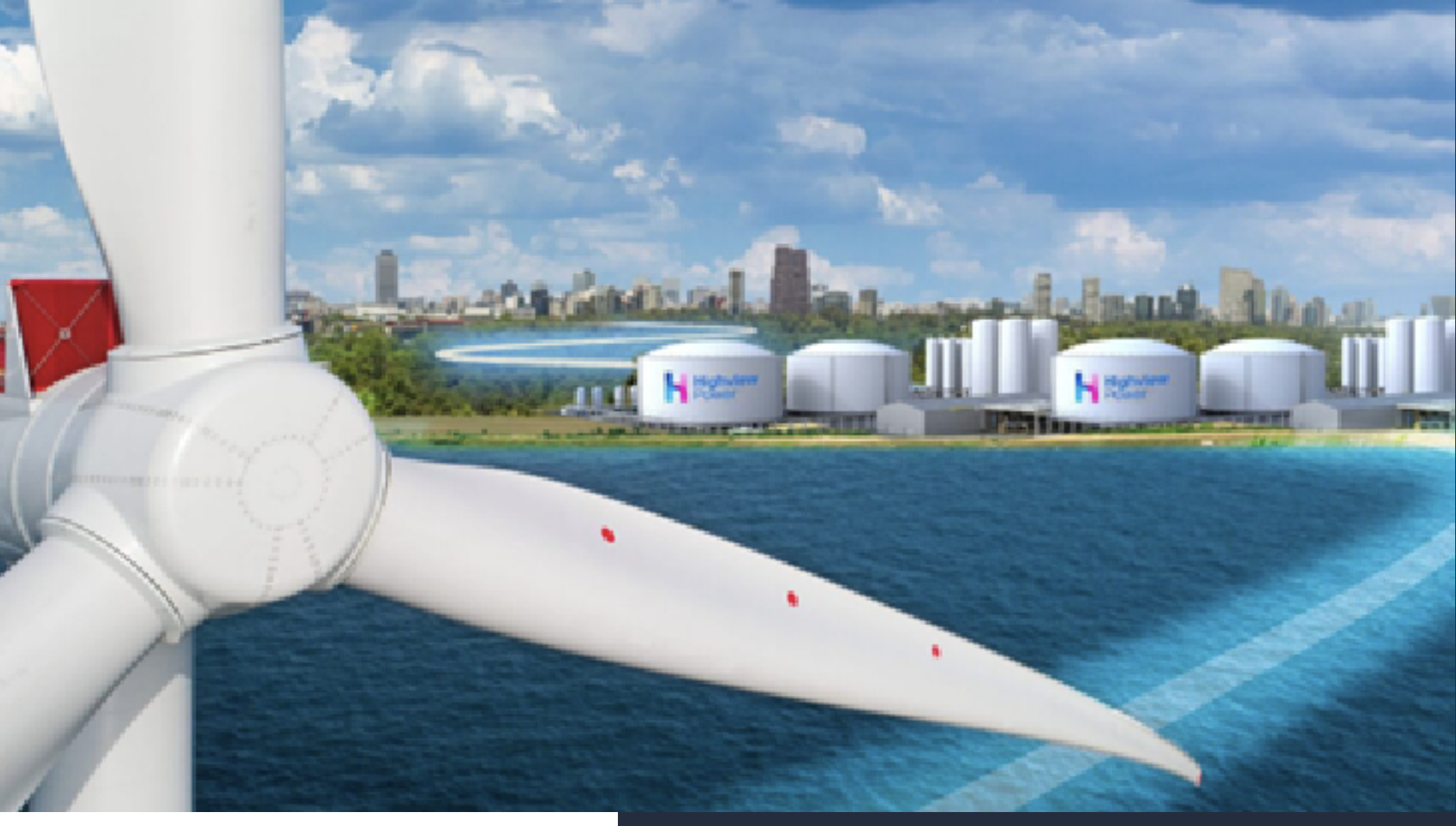
With tanks like these, which can hold GW-equivalents of liquid air, Highview could be building batteries with storage to rival the smaller pumped storage hydroelectric power stations. They are already talking of 200 MW/2.5 GWh systems, which would have a 12.5 hour continuous rating and would probably need two to three tanks.
Coire Glas Pumped Storage
I’ll use Coire Glas pumped storage hydro electric power station as an example.
As currently planned SSE’s Cioire Glas pumped storage hydroelectric power station is 1.5 GW/30 GWh, so it has a a 20 hour continuous rating.
In The UK’s Pumped Storage Hydroelectricity, I gave a rough estimate of the pumped storage hydroelectricity systems in operation or planed as nearly 11 GW/224GWh.
The Soft Cap
The article says this about a soft cap.
Another interesting detail pointed out by several commentators is that the cap is a ‘soft’ one, meaning it will allow extra revenue to be shared between developers and consumers. Exact details on the ratio are yet to be determined.
I seem to remember that when I was modeling a larger multi-vessel chemical plant at ICI, I was using sharing between vessels, to get the system to operate on a PACE-231R analog computer.
So I suspect a soft cap is possible.
How To Keep The Lights On When The Wind Doesn’t Blow
The title of this post, is the same as that of this article in The Times.
This is the sub-heading.
Britain came close to a blackout this month. Gas is being phased out and renewables are intermittent, so can energy storage stop us going dark?
These are the first two paragraphs.
It was 8.29pm on the first Tuesday in January when the alert was issued by the electricity control room. Freezing temperatures had coincided with unusually low wind speeds, and it was making the National Energy System Operator (Neso) jittery.
Engineers forecast a 1.6GW shortfall — the requirement for about 1.5 million homes — for a three-hour period from 4pm the following afternoon. “System operators are requested to notify Neso of any additional megawatt capacity,” the message said.
Luckily, the plea worked.
The article then goes on to describe the various technologies that are being deployed.
The article starts by talking about pumped storage hydroelectricity.
This paragraph gives a superb illustration about how things have changed in energy and energy storage in the UK in the last few decades.
In the past, when coal provided the bulk of British power, this system was used to meet fluctuating demand levels. But now it is also required to meet fluctuating supply levels from renewable sources. Martin Pibworth, chief commercial officer at SSE, started with the company as a trainee in 1998. “Back then, at our Foyers pumped storage plant [at Loch Ness] we would switch modes, from pumping to not pumping and back again, maybe 600 to 700 times a year. Last year we switched modes there 6,500 times. It’s an insight into how the market has changed and how much more flexibility is needed, and how responsive that has to be.”
We have to be more agile, with our handling of storage to back up the various methods of generation.
ILI Group Progresses Plans For 1.5GW Pumped Storage Hydro Project
The title of this post, is the same as that of this article on Power Technology.
This is the sub-heading.
The company has submitted a Section 36 planning application to the Scottish government.
These three paragraphs give more details.
The Intelligent Land Investments (ILI) Group has submitted a Section 36 planning application to the Scottish government for its 1.5GW Balliemeanoch pumped storage hydro project in Argyll and Bute.
The initiative will boost the UK’s renewable energy capacity and supply electricity to 4.5 million homes.
With an anticipated connection date of 2031, the project is strategically aligned with the UK’s long-term energy strategy.
Note.
- It will have a storage capacity of 45 GWh.
- It will be by far, the largest pumped storage hydroelectric power station in the UK. The under development Coire Glas pumped storage system is 24 GWh.
When the UK or Europe needs more power after completion of Balliemeanoch and Coire Glas, the Highlands of Scotland will provide the power.
Fifth Hydro Project Proposed At Loch Ness
The title of this post. is the same as that of this article on the BBC.
This is the sub-heading.
The local community is to be asked for its views next week on plans for a new hydro-electric scheme at Loch Ness.
These three paragraphs introduce the new scheme.
Glen Earrach Energy’s, external (GEE) pumped storage hydro project is the fifth hydro scheme proposed for the Loch Ness area.
The company said its project on Balmacaan Estate would create clean energy while protecting the environment, and create 600 on-site jobs.
But concerns have been raised about the number of planned schemes, with Ness District Salmon Fishery Board worried about the effect on wild fish.
The project has a web site, which has a section entitled About The Project, where this is said.
Glen Earrach Energy, which means “Valley of Spring” in Gaelic, stands at the forefront of energy innovation. The Pumped Storage Hydro (PSH) project, located at Balmacaan Estate, Scotland, is a critical component for achieving a net-zero grid by 2030.
The project prioritises environmental preservation and biodiversity enhancement while achieving outstanding efficiency in energy storage and generation.
This ensures a healthier and more sustainable balance between harnessing natural energy resources and the maintenance and reinforcement of the surrounding ecosystem.
Note.
- It doesn’t say, but it looks like Glen Earrach Energy aim to complete the project by 2030.
- Glen Earrach Energy also seem to be playing a strong environmental card.
But nothing is said about the size of the project.
This article on Business Insider, which is entitled £3 billion Loch Ness Hydro Project Plans Unveiled, does give some details.
- Potential Investment – More than £2 billion
- Output – 2 GW
- Storage Capacity – 30 GWh
- The project could create at least 600 on-site construction jobs in Scotland over a six-year period, plus many thousands more locally in the supply chain.
It is larger, than SSE’s flagship Coire Glas pumped storage hydroelectric power station, which is planned to be a 1.5 GW/30 GWh station, at the other end of the Great Glen.
I have some thoughts.
The Existing Hydro Schemes On Loch Ness
According to the BBC article, there are two existing hydro schemes on Loch Ness.
- Foyers is described on this web site and is a reasonably modern 305 MW/6.3 GWh pumped storage hydroelectric power station, that was built by SSE Renewables in the last fifty years.
- Glendoe is described on this web site and is a modern 106.5 MW conventional hydroelectric power station, that was built by SSE Renewables in the last twenty years.
Foyers and Glendoe may not be the biggest hydroelectric power stations, but they’re up there in size with most solar and onshore wind farms. Perhaps we should look for sites to develop 100 MW hydroelectric power stations?
The Proposed Hydro Schemes On Loch Ness
According to the BBC article, there are four proposed hydro schemes on Loch Ness.
- Coire Glas is described on this web site and will be a 1.5GW/30 GWh pumped storage hydroelectric power station, that is being developed by SSE Renewables.
- Fearna is described on this web site and will be a 1.8GW/37 GWh pumped storage hydroelectric power station, that is being developed by Gilkes Energy.
- Loch Kemp is described on this web site and will be a 600MW/9 GWh pumped storage hydroelectric power station, that is being developed by Statera.
- Loch Na Cathrach is described on this web site and will be a 450MW/2.8 GWh pumped storage hydroelectric power station, that is being developed by Statktaft.
In addition there is, there is the recently announced Glen Earrach.
- Glen Earrach is described on this web site and will be a 2GW/30 GWh pumped storage hydroelectric power station, that is being developed by Glen Earrach Energy.
Note.
- The total power of the seven pumped storage hydroelectric power stations is 4.76 GW.
- The total storage capacity is 85.1 GWh.
The storage capacity is enough to run all turbines flat out for nearly five hours.
Could Glendoe Be Updated To Pumped Storage?
The Wikipedia entry for the Glendoe Hydro Scheme mentions pumped storage several times.
In Glendoe Hydro Power Station, I estimate that a Glendoe pumped storage scheme could be perhaps 50 % bigger than the system at Foyers.
I feel that if more storage capacity is needed in the Highlands, then Glendoe could be converted to pumped storage.
Coire Glas Exploratory Tunnel 70% Complete
The title of this post, is the same as that of this article in Ground Engineering.
This is the sub-heading.
A tunnel to investigate ground conditions at SSE Renewables’ Coire Glas project to build a pumped hydro scheme in the Scottish Highlands is 70% complete, as wider ground investigations come to an end.
These are the first three paragraphs.
Coire Glas on the shores of Loch Lochy in Great Glen is the first large scale pumped hydro storage scheme to be developed in the UK for more than 40 years.
It would take excess energy from the grid and use it to pump water 500m up a hill from Loch Lochy to a vast reservoir where it would be stored. This will be done through a tailrace tunnel, underground cavern power station, high pressure tunnel and low-pressure headrace tunnel.
SSE Renewables has started exploratory works on the scheme. This has involved building an up to 1km long and 4m wide tunnel to investigate the ground conditions in which the powerhouse will be built.
All the information gathered will be used in the detailed design of the 1,5GW/30 GWh pumped storage system, which is expected to be a £1.5 billion capital investment.
The Wikipedia entry for Coire Glas power station, says this about the current status and completion.
In December 2023, the exploratory tunnel had reached 720m in length.
A final investment decision will depend on UK government assurances about how the regulated electricity market would reward storage schemes. SSE hope to make that £1.5Bn decision in 2024, in which case the scheme could be completed in 2031.
I suspect that as this is one of the largest green energy projects in the UK, that there’ll be a lot of media coverage of the construction of this power station.
 The Anonymous Widower