An Uncomfortable Seat
The Germans don’t encourage you to sit down in stations and this seat at Bremerhaven Hauptbahnhof is typical. That’s if there are any seats!
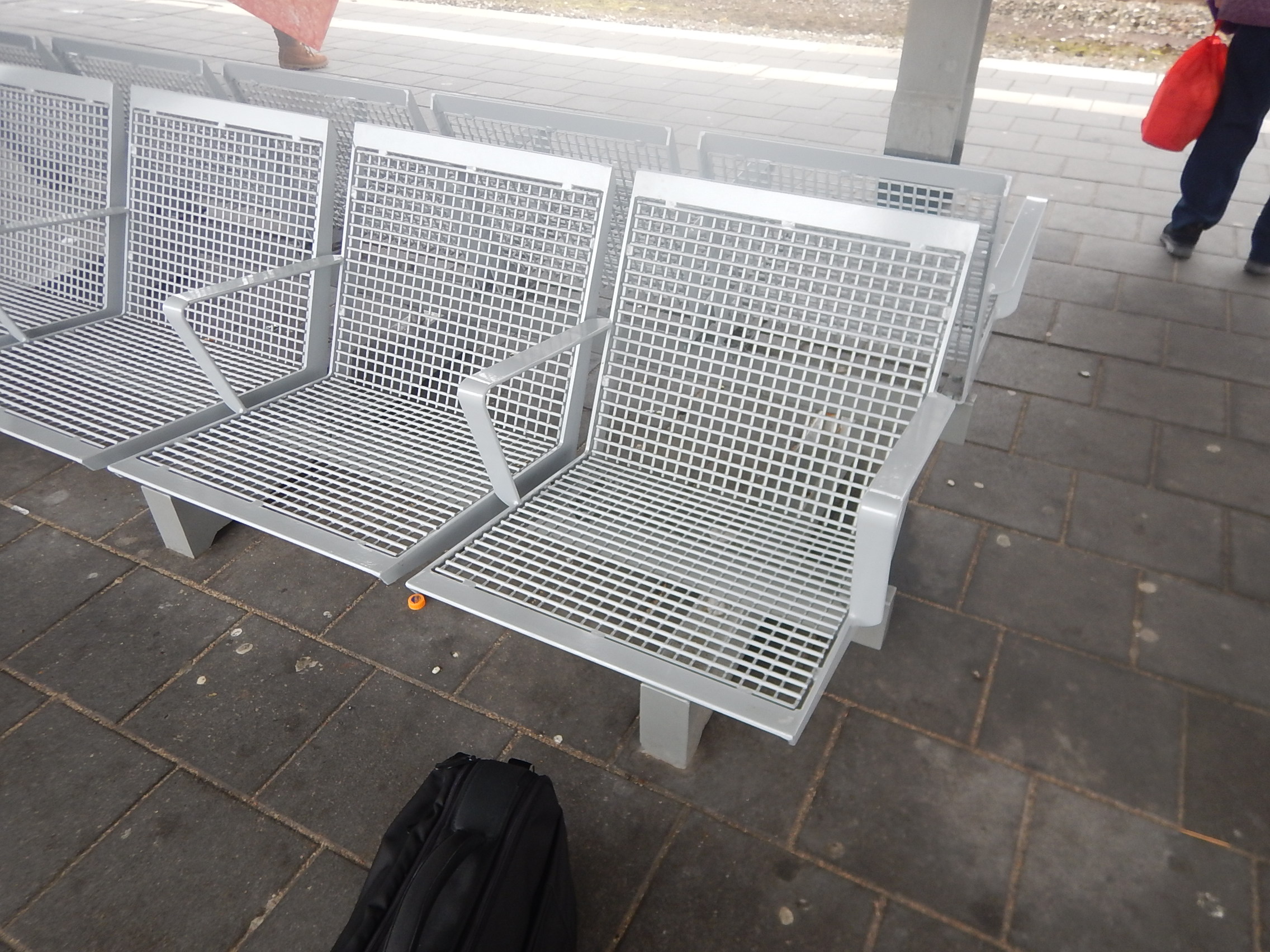
I think I’ll take a blow-up cushion on my next trip to Germany! Or on Thameslink!
A Bridge Station Over Still Waters
Overamstel station is as the name suggests built on a bridge over the River Amstel.





I didn’t have time to exit the station and explore.
Stations On Bridges
What puzzles me, is that there are so few stations built on a bridge or viaduct over water or perhaps a park, with entrances on both sides.
Only Blackfriars station in London comes to mind.
Although, there are rumours, that Charing Cross will be extended over the Thames to fit in longer platforms.
Surely, if you need a station nearby and a footbridge over a river, isn’t a combined station and footbridge a dual-purpose solution. Especially, if you want a station on both sides of the river.
How Many Stations Could Use This Step-Free Layout?
Greenford station has London Underground’s only inclined lift.
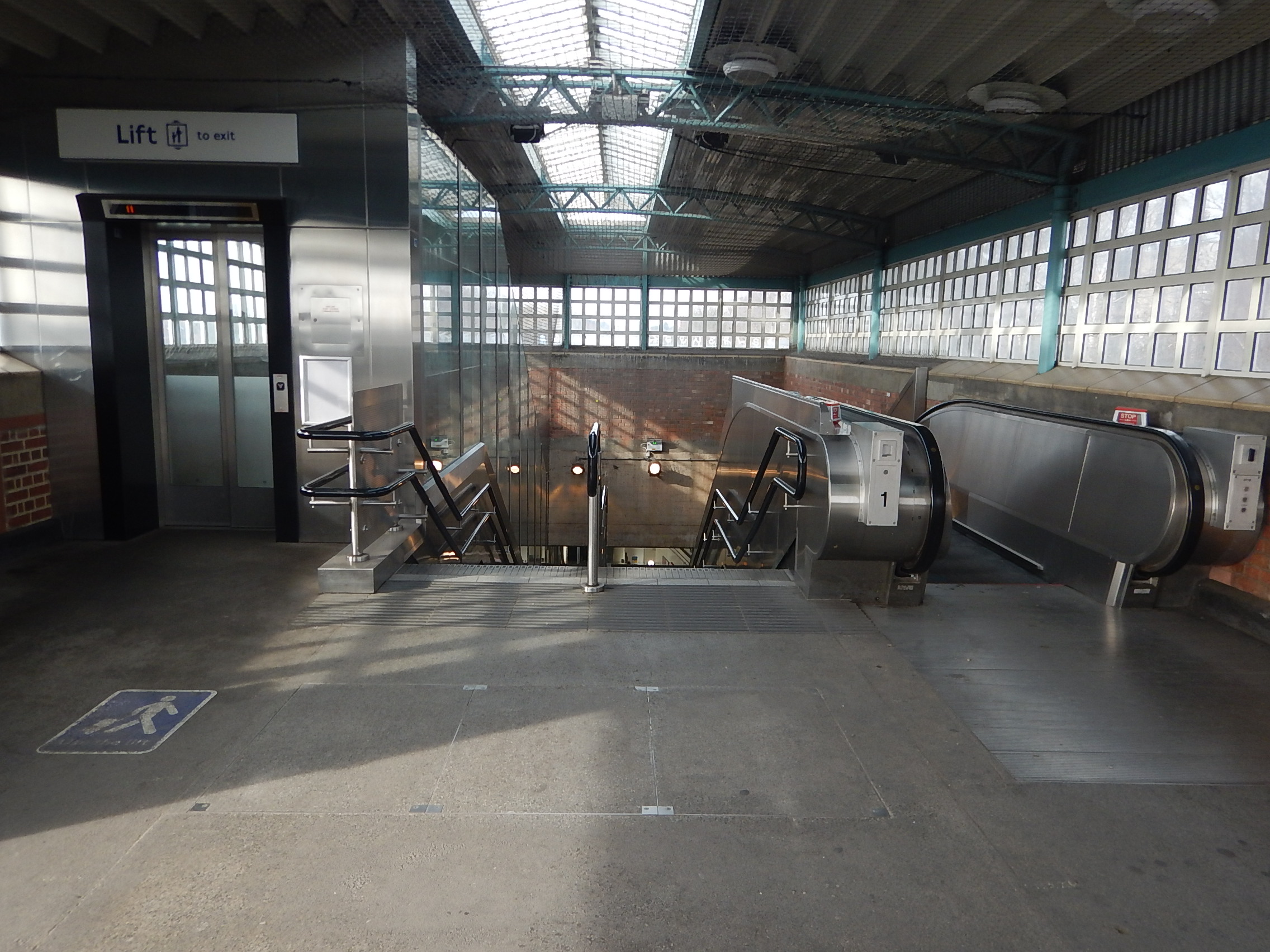
The inclined lift is installed with an escalator on the other side and double-width stairs with a central rail in between.
Searching the Internet, there doesn’t seem to have been any problems, since it was switched on in 2015.
The number of passengers using the station’s two Central Line and one National Rail platforms is around five million per year, which would appear fairly typical for many outer London tube stations.
So how many stations could use a layout like this?
These issues will need to be considered.
Height
Greenford station is not a great height difference and you wouldn’t want to have too much of a difference, as the stairs will get a heavy use.
Platform Layout
Greenford station has an island platform, which means that one set of inclinced/lift/escalator can serve all platforms.
Installation Width
The picture shows that the combined installation is quite wide, so this type of step-free access could be difficult to install.
Application To A Two-Escalator/Stairs System
There are lots of stations in the outer reaches of the Underground, which need step-free-access, where there are two escalators and a set of stairs.
Some might think, that an inclined lift could be put in the space and it would certainly the engineering wouldn’t be difficult.
But the problem would be long-term maintenance, where escalators are given a full strip-down every ten years or so and closed for several months.
The station would be left with just one working escalator and the inclined lift.
I would therefore feel that installing an inclined lift instead of the stairs is not a feasible proposition, unless the station has two entrances.
Application To A Three-Escalator System
Most deep-level stations on the London Underground have banks of three escalators, so that if one breaks down or is being maintained, there is a full service.
Application To A Station Footbridge
There are lots of stations, that need step-free footbridges.
I can envisage a prefabricated system, where an inclined lift is one of the components.
The lift and its frame would be assembled in a factory and just lifted into place on prepared foundations. Stairs and if needed, an escalator could also be handled in the same way, before the bridge deck was lifted on top.
Too many step-free footbridges, seem to require a lot of bespoke construction on site.
The system could also be used where the entrance to a station was a single set of stairs to an island platform from an existing overbridge.
Bowes Park, Rose Grove and Mill Hill come to mind. This picture shows Mill Hill station in Lancashire.
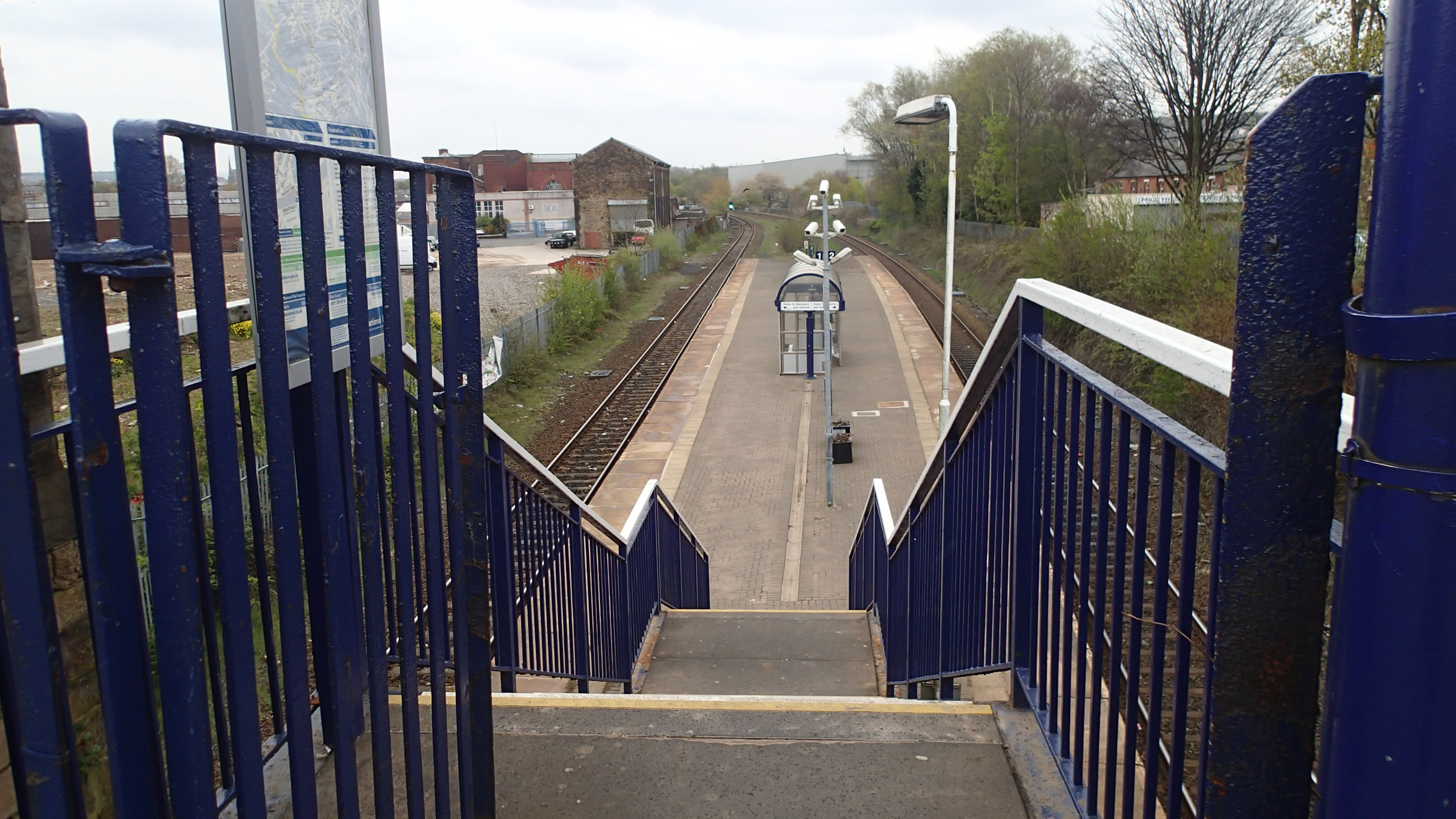
There must be others, where the existing stairs could be replaced with a wide staircase and an inclined lift.
Conclusion
I think it is likely, that given the success of the Greenford installation, we will see other inclined lifts on the UK’s railway network.
But places where they are used will have to be chosen with care and well-designed!
Access To Multiple Units
I have been taking some pictures of the grab handles in the doorways of a selection of electric and diesel multiple units.
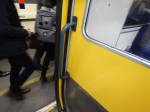
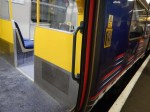
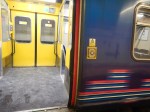
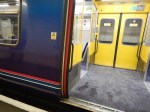
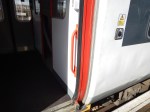
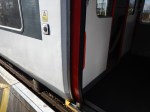
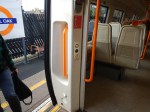
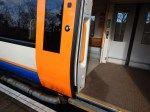
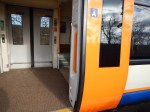
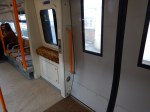
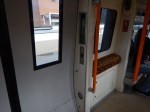
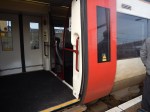
On most stations, the access between platform and train is a simple step across, but on lots of others, I have to grab the handle to make certain I am safe in the step-up or step-down.
Note
- The British Rail-era trains have similar designs.
- On some trains, you can’t see the grab handle from the platform, as it is hidden by the door.
- The Class 172 and Class 378 Trains are both Bombardier trains of a similar date, but the handles are very different.
- The Class 378 train has an asymmetric layout.
I will add more examples.
My Entry And Exit With A Large Step
When I get into a train, where there is a large step, I often poke my head around the door to get a good look at the handle on the right hand side, which I grip with my right hand to balance myself as I step up.
When I get out from a train, where there is a large step, I go to the right, grab the handle and then step out sideways onto my left leg.
I should say that I have the following problems.
- My left hand and arm isn’t the best, as my humerus was broken by the school bully.
- I tend to avoid using my left hand.
- My stroke a few years ago damaged my eyesight low down on the left, so when descending I like to have something to grab.
- I have a touch of arthritis.
- I am only one metre seventy tall.
On the other hand, my right hand and arm are strong. I also have no vision problem on the right hand side.
Could Grab Handles Be Designed Better?
They could certainly be designed better for me!
But I am one of millions, who are less than one hundred percent!
I wonder if a University or Design Consultancy has ever looked at the problem of designing a perfect grab handle for a train.
My ideas could include.
- A grab handle that is longer and goes lower, so it is better for short people and lder children.
- A grab handle that protrudes slightly from behind the open door, so that entering passengers can see it.
- A grab handle with a textured surface.
- Should the grab handle layout be symmetrical.
I would suspect, that if a better design of grab handle could be found, this would speed up entry and exit from the train. Surely train operating companies would like that?
This is not the finished post. Any suggestions and comments will be welcomed.
The Design Of Barking Riverside Station
The information is coming together about the new Barking Riverside station.
Wikipedia
The Wikipedia entry at the moment is not very information, but it does say that the station has two platforms.
Location
This map from Transport for London, shows the location of the station.
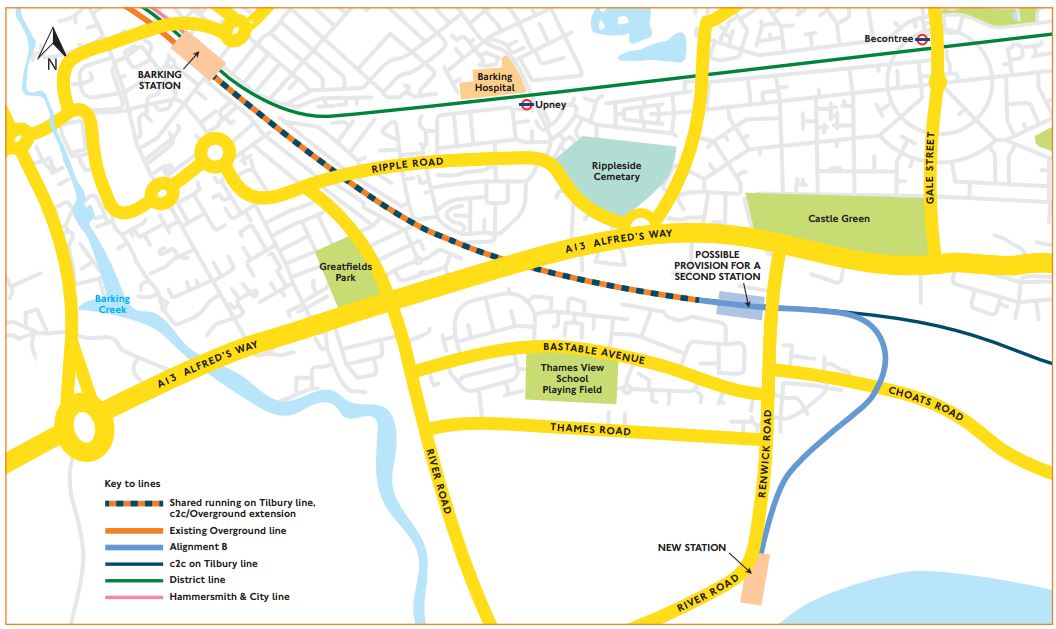
The location of Barking Riverside station is at the end of the branch line that comes South from the Barking to Tilbury Line.
As it is a long term ambition of Transport for London to extend the railway under the River to Abbey Wood station, the North-South orientation of the station is probably important.
carto.metro.free.fr
This map from carto.metro.free.fr gives the layout of Barking Riverside station and the tracks leading to it.
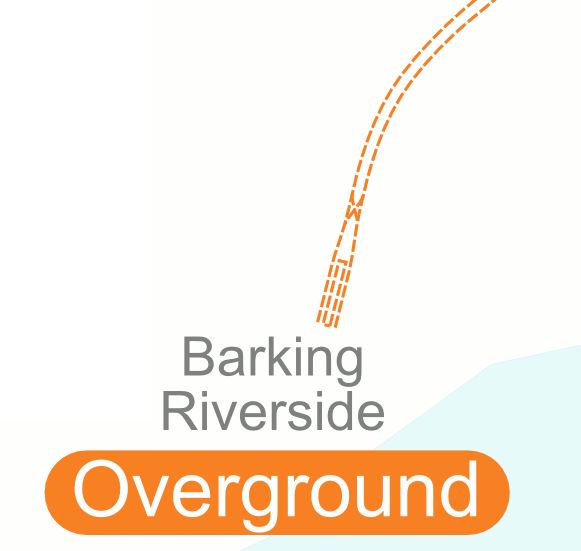
It shows two tracks leading to a two-platform station, with a crossover to allow both platforms to be used.
The Architect’s Visualisations
These are available on this page on the Moxon Architect’s web site.
This is the first visualisation on the site.
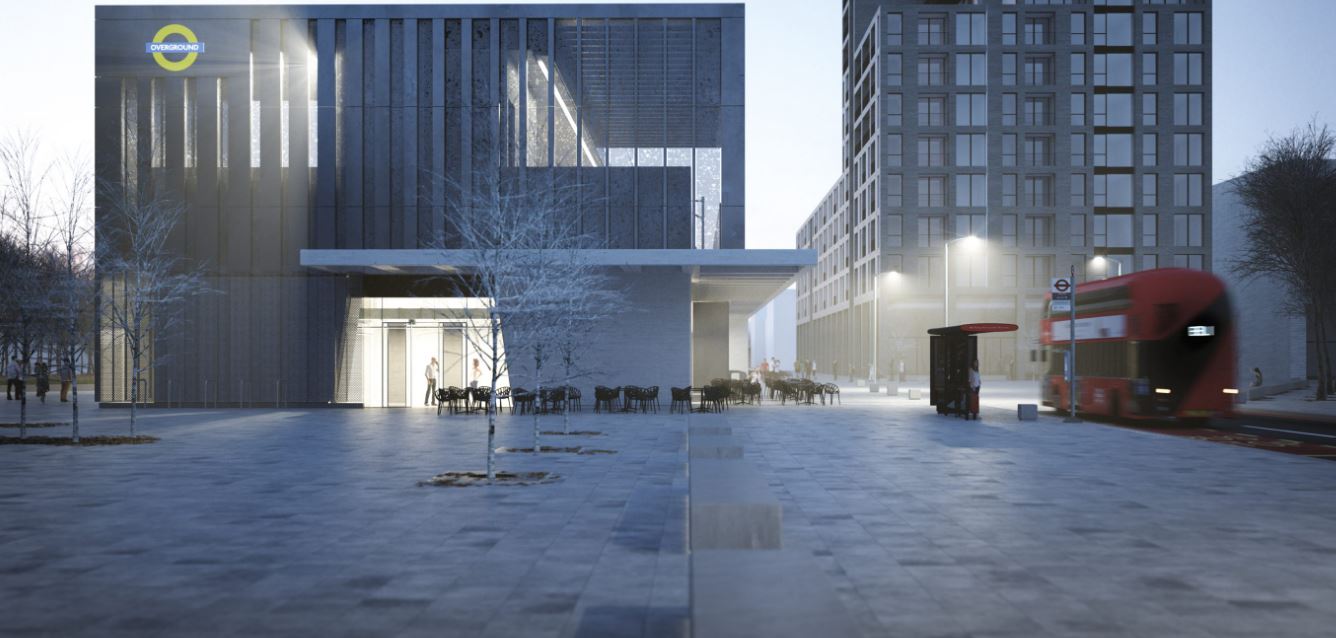
It shows the end view of the station and as no railway lines are visible, I assume that it is looking North, so the River Thames is behind the viewer and Renwick Road is on the left.
This is the second visualisation.
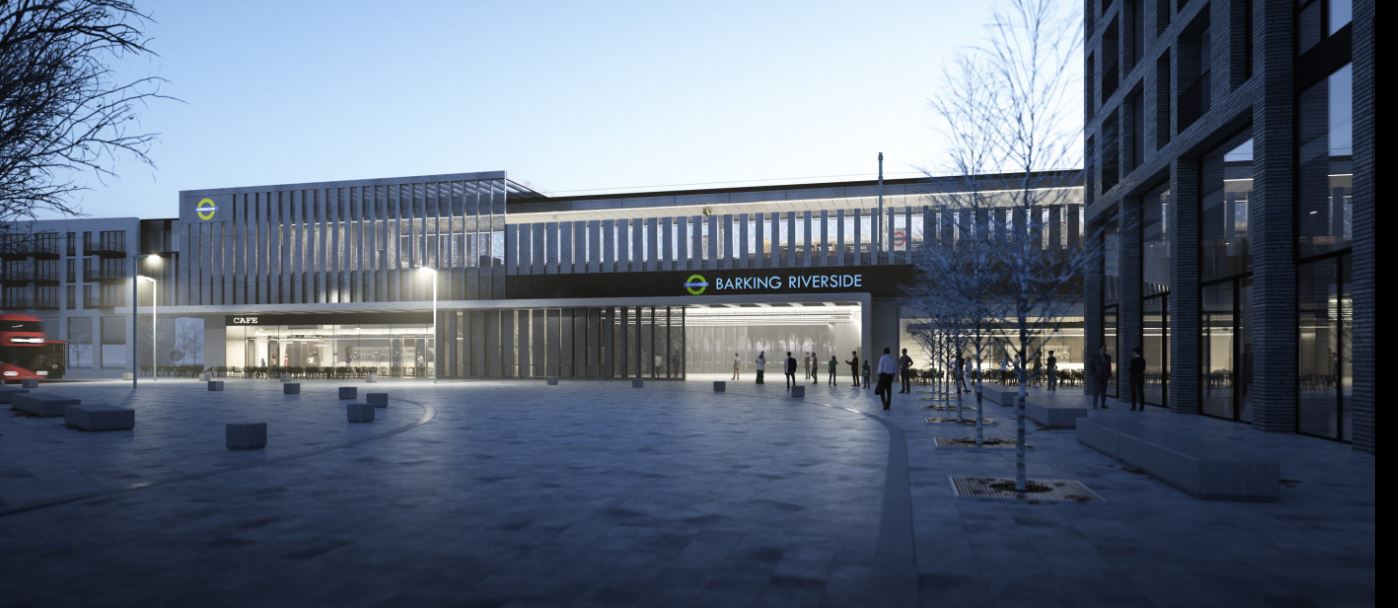
It shows the station looking from the East towards Renwick Road. Note the bus in both images.
As at Hackney Wick station, there is an underpass, so the station is not a barrier to pedestrians.
The seventh visualisation shows the station from above.
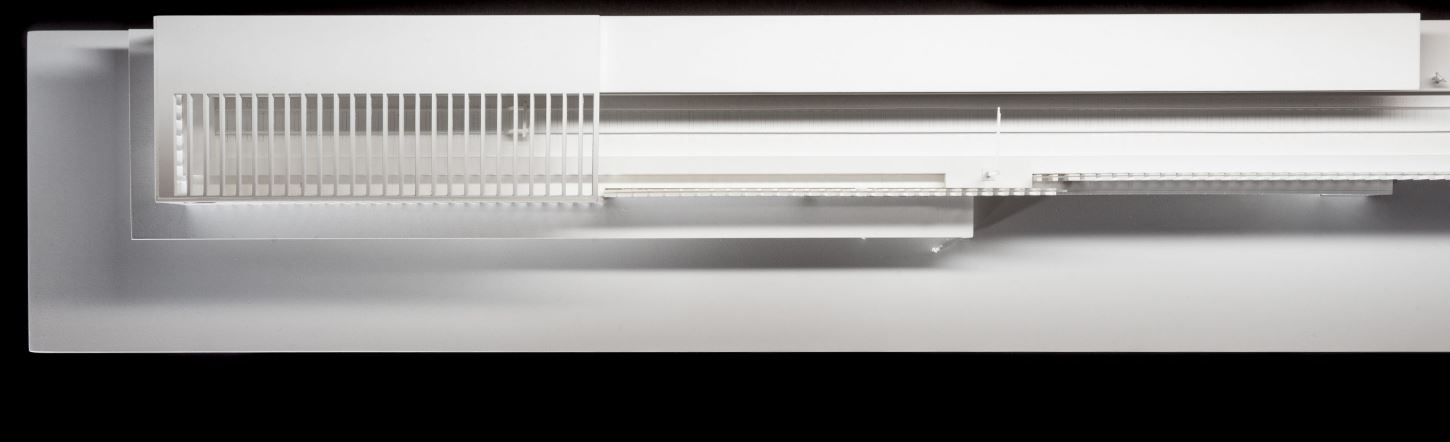
It only shows one platform in the image, as do other visualisations.
Is It A Single Platform Station?
Is this the way the station will be built or is it just to make the visualisation simpler?
A single platform station should be able to handle six trains per hour (tph).
- This year, this frequency will be implemented between single platforms at Highbury & Islington and Crystal Palace stations on the Overground.
- The Gospel Oak to Barking Line will have a maximum frequency of five tph in the Peak.
- The infrastructure and the trains will all be brand new and use the best technology.
So it looks like a single platform station should be able to handle the planned number of trains for the simple extension to Barking Riverside station.
Will There Be Electrification?
This is the fifth visualisation.
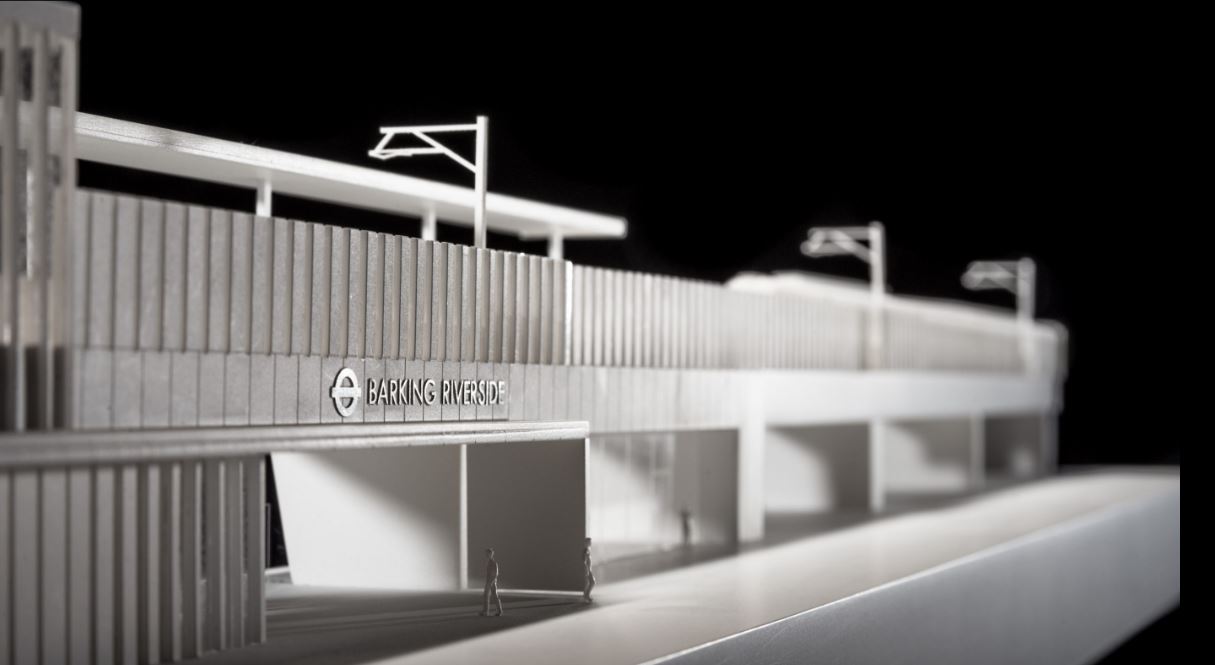
It clearly shows gantries for overhead wires.
But it appears that only one platform is there.
I have thought for some time, that the Barking Riverside Extension could be built without electrification and battery/electric trains could be used.
I laid out my views in Don’t Mention Electrification!.
- All Aventras are wired for on-board electrical storage.
- The Barking Riverside Extension is only 1.5 km long.
- The area of the extension has some very large electricity pylons, that the extension has to dodge through.
- If the line is extended under the Thames, it would be cheaper to build a tunnel for third rail, as it will connect to third-rail lines on the South Bank.
- There must be substantial savings by not putting up overhead wires.
- A safer and more reliable railway in extreme weather.
I also repeated my views in an article in Rail Magazine, which I described in I’ve Been Published In Rail Magazine.
No-one has told me that they disagree with my views.
So why are electrification gantries shown?
- Transport for London or Network Rail don’t believe that battery/electric trains are possible. This is unlikely, as battery/electric trains have been successfully demonstrated in the UK and elsewhere, and ordered for Wales and Liverpool.
- Obviously, there has to be a backstop if conventional electric trains have to be used. So, provision is being made to electrify the extension.
- The single platform is electrified, so that a battery/electric train can be fully-charged before it returns towards Barking and Gospel Oak.
If before the station is built, it is decided that electrification is not needed, the overhead wires can be omitted from the construction phase.
I do feel though, we will know more about the performance and reliability of battery/electric trains in a few years, and we will alter the designs of overhead electrification accordingly.
Extending Across The River
The station has been built to enable extension to Abbey Wood station on the other side of the Thames.
There are probably several designs that would fit with the current station.
The simplest is probably to install a second platform and connect both to a tunnel under the river or a bridge over the river.
This would have several disadvantages.
- A lot of the station would need to be demolished.
- The train service to Barking Riverside station might have to be stopped for several months, during construction.
- All services would have to cross the river.
A better option is probably to install the second platform on a track, that goes under the river in a tunnel.
- The single tunnel portal would require less land take, as it could be very close to Barking Riverside station.
- The tunnel under the river could be a mix of single or double track, to create the most affordable tunnel.
- The current single platform would become a bay platform.
- During construction, the service to Barking Riverside station would be able to continue as normal.
- The bay platform could be used for service recovery in times of disruption.
I particular like the idea of a loop railway on the South Bank of the Thames with perhaps four or five stations. Alternatively, it could be a tram-train on the surface.
Conclusion
It looks like the design of Barking Riverside station, is one that will cater for all eventualities.
I am looking forward to taking the first train to the station.
Wi-Fi And Power Sockets On A Class 717 Train
In A First Ride In A Class 717 Train, I didn’t take any pictures of the power sockets, as I didn’t see them.
This picture from a second trip, rectified the error.

There is one 13 amp socket under a pair of seats and you will need a plug.
It is my belief that a USB socket is better, as this armrest installation on a Class 230 train shows.
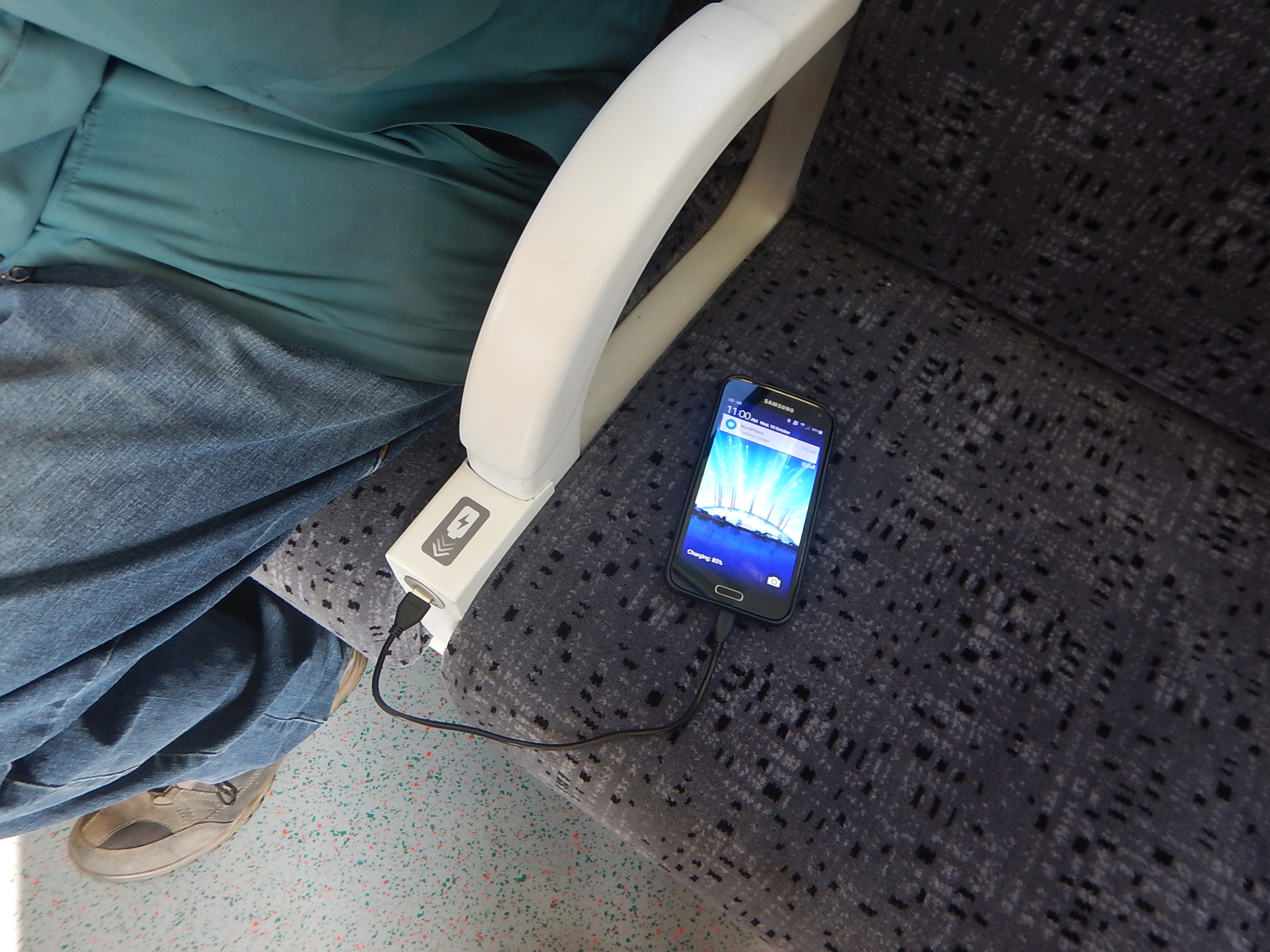
It is certainly a better place, as the wires can be short and can be kept out of the way.
The wi-fi performed well, but Great Northern seemed to want me to register. I never do, as it just gives them an excuse to send you junk mail.
Conclusion
The wi-fi installation can be improved.
It has to, as according to this article on Rail Magazine, Class 710 trains have USB sockets.
My ideal train would have.
- Free wi-fi with no registration.
- USB sockets in the armrests.
- 4G booster, so if the train has a signal, you do.
The current systems can be greatly improved.
The Original Walk-Through Train In The UK
It’s not often, you are more or less alone in one of London Underground’s S8 Stock trains, that is stationary.
But this train was stuck as a red signal outside Farringtdon station on a quiet day over the Christmas period, so I took advantage.
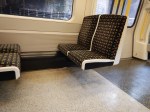
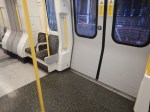
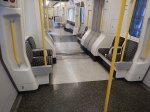
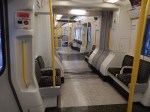
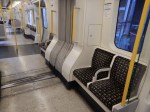
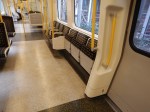
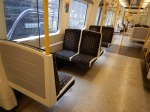
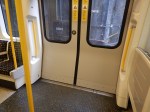
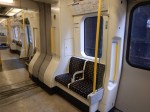
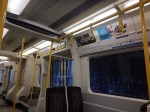
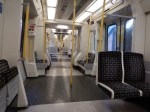
You can understand, why these eight car and 134 metre long trains can handle a couple over a thousand passengers for big matches at Wembley and also make journeys acceptable for long-distance commuters from Amersham, Chesham, Uxbridge and Watford.
Note the following features.
- Walk-through design.
- Better seats than Thameslink’s Call 700 trains.
- Wide all-double doors and lobbies.
- Wheelchair spaces with tip-up seats.
- Big, wide windows.
- Space under the seats.
Air-conditioning, step free access to platform and selective door opening are not shown.
The trains started to enter service in 2010 and they will probably have an interior refresh in around five years time, with the probably addition of wi-fi and USB power sockets.
Transport for London have used similar designs for three trains since.
- The Overground’s Class 378 trains
- Crossrail’s Class 345 trains
- The Overground’s Class 710 trains
The refurbishment of Docklands Light Railway trains has also been following similar principles.
Do Escalators Attract Passengers?
These are passenger figures from 2016 in millions on the London Underground’s Victoria Line
- Walthamstow Central – 22.77
- Blackhorse Road – 8.45
- Tottenham Hale – 13.21
- Seven Sisters – 19.61
- Finsbury Park – 32.74
- Highbury & Islington – 20.22
- Warren Street – 20.35
- Pimlico – 11.49
- Vauxhall – 32.23
- Stockwell – 11.42
- Brixton – 33.46
Note.
- I have left out the very busy stations which are major interchanges like Kings Cross St. Pancras, Euston, Oxford Circus, Green Park and Victoria.
- Perhaps the figures for Finsbury Park, Stockwell and Warren Street, should be divided by two, as these stations have two lines.
- Most stations have connections to National Rail services.
Brixton and Vauxhall only have indirect connections to National Rail, but they have a higher number of passengers compared to say Finsbury Park, Highbury & Islington and Walthamstow Central, which all have direct connections.
But these two stations have three escalators.
Seven Sisters seems to attract more passengers, than Tottenham Hale.
But then it is double-ended!
So does more escalators at a station increase the number of passengers using the station?
It is also worth looking at single line stations with no connection to National Rail stations on both sides of the Euston Rpad.
Again the figures are for 2016 in millions.
- Angel – 20.10 – Three escalators
- Archway – 9.94 – Escalators
- Chalk Farm – 5.61 – Lifts
- Covent Garden – 17,19 – Lifts
- Euston Square – 14.40 – Stairs and a lift to one platform
- Goodge Street – 8.46 – Lifts
- Great Portland Street – 9.86 – Stairs
- Mornington Crescent – 5.04 – Lifts
- Regent’s Park 3.35 – Lifts
- Russell Square – 12.36 – Lifts
Note.
- Angel and Archway have been rebuilt to replace lifts with escalators and they show higher usage.
- I’d love to have before and after figures for these two stations.
This is only a crude analysis, but I’m certain it shows that stations with escalators have higher passenger numbers.
It could also be, that London Transport, knew where the passengers would go and built stations they felt would be busy accordingly.
They certainly put a lot of escalators on the Northern extension of the Piccadilly Line.
These are 2016 for the stations.
- Cockfosters – 2.04 – Stairs
- Oakwood – 2.88 – Stairs and Lift
- Southgate – 5.65 – Escalators
- Arnos Grove – 4.65 – Stairs
- Bounds Green – 6.62 – Escalators
- Wood Green – 13.20 – Escalators
- Turnpike Lane – 10.98 – Escalators
- Manor House – 9.12 – Escalators
Note.
- I think it can be said, that this section of the Piccadilly Line did very well to get the access right.
- The catchment areas of the five Northernmost stations overlap and many travellers will use different stations depending on how they feel.
- Southgate attracts more passengers than the two adjoining stations.
- Wood Green and Turnpike Lane are the busiest stations as they connect to the shops at Wood Green and lots of buses.
- Only Cockfosters has car parking.
I think at the end of the line, the escalators draw passengers.
Escalators And The Disabled, Elderly, Buggy Pushers and Suitcase Draggers
There’s also no doubt, that a large proportion of the many passengers in these categories can handle an escalator, even if they have problems with stairs.
Conclusion
My crude data isn’t good enough to draw a firm conclusion, but I suspect Transport for London know the answer.
If escalators do attract passengers, surely transport operators should install more of them.
Plastic Bag Fee ‘To Double To 10p’ And Include Every Shop
The title of this post is the same as that of this article on the BBC.
This is the guts of the story.
The 5p fee for plastic carrier bags in England will be doubled to 10p, and extended to all shops, under plans set out by the environment secretary.
The change is contained in a government consultation aimed at further reducing the plastic used by consumers and could come into effect in January 2020.
Smaller retailers, who are exempt from the current levy, supply an estimated 3.6 billion single-use bags annually.
I’m all for this, if it cuts down the amount of plastic, that blows around the country, before ending up in the seas.
This is the bag I use.

Note.
- It folds up, so that it first into my man-bag.
- It easily holds two days of my food shopping.
- The handles re very comfortable, even when carrying eight bottles of beer.
- I’ve had it over a year now and it is finally showing the odd sign of wear.
- It is big enough to hold a copy of the Sunday Times without folding.
It did cost be five pounds from M & S, but how much have I saved on five pence bags?
It is not a perfect bag, but it is a good start.
Other things, in the same vein, that I’d like to see.
- A charge on takeaway food, especially pizza boxes, which seem to end up in front of my house.
- A fine for piling household and commercial waste around litter bins, which is very prevalent in this area, despite council camnpaigns to stop it.
- Remove the foxes back to the countryside, so they don’t spread the rubbish all over the street.
As to the latter, foxes seem to have eaten most of the cats, hedgehogs and birds, so it is their only way to get food.
Should Railways Have A Pop-Up Service Capability?
Most of us will be familiar with the concept of Pop-Up Retail.
This is the first paragraph of the Wikipedia entry.
Pop-up retail, also known as pop-up store (pop-up shop in the UK, Australia and Ireland) or flash retailing, is a trend of opening short-term sales spaces that started in Los Angeles and now pop up all over the United States, Canada, China,Japan, Mexico, France, Germany, the United Kingdom and Australia. The pop-up industry is now estimated to be a $50 billion industry. Pop-up retail has been an increasing factor during the retail apocalypse of the 2010s, including seasonal Halloween retailer Spirit Halloween, who has operated stores in vacant spaces during the season.
Two of the units are scheduled for export to the United States, to demonstrate for the potential for ‘pop-up’ commuter services; the cost of a one-year period are said to be equivalent to the consultancy costs for opening a new route. Should such an approach be considered in this country too? The gestation period for new services on freight-only routes is probably the best part of 10 years, but it doesn’t have to be like that.
When floods swept away the road bridge at Workington in 2009; Network Rail and Northern constructed a pop-up station and introduced additional trains in less than two weeks.

I can envisage three types of simple stations.
- A one-platform station on a single-track line.
- A two-platform station on a double-track line.
- A one-platform station on a double-track line.
Note
- Type One, would be the simplest and would be worked bidirectionally.
- Type Two, would probably require a bridge across the tracks.
- Type Three, would need crossovers at both ends of the station, to allow the single platform to be worked bidirectionally.
Obviously, Type 1 would be the most affordable and probably easiest to install.


- It would certainly bridge the gap between two platforms with a double-track railway in between.
- In a rail application, the bridge would be interlocked with the signalling and controlled by the signaller.
- Signals and lights could be added to the bridge to ensure complete safety.
- Wikipedia says the original at the Paddington Basin cost £500,000, which could probably be reduced if more were built.
- This page on the Merchant Square web site, shows the bridge in action.
- I suspect this bridge would work on single- or double-track lines, without electrification, or with third-rail or with overhead electrification.
- At many stations it could just be dropped in place from a rail-mounted crane, after preparing the existing platforms.
- I suspect though, that there would be a limit to the number of trains per hour it could handle.
- The ability to execute a fast stop at a station.
- Level access will be possible between train and platform.
- On-board CCTV systems to ensure safe loading and unloading of passengers.
- Modern in-cab digital signalling.
This will enable the trains to make a station stop without causing problems to the existing timetable.
So if Network Rail, had the ability to quickly install a pop-up station, modern trains would allow a service to be tested at a reasonable cost.
The Practicalities Of Installing A Pop-Up Station
Suppose a station were to be installed at Soham or any other suitable place.
I would expect Network Rail to produce standard designs for the foundations of their pop-up stations.
Network Rail periodically close a line to replace track or do various other work. When a line is closed for this work and a pop-up station might be needed on the route, the standard foundations would be installed.
Then, when the budget for the station had been obtained, the station would be installed and commissioned in a suitable possession.
Conclusion
I believe a pop-up station is a feasible proposition.
If a pop-up station is a feasible proposition, then it follows that to install perhaps five stations on a freight-only line to create a totally new passenger service is also a feasible proposition.
 The Anonymous Widower