£100m Boost For Biggest UK Hydro Scheme In Decades
The title of this post, is the same as that of this article on the BBC.
This is the sub-heading.
A giant hydro scheme which would double the UK’s ability to store energy for long periods is taking a leap forward with a £100m investment by SSE.
These are the first three paragraphs.
The proposed 92m-high dam and two reservoirs at Coire Glas in the Highlands would be Britain’s biggest hydroelectric project for 40 years.
Scottish ministers approved the 1.5 GW pumped storage facility in 2020.
But power giant SSE wants assurances from the UK government before finally signing it off.
There are two major problems with this scheme.
Why The Forty Year Wait?
I am an Electrical and Control Engineer and it is a scandal that we are waiting forty years for another pumped storage scheme like the successful Electric Mountain or Cruachan power stations to arrive.
Petrol or diesel vehicles have batteries for these three main purposes.
- To start the engine.
- To stabilise the output of the generator or alternator.
- To provide emergency power.
As to the latter, I can’t be the only person, who has dragged a car out of a ford on the starter motor. But think of the times, you’ve used the hazard warning lights, after an accident or an engine failure.
The nightmare of any operator of a complicated electricity network like the UK’s is a black start, which is defined by Wikipedia like this.
A black start is the process of restoring an electric power station or a part of an electric grid to operation without relying on the external electric power transmission network to recover from a total or partial shutdown.
Hydro electric power stations and especially those that are part of pumped storage schemes are ideal for providing the initial power, as they are often easy to start and have water available. Cruachan power station has a black start capability, but at 440 MW is it big enough?
Over the last few years, many lithium-ion batteries have been added to the UK power network, which are used to stabilise the grid, when the sun isn’t shining and the wind isn’t blowing.
There are four pumped storage hydro-electric schemes in the UK.
- Cruachan – 440 MW/7 GWh – 1965
- Dinorwig (Electric Mountain) – 1800 MW/9.1 GWh -1984
- Ffestiniog – 360MW/1.44 GWh – 1963
- Foyers – 300 MW/6.3 GWh – 1974
Note.
- I always give the power output and the storage capacity for a battery, if it is known.
- According to Wikipedia, Scotland has a potential for around 500 GWh of pumped storage.
- The largest lithium-ion battery that I know, that is being planned in the UK, is Intergen’s 320 MW/640 MWh battery at Thames Gateway, that I wrote about in Giant Batteries Will Provide Surge Of Electricity Storage. It’s smaller than any of the four current pumped storage schemes.
- The Wikipedia entry for Coire Glas says that it is a 1.5 GW/30 GWh pumped storage hydro-electric power station.
I very much feel that even one 1.5 GW/30 GWh pumped storage hydro-electric power station must make a big difference mathematically.
Why have we had to wait so long? It’s not as though a pumped storage hydro-electric power station of this size has suffered a serious disaster.
Drax Needs Assurances Too?
The BBC article says this.
Scotland’s only other pumped storage scheme, operated by Drax Group, is housed within a giant artificial cavern inside Ben Cruachan on the shores of Loch Awe in Argyll.
The North Yorkshire-based company plans to more than double the generating capacity of its facility, nicknamed Hollow Mountain, to more than 1GW, with the construction of a new underground power station.
But both Drax and SSE have been reluctant to press ahead without assurances from Whitehall.
It looks like the right assurances would open up at least two pumped storage hydro-electric power station projects.
But it could be better than that, as there are other projects under development.
- Balliemeanoch – 1.5GW/45 GWh
- Corrievarkie – 600 MW/14.5 GWh
- Loch Earba – 900 MW/33 GWh
- Loch Kemp – 300 MW/9 GWh
- Red John – 450 MW/2.8 GWh
This totals to 3750 MW/104.3 GWh or 5850 MW/134.3 GWh with the addition of Coire Glas and the extension to Cruachan.
Getting the assurances right could result in large amounts of construction in Scotland!
What Assurances Do Power Giants SSE And Drax Want Before Signing Off?
This news item on SSE Renewables, which is dated 18th March 2022, is entitled Ministerial Roundtable Seeks To Unlock Investment In UK Energy Storage.
These three paragraphs gives details of the meeting.
Business leaders have met with UK Energy Minister the Rt Hon Greg Hands MP to discuss how the government could unlock significant investment in vital energy storage technologies needed to decarbonise the power sector and help ensure greater energy independence.
The meeting was organised by the Long-Duration Electricity Storage Alliance, a new association of companies, progressing plans across a range of technologies to be first of their kind to be developed in the UK for decades.
Representatives from Drax, SSE Renewables, Highview Power and Invinity Energy Systems met with The Rt Hon Greg Hands MP, Minister of State for Business, Energy and Clean Growth [yesterday].
But they still don’t seem to have come up with a funding mechanism.
- In this case, it seems that multiple politicians may not be to blame, as Greg Hands was the Minister of State for Business, Energy and Clean Growth until the 6th of September 2022, when he handed over to Graham Stuart, who is still the incumbent.
- Could it be that civil servants for this problem need to be augmented by a Control Engineer with mathematical modelling skills from a practical university?
It is the sort of problem, I would love to get my teeth into, but unfortunately my three mentors in accountancy and banking; Bob, Brian and David, who could have helped me, have all passed on to another place to help someone else with their problems.
I’ve just had a virtual meeting with all three and they told me to look at it like a warehousing system.
Consider.
- It would be very easy to measure the amount of water stored in the upper reservoir of a pumped storage hydro-electric power station.
- It would also be easy to measure the electricity flows to and from the pumped storage hydro-electric power station.
- A monetary value could be placed on the water in the upper reservoir and the flows, depending on the current price for electricity.
So it should be possible to know that a pumped storage hydro-electric power station, was perhaps storing energy as follows.
- 10 GWh for SSE
- 8 GWh for RWE
- 6 GWh for Scottish Power
- 6 GWh is not being used
And just as in a warehouse, they would pay a fee of so much for storing each GWh for an hour.
- The system would work with any type of storage.
- Would competition between the various storage sites bring down prices for storing electricity?
- Pumped storage operators would get a bonus when it rained heavily.
- Just as they do now, electricity generators would store it when prices are low and retrieve it when prices are high.
A lot of the rules used to decide where electricity goes would still work.
The Case For Pumped Hydro Storage
The Coire Glas Project
Note that Coire Glas is a pumped storage hydroelectric scheme being developed by SSE Renewables.
- It is rated at 1.5 GW.
- It can store 30 GWh of electricity.
- It is being built in the Highlands of Scotland above Loch Lochy.
- The estimated construction time will be five to six years.
- It should be operational for more than 50 years.
- There is more about the project on this page on the Coire Glas web site.
Exploratory works have started.
The Case For Pumped Hydro Storage
The title of this post, as the same as that of this page on the Coire Glas web site.
This is the sub-heading.
A study by independent researchers from Imperial College London found that investing in 4.5GW of pumped hydro storage, with 90GWh of storage could save up to £690m per year in energy system costs by 2050, as the UK transitions to a net-zero carbon emission system.
And this is the first paragraph.
The report focused on the benefits of new long-duration pumped hydro storage in Scotland, as the current most established long-duration energy storage technology. The benefit of long duration storage compared to short duration batteries is being able to continuously charge up the storage with excess renewables and also discharge power to the grid for several hours or days when wind and solar output is low.
So Coire Glas will provide 1.5GW/30GW, so where will we get the other 3 GW/60GW?
Loch Earba Pumped Hydro
In Gilkes Reveals 900MW Scottish Pumped Storage Plan, I introduced Loch Earba Pumped Hydro.
- It is rated at 900 MW
- It can store 33 GWh of electricity.
- It is being built in the Highlands of Scotland to the East of Fort William.
- The estimated construction time will be three to four years.
- It should be operational for more than 50 years.
- There is more about the project on the Earba Storage web site.
It would appear we could be edging towards the Imperial College target in lumps of about 1GW/30 GWh.
Other Schemes In Scotland
These are other proposed or planned schemes in Scotland.
Balliemeanoch Pumped Hydro
Balliemeanoch Pumped Hydro now has a web site.
The proposed Balliemeanoch pumped hydro scheme will have these characteristics.
- Output of the power station will be 1.5 GW
- Available storage could be 45 GWh.
This medium-sized station has a lot of storage.
Corrievarkie Pumped Hydro
Corrievarkie Pumped Hydro now has a web site.
The proposed Corrievarkie pumped hydro scheme will have these characteristics.
- Output of the power station will be 600 MW
- Available storage could be 14.5 GWh.
This medium-sized station has a moderate amount of storage.
Loch Kemp Pumped Hydro
I wrote about Loch Kemp Pumped Hydro in Loch Kemp Pumped Hydro, where I said this.
The proposed Loch Kemp pumped hydro scheme will have these characteristics.
- Loch Kemp will be the upper reservoir.
- Loch Ness will be the lower reservoir.
- The power station will be on the banks of Loch Ness.
- The power station will be designed to fit into the environment.
- Eight dams will be built to enlarge Loch Kemp.
- Trees will be planted.
- Output of the power station will be 300 MW
- Available storage could be 9 GWh.
The medium-sized station will have almost as much storage capacity as Electric Mountain, but that power station has an output of 1.8 GW.
Red John Pumped Hydro
I wrote about Red John Pumped Hydro in Red John Pumped Storage Hydro Project, where I said this.
I have also found a web site for the project, which is part of the ILI Group web site.
- The scheme has an output of 450 MW.
- The storage capacity is 2,800 MWh or 2.8 GWh.
- The scheme has planning consent.
- The project is budgeted to cost £550 million.
- The construction program indicates that the scheme will be completed by the end of 2025.
Not a large scheme, but every little helps.
Proposed Pumped Hydro In Scotland
I have listed these schemes.
- Balliemeanoch – 1.5GW/45 GWh
- Coire Glas – 1.5 GW/30 GWh
- Corrievarkie – 600 MW/14.5 GWh
- Loch Earba – 900 MW/33 GWh
- Loch Kemp – 300 MW/9 GWh
- Loch Na Cathrach/Red John – 450 MW/2.8 GWh
Note.
- The scheme’s name is linked to their web site.
- The two figures are output and storage capacity.
There is a total output of 5.25 GW and a total storage capacity of 134.3 GWh.
Conclusion
If all these schemes are built, Imperial’s targets of an output of 4.5 GW and a storage capacity of 90 GWh will be comfortably exceeded.
Gilkes Reveals 900MW Scottish Pumped Storage Plan
The title of this post, is the same as that of this article on renews.biz.
This is the sub-heading.
Earba project would be ‘largest in the UK’ in terms of energy stored
And this is the introductory paragraph.
Gilkes Energy has unveiled scoping plans for its 900MW Earba Pumped Storage Hydro Project in Scotland.
These are a few more details.
- It will have a capacity of 33 GWh.
- Loch a’ Bhealaich Leamhain is proposed to be the upper reservoir.
- Lochan na h-Earba is proposed to be the lower reservoir.
- There will be a three kilometre tunnel between the reservoirs.
- The 900 MW power station will be on the shore of Loch Earba.
- Construction is expected to take between 3 and 4 years.
This Google Map shows the location of the site.
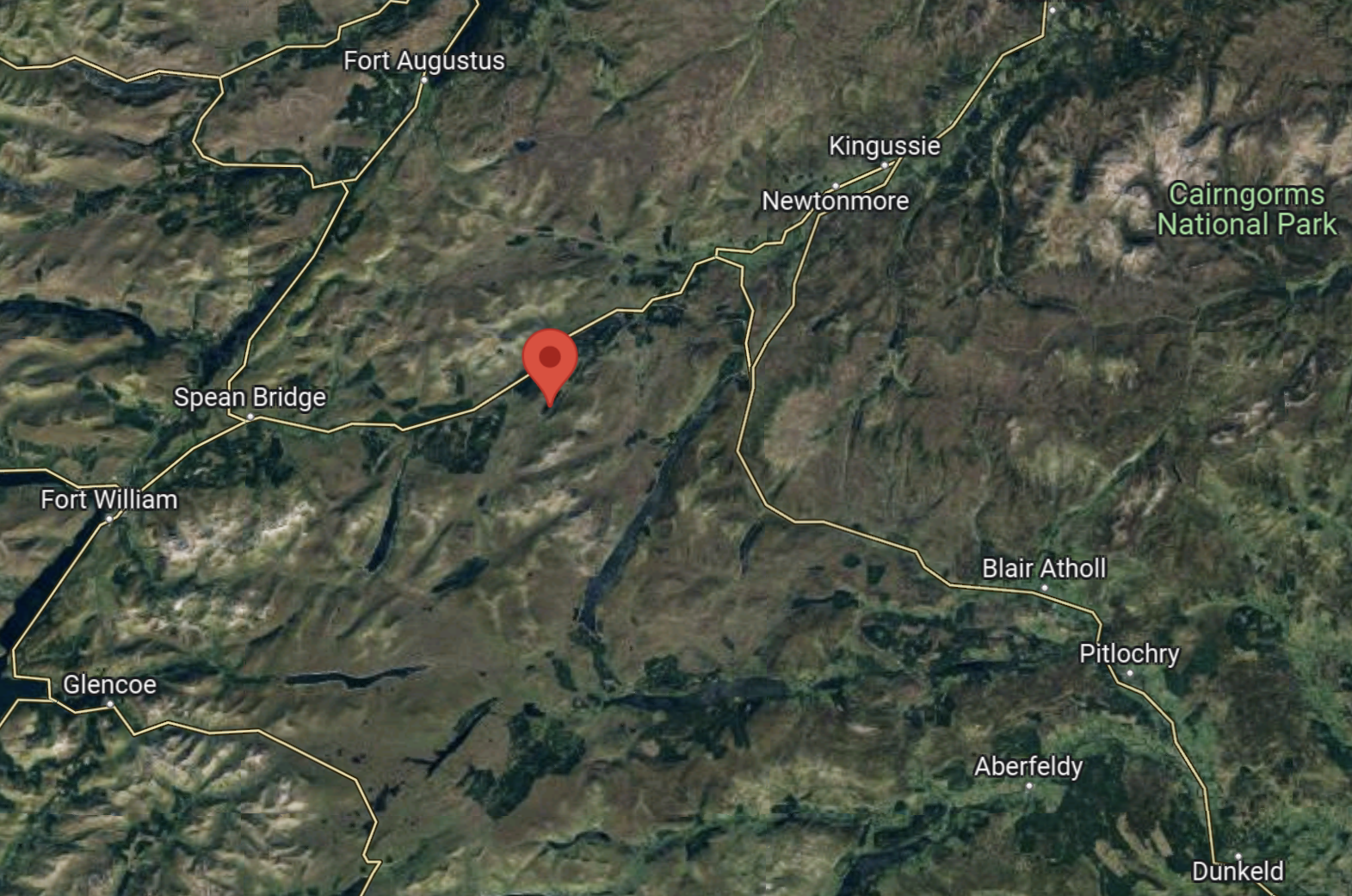
And this Google Map shows the site.

Note.
- Lochan na h-Earba, which will be the lower reservoir is clearly marked, in the North-West corner of the map.
- Loch a’ Bhealaich Leamhain, which will be the upper reservoir is in the South-East corner of the map.
- Much of Loch a’ Bhealaich Leamhain appears to be frozen, with only a small triangular area of water visible.
- There doesn’t seem to be too many roads.
- There is a detailed map on the Earba Storage web site.
This looks like it could be extreme construction, at it’s most extreme.
Conclusion
With a power output of 900 MW and a storage capacity of 33 GWh, this pumped storage hydroelectric power station will have the largest storage capacity of any energy storage in the UK.
Will Norwegian Pumped Storage Hydro Help Us Through The Winter?
In UK To Norway Sub-Sea Green Power Cable Operational, I discussed the North Sea Link interconnector to Norway.
The North Sea Link is no ordinary interconnector, as it is a lot more than a 1.4 GW cable linking the electricity grids of the UK and Norway.
- At the UK end, there is an increasing amount of wind power. The UK has added 3.5 GW in 2022.
- At the Norway end, there is the 2.1 GW Ulla-Førre hydropower complex.
- The water to generate electricity at Ulla-Førre comes from the artificial Lake Blåsjø, which contains enough water to generate 7.8 TWh of electricity.
- The storage capacity at Ulla-Førre is 857 times greater than that at the UK’s largest pumped storage hydroelectric power station at Dinorwig in North Wales.
- The power complex consists of five power stations and some can also be used as a pump powered by UK electricity to fill Lake Blåsjø with water.
Effectively, the North Sea Link, the Ulla-Førre power complex and Lake Blåsjø are a giant pumped storage hydro battery, that can either be filled by Norwegian precipitation and water flows or by using surplus UK electricity, through the North Sea Link, which opened a year ago.
If the Norwegian precipitation goes on strike, the only way to fill Lake Blåsjø is to use surplus UK power, which I suspect will be British wind and nuclear in the middle of the night!
But then I thought we will be short of electricity this winter.
- I suspect we will be at times, but then at others there will be a surplus.
- So the surplus will be pumped to Norway to top up the reservoir at Lake Blåsjø.
- When we are short of electricity, the Norwegians will turn water back into electricity and send it back through the North Sea Link.
It will be more sophisticated than that, but basically, I believe it provides us with the electricity we need, at the times, when we need it.
I wouldn’t be surprised to be told, that we’ve been squirreling away overnight wind energy to Norway over the last few months.
I have written more about Ulla-Førre in The Monster In The Mountains That Could Save Europe’s Winter.
It includes a video about the building of the complex.
The Creation Of The Coire Glas Monster
Loch Ness is probably most famous for the mythical monster, but it is about to be joined by a man-made monster of a different kind.
To the South-West of Loch Ness lies Loch Lochy.
This Google Map shows the South-Western part of the Great Glen, which runs diagonally across the Highlands from Fort William in the South-West to Inverness in the North-East.
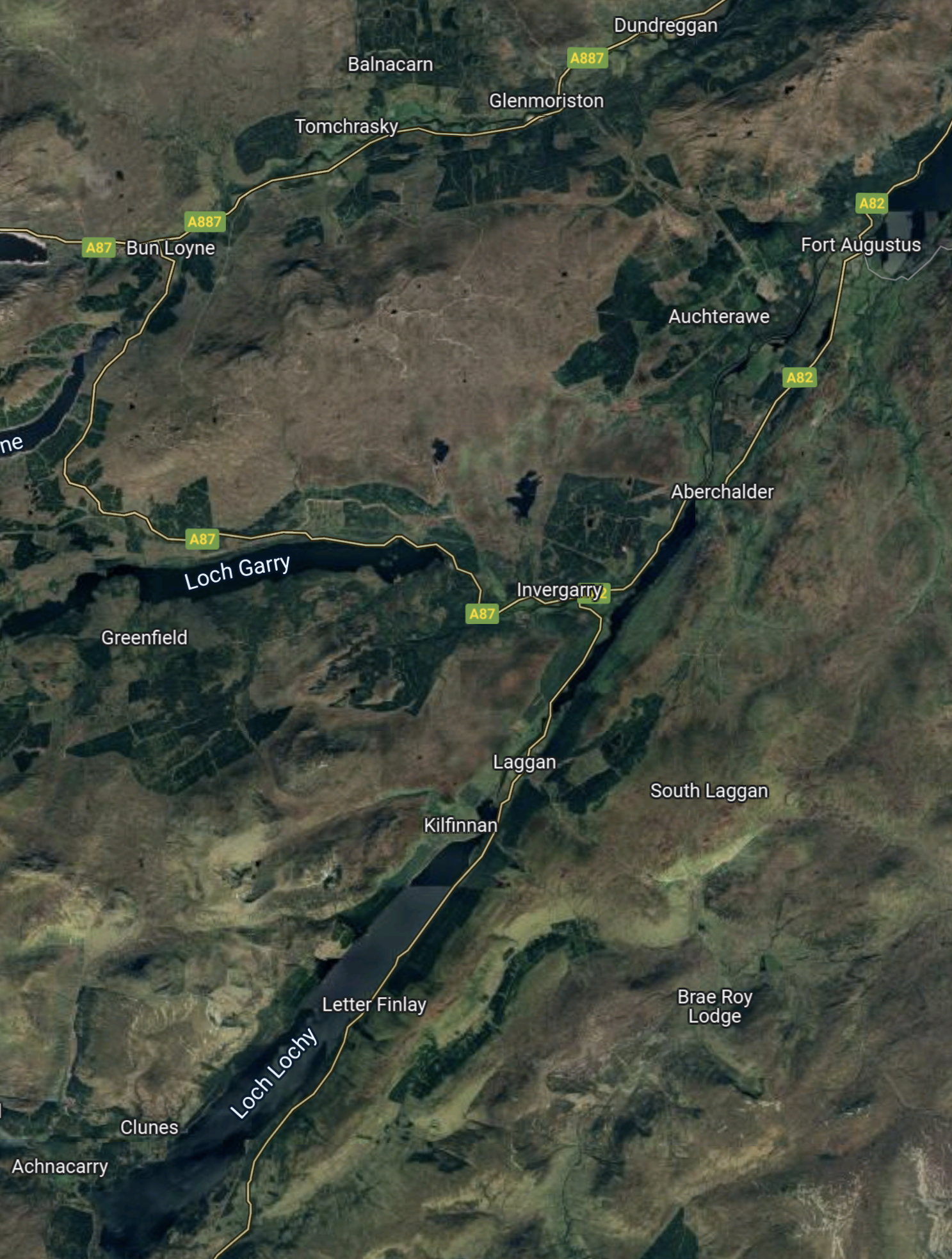
Note.
- Fort Augustus in the North-East corner of the map, is at the South-West end of Loch Ness.
- In the South-West corner of the map, Loch Lochy can be seen.
- To the North-West of Loch Lochy, there are mountains.
This second Google Map shows Loch Lochy and the mountains.
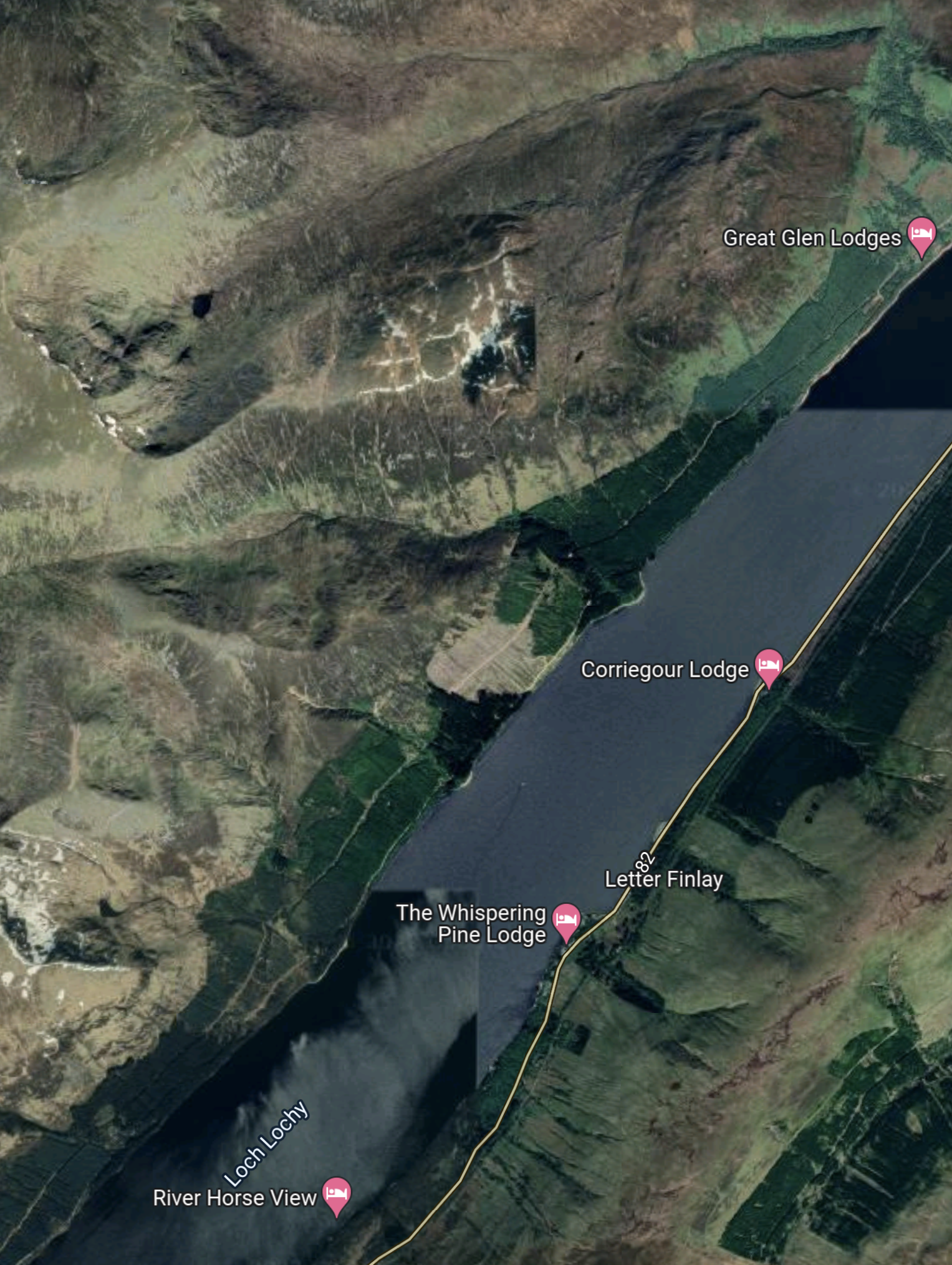
SSE plan to create a pumped storage hydroelectric power station called Coire Glas.
- Loch Lochy will be the lower reservoir.
- The upper reservoir will be in the mountains to the North-West of the loch.
- Energy will be stored by pumping water from the lower to the higher reservoir.
- The power station will be able to provide 1.5 GW of electricity.
- The upper reservoir will be able to store enough water to generate 30 GWh of electricity.
If that isn’t a monster of a power station, I don’t know what is! It has more than three times the storage capacity of both Dinorwig or Cruachan.
This article on Utility Week, which is entitled Inside £1bn Pumped Hydro Plans To ‘More Than Double’ Britain’s Electricity Storage, gives more details.
This is the sort of heroic engineering, that will defeat Vlad the Mad and his bloodstained gas.
Can Highview Power’s CRYOBattery Compete With Pumped Storage Hydroelectricity?
In this article on the Telegraph, Rupert Pearce, who is Highview’s chief executive and ex-head of the satellite company Inmarsat, discloses this.
Highview is well beyond the pilot phase and is developing its first large UK plant in Humberside, today Britain’s top hub for North Sea wind. It will offer 2.5GW for over 12 hours, or 0.5GW for over 60 hours, and so forth, and should be up and running by late 2024.
The Humberside plant is new to me, as it has not been previously announced by Highview Power.
- If it is built it will be megahuge with a storage capacity of 30 GWh and a maximum output of 2.5 GW.
- Humberside with its connections to North Sea Wind, will be an ideal location for a huge CRYOBattery.
- The world’s largest pumped storage hydroelectric power station is Fengning Pumped Storage Power Station in China and it is 40 GWh.
Pumped storage hydroelectric power stations are the gold standard of energy storage.
In the UK we have four pumped storage hydroelectric power stations.
- Cruachan Power Station – 7.1 GWh
- Dinorwig Power Station (Electric Mountain) – 9.1 GWh
- Falls of Foyers – 10 GWh
- Ffestiniog Power Station 1 GWh
With two more under construction.
- Coire Glas Power Station – 30 GWh
- Red John Power Station – 2.8 GWh
As energy is agnostic, 30 GWh of pumped storage hydroelectric power at Coire Glas is the equivalent of 30 GWh in Highview Power’s proposed Humberside CRYOBattery.
Advantages Of CRYOBatteries Over Pumped Storage Hydroelectric Power
I can think of these advantages.
- Cost
- Could be build on the flat lands of East Anglia or Lincolnshire
- Factory-built
- NIMBYs won’t have much to argue about
- No dams
- No flooding of valleys
- No massive construction sites.
- No mountains required
- No tunnels
- Small footprint
I suspect that a large CRYOBattery could be built well within a year of starting construction.
Rupert Pearce’s Dream
The Telegraph article says this and I suspect it’s a quote from Rupert Pearce.
Further projects will be built at a breakneck speed of two to three a year during the 2020s, with a target of 20 sites able to provide almost 6GW of back-up electricity for four days at a time, or whatever time/power mix is optimal.
6 GW for four days is 576 GWh, which if it were spread around twenty sites is 28.8 GWh per site, which is just under the 30 GWh of the proposed Humberside CRYOBattery.
Conclusion
You can just imagine the headlines in The Sun!
Man In Bishop’s Stortford Shed Saves The World!
This story on the BBC, which is entitled Meet The British Inventor Who Came Up With A Green Way Of Generating Electricity From Air – In His Shed, explains my suggested headline.
Now that’s what I call success!
Loch Kemp Pumped Hydro
Loch Kemp Is a smaller loch just to the East of Loch Ness.
This Google Map shows Loch Kemp in relation to Loch Ness.
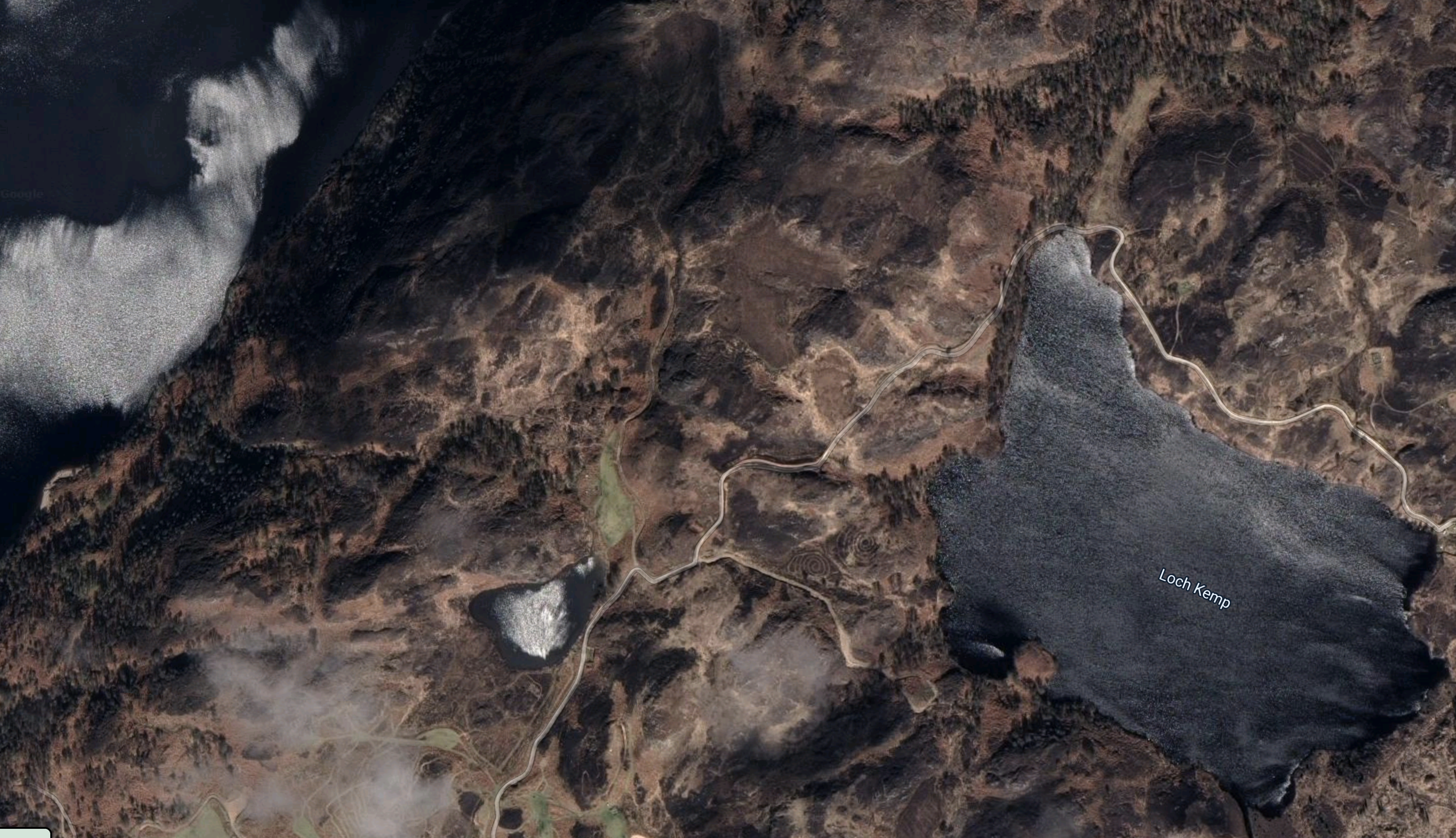
Note.
- Loch Ness is in the North West corner of the map, with partial cloud cover.
- Loch Kemp is in the South East corner of the map.
The proposed Loch Kemp pumped hydro scheme will have these characteristics.
- Loch Kemp will be the upper reservoir.
- Loch Ness will be the lower reservoir.
- The power station will be on the banks of Loch Ness.
- The power station will be designed to fit into the environment.
- Eight dams will be built to enlarge Loch Kemp.
- Trees will be planted.
- Output of the power station will be 300 MW
- Available storage could be 9 GWh.
The station will have almost as much storage capacity as Electric Mountain, but that power station has an output of 1.8 GW.
In Glendoe Hydro Power Station, I wrote about the Glendoe Hydro Scheme.
- It is a 100 MW hydroelectric power station
- It has the highest head at 600 metres of any power station in the UK.
- It opened in 2009, making it one of the newest hydroelectric power stations in the UK.
- The actual power station is in an underground cavern.
- The dam and power station have been designed to be hidden from view.
This Google Map shows the location of Glendoe power station to the South of Loch Kemp.
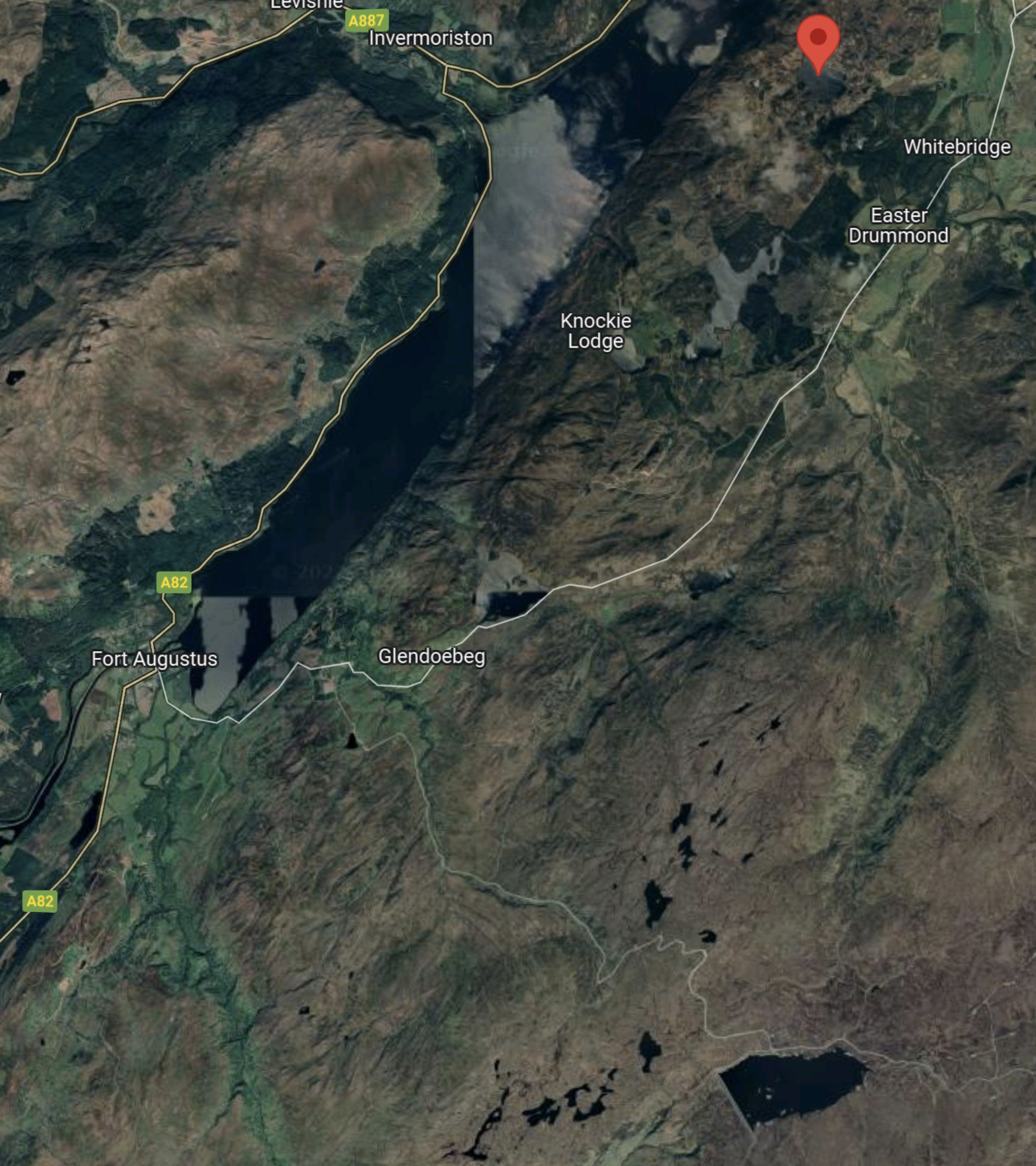
Note.
- The red arrow indicates Loch Kemp.
- The loch in the South East corner is the reservoir that feeds Glendoe power station.
- Fort Augustus is at the Southern end of Loch Ness.
This Google Map shows the Northern end of Loch Ness.
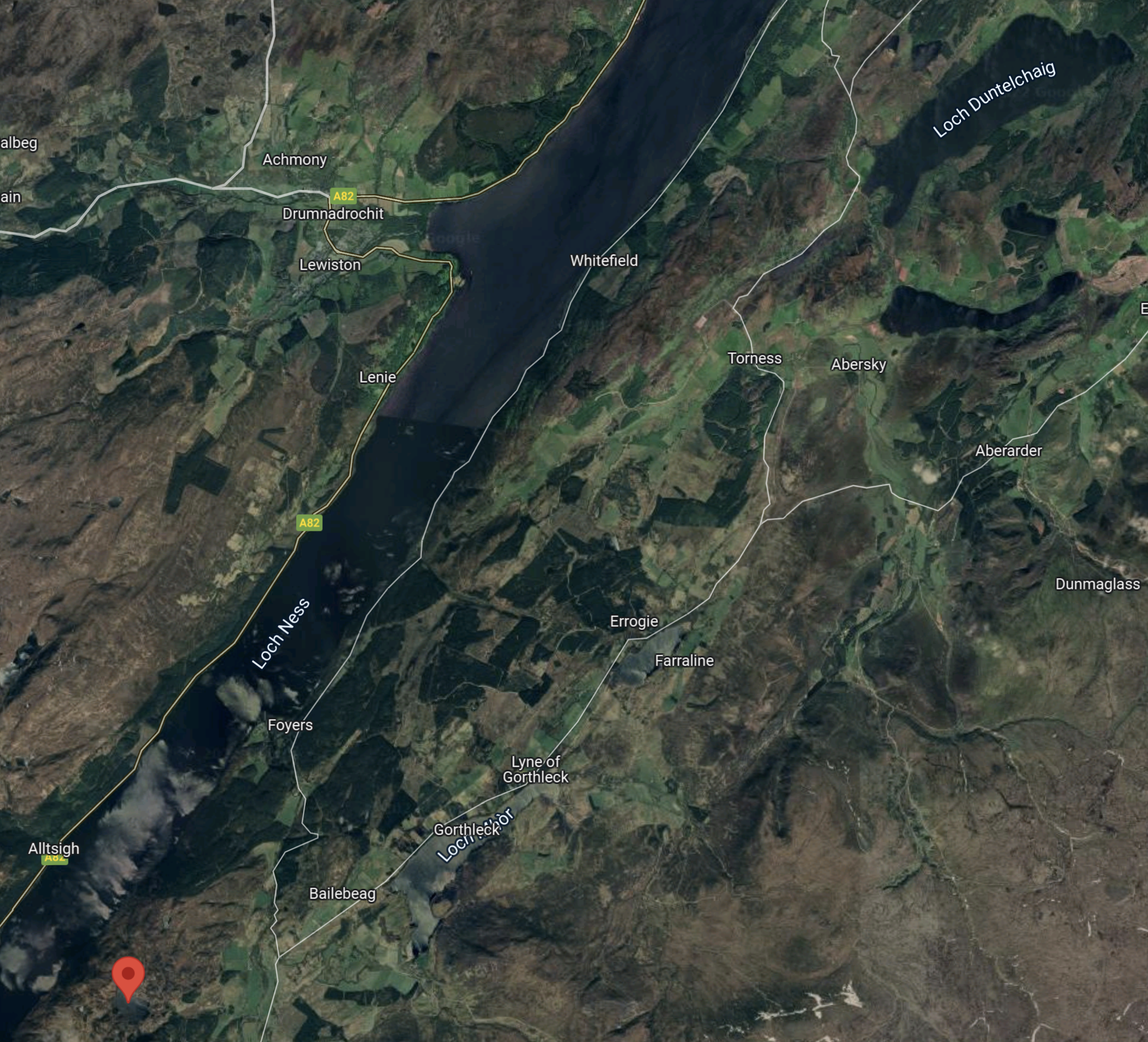
Note.
- The red arrow indicates Loch Kemp.
- Foyers, which is a short distance to the North West, is the site of the Foyers pumped hydro scheme. I wrote about this scheme in The Development Of The Foyers Pumped Storage Scheme.
- Loch Duntelchaig, in the North-East corner of the map, is being used as the upper reservoir of the Red John pumped hydro scheme. I wrote about this project in Red John Pumped Storage Hydro Project.
On the East side of Loch Ness there seems to be four substantial hydro-electric schemes.
In order from South to North these schemes are.
Glendoe
Glendoe is a modern 100 MW hydroelectric power station, that opened in 2009.
In Glendoe Hydro Power Station, I felt it might be possible to expand Glendoe into a pumped hydro scheme, with upwards of 10 GWh of storage.
Loch Kemp
Loch Kemp is a proposed 300 MW/9 GWh pumped hydro storage station.
Foyers
Foyers is an existing 300 MW/10 GWh pumped hydro storage station.
Red John
Red John is a proposed 450 MW/2.8 GWh pumped hydro storage station, which has received planning permission.
These four power stations could be summarised as follows.
- Glendoe – 100 MW/10 GWh
- Loch Kemp – 300 MW/9 GWh
- Foyers – 300 MW/10 GWh
- Red John – 450 MW/2.8 GWh
Note.
- Totals are 1150 MW and 31.8 GWh
- Foyers was converted from a conventional hydroelectric power station, that was opened in 1895 to a pumped hydro storage station.
- If Foyers can be converted, why can’t Glendoe.
A very large pumped storage station of four separate units, can be built on the East side of Loch Ness.
Conclusion
This is only on the East side of Loch Ness, so if the West side can be similarly developed, Loch Ness could be developed into a real Loch Ness monster with over 60 GWh of pumped hydro storage.
Plan For New Nuclear Reactors At Wylfa And Trawsfynydd A Step Closer As Natural Resource Wales Looks At Designs
The title of this post, is the same as that of this article on nation.cymru.
These are the first two paragraphs.
Plans for new nuclear power stations at Trawsfynydd and Wylfa have taken a step closer after the UK Government asked government regulators to assess designs for the reactors.
Natural Resources Wales will be among those assessing the designs by Rolls-Royce, with both Wylfa and Trawsfynydd have been named as potential sites for housing them within the UK.
These are points about the reactors.
- They will cost £1.8 billion each.
- They are capable of powering a city the size of Cardiff, which has a population of about half-a-million.
- I’ve read elsewhere that the reactors are planned to have a nameplate capacity of 470 MW.
The article did mention, that the Nimbys were lining up.
The Wylfa Site
The original Wylfa power station was a Magnox nuclear station generating 980 MW, that was decommissioned in 2015.
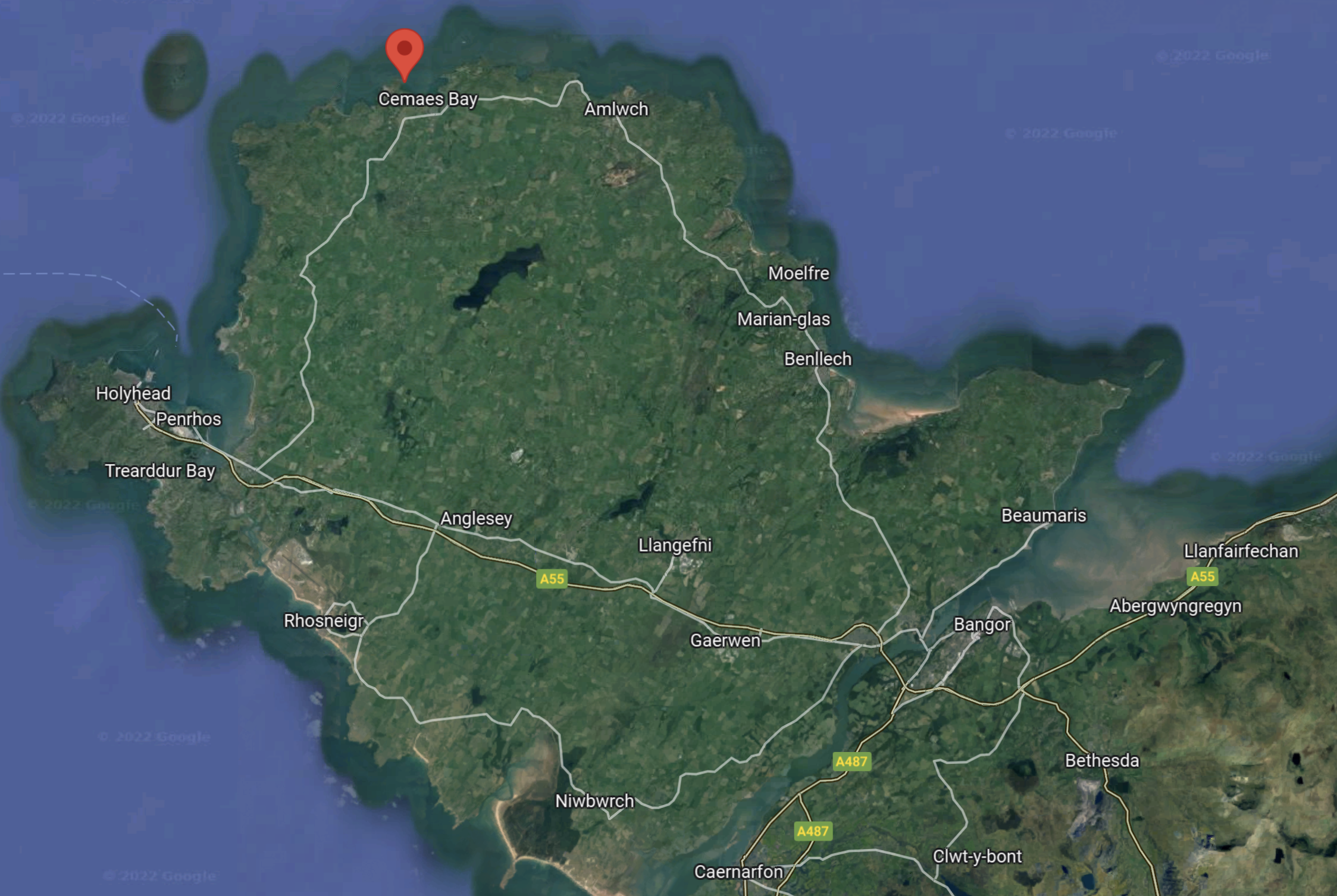
This Google Map shows the location of the site on Anglesey.
This second Google Map shows the site in more detail.
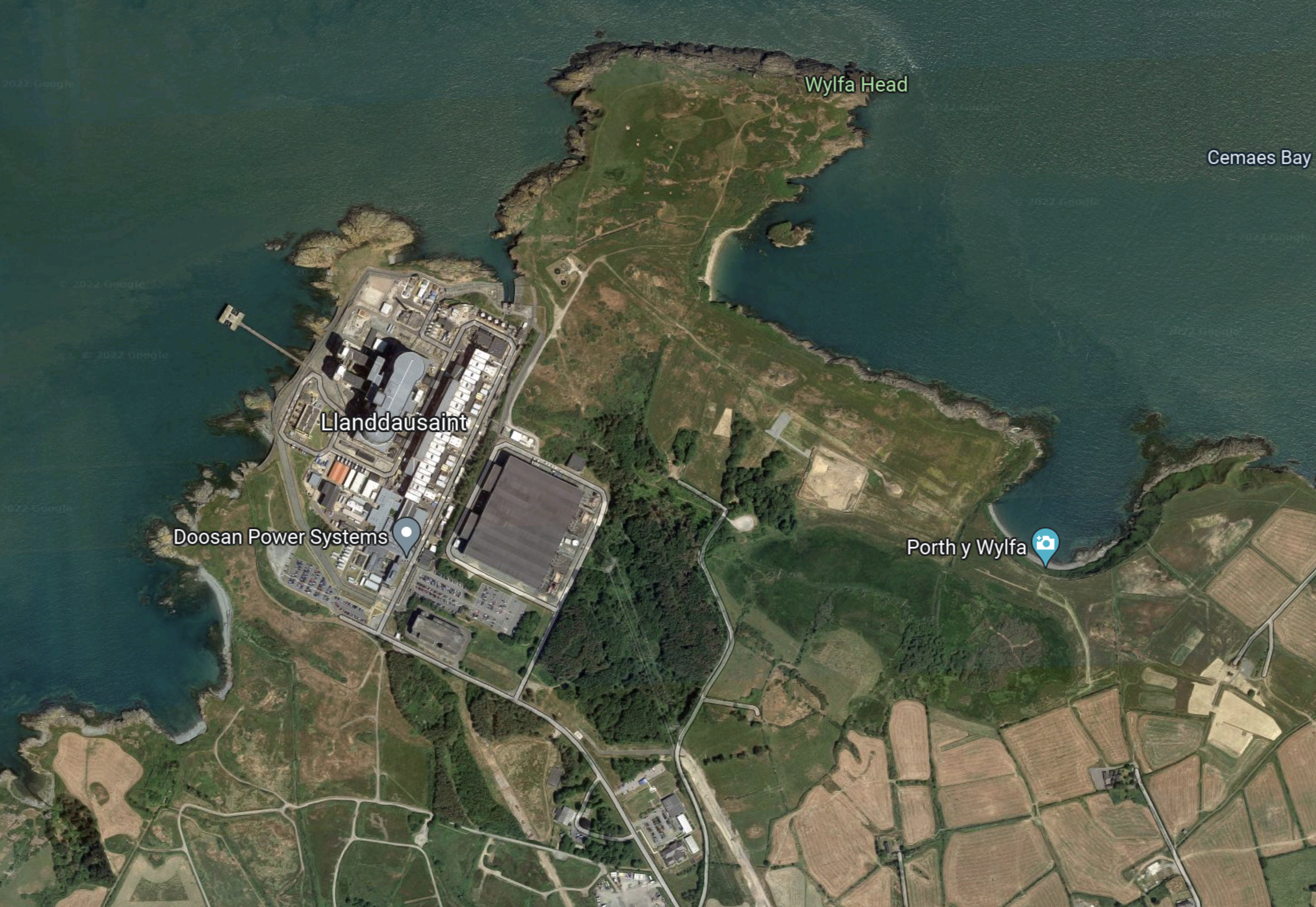
The power station doesn’t appear to have had a rail link, but there is a railway line a few miles away, with sidings that might have been used to handle fuel flasks.
There has been a proposal for a hybrid plant consisting of a wind farm and small modular nuclear reactors, which is described in this Wikipedia section, where this is said.
In January 2021, Shearwater Energy presented plans for a hybrid plant, to consist of a wind farm and small modular reactors (SMRs), to be installed adjacent to the existing Wylfa power station but separate from the proposed Wylfa Newydd site. Shearwater has signed a memorandum of understanding with NuScale Power for the SMRs. The plant could start generation as early as 2027 and would ultimately produce up to 3 GW of electricity and power a hydrogen generation unit producing up to 3 million kg of hydrogen per year.
Note.
- Wylfa Newydd was a proposal by Hitachi to build a nuclear station on the site.
- Shearwater Energy is a UK developer of energy opportunities.
- NuScale Power is an American company with its own design of small modular nuclear reactor.
In Holyhead Hydrogen Hub Planned For Wales, I talked about hydrogen and the port of Holyhead.
The Trawsfynydd Site
The original Trawsfynydd power station was a Magnox nuclear station generating 470 MW, that was decommissioned in 1991.
This Google Map shows the location of the site in North Wales.
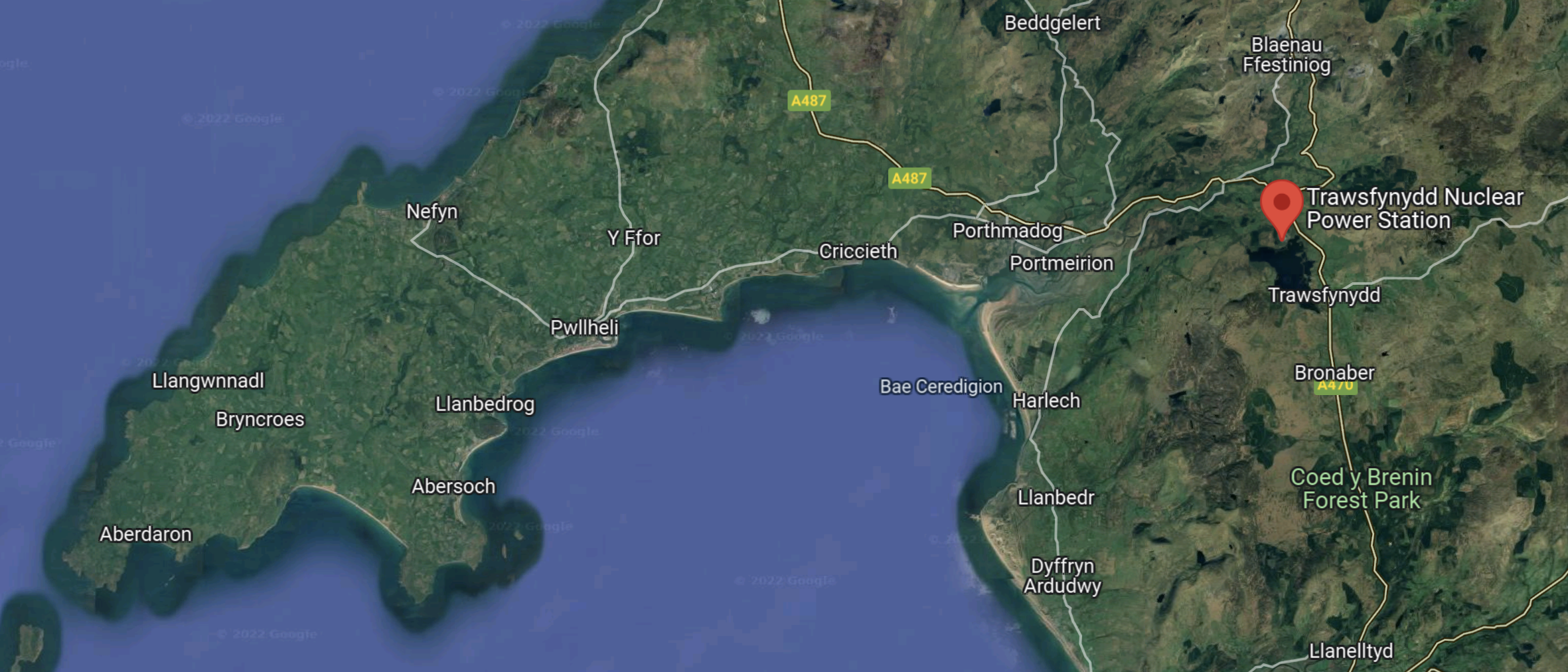
This second Google Map shows the site in more detail.
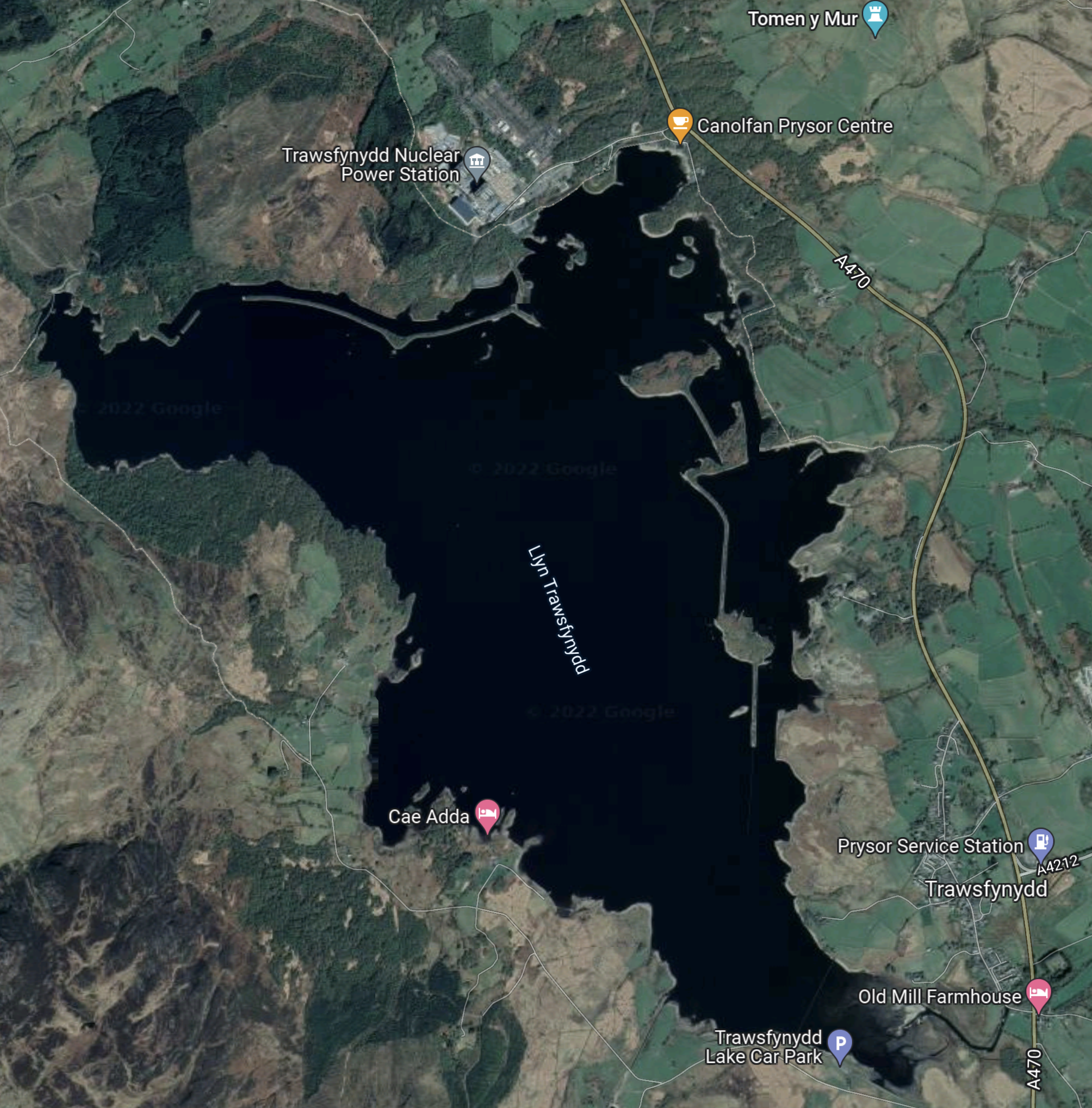
Note.
- The power station was built on the Northern shore of Llyn Trawsfynydd.
- Llyn Trawsfynydd is a man-made lake, that was built in the 1920s to supply water to the 24 MW Maentwrog hydro electric power station.
- There is a railway from near the site, that connects to the Conwy Valley Line at Blaenau Ffestiniog.
The Trawsfynydd site is a lot more than just a decommissioned Magnox power station.
Pumped Energy Storage In Snowdonia
Currently, there are two existing pumped storage in Snowdonia.
- Dinorwig power station, which is often called Electric Mountain, which has a capacity of 9.1 GWh.
- Ffestiniog power station, which has a capacity of around 1 GWh. If anybody has a better figure let me know!
A third scheme is under development at Glyn Rhonwy, which could have a capacity of 700 MWh.
Looking at the size of Llyn Trawsfynydd, I do wonder, if it could be the top lake of a future pumped storage scheme.
- Llyn Trawsfynydd, contains 40 million tonnes of water.
- There is a head of 190 metres.
That could give energy storage of 20 GWh. That sounds a lot of GWhs! But with two possible small modular nuclear reactors at possibly 500 MW each nearby and some help from windfarms, it could be filled within a day, if there is a suitable low-level reservoir.
Rolls-Royce And The Duisburg Container Terminal
In Rolls-Royce Makes Duisburg Container Terminal Climate Neutral With MTU Hydrogen Technology, I showed how Rolls-Royce and its subsidiary were providing an innovative climate neutral solution for Duisburg Container Terminal in Germany.
A North West Wales Powerhouse
Could Rolls-Royce be planning a Duisburg-style solution for North West Wales.
- Small modular nuclear reactors at Wylfa and Trawsfynydd.
- Hydrogen electrolysers to create hydrogen for the Port of Holyhead and heavy transport.
- Adequate pumped hydro storage for surplus energy.
But there could be little serious above-ground construction.
Conclusion
Something is awakening in North West Wales.
The Coire Glas Pumped Storage Scheme
The Coire Glas pumped storage scheme, which is being developed by SSE Renewables will be the first large scale pumped storage scheme to be developed in the UK for more than 30 years.
- It would have a power output of 1.5 GW.
- Compared to Dinorwig (Electric Mountain) in Wales at 9.1 GWh and Cruachan in Scotland at 7.1 GWh, it will be a giant.
- Planning permission has been obtained.
The Coire Glas project has a web site.
This is the introductory paragraph.
Coire Glas is a hydro pumped storage scheme with a potential capacity of up to 1500MW. Coire Glas is an excellent pumped storage site with a large lower reservoir (Loch Lochy) and a significant elevation of more than 500m between the lower and the new upper reservoir site over a relatively short distance.
There is also an explanatory video.
This map was clipped from this SSE planning document.
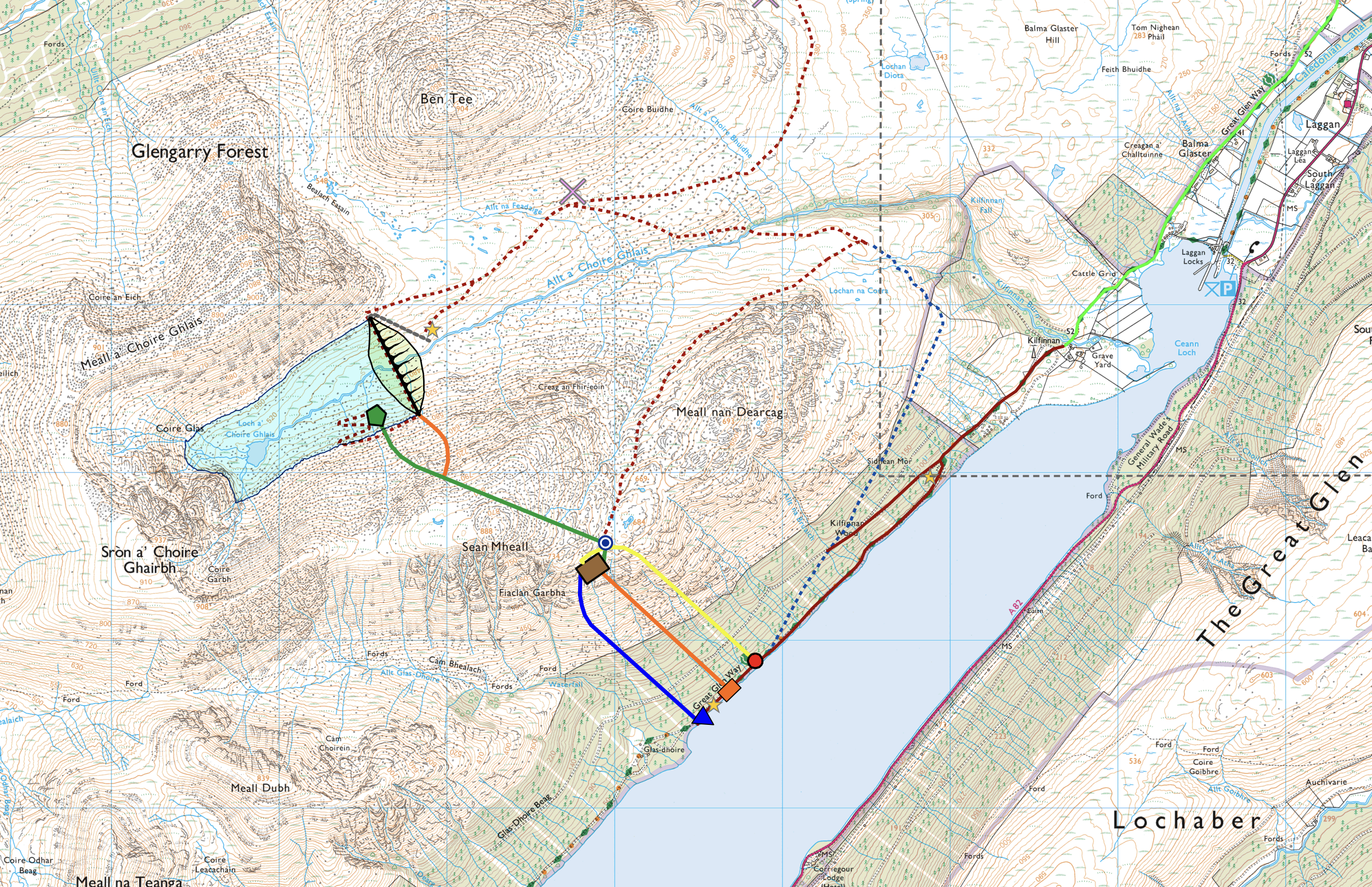
Note.
- Loch Lochy in the Great Glen will be the lower reservoir.
- Loch Lochy is a freshwater loch, that is up to seventy metres deep.
- The top reservoir is formed by building a dam across the stream, that runs into the Northern end of Loch Lochy.
- The green line leading from the pentagon in the lake behind the dam towards Loch Lochy is the headrace tunnel.
- It leads to the brown rectangle, which is the underground power station.
- The blue line leading from the power station, where water is discharged into the loch.
- The two orange lines are access tunnels.
- The yellow line is the emergency access tunnel.
It is a standard layout for a pumped storage power station.
- To store electricity, water is pumped from Loch Lochy and stored in the new lake.
- To generate electricity, water runs down the headrace tunnel, through the turbines and then down the tailrace into Loch Lochy.
- The power station would have a number of pump/turbines, that can do both tasks.
In addition, any water from rain or snow melt, that runs into the top lake gives low-cost extra electricity.
This layout of the dam and the upper lake was clipped from this SSE planning document.
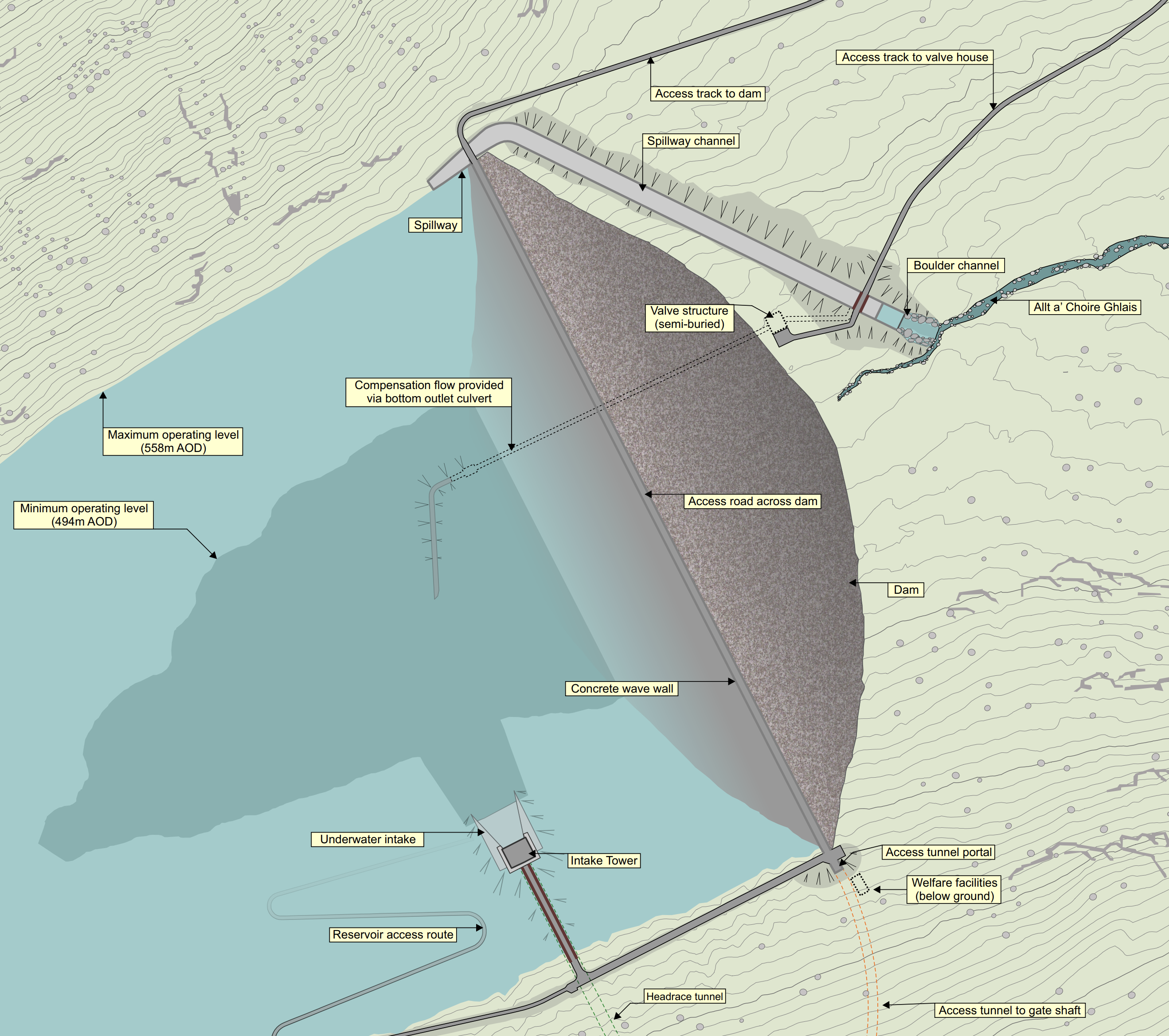
It would be an impressive structure.
Could this pumped storage scheme give the UK energy security?
Power Storage Is The Next Big Net Zero Challenge
The title of this post, is the same as that of this Opinion from Bloomberg.
This is the sub-heading.
Britain’s pioneering plans for renewable energy show the global need could be massive. The means don’t yet exist.
The opinion is very much a well-written must-read.
One new project the article mentions is a 30 GWh pumped storage project at Coire Glas in the Scottish Highlands, that is planned by SSE.
I discuss this scheme in The Coire Glas Pumped Storage Scheme.
Bloomberg didn’t say it, but this pumped storage scheme could give the UK energy security.
 The Anonymous Widower