Northern Considering Options For More New Trains
The title of this post is the same as that of this article on Rail Magazine.
This is a paragraph.
Senior Northern sources told RAIL on June 28 that the operator believes the new trains will entice more people onto its services, and that within two years – once all 101 new trains are in service – there could be overcrowding.
This sounds to me, like another case of London Overground Syndrome.
At least, Northern have identified it early and taken the only action that works – Acquire more trains.
The High Speed Train Problem
Several of Northern’s routes use 100 mph trains on the West Coast and East Coast Main Lines.
- Blackpool and York
- Chester and Leeds
- Hull and York
- Leeds and York
- Liverpool and Blackpool via Wigan
- Manchester and Crewe
- Manchester and Stoke
- Manchester Airport and Barrow
- Manchester Airport and Blackpool
- Manchester Airport and Windermere
Will Northern acquire some 110 mph or even 125 mph trains to ease the creation of timetables amongst so many high speed trains using the main lines?
Greater Anglia’s New Train Order
Greater Anglia have ordered thirty-eight Class 755 trains, which have a total of 138 cars.
These will replace twenty-six assorted trains, which have a total of 55 cars.
This is an increase of 46% in the number of trains and 150% in the number of cars.
Greater Anglia didn’t increase the fleet so that could sit in sidings, so I think we can expect some new services and higher frequencies.
Conclusion
Northern’s actions are in line with other operators.
Puzzled By New Fleets For TransPennine Express
TransPennine Express (TPE) are replacing all their trains, but their choice of three different new fleets puzzles me.
The new fleets and their routes are as follows.
Nova1
This is a fleet of nineteen five-car bi-mode Class 802 trains.
According to Wikipedia, they will work the following routes, with probably a frequency of one tph
Liverpool Lime Street and Edinburgh via Newcastle, which I estimate will take 4:15 hours
Manchester Airport and Newcastle, which takes around 2:45 hours
These two services would probably need nine for the Edinburgh service and six for the Manchester Airport service.
This means that there are four extra trains.
If there is a spare or one in maintenance, that means that two trains are available to boost capacity on busy services if needed, by running a ten-car train.
I doubt that ten-car services to Manchester Airport could be run through the Castlefield Corridor due to the inadequate stations, but Liverpool and Edinburgh might be a route for longer trains.
I have some observations on Nova1.
- The trains are 125 mph trains, that can be upgraded to 140 mph with in-cab signalling.
- The trains will share the East Coast Main Line with LNER’s Azumas, which are other members of te same family of Hitachi trains.
The trains have been authorised to start running services.
Nova2
This is a fleet of twelve electric Class 397 trains.
According to Wikipedia, they will work the following routes,
- Manchester Airport and Glasgow Central, which takes around 3:30 hours.
- Manchester Airport and Edinburgh, which takes around 3:15 hours.
- New route – Liverpool Lime Street and Glasgow Central, which could take around 3:30 hours.
Currently, the two existing routes run at a frequency of one train per two hours, which would probably need at least seven trains.
This probably means that there will be four trains left for the service between Liverpool and Glasgow, if it assumed there is one train spare or in maintenance.
As a round trip between the two cities, would probably take eight hours, it looks like the frequency will be one train per two hours.
This would give the following services, all with a frequency of one train per two hours.
- Manchester Airport and Glasgow Central via Manchester Piccadilly
- Manchester Airport and Edinburgh via Manchester Piccadilly
- Liverpool Lime Street and Glasgow Central
Passengers wanting to go between Liverpool Lime Street and Edinburgh should keep reading.
I have some observations on Nova2.
- They are 125 mph trains that are replacing the 110 mph Class 350 trains.
- In the next few years, these 125 mph trains will be sharing the West Coast Main Line with faster trains like Class 390 trains and the trains of High Speed Two, both of which should be capable of 140 mph, when running using in-cab signalling.
- I would assume that the trains can be similarly upgraded, otherwise they will have to be replaced.
- There was an option for more trains, but I suspect the success of Class 802 trains on the Great Western Railway led to it not being taken up.,
The trains should come into service later this year.
Nova3
This is a fleet of five-car rakes of Mark 5A coaches, hauled by a Class 68 diesel locomotive.
There are fourteen locomotives and driving van trailers, with enough coaches for thirteen rakes.
I would suspect that TPE are aiming to have twelve trains available for service.
According to Wikipedia, they will work the following routes, which both have a frequency of one train per hour (tph)
- Liverpool Lime Street and Scarborough via Manchester Victoria, which takes around 2:45 hours.
- Manchester Airport and Middlesbrough, which takes around 2:45 hours.
So with turnround at both ends, I suspect that a six hour round trip is possible. So to provide the two hourly services across the Pennines, TPE will need six trains for each route.
This explains a fleet size of twelve operational trains.
I have two observations on Nova3.
- They are diesel-powered and will be running at times on electrified lines. But I suspect the diesel Class 68 locomotive could be replaced in the future with an electro-diesel Class 88 locomotive.
- Questions have been raised about the speed of exit and entry from the coaches through single end doors of the coaches.
- They have an operating speed of only 100 mph, but opportunities for higher speeds on the routes are limited to perhaps thirty to forty miles on the East Coast Main Line.
At least they should be in service within a couple of months.
Why Didn’t TPE Order A Unified Fleet?
To summarise TPE have ordered the following trains.
- Nova1 – Nineteen Class 802 trains
- Nova2 – Twelve Class 397 trains.
- Nova3 – Thirteen trains consisting of four coaches topped and tailed by a a Class 68 locomotive and driving van trailer.
All forty-four trains are five cars.
Surely, it would have been easier for TPE to have a fleet, where all the trains were the same.
I suspect that all routes can be run using Class 802 trains, so it as not as if there are any special requirements for the trains.
So why didn’t TPE order a fleet of Class 802 trains?
I can only think of these reasons.
- Hitachi couldn’t supply the required number of trains in the appropriate time-scale.
- ,CAF made an offer that TPE couldn’t refuse.
It should also be born in mind that Great Western Railway and Hull Trains, which like TPE are First Group companies, went down the Class 802 route.
The Future
There are various issues, that will arise in the future.
Nova2 And West Coast Main Line Operating Speed
The new Nova trains are running on TPE’s Northern and Scottish routes and as I indicated earlier, the Nova2 trains might not be fast enough in a few years time for the West Coast Main Line, which will have Class 390 trains running at 140 mph using in-cab signalling.
High Speed Two will surely make this incompatibility worse, unless CAF can upgrade the Nova2 trains for 140 mph running.
Replacing the Nova2 trains with Class 802 trains, which are being built for 140 mph running, would solve the problem.
Nova3 And Class 68 Locomotives
There are powerful reasons to replace diesel locomotives on the UK’s railways, with noise, pollution and carbon emissions at the top of the list.
As Northern Powerhouse Rail is created, there will be more electrification between Manchester and York, adding to the pressure to change the traction.
- There could be a change of locomotives to Class 88 or Class 93 locomotives, which would run using the overhead electrification, where it exists.
- The trains could be changed to Class 802 trains.
The Class 68 locomotive is increasingly looking like an interim solution. At least, it’s a less polluting locomotive, than the dreaded and ubiquitous Class 66 locomotive.
Class 185 Replacement
TPE will still have a fleet of diesel three-car Class 185 trains.
- They are running on routes between Manchester and Hull and Cleethorpes via Huddersfield, Leeds and Sheffield.
- These are best described as just-about-adequate trains and are one of The Treasury’s boob-buys.
- As Northern Powerhouse Rail is created, they will be increasingly running under wires.
- Could it be likely that more capacity will be needed on routes run by these trains?
- The capacity of a Class 185 train is 169 seats, as opposed to the 342 seats of a five-car Class 802 train.
I think it could be very likely that instead of running pairs of Class 185 trains, TPE will replace them with five-car Class 802 trains.
Conclusion
I very much feel, that over the next few years, TPE’s fleet will change further in the direction of a one-unified fleet!
Changes Signalled For HS2 Route In North
The title of this post is the same as that as this article on Rail News.
This is the first two paragraphs.
The government is reconsidering the route of HS2 between Crewe and Manchester and also between Birmingham and Leeds, which are jointly known as Phase 2b.
A consultation has been launched on proposals to use HS2 as a regional route, by providing two new junctions so that Northern Powerhouse Rail services could use HS2 to reach Manchester.
The Times also has a news item entitled HS2 To Link With Northern Powerhouse Line, that adds some other details to the story.
This is the start of the news item.
HS2 trains will be able to run across Northern England under plans for a fully-integrated high-speed network.
The government said yesterday that HS2 would connect into a proposed east-west route across the Pennines, enabling trains to run directly between more cities.
Four years ago, I wrote Whither HS2 And HS3?, which argued for greater integration of the two routes and more tunnelled stations under major cities to build High Speed Two and Northern Powerhouse Rail with less disruption.
Part of that post was deliberately over the top, but it seems that others have been thinking in a similar way.
The Times also says the following.
- Two junctions near High Legh will connect High Speed Two and the East-West line.
- High Speed Two will be realigned between Nottingham and Derby to avoid a year-long part-closure of the M1.
- The government has insisted that both High Speed lines are necessary.
- Northern Powerhouse trains would be able to use High Speed Two.
- High Speed Two trains may be able to run at speed direct to Liverpool, Bradford and Hull.
- The CBI are quoted as liking the proposal.
The Times also has a map that shows the proposed routes of the High Speed railways.
At A Glance – Northern Powerhouse Rail
This is the name of this report on the Transport for the North web site.
I will use information from this report , when it is relevant and the best available.
My Thoughts
These are my thoughts on the project taking information from the two articles and the Transport for the North report.
Preamble – Line Speeds On High Speed Two, The West Coast Main And The East Coast Main Line
High Speed Two is being designed for running at a speed of 225 mph with a capacity of eighteen trains per hour (tph)
The West And East Coast Main Lines are designed for 125 mph running for most of their lengths.
In the future, with the addition of in-cab digital signalling, it is intended that these two lines will be upgraded to allow running at 140 mph.
A Liverpool and Manchester High Speed Line
Looking at the map and the position of High Legh, it appears that a new High Speed line could be built Vaguely along the route of the M56 between Liverpool and Manchester.
- It appears to cross the Mersey to the West of Warrington.
- It appears to go South of Warrington, where there could be a station.
- It would call at Manchester Airport.
From this article in the Knutsford Guardian, which is entitled Government Releases New HS2 Plans For High Legh And Ashley, I suspect there will be a lot of opposition from local politicians and residents.
I seem to remember, a lot of opposition to the building of the M56.
This could be a difficult route to persuade the local people to accept.
This Google Map shows Manchester Airport.

Note how the M56 motorway passes across the North-West of the Airport.
Could the Liverpool and Manchester High Speed Line be alongside the motorway or even in a tunnel underneath?
This second Google Map shows the area around High Legh.
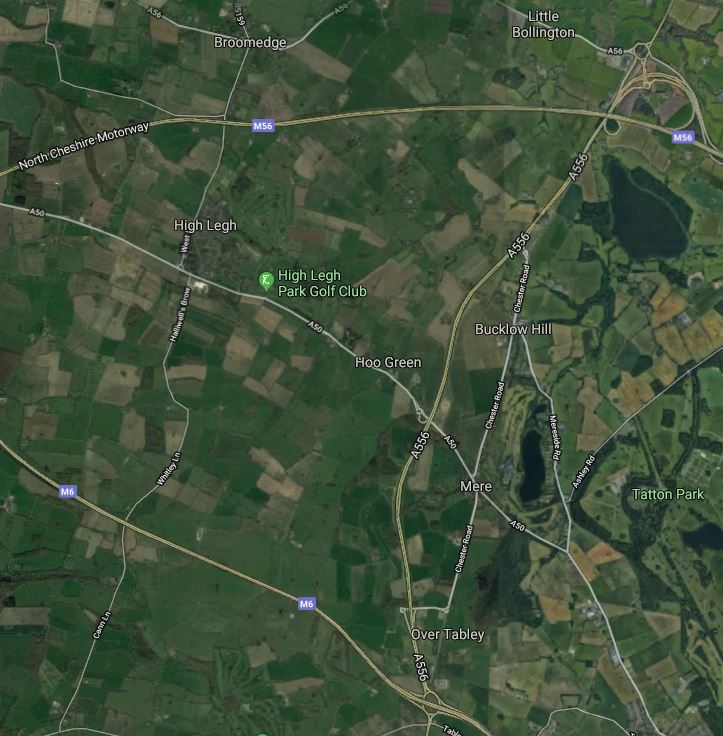
Note.
- The M56 going across the top of the map.
- The spaghetti in the North-East corner of the map is Junction 8 on the M56, where it joins the A556.
- The new A556 by-pass route to the West of the original route.
- The M6 running diagonally across the map.
- High Legh village is just to the North-West of the middle of the map.
This clip of a map from the Transport for the North report shows a schematic of the current and possible rail links in the area.

High Speed Two would appear to come North and split into two routes.
- One continues North to join the existing West Coast Main Line just South of Wigan.
- Another goes through Crewe station.
North of Crewe, the two routes join and then split into three at the Junction labelled 6.
- To Warrington and Liverpool
- To Wigan, Preston and Scotland
- To Manchester Airport and Manchester.
A second Junction labelled 5, allows Northern Powerhouse Rail trains to run Liverpool-Warrington-Manchester Airport-Manchester.
This is a new layout and has the following advantages.
- I estimate that trains could save 7-8 minutes on services running between Crewe and Wigan because of the longer running at High Speed Two operating speeds at 225 mph.
- ,If they don’t stop at Crewe and Runcorn, further minutes could be saved.
- Trains between London and Preston and London and Glasgow could skip the stop at Warrington to save further minutes.
- There could be an advantageous reorganisation of stopping patterns.
- London and Liverpool services and Liverpool and Manchester services could stop at Warrington, which would give Warrington very good connections.
- The Liverpool-Manchester and Liverpool-Crewe Lines could be built to High Speed Two standards, which could allow 225 mph running.
I also think the track layout can be run alongside or underneath the various motorways in the area for a lot of the route between Liverpool, Crewe, Warrington and Manchester Airport.
It would appear to be a very good solution to a complex problem and overall, I suspect it gives better connectivity, at a more affordable cost, whilst creating a railway that can be built with less disruption and will ultimately produce less noise.
The Transport for the North report, also says the following.
- There could be a new Warrington South Parkway station.
- Six tph between Liverpool and Manchester via Warrington are planned.
- Journey times will be 26 minutes.
The Twenty-first Century will finally get a modern and fast Liverpool and Manchester Railway.
Liverpool And Manchester Timings To And From London
The High Speed Two entry on Wikipedia gives the following timings after Phase Two is completed.
- London and Liverpool – One hour and thirty-six minutes
- London and Manchester – One hour and eight minutes
The Liverpool timing is slower, as for these timings, it runs on 125 mph lines between Crewe and Liverpool with a possible stop at Runcorn.
I feel that the proposed route to a new station in Liverpool city centre will reduce the Liverpool timing.
- There will be more running at 225 mph.
- There will be no slow local traffic.
- There will only be a stop at Warrington in a new purpose-built station.
I would not be surprised to see very similar sub-seventy minute times for both services.
It would dampen any rivalry between the two cities and if London and Wigan could be achieved in a similar time, it would surely ease train scheduling for the future operator of High Speed Two.
The Liverpool Lime Street Capacity Problem
This article on the Liverpool Echo is entitled New High-Speed Rail Station For Liverpool City Centre Takes Step Forward.
This is an extract.
A plan to build a completely new high-speed rail station in the CENTRE of Liverpool is taking a major step forward today – and Everton’s chief executive will be leading it.
Transport leaders want to build a new high-speed line into Liverpool to connect with HS2 to London and the planned Northern Powerhouse rail line across the north.
That means an entirely new “architecturally stunning” station in Liverpool city centre as Lime Street is too small to cope with the extra traffic.
So why is Lime Street station still too small, as it has been increased in capacity in the last couple of years?
I will look at the direct Virgin services between Euston and Liverpool Lime Street.
- Northbound trains leave at XX:07 and take two hours and 12-14 minutes for the journey.
- Trains wait for 26-28 minutes in the platform at Liverpool Lime Street station.
- Sorthbound trains leave at XX:47 and take two hours and 12-16 minutes for the journey.
- Trains wait for 4-8 minutes in the platform at Euston station.
It looks to me, that Virgin are using the platform at Lime Street station to balance the service. It does mean that trains probably keep more reliably to the timetable, but it hogs the platform at Liverpool Lime Street
Virgin want to increase the frequency to two tph and the London and Liverpool timing of around two hours and 12-16 minutes, means that a second platform is needed at Liverpool Lime Street station.
The station has now been remodelled and at least one extra platform has been added.
The problem could also be solved if the classic Virgin services took say one hour and 52 minutes between Euston and Liverpool.
This would enable the following.
- Trains would leave Euston and Liverpool Lime Street at the same time.
- Trains would have eight minutes to turn round at each end of the journey.
- There would be a very passenger-friendly journey time of under two hours.
I think this will happen at some time in the future.
- Digital signalling and track improvements will allow a high proportion of 140 mph running.
- New trains will have faster dwell times at stations.
, Competing against High Speed Two will drive faster services on the classic route.
High Speed Two is currently saying that London and Liverpool services will take one hour and thirty-six minutes and run at a two tph frequency.
This will probably mean that a clock-face timetable will be difficult without trains waiting in platforms at each end of the journey for a long time.
It will certainly mean that High Speed Two between London and Liverpool will need two platforms at the Northern end.
Even if the proposed one hour and thirty-six minutes was reduced to my estimate of seventy minutes to the new station, there would still be a need for two platforms. Liverpool is just a little bit too far away from London.
In addition Northern Powerhouse rail is saying that it will be running six tph between Liverpool and Manchester.
It would be difficult to fit all the platforms needed into Lime Street station.
A New Liverpool City Centre High Speed Station
This Google Map shows Liverpool Lime Street station and the surrounding area.
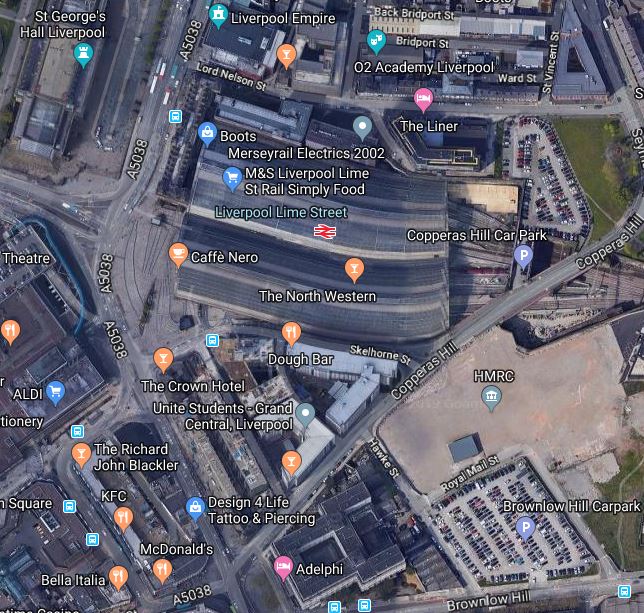
Consider.
- Lime Street station has a well-developed network of local rail lines going North, East, South and West under the Mersey, which are being updated with new trains and extra destinations.
- Liverpool Lime Street station is a Grade II Listed building.
- It is surrounded to the North and West with a cluster of historically and culturally important buildings including the Grade I Listed St. George’s Hall.
- Close to and alongside the North and South sides of the station are buildings that few would mourn if they were demolished.
- Between the station and the University of Liverpool to the East, there is a lot of land, that is mainly surface car parking and more low-grade buildings.
I think designing a High Speed station close to the current Lime Street station could be the sort of challenge many world-class architects will relish.
How Many Platforms And What Capacity Would Be Needed For A New Liverpool City Centre High Speed Station?
We already know that the following High Speed services are planned.
- Two tph between Liverpool and London.
- Six tph between Liverpool and Manchester and beyond.
- Would extra services to Glasgow and Birmingham be needed?
- There could also be long turnround times, which need extra platforms, as I indicated earlier.
It should also be noted that according to Wikipedia, Birmingham’s City Centre High Speed station; Birmingham Curzon Street station is being designed with seven platforms.
I could see an eighteen tph High Speed station with at least eight platforms.
- Two platforms would be for London services
- Three or four platforms would be for Manchester and beyond services
- Two or three platforms would be for other and future services and service recovery.
- All platforms would be able to accept maximum length High Speed Two trains.
The capacity of the station must be large enough for all future eventualities
I could envisage the following Northern Powerhouse Rail services, sometime in the future.
- Four tph -Liverpool and Hull via Manchester Airport, Manchester and Leeds
- Two tph -Liverpool and Edinburgh via Manchester Airport, Manchester, Leeds, York and Newcastle
- Two tph -Liverpool and Sunderland via Manchester Airport, Manchester, Leeds, York and Middlesbrough
- Two tph – Liverpool and Sheffield via Manchester Airport and Manchester
There could also be two tph to each of Birmingham, Glasgow and London.
The absolute limit between Liverpool and High Legh Junction would probably be eighteen tph, which is the design capacity of High Speed Two.
I am assuming that the High Speed sections of Northern Powerhouse Rail will be built as near as possible to High Speed Two standards, as regards train capacity, track, electrification, signalling and stations.
How Would Trains Access The New Liverpool City Centre High Speed Station?
To the East of Lime Street station is the campus of Liverpool University. There are a large number of buildings and to make things more difficult there is a cathedral, a brand-new hospital (Hopefully!) and several Listed buildings.
There is also no obvious route for a new High Speed Railway into a new station close to the current Lime Street.
I feel that the only solution is to bore a tunnel to bring the High Speed Railway to the city-centre. from perhaps six miles to the East of the city.
- The tunnels would be only for High Speed services.
- I suspect the preferred route would include tunnelling under some existing rail lines or motorways.
- This would mean that High Speed services would be unhindered by local traffic, when approaching or leaving Liverpool.
- Speed would be at least 140 mph.
This is only following a similar philosophy to that used to bring High Speed One into St. Pancras under East London, where the tunnels are under the North London Line.
Would The New Liverpool City Centre High Speed Station Be On The Surface Or Underground?
Recently, two semi-underground stations linked to deep tunnels have been built in the UK; Stratford International and the Paddington station for Crossrail. Crossrail and London’s Northern Line Extension have also shown how stations, that are deep underground, can have large developments on top.
I know the area around the Lime Street station well and I have a strong three-dimensional sense and feel that there is a solution that could be developed.
The final solution would be one for architects, council planners, engineers , politicians and accountants.
Between Manchester Airport And Manchester Piccadilly
Most current trains between Manchester Piccadilly and Manchester Airport stations take between 15-18 minutes.
I don’t believe that these times are compatible with a 26 minute time between Liverpool and Manchester Piccadilly.
So I am fairly certain that to achieve the planned time in the Transport for the North report, that an almost direct tunnel between Manchester Airport and Manchester Piccadilly stations is necessary.
Could the tunnel pass through underground platforms at Manchester Piccadilly station, which run across the station and then surface to connect with the chosen route to Leeds?
In an earlier plan, referenced under Manchester City Centre (Phase 2b) in the Wikipedia entry for High Speed Two,, this is said.
The route will continue from the airport into Manchester city centre via a 7.5-mile (12.1 km) twin bore branch tunnel under the dense urban districts of south Manchester before surfacing at Ardwick.
Under the earlier plan, trains would have gone into a rebuilt Manchester Piccadilly station.
This Google Map shows the tracks between Manchester Piccadilly station and Ardwick, where Siemens have a train care facility.
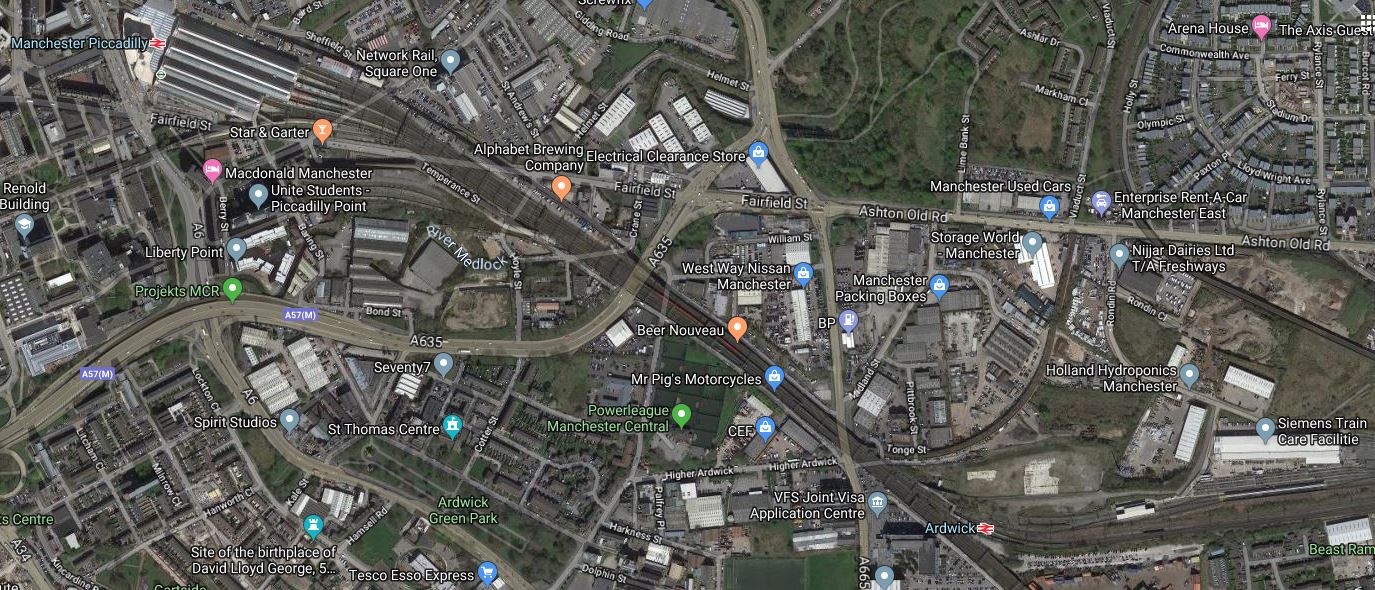
Note.
- If the tunnels emerged at Ardwick after passing under Manchester Piccadilly station, they would be pointing in more of less the right direction to emerge at Ardwick and continue on the way to Leeds, via the Huddersfield Line
- Under the earlier plan, I suspect the tunnels would go in a wide loop around South Manchester.
This tunnelled approach to new underground platforms at Manchester Piccadilly has the following advantages.
- High Speed services between Manchester Piccadilly and Manchester Airport stations would have their own dedicated High Speed line.
- Much of the tunnelling to the East of Manchester Piccadilly station could be under existing railway infrastructure.
- Through and terminal platforms as needed would be provided under the current Manchester Piccadilly station.
- Escalators and lifts would connect the underground platforms to local services and the Manchester Metrolink.
- By choosing the right orientation for the tunnel and position for the underground platforms, it may be possible to have a second entrance to the underground station from Piccadilly Gardens.
- The current Manchester Piccadilly station would only need refurbishing, rather than a total rebuild.
Manchester would have the fastest conventional airport link in the world. Who needs Hyperloop or Maglev?
Would Any High Speed Services To And From London Terminate At Manchester?
If London and Manchester trains have a sub-seventy minute journey time, trains would need to wait for some minutes in a terminal platform. It is the Liverpool problem all over again.
- These would need to be long enough for a full-length train.
- They would be expensive to build, as they would be underground.
So I suspect that providing services to cities beyond Manchester would actually reduce the complication and cost of the underground station.
Services at the underground station at Manchester Piccadilly would be as follows.
- Northern Powerhouse Rail – Six tph between Liverpool and Manchester Piccadilly
- High Speed Two – Three tph between Manchester Piccadilly and London
- Northern Powerhouse Rail – Six tph between Manchester Piccadilly and Leeds.
Surely, this means that three tph must terminate in the underground platforms!
If trains emerge at Ardwick, they could also continue on the Hope Valley Line to Sheffield.
If two tph could go to Sheffield, this means that the service pattern through the underground platforms could be.
- High Speed Two – Two tph between London and Hull via Manchester Airport, Manchester Piccadilly nd Leeds
- High Speed Two – One tph between London and Edinburgh via Manchester Airport, Manchester Piccadilly, Leeds, York and Newcastle.
- Northern Powerhouse Rail – One tph between Liverpool and Edinburgh via Manchester Airport, Manchester Piccadilly, Leeds, York and Newcastle.
- Northern Powerhouse Rail – Two tph between Liverpool and Sheffield via Manchester Airport and Manchester Piccadilly
- Northern Powerhouse Rail – Two tph between Liverpool and Hull via Manchester Airport, Manchester Piccadillyand Leeds
- Northern Powerhouse Rail – One tph between Liverpool and Sunderland via Manchester Airport, Manchester Piccadilly, Leeds, York and Middlesbrough.
I have shown that it is possible to design a schedule, where no High Speed services need to terminate in Manchester Piccadilly station.
So all the underground station would need is two through platforms.
A turnback could be provided at Ardwick for service recovery.
Overall services from the underground stations would be as follows.
- Two tph – Edinburgh
- Four tph – Hull
- Nine tph – Leeds
- Six tph – Liverpool
- Three tph – London
- Nine tph – Manchester Airport
- One tph – Middlesbrough
- Two tph – Newcastle
- Two tph – Sheffield
- One tph – Sunderland
- Five tph – York
This was only after a few minutes juggling. I’m sure a professional could be better.
The only reason to add bay platforms to the underground station would be, if high speed regional services like those at St. Pancras were to be run terminate in Manchester.
The through station concept also means that if demand was such, that Manchester needed four or more tph to or from London, Manchester is future-proofed.
Could Island Platforms Be Built At Manchester Piccadilly And Manchester Airport High Speed Stations?
Some of London’s Jubilee Line stations, with the highest capacity like Canada Water, Canary Wharf, London Bridge, Waterloo and Westminster, have their Jubilee Line platforms designed to the following rules.
- Tracks perhaps twenty or thirty metres apart.
- A wide concourse between the two platforms, so travellers and staff can freely circulate.
- Escalators and lifts in the concourse..
- Platform-edge doors for safety.
It is a very good starting point, but it could be taken further.
- Step-free access between platform and train, through wide doors..
- Large numbers of information displays.
- Tickets would indicate the door number to use.
- Toilets and kiosks
- Lots of visible staff, rather than the North’s usually few invisible versions.
Everything would be geared to a quick and easy boarding and leaving the trains.
Liverpool And Manchester Timings To And From London
The High Speed Two entry on Wikipedia gives the following timings after Phase Two is completed.
- London and Liverpool – One hour and thirty-six minutes
- London and Manchester – One hour and eight minutes
The Liverpool timing is slower, as for these timings, it runs on 125 mph lines between Crewe and Liverpool with a possible stop at Runcorn.
I feel that the proposed route to a new station in Liverpool city centre will reduce the Liverpool timing.
- There will be more running at 225 mph.
- There will be no slow local traffic.
- There will only be a stop at Warrington in a new purpose-built station.
I would not be surprised to see very similar sub-seventy minute times for both services.
It would dampen any rivalry between the two cities and if London and Wigan could be achieved in a similar time, it would surely ease train scheduling for the future operator of High Speed Two.
Liverpool And Manchester Journeys
I also suspect that nearly all Liverpool and Manchester passengers would use the High Speed services running between the city centres and Manchester Airport every ten minutes, which would take twenty-six minutes.
One estimate on the Internet says it takes fifty minutes to drive!
As both cities have extensive and interconnecting local rail, tram and bus networks, would this mean simplification of the other services between the two cities?
The Castlefield Corridor
Hopefully something will be done to sort out this route between Manchester Piccadilly and Manchester Victoria stations.
- I am very surprised that freight trains for Trafford Park Freight Terminal still use the Castlefield Corridor.
- Will there still be a need to provide as many services to Manchester Airport, as surely passengers will use the High Speed route, which will be running every ten minutes and will probably be a escalator or lift away?
- Would there be any need for long distance services to run through the route?
- Manchester Airport to Edinburgh, Hull, Leeds, Newcastle and York would go via Northern Powerhouse Rail under Manchester Piccadilly and the City Centre.
- Manchester Airport to Liverpool and Warrington would leave the Airport to the West and go direct.
- Manchester Airport to Blackpool, Glasgow, and Preston would leave the airport to the West and would take the West Coast Main Line at High Legh.
- Manchester Airport to Birmingham, and London would leave the airport to the West and would take High Speed Two at High Legh.
I think the Castlefield Corridor end up as a series of train or tram-train routes across Manchester.
Consider.
- Merseyrail’s Northern Line is a series of routes across Liverpool.
- The Cross-City Line is a series of routes across Birmingham.
- The Tyne and Wear Metro is a series of routes across Newcastle.
- Thameslink is a series of routes across London.
- The East London Line is a series of routes across East London.
Note that the last two routes, have been planned to handle in excess of 20 tph.
Why should the Castlefield Corridor routes be any different?
It’s just another cross-city line!
If there was a direct escalator and lift connection from Platforms 13 and 14 at Manchester Piccadilly station, the routes through the Castlefield Corridor would be a superb system connecting passengers to High Speed Two and Northern Powerhouse Rail.
The Future Of The West Coast Main Line
Consider.
- It appears Crewe and Warrington will be by-passed by new High Speed tracks.
- A new Warrington station with calls from High Speed Two services, will have good rail links to Chester, East Liverpool, North Wales and West Manchester.
- Wigan station is well-connected with commuter lines to Kirkby, Liverpool, Manchester and Southport, which would bring passengers to High Speed Two services stopping in the station.
- Preston station will connect passengers from Blackpool and North West Lancashire to High Speed Two services.
I wouldn’t be surprised to see the West Coast Main Line between Crewe and Preston converted into quadruple track all the way.
- Two High Speed tracks with at least 140 mph running and only one stop at Wigan.
- Two slow tracks for freight and local services, with stops as necessary.
Separation of High Speed services on 140 mph tracks with perhaps a capacity of at least fifteen tph, raises the possibility of using 140 mph electric multiple units running High Speed regional services.
- Northern terminals could be Blackburn, Blackpool and Burnley.
- Southern terminals could be Crewe, Liverpool, Manchester and Stoke.
- Liverpool services would terminate in the new High Speed platforms.
- Manchester services would call at Manchester Airport.
- Manchester services would terminate in bay platforms in the underground High Speed station underneath Manchester Piccadilly, with quick and easy access to the High Speed services.
- All High Speed local services would call at Preston and Wigan.
Trains would have the following characteristics.
- Capable of 140 mph running.
- High capacity, quality interiors.
- Step-free access between train and platform.
- Able to use platform-edge door used by the High Speed trains.
Think of a modernised Class 195 train, used for high speed commuter services between St. Pancras and Kent.
If a battery-electric capability could be added, the towns and cities served could increase dramatically.
- Northern terminals could be Barrow, Hebden Bridge and Windermere.
- Southern terminals could be Chester.
- Carlisle could be served using the Cumbria Coast Line via Barrow, Sellafield, Workington and Whitehaven.
I can see a large High Speed regional network developing around a 140 mph West Coast Main Line between Crewe and Preston.
North of Preston, the West Coast Main Line will become a double-track line with the passenger trains travelling at 140 mph.
A Manchester And Leeds High Speed Line
In Lord Adonis On Crossrail Of The North, I compared the current route between Leeds and Manchester with the Ipswich and Norwich route, that I know well.
- Both routes are roughly the same length.
- Ipswich and Norwich has a 100 mph line speed, with usually just two stops.
- Manchester and Leeds has a much slower line speed, with umpteen stops.
- The fastest trains between Manchester Victoria and Leeds take forty-nine minutes, with a stop at Huddersfield, and are just 1 train per hour (tph).
- Norwich and Ipswich in a couple of years, will take 30 minutes at a frequency of 3 tph.
This clip of a map from the Transport for the North report shows a schematic of the rail links to the East of Manchester.
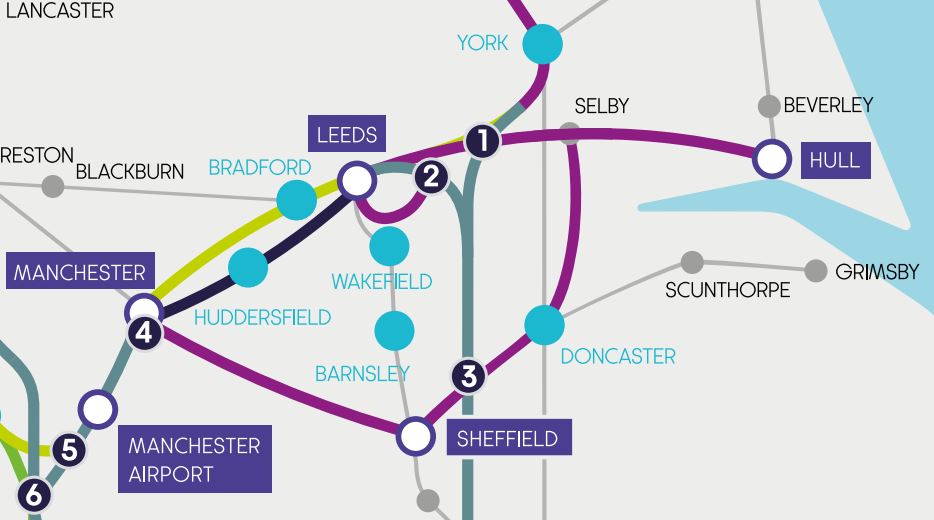
Two alternative routes are proposed.
- The black route would be created by upgrading the Huddersfield Line.
- The yellow route would be a new route via Bradford.
The Transport for the North report says this about the Leeds-Manchester service.
- There will be six tph.
- The journey will take 25 minutes.
The next two sections give my thoughts on these options.
Upgrading The Huddersfield Line
It will be a tough ask to upgrade this line so that a twenty-five minute time can be achieved.
I suspect though, it wouldn’t have been suggested unless it were possible.
Manchester And Leeds Via Bradford Low Moor
The Transport for the North report indicates that this could be via Bradford Low Moor station.
To get a twenty-five minute time between Leeds and Manchester with a ten minute frequency, which I believe is the minimum service the two cities deserve, would be like passing a whole herd of camels through the eye of a single needle.
The Swiss, who lets face it have higher hills, than we have in Northern England would create a new route mainly in tunnel between the two cities, with perhaps an underground station beneath the current Grade I Listed; Huddersfield station.
The transport for the North report suggests Bradford Low Moor station, as an intermediate station, so why not Bradford Low Moor and Huddersfield stations?
Note that the Gotthard Base Tunnel, which opened a couple of years ago, deep under the Alps, is about the same length as a Leeds and Manchester tunnel, and cost around eight billion pounds.
It would be expensive, but like Crossrail in London, the tunnel would have big advantages.
- It could be built without disrupting current rail and road networks.
- It would have a capacity of up to thirty tph in both directions.
- Unlike Crossrail, it could handle freight trains.
- It would unlock and join the railway systems to the East and West.
I believe, it would be a massive leap forward for transport in the North of England.
Upgrade Or Tunnel Between Manchester And Leeds?
Obviously, the tunnel would take several years to bore.
So to get Northern Powerhouse Rail up and running, the Huddersfield Line would be upgraded first.
At a future time, the tunnel would be constructed.
Hopefully, it could be built, when the finance became available, without disrupting existing train services.
After the tunnel was built, there could be a division of services.
- High Speed Two and Northern Powerhouse Rail services would use the tunnel.
- Stopping services would use the Classic route on the Huddersfield Line.
All passengers would get the service they need.
Freight would have an extra route, if it could use the High Speed tunnel.
High Speed Lines East Of Leeds
I’ll repeat the map I included earlier, which shows the route of High Speed Two and the two Northern Powerhouse Rail routes to the East of Leeds.
The three Junctions labelled on the map are.
- Junction on High Speed Two mainline for Leeds – North East services.
- Junction on High Speed Two Leeds spur to facilitate through services via existing Leeds station.
- Junction on High Speed Two mainline for Sheffield – Leeds services.
The two main Northern Powerhouse Rail routes East of Leeds are.
- A connection to the East Coast Main Line for York, Newcastle and Edinburgh.
- An extension Eastwards to Hull.
Having ridden around these lines in the last few weeks, I believe that these routes could be upgraded to a High Speed standard.
- The East Coast Main Line is mainly four-track and could be capable of 140 mph running, with in-cab digital signalling.
- An electrified link between Leeds and the East Coast Main Line has been promised for years.
- Replace the Selby swing bridge and the line between Leeds and Hull could probably be upgraded to an electrified 125 mph line with 140 mph available with in-cab signalling.
The Northern Powerhouse Rail report gives these proposed details of services East of Leeds.
- Leeds and Newcastle -four tph in 58 minutes.
- Leeds and Hull – two tph in 38 minutes
If all the lines East of Leeds were electrified, local services could be run by 140 mph electrical multiple units, likethose I proposed for Liverpool and Manchester High Speed regional services. These would not delay the High Speed services.
Liverpool and Hull Timings
The Northern Powerhouse Rail report doesn’t give a timing for this route across Northern England, but it does give the intermediate timings
- Liverpool and Manchester – 26 minutes
- Manchester and Leeds – 25 minutes
- Leeds and Hull – 38 minutes
This gives a time of 90 minutes between Liverpool and Hull, which compares with the current fastest time of 2:32 hours.
In addition, the frequency of the service would certainly be at least two tph and possibly as high as four tph.
Hull Station As A High Speed Terminal
Hull station has been earmarked for some time as an Eastern terminal for Northern Powerhouse Rail.
This Google Map shows the station.
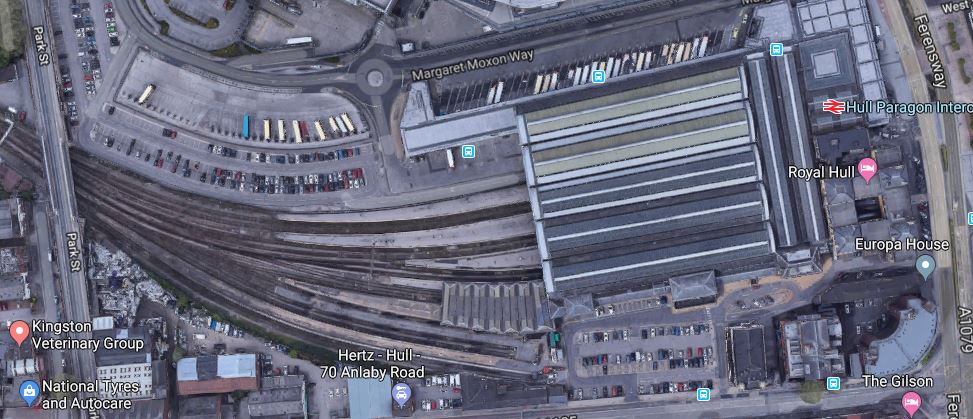
The station is large, with six platforms, and would have no problem accommodating long High Speed Two trains.
Could using Hull station as a terminal for a London-Birmingham-Manchester Airport-Manchester-Leeds-Hull service be a sensible response to saving costs and reducing disruption in the building of High Speed Two to Leeds?
- Northern Powerhouse Rail will need a High Speed link across or under the Pennines, but Leeds station is congested.
- The new Junction 2 on the Northern Powerhouse Rail map, has been designed to allow services through Leeds station.
- Leeds station probably would not be able to turn round a High Speed servicefrom London, without the previously planned substantial rebuilding.
- Could the passengers at Leeds cope with all the disruption?
- One extra High Speed service in both directions between Manchester and Hull every hour, could probably be accommodated using modern digital signalling.
- The train might even split and join at Leeds to serve both Newcastle and Hull.
Using Hull as a terminal probably has other advantages.
- There is probably space to add a stabling facility close to the station.
- Upgrading the route between Hull and Selby, would speed-up London to Kings Cross services via the East Coast Main Line.
- Electrification between Hull and Leeds would allow substantial improvement in local services around Hull.
If you look at the whole High Speed Two route between London and Hull via Manchester and Leeds, the route would be as follows.
- High Speed Two between London and Crewe.
- New High Speed railway between Crewe and Manchester via High Legh and Manchester Airport
- New High Speed route across or under the Pennines to Leeds.
- Upgraded line between Leeds and Hull.
I believe that it would be possible to run between London and Manchester at 225 mph and up to 140 mph on all the rest of the route.
Manchester Airport Connectivity
If High Speed Two and Northern Powerhouse Rail are developed as laid out in the Transport for the North report, the following cities will be connected to Manchester Airport.
- Birmingham – High Speed Two
- Blackpool – Northern Powerhouse Rail/West Coast Main Line
- Bradford – High Speed Two/Northern Powerhouse Rail
- Carlisle – Northern Powerhouse Rail/West Coast Main Line
- Edinburgh – Northern Powerhouse Rail/East Coast Main Line
- Glasgow – Northern Powerhouse Rail/West Coast Main Line
- Hull – High Speed Two/Northern Powerhouse Rail
- Leeds – High Speed Two/Northern Powerhouse Rail
- London – High Speed Two
- Newcastle -High Speed Two/Northern Powerhouse Rail
- Preston – Northern Powerhouse Rail/West Coast Main Line
- Sheffield – Northern Powerhouse Rail
- Sunderland – Northern Powerhouse Rail
- York – High Speed Two/Northern Powerhouse Rail
Manchester Airport will probably become the most important station in the North with High Speed connections to a large part of England and Scotland.
The Big Advantage Of Route Sharing
Suppose you have arrived in Manchester Airport and need to get home in Hull.
Because both High Speed Two and Northern Powerhouse Rail will run between the Airport and Hull, the frequency will be increased.
There could be the following services.
- High Speed Two – 2 tph between London and Hull
- Northern Powerhouse Rail – 2 tph between Liverpool and Hull
Giving a train every fifteen minutes.
High Speed East Coast Between London and Yorkshire, the North East Of England and Edinburgh
The East Coast Main Line is not mentioned in either of the articles, I have quoted in this post.
This line will see big changes in the next few years.
- All services from East Coast Trains, Hull Trains and LNER and some services from TransPennine Express will be run by 140 mph-capable Class 800/801/802 trains.
- ERTMS will be installed between London and Doncaster.
- Extra tracks will be added in places.
- Werrington Junction will be improved.
Large sections of the line will be capable of 140 mph running.
Currently, the fastest non-stop trains between London and Doncaster take a few minutes over ninety minutes. With 140 mph trains, I think the following times are easily possible.
- London and Doncaster – 80 minutes
- London and Hull – A few minutes over two hours, running via Selby.
- London and Leeds – A few minutes less than two hours, running on the Classic route.
For comparison High Speed Two is quoting 88 minutes for London Euston and Leeds, via Birmingham and East Midlands Hub.
I think we may have the making of a railway race between London and Leeds
- London Kings Cross via Peterborough, Wakefield and Doncaster
- London Euston via Birmingham and East Midlands Hub
- London Euston via Birmingham, Manchester Airport, Manchester and Bradford.
In addition, if the Leeds and Hull Line via Selby were to be upgraded to a High Speed route capable of running at up to 140 mph, I believe that by 2024 or 2025 could see London and Hull covered in under two hours.
The East Coast Main Line will be a High Speed Line in all but name.
The improvements and the 140 mph operating speed will create more capacity and I believe services from Kings Cross could be something like.
- London and Bradford – Two tph
- London and Edinburgh – Three or four tph – One or two tph via Leeds
- London and Hull – Two tph
- London and Leeds – Three or four tph
- London and Lincoln – Two tph
- London and Middlesbrough – Two tph
- London and Newcastle – Four tph
- London and Scarborough – One tph
- London and Sunderland – Two tph
- Leeds and Edinburgh – Two or three tph
Selective joining and splitting could be used to make better use of paths South of Doncaster.
I haven’t proven it, but my gut feeling for the numbers, is that LNER with their fleet of Azumas, will be capable of running a Turn-Up-And-Go service of four tph between London Kings Cross and Leeds, Newcastle and Edinburgh.
I suspect, that hey’ll have to buy a few more trains.
With the open access operators providing extra services, I suspect that there will be at least two tph between London Kings Cross and Bradford, Harrogate, Hull, Middlesbrough, Scarborough and Sunderland.
It would be the ultimate High Speed service based on a route that was designed by Victorians.
To make the most of the East Coast Main Line improvements, the following Northern Powerhouse Rail improvements should be done.
- Leeds to Hull
- Leeds to the Northbound East Coast Main Line
I’ve already discussed the first, but the second would do the following.
- Speed up services between Leeds and Newcastle and Scotland.
- Allow LNER to run electric trains between London and Scotland via Leeds.
- Create an electrified route between Neville Hill Depot and York.
- Create an electrified diversion through Leeds for the East Coast Main Line
High Speed East Coast is on the way.
High Speed Services To Sheffield
This clip of a map from the Transport for the North report shows a schematic of the rail links in East Yorkshire.
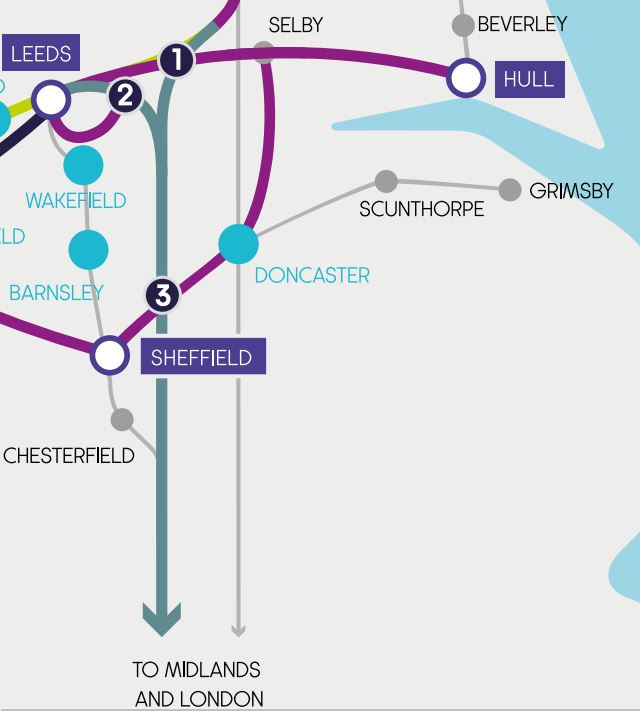
I can remember, when the Master Cutler used to run to Sheffield via the East Coast Main Line in the 1960s.
Even if a train took thirty minutes to go between Sheffield and Doncaster, it will still be a journey time of under two hours between London Kings Cross and Sheffield.
But note that on the map the route between Sheffield and Doncaster is shown as to be improved for Northern Powerhouse Rail.
If the route were to be electrified, it could give Sheffield and Rotherham a High Speed route to London Kings Cross.
The Classic route to Sheffield via the Midland Main Line is being upgraded.
- It will be electrified as far North as Market Harborough.
- Much of the route will have a 125 mph operating speed and perhaps 140 mph with in-cab signalling.
- It will share the 15.5 mile Northern section of the spur between High Speed Two and Sheffield, meaning it will be electrified between Clay Cross North Junction and Sheffield.
So when the new 125 mph bi-mode trains start running between St. Pancras and Sheffield, I would suspect that timings on this route could be below the two-hour mark.
Sheffield will get a much improved train service to and from the South.
Sheffield And Hull
The map in the Northern Powerhouse Rail report, shows a route between Sheffield and Hull via Doncaster as improved Northern Powerhouse Rail.
- It includes Sheffield and Doncaster, which could be improved to a High Speed electrified line.
- Part of the route between Doncaster and Selby is the East Coast Main Line, which should be able to sustain 140 mph running in a few years.
- Selby and Hull, is another route to be improved by Northern Powerhouse Rail.
Northern Powerhouse Rail are planning two tph in fifty minutes between Sheffield and Hull.
They could be 125 mph electric multiple units, which are a bit better than the current Pacers.
Some local services use a second route via Doncaster, Thorne, Goole, Gilberdyke and Brough.
Between Doncaster and Gilberdyke is not planned for improvement in the Northern Powerhouse Rail report, but at only twenty-five miles, it could easily be run by using 125 mph battery-electric trains, which would charge their batteries whilst running at both ends of the route.
- I wonder if it would be best to electrify the Thorne/Goole first, to give diversion for trains between Doncaster and Hull, whilst the Selby Swing Bridge is electrified.
- I have just read on this page of the Historic England web site, that the Selby Swing Bridge was Listed as Grade II ion the 23rd April 2015. So is this the reason why the electrification between Leeds and Hull has stalled?
- An electrified Thorne/Google route, might be used for local trains, whilst expresses used the Selby route.
- Selby has a couple of useful West-facing bay platforms.
There certainly seems to be some innovative Project Management at work
After all, train operators wouldn’t probably want to cut off one of their markets, whilst upgrading and electrification are underway.
Sheffield and Grimsby Via Doncaster and Scunthorpe
This route is shown on the Northern Powerhouse Rail map.
- There is an hourly TransPennine Express service between Cleethorpes station and Manchester Airport via Scunthorpe, Doncaster and Sheffield.
- There are a few sundry local services.
- The route serves the important Port of Immingham.
- A large renewable energy industry is developing in North Lincolnshire.
- British Steel has just folded at Scunthorpe.
The route doesn’t really fit the Northern Powerhouse ideal and it has a totally inadequate passenger service.
Could this route be improved to provide better rail services to the area, that sometimes, the rest of the UK forgets?
- Electrification might be needed to handle the heavy freight from Scunthorpe and Immingham.
- Would an LNER service between London Kings Cross and Cleethorpes be welcomed?
- Cleethorpes and Manchester Airport needs to at least be doubled in frequency.
With all the energy projects going on in North Lincolnshire, this area could become the Lincolnshire Powerhouse.
Sheffield And Leeds
Long-terms plans for traffic between these two cities will probably be by Junctions 2 and 3 on the map in the Northern Powerhouse Rail report.
The Northern Powerhouse Rail report, suggests that the trains will use High Speed Two and some infrastructure improvements and will run at a frequency of four tph and take 28 minutes.
This is a good service and compares well with what is planned between Ipswich and Norwich.
In the meantime, the main route is the Hallam Line, where trains take eighty minutes for the forty-five miles
Let’s hope Northern’s more powerful new Class 195 trains, bring the journey time under the hour.
Barnsley and Rotherham mustn’t be left out of the benefits of Northern Powerhouse Rail.
- In Sheffield Region Transport Plan 2019 – A New Station At Barnsley Dearne Valley, I discuss Sheffield’s plans for Barnsley Dearne Valley station on the Dearne Valley Line.
- There are also plans for a new station on the Dearne Valley Line at Rotherham.
- These two stations will be served by an extended East Midlands Railway London and Sheffield service to Leeds.
- One tph between London and Leeds via Rotherham, Barnsley and Wakefield would surely be welcomed.
Is this the beginning of Yorkshire Powerhouse Rail?
Sheffield And Manchester
The Northern Powerhouse Rail map has this route marked as Northern Powerhouse Rail.
As a lot of freight traffic is generated along the Hope Valley Line, which is the only route between the two cities, will this route be upgraded for a faster speed and greater capacity.
Will the Hope Valley Line be electrified?
- At the Western end, it is electrified as far as far as Hazel Grove station.
- At the Eastern end, High Speed Two will mean there will be electrification at Dore Junction.
- The distance between Dore Junction and Hazel Grove station is about thirty miles.
- My helicopter didn’t show that many bridges or level crossings.
- There are three long tunnels on the route, which are a total of eight miles long. Depending on their condition, these could be easy or difficult to electrify.
- Much of the electrification at the Western end looks in need of replacement.
This is one for the project engineers and accountants, but I wouldn’t be surprised to see this route electrified.
High Speed Two Routes
From the map it appears that in addition to the current proposed routes for High Speed Two trains.
- London-Birmingham-Liverpool (96 mins from 128)
- London-Birmingham-Manchester (68 mins from 128)
- London-Birmingham-Wigan and then on the West Coast Main Line to Glasgow. (218 mins from 248)
- London-Birmingham-East Midlands Hub-Sheffield-Leeds (82 mins from 132) and then on the East Coast Main Line to Newcastle 138 mins from 172)
Two new routes would be added via the new High Legh junctions.
- London-Birmingham–Manchester Airport-Manchester-Leeds-Hull
- London-Birmingham-Manchester Airport-Manchester-Leeds-Newcastle
In addition Liverpool would be served via the High Legh junctions.
This page on The Guardian is a useful guide to current and HS2 tomings, which I have used here.
My best estimates for the new layout are as follows.
London-Birmingham-Liverpool via High Legh – 66 mins
London-Birmingham-Manchester Airport-Manchester via High Legh – 66 mins
London-Birmingham-Manchester Airport-Manchester-Leeds via High Legh – 92 mins
London-Birmingham-Manchester Airport-Manchester-Leeds-Hull via High Legh – 130 mins
Note.
- To avoid problems, Liverpool and Manchester will probably end up with the same scheduled times.
- I suspect that the High Legh route may save more time, than I have estimated.
- Any savings South of High Legh will benefit all routes.
As under the new proposals London and High Legh will be continuous High Speed line, with High Speed spurs to Liverpool, Manchester Airport and Manchester, it would appear that the proposals offer faster journey times to the area.
Building High Speed Two And Northern Powerhouse Rail
There is an old Project Management phrase about
Getting All Your Ducks In A Row!
I think, that someone has been thinking hard as it appears the building of the second phase of High Speed Two and Northern Powerhouse Rail together can offer a lot of benefits.
These are my thoughts on the project order.
Devise An Intelligent Electrification Philosophy
Transport for Wales and their contractors are devising an intelligent discontinuous electrification philosophy for the South Wales Metro.
The Hallam, Hope Valley and Huddersfield Lines will be tricky to improve and electrify.
- They run through picturesque countryside.
- There are a large number of overbridges and some level crossings..
- There could be objections.
- There are some long tunnels.
- Access could be difficult.
- Speed limits will need to be increased.
Every trick will need to be employed.
- Instead of rebuilding overbridges, electrification could be discontinuous as in South Wales.
- Trains would have enough energy storage to bridge gaps in electrification.
- Tunnels will be electrified using rails on the roof or as third-rail.
- Intelligent fast-charging for trains with batteries will be deployed.
Less obtrusive electrification could also be used, as I described in Prototype Overhead Line Structure Revealed.
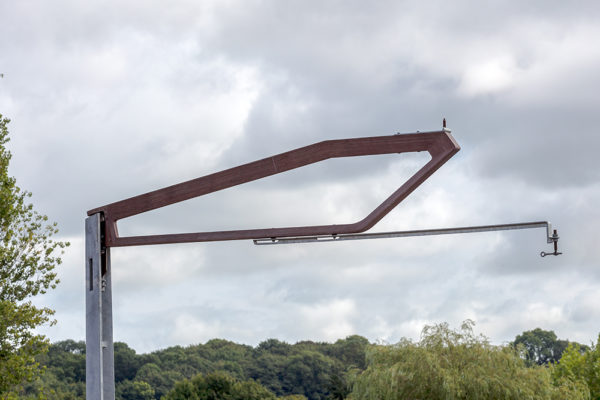
It does seem to be a good attempt to reduce the clutter of girders, gantries and wires!
Leeds And Sheffield Improvements
Leeds and Manchester is a difficult rail journey, but so is Leeds and Sheffield.
This route can be improved, by doing what I indicated earlier.
- Complete the electrification.
- Improve the track and signalling where necessary.
- Build new stations at Barnsley Dearne Valley and Rotherham.
- From 2022, East Midlands Railway should run at least one tph between St. Pancras and Leeds via Sheffield, Meadowhall, Rotherham, Barnsley Dearne Valley and Wakefield Westgate.
- Add extra trains between Sheffield and Leeds to give Northern Powerhouse Rail’s promised four tph in twenty-eight minutes
This would introduce competition and options for travel to and from Leeds.
Conclusion – This upgrade would bring large benefits to the area and should have the highest priority.
Lines East Of Leeds
These are the lines East of Leeds.
- A connection to the East Coast Main Line for York, Newcastle and Edinburgh.
- An extension Eastwards to Hull.
These would not be the most expensive sub-project, but they would give the following benefits, when they are upgraded.
- Electric trains between Hull and Leeds.
- Electric trains between Hull and London.
- Electric access to Neville Hill Depot from York and the North.
- An electric diversion route for the East Coast Main Line between York and Doncaster.
- The ability to run electric trains between London and Newcastle/Edinburgh via Leeds.
Hull and Humberside will be big beneficiaries.
The trains that the train operators have ordered can run all the services.
Once ERTMS is installed on the East Coast Main Line, train travel between London and Hull could be under two hours.
Conclusion – These lines should be improved sooner rather than later.
Midland Main Line Between Clay Cross Junction And Sheffield
This section of track will be shared between High Speed Two and the Midland Main Line.
- It is 15.5 miles long.
- It will be electrified.
- The only intermediate station is Chesterfield, which will need to be substantially rebuilt.
- It will have a high line speed, perhaps even in excess of 140 mph.
- Currently, the line carries about ten tph in both directions.
Completing this sub-project early would give benefits.
- The bi-mode trains due to be introduced on the Midland Main Line in 2022, would benefit from the improved electrified line.
- Timings on services between London and Sheffield would be reduced to under two hours.
An electrical supply for the electrification would have to be provided in Sheffield, which would be useful, if other electrification projects were to be started in the area.
Conclusion – This line should be improved and electrified, sooner rather than later.
Electrification Of The Hope Valley Line
Work is already planned to upgrade capacity on the Hope Valley Line.
Having looked at several electrification projects in the last few years, it is my belief that delays can occur because of bad surveys and preparation work done too late and in great haste.
So why not do as much of this work, whilst the capacity is upgraded?
Electrification of what would be a well-surveyed and prepared railway, with an immaculate track, must be a lot easier to plan, install and deliver on time.
Conclusion – This line should be improved and electrified, sooner rather than later, especially as it could be a test project for other lines through the hills.
Improvement And Possible Electrification Of The Huddersfield Line
Improvement of this line could probably give a large benefit to services between Leeds and Manchester via Huddersfield.
- Current services on the line would be speeded up.
- More services could be possible.
On the down side, it is a busy route and improvement will be very difficult.
Conclusion – This important route should be improved as soon as possible.
Building The Liverpool And Manchester High Speed Line
This will be a large and complex project.
It will involve building the following.
- Around thirty miles of new railway.
- New platforms and/or stations in Liverpool, Warrington, Manchester Airport and Manchester.
- A Tunnel between Manchester Airport and Manchester.
- Diversion of the West Coast Main Line through or around Crewe and Warrington.
- Building of the two junctions at High Legh.
- Connection to High Speed Two towards Birmingham and London.
It is my opinion, that the diversion of the West Coast Main Line should be opened at the same time as High Speed Two reaches Crewe, in 2027.
Conclusion -The diversion of the West Coast Main Line should be given priority, but the Liverpool and Manchester High Speed line can be done later.
Good Project Management Is Needed
I am sure, that Northern Powerhouse Rail and High Speed Two can work together to produce a schedule that delivers benefits in a steady stream.
They must be bold and not allow the politicians to derail the project or move it in an unsustainable direction, based on pressure from their constituents.
Conclusion
Linking the building of Phase Two of High Speed Two and Northern Powerhouse Rail would appear to be a sensible solution to expanding the economy of Northern England.
And The Wires Came Tumbling Down!
Today, I intended to go to Doncaster on the 11:03 train to Leeds from Kings Cross.
I had intended to travel in First on an Azuma, to see what the quality was like.
So I booked an Advance ticket online for around £50.
But then the train didn’t run, as the wires had come tumbling down!
This must be the third time, I’ve been affected by faulty overhead wires on the East Coast Main Line in the last few years.
In one case, we were delayed for about two hours and in the other, it didn’t affect me for long, as I was in an InterCity 125, which drove through the problem.
I have lost my fifty pounds, as you take the risk with an Advance Ticket.
Conclusion
The electrification on the East Coast Main Line seems to be built and maintained by morons.
Next time, I take the train on the East Coast Main Line, I’ll check trains are running before buying a ticket.
A First Ride In One Of LNER’s New Azumas
The Azuma is the name given by LNER‘s new Class 800 trains.
I rode in one today from Peterborough to Kings Cross after deliberately doing the trip the other way in an InterCity 125.
I took these pictures.
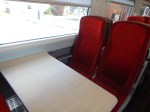

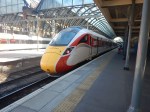
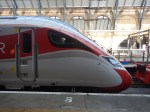
These are my thoughts.
The Brand-Name
The Azuma brand-name is one of those names, that was either thought-up for a fee of several million pounds by a specialist agency or it was thought up by a few serious real-ale drinkers in a comfortable pub, in front of a roaring fire or a blazing sun.
- It is actually Japanese for East, so I doubt it will be controversial.
- It is catchy and if say Simon Calder said that he liked the new Azuma, it might result in extra ticket sales.
- It will differentiate LNER from their competitors running differently-liveried examples of the same Class 800 train.
- Does it suggest speed in English, with the zoom in the middle?
LNER obviously like it, as Wikipedia says they retained the name, which was devised by the previous franchise holder; Virgin Trains East Coast.
Thinking through the history of the East Coast Main Line, I can only remember one class of locomotives or trains, that got a name; the Class 55 locomotive or Deltic. For those of my generation, Deltics are often iconic. In The Thunder of Three-Thousand Three-Hundred Horses, I describe a memorable trip behind a Deltic.
The Livery
The livery is distinctly cheeky, with an eye suggested around the front side-window!
The eye certainly stands out, which could be a good way to get extra seat sales.
It also appears that the livery has changed from the original Virgin East Coast design.
I like it!
The Interior
The interior is simple, practical and bright with some innovative touches.
- I was in Standard and there were a reasonable number of good-sized tables, which is always welcome.
- The seats seemed better than those fitted to the Class 800 trains on Great Western Railway (GWR).
- The electronic seat registration status displays were clear and understandable.
- I didn’t use the wi-fi or the charging points, but others were using them and one guy said they worked fine.
- Our ticket collector had a moan and I suspect there are a few problems that will be corrected as necessary.
But then trains always get a lot better after their first major update.
Comparison With Great Western Railway’s Version
The general consensus between two other passengers and myself, was that the seats in the Azuma were more comfortable, than those of GWR’s Class 800 trains.
A Three Class Train
Like some other services in the UK, the Azuma is effectively a three-class train.
- First Class
- Standard Class with a table.
- Bog Standard Class
I find it interesting that East Midlands Railway are promising that all seats will have tables, which already happens on some services on Chiltern Railways.
I wonder if LNER’s competitors; East Coast Trains, Grand Central and Hull Trains will offer more tables.
As a regular user of Chiltern Railways, I can see more tables being added to all main line services.
Performance
As the pictures show, I followed the train speed with the Speedview app on my phone.
After accelerating away from Peterborough 125 mph was held to Stevenage and then after slowing for the twin-track section over the Digswell Viaduct, the train maintained 100 mph for most opf the way until Kings Cross.
I think we will see improved performance onf the East Coast Main Line, with speeds increasing and journey times decreasing.
- There are plans to add extra tracks between Huntingdon and Peterborough.
- The flyunder at Werrington will be completed.
- There are plans for improvements to the North at Newark, Doncaster and York.
- Digital signalling will allow 140 mph running of Azumas and other Class 800 trains.
- It has been suggested that capacity on the route would improve with 125 mph trains running to Kings Lynn.
If all operators were running Class 800 trains, this would surely increase capacity.
Splitting And Joining
This document on the Hitachi web site is entitled Development of Class 800/801 High-Speed Rolling Stock For UK Intercity Express Programme.
This is a sentence from the document.
It also incorporates an automatic coupling system that shortens the time taken to couple or uncouple trains while stopped at a station.
Their Kentish cousins have been at it for several years.
LNER have not disclosed how they will use splitting and joining, but there are possibilities, where two five-car trains leave London as a ten-car train and then split en route to serve two destinations.
- London to Aberdeen and Inverness, splitting, at Edinburgh.
- London to Harrogate or Skipton and Middlesborough, splitting at Leeds.
- London to Lincoln and Hull, splitting at Newark.
Trains would join at the same stations, when returning South.
The splitting and joining has advantages over the current fixed-length InterCity 125 and InterCity 225.
- A five-car Azuma, only needs a 130 metre long platform. So services to destinations like Lincoln, Middlesbrough, Scarborough and Sunderland without a long platform become possible without expensive platform extensions.
- Train paths on the East Coast Main Line are being used more efficiently, as in some cases two destinations are served by one service into Kings Cross.
There are some disadvantages.
- Travellers must make sure they get into the correct part of the train.
- There is probably more staff on the train, as both five-car trains need a full crew.
- Returning South, trains must keep to time precisely to the joining station, to avoid delaying another service.
- All possible calling points on the East Coast Main Line, must be able to handle ten-car trains But as these are less than twenty metres longer than an InterCity 225, lengthening shouldn’t be a major exercise.
It’s probably best to consider the two five-car trains as separate services, which happened to be coupled together on the Southern section of the East Coast Main Line.
It should also be noted that several stations like Kings Cross, Doncaster, York and others have entrances in the middle of the platform, which is convenient for either the front or rear train.
Bicycles, Surf Boards And Oversized Luggage
I don’t think you get many surfboards on London to Leeds services, but a member of LNER’s staff told me, that during the recent Tour de Yorkshire, there were a lot of passengers with bicycles. This could be a problem on the Azuma,, as the nine-car train has only four spaces, with a five-car just two.
With the conversion of Scottish services to Azumas, I can see that luggage could be a problem.
I took this picture at Edinburgh, where this luggage is about to be swallowed by the locomotive of an InterCity 125.
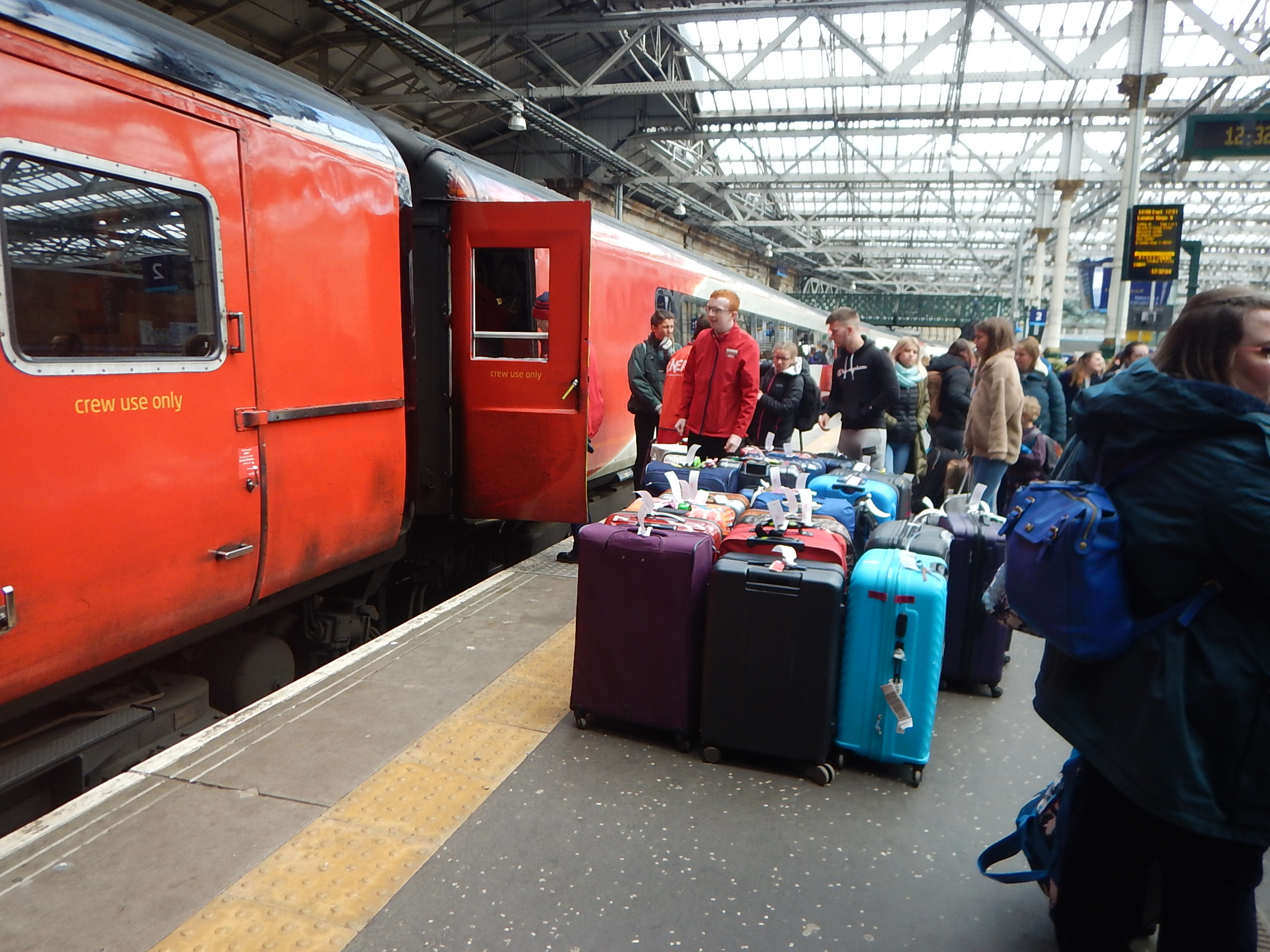
I can see a time, when there will be a need to add another car to some nine-car trains, to make sure all the bicycles, surf boards and oversized luggage can be accommodated on the train.
- Are LNER cutting themselves off from upmarket golf tours, where passengers travel between London and Gleneagles in First Class luxury?
- GWR have a similar problem on South West England services and I think, it will get more serious in the next few years, as more people take up cycling and surfing.
- It appears GWR have resorted to banning surf-boards.
- ScotRail have opted to convert redundant single-car Class 153 trains, into multi-purpose additional carriages to enhance services on the West Highland Line.
I can also see a problem on the London to Inverness services. In Promoting The Highland Main Line, I wrote about the efforts of the Highland Main Line Community Rail Partnership to encourage more visitors to their iconic line and the surrounding area.
Many of the visitors that are attracted to the area, might come with bicycles, golf bags, climbing equipment and other oversized baggage.
So could we see an extra multi-purpose car added to some Azumas working between London and Scotland?
- The Class 800 trains can be lengthened to as long as twelve cars.
- Manufacturing of extra cars in the next few years, should be relatively easy.
- Adding extra cars is a simple cut-and-paste, with the train software ascertaining the train formation.
- Most platforms are probably long enough for at least ten-car trains.
- A ten-car Class 800 formation is only fifteen metres longer than a nine-car InterCity 225.
- There may be opportunities to carry high-value, urgent or perishable freight.
Obviously, the train operators’ needs to satisfy their markets and their finances will decide if extra cars are worth adding.
But I think, that we’ll see some ten-car Azumas on the London and Aerdeen, Edinburgh and Inverness routes.
Conclusion
The train appears to meet the specification, but as regards bulky luggage, it could be that the specification is lacking.
Trainspotting At Oakleigh Park Station
Around 1960, my friend; Richard Plumb and myself, used to go trainspotting on the East Coast Main Line through Barnet and Hadley Wood. One of the places, we used to go regularly was Oakleigh Park station, where we would stand on the pedestrian bridge to the North of the main part of the station.
These pictures show the station today.
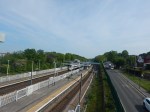

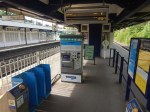
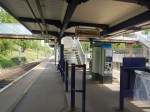
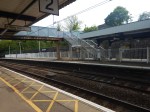

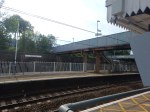
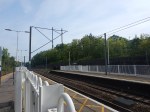
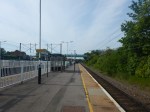

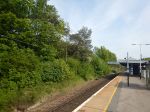

It hasn’t really changed that much over the sixty years.
- Wikipedia says it was remodelled for the electrification in 1975.
- The steel bridge, where we used to stand i very much the same.
- There are a lot of new houses on surplus railway land.
- The whole area is a lot greener, due to an increase in tree cover of the sides of the railway.
The step-free access is as it was in 1960 and totally non-existent. Wikipedia doesn’t detail any plans for the future.
This Google Map shows the layout of the station.

Note.
- The two island platforms, with four faces.
- The North bridge, where we used to watch the trains.
- The South bridge, which is the station footbridge with steep steps down to the platforms.
It is a station that has most of the things it needs, except for that step-free access!
Could Oakleigh Park Station Be Made Step-Free?
I have to ask this question.
Before I answer it, the following should be considered.
- The station doesn’t appear to have an open Booking Office or any ticket gates, but has ticket machines and Oyster readers on both platforms.
- It also has coffee stalls on both platforms.
- It might be possible to put a lift to Platforms 3-4, but because of the Booking Office, it might be difficult for Platforms 1-2.
- The station has about a million passengers a year.
My personal view is that as more housing is developed between Kings Cross and Welwyn Garden City the train frequency will be increased.
One solution might be to replace the bridge, where Richard and myself, watched the trains, with a new step-free bridge that also bridged Netherlands Road alongside the station.
Did I See Any Trains?
I took this picture of LNER’s new Azuma returning on the first round trip to Leeds.
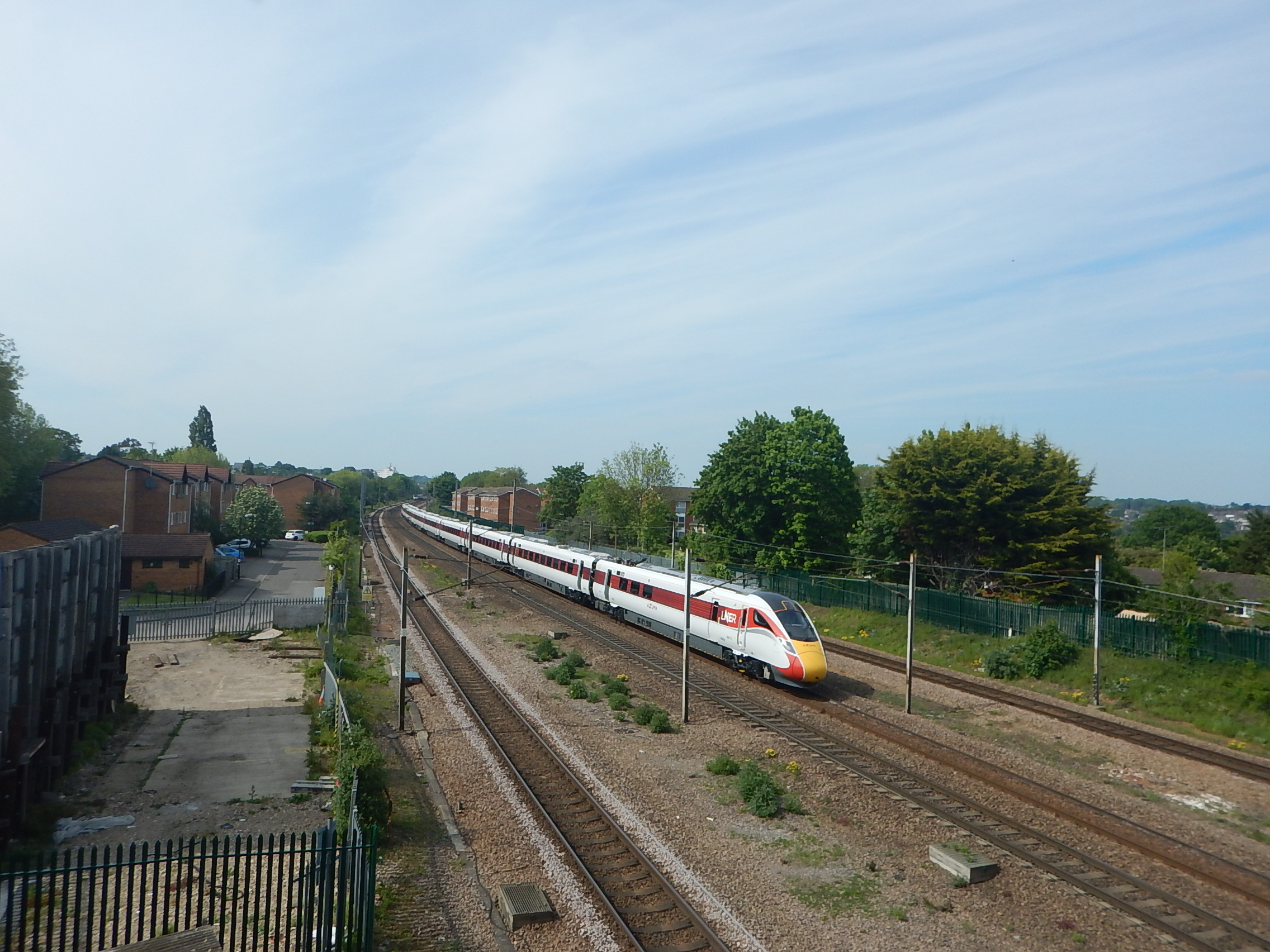
The Azuma or Class 801 train almost bears a front-end resemblance to Nigel Gresley‘s famous A4 Pacifics. Mallard is a member of this class and set the world speed record for steam locomotives at 126.4 mph.
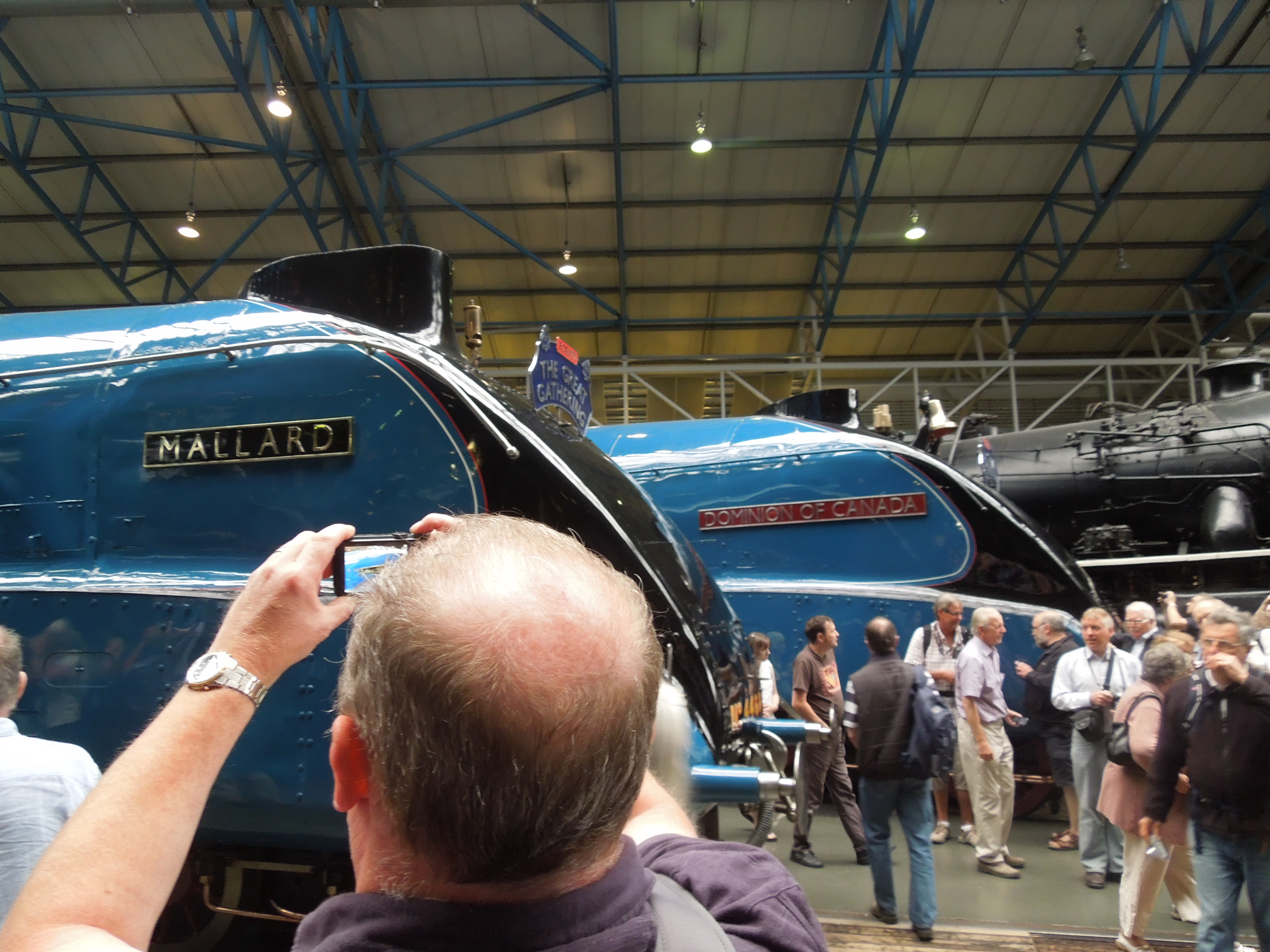
Although, it is a bit like comparing apples with oranges, it should be noted that Mallard’s speed record is actually faster than the current 125 mph operating speed of the new Class 801 train. But the electric train has another fifteen mph to come with full digital signalling.
But seeing the Azuma coming through Oakleigh Park station, reminded me of summers sixty years ago, when we watched streaks at speed on that same gentle curve.
Trains Ordered For 2021 Launch Of ‘High-Quality, Low Fare’ London – Edinburgh Service
The title of this post, is the same as that of this article on Railway Gazette.
This is the first paragraph.
FirstGroup has finalised an order for five Hitachi AT300 electric trainsets which it will use to launch a London – Edinburgh open access service in autumn 2021.
The trains appear to be be similar to those used by FirstGroup companies; Hull Trains and Great Western Railway.
These are some points from the article.
- FirstGroup is targeting the two-thirds of passengers, who fly between London and Edinburgh.
- They are also targeting business passengers, as the first train arrives in Edinburgh at 10:00.
- The trains are five-cars.
- The trains are one class with onboard catering, air-conditioning, power sockets and free wi-fi.
- Stops will be five trains per day with stops at Stevenage, Newcastle and Morpeth.
- The trains will take around four hours.
- The service will start in Autumn 2021.
These are my observations.
Earlier Start
I suspect that the service can’t start earlier, due to one of the following.
- The lead time in building the trains.
- Completion of the new Werrington Junction.
- Completion of the sorting of Kings Cross.
- Completion of the works at Stevenage station.
The track works will probably be needed to create the extra paths needed on the East Coast Main Line.
Electric-Only Trains
Most other AT300 trains are bi-mode trains, but will these be electric-only?
Capacity Issues
If the trains prove too small, they can just add extra carriages or two trains can run as a pair.
Timetables
Trains will probably take nine hours for a round-trip, allowing 30 minutes for turnround.
This would mean that two trains leaving London and Edinburgh at six, would arrive back at home after two round trips around midnight.
Conclusion
I think it will be a successful service.
Integration Of High-Speed And Commuter Services Out Of Kings Cross Station
The East Coast Main Line ECML) has the following services on the Southern section between Kings Cross and Peterborough.
- Express services capable of at least 125 mph running from LNER , Grand Central, Hull Trains and other Open Access operators.
- Great Northern services capable of 110 mph running between Kings Cross and Cambridge and Ely.
- Great Northern services to Peterborough appear to have been discontinued.
- Thameslink services capable of 100 mph running between Kings Cross and Cambridge and Peterborough.
It would appear that the slower Great Northern and Thameslink services will get in the way of the faster trains, if they need to use the fast lines.
The Digswell Viaduct
A particular problem will be the double-track section of line through Welwyn North station and over the Digswell Viaduct.
There are two Great Northern and six Thameslink services in each hour, that are not capable of operating at 125 mph on the double-track section.
Following the logic of Oxford and Bedwyn services out of Paddington, which are now run by 125 mph Class 802 trains, I feel that timetabling would be easier on the ECML, if there were 125 mph trains running Great Northern and Thameslink services to Cambridge, Ely and Peterborough.
I explored 125 mph services to Kings Lynn in Call For ETCS On King’s Lynn Route, after reading about a proposal in Rail Magazine. They certainly look like they’d give advantages.
Some idiot decided that Thameslink services were fine with a 100 mph top speed. They should have been 110 mph or even faster trains, so that they could cross the Digswell Viaduct without slowing high speed services.
Digital Signalling
Digital signalling will be installed on the Southern section of the East Coast Main Line
This could ease the problem of the double-track section, as all trains should eventually be timed more precisely.
More Use Of The Hertford Loop
Perhaps some or all of the six 100 mph Thameslink services, could use an upgraded Hertford Loop Line, which will be fitted with digital signalling.
125 mph Trains
In a last resort, it would surely be more affordable to run 125 mph commuter trains to Cambridge, Ely and Peterborough, than put put two extra tracks on the Digswell Viaduct.
Latest On The Class 717 Trains For The Great Northern
This is another tweet from the South East Rail Group.
Because of centre door of the cab some start signals can’t be sighted by the driver. Thus SDO will be used and trains stopped short. Once ERTMS is installed (the trains already have the in-cab signalling displays to go with it) then fixed signals and triphandles will be removed.
They also say that squiadron service is could be on March 11th.
Effect Of ERTMS
The tweet also confirms that ERTMS will be available on this line, after the first stage of installation of ERTMS on the East Coast Main Line.
Currently, the service to Moorgate station is twelve trains per hour (tph) in the Off Peak, with extra services in the Peak.
As Thameslink and Crossrail will be running twenty-four tph in a couple of years, so when ERTMS is working on the Southern part of the East Coast Main Line and on the Northern City Line into Moorgate station, how many trains per hour will be possible to Moorgate?
The current twelve tph means that turning the trains at Moorgate must be done in five minutes, which having watched the process is fairly relaxed.
Fifteen tph and a four minute turnround is certainly possible, as that is sometimes achieved in the Peak with the ancient Class 313 trains.
With a fleet of twenty-five trains, and a frequency of twenty-four tph possible under ERTMS, I suspect that twenty tph and a three minute turnround at Moorgate could be achieved all day.
Highbury & Islington Interchange With The Victoria Line
With Dear Old Vicky gamely plugging on at thirty-six tph, the typical maximum wait in a cross-platform interchange will be as follows.
- Victoria to Northern City – three minutes
- Northern City to Victoria – one minute and forty seconds.
How many passengers will use this route to the City rather than use the London Overground?
Interchange With Crossrail At Moorgate
The Northern City will be my link to Crossrail, as I can walk or get a bus to Essex Road station.
The interchange between Crossrail and the Northern City Lines will be high capacity, feature a lot of escalators and be fully step-free.
Conclusion
London’s forgotten underground line with its tragic history of the Moorgate Tube Crash, will become a new star in the broad firmament of London’s railways.
It just needs some improvements to some of the stations.

