My 78-Year-Old Legs Are More Reliable Than The New Chinese Buses On London’s 141 Bus Route
So we all know what we’re talking about, here’s a few pictures.
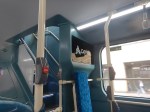
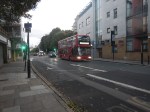
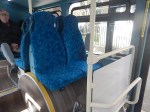
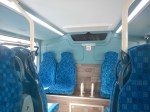
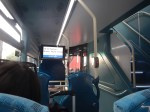
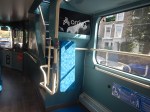
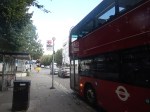
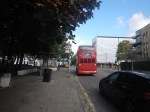
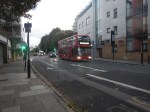
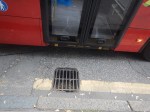
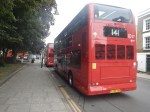
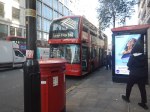
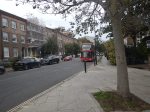
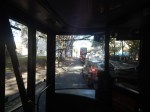
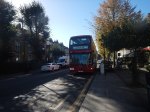
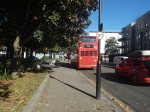
Note.
- The buses seem to have no serious faults from a passenger point of view.
- One middle-aged lady on the plump side, said she didn’t like the buses.
- The aisle between the front seats doesn’t seem to be built for large people.
- The seats are reasonably comfortable.
- One morning, I stood on a long journey and I felt the road-holding wasn’t as good as a New Routemaster.
- On several buses, the interior route display has not been working.
- As I don’t wear a watch, I find a non-working display annoying.
- I haven’t been upstairs yet.
- As picture numbers three and four show, the bus looks a bit pokey at the back downstairs.
But I am very suspicious about the buses’s reliability or ability to handle the route, which is fairly long.
Take this morning, when I was coming home from London Bridge station.
- There was only a 43 bus at the shared stop with the 141 bus.
- As the routes are identical until Old Street station, I took the 43 bus to Moorgate station.
- At Moorgate station, I took a 76 bus, which gets me within walking distance of where I live.
- Someone said, that a 141 bus would mean a wait of ten minutes.
- In the end my 78-year-old legs delivered be home.
I didn’t see a 141 bus going my way on my journey.
I have seen behaviour like this several times, since some Chinese electric buses were introduced on to the route.
As a graduate Electrical and Control Engineer, it looks to me, that there is one of two problems with these buses.
- The batteries aren’t large enough for the route.
- Not enough time is allowed for charging the batteries at the end of the route.
This page on the Wrightbus website is entitled Wrightbus Electroliner ‘Most Efficient Double-Deck Battery-Electric Bus’, and it contains this paragraph, which probably explains their philosophy and ambition.
We have already gained a strong reputation for our hydrogen double deck but we want to lead the world in zero-emissions full stop. Wrightbus has the best brains in the business when it comes to technology and our StreetDeck Electroliner puts us squarely at the front of the pack. We haven’t weighed the bus down with a high battery volume just so we can say it’s got the most power or range; instead, we’ve made it the most efficient vehicle on the road by combining optimum power with a class-leading rapid charge, meaning our electric bus spends more time on the road than any other.
It also probably sets a very high bar, which the Chinese can only achieve by adding battery volume and making their buses pokey.
To be fair to the buses, the 141 route is probably nearly 20 miles long.
In Sutton Station To Gatwick Airport By Hydrogen-Powered Bus, I wrote about what it says in the title.
In that post, I said this about hydrogen buses running on the 141 route.
Wrightbus Hydrogen Buses For My Local Bus Route 141
Consider.
- The 141 bus route is my local bus, which gets me to Moorgate, Bank, London Bridge and Manor House.
- The length of the full route is twenty miles and it takes about an hour to go from London Bridge station to Palmers Green.
- The route is currently run by older Wrightbus hybrid diesel-electric buses.
- I suspect that modern hydrogen buses could last almost all day on one fill of hydrogen, with perhaps a top-up at lunchtime.
They would have no difficulty handling the route and would greatly increase the customers current rock-bottom satisfaction.
I am sure, they would improve the horrendous reliability of the route.
I also wonder, if Wrightbus have another solution.
In UK Among Tri-Axle Zero-Emission Wrightbus StreetDeck Prospects, I talk about Wrightbus’s new Tri-Axle Zero-Emission Wrightbus StreetDeck bus and how it would be ideal for the 141 bus route.
- The 141 bus route is the old 641 trolleybus route, so all clearances are generous.
- The tri-axle design can probably carry a better-optimised battery.
- There used to be two bus routes on the route and now there is only one, so more capacity is needed.
- The 141 bus route bridges the gap between the Northern section of the Piccadilly Line and the Elizabeth Line, Bank and London Bridge.
- The new air-conditioned Piccadilly Line trains, will increase the passengers on the line.
- There will be a lot more housing built in Enfield, at the Northern end of the Piccadilly Line and more bus capacity will be needed between Manor House and the City of London.
Some of TfL’s rerouting of buses in North London, was a crime against mathematics.
A Passing Loop At Ponders End
I can’t write Ponders End without smiling, as my mother was born in that district of Enfield and used to refer to herself in light-hearted moments as a Ponders Plonker.
The West Anglia Main Line, through Ponders End station is a busy line and Enfield Council want to have four trains per hour (tph) serving their new development at Meridian Water.
This page on the CPMS Group web site is entitled The Changing Face Of Rail Investment and it describes the solution to the capacity problem at Ponders End/Meridian Water stations.
This is the introductory paragraph.
Peter George, Meridian Water Programme Director, London Borough of Enfield, and Damien Gent, Managing Director, CPMS Infrastructure, talk about the ground-breaking work undertaken by the London Borough of Enfield to deliver the rail infrastructure needed to increase passenger capacity at the newly built Meridian Water rail station and regenerate brownfield land to make space for up to 13,000 new homes and create over 6,000 new jobs in North-East London.
The Meridian Water project has been split into three phases.
- Phase 1 of the project was the construction of the new Meridian Water rail station.
- Phase 2 was building the rail infrastructure which would support the increased rail traffic.
- Phase 3 was the regeneration of the area, the procurement of new homes and creation of new jobs.
Only Phase 1 has so far been completed with Meridian Water station opening in June 2019.
This paragraph describes the complexity and solution to Phase 2.
The complexity of Phase 2 of the project was very high. The West Anglia mainline is one of the most congested routes into London. Consequently, the team had to find a way to reconcile increased capacity and trains stopping at Meridian Water station with ensuring high speed trains could still pass through the station seamlessly. This was a very challenging task. The solution which received the most support and proved the most viable was to install a new passing loop, approximately 1700 metres of new track at Ponders end, and to create a bi-directional section on the mainline heading towards London, as well as to implement broad changes to the signalling, telecoms and Overhead Line power systems to align with the new track position. This infrastructure solution provides the capacity within the rail network to then consider the timetable changes required to increase the frequency of services calling at Meridian Water.
It does seem that the web page is getting a bit ahead of reality.
But there is also this article on the Enfield Dispatch, which is entitled Boost For Rail Services At Meridian Water.
This is said.
Plans to boost rail services at Enfield Council’s £6billion Meridian Water regeneration scheme have taken a step forward.
The council has agreed a construction deal to create a passing loop at Ponders End Station, which will allow four trains per hour to serve Meridian Water Station, which was opened in June 2019.
The loop will enable fast trains on the West Anglia Main Line to overtake stopping services at Ponders End Station, allowing more trains to stop at Meridian Water, which is presently only served by two trains per hour towards Stratford.
To secure funding the works need to be completed by the end of March 2024.
A Visit To Ponders End Station
I went to Ponders End station this morning.
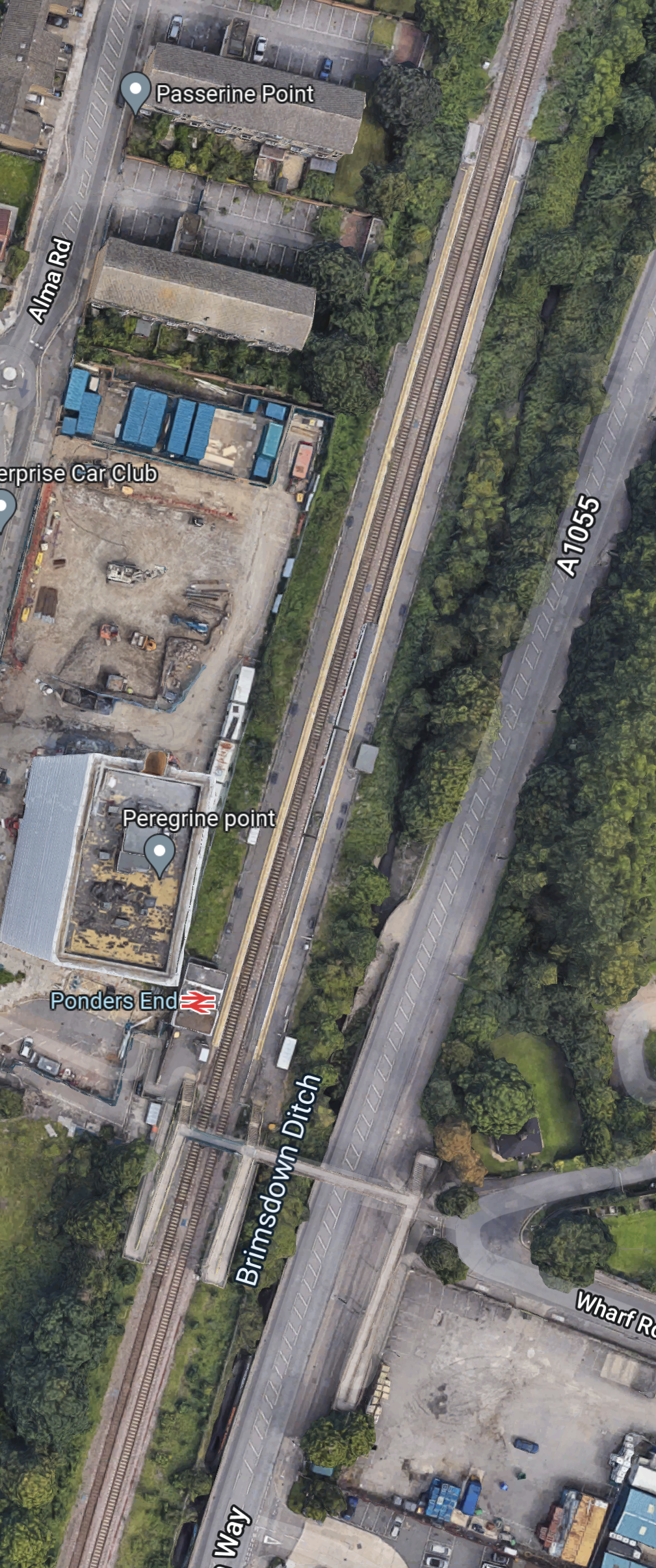
This Google Map shows the station.
Note.
- The Brimsdown Ditch on the East side of the station.
- The footbridge spanning both the railway and the road.
- The footbridge has ramps for step-free access.
- I suspect that the platforms will take a 240 metre train.
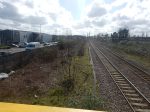
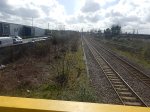
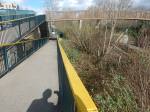
These pictures show the station
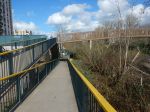

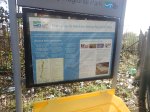

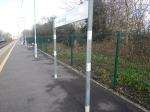
Note.
- The station serves the Lee Valley Regional Park and the Lea Valley Athletics Centre, so it probably needs lifts in an ideal world.
- The bridge seems to be built high enough for a track or even two to pass underneath.
- There seems to be plenty of space between the railway tracks and the A1055 road.
I wonder if a very simple solution is going to be built.
Consider that the distance between the two stations either side of Ponders End station is 3.2 miles or 5150 metres. So if the loop is placed symmetrically around Ponders End station to the East of the station, that would mean that the loop started and finished around 1700 metres from Brimsdown and Meridian Water stations. The Brimsdown Ditch could be put in a culvert, if more space were needed.
A Southbound express after passing through Brimsdown station would then take the loop between the platform and the road at Ponders End station and then cross over to the main line after the station.
I could envisage the Southbound express path through the three stations, being as straight as possible for several hundred metres through Ponders End station, with very gentle curves to connect to the current Southbound track at each end.
To access the Southbound platform at Ponders End, there would be two crossovers from the loop to the track through the station at each end of the station. As the train would be stopping or accelerating away, when it crossed between the passing loop and the station track, it could be done at a much slower speed.
There will be no problem for Southbound represses overtaking a stopping train sitting in Ponders End station. The loop would be very simple and I suspect Network Rail have enough expertise to design it for perhaps 100 mph. The sharpest changes of direction would only be performed by the stopping train at a much slower speed.
But surely, a Northbound train will need to overtake a stopping one.
Could this be done at Meridian Water station by stopping the Northbound stopping train in Platform 3 at the station and allowing the Northbound expresses to overtake through Platform 4?
It would need a couple of crossovers either side of Meridian Water station and bi-directional running through Platform 3 at the station.
Conclusion
How many small rail schemes like this, that unlock housing and job opportunities could be accelerated by better design, management, planning and cooperation between stakeholders.
Former Gasworks Turning Into Entertainment Venue
The title of this post is the same as that of this article on IanVisits.
This is the first paragraph.
Four giant warehouses and an empty field — a former gasworks in Tottenham — is to become a new entertainment venue.
These are some points about the venue.
- Four interlinked warehouses capable of holding 10,000 people.
- Ten acres of outdoor space.
- Close to the soon-to-be-opened Meridian Water station.
- It will be know as the Drumsheds.
The first event will be the Field Day on June 7-8, 2019.
This Google Map shows the location of the site.
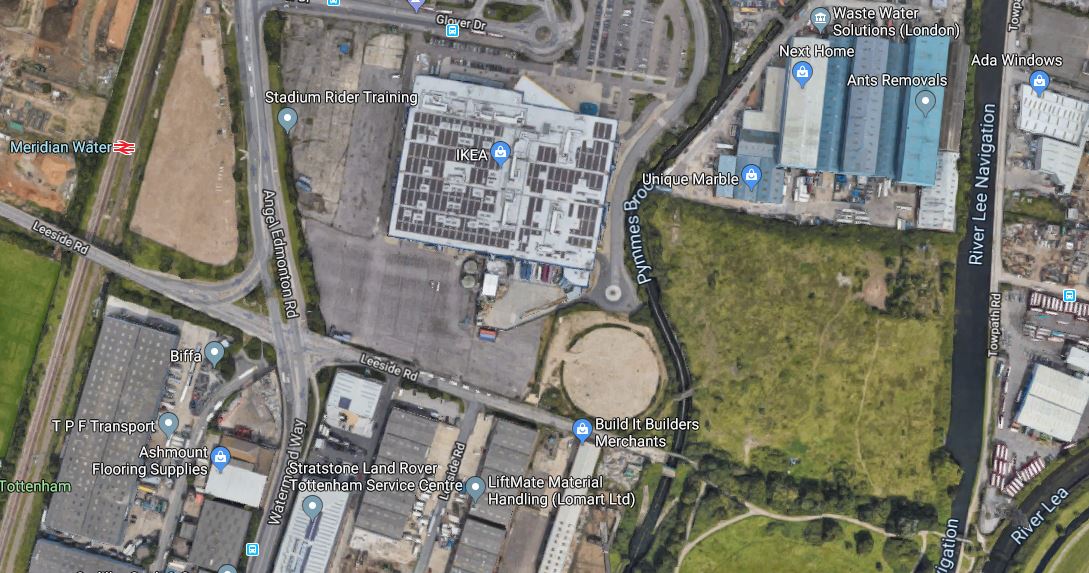
Note.
- The blue-roofed shed in the North-East corner of the map, will be the centrepiece.
- The site is bordered on the West by Pymmes Brook and on the East by the Lea Navigation Canal.
- The grass area South of the sheds must be the outdoor space.
- Meridian Water station is perhaps four-hundred metres to the West.
- There’s even an IKEA and a large Tesco, for those who don’t want to hump their tent and food from hundreds of miles away.
Could this be the first of a new style of entertainment venue?
In some ways, this venture brings me back to the vibrant music scene in the area, where I grew up, just a few miles to the North-West.
Artists from the sixties, that I saw in the area included.
- Adam Faith
- Animals
- Chuck Berry
- Joe Brown
- John Mayall with a very drunk Eric Clapton
- Nashville Teens
- Rolling Stones
But no venue was bigger than the large Regal Edmonton cinema, which held perhaps a few hundred!
After the recent opening of the new Tottenham Hotspur Stadium, this is surely more good news for the area, which has had its troubles over the last few years.
Could The Gospel Oak to Barking Line Transform East London?
Two reports on the web prompted me to write this post.
The first was an article on CityMetric entitled Forget Road Bridges. TfL Should Extend The Overground To Thamesmead And Abbey Wood, which prompted me to write No To Silvertown Tunnel.
The second report was on various web sites with headlines like Enfield Council Shortlists Developers For Meridian Water.
Enfield Council is planning to build substantial numbers of new homes at a 85 ha site called Meridian Water near Lee Valley Regional Park over the next couple of dcades.
To help the development at Meridian Water, the station at Angel Road is to be improved and this page on the Meridian Water web site gives details. This extract details the development of the station and the related rail line and transport interchange.
The station will be a thriving new hub that combines rail and bus services to provide better access to Meridian Water for future residents and businesses. Meridian Water is a new £1.5 billion, 85 hectare, eco-development which will provide up to 5,000 new homes and up to 3,000 new jobs. The improvements, which will be completed in the next five years, will bring benefits for those that currently live and work in the area, as well as the new residents of the Meridian Water development. The project is being funded with £2.5 million from the Greater London Authority with a further £1 million from Enfield Council. This new station combined with additional investment in three tracking the railway, will bring forth a four trains per hour service at Angel Road Station.
All good stuff and very much about motherhood and apple pie in the manner of the way that the Metropolitan Railway used to sell Metroland.
But let’s not knock it for that, as London needs lots of new housing and the current station, Angel Road, which will be renamed Meridian Water, is one of the worst transport interchanges in the UK,. They’ve probably got better stations in many of the worst slums in The Third World.
Angel Road is just two platforms and a bridge as Before Crossrail 2 – Angel Road shows, whereas the average station in deepest Africa or South America, probably has at least someone, who’ll help you or sell you a tasty local morsel or a bottle of fizzy drink.
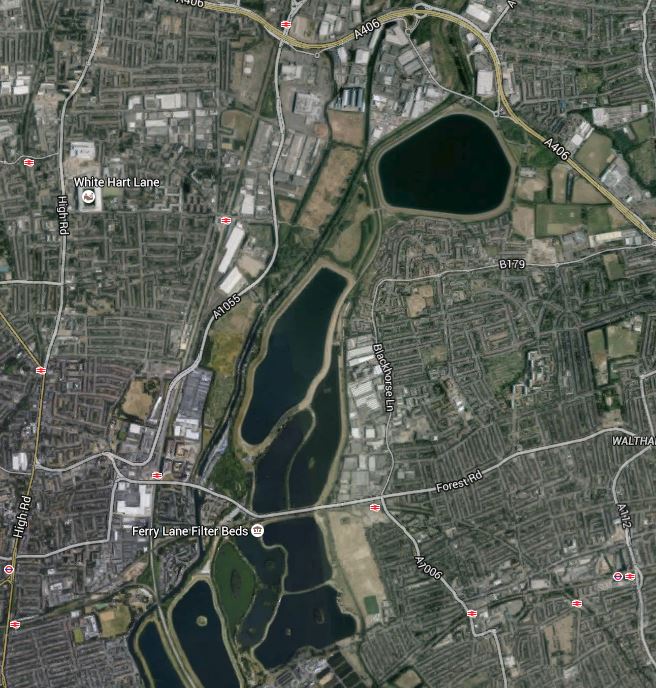
Whilst looking at developments in this area, it is worth looking at the wider area and investigate how transport links might develop. This Google Map shows the Lower Lea Valley from Angel Road and Meridian Water in the North to Lea Bridge Road in the South.
Lower Lea Valley
In addition to the housing developments at Meridian Water, more housing is being developed around Tottenham Hale station and other places in the area. But the development that will have the biggest impact on the area is not these developments but Thames Water and Waltham Forest’s massive plan to create the Walthamstow Wetlands. The project web site has this strap-line.
Transforming Walthamstow Reservoirs into a new urban wetland reserve for London
I have written about the Walthamstow Wetlands before in Before Crossrail 2 – Walthamstow Wetlands and now the project has its own web-site, I shall be following this exciting project a lot more. I believe the project has a lot going for it, but also it could be very important for Thames Water, who over the last few years haven’t exactly had the best of publicity at all times, what with our water bills and the Thames Tideway Scheme.
Because so much of London’s water is stored in the Lea Valley, it is very much in their interest to be good neighbours to the people and wildlife of the area.
The map also shows the rail links through the area.
1. The Lea Valley Lines
The Lea Valley Lines go northwards from Liverpool Street, Stratford and Hackney going up to Broxbourne, Hertford, Cambridge and Stansted Airport and as indicated earlier, extra tracks are being added and stations like Angel Road are being upgraded. A new station at Lea Bridge is also being built.
2. The Victoria Line
The Victoria Line goes underneath the area and links Central London to Tottenham Hale and Walthamstow. The line was built on the cheap in the 1960s and I have dreamed of what might have been. This August the line is closed to rectify one of its shortcomings, which will increase the capacity of the line.
3. The Chingford Branch Line
The Chingford Branch line crosses the Lea Valley Lines and the Walthamstow Wetlands as it links Chingford to Hackney and Liverpool Street. It is a line that can’t be extended, but there are plans to link it to the Lea Valley Lines by reinstating the Hall Farm Curve to allow trains to run from Stratford and Lea Bridge to Walthamstow and Chingford.
4. The Gospel Oak to Barking Line
The Gospel Oak to Barking Line (GOBlin) is the forgotten and down-trodden Cinderella, who could gatecrash the party in the Lea Valley and be a star of East London’s transport system.
Over the next few years, the following will or may happen to the line.
- Electrification
- Extension to Barking Riverside
- New four-car electric trains
- Smaller numbers of day-time freight trains.
- Increased passenger train frequency
The first three are hopefully cast in stone, as to cancel them now, would probably cost more than doing them. Especially, as the new trains have been ordered.
I am hopeful, that once the line is upgraded and electrified, this will enable freight operators to switch to electric traction, that could mean quieter services that might possibly run through at night.
As an aside, if I was standing for London Mayor, I would say I would put a limit of perhaps two non-electric trains a day on both the GOBlin and the North London Line. The freight operators would protest, but Class 66 locomotives have no business going through residential areas and crowded stations. Especially, when environmentally acceptable locomotives are available.
If the number of day-time freight trains could be reduced, this would allow more passenger services.
5. Crossrail 2
Crossrail 2 will have a big impact, when and if it arrives, as it will serve Tottenham Hale, Northumberland Park and Angel Road.
Before I finish this post, I have to ask, if we are doing enough with our transport network to serve large developments like Meridian Water, the Walthamstow Wetlands and Barking Riverside.
So what would I look at?
1. Crossrail 2
Politicians of all colours and tendencies are putting their faith in Crossrail 2.
But, I believe that the line, although surveys show it is much-needed, is a bit like the US Cavalry in a 1950s film, arriving in force after the poor settlers or ranchers have virtually been wiped out by the Indians.
We should prepare for Crossrail 2, so that all the engineering and architectural connections are there and all surface stations are upgraded over the next few years. This would mean that building Crossrail 2 would be just a matter of accurately threading the needles and then linking the tunnels to the existing stations.
Perhaps we should think of Crossrail 2 as a series of closely-related projects, rather than one huge mega-project.
- The main tunnels from Walthamstow Marshes to Wimbledon.
- The rebuilding of Central London stations to make them Crossrail 2-ready. Tottenham Court Road is already awaiting the tunnellers.
- The upgrading and rebuilding of the surface stations and rail infrastructure.
The great advantage of this, is that political responsibility for a lot of the work like the upgrading of surface stations, can be shared with the relevant Local Authority.
This post started with Enfield Borough Council and the Meridian Waters project and wandered into rail infrastructure, because Angel Road station is an important part of that project.
I doubt I’ll ever live long enough to see the opening of Crossrail 2. But I live in hope!
2. Improving Connectivity On The Gospel Oak to Barking Line
The Gospel Oak to Barking Line hasn’t got the best connectivity to other lines and it is also blessed with some difficult out of station interchanges for even strong walkers.
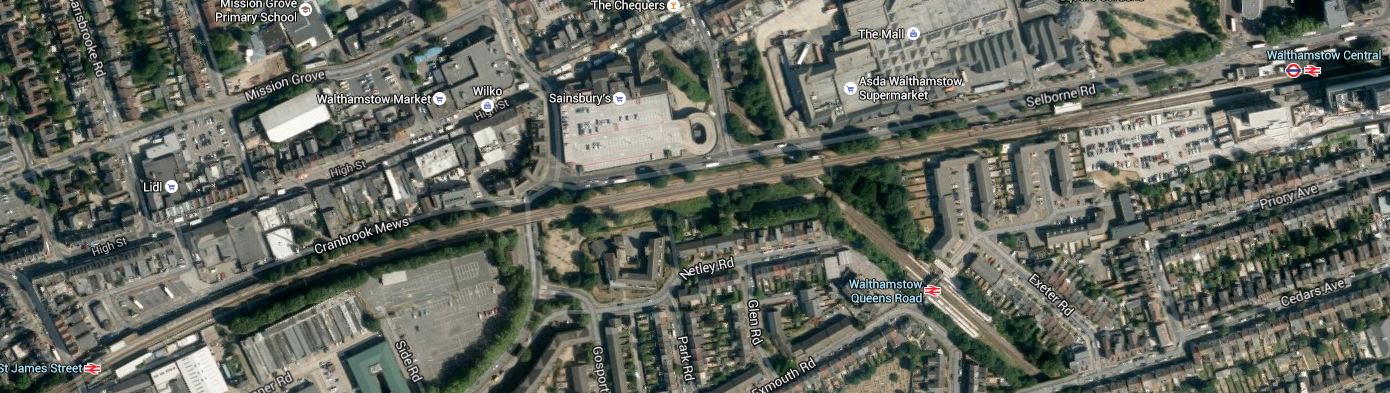
Walthamstow is an example, where the walk between Queen’s Road and Central isn’t that long but it is tortuous. This Google Map shows the area.
Walthamstow Stations
The East-West line is the Chingford Branch, with St. James Street station in the West and Central in the East. Croosing this line is the GOBlin with its station at Queen’s Road.
Surely something better could be done in Walthamstow. Interchange for someone pushing themselves in a wheelchair would be very difficult.
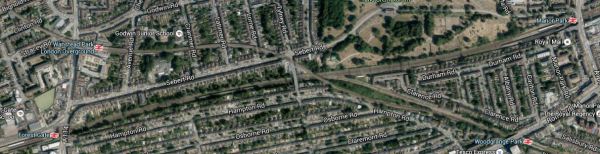
There is also an out of station interchange between Wansted Park on the GOBlin and Forest Gate on the lines out of Liverpool Street, which in a few years time will be Crossrail. This map shows the area.
Wanstead Park And Forest Gate
It is an area, where some selected development could be of value, especially as the GOBlin passes over the Liverpool Street Lines. I’ve walked this interchange a couple of times and the following would help.
- Step-free access at both stations. Forest Gate is getting this with Crossrail.
- A light-controlled crossing at Wansted Park station
- A minor rerouting of the buses so that some passing through the area stop at both stations.
This would mean that someone pushing themselves in a wheelchair could use the interchange.
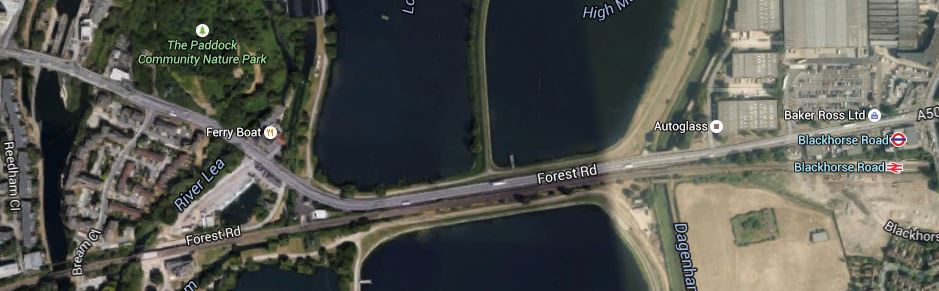
One station that needs to be improved is Blackhorse Road, which connects the GOBlin to directly to the Victoria Line. This Google Map shows the area.
Blackhorse Road Stations
Note that the station site is not particularly cramped and it would be a not-to-difficult walk to the Walthamstow Wetlands, especially if you could hop on a bus for a couple of stops.
There is also the possibility of an improved station at Harringay Green Lanes, where a large amount of property development is possible according to this document on the Harringey Council web site. I talked about the possibilities in The Piccadilly And Victoria Lines, Manor House Station And Harringay Green Lanes Station, where I believe a flagship station could be built across Green Lanes.
This section in the Wikipedia entry for the GOBlin, lists other ideas for extra connectivity for the line.
But I believe there are three other important interchanges that will or may happen and I describe them in the next three sections.
3. Seven Sisters Interchange With Gospel Oak to Barking Line
Transport for London’s Plan for 2050, has a section in an Appendix with the heading of News links and/or Stations for Strategic Interchange. In a list of places where this might be done are the words Seven Sisters (GOB). Seven Sisters station is currently a valid out of station interchange with South Tottenham station on the Gospel Oak to Barking Line. In Crossrail 2 At South Tottenham/Sevens Sisters, I speculated as to how the two stations could be linked by a large double-ended Crossrail 2 station. This Google Map shows the two stations.
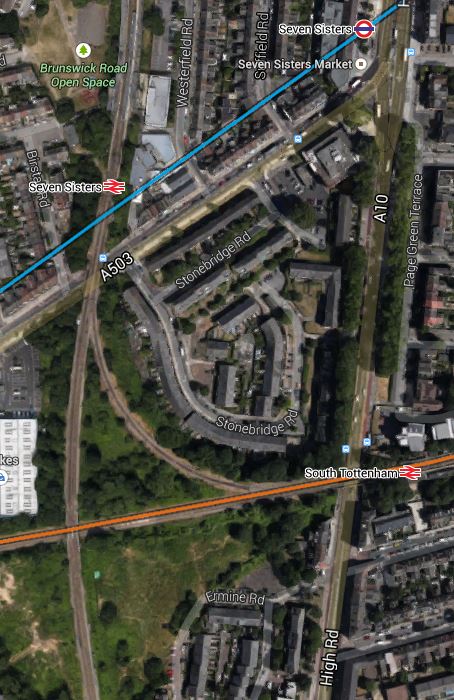
South Tottenham And Seven Sisters
There are also other possibilities here, like building a new station, housing or commercial development or allowing trains to link from the Northbound Lea Valley Lines through Seven Sisters to the Eastbound GOBlin. But whatever happens here, the GOBlin will eventually be linked to the Victoria Line and Crossrail 2.
Search the Internet and You’ll find little about this project, which is just two words buried in a TfL report.
4. Extending The GOBlin To Angel Road
This is speculation on my part, but the Meridian Water development will need more than just the one station at Angel Road. As the GOBlin goes across the southern part of the development site, is there an opportunity for an innovative connection through the development to Angel Road? This is a Google Map of the area from Angel Road in the North to Blackhorse Road in the East.
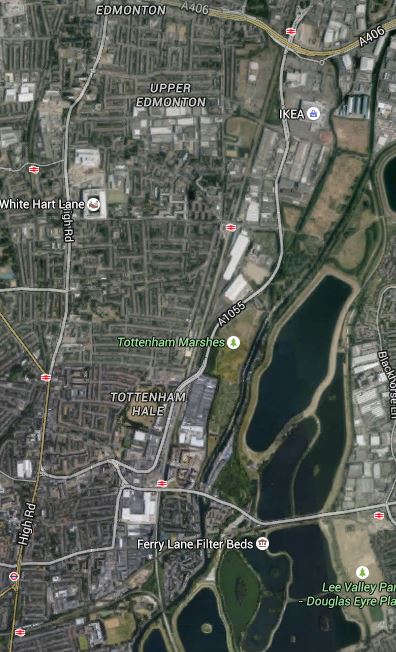
Blackhorse Road To Angel Road
The connection might be difficult for a train, but use a Class 399 tram-train and it could twist and turn its way between Blackhorse Road and Angel Road stations amongst the reservoirs and the developments to serve both those developments and the Walthamstow Wetlands.
5. Extending The GOBlin To Thamesmead And Abbey Wood
In No To Silvertown Tunnel, I examined the possibilities of extending the GOBlin from Barking Riverside over or under the Thames to Thamesmead and Abbey Wood station, where it would join up with Crossrail.
I felt that this would best be done using Class 299 tram-trains as they could go walk-about on both sides of the river giving much needed connectivity to the housing on both sides of the river. If it could be done, I felt that a bridge shared with pedestrians and cyclists would be the best way to join the two banks of the Thames.
6. The Hall Farm Curve, High Meads Loop and Dalston Eastern Curve
These three curves, if reinstated for passenger trains would create routes between the Chingford Branch and Lea Bridge, Stratford and any desirable station to the West. Reopening the Dalston Eastern Curve would give access to the East London Line for Crossrail at Whitechapel and South of the Thames.
As there could be spare capacity on the East London Line, which has been designed for twenty-four trains per hour, there could be a myriad of ways it can be used to increase the services under the Thames, so what Transport for London might do would be pure speculation on my part.
But I think they will eventually use these three curves to improve services in the Lea Valley.
7. Tram-Trains On The GOBlin
This may seem a bizarre idea, but having seen these hybrid vehicles all over Germany, I believe tram-trains are the way to add extra destinations to core electrified lines. On the Gospel Oak to Barking Line, in addition to being used to connect to Angel Road, as I showed previously, they could also be used with a tunnel or a bridge to extend the line from Barking Riverside under or over the river to Thamesmead and Abbey Wood.
People might worry that when running as trains, they may need different stations to the other trains, but the Germans seem to be able to design stations that accept both vehicles and I suspect the planned Rotherham extension of the Sheffield Supertram, will come up with solutions applicable to our standards. As to the required overhead lines, the Class 399 tram-trains can run using any of the voltages used for trams and trains in the UK.
There may be other places on the GOBlin and the other rail lines in East London, where tram-trains could be used effectively.
This will obviously be up to the planners, but I will be very surprised if tram-trains don’t infiltrate there way into many places all over the UK. At the moment transport planners, haven’t the experience of seeing a well-designed tram-train system working in the UK, but after what I believe will be a successful trial in Rotherham, I think we’ll see planners embracing the technology with open arms.
Conclusion
The GOBlin won’t be Cinderella any more!
Searching For My Mother’s Birthplace
My mother described herself to me as a Ponders Plonker, as she had been born in Ponders End. I think at some time she may have told me she had been born at home.
So as census records show that in 1911, her parents lived at 32 Clarence Road, I took a train to Ponders End station and went for a walk.
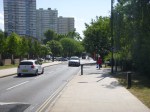
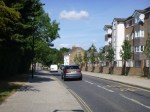
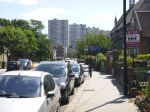
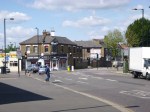
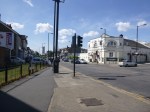
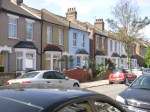
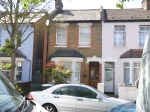
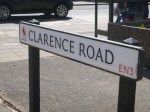
As there were several brothers and sisters and the family had moved out from Stoke Newington, I thought the house would have been bigger.
But according to an elderly lady I met, it appeared the houses had been built around that time, so they were probably the first owners. As my grandfather was working as an engraver with I think his premises somewhere in the Barbican area of the City, transport from Ponders End station to Liverpool Street would have been easy.
Judging by the age of much of the property in the area, my grandparents would probably recognise most of the houses and other buildings.
How’s The Overground To Enfield Town Doing?
In Transport for London Do The Sensible Thing, I said this.
Various news items on the Overground like this story in the Enfield Independent, have been reporting that the Class 315 and Class 317 Trains on the Lea Valley Lines are not very reliable. I’ve read somewhere that they are spending up to two million pounds to get them running better.
So I thought I had better go and check to see how the lines to Enfield were doing, by taking the train to Enfield Town from Hackney Downs and then walking to Enfield Chase to get a Class 313 train back home.
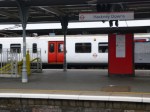
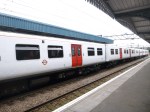
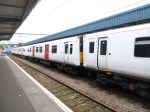
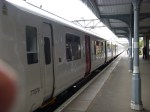
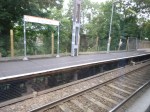
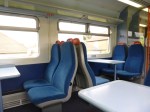
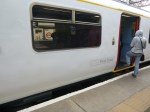
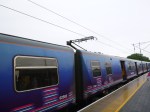
The pictures show the following.
1. An eight-car Class 315 train was working one of the last of the rush-hour services into Liverpool Street. So hopefully, London Overground have now got all services back up to their correct length.
2. Most trains I saw seemed to have a London Overground roundel on the side, even if they weren’t repainted.
3. I travelled out to Enfield Town in a very clean eight-car Class 317 train, that had been upgraded for the Stansted Express with tables, luggage racks and First Class. When was Enfield Town last served by a train so luxurious? In some ways it’s a waste, as surely there are other places, where as soon as the replacement Class 378 trains arrive, these old Stansted Expresses could be more gainfully employed.
Perhaps, they could serve Glasgow Airport? But then the Scots would complain, that they were getting London’s clapped-out second-hand trains. I noticed as I left that the train had had a full service in September last year. Old they may be, but they are far from scrapyard-ready! I suppose an old Mark 3-based train, is still a Mark 3-based train, with all the strength and ride quality that means.
4. In the meantime, this Class 317 train, is probably doing a good job in pacifying the natives of Enfield.
5. After my walk through Enfield Town centre, I got on a Class 313 train to get back to London. Now that is a clapped-out train and I wonder how many passengers for London from Enfield are thinking about changing their point of departure for London. If you commute and have a Freedom Pass, this is now unrestricted from Enfield Town, so this must have an effect on commuting pstterns.
6. I took the picture of the pantograph on the Class 313 train, as this is a special job, so that the trains can run in the restricted tunnels to Moorgate. It only needs to fold away very snuggly, as that section of line uses third rail for its electricity.
I will ask this question, about what I saw.
London Overground have put an option for 249 extra vehicles in the order for the Class 378 trains, as I reported in Have Transport for London Other Plans For The Overground?
So will some of these optional vehicles in the Class 378 order end up working the Great Northern lines into Moorgate and Kings Cross?
They have a lot going for them.
1. They are certified for working in tunnels, as on the East London Line, they run sixteen times each hour both ways through the Thames Tunnel.
2. There is a dual-voltage variant of the Class 378 train.
3. There would be the problem of designing a new pantograph well and certifying them for the Great Northern tunnel, but that is not as great a task as designing a whole new class of train.
It would probably be a special variant of the Class 378 train, but it hopefully, it would not be a difficult design to create.
We can do a little calculation on where the 249 extra vehicles might go.
Various documents show that by 2030, London Overground wants to be running six-car trains on the North and East London Lines. So if the existing fleet was all made six car, that would probably need 63 vehicles, as there are 57 trains on the system currently and another six are on order.
If we assume that Transport for London’s other target, the Dartford Lines, comes with some fairly new trains, this may or may not use up some of those options.
Taking the 63 off the 249 gives us 186 vehicles, which leaves 186, which can be 62 three-car trains or 46 four-car ones, with a few vehicles left over. Intriguingly, they could also be configured as 31 six-car trains.
So how many trains would be needed? At present the line is worked by 44 3-car trains. So if it was deemed that under London Overground, the service would be as now, there would be plenty of vehicles.
But as I pointed out, 186 vehicles gives us 31 six-car trains. Wikipedia states that the tunnels to Moorgate will accept trains of this length, so would it be a simple decision to make all the Great Northern trains six-car to turn the service into a higher-capacity, seven days a week, Metro service? As this would be a distinct variant, they might even be given a bit more performance to ease them along the East Coast Main Line to Hitchin. After all other members of the family to which a Class 378 belongs are 100 mph as opposed to 75 mph trains.
Running six-car walk-through trains into Morgate, rather than two three-car ones coupled together, gets rid of one of the restrictions of running in tunnels, which insists that passengers can walk through the train to get out in case of trouble.
So the more I look at this, the more I think, that Transport for London has an option on trains to work the Great Northern services.
As Transport for London have said, they might like to take over some of the inner Thameslink services, I suspect that the flies on the wall in meetings between Govia Thameslink Railway and Transport for London will have interesting tales to tell.
The Paper First With The News
I have an Internet trawl looking for stories about the Overground and particularly its expansion by taking over the Lea Valley lines. It found this story from the Docklands and East London Advertiser this morning. Here’s the first two paragraphs.
Part of the Liverpool Street suburban rail network in east London is being incorporated into the London Overground.
The Chingford and Enfield lines through Bethnal Green and Hackney will appear on the Underground map for the first time from 2015, it has been revealed in Transport for London’s latest business plan.
So it would seem that something at last is moving on London’s newest train line. How long it will be before yesterday’s nightmare trip is easier, I do not know.
One Of The Most Significant Places In My Life
After leaving Enfield, I took a nostalgic ride on a 121 bus to Southgate to get the Piccadilly line back to Central London. I pased this anonymous block of modern flats at the top of Windmill Hill.
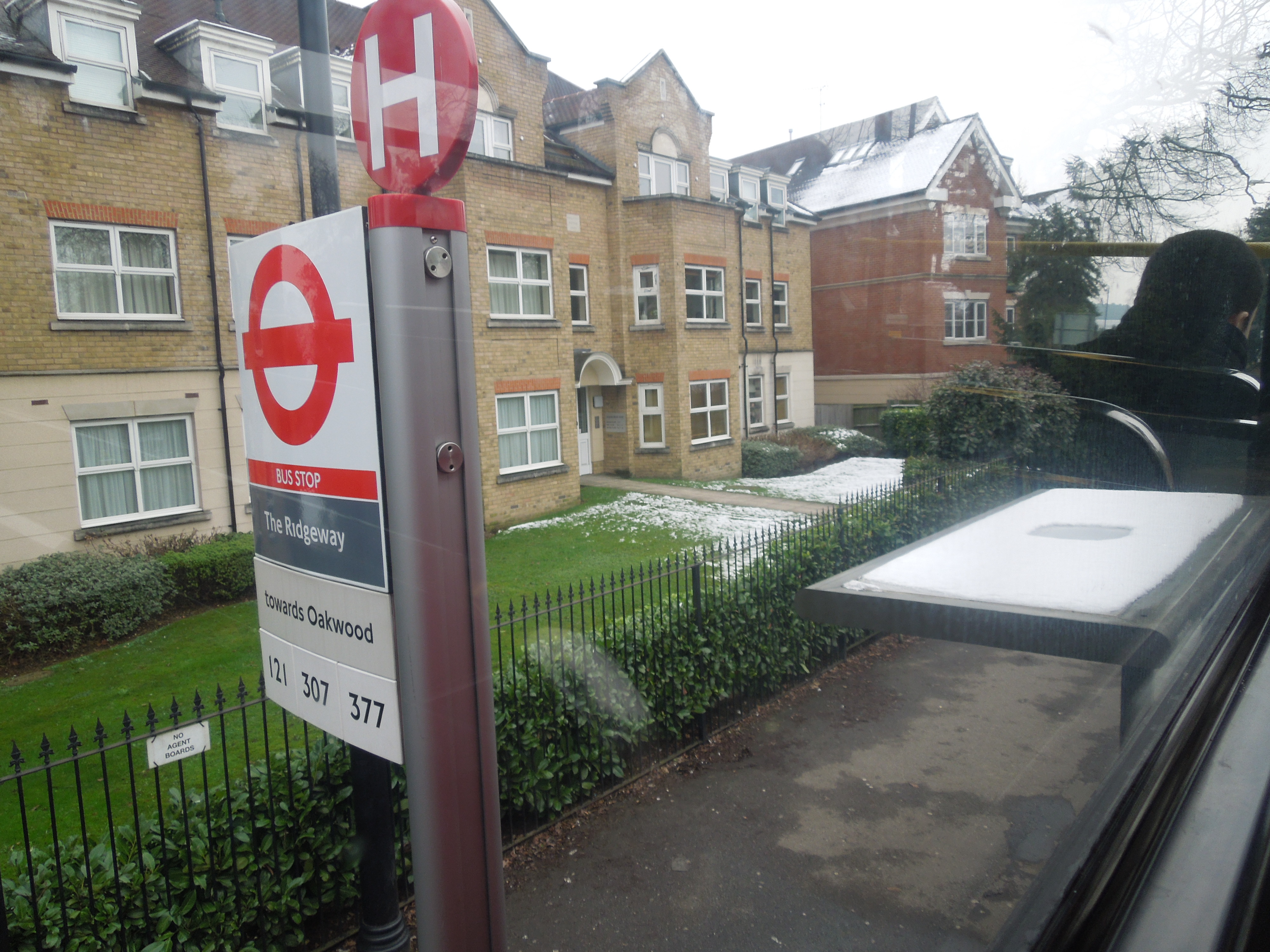
One Of The Most Significant Places In My Life
So why is it significant. On the site there used to be a nursing home, which is where I was delivered by my parent’s GP; Dr. Egerton White.
Marks And Spencer, Enfield
For many years Enfield didn’t have a Marks and Spencer.
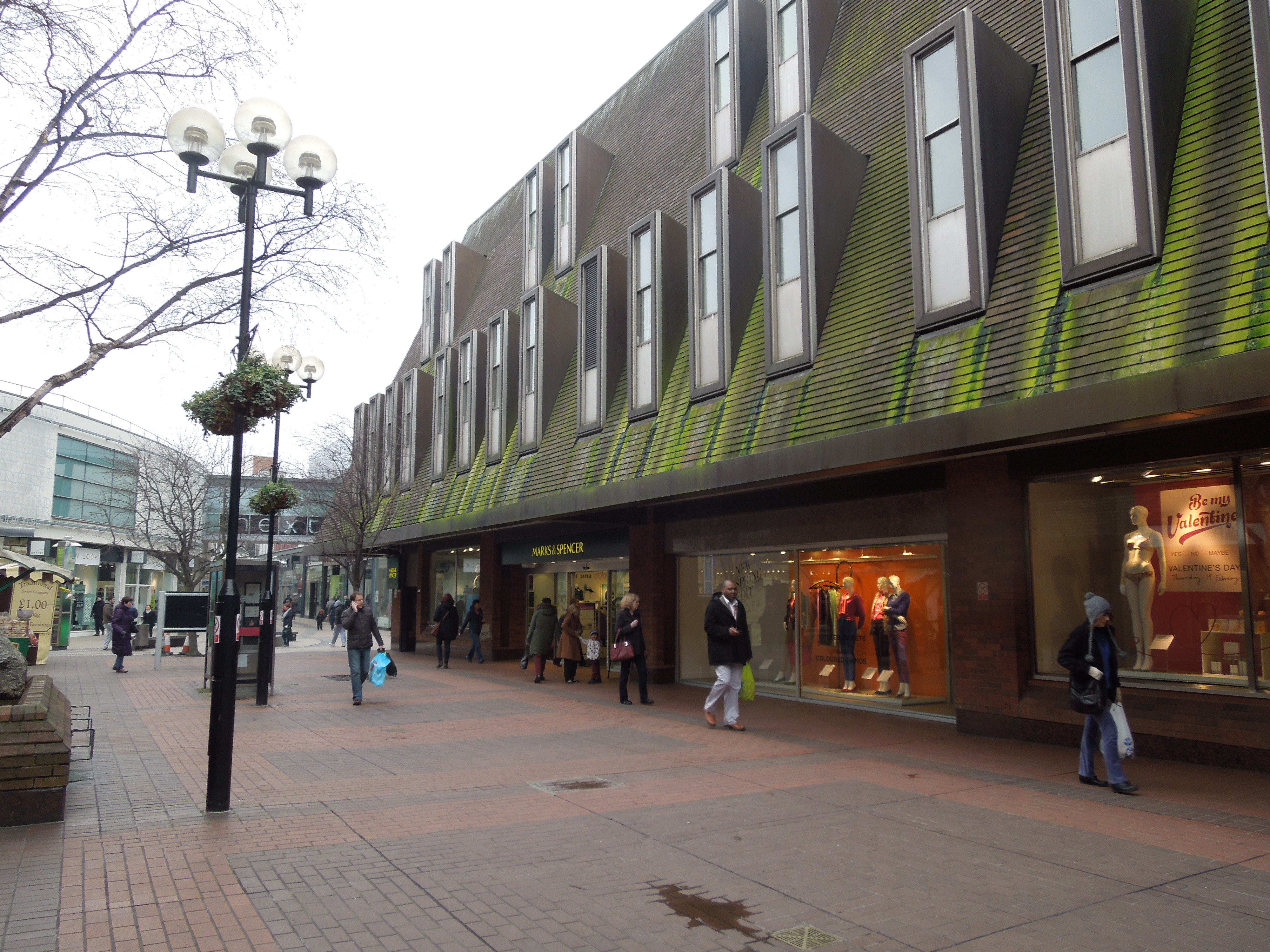
Marks And Spencer, Enfield
They do now! It was always said in the 1950s and 1960s, that the other shops wouldn’t allow them into the town centre. So we always went to the one in Wood Green, which in those days was one of its better and bigger stores. Although last time I went past it, it appeared to have seen better days.
 The Anonymous Widower