British Steel Secures Major Contract From Deutsche Bahn
The title of this post is the same as this article on Global Rail News.
I thought the article had a touch of Coals-to-Newcastle about it.
But read the article and there are a lot of things coming together to enable the order.
- British Steel have spent a seven-figure-sum at Scunthorpe, to make the longer rails, that the Germans use.
- Deutsche Bahn are Europe’s largest purchaser of rail.
- The initial order is for 20,000 tonnes of rail.
- Rails can be delivered in 120 metre lengths through the Channel Tunnel.
I should say, that I’ve read in the past, that Scunthorpe makes a quality product.
I found this video on the British Steel web site.
It all brings back memories of the time, I spent as a sixteen-year-old putting automation on heavy machines use to roll non-ferrous metals.
I doubt you get work experience like that these days!
Calculating Kinetic And Potential Energies
I used to be able to do this and convert the units, manually and easily, but now I use web calculators.
Kinetic Energy Calculation
I use this kinetic energy calculator from omni.
Suppose you have a nine-car Crossrail Class 345 train.
- It will weigh 328.40 tonnes, according to my detective work in Weight And Dimensions Of A Class 345 Train.
- There will be 1,500 passengers at 90 Kg. each or 135 tonnes.
- So there is a total weight of 463.4 yonnes.
- The train has a maximum speed of 90 mph.
Put this in the calculator and a full train going at maximum speed has a kinetic energy of 104.184 kWh.
The lithium-ion battery in a typical hybrid bus, like a New Routemaster has a capacity of 75 kWh.
So if a full Class 345 train, were to brake from maximum speed using regenerative braking, the energy generated by the traction motors could be stored in just two bus-sized batteries.
This stored energy can then be used to restart the train or power it iin an emergency.
Out of curiosity, these figures apply to an Inter City 125.
- Locomotive weight – 2 x 70.25 tonnes
- Carriage weight – 8 x 34 tonnes.
- Train weight – 412.5 tonnes
- Passengers – appromiximately 700 = 63 tonnes
- Speed – 125 mph
This gives a kinetic energy of 206.22 kWh
And then there’s Eurostar’s original Class 373 trains.
- Weight- 752 tonnes
- Speed 300 kph
This gives a kinetic energy of 725 kWh.
If a 75 kWh battery were to be put in each of the twenty cars, this would be more than adequate to handle all the regenerative braking energy for the train.
There would probably be enough stored energy in the batteries for a train to extricate itself from the Channel Tunnel in the case of a complete power failure.
Potential Energy Calculation
I use this potential energy calcultor from omni.
Suppose you have the typical cartoon scene, where a ten tonne weight is dropped on a poor mouse from perhaps five metres.
The energy of the weight is just 0.136 kWh.
I’ve used kWhs for the answers as these are easily visualised. One kWh is the energy used by a one-bar electric fire in an hour.
How To Build Railway Stations
With all the troubles caused by the failure of Carillion, it is good to report on a company, that is providing new and improved railway infrastructuresubstantially on time and on budget.
This article on Rail Engineer is entitled VolkerFitzpatrick: Upgrading Stations.
This is the first two paragraphs.
With Network Rail’s comprehensive Railway Upgrade Plan well underway and the modernisation of Britain’s railways firmly in the spotlight, there is a growing need and expectation for first-class stations and infrastructure to accommodate growing numbers of passengers nationwide.
One business with a huge role in the modernisation programme has developed a reputation as an exceptional multi-disciplinary contractor, with extensive capabilities in civil engineering, building and rail, meeting the demands of a wide range of clients across multiple disciplines. It is this consolidated approach that has helped VolkerFitzpatrick deliver several high-profile UK railway station schemes in the last 10 years.
The article then goes on to describe how the company tackled the following stations.
- Cambridge North – Described in Cambridge Gets Its Own Mini-Crossrail
- Gatwick Airport – New platform and expansion, that opened in 2014
- Hackney Wick – Complete station rebuild for 2018 – The major work is described in A Tough Way To Spend Easter.
- Imperial Wharf – New station in 2007
- Lea Bridge – Described in The People Of London Welcome Lea Bridge Station
It then goes on to detail the company’s omvolvement in the Lea Valley Improvement Program, which will deliver new stations at Tottenham Hale, Northumberland Park and Meridian Water.
Read the Rail |Engineer article, as it gives a good insight into design and construction.
The Electric Taxis Are Coming
London’s new electric black taxis will soon be seen on the streets.
From the pictures, I’ve seen, they could be an interesting ride.
- There is a panoramic glass roof.
- They are roomier, than the current black cabs and can seat six instead of five.
- Wi-fi and charging points are standard.
- Air-conditioning.
- A small petrol engine is used to boost range up to nearly 400 miles.
I shall search one out for a ride.
The Times though points out an interesting point about the design. This is said.
The bigger story is LEVC will now use the technology behind the TX to build far greater volumes of hybrid electric vans, the sort that deliver all our online shopping.
That certainly is a bigger story.
A few points of my own.
Geo-Fencing
Will geo-fencing be used to ensure that in central and sensitive areas and those with high air pollution, the taxi will run on batteries only.
This would also be particularly useful with the delivery van, where delivery depots tend to be outside the centre of a city.
Wireless Charging
London’s black cabs use rabjs and only yesterday, I picked up one from the rank at the Angel.
Milton Keynes has buses that can be charged using an inductive system.
So why not install inductive charging on taxi ranks?
Online Shopping Delivery
Parcel delivery companies don’t have the best of images. Electric last-mile delivery would certainly help.
For too long, vans have just been a crude metal box, with a couple of seats and an engine at the front.
So why not design a complete system around the taxi chassis?
- If the depot was outside the city centre, charging could be done at both the depot and on the journeys to and from the centre
- The van could also be designed so that containers packed at the depots could be loaded for each delivery.
- The containers could also be brought into the centre of the city at night into the main station by a purpose-designed train.
- A sophisticated onboard computer could control the driver and the deliveries.
There is a wonderful opportunity here to develop parcel delivery systems that are truly efficient and as pollution-free as possible.
Service Vans
If I walk down my road of about 150 houses and a couple of tower blocks on any weekday during working hours, I will probably count around half-a-dozen service vans of various types for small builders, plumbers. Most have not come further than a dozen miles.
If the economics of the electric van are pitched right, I think a large proportion of these vehicles will go electric, as they often sit around for large periods during the working day.
Conclusion
I can’t wait to get a ride in one of these taxis.
A Heritage Class 315 Train For The Romford-Upminster Line
The Romford To Upminster Line is slated to get a brand-new Class 710 train to work the two trains per hour shuttle.
This article in London Reconnections, which is entitled More Trains for London Overground: A Bargain Never to be Repeated, says that it is possible that this line could be served by a Class 315 train, held back from the scrapyard.
This would mean a new Class 710 train could be deployed elsewhere, where its performance and comfort levels would be more needed.
Surely, a single Class 315 train, would be enough capacity for the line and a lot cheaper than a new Class 710 train! Provided of course, that it was reliable, comfortable and could maintain the current service.
A Heritage Unit
Why not market the train, as an updated heritage unit?
- It could be painted in British Rail livery from the 1980s.
- It would have wi-fi!
- It might have an information car, describing the history of the line and the area.
- It might even have a coffee kiosk!
It would be very much a quirky train to asttract regular passengers and even tourists.
But of course, it would be run as professionally as any other train on the network.
An Educational Purpose
I feel strongly, as do many in education, that not enough people are choosing subjects like engineering as a career.
Could it be used to show that engineering and particularly rail engineering could be a worthwhile career move?
Surely, it could also be used for training staff!
A Technology Or Capability Demonstrator
Eversholt Rail Group own sixty-one of these Class 315 trains, which although they are nearly forty-years old, don’t seem to feature much on BBC London’s travel reports.
They are reportedly destined for the scrapyard, but if they were to show they could still perform after a refurbishment, they might find a paying application somewhere.
Research
Regularly, innovations are suggested for the railway, but often finding somewhere to test them can be difficult.
However, as the Romford to Upminster Line is an electrified single-track line without signalling, the line is about as simple as you can get.
So supposing a company wanted to test how a sensitive electronic instrument behaved on a moving vehicle, this could be done without any difficulty.
Conclusion
If it is decided that a Class 315 train is to be used on the Romford to Upminster Line, I believe that the service could be marketed as a quirky heritage unit, that in conjunction with its main purpose of providing a public service, could also be used for other education, training, marketing, innovation and research purposes.
Eversholt Rail Group might even shift a few redundant Class 315 trains!
A RAT Sighted At Acton Town Station
I was surprised to see an old train running through North Action station.


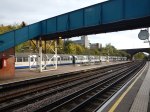
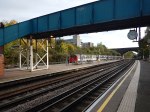
As it said on the side it was a Rail Adhesion Train, that I wrote about in Specialist Trains Lead The Charge Against Leaf Fall on The Piccadilly Line.
This article on Rail Engineer is entitled Leaf Fall On The London Underground and it gives more details on Rail Adhesion Trains and their use.
A First Visit To Walthamstow Wetlands
Walthamstow Wetlands opened today, so I went to take a look.

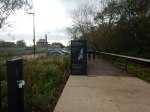


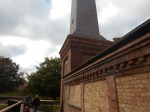

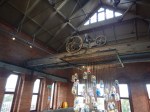
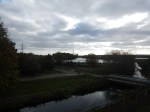
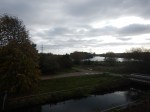
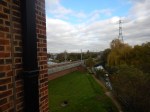
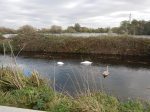
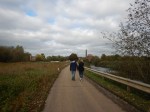

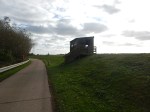


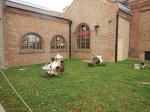



It was well worth a visit.
I shall return!
Arriva London Engineering Assists In Trial To Turn Older Diesel Engine Powered Buses Green
The title of this post, is the same as that of an article on the Arriva London web site.
This sums up the project.
A new idea to turn older diesel engine buses into much more environmentally friendly vehicles has been developed by Vantage Power Ltd based in Greenford, West London in association with Ensign Ltd, the largest reseller of buses in the UK.
The new unit will start trials in July, when two of Arriva London’s 2005, Volvo B7TL, Euro 3 buses, with Alexander Dennis bodies, VLA99 and VLA100 will resume service following their conversion. The trials are fully supported by TfL.
Effectively two twelve year old buses will become hybrids with new electric drive systems.
The objectives of the project are ambitious.
The new system will be tested to see how well it performs against its targets of 40% reduction in the use of fuel, 80%+ reduction in emissions, and a cost saving for the unit which is estimated to be 80% less than a new Hybrid bus.
They are also developing a technique called geo-fence technology. This is said.
This technology, uses GPS information combined with route information, and can enable the vehicle to ensure its batteries are at full charge before entering certain areas (such as the ULEZ), or past schools, or libraries, and upon entering these areas, the engine can shut itself down and the vehicle then operate as an almost silent ZEV (Zero Emission Vehicle).
So the buses get new hybrid drives, which work as battery buses in sensitive areas and London gets cleaner air. And Arriva London gets a cashback!
I wonder how many old buses can be converted into cleaner hybrids. This conversion was on a Volvo B7TL chassis, of which there were 790 in London alone.
I also wonder if London’s current hybrid buses can have the geo-fence technology applied.
Close to my house there are six London bus routes, that go into or through the ULEX; namely routes 21, 30, 38, 56, 76 and 141 of which the 21, 38 and 76 are New Routemasters, which are modern hybrid buses. In addition, the 141 is run by seven-year-old hybrid buses. These routes would all be candidates for geo-fence technology.
The Class 769 Trains Are Progressing
The August 30th Edition of Rail Magazine gives a few details about the creation and testing of the Class 769 trains at Brush Traction in Loughborough.
- A test rig will be built to test the combination of MAN diesel engine and ABB alternator.
- The first train will be fitted with a power unit in the next eight weeks.
- After static tests it will move to the nearby Great Central Railway. for dynamic testing.
- The first train will be joined by a second train to test compatibility and multiple working.
- After returning to Brush for approval, they will move to Allerton Depot, where they will be based.
- It is planned that all eight trains for Northern will be in the North West by April 2018.
I find it intriguing that the testing is done on the local heritage railway.
There are two parts of the Great Central Railway separated by the Loughborough Gap.
- The Northern part is the Great Central Railway (Nottingham), which runs from the Midland Main Line at Loughborough to the South of Nottingham.
- The Southern part is the Great Central Railway, which runs between Loughborough Central and Leicester North stations.
It is not said, whether the testing is North or South of Loughborough.
The two heritage railways are trying to bridge the gap at present and I can’t help feeling that once it is bridged, there will be winners all round.
 The Anonymous Widower