A RAT Sighted At Acton Town Station
I was surprised to see an old train running through North Action station.


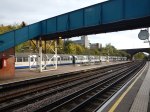
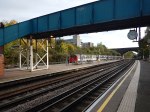
As it said on the side it was a Rail Adhesion Train, that I wrote about in Specialist Trains Lead The Charge Against Leaf Fall on The Piccadilly Line.
This article on Rail Engineer is entitled Leaf Fall On The London Underground and it gives more details on Rail Adhesion Trains and their use.
A First Visit To Walthamstow Wetlands
Walthamstow Wetlands opened today, so I went to take a look.

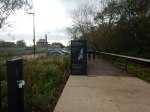


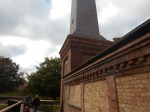

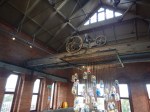
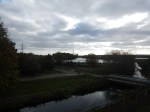
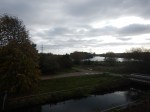
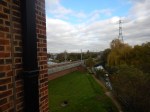
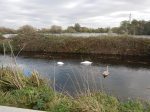
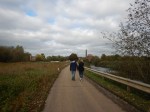

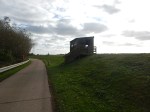


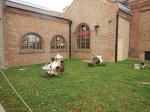



It was well worth a visit.
I shall return!
Arriva London Engineering Assists In Trial To Turn Older Diesel Engine Powered Buses Green
The title of this post, is the same as that of an article on the Arriva London web site.
This sums up the project.
A new idea to turn older diesel engine buses into much more environmentally friendly vehicles has been developed by Vantage Power Ltd based in Greenford, West London in association with Ensign Ltd, the largest reseller of buses in the UK.
The new unit will start trials in July, when two of Arriva London’s 2005, Volvo B7TL, Euro 3 buses, with Alexander Dennis bodies, VLA99 and VLA100 will resume service following their conversion. The trials are fully supported by TfL.
Effectively two twelve year old buses will become hybrids with new electric drive systems.
The objectives of the project are ambitious.
The new system will be tested to see how well it performs against its targets of 40% reduction in the use of fuel, 80%+ reduction in emissions, and a cost saving for the unit which is estimated to be 80% less than a new Hybrid bus.
They are also developing a technique called geo-fence technology. This is said.
This technology, uses GPS information combined with route information, and can enable the vehicle to ensure its batteries are at full charge before entering certain areas (such as the ULEZ), or past schools, or libraries, and upon entering these areas, the engine can shut itself down and the vehicle then operate as an almost silent ZEV (Zero Emission Vehicle).
So the buses get new hybrid drives, which work as battery buses in sensitive areas and London gets cleaner air. And Arriva London gets a cashback!
I wonder how many old buses can be converted into cleaner hybrids. This conversion was on a Volvo B7TL chassis, of which there were 790 in London alone.
I also wonder if London’s current hybrid buses can have the geo-fence technology applied.
Close to my house there are six London bus routes, that go into or through the ULEX; namely routes 21, 30, 38, 56, 76 and 141 of which the 21, 38 and 76 are New Routemasters, which are modern hybrid buses. In addition, the 141 is run by seven-year-old hybrid buses. These routes would all be candidates for geo-fence technology.
The Class 769 Trains Are Progressing
The August 30th Edition of Rail Magazine gives a few details about the creation and testing of the Class 769 trains at Brush Traction in Loughborough.
- A test rig will be built to test the combination of MAN diesel engine and ABB alternator.
- The first train will be fitted with a power unit in the next eight weeks.
- After static tests it will move to the nearby Great Central Railway. for dynamic testing.
- The first train will be joined by a second train to test compatibility and multiple working.
- After returning to Brush for approval, they will move to Allerton Depot, where they will be based.
- It is planned that all eight trains for Northern will be in the North West by April 2018.
I find it intriguing that the testing is done on the local heritage railway.
There are two parts of the Great Central Railway separated by the Loughborough Gap.
- The Northern part is the Great Central Railway (Nottingham), which runs from the Midland Main Line at Loughborough to the South of Nottingham.
- The Southern part is the Great Central Railway, which runs between Loughborough Central and Leicester North stations.
It is not said, whether the testing is North or South of Loughborough.
The two heritage railways are trying to bridge the gap at present and I can’t help feeling that once it is bridged, there will be winners all round.
Scotland’s Floating Wind Farm
This article on the BBC is entitled World’s first floating wind farm emerges off coast of Scotland.
In the early 1970s, I worked on a unique concept for a reusable oil platform called a Balaena.
I wrote about using a Balaena for a wind turbine in Could a Balaena-Like Structure Be Used As a Wind Power Platform?.
There is also a brief description of the idea in The Balaena Lives.
I have a strong feeling that revisiting all of the work done for a Balaena over forty years ago, could enable a better way to build a floating wind farm.
I would build my Baleana-based floating wind-power turbine like this.
- A steel cylinder is built, which will form the tower, horizontally in a dry dock.
- It is floated out horizontally to some very deep water perhaps in a fjord.
- It is then raised to a vertical position by letting a calculated amount of sea water into the tank.
- It will float vertically, if the weight profile is right and by adjusting water levels in the tank, the top can be raised on lowered.
- The tower is adjusted to a convenient height and the turbine is placed on the top.
- It would then be towed vertically into position.
Note that Balaenas were designed to sit on the sea-bed using a skirt and a gum-boot principle to hold them to the bottom, with extra anchors and steel ropes.
Let’s Get Fracking
In Fracked Or Fiction, I talked about my attitude to fracking. These two paragraphs, were my conclusion.
My overwhelming conclusion after the lecture was that before we can embrace fracking in earnest, we must collect a lot more information. For example, we don’t know the background levels ofearthquakes and natural gas seepage in this country. So if say it is thought, that fracking had caused a small earthquake, can we be sure that that isn’t one that we habitually get in this country.
A secondary conclusion, is that my engineering knowledge indicated that there are several very fruitful areas for the development of new technological solutions to mitigate some of the possible problems of fracking.
But things have changed a bit in the over three years, since I attended the lecture at the London Geological Society.
We still get gas from the North Sea and a few smaller fields, but we have to buy in gas from places like Algeria, Russia and Qatar.
I suspect too, that we can always ship liquefied natural gas from the United States.
The Green Party would say that we shouldn’t burn natural gas, but what do we do about?
- People do with gas boilers who keep themselves warm in winter?
- Businesses that use gas as part of their industrial processes.
- In 2015, thirty percent of our electricity was produced from gas.
Renewables such as solar and wind are increasing, but for the forseeable future, we wil still need gas.
But how would you feel, if the Government said, that you must change your boiler for an electric one, as you can’t have any more gas?
We can continue to get our gas from those shining democracies of Algeria, Russia and Qatar or buy it from Trumpland, which would probably not be acceptable to everybody.
There is also the problem, that countries like Belgium, France, Germany, Ireland and The Netherlands are also short of gas and are relying increasingly on the Russians.
Surely, the best solution to avoid the cold and loss of employment in industries reliant on gas, is to extract the gas from our own fields, using fracking in a professional and engineeringly-sound manner.
We have form in the extraction of hydrocarbons in this way from land in the UK. The is the first paragraph, from the Wikipedia entry for Wytch Farm.
Wytch Farm is an oil field and processing facility in the Purbeck district of Dorset, England. It is the largest onshore oil field in western Europe. The facility, recently taken over by Perenco was previously operated by BP. It is hidden in a coniferous forest on Wytch Heath on the southern shore of Poole Harbour, two miles (3.2 km) north of Corfe Castle. Oil and natural gas (methane) are both exported by pipeline; liquefied petroleum gas is exported by road tanker.
Is there is an onshore oil-field in a more sensitive environment? Wikipedia says this under Environment.
Most of the field is protected by various conservation laws, including the Jurassic Coast world heritage site, Purbeck Heritage Coast and a number of sites of special scientific interest, areas of outstanding natural beauty and nature reserves (including Studland and Brownsea Island), so the gathering centre and most of the well sites are small and well screened by trees. Directional drilling has also contributed to reducing the impact on the local environment, with extended reach drilling from the Goathorn Peninsula attaining distances in excess of 10 km.
Note the reference to directional drilling, which according to a friend, who was associated with the development of the project, was very much pioneered at Wytch Farm.
Directional drilling is often very much part of the fracking process, prior to the actual hydraulic fracturing. I’m very much of the opinion, that to be a successful fracker, you need to have very good directional drilling capabilities.
I’ve heard it on good authority, that fracking is used in the Highlands of Scotland to extract drinking water. But the F-word is so sensitive, there is nothing about it on the Internet. I did find this web page from a company called Clearwater Drilling Company in Tennessee, which is entitled Hydrofracturing -A procedure designed to increase the amount of water in existing dry and low yield water wells.
Would you prefer to give money to dodgy regimes or build on the Wytch Farm experience and develop the World’s best fracking industry to keep us warm in winter and preserve jobs?
It may seem a stark choice to some, but I believe in the competence of engineers, as demonstrated at Wytch Farm!
Let’s get fracking!
Heathrow Plan To Build Third Runway – On Stilts Over M25
This is the title of an article in the Business section of the Sunday Times.
Apparently, three viaducts would be built over the M25, with a wide one for the runway and two narrower ones for the taxi-ways.
Sounds fine by me!
I also feel that the technique of using stilts could be applied to build new housing and commercial properties over roads and railways.
Look at all that space over some city centre stations!
The Class 319 Flex Units To Be Class 769
This is the title of a short article in the June 2017 Edition of Modern Railways.
Giving the Class 319 Flex train, its own unique class number of 769, must say that Porterbrook, Northern, Network Rail and the Department of Transport, think that the bi-mode conversion of a Class 319 train is a viable project.
The article gives some new details about the trains.
- Northern have ordered eight units, which will be delivered before the end of May 2018.
- The first unit is at Wabtec’s Brush Traction facility in Louthborough.
- Completion of the design and the first load testing is plasnned before the end of May.
- The first unit is due to be completed with driver training underway, by the end of the year.
- Northern will get a total of thirty-two Class 319 trains, which probably include the eight Class 769 trains.
- Tri-mode functionality and dynamic mode changeover on the move are being considered.
- Full production rate is a Class 769 train every two weeks.
The Class 319 Flex train has definitely moved from concept to a real train.
The article finishes by saying that Porterbrook expects further orders soon, while it is also considering transferring the concept to other roiling stock, such as the Class 455 train.
Why Convert Class 455 Trains?
The Class 319 and Class 455 trains are very similar electrical multiple units based on Mark 3 coaches.
But there are a few differences.
- The Class 455 is third-rail only, whereas the Class 319 is dual-voltage.
- The Class 455 is a 75 mph train, whereas the Class 319 is a 100 mph train.
- South West Trains’ Class 455 trains have had an extensive refurbishment and are fitted with 2+2 seating.
- South West Trains planned to upgrade the traction package of the Class 455 trains, which would include new AC traction motors and regenerative braking. This article in Rail Magazine has full details.
A Class 455 Flex train could have the following specification.
- The updated 2 x 2 seating.
- The new traction package with AC traction motors and regenerative braking.
- 75 mph operating speed on both electric and diesel.
It could be a better financial proposition for both the leasing company and the train operator.
In The Class 319 Flex Train And Third Rail Routes, I looked at various third-rail routes that could be served with a Class 319 Flex train.
Some of these routes could be served by a Class 455 Flex train, instead of the Class 319 Flex train.
The article states that Porterbrook are expecting further orders and could it be, that the company have assessed the number of bi-mode trains required and found that a large proportion of the available Class 319 trains might need to be converted.
So creating a Class 455 Flex train for use in areas with third rail electrification, might be a prudent action.
South Western Railway, will have around ninety well-maintained Class 455 trains with the refurbished interiors going spare, so there is certainly no shortage of trains to convert.
South Western Railway And Class 455 Flex Trains
South Western Railway, themselves could have some uses for the trains.
I doubt that the trains would be acceptable running long distance services from say Waterloo to Salisbury, due to being designed as short distance commuter trains and the lack of a toilet and tables.
They would be ideal for the following local services.
- Running the hourly circular service from Salisbury to Chandlers Ford via Southampton, which has sections of electrified line.
- Existing lines like the Lymington Branch.
- Reopened lines like the Fawley Branch and the Ludgershall Branch.
- Perhaps running services on the Swanage Railway.
- New services like Portsmouth Harbour to Salisbury via Southampton and Romsey.
- Services on the Heart of Wessex Line.
In some places like the Lymington Branch, they would release Class 158/159 trains to boost services on the West of England Main Line.
Merseyrail And The Class 455 Flex Trains
In the June 2017 Edition of Modern Railways, Chris Stokes talks about the problems of running services between Bidston and Wrexham Central stations on the Borderlands Line. He concludes with the following.
So the operation of the route is very tight, but it appears to work quite well.
There has been talk of using battery trains on this route in place of an expensive full electrification, which would allow Merseyrail’s new Stadler trains to run the route in the following manner.
- At least two trains per hour (tph).
- Longer trains.
- Calls at proposed new stations on the route.
In an ideal world, the service would terminate at the Northern end of the line by going round the third-rail electrified Loop Line under Liverpool City Centre.
The Class 455 train appears on a brief look to be the same size as Merseyrail’s current Class 508 trains, so it should be possible to use the Liverpool Loop.
Chris Stokes has told me two things.
- The Class 455 trains, used redundant trailer cars from Class 508 trains, that were shortened for Merseyrail, so there can’t be much difference in the size of the Class 455 and Class 507/508 trains.
- The Wrexham service used to terminate at Birkenhead North station.
So it seems a better Northern terminus could be possible.
Ideally, the Loop Line would be used, but look at this Google Map of Birkenhead North station.
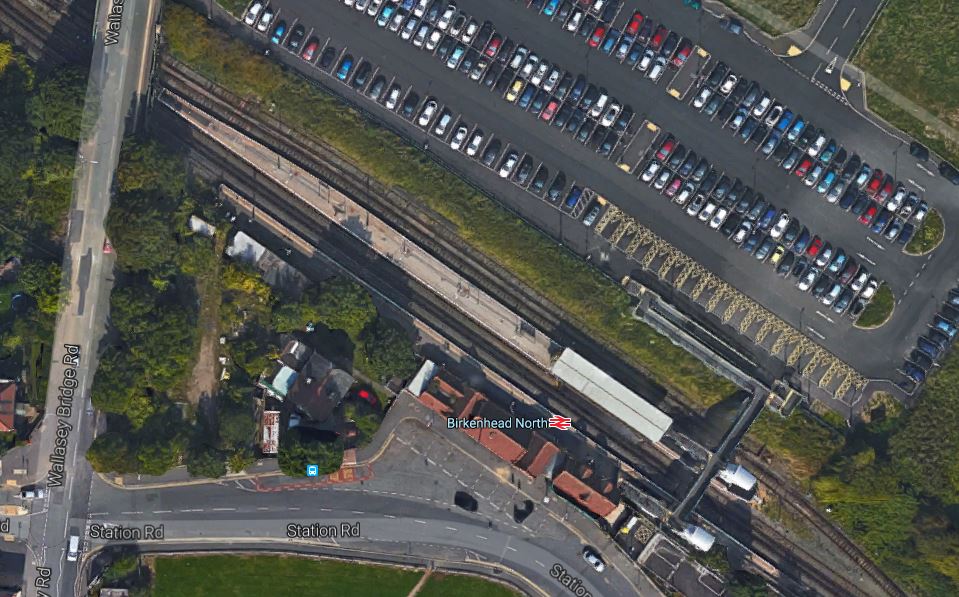
The Wikipedia entry for the station, has a section entitled Wrexham Diesel Service. This is said.
From 4 January 1971 until 2 October 1978, the diesel service on the Bidston to Wrexham line, which had previously operated from New Brighton, was diverted to Birkenhead North. These trains terminated on the centre platform which had previously been used for Liverpool-bound services, and when one of the diesel trains was present (which in that timetable was much of the time), Liverpool-bound electric services used the outer north side of the island platform instead. The diesel service was cut back to Bidston from 2 October 1978. Regular use of the outer platform at Birkenhead North thereafter ceased.
Note that the service used to be Wrexham to New Brighton, which with the replacement of a short chord and some work at New Brighton station might be another alternative, although the service wasn’t very busy.
So could a Class 455 Flex train work the route in the following manner?
- Use diesel power between Wrexham Central and Bidston stations.
- Use electric power from Bidston to Liverpool.
- Join the other Wirral Line trains and terminate in the Liverpool Loop, stopping at the four stations in Central Liverpool.
As to frequency, you could run as many trains as you want, as the Borderlands Line is double-track, with the exception of a short single track section between the two Wrexham stations.
A round trip would take nearly three hours based on current timings, which would mean the following numbers of trains would be needed.
- One tph – three trains.
- Two tph – six trains.
- Four tph – twelve trains.
As Merseyrail like to run four tph on the various branches, why not use this frequency on the Borderlands Line?
It would be a Turn-Up-And-Go service, that would benefit a large number of people.
Does the service have to terminate at Wrexham?
- Shrewsbury is only thirty-one miles from Wrexham on the Chester to Shrewsbury Line.
- Rhyl is only twenty-seven miles from Shotton on the North Wales Coast Line.
It certainly wouldn’t require any electrification or challenging engineering to open up these and other possible routes.
The Class 455 Flex train may have other uses in Liverpool.
Northern’s services in the area will probably use a few Class 319 Flex trains alongside their Class 319 trains, that already serve Liverpool Lime Street.
So where services are being extended from Merseyrail’s third-rail network, why not use some Class 319 Flex trains, as these trains have a third-rail capability from their days South of the Thames?
- There may be an engineering or operational problem with a dual-voltage Class 319 Flex train.
- The pantograph of a Class 319 Flex train might make the train too large for parts of Merseyrail’s third-rail network.
- A third-rail only Class 455 Flex train may be a better financial proposition for leasing companies and train operators.
Or it could be that Porterbrook’s response to the Class 319 Flex train has been so positive, that the alternative offered by the Class 455 Flex train is welcomed.
Merseyrail’s prime route for a bi-mode Flex train would be the Canada Dock branch.
- There is a long term aspiration to run a passenger service.
- The branch is not electrified but it could connect to Liverpool’s third-rail network at both ends and also to 25 KVAC at the Southern end.
- Numerous freight trains use the route.
- Perhaps four stations at about ten million pounds a time would need to be rebuilt.
- Liverpool Football Ground would get a station.
Class 455 Flex trains could run a Southport, Ormskirk or Kirkby to Liverpool South Parkway service tomorrow.
A Four-Car Diesel Multiple Unit
In Who Would Want An Electric Train Powered Only By Diesel?, I discussed the fact that according to the Porterbrook brochure,
A diesel-only version of Class 319 Flex is now being delivered for one operator.
Could it be, that the updated interior of the Class 455 train, is exactly what the operator wants in a diesel train?
A Class 455 Flex train would have the following characteristics, if the third-rail equipment was removed.
- Four cars.
- Diesel power only.
- 75 mph operating speed.
- A quality 2 x 2 interior.
- A train that meets all the present and future access and disabled regulations.
That sounds to me like a high-quality replacement train for which Direct Rail Services will provide you with two Class 68 locomotives and some elderly coaches, which probably don’t meet the latest regulations.
But also, the UK suburban diesel multiple unit fleet has quite a lot of two and three car trains, but very few four-car ones and you see lots of four-car trains made by coupling two two-car units together. So perhaps, some train operators, see these trains as an easy and affordable way to increase the number of four-car trains on their routes without any form of electrification.
As South Western Railway take over the South West Trains franchise on the 20th August 2017, perhaps some Class 455 trains would be available soon after, as they could replace them with new Class 707 trains.
I suspect that a Class 455 Flex train could be available early in 2018.
Conclusions
The Class 319 Flex train or more properly the Class 769 train looks to be a successful concept.
I’m also convinced that Porterbrook have decided the market is larger than they originally thought, so they are seriously looking at converting Class 455 trains, to make sure they have enough trains.
 The Anonymous Widower