Engie Partners Innovate UK For £4 Million Energy Transition Competition
The title of this post is the same as this article on Current News.
- This is an interesting link-up between the UK Government Agency; Innovate UK and the French energy giant; Engie.
- Wikipedia defines energy transition as a long-term structural change in energy systems.
- It is the first time Innovate UK has secured overseas private funding.
- It aims to fund the very best of \british innovation in clean growth innovation.
- Grants of between £100,000 and £1.2 million will be awarded.
- There appears to be no mention of Brexit!
It looks to me, like a very strong endorsement of British innovation and the British energy industry by the French.
I also think, that if there is one industry where the British and the French should be linked, it is energy.
The UK has the following energy sources and resources.
- Offshore and onshore oil and gas.
- Redundant gas fields for carbon capture and storage.
- Offshore and onshore wind.
- Large areas of sea for offshore wind.
- We have 8,183 MW of installed offshore wind capacity, which is the largest in the world.
- The possibilities of tidal and wave power from a long Western coast.
- Vast experience in building off-shore structures in some of the worst weather on the planet.
- Interconnectors to Norway and Iceland to import their surplus geothermal and hydroelectric energy.
Could we become a renewable-energy powerhouse?
The French have the following.
- Nuclear power, some of which will need replacing.
- Only 500 MW of offshore wind.
- More solar power than we have.
- Easy connection to North Africa for solar power.
But in some ways, most important is the several interconnectors between the UK and France, with more planned.
Conclusion
Between the UK and France, with help from Ireland, Spain and Portugal, can develop a massive Western European renewable energy powerhouse, backed by the following, non-renewable or external sources.
- French nuclear power.
- North African solar.
- Icelandic geothermal power
- Icelandic hydro-electric power
- Norwegian hydro-electric power
It should be noted that in a few years, the UK will have joined Iceland, Norway and North Africa outside of the European Union.
I believe that Sovereign Wealth Funds, Hedge Funds, Pension Funds, Insurance Companies and other individuals, groups and organisations will increasingly see renewable energy as good places for long-term investment of their funds.
The two big problems are as follows.
- What happens when all these renewable energy sources are producing more energy than we can use?
- What happens when there is an energy deficit?
Energy storage is the solution, but the amount needed is massive.
In Airport Plans World’s Biggest Car Parks For 50,000 Cars, I looked at the mathematics in using car parks for electric cars for energy storage.
These are a few figures.
- Electric Mountain is the UK’s largest electricity storage scheme with a capacity of 9.1 GWh.
- The largest battery in the world is the Bath County Pumped Storage Station with a capacity of 24 GWh, which works on similar principles to Electric Mountain.
- Building another Electric Mountain would cost £1350 million, if we could find somewhere to put it.
But supposing half the 35.5 million cars and light goods vehicles in the UK were replaced by new electric vehicles containing a battery of around 20 kWh, that would be a total storage of 355 GWh or nearly forty Electric Mountains.
Conclusion
Harnessing all of these batteries will be an enormous challenge, but it will be ideas like this, that will enable the world to go carbon neutral by 2050.
But I don’t think we’ll ever see Trump or Xi Jinping in an electric limousine..
Why Are Replacement Buses Being Used To Syon Lane Station On July 20-21?
If you look at the on-line rail time timetable from Waterloo to Syon Lane station for Saturday, the 20th and Sunday, the 21st of July, there are no trains and a bus replacement service operates.
I have checked as far as I can in the future and there are no other weekend closures on the route.
In Nothing Seems To Be Happening At Syon Lane Station, I speculated that either the project to erect a step-free bridge at the station, was to be delayed or something very different will be happening.
The two day weekend closure leads me to think that Network Rail are going to install a bridge in two days.
In Winner Announced In The Network Rail Footbridge Design Ideas Competition, I wrote how the competition was won by this bridge.
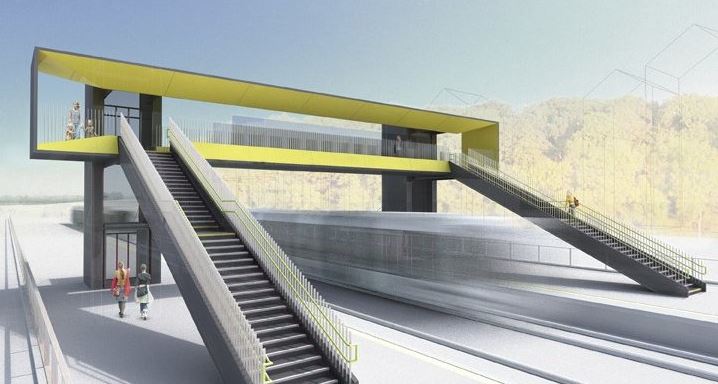
I believe that if the components were brought in by train, that this sort of bridge could be erected in two days.
This is real engineering, which is not normally seen except in war or times of great emergency like earthquake, fire or floods.
Conclusion
My speculation must be all wrong!
What sane company would attempt to build a footbridge in two days, without the assistance of Anneka Rice or that guy from DIY SOS?
Better Storage Might Give Hydrogen The Edge As Renewable Car Fuel
The title of this post is the same as that of this article on an Australian blog called Create.
This paragraph summarises the article.
Professor David Antonelli from Lancaster University has recently discovered a material that he says could allow existing tank sizes to fuel four times their current range.
Take the time to read the article in full!
If this is developed successfully, then coupled to improved battery technology, that will surely increase the practical range of hybrid hydrogen-battery cars, trucks, buses and trains.
Whilst politicians vanish up their backsides discussing the irrelevant Brexit, engineers and scientists will get on developing ideas, that will make everybody’s lives better.
£100m Train Test Complex Plans For Neath Valley Backed
The title of this post is the same as that of this article on the BBC.
This much-needed project, which some wag has called Project Hornby, seems to be moving on..
This brief description is from the article.
The complex would allow trains to be tested on special tracks – laid out on 4.5 mile (7.3km) and two mile (3.1km) ovals – at speeds of up to 100mph (160kph).
It will certainly test their ability to go round corners.
Hopefully, the test track will shorten the time, it takes new and updated trains into service.
The Mayflower At South Tottenham Station
The steam engine called Mayflower came through South Tottenham station this morning.



It was the first steam special along the Gospel Oak to Barking Line since the recent electrification.
Intriguingly, the locomotive is younger than I am and it has probably had better TLC than I have had in the last seventy years.
The crowd at the station wasn’t that large, but I don’t think there was that much publicity, outside of enthusiasts and the Barking – Gospel Oak Rail Users Group.
As an engineer, I think that the enlightened policy of allowing heritage steam and diesel locomotives to use the main line, is a good one. If it encourages bright students to become engineers, all the investment will be repaid in the long term.
SWR And Porterbrook Trial New Emission-Slashing Rail Technology
The title of this post is the same as that as this article on Rail Technology Magazine.
This is the first three paragraphs of the article.
Groundbreaking emission-reducing technology is to be fitted to South Western Railway (SWR) train units as part of a new trial aiming to cut down harmful emissions from diesel trains by 80%.
Porterbrook is working in partnership with exhaust manufacturer Eminox to carry out the trial, with the DfT supporting the rolling stock company’s investment.
This will see South Western Railway’s Class 159 diesel units fitted with a first-of-its-kind emissions control device, with plans to roll out the technology to hundreds of diesel trains across the UK’s rail network.
I have looked up Eminox on their web site.
This is the mission statement on the front page.
Eminox designs and manufactures exhaust after-treatment systems, reducing emissions from heavy-duty vehicles and equipment.
Our products are supplied as original equipment to meet the latest emissions standards. We also produce complete emissions systems for retrofit to meet the ever-changing demands of local air quality programmes such as London’s Ultra Low Emission Zone and Clean Air Zones across the country.
Our Eminox Custom team specialises in exhaust conversions and bespoke systems.
While politicians dither and fiddle, engineers engineer, with a little bot of help from Porterbrook and the DfT.
If this technology proves to be successful, I can see its application to large numbers of diesel trains around the world.
Woodsmith Potash Mine: Showcasing The Future Of Underground Technology
The title of this post is the same as that of this article on Mining Technology.
These are some points from the article.
- Yorkshire is the world’s only source of mined polyhalite.
- £3.2billion has been invested.
- A 32 km. tunnel is being dug to bring the plyhalite to Wilton on Teesside.
- At 1.5 km deep, it will be the deepest mine in Europe.
- Sirius are saying it will reduce the UK’s trade deficit by 7%
It is a fascinating read, which lays out the financing and engineering of one the biggest projects in the UK.
Grants To Support Low-Carbon Technology Demonstrators
The title of this post is the same as that of this article on Railway Gazette.
This is the two introductory paragraphs.
The Department for Transport has awarded grants of around £350 000 to each of five projects which aim to develop technology to reduce the rail network’s carbon footprint.
The projects were selected under the second round of the DfT’s First of a Kind competition, run by Innovate UK as part of the DfT’s wider Accelerating Innovation in Rail programme.
These are the winners.
Project 1 Riding Sunbeams
I wrote about this technology in Solar Power Could Make Up “Significant Share” Of Railway’s Energy Demand.
Project 2 Diesel Freight Carbon Reduction Technology
We all hate Class 66 locomotives, with their noise, vibration and pollution.
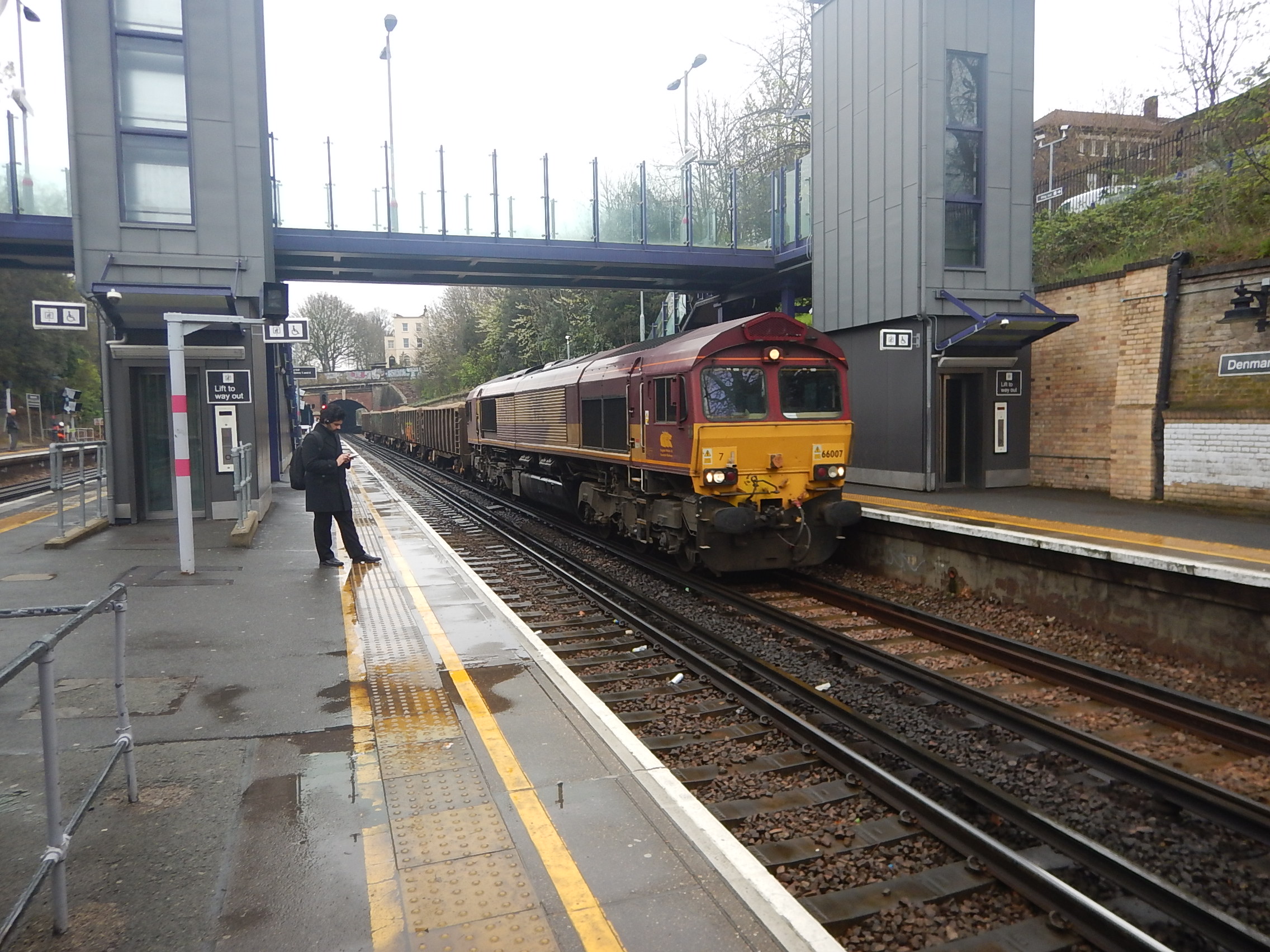
But an Essex company called Vortex Exhaust Technology has been awarded a grant to see if their free-flowing exhausts can tame, these most unfriendly of beasts.
They make this claim on their web site.
Vortex is the ONLY exhaust technology available that effectively eliminates back pressure, improving engine efficiency, boosting power and cutting emissions.
A Class 66 locomotive will be a tough challenge.
To see what the company can do for road vehicles, there is a case study at the bottom of this page.
But then they are Essex Boys! Performance is in the genes!
Project 3 CODD-P Hydraulic Pump
This is said in the Railway Gazette article.
Unipart Rail will undertake in-service testing of a commercial version of a digital displacement pump and electronic controller in place of a traditional hydraulic pump with swashplate design. This is expected to provide a significant reduction in fuel consumption.
It sounds like an idea from Artemis Intelligent Power in Edinburgh.
Project 4 Green Rail Exhaust After Treatment
This is said in the Railway Gazette article.
Leasing company Porterbrook will collaborate with Eminox to transfer an on-road exhaust after-treatment system widely fitted to heavy-duty vehicles to the railway environment, equipping a South Western Railway Class 158 DMU for in-service trials. This will enable the technical and commercial viability to be established, so it can be offered for widespread fitment.
There are currently 170 Class 158 trains and 30 of the closely-related Class 159 trains in service, so if this is successful, there won’t be a shortage of installations.
The picture shows one of East Midlands Trains, Class 158 trains.

It should also be said, that most Class 158 trains are in excellent condition, despite being nearly thirty years old.
Note that Porterbrook are involved. Train leasing companies seem to be getting increasingly involved with innovation.
Project 5 W2W Zero Emissions Power System
This is said in the Railway Gazette article.
Steamology’s Water 2 Water concept will use compressed hydrogen and oxygen gas in a ‘compact energy-dense steam generator’ to produce high pressure superheated steam to drive a turbine, which will generate electricity to charge the batteries as a ‘range extender’ for a Vivarail Class 230 multiple-unit produced from former London Underground vehicles.
It sounds to me, that the tabloids will say that this is the return of the steam train.
Conclusion
They are a broad spread of technology and I have this feeling, that the Department for Transport will get a sensible return for an outlay of around two million pounds.
But I suspect that the best and most profitable idea, will come, after a meeting between two or more of the award winners and their backers.
Stadler’s New Tri-Mode Class 93 Locomotive
In Thoughts On A Battery/Electric Replacement For A Class 66 Locomotive, I looked at an electro-diesel freight locomotive with batteries instead of a diesel engine, as a freight locomotive. It would have the size and weight of a Class 70 locomotive and perhaps use similar technology to Stadler’s Class 88 locomotive.
I concluded the article like this.
It would be a heavyweight locomotive with a performance to match.
I believe that such a locomotive would be a very useful addition to the UK’s fleet of freight locomotives.
Stadler have not produced a battery/electric replacement for a Class 66 locomotive, but they have added a diesel/electric/battery Class 93 locomotive with a heavyweight performance to their Class 68/88 or UKLIGHT family of locomotives built at Valencia in Spain.
Details of the locomotive are given in this article in Rail Magazine, which is entitled Rail Operations Fuels Its Ambitions With Tri-Mode Class 93s. There is also a longerand more detailed article in the print edition of the magazine, which I purchased today.
Reading both copies of the article, I can say the following.
A More Powerful Class 88 Locomotive
At a first glance, the Class 93 locomotive appears to be a more powerful version of the Class 88 locomotive.
- The power on electric mode is the same in both locomotives at four megawatt. It would probably use the same electrical systems.
- Some reports give the diesel power of the Class 93 locomotive as 1.34 MW as opposed to 0.7 MW of the Class 88 locomotive.
- The Class 93 locomotive has a top speed of 110 mph, as opposed to the 100 mph of the Class 88 locomotive.
- The article says, “It’s an ’88’ design with the biggest engine we could fit.”
It would also appear that much of the design of the two locomotives is identical, which must make design, building and certification easier.
The Class 93 Locomotive Is Described As A Hybrid Locomotive
Much of the article is an interview with Karl Watts, who is Chief Executive Officer of Rail Operations (UK) Ltd, who have ordered ten Class 93 locomotives. He says this.
However, the Swiss manufacturer offered a solution involving involving an uprated diesel alternator set plus Lithium Titanate Oxide (LTO) batteries.
Other information on the batteries includes.
- The batteries are used in regenerative braking.
- Batteries can be charged by the alternator or the pantoraph.
- Each locomotive has two batteries slightly bigger than a large suitcase.
Nothing is said about the capacity of the batteries, but each could be say 200 litres in size.
I have looked up manufacturers of lithium-titanate batteries and there is a Swiss manufacturer of the batteries called Leclanche, which has this data sheet, that describes a LT30 Power cell 30Ah.
- This small cell is 285 mm x 178.5 mm x 12 mm.
- It has a storage capacity of 65 Wh
- It has an expedited lifetime of greater than 15,000 cycles.
- It has an energy density of 60 Wh/Kg or 135 Wh/litre
These cells can be built up into much larger batteries.
- A large suitcase is 150 litres and this volume would hold 20 kWh and weigh 333 Kg.
- A battery of 300 litres would hold 40 kWh. Is this a large Swiss suitcase?
- A box 2.5 metres x 1 metre x 0.3 metres underneath a train would hold 100 kWh and weigh 1.7 tonnes
These batteries with their fast charge and discharge are almost like supercapacitors.
, It would appear that, if the large suitcase batteries are used the Class 93 locomotive will have an energy storage capacity of 80 kWh.
But this is said about Class 93 locomotive performance..
LTO batteries were chosen because they offer a rapid recharge and can maintain line speed while climbing a gradient, and will recharge when running downhill.
Looking at the batteries, they could provide up to around 40 kW of extra power for perhaps half an hour to help the train climb a gradient and then recharge using regenerative braking or the diesel alternator.
This is a hybrid vehicle, with all the efficiency advantages.
The article does say, that with a light load, the locomotives can do 110 mph on hybrid. Nothing is said about what is a light load.
Could it be a rake of five modern Mark 5A coaches?
In Thoughts On A Battery Electric Class 88 Locomotive On TransPennine Routes, I said this.
It is worth looking at the kinetic energy of a Class 88 locomotive hauling five forty-three tonne CAF Mark 5A coaches containing a full load of 340 passengers, who each weigh 90 Kg with baggage, bikes and buggies. This gives a total weight would be 331.7 tonnes.
The kinetic energy of the train would be as follows for various speeds.
90 mph – 75 kWh
100 mph – 92 kWh
110 mph – 111 kWh
125 mph – 144 kWhThe increase in energy is because kinetic energy is proportional to the square of the speed.
There would be little difference in this calculation, using a Class 93 locomotive, which is only a tonne heavier. The kinetic energy at 100 mph, would be 93 kWh.
This could be very convenient, as it looks like the battery capacity could be almost as large as the kinetic energy of a fully-loaded train.
A train stopping in a station without electrification, would cut diesel running drammatically in the station and when accelerating away.
Similar Weight And Axle Load To A Class 88 Locomotive
The article states that the locomotive will weight 87 tonnes, as opposed to the 86 tonnes of a Class 88 locomotive.
As both locomotives have four axles, this would mean that their axle loading is almost the same.
So anywhere the Class 88 locomotive can go, is most likely to be territory suitable for the Class 93 locomotive.
Again, this must make certification easier.
A Modular Design
In a rail forum, members were saying that the Class 93 locomotive has a modular design.
So will we see other specifications with different sized diesel engines and batteries?
The TransPennine routes, for example, might need a locomotive with a smaller diesel engine, more battery capacity and a 125 mph-capability for the East Coast Main Line.
Stadler have said they specialise in niche markets. Have they developed the tailor-made locomotive?
Power Of Various Locomotives
These are various UK locomotives and their power levels in megawatts.
- Class 43 – Diesel – 1.7
- Class 66 – Diesel – 2.4
- Class 67 – Diesel – 2.4
- Class 68 – Diesel – 2.8
- Class 88 – Electric – 4
- Class 88 – Diesel – 0.7
- Class 90 – Electric – 3.9
- Class 91 – Electric – 4.8
- Class 93 – Electric – 4
- Class 93 – Diesel – 0.9
- Class 93 – Hybrid – 1.3
The interesting figure, is that the Class 93 locomotive has 53 % of the diesel power of a Class 43 locomotive from an InterCity 125. The difference could probably be made up at times using battery power, where needed. The batteries could be partly recharged using regenerative braking.
Could The Locomotive Be Uprated To 125 mph?
Consider.
- The UK has successfully run 125 mph Class 43 and 91 locomotives for many years.
- Stadler has built trains that run at that speed.
- Mark 3, Mark 4 and Mark 5A coaches are all certified for 125 mph.
- There are hundreds of miles of track in the UK, where 125 mph running is possible.
I would think it very unlikely, that the engineers designing the Class 93 locomotive, ruled out the possibility of 125 mph running in the future!
Only Stadler will know!
Could A Battery/Electric Version Of The Locomotive Be Created?
I don’t see why not!
The diesel engine, fuel, exhaust and cooling systems and some ancilliary systems could all be removed and be replaced with an equivalent weight of batteries.
As the C27 diesel engine in a Class 88 locomotive weighs almost seven tonnes, I suspect a ten tonne battery would be possible.
Given the current typical energy density and using the Leclanche figures, this would mean that the batteries would have a total capacity of around 700-700 kWh.
Possible Uses Of The Class 93 Locomotive
The Rail Magazine article goes on to detail some of the uses of a Class 93 locomotive.
Express Freight
Karl Watts says this.
They can operate express freight. In Europe, there are vehicles capable of 100 mph running, and these are perfect for high-speed domestic freight. We have been running intermodals at 75 mph since the 1960s – It’s time to change that.
The locomotive would certainly be able to haul express freight at 100 mph on an electrified main line.
Note the following.
- This would greatly help with freight between Felixstowe and London on the 100 mph Great Eastern Main Line.
- Running freight trains at 100 mph on the major electrified lines would increase capacity, of the lines.
- Ports and freight terminals wouldn’t need to be electrified.
Overall, the proportion of freight mileage, where electric power was used, would grow significantly.
Electrification Gap Jumping
In Thoughts On A Battery/Electric Replacement For A Class 66 Locomotive, I gave a list of typical gaps in the electrification in the UK.
- Didcot and Birmingham – Around two-and-a-half hours
- Didcot and Coventry – Just under two hours
- Felixstowe and Ipswich – Around an hour
- Haughley Junction and Peterborough – Around two hours
- Southampton and Reading – Around one-and-a-half hours
- Werrington Junction and Doncaster via Lincoln – Around two hours
- Werrington Junction and Nuneaton – Just under two hours
How many of these gaps could be bridged by a Class 93 locomotive working in a diesel hybrid mode?
It should be noted, that many of the busiest gaps are in the flatter Eastern areas of England.
I’m sure Stadler and Rail Operations Group have done extensive simulation of possible routes and know where the locomotives are best suited.
Class 66 Locomotive Replacement
I suspect that several of these locomotives will end up replacing duties currently done by Class 66 locomotives.
It could haul an intermodal freight from Felixstowe to Manchester, Liverpool, Glasgow or Doncaster, using electrification where it exists.
And do it at a speed of 100 mph, where speed limits allow!
No other locomotive on the UK network could do that!
Use On Electrified Urban Freight Routes
Near to where I live there are two electrified lines passing through North London; the North London Line and the Gospel Oak To Barking Line.
Both lines have several freight trains a day passing through, that are still hauled by diesel locomotives.
There are other urban freight routes around the UK, where despite electrification, polluting diesel locomotives are still used.
Class 93 locomotives would be an ideal environmentally-friendly replacement locomotive on these routes.
Thunderbird Duties
Karl Watts says this.
They can be used for network recovery as a more comprehensive Thunderbird. Currently, stand-by locomotives are hired or used by an operator to rescue its own trains, but these would be available for anything or anyone. I have sopken to Network Rail about this and they need convincing. But as the network gets busier, so it will be that one failure causes chaos.
Perhaps, a better method for recovering failed trains could be developed.
Passenger Trains
Karl Watts says this.
I can say that the 93s’ feature n two franchise bids, although I cannot say which, due to non-disclosure agreements.
We can only speculate!
Class 93 locomotives could replace the Class 68 locomotives on TransPennine Express services between Liverpool and Scarborough, where Mark 5A coaches will be used.
- Electric mode could be used between Liverpool and Stalybridge and on the East Coast Main Line.
- Diesel or hybrid mode would be used where needed.
- If the locomotives could be uprated to 125 mph, that would help on the East Coast Main Line.
There are certainly, redundant Mark 4 coaches or new Mark 5A coaches that could be used to provide services.
An InterCity 125 For the Twenty-First Century
The InterCity 125 is a masterpiece of engineering, that passengers love.
One of the reasons for the success, is the superb dynamics of the train, which gives them a very comfortable ride.
Could it be that by putting two Class 93 locomotives at each end of a rake of suitable coaches could create a 125 mph train, with the same faultless dynamics?
The answer is probably yes, but in many cases either half-length trains or bi-mode multiple units may be a more affordable or capable train.
The locomotive certainly gives a lot of flexibility.
Conclusion
This is going to be a very useful locomotive.
This was the last paragraph of the printed article, as spoken by Karl Watts.
I don’t think I will be ordering only ten or 20 – there will be more.
I have registered 93001 to 93050.
The word hybrid opens the door.
I think this might be the third member of a very large and widespread family.
New Piazzas And Public Space Next To Historic Stephenson’s Bridge And Beneath Ordsall Chord Could Open ‘This Winter’
The title of this post is the same as that of this article in the Manchester Evening News.
This is the first paragraph.
It had been feared the space would remain closed for years – but Salford Council say they will make sure it opens as soon as they take ownership.
It is good news for those like me, who like interesting city walks.
It is also time for Network Rail and Lewisham and Southwark Councils to sort out what is to happen around London’s new rail structure; the Bermondsey Dive-Under.
This article on the Landscape Institute web site from 2017, is entitled New Railway Junction Gets Top Marks For Biodiversity., describes how the work at Bermondsey has won an award. This is said.
The project involved removal of 21,900 tonnes of contaminated material and eradicated the Japanese knotweed. To increase biodiversity, wildflower planting and green walls were installed to offset vegetation lost in the process of removing the contaminated soils. The project includes 765m2 of green walls under arches and access ramps, and the planting of wildflowers on the railway embankments to create green corridors and stepping stones to the wider area. The team also carried out extensive community engagement, including upgrading the garden in the Lewisham Community Centre.
I think there should be a public walking route through this area.
 The Anonymous Widower