Developing A Rural Hydrogen Network
On my last stud farm, we had three regular fuel deliveries.
- Propane to heat the house and offices.
- Red diesel to power the tractor and farm machinery.
- Road diesel to power the horse box and a couple of diesel cars, that went on the roads.
Note.
- Like most farms in the UK, we didn’t have mains gas.
- The local low-life of whom you never speak their name, used to regularly steal the diesel.
- Stealing of diesel in rural areas of the UK is a big industry.
- The police did nothing to stop the thefts as the culprits are untouchable.
- We had two boilers, that both ran on the propane.
- Modern boilers can be converted from propane to use hydrogen.
- All cars, trucks, farm vehicles and machinery on the stud farm could in the future use hydrogen.
Propane and diesel would be replaced by clean hydrogen.
Delivering The Fuel
Consider.
- Propane and diesel are currently delivered in rural areas by truck.
- Hydrogen will be delivered the same way and stored in a tank designed for hydrogen, which could be similar in appearance to current propane tanks.
- Boilers would be directly piped to the hydrogen tank.
- The technology exists to fill hydrogen-powered vehicles and equipment from hydrogen tanks.
- I believe that a thief-proof hydrogen tank would be possible.
- The hydrogen will be delivered as needed in a hydrogen-powered truck.
I believe companies like Centrica, will develop the technology so that farms and businesses could have their own hydrogen system.
Supplying The Hydrogen
Electrolysers would be needed around the country.
Some could be based on nuclear sites, where others could be powered by offshore wind.
Hydrogen Safety
Hydrogen safety has its own Wikipedia entry.
The entry starts with a description of the Hindenberg Disaster, which has a detailed Wikipedia entry of its own.
I’ve spoken to someone, who was there; Dory Previn, who later wrote a song about it.
The Hydrogen safety Wikipedia entry has this paragraph.
There are many codes and standards regarding hydrogen safety in storage, transport, and use. These range from federal regulations, ANSI/AIAA, NFPA, and ISO standards. The Canadian Hydrogen Safety Program concluded that hydrogen fueling is as safe as, or safer than, compressed natural gas (CNG) fueling,
I’ve also talked to German schoolchildren about their hydrogen trains and as you are educated about hydrogen, the fear decreases and the safety increases.
Hydrogen-Powered Lawnmowers And Garden Tractors
Everybody likes a lush, green lawn.
Surely, yours is better, if your lawnmower emits no carbon dioxide!
Electric will work, but if you have a hydrogen-powered lawnmower, that can be filled from your central heating tank, that is better.
Collateral Benefits
These would be collateral benefits.
- One set of tankers would be replaced by a single zero-carbon hydrogen tanker, thus reducing road traffic.
- I believe there would be less fuel theft.
- Rural businesses, that needed gas like blacksmiths could be supplied.
- A lot of buildings with a propane-fuelled boiler could be converted to hydrogen.
It would be a path to decarbonisation of the rural economy.
How Big Is The Off-Grid Energy Market?
A document on the House of Commons web site says this.
An estimated 4.4 million households across Great Britain were not connected to the gas grid in 2021. This was 15.1% of domestic properties.
If the average gas bill is £100/month, then that is £1200/year, which works out at £5,280,000,000.
When you add in off-grid businesses, that would need fuel and hydrogen fuel for vehicles and agricultural equipment, the market can’t be much short of £10 billion.
Conclusion
As it is a multi-billion pound marketplace. someone will develop it.
ICE Report Shows Majority Open To Net Zero Changes
The title of this post, is the same as that of this article on The Engineer.
This is the sub-heading.
A new report has found that a majority of the UK public is amenable to the behavioural changes needed to hit the country’s net zero targets.
These two paragraphs summarise the findings of the report.
Published by the Institution of Civil Engineers (ICE) and the All-Party Parliamentary Group on Infrastructure (APPGI), the report was based on a survey of 1,000 respondents. It found that 57 per cent were open to change, with 23 per cent described as net zero enthusiasts who were likely to have already altered their behaviours, and 34 per cent wanting change, but feeling they needed further empowerment to achieve it.
However, there is far from universal agreement when it comes to behavioural change around climate action. The report found that 30 per cent of people were ‘reluctant followers’, largely acknowledging that the UK must act on emissions, but not feeling personal responsibility for that action. This segment will likely only change their behaviours if forced to do so or seeing a majority of others doing it first. Finally, 13 per cent of those surveyed were classed as ‘net zero resistors’, people who don’t believe action is necessary and have no intention of doing so.
Summing the figures up gives us.
- Net-Zero Enthusiasts – 23 %
- Wanting Change – 34 %
- Reluctant Followers – 30 %
- Net-Zero Resistors – 13 %
All politicians should be forced to read the full report.
What Would I Need To Do To Achieve a Personal Net-Zero?
My circumstances probably cover a lot of people.
- I am a widow living alone.
- My house is well-insulated with solar-panels on the roof, but heated by gas.
- I don’t have or need a car.
- I do nearly all my shopping by public transport and carry it home.
- When I go away in the UK I use trains.
- If I go to Europe, I either go or come back by train.
- I am coeliac, which means I need to eat some meat to stay healthy.
My largest carbon-emitted is probably my house, but it would be unsuitable for most current solutions.
I would put myself in the Wanting Change group, but I could move to a Net-Zero Enthusiast, if the right technology came along.
- I have seen one bolt-in electric replacement for by boiler and when the right one arrives, I’ll probably fit one.
- An affordable battery to work to with my solar panels and also allow me to use Off Peak electricity would be nice.
- As I’m coeliac, I tend to buy in the same food each week from Marks and Spencer to eat in. I might be able to cut my carbon footprint by getting Ocado to deliver. Especially, as some deliveries seem to be bike.
- If TfL decarbonised the bus, that I use most days to and from Moorgate would that lower my carbon footprint?
I suspect the largest amount of carbon outside of my house’s heating, that I’ll emit, will be tomorrow, when I take a train to Newquay.
How Do We Convert The 13 % Net-Zero Resistors?
The recent protests by French and Belgian farmers indicate, that these farmers are probably in this group. And there are other forthright groups!
The only way, that they’ll be converted, is if technology allows them to earn the same amount of money and have the same outgoings, as they do now!
Solar Farms And Biodiversity
I have an old farmer friend, who told me this tale.
His neighbour put up a few acres of solar panels on a field, that adjoins one of his fields, where it generally grows cereal crops.
He told me that he felt he was seeing more hares on his land and wrote to me asking if it could be the solar panels.
I searched the Internet and couldn’t find anything at the time.
But, it should be remembered, that hares have an unusual way of bringing up their leverets, where the mothers generally abandon them during the day and feed them in the evening.
We did wonder, if the solar panels offered protection to the leverets from aerial predators. And the mothers were learning that solar panels were a safer place.
This morning someone made a comment about solar panels on a page in The Times and I searched again.
I found this article on the Solar Power Portal, which is entitled Solar Farms And Biodiversity and thoroughly read it.
It doesn’t say much about hares, but it puts a strong case, that solar panels can increase biodiversity.
Making Carbon Dioxide Into Protein For Innovative Animal Feed
The title of this post, is the same as that of this article on Horizon.
These are the first three paragraphs.
It’s common knowledge that proteins, a key component of human nutrition, are also essential for making animal feeds. Less well known is the uncomfortable fact that much of the protein we feed animals in Europe leads to deforestation and overfishing worldwide.
Biotechnology start-up Deep Branch have designed a biochemical transformation process that turns carbon dioxide (CO2) into a protein-rich powder for animals to eat.
The Deep Branch process converts carbon dioxide into a powder, called Proton, which has around 70% protein content. This is much higher than natural soy, which has around 40%.
Note.
- The technology is the brainchild of Peter Rowe, a PhD graduate in molecular biology of Nottingham University in the UK.
- Deep Branch appears to be a well-backed Anglo-Dutch company.
- Their backers are European and British household names and institutions.
- Drax, who have plenty of carbon dioxide, are also backers.
I believe that even if Deep Branch doesn’t succeed, then someone else will, with this technology.
French Farmers Are Covering Crops With Solar Panels To Produce Food And Energy At The Same Time
The title of this post is the same as that of this article on euronews.green.
These paragraphs explain the technique.
Agrivoltaics – the practice of using land for both solar energy and agriculture – is on the rise across France.
In the Haute-Saône region, in the northeastern part of the country, an experiment is being conducted by solar-energy company TSE. It is hoping to find out whether solar energy can be generated without hindering large-scale cereal crops.
Previous attempts to experiment with agrivoltaics have been through smaller-scale projects. But, keen to see if it can thrive on an industrial level, 5,500 solar panels are being spread over this farm in the commune town of Amance by TSE.
The article also contains a picture, which shows panels high in the air and a tractor going underneath.
I’m not sure of the idea’s practical application, although, I do know of a farmer, who is experimenting with using solar panels in a field with sheep. He also has found that on another field fully fitted with solar panels, hares were thriving.
In Understanding Floatovoltaics, I talked about another French idea; floating solar panels, where solar panels are floated on calm water like a reservoir.
Talking of reservoirs, I remember seeing a Tomorrow’s World, as a child, where it was proposed that concrete reservoirs, like those under the Heathrow flightpath, be filled with foamed concrete and covered with soil, so they could be used to grow crops.
- The water capacity would be slightly smaller.
- There would be less water losses.
I wonder what happened to that idea.
Chancellor Confirms England Onshore Wind Planning Reform
The title of this post, is the same as that of this article on renews.biz.
These are the first two paragraphs.
UK Chancellor Kwasi Kwarteng has confirmed that onshore wind planning policy is to be brought in line with other infrastructure to allow it to be deployed more easily in England.
The announcement is the strongest sign yet that the Conservative Party could be poised to reverse its 2015 ban on new onshore wind farms being built in England.
I take a scientifically-correct view of onshore wind, in that I am sometimes against it, but on the other hand in certain locations, I would be very much in favour.
These pictures show Keadby Wind Farm in Lincolnshire.
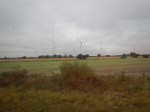
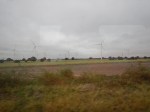
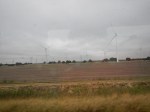
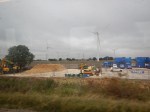
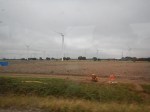
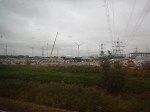
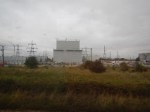
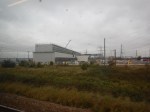
As the wind farm sits next to two gas-fired power stations and is surrounded by high voltage overhead electricity cables, this is probably a more acceptable location, than beside a picturesque village.
In this page on their web site, SSE says this about the construction of the 68 MW wind farm.
After receiving planning permission in 2008, construction began in 2012 and the first turbine foundation was complete in February 2013. The final turbine was assembled on 11 December 2013 and the project was completed in summer 2014.
If this is typical, and I think it is, it would take six years plus the time arguing about planning permission, to get a new onshore wind farm built.
But supposing, you are a farmer who wants to decarbonise. One way might be with a 10 MW wind turbine and a hydrogen electrolyser, so you had your own hydrogen source to power your tractors and other equipment.
On the other hand, solar panels on house, shed and barn roofs might be a more discrete alternative.
Basil Crop Hits The Roof At Scunthorpe Vertical Farm With Artificial Sun
The title of this post, is the same as that of this article in The Times.
It is a fascinating article about how basil is farmed vertically in Scunthorpe.
- Much of the crop goes to UK supermarkets.
- The grower has now teamed with Ocado to build the largest vertical farm in the world.
- The grower is also growing rosemary, chard and spinach. Although the latter looked a bit sad.
- He has also experimented with turnips and carrots and hopes to move on to soft fruits and cut flowers.
Surely, the only way is Up!
Is the farmer feeding the crops carbon dioxide captured from the massive Keadby gas-fired power-stations in the area?
That way we can generate our electricity with added CO2 and eat it.
I know of a tomato grower, who uses a gas-powered combined heat and power boiler to heat his greenhouses, where the CO2 is fed to the tomatoes and any electricity he doesn’t need is sold to local consumers.
If we can eat all the CO2, why not go fracking for the gas? The only losers would be the Qataris and Putin.
Panasonic Launches 5 kW Type Pure Hydrogen Fuel Cell Generator
The title of this post, is the same as that of this press release from Panasonic.
This is the first paragraph.
Panasonic Corporation today announced that it has developed a pure hydrogen fuel cell generator, which generates power through chemical reaction with high-purity hydrogen and oxygen in the air. The generator will be launched on October 1, 2021 for commercial use in Japan.
Features include.
- 5 kW basic unit scalable as needed.
- A hot water unit can be added to use the waste heat.
- Ability to run during a power outage.
- Remote operation.
I can envisage a log of uses for a useful generator like this and I will be interested to see how equipment like this is used in the future.
But there will be many generators in all sizes from many different manufacturers that will be released in the next few years to fulfil a lot of different applications.
We will also see lots of innovative ways to distribute hydrogen to various agricultural, industrial and office locations.
Railway Engineers Build Beaver Pass On Highland Line
The title of this post, is the same as that of this article on the BBC.
This is the introductory paragraph.
Railway engineers have built what they believe is Scotland’s first ever ‘beaver pass’, to allow the animals to go under the Highland mainline.
Let’s hope the remedial action works, as otherwise, there’ll be increasing train delays caused by beavers, as their numbers and dams proliferate.
The Scottish NFU is also against the reintroduction of beavers, as this article on the Scottish Farmer, which is entitled Don’t Protect The Beaver illustrates.
I can see trouble ahead!
 The Anonymous Widower