National Grid Pioneers UK-First Trial Of 3D Printed Technology For Low-Carbon Substations
The title of this post, is the same as that of this press release from National Grid.
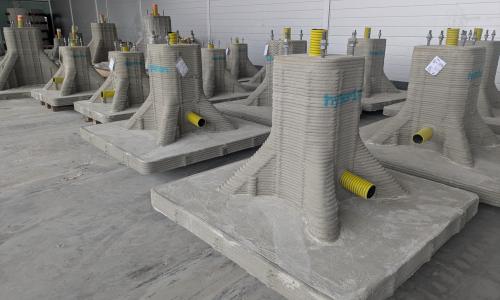
These three bullet points act as sub-headings.
- Collaboration with Hyperion Robotics and the University of Sheffield will trial low-carbon 3D-printed concrete foundations including at National Grid’s Deeside Centre for Innovation in North Wales
- Innovation could reduce waste, carbon emissions and costs to consumers of network construction
- If rolled out across National Grid substations the technology could save up to 705 tons of concrete and 323 tons of CO2 and deliver £1.7 million in consumer savings versus traditional methods over a 10-year period
These two paragraphs give more details.
National Grid is working with Hyperion Robotics and the University of Sheffield on a UK-first trial to manufacture, install and test 3D-printed substation foundations, which have the potential to reduce construction-driven carbon emissions and reduce costs to consumers of network construction. This is part of National Grid’s commitment to leverage innovation to future-proof the network.
If the project is successful and the technology is rolled out across all National Grid substations, it is estimated it could save up to 705 tons of concrete and 323 tons of CO2 over a 10-year period, and deliver £1.7 million in consumer savings versus traditional methods.
The foundation design will deliver significant savings across the entire value chain.
- 70% reduction in concrete usage
- 80% less soil displacement
- 65% decrease in embodied carbon emissions
- 70% weight reduction compared to typical foundations
- 50% reduction in site operative hours, streamlining production
The foundations will be designed and produced in Finland by Hyperion Robotics, and tested at full-scale by the University of Sheffield. Further field testing will then be carried out at National Grid’s state-of-the-art testing facility, the Deeside Centre for Innovation in North Wales, later in 2025.
Conclusion
I like this technology and I suspect there are many other applications of 3D Concrete Printing.
Europe’s Mines Look To Gravity Energy Storage For Green Future
The title of this post, is the same as that of this article on Global Mining Review.
This is the sub-heading.
Mine owners across Europe are looking at a new form of underground energy storage to offer a low carbon future as operations wind down.
These are the first four paragraphs.
Active deep mine operators in Slovenia, Germany, The Czech Republic and Finland are all examining how underground gravity energy storage – provided by Edinburgh firm Gravitricity – could offer green opportunities to mining communities facing a downturn in employment.
Gravitricity has developed a unique energy storage system, known as GraviStore, which uses heavy weights – totalling up to 12 000 t – suspended in a deep shaft by cables attached to winches.
This offers a viable alternative future to end of life mine shafts, which otherwise face costly infilling and mine decommissioning costs.
They have teamed up with energy multinational and winch specialist ABB alongside worldwide lifting specialists Huisman to commercialise the technology for mine operators.
Note.
- Four projects are mentioned.
- It appears to be less costly, than infilling.
- Gravitricity have teamed with ABB and Huisman, who are two of Europe’s specialist in this field.
- You can’t have too much energy storage.
The article is worth a full read.
Conclusion
Gravitricity’s simple idea could be a big winner.
Gravitricity Weighs Up One Of Europe’s Deepest Mines
The title of this post, is the same as that of this article on The Engineer.
This is the sub-heading.
Scotland’s Gravitricity is set to deploy its underground energy storage technology at Pyhäsalmi Mine in central Finland, Europe’s deepest zinc and copper mine.
These two paragraphs outline the scheme.
Located about 450km north of the Finnish capital Helsinki, the Pyhäsalmi Mine extends 1,444m below the Earth. With mine operations at Pyhäsalmi winding down, the local community set up a development company to explore redevelopment projects around the mine’s infrastructure, including energy storage.
Gravitricity is set to deploy its GraviStore energy storage technology in a 530m deep auxiliary shaft. GraviStore can utilise off-peak electricity by raising heavy weights in the mine shaft, releasing the energy back on to the grid during high demand by lowering the weights. It’s claimed the 2MW scheme at Pyhäsalmi will provide grid balancing services to the Finnish network.
There is also this quote from Martin Wright,who is Gravitricity’s executive chairman.
This project will demonstrate at full scale how our technology can offer reliable long life energy storage that can capture and store energy during periods of low demand and release it rapidly when required.
This full-scale project will provide a pathway to other commercial projects and allow our solution to be embedded into mine decommissioning activities, offering a potential future for mines approaching the end of their original service life.
Can it be that Gravitricity is finally on its way?
British Five-Year-Olds Up To 7cm Shorter Than Western Peers
The title of this post, is the same as that of this article in The Times.
This is the sub-heading.
Poor diet and health service cuts blamed for ‘pretty startling’ trend
These are the first two paragraphs.
Five-year-olds in Britain are on average up to seven centimetres shorter than their peers in other wealthy nations, in a trend described as “pretty startling”.
A poor national diet has been highlighted as a major culprit in Britain’s fall down international rankings of child height.
I am coeliac and am only 170 cm.
During the pandemic, I did some statistical research on coeliac disease and the covids for my own interest.
I found a peer-reviewed Indian medical paper entitled Coeliac Disease: Can We Avert The Impending Epidemic In India? The author felt that modern high-gluten wheats, were increasing the rate of the disease.
The author also said this about introduction gluten to babies in Sweden.
The time of first exposure to wheat influences the development of celiac disease. In countries such as Finland, Estonia, and Denmark, characterized by low gluten consumption in infancy, celiac disease prevalence is much lower than in Sweden where gluten consumption is high in infancy. A natural experiment occurred in Sweden about two decades ago when national recommendations were made to introduce wheat into the diet after cessation of breast feeding at six months. This change was coupled with increased wheat gluten consumption through infant feeds. Together these measures resulted in a two-fold increase in incidence of celiac disease in Sweden, which was attributed to introduction of wheat into the diet after cessation of breast feeding. In 1996 this recommendation was changed to introduce gluten in gradually increasing amounts while the infant was still being breast fed. This led to a dramatic decrease in celiac disease incidence.
It is interesting to look at heights of five-year-olds given in the Times article for the four countries.
- Denmark – 117.4 – 118.1
- Estonia – 116.9 – 115.7
- Finland – 116.3 – 114.5
- Sweden – 115.1 – 115.1
Note that all heights are in centimetres, with boys first.
As according to the graphs in the article the UK and the US have shown the biggest declines in height, is gluten-rich junk food, the major cause of this decline?
More research needs to be done!
Amber Train Links The Baltic States To Western Europe
The title of this post, is the same as that of this article on Railway Gazette.
These paragraphs outline the freight link.
A trial Amber Train service between the Baltic States left the Estonian port of Muuga on September 13, arriving the following day at Kaunas in Lithuanian where its load of semi-trailers was transferred to 1 435 mm gauge wagons for onward transport to destinations including France and the Netherlands.
The 1 520 mm gauge wagons returned to Muuga with trailers for onward sea transport to Finland.
This Google Map shows the Estonian port of Muuga Harbour.
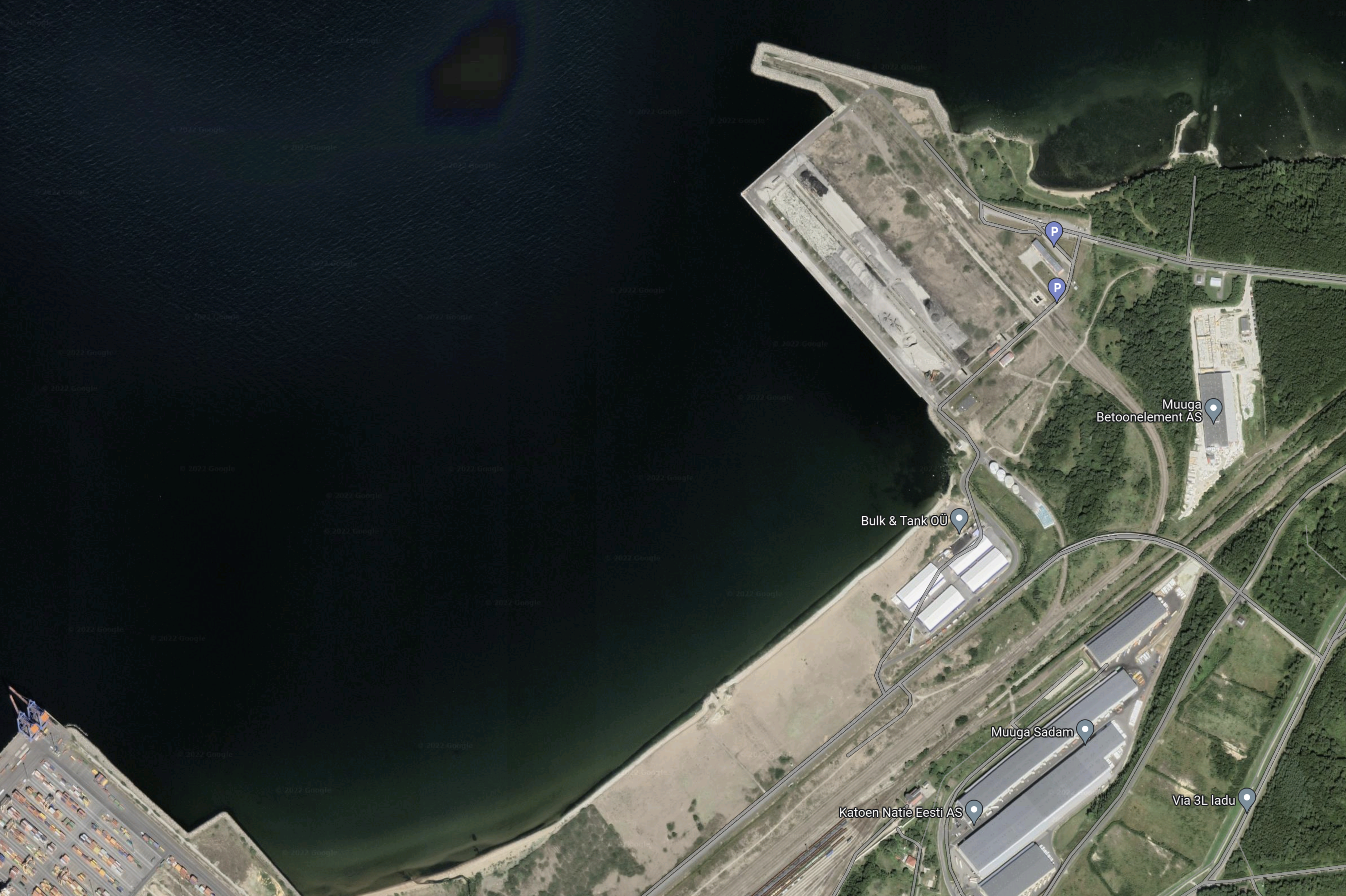
Note.
- Muuga Harbour is the largest cargo port in Estonia, located on the southern coast of the Gulf of Finland, 17 kilometres (11 mi) northeast of the capital Tallinn
- It is one of the few ice-free ports in northernmost Europe and one of the most modern ports in the Baltic Sea region.
- Enlarging the picture shows a lot of rail lines.
It looks like Muuga Harbour is an ideal Northern terminus for the Amber Train freight service.
This Google Map shows the area of the Kaunus Intermodal Terminal.
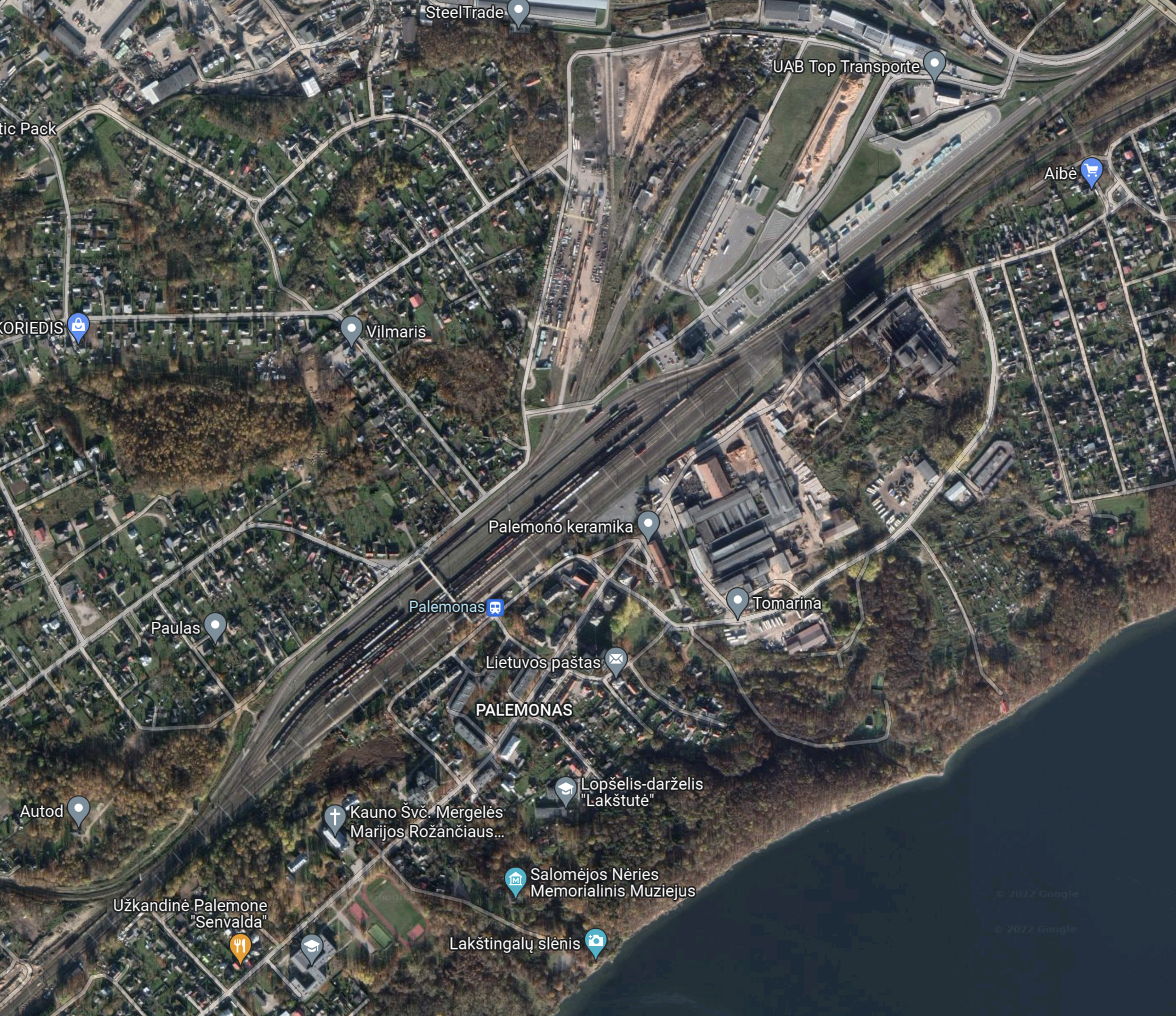
Note.
- The railway runs diagonally across the map.
- Estonia is to the North-East.
- Poland is to the South-West.
This map shows how the different gauges are used in the North-East of the previous map.
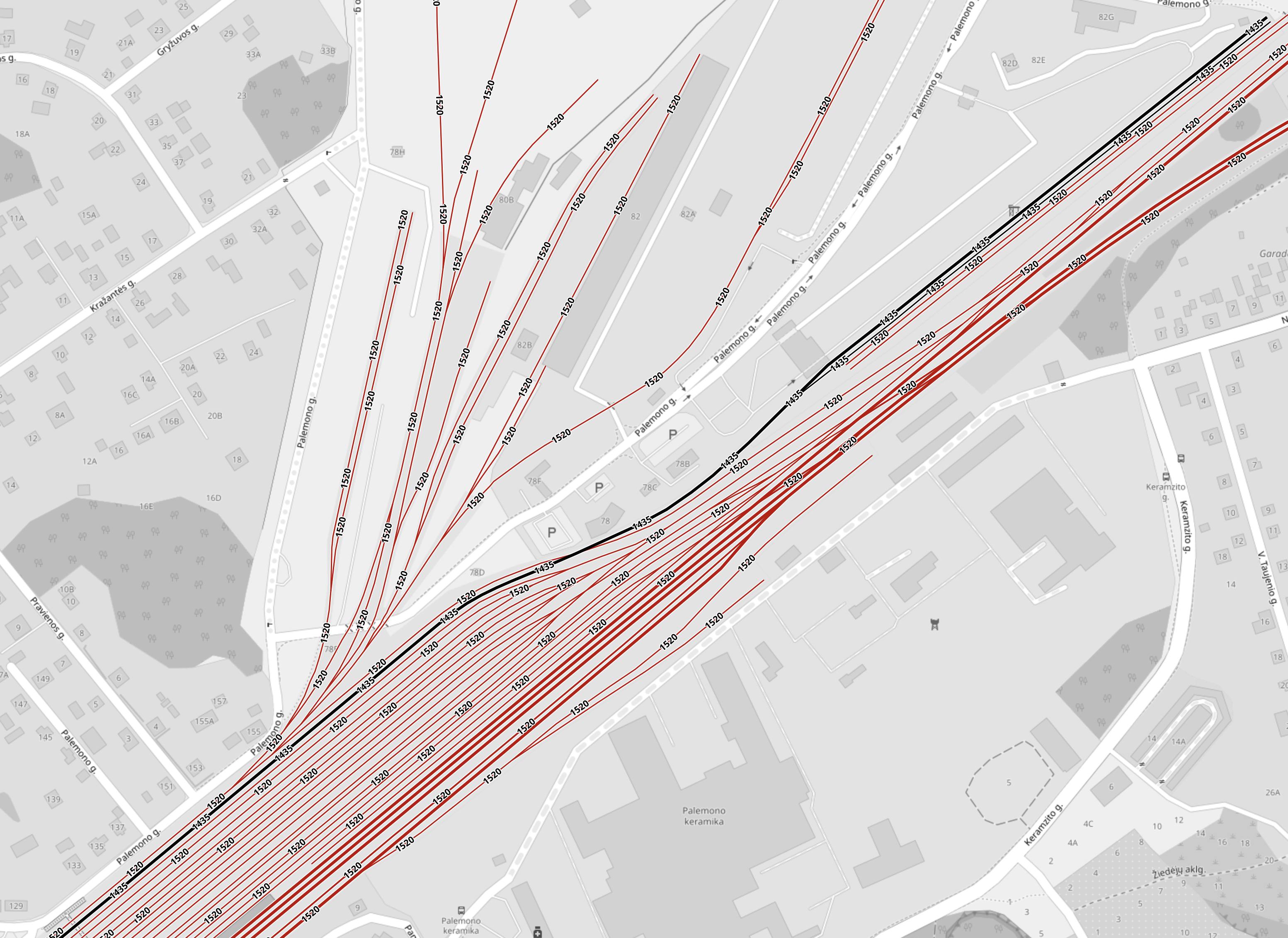
Note.
- Standard gauge tracks are shown in black.
- Russian gauge tracks are shown in red.
- The standard gauge track ends in the North-East corner of the map.
Trucks would probably moved between trains on parallel tracks in this freight terminal.
It appears to be a very simple way to run piggy-back trains of trucks between The Baltic States and Finland and Central and Western Europe.
Rail Baltica
According to Wikipedia, the location for the Kaunas Intermodal Terminal was chosen as it is compatible with the route of Rail Baltica, which will create a new standard gauge route between Kaunas and Tallinn in Estonia.
The Amber Train
The Amber Train has an impressive web site, where this is said on the home page.
Amber Train is a joint project of the national railways of Lithuania, Latvia and Estonia. It is an excellent example of cooperation, that offers road and railway clients convenient and efficient freight logistics.
Amber Train is an intermodal train, which runs on the route Šeštokai / Kaunas – Riga – Talinn, thus connecting the three Baltic States by railways and opening new business opportunities for freight shippers.
Exclusivity of the project is the connection of Western and North Europe, using the unique Šeštokai and Kaunas intermodal terminals, which enable the transshipment of freight from the European gauge to the 1520 mm gauge and vice versa.
The train is planned to run 2 times per week (with a future perspective to run up to 4 times per week), delivery time is 24 hours. Train length – up to 43 container wagons.
It is planned, that already in 2021 customers will be offered the opportunity to transport semi-trailers by railways via all three Baltic States. For this purpose, special “pocket” wagons are already in production.
Operations are managed by AB LTG Cargo (Part of Lithuanian Railways group), Latvia’s LDZ Loģistika and Estonia’s Operail.
It appears to be a well-thought out service.
A few years ago, I was on the roads of North-East Poland, about a hundred miles South of Kaunas.
These roads were crowded with large trucks going between The Baltic States and Finland and Central and Western Europe.
I suspect that once the Amber Train is fully established, a proportion of these trucks will go by rail.
Putin Burns $10m Of Gas A Day In Energy War With The West
The title of this post, is the same as that of this article in The Times.
This is the first paragraph.
Russia is burning off an estimated $10 million of natural gas a day from a single plant, leading to accusations that President Putin is deploying his country’s vast energy reserves as a weapon against Europe.
It just showed the sort of idiot we’re dealing with!
- He doesn’t care about the planet.
- He’s effectively burning his country’s cash reserves.
- He’s spurring Western engineers on, to on the one hand find ways to beat him and on the other to find ways to make our gas go further, so we don’t need to buy his bloodstained gas.
- If he thinks, that he might provoke a war with Finland, I suspect the Finns are too bright for that.
They’ll be waiting and if the Russian Army should invade, they’ll get the kicking of a lifetime, just like Stalin’s thugs did in the Winter War of 1939-1940.
I
Climate Change: ‘Sand Battery’ Could Solve Green Energy’s Big Problem
The title of this post, is the same as that of this article on the BBC.
This is the introductory paragraph.
Finnish researchers have installed the world’s first fully working “sand battery” which can store green power for months at a time.
The article then gives a detailed explanation about how the battery works.
Note.
- The article does not give any details on battery capacity.
- The heat stored in the battery is extracted as hot water.
- The Finnish company is called Polar Night Energy.
In Bang Goes My Holiday!, I described the Siemens Gamesa ETES, which appears to work on similar principles, to the Finnish battery.
This document on the Siemens Gamesa web site describes that installation.
- The nominal power is 30 MW.
- The storage capacity is 130 MWh.
- Siemens use volcanic rock as the storage medium.
- 80 % of the technology is off the shelf.
The picture on the front says “Welcome To The New Stone Age”.
The BBC have published a video of the Polar Night Energy Battery.
Will Rail Baltica Annoy Putin?
Rail Baltica is described like this in Wikipedia.
Rail Baltica (also known as Rail Baltic in Estonia) is an ongoing greenfield railway infrastructure project to link Finland (via ferry or an undersea tunnel), Estonia, Latvia, Lithuania with Poland and through this with the European standard gauge rail line network. Its purpose is to provide passenger and freight service between participating countries and improve rail connections between Central and Northern Europe, specifically the area in the Southeast of the Baltic sea. Furthermore, it is intended to be a catalyst for building the economic corridor in Northeastern Europe. The project envisages a continuous rail link from Tallinn (Estonia) to Warsaw (Poland). It consists of links via Riga (Latvia), Kaunas and Vilnius (Lithuania). Rail Baltica is one of the priority projects of the European Union.
These are a few more details.
- It will be a double-track railway or four tracks if it handles freight.
- Passenger trains will run at up to 250 kph (155 mph)
- Electrification will be either 25 KVAC or 3 KVDC overhead.
- It will be a standard gauge line.
- There will be no level crossings.
- It is planned to open around 2026.
The biggest problem could be that some of the route is shared with the Russian gauge line, that connect Kaliningrad to Vilnius and then from there to the main part of Russia.
This map from OpenRailwayMap shows the railways between Kaliningrad and Vilnius.
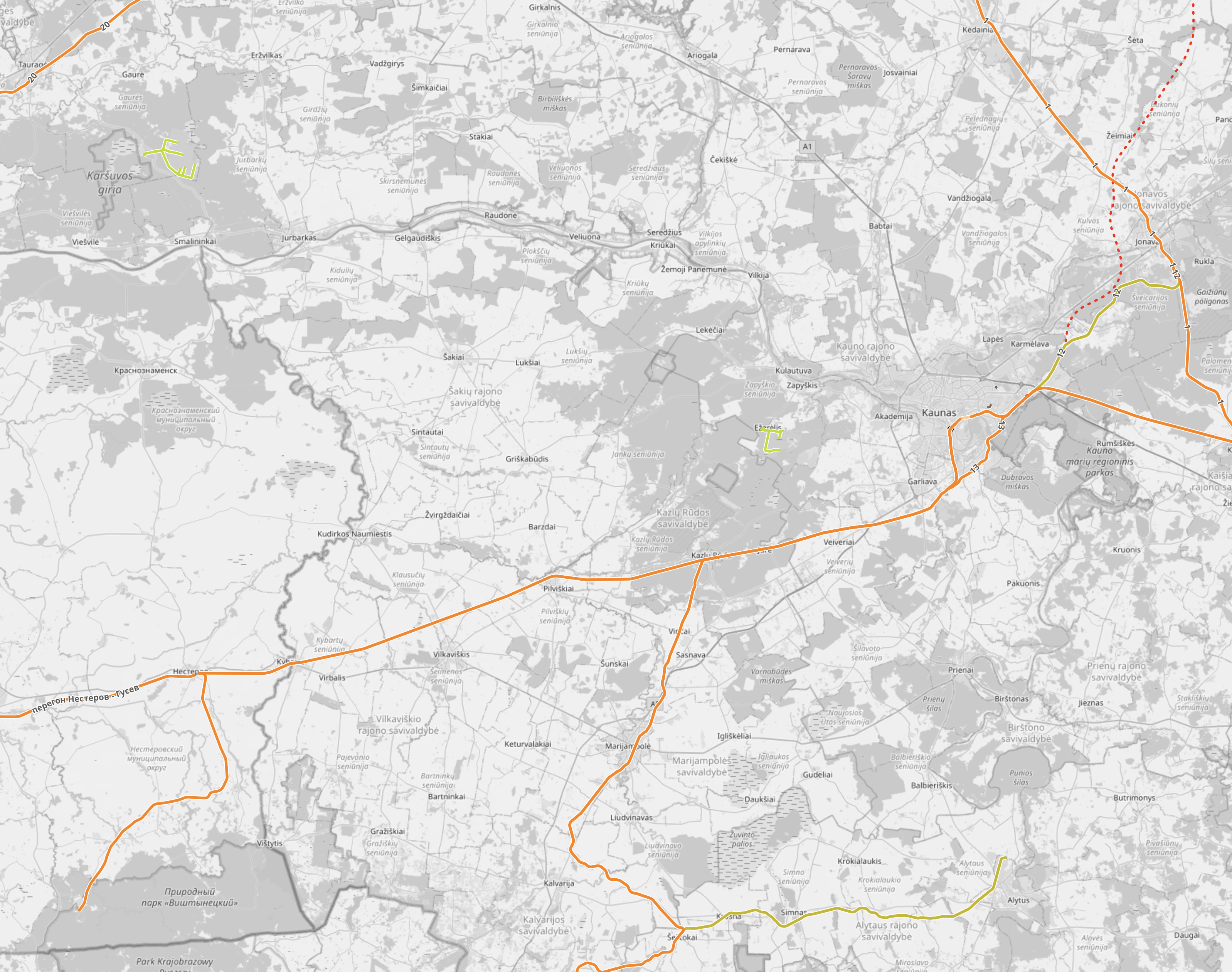
Note.
- The orange lines are main lines.
- The yellow lines are secondary lines.
- The orange line going West goes to Kaliningrad.
- The dark grey line crossing the railway is the border of the Kaliningrad enclave, which was annexed by the Soviet Union in 1945.
- The orange line going South goes to Bialystok, Warsaw and all places to the West.
- The loop in the line is at Kaunus, where there will be an interchange between the two lines.
- The orange lines going East go to Vilnius.
- The dotted red line in the North-East corner of the map, will be new track for Rail Baltica.
The new railway will effectively squeeze itself between Kaliningrad and Kaunus.
Railway Gauges In Poland and the Baltic States
Consider.
- Most, if not all of the railways in the Baltic States are Russian gauge.
- The line between Kaliningrad and Kaunus is Russian gauge.
- Most of the railway lines in Poland are standard gauge.
- The EU likes all new high speed lines like Rail Baltica to be built to standard gauge and have 25 KVAC overhead electrification.
- Kaunus is in Lithuania, so NATO control access to Kaliningrad in sensitive times.
I can’t believe that Vlad likes the current situation and would probably prefer Rail Baltica to be built to Russian gauge, as it would enable the Russian Army to easily move tanks into the Baltic States.
Conclusion
There’s a chance that Vlad will make trouble.
Norrbotniabanan Final Phase To Go Ahead
The title of this post, is the same as that of this article on the Railway Gazette.
This is the first two paragraphs.
The government has decided to press ahead with completion of the Norrbotniabanan coastal railway linking Umeå and Luleå via Dåva and Skellefteå.
Recognising that ongoing investment in industrial development across the north of the country would drive demand for improved transport links, Infrastructure Minister Tomas Eneroth has instructed Trafikverket to continue planning work for the new line.
If you get your maps out, you’ll find that the Norrbotniabanan or North Bothnian Line is at the North of the Baltic Sea.
- It’s also planned as a high speed line with an operating speed of 160 mph, which is faster than the East Coast Main Line in the UK.
- It is also 170 miles long.
- Journey time between Umeå and Luleå will be ninety minutes as opposed to four hours today.
Wikipedia also says this about connections at the Northern end.
Currently, the area is served by the Main Line Through Upper Norrland, which is located inland and with branch lines connected to various towns along the coast. To the north, the line will connect with the Main Line Through Upper Norrland and onwards along the Haparanda Line to connect to the Barents Region and the Finnish railway network. It will also connect to the Iron Ore Line.
Sounds like it will be a great place to go for a rail-oriented holiday.
‘Super Train’ In Finland Sets New Record: The Equivalent Of 92 Trucks
The title of this post, is the same as that of this article on RailFreight.com.
This is the introductory paragraph.
The Finnish railway company VR Transpoint has introduced another heavy weight to the railways. Dubbed the Super Train, it carries a weight of 7,000 tonne, and 80 wagons. Moreover, it is about one kilometre long. According to the company, this sets a new record on Finnish railways.
These are a few points about the service.
- The service runs between Vainikkala and Hamina.
- The route appears to be electrified.
- The super train is hauled by two Vectron locomotives.
- Longer trains are more efficient.
- Long trains regularly run in Russia.
This map shows the border crossing at Vainikkala.
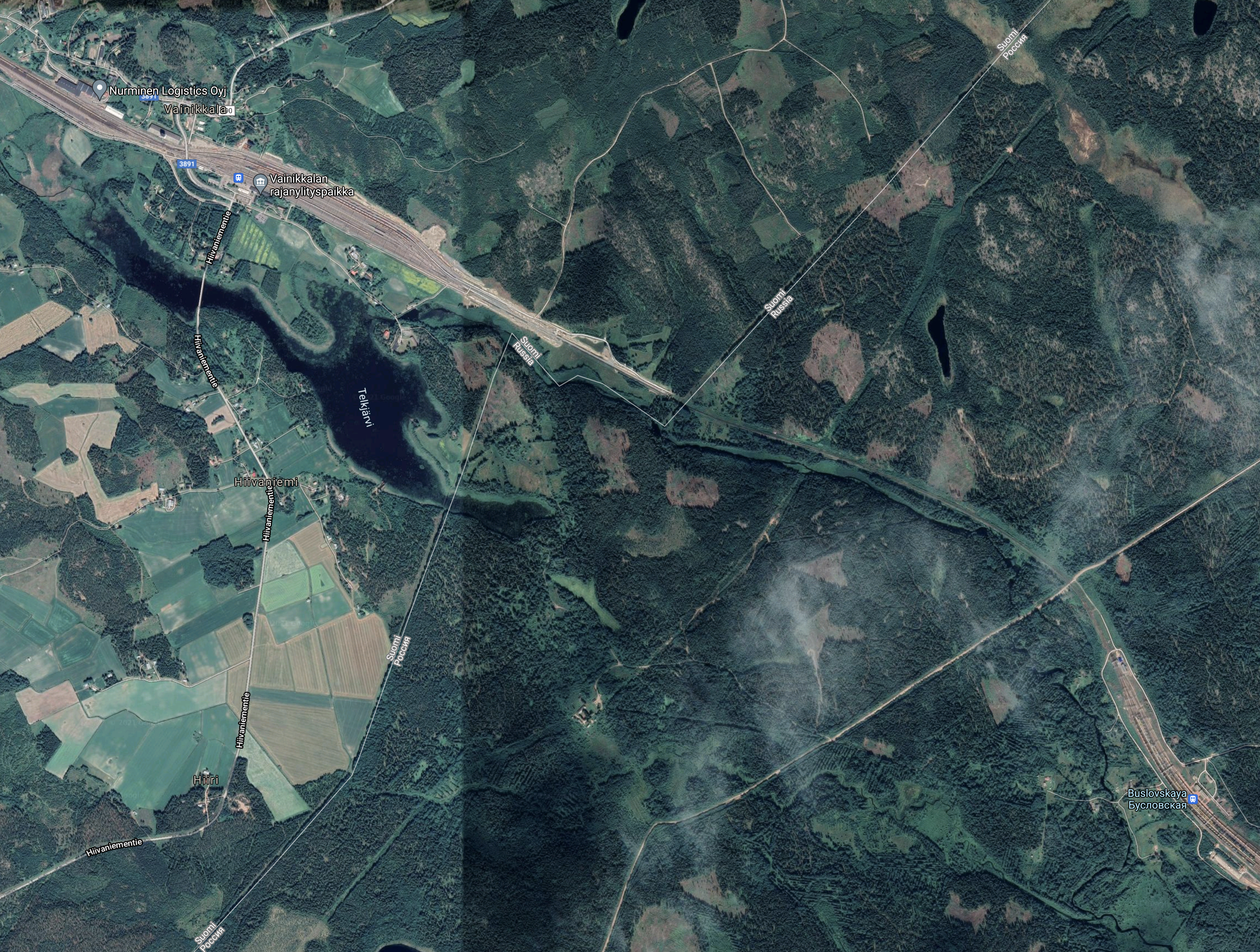
Note.
- The border running South-West and North-East across the map.
- The giant Finnish marshalling yard in the North-West.
- The large Russian marshalling yard in the South-East.
This Google Map shows the Finnish Marshalling yard at Vainikkala.
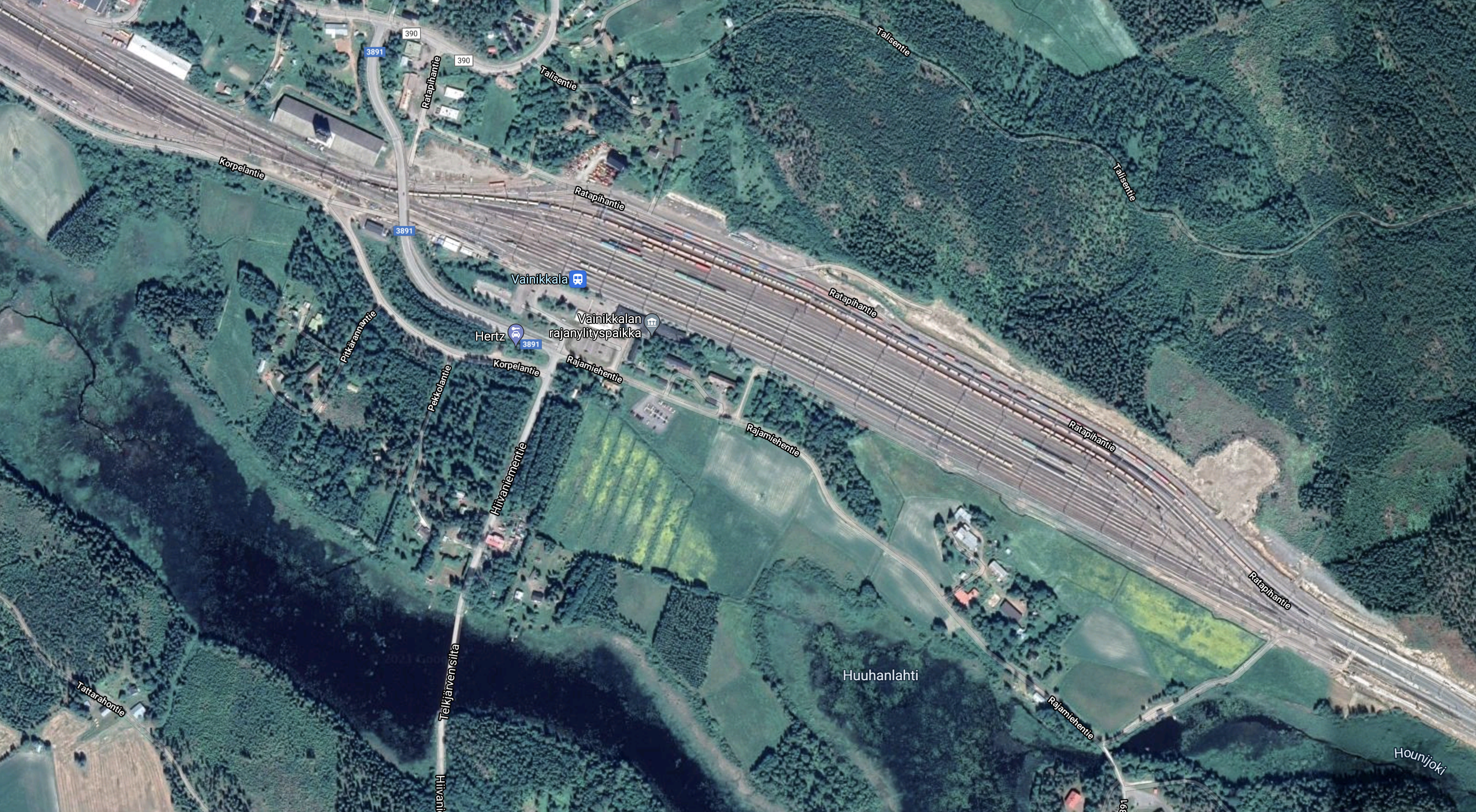
I estimate that the yard is over a kilometre in length.
Passenger Trains Between Helsinki And St. Petersburg
There is also a passenger service between Helsinki and St. Petersburg, that uses this route called Allegro, that usually runs thrice daily.
The trains are Alstom Pendolinos, specially designed for the route and are detailed in this section called Vehicles in the Allegro Wikipedia entry.
The journey time is just three and a half hours.
If you want to buy tickets, this page on The Man In Seat 61 gives all the details.
Conclusion
It looks like the Finns and the Russians have co-operated well to create a quality passenger and freight link between their two countries.
 The Anonymous Widower