New Train Service Connects Finland And Sweden For First Time In Decades
The title of this post, is the same as that of this article on the BBC.
This is the sub-heading.
A new passenger train linking Finland and Sweden has begun running, creating the first rail connection between northern Finland and southern Europe in nearly 40 years.
These three paragraphs add more detail.
Shortly after 05:00 local time (03:00 BST) on Monday, a double-decker train set off from the coastal Finnish city of Oulu, rumbling its way across the border to Sweden.
As the inaugural service crossed the Torne river from Finland and pulled into Sweden’s Haparanda station, it was met by crowds of people waving Finnish and Swedish flags.
The route was initially suspended in the late 1980s to the early 1990s, due to low passenger numbers and technical differences in the tracks between Finland and Europe.
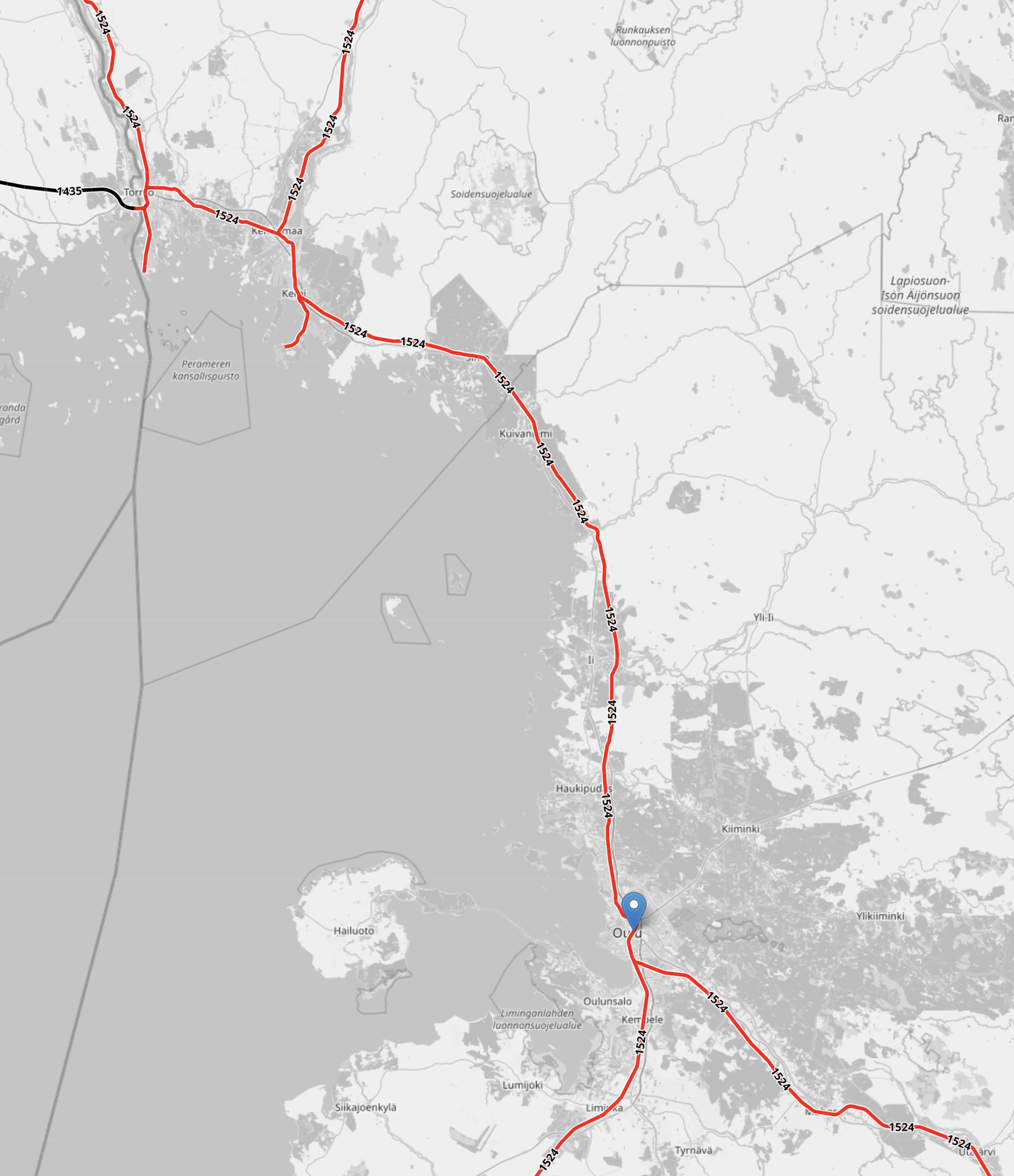
This OpenRailwayMap shows the route between Oulu and Haparanda stations.
Note.
- The map is drawn by track gauge.
- Finnish gauge tracks are shown in red.
- Swedish gauge tracks are shown in black.
- The location of Oulu in Finland is shown by the blue arrow.
- The location of Haparanda in Sweden is at the Eastern end of the black track in the North-Western corner of the map.
- The route seems very much along the coast.
- I wouldn’t be surprised that the sea views are excellent.
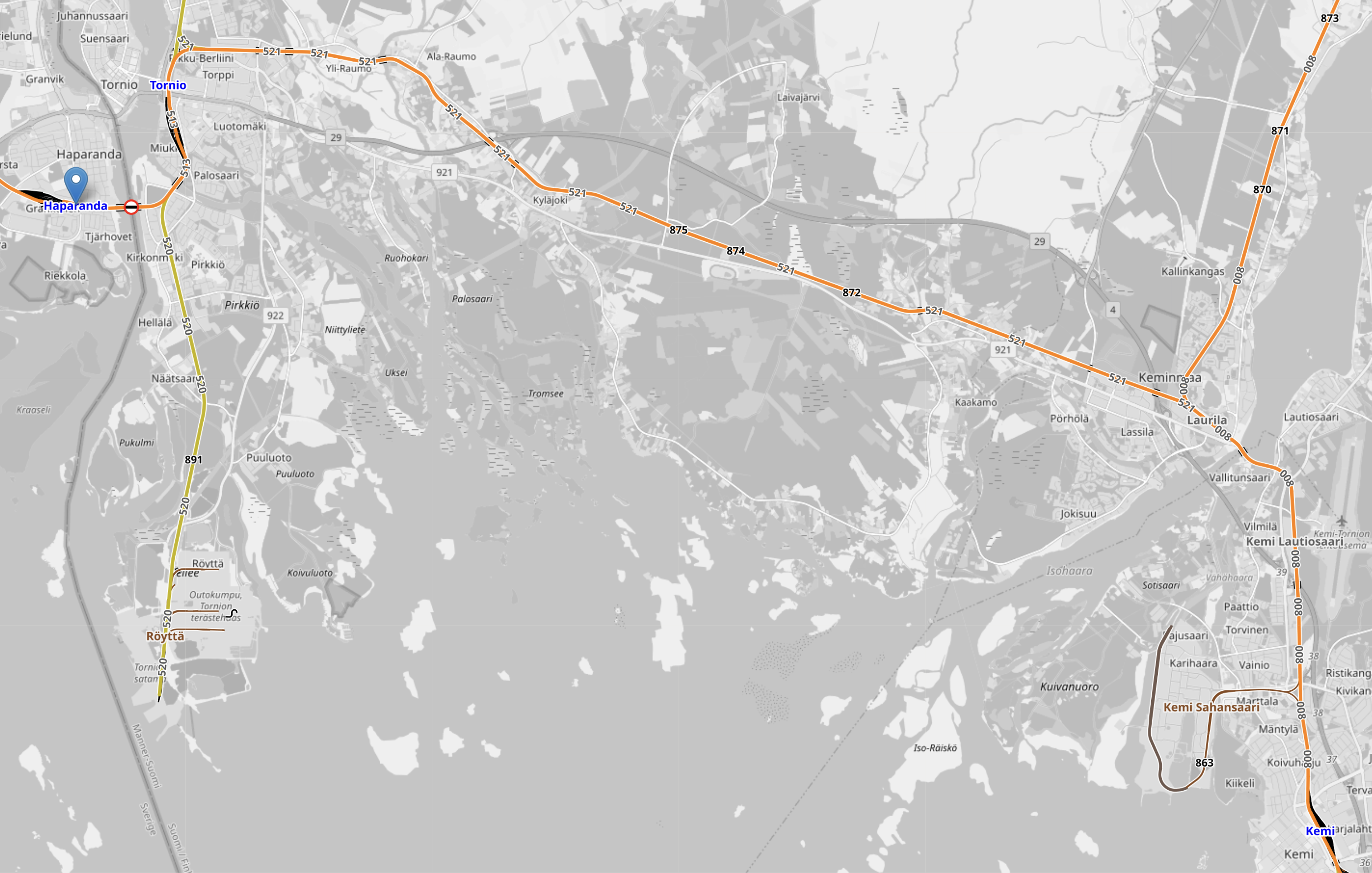
This second OpenRailwayMap shows the route between Kemi and Haparanda stations.
Note
- The location of Haparanda in Sweden is shown by the blue arrow.
- The location of Tornio in Finland is indicated by the blue lettering to the North-East of Haparanda.
- The location of Kemi in Finland is indicated by the blue lettering to the South-East corner of the map.
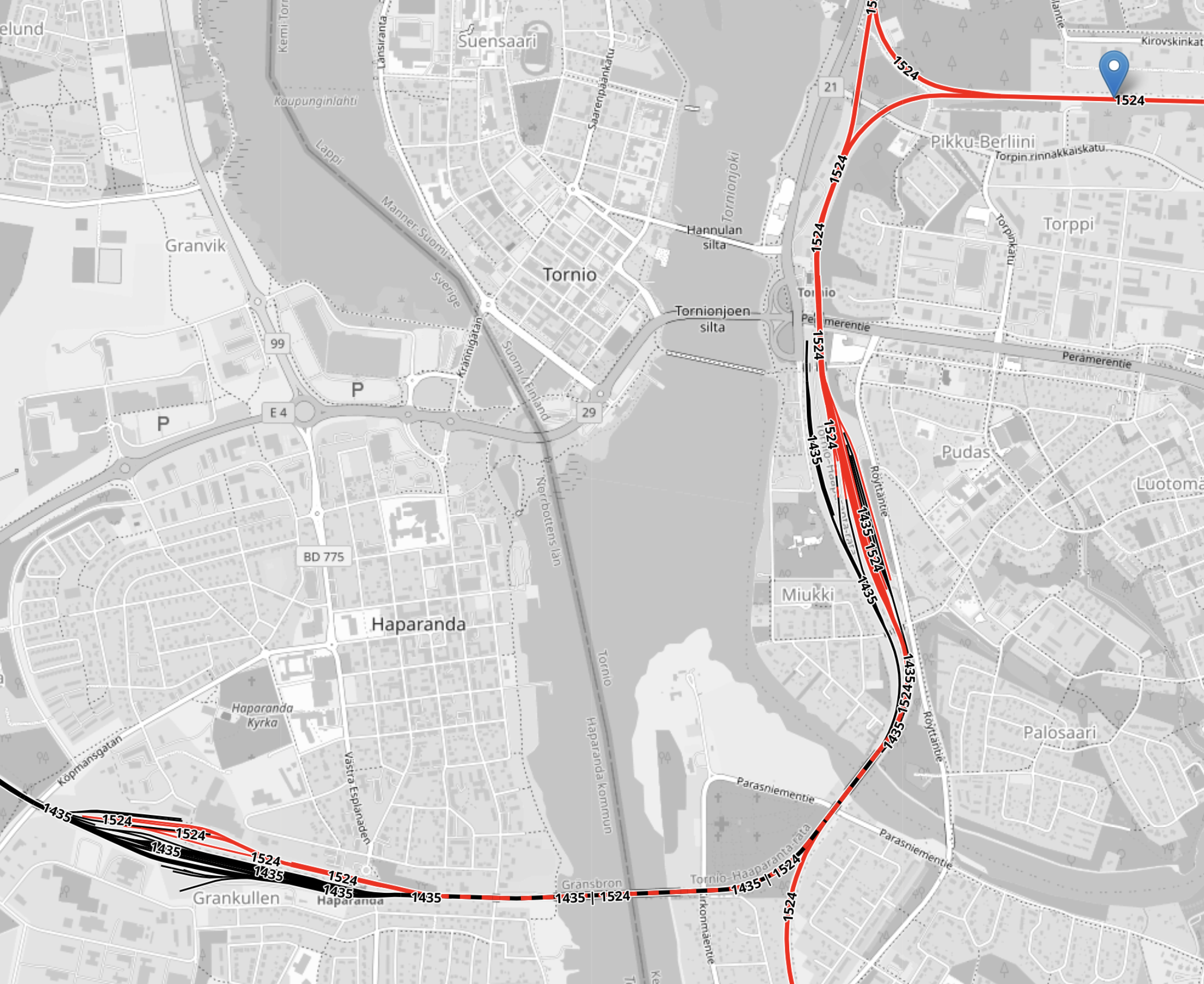
This third OpenRailwayMap shows the route between Tournio and Haparanda stations.
Note.
- The map is drawn by track gauge.
- Finnish gauge tracks are shown in red.
- Swedish gauge tracks are shown in black.
- The track to Oulu in Finland is shown by the blue arrow.
- Tornio station is by the marshalling yard on the Finnish side.
- Haparanda station is by the marshalling yard on the Swedish side.
- The track between Haparanda and Tornio is shown dashed red and black, as it accepts trains of both Finnish and Swedish gauges.
I have some thoughts.
Torne River Railway Bridge
This is is the first paragraph of the Wikipedia entry for the Torne River Railway Bridge.
The Torne River Railway Bridge is a dual gauge railway bridge on the Tornio–Haparanda railway between Haparanda, Sweden and Tornio, Finland; the bridge can be used by the 1524mm gauge trains of Finland, as well the 1435mm gauge trains used in Sweden. A temporary ice river track was built over the Torne River in 1917.
Note
How Do Trains Cross The Torne River Railway Bridge?
I asked Google AI the title of this section and received this answer.
Trains cross the Torne River Railway Bridge on dual-gauge tracks featuring four rails.
This setup accommodates both Finland’s wider 1,524 mm track gauge and Sweden’s standard 1,435 mm track gauge, allowing freight and specialized rail equipment to pass directly between Tornio, Finland, and Haparanda, Sweden, without stopping.
Bridge and Track Design
Dual-Gauge System: Four physical rails are laid on the bridge deck. They interlace the wide-gauge and standard-gauge tracks so different wheel sets fit.
Electrification: The 410-meter truss bridge and connecting line feature overhead catenary wires aligned with Finnish electric standards.
Control and Operations: Train movements across the bridge and its shared dual-gauge sections are managed by Finnish rail traffic control.
Cross-Border Travel
Freight Transport: Freight trains and containerized goods (such as shipments from Outokumpu) use the dual-gauge tracks to move directly between the marshalling yards of both countries.
Passenger Services: While regional passenger train connections operate across the border via the Tornio–Haparanda railway, regular passenger operations involve seamless station transfers at Haparanda rather than continuous through-running for all service types.
It is a simple but ingenious system.
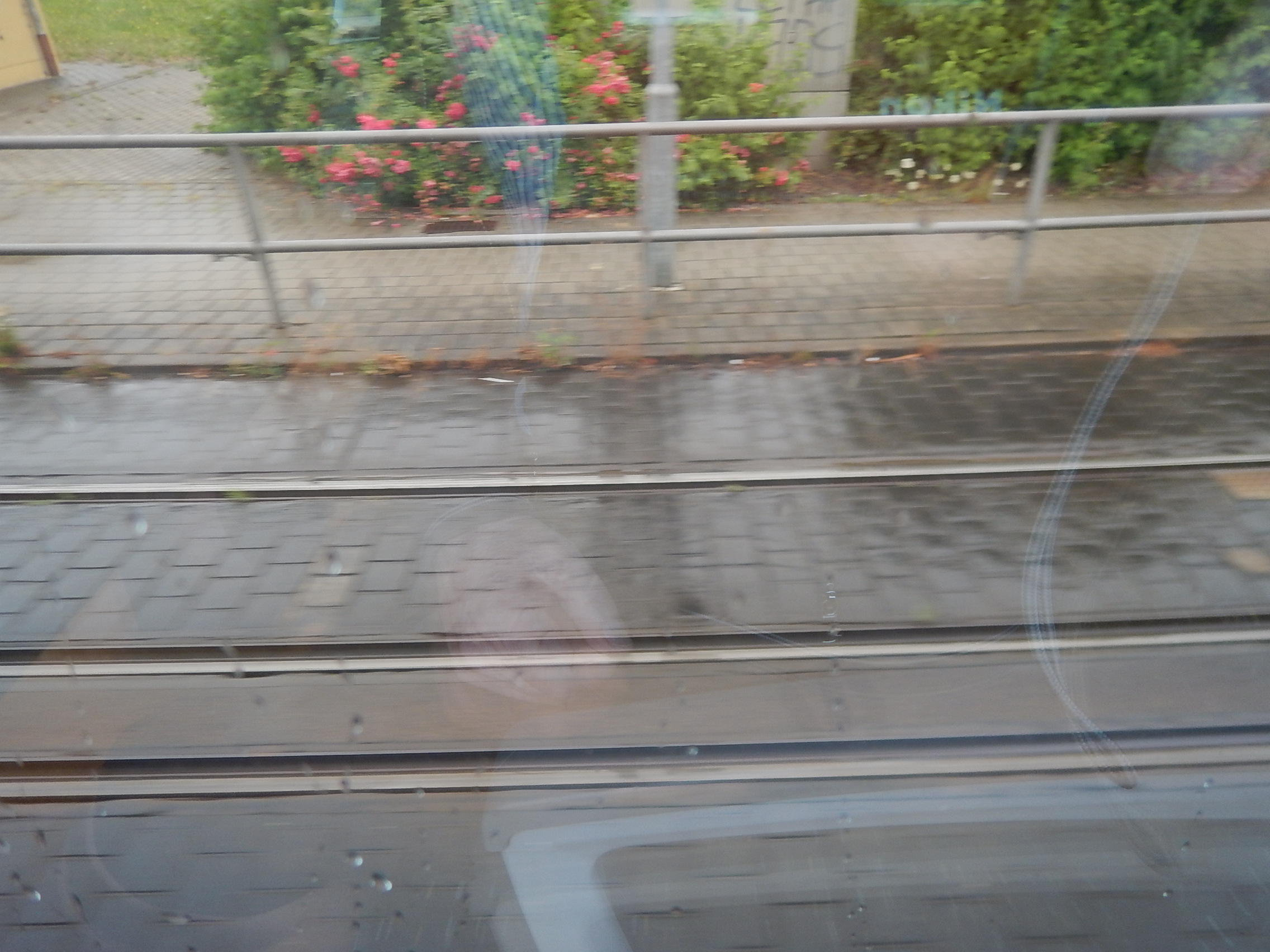
I’ve never seen one anywhere else, although I have ridden on the three rail track at Zwickau.
Note.
- Standard gauge trains use the two outer rails.
- Metre gauge trams use the two far rails, which are a metre apart.
- In the UK, all modern trams are standard gauge, so we don’t have the problem.
But say a narrow-gauge heritage railway wanted to connect into a standard gauge station, I’m sure that the Zwickau system could be used.
Do Other Bridges Use The Same Interleaved Dual Gauge Track As The Torne River Railway Bridge
I asked Google AI the title of this section and received this answer.
Yes, other rail locations use an interleaved dual-gauge track setup (technically known as a gauntletted or four-rail configuration) when two track gauges are too close together to share a common rail.
Why Interleaved Tracks are Used
Gauge Proximity: When the difference between two track widths is small (such as Finland’s 1,524 mm and European standard 1,435 mm, a difference of only 89 mm), a standard three-rail shared setup cannot fit the necessary rail-fastening hardware.
Space Constraints: Interleaving four separate rails inside the same restricted width allows different trains to cross narrow infrastructure like bridges or tunnels without building entirely separate parallel spans.
Examples of Similar Infrastructure
Russia-North Korea Border: The crossing over the Tumen River utilizes multi-gauge configurations to accommodate Russian broad gauge and standard gauge connecting to the port of Rajin.
Historical and Industrial Lines: Short interlaced stretches have been historically deployed on restricted-width civil engineering structures like the Boyne Viaduct in Ireland during structural renewals, or on specific quarry tramways (such as the Ravenglass and Eskdale Railway in the UK) to temporarily interchange standard and narrow gauge wagons.
Eurostar And Deutsche Bahn Advance Plans For Direct London to Germany High-Speed Trains
The title of this post, is the same as that, of this article on Global Railway Review.
This is the sub-heading.
Eurostar and Deutsche Bahn have signed an MoU to pursue direct high-speed trains linking London with Cologne and Frankfurt from early 2030s
These three paragraph add some extra details.
Eurostar and Deutsche Bahn (DB) have formally begun work on establishing a direct high-speed train link between London and Germany after signing a Memorandum of Understanding (MoU) in early December. The development aims to introduce non-stop long-distance passenger services between the UK and major German cities including Cologne and Frankfurt, potentially from the early 2030s.
The service would cut journey times to around four hours between London and Cologne and just over five hours to Frankfurt, delivering a direct city centre-to-city centre connection with no interchange. The routes would use Eurostar’s forthcoming Celestia fleet, a double-deck high-speed train offering 20% additional capacity and up to 50% energy savings.
This announcement comes just over a month after the Office of Rail and Road (ORR) approved Virgin Trains’ access to the Temple Mills International depot in East London, adding fresh momentum to plans for new cross-border services through the Channel Tunnel.
These are my further thoughts.
Is There A Brussels And Frankfurt High Speed Line?
I asked Google AI, the question in the title of this section and received this reply.
Yes, direct high-speed trains run between Brussels and Frankfurt. The journey takes about 3 hours and 20 minutes, operated by Deutsche Bahn using ICE (Intercity Express) trains.
Route and Service Details
Train Type: German ICE high-speed trains.
Travel Time: Fastest trips take roughly 3 hours and 19 minutes.
Frequency: Around 7 direct trains run each day.
Key Stops: Liège-Guillemins, Aachen Hbf, and Cologne (Köln) Hbf.
Note.
- It looks like the London and Brussels service is being extended to Frankfurt.
- There doesn’t seem to be much new infrastructure.
- Eurostar currently takes seven minutes under two hours between London and Brussels.
Using the same Celestia trains by both Eurostar and Deutsche Bahn surely makes sense operationally.
Do German High Speed Trains Run Between Frankfurt And Berlin?
I asked Google AI, the question in the title of this section and received this reply.
Yes, German high-speed ICE (Intercity Express) trains run direct routes between Frankfurt (Main) Hauptbahnhof and Berlin Hauptbahnhof. The fastest non-stop services take about 3 hours and 43 minutes, reaching speeds up to 300 km/h (186 mph) over a distance of roughly 262 miles (422 km).
Route and Schedule Details
Frequency: Direct trains run hourly or more during peak times, with dozens of daily departures.
Speed/Type: Operated by Deutsche Bahn, standard ICE trains and select high-speed ICE Sprinter services manage the corridor.
Stops: Many services run non-stop or make brief stops at major hubs like Erfurt or Halle depending on the specific schedule.
Note.
- A London and Berlin service would only require one change of train at Frankfurt.
- There doesn’t seem to be much new infrastructure.
With a good cross-platform interchange in Frankfurt, I estimate that the journey could be slightly less than nine hours.
Onward To Warsaw And Beyond
This is the first paragraph of the Wikipedia entry for Rail Baltica.
Rail Baltica is an under-construction rail infrastructure project that is intended to integrate the Baltic states in the European rail network. The project envisages a continuous rail link for passenger and freight services with stations from Tallinn (Estonia) to Warsaw (Poland), via Pärnu (Estonia), Riga (Latvia) and Kaunas (Lithuania), with two branches extending from the main line towards Riga International Airport and Vilnius (Lithuania). Its total length in the Baltic states is 870 kilometres (540 mi), with 213 kilometres (132 mi) in Estonia, 265 kilometres (165 mi) in Latvia, and 392 kilometres (244 mi) in Lithuania.
It is an ambitious project.
This map shows the routes.
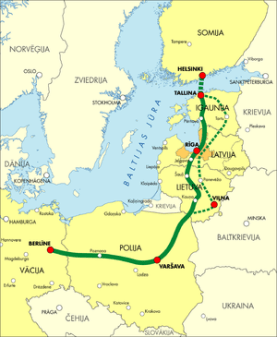
Note.
- I believe that the map is in Latvian.
- Rail Baltica is shown as starting from Berlin in Germany.
- A possible extension to Helsinki is shown, which would require a tunnel.
- Ukraine is shown in the South-East corner of the map.
- Part of Belarus is above Ukraine, with part of Russia above it.
If Ukraine joins the EU, then I’m certain that there could be a Warsaw-Kiev branch.
When Will Rail Baltica Be Open Between Warsaw and Tallinn?
I asked Google AI, the question in the title of this section and received this reply.
The Rail Baltica high-speed line between Warsaw and Tallinn is scheduled for an initial operational opening by 2030. According to the European Commission’s phased milestones, a functional single-track, electrified connection from Tallinn through Latvia and Lithuania down to the Polish border will be completed by 2030, enabling initial passenger services.
Project Timeline & Phasing
2030 Target: Completion of Phase 1, providing a continuous single-track operational line across the Baltic states connecting to Poland.
Full Buildout (Double-Track): Full expansion to a double-track network will continue past 2030, dependent on subsequent funding availability.
Public Sentiment: Opinions on the r/BalticStates subreddit are mixed, with some observers skeptical about meeting the tight 2030 deadline due to previous setbacks, while others note visible construction acceleration driven by EU oversight.
Expected Travel Benefits
Travel Time: Reduces the journey between Tallinn and Warsaw to just over 6 hours.
I would certainly love to be able to ride a train from London St. Pancras to Tallinn.
Putin Won’t Like It!
He probably believes that all railways East of Berlin should be Russian gauge.
But what are the odds, he has an untimely accident?
Conclusion
I believe that if Eurostar to Frankfurt can create a rail route between the UK and Finland and the Baltic States, it will create large amounts of growth in tourism all over Europe.
There are also two projects with similar completion dates.
- Eurostar to Germany aims to introduce non-stop long-distance passenger services between the UK and major German cities including Cologne and Frankfurt, potentially from the early 2030s.
- Completion of Phase 1 of Rail Baltica, providing a continuous single-track operational line across the Baltic states connecting to Poland has a 2030 target.
I believe competition between the two groups will mean both are on time.
What Is Putin’s Attitude To Rail Baltica?
Rail Baltica is a railway that the EU is building between Warsaw in Poland and Helsinki in Finland.
This is the first paragraph of the railway’s Wikipedia entry, which gives an outline of the route.
Rail Baltica is an under-construction rail infrastructure project that is intended to integrate the Baltic states in the European rail network. The project envisages a continuous rail link for passenger and freight services with stations from Tallinn (Estonia) to Warsaw (Poland), via Pärnu (Estonia), Riga (Latvia) and Kaunas (Lithuania), with two branches extending from the main line towards Riga International Airport and Vilnius (Lithuania). Its total length in the Baltic states is 870 kilometres (540 mi), with 213 kilometres (132 mi) in Estonia, 265 kilometres (165 mi) in Latvia, and 392 kilometres (244 mi) in Lithuania.
The second paragraph explains the history of the railway gauge in the area
Rail Baltica will build the first large-scale mainline standard gauge railway in the region. Rail networks in Estonia, Latvia and Lithuania mainly use Russian gauge (1,520 mm). These countries’ first railways were built in the second half of the 19th century as part of the Russian Empire rail network. While some railways were built or converted to narrow or standard gauge in the Interwar period between World War I and World War II in the independent or German-occupied Baltic states, these were later converted back to Russian gauge under Soviet occupation rule after 1945.
The Russians do seem to be protective of their gauge.
The third paragraph gives the current status of the project.
As of 2025, the completion of the phase 1 single-track railway from Tallinn through Latvia (Riga) to the Lithuania-Poland border is scheduled for 2030, with completion of the double track railway to follow dependent on funding. Rail Baltica is one of the priority projects of the European Union (EU). It is part of the North Sea–Baltic Corridor of the Trans-European Transport Networks (TEN-T) and it is also intended as a catalyst for building the economic corridor in Northeastern Europe. It has also been proposed to extend Rail Baltica to include an undersea railway tunnel between Tallinn and Helsinki. By 2024, the estimated cost of the project had increased from €5.8 billion in 2017 to €23.8 billion (at 2023 prices).
These are some characteristics of the railway.
Terminals: Warsaw and Helsinki.
Countries Served: Poland, Lithuania, Latvia, Estonia and Finland
Intermediate Stations: 8.
Electrification: 25 kV 50 Hz AC overhead line.
Operating Speed: Passenger – 145 mph.
Freight – 75 mph.
Signalling: ERTMS – L2
Putin’s Attitude To Rail Baltica
Although, I can’t talk to Putin about this, I’m sure Google AI can give us a good idea.
I asked Google AI,”What Is Putin’s Attitude To Rail Baltica?” and received this answer.
Vladimir Putin’s attitude toward Rail Baltica is one of deep hostility, viewing the 500-mile high-speed railway as a strategic, military, and infrastructural threat to Russian influence in the region.
The project, which aims to integrate the Baltic States (Estonia, Latvia, and Lithuania) with the European rail network, is seen by Moscow as an effort to sever ties with the former Soviet bloc and solidify NATO’s presence on Russia’s border.
Key Aspects of Putin’s Opposition:
Military Threat Assessment: The Kremlin views Rail Baltica not just as a civilian project, but as a crucial logistical tool for NATO to swiftly transport troops and equipment to the Baltic region, strengthening the “eastern flank” that Russia challenges.
Destabilizing Russian Sphere of Influence: Moscow perceives the integration of the Baltic States into the European infrastructure system as a direct challenge to its influence and an “imperial project” aiming to detach them further from the post-Soviet space, which Putin seeks to keep within Russia’s sphere of influence.
“Putin-Proofing” the Baltics: The project is explicitly recognized by Baltic officials as a way to “Putin-proof” their countries against Russian aggression by reinforcing their security and economic autonomy, a move the Kremlin strongly opposes.
Infrastructure Isolation: The project enables the Baltic States to shift away from the Russian gauge track (1520mm) to the European standard (1435mm), decreasing their dependency on Russian logistical infrastructure.
While the Russian state has not issued daily commentary on the railway, its overarching aggressive posture toward the Baltics, including threats to Lithuania over transit to the exclave of Kaliningrad and the use of hybrid operations in the region, indicates a fundamental opposition to projects that deepen Western integration, such as Rail Baltica.
Klaipėda – Kyiv Rail Freight Plan
The title of this post, is the same as that of this article on Railway Gazette.
These two paragraphs give more details.
Lithuania’s national train operator LTG Group and Ukrainian Railways have signed a memorandum of understanding to develop an intermodal freight service from the Baltic port of Klaipėda to Kyiv via Poland.
Test runs are planned for this year, ahead of regular services.
I have some thoughts.
The Route
This Google Map shows the route.
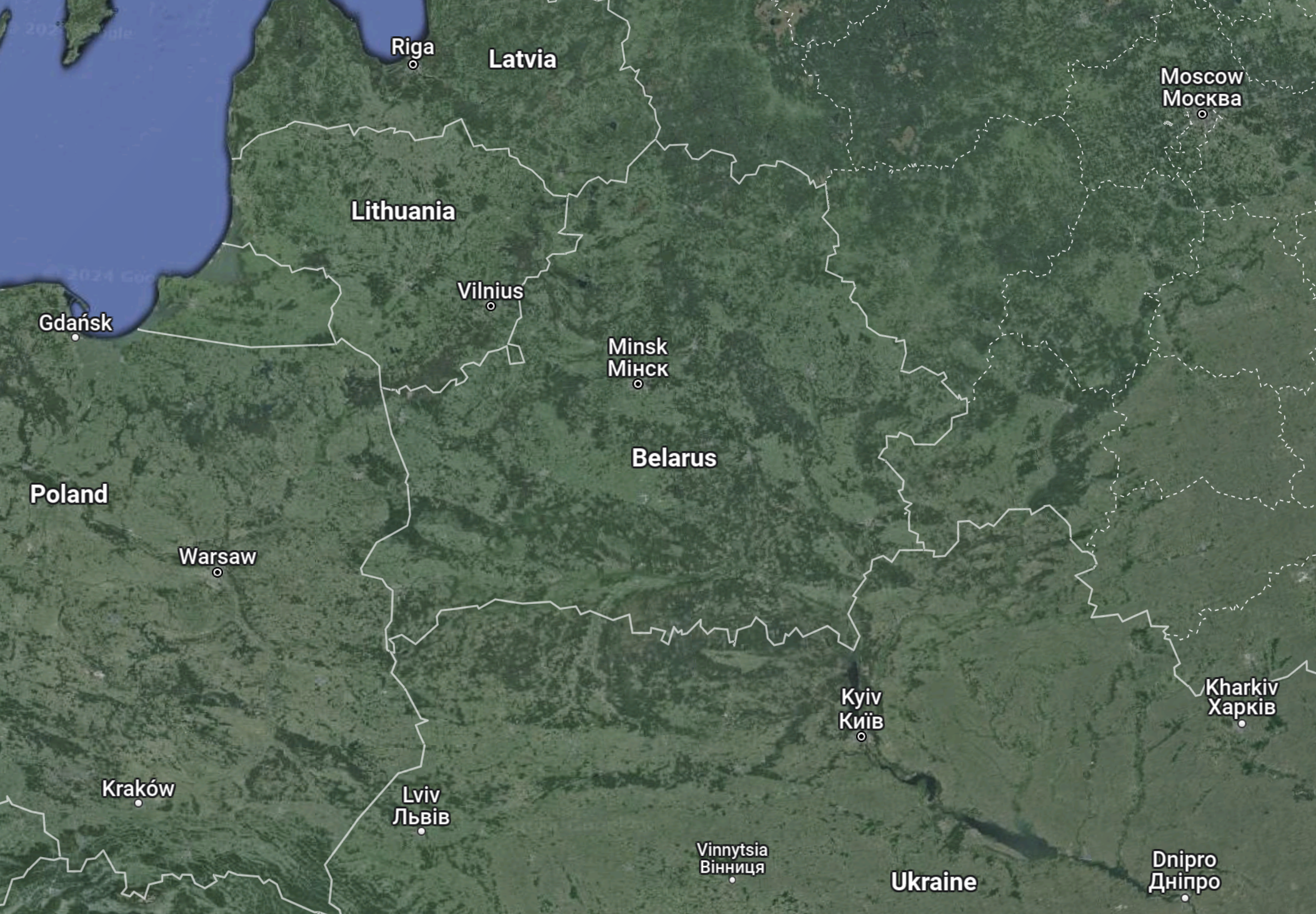
Note.
- Russia is in the North-East corner of the map, with Moscow clearly marked.
- Lithuania is in the North-West corner of the map.
- Klaipėda is on the Lithuanian coast.
- South-West of Lithuania is the Kaliningrad enclave, which is part of Russia.
- South of the Kaliningrad enclave is Poland, where Gdansk, Warsaw and Krakow are clearly marked.
- Belarus is in the middle of the map, with Minsk clearly marked.
- Ukraine is South of Russia and Belarus and East of Poland.
- Dnipro, Kharkiv, Kyiv and Lyiv in Ukraine are clearly marked.
It looks to me, that a possible route would be along the Eastern Polish Border avoiding both Belarus and the Kaliningrad enclave.
The Gauges
This Google Map shows the gauges between Klaipėda and Kyiv.
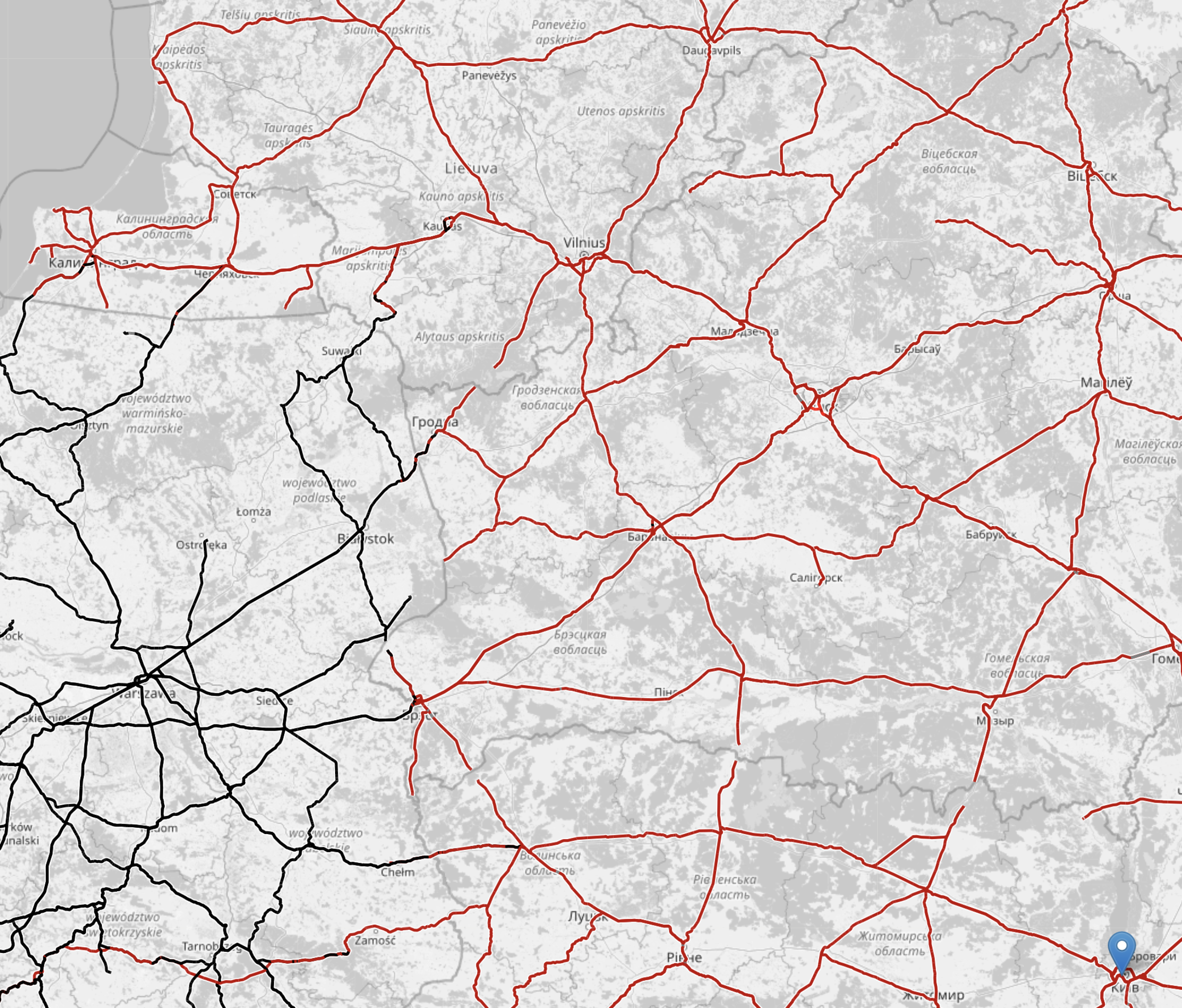
Note.
- Black tracks are Standard gauge of 1435 mm.
- Red tracks are Russian gauge of 1520 mm.
- Klaipėda is on the Lithuanian coast in the North-West corner of the map.
- Kviv is in the South-East corner of the map.
It looks to me, that although Lithuania and Ukraine are Russian gauge, the routes through Poland could be standard gauge.
So there may be a need for some rolling stock, that can run on both Russian and Polish gauges.
This article on Railway Gazette is entitled Ukrainian Railways Produces Cross-Border Grain Wagon.
These two paragraphs describe the wagons.
National railway Ukrzaliznytsia has used mostly domestic components to produce a grain hopper wagon which can operate on both the former USSR’s 1 520 mm broad gauge and the 1 435 mm standard gauge of neighbouring EU countries.
The Type 19-8005-U wagon has a capacity of 70 tonnes and 104 m3, with five loading and six unloading hatches. It is designed for operation at up to 120 km/h.
The wagon certainly looks professional in the pictures.
I don’t think that dual-gauge wagons for containers will be a serious engineering problem for the Ukrainians.
Rail Baltica
The Wikipedia entry for Rail Baltica has this introduction.
Rail Baltica is an under-construction rail infrastructure project that is intended to integrate the Baltic states in the European rail network. Its purpose is to provide passenger and freight service between participating countries and improve rail connections between Central and Northern Europe, specifically the area southeast of the Baltic Sea.
Note.
- As it is an EU-funded project, it is being built as standard gauge.
- It is being built with operating speeds of 145 mph for passengers and 75 mph for freight trains.
- There will be comprehensive connections to airports, freight terminals and major conurbations.
This page on the Rail Baltica web site has an interactive map of Rail Baltica.
It is thought that Putin is not pleased about Rail Baltica, as his extensive fleet of rail transporters for tanks and other military vehicles, are now built for the wrong gauge to invade the Baltic States.
Putin And Dual-Gauge Tracks And Wagons
As they could be used to bring war-related imports to Kyiv, I suspect Vlad the Genocider is against them.
How Will Ukraine Protect The Trains?
Consider.
- Being West of Kyiv will help.
- I suspect the UK have a few ideas for camouflage.
- Will a few brave Ukrainians ride the trains, with a sophisticated train protection missile?
- Drones probably won’t be as effective as ground attack aircraft at attacking trains.
I do suspect though that the Ukrainians have a plan.
Conclusion
This is going to be an interesting development.
Containerised Coal Overcomes The Break-Of-Gauge
The title of this post, is the same as that of this article on the Railway Gazette.
Innofreight containers are being transferred from broad to standard gauge trains as part of a through journey for the first time.
Russia’s attack on Ukraine has forced Poland to seek alternatives to Russian coal, but Polish ports have limited capacity to handle the required volumes.
As a result, coal is being imported via the Lithuanian port of Klaipėda. LTG Cargo’s 1 520 mm gauge trains are loaded with 60 Innofreight MonTainer XXL bulk goods containers of coal for transport to Kaunas or Šeštokai, where the containers are transferred to 15 standard gauge InnoWagons for onward transport to Braniewo in Poland.
It sounds like a simple solution, with advantages.
Innofreight says that this is faster than discharging the coal from one train and reloading it onto another, and also avoids creating dust.
On their home page, Innofreight describe themselves like this.
The focus of our corporate activity is the development of innovative wagons, containers and unloading systems for and in cooperation with our customers.
Certainly after the war in Ukraine is finished, there should be a large market for dual-gauge systems like that being used to get coal to Poland.
Amber Train Links The Baltic States To Western Europe
The title of this post, is the same as that of this article on Railway Gazette.
These paragraphs outline the freight link.
A trial Amber Train service between the Baltic States left the Estonian port of Muuga on September 13, arriving the following day at Kaunas in Lithuanian where its load of semi-trailers was transferred to 1 435 mm gauge wagons for onward transport to destinations including France and the Netherlands.
The 1 520 mm gauge wagons returned to Muuga with trailers for onward sea transport to Finland.
This Google Map shows the Estonian port of Muuga Harbour.
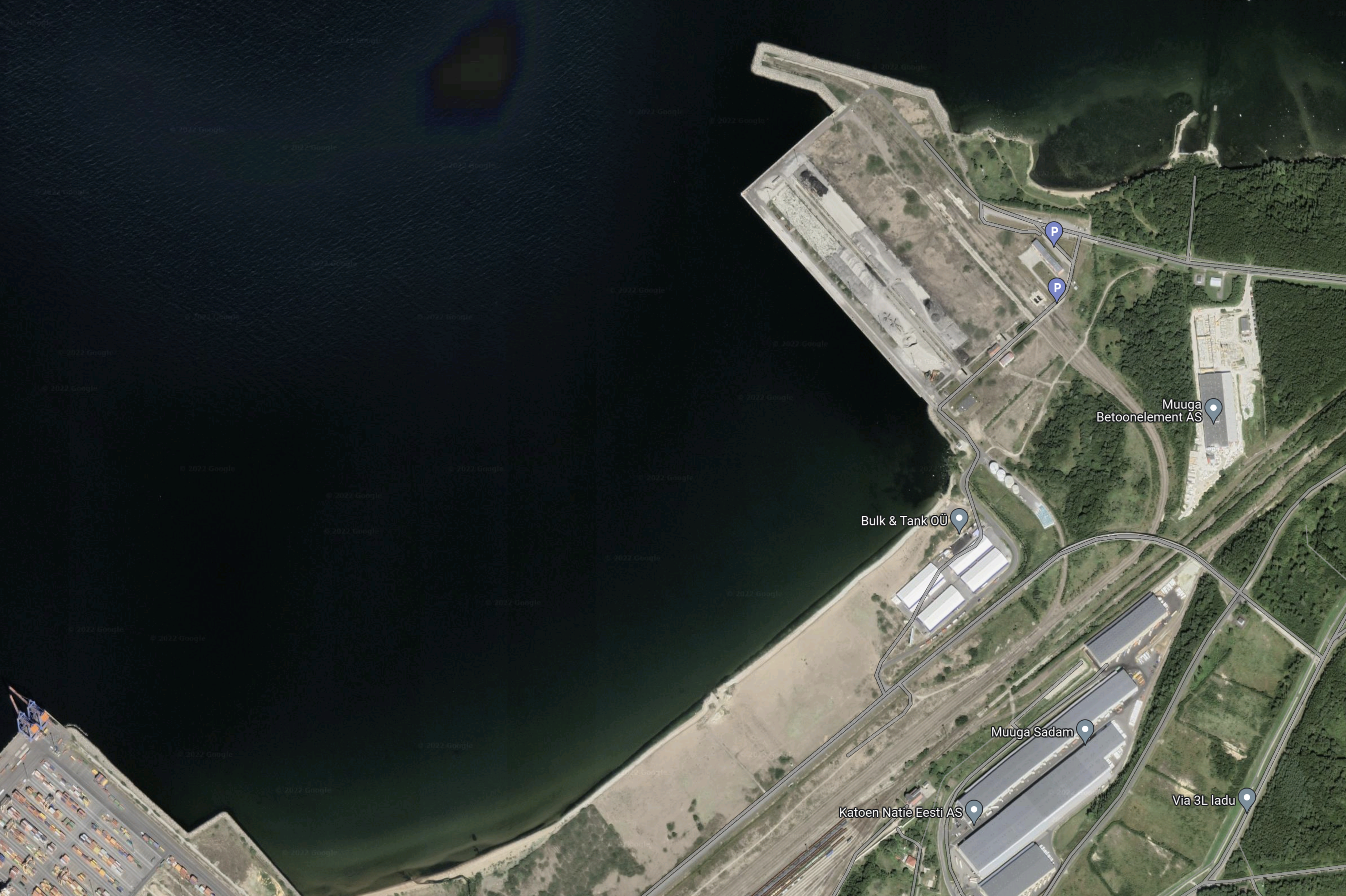
Note.
- Muuga Harbour is the largest cargo port in Estonia, located on the southern coast of the Gulf of Finland, 17 kilometres (11 mi) northeast of the capital Tallinn
- It is one of the few ice-free ports in northernmost Europe and one of the most modern ports in the Baltic Sea region.
- Enlarging the picture shows a lot of rail lines.
It looks like Muuga Harbour is an ideal Northern terminus for the Amber Train freight service.
This Google Map shows the area of the Kaunus Intermodal Terminal.
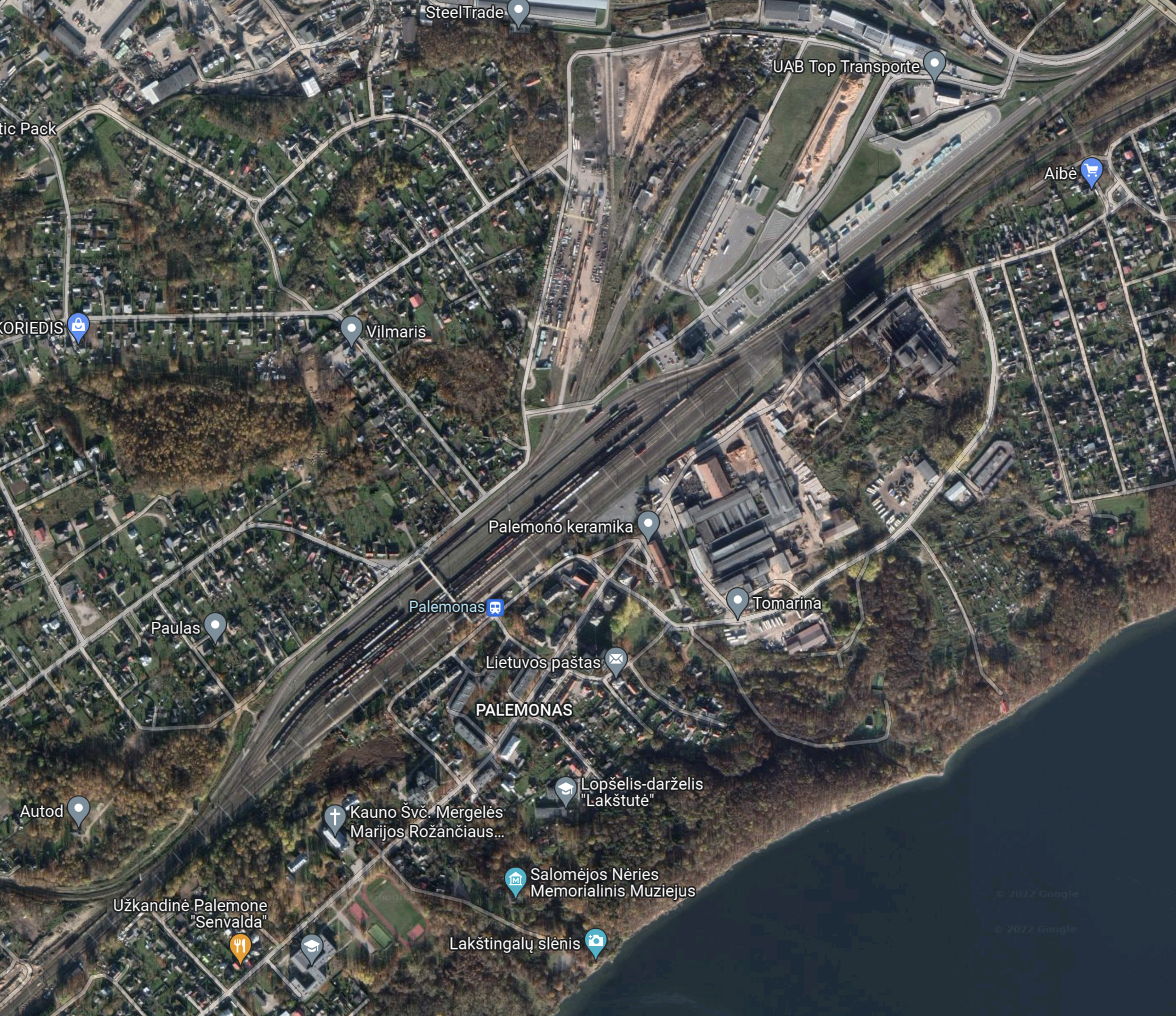
Note.
- The railway runs diagonally across the map.
- Estonia is to the North-East.
- Poland is to the South-West.
This map shows how the different gauges are used in the North-East of the previous map.
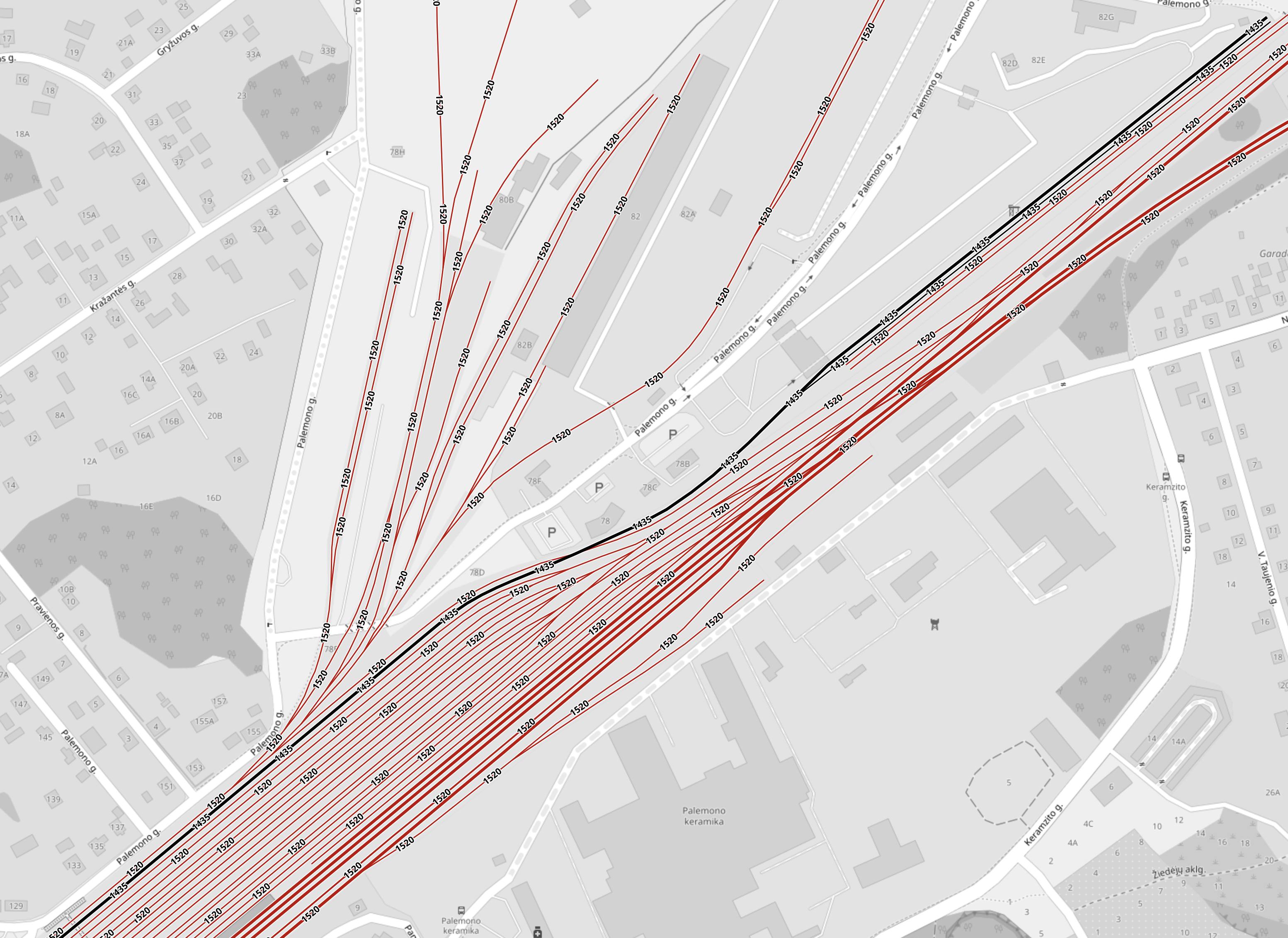
Note.
- Standard gauge tracks are shown in black.
- Russian gauge tracks are shown in red.
- The standard gauge track ends in the North-East corner of the map.
Trucks would probably moved between trains on parallel tracks in this freight terminal.
It appears to be a very simple way to run piggy-back trains of trucks between The Baltic States and Finland and Central and Western Europe.
Rail Baltica
According to Wikipedia, the location for the Kaunas Intermodal Terminal was chosen as it is compatible with the route of Rail Baltica, which will create a new standard gauge route between Kaunas and Tallinn in Estonia.
The Amber Train
The Amber Train has an impressive web site, where this is said on the home page.
Amber Train is a joint project of the national railways of Lithuania, Latvia and Estonia. It is an excellent example of cooperation, that offers road and railway clients convenient and efficient freight logistics.
Amber Train is an intermodal train, which runs on the route Šeštokai / Kaunas – Riga – Talinn, thus connecting the three Baltic States by railways and opening new business opportunities for freight shippers.
Exclusivity of the project is the connection of Western and North Europe, using the unique Šeštokai and Kaunas intermodal terminals, which enable the transshipment of freight from the European gauge to the 1520 mm gauge and vice versa.
The train is planned to run 2 times per week (with a future perspective to run up to 4 times per week), delivery time is 24 hours. Train length – up to 43 container wagons.
It is planned, that already in 2021 customers will be offered the opportunity to transport semi-trailers by railways via all three Baltic States. For this purpose, special “pocket” wagons are already in production.
Operations are managed by AB LTG Cargo (Part of Lithuanian Railways group), Latvia’s LDZ Loģistika and Estonia’s Operail.
It appears to be a well-thought out service.
A few years ago, I was on the roads of North-East Poland, about a hundred miles South of Kaunas.
These roads were crowded with large trucks going between The Baltic States and Finland and Central and Western Europe.
I suspect that once the Amber Train is fully established, a proportion of these trucks will go by rail.
 The Anonymous Widower