Ocean Winds Enters Lease Agreement With Crown Estate For 1.5 GW Celtic Sea Floating Wind Project
The title of this post, is the same as that of this article on offshoreWIND.biz.
This is the sub-heading.
Ocean Winds has entered into an agreement for lease with the Crown Estate for a 1.5 GW floating offshore wind project, for which the developer secured a site in the Round 5 seabed auction last year.
These two paragraphs add detail to the story.
Offshore Wind Leasing Round 5, the UK’s first dedicated floating wind seabed leasing round, was launched in February 2024, offering three areas. In June 2025, the Crown Estate announced Equinor and Gwynt Glas, a joint venture between EDF and ESB, as preferred developers for two project sites and said it was working to ensure the delivery of the full potential capacity of Round 5, which is up to 4.5 GW.
Equinor and Gwynt Glas entered into lease agreements for their floating wind projects in October 2025 and, the following month, the Crown Estate said Ocean Winds had secured the third floating offshore wind site in the Celtic Sea.
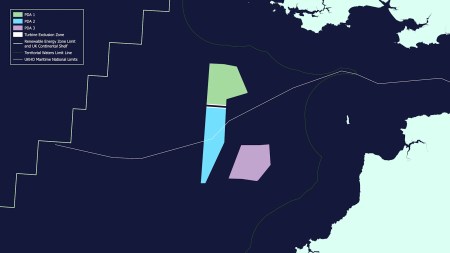
This map shows the three wind farms, that make up the Glynt Glas wind farm.
Note.
- It is expected to be built from and connect to the grid at Port Talbot in South Wales.
- The three sites are expected to be commissioned by the early-to-mid 2030s.
- The elongated white dot to the East of the wind farms would appear to be Lundy Island.
- The large bay to the North of Lundy is Carmarthen Bay with Caldey Island at its West end and Llanelli on its East.
- The Gower separates Swansea Bay from Carmarthen Bay.
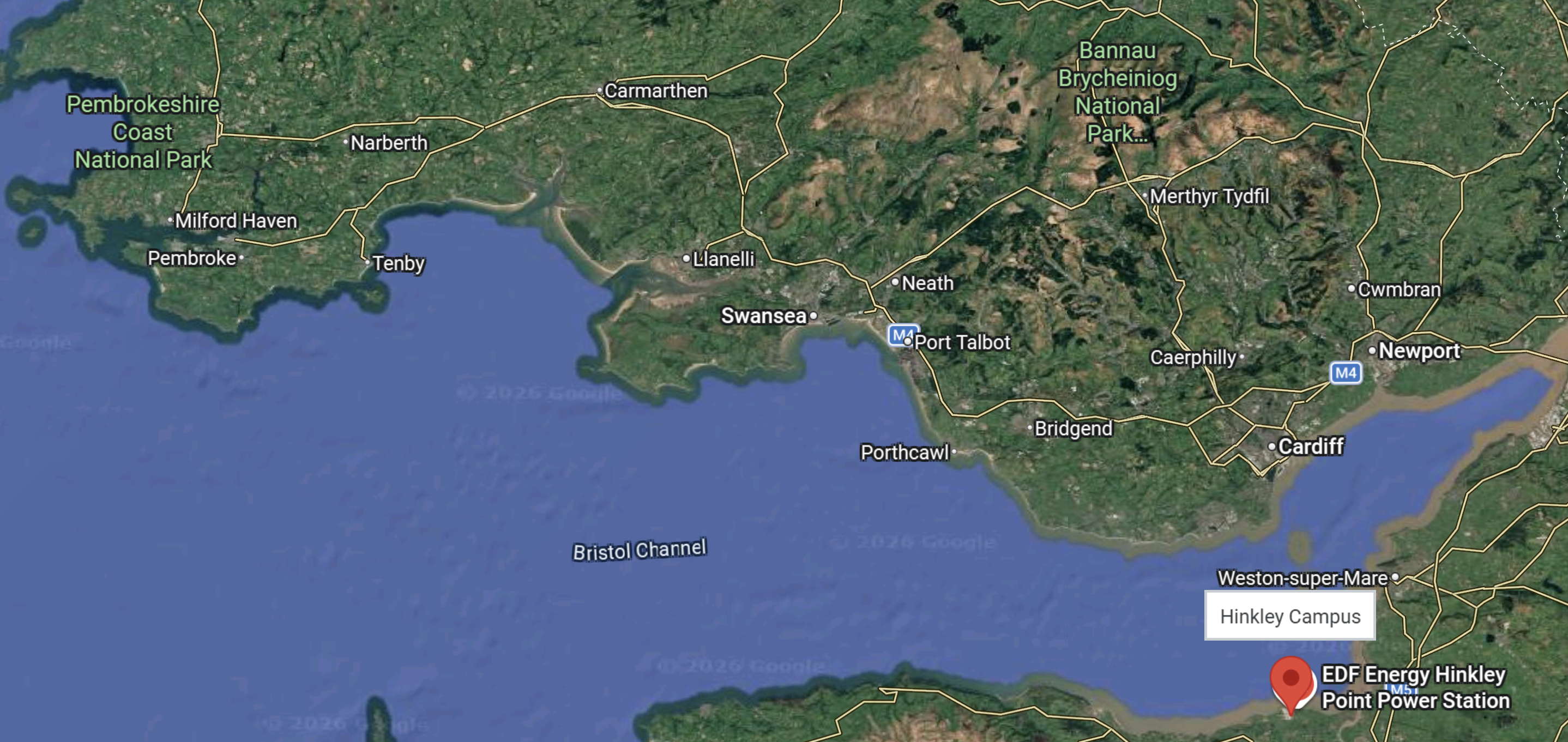
This Google Map shows the Bristol Channel from the wind farms in the West to Cardiff and Hinkley Point.
Note.
- Along the North coast of the Bristol Channel, working from West to East, my 78-year-old eyes can pick out Milford Haven, Pembroke, Caldey Island, Tenby, Llanelli, Swansea, Port Talbot, Porthcawl, BridgendCaerphilly, Cardiff and Newport.
- Coming back along the South Coast, I can see Weston-super-Mare, Hinkley Point C and the tip of Lundy Island in line with Tenby.
- The three sections of Glynt Glas will each generate 1.5 GW, making a total of 4.5 GW.
- Hinkley Point C when completed, will be a 3.26 GW nuclear power station.
- There is also a 2.2 GW gas-fired power station at Pembroke.
Nearly 8 GW of renewable electricity should be enough to convert Port Talbot steelworks to the manufacture of green steel.
How Much Wind Power Is Planned For The Western Approaches?
I asked Google AI, the title of this section and received this answer.
The UK has a target of 50 GW of offshore wind by 2030, with significant projects planned for the Celtic Sea (part of the Western Approaches), which is a key area for 5 GW of floating wind. Total UK offshore wind pipeline capacity exceeds 93 GW, with major developments in this region focusing on floating technology.
Key details regarding wind power in the Western Approaches (specifically the Celtic Sea) include:
Celtic Sea Developments: The area is a primary focus for floating wind projects, designed to capitalize on deep-water potential, with 5 GW of floating wind expected to be deployed across the UK by 2030.
Pipeline and Capacity: The total UK pipeline for offshore wind, which includes the Western Approaches, is 93 GW, and the government is aiming for 43-50 GW of installed offshore capacity by 2030.
Project Status: The region is expected to benefit from the Crown Estate’s leasing rounds aimed at accelerating floating wind, with 15.4 GW of new projects submitted across the UK in 2024.
Wales/South West England Context: Wales has 1.4 GW of projects in the pre-application stage, with some potential for developments off the South West coast.
For more detailed information on specific projects and their development status, you can visit the RenewableUK website and RenewableUK website.
It looks like about 20 GW of offshore wind could be installed in the Western Approaches.
All Five Halted US Offshore Wind Farms Resume Construction
The title of this post, is the same as that of this article on offshoreWIND.biz.
This is the sub-heading.
All five US offshore wind farms under construction that received stop-work orders from the US government have been cleared to continue building, with Ørsted’s Sunrise Wind project the fifth project to be granted a preliminary injunction as part of a lawsuit challenging the order issued by the Director of the Department of the Interior’s Bureau of Ocean Energy Management (BOEM) on 22 December 2025.
I would have loved to have been a fly on the wall of the Oval Office in the White House, as what words could the dumbest United States President of my lifetime possibly use to put any positive spin on such an overwhelming five-round defeat, where he was screwed, glued and tattooed to borrow an expression from Brian, who was one of my favourite accountants.
This table summarises the five wind farms.
- Coastal Virginia Offshore Wind-Commercial – 2600 MW – Operation in 2027.
- Empire Wind 1 – 816 MW – Operation in 2026.
- Revolution Wind – 704 MW – Operation in 2026.
- Sunrise Wind – 924 MW – Operation in 2027.
- Vineyard Wind 1 – 804 MW – Operation in late 2026.
The five farms total nearly 6 GW.
This is what Google AI says about the usefulness of 6 GW to power typical United States houses.
6 gigawatts (GW) of power can supply approximately 5 million US homes, based on recent large-scale energy capacity deals. Depending on energy efficiency and regional usage, this capacity typically translates to around 750,000 homes per 1 GW, meaning 6 GW can cover a range of roughly 4.5 million to 5 million households.
I doubt Trump will give up gracefully.
Offshore Wind Turbines In 2025: China Continues Leading In Single-Unit Capacity, Vestas’s 15 MW Turbine Installed At Offshore Wind Farms
The title of this post, is the same as that of this article on offshoreWIND.biz.
This is the sub-heading.
In offshoreWIND.biz‘s 2024 annual wind turbine overview, you could have read about the first 16 MW floating wind platform installed offshore and a 26 MW prototype under construction, both in China, and a 21 MW prototype being assembled in Europe. Wind turbine generator (WTG) technology did not stop progressing in 2025, with Chinese OEMs still leading capacity-wise, while in Europe, first offshore wind farms are now featuring 15 MW turbines and a 21+ MW model was installed onshore for testing.
The article is very much a must-read and there is a lot of innovation going on.
As a comparison, between 2020 and 2026 we commissioned or are building these offshore wind farms in the UK.
- East Anglia One – 2000 – 714 MW – 102 x 7 MW
- Hornsea One – 2020 – 1218 MW – 174 x 7 MW
- Kincardine – 2021 – 49.5 MW – 6 x floating
- Hornsea Two – 2022 – 1386 MW – 165 x 8 MW
- Moray East – 2022 – 950 MW – 100 x 9.5 MW
- Triton Knoll – 2022 – 857 MW – 90 x 9.5 MW
- Seagreen Phase 1 – 2023 – 1400 MW – 114 x 10 MW
- Dogger Bank A – 2025 – 1235 MW – 95 x 13 MW
- Moray West – 2025 – 882 MW – 60 x 14 MW
- Neart Na Gaoithe – 2025 – 450 MW – 54 x 8 MW
- Dogger Bank B – 2026 – 1235 MW – 95 x 13 MW
- East Anglia 3 – 2026 – 1372 – 95 x 14 MW
- Sofia – 2026 – 1400 MW – 100 x 14 MW
Average sizes for the various years are as follows.
- 2020 – 7 MW
- 2021 – floating
- 2022 – 8-9.5 MW
- 2023 – 10 MW
- 2025 – 8-14 MW
- 2026 – 13-14 MW
It can clearly be seen that in the last few years, turbines have been getting bigger.
I have some thoughts on the article.
2025 Saw Some Plans For And Installations Of Some Very Large Turbines
These four monsters were mentioned at the start of the article.
- 26 MW – Prototype installed for testing (China)
- 21.5 MW – Prototype installed for testing (Europe)
- 15 MW Installed at offshore wind farms (Europe)
- 50 MW Twin-turbine platform; Announced (China)
- MingYang Turbines to Spin on Hexicon’s Floating Offshore Wind Project
- World’s First Offshore Wind Farm Using 16 MW Turbines Enters Construction In China
- The Secret Of The TwinHub
- Hexicon Wins UK’s First Ever CfD Auction For Floating Offshore Wind
- The Chinese seem to be providing turbines for both manufacturers.
- The TwinHub is the Swedish design, being built for trial in Cornwall.
- This new design is a 50 MW design, whereas these two are 32 MW.
UK Gov’t Tweaking CfD Rules Ahead Of 8th Allocation Round, Proposes ‘Other Deepwater Offshore Wind’ Category
The title of this post, is the same as that of this article on offshoreWIND.biz.
This is the sub-heading.
The UK government has launched a consultation on proposed refinements to the Contracts for Difference (CfD) scheme ahead of Allocation Round 8 (AR8) and future rounds, including targeted changes to the terms concerning offshore wind and floating wind projects.
These two paragraphs add more details.
The consultation, published by the Department for Energy Security and Net Zero, seeks industry feedback on contractual and eligibility adjustments, some of which are intended to reflect the increasing scale and complexity of offshore wind developments, specifically floating and other deepwater projects.
For floating offshore wind, the government is proposing changes to CfD contract terms to better align with the technology’s development timelines. These include a proposed extension of the Longstop Period to give floating wind projects more time to commission and avoid termination of their CfD contract.
The government also wants to lower the Required Installed Capacity (RIC) threshold for floating offshore wind projects.
Currently, all CfD technologies are required to deliver a minimum of 95 per cent of the capacity they have contractually agreed to install, except for (fixed-bottom) offshore wind, whose RIC is set at 85 per cent to reflect the construction risks, such as encountering unsuitable seabed conditions after work has commenced. As floating wind projects, which were so far in the range of 100 MW, have grown in scale and complexity, the government plans to apply the same RIC requirement as for fixed-bottom offshore wind.
The CfD scheme currently supports two categories of offshore wind technology: fixed-bottom offshore wind and floating offshore wind, with the regulations in use (Allocation Regulations 2014) considering only the foundation designs that float to be floating offshore wind. With the ODOW category, the government wants to make room for the novel hybrid foundation designs, “which may be suitable for deepwater deployment but do not technically float and would therefore not be considered eligible as ‘floating foundations’ under the existing legal definition of ‘floating offshore wind’.”
This last paragraph sums up the reasons for the changes.
The proposed refinements are intended to ensure the CfD scheme remains fit for purpose as offshore wind technologies evolve, while maintaining investor confidence and supporting timely project delivery.
Hopefully developments at ports like Belfast, East Anglia, Inverness & Cromarty FreePort,Lowestoft and Tyne will encourage to develop wind farms around the shores of the UK.
SeaTwirl AB Signs Agreement To Explore Ehe Feasibility Of Electrification Of Aquaculture In Chile
The title of this post, is the same, as that of this press release from SeaTwirl.
This is the sub-heading.
SeaTwirl AB has entered into an agreement to carry out a feasibility study for electrification of fish farms together with a global industrial supplier. The intention of the collaboration is to assess the use of SeaTwirl’s floating vertical-axis wind turbines to provide renewable electricity to offshore-based equipment at aquaculture assets in Chile.
These three paragraphs add more details.
The feasibility study will cover a comprehensive scope, including energy demand and power system requirements, environmental site conditions, cost assessments, supply chain opportunities, and logistics in Chilean waters with the intention to reduce dependence on diesel. The study is expected to be completed during 2026, and the results will help determine next steps.
Chile is home to one of the largest aquaculture industries in the world, and the sector is pursuing ambitious sustainability goals including lower emissions, increased use of renewable power and reduced risk of spills. While the contractual value of the agreement is limited, at approximately SEK 0,8 million, the engagement will generate revenue and represent an important step in SeaTwirl’s commercialization effort.
“This collaboration marks an exciting step towards our purpose to enable floating wind power wherever it is needed, and to expand the use of floating wind technology beyond traditional grid-connected applications. The aquaculture industry has a clear need for offshore renewable energy, and we believe our technology can deliver a robust and cost-effective solution. It is also a major milestone to become involved in the southern hemisphere where many of the challenges we try to address, such as limited availability of cranes, vessels, and yard infrastructure, may be more challenging than in the north. We see significant potential in the aquaculture segment and look forward to beginning this journey in South America”, says Johan Sandberg, CEO of SeaTwirl.
I do find it strange, that the two vertical wind turbines, that both seem to be more than prototypes are both Scandinavian.
The Ventum Dynamics turbine, that I talked about in Are These Turbines An Alternative To Solar Panels? is Norwegian and this one is installed on Skegness Pier.
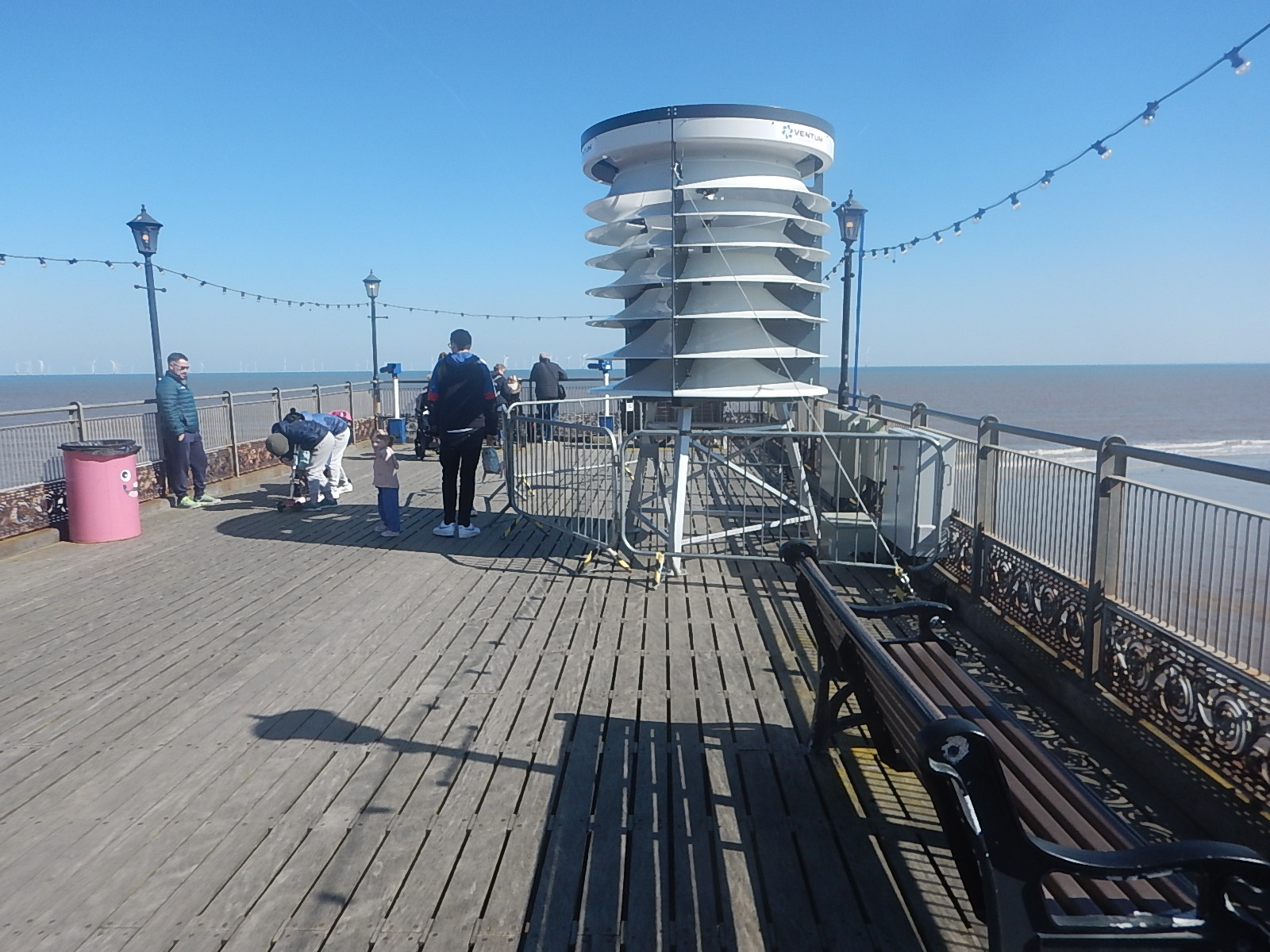
IKEA could sell these for DIY-enthusiasts to assemble and erect. On my stud, I used to have a barn, that could certainly have taken two of these 1.5 KW VX175 turbines.
This link is video of a dancing and swimming SeaTwirl.
If you follow, the SeaTwirl video to its conclusion, you’ll see one being erected in the sea. I can assure you that in the 1970s, my 25-year-old self, did the calculations for a reusable oil production platform called a Balaena, which erected on the same principle. So, I’m fairly certain, that SeaTwirls can be an alternative to traditional wind turbines.
Offshore Wind Developer Gets DNV Concept Certification for Floating Foundation Design
The title of this post, is the same as that of this article on offshoreWIND.biz.
This is the sub-heading.
BayWa r.e. has received concept certification from DNV for its BayFloat floating wind semi-submersible concrete substructure and mooring system design. The design was validated using the 22 MW generic reference turbine “IEA-22-280-RWT”
These three introductory paragraphs give a few more details.
The certification process was conducted in accordance with DNV-SE-0422:2021-09 “Certification of floating wind turbines” scheme, including DNV-ST-0119:2021-06 “Floating wind turbine structures” as the governing standard, BayWa r.e. says.
The assessment concluded that the BayFloat concrete floating substructure, including the mooring system design, is feasible for further development and qualifies for DNV concept-level certification.
BayWa r.e. collaborated with the engineering company Ramboll on the design and certification process, with Ramboll providing design services, expert insights and engineering advice.
Note.
- Certification must be a good thing.
- If you are unfamiliar with DNV, then their Wikipedia entry, is a good place to start.
- As I was doing the calculations for a floating oil platform in the 1970s, I don’t see why floating wind turbines won’t work!
- Especially, as floating wind turbines, seem to have a higher capacity factor than fixed.
- Concrete also worked for oil and gas platforms, so why won’t it work for wind?
In fact I quite like this design.
These are some other thoughts and information.
The Buchan Wind Farm
Baywa r.e. are also developing the 960MW Buchan floating wind farm about 75 km North-East of Fraserburgh.
The Buchan Wind Farm web site says this about the technology to be used.
The project has identified BW Ideol’s patented Damping Pool® floating substructure as its preferred foundation option, with BW Ideol working actively to establish a manufacturing centre at the Ardersier Energy Transition Facility being developed at the former oil and gas fabrication yard on the Moray Firth.
Perhaps, Baywa r.e. are seeing if they can do better.
The Original Article
The original article also links to several designs of floating wind float design, so it is well worth a full read.
But then, each have their advantages in materials used, ease of construction, methods of assembly, ease of tow-out and erection and most importantly; cost!
UK, French, And Irish Ports Join Hands In Global Floating Wind Collaboration
The title of this post, is the same as that of this article on offshoreWIND.biz.
This is the sub-heading.
The UK’s Associated British Ports (ABP) has teamed up with France’s BrestPort and Ireland’s Shannon Foynes Port to establish the Global Floating Offshore Wind Ports Alliance (FLOW Ports Alliance) to help bring together major floating offshore wind ports across the world and unlock the technology’s full potential.
These first two paragraphs add more detail.
The FLOW Ports Alliance aims to recruit ports in Europe to collaborate on FLOW port design, standardisation, and best operational practices.
It plans to strengthen and accelerate compliant knowledge and experience exchange between ports, share best practices as they emerge through demonstration projects, and share innovations to the benefit of the global FLOW network.
Surely, a global network of ports that can handle construction, operation and maintenance of a range of floating wind platforms, is an excellent idea.
Cerulean Winds Submits 1 GW Aspen Offshore Wind Project In Scotland (UK)
The title of this post, is the same as that of this article on enerdata.
These first two paragraphs add more details.
Floating wind developer Cerulean Winds has submitted an offshore consent application for its 1 GW Aspen floating wind project to the local authorities in Scotland (UK). The application was submitted to the Scottish Marine Directorate Licensing Operations Team and is supported by an Environmental Impact Assessment (EIA) of the project. The Aspen project is comprised of 72 wind turbines to be installed 100 km off the coast in the Central North Sea to deliver 1 GW of renewable energy, expecting to start operations before 2030. The development is expected to attract a total investment of GBP11bn (€12.6bn) across a 50-year lifespan.
Cerulean Winds is partnering on the project’s delivery with NOV, Siemens Energy, Bilfinger and Ocean Installer. The company plans to develop three floating offshore wind projects in the Central North Sea (Aspen, Beech and Cedar), which are expected to be comprised of over 300 wind turbines in total.
This wind farm along with its sisters ; Beech and Cedar doesn’t appear to have been added to Wikipedia’s master list of offshore wind farms.
From a Cerulean infographic on this page, it appears that Aspen, Beech and Cedar are all 1008 MW wind farms, that are planned to be operational in 2028, starting in 2028 and starting in 2028. It would be good for the ambitions of Ed Miliband, if these three wind farms were fully operational by the end of 2030.
US Floating Wind Platform Developer Issues RFI To Fabricators Worldwide
The title of this post, is the same as that of this article on offshoreWIND.biz.
This is the sub-heading.
Aikido Technologies, which recently secured a spot at a Norwegian offshore demo site, has released an RFI for its 15 MW ‘AO60’ floating wind platform to offshore wind fabricators.
These are the first four paragraphs which add more details.
The California-based floating wind foundation developer said on social media that it had issued the RFI to more than ten “top-tier offshore wind fabricators from around the world”.
The RFI has been released in three separate packages, each tailored to a specific type of facility: one for standard offshore steel shops, one for tubular/jacket yards, and one for monopile/tower facilities.
“This is how we can build 1, 50 or 100 of these units with existing fabrication capabilities, with components that can be easily transported around the world for final assembly at a local port. No need for custom yards, custom vessels or custom ports”, Aikido Technologies said.
In May 2025, the company was allocated a slot for its AO60 platform at the Marine Energy Test Centre (METCentre) in Norway, where Aikido will deploy what it says is a first-of-its-kind 15 MW demonstration project.
As someone, who wrote project management computer systems for thirty years, I like Aikido’s plans and feel they would be well suited to the UK, where we have quite a few local ports, that would appear suitable for final assembly of the A060 platforms.
In Yarmouth Harbour To Be ‘Completed’ In £60m Project, I describe the expansion of the Port of Great Yarmouth.
These two paragraphs describe the work to be done.
Peel Ports said it would invest between £50m and £60m in Great Yarmouth’s Outer Harbour by developing the southern terminal, creating a roll-on roll-off (RORO) lift ramp and a large storage area.
Port director Richard Goffin said the construction work, which is set to begin in 2026, would “complete” the port as laid out in a business case in the early 2000s.
This image from Peel Ports Group shows how the Port of Great Yarmouth will look after the the proposed development.
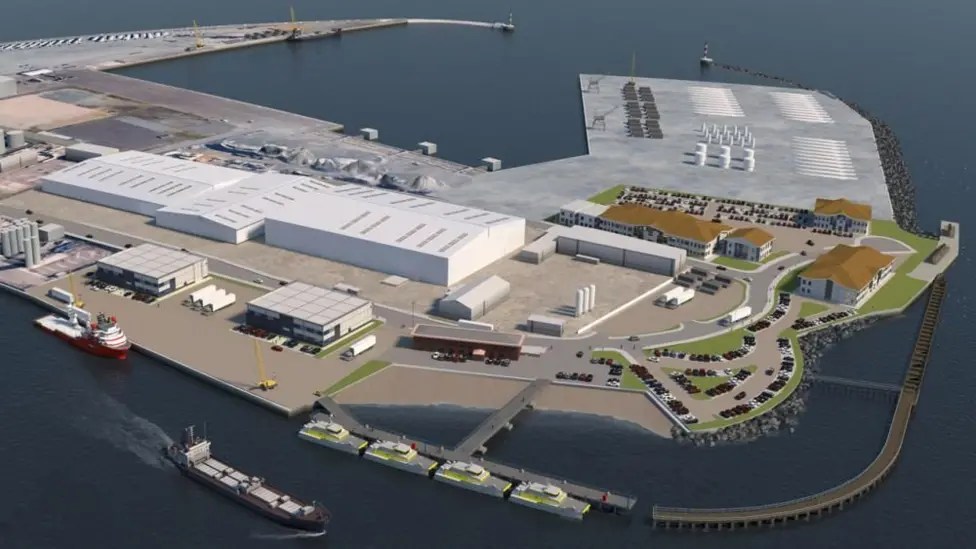
As the Port of Great Yarmouth has a depth of ten metres it could be an ideal base for the assembly and maintenance of floating wind turbines.
Three Applications Submitted In Malta’s First Offshore Wind Tender
The title of this post, is the same as that of this article on offshoreWIND.biz.
This is the sub-heading.
The Maltese government has received three submissions in the pre-qualification period for the country’s first offshore wind tender, which will award a concession for a floating wind project with an installed capacity of around 300 MW.
These first two paragraphs add more detail.
The Ministry for the Environment, Energy, and Public Cleanliness said on 22 July that the submission phase for the Preliminary Qualification Questionnaire (PQQ), launched in December 2024, had concluded, with three companies and consortia looking to participate in the process: Code Zero Consortium, led by SEP (Malta) Holding; Atlas Med Wind, a consortium led by Italy’s GreenIT SpA; and MCKEDRIK Sole Member, a sole applicant based in Greece.
In December last year, Malta opened the PQQ period, seeking to pre-qualify potential developers who will then be invited to participate in the next stage(s) of the tender to build Malta’s first floating wind farm. The project is planned to have an installed capacity of between 280 MW and 320 MW
Note.
- Despite being Malta’s first offshore wind farm, it will be a floating wind farm.
- It is a medium-sized wind farm, which will probably give the Maltese chances to supply some services.
- The consortia seem to have some local involvement.
Malta appears to be taking a sensible route.
I asked Google AI, what was Malta’s electricity generating capacity and got this reply.
Malta’s total electricity generation capacity is approximately 0.83 million kilowatts, according to TheGlobalEconomy.com. This value represents the latest data from 2023. The majority of this capacity comes from conventional power plants, with a smaller but growing contribution from renewable sources.
As 0.83 million kilowatts is 830 MW, these offshore wind farms could replace up to 36 % of Malta’s current generating capacity.
From my experience of the island Malta is not a bad place to live, so recruiting the specialist engineers, that are needed shouldn’t be a problem.
I can also see other small countries following a similar route to Malta.
 The Anonymous Widower