How Much Vitamin B12 Is There In A Leon Full English Breakfast Egg Pot?
I asked Google AI, the title of this post and received this answer.
Based on the ingredients of a LEON Full English Breakfast Egg Pot—which includes a poached egg, Cumberland sausage, bacon, and baked beans—this breakfast provides a substantial amount of Vitamin B12.
Estimated B12 Content: A single large egg contains roughly 0.6 micrograms (mcg) of vitamin B12. When combined with the pork sausage and bacon in the Full English pot, the total content likely provides a significant portion of the UK adult daily requirement of 1.5 mcg.
Key B12 Sources in the Pot: The primary sources of B12 in the pot are the free-range egg (specifically the yolk) and the meat (bacon and sausage).
Other Nutritional Highlights: The Full English Pot contains 25-28g of protein and 371-398 calories.
It certainly looks that this Leon egg pot gives a significant portion of the UK adult daily requirement of vitamin B12.
Port Talbot To Become Offshore Wind Hub For Celtic Sea
The title of this post, is the same as that of this article on the BBC.
This is the sub-heading.
Port Talbot will become the first dedicated hub for floating offshore wind in the Celtic Sea.
These four introductory paragraphs add some detail.
Associated British Ports (ABP) will begin detailed design and engineering work on new port infrastructure after securing grant funding of up to £64m from the UK government.
The project will support the assembly and deployment of floating turbines that will operate in deeper waters off the Welsh coast. ABP said the development could support thousands of jobs and attract hundreds of millions of pounds in further investment.
The UK government said the new port would help deliver clean, homegrown electricity, protect households from volatile fossil fuel markets and create up to 5,000 new jobs.
Redeveloping the port to handle the assembly of wind turbines could position Port Talbot at the centre of a fast-growing clean energy sector.
I have some thoughts.
How Much Wind Power Is Planned For The Western Approaches?
In Ocean Winds Enters Lease Agreement With Crown Estate For 1.5 GW Celtic Sea Floating Wind Project, I published this Google AI estimate of the wind power, that could be developed in the Western Approaches.
How Much Wind Power Is Planned For The Western Approaches?
I asked Google AI, the title of this section and received this answer.
The UK has a target of 50 GW of offshore wind by 2030, with significant projects planned for the Celtic Sea (part of the Western Approaches), which is a key area for 5 GW of floating wind. Total UK offshore wind pipeline capacity exceeds 93 GW, with major developments in this region focusing on floating technology.
Key details regarding wind power in the Western Approaches (specifically the Celtic Sea) include:
Celtic Sea Developments: The area is a primary focus for floating wind projects, designed to capitalize on deep-water potential, with 5 GW of floating wind expected to be deployed across the UK by 2030.
Pipeline and Capacity: The total UK pipeline for offshore wind, which includes the Western Approaches, is 93 GW, and the government is aiming for 43-50 GW of installed offshore capacity by 2030.
Project Status: The region is expected to benefit from the Crown Estate’s leasing rounds aimed at accelerating floating wind, with 15.4 GW of new projects submitted across the UK in 2024.
Wales/South West England Context: Wales has 1.4 GW of projects in the pre-application stage, with some potential for developments off the South West coast.
For more detailed information on specific projects and their development status, you can visit the RenewableUK website and RenewableUK website.
It looks like about 20 GW of offshore wind could be installed in the Western Approaches.
I would expect, a lot of work will be generated in the Port Talbot area.
A Lot Of Steel Will Be Needed
Earlier in the weeek, the UK Government backed the steel industry in Port Talbot, with a press release entitled UK Steel Industry Backed By Major New Trade Measure And Strategy.
Port Talbot Is A Comprehensive, Well-Connected Site
This Google Map shows the site.
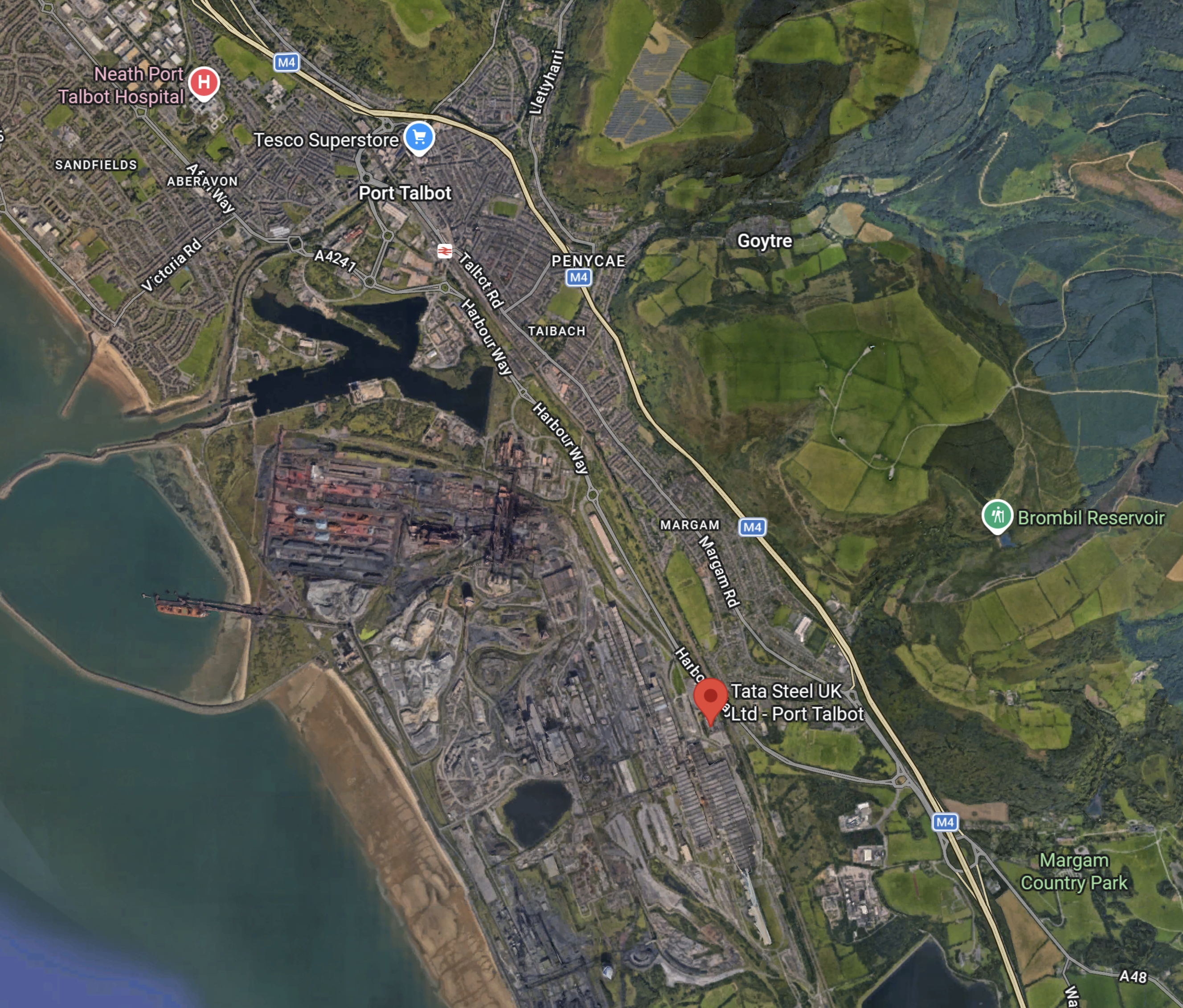
Note.
- The M4 running along the site.
- The South Wales Main Line running along the site, with Port Talbot Parkway serving the site.
- The harbour by the station.
- The Tata steelworks marked by the red arrow.
I hope the up to £64 million grant from the government is sufficient for Associated British Ports (ABP) to turn the harbour into a world-class floating wind facility and that the Treasury haven’t been too mean.
BW Ideol, ABP To Explore Serial Production Of Floating Wind Foundations At Port Talbot
I wrote a post with this name in December 2023, before the leases for the Celtic Sea windfarms had been awarded. As one has been awarded to EDf Renewables, BW Ideol seem to have made a good move.
BW Ideol have a web page, which describes their concrete floating wind foundations manufacturing line.
I hope South Wales has got enough concrete?
Centrica Partners With Ceres Power On Solid Oxide Fuel Cells
The title of this post, is the same as this article on gasworld.
This is the sub-heading.
UK multinational energy and services company Centrica is partnering with clean tech firm Ceres Power to accelerate solid oxide fuel cells [SOFCs] production to meet forecasted ‘multi-gigawatt’ demand from industrial customers across Europe.
These three paragraphs indicate the market opportunity, that Centrica feel, that the partnership will fill.
With electricity grid connection delays impacting new industrial, commercial and digital projects, the UK and Europe are experiencing a widening gap between demand and available capacity.
Centrica aims to offer customers high‑efficiency, low‑carbon, grid independent on‑site power that can be deployed much faster than gas turbines or nuclear.
Group Chief Executive Chris O’Shea said by collaborating with Ceres’ technology it sees an opportunity to support data centres, AI and industry with cleaner power at scale. Ceres claims SOFCs can be manufactured and delivered on site to get power online “in months not years”.
It certainly sounds feasible to drop in an appropriate-sized stack of fuel cells and connect them up to the gas main.
These two paragraphs, indicate how Ceres will support Centrica.
Initially, Ceres will support Centrica in expanding a new differentiated service-led model for clean power, providing access to British technology through its expanding network of global manufacturing partners.
Ceres will assist Centrica with opportunities across project origination, installation and commissioning, remote monitoring, predictive maintenance and end of life recycling.
I have a few questions for Google AI.
Do Ceres Fuel Cells Emit Carbon Dioxide?
Google AI replied this.
Yes, Ceres Power has developed Solid Oxide Fuel Cell (SOFC) technology, known as the SteelCell®, that works on natural gas. This technology is specifically designed to be fuel-flexible, capable of converting grid natural gas into electricity at high efficiency.
Key Details About Ceres Fuel Cells and Natural Gas:
Technology Capability: The Ceres SteelCell runs on natural gas, as well as future-focused fuels like hydrogen and biogas.
Application: These fuel cells are used for distributed power generation in homes, businesses, and industrial settings (such as AI data centres).
Efficiency: When running on natural gas, the SOFC systems can achieve an electrical efficiency of around 62%, with total efficiency exceeding 90% when combined with heat recovery.
Emission Reductions: Compared to conventional combustion engines, the technology offers a 30% reduction in carbon emissions.
Current Strategy: As of early 2026, Ceres is focusing on natural gas-fueled SOFCs for stationary power markets, particularly in collaboration with partners like Centrica to address power shortages in the UK and Europe.
While the systems can be used for hydrogen in the long term, they are currently fully functional with natural gas, making them a “bridge” technology for decarbonisation.
A 30% reduction is surely worthwhile!
In What Size Are Ceres Power Holdings Fuel Cells Manufactured?
Google AI replied this.
Ceres Power Holdings’ solid oxide fuel cell (SOFC) technology is manufactured in modular, scalable sizes, with individual stacks ranging from 10-50 kW and commonly deployed in 1-5 MW power modules. These stacks are produced at manufacturing facilities with capacities like 50MW (e.g., with partner Doosan), with plans for up to 100MW annual capacity.
Key manufacturing and size details include:
Cell Component: 30–150W.
Stack: 10–50 kW.
Stack Array/Module: 100–500 kW, up to 1-5 MW modules.
Manufacturing Capacity: 50MW production facility in South Korea (Doosan), with plans for 100MW+ annual capacity in future plants.
Applications: Primarily stationary, distributed power systems for AI data centres, industrial decarbonisation, and commercial buildings.
Ceres licenses its technology to partners like Bosch and Doosan, with cell technology based on low-cost printed steel substrate
How Much Power Does A Top Of The Range MRi Scanner Use?
I am asking this question, as it is surely something you might power with a Ceres fuel cell powered by natural gas.
Google AI replied this.
A top-of-the-range MRI scanner (such as a 3-Tesla or 7-Tesla system) is highly energy-intensive, consuming substantial power 24/7 to maintain its superconducting magnet. During active scanning, power usage often ranges from 25 kW up to 80 kW or more.
Here is a breakdown of the power consumption for high-end MRI scanners:
Power Consumption Breakdown
Idle/Stand-by Mode (24/7): The machine constantly consumes roughly 6 to 7 kW for background cooling (liquid helium refrigeration).
Standard Scanning: Productive scanning sessions typically demand around 25 kW.
High-Demand Scanning: Demanding examinations (e.g., head examinations with EPI sequences or special angles) can cause power usage to surge to 70 kW to 80 kW.
System Total: A 3T MRI, including cooling systems (chillers) and peripheral electronics, might require a 3-phase, 480V, 200A supply—roughly equivalent to the capacity of six modern houses.
Conclusion
This seems to be a deal with a large number of possibilities.
Speaking from my past experience of banks and financing, where the bill is ultimately paid by a reputable individual or company like Shell or BP, I believe that Centrica will have no difficulty in financing lots of these systemsusing instiutions like Lloyds or Deutsche Bank.
Cardiff And Caerphilly – 24th March 2026
I took this pictures, as I rode up the Rhymney Valley from Cardiff to Caerphilly.
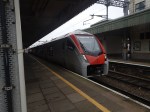







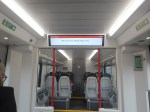
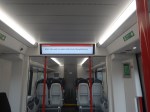
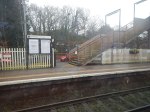






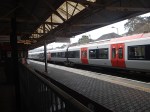





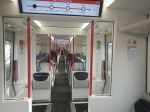
Note.
- The trains I took up and down the valley were both Class 756 tri-mode trains.
- My train reversed to Penarth in Platform 1.
- I think they were running using the diesel power in the power pack.
- There is an overhead conductor rail in Platform 1 at Caerphilly station to charge trains.
- The electrification North of Caerphilly station can be seen through the bridge in one of the pictures.
- Platforms 2 and 3 are not electrified.
I think Caerphilly station is a very neat electrification layout for occasional charging of battery-electric or tri-mode trains.
I have some specific thoughts.
What Have Caerphilly And St. Pancras Thameslink Stations Got In Common?
These pictures show the rigid conductor rail through St. Pancras Thameslink station.




It looks remarkably similar to that in Platform 1 at Caerphilly station.
Judge in this picture.
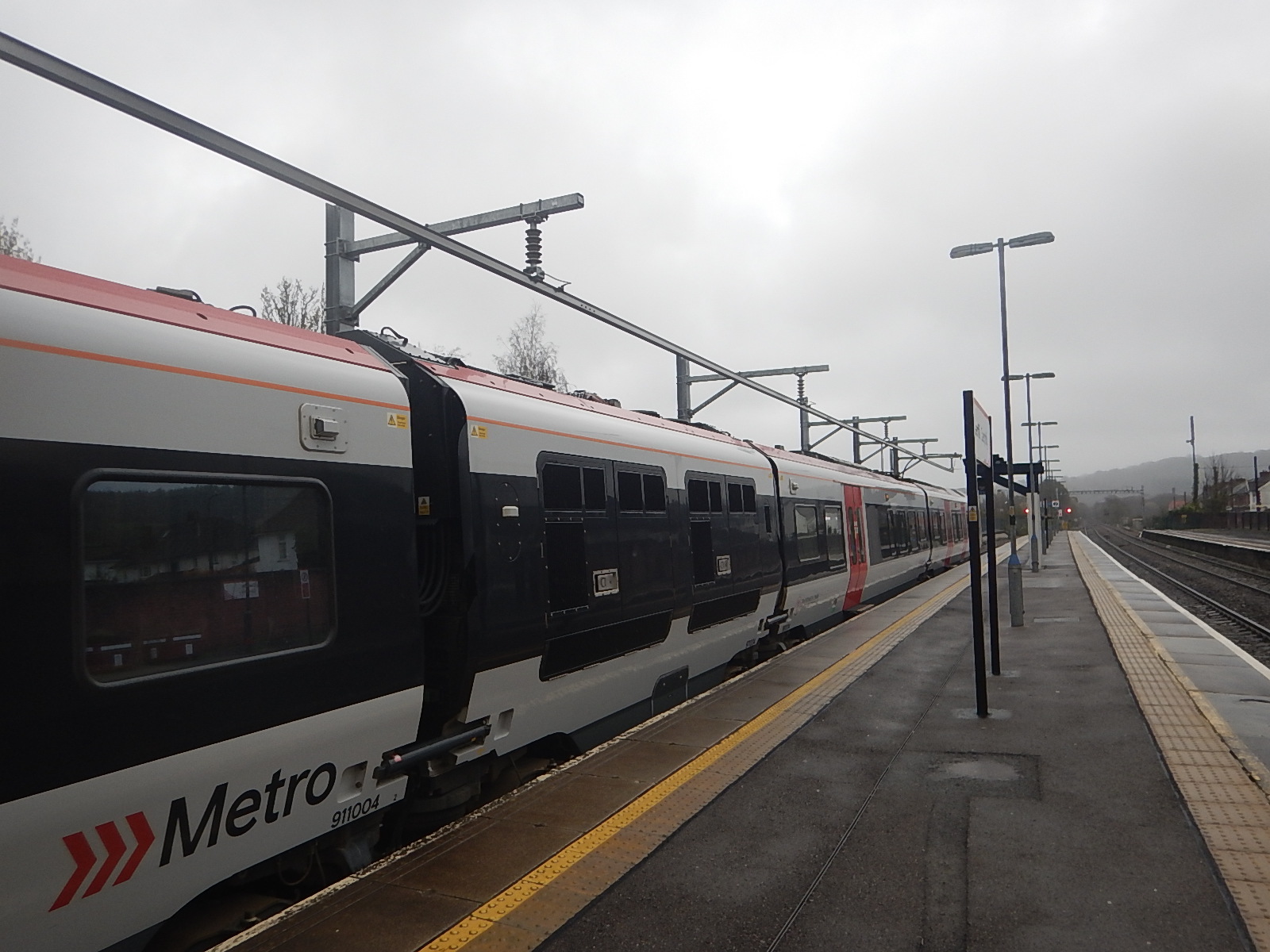
The rails are probably out of the same Swiss electrification maker’s parts bin.
Both look equally professional with an I-section conductor, which could be aluminium, as it is lightweight and a good electrical conductor.
Google AI finds this.
The I-beam overhead conductor system used in St. Pancras Thameslink station is made of a hollow extruded aluminium profile. This system, known as a conductor beam, holds a conventional copper contact wire, providing a rigid, low-profile alternative to traditional overhead wires.
Key details:
Material: Extruded aluminium profile.
Structure: Hollow, designed to hold an un-tensioned, conventional copper contact wire.
Application: Developed by Balfour Beatty to reduce the required depth of overhead line equipment.
Installation: Often installed in a sinusoidal wave to ensure consistent wear on the pantograph.
This technology is used in areas with restricted overhead space, such as tunnels and some modern station approaches, to manage 25kV AC electrification.
It looks like it’s been used to provide a charging rail in Caerphilly station.
Is The Conductor Rail In Platform 1 Used To Create A Continuous Electrical Connection Around Caerphilly Station?
Look at this OpenRailwayMap, which shows the completed electrification through Caerphilly station.
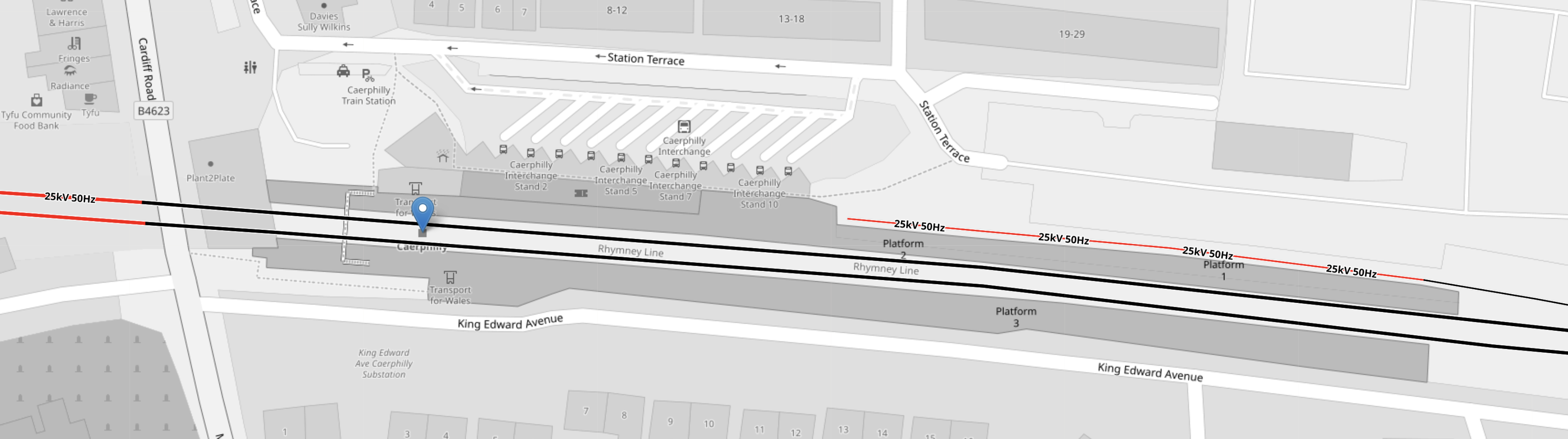
Note.
- Red tracks are electrified.
- Black tracks are not electrified.
- Caerphilly station is indicated by the blue arrow.
- The electrification continues to the Western end of the station.
- The two main platforms 2 & 3 are not electrified.
- The bay platform 1 is electrified to charge trains for return to Cardiff.
- Class 756 tri-mode electric-diesel-battery trains are already in service.
- There appears to be a comprehensive bus interchange.
The power for Platform 1 could come from the electrification at the Western end of the station.
I wouldn’t be surprised that the Rhymney Line will be fed with electricity at the heads of the valleys and it is fully-connected down to Cardiff to give a secure electrical connection.
Will Welsh Wind Power From The Heads Of The Valleys Be Used To Power The Cardiff Valley Lines?
To start with, as I know it can be blowy there, I asked Google AI, this question.
“Is Onshore Wind Planned At The Heads Of The Valleys In South Wales?”
I received this answer.
Yes, there is significant onshore wind energy development planned and in progress along the Heads of the Valleys area in South Wales. This region, encompassing areas like Merthyr Tydfil, Blaenau Gwent, and northern Rhondda Cynon Taf, is part of a broader push to increase onshore wind capacity in Wales, with many projects located on Natural Resources Wales forestry land.
Key Developments and Proposed Projects (2025-2026):
Trydan Gwyrdd Cymru: The Welsh government-owned developer has selected sites in South Wales for new, large-scale wind farms intended to be operational by 2040.
Carreg Wen Wind Farm: A planned 18-turbine project located between Aberdare and Maerdy (Rhondda Cynon Taf), near the Hirwaun/Heads of the Valleys area.
Hirfynydd Renewable Energy Park: A proposed project located on the Hirfynydd mountain range between Seven Sisters and Banwen, north of Neath, near the western end of the Heads of the Valleys.
Mynydd Llanhilleth and Trecelyn Wind Farms: Projects in the pre-application or planning stages by Pennant Walters in the Blaenau Gwent area.
Abergorki Wind Farm: A consented three-turbine project on Mynydd Maerdy (Rhondda Cynon Taf) with construction scheduled for 2026.
Operational Context:
Pen y Cymoedd: Already operational and currently the largest onshore wind farm in England and Wales, situated in the hills above the upper Neath, Afan, Rhondda, and Cynon Valleys.
Grid Infrastructure: Proposed new substations, such as one near Hirwaun (Rhondda Cynon Taf), are intended to connect these new projects to the national grid.
These developments are part of a target to generate 70% of Wales’ electricity from renewable sources by 2030, with a focus on areas previously identified as suitable for large-scale wind development.
Note.
- Pen y Cymoedd is the largest onshore wind farm in Wales and England, with an installed capacity of 228 MW.
- With the right size of battery, I’m fairly sure, that this wind farm could go a long way to powering the Cardiff Valley Lines.
- Carreg Wen Wind Farm is planned to be 108 MW wind farm.
- Hirfynydd Renewable Energy Park is planned to be a 100 MW hybrid development of wind turbines and solar with a battery.
- Mynydd Llanhilleth is planned to be a 48 MW wind farm.
- Trecelyn is planned to be a 20 MW wind farm.
- Abergorki is planned to be a 13 MW wind farm.
The total of new developments is 389 MW, which is about the same size as a Rolls-Royce SMR.
Does Anybody Type Using Five Fingers Of One Hand, Scanning Them Where Necesary For Shift, Control And Alt.




Note.
- My left awas broken by the school bully and doesn’t work well.
- My stroke didn’t help.
- I have a yellow keyboard and I’m probably typing as fast as I ever had.
- My father owned and worked in a letterpress printers.
- He taught me to set type from an early age.
Letterpress typesetting is done by holding the composing stick in your left hand and placing the letters in order in the stick, with your right hand.
I now type this way and it may be the cause of the problems in my right hand, which is red and tingling at times.
I asked Google AI, the title of this post and received this answer.
Yes, many people type using all five fingers of one hand, particularly individuals with limb differences, injuries, or those who prefer a single-handed method. This technique often involves “scanning” or spanning across the keyboard and can achieve impressive speeds.
Techniques and Methods
FGHJ Home Row Method: The most common approach involves resting the index finger on F (or J for right handers), middle on G/H, ring on H/G, and pinky on J/F. This allows the hand to cover all keys on a standard QWERTY keyboard.
“Scanning” / Stretching: The hand moves dynamically around the keyboard, rather than staying in a fixed home-row position, relying on strong muscle memory to reach all keys.
Modifier Key Handling (Shift/Alt/Ctrl): The thumb is frequently used to reach modifiers, or the pinky is stretched to reach the shift keys. For simultaneous keys (e.g., Ctrl+C), people often use “Sticky Keys” in Windows/MacOS to lock the modifier key, or press them sequentially.
Five Finger Typist: There is specialized, structured software designed specifically to teach this five-finger, one-handed technique.
Speed and Proficiency
One-handed typists using all five fingers can reach high speeds, often ranging between 40 to 80 words per minute (wpm), with some experienced users achieving over 100 wpm, depending on the individual.
Assistive Tools
Compact Keyboards: Smaller keyboards (like laptop keyboards) are often used because they reduce the distance the hand has to span, decreasing fatigue.
Half-QWERTY / Mirrored Layouts: Specialized software or hardware that allows one hand to “mirror” the other side of the keyboard (e.g., tapping ‘F’ with the ‘J’ finger while holding a modifier).
Conclusion
I could believe that answer and will use it as long as I can!
Can You Lose Track Of The Day Because Of Lack Of B12?
I asked Google AI, the title of this post and received this answer.
Yes, you can absolutely lose track of the day, forget appointments, or feel generally disoriented due to a lack of vitamin B12.
Vitamin B12 is crucial for nerve function and cognitive health, and a deficiency often manifests as “brain fog,” memory loss, confusion, and difficulty concentrating.
Here is how a B12 deficiency can affect your sense of time and mental clarity:
Brain Fog and Confusion: A common symptom of low B12 is a feeling of mental sluggishness, confusion, or lack of focus, often described as “brain fog”.
Memory Issues: It can cause significant forgetfulness or memory lapses, making it difficult to remember what day it is, what you are doing, or what tasks you have completed.
Cognitive Decline: Long-term, untreated deficiency can lead to severe cognitive impairment that may mimic dementia or Alzheimer’s in older adults.
Gradual Onset: Because the body stores B12 in the liver (often enough for 2–5 years), the deficiency develops slowly. As a result, you might not notice the gradual loss of mental sharpness or confusion until it starts significantly impacting your daily life.
The source of the report was the NHS web site.
The Prototype Affordable Zero-Carbon Small Car Has Just Been Designed
The Wrightbus Ultroliner EU6, is their latest diesel bus.
The product page has this sub-heading.
A Choice Of The
UK’s Most Efficient
Diesel Buses
Two paragraphs give full details of the bus.
The StreetDeck Ultroliner EU6 is available with two ultra low emission efficient diesel engine choices: the new Cummins 6.7 litre 6 cylinder and the current Mercedes 5.1 litre 4 cylinder engine. Our StreetDeck EU6 Ultroliner and its engine choices remains the UK’s favourite. All these buses can be repowered at mid-life to zero-emission BEV technology with NewPower.
The new Cummins ISB6.7 litre six-cylinder diesel engine, married with the latest Voith DIWA.8 NXT 7-speed transmission. Two power options are available: 250Hp / 187Kw, 1000Nm and 300Hp / 224Kw, 1200Nm. With a large 245L fuel tank, this StreetDeck is ready to go the distance, wherever the journey takes it. Its MH3 technology helps lower fuel consumption during frequent stops on busy roads and improves the overall footprint and ride quality. Where ultra clean diesel buses are seen as the only option at this time, there is no better bus than the low emission StreetDeck Ultroliner range.
So you get a modern bus, that can be converted to zero-carbon at an appropriate time.
But nothing is said about conversion to hydrogen, which I believe is the ideal fuel for a large vehicle.
So I asked Google AI, if a Wrightbus Ultroliner can be converted to hydrogen-power, and received this answer.
Yes, the Wrightbus StreetDeck Ultroliner EU6 can be converted to hydrogen power. Wrightbus has engineered the diesel StreetDeck Ultroliner platform to be forward-looking, allowing operators to retrofit these vehicles mid-life with Cummins hydrogen internal combustion engines.
Here are the key details regarding this conversion and technology:
Adaptable Design: The StreetDeck Ultroliner was specifically designed to bridge the gap between traditional diesel and zero-emission options, making it possible to switch to hydrogen or battery-electric powertrains later in the vehicle’s life.
Hydrogen Internal Combustion: Instead of a fuel cell, this retrofit converts the diesel engine to run on hydrogen gas, providing a cost-effective route to zero emissions for existing operators.
Shared Platform: The diesel Ultroliner shares a similar “feel and features” with the purpose-built zero-emission Hydroliner (Hydrogen Fuel Cell) and Electroliner (Battery) buses, making the structural integration of alternative systems more straightforward.
Alternative Conversion Options: Third-party companies, such as Equipmake, specialize in “repowering” Wrightbus StreetDeck models to zero-emission, offering to convert diesel vehicles to electric in a short time frame, although the primary official pathway mentioned by Wrightbus for the Ultroliner is hydrogen-combustion.
The Wrightbus StreetDeck Hydroliner FCEV (Fuel Cell Electric Vehicle) was the world’s first production hydrogen double-decker bus, providing proven technology in cities like Aberdeen, Belfast, and London.
Note.
- The original Cummins diesel engine is converted to hydrogen fuel.
- In Cummins Fuel-Agnostic X Series Platform, I show a Cummins video, which explains their philosophy of convertible engines with trucks.
- Conversion to natural gas is also possible.
- It would appear that the Cummins ISB in the Ultroliner has a hydrogen version, that can be created by changing the fuel system and the cylinder head.
I wouldn’t be surprised, if Cummins told me, that they could make a convertible diesel, that could power a small hatchback.
Out of curiosity, I asked Google AI, “What is the power of a diesel Mini” and received this answer.
The power of a diesel Mini depends on the model (One D, Cooper D, or Cooper SD) and the generation, with power outputs ranging from approximately 88 bhp to 170 bhp. Diesel Minis are known for high torque and excellent fuel economy rather than just top-end speed.
Here is a breakdown of the power figures:
1. MINI Cooper SD (2.0L Diesel)
Power: Typically 143 bhp (105 kW) to 170 bhp (125 kW).
Torque: 305 Nm to 360 Nm (225–265 lb-ft).
Performance: The 170 hp 2.0-litre diesel in the 2015-2018 range is often called a “diesel hot hatch,” featuring a 0-62 mph time of around 7.3 seconds.
2. MINI Cooper D (1.5L – 1.6L Diesel)
Power: Usually between 110 bhp and 116 bhp.
Torque: 270 Nm (199 lb-ft).
Performance: Offers a good balance of fuel economy and punch, with a 0-60 mph time of around 9.4–9.7 seconds.
3. MINI One D (1.4L – 1.5L Diesel)
Power: Approximately 75 bhp to 95 bhp.
Performance: Designed for maximum fuel efficiency and lower tax bands, with lower power output compared to the Cooper models.
Key Takeaways:
Most Powerful: The 2.0L Cooper SD is the most powerful, often producing up to 170 hp.
Torque: Diesel Minis often have high torque at low revs (around 1750rpm), making them quick for overtaking and city driving.
Generation Differences: Older R56 models (2007-2014) often have 1.6L diesel engines, while newer F56 models (2014-2024) use 1.5L or 2.0L engines.
Reliability: These engines are BMW-sourced (N47 or B37/B47) and generally considered reliable.
As there are large numbers of companies around the world, who claim they can convert cars and other vehicles, and engines to hydrogen power.
Out of curiosity, I asked Google AI, “Has Anybody Built A Hydrogen-Powered Mini” and received this answer.
Yes, BMW built a hydrogen-powered MINI Cooper prototype in 2001.
Unveiled at the Frankfurt Motor Show in September 2001, this car was not a fuel-cell vehicle, but rather a hydrogen-burning internal combustion engine car.
Key details about the 2001 MINI Cooper Hydrogen:
Engine: It used a modified version of the MINI’s 1.6-liter four-cylinder engine designed to run on hydrogen.
Technology: It was unique because it used cryogenic liquid hydrogen and injected it while super-cooled, which increased engine efficiency and performance, setting it apart from other hydrogen experiments at the time.
Packaging: Engineers managed to place the contoured hydrogen tank under the rear seats, meaning it did not sacrifice cabin or cargo space compared to a standard Mini.
Legacy: While not mass-produced, it was a significant prototype in BMW’s long-standing research into hydrogen technology.
Other Hydrogen “Mini” Projects:
Mini Mirai RC Car: Toyota and Tamiya built a 1/10th scale hydrogen-fuelled remote-controlled car in 2021. It used a small fuel cell and hydrogen canisters to run for twice the duration of a conventional battery-powered RC car.
Small Engines: Israeli firm Aquarius Engines has developed a 10kg hydrogen-powered engine intended for use as a range extender, which has passed independent testing.
Conclusion
I believe that in the next few years, a serious manufacturer will release a diesel car that can be converted to hydrogen power.
Eventually, this will mean that government can withdraw fossil fuels for road vehicles.
How Much B12 In An M & S Lamb Hot Pot For One?
I asked Google AI, the title of this post and received this answer.
Based on typical nutritional values for lamb-based ready meals, a 400g–450g M&S Lamb Hot Pot for One is likely to provide a significant portion of the recommended daily intake of Vitamin B12, estimated to be well over 1.5–2 micrograms (g) per serving.
Lamb Content: The M&S Lamb Hot Pot contains approximately 21% cooked lamb.
B12 Density: Cooked lamb generally provides around 2–3 micrograms (g) of Vitamin B12 per 100g of meat.
Total Content: In a 450g meal containing roughly 90-100g of lamb, the B12 content is likely to fall within a range that comfortably covers or exceeds 50% of the daily adult requirement (which is 2.4g in the US and 1.5g in the UK).
The meal also provides roughly 25-29g of protein per pack.
As I would have expected, this ready meal is a good source of B12.
Travelling Between Heathrow Airport And Staines Station
Staines Station and Heathrow Airport are not far apart, as this OpenRailwayMap shows.
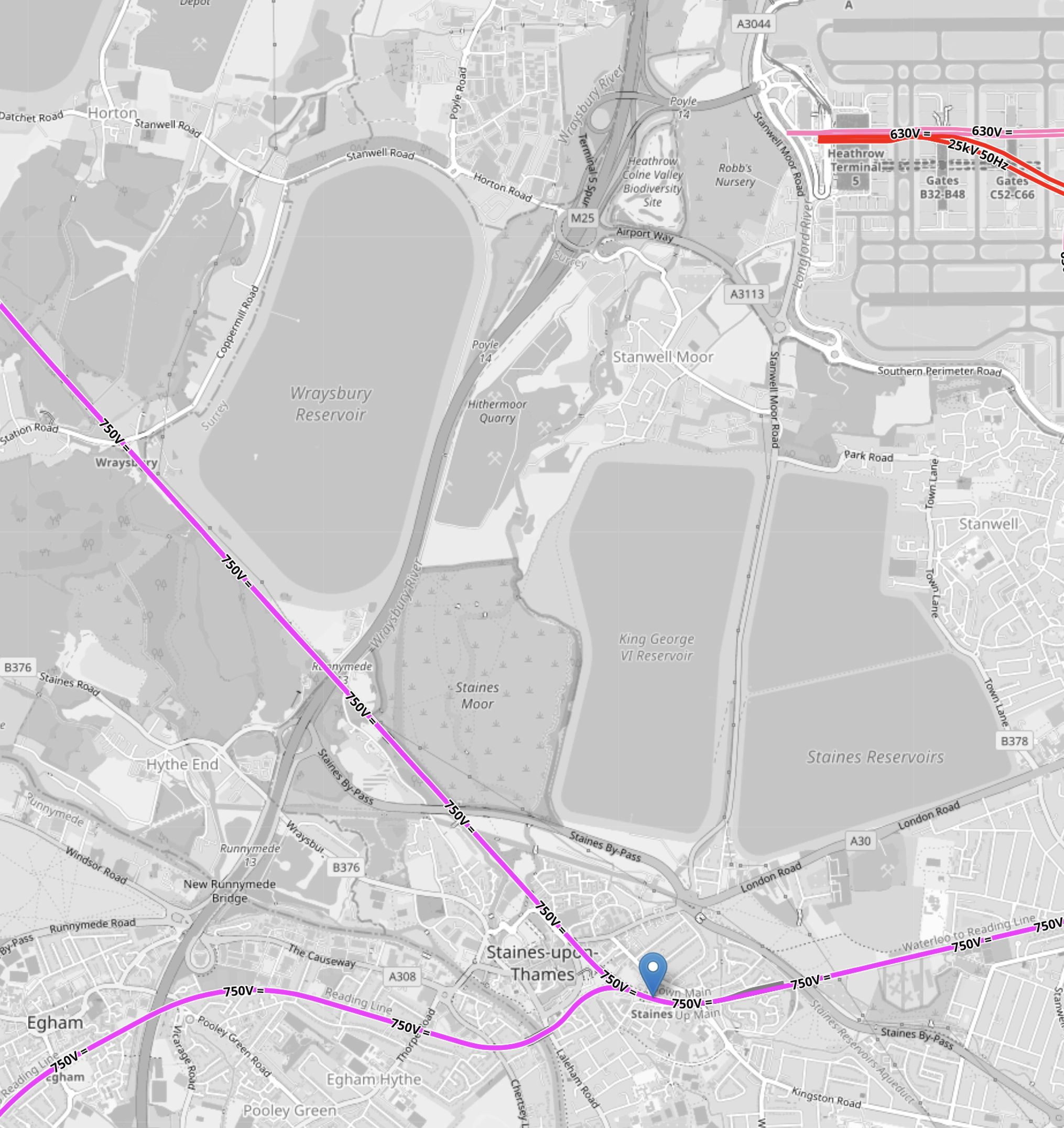
Note.
- The mauve lines in the bottom half of the map are South West Trains services out of Waterloo.
- Waterloo via Feltham, Twickenham and Richmond to name but three stations , is to the East.
- Reading is to the South-West
- Windsor is to the North-West.
- The blue arrow indicates Staines station.
- Heathrow Terminal 5 is in the North-East corner of the map.
- The pink tracks are the Piccadilly Lines
- The red tracks are for the Elizabeth Line and Heathrow Express.
- This OpenRailwayMap shows Terminal 5 to a larger scale.

Note.
- The pink tracks are the Piccadilly Line.
- The red tracks are for the Elizabeth Line and Heathrow Express.
- In front of the red tracks is what looks like a circular walkway or emergency exit, with a rectangular block to its West.
- The rectangular block is the lift tower to get from the railway station to the Departures and Arrivals floors of Terminal 5.
I asked Google AI if it would it be possible in the future to extend the Elizabeth Line to the West out of the Western end of Terminal 5 and received this reply.
Extending the Elizabeth line west from Terminal 5 is technically possible and has been proposed, notably as part of a potential westward rail link to Staines or to support airport expansion, but it is not currently funded. Terminal 5 was designed with future expansion in mind, potentially allowing a connection to Staines to create a “southern rail link” for better connections.
Perhaps there are two tunnels under the lift shafts?
How many trains per hour (tph) terminate in those two platforms?
- 4 tph – Heathrow Express
- 2 tph – Elizabeth Line to Shenfield.
Note.
- Only six trains in two platforms is easily managed.
- Because, Heathrow Express services appear to use both platforms, when I visited yesterday, the system seems to confuse passengers.
- The services surely need to be evened up, so that there are four tph of each service, with each service having a dedicated platform.
- But terminating eight trains in two platforms could be troublesome.
- Platforms are numbered 1 to 6 from the South.
- Platforms 1 and 2 have not been built yet.
Although four tph for Heathrow Express in one platform, should be easy with digital signalling, as you see it every day in London, it may be difficult on two platforms, at the same time.
In Is More Capacity Between Heathrow Airport And Central London, Needed On The Elizabeth Line?, I said this.
Currently, the Elizabeth line provides up to 12 trains per hour (including Elizabeth line and Heathrow Express) on the relief lines, making it nearly at capacity.
Note.
- When I use the Elizabeth Line, I deliberately avoid trains going to and from Heathrow, unless I’m going that way, as they are too crowded with passengers and their oversized cases.
- High Speed Two, the West London Orbital Railway and the North London Line will bring passengers for Heathrow Airport to Old Oak Common station.
- Surely, as Heathrow Airport gets bigger and increases its passenger numbers. the Elizabeth Line will need to be increased in capacity.
I believe Elizabeth Line capacity needs to be increased soon.
The only feasible plan I’ve seen is Heathrow Southern Railways plan, which included.
- Construction of a bay platform 0 at Staines alongside the Staines to Windsor line.
- A step-free bridge across the tracks.
- Construction of a single-track railway with 25 KVAC overhead electrification and a passing looop, between the new platform 0 at Staines and Platform 3 at Heathrow Terminal 5 station.
- Run four trains per hour in both directions between Heathrow Terminal 5 and Staines stations.
- This plan would would add two trains per hour through the Central Tunnel.
Various Journeys Would Be As Follows
This OpenRailwayMap shows Staines junction and the positions of the three platforms.
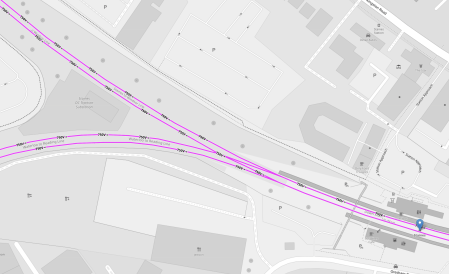
Note.
- The Windsor Line goes North-West.
- The Reading Line goes West.
- The Waterloo Line Goes East.
- Platform 1 is on the North side of the tracks.
- Platform 2 is on the South side of the tracks.
- The bay platform, which I’ve numbered 0, will be on the North side of the tracks towards Windsor.
- I suspect the step-free bridge will be over the tracks and replace the current rickety structure.
- The bridge would be a short walk from all three platforms.
Interchanges would be as follows.
- Windsor to Heathrow – Walk between Platforms 1 and 0.
- Reading to Heathrow – Walk between Platforms 1 and 0.
- Heathrow to Windsor – Cross the bridge between Platforms 0 and 2.
- Heathrow to Reading – Cross the bridge between Platforms 0 and 2.
- Waterloo to Heathrow – Cross the bridge between Platforms 2 and 0.
- Heathrow to Waterloo – Walk between Platforms 0 and 1.
Note.
- All trains to or from Heathrow use Platform 0.
- All trains to Waterloo use Platform 1.
- All trains going away from Waterloo use Platform 2.
- Reading and Heathrow gain a step-free route at 2 tph.
- All interchanges at Staines station would be step-free.
- A train like London Crosslink, which used to go between Feltham and Woking, would use Platform 1 going towards Feltham and Platform 2 going towards Woking.
Staines station would gain step-free access to all Heathrow terminals, all Elizabeth Line and High Speed Two stations.
Could Anglia Railways’ London Crosslink Be Recreated As Part Of The London Overground?
I like the idea of the London Crosslink service, that ran for a few years between East Anglia and Hampshire via the North London Line and Staines.
My arguments for its restoration are described in Could Anglia Railways’ London Crosslink Be Recreated As Part Of The London Overground?
At various times in my life, it would have been very useful.
Today, as I live about fifteen minutes from Highbury and Islington station, I could use London Crosslink for the following reasons.
- Visiting friends and family in Hampshire.
- Going to Heathrow Airport, especially Terminal 5.
- Visiting friends in East Anglia.
- Going to football at Ipswich.
- Exploring new parts of England.
- I would wait at home and time my departure to catch a booked train at a fully step-free station.
Conclusions
Extending the Elizabeth Line to Staines gives these advantages.
- Staff at Heathrow, who live in the Staines area get easy access to the airport.
- Buses and coaches between Heathrow and the local area may be reviewed.
- Less cars will be used to get to and from the airport.
- Reading and Heathrow gain a step-free route at 2 tph.
- A lot of stations would gain a step-free route to all terminals at Heathrow, and all Elizabeth Line and High Speed Two stations.
There may well be other advantages.
How Much B12 In An M & S Chicken Jalfrezi With Basmati Rice For One?
I asked Google AI, the title of this post and received this answer.
Based on typical nutritional data for similar prepared chicken and rice meals, a 400g serving of M&S Chicken Jalfrezi with Basmati Rice likely contains a significant portion of the recommended daily intake of Vitamin B12, largely derived from the chicken breast.
Protein Content: The 400g meal generally provides approximately 32.8g of protein.
Estimated B12: As a rich source of animal protein, 100g of chicken typically provides a significant portion of daily B12. While specific B12 figures for this exact M&S product are not explicitly listed in the search results, similar chicken curry meals provide roughly 0.5–1.0 µg or more per 100g, suggesting a 400g pack could meet or exceed the typical daily adult requirement (around 1.5–2.4 µg).
Nutritional Summary for M&S Chicken Jalfrezi with Rice (400g):
Protein: ~32.8g
Calories: ~372–544 kcal
Fat: ~6.8g–20g
Carbs: ~45.2g–56.4g
The dish contains marinated chargrilled chicken breast, red peppers, and basmati rice.
 The Anonymous Widower