Why Do Some Train Operators Still Buy Half-Trains?
This picture shows the unloved-by-SWR Class 707 trains.

South Western Railway‘s predecessor; South West Trains bought thirty of these trains and SWR is replacing them with Class 701 trains.
Sixty of these new trains will be ten-cars in length and thirty will be five-car.
Why?
Consider.
- Most Class 707 trains, always seem to run as ten-car units, formed of two trains.
- There are four cabs, rather than two.
- A ten-car Class 701 train has twenty more seats than two five-car trains.
- Including standing passengers, a ten-car Class 701 train has eight percent more capacity, than two five-car units.
- Staff have to get out of the train and back in, to go between the front and back of the train.
- I’ve even seen trains delayed because the conductor was helping a disabled passenger in the other train.
Running two half-trains as a full-size train must surely be more stressful for the staff and more uneconomic for train operators.
The only place for five-car trains, is surely on routes with short platforms.
The Cut-And-Paste Aventra
It should also be noted that Bombardier’s new Aventras and other recently-designed trains, can be cut and pasted to adjust the trains that an operator needs.
At the present time, services on the Gospel Oak to Barking Line, which can only accept four-car trains are being run by four-car Class 378 trains, which have been shortened from their normal five-car length by removing a car.
So for instance if on a route, South Western Railway needed to run eight-car trains due to a temporary length restriction, they could shuffle a ten-car and a five-car train to get an eight-car and a seven-car,
In a list of Aventra variants, the following are detailed.
Tfl Rail
Class 345 trains will be nine-car, but currently they are running as seven-cars.
London Overground
Class 710 trains will be used in three ways.
- As pairs of eight-cars on the Lea Valley Lines.
- As four-cars on the Gospel Oak to Barking Line and the Watford DC Line.
- As five-cars on the North London Line.
It has puzzled me, why the Lea Valley sets are not to be built as eight-car trains and I discuss this in Latest On The New London Overground Class 710 Trains.
Greater Anglia
Class 720 trains will be `22 ten-car and 89 five-car trains.
I think that Greater Anglia have some routes, that cannot accept ten-car trains.
As I showed for Hertford East station in Could London Overground Extend To Hertford East Station?
So will we be seeing some creative shuffling to get a tailored fleet, with perhaps some eight-car trains for routes like those to Hertford East?
I think that six ten-car trains and four five-car trains can be converted into ten eight-car trains.
South Western Railway
Class 701 trains will be 60 ten-car trains and 30 five-car trains.
Do South Western Railway need a sub-fleet of eight-car trains?
They can easily create one, by shuffling the trains.
West Midlands Trains
Class 730 trains will be 36 three-car trains and 45 five-car trains.
These are like-for-like replacements of the current fleet.
c2c
Class 711 trains will be six ten-car trains.
They will be replacing Class 387 trains on a short-term lease.
Conclusion
It appears to me, that for the train operator to have maximum flexibility, that you need to start with a long train and a short train and be able to shuffle cars around to get the train fleet you need.
Certainly a fleet of both ten-car and five-car Aventras gives you the possibility of creating a sub-fleet of eight-car trains.
Interestingly, the Hitachi Class 800 trains appear to have a similar ability.
The Norwich-In-Ninety Timetable
The Norwich-In-Ninety trains are now visible on the National Rail timetable.
London To Norwich
Norwich-In-Ninety trains leave London at 11:00 and 19:00!
The current times of the 11:00 train are as follows.
- Liverpool Street – 11:00
- Colchester – 11:46
- Manningtree – 11:55
- Ipswich – 12:07
- Diss – 12:36
- Norwich – 12:50
Those of the faster train are.
- Liverpool Street – 11:00
- Ipswich – 11:55
- Norwich – 12:30
I can remember in the 1960s, the diesel service was advertised as two-hour two-stop between London amd Norwich.
Norwich To London
Norwich-In-Ninety trains leave Norwich at 09:00 and 17:00!
The current times of the 09:00 train are as follows.
- Norwich – 09:00
- Diss – 09:17
- Stowmarket – 09:29
- Ipswich – 09:41
- Manningtree – 09:52
- Colchester – 10:02
- Chelmsford – 10:21
- Stratford – 10:45
- Liverpool Street – 10:55
Those of the faster train are.
- Norwich – 09:00
- Ipswich – 09:33
- Liverpool Street- 10:30
Note that the current Southbound services are slower than those going North.
The Current Linespeed
For part of my trip back from Ipswich today, I was following the linespeed using the Speedview App on my phone.
- Between Kelvedon and Hstfield Peverel the train averaged around 100 mph.
- It then slowed to 60 mph through Chelmsford.
- By Ingatestone, it was up to 90 mph, before slowing for 60 mph through Shenfield.
- There seemed to be some checking from a slower train, but at places into Liverpool Street it was up to 80-90 mph.
The Norwich-In-Ninety improvements certainly seemed to have helped.
It certainly left me with the feeling that the elderly Class 90 locomotive and Mark 3 carriages could achieve Ipswich to Liverpool Street in around an hour.
The Future
These four services are probably just the start. These four services can probably be achieved with one train.
- Leave Norwich at 09:00 and arrive in Liverpool Street at 10:30
- Leave Liverpool Street at 11:00 and arrive in Norwich at 12:30
- Leave Norwich at 17:00 and arrive in Liverpool Street at 18:30
- Leave Liverpool Street at 19:00 and arrive in Norwich at 20:30
Although, Greater Anglia will be running the initial service with Class 755 trains, the company has ten Class 745 trains on order.
The only thing so far disclosed, is that the Liverpool Street and Norwich service will go to three trains per hour (tph).
It should also be said, that the design of the new trains and their power, should make station stops much faster.
But what pattern of stops will be performed by the three trains?
Why Are Abellio Starting Norwich-in-Ninety With Class 755 Trains?
At the May timetable change Abellio Greater Anglia will be running four trains per day between London and Norwich in ninety minutes.
I have read that this is possible with the current Class 90 locomotive /Mark 3 coach train sets and that is a fall-back position.
I was also told by a former employee of Greater Anglia, that one night, he was a passenger between Norwich station and Illford depot in an empty Class 321 train, that achieved an incredible time.
So why take the risk with untried Class 755 trains on the first day of the new timetable?
- Abellio must be very sure that the trains will perform, as they say in the brochure.
- They also know all the publicity that running new trains will bring.
But could Abellio just want to check the public’s reaction to these trains with effectively a locomotive in the middle, before they decide on the 125 mph bi-mode trains for the Midland Main Line?
I don’t believe that building a 125 mph version of Class 755 train would be beyond the bounds of possibility.
The Weight Of A Class 755 Train
I haven’t been able to do my energy calculation for a Class 755 train, as I can’t find the weight of a Class 755 train on the Internet.
However, I can estimate the weight of a four-car Class 755/4 train from the Stadler data sheet for the train.
This gives the following.
- Mean Acceleration Electric (0-40 mph) – 1.1 metres/second squared
- Maximum traction – 200 kN
- 202 seats and 27 tip-up seats
I think it is reasonable to assume that the acceleration rate is for a train with a typical load of passengers.
Using Omni’s Acceleration Calculator, this gives a time of 16.256 seconds to accelerate from 0-40 mph.
Then putting this time into Omni’s Newton’s Second Law Calculator, gives a train mass of 181.8 tonnes.
As passengers can weigh around twenty tonnes, if they weigh 90 Kg each, with baggage, bikes and buggies, I would estimate that an empty Class 755/4 train weighs around 160-170 tonnes.
By comparison.
- An empty four-car electric Class 350 train weighs 175.5 tonnes
- An empty three-car diesel Class 170 train weights 135.3 tonnes.
I don’t think a figure of 160-170 tonnes is out of line, with a figure of 180 tonnes for a typical loaded train.
Remember too, that these trains are Stadler FLIRTs, where FLIRT is Fast Light Intercity and Regional Train.
Applying Omni’s Kinetic Energy Calculator, gives these figures for the kinetic energy of a train.
- 90 mph – 40 kWh
- 100 mph – 50 kWh
- 125 mph – 78 kWh
As some electric FLIRTs can nun at 125 mph, I believe that a bi-mode FLIRT, based on the Class 755 train could be designed with these characteristics.
- 125 mph on electric power
- 125 mph on diesel power
Acceleration on diesel to 125 mph would probably be the biggest problem and it is likely that more power than for a Class 755 train will be needed.
Do Abellio Greater Anglia’s initial Norwich-in-Ninety trains give a clue in that they will be two four-car Class 755 trains working as an eight-car train?
- It will be eight passenger cars and two power cars at the 25% and 75% positions in the formation.
- Stadler have built the similar Stadler GTW with two power cars in a single train.
So I suspect that Stadler know the dynamics of these trains very well.
I wouldn’t be surprised if someone told me, that Stadler had offered a bi-mode Stadler FLIRT with two power cars, for the Midland Main Line.
- The power car concept has been sold to operators with diesel, electric and battery power options.
- Stadler are proposing to use battery power in the Class 93 locomotive to boost performance.
- Many would believe, as I do, that hydrogen power could be added to a Stadler power car.
So are these runs at 100 mph with two four-car Class 755 trains, a final trial of the technology to prove that similar higher-powered trains could run at 125 mph on the Midland Main Line, before Abellio sign a contract?
Abellio East Midlands Railway’s Plans For London And Corby
This page on the Department for Transport web site is an interactive map of the Abellio’s promises for East Midlands Railway.
These are mentioned for Midland Main Line services to Corby.
Dedicated Corby – St Pancras Express Service Will Be Introduced From December 2020 With 12-car Trains In The Peaks
In 2020, the route between London and Corby will have been improved.
- It will be fully electrified.
- There will be double-track between Kettering and Corby.
- Corby station will have a second platform.
- 125 mph running will be possible in sections of the route between London and Corby.
- Twelve-car trains indicate, that the rolling stock would be modern electric multiple units.
Possible trains include.
- Class 387 trains, which are capable of 110 mph.
- Class 379 trains, which are capable of 100 mph.
- Class 350 trains, which are capable of 110 mph.
- In Issue 877 of Rail Magazine, it is rumoured that Greater Anglia’s Class 360/1 trains will be used, which are capable of 100 mph.
There must also be the possibility, for a train manufacturer to deliver enough new trains to run the London and Corby service.
To run the current hourly service, three trains are needed, so if each train was three four-car electric multiple units, nine trains would be needed.
As these electric trains will need to mix it with the 125 mph trains on the fast lines between St. Pancras and Kettering, 110 mph trains would probably be preferable.
Class 387 trains were originally mooted for this route, but they all seem to have been snapped up by other operators, who may be reluctant to let them go.
On the other hand, as I wrote in When Crossrail Opens To Reading, Will Great Western Railway Have Too Many Class 387 Trains?, Great Western Railway may have a few trains going spare.
The three other possible trains are both used in Abellio-run franchises.
- ,Abellio Greater Anglia are replacing their thirty Class 379 trains with new Stadler Class 745/1 trains in 2019.
- Abellio Greater Anglia are replacing their twenty-one Class 360 trains with new Bombardier Class 720 trains in 2020.
- West Midlands Trains have a large fleet of Class 350 trains.
Greater Anglia’s plans currently give the order of the new Stadler fleet introduction as.
- Four-car Class 755/4 trains
- Twelve-car Class 745/0 trains for London and Norwich services
- Three-car Class 755/3 trains
- Twelve-car Class 745/1 trains for London and Stansted services
All trains are to be introduced by the end of 2020.
The Bombardier Class 720 trains are also planned to be introduced by the same date, starting this Autumn.
Could this mean that it is likely that nine Class 379 or Class 360 trains could be available before the end of 2019?
If Class 379 or Class 360 trains are used to Corby, it would allow a very relaxed train introduction.
There could be at least a year, to turn the trains into perfect trains for a high-capacity London and Corby service.
I think using Class 387 and Class 350 trains wouldn’t be so simple.
As the Class 745/1 trains for London and Stansted could be the last to be delivered, which might delay the release of the Class 379 trains, could this explain the rumours for using the Class 360 trains, between London and Corby.
There is also an interesting possibility.
Suppose, Abellio decided to order 125 mph trains from Stadler identical to the Class 745/0 trains between London and Norwich on the route between London and Corby.
- Stadler probably knows how to upgrade the trains to 125 mph, as there are electric Flirts in Norway with this performance.
- Greater Anglia have invested heavily in driver simulators and training aids for their Stadler trains.
- By the end of 2019, they will be running Class 745/0 trains between London and Norwich.
With different colours and a few route-specific details, the London and Norwich Class 745/0 trains, would surely be more than acceptable for London and Corby.
Stadler would surely be able to build the extra trains before the Stansted trains. This would mean that the unwanted Class 379 trains would have to soldier on to Stansted for a few more months.
125 mph Class 745 trains would be a magnificent upgrade to the London and Corby service.
Corby – London Service Doubled To Two Trains Per Hour All Day
This would mean the need would be eighteen four-car trains. or six twelve-car trains.
There are enough Class 379 and Class 360 trains, but obtaining the originally-planned Class 387 trains could be problematic.
Building the three extra new trains would not be a problem.
Kettering, Luton And Luton Airport Parkway Services Provided With 2 Trains Per Hour for Most Of The Day
Note.
- Luton station is on the latest list of stations to be made step-free by 2024.
- Luton Airport has been agitating for more fast trains to and from London and now gets a half-hourly express.
- Luton Airport Parkway station will have the Luton DART connection to the Airport in 2021.
- Class 379 trains are designed for airport services.
It appears to be a better service for passengers.
Enhanced Sunday Service Throughout The Route With Regular Direct Sunday Services Between London And Corby
No passenger complaints here.
Refurbished Modern Express Trains From December 2020
Features include.
- Increased capacity
- More reliable service
- Improved comfort
- Passenger information system
- Free on-board Wi-Fi
- At-seat power sockets
- USB points
- Air conditioning
- Tables at all seats
- Increased luggage space
- On-board cycle storage
What more could passengers want?
Many of these features are already installed in the Class 379 trains and would be no problem.
- When I rode the BEMU Trial train between Maningtree and Harwich, the information on the Class 379 train was word perfect.
- The trains are reliable and comfortable.
- Wi-fii, power sockets, air-conditioning and increased luggage space are already fitted.
- The trains have lots of tables, but not at every seat.
These are a selection of pictures of the interior of a Class 379 train.
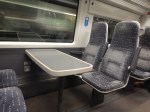
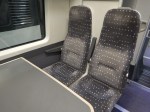
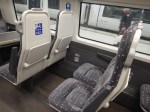
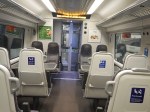
Updating the interior of the trains would not be a major problem.
Class 360 Trains Would Need A Substantial Refurbish
If Class 360 trains were to be used to Corby, they would need a substantial refurbish, but the general feeling is that this would be possible and there is a year to do it.
iNew-Build Class 745 Trains
With a small fleet of new-build Class 745 trains, the customer would get what they want! – Tables, 2+2 seating, wi-fi sockets etc.
The Greater Anglia London and Norwich specification would be a good starting point.
Will The Class 379 Trains Be Fitted With Batteries?
The BEMU Trial in 2015, showed that this was feasible. Abellio was involved in this trial and must have their own views on the technology.
- Depots are safer places.
- Electrification can be simpler.
- Regenerative braking can be handled on the train without using the overhead wires for return currents.
- Batteries increase train efficiencies.
This picture shows, the wires are going up at Corby.
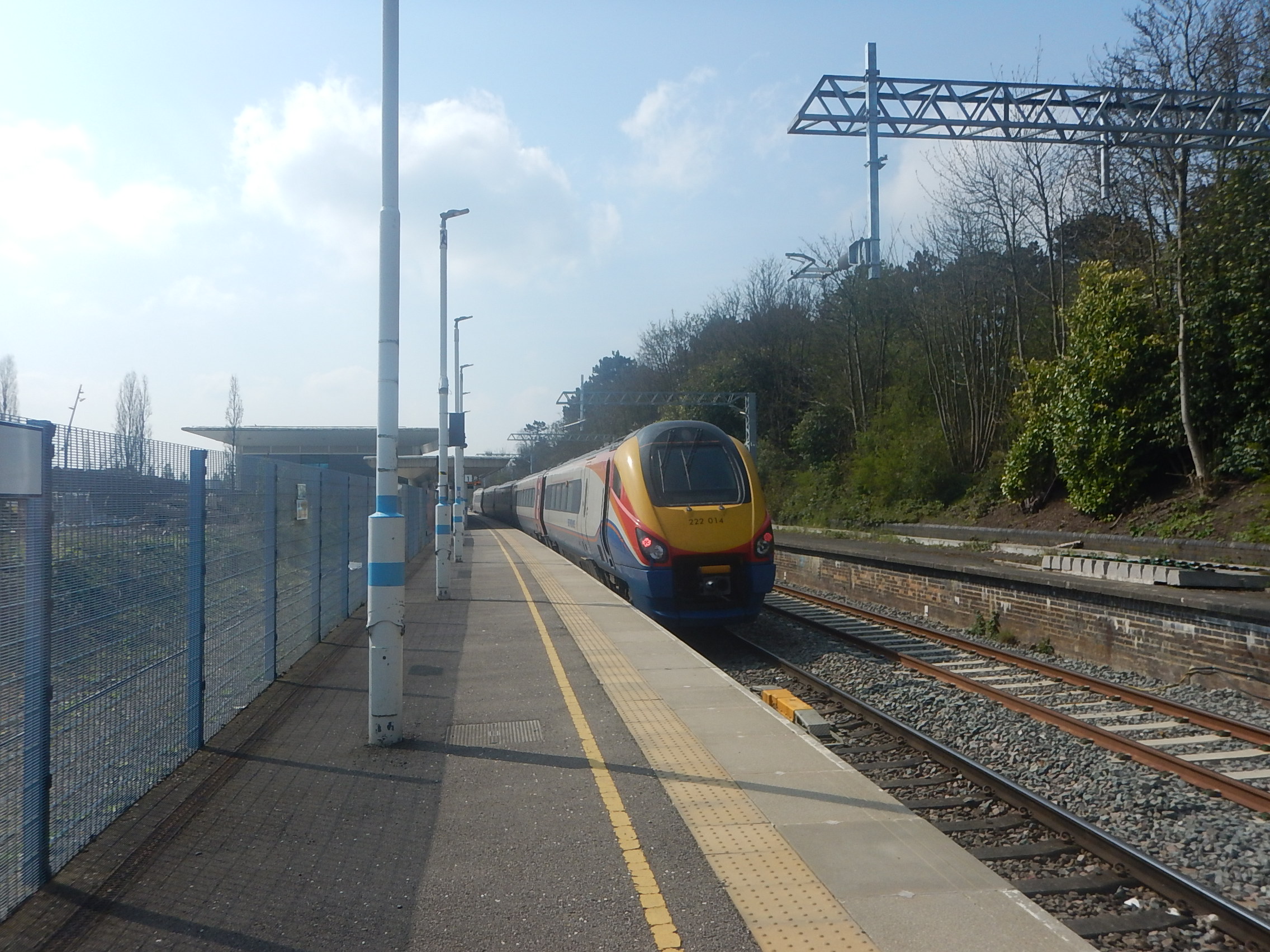
So it doesn’t look like battery power will be used to Corby.
But batteries could still be fitted for efficiency and safety reasons or possibly to power the trains to Oakham and Melton Mowbray.
What About The Rumour Suggesting Class 360 Trains Will Be Used?
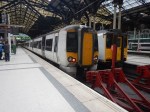
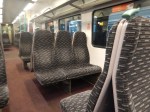
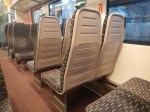
These are some pictures of a Class 360 train.


Consider.
- The Class 360 trains have a 2+3 interior with few if any tables.
- If Bombardier deliver the Class 720 trains, later than planned, availability of the Class 360 trains for Corby could be tight.
- Could they be prated to 110 mph trains, if that was felt necessary?
I feel that there would be a lot more work to prepare the trains for Corby and a higher chance, they would be late!
I think except as a stop-gap, it is unliklely that Class 360 trains will be used between London and Corby.
Will The Trains Be Replaced In A Few Years?
Consider.
- The London and Corby route is 79.5 miles long and takes 75 minutes with four stops, which is an average speed of 64 mph.
- At present, services between London and Corby are run using 125 mph Class 222 trains.
- The Class 222 trains have better acceleration than an InterCity 125 and much better acceleration than a Class 360 train.
- The London to Corby route is a less-than-125 mph route.
- Network Rail ia currently improving the electrification between London and Bedford, so that the route between London and Corby will be an electrified 125 mph route.
- None of the trains being considered for the service between London and Corby is faster than 110 mph.
Does all this mean that Corby services might be slower after electrification?
- Will the 125 mph upgrade to the track and electrification ensure the electric trains are faster, even if they are 100 mph trains.
- Well-driven 100-110 mph trains might be as fast.
However, the Derby, Nottingham and Sheffield expresses might be slowed, just as they are by the 100 mph Thameslink trains.
In the article in Issue 877 of Rail Magazine, four manufacturers are suggested for the bi-mode trains that will be used between London and Derby, Nottingham and Sheffield from 2022.
- Bombardier
- Hitachi
- Stadler
- Talgo
Hitachi are the only manufacturer with 125 mph bi-mode trains on the UK Network.
They have a near-identical bi-mode Class 802 train and an all-electric Class 801 train.
- Both are capable of 125 mph running.
- Conversion between the two trains involves changing the number of engines.
- Drivers are probably trained to drive both types of train.
Ideally, on the Midland Main Line, electric trains could run to Corby, with bi-mode trains running to Derby, Nottingham and Sheffield.
So when the 125 mph bi-mode trains are delivered in 2022, would it be sensible to run their 125 mph electric cousins to Corby?
- South of Market Harborough, all East Midlands Railway trains would be 125 mph electric trains, running on 125 mph tracks.
- One tph between London and Corby would need three twelve-car trains.
- Two tph between London and Corby would need six twelve-car trains.
If that is the case, then whatever train is run to Corby from December 2020, is only a stop-gap for a couple of years, where only nine four-car trains would be needed.
Would it be more economic in the long term to place the order for the bi-mode trains, with a manufacturer, who can deliver three all-electric trains by December 2020?
I believe Stadler could do that!
Conclusion
I’m fairly certain, that services between London and Corby could be run by refurbished Class 379 trains.
As there is plenty of time before service introduction, this could be a very relaxed and painless introduction of new trains. Unlike some others recently.
There may even be time to upgrade the top speed of the trains, so they fit in better with East Midlands Railway’s 125 mph expresses.
I wouldn’t be surprised, if East Midlands Railway brought in Class 379 or Class 360 trains as a stop-gap and replaced them with electric versions of the bi-modes in 2022.
But the best solution would be to obtain three twelve-car all-electric versions of the bi-modes by December 2020, to run the initial service.
- Hitachi has a 125 mph electric Class 801 train and a 125 mph bi-mode Class 802 train.
- Stadler has a 125 mph electric version of Greater Anglia’s Class 745 train and I suspect a compatible 125 mph bi-mode train.
- Bombardier are working on a 125 mph bi-mode Aventra and have been quoted as saying Aventras can be stretched to 125 mph.
It will be interesting to see what trains East Midlands Railway chooses.
But I think Stadler Class 745 trains are a distinct possibility.
- Abellio will have experience of running these trains and training drivers and other staff.
- 125 mph trains could be almost identical to those on London and Norwich services.
- Stadler have built 125 mph electric Flirts for Norway.
By juggling production a bit, they could be delivered on time for a December 2020 start of services.
Stowmarket Station To Go Step-Free
This document on the Government web site is entitled Access for All: 73 Stations Set To Benefit From Additional Funding.
Stowmarket station is on the list.
In Roaming Around East Anglia – Stowmarket Station, I said this.
The station is Grade II Listed, has the capability to handle the long London-Norwich expresses and probably only needs a step-free footbridge to be ready for the East-West Rail Link.
This picture shows the bridge.
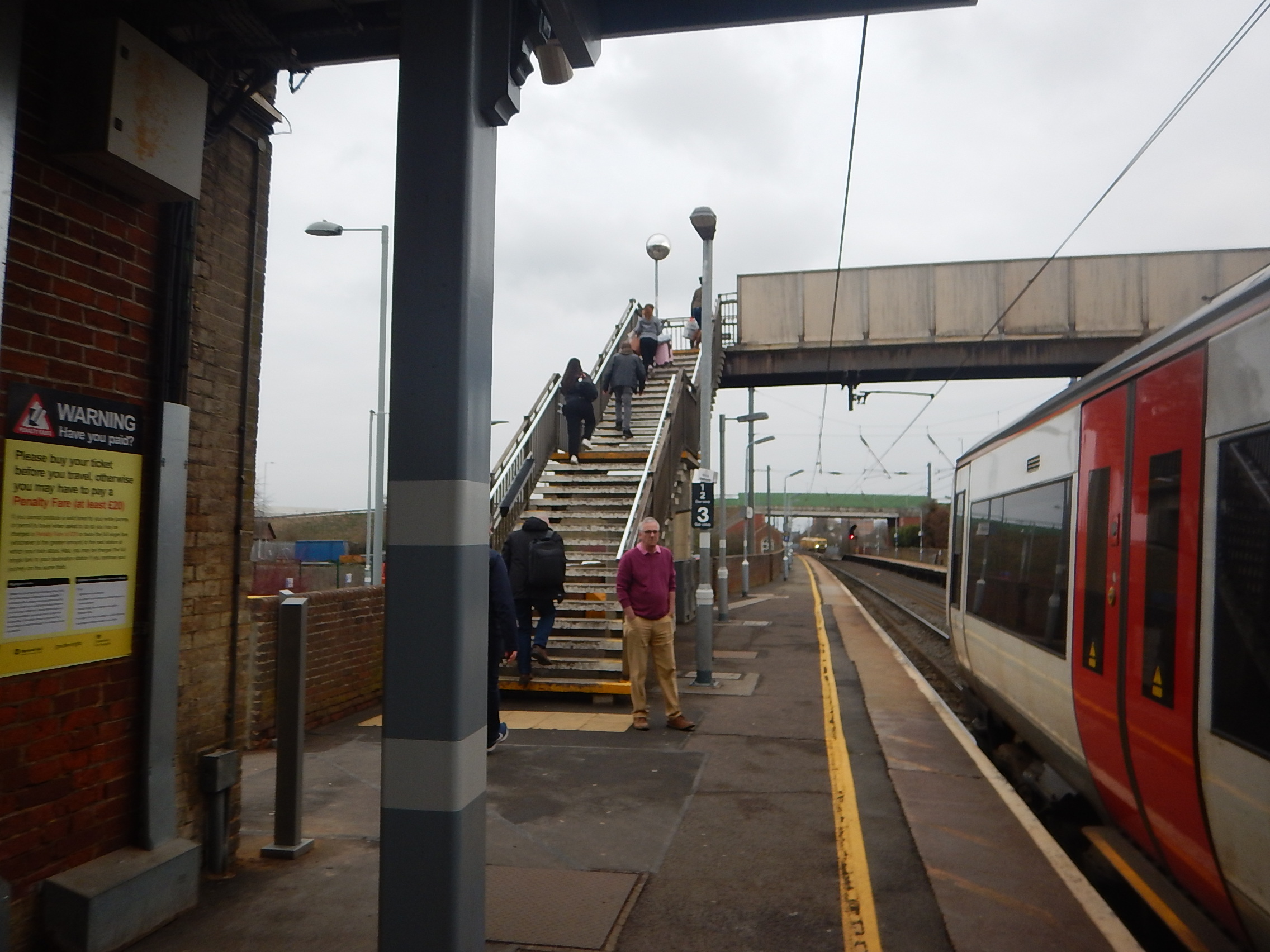
Step-free access would create an easy interchange between stations.
- On the Great East Main Line between Stowmarket and Norwich.
- On the East-West Rail Link between Stowmarket and Cambridge/Peterborough and further West.
Journeys like between Diss and Bury St. Edmunds, Newmarket, Cambridge and Peterborough will be so much easier.
Greater Anglia is already planning to increase services on both routes, so the step-free bridge will be well used.
Installing Step-Free Access
In Winner Announced In The Network Rail Footbridge Design Ideas Competition, I wrote how the competition was won by this bridge.
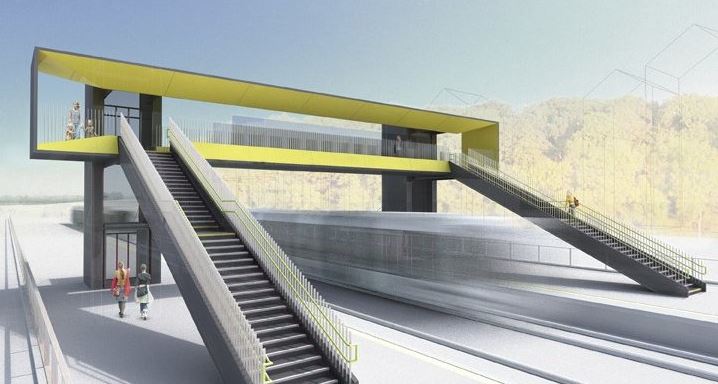
So could a factory-built bridge like this be installed at Stowmarket station?
- I think this could be possible, if the existing bridge were to be removed.
- At least there is a level crossing by the station, which could be used as an emergency means of crossing the railway.
I very much favour this approach. which surely could be installed on a weekend possession.
Greater Anglia Train Drivers Taking Leap Into New Technology
The title of this post is the same as that of this article on Rail Engineer.
This is the first paragraph.
New state-of-the-art train simulators are being used to train 768 Greater Anglia drivers that will be driving the new trains due to replace all of the company’s existing fleet from later this year, when it starts to receive 38 bi-mode and 20 all-electric trains from Stadler followed by 111 more electric commuter trains from Bombardier.
The article is a must-read, as it gives a good insight into part of the process of getting mew trains into service.
Using Platform 12 At Stratford Station
Normally, if you take a train between Tottenham Hale and Stratford station, it terminates in Platform 11.
However, on Monday, I ended up in Platform 12.
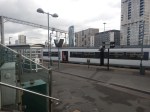
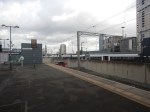
Note there was no staff or information anywhere to be seen. Passengers were roaming aimlessly looking for the next train to the North.
I was not inconvenienced, as I was going to Marks and Spencer in Eastfield to get some food.
On enquiring at the London Overground Information Desk, it appeared there had been some signal problems, so they had swapped platforms.
Norwich In Ninety And Ipswich In Sixty Is Just Seventy Days Away!
This article on the Norwich Evening News is entitled At Last! High Speed Train Service Delivering Norwich To London In 90 Minutes Will Soon Begin.
This is the key section.
The first of the faster services are due to come into service on Monday, May 20.
The 90-minute services will depart from Norwich at 9am and 5pm, Monday to Saturday, and will call at Ipswich at 9.33am and 5.33pm.
Meanwhile the London Liverpool Street service departs at 11am and 7pm, Monday to Saturday, and calls at Ipswich at 11.55am and 7.57pm.
Greater Anglia said it will shave 12 minutes off the current fastest journey between Norwich and London and cut the fastest journey between Ipswich and London by four minutes.
I shall be on the first train from London as far as Ipswich.
I don’t want to get tainted do I?
Roaming Around East Anglia – Reedham Station
If you have to travel between Lowestoft and Great Yarmouth stations by train, you have to change at Reedham station. Or you should be able to!
These pictures show the station.
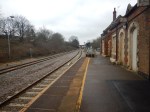
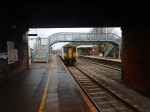
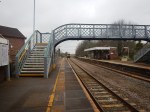
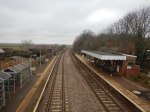
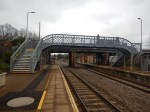
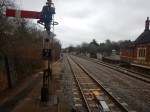
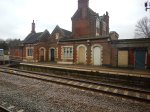
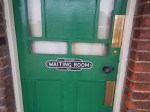
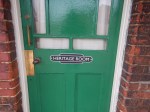
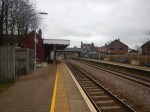
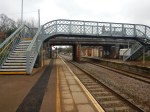
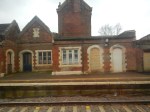
You can’t do the direct journey between East Anglia’s two largest Eastern towns at present, as Network Rail have got their special Project Management knickers on. You know the ones with a twist!
So passengers between Lowestoft and Great Yarmouth have three options.
- Take an hour and a half jurney via Norwich.
- Take a bus, which probably visits half of the villages in the local area.
- Drive.
Hopefully, the Reedham to Great Yarmouth service will be restored sometime in the near (?) future.
This will allow two ways to travel by rail between Lowestoft and Great Yarmouth.
Changing Trains At Reedham Station
Theoretically, this should work, especially, if trains were timetabled so that passengers waited perhaps a couple of minutes on what I suspect in winter can be a very pleasant station.
Look at the footbridge. Do Greater Anglia really expect elderly travellers or those with bikes, buggies and baggage to use the Victorian footbridge?
I suspect Greater Anglia don’t see this as a feasible way of attracting more passengers out of their cars and from the buses.
But Network Rail haven’t got the millions of pounds needed to bring the station into the Twentieth Century!
A Shuttle Train Reversing At Reedham
It would be possible for a train to shuttle between Lowestoft and Great Yarmouth, which could reverse in Reedham station.
In Norfolk Rail Line To Remain Closed As £68m Upgrade Project Overruns, I asked if the new Class 755 trains had a fast reverse procedure, as Greater Anglia’s services are full of stations, where a train must arrive and leave a few minutes later.
I wrote the following.
A simple system could be as follows.
- On arrival in a station, the driver would put the train into a standby mode, when it was safely stopped.
- The driver would then walk through the train to the second cab.
- Whilst the driver is changing ends, the conductor is opening and closing the train doors and supervising the loading and unloading of passengers.
- On arrival in the second cab, the driver would wake up the train and check everything.
- After the doors are closed and having received the all clear from the conductor and a green light from the signals, the driver would proceed.
At all times, the driver and conductor, would have emergency remote controls to immobilise the train, if something is not what it should be.
Modern automation is certainly able to design a very safe system, that would save time at every reverse.
The stop ar Reedham station would become an almost normal stop and I would expect that a train could reverse in about two or three minutes.
Use Only One Platform At Reedham
Could this be the most affordable solution?
- The track layout at Reedham station would be modified, so that all trains would use the Norwich-bound Platform 1.
- Platform 1 is improved with a quality waiting room and a coffee kiosk, to make a short wait between trains more pleasant.
If there were two trains per hour on both the Lowestoft and Great Yarmouth routes, I’m sure that with the new signalling and good driving, a single-platform at Reedham station would work.
Trains from Norwich could call at XX00, XX15, XX30 and XX45, with trains to Norwich calling at XX07, XX22, XX37 and XX52.
If trains stopped in the right order, then there would be a maximum wait of eight minutes in a comfortable waiting room at Reedham station.
Even with only one train per hour between Norwich and Yarmouth via Reedham, I’m certain an acceptable timetable could be devised.
Greater Anglia’s Class 755 trains
Greater Anglia have ordered thirty-eight Class 755 trains, which have a total of 138 cars.
These will replace twenty-six assorted trains, which have a total of 55 cars.
This is a increase of 46% in the number of trains and 150% in the number of cars.
Greater Anglia didn’t increase the fleet so that could sit in sidings, so I think we can expect some new services and higher frequencies.
Conclusion
I’m certain that a sensible hourly service between Lowestoft and Great Yarmouth stations can be devised.
Roaming Around East Anglia – Newmarket Station
I went to Newmarket station for two reasons; to assess if the East West Rail Consortium’s plans for Newmarket were feasible and also to see a friend, who trains racehorses in the town, to tell him about the plans.
I should say, that I haven’t been to Newmarket for perhaps six years and it struck me that the town was much more crowded with traffic, with a lot of full car-parks. Around the station, there were lots of cars parked. How many were owned by commuters going to Cambridge.
The Plans Of The East West Rail Consortium For Newmarket
In this document on the East-West Rail Consortium web site, this is said.
Note that doubling of Warren Hill Tunnel at Newmarket and
redoubling between Coldham Lane Junction and Chippenham Junction is included
in the infrastructure requirements. It is assumed that most freight would operate
via Newmarket, with a new north chord at Coldham Lane Junction, rather than
pursuing further doubling of the route via Soham.
So would it be possible to create a double-track railway through Newmarket station?
These are pictures that I took of the station.

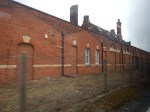
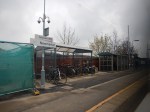
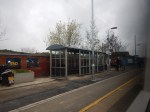
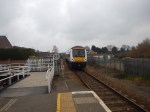
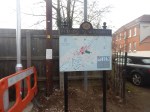

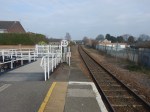
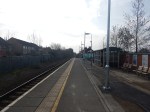

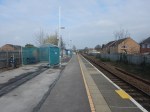
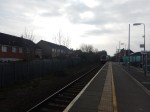
It does appear that there is space for another track on the other side of the current track to the platform.
Newmarket station has some positive attributes.
- It is in the centre of the town.
- There is enough shelter and storage for cycles.
- The platform will be long enough for Greater Anglia’s new four-car Class 755 trains.
- There is a wide, spacious platform.
But these are outweighed by these drawbacks.
- The vehicle access is terrible.
- There is no Kiss-and-Ride facility.
- Car parking is in the surrounding streets and as it’s free, the local roads will get choked, especially when Greater Anglia’s larger trains are introduced later this year.
- The East West Rail Link will introduce a two trains per hour (tph) through the station.
- Will the platform at Newmarket be long enough for the East West Consortium trains, which will be running between Ipswich and Oxford? Probably not!
- There is no coffee kiosk, shop or toilets.
But above all it is not a destination station., that gives a good impression for visitors and tourists, who could make up a proportion of travellers.
The East West Rail Consortium are planning a parkway station on the A14 to the North of Newmarket and this will surely solve the problem of traffic and parking, that blocks the local streets,
But I believe that Newmarket needs a station, that will attract visitors.
My pictures, show the previous station building still standing next door to the current station.
- This could be converted into a first-class station with excellent passenger facilities.
- There could be a large taxi rank.
- There could be passenger drop-off and pick-up facilities.
- There is space for a bus connection to the race-course on race-days.
- Limited car-parking of a short-term nature.
- A two-hundred metre long platform could be built to accommodate the longest-possible trains.
This Google Map, shows the combined site of the current and previous stations.
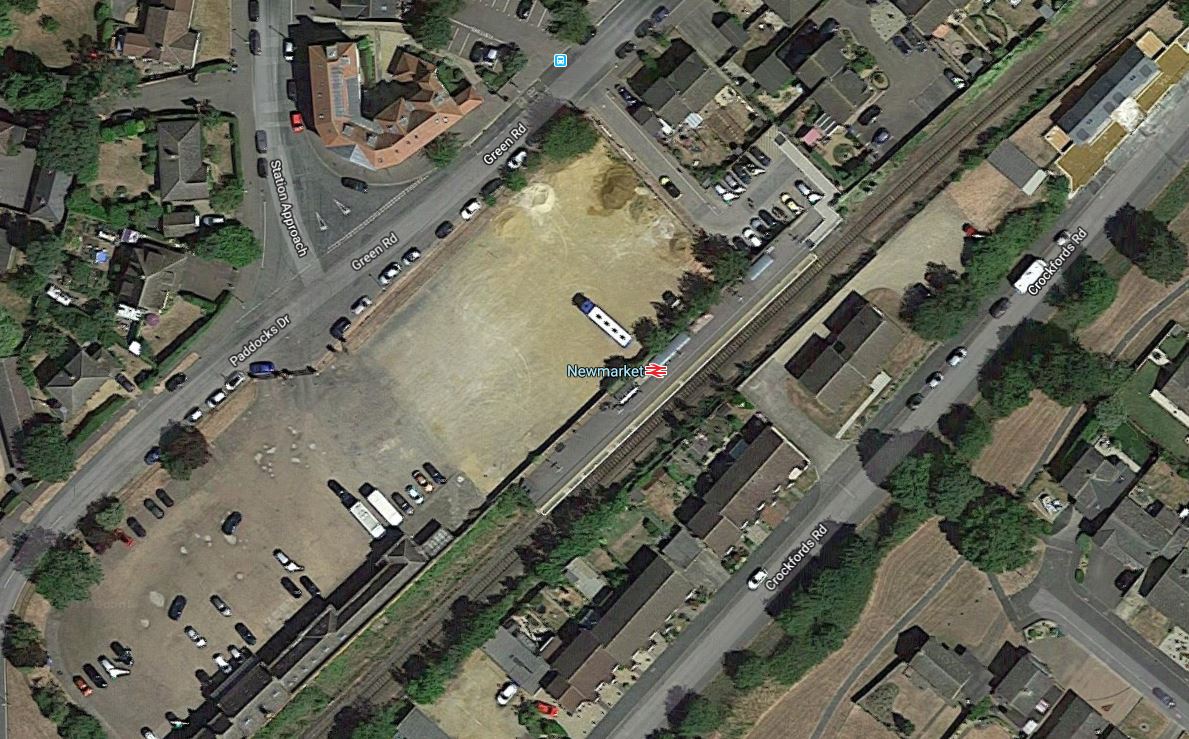
Both stations are effectively side-by-side, with the current station to the East.
The large area behind the stations is parking for horse-boxes during the numerous sales at Tattersalls. For much of the year, it is virtually empty.
I’m pretty sure, that with some management, the area could serve both its current purpose and as a forecourt to a landmark station,, that would enhance the town and the racing industry.
I don’t think that a second platform would be needed for the following reasons.
- Adding the step-free access to the seond platform would cost a seven figure sum.
- Commuters into Cambridge would be encounraged to use the proposed A14 Parkway station.
- Probably only on race days, would there be large enough numbers of passengers to need to accommodate two trains in the station at the same time..
However space could be left, if a second platform were to be needed in the future.
Conclusion And Recommendations
The current Newmarket station is totally inadequate for the current service of one three-car train per hour in both directions.
Greater Anglia’s new Class 755 trains could be a car longer and will certainly attract more passengers to use Newmarket station, as new trains always do!
I feel that in the next couple of years, possible additional trains, more passengers and lack of car parking will create problems at Newmarket station.
I would recommend the following actions.
A14 Parkway Station
Work should start as soon as is practical for the A14 Parkway station, proposed by the East West Rail Consortium.
This station would have the following Greater Anglia services.
- Peterborough and Colchester – 1 tph
- Ipswich and Cambridge – 1 tph
These two services would give the following frequencies to these places.
- Bury St. Edmunds – 2 tph direct
- Colchester – 1 tph direct and 2 tph with a change at Ipswich
- Diss – 1 tph with a change at Stowmarket
- Ipswich – 2 tph direct
- London – 1 tph with a change at Cambridge and 1 tph with a change at Ely
- Newmarket – 1 tph direct
- Norwich – 1 tph with a change at Cambridge, 1 tph with a change at Ely and 2 tph with a change at Stowmarket
- Peterborough – 1 tph direct and 1 tph with a change at Cambridge
- Stansted Airport – 2 tph with a change at Cambridge
- Stowmarket – 2 tph direct
A14 Parkway station sitting at the junction of two of the busiest roads in East Anglia; the A11 and A14, and two important rail routes,would be one of the most important stations in the East.
The station could only be named after Ancient Britain’s most famous queen, who by repute once lived in the area.
Upgrade Newmarket Station
Hopefrully, the A14 Parkway station would ease the problems at Newmarket station and this would enable work to progress on the design of an upgraded Newmarket station, that would serve the town, the racing industry and the towns tourist attractions.
Improved Train Services To/From Cambridge
Once the East West Rail Link opens between Cambridge and Oxford, the current service between Ipswich and Cambridge, could eventually be replaced with a service between Manningtree and Oxford or possibly Reading, that calls at Ipswich, Stowmarket, Bury St. |Edmunds, A14
Parkway, Newmarket, Cambridge, Cambridge South, Bedford, Bletchley, Milton Keynes, Bicester, Oxford and several smaller intermediate stations.
The three Cambridge stations of Cambridge, Cambridge North and Cambridge South will also increasingly be connected to the surrounding stations like A 14 Parkway, Bury St. Edmunds, Cambourne, Ely, Kings Lynn, March, Newmarket and Peterborough. Services will be at a frequency of at least two tph, with some as high as four tph.
In addition, there could be new services to Haverhill and Wisbech.
Newmarket will get a share of these services and I wouldn’t be surprised to see these frequencies from Newmarket station to the three Cambridge stations.
- Cambridge – 4 tph direct
- Cambridge North – 2 tph direct and 2 tph with a change at Cambridge
- Cambridge South – 2 tph direct and 2 tph with a change at Cambridge
Cambridge is becoming one of the most important cities in Europe and Newmarket can benefit by holding on to big sister’s skirts.
West Suffolk And London Services
If you look at the sizeable towns in Suffolk, the following ones that are rail connected, do not have a direct train service to London.
- Beccles
- Bury St. Edmunds
- Felixstowe
- Halesworth
- Lowestoft
- Newmarket
- Sudbury
- Woodbridge
Greater Anglia’s new Class 755 trains, will be running three trains per day, between Liverpool Street and Lowestoft, which will reduce this list to just.
- Bury St. Edmunds
- Felixstowe
- Newmarket
- Sudbury
If Felixstowe is discounted as it is on a branch line busy with freight trains and Sudbury because it is on a single track branch line, we are left with just.
- Bury St. Edmunds
- Newmarket
Add in the proposed A14 Parkway station and is it feasible to run a service between London Liverpool Street and Bury St. Edmunds via Cambridge, Newmarket and A14 Parkway.
I calculate that a round trip would be possible in around four hours, thus making three trains per day possible.
I suspect, there would be capacity problems on the Southern section of the West Anglia Main Line, but if this were to be four-0tracked as is proposed, this would ease that problem.
So a service between West Suffolk and London, is probably one for the future.
A Final Conclusion
Newmarket can benefit from East West Rail, but the two parties must agree objectives that don’t cause problems for the other.
 The Anonymous Widower