Cummins Enters Collaboration To Demonstrate Hydrogen Ecosystem
The title of this post, is the same as that of this article from Rental Management.
This is the first three paragraphs.
Cummins®, Columbus, Ind., has signed a Memorandum of Understanding (MoU) with Terex® Advance Mixer, Fort Wayne, Ind., a subsidiary of Terex Corp.; Edge Materials, Cloverdale, Ind.; and PCC Hydrogen, Louisville, Ky., to produce, trial and prove concrete mixer trucks powered by Cummins’ zero-carbon, hydrogen-fueled internal combustion engines.
The project aims to develop a full hydrogen ecosystem together with a hydrogen producer, vehicle manufacturer and end user. It is the first MoU of its kind signed by Cummins.
he four companies will unite their efforts, which will see Cummins’ X15H hydrogen internal combustion engines integrated into the Terex Advance Commander Series of front-discharge concrete mixer trucks. Edge Materials, a ready-mix concrete provider and Terex Advance customers will operate the hydrogen-powered trucks in challenging real-world environments including on construction sites and critical infrastructure projects. PCC Hydrogen, an ultra-low carbon intensity hydrogen producer, will supply the hydrogen fuel as well as stationary storage and dispensing services.
Note.
- The X15H engine also comes in diesel and natural gas versions.
- Cummins also make electrolysers, that can produce hydrogen.
- It looks like the collaboration has all bases covered.
- I suspect similar deals could be done all over the world and with other types of trucks.
It all sounds like a sensible way to go to me.
Iarnród Éireann And Latvia’s DIGAS To Trial Europe’s First Retrofitted Hydrogen Freight Locomotive
The title of this post, is the same as that of this press release from Irish Rail.
This is the sub-heading.
Cleaner, cheaper and practical initiative towards decarbonisation goals
These are the first three sections.
Cleaner
Iarnród Éireann Irish Rail is providing a locomotive and will test a retrofitted hydrogen locomotive using a cleaner burning renewable fuel.
Cheaper
DIGAS will provide a cost-effective way how to introduce a hydrogen in the fleet of existing diesel locomotives by retrofitting diesel locomotives with a specialised internal combustion engine (ICE) hydrogen system.
Practical
The collaboration will demonstrate a practical path towards complete decarbonisation of the diesel locomotive fleet.
Note.
- The eighteen 071 Class locomotives were built in Canada by General Motors.
- Some date from as early as 1976.
- In the UK, there is a similar project to convert Class 66 locomotives to dual fuel, which I wrote about in Clean Air Power Adds Hydrogen To Class 66 Fuel Mix.
It does look that the technology is being developed to convert freight locomotives to hydrogen.
Cummins Agrees To Integrate Its Hydrogen ICE Technology Into Terex® Advance Trucks
The title of this post, is the same as that of this article on H2 View.
These three paragraphs outline the deal.
Cummins and Terex® Advance have signed a Letter of Intent (LoI) to integrate hydrogen internal combustion engines (ICE) into Terex’s Commander Series.
The Commander Series trucks are currently powered by Cummins’ diesel engines, but the company will now provide its X15H hydrogen ICE when series production of the technology begins later this decade.
The X15H is based on familiar combustion engine technology, with integration into the truck chassis being straightforward and doesn’t require a major overhaul of vehicle design or business operations.
Note.
This page is the Terex Advance web site.
This page on the Terex web site shows the Terex Advance Commander series.
I think it is true to say to UK and European eyes, these trucks are an unusual design.
In Cummins Fuel-Agnostic X Series Platform, there is a link to a Cummins video, which explains Cummins multi-fuel technology.
This is a side view of the top-of-the-range monster.
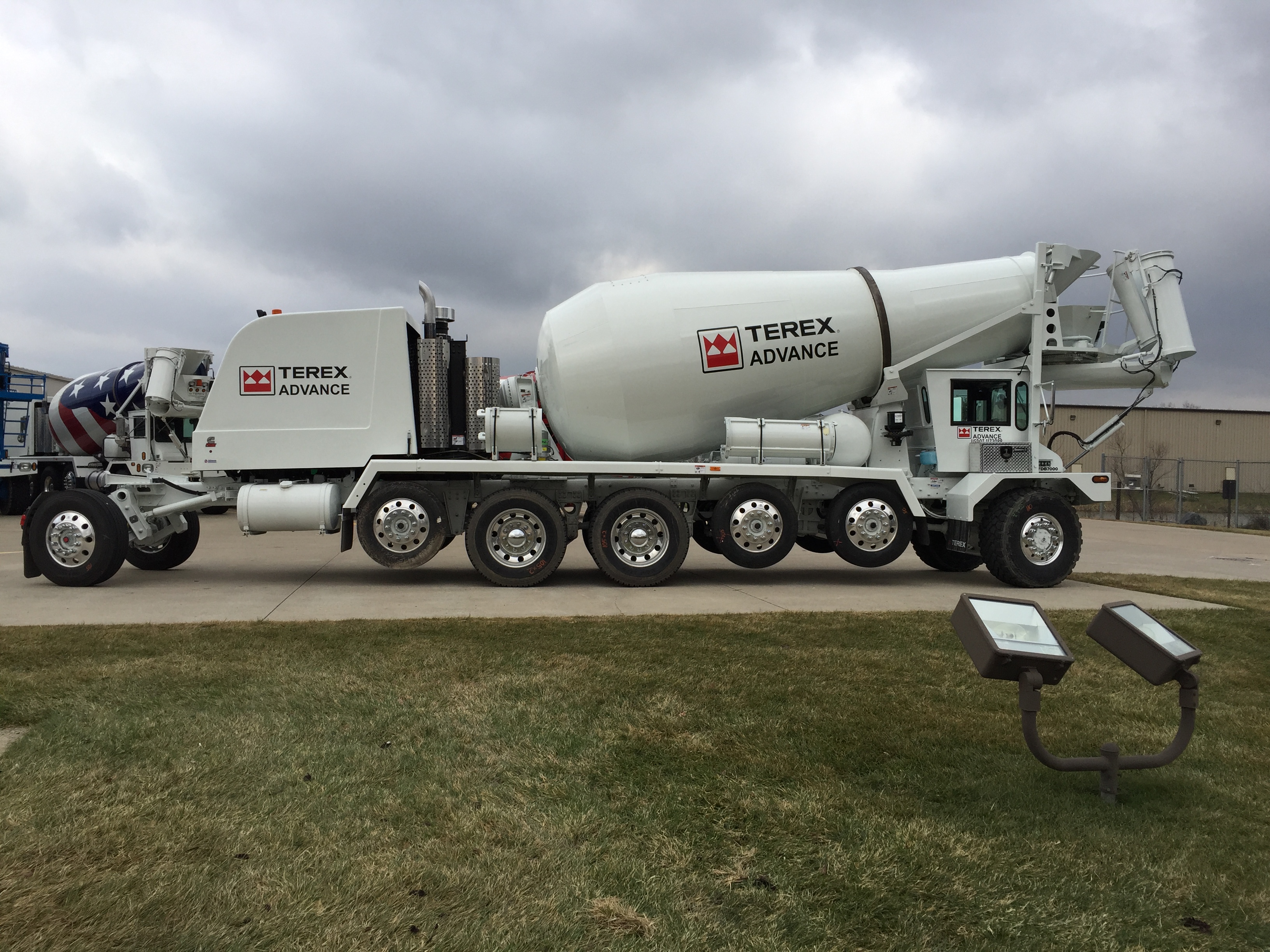
Note.
- Front is to the right.
- I suspect the driver doesn’t have to get out of the cab to discharge the concrete.
- The engine is at the rear with vertical exhausts.
- All axles are driven.
You’d certainly notice one of these if they were to be used in the City of London.
And this is the baby of the range.
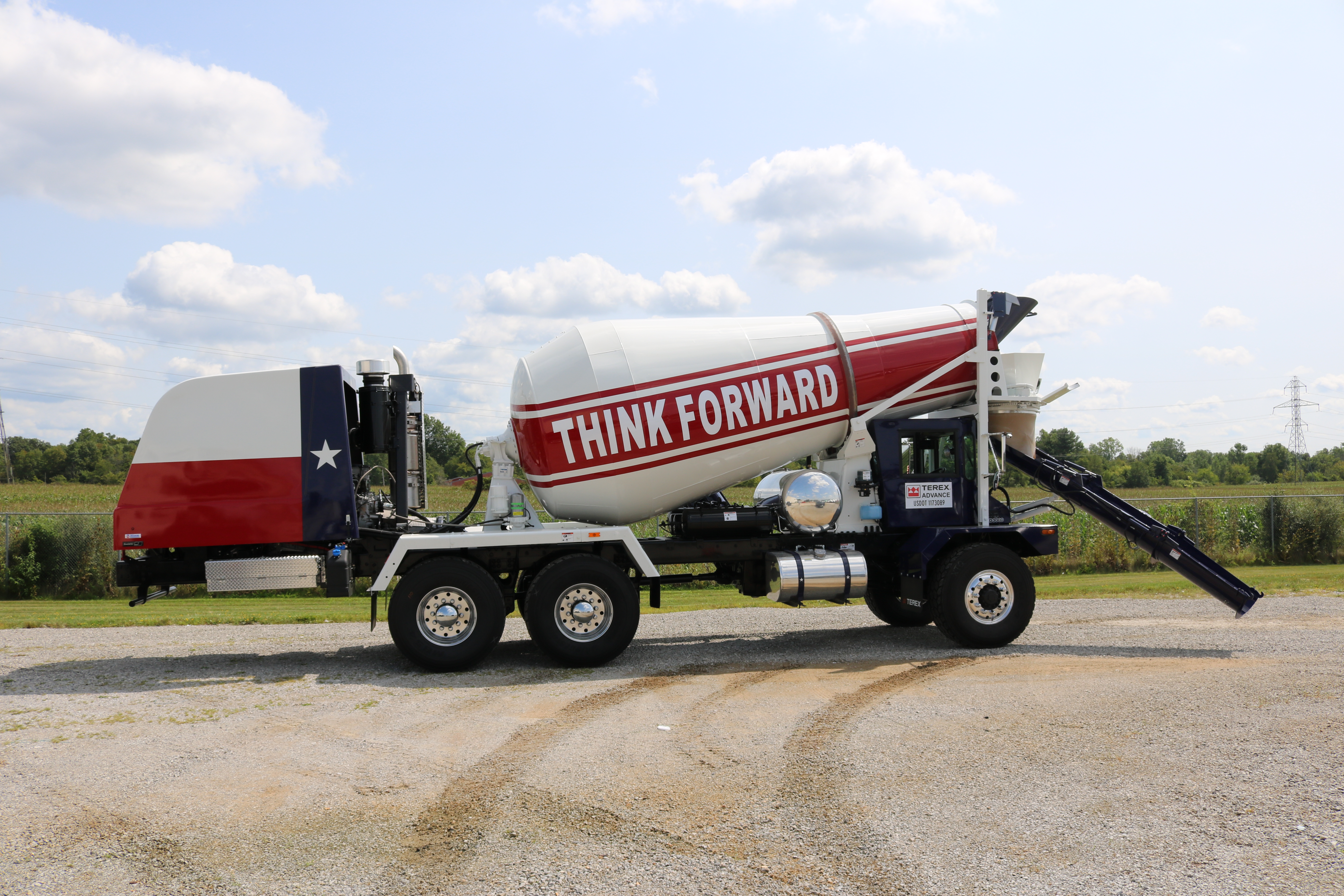
Three axles is normal for the UK. so I wonder if this machine will ever make it across the pond.
This last paragraph in the article describes the X15H hydrogen internal combustion engine.
The X15H was showcased at the Advanced Clean Transportation (ACT) Expo in May (2023), along with its hydrogen ICE-powered concept truck. The X15H features a 700-bar pressure 80kg capacity hydrogen storage system and a range of more than 500 miles, with up to 500 horsepower.
Could one of these trucks really deliver ready-mix concrete from London to Manchester and return?
Conclusion
The article says that integration of the hydrogen technology is straightforward and if you watch the Cummins video, the animation says it is.
But surely the big advantage on construction sites, is that all the workers will not get the dose of pollution, that they would currently get from a diesel cement mixer delivering a load of ready-mixed concrete, that had to be distributed and laid.
I think this could be a very neat application of hydrogen technology and Cummins will be looking for more applications of a similar nature.
Lord Bamford: We’re Too Mesmerised By Musk — Here’s Why I’m Building A Hydrogen JCB
The title of this post, is the same as that of this article in the Sunday Times.
This is the sub-heading.
JCB’s Lord Bamford has spent £100m on a hydrogen engine. Tesla’s tech won’t suit everyone, he tells Jim Armitage
These are my thoughts.
The Need For Zero-Carbon Construction Equipment
Construction sites can be dangerous places and in addition to the obvious dangers, there are hidden pollutants in the atmosphere on sites.
Health and Safety will surely demand an improvement in air quality on construction sites for the protection of the workforce and nearby residents.
If JCB can produce zero-carbon construction equipment, then whether it is electric or hydrogen, this will be to their advantage.
High Speed Two And Low-Carbon Construction
High Speed Two is the UK’s biggest construction project and these posts on this blog, talk about low-carbon construction.
- HS2 Reveals Dramatic Carbon Saving With Ambitious Modular Design For Thame Valley Viaduct
- HS2 Smashes Carbon Target
- HS2 To Trial New Building Method Which Could Provide Carbon-Free Energy
- New HS2 Pilot Project Swaps Steel For Retired Wind Turbine Blades To Reinforce Concrete
- World First As HS2 Trials Dual-Fuel Piling Rig On London Site
If High Speed Two are thinking this way, how many other projects will be built in a similar way?
Decarbonising Cargo Handling
It should be noted that JCB are involved in Freeport East at Felixstowe/Harwich.
Ports will be the sort of workplaces, where all vehicles should be zero-carbon, to protect the workforce. Some of the container handling machines are large and would be ideal for hydrogen.
Decarbonising Agriculture
JCB also make tractors, like the Fastrac and other equipment for agriculture. As they often work around people, hydrogen could be much better.
New Markets
Zero-carbon engines will result in new products for new markets.
Lord Bamford is on track to create valuable new markets for his diggers and other equipment.
Hydrogen-Powered Land Speed Record
JCB already hold the land speed record with the JCB Dieselmax, at over 350 mph.
This paragraph from Wikipedia describes the powerplant.
The car is powered by two specially-tuned versions of the production JCB444 powerplant, developing up to 750 brake horsepower (560 kW) each (over five times the power output of the production version with 90 psi (6 bar) of boost) and featuring four cylinders and 5 litres of displacement, accompanied by two stage turbochargers, intercooler and aftercooler.
I believe that getting that amount of power out of a production diesel engine, shows that JCB’s combustion engineers could do the same for a hydrogen-powered vehicle.
Hoerbiger And HD Hyundai Infracore Cooperate On Hydrogen-Powered Combustion Engine
The title of this post, is the same as that of this article on Hydrogen Central.
These two paragraphs outline the story.
This year’s ConExpo in Las Vegas was full of surprises and amazing news. Among the stars of the exhibition was the hydrogen-powered internal combustion engine (ICE) from HD Hyundai Infracore equipped with H2PFI injectors made by HOERBIGER.
This hydrogen-powered ICE can produce a power output of 300 kW (402 HP) and will see mass production in 2025. It will be installed on buses, trucks and construction equipment. While meeting Zero CO2 and Zero Impact Emission requirements it is also 25-30% more economical than battery packs or fuel cells when vehicle price and maintenance costs are considered. One fueling of 10 minutes allows the vehicle to drive for a distance of up to 500 km (310.6 miles).
The more of these stories I read about hydrogen internal combustion engines, the more they convince me, that this is the way to go.
These advantages keep repeating themselves.
- Large range.
- Quick refuelling times.
- Understandable technology.
- Suitable for heavy applications.
- Similar manufacturing to current diesel and petrol engines.
- Less exotic rare earths and metals.
- Lower environmental footprint.
- Can be converted from existing diesels.
The one thing they all need is different lean-burn fuel injection. Hence Hyundai’s tie-up with HOERBIGER.
Centrica Business Solutions Begins Work On 20MW Hydrogen-Ready Peaker In Redditch
The title of this post, is the same as that as this news item from Centrica Business Systems.
This is the sub-heading.
Centrica Business Solutions has started work on a 20MW hydrogen-ready gas-fired peaking plant in Worcestershire, as it continues to expand its portfolio of energy assets.
These three paragraphs outline the project.
Centrica has purchased a previously decommissioned power plant in Redditch, and is set to install eight UK assembled containerised engines to burn natural gas.
Expected to be fully operational later this year, the peaking power plant will run only when there is high or peak demand for electricity, or when generation from renewables is low. The Redditch project will have the capacity to power the equivalent of 2,000 homes for a full day when required, helping to maintain stability and reliability on the grid.
The engines will also be capable of burning a blend of natural gas and hydrogen, futureproofing the site and helping the UK transition towards a decarbonised energy system.
- The original power station had Rolls-Royce generators.
- Cummins and Rolls-Royce mtu and possibly other companies can probably supply the dual fuel generators.
- Cummins have received UK Government funding to develop hydrogen-powered internal combustion engines.
- This press release from Cummins, which is entitled Dawn Of A New Chapter From Darlington, gives more details on Cummins’ plans for the Darlington factory and hydrogen.
Given that Cummins manufactured sixty-six thousand engines in Darlington in 2021 and it is stated that these containerised engines will be assembled in the UK, I feel, that these engines may be from Cummins.
Centrica’s Plans
This paragraph in the Centrica Business Systems news item, outlines their plans.
The Redditch peaking plant is part of Centrica’s plans to deliver around 1GW of flexible energy assets, that includes the redevelopment of several legacy-owned power stations, including the transformation of the former Brigg Power Station in Lincolnshire into a battery storage asset and the first plant in the UK to be part fuelled by hydrogen.
As Redditch power station is only 20 MW, Centrica could be thinking of around fifty assets of a similar size.
Brigg Power Station
The Wikipedia entry for Brigg Power station gives these details of the station.
- The station was built in 1993.
- It is a combined cycle gas turbine power station.
- The primary fuel is natural gas, but it can also run on diesel.
- It has a nameplate capacity of 240 MW.
Brigg power station is also to be used as a test site for hydrogen firing.
This news item from Centrica is entitled Centrica And HiiROC To Inject Hydrogen At Brigg Gas-Fired Power Station In UK First Project.
These paragraphs from the news item explains the process.
The 49MW gas fired plant at Brigg is designed to meet demand during peak times or when generation from renewables is low, typically operating for less than three hours a day. Mixing hydrogen in with natural gas reduces the overall carbon intensity.
It’s anticipated that during the trial, getting underway in Q3 2023, no more than three per cent of the gas mix could be hydrogen, increasing to 20% incrementally after the project. Longer term, the vision is to move towards 100% hydrogen and to deploy similar technology across all gas-fired peaking plant.
HiiROC’s proprietary technology converts biomethane, flare gas or natural gas into clean hydrogen and carbon black, through an innovative Thermal Plasma Electrolysis process. This results in a low carbon, or potentially negative carbon, ‘emerald hydrogen’.
Because the byproduct comes in the form of a valuable, solid, pure carbon it can be easily captured and used in applications ranging from tyres, rubbers and toners, and in new use cases like building materials and even as a soil enhancer.
It looks to me, that HiiROC are using an updated version of a process called pyrolysis, which is fully and well-described in this Wikipedia entry. This is the first paragraph.
The pyrolysis (or devolatilization) process is the thermal decomposition of materials at elevated temperatures, often in an inert atmosphere. It involves a change of chemical composition. The word is coined from the Greek-derived elements pyro “fire”, “heat”, “fever” and lysis “separating”.
Pyrolysis is more common than you think and is even used in cooking to do things like caramelise onions. This is a video of a chef giving a demonstration of caramelising onions.
On an industrial scale, pyrolysis is used to make coke and charcoal.
I came across pyrolysis in my first job after graduating, when I worked at ICI Runcorn.
ICI were trying to make acetylene in a process plant they had bought from BASF. Ethylene was burned in an atmosphere, that didn’t have much oxygen and then quenched in naphtha. This should have produced acetylene , but all it produced was tonnes of black soot, that it spread all over Runcorn.
I shared an office with a guy, who was using a purpose-built instrument to measure acetylene in the off-gas from the burners.
When he discovered that the gas could be in explosive limits, ICI shut the plant down. The Germans didn’t believe this and said, that anyway it was impossible to do the measurement.
ICI gave up on the process and demolished their plant, but sadly the German plant blew up.
It does look like HiiROC have tamed the process to be able to put hydrocarbons in one end and get hydrogen and carbon black out the other.
I wonder how many old and possibly dangerous chemical processes can be reimagined using modern technology.
It certainly appears that Centrica are not holding back on innovation.
Conclusion
I’ve never run a large electricity network. Not even a simulated one.
But I’m fairly sure that having a large number of assets of different sizes, that can be optimised to the load and the fuel available, creates a more reliable and efficient network.
Heavy energy users may even have their own small efficient power station, that is powered by gases piped from the local landfill.
Ricardo Supports Industry Leaders To Develop Innovative Dedicated Hydrogen Engine
The title of this post, is the same as that of this press release from Ricardo.
This is the sub-heading.
Ricardo, a global strategic, environmental, and engineering consulting company, has delivered a hydrogen-fuelled research engine to global engine specialist Cummins and automotive supplier BorgWarner, as part of Project BRUNEL part funded by the Advanced Propulsion Centre (APC)
These four paragraphs outline the project.
Cummins is a global specialist in diesel and alternative fuel engines and generators, and related components and technology. BorgWarner is an automotive tier 1 supplier and specialist in the design and manufacture of systems for electrified and conventional propulsion types, that includes injection equipment for conventional and renewable fuels. BorgWarner recently announced the intention to spin off its Fuel Systems segment. The intended company name is PHINIA Inc. PHINIA is expected to be a product leader in fuel systems, starters, alternators and aftermarket distribution.
The project aims to support internal combustion engine (ICE) sub-system suppliers to increase their use of hydrogen as an alternative zero-emissions fuel solution across the light commercial vehicle market.
The engine is specifically designed to burn only hydrogen – with no supporting fuels that could give rise to any carbonaceous, or excessive air quality emissions.
Experts in hydrogen technology and integration, Ricardo has provided an engine based upon its world-renowned series of single cylinder research units, which can help the research teams evaluate a wide variety of fuels. The engine is designed to help engineers evaluate a variety of injector types and will support increased fuel efficiency, reduced air quality emissions and the move towards carbon-free heavy-duty propulsion.
Reports of the death of the internal combustion engine are greatly exaggerated.
The Aims Of The Project
This talks about the light commercial market, which for Cummins means, that this engine could be a replacement for their B Series engine, which is described in Wikipedia like this.
In production since 1984, the B series engine family is intended for multiple applications on and off-highway, light-duty, and medium-duty. In the automotive industry, it is best known for its use in school buses, public service buses (most commonly the Dennis Dart and the Alexander Dennis Enviro400) in the United Kingdom, and Dodge/Ram pickup trucks.
A version is also used in London’s New Routemaster buses.
Speculation About A Hydrogen-Powered Dodge Ram Pickup
This article on Mopar Insiders is entitled Next-Gen Ram Heavy Duty Could Feature Cummins Hydrogen Powerplant!
It has this sub-heading.
Fast Refuel Times, Extended Range, & Zero-Emissions…
Sounds great for wide open spaces.
I’ve also read in an interview with a retiring Cummins Executive, who said that Dodge RAM trucks are being converted to hydrogen by enthusiasts.
Could New Routemasters Be Converted To Hydrogen?
In the Wikipedia entry for the Cummins B Series engine, this is said about the engine in a New Routemaster.
The 4.5L ISB is essentially a four-cylinder, two-thirds version of the 6.7L ISB rated at 185 hp (138 kW), used in the New Routemaster, a series hybrid diesel-electric doubledecker bus in London.
Having worked in the Cummins factory at Darlington, I know they are happy to produce specials for a particular application, so I wouldn’t be surprised to see a hydrogen-powered New Routemaster created by an engine and fuel system transplant.
Conclusion
The tie-up between Cummins, BorgWarner and Ricardo could be significant.
American power with a touch of Sussex finesse.
Electric Cars Are A Dead End!
When you introduce any product to the general population, you must think of all the consequences.
I found these statistics on the RAC Foundation web site.
There were 33.2 million cars (81.3 per cent), 4.63 million LGVs (11.3 per cent), 0.54 million HGVs (1.3 per cent), 1.46 million motorcycles (3.6 per cent), 0.15 million buses & coaches (0.4 per cent) and 0.84 million other vehicles (2 per cent) licensed at the end of September 2022.
Could anybody please tell me how the average guy or gal, who owns one of those 33.2 million cars is going to be able to afford to replace it, find a convenient place to park and charge it and go and visit their mum in say Scunthorpe from Plymouth?
We are going down a massive dead end!
The only sensible alternative is internal combustion engines running on hydrogen, many of which could be converted from existing diesel engines.
But only a few councils have a hydrogen policy, with the biggest disgrace being London, where the Mayor’s hydrogen policy, is to ignore it and hope it will go away.London has an air quality problem, which is not helped by large numbers of HGVs in the centre.
The technology exists to convert HGVs to hydrogen and it would be possible to insist that all vehicles over a certain weight were zero-carbon. But as London has no plans for hydrogen, it can’t happen.
Vote Hydrogen for Mayor in May 2024, to improve London’s air quality.
Notes.
- To replace 33.2 million cars with electric ones would cost 1660 billion pounds, assuming each electric car costs fifty grand.
- As most electric cars are not made in the UK, what would happen to our balance of payments?
- On average an electric car needs 63 kilos of lithium for its battery, so 33.2 million will need over two million tonnes of lithium.
This Hydrogen Combustion Engine Is The EV Alternative We’ve Been Waiting For – HotCars
The title of this post, is the same as that of this article on Hydrogen Central.
This must-read article is a reprint of an article in hotcars and it details the technology and thinking behind JCB’s new hydrogen engine.
As someone who believes, that hydrogen is the only way to go to power zero-emission vehicles in the future, I advise all hydrogen sceptics to read this article.
These two paragraphs, explain the thinking behind why JCB turned to hydrogen.
As they say, necessity is the mother of invention. JCB was struck with the problem of going zero emissions without sacrificing power and cost of purchase. In a previous Harry’s Garage episode, Lord Bamford, Chairman of JCB, mentioned that passenger cars, on average, run about 300 hours per year. In contrast, a regular heavy-duty backhoe would have running hours close to 10 times that amount. He adds that in countries like India, machines of this scale run for at least 5000 hours per year.
So, to have electricity run an industrial equipment for eight hours at the minimum requires significantly more batteries. Not only does it skyrocket the costs involved, but it will add a ton of complexity and increase the overall weight. Therefore, engineers had to think radically.
Many believe that Hydrogen engines will pump out loads of nitrogen oxides.
These two paragraphs outline JCB’s solution.
A known disadvantage of a hydrogen ICE is the production of Nitrogen oxides or NOX. The reason is high operating temperatures. JCB engineers, however, found a clever way to circumvent this by running the engine on a lean mixture of fuel. Hydrogen for a given mass has three times the energy density of its diesel equivalent.
This allowed the team to get the same torque figures without running the engine too rich. Another way to get rid of NOX is through selective catalytic reduction, a common practice in modern diesel engines.
It is my belief, that if a company or engineer solves the problem of making a small hydrogen internal combustion engine, they will make an absolute fortune, that will make Microsoft and Bill Gates look like paupers.
Engineering is the science of the possible, whereas politics is dreams of the impossible.
Cummins Fuel-Agnostic X Series Platform
This post shows a Cummins video on YouTube about their fuel-agnostic X Series engine.
 The Anonymous Widower