How Good Is ‘Freezing Air’ The Solution For Electricity?
The title of this post is the same as that for this article on Energy News 24.
The article discusses Highview Power’s proposed 400 MWh installation in Vermont, where they are installing lots of renewable power sources and need a way to store the energy, which is partly wasted.
Read the article and especially the last sentence.
Vice President Jason Burwen Energy Storage Association said the capacity of the plant would be “on par with today’s largest grid energy storage projects under construction.” He said it would be the equivalent electricity needed “to power maybe 50,000 homes for eight hours.”
Are the British coming?
The Highview Power system to me is a blindingly obvious simple idea, based on proven technology, that has been used for many decades. Add in clever computing technology to control it and blend it with renewable energy and every wind or solar farm, tidal power station and sizeable town or city should have one, where there is a site the size of a football pitch.
Eco-Friendly Party Bag Wrapping
I usually do the party bags for Christmas Day and these pictures show how I wrap the goodies.
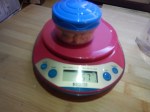




Note.
- The cotton drawstring bags come from The Clever Baggers.
- I found the little plastic pots called Mini Bites in Robert Dyas.
- The Mini Bites have a screw lid, which is easier to open than most packaging.
They have lots of reusable possibilities.
- Last night, I found that the capacity of one Mini-Bite is ideal for frozen peas for one.
- I keep shoes in the cotton bags.
- I shall be using a Mini Bite to hold a selection of my daily pills.
- As the pictures show, they hold a sensible portion of nuts, sweets or chocolate.
- Are they a daily pack of forbidden foods, like chocolate and sweets?
We need more packaging ideas like these!
The Power Of Battery Storage
This article on Fastmarkets is entitled Neoen To Expand Li-ion Battery Capacity at Hornsdale Plant.
This is the introductory paragraph.
Australia’s Hornsdale Power Reserve, the world’s biggest lithium-ion battery plant, is set to expand capacity by 50% to 150 megawatts, according to Neoen SA, the French power producer that owns and operates the site.
If you read the article and the Wikipedia entry for Hornsdale Power Reserve (HPR), you’ll see why it is being expanded.
This paragraph is from Wikipedia.
After six months of operation, the Hornsdale Power Reserve was responsible for 55% of frequency control and ancillary services in South Australia.[11] By the end of 2018, it was estimated that the Power Reserved had saved A$40 million in costs, most in eliminating the need for a 35 MW Frequency Control Ancillary Service.
Somewhat surprisingly, the power is mainly generated by the associated Hornsdale Wind Farm.
These are some statistics and facts of the installation at Hornsale.
- There are 99 wind turbines with a total generation capacity of 315 megawatts.
- HPR is promoted as the largest lithium-ion battery in the world.
- HPR can store 129 MWh of electricity.
- HPR can discharge 100 MW into the grid.
- The main use of HPR is to provide stability to the grid.
HPR also has a nice little earner, in storing energy, when the spot price is low and selling it when it is higher.
It certainly explains why investors are putting their money in energy storage.
Wikipedia lists four energy storage projects using batteries in the UK, mainly of an experimental nature in Lilroot, Kirkwall, Leighton Buzzard and six related sites in Northern |England. One site of the six has a capacity of 5 MWh, making it one of the largest in Europe.
But then we have the massive Dinorwig power station or Electric Mountain, which can supply ,1,728-MW and has a total storage capacity of 9.1 GWh
Consider.
- Electric Mountain has seventy times the capacity of Hornsdale Power Reserve.
- Electric Mountain cost £425 million in 1984, which would be a cost of £13.5 billion today.
- Another Electric Mountain would cost about £1.6 billion per GWh of energy storage.
- Hornsdale Power Reserve cost $ 50 million or about £26 million.
- Hornsdale Power Reserve would cost about £0.2 billion per GWh of energy storage.
So it would appear that large batteries are better value for money than large pumped storage systems like Electric Mountain.
But it’s not as simple as that!
- There aren’t many places, as suitable as North Wales for large pumped storage systems.
- Omce built, it appears pumped storage system can have a long life. Electric Mountain is thirty-five years old and with updating, I wouldsn’t be surprised to see Electric Mountain in operation at the end of this century.
- Battery sites can be relatively small, so can be placed perhaps in corners of industrial premises or housing developments.
- Battery sites can be built close to where power is needed, but pumped storage can only be built where geography allows.
- Pumped strage systems can need long and expensive connections to the grid.
- I think that the UK will not build another Electric Mountain, but will build several gigawatt-sized energy storage facilities.
- Is there enough lithium and other elements for all these batteries?
- Electric Mountain is well-placed in Snowdonia for some wind farms, but many are in the North Sea on the other side of the country.
In my view what is needed is a series of half-gigawatt storage facilities, spread all over the country.
Highview Power looks to be promising and I wrote about it in British Start-Up Beats World To Holy Grail Of Cheap Energy Storage For Wind And Solar.
But there will be lots of other good ideas!
Electric-Powered Passenger Aircraft To Launch By 2022
The title of this post is the same as that of this article in The Times.
In the past few months, two serious electric small airliner projects have emerged.
- The Eviation Alice is a futuristic nine-cheater, designed from scratch around electric propulsion.
- Harbour Air are converting a de Havilland DHC-2 Beaver to electric propulsion and aim for a complete electric-powered fleet.
And now Cranfield University are launching Project Fresson, which aims to convert Britten-Norman Islanders to electric propulsion.
- There are hundreds of Islanders in service.
- They were designed in the 1960s and are still in production.
- They can carry nine passengers for nearly 900 miles.
In some ways, they are the Ford Transit of the small airliner industry. Unspectacular they may be, but they do what it says in the specification.
I’ve only flown in an Islander twice and that was between islands in the Caribbean.
There are several things to like about this project.
- Cranfield University have an excellent reputation in aerospace design.
- The project is well-backed by the British Government, Rolls-Royce, the University of Warwick and others.
- The batteries appear to be coming from motorsport.
- The Islander doesn’t have a reputation as a difficult or unsafe aircraft.
- Over the years, the aerodynamics seem to have been improved.
- There must be a large number of airlines around the world, who are satisfied with their current Islanders and would look seriously at an electric version.
- The Islander is still in production.
I don’t think it carries any high level of risk.
- The current aircraft structure will be virtually unchanged, but possibly uprated for a higher payload because of the weight of the battery.
- The electric motors must meet a power output, energy consumption and weight.
- The battery will probably be made from lots of standard small cells from a well-respected manufacturer like Hitachi, Samsung, Leclanche or others.
- The battery must hold enough energy, fit in a defined space and not be too heavy.
I suspect Cranfield have already written the specifications for the motors and the battery.
Conclusion
In some ways this project has a lot in common with Harbour Air’s project to convert a Beaver.
- Simple engineering with little risk.
- Proven airframe.
- No expensive airframe to certify.
- A lot of engine and battery testing can be done safely on the ground.
- Electric motor technology seems to be improving rapidly, with new ideas cropping up in trains, cars, boats, ships and planes.
- A waiting market.
- I think pilots and passengers will like the idea of an electric aircraft.
- Pilot conversion to the electric plane will not be a long and expensive process.
- Good green credentials.
I think both projects will succeed, if they go well in the next year or so.
Boris Johnson Vows New Life For High Streets And Axed Rail Lines
The title of this post is the same as that of this article in The Times.
This is the introductory paragraph.
Boris Johnson is promising to revitalise “left behind” high streets through tax cuts for pubs and shops and reversing some of the Beeching rail cuts to branch lines.
The article gives a map of the lines and here is a list of them.
- Newcastle and Ashington/Blyth.
- Bristol and Portishead
- Camp Hill Line
- Willenhall and Darlaston
- Thornton-Cleveleys and Fleetwood
- Okehampton and Exeter
- March and Wisbech
- Uckfield and Lewes
- A new station he building of a station at Skelmersdale.
I will suggest other possibilities and add them here.
- West Hampstead and Hounslow – Part of the West London Orbital Railway
- Brent Cross and Kew – Part of the West London Orbital Railway
- Cirencester – See Could Cirencester Be Reconnected To The Rail Network?
There could be several!
The Technology Is With Us!
Anyone who follows railway technology, as I do, knows that technology coming on stream will ease the creation of these routes.
- Modern digital in-cab signalling, as already used on Thameslink.
- Battery-electric trains.
- Innovative charging for battery-electric trains.
- Hydrogen-powered trains.
- Tram-trains
- Automatic train control
- Remote services in simple depots.
- Better bridge-raising and other construction techniques.
Many of these new routes will be able to use a standard train.
Nationalised British Broadband
Labour’s plans to nationalise broadband and provide it free to homes and small business is a cracker!
Advantages For Labour
It would have one big advantage for Labour!
It’s a great way of listening in to all their political opponents. They only have to ask the Chinese how to do it!
How for instance, would another political party, with a radical agenda organise?
But!
Consider these points.
- Mobile phone traffic uses the same Internet backbone as broadband.
- Internet tech giants like Amazon, Facebook and Google wouldn’t pay up without a fight
- Everybody’s pension fund would suffer, as BT is often there and shares would be replaced by junk bonds.
- Virgin Media and other broadband suppliers would be nationalised as well or could become worthless.
- A lot of American Internet companies would go running to the US President and just as Trump has applied tariffs willy-nilly in his trade war with China, a future President wouldn’t take it lying down.
- The high-tech industry has already said they don’t like it.
The biggest problem is that Internet usage will grow exponentially with 5G broadband and all the connected devices, like
- Driverless cars.
- Automated warehouses and delivery systems.
- Connected smart household and other appliances.
- Connected massive screens, which every business, school or home will have.
- Every child watching content on mobile devices.
- Collectinbg operating data from cars, trucks and trains to make them more reliable.
- Automated care assistance for the ill, frail and elderly.
Can any government afford the cost of continual upgrading of capacity, which will not be like anything seen before?
It certainly, is a cracker!
And if it is implemented, it will blow up in the ultra-Marxists’ faces.
Home Kits Signal End Of Cervical Smear Test
This is a headline on the front page of today’s copy of The Times.
Being male and living alone, I wouldn’t know what a woman thinks!
But there must surely be some women, who would think this is at least an improvement.
Health services across the world will also be able to save money, as the procedure must be more efficient and need less staff, who can probably be redeployed, where they are needed.
Asthma Carbon Footprint ‘As Big As Eating Meat’
The title of this post is the same as that of this article on the BBC.
This is the introductory paragraph.
Many people with asthma could cut their carbon footprint and help save the environment by switching to “greener” medications, UK researchers say.
I know more than a bit about metered dose inhalers.
I backed an inhaler, which is marketed under the name of Respimat, as when I saw the technology of the company, my physics knowledge told me that they had something.
The device was purely mechanical, with no batteries, electrical supply, gases or noxious chemicals. It effectively used the principle of an old-fashioned air pistol, that fired drugs instead of pellets.
I still have the prototype in my garage.
It was a bit of a roller-coaster of an investment, but I made a good return in the end, when we sold the device to Bohringer Ingelheim.
I was saying what Cambridge University are now saying, nearly twenty years ago!
Ultrasound On A Chip
The latest episode of BBC Click is a must-watch.
One section is about a new ultrasound device from Butterfly Network.
Their product called Butterfly iQ; is an ultrasound sensor on a chip, that converts a smart phone into a full function medical ultrasound machine.
But as an engineer, who knows a bit about this sort of technology, I doubt that all the applications are medical ones.
Typical hospital ultrasound machines cost tens of thousands of pounds, but the price of the sensor on the Butterfly Network web site is in the order of a couple of grand. Software is probably extra, but even so, Southampton Hospital has bought four and one is in their paediatric ambulance.
I have one big question.
Is the device open source? This would enable, an imaginative programmer, as I once was, to convert the device, so that it is able to perform an important application.
I would be very disappointing if it wasn’t!
To get a snapshot of the power of ultrasound, read the Wikipedia entry for ultrasound.
A Video
I found this on the Internet.
As you can see, it’s not very big.
Conclusion
This is an amazing development and it will revolutionise so much of healthcare and other fields.
 The Anonymous Widower