Travelling Between London Stations
When I came home from Moorgate this morning, I took my usual 141 bus.
I sat next to a lady about forty, who from her bags looked like she’d just arrived by plane at Gatwick Airport.
After a couple of attempts at conversation, it became obvious, that we didn’t have a common language.
She then produced her phone and indicated that she needed Liverpool Street station.
The 141 bus doesn’t serve Liverpool Street station, but it does serve the Western entrance to Liverpool Street station on the Elizabeth Line.
It looks to me, that she had been told by a human being, an app or the Internet, that the easiest way from London Bridge bus station to Liverpool Street station was to take the 141 bus from in front of the station and walk across to Liverpool Street station from Moorgate.
But.
- The Western entrance to Liverpool Street station has no information to indicate, that it gives access to Liverpool Street station.
- The bus information system indicates Moorgate station.
- The bus information system does not announce, that for Liverpool Street station, you should alight at Moorgate station.
Perhaps, the bus information system should indicates Moorgate/Liverpool Street station.
Conclusion
How many other transfers between London stations are similarly confusing?
First Look Inside £2.2bn Silvertown Tunnel
The title of this post, is the same as that of this article on the BBC.
These are the first five paragraphs.
For the first time, Transport for London has invited journalists inside what is one of the most controversial infrastructure projects in the capital.
The Silvertown Tunnel is 1.4km (just under one mile) long and stretches from Silvertown in Newham to the Greenwich Peninsula.
Inside the tunnel, it is extremely wide. A lot bigger than other tunnels like the supersewer or Crossrail. Boring was finished a few weeks ago.
Transport for London (TfL) says the scheme will address queues at the Blackwall Tunnel and reduce pollution. But it has faced fierce opposition from those who think it will do the total opposite and increase pollution and congestion.
And the big question is – even with mitigation – can a road tunnel ever be green?
Note.
- There is a good picture, showing the width of the tunnel.
- It is very wide and can’t be much narrower than the four-lane Queensway Tunnel, which was opened under Mersey in 1934.
These are my thoughts.
I Am Against The Tunnel Being Built
My main reason I am against the Silvertown Tunnel is that Transport for London’s mathematical modelling of and rerouting of buses past my house has been some of the worst I’ve seen. I talk about the bus problems I now have in Is The Nightmare On The Buses Going To Get Worse?
So until the two tunnels; Blackwall and Silvertown are complete and open with tolling, I won’t trust any of Transport for London’s pronouncements.
I also feel that as the Silvertown Tunnel will allow trucks to pass though, there will be times, when they will cut through the East End to get to the Motorways going North.
But now, it’s more or less finished, we will probably need to use it.
How Is The Tunnel Being Paid For?
The Wikipedia entry for the Silvertown Tunnel has a section called Costs, where this is said.
In 2012, the cost was stated to be £600m. A consultation in 2015 stated that the cost of construction was estimated to be £1bn. In March 2020, the cost was increased again, to £1.2 billion. Operation, maintenance and financial costs of the tunnel over 25 years is expected to cost another £1bn.
The £2.2 billion will be repaid by tolls on both tunnels. Effectively, it’s a Private Finance Initiative or PFI.
Can A Road Tunnel Ever Be Green?
This is the question the BBC asked in the last paragraph of my extract.
Although, I am very much against this tunnel, I do believe this tunnel can be green.
- Suppose, the tunnels were made free for zero-carbon vehicles, that were powered by batteries, hydrogen or possibly ammonia.
- This might nudge vehicle owners and operations to go zero-carbon.
This extra number of zero-carbon vehicles would help to clean up London’s air.
I wonder which will be the preferred route for trucks associated with construction to go to and from sites in Central London?
- These trucks are major polluters in Central London.
- There are sensible moves to make construction sites zero-carbon.
If the Silvertown Tunnel didn’t have tolls for zero-carbon trucks, then surely this would nudge, this sizeable group of trucks to go zero-carbon to the benefit of everyone in Central London.
The only problem with making zero-carbon vehicles toll-free, is that it probably ruins the finances of the tunnels, from the point of view of the investors.
Conclusion
I can see lots of conflict starting over the operation of this tunnel.
How Not To Organise A Piss-Up In A Brewery
This afternoon, I wanted to get some lunch and buy my food for the weekend.
I live close to the junction of Southgate Road, Mildmay Park and the Balls Pond Road.
From the four bus stops there, I can get buses to the stopping centres of Angel, Dalston Kingsland, Hackney Central and Moorgate.
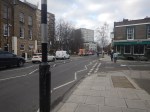
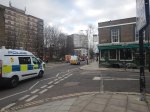
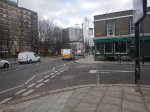
But not today, as all the bus stops had been closed!
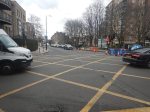
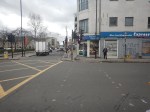
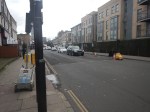
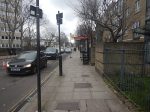
As my leg was playing up, there was no way, I could have walked to the next stop.
In the end I created a fuss and a kind driver let me on a 141 bus to get to Moorgate.
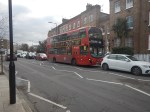
Coming back, I got another 141 bus, which got stuck in the traffic jam, that the part-closure of the junction was creating.
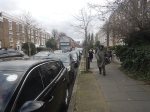
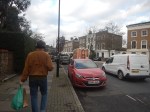
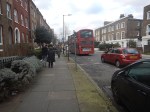
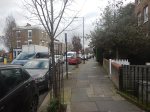
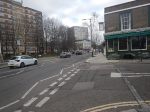
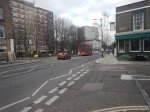
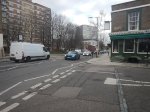
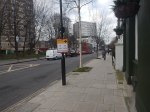

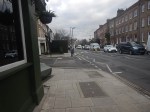
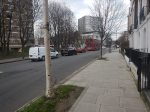

Note.
- The 141 bus took five minutes to pass through the junction.
- Luckily, the driver was sensible and he let a lot of us out.
- As I live South of the Balls Pond Road, it was very convenient.
Obviously, the driver knew more about customer service, that the idiots who organised this megashambles.
I have a few thoughts.
Where Was The Publicity?
I use the 141 bus most days and I didn’t see anything at the bus stops and didn’t get any leaflets through the door.
The Traffic Lights At Southgate And Balls Pond Roads Are Unreliable
They were even worse, when I moved here and Transport for London replaced them a few years ago.
But they seem to have got more unreliable.
Where is John Cleese to give them a good thrashing?
The Silvertown Tunnel Effect
Consider.
- I asked a regular delivery driver, what is the gossip about the Silvertown Tunnel and he felt that it will gum up East London.
- This is my feeling, as before my stroke, I had driven all over the East End trying to save time and knew it well.
- I also feel, that a lot of heavy traffic will end up on the Balls Pond Road, trying to get to and from the M1 and A1, especially, when the Dartford Crossing is closed.
I am fairly certain, that at certain times the junction at Southgate Road, Mildmay Park and the Balls Pond Road is going to get very congested.
The Non-Availability Of Taxis
One of the reasons, I chose to live where I do, is that I am just off the route which taxis use to go back to Liverpool Street station.
But the number of taxis in the area has decreased substantially in the last few years.
- Islington’s Low Traffic Neighbourhoods are scaring taxis away.
- Many drivers are giving up.
- Taxis are expensive.
Consequently, I rarely use a taxi. I never saw one today, when it was needed.
The Junction Is Busy For Pedestrians
Crossing the junction is dangerous, as cyclists only consider the lights optional.
If I’d had a pound for every time, I’d nearly been hit by a cyclist or car on this junction, I could pay for a year’s electricity.
Mildmay Park Station
The area used to have its own station at Mildmay Park about 120 metres to the North of the junction.
This Google Map shows the site of the station.
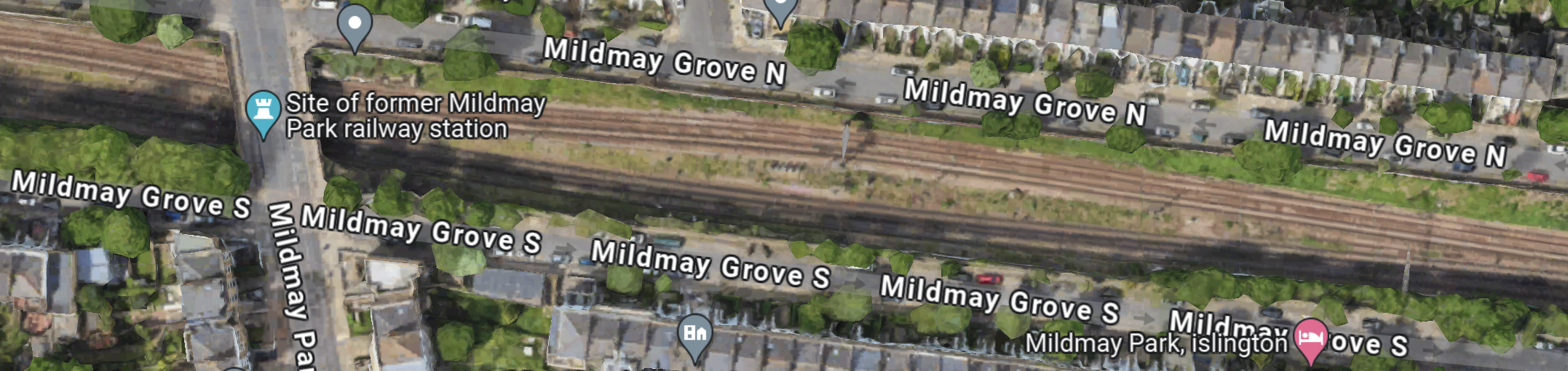
Note.
- The railway is the North London Line.
- Highbury & Islington station is to the West.
- Dalston Kingsland station is to the East.
Mildmay Park station is marked by the blue arrow on the bridge over the railway.
It would be a very handy Coming-Home station, as its downhill all the way, from the station to my house.
Conclusion
Reopening Mildmay Park station would be good for the price of my house, by I doubt that anything will be done.
Lights And Signs In Old Street Roundabout
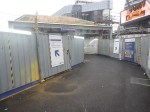
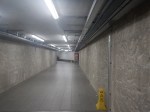
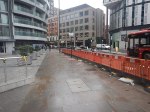
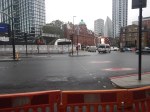
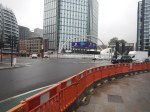
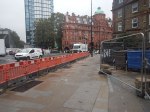
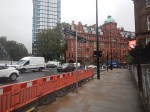
London’s slowest construction project seems to have been making a bit of progress as more traffic lights are working and signs have been erected.

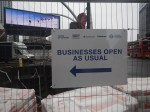
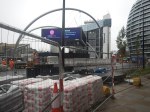
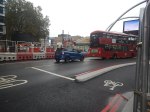
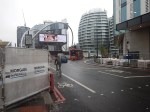

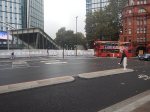
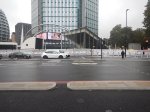

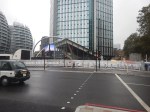
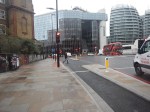
Note.
- There’s still a fair bit to do in the middle of the roundabout.
- There is a notice saying it will be finished in early 2024.
- I suspect, that if the bus stops are placed for the benefit of passengers, it will add more passengers to the 141 buses.
But I can’t wait for it to be finished, as it will ease my journeys to the Elizabeth Line. But only because the bus I take gets stuck in all the traffic at the roundabout.
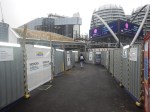
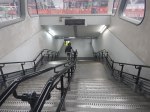
Two days after I took the first pictures, I took these, as I used the Northern Line to go from Old Street station to King’s Cross St. Pancras station.
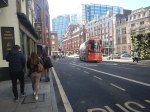


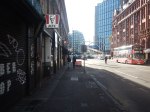
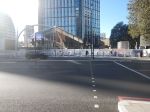

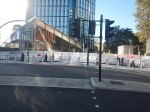
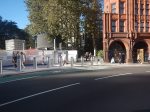
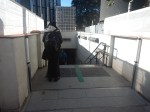

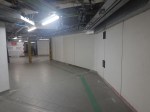
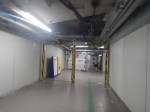
Note.
- The tunnel and lift need to be completed.
- The walk wasn’t difficult except for the rubbish outside the fast-food shops.
- But then the streets of Islington are paved with rubbish.
- I’m now more convinced that this route opens fully, it’ll increase passengers on the 141 buses.
- But then what does SadIQ Khan and his useful idiots know about mathematical modelling?
Nicholas Lane – 1st May 2023
Nicholas Lane is a lane in the City of London, that runs between Cannon Street in the South and Lombard Street in the North.
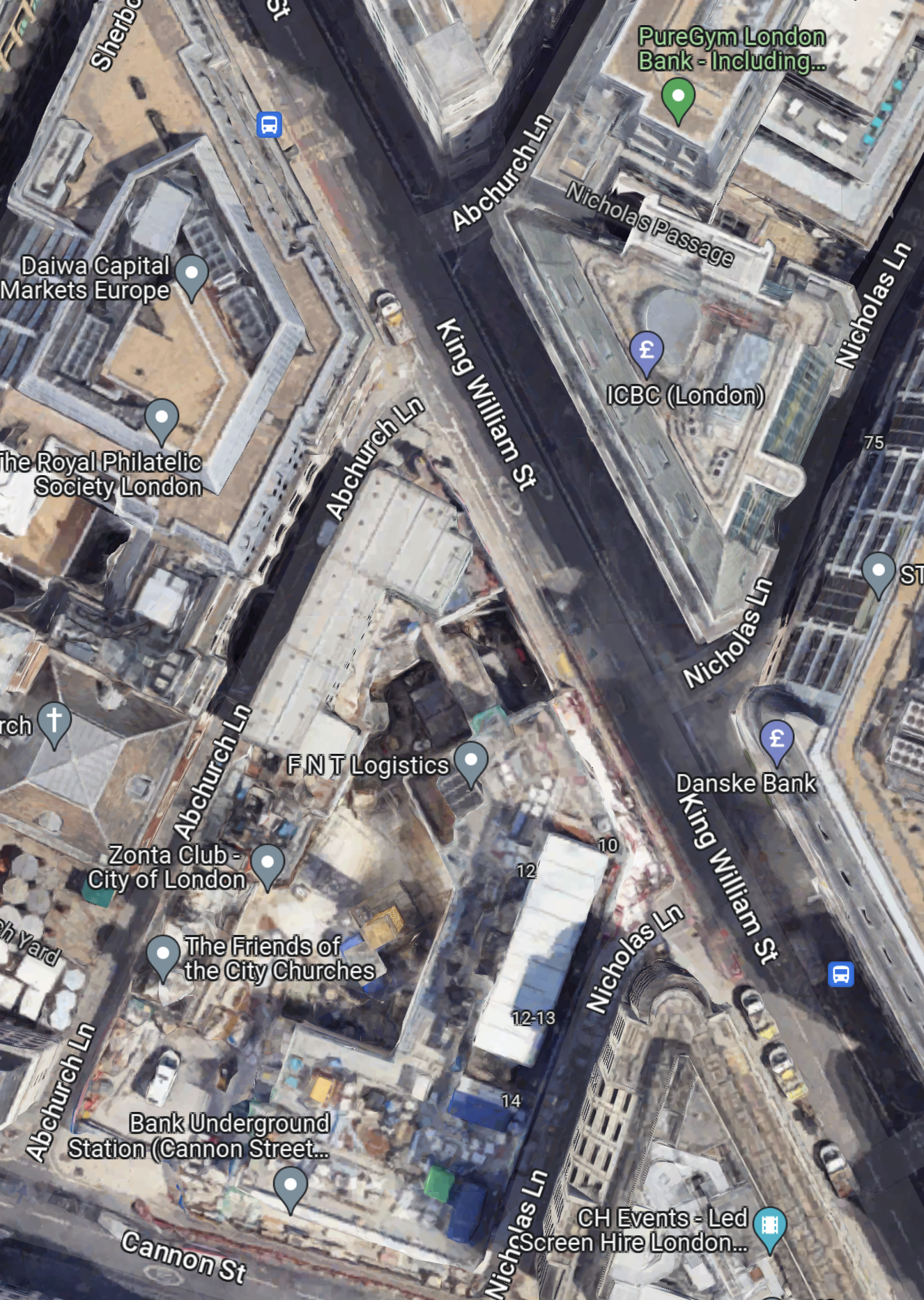
This Google Map shows the lane.
Note.
- Nicholas Lane tuns diagonally across King William Street.
- Cannon Street can be seen in the South-West corner of the map.
- The new entrance to Bank station is on Cannon Street.
- Nicholas Lane runs up the side of the new station entrance.
- There are two bus stops for the 21, 43 and 141 buses on King William Street.
The bus stops are within easy walking distance of the new station entrance, if you walk along the Southern section of Nicholas Lane.
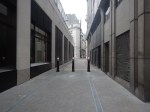
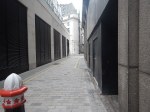
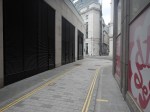
These pictures show Nicholas Lane and King William Street.

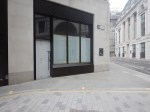

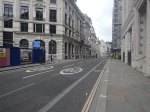
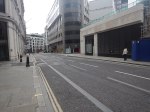
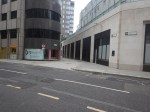
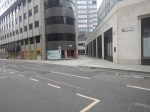
Note.
- I suspect some coffee shops or a fast food joint will appear at the King William Street end of Nicholas Lane.
- The windows on the corner could be ready to be a shop.
- In Bank Station Upgrade – 6th January 2023, I described the eight storey building, that will sit on top of the station entrance.
The lane could also a preferred route for many, who are changing at Bank station to or from the buses.
A Rare Site – Two 141 Buses
I took this picture, this afternoon of a rare site these days – two 141 buses running in convoy.
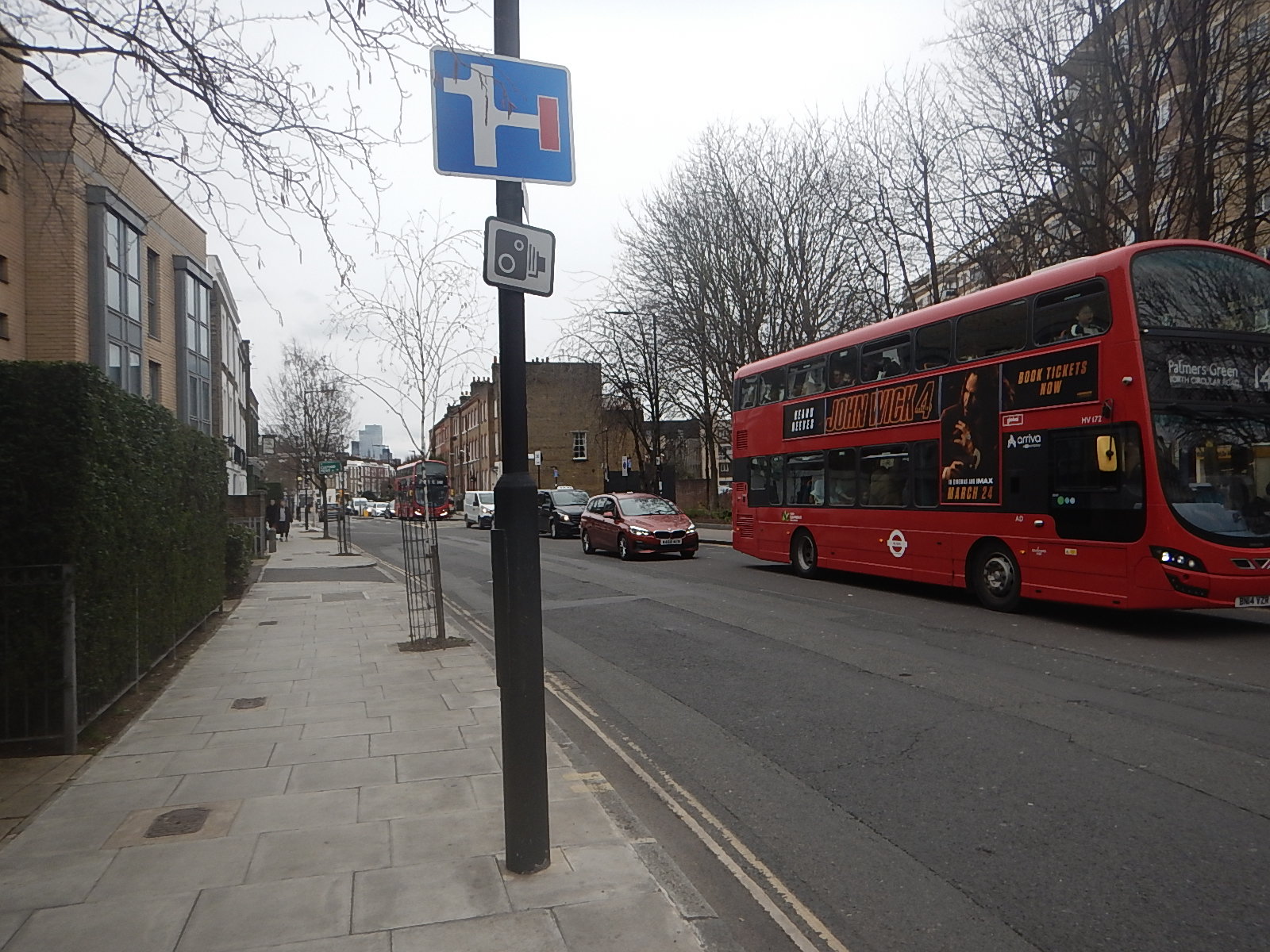
Nothing seems to be improving and passengers are regularly waiting 15-20 minutes for a 141 bus, when the timetable says it should be 4-8 minutes.
Is The Nightmare On The Buses Going To Get Worse?
This morning after photographing the finish of the Bank Station Upgrade, I walked down the side of the new Cannon Street entrance to catch a 141 bus from King William Street to my home.
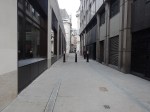
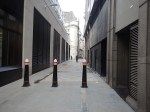

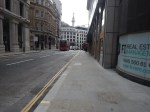
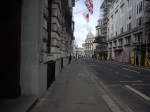
Note.
- There are two bus stops for the 21, 43 and 141 buses on King William Street; one Northbound and one Southbound.
- The bus stops are a two minute level walk from the gate-line at the Cannon Street entrance.
- To go between the gate-line and the Northbound stop requires no crossing of any road, but the route to the Southbound stop requires the use of a light-controlled crossing.
- The Cannon Street entrance is step-free and only a short walk, between the street and the platforms of the Docklands Light Railway and the Northern Line.
- The access to the Central Line is also easy, but a longer walk.
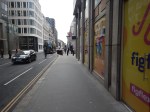
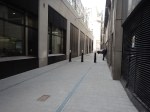
This afternoon, I walked the other way from the Southbound bus stop on King William Street to the new Cannon Street entrance of Bank station.
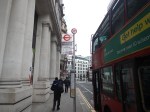
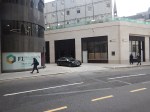
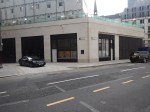
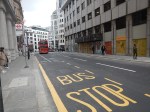
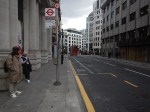
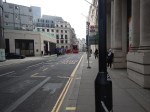
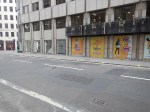
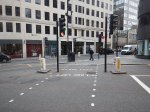
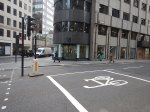
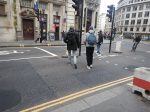
Note.
- It is a totally level walk.
- There are lights to help the crossing of King William Street.
- The concrete building on the other side of King William Street is the other end of the new station entrance.
- It looked to me, that there was a retail unit in the corner of that building. This was confirmed by station staff and it would surely be an ideal place for an upmarket takeaway.
- The building on the corner of Cannon Street and King William Street is a set of shared offices. Again it is in a prime position.
- You can also walk from the bus stop to the main Monument station entrance.
I timed myself from the Southbound stop on King William Street to the various platforms.
- Central Line – Under five minutes
- Dockland Light Railway – Under four minutes
- Northern Line – Under three minutes
Will these times encourage passengers to use the new entrance and its buses to North London?
If I was looking for offices for a foreign company, that wanted to be in the City, as I do occasionally for an American attorney, I would start in this area.
Step-Free Access On The Northern Line Is Rather Variable
If you look at the step-free access on this section of the Northern Line, you find the following.
- Euston – Escalators – No Lifts until High Speed Two
- King’s Cross – Escalators – One Lift to platform
- Angel – Escalators – No Lifts – Medium walk to the buses
- Old Street – Escalators – No Lifts – Medium walk to the buses
- Moorgate – Escalators – Long Lift route – Medium walk to the buses
- Bank (North) – Escalators – Lots of Steps – Medium walk to the buses
- Bank (Cannon Street) – Escalators – Two Lifts to platforms – Short walk to buses
- London Bridge – Escalators – One Lift to platform – Steps to buses
Note.
- If I was going between My House and the Northern Line South of Bank station, I’d change between the 141 bus and the Northern Line at the Cannon Street entrance to Bank station.
- Alternatively, I can take a 38 bus to the Angel and join the route there. But that route can be very slow coming North, as there is a lot of walking. Going South, it’s also likely to be blocked by a Tesco truck at the Angel.
- Between My House and the Docklands Light Railway, I’d change from the 141 bus at the Cannon Street entrance to Bank station.
- I might even take that route, if I wanted the Central Line out of Bank.
It does appear that as the new Cannon Street entrance to Bank station has been well-designed with full step-free access and short walks to the bus stops, that it will be the interchange of choice for many travellers to and from the area, who are using the buses.
Conclusion
I feel that a lot of passengers from North London will use the 21, 43 and 141 buses to access the Central and Northern Lines, and the Docklands Light Railway using the new Cannon Street entrance to the Bank station complex.
I very much feel that all three bus routes will have a lot more passengers, so the Nightmare On The Buses, is likely to get worse.
The Mayor Rubs It In!
I took these pictures whilst waiting to get home this morning from Moorgate, whilst waiting for a 141 bus.
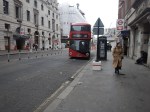
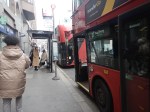
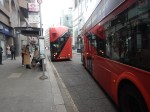
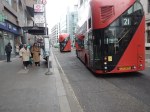
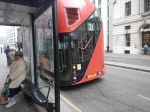
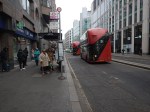
It’s one thing to reroute the buses, but quite another to send them up and down the old route, with plenty of space for passengers. Although, I don’t think this will help his reelection chances next year.
When the 141 bus did arrive, it was about ninety percent full.
I predicted in a letter to my MP. that this overcrowding would happen because the opening of the Elizabeth Line and the Bank Station Upgrade.
I also said similar things in Does London Need High Capacity Bus Routes To Extend Crossrail?, which I wrote in February 2022, before the Elizabeth Line opened in May.
But I didn’t get it all right, as it appeared the biggest increase in passenger numbers happened after the new escalators between the Docklands Light Railway and the Northern Line opened at Bank station. That puzzled me and I can only assume that there is a lot of traffic between the catchment area of the DLR and North East London.
Predicting the number of passengers, who will use a new railway, road or bus service is a difficult science, which very often results in a wrong answer.
In the Mysterious Case Of Rerouting The 21 Bus, it would have been better to have completed all the works at Bank, Moorgate and Old Street stations, before trying to solve the best way to deploy the buses.
- Bank and Moorgate stations are almost completed.
- The completion of Old Street station and the associated road works are still several months away, as I wrote in Is Old Street Roundabout A ‘Too Many Cooks’ Project?
In Does London Need High Capacity Bus Routes To Extend Crossrail?, I said this about the buses needed.
I suspect any route seen as an extension of Crossrail needs to have the following characteristics.
-
- High frequency of perhaps a bus every ten minutes.
- Interior finish on a par with the Class 345 trains.
- Wi-fi and phone charging.
I would also hope the buses were carbon-free. Given that some of these routes could be quite long, I would suspect hydrogen with its longer range could be better.
Get the design of these buses correct and they could attract a large number of passengers from their cars to public transport.
- Ten year old buses, as on the 141 bus are unacceptable.
- Before the 21 bus was withdrawn, you noticed that some passengers wait an extra minute to get a 21 bus with its greater space and comfort.
- Because of the better design of the stairs on modern buses and New Routemasters, I will go upstairs on these buses. But I don’t chance it on an older bus.
- Wi-fi and phone charging would make up for the fact that the Class 345 trains don’t have it.
From experience of the 141 bus in recent days, a frequency of a bus every five minutes is probably needed now.
East London Is A Duckers And Divers Paradise
This is the East End Tube Map, which I clipped off the full tube map.
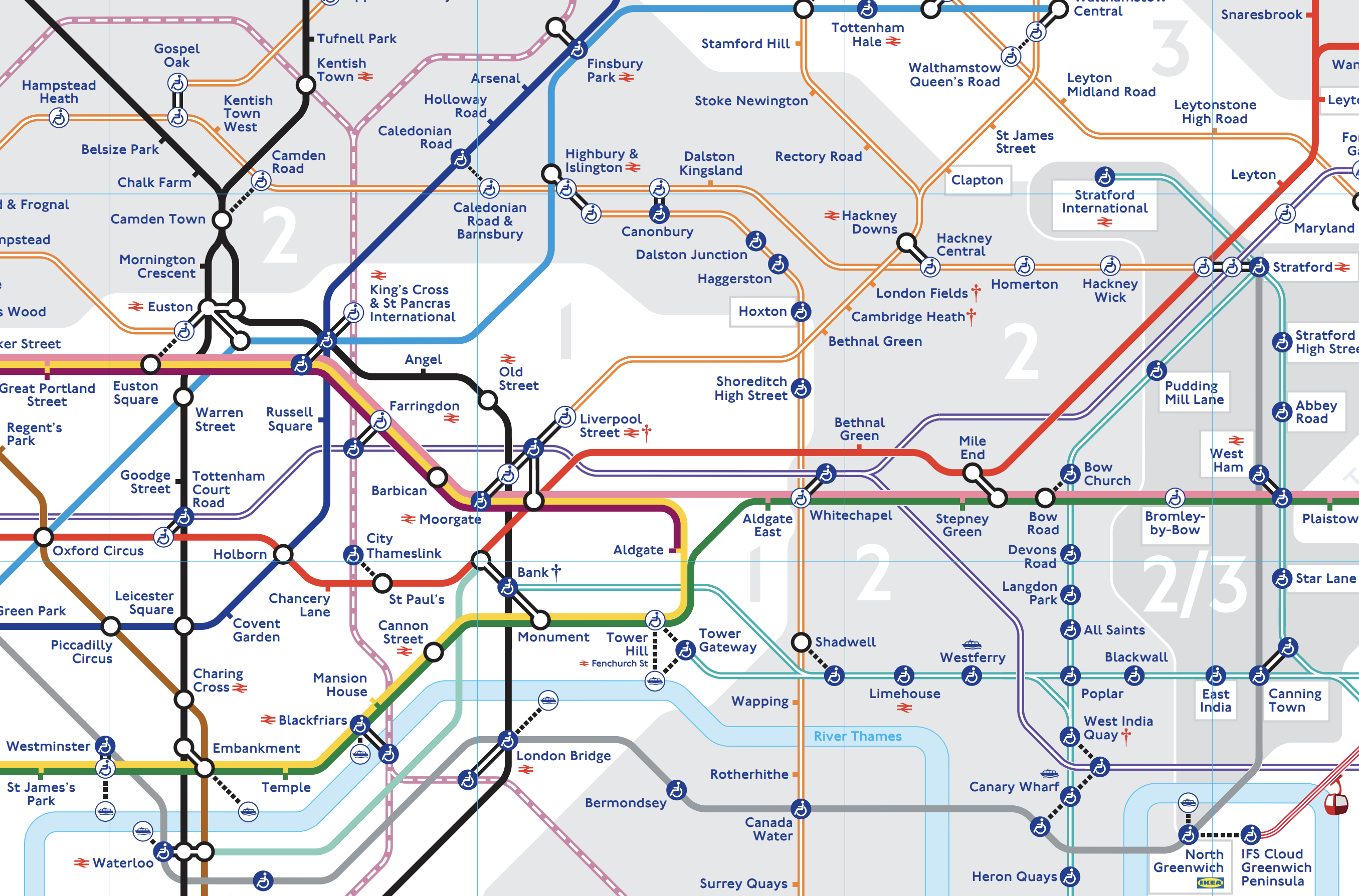
I live just South of the East London Line between Canonbury and Dalston Junction stations.
Today started just after nine, as many others do by braving the nightmare on the buses to take a 141 bus to Moorgate.
- At Moorgate, I had breakfast as I do regularly in the Leon, by Moorgate station.
- After breakfast, it was one stop South on the Northern Line to Bank, to see if the new entrance had opened.
- It was then a trip on the new moving walkway to the Central Line.
- I took the Central Line to Stratford to do my main shopping at the start of the week, in the large Marks and Spencer in Eastfield, by the station entrance.
- It was then on to the North London Line to go back home.
- I didn’t go all the way home on the Overground, but got off the train at Hackney Central and using the new Graham Road entrance, I crossed to get a 38 bus, which would take me home.
- But two 38s passed as I tried to cross the road and in the end I took a 277 bus to Dalston Junction station.
- From the Junction, I got a 56 bus home.
I got home about eleven.
At least now, I’ve got food until Thursday!
Nightmare On The Buses
The title of this post, is not the title of a horror remake of the popular 1970s-sitcom’ On The Buses, but a description of my journeys on a 141 bus today.
Until, last Friday, I had two buses; the 21 and 141 to take between my house and Moorgate, which is an important destination for me.
- There is a large Marks and Spencer food store there, where I regularly buy the gluten-free food, I must have as a coeliac.
- There is a LEON there, where I regularly have my gluten-free breakfast.
- Moorgate station is a good transport interchange from which I regularly start journeys over London.
But now there is only one bus; the 141.
In November 2021, I wrote The Great Bus Robbery, where I said this.
What is TfL’s latest crime?
The 21 and 271 buses are going to be combined into a new route between Lewisham and Highgate, which will go nowhere near the Balls Pond Road.
So we’ll just have the one bus route to the City of London.
On past form, if TfL say they will increase the frequency, I wouldn’t believe them.
This was my conclusion.
We will need the 21 bus to provide us with a route to Crossrail, as the 141 buses will be full.
The 21 bus is needed where it is and mustn’t be stolen.
Note that Crossrail is now called the Elizabeth Line.
Today, I made three journeys between my house and Moorgate station and this is what happened.
Journey 1 – Southbound
I arrived at the bus stop and after five minutes a 141 bus arrived.
But it was full and didn’t open the door to let any of the waiting six passengers board.
After another three minutes, another 141 bus arrived and we squeezed on.
But there wasn’t any seats left and I stood all the way to Moorgate.
Journey 2 – Northbound
I only had my breakfast and as I had things to do at home, I returned fairly quickly after finishing my breakfast.
Partly, this was also because a 141 bus turned up with some seats available.
But it was a lot closer to capacity, than Northbound buses at about the same time last week.
Journey 3 – Northbound
My third journey started at about four in the afternoon, after I’d been out to take some pictures and buy a few food items in Marks and Spencer.
I had to wait seven minutes for a 141 bus and as there was a 76 bus a couple of minutes in front of it, I took that, with the intention of changing halfway.
I was able to get a seat.
In the end, the 76 bus got stuck in traffic and I walked to my intended change stop and waited there for the 141 bus, which was without a seat, so I stood for three stops to home.
It was one of the slowest journeys, I’d had between my house and Moorgate station.
Day 2 – February 7th – 2023
I arrived at the bus stop and found a lady, who had been waiting for an hour-and-a-quarter.
I had no problem coming home, as I went to Liverpool during the day and got a taxi back from Euston.
Day 3 – February 8th – 2023
Perhaps, they’d heard our pleas, but a bus turned up after a couple of minutes with plenty of spare space.
I even got a seat.
Going home, at about 10, there wasn’t a spare seat.
Revenue per bus, is certainly rising.
Conclusion
On the evidence of the first three day, it appears that there is not enough capacity without the 21 bus.
 The Anonymous Widower