Scotrail Boss Pledges More Seats And Stops On Borders Railway
The title of this post is the same as that of this article on the Southern Reporter.
If you live near or use the Borders Railway, I suggest you read the article.
Alex Hynes, who is Managing Director of ScotRail has promised.
- Three-car Class 170 trains will replace the current two-car trains.
- More drivers will be trained.
- Extra stops including at Stow will be added to services.
- In 2015, in the Peak, there were 850 seats out of Edinburgh. After the new trains are introduced, there will be 1,400.
He also said that things would happen in months not years.
This is a paragraph from the article, as spoken by Alex Hynes.
The three-carriage Class 170 trains accelerate and brake more quickly that the current two-carriage trains. That means we can put a stop at Stow in all the time without it affecting our performance, but to do that we need Class 170 trains on the route all the time and to be able to make sure that stop doesn’t affect our service performance.
It’s a good explanation of why you need fast trains on stopping services.
There is also something that is worth noting about the Class 170 trains.
Currently, they are diesel trains with a hydraulic transmission. But Porterbrook, who are the leasing company, who actually own the trains, are planning to test a new diesel-electric hybrid system in 2020, that will increase the performance of the trains, in terms of speed, acceleration, noise and emission.
I wrote about this important upgrade in Rolls-Royce And Porterbrook Launch First Hybrid Rail Project In The UK With MTU Hybrid PowerPacks.
I will be watching this development with interest, as if it is successful, passengers, residents, train companies and staff will benefit.
Hybrid Power On The Railways
In my opinion, one of the best hybrid transmissions is that of London’s New Routemaster bus. This description of the drive-train is from Wikipedia.
The bus is a hybrid diesel-electric driven by a battery-powered electric motor, charged by a diesel fuelled generator and recovering energy during braking by regenerative braking.
It is a classic serial hybrid vehicle.
- There is no mechanical connection between the engine and the driving wheels.
- The diesel engine only runs, when the battery charge is low.
- The electric motor is always powered directly from the battery.
- The control systems for the drive-train are very simple.
- It is very efficient, as the engine only runs when needed and regenerative braking is employed.
- The bus can run on battery power only, for short distances.
- The various components of the drive-train can be placed in convenient places and connected by power and control cables.
In the New Routemaster, the components are placed as follows.
- The diesel engine is half-way up the back stairs.
- The battery is under the front stairs.
- The electric motor is under the floor in front of the rear axle.
This flexibility is very useful in a large vehicle.
Hybrid transmissions are starting to be employed on the railways.
These are the applications in use or planned.
Alstom Coradia iLint
The Alstom Coradia iLint is a hydrogen-powered two-car multiple unit.
This video shows the operation of the train.
<span class=”embed-youtube”></span>
It would appear to be a serial hybrid, where the hydrogen fuel-cell charges the battery and this drives the train through an electric motor,
I suspect most hydrogen trains will work in a similar way.
Class 321 Hydrogen Train
Some Class 321 trains are being converted to run on hydrogen. Unlike the Coradia iLint, the trains will also be able to use electricity from electrification.
MTU Hybrid PowerPacks
MTU have produced a Hybrid PowerPack, which is being retrofitted into several trains, including Class 170 trains in the UK.
Class 93 Locomotive
The recently-announced Class 93 locomotive appears to be a hybrid locomotive with a large diesel engine and about 125 kWh of batteries, that can also use electrification.
High Speed Bi-Mode Aventra
I am sure that Bombardier’s proposed High Speed Bi-Mode Aventra, which features batteries and 125 mph running under both diesel and electric power is a hybrid train.
Conclusion
Just as hybrid cars are becoming more numerous, I suspect we’ll be seeing more hybrid trains in the future.
Flirt Akku Battery Multiple-Unit Unveiled
The title of this post is the same as that of this article in Railway Gazette International.
This is the first paragraph.
Stadler has officially unveiled the prototype Flirt Akku, a version of its Flirt family of electric multiple-units which is equipped with a battery to permit operation on non-electrified or partly-electrified routes.
So it looks like another train with batteries, that joins the following, that have been announced in recent months.
- Angel Trains’ Class 165 Hydrive, that I wrote about in Class 165 Trains To Go Hybrid.
- Bombardier Talent 3, that I wrote about in Bombardier Introduces Talent 3 Battery-Operated Train.
- Class 230 train, that I wrote about in Battery Class 230 Train Demonstration At Bo’ness And Kinneil Railway.
- Porterbrook Class 350/2 Battery/FLEX, that I wrote about in Porterbrook Makes Case For Battery/Electric Bi-Mode Conversion.
There are also several projects using MTU Hybrid Power Packs.
What new projects will emerge in the next couple of years?
Class 165 Trains To Go Hybrid
There must be something in the DNA of British Rail’s rolling stock.
Mark 3-based trains like the InterCity 125, Class 319 and Class 321 trains seem to have had collectively more lives than a city full of feral cats.
It is also understandable, that MTU are looking at upgrading modern rolling stock built with their engines to be more efficient and environmentally-friendly. They have launched the MTU Hybrid PowerPack, which adds up to four 30 kWh batteries, electric drive and regenerative braking to a typical diesel multiple unit built in the last twenty years.
So now, upgrading the traction systems of the Class 165 trains is being undertaken.
The Wikipedia entry for Class 165 trains, says this under Future Development.
It was reported in September 2018 that Angel Trains were to convert class 165 units for Chiltern Railways to hybrid diesel and battery-powered trains, and that the first Class 165 HyDrive train should be ready by late 2019.
There is more in this article on Rotherham Business, which is entitled Magtec Changes Track To Convert Diesel Trains.
This is said.
Magtec, the UK’s largest supplier of electric vehicle drive systems, is working to deliver the rail industry’s first conversion of a diesel-powered train to hybrid drive.
Founded in 1992, MAGTEC designs and manufactures electric drive systems and components for a wide range of applications including trucks, buses and military vehicles.
This is also said about the modified trains performance.
In future, passengers using the Class 165 HyDrive could benefit from potentially reduced journey times, thanks to the improved acceleration offered by the hybrid technology compared to its diesel-only counterparts. Additionally, when the hybrid system detects proximity to stations or depots, it will turn the engines off and run on its battery, removing gaseous and noise emissions from populated areas.
That sounds very good to me.
There is also a serious article in the Financial Times, which is entitled Hybrid Battery Trains Set To Shorten Commuter Journey Times.
The headline sounds like hype, but then it is the FT, who usually tell it as it is. Read the article and there is a lot of philosophy and reasons behind this avalanche of retrofitting old trains with new innovative traction systems, in Germany, France and the UK.
It should be remembered that Chiltern have a record of doing the right things.
Further Development
MAGTEC look to be a very innovative company.
The Class 465 train is a third-rail electric train, that is closely-related to the Class 165 train.
It should be noted that sixteen miles of the London to Aylesbury Line is electrified using London Underground’s fourth-rail system.
So could we see the creator’s of the Class 165 HyDrive train, raid the Class 465 train’s parts bin, so the trains can use London Underground’s electrification?
Conclusion
If the project produces a successful outcome, there are seventy-five Class 165 trains running on Chiltern and Great Western Railway, which all seem to be in good condition.
Class 171 Trains And MTU Hybrid PowerPacks
The Class 170 trains and the Class 171 trains are identical, except that they use different coupling systems.
So as MTU Hybrid PowerPacks are being fitted to Class 170 trains, it would seem to be almost certain, that they could be fitted to the other closely-related class.
Southern runs the Class 171 trains on two routes, that are partially-electrified.
- Ashford to Brighton via Hastings and Eastbourne – 25 miles without electrification
- London Bridge to Uckfield via Oxted – 23 miles without electrification.
It seems to be environmentally-unfriendly to not run a hybrid train on these routes.
Could A Class 171 Train With An MTU Hybrid PowerPack Run On Third-Rail Lines?
It would appear that the Class 170 and 171 trains, use the same or similar bogies as the Class 377 trains.
These pictures show the bogies on a Class 377 train.
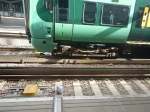
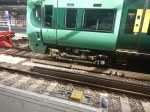
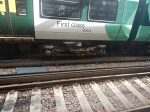
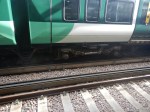
And these are pictures of the bogies on a Class 171 train.
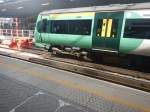
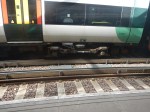
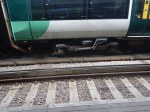
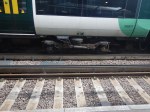
Note.
- The pictures were taken at London Bridge station.
- The two bogies appear to be of a similar design, although they are for trains with different traction systems.
- The bogies in the Class 171 train seem to fit close to the third-rail.
- On the Class 377 train, the two end bogies have shoes.
As the Class 377 trains can be and nearly always are fitted with third-rail shoes, would it be possible to fit third-rail shoes to Class 171 trains, at the same time as the transmission is changed from hydraulic to electric, when the MTU Hybrid PowerPacks are installed?
If it is possible to install third-rail shoes, then this power could be used to charge the battery or power the train.
Searching the Internet, I have found this blurb for the MTU Hybrid PowerPack.
This is said
Naturally, rail vehicles with hybrid drive can also be powered exclusively by the diesel engine. This also means great flexibility for the operator: The trains can be deployed on both electrified
and non-electrified rail routes.In addition, upgrading to a trimodal power system – with an additional pantograph – is easy because the system is already equipped with an electric motor. This gives the operator considerable freedom with regard to deployment of the vehicles – it‘s a big plus when they can respond flexibly in the future to every route requirement or tender invitation.
A pantograph wouldn’t be much use in Southern territory, but the ability to connect to third-rail power certainly would be.
When clever electronics and a well-programmed control system are added, it should be possible to create an environmentally-friendly train, that could use third-rail, diesel or battery power as required.
Range On Battery Power
In an article in the October 2017 Edition of Modern Railways, which is entitled Celling England By The Pound, Ian Walmsley says this in relation to trains running on the Uckfield Branch, which is not very challenging.
A modern EMU needs between 3 and 5 kWh per vehicle mile for this sort of service.
So how far would my proposed electric/diesel/battery hybrid train travel.
It would have a battery capacity of 61.2 kWh, if it had two one-battery MTU Hybrid PowerPack
Assume that the batteries are fully charged at Oxted, Asford and Ore, where they leave the existing electrification.
This would give the following ranges.
- 3 kWh per vehicle mile – 10 miles
- 4 kWh per vehicle mile – 7.5 miles
- 5 kWh per vehicle mile – 6 miles
Note.
- ,If the MTU Hybrid PowerPacks had two batteries range would be doubled.
- Both the unelectrified routes have sections in open countryside, where diesel power could be used without too much disturbance.
- The diesel engines could be used to top up the batteries at Uckfield.
Looking at the two routes, there would be a big cut in the running of trains on diesel.
Diesel Savings Between London Bridge And Uckfield
The distance between London Bridge and Uckfield stations is 46.1 miles, of which 23 miles are not electrified.
Going South, I would suspect because of the regenerative braking and the full batteries at Oxted, that perhaps ten miles of diesel running would be needed.
Going North, because the batteries wouldn’t be full, I suspect about fifteen miles of diesel-running would be needed.
Currently in a round trip, the trains run for 92.2 miles on diesel, but with MTU Hybrid PowerPacks and a third-rail capability, this could be reduced to around twenty-five miles, with no running in stations.
This would be a seventy-three percent reduction in diesel running.
Diesel Savings Between Ashford And Eastbourne
The distance between Ashford and Eastbourne stations is 43 miles, of which 25 miles are not electrified.
On the section without electrification, I suspect that perhaps ten miles of diesel running would be needed.
Currently in a round trip, the trains run for 86 miles on diesel, but with MTU Hybrid PowerPacks and a third-rail capability, this could be reduced to around thirty miles, with no running in stations.
This would be a sixty-five percent reduction in diesel running.
Conclusion
The rail industry has only just started to look at the application of MTU Hybrid PowerPacks.
I’m pretty certain, that they’ll be used in some surprising applications.
Looking At The Mathematics Of A Class 170 Train With An MTU Hybrid PowerPack
From various sources like the Wikipedia entry for the Class 170 train and various datasheets and other Internet sources, I will try to get the feel of Class 170 train, that has been fitted with two MTU Hybrid PowerPacks.
Assumptions And Source Data
For the purpose of this post, I shall make the following assumptions about the Class 170 train.
- The train has two cars, each with their own engine.
- The train has a capacity of 150 passengers.
- The train weighs 90.41 tonnes.
- The train has an operating speed of 100 mph.
After conversion each car will have MTU Hybrid PowerPack with a 6H 1800 engine.
The data sheet for the MTU Hybrid PowerPack with a 6H 1800 engine, indicates the following.
- Up to four 30.6 kWh batteries can be added to each module.
- Each battery weighs 350 Kg.
- Various sizes of diesel engine can be specified.
- The smallest is a 315kW unit, which is the same size as in a current Class 170 train.
If I assume that the two diesel engines weigh about the same, then any increase in train weight will be down to the batteries, the mounting, the traction motor and the control systems.
But the hydraulic system will be removed.
Calculation Of The Maximum Kinetic Energy
I will now calculate the maximum kinetic energy of a fully-loaded train, that is travelling at maximum speed.
- Assuming the average weight of each passenger is 90 Kg with baggage, bikes and buggies, the weight nof a full train becomes 103.91 tonnes
- The train is travelling at 100 mph.
- Using the Omni Kinetic Energy Calculator gives a kinetic energy of 28.84 kWh.
So even if only one battery is fitted to each engine, there will be 61.2 kWh of energy storage per train, which will probably be more than enough to handle the regenerative braking.
The hybrid PowerPack will probably add some extra weight to the train.
Even if I up the total train weight to 120 tonnes, the kinetic energy is still only 33.33 kWh.
So half this amount of energy can easily be stored in a 30.6 kWh battery in each car.
I would be very surprised, if this train needed a larger engine than the smallest 315 kW unit and more than one battery module in each car.
Does The MTU Hybrid PowerPack Work As A Series Hybrid?
In a series hybrid, the operation is as follows.
- The diesel generator charges the battery.
- The battery drives the train using the traction motor.
- During braking, the electricity generated by the traction motor is returned to the battery.
- If the battery is full, the regenerative braking energy is passed through resistors on the train roof to heat the sky.
There will also be a well-programmed computer to manage the train’s energy in the most efficient manner.
For a full explatation and how to increase the efficiency read the section on series hybrid, in Wikipedia.
I’m fairly certain that the MTU Hybrid PowerPack works as a series hybrid.
Will The Train Performance Be Increased?
I suspect the following improvements will be achieved.
- Acceleration will be higher, as it seems to be in all battery road vehicles.
- Braking will be smother and the rate of deceleration will probably be higher.
- Station dwell times will be shorter.
- Noise levels will be reduced.
This video explains the thinking.behind the MTU Hybrid PowerPack.
These trains will be liked by passengers, train operators and rail staff, especially if they enable faster services.
Will The MTU Hybrid PowerPacks Be Difficult To Install?
MTU built the original engines in the Class 170 trains and their must be well over two hundred installations in this class of train alone.
So in designing the PowerPack, it would be a very poor team of engineers, who didn’t design the PowerPack as almost a direct replacement for the existing engine,.
Fitting the new PowerPacks then becomes a question for the accountants, rather than the engineers.
As both a UK and a German project have been announced in the last few days, it looks likely that MTU have come up with a one PowerPack fits all their old engine installations solution.
Conclusion
This project could be a really successful one for MTU and their owner; Rolls-Royce.
Alpha Trains Commits To Hybrid Retrofit For Diesel Fleet
The title of this post is the same as that on this article on Global Rail News.
This is the first paragraph.
Alpha Trains has signed a letter of intent with Rolls-Royce to retrofit its existing diesel train fleet with hybrid drive systems.
This involves using an MTU Hybrid PowerPack, from the same family as those, that will be used in the UK to upgrade the Class 170 trains. I talked about the latter project in Rolls-Royce And Porterbrook Launch First Hybrid Rail Project In The UK With MTU Hybrid PowerPacks.
It certainly looks like Rolls-Royce have created the MTU Hybrid PowerPack for a worthwhile market.
This video explains Rolls-Royce’s thinking.
Rolls-Royce And Porterbrook Launch First Hybrid Rail Project In The UK With MTU Hybrid PowerPacks
The title of this post is the same as that on this Press Release from Porterbrook.
Porterbrook, Eversholt and the other train leasing companies have a problem, that can be turned into an opportunity to make money in a way, few will find unacceptable.
There are several fleets of trains in the UK, that are reasonably new and have plenty of life left in their basic structure, running gear and traction equipment.
But compared to modern rolling stock, they are like a twenty-year-old BMW, Jaguar or Mercedes. Good runners and comfortable, but not up to the standards, passengers, rail operators, rail staff and environmentalists expect.
So the train leasing companies are looking for ways to update their fleets, so that they can continue to earn money and satisfy everybody’s needs and aspirations.
Class 769 Train
Porterbrook started this innovation by taking redundant Class 319 trains and converting them into Class 769 trains, so they could be used on lines without electrification.

The picture shows one of Northern’s Class 319 trains.
Thirty-five of these trains have been ordered. So far, due to design and testing issues none have been delivered. Hopefully, as testing has now started, some will be in traffic before the end of the year.
This project could create upwards of fifty much-needed four-car bi-mode trains for running on partially-electrified routes.
Class 321 Hydrogen Train
Eversholt have also teamed up with Alstom to create a hydrogen-powered version of their Class 321 train.
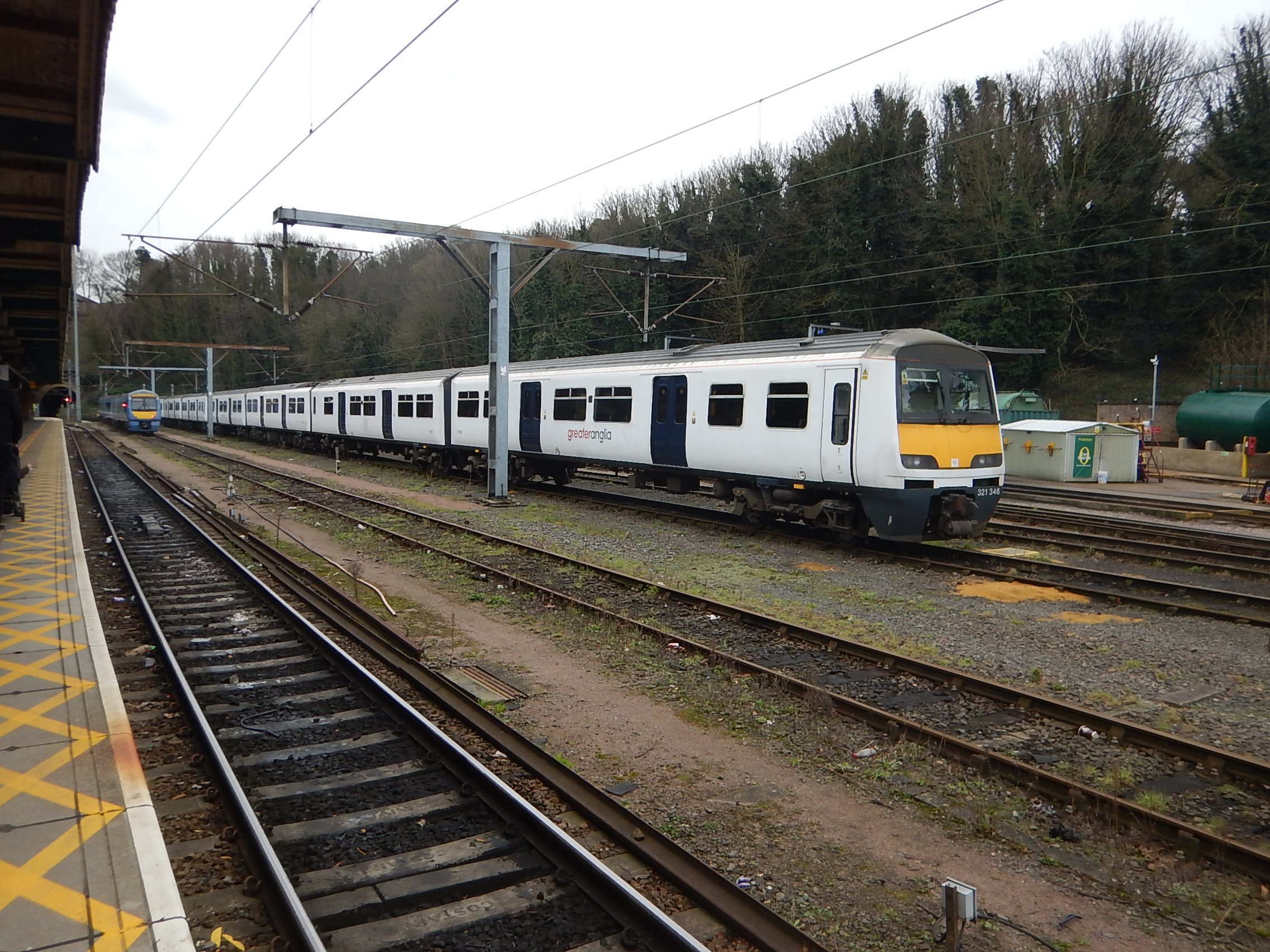
This project could create around a hundred four-car 100 mph, zero-emission electric trains, for running on routes with no or only partial electrification.electrification.
The Four-Car High Speed Train
Everybody loves High Speed Trains and Scotrail and Great Western Railway are taking a number of them and creating four-car quality trains to increase their rolling stock.
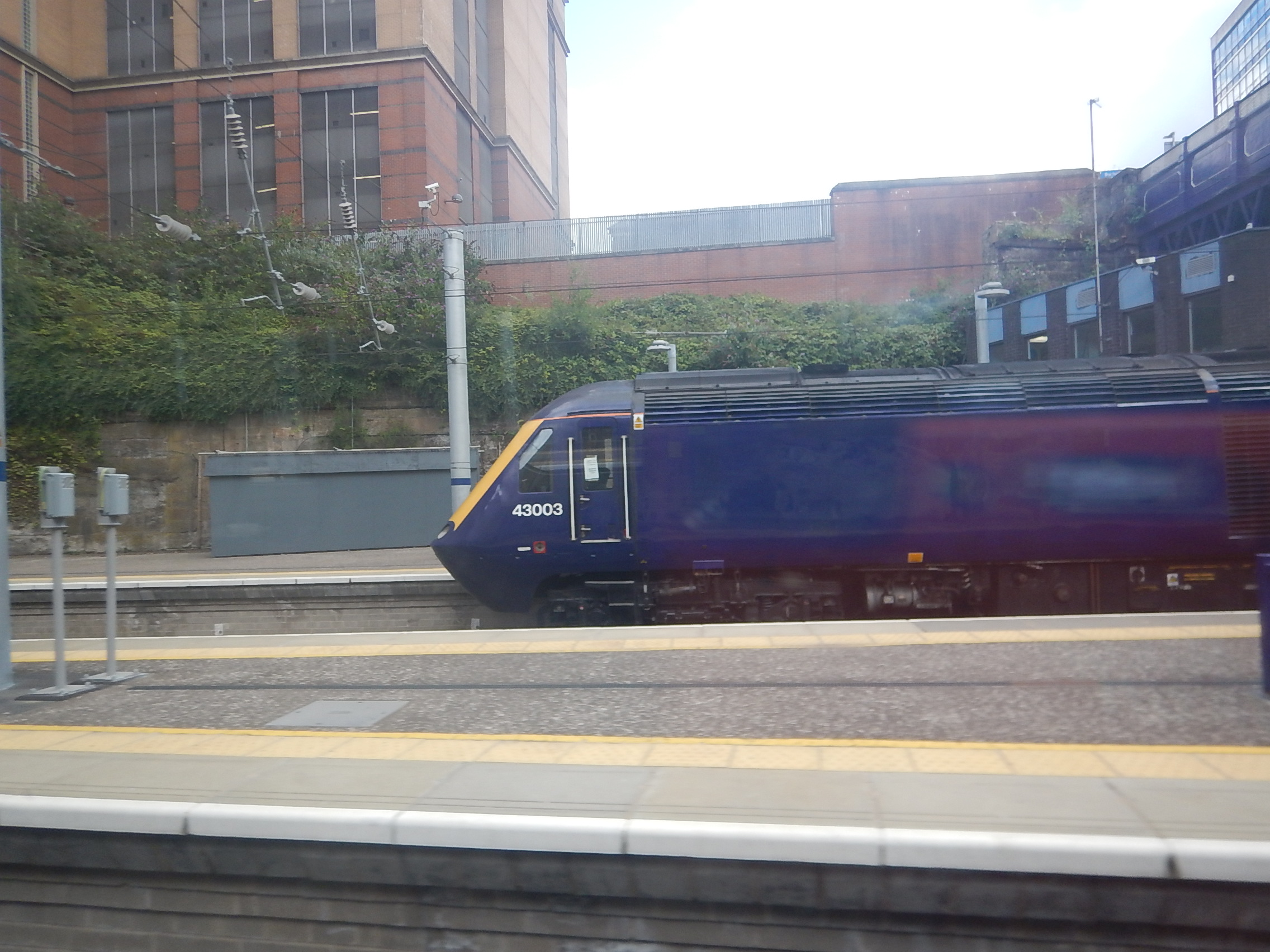
The picture shows a High Speed Train under test in Glasgow Queen Street station.
They are already running in Cornwall and they should be running in Scotland before the end of the year.
Updating The Class 170 Trains
The Press Release announces Porterbrook’s latest project and gives this picture.
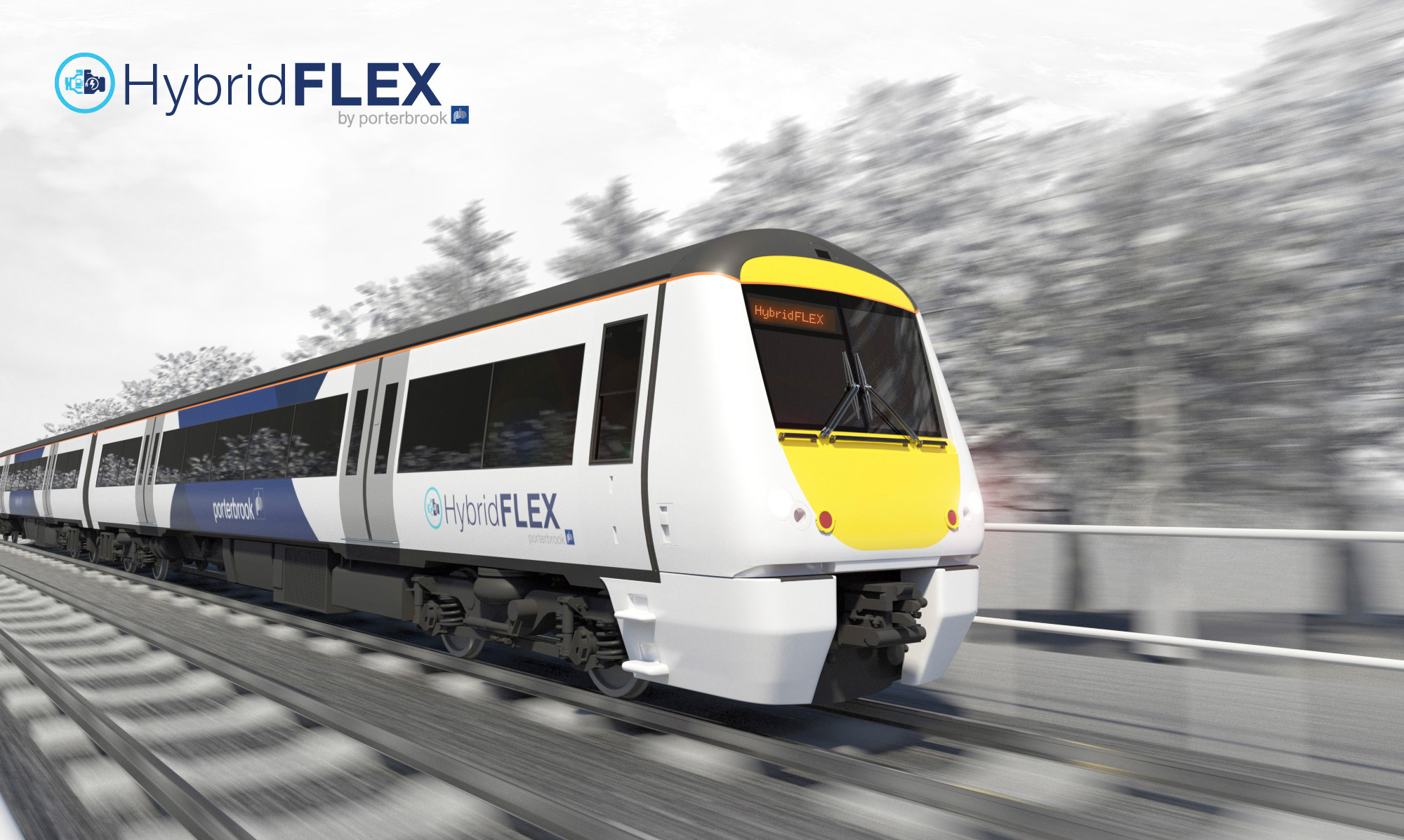
There are 122 Class 170 trains on the UK rail network, which were built around twenty years ago. There are also nearly a hundred other Class 168, 171 and 172 trains with a similar design.
They are 100 mph trains, that are diesel-powered and some are used on long distances.
As a passenger, they are not a bad train, but being diesel, they are not that environmentally friendly.
The Class 172 trains, which are currently running on the Gospel Oak to Barking Line, would surely be a much better train with a smoother electric transmission, that had regenerative braking. Although, as they have a mechanical transmission, rather than the hydraulic of the other Turbostars, this might not be possible.
On the other hand, West Midlands Trains will soon have a fleet of thirty-five Class 172 trains of various sub-types, so fuel savings could be significant.
This is from the Press Release.
Rolls-Royce and Porterbrook, the UK’s largest owner of passenger rolling stock, have agreed the delivery of MTU Hybrid PowerPacks that can convert Class 168 and Class 170 ‘Turbostar’ DMUs from diesel-only to hybrid-electric operation. Hybrid technology allows for the cleaner and quieter operation of trains in stations and through urban areas.
As I understand it, the current hydraulic traction system will be replaced by an electric one with a battery, that will enable.
- Regenerative braking using a battery.
- Battery electric power in urban areas, stations and depots.
- Lower noise levels
- Lower maintenance costs.
This should also reduce diesel fuel consumption and carbon emissions.
Conclusion
The good Class 170 trains, are being improved and should give another twenty years of service.
How many other projects like these will surface in the next few years?
 The Anonymous Widower