University Of Alberta Partners With City of Edmonton And Diesel Tech Industries To Pilot Hydrogen-Diesel Bus Retrofits
The title of this post, is the same as that of this article on Pulse 2.0.
These two paragraphs introduce what is a comprehensive practical approach to decarbonising a fleet of diesel buses.
The University of Alberta is partnering with the City of Edmonton and Diesel Tech Industries to cut carbon emissions from Edmonton’s fleet of diesel-powered buses by integrating hydrogen fuel into existing combustion engines.
The initiative focuses on developing a practical retrofit approach to help transit agencies and other vehicle operators reduce emissions quickly without waiting for full fleet replacement. Project leaders say that if the pilot succeeds, the work could translate into a deployable solution for operators across Canada seeking near-term carbon reductions while maintaining current diesel assets.
Note.
- The City of Edmonton has around a thousand buses.
- Many of Edmonton’s buses have Cummins engines.
- Cummins are decarbonising the company and have developed hydrogen-conversions for some of their diesel engines.
- I am sure that this technique could be used to convert London’s thousand new Routemaster buses, with their Cummins engines.
This project seems to have a lot of possibilities to get very much larger.
There’s A Hole In The Bus
If you’re musical, you can sing it to the tune of the famous Harry Belafonte song.
If you not, then give us a rest, or take singing lessons.
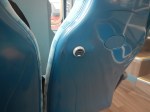
I took this picture of the seat in front of me on the new BYD battery-electric bus this morning.
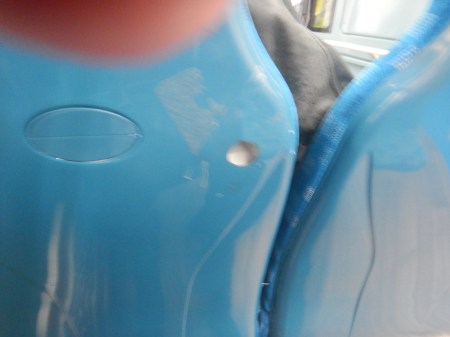
Has the stop button been nicked or has it just fallen out?
Or it could be the centuries old problem of finding good, reliable slaves?
A Nightmare Coming Home
I nearly always come home via Moorgate station, as it has good train and bus connections and I can get both the 141 and 76 buses to near my house.
- The 76 bus is my preference as it is a reliable New Routemaster.
- But the 141 bus takes me all the way home. Unfortunately, it is generally a Chinese BYD battery-electric bus.
Coming home, I arrived at the Northchurch Road in a 76 bus.
- The time was 11:29 and a text said that 141 buses were due in 1, 8, 19 and 20 minutes.
- A second text at 11:39 said that buses were due at 4 and 12 minutes.
Eventually, I got on a 141 bus at 11:44.
This is typical, as the buses don’t seem to synchronise with Transport for London’s bus reporting system.
But today in the cold weather, they have been particularly unreliable.
So I asked Google AI, if hydrogen buses are more reliable in the cold and received this answer.
Yes, studies show hydrogen fuel cell buses generally outperform battery-electric buses (BEBs) in cold weather, experiencing less range reduction because their fuel cells generate waste heat that helps warm the cabin, while BEBs must draw significant energy from the battery for heating, drastically cutting range. While BEB range can drop significantly (over 30%), hydrogen buses see a smaller dip (around 23%), making them more reliable for cold climates.
Sixty years ago, I was using nickel-cadmium batteries to make portable instruments in a chemical factory and I think that they hated the cold, but that lithium-ion solved the problem. Obviously, it doesn’t!
But I do have my suspicions about the design and build quality of these BYD buses!
How Will The New London Number 10 Bus Turn Round At Mildmay Park?
The new London Bus 10 is going to terminate near my house at probably the four-way junction of the Balls Pond Road/Mildmay Park/Southgate Road.
This Google Map shows the area.
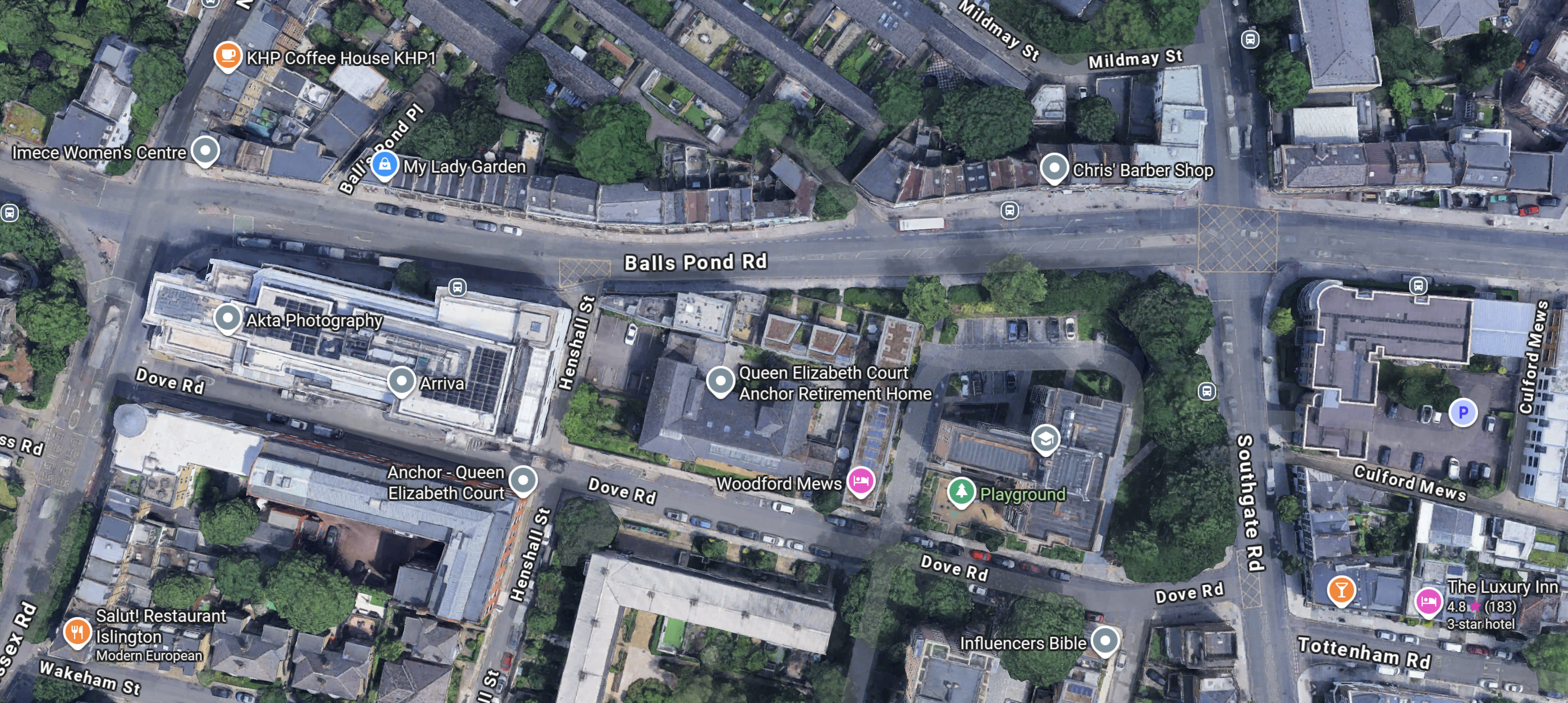
Note.
- The road about a third of the way down the map, that goes across the map is the Balls Pond Road of 1950s and 1960s fame on the BBC radio shows Beyond our Ken and Round the Horn.
- If you like your comedy with lashings of double entendres, then check out the shows. They have Wikipedia entries.
- At the West end oof the map, is the Essex Road, which takes buses to and from the Angel and Central London.
- Southgate Road and Mildmay Park form a North-South route towards the East of the map.
- Southgate Road leads South to Old Street and the City of London.
- Mildmay Park leads North to Newington Green, Clissold Park and Manor House.
Sometimes, buses from Central London turn-back in this area, by taking this route.
- The bus comes North up the Essex Road and turns right into the Balls Pond Road.
- It stops in the Balls Pond Road and drops off any remaining passengers.
- At the set of traffic lights, the bus will turn into Southgate Road.
- The bus, then turns into Dove Road and proceeds to its Western end.
- The bus company has an office in the block at the end, so drivers can also take a comfort break before returning to Central London.
I have seen buses taking this route several times in the last month, so it could be likely that it will be used in future to turn the buses.
Will New Routemasters Continue To Be Used?
At least initially, I suspect, but London will replace them with zero-carbon buses. Hopefully, they won’t be the inadequate BYD electric-buses on route 141?
How Will Buses Be Recharged?
At some point, the buses will probably be charged in this area.
There doesn’t seem to be a suitable place, so will the buses be charged at the other end of the route, which is Battersea Bridge.
Perhaps, the solution is to convert the Routemasters to zero-carbon?
The Diesel-Hybrid 141 Buses Always Seem To Get Through
Today, I had an all-too-typical bus-rid back from Moorgate after breakfast and a bit of shopping.
My direct bus is a 141, which is a second-rate, Chinese BYD bus, which has a number of problems as I pointed out in My 78-Year-Old Legs Are More Reliable Than The New Chinese Buses On London’s 141 Bus Route.
- I just missed a 141, so I caught the next bus that was going my way.
- It was a New Routemaster on the 76 route, so I took a chance, that it might pass the previous 141 bus, as they often do.
- As we passed Moorfield’s Eye Hospital, we passed the 141, but it was stopped at the side of the road, with all its lights flashing.
- I decided to change two stops from home and left two stops from home, from where I could walk.
- I waited perhaps five minutes before an elderly Wrightbus diesel-hybrid arrived to take me home,
After today’s experience, I can’t help but remember the old joke!
- Question: What’s red and lies in the gutter?
- Answer: A dead bus!
Other colours are available.
Can A Broken Humerus Affect Your Hand And Wrist Long Term?
Sixty-four years ago, my left humerus was broken at school and I don’t think the local hospital fixed it too well. I also don’t think I had the best of physiotherapy, after some of my experiences with physios since my stroke, which have been of a generally very high-quality, from both the NHS and private physiotherapists.
The wrist has not been misbehaving itself recently, so I asked Google AI, the question in the title of this post and received this reply.
Yes, a broken humerus can affect your hand and wrist long-term, especially if a nerve like the radial nerve is injured during the fracture or surgery. This can cause temporary issues like wrist drop, which is the inability to extend the wrist and fingers, often improving with therapy. In rare cases, if nerve recovery is incomplete, surgical procedures may be necessary to restore function, though most fractures have an excellent long-term outlook with proper rehabilitation.
Note.
- I certainly didn’t have proper rehabilitation in 1961 at Highlands Hospital in Winchmore Hill.
- I wonder if I have actually suffered from wrist drop in recent years.
- I suspect that now there are better treatments available.
Google seem to have scraped the article from the respectable Cleveland Clinic.
Why Has My Left Humerus Got Worse In The Last Few Months?
I wonder, if it is new BYD buses on route 141.
- I always sit or stand downstairs, as at 78, I don’t want too risk climbing the stairs.
- The buses are more pokey and the seats are narrower than say a Routemaster or other British bus.
- On Routemasters and other British buses, I usually sit on the far-right seat to protect the humerus.
- It is getting increasingly knocked if I sit in the left-hand seat of a right-sided pair, by peoples’ backpacks.
- The seats are narrow on the BYD buses, and if sitting in a left-hand seat of a left-sided pair, my left humerus rubs against the outside wall of the bus. This is worse with a large person in the right seat.
- If I sit in the right-hand seat of a left-sided pair, it’s usually better, but if there’s a large person in the left seat, because of the narrow seats, the arm get knocked.
- On the BYD buses, there are no forward facing seats downstairs on the right side.
- There are some forward facing seats at the right side at the back, but they are difficult for me to climb into.
- The corridor from the front to the back in the bus is narrow and I sometimes bump the left humerus.
- I met a lady with a pram, who finds the corridor narrow for her pram.
- The step-up and down into the bus is higher and puts strain on my knees, unless I get it right.
I do wonder if the BYD buses were designed around smaller oriental people.
I certainly never had these problems, when I was riding on on Routemasters and other British-designed buses.
For the next few works, I will avoid travelling on the BYD buses unless I can sit in the right-hand seat of a pair, by myself.
I can also stand, if the bus isn’t too full. Looking back, I feel, I don’t mind standing on the buses.
I will now be forwarding this post to those that know me well.
My 78-Year-Old Legs Are More Reliable Than The New Chinese Buses On London’s 141 Bus Route
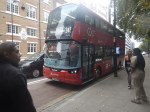
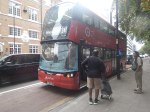
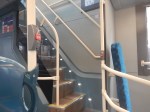
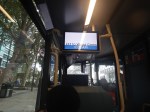
So we all know what we’re talking about, here’s a few pictures.
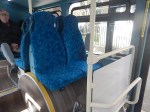
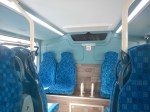
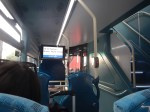
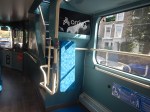
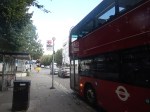
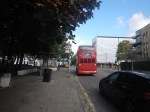
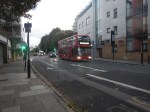
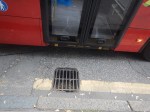
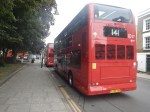
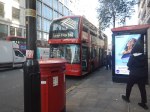
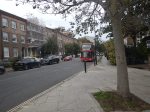
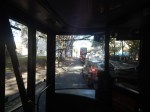
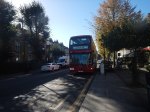
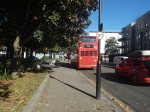
Note.
- The buses seem to have no serious faults from a passenger point of view.
- One middle-aged lady on the plump side, said she didn’t like the buses.
- The aisle between the front seats doesn’t seem to be built for large people.
- The seats are reasonably comfortable.
- One morning, I stood on a long journey and I felt the road-holding wasn’t as good as a New Routemaster.
- On several buses, the interior route display has not been working.
- As I don’t wear a watch, I find a non-working display annoying.
- I haven’t been upstairs yet.
- As picture numbers three and four show, the bus looks a bit pokey at the back downstairs.
But I am very suspicious about the buses’s reliability or ability to handle the route, which is fairly long.
Take this morning, when I was coming home from London Bridge station.
- There was only a 43 bus at the shared stop with the 141 bus.
- As the routes are identical until Old Street station, I took the 43 bus to Moorgate station.
- At Moorgate station, I took a 76 bus, which gets me within walking distance of where I live.
- Someone said, that a 141 bus would mean a wait of ten minutes.
- In the end my 78-year-old legs delivered be home.
I didn’t see a 141 bus going my way on my journey.
I have seen behaviour like this several times, since some Chinese electric buses were introduced on to the route.
As a graduate Electrical and Control Engineer, it looks to me, that there is one of two problems with these buses.
- The batteries aren’t large enough for the route.
- Not enough time is allowed for charging the batteries at the end of the route.
This page on the Wrightbus website is entitled Wrightbus Electroliner ‘Most Efficient Double-Deck Battery-Electric Bus’, and it contains this paragraph, which probably explains their philosophy and ambition.
We have already gained a strong reputation for our hydrogen double deck but we want to lead the world in zero-emissions full stop. Wrightbus has the best brains in the business when it comes to technology and our StreetDeck Electroliner puts us squarely at the front of the pack. We haven’t weighed the bus down with a high battery volume just so we can say it’s got the most power or range; instead, we’ve made it the most efficient vehicle on the road by combining optimum power with a class-leading rapid charge, meaning our electric bus spends more time on the road than any other.
It also probably sets a very high bar, which the Chinese can only achieve by adding battery volume and making their buses pokey.
To be fair to the buses, the 141 route is probably nearly 20 miles long.
In Sutton Station To Gatwick Airport By Hydrogen-Powered Bus, I wrote about what it says in the title.
In that post, I said this about hydrogen buses running on the 141 route.
Wrightbus Hydrogen Buses For My Local Bus Route 141
Consider.
- The 141 bus route is my local bus, which gets me to Moorgate, Bank, London Bridge and Manor House.
- The length of the full route is twenty miles and it takes about an hour to go from London Bridge station to Palmers Green.
- The route is currently run by older Wrightbus hybrid diesel-electric buses.
- I suspect that modern hydrogen buses could last almost all day on one fill of hydrogen, with perhaps a top-up at lunchtime.
They would have no difficulty handling the route and would greatly increase the customers current rock-bottom satisfaction.
I am sure, they would improve the horrendous reliability of the route.
I also wonder, if Wrightbus have another solution.
In UK Among Tri-Axle Zero-Emission Wrightbus StreetDeck Prospects, I talk about Wrightbus’s new Tri-Axle Zero-Emission Wrightbus StreetDeck bus and how it would be ideal for the 141 bus route.
- The 141 bus route is the old 641 trolleybus route, so all clearances are generous.
- The tri-axle design can probably carry a better-optimised battery.
- There used to be two bus routes on the route and now there is only one, so more capacity is needed.
- The 141 bus route bridges the gap between the Northern section of the Piccadilly Line and the Elizabeth Line, Bank and London Bridge.
- The new air-conditioned Piccadilly Line trains, will increase the passengers on the line.
- There will be a lot more housing built in Enfield, at the Northern end of the Piccadilly Line and more bus capacity will be needed between Manor House and the City of London.
Some of TfL’s rerouting of buses in North London, was a crime against mathematics.
Comings And Goings Of Battery-Electric Buses On Route 242 At Aldgate Bus Station – 4th September 2025
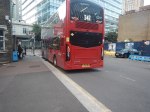
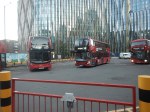
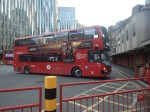
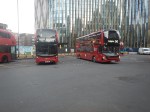
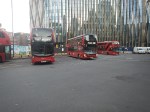
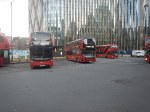
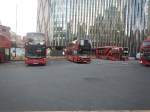
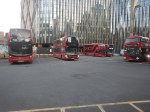
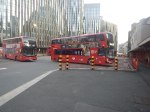
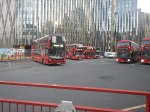
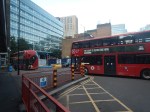
I took these pictures of 242 battery-electric buses at Aldgate bus station, last night.

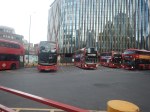
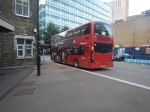






Note.
- All the buses on route 242, were Volvo BZL battery-electric buses.
- All the battery-electric buses backed onto the chargers for about ten minutes.
- Range on battery of the buses is probably about 214 miles according to Google.
- Buses arrived and left every few minutes.
- There was no indication, if the buses were charged at Aldgate bus station, although as the pictures show, some went dark for a few minutes.
If the buses were being charged, it certainly looked an efficient way to charge them.
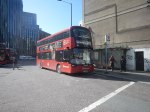
I took these pictures of 242 battery-electric buses at Aldgate bus station and in Dalston, this morning.
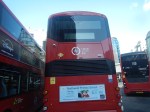
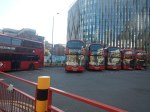
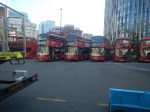

Note.
- All the electric buses are Streetlite Electroliners from Wrightbus.
- All Wrightbuses have a stylised ‘W’ on the front.
- The seventh picture shows the enlarged destination board on the back of the Streetlite bus.
Are Stagecoach running two different types of buses on the same route to ascertain the best and give the chargers a decent workout?
I have some further thoughts.
Could This Form Of Charging Be Used To Convert New Routemasters Into Electric Buses?
Consider.
- In Equipmake Hybrid To Battery Powered LT11, I show a battery-electric New Routemaster is possible.
- In Wrightbus Launches NewPower In Bicester, I write about Wrightbus’s new factory in Bicester to convert buses to battery power.
- In New Routemasters As Advertising Hoardings, I show how New Routemasters have a nice little secondary earner as advertising hoardings.
- New Routemasters have become a symbol of London.
- As pictures five to seven show, New Routemasters could share the chargers with younger battery-electric buses.
- There is still at least another dozen years left in most New Routemasters.
Converting a thousand New Routemasters must be cheaper, than buying a thousand new buses.
Could This Form Of Charging Be Used Outside London?
Most certainly, provided you can get enough power to the charger.
Aldgate doesn’t have a problem with power, as the Underground is underneath.
A Long Ride In An Electric Bus
In the last few weeks, I’ve started to use the 243 bus, a lot more, as I’ve been on a course at St. Leonards Hospital and bus serves Dalston Junction, St. Leonards Hospital, Old Street station and a couple of other places I visit regularly.
On Thursday, I used it from my GP’s surgery and the William Harvey Heart Centre, where I volunteer.
I noticed that the buses on the route were now brand-new Wrightbus Streetdeck Electroliner battery-electric buses.
This morning, I took a ride on a 243 bus from ~Old Street to Wood Green to make a better assessment of the bus.
These were the pictures I took.
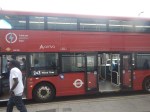
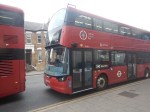
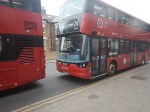
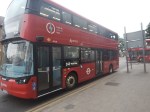
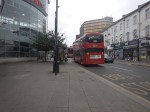
I can compare it with four other common London buses.
- In common with the 243 bus of a few weeks ago, the 141 bus, that I use regularly has a collection of Wrightbus hybrid buses of a certain age, which need to be replaced.There is no comparison between the two buses, as the Streetdeck Electroliner has better ride, seats and interior fittings and also comes with phone charging, with every passenger having their own USB port.
- In addition to being fully electric, the bus is a step-up from the New Routemaster, in that the Electroliner is much quieter.
- In British Buses For British Bottoms, I was impressed with the Electroliner’s single-deck sibling and as most would expect, the buses are of similar standard and quality.
- I regularly ride on 43 buses, which are based on a Chinese chassis. I would rate the ride on these buses to have inferior passenger ride, than both the Electroliner and the New Routemaster.
I have a few other thoughts.
Is The Range Sufficient?
The web page for the Wrightbus Streetdeck Electroliner, says this about range.
StreetDeck Electroliner is not a regular electric bus, its optimised power from a 454kW zero-emission battery electric power train is the ideal battery capacity for a UK Double Deck bus. It powers it to a range of up to 200 miles and a fast charge time of just 2.5 hours ensures daily scheduling aligning with driver breaks.
The buses are based at Tottenham Garage, which could mean they go back to there to charge, as it is on the route.
I asked Google AI, where the buses on route 243 were charged and got this answer.
London’s electric buses, including the route 243, primarily charge their batteries at bus garages using plug-in charging points. However, some routes, like the 358, utilize pantographs (overhead charging systems) at the ends of routes to provide rapid charging during the day, minimizing the need for lengthy garage charging. Arriva London, which operates route 243, has ordered new Volvo BZL electric buses for this route, and these buses will likely be charged using a combination of garage charging and opportunity charging via pantographs.
The answer is based on this article on this article on route-one.net which is entitled Arriva London orders 51 Volvo BZL Electric Double-deckers, where these are the first two paragraphs.
Arriva London has placed an order for 51 Volvo BZL battery-electric double-deckers. They represent the first order for the BZL from Arriva and will be deployed from Tottenham depot on Transport for London (TfL) routes 243 and 341.
Delivery is to commence in 2025 and the buses will be 10.9m long. High-backed seating will be fitted along with USB charging points and glazed skylights. Each will have 470kWh of energy storage with the 200kW driveline including a two-speed automated manual gearbox.
I have some questions.
- Has my camera lied about the buses it saw on the 243 route?
- Do the Wrightbus Streetdeck Electroliners use opportunity charging on the 243 route?
I shall investigate.
New Routemasters As Advertising Hoardings
Increasingly, New Routemasters are appearing as advertising hoardings.
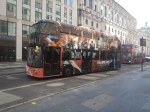
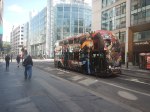


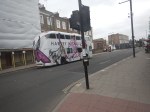
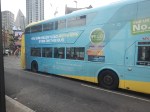
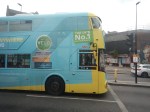
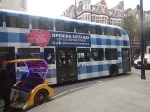
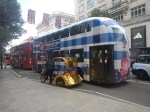

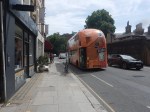

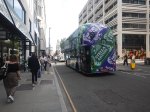




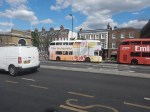
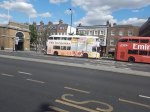



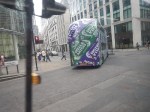
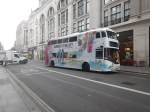
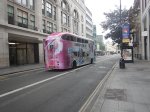
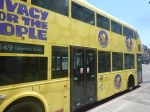


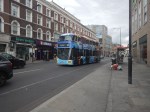
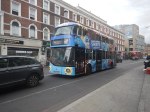

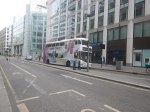

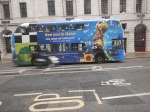

Note.
- I am unsure if some of the products should be advertised so prominently.
- The last picture is of a naked bus to fill the space.
- I shall be adding to this gallery.
In Could London’s New Routemaster Buses Be Converted To Hydrogen Power?, I came to this conclusion.
I believe from my knowledge of Cummins and the way they work, that they will come up with a hydrogen-based solution, that will replace the Cummins diesel in these buses with a zero-carbon engine.
If Cummins don’t then someone else will.
Whoever solves the problem of converting London’s new Routemasters to hydrogen will have one of the best adverts for their product, there has ever been.
After converting London’s thousand Routemasters, the engineers could move on to anything powered by a Cummins engine.
It would be a quick, easy and affordable way to create a thousand zero-carbon buses.
Wrightbus Delivers More Hydrogen Buses To Germany Bringing Total To 43 – Around 130 Are Due To Be On The Roads By The End Of 2025
The title of this post, is the same as that of this article on the Belfast Newsletter.
This is the sub-heading.
The Ballymena bus manufacturer has also opened a European service centre and spare parts warehouse in Brühl, near Cologne
These three paragraphs add detail to the story.
Northern Ireland zero-emission bus manufacturer Wrightbus has delivered 12 new hydrogen vehicles to German operator WestVerkehr GmbH.
The latest order completion of Kite Hydroliner single decks means there are now 43 hydrogen-powered buses on the streets of Germany – with around 130 due to be on the roads by the end of 2025.
WestVerkehr GmbH is based in the westernmost district of Germany, on the border with the Netherlands, and will operate the Kite Hydroliners between Heinsberg, Hückelhoven, and Erkelenz.
I always think, that if you can sell anything vehicles to the Germans, there can’t be much wrong with them.
This picture shows one of the new Wrightbus electric buses, that I ride regularly around Finsbury in London.
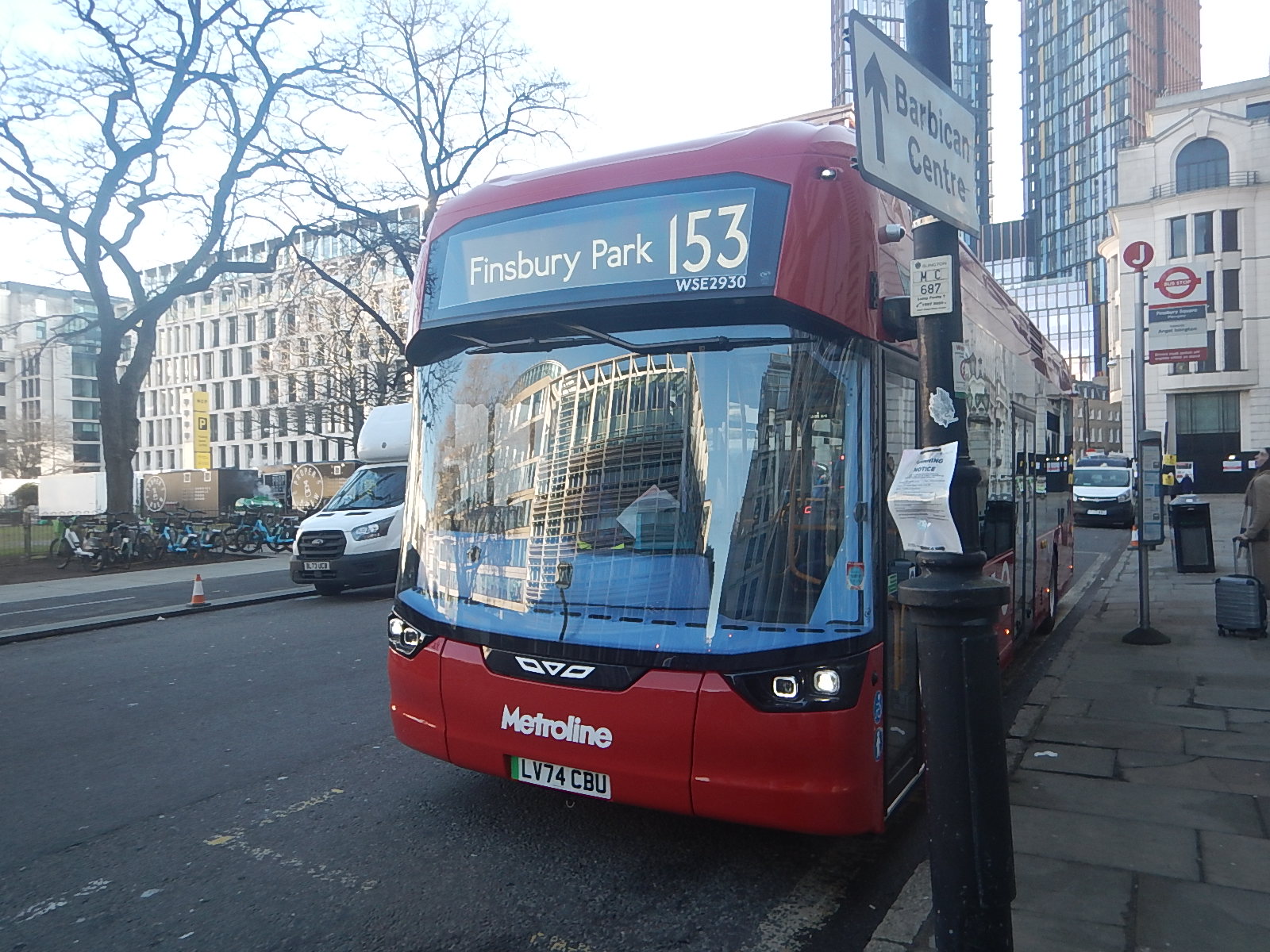
I was on a Chinese electric bus yesterday and there’s no doubt, that the ride in the Wrightbus product is smoother, than that of the Chinese one. Especially, when standing. The Chinese bus doesn’t even come close for ride with a New Routemaster.
London would do better, if it converted the thousand New Routemaster to zero-carbon power, rather than import a thousand Chinese buses.
In Equipmake Hybrid To Battery Powered LT11, I describe how one New Routemaster had a transmission transplant in Norfolk.
As it is possible, are Wrightbus NewPower working on it?
 The Anonymous Widower