Transport Enterprise Leasing To Integrate Cummins X15H Hydrogen Engine Into Heavy Duty Trucks
The title of this post, is the same as that of this article on Fleet Equipment.
This is the first paragraph.
Transport Enterprise Leasing and Cummins Inc. announced recently that TEL has signed a letter of intent planning to purchase Cummins’ 15-liter hydrogen internal combustion engines when available. TEL will integrate the Cummins’ X15H hydrogen engines into their fleet of heavy-duty trucks.
This second paragraph is very significant.
Hydrogen engines can use zero-carbon green hydrogen fuel, produced by Cummins-manufactured electrolyzers. The projected investment in renewable hydrogen production globally will provide a growing opportunity for the deployment of hydrogen-powered fleets utilizing either Cummins fuel cell or engine power.
Cummins would appear to be aiming to be a one-stop shop to decarbonise your fleet of heavy trucks or anything that is powered by a Cummins diesel engine.
I did a small amount of work for Cummins about twenty years ago and one of the companies objectives was to be able to provide a diesel engine to fit anybody’s application.
So if someone wanted a diesel engine with a particular power, that fitted in an unusually-shaped or confined space, they would rearrange the layout of the engine to make it fit.
I suspect that London’s New Routemaster buses have a special version of Cummins B Series engine, designed for its unusual location halfway up the back stairs.
Will Cummins produce a hydrogen internal combustion engine for the New Routemaster?
- The buses could become zero-carbon, at less cost than new buses.
- Passengers would notice no difference in ride comfort and experience.
- Drivers would just need to use the hydrogen systems.
- Maintenance staff would only need to be trained n handling the hydrogen system, as much of the buses would be unchanged.
- Cummins could sell an electrolyser to each garage.
- London would get some good publicity for tourism.
London’s iconic bus would look the same.
Werner Enterprises Signs Letter Of Intent Planning To Secure 500 X15H Engines From Cummins
The title of this post, is the same as that of this press release from Cummins.
This is the first paragraph.
Werner Enterprises, a premier transportation and logistics provider, and Cummins Inc., a global power solutions provider, announced today Werner signed a letter of intent to purchase 500 Cummins’ 15-liter hydrogen internal combustion engines upon availability. The two companies announced earlier this year, Werner Enterprises plans to validate and integrate Cummins’15-liter natural gas and Cummins’ X15H hydrogen engines, both part of Cummins’ fuel agnostic platform, into their fleet.
More details of the X15H engine are given in this earlier press release, which is entitled Cummins Inc. Debuts 15-Litre Hydrogen Engine At ACT Expo, which has this first paragraph.
Today, Cummins Inc. debuted its 15-liter hydrogen engine at ACT Expo in Long Beach, California. This engine is built on Cummins’ new fuel-agnostic platform, where below the head gasket each fuel type’s engine has largely similar components, and above the head gasket, each has different components for different fuel types. This version, with expected full production in 2027, pairs with clean, zero-carbon hydrogen fuel, a key enabler of Cummins’ strategy to go further faster to help customers reduce greenhouse gas (GHG) emissions.
I certainly like the concept of a fuel-agnostic platform, where below the head gasket, everything is similar, and above the head gasket, there are appropriate components.
I wouldn’t be surprised to find that Rolls-Royce mtu and JCB have used a similar concept for their hydrogen internal combustion engines.
Cummins have also developed a 6.7 litre engine.
This is a paragraph from the press release.
Hydrogen internal combustion engines use zero-carbon fuel at a lower initial price of a fuel cell or battery electric vehicle with little modification to today’s vehicles. Accelerated market adoption of hydrogen engine powered vehicles is driven by the technology’s high technology maturity, low initial cost, extended vehicle range, fast fueling, powertrain installation commonality, and end-user familiarity.
I certainly feel it is the way to go technically.
Take London’s New Routemaster buses.
- These buses are powered by a Cummins B-series engine, which has four cylinders and a capacity of 4.5 litres.
- This engine powers large numbers of trucks and pick-ups.
- For the UK, they are manufactured in Darlington.
- It appears that Cummins 6.7 litre engine is a six cylinder B-series engine.
It would certainly be more affordable to change the cylinder heads of these buses and power them by hydrogen, than purchase a new fleet.
Cummins have an excellent tutorial on hydrogen internal combustion engines on their web site.
The Third Route To Zero-Carbon Transport
The two most common routes to zero-carbon transport are.
- Battery-electric vehicles
- Hydrogen fuel-cell vehicles
Note that most hydrogen-fuel cell vehicles also have a battery.
But I believe there’s a third route and that is the use of hydrogen in an internal combustion engine.
Earlier today, I wrote Rolls-Royce And AVK Provide Over 3.5 Gigawatts Of Emergency Power Capacity In The UK, which is based on a Rolls-Royce press release, with the same title.
This is an extract.
And this is said about the use of hydrogen.
Rolls-Royce is also currently developing its mtu gas engine portfolio for power generation so that the engines can run on hydrogen fuel in future, enabling a Net Zero energy supply. The company is also launching complete mtu hydrogen fuel cell solutions, that emit nothing but water vapor from 2025. This will enable CO2-free generation of emergency power for data centers and many other critical applications.
I certainly think, that they are going in the right direction.
Rolls-Royce mtu have a lot to lose, if their diesel engines that power trains, heavy equipment, ships and emergency power generators are replaced by other companies zero-carbon solutions.
- Large investments will need to be made in hydrogen electrolyser and fuel cell production.
- Some traditional factories making diesel engines will be closed and could this mean redundancies?
- A lot of retraining of staff at both manufacturer and customer will need to be made.
But a traditional internal combustion engine, that runs on hydrogen or even both hydrogen and diesel makes the transition to hydrogen a lot less painful.
Other companies going this route include Cummins, Deutz and JCB.
Conversion Of Existing Diesel Engines To Hydrogen
Surely, if an equivalence hydrogen engine exists for all of their diesel engines, a company like Cummins or Rolls-Royce mtu can produce a sound engineering route to decarbonise some of their existing applications.
A classic application would be converting London’s Routemaster buses to hydrogen, which I wrote about in Could London’s New Routemaster Buses Be Converted To Hydrogen Power?
This was my conclusion in that post.
I believe from my knowledge of Cummins and the way they work, that they will come up with a hydrogen-based solution, that will replace the Cummins diesel in these buses with a zero-carbon engine.
If Cummins don’t then someone else will.
Whoever solves the problem of converting London’s new Routemasters to hydrogen will have one of the best adverts for their product, there has ever been.
After converting London’s thousand Routemasters, the engineers could move on to anything powered by a Cummins engine.
As this is a world-wide problem, I believe that the manufacturers of cars, buses, trucks and many other vehicles will offer zero-carbon solutions for their products, as it will be necessary for survival.
If you have just bought a new diesel BMW and your government says that in two years time, diesel will no longer be available, you’re up the creek without a paddle. But if BMW can convert it to hydrogen for a small fraction of the cost of a new electric equivalent, you have a more available way out.
Repowering Zero-Emission Buses As An Alternative
The title of this post, is the same as that of this article on Digital Journal.
The article makes the argument for swapping out the diesel engine for a zero-emission powertrain.
I very much feel that this is a worthwhile idea, as do Ricardo.
I wrote about converting London’s New Routemasters to hydrogen in Could London’s New Routemaster Buses Be Converted To Hydrogen Power?.
UK On Track To Reach 4,000 Zero Emission Bus Pledge With £200 Million Boost
The title of this post, is the same as that of this press release from the Government.
These are the main points of the press release.
- Nearly 1,000 more zero-emission buses to be funded in towns and cities across the country, bringing the total funded in England to 2000 so far under this government.
- A further 600 zero-emission buses have been funded in Scotland, Wales and Northern Ireland.
- Comes as consultation launched on ending sale of all new non-zero emission buses from 2025 to 2032.
- Government continues taking unprecedented action to hit net zero and level up transport across the country.
Areas to get the new buses include.
- Blackpool
- Greater Manchester
- Hertfordshire
- Norfolk
- North Yorkshire
- Nottingham
- Oxfordshire
- Portsmouth
- South Yorkshire
- West Midlands
- West Yorkshire
- York
I would also like to see the government fund trials for the conversion of suitable buses to zero carbon. I certainly believe that London’s New Routemaster buses could be converted to hydrogen.
Could London’s New Routemaster Buses Be Converted To Hydrogen Power?
There are a thousand New Routemaster buses on the roads of London.
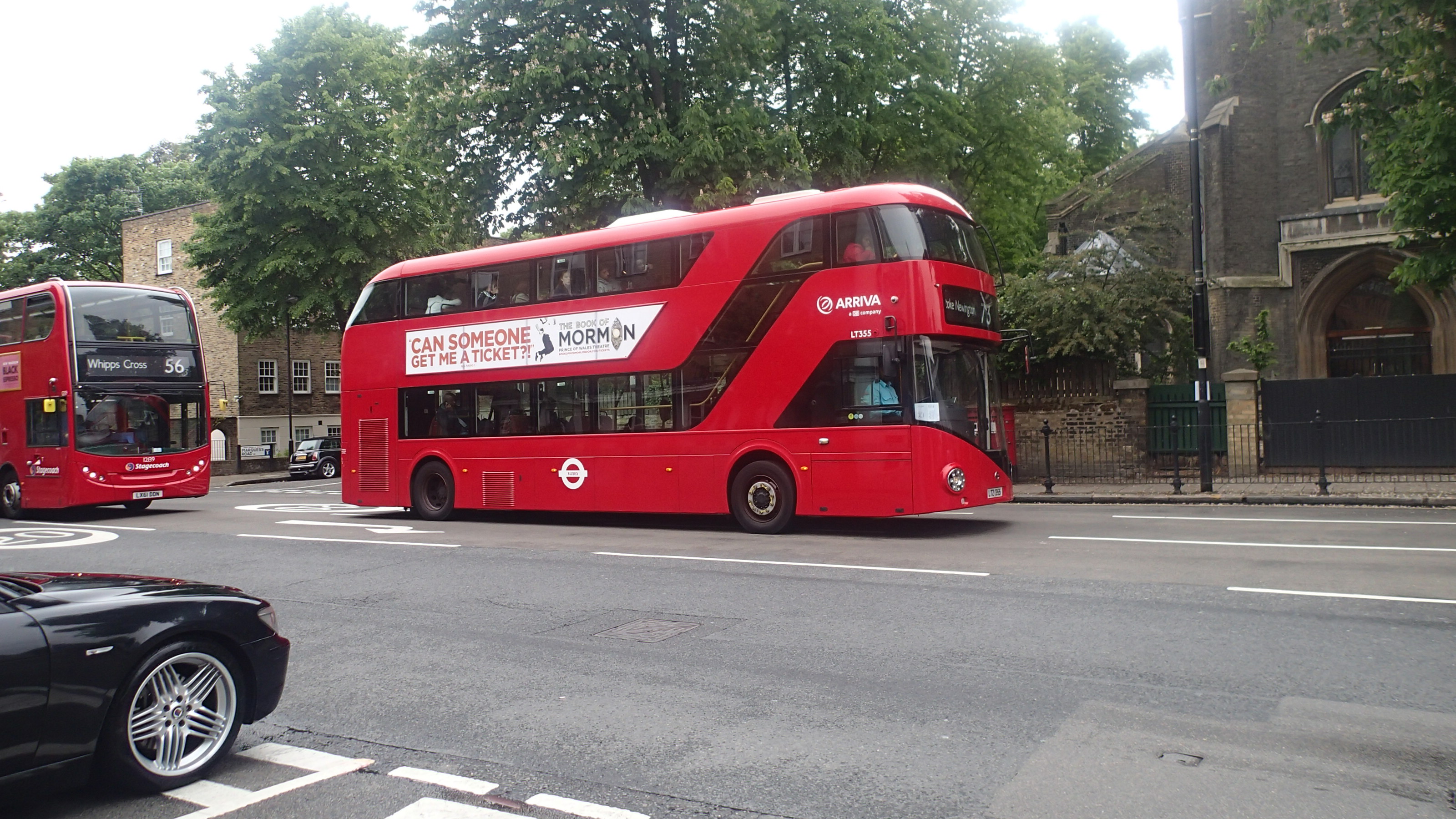
This paragraph from Wikipedia describes the transmission.
The bus is a hybrid diesel-electric driven by a battery-powered electric motor, charged by a diesel fuelled generator and recovering energy during braking by regenerative braking.
Note.
- The Cummins diesel engine is under the back stairs and is mounted high up. You can sometimes hear it start and stop if you sit or stand at the back of the bus.
- The diesel engine is part of the Cummins B Series Engine family, which is used very widely, included in vehicles like the Dodge Ram pick-up.
- The battery is mounted under the front stairs.
Cummins are embracing hydrogen in a big way and bought hydrogen company; Hydrogenics in 2019.
This press release from Cummins is entitled Cummins Begins Testing Of Hydrogen Fueled Internal Combustion Engine.
This is the first paragraph.
Cummins has taken another step forward in advancing zero carbon technology as the company began testing a hydrogen-fueled internal combustion engine. The proof-of-concept test is building on Cummins’ existing technology leadership in gaseous-fuel applications and powertrain leadership to create new power solutions that help customers meet the energy and environmental needs of the future.
Only today in Deutz Hydrogen Engine Ready For Market, I reported on how Deutz were going down a similar route.
I have done consultancy work for Cummins in Darlington, where I suspect the New Routemaster engines were built and the company prides itself in being able to provide a specially-laid out diesel engine for a niche-market application.
If they develop a hydrogen replacement for the B Series engine, I suspect that they will adopt the same sales philosophy.
For a start, it would enable all their many existing customers to convert their products from diesel to hydrogen power.
A hydrogen engine would be a direct way to enable conversion of a New Routemaster to hydrogen.
- The new hydrogen engine and generator would just replace the current diesel engine and generator.
- The chassis, body, battery and traction motor could be retained.
- I am also sure, that Wrightbus have the expertise to squeeze a hydrogen tank in somewhere.
.I believe that in a few years Cummins will be able to replace the diesel engine with a hydrogen engine of equivalent size and power.
After Ricardo announced their fuel cell approach to convert modern diesel buses to hydrogen, which I wrote about in Ricardo To Engineer Zero Emission Buses For UK’s First Hydrogen Transport Hub, I am sure we’re going to see thousands of modern buses converted to hydrogen power.
Conclusion
I believe from my knowledge of Cummins and the way they work, that they will come up with a hydrogen-based solution, that will replace the Cummins diesel in these buses with a zero-carbon engine.
If Cummins don’t then someone else will.
Whoever solves the problem of converting London’s new Routemasters to hydrogen will have one of the best adverts for their product, there has ever been.
After converting London’s thousand Routemasters, the engineers could move on to anything powered by a Cummins engine.
Could London’s New Routemaster Buses Be Fully-Electric In The City Centre?
London’s New Routemaster buses are different from nearly all the other buses built in the UK, in that Wrightbus designed them around a custom-design of chassis and series hybrid drive-train, whereas most other buses are built on a standard chassis from Volvo or another manufacturer.
These pictures show the buses from different angles.







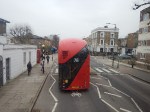




For comparison, two of London’s other buses are shown.
Could The New Routemasters Be Fitted With Slim Pantographs?
If you look at the different profiles of the New Routemaster and the other two buses, it appears to have a thicker profile.
I very much feel that a lightweight tram pantograph could be designed to fit in the roof of a New Routemaster.
- The bus might be a few centimetres taller at most.
- I would be very surprised if there are many places in Central London, where clearance is limited.
This pantograph could be used to strategically charge the batteries.
It Would Not Be A Trolley Bus
I can remember London’s trolley buses.




Note.
- All of these modern trolley buses in Europe have two overhead wires, which are needed to handle electric currents.
- They are also designed for powering the bus as it moves along the road.
But I suspect there is a design somewhere to connect a bus to two overhead rails for charging purposes.
Buses Should Have Flat Floors
These pictures were taken inside the lower-deck of one of London’s New Routemaster buses.





Now compare them with pictures taken on the lower deck of one of London’s other hybrid buses, similar to those you see all around the UK.
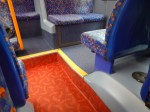




Note.
- The floor of the New Routemaster is continuous and flat. The only steps are the stairs and up into the sets of four seats.
- The floor of the hybrid bus, which was built on a standard Volvo chassis has several steps.
Recently, when carrying a full bag of shopping down the stairs on the hybrid bus, the driver accelerated away and I fell and banged my knee. Because of the flat floor, it is less likely, I’d have a similar problem on the New Routemaster.
Why Does The Routemaster Have A Flat Floor?
When Wrightbus designed the Routemaster, they had a clean sheet of paper and weren’t constrained to use a proprietary chassis.
- The 18 kWh traction battery is under the front stairs.
- The traction motor is under the floor, in the middle of the bus.
- The small diesel generator is mounted halfway up the back stairs.
- The bus has full regenerative braking to the battery.
Using a standard Volvo chassis might be cheaper, but there can’t be a flat floor.
Will The Wrightbus Hydrogen Bus Have A Flat Floor?
The Wrightbus StreetDeck FCEV is the Wrightbus hydrogen bus and it has entered service in Aberdeen.
It looks to be about half flat floor, but not as good as the Routemaster.
Hopefully, I’ll ride in one soon.
15 More Fuel Cell Electric Buses For UK Roads
The title of this post, is the same as that of this article on H2 View.
This is the introductory paragraph.
A further 15 fuel cell electric buses (FCEBs) are planned for the UK this year, as the country works towards its goal of deploying 4,000 zero emission buses over the next five years.
These futher points are made.
The fuel cells are 85KW heavy-duty FCveloCity®-HD fuel cell modules from Ballard Power Systems.
This will take Wrightbus’s order book for hydrogen-powered buses to fifty. all of which will be delivered this year.
Twenty buses are for London and fifteen are for Aberdeen.
I have some thoughts on the 85KW heavy-duty FCveloCity®-HD Fuel Cell Module.
This pdf file on the Ballard web site is the data sheet and this is selected data.
- The net power is 85 kW
- The fuel cell weighs 256 Kg.
- It needs a coolant sub-system that weighs 44 Kg.
- It needs an air sub-system that weighs 61 Kg.
- It is a true zero-emission product.
It is worth looking at the power train of a New Routemaster bus, which although very different will probably give clues as to the weight that can be carried and the power and battery size needed for a full-size bus.
- The Cummins ISBe diesel engine develops 138 kW and weighs 499 Kg.
- The engine is mounted half-up the back stairs.
- The Microvast Lithium Titanate battery has a capacity of 18 kWh.
- The battery is placed under the front stairs.
- The braking on the New Routemaster bus is regenerative.
These are some of my observations.
- If you sit at the back of a New Routemaster bus, you can hear the engine, when it is running. On most routes in Central London, it certainly isn’t running all the time.
- The battery doesn’t seem very large at 18 kWh.
- The fuel cell with its sub-systems would appear to be lighter than the diesel engine, but of less power.
- The fuel-cell won’t need the generator of the diesel bus.
I very much feel getting all the components into a standard double-decker bus will be a tight squeeze, but none of the individual components are that large or heavy.
Conclusion
I can’t wait to have my first ride in a hydrogen-powered double-decker bus.
Is The New Routemaster A Better Bus For COVID-19?
I went to the Angel today and rode on a New Routemaster.
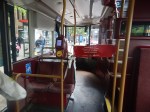


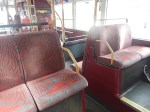
It almost seemed it was a bus designed for social distancing.
- I sat in one of the sets of four seats on the lower deck, by myself.
- The other set, also had a single occupant.
- The driver is safely behind a barrier and two metres from passengers.
- Entry and exit is by rear and centre doors only.
- The buses were designed for entry and exit at all doors.
I’d certainly be happy to travel on one of these buses.

