London’s Second Quietest Train Station Is Set To Close In May
The title of this post, is the same as that of this article on IanVisits.
This is the first paragraph.
Angel Road, London’s second quietest train station is set to close in May, the Department for Transport has announced. With just over 33,000 passengers in 2017/18, it’s beaten to the bottom spot only by South Greenford station’s 26,500 passengers.
It will be replaced on May 19th 2019, by the new Meridian Water station, which will be 580 metres to the South.
New Station In Soham Revealed With Network Rail To Unveil Design Proposals At Public Meetings
The title of this post is the same as that of this article on Rail Technology Magazine.
Rebuilding of Soham station has been talked about for years and it now looks like it is finally on its way.
This is a significant paragraph.
The early design work for the new station would allow for a second platform and footbridge to be constructed and a second track added as part of a future project.
I think this means, that doubling the route between Kennett and Ely stations will be done after Soham station is rebuilt.
Cardiff Parkway Station: Work To Start In 2020
The title of this post, is the same as that as this article on the BBC.
This is the first two paragraphs.
Work to build a new £30m railway station on the outskirts of Cardiff is expected to start in 2020, after receiving Welsh Government backing.
The station in St Mellons will serve up to 32,000 residents, linking them to Swansea, Cardiff, London, Bristol and Birmingham and the South Wales Metro.
Cardiff Parkway station will be between Cardiff Central and Newport stations and it will be close to the existing St. Mellons Business Park.
It is planned to open in 2022.
Nothing is said about services at the station, but there currently appears to be about six trains per hour (tph) between Cardiff Central and Newport, serving places like Birmingham, London, Manchester and Nottingham, in addition to places in South Wales.
Many if not all, of the trains calling at the station, when it opens will be modern trains, designed to execute fast station stops, so I wouldn’t be surprised to see a frequency of at least six tph between the new station and both Cardiff Central and Newport stations.
- Two tph – Cardiff and London Paddington
- Two tph – Cardiff and Ebbw Vale Town
- One tph – Cardiff and Nottingham
- One tph – Cardiff and Manchester
This looks to me to be the sort of station development that should be copied elsewhere in the country.
Wake Up To Money – New Stations
I generally listen to this program on BBC Radio 5, before getting out of bed.
Today they asked for smaller ideas that would benefit, so I sent this message.
It costs around £10million to build a decent station on an existing railway line. We should be building tens of them to serve new developments and existing towns. Most new ones seem to be successful. James in Dalston
It was read out.
Various factors are also working in favour of new stations.
Successful New Stations
Success breeds success and there have been several examples of new station openings in the last decade, that have been very successful.
Other developments and existing towns want to have a similar success.
Innovative Design
Station design is getting better and more innovative, with features and modules cropping up all over the country.
Single-Platform Stations
Single-platform stations, like Cranbrook in Devon and Galashiels in the Borders, which both opened in recent years, have shown that single-platform stations are a more affordable alternative to an all-singing-and-dancing station with two platforms and an expensive step-free bridge.
New Trains With Fast Dwell Times
The new generation of trains like Aventras, Desiro Cities and Flirts are designed to slow from line speed, execute a station stop and get back to line speed, in a shorter time, than previous trains.
This has been achieved by.
- Faster acceleration
- Better braking
- Level access between train and platform
- Wide lobbies on trains
- Better platform design
- Walk-through trains
- Better information on trains
- Better staff organisation
Whereas a decade or two ago, an extra station stop would cause havoc with the timetable, it is now easier to add a stop at a new or existing station.
Developers Are Often In Favour
Developers seem to be moving away from a philosophy, that everybody using their office, commercial or housing development will come by car.
One developer told me, that you actually get a premium price if a housing development has its own train station.
Conclusion
I think that is very likely in the next few years, the number of new stations built will increase.
£10.6m Horden Station Gets The Green Light
The title of this post, is the same as that of this article on Rail Technology Magazine.
This paragraph from the article, shows what you get for £10.6million.
Two 100-metre platforms will be built at Horden, near Peterlee, along with a footbridge connecting the platforms, a 136-space car park and bus stops.
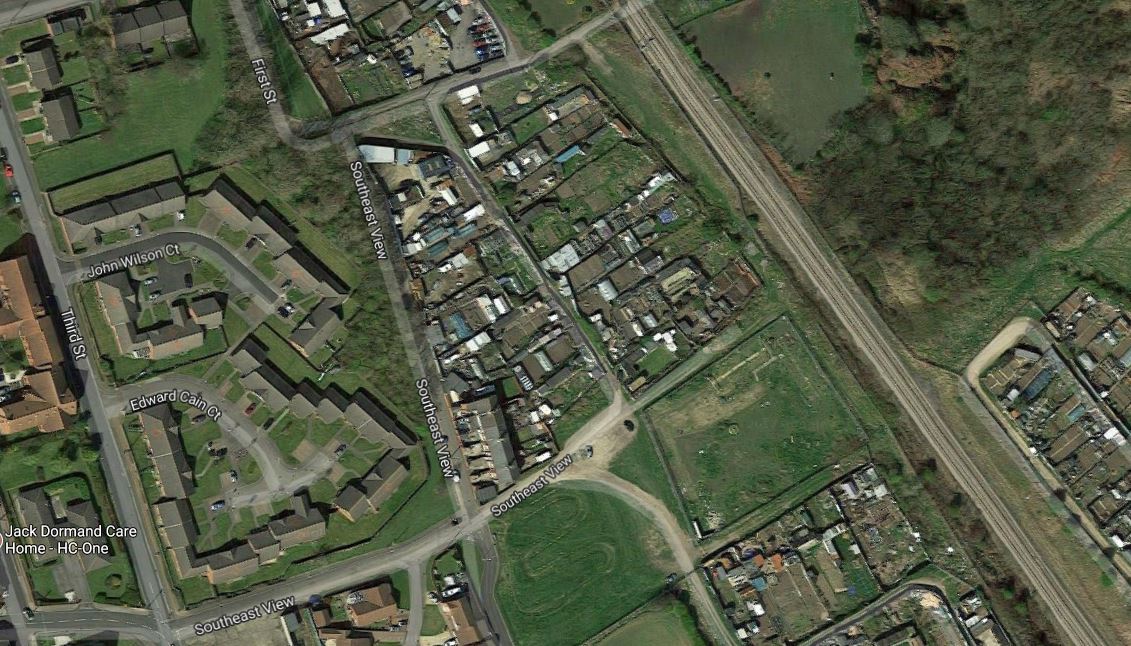
This Google Map shows the area of the proposed station close to South East View.
And this picture is from the article.
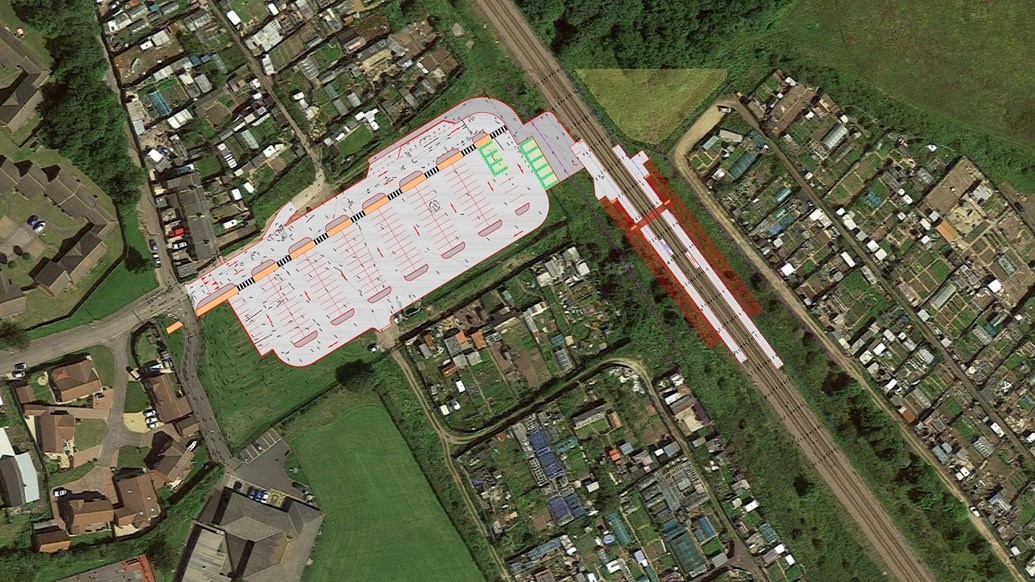
The article also says that the new Horden Peterlee station should be open by 2020.
I shall be interested to see how the passenger statistics for this station work out. 70,000 passengers a year are predicted, but I feel the location of the station will attract some very unexpected numbers of users.
It also could be a good weather station, where on a fine day, walkers will turn up by train, to explore the Durham Coast. The station looks to be less than a kilometre from a reasonable beach.
Tottenham Hale Station – 2nd January 2019
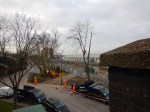
I took these pictures yesterday pf the rebuilding of Tottenham Hale station.
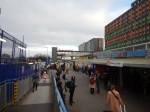
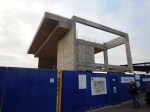
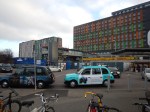
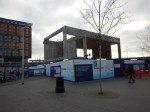
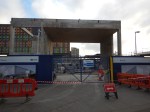
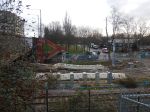

Note.
- The basic concrete structure of the station box appears complete.
- The footbridge is coming on.
- The lift tower on the Stansted-bound platform appears far back on the platform.
- Network Rail seem to be seriously pruning trees.
- The third track isn’t complete yet.
There must be a chance that the station will open as planned in May 2019.
Axed Rail Routes May Be Reopened Under New Department for Transport Plans
The title of this post is the same as that on this article on Sky News.
This is the first two paragraphs.
The Department for Transport has confirmed it is actively working with a number of groups to explore the possibility of reopening old rail routes, axed under the so-called Beeching cuts of the 1960s.
It follows a call by Transport Secretary Chris Grayling a year ago, encouraging those in the public and private sector to submit proposals for potential projects to regenerate old lines.
It also quotes a Department of Transport spokesman.
This is on top of exploring reopening the Northumberland Line for passenger use, supporting the reinstatement of stations on the Camp Hill Line, developing new rail links to Heathrow and a new station at Cambridge South
He apparently, didn’t say more because of confidentiality.
The article then talks about the success of the Borders Railway in Scotland.
So is this just a good news story for Christmas or is there a plan to reopen old railway lines?
I feel that a several factors are coming together, that make the reopening of railway lines and the creation of new ones more likely.
Digital Signalling
Signalling is expensive, but where you have rolling stock to a high modern standard, with digital in-cab signalling, does this mean that new or reopened rail lines can be built without conventional signalling?
In addition, installing digital signalling on some routes, would probably make it easier to add a new station. Surely, it must just be a reprogramming of the route!
It could be a problem that, I would expect that on a digitally-signalled line, all trains must be capable of using it. But in many areas of the country, like East Anglia, these routes will be run by new trains.
Digital signalling must also make it easier to design more efficient single-track railways, with perhaps a passing loop to allow higher frequencies.
More Efficient Track Construction
Network Rail and their contractors and suppliers are getting better and more efficient at building track and bridges through difficult terrain and places, judging by some of their construction in recent years, such as the Acton Dive-Under and the Ordsall Chord. They have also overseen some notable successes in the refurbishment of viaducts and tunnels.
It should also be noted that the reopening of the Borders Railway was a successful project in terms of the engineering and was completed on budget and on time.
According to Wikipedia, though there was criticism of the infrastructure.
This is said.
The line’s construction has been described as resembling a “basic railway” built to a tight budget and incorporating a number of cost-saving features, such as using elderly two-carriage diesel trains and running the line as single track.
But looking back on the line from over three years since it opened, it has certainly been judged by many to be an undoubted success.
Would it have had the same level of success, if it had been built as a double-track electrified railway?
Single-Track Lines
The Borders Railway is a good example of an efficient single-track railway, that runs a half-hourly service.
Other routes like the East Suffolk Line and the Felixstowe Branch Line, show how good design can handle more than the most basic levels of traffic, with perhaps selective double track or a well-placed passing loop.
They may be dismissed by rail purists as basic railways, but when well-designed, they are able to provide the service that is needed along the route, for a construction cost that is affordable.
I would though advocate, that if a new single-track railway is built, that provision is made where possible to be able to add the second track. But not at too great an expense or to provide a service level that will never be needed.
I believe that good design of a new railway can cut the construction cost by a fair amount.
Single-Platform Stations
Several of the new stations built in recent years have been stations with only a single-platform.
- Cranbrook – A station in Devon on the West of England Main Line to serve a new housing development.
- Ebbw Vale Parkway – A parkway station in Ebbw Vale.
- Galashiels – A station, that handled 356,000 passengers last year. It is a unique station on a narrow site, that shares facilities with a large bus station on the other side of the road. It is a very functional transport interchange.
- James Cook – A basic but practical station, that serves the hospital in Middlesbrough. – It cost just over £2million in 2014.
- Newcourt – A £4million station handling over 100,000 passengers per year.
- Pye Corner – A basic station in Newport handling nearly 100,000 passengers per year.
The stations have several common characteristics.
- They can all handle at least a four-car train.
- The single-platform is used for services in both directions.
- Disabled access is either level or by a gently-sloping ramp.
Only James Cook station has a footbridge over the track.
These single-platform stations must cost less, as for instance a footbridge with lifts costs upwards of a million pounds.
Note that of the nine stations on the Borders Railway only three have two platforms.
Single-Platform Terminal Stations
There are also several terminal stations in the UK with only one platform.
- Aberdare – Handling over 500,000 passengers per year.
- Aberystwyth – Handling around 300,000 passengers per year.
- Alloa – Handling around 400,000 passengers per year.
- Aylesbury Vale Parkway – Handling over 100,000 passengers per year.
- Blackpool South – Handling over 100,000 passengers per year.
- Exmouth – Handling nearly a million passengers per year.
- Felixstowe – Handling around 200,000 passengers per year.
- Henley-on-Thames – Handling around 800,000 passengers per year.
- Marlow – Handling nearly 300,000 passengers per year.
- Merthyr Tydfil – Handling around 500,000 passengers per year.
- North Berwick – Handling around 600,000 passengers per year.
- Redditch– Handling over a million passengers per year.
- Seaford – Handling over 500,000 passengers per year.
- Shepperton – Handling around 400,000 passengers per year.
- Sheringham – Handling around 200,000 passengers per year.
- Walton-on-the-Naze – Handing around 130,000 passengers per year
- Windsor & Eton Central – Handling nearly two million passengers per year.
Many of these stations have only a single hourly train. whereas Redditch and Windsor & Eton Central stations have three trains per hour (tph).
As a single terminal platform can probably handle four tph, I suspect that most terminals for branch lines could be built with just a single platform.
No Electrification
Chris Grayling has said that the East West Rail Link will be built without electrification.
I wasn’t surprised.
- Network Rail has a very poor performance in installing electrification.
- There have been complaints about the visual intrusion of the overhead gantries.
- Electrification can cause major disruption to road traffic during installation, as bridges over the railway have to be raised.
In addition, I’ve been following alternative forms of low- or zero-carbon forms of train and feel they could offer a viable alternative
Bi-Mode, Hydrogen And Battery-Electric Trains
When the Borders Railway was reopened, unless the line had been electrified, it had to be run using diesel trains.
But in the intervening three years, rolling stock has developed and now a new or reopened railway doesn’t have to be electrified to be substantially served by electric trains.
- Bi-Mode trains are able to run on both diesel and electric power and Hitachi’s Class 800 trains are successfully in service. They will be shortly joined by Porterbrook’s innovative Class 769 trains.
- Hydrogen-powered trains have already entered service in Germany and they are being developed for the UK.
- Battery-electric trains have already been successfully demonstrated in the UK and will enter service in the next few years.
All of these types of train, will be able to run on a new railway line without electrification.
Bi-mode trains are only low-carbon on non-electrified lines, whereas the other trains are zero-carbon.
The trains on the Borders Railway must be prime candidates for replacement with hydrogen-powered or battery-electric trains.
Adding It All Up
Adding up the factors I have covered in this section leads me to conclude that rail developments over the last few years have made it possible to create a new railway line with the following characteristics.
- An efficient mainly single-track layout.
- Single-platform stations.
- A single-platform terminal station capable of handling well upwards of a million passengers per year.
- Service levels of up to four trains per hour.
- Zero-carbon operation without electrification.
- Low levels of visual and noise intrusion.
The new railway will also be delivered at a lower cost and without major disruption to surrounding road and rail routes.
The Need For More Housing And Other Developments
There is a very large demand for new housing and other developments all over the UK.
Several proposed rail projects are about connecting new developments with the rail network.
In London Overground Extension To Barking Riverside Gets Go Ahead, I listed a few developments in London, where developers and their financial backers, were prepared to put up around £20,000 for each house to fund decent rail-based transport links.
Obviously, developments in London are expensive, but with all the new developments, that have been built close to stations in the last few years, I suspect that infrastructure financiers. like Legal and General and Aviva, know how much being by a rail station is worth.
Conclusion
Both public and private infrastructure financiers will take advantage of the good railway and rolling stock engineering, which will mean the necessary rail links to new developments will be more affordable and zero-carbon.
London City Airport Appoints Former Crossrail Boss Rob Holden As New Chairman
The title of this post is the same as that of this article on City AM.
If this doesn’t get the extra station on Crossrail at Silvertown, that London City Airport needs and wants, then nothing will.
West Hampstead Station – 7th July 2018
The new bridge at the West Hampstead station is now in use and it looks like the new station will be completed by the end of the year.
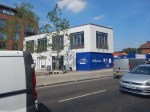
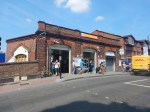
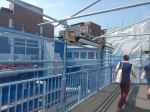
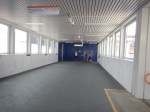
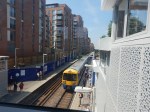
As the last picture shows this could be one of those station developments, where a deck could have been built over the North London Line to increase the number of flats built in the development on the South side of the railway.
This Google Map shows West Hampstead station on the North London Line and West Hampstead tube station on the Jubilee and Metropolitan Lines, although the latter don’t stop.
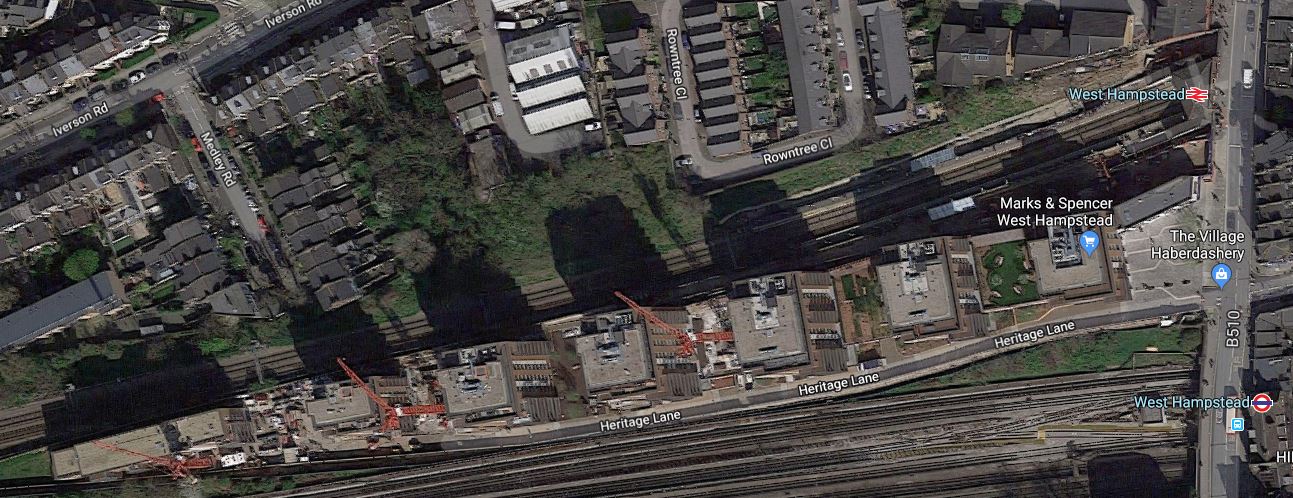
Note the development stretches a long way to the West between the North London Line and Underground Lines.
There have been plans to create a West Hampstead Interchange on West End Lane.
As these envisaged moving the Overground station to the East side of West End Lane and the new station is being built on the West side, It would appear there’s been a rethink.
Perhaps the Underground station is to be moved to the West side of West End Lane and will have an entrance on the small square in front of the M & S Simply Food and alongside the new Overground station.
This Google Map shows an enlargement of the area.
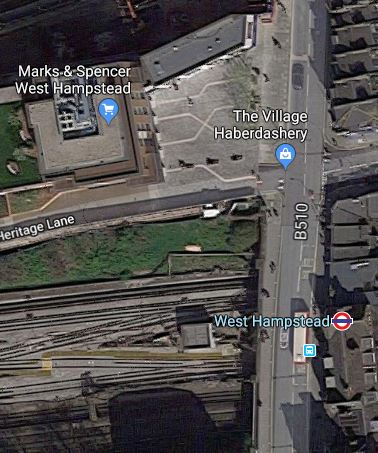
The new station could have platforms on the following lines.
- Jubilee Line
- Metropolitan Line
- Cjhiltern Railway
It would be a very worthwhile interchange. Especially, as passengers could do the following.
- Walk across the square for the Overground for East London.
- Walk perhaps another hundred metres to West Hampstead Thameslink station, which is also proposed as the terminus of the West London Orbital Railway.
There could also be a development on the top of the new station, which would hopefully contribute to the cost.
I have no idea, if anything will happen here, but Transport for London are looking to create new stations with over-site development. The Mayor also seems keen on the West London Orbital Railway, as it is based on under-used infrastructure and requires no new track or tunnels.
 The Anonymous Widower