Northern Considering Options For More New Trains
The title of this post is the same as that of this article on Rail Magazine.
This is a paragraph.
Senior Northern sources told RAIL on June 28 that the operator believes the new trains will entice more people onto its services, and that within two years – once all 101 new trains are in service – there could be overcrowding.
This sounds to me, like another case of London Overground Syndrome.
At least, Northern have identified it early and taken the only action that works – Acquire more trains.
The High Speed Train Problem
Several of Northern’s routes use 100 mph trains on the West Coast and East Coast Main Lines.
- Blackpool and York
- Chester and Leeds
- Hull and York
- Leeds and York
- Liverpool and Blackpool via Wigan
- Manchester and Crewe
- Manchester and Stoke
- Manchester Airport and Barrow
- Manchester Airport and Blackpool
- Manchester Airport and Windermere
Will Northern acquire some 110 mph or even 125 mph trains to ease the creation of timetables amongst so many high speed trains using the main lines?
Greater Anglia’s New Train Order
Greater Anglia have ordered thirty-eight Class 755 trains, which have a total of 138 cars.
These will replace twenty-six assorted trains, which have a total of 55 cars.
This is an increase of 46% in the number of trains and 150% in the number of cars.
Greater Anglia didn’t increase the fleet so that could sit in sidings, so I think we can expect some new services and higher frequencies.
Conclusion
Northern’s actions are in line with other operators.
Manchester Victoria To Chester
On Saturday, I went between Manchester Victoria and Chester on the new hourly Northern Connect service between Chester and Leeds.


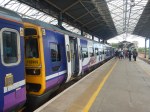
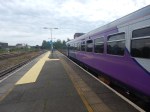
Note.
- The train was a Class 158 train, with a Class 153 train acting as a capacity enhancer.
- The train was only doing 60 mph on the West Coast Main Line.
- The service was fairly busy.
- The route is electrified between Manchester Victoria and Warrington Bank Quay stations.
On this Saturday morning, it appeared to me that a better train is needed.
In Northern Connect Between Chester And Leeds To Start In May, I did report a rumour that Class 769 trains might be running between Chester and Leeds.
In my view Class 769 trains are ideal for the route between Chester and Leeds.
- They are four-car trains.
- They can do 100 mph, where electrification is available.
- They are 90 mph trains on diesel.
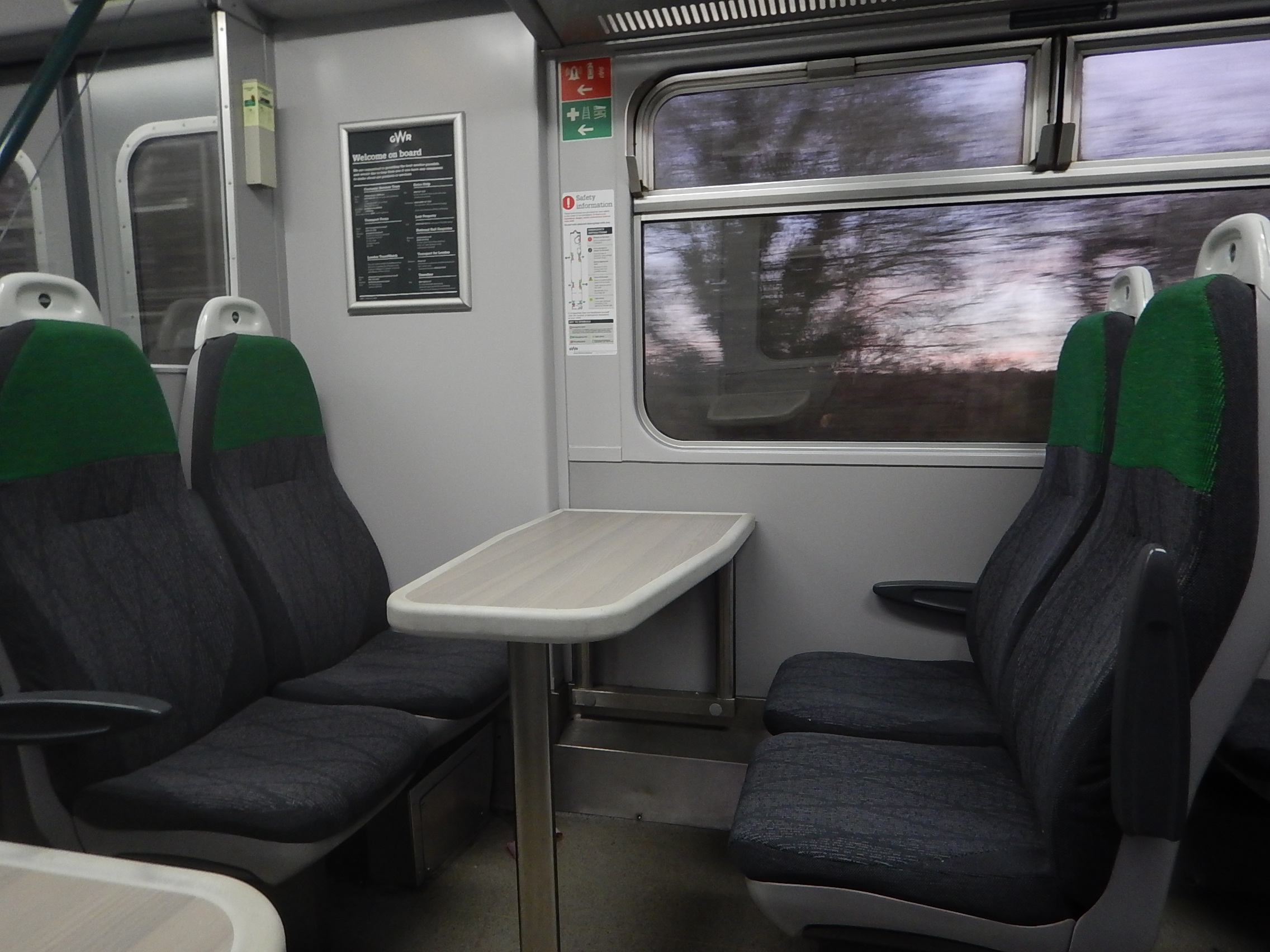
There main problem, is not their age, but since they were proposed, train interiors have moved on. Passengers and train operating companies want more tables and comfortable seats. Even some refurbishments of forty-year-old trains have tables. In What Train Is This?, I described a high class refurbishment of a Class 150 train. Here’s a picture.
The Chester and Leeds route and probably many other routes in the UK need a train with the following characteristics.
- 100 mph using either 25 KVAC overhead or 750 VDC third-rail electrification.
- 100 mph on secondary power like diesel, battery or hydrogen.
- two hundred mile range without refuelling.
- Four or five cars.
- Comfortable interior with tables, wi-fi, power points and everything else passengers want.
Train operating companies would probably like a 125 mph version.
Hitachi already have a train with this specification in the Class 800 train. In Hitachi Plans To Run ScotRail Class 385 EMUs Beyond The Wires, I detail, Hitachi’s plans for Class 385 trains. Could these be stretched to perhaps do 100 miles on batteries.
Bombardier are offering a High Speed Bi-Mode Aventra with batteries and Stadler are introducing the Class 755 train for Greater Anglia.
Conclusion
It looks to me, that Northern need to get themselves some new 100 mph hybrid trains. The diesels they have on order are so Twentieth Century and late!
Comparing Class 195 And Class 769 Trains
This may seen a strange comparison to do.
- In the blue corner is an upgraded forty-year-old four-car bi-mode Class 769 train from British Rail via Brush at Louthborough.
- In the red corner is a new three-car diesel Class 195 train from CAF.
So how do they compare?
Seats
- The Class 769 train shows 255 Standard Class and 12 First Seats in an example layout in the brochure.
- The Class 195 train has 204 seats according to Wikipedia.
The seats per car in both trains are almost identical.
Diesel Power
- The Class 769 train has two 390 kW diesel engines and electric transmission.
- The Class 195 train has three 390 kW diesel engines and a ZF Ecolife six-speed transmission.
So it would appear that the Class 195 train is more powerful, but Class 769 train has an electric transmission, which doesn’t need to change gear.
I look forward to riding in both trains.
Operating Speed
- The Class 769 train has a 100 mph operating speed on electricity and has been designed for 91 mph on diesel power.
- The Class 195 train has a 100 mph operating speed.
The proof of the pudding will be in the timetables and journey times.
Conclusion
The two trains are fairly evenly matched for a lot of routes.
Infrastructure Delays Force Northern To Soldier On With Pacers
The title of this post is the same as that of this article on Rail Magazine.
This is the first paragraph.
Forty-six Pacers remained in traffic with Northern at the start of January, after they were supposed to have been sent off-lease.
Northern are saying they are still in service because of delays in the delivery of the electrification through Bolton, which would have allowed the replacement of Pacers with electric trains.
The situation has not been helped by the late delivery of eight Class 769 trains, which could be running partially-electrified routes.
The Class 331 trains should also be arriving this year.
As there are also some more Class 319 trains in store, it does look like Northern’s blaming of the late electrification is on the mark.
SuperSaturday On Southeastern
This article on IanVisits is entitled Cheap Train Tickets On Southeastern Railway This Weekend.
This is the first three paragraphs.
This weekend is SuperSaturday on Southeastern railway and they’re offering unlimited travel across their entire network for just £20. You can also add up to four children for £1 each.
You have to book a ticket from a set departure station, but beyond that, you are free to travel to as many stations as you like on the day.
It also includes travel on High Speed One out of St Pancras.
What a brilliant marketing idea!
Perhaps other train operating companies should do the same thing.
If Greater Anglia did it on a day when several of Cambridge United, Colchester United, Ipswich Town, Norwich City, Peterborough United and Southend were at home, what would it do to gates and travel around East Anglia.
Obviously, Northern couldn’t do it, as the RMT strike on Saturdays.
Minister Claims Hydrogen Train On Trial In UK
The title of this post is the same as that of this article on Rail Magazine.
This is the first paragraph.
Rail Minister Jo Johnson told the Transport Select Committee on April 30 that a hydrogen train was on trial in the Lake District.
After the end of Amber Rudd’s political career yesterday, for not telling the truth to another Select Committee, I would be very surprised if Jo Johnson’s statement is not substantially correct.
Something strange is happening on the Windermere Branch Line.
- Most of the day, there is an hourly shuttle train between Windermere and Oxenholme Lake District stations.
- But the 10:56, 18:03 and 22:45 services from Windermerre, continue to Preston.
- The 06:23 from Oxenholm Lake District to Windermere starts from Lancaster.
- The 11:20 from Oxen Lake District to Windermere starts from Preston.
- The 18:30 from Oxen Lake District to Windermere starts from Barrow-in-Furness.
It doesn’t seem to be the sort of diagram for a regular scheduled service.
Could it be that Class 769 trains are being tested?
- Running on the West Coast Main Line between Preston and Oxenholme stations would be at up to 100 mph using the 25 KVAC overhead wires.
- Running to Windermere and Barrow-in-Furness stations would be under diesel power.
- Note that the service goes to Preston in the middle of the day. Could this mean , that they are thoroughly testing more than one train?
- From Preston the trains can go to turnback platforms at Barrow-in-Furness, Blackburn, Blackpool North, Blackpool South, Colne, Ormskirk and Windermere stations. So, Preston would be an ideal base from where to test the trains.
Could one of the trains under test be hydrogen powered?
If what Jo Johnson said is to believed, at least one of the test trains must be!
Who’d have thought, that an old British Rail-designed Class 319 train, that entered service thirty-years ago, could be the UK’s first hydrogen-powered train.
A Hydrogen-Powered Class 769 Train
Of course, the engineering must be possible .
- The train would need a hydrogen tank, a hydrogen fuel cell and a battery.
- They would probably be fitted under the train, where there wuld appear to be plenty of space.
But companies like Ballard have a lot of experience with building hydrogen-powered buses.
Don’t Rule Out Bombardier!
I believe that most train manufacturers are looking seriously at hydrogen power, as a greener alternative to diesel.
Two years ago, Bombardier showed their expertise with batteries, by developing the Class 379 BEMU demonstrator in just a few months.
Could Bombardier have taken an Electrostar or Aventra and fitted it with batteries and a hydrogen tank and a hydrogen fuel cell?
Conclusion
I think that Jo Johnson was telling the truth or at least enough of the truth, not to be caught misleading a Select Committee of the House of Commons.
Why Has 319448 Not Been Repainted?
In the November 2017 Edition of Modern Railways, there is a picture of this Class 319 train passing behind the Ordsall Chord bridge on Page 49.

The train is on the right hand page and appears not to be in the usual Northern Electrics blue.
So why has it not been painted?
319448 Is A Class 319/4 Train
319448 is a Class 319/4 trains, which are probably the best variant of the Class 319 trains, as they have been refurbished a couple of times and have a First Class section, less 2+3 seating and a Universal Access Toilet.
These pictures which show a typical Class 319/4 train, were taken when the trains were being used on Thameslink.
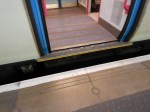
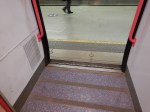
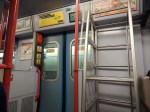
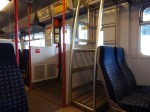
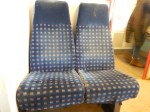
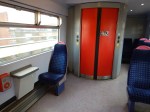
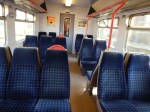

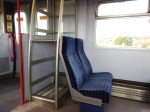
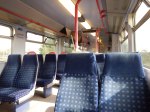

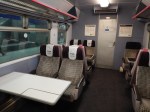


So preparing 319448 for service in the North-West was probably a lot easier, than some of the other Class 319 trains.
Northern probably needed an extra Class 319 train urgently and bringing it into service in Thameslink condition was probably acceptable to customers and their cash-flow.
The exterior painting and the tidying up of the interiors can probably be done later, when there is less pressure on stock numbers.
319448 Is Going To Be Converted To A Class 769 Bi-Mode Train
In the Wikipedia entry for the Class 769 train, the serial numbers of the Class 319 trains to be converted are given.
769424, 769431, 769434, 769442, 769448, 769450, 769456, 769458, 769???, 769???, 769???
Note.
- The first three digits identify the train class and the last three digits the train number in that class.
- After conversion 319424 will become 769424
According to Issue 834 of Rail Magazine, 319456 and 319434 are in Loughborough for the conversion.
So it looks like 319448 will be converted to 769448.
Northern’s Need For Class 769 Trains
The Wikipedia entry for the Class 769 train, says this about Northern’s initial use of the trains.
Northern have indicated that the use of these trains would be of most benefit on routes that are part electrified, whereby they would be able to use the pantograph for the main part, while being able to operate using diesel power away from the overhead lines. The first route to be confirmed by Northern for the running of Class 769 units was the Windermere branch line between Oxenholme and Windermere in North West England.
Once the current electrification program between Manchester and Blackpool, Preston and Stalybridge is complete, there are several partially-electrified routes, where Class 769 trains might be used in North West England.
- Blackpool South to Colne
- Liverpool Lime Street to Chester via Runcorn and the Halton Curve.
- Manchester Piccadilly to Buxton
- Manchester Piccadilly to Liverpool Lime Street via Warrington
- Manchester Victoria to Blackburn via Todmodern and Burnley
- Manchester Victoria to Clitheroe via Bolton and Blackburn
- Manchester Victoria to Kirkby
- Manchester Victoria to Southport
- Preston to Barrow
- Preston to Ormskirk
If the trains are a success, then surely more trains will be deployed around the electrical networks in Leeds and Newcastle.
A Possible Conversion Plan
Could the conversion of a Class 319 train to a Class 769 train be something like this multi-stage process.
1. Pre-Service Changes
The Class 319/4 trains have for several years been running without serious problems on the Thameslink route,
However, due to different operational rules, I suspect that there will be some changes that have to be carried out before the trains can run in the North. 319448 has obviously had these changes.
2, Pre-Conversion Test Running
If I’ was going to spend a lot of money converting a train, I’d give it a thorough testing with experienced drivers and engineers to make sure there wasn’t an expensive fault.
Northern have a team of drivers with lots of experience of their current fleet of thirty-two Class 319 trains.
The train could even be used in passenger service, as it is an unmodified Class 319/4 train little different to the others in Northern’s fleet.
3, Conversion To Class 769 Train
The train can then be removed from service and converted to a Class 769 train.
4, Testing And Entry Into Service
The trains can be appropriately tested.
5. Interior Refurbushment And External Painting
Doing this last is probably a lot easier, given that the Class 319/4 trains are generally in a good state cosmetically.
A Production Line Would Be Possible
I believe if you do the Project Management professionally for the conversion of the eleven trains need by Northern and the extra five for Wales, it will be possible to fit together a very orderly and efficient production line.
I can envisage that production of units getting quicker as experience is gained.
Increasing Capacity Across The Pennines
I’m not sure, if this is what Northern said they would do to increase the capacity across the Pennines.
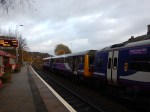
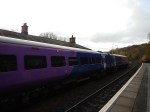
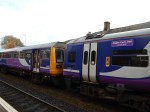
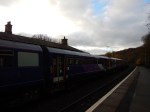
The Class 168 train is towing a Pacer to nearly double capacity.
I saw this approach three times between Todmorden and Leeds.
This gallery shows the Class 150 train pulling a Pacer, I used between Todmodern and Halifax.
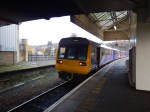
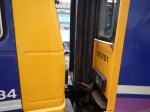
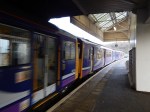
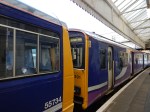
Do you get a discount for travelling in inferior accommodation?
Crossrails For The North
Regularly there are references in the media for Crossrail for the North.
This article in Rochdale Online is entitled Andy Burham calls for ‘Crossrail for North’
Note that the misspelling of Andy Burnham; the Mayor of Manchester’s name is from the web site.
Andy Burnham and many others have a point that West-East connections across the North are not good, but it is not that simple.
Hence the reason, I’ve called this post Crossrails For The North and not Crossrail For The North.
Northern And London Crossrails Compared
If you look at Greater London, the distance between Reading and Shenfield stations, which are two of the termini of London’s Crossrail, is about eighty miles and when Crossrail opens a train will take about one hour forty minutes.
By comparison, Liverpool to Leeds is just over seventy miles and the current fastest trains take ninety minutes with two stops at Manchester Victoria and Huddersfield stations.
Those that live East of Leeds, keep reading.
The differences between the two routes, when Crossrail opens will be mainly down to the number of stops, frequency and connectivity.
- The Northern Route is shorter and hence marginally faster.
- The London route has more stops.
- The London route has a higher frequency.
- The London route is electrified.
- The London route will be served by specially-designed Class 345 trains.
But possibly most importantly, the London route connects to a large number of North-South cross-city railways.
It is sensible to think of London’s Crossrail as a loose ball of chunky knitting wool with a big fat needle stuck through it.
The ball of knitting wool is Central London with all its Underground and Overground Lines.
- Bakerloo Line – North-West – South-East through City Centre
- Central Line – West-East through City Centre
- District Line – West-East through City Centre
- East London Line – North-South to East of City Centre
- Gospel Oak to Barking Line – West – East to North of City Centre
- Hammersmith and City Line – West – East through City Centre
- Jubilee Line – North-East through City Centre
- Metropolitan Line – West – East through City Centre
- Northern Line – North-South through City Centre
- Northern City Line – North from the City Centre.
- North London Line – West – East to North of City Centre
- Piccadilly Line – North – West through City Centre
- Thameslink – North – South through City Centre
- Victoria Line – North-East – South-West through City Centre
- Waterloo and City Line – South from the Centre Centre
- West London Line – North-South to West of City Centre
Crossrail is the big fat needle struck right through the middle.
You could actually argue that not just one big fat needle is through the middle, as Crossrail is paralleled by some of London’s historic Underground Lines.
- The Central Line connects at Stratford, Liverpool Street, Tottenham Court Road, Bond Street and Ealing Broadway stations.
- The District Line connects at Whitechapel and Ealing Broadway stations.
- The Metropolitan Line connects at Whitechapel, Farringdon and Paddington stations.
- In the future, the North London Line will connect at Stratford and the new Old Oak Common station.
Crossrail is going to be a massive playground for the duckers-and-divers, as they search for the fastest route.
How London Crossrail Will Develop
London Crossrail is not a complete system, with certain connections not of the best.
- Eurostar from St. Psncras International
- HighSpeed services from Stratford International
- HS2
- Piccadilly Line
- Scottish and Northern services from Euston and Kings Cross
- Victoria Line
Several of these connections can be addressed by smaller projects like the necessary rebuilding of tube stations like Bank, Charing Cross, Euston and Oxford Circus.
A lot of London politicians are pushing for Crossrail 2 , but London will be given a big increase in capacity with Crossrail and I think there is an opportunity to redefine the scope of the later project, in the light of what happens after Crossrail opens.
Consider the following, which will happen after Crossrail opens.
- Huge pedestrianisation will happen in the City of London and the West End.
- Hopefully, walking in large parts of Central London will improve to the standard of the bus- and car-free Central Liverpool.
- On foot interchanges like Oxford Circus-Bond Street and Bank-Liverpool Street will be easier and quicker than now.
- The long-neglected and ill-fated Northern City Line is getting new trains, higher frequencies and hopefully a deep-clean of the stations.
- Liverpool Street and Moorgate stations will effectively become one station with world class connectivity.
- The Waterloo and City Line will be improved and probably go 24/7!
- Waterloo station will get a forty percent capacity increase this summer.
- The Northern Line Extension to Battersea will open in 2020.
- New trains will have been delivered for London Overground’s Liverpool Street and Gospel Oak to Barking services.
Londoners will fully exploit the network and importantly Transport for London will have detailed information from the ticketing system on the routes taken and the bottlenecks as they develop.
Access For All
Access for All is a National programme, that is making stations all over the country accessible to as many passengers as possible.
Check the list of stations being updated under Access For All
After the General Election, I would not be surprised to see funding for this programme increased all over the country, as it is both necessary and a quick way to attract more passengers to the railways.
New Stations
Since 2000, seventy-four new stations have opened or reopened.
I can rarely remember stations reopening last century, but the 4-5 new stations every year since the turn of the Millennium, seems to have continued this year with the opening of Cambridge North, Ilkeston and Low Moor
The New Franchises
Five franchises have been awarded lately.
- Greater Anglia
- Northern
- ScotRail
- South Western Trains
- TransPennine
A feature of all these franchises is that the operators are introducing a lot of new trains and substantially refurbishing others.
Will this trend continue?
Obviously, the operators have done their sums and find that new trains attract more passengers.
There is a major problem with new trains, in that capacity to build them must be getting very short. I also don’t think that Chinese trains will be welcomed.
If I was Prime Minister, I’d make sure there was enough capacity to build and refurbish trains in the United Kingdom.
Building Crossrail 2
There is no doubt that at some time in the future, Crossrail 2 will be built.
But unlike Crossrail, which is a massive project similar in size to the Channel Tunnel,, the electrification of the Great Western Railway or HS2, it is a collection of smaller projects that can be phased over the years, with each phase giving substantial benefits to London, train companies and passengers, be they Londoners, commuters, visitors or tourists.
I would build it in the following sequence of sub-projects.
- Four-Tracking Of The West Anglia Main Line – Extra capacity on the West Anglia Main Line is needed for both improved London-Stansted-Cambridge services and Crossrail 2.
- New High-Capacity Crossrail-Compatible Trains North of London – Greater Anglia and London Overground have already ordered these trains to replace the current thirty-year-old trains.
- Station Improvements North of London – Improvement are much needed and are already planned and underway at Tottenham Hale and Meridian Water.
- Improve Connection To Sub-Surface Lines At St. Pancras Station – The current connectivity is terrible between these lines and Thameslink and the HighSpeed lines to Kent.
- Connect Euston Square Tube Station To Euston Station To Give Extra Capacity During Euston Rebuilding For HS2
- Introduction Of A New Stratford-Tottenham Hale-Angel Road Service – The delivery date for STAR is 2019.
- Introduction Of Chingford-Walthamstow-Stratford Services – This would improve access to Crossrail and take pressure from the Victoria Line.
- New Stansted And Cambridge Services From Stratford – Greater Anglia have suggested this and there’s even an unused loop at Stratford, that could be used to turn trains and allow them to call at Stratford International for Eurostar to the Continent and HighSpeed services to Kent.
- More Terminal Capacity for Trains From North of London – The Stratford loop would increase the terminal capacity for Greater Anglia and also give access to the Jubilee Line for London Bridge, Waterloo and Westminster.
- Use Improved Capacity At Waterloo To Increase Services On Proposed Crossrail 2 Southern Branches – The extra capacity should help.
- New High-Capacity Crossrail-Compatible Trains South of London – South Western Trains have indicated this will happen.
- Station Improvements South of London – Improvements are much needed.
- Rebuild Euston Tube Station In Cnjunction With HS2 –
Only when these phases are completed, would the central tunnel be bored.
This step-by-step approach has several advantages.
- The pace of the project can be geared to the finance and resources available.
- Some developments can have a significant local design and scope input.
- Much needed stations can be built early to generate passengers and cash flow.
- Trains can be follow-on orders to Crossrail.
- The suburban sections of the route will always be available for passenger traffic.
When Crossrail 2 is complete, the second big fat knitting needle has been stuck in the ball of wool.
What Can The North Learn From London?
I would argue that one of the keys to London’s success over the years has been its comprehensive multi-layered public transport system.
- Crossrail, Crossrail 2, Thameslink and the Overground could be considered the top layer.
- The Underground, the Docklands Light Railway and the suburban electric trains are the middle layer.
- Buses form the local and bottom layer.
Underneath a walking and cycling layer is emerging.
The North of England can be considered a series of local transport networks, which are connected by a series of major lines, which are equivalent to London’s Crossrail, Crossrail 2 etc.
Northern Connect
I find it interesting that Northern are introducing a Northern Connect service, which Wikipedia describes as follows.
From December 2019, Northern will operate a network of twelve Northern Connect interurban express services. Eleven of these will be operated by brand-new Class 195 diesel multiple units and Class 331 electric multiple units, whilst the Middlesbrough to Carlisle via Newcastle route will be operated by refurbished Class 158 units.
Places that will be served by Northern Connect routes include Bradford, Chester, Halifax, Leeds, Liverpool, Manchester, Middlesbrough, Nottingham, Newcastle, Preston, Sheffield, Barnsley, Lincoln, Wakefield and York.
Local Networks In The North
Some of the local Northern networks in places like Leeds, Liverpool, Manchester, Newcastle, Nottingham and Sheffield are certainly better than others.
It could also be argued that the six cities I named, are among the most successful and vibrant cities of the North.
I feel that for the railways to be successful in the North and for some cities to have a major improvement in prosperity, that some of the local networks need substantial improvement.
TransPennine And Feeder Routes
The starting point is to detail the Northern Connect and TransPennine Express services in the North.
The Northern Connect services given in the January 2016 Edition of Modern Railways are as follows.
- Middlesbrough to Newcastle
- Newcastle to Carlisle
- Hull to Sheffield
- Nottingham to Bradford via Leeds
- Lincoln to Leeds via Sheffield and Barnsley
- Liverpool to Manchester Airport via Warrington
- Chester to Leeds via Warrington, Manchester Victoria and the Calder Valley
- Blackpool North to York via Preston and Leeds
- Barrow to Manchester Airport
- Bradford to Manchester Airport via the Calder Valley.
- Blackpool to Manchester Airport
- Windermere to Manchester Airport
I suspect plans have changed since January 2016, but the possible routes are a good start.
According to Wikipedia, TransPennine routes are as follows.
- Liverpool Lime Street to Newcastle via Manchester Victoria, Huddersfield, Leeds and York
- Manchester Airport to Middlesbrough via Manchester Piccadilly, Huddersfield, Leeds and York
- Manchester Airport to York via Manchester Piccadilly, Huddersfield and Leeds
- Liverpool Lime Street to Scarborough via Manchester Piccadilly, Huddersfield, Dewsbury, Leeds and York
- Manchester Piccadilly to Hull via Huddersfield, Dewsbury, Leeds and Selby
- Manchester Airport to Cleethorpes via Manchester Piccadilly, Stockport, Sheffield, Meadowhall and Doncaster
- Manchester Airport to Edinburgh Waverley/Glasgow Central via Manchester Piccadilly
These routes will change in the next year, when the Ordsall Chord opens.
The opening of the chord, may mean that certain services to Manchester Airport, will not need to reverse at Manchester Piccadilly.
Summarising the East-West routes across the Pennines gives.
- Newcastle to Carlisle
- Manchester Victoria to Leeds via the Calder Valley Line
- Manchester Victoria to Leeds via Huddersfield
- Blackpool North to Leeds via Preston and the Calder Valley Line
- Manchester Piccadilly to Doncaster via the Hope Valley Line and Sheffield
None of these lines are fully electrified.
They are also connected to their ultimate destinations by feeder lines.
- Liverpool to Manchester Airport via Warrington
- Chester to Manchester Victoria via Warrington
- Liverpool to Manchester Victoria
- Leeds to Newcastle via York
- York to Middlesbrough
- York to Scarborough
- Leeds to Hull
Only the following lines will be fully electrified by December 2017.
- Liverpool to Manchester Victoria
- The West Coast Main Line
- The East Coast Main Line
- Some Suburban Routes in Blackpool, Liverpool, Manchester and Preston
- Some Suburban Routes in Bradford and Leeds
Most of the routes will have to be run by diesel or bi-mode trains.
The Crossrails For The North
There are five East-West routes across the Pennines used by Northern Connect and TransPennine Express.
- Newcastle to Carlisle
- Manchester Victoria to Leeds via the Calder Valley Line
- Manchester Victoria to Leeds via Huddersfield
- Blackpool North to Leeds via Preston and the Calder Valley Line
- Manchester Piccadilly to Doncaster via the Hope Valley Line and Sheffield
To these I would add two extra lines.
- Leeds to Carlisle via Settle
- Preston to Leeds via Burnley, Colne and Skipton.
Note
- I have added the Settle-Carlisle Line, as it is world-renowned, is in excellent condition and if provided with a decent train service, could be a major attraction, that would bring tourists to the area.
- The Skipton to Colne Line should be reinstated, to create a direct connection between the electrified local networks servingLeeds/Bradford and Liverpool/Manchester/Preston.
But there would be seven magnificent routes across the Pennines, which could be updated to the following objectives.
- Frequent trains on all lines with at least two trains per hour (tph)
- 100 mph running where possible.
- As high a frequency as possible on the core section between Manchester Victoria and Leeds. Plans exist for six tph, which is a good start.
- In the East trains would fan out to Cleethorpes, Grimsby, Hull, Newcastle and Scarborough, as they do now.
- In the West trains would fan out to Blackpool, Chester, Crewe and Liverpool.
- Lots of cross-platform connections at stations like Leeds, Liverpool, Manchester Victoria, Newcastle, Preston and York with long distance North-South services to London and the South and Scotland.
- All stations would be step-free with lifts or ramps.
In addition provision should be made early to make sure that there are good connections to HS2.
Electrification
Obviously, electrification would be an ultimate goal on all these East-West routes.
But there are various problems with the electrification of the Peenine sections of the routes.
- These lines have large numbers of low bridges and high viaducts.
- Electrification would need to be robust because of the weather.
- Electrification gantries might not fit well in the scenery.
- Installation and servicing of overhead electrification may not be an easy process.
On the other hand, the noise of diesel trains might not be welcomed.
However, I believe that in the next ten years much quieter self-powered trains will be commonplace.
At the present time, if diesel or bi-mode trains are acceptable, then they should be used to provide a service.
Looking at the various feeder routes to the East and West of the Pennine sections, it is a different matter.
- Routes are less challenging.
- There are fewer bridges and viaducts.
- Installation and servicing of overhead electrification would be easier.
There is already a lot of electrification at the East and West, which could be extended to places like Chester, Hull and Middlesbrough.
A Pennine core without difficult electrification, between electrified feeder routes may be the most efficient way to run the routes using bi-mode trains.
It might be sensible to use Class 88 bi-mode locomotives instead of the currently proposed Class 68 locomotives with rakes of coaches, as is planned by TransPennine Express.
A Hull to Liverpool service would run under the following power.
- Hull to Bradford via Leeds – Electricity
- Bradford to Stalybridge- Diesel
- Stalybridge to Liverpool via Manchester Victoria – Electricity.
Around thirty miles would be on diesel and the difficult electrification in the Pennines would be avoided.
Infrastructure
This table is a brief summary of the routes.
- Newcastle to Carlisle – Double track, 18 stations
- Manchester Victoria to Leeds via the Calder Valley Line – Double track – 17 stations
- Manchester Victoria to Leeds via Huddersfield – Double track – 14 stations
- Blackpool North to Leeds via Preston and the Calder Valley Line – Double track – 14 stations
- Manchester Piccadilly to Doncaster via the Hope Valley Line and Sheffield – Double track – 18 stations
- Leeds to Carlisle via Settle – Double track – 10 stations
- Preston to Leeds via Burnley, Colne and Skipton – Part Single track
Note.
- Most routes are double track, which aids train scheduling.
- All except Skipton to Colne seem to be in good condition.
- I can’t find much information about speed limits.
I think it is true to say, that none of the routes could be a high speed line, although a large proportion could have substantial speed increases.
From what I have seen in East Anglia, I suspect most routes could be upgraded to 100 mph, which with the train frequencies of say four tph could give a substantial increase in service quality.
Stations
Many of the secondary stations on these routes are not blessed with facilities like ticket machines, lifts and step-free access.
If I compare, what I see on the web, with what I have experienced in East Anglia, the quality of the smaller stations is not good.
Services
The services along the lines are not of a high frequency or of a high speed, but Northern and TransPennine Express intend to increase frequencies and speed.
The new trains with their faster stops will help.
This is said about the Future Services of TransPennine Express on Wikipedia.
A twice-hourly service between Manchester and Newcastle will be phased in between December 2016 and December 2017, made up of the existing service from Liverpool and a reinstated service from Manchester Airport. Trains between Liverpool and Newcastle will be extended to Edinburgh via the East Coast Main Line, giving a twice-hourly service between Leeds and Edinburgh together with an hourly CrossCountry service. Trains between Liverpool and Scarborough will be rerouted via Manchester Victoria and Newton-le-Willows to provide a half-hourly fast service between Liverpool and Manchester. It is also planned to operate a six train per hour frequency between Manchester and Leeds, up from five today.
I can’t find anything about timings.
A High Speed Line
Building a new high speed line will be difficult, expensive and may take years, as there will probably be a need for a costly tunnel through solid rock between Manchester and Leeds.
So a prudent Project Management strategy could be phased in the same way I proposed for London’s Crossrail 2.
- Increase Line Speed – This would probably give the largest benefit, as it would enable more and faster trains.
- Electrify From Leeds To York – This would enable TransPennine’s Class 802 trains between Liverpool/Manchester Airport and Newcastle/Edinburgh to run more efficiently.
- Electrify From Liverpool To Manchester Airport Via Warrington – This would tidy up electrification between Liverpool and Manchester.
- Electrify To Chester From Crewe and Warrington – This would link North Wales to the TransPennine routes.
- Electrify From Leeds To Hull – This would be a comparatively easy electrification.
- Create The Skipton To Colne Link – This would link the two Norhern suburban electric networks and become a valuable transport asset for both local residents and visitors.
- Improve Stations – Better facilities and atep-free access is desperately needed. Especially at secondary stations.
- Improve Local Networks In Selected Cities – Some are much better than others.
- Increase Train Frequencies – Run at least two tph on all routes.
Hopefully, a decent service can be provided, until a new high speed route can be built.
One great advantage that this project has compared say to the electrification of the Great Western Railway, is that because there are several current routes, if one needs to be closed for a short time, there is a suitable alternative.
Riding In A Clean Class 319/4 Train
The Class 319/4 train is the upmarket version of the Class 319 train with First Class seats, less 2+3 seating and a fully-accessible toilet.
I took the pictures on a particularly neat and tidy Thameslink train.
It is likely that the Class 319 Flex train will use this interior, especially as the prototype is a conversion of a Class 319/4 train.
According to Wikipedia, there are still 23 Class 319/4 trains in service with Thameslink, with a few actually off lease, so there should be quite a few of this variant to convert.
In the article in Rail Magazine, which is entitled Flex… and flexibility, this is said.
One unit has moved to Loughborough (319427), but this is not one of the eight destined for Northern. Instead, it will be deployed for dimensional analysis. Only so much can be planned on paper and computers, and this will enable the various teams to evaluate the train and ensure everything fits.
Sounds like good engineering and as the train was off lease, it probably wasn’t one of best, so if it eventually becomes a spares donor or scrap, no-one is probably bothered, given that there are quite a few Class 319/4 trains available for conversion.
In fact after riding in a couple of Northern’s Class 319 trains last week, I definitely felt that the Class 319/4 train in the pictures, rode a lot better and more like what you’d expect from a train derived from a Mark 3 coach.
Conclusion
The more I read and observe about the Class 319 Flex train, the more I like the project.
I wonder how much a new bi-mode four-car multiple unit would cost? As a rough guide London Overground are paying nearly six million for each of their Class 710 trains.
Class 319/4 trains converted to Class 319 Flex trains will have the following extra and proven features.
- 100 mph as against 75 mph top speed.
- 91-92 mph top speed away from wires on diesel.
- First Class seating
- Fully-accessible toilet.
- The ability to survive a direct hit from a 24 tonne cement mixer truck dropped from a bridge.
But the Class 319 Flex is not a new train.
The Oxshott incident with the cement mixer truck, did happen to a Class 455 train, but this is also Mark 3 coach-based, like the Class 319 train.
 The Anonymous Widower