Ashley Down Station Opens On Saturday
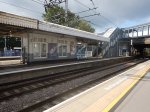
Ashley Down station will be Bristol’s latest new station, when it opens this Saturday.
I shall be going, after probably taking the Elizabeth Line to Reading station.
Heathrow Rail Link Withdrawn, But MP Vows To Carry On
The title of this post, is the same as that as this article on Rail Magazine.
These are the first three paragraphs.
Hopes for a rail link between the Great Western Main Line and Heathrow Airport appear to have finally ended.
The scheme had been on hold since 2021, when Network Rail staff working on it were transferred to other tasks.
At the time, NR called it a “controlled pause”, but a pre-application process has now been withdrawn, according to the Planning Inspectorate website.
Currently, the two main routes to Heathrow from the Great Western Main Line are.
- Continue to Paddington and get either the Heathrow Express or the Elizabeth Line to the airport.
- Use the RailAir bus from Reading to the airport.
Both routes probably encourage passengers and staff to drive to the airport.
I have my thoughts.
Tan Dhesi
The article says this about this MP’s support for the rail link.
However, Slough MP Tan Dhesi, a former shadow transport minister, believes the link still has wide support as it would bring 20% of the UK population within one interchange of its busiest airport.
Dhesi led an All-Party Parliamentary Group for the Western Rail Link to Heathrow before the General Election. He now plans to re-launch the group, as some previous members have since lost their seats.
He has a point, but is this because a large number of his constituents work at Heathrow.
Would an improved local bus service, at least partially serve the need?
RailAir Between Reading And Heathrow
This appears to have two drawbacks.
- It only runs every thirty minutes.
- It doesn’t serve Terminal Four.
But at least it runs modern coaches, not buses.
I would increase the frequency to perhaps every twenty or even fifteen minutes, serve Terminal Four and perhaps in the future, switch to Wrightbus’s new hydrogen coaches, which I wrote about in Wrightbus Hydrogen Coach Planned For 2026.
I feel that switching to hydrogen power, may attract more passengers to the route.
Obviously, I feel the other RailAir routes from Guildford, Watford and Woking to Heathrow would also be updated.
Improving The Rail Route Between Reading And Heathrow Via Hayes And Harlington Station
Hayes and Harlington station has the following frequencies to Heathrow and Reading, in trains per hour (tph)
- Heathrow Terminals Two & Three – 6 tph
- Heathrow Terminal Four – 4 tph
- Heathrow Terminal Five – 2 tph
- Maidenhead – 2 tph
- Reading – 2 tph
More trains between Reading and Hayes and Harlington might encourage more passengers to use the trains.
Could Hayes And Harlington Station Become A Transport Hub For Heathrow?
This Google Map shows Hayes and Harlington station.
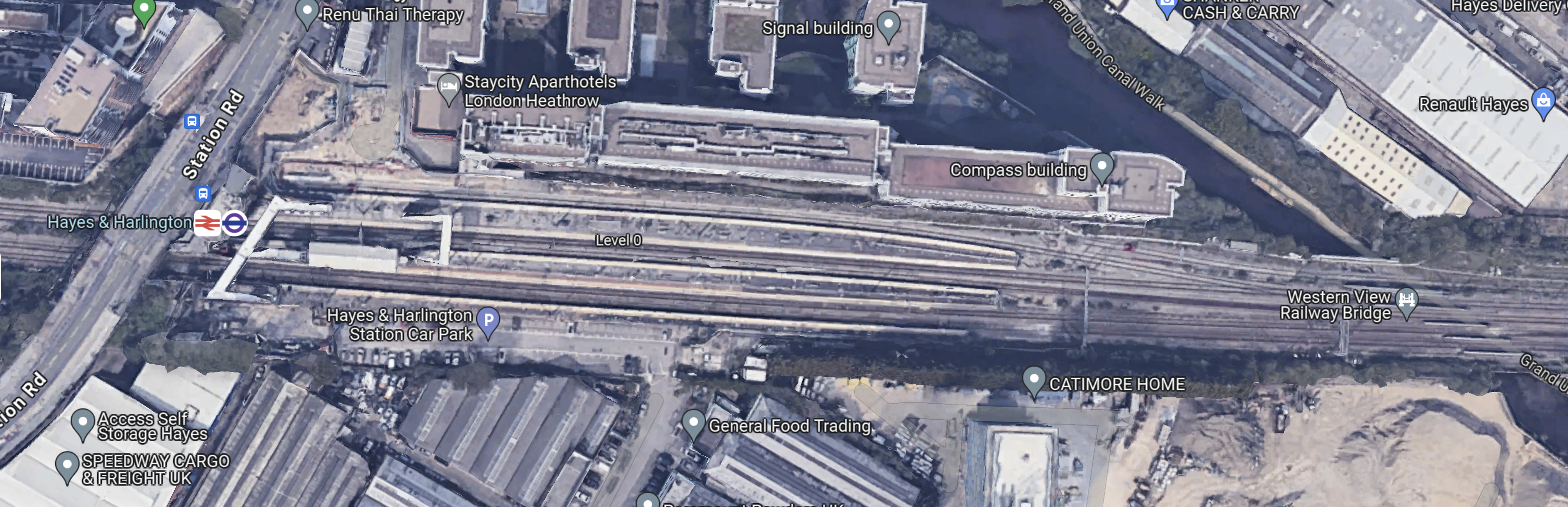
Note.
- It has platforms on all four tracks of the Great Western Main Line.
- There is a London-facing bay platform to terminate Elizabeth Line trains, if needed.
- The land to the North of the station has been developed.
- There is land to the South of the station that could be developed.
Could the space above the tracks, with some of the land to the South of the station be developed into a transport hub for Heathrow?
Heathrow Southern Railway
I prefer the Heathrow Southern Railway, which is a comprehensive, privately funded scheme.
Extending The Elizabeth Line – Could Open Access Services Use The Elizabeth Line?
In the February 2024 Edition of Modern Railways, there is an article which is entitled First Bid For Sheffield To King’s Cross Paths.
The article is mainly about FirstGroup’s proposal for a new Sheffield and London service, running under the Hull Trains brand.
But, this is the last paragraph.
Modern Railways understands First is working on a number of proposals for additional open access services, and this is an early statement of intent. Other existing open access proposals include Grand Union Trains’ plans for London to Stirling and Cardiff to Edinburgh services, along with an already approved London to Carmarthen service, and the recently submitted Wrexham, Shropshire and Midland Railway application for a London to Wrexham service. It is understood other organisations, including MTR and Virgin, are also working up plans for new open access services.
The respected Modern Railways magazine seem to think, that we’ll be seeing more open access services on UK railways.
These are my thoughts.
A Simple Example – London Crosslink
In Extending The Elizabeth Line – London Crosslink, I said this.
In the Wikipedia entry for the London Crosslink, this is the introduction.
London Crosslink was a passenger train service operated by Anglia Railways between Norwich and Basingstoke, using the North London Line to bypass central London. Class 170 Turbostar diesel multiple units were used, and the service operated between 22 May 2000 and 28 September 2002, supported by funding from the Strategic Rail Authority through its Rail Passenger Partnership fund.
As it was discontinued and it doesn’t seem to be sadly missed, I’m not advocating its reinstatement, but just looking how it might be run after the full opening of the Elizabeth Line.
But surely, there were good reasons, why the service was run in the first place and there might be a need in the future.
These are some characteristics of the service.
- There were about half-a-dozen services in both directions every day.
- At its full length it ran between Norwich and Basingstoke.
- Stops included Diss, Stowmarket, Ipswich, Colchester, Witham, Chelmsford, Ingatestone, Romford, Stratford, Highbury & Islington, Camden Road, West Hampstead, Brentford, Feltham, Staines, Woking and Farnborough (Main).
- Each service seemed to have a different stopping pattern.
- The timetable wasn’t very regular.
- The route wasn’t fully electrified.
It appears that it may have been a difficult service to timetable.
I lived North of Ipswich for some years.
I never used the London CrossLink service, as I had moved away before the service started in 2000.
- I would have found the change to the Central Line at Stratford station useful.
- I would have found the change to the Victoria Line at Highbury & Islington station useful.
- I would have found the change to Thameslink at West Hampstead station useful.
- Basingstoke would have given access to Greater South-West England.
- I could have got a bus to Heathrow from Feltham.
But getting to Marylebone, Paddington and Waterloo would have still been tedious.
Could a replacement for the London CrossLink be routed via the Elizabeth Line?
- The service would use the Elizabeth Line between Stratford and Reading.
- The service would use the Reading and Basingstoke Line between Reading and Basingstoke.
The route has some advantages over the original route.
- Except for the 13.6 miles between Southcote Junction and Basingstoke, the route is fully-electrified.
- Whitechapel will give access to London Overground services.
- Farringdon will give access to Thameslink services.
- There will be a lot of connections at Tottenham Court Road and Bond Street.
- Paddington and Reading will give access to Heathrow, Oxford and West of England services.
- Basingstoke will give access to Greater South-West England.
It is certainly an as-useful route as the original, if not more so.
The Trains
In Extending The Elizabeth Line – Will There Be A Need For Long Distance Class 345 Train?, I set out how a standard Class 345 train could be updated with faster running and a more appropriate interior.
As the Elizabeth Line is likely to need some more trains if High Speed Two is delayed, perhaps some extra trains should be ordered fairly soon.
The Routes
Consider.
- A terminal station would probably need to be electrified to the Elizabeth Line route.
- It would need the infrastructure to turn the trains.
These stations could probably be used as terminal stations.
- Basingstoke
- Bristol
- Cardiff
- Colchester
- Faversham
- Hoo – See Extending The Elizabeth Line – A Branch To The Isle Of Grain.
- Ipswich
- Northfleet – For European services at Ebbsfleet International.
- Norwich
- Oxford
- Rochester
- Southampton
- Southend Victoria
There will certainly be others.
Why Use Open Access?
Suppose an operator wants to run a service between Bristol Parkway and Northfleet to give the West Country access to European services.
- The operator takes all the risk and Network Rail get track access charges.
- Do Transport for London get track access charges for the Elizabeth Line tunnels?
- If they get their predictions and sums wrong, they lose the money.
But if they get it right, they probably sell it to an infrastructure company at a profit.
Conclusion
I think open access operation might work through the Elizabeth Line Tunnels.
Leisure Market Boom? GWR’s Vision For Direct Bristol-Oxford Services
The title of this post, is the same as that of this article on Rail Magazine.
This is the first paragraph.
Great Western Railway has hopes on running direct services between Bristol Temple Meads and Oxford from September 14, subject to approval of its new trial proposal by the Department for Transport and Network Rail. The move is a test of growth in demand for leisure travel by train.
It is an interesting idea.
These are some points about the service, given in the article.
- The route will be via Swindon, Chippenham and Bath Spa.
- Fastest journey time would be 71 minutes.
- The route will be aimed at the leisure market.
- There will be two trains per day (tpd) in each direction on Saturdays.
This is GWR’s handy route map.

These are my thoughts.
Will The Trains Call At Didcot Parkway?
This OpenRailwayMap shows Didcot Parkway station and the large triangular junction, that connects Oxford to the Great Western Main Line.
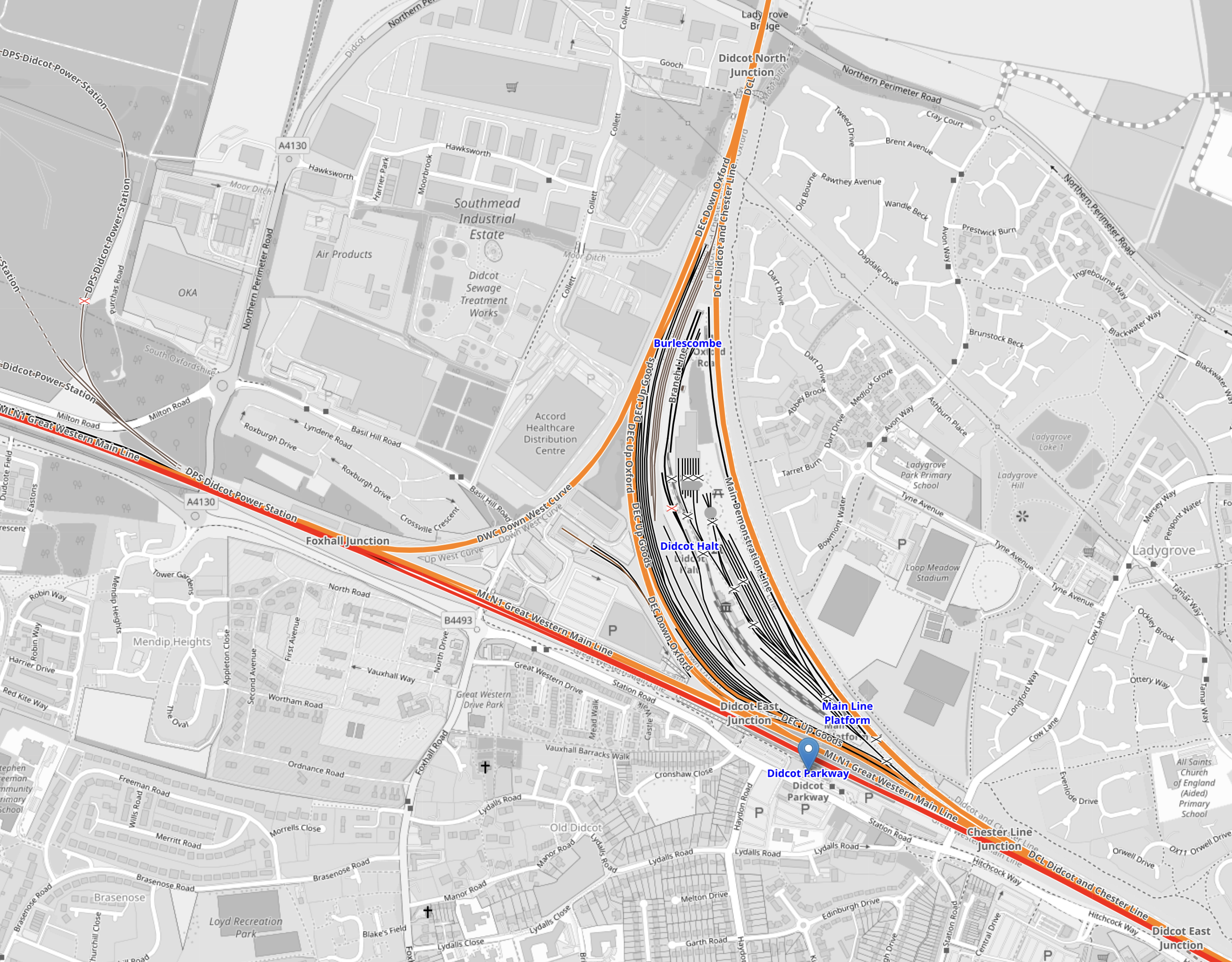
Note.
- The red tracks are the Great Western Main Line.
- The blue arrow indicates Didcot Parkway station.
- Oxford station is about ten miles to the North.
- Chords in the junction allow trains to go between Oxford and Paddington and Oxford and Swindon, with or without a stop at Didcot Parkway station.
The article says that GWR has asked to run the following services.
- 1018 Bristol Temple Meads-Oxford – Would arrive at Oxford at 1129.
- 1155 Oxford-Bristol Temple Meads (via Didcot) – Would arrive at Bristol Temple Meads at 1306.
- 1518 Bristol Temple Meads-Oxford – Would arrive at Oxford at 1629.
- 1712 Oxford-Bristol Temple Meads – Would arrive at Bristol Temple Meads at 1823.
Note.
- I suspect that the 1155 will reverse at Didcot Parkway station.
- There is a two train per hour (tph) service between Didcot Parkway and London Paddington stations.
- It looks like the four services could be run by a single train shuttling up the Great Western Main Line.
Would it be sensible if all Oxford and Bristol trains called at Didcot Parkway station, so that travellers could use the London service to their advantage?
But, calling at Didcot Parkway station would slow the service as there would need to be a reverse.
What Class Of Train Would Be Used?
Consider.
- A Bristol and Didcot Parkway via Bath Spa service takes 55 minutes.
- This is an average speed of 71.1 mph over a distance of 65.2 miles.
- 24.4 miles at the Bristol end of the route is not electrified.
- 10.3 miles at the Oxford end of the route is not electrified.
- The four services can be run by a single train shuttling up the Great Western Main Line.
It looks to me, that a bi-mode train with good performance is needed.
So I suspect that a five-car Class 800 or Class 802 train will be used.
Will The Train Be Battery-Electric Powered?
This is an interesting possibility.
- An ideal route for a battery electric train, is surely one with a long electrified section in the middle, which can be used to fully charge the train’s batteries.
- The train would have to run for 48.8 miles on its own power at the Bristol end of the route.
- The train would have to run for 20.6 miles on its own power at the Oxford end of the route.
The data sheet for a battery-electric Class 800/802 train can be downloaded from this page on the Hitachi web site.
In a section on the page, which is entitled Intercity Battery Trains, this is said.
A quick and easy application of battery technology is to install it on existing or future Hitachi intercity trains. Adding just one battery reduces emissions by more than 20% and offers cost savings of 20-30%.
Our intercity battery powered trains can cover 70km on non-electrified routes, operating at intercity speeds at the same or increased performance. Hitachi Rail’s modular design means this can be done without the need to re-engineer or rebuild the train and return them to service as quickly as possible for passengers.
The range of 70 km is 43.5 miles, which would appear to be a little bit short to go from the end of the electrification at Chippenham to Bristol Temple Meads and back.
But various measures could be taken to make sure the train can handle the route.
- The regenerative braking strategy could be used to conserve battery power.
- A second battery could be added to the train.
- Methods to charge the train at Bristol Temple Meads could be installed.
As London Paddington and Bristol Temple Meads is an important route, I suspect that Hitachi and Great Western Railway have a strategy to handle trains from Chippenham and sending them back.
Could This Route Be A Trial Route For Battery-Electric Trains?
Consider.
- Hitachi and Great Western Railway wouldn’t want to introduce an unreliable train without full full testing.
- Trains can probably limp to either Stoke Gifford or Reading depots, after a battery failure.
- Great Western Railway could test a new route.
- A full test only needs one train.
- Passenger reaction to a battery-electric train can be assessed.
- Staff need to be trained.
- The route can be run by a standard bi-mode if required.
- It could be the world’s first high-speed battery-electric train.
- Enthusiasts would flock to have a ride.
Could this be a trial service to make sure everything goes right?
Cardiff To Reading In A Class 387 Train
Returning from my trip to Cardiff yesterday, it wasn’t the normal Class 80x train, but a pair of Class 387 trains.
The timings from real time trains, weren’t as bad as some would have expected.
- Cardiff Central – 16.54 – 16:56
- Newport – 17:07 – 17:11
- Bristol Parkway – 17:29 – 17:32
- Swindon – 17:53 – 17:58
- Reading – 18:20 – 18:26
Note.
- The first time is the scheduled time and the second time is the actual time of the Class 387 trains.
- The schedule covers the 109.2 miles in 84 minutes, which is an average speed of 78 mph.
- The Class 387 trains covered the 109.2 miles in 90 minutes, which is an average speed of 72.8 mph.
I also arrived in Reading with three or so minutes to catch the Elizabeth Line train.
Are More Elizabeth Line Services Needed To Reading?
In a couple of instances, I’ve waited at Reading for nearly half-an-hour for an Elizabeth Line train.
Currently.
- The two Elizabeth Line trains take 53 minutes between Reading and Paddington.
- The two Great Western Main Line trains, that serve Didcot Parkway take 37 minutes between Reading and Paddington.
- The Great Western Main Line train, that serve Newbury take 25 minutes between Reading and Paddington.
Perhaps four trains per hour (tph) on the Elizabeth Line would be more convenient?
But services wouldn’t be as fast.
A Very Busy Paddington – 4th July 2023
On my trip to Marsh Barton station, Paddington was very busy, as these pictures show.

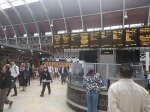



Note.
- Trains were leaving to Cheltenham Spa, Great Malvern. Newquay and Paignton, in addition to the more expected destinations of Bristol Temple Meads, Cardiff and Swansea.
- I took the Elizabeth Line to the station and it was very busy.
I feel, that action needs to be taken to increase the capacity of the station for both passengers and trains.
These are my thoughts.
Catching Trains From Reading
Recently, if I want to go somewhere, that is within an hour West of Reading station, I’ve started taking the Elizabeth Line to Reading using my Freedom Pass and then buying an Off Peak Day Return ticket from Reading.
- It saves a few pounds.
- I can catch the Elizabeth Line train at Moorgate direct to Reading, after having breakfast on Moorgate.
- Moorgate is an easy bus ride from outside my house.
I suspect some other Freedom Pass holders will start to use Reading station to go West.
The only disadvantages are that you miss the Reading train and have to wait half-an-hour for another and that buying tickets at Reading means leaving the station.
Improvements, I would make would include.
- Four trains per hour (tph) between Whitechapel and Reading.
- A ticket machine on the bridge at Reading station, so that those needing a ticket can buy one without leaving the station.
I suspect other improvements could also improve this option.
A Second Concourse At The Western End Of Paddington Station
If you go to Paddington station on the Hammersmith and City Line of the Underground, you can walk across the top of the main station and take stairs down to the platform for your departing train.
There has been talk of improving this area of the station, so that passengers using that route from the Underground have an easier route with more facilities like cafes, shops and toilets.
I’m all for this improvement.
What Is The Point Of Heathrow Express?
On my trip, I watched a Heathrow Express arrive in Paddington and just a few people got off.
I am utterly certain, that the Elizabeth Line is giving Heathrow Express a good kicking, as it is so much better connected to the important destinations within London, like Bond Street, Canary Wharf, Farringdon for Thameslink, Liverpool Street for The City, Stratford for events and Whitechapel for the East London Line.
Discussions of the future of Heathrow Express, must also include the Western Rail Link to Heathrow, which is currently being planned by Network Rail.
This page on the Network Rail web site gives more details, including these benefits for the link.
- Reduce rail journey times between Reading and Heathrow by delivering a new, faster, frequent, more reliable direct train service to Heathrow with four trains per hour in each direction. All trains would call at Reading and Slough and alternate trains at Twyford and Maidenhead. Journey times could be as short as 26 minutes from Reading and 6 to 7 minutes from Slough.
- Significantly improve rail connectivity to Heathrow from the Thames Valley, South Coast, South West, South Wales and West Midlands.
- Provide an alternative form of transport for passengers and the large number of people who work at the airport who are currently travelling by road.
- Ease congestion on some of the UK’s busiest roads, the M4, M3 and M25 resulting in lower CO2 emissions equivalent to approximately 30 million road miles per year, helping to deliver the UK’s climate change and carbon reduction targets.
- Generate economic growth and new jobs across the Thames Valley and surrounding areas.
- Reduce passenger congestion at London Paddington.
There is then the question of who should run the service; Heathrow Express, the Elizabeth Line or both.
At the present time, trains from London to Heathrow are.
- Elizabeth Line – 2 tph – Shenfield and Terminal 5
- Elizabeth Line – 4 tph – Abbey Wood and Terminal 4
- Heathrow Express – 4 tph – Paddington and Terminal 5
Note.
- All trains also serve Heathrow Terminals 2 and 3.
- The Piccadilly Line also serves all Heathrow Terminals.
- It appears that Terminal 4 is only served by the Elizabeth Line.
- Terminal 5 has 6 tph, but the Western Rail Link will be at a frequency of four tph.
Because of the mismatch at Terminal 5 and that two tph will stop at Slough, Maidenhead and Twyford, I suspect we might see the following services on the Western Rail Link
- Elizabeth Line – 2 tph – Terminal 5 and Reading via Slough, Maidenhead and Twyford
- Heathrow Express – 2 tph – Terminal 5 and Reading via Slough.
Note.
- This would give Reading and Central London, a much-needed four tph on the Elizabeth Line. Two tph would be direct and two tph would be via Heathrow.
- It would not require any more paths in the Elizabeth Line Central Tunnel, as the 2 tph between Shenfield and Terminal 5 will just be extended to Reading.
- Heathrow Express has Western access with a connection to Reading.
It looks like this service pattern could be a good compromise.
I also suspect that this would improve passenger numbers for Heathrow Express.
Could Heathrow Express Run Its Service Using One Platform At Paddington?
I am fairly certain that this would be possible, if passenger access to the platforms at Paddington station were to be improved, by the building of a second concourse at the Western end of the station.
It is also likely, that full digital signalling will be applied between Paddington and Reading and this will surely improve the ease of running four tph into one platform at London Paddington for Heathrow Express.
I can see, that a reorganisation of Heathrow Express after the building of a second Western concourse at Paddington and the Western Rail Link to Heathrow, that Heathrow Express could be able to release a platform.
Could Great Western Railway Reorganise Suburban Services?
These are Great Western Railway’s suburban services, that terminate at Paddington.
- 1 tph – London Paddington and Oxford via Reading and Didcot Parkway
- 2 tph – London Paddington and Didcot Parkway via Slough, Maidenhead, Twyford, Reading, Tilehurst, Pangbourne, Goring & Streatley and Cholsey
- 1 tph – London Paddington and Newbury via Reading, Theale and Thatcham
Note.
- The Oxford services, are run by Class 800 trains, running as either five-car, nine-car or ten-car trains.
- Oxford is also served by the hourly Paddington and Great Malvern service.
- All of the other services, are run by Class 387 trains, running as either four-car or eight-car trains.
- There doesn’t seem to be any pattern to the platforms used by these services.
I find the last point very surprising, as my extensive scheduling experience says that it is easier to schedule several similar processes, rather than a number of different ones.
This OpenRailwayMap shows the platforms at Paddington station.
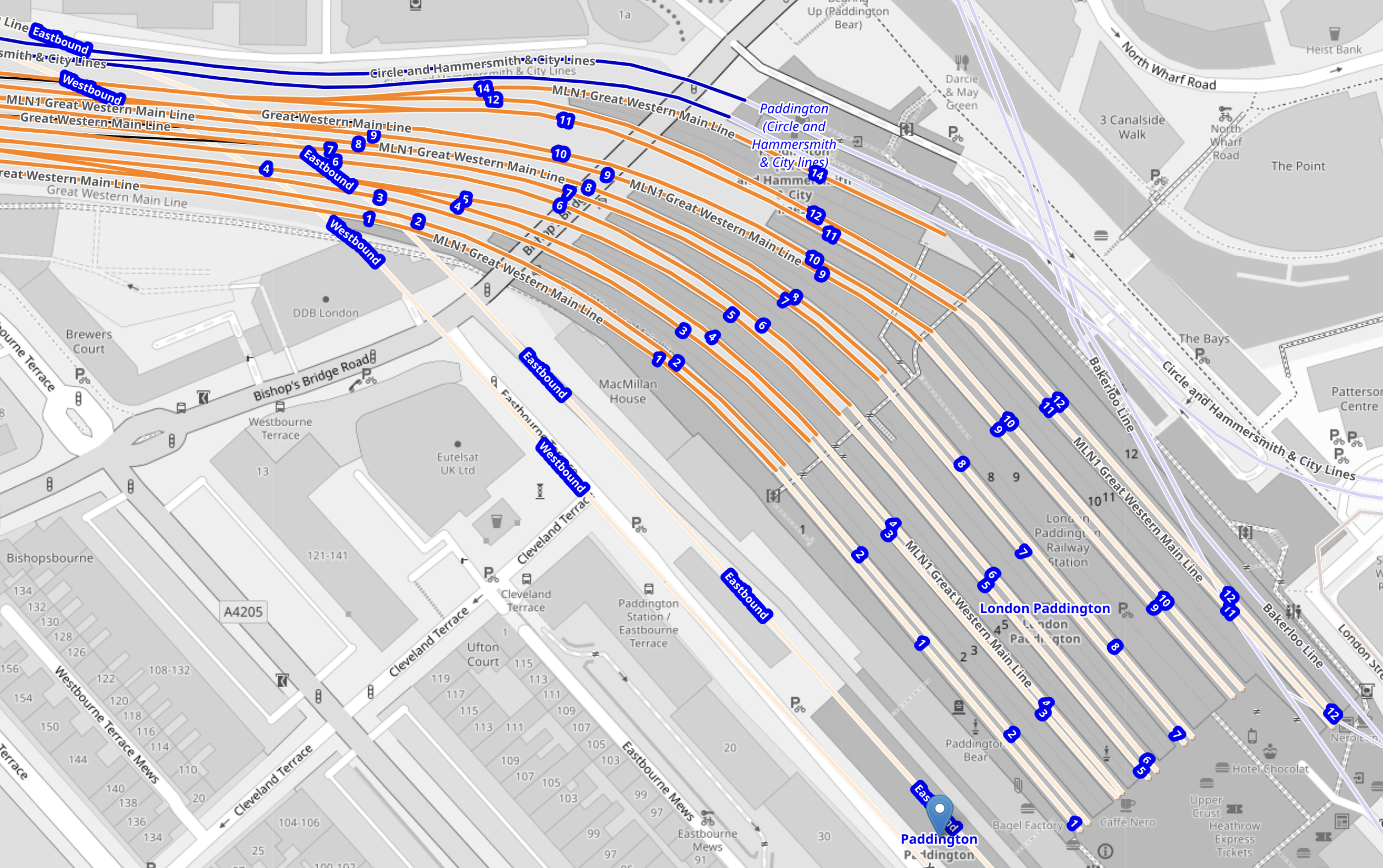
Note.
- The platforms are numbered 1 to 14 from South-West to North-East.
- Platforms 1 to 12 all appear to long platforms about the same length.
- As some platforms can take ten-car Class 800 trains, I wouldn’t be surprised to find out all platforms 1-12 can.
- The only short platform is platform 14, which can accommodate an eight-car Class 387 train, which is 163 metres long.
It looks to me, with twelve long similar platforms, they can schedule the platforms on the fly, so perhaps this explains, the randomness of platform allocations.
I think in an ideal world, I would try and organise these services as follows.
- The Oxford and Great Malvern services could share a platform at Paddington, which would help passengers to find the next Oxford train.
- The Didcot Parkway and Newbury services could also share a platform at Paddington, for the same reason.
- Unless Didcot Parkway and Newbury services are occasionally run by a twelve-car train, they could even use the short platform 14.
This would surely be a more efficient use of the platforms at Paddington station.
Could Didcot Parkway Services Become Another Elizabeth Line Destination?
Consider.
- Didcot Parkway to London Paddington services appear to use the same tracks as Elizabeth Line services between Reading and Southall West Junction, where they change to the main line for Paddington.
- London Paddington to Didcot Parkway services appear to use the main line from Paddington to Dolphin Junction, which is just to the East of Slough station, where it joins the same tracks as Elizabeth Line services to Reading.
- Nine-car Class 345 trains are forty metres longer than an eight-car Class 387 train.
- Class 345 trains are 90 mph trains.
- Class 387 trains are 110 mph trains.
- Class 387 trains wouldn’t fit the platform edge doors in the Elizabeth Line Central Tunnel.
It would appear that the Didcot Parkway and London Paddington services could be moved to the Elizabeth Line, by doing the following.
- The Class 387 trains would be replaced by Class 345 trains.
- Trains to London would go straight on at Southall West Junction and through the Elizabeth Line Central Tunnel.
- Trains from London would emerge from the Elizabeth Line Central Tunnel on the right track for Reading.
- There might be a need to lengthen a few platforms.
Note.
- The Didcot Parkway to London Paddington services would not need to use the main line.
- 2 tph would be removed from Paddington station.
As one electric train is being replaced by another, there would probably be no need for more electrification.
Could Newbury Services Become Another Elizabeth Line Destination?
Consider.
Freight trains appear to be able to go from Theale station to Platform 5 at Slough station, through Platform 15 at Reading station, which is a possible route that a Newbury to the Elizabeth Line Central Tunnel train would take.
Freight trains appear to be able to go from Platform 4 at Slough station to Theale station, through Platform 15 at Reading station, which is a possible route that an Elizabeth Line Central Tunnel to Newbury train would take.
It would appear that the Newbury and London Paddington services could be moved to the Elizabeth Line, by doing the following.
- The Class 387 trains would be replaced by Class 345 trains.
- Trains through Reading would follow the freight route.
- There might be a need to lengthen a few platforms.
Note.
- The Newbury to London Paddington services would not need to use the main line.
- 1 tph would be removed from Paddington station.
As one electric train is being replaced by another, there would probably be no need for more electrification.
Conclusion
It looks like the capacity of Paddington station can be increased by the following.
- Building a new second concourse at the Western end of the station.
- Heathrow Express releasing a platform.
- Oxford and Great Malvern services could share a platform at Paddington
- Moving Didcot Parkway and Newbury services to the Elizabeth Line.
No new electrification would be required.
A Fraught Journey Between Worcester Shrub Hill And Reading Stations
My train home from Worcester Shrub Hill station didn’t make the most impressive of starts to my journey back to Reading.
- The five-car train was supposed to leave at 15:15.
- It was also supposed to arrive in Reading at 16:58.
- But the relief driver was delayed.
Eventually, we left at 15:31.
The train didn’t appear to be running at full speed and around Moreton-in-Marsh, staff started distributing water, which in my view is always a sign that all is not well.
I measured the temperature and humidity at 26.7 °C and 40% respectively, so the water was welcome.
I asked one of the staff what was up and was informed, that two of the engines were overheating because of the heat, so were we effectively running on the remaining cool engine?
Eventually, we were informed that the train would terminate at Charlbury station, where we would all be picked up by the following train, which would have nine cars.
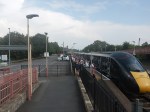
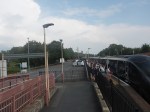
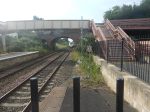
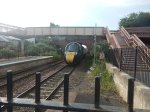
After Charlbury, things didn’t get much better.
- The rescue train eventually left Charlbury at 17:38, which was twenty-six minutes late.
- The train wasn’t full and I had a table to myself, but after Oxford, there wasn’t a seat anywhere.
- We missed out the stop at Didcot Parkway station because of flooding, caused because of a violent thunder storm.
- The rescue train didn’t even make Paddington and it was terminated short in the bi-directional Platform 7 at Reading, because of an unwell passenger.
Eventually, when I arrived in Reading station at 18:55, the rescue train was fifty-five minutes late.
As my original train, should have arrived at 16:58, I was actually, three minutes short of two hours late.
By the time, I got to Platform 14 for the 16:59 Elizabeth Line train to Central London, it had gone, so I had another thirty minute wait.
I finally arrived home at 21:00, after a nearly 5¾ hour journey.
I have a few thoughts.
Changing At Reading
Part of the reason, that I missed my Elizabeth Line train, was that the escalators to Platform 14 were out of action and I had to wait for the lift, as I don’t trust myself going down stairs.
I have said before that if you need a ticket in your change a Reading, there should be a ticket machine on the bridge.
As Reading station is managed by Network Rail, perhaps, they should examine the operation of the station with a good dose of old-fashioned time and motion in more detail.
The Elizabeth Line Frequency To London
The Elizabeth Line only runs two trains per hour (tph) between London and Reading.
This may be fine when everything is going well, but on days like Sunday, when trains aren’t performing well and the weather is not behaving itself, would four tph be better?
Perhaps, the two extra trains would run between Reading and Abbey Wood, and only stop at say Twyford, Maidenhead, Slough, Hayes & Harlington, Southall, Ealing Broadway, Old Oak Common, Paddington, Bond Street, Tottenham Court Road, Farringdon, Liverpool Street, Whitechapel, Canary Wharf, Custom House and Woolwich.
Great Western Railway Trains Between Oxford, Reading and Didcot Parkway and London
The three terminals get the following services to and from London
- Didcot Parkway – 4 tph
- Oxford – 4 tph
- Reading – 11½ tph – 8½ fast and 3 slow
Consider these questions.
- How many travellers between Didcot Parkway, Oxford and Reading and Paddington, now use the Elizabeth Line for onward travel from Paddington?
- How many of the endless visitors to Oxford start their journey on the Elizabeth Line?
- How many visitors to Oxford combine a trip with one to Bicester Village?
- How many travelling by train between Oxford and Cambridge will use part of the Elizabeth Line for the journey?
- Is it fair, that Cambridge is connected to four London rail terminals; King’s Cross, Liverpool Street, London Bridge and St. Pancras and Oxford is connected to just two; Marylebone and Paddington?
I suspect there’s considerable scope to reorganise services between the three stations and London to provide a better service.
GWR’s Paddington and Didcot Parkway service, which has a frequency of two tph, could be moved to the Elizabeth Line and possibly extended to Oxford, once Didcot Parkway and Oxford is electrified.
This would give.
- Didcot Parkway would have two fast tph to Paddington and two stopping tph on the Elizabeth Line with all its connectivity and delights.
- Oxford would have two fast tph to Paddington and two stopping tph on the Elizabeth Line.
- Reading will have a much-needed Elizabeth Line frequency of four tph.
Note.
- Terminating the Elizabeth Line at Oxford, means that there are services connecting Oxford and Cambridge, with a single change at either Farringdon or Liverpool Street.
- Oxford would also get one change connectivity to Gatwick, Heathrow and Stansted Airports.
- The slow lines between Oxford and Maidenhead typically have operating speeds of 90-100 mph. So if the Class 345 trains on the Elizabeth Line and the track were upgraded to 100 mph, this might save a few minutes in the outer reaches of the Elizabeth Line.
- The Elizabeth Line could terminate in one or two South-facing bay platforms on the East side of the station. This position would reduce passenger traffic on the crowded footbridge.
- If all the bay platforms were on the same East side of the station, this would simplify and ease passenger flows.
- Chiltern and East West Railway services could be timed for an easy interchange.
- The proposed Cowley Branch could also use the South-facing bay platforms.
The more I look at it, the more I like the idea of running the Elizabeth Line to Oxford.
The Heat Problem On The Class 800 Trains
The Wikipedia entry for the Class 800 trains has this paragraph on the overheating of the engines or generator units (GUs) on the trains.
The GU is installed on vibration-isolating mountings, and fitted with side-mounted cowls to reduce external noise. Heat management measures include thermal insulation around key areas such as cable ducts. According to Modern Railways magazine, the limited space available for the GUs is responsible for them being prone to overheating. It claimed that, on one day in summer 2018, “half the diagrammed units were out of action as engines shut down through overheating”.
That was in 2018, which was five years ago. But it appears to be still happening.
Would Overheating Happen With Battery Units?
One of the reasons, I went to Worcester was to assess the feasibility of battery-electric trains on the route.
This article from EV-Lectron is entitled Electric Cars in Hot Weather – What You Need To Know, gives a detailed set of answers.
But it probably comes to the conclusion, that cold weather with the extra heating load might be more of the problem.
I suspect, that if you were running battery electric trains on a route of over fifty miles, the best thing would be to have electrification at both ends of the route.
If, as I have calculated in Reading And Oxford – 10th June 2023, that to run battery-electric trains to Hereford needs a length of electrification between Worcester Shrub Hill and Great Malvern stations, then when they leave the electrification, they should have the interiors at the right temperature for staff and passengers.
I also suspect that battery-electric trains need to be well insulated to cope better with cold weather.
Reading And Oxford – 10th June 2023
Yesterday, after breakfast on Moorgate, I went for an explore at the Western end of the Elizabeth Line.
My aim was to change at Reading for Oxford and then have a bit of an explore in the University City.
These are my observations and thoughts.
Changing Trains At Reading
There are two trains per hour between Liverpool Street and Reading station, but at the Moorgate end of Liverpool Street station, there is no way of buying a ticket, that would get me between Reading and Oxford. To make things more complicated, I needed to be quick with my change at Reading, as I only had a few minutes before the next Oxford train left Reading.
In the end I had to leave Reading station and walk across the concourse in front of the station.

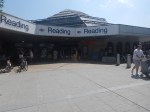


O then bought a ticket in a machine and then re-entered the station.
Great Western Railway can do better.
In Germany, there would be a ticket machine inside the barriers for those changing trains. But we never do that!
In the end, I missed my train and had to wait thirty minutes for a very crowded London Paddington to Oxford train.
Electrification At Oxford
This map from OpenRailwayMap shows the planned electrification at Oxford station.
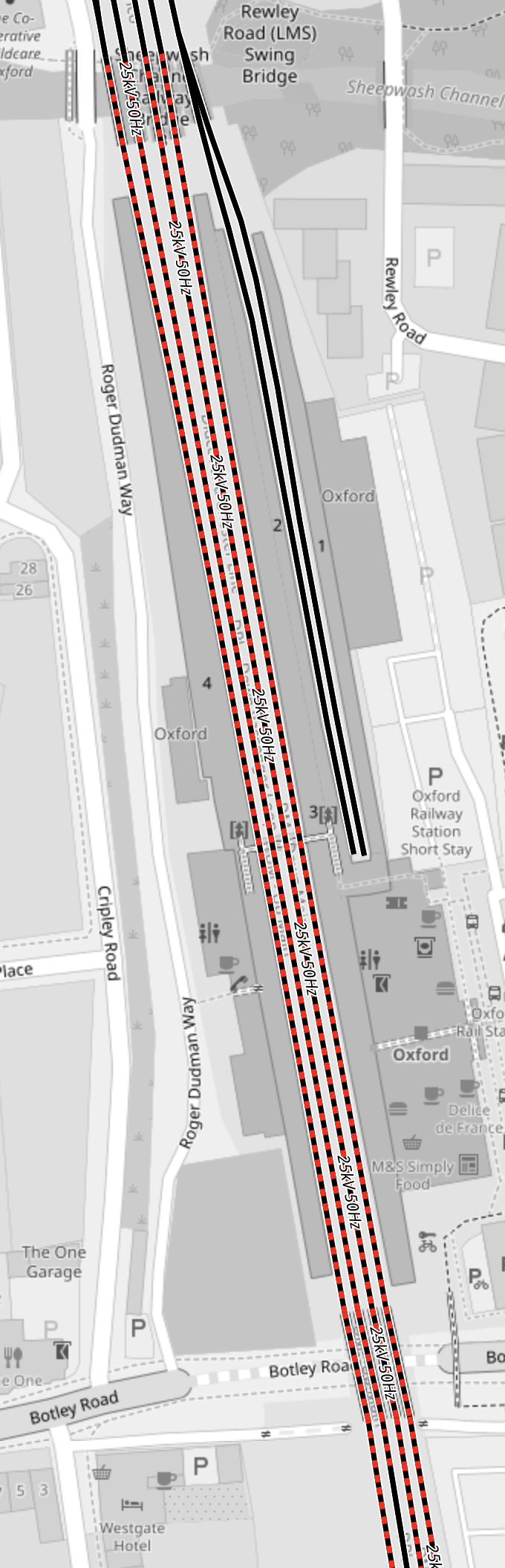
Note.
- The four through lines are shown in dotted red-and-black, which indicates, that they will be electrified with 25 KVAC overhead electrification.
- The proposed electrification continues all the way to Didcot Parkway station on the map.
- The two black tracks are the unelectrified platforms for Chiltern and East West Railway services.
But the proposed electrification stops just outside the station. Why?
Great Western Railway Services Beyond Oxford
Great Western Railway run an hourly service to Great Malvern, which according to Wikipedia terminates as follows.
- 4 trains per day continue to Hereford calling at Colwall and Ledbury.
- 1 train per day terminates at Worcester Shrub Hill.
- 4 trains per day terminate at Worcester Foregate Street.
So what are the distances of these stations from Oxford?
- Great Malvern – 65.6 miles
- Hereford – 86.3 miles
- Worcester Foregate Street – 57.6 miles
- Worcester Shrub Hill – 57.2 miles
I suspect that one version of the Hitachi Intercity Tri-Mode Battery Train, which is shown in the infographic below
could handle all these distances.

After the Oxford and Didcot Parkway electrification is complete, trains will arrive at Oxford station with a full battery.
But how would the batteries be recharged for the journey back to Oxford?
This map from OpenRailwayMap shows the tracks at Worcester.
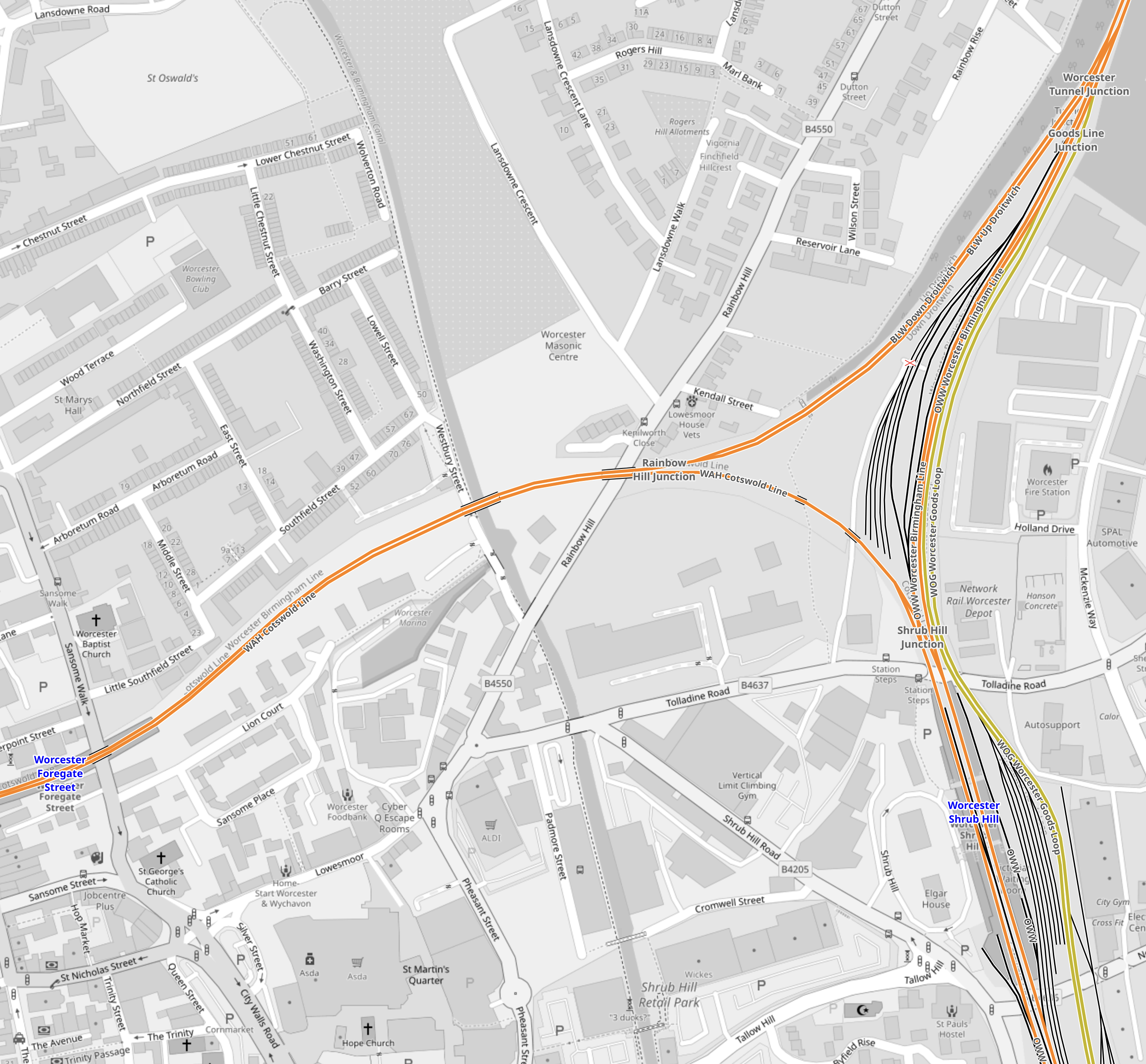
Note.
- Trains to and from Oxford, use the tracks in the South-East corner of the map.
- Trains to and from Birmingham, use the tracks in the North -East corner of the map.
- Trains to and from Great Malvern and Hereford, use the tracks in the South-West corner of the map.
I suspect that some selective electrification would be able to charge the trains.
Trains take around twenty minutes to go between Great Malvern and Worcester Shrub Hill via Worcester Foregate Street.
Electrifying this 8.5 mile section would surely enable the following.
- Trains to leave Worcester Shrub Hill for Oxford with a full battery.
- Trains to leave Great Malvern for Hereford with a full battery.
- As Hereford and Great Malvern are only 20.7 miles apart, I suspect a return trip without a recharge is possible.
- Trains terminating at Worcester Shrub Hill and Worcester Foregate Street to be fully recharged before travelling back to Oxford.
Other services to and from the Worcester stations could also be run by battery-electric trains.
As Worcester Shrub Hill and Oxford stations are only 57.2 miles and well within the capabilities of most battery-electric trains, there would be no need to electrify the route.
I may of course, be wrong about the length and position of the electrification at Worcester, but this could be just one of many solutions using partial electrification.
Does this explain the stopping of the proposed electrification at Oxford?
In addition, there must be marketing opportunities in running a battery-electric service to Hereford and Worcester.
The Bay Platforms At Oxford Station
These pictures show the two North facing bay platforms 1 and 2 at Oxford station.
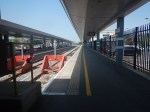
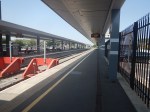
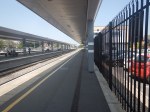
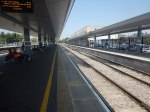
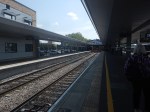
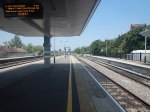
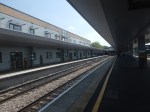
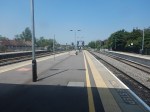
Note.
- The platforms are not electrified.
- They appear to be easily updated with electrification to be able to charge Chiltern and East West Railway trains.
- Marylebone is only 66.7 miles from Oxford.
- Milton Keynes Central is just over 40 miles from Oxford.
- Bedford is just under 60 miles from Oxford.
I suspect that services from Oxford to Bedford, Marylebone and Milton Keynes can all be run by battery-electric trains.
Very Busy Lizzie
Yesterday, I took the Elizabeth Line, back from Reading to Moorgate.
- When, I got on at Reading, there were perhaps fifty empty seats and I was able to have three seats to myself.
- But by Slough, It was standing room only!
- It cleared a bit at Paddington, but by Moorgate there were only a few seats left.
Currently, there are two trains per hour (tph) between Abbey Wood and Reading stations.
As other passengers said it’s always busy, I suspect that Transport for London need to tweak the signalling, so that four tph run to Reading.
This section called Planned Service in the Wikipedia entry for the Elizabeth Line says this.
In May 2023, it is planned to allow trains to run from both eastern branches to west of Paddington. This will allow both more flexible, and higher frequency, services: 24 tph peak, 20 tph off-peak, and direct services between Shenfield and Heathrow. In the longer term, when Old Oak Common opens, all trains will serve Old Oak Common, with those not serving the Reading or Heathrow branches reversing there.
The service changes for May 2023 were confirmed in February 2023. The peak timetable will increase to 24 trains per hour. Off-peak service level will remain at 16 trains per hour, with two Shenfield–Paddington trains extended to Heathrow Airport Terminal 5 and two Abbey Wood–Terminal 5 trains switching to Terminal 4.
This will give an Off Peak schedule as follows.
- Reading and Abbey Wood – 2 tph
- Maidenhead and Abbey Wood – 2 tph
- Heathrow Terminal 4 and Abbey Wood – 4 tph
- Heathrow Terminal 5 and Abbey Wood – 0 tph
- Heathrow Terminal 5 and Shenfield – 2 tph
- Paddington and Shenfield – 6 tph
I don’t believe it is good enough.
- There is no direct Heathrow Terminal 5 and Abbey Wood service.
- Reading needs four tph to Central London.
- See Elizabeth Line: Commuters Say Service ‘Not What Was Promised’
- See So Many Cases On A Train!
I suspect passenger congestion and reaction will force a rethink by the Mayor and Transport for London.
Reading To Heathrow On The Lizzie Line
Last week, I took the Lizzie Line to Reading and came back with a diversion to Heathrow.
I took the train from Reading as far as Hayes and Harlington, where I crossed over the tracks on the footbridge to get the train to Heathrow.
There are two bridges at Hayes & Harlington station, as these pictures show.
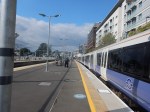
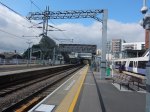

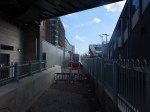
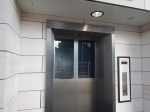
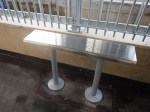
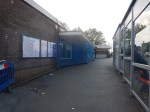

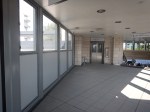

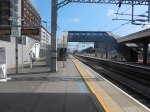
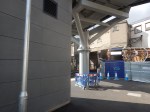
Note.
- Only the Western bridge has lifts.
- The Western bridge will be at the very back of the train from Reading.
- It is a long walk from the front of the train to the lifts.
This map from Cartometro shows the tracks through Hayes and Harlington station.

Note.
- The Great Western fast lines, which are shown in black on the South side going through platforms 1 & 2.
- The Elizabeth Line and the Great Western slow lines, which are shown in black and purple on the North side going through platforms 3 & 4.
- The Reading and Heathrow branches are to the West.
- London Paddington is to the East.
- Elizabeth Line Trains from the Reading or Heathrow branches to Paddington use Platform 4.
- Elizabeth Line Trains from Paddington to the Reading or Heathrow branches use Platform 3.
It should also be noted that if you are travelling between Heathrow Airport and any of the Elizabeth Line stations between Hayes and Harlington and Reading stations, you have to cross from Platform 4 to Platform 3 at Hayes and Harlington station.
All passengers will be travelling in the same direction at Hayes and Harlington station.
I feel it is absolutely essential, if you are travelling between Reading and Heathrow Airport using the Elizabeth Line, that you travel in the last carriage of the train from both Heathrow Airport or Reading.
When travelling to Heathrow in Where Should You Travel On An Elizabeth Line Train?, I said these were the positions to travel on the train.
- Heathrow Central – Eastern end
- Heathrow Terminal 4 – Western end
- Heathrow Terminal 5 – Eastern end
It looks like there could be some walking to do if you’re travelling between Reading and Heathrow Central or Heathrow Terminal 5.
I feel that Hayes and Harlington station could possibly have been better designed.
Would it have been better if Platforms 3 and 4 had been designed as an island platform, so that passengers going between the Reading and Heathrow branches would just walk across to the other side of the platform?
- The tracks would have had to be realigned.
- There would have been less lifts needed.
- The Eastern bridge might not have been needed.
I suspect, it would have been the more expensive option.
 The Anonymous Widower