A Fraught Journey Between Worcester Shrub Hill And Reading Stations
My train home from Worcester Shrub Hill station didn’t make the most impressive of starts to my journey back to Reading.
- The five-car train was supposed to leave at 15:15.
- It was also supposed to arrive in Reading at 16:58.
- But the relief driver was delayed.
Eventually, we left at 15:31.
The train didn’t appear to be running at full speed and around Moreton-in-Marsh, staff started distributing water, which in my view is always a sign that all is not well.
I measured the temperature and humidity at 26.7 °C and 40% respectively, so the water was welcome.
I asked one of the staff what was up and was informed, that two of the engines were overheating because of the heat, so were we effectively running on the remaining cool engine?
Eventually, we were informed that the train would terminate at Charlbury station, where we would all be picked up by the following train, which would have nine cars.
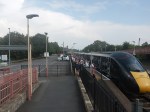
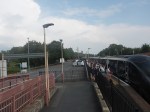
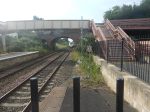
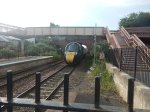
After Charlbury, things didn’t get much better.
- The rescue train eventually left Charlbury at 17:38, which was twenty-six minutes late.
- The train wasn’t full and I had a table to myself, but after Oxford, there wasn’t a seat anywhere.
- We missed out the stop at Didcot Parkway station because of flooding, caused because of a violent thunder storm.
- The rescue train didn’t even make Paddington and it was terminated short in the bi-directional Platform 7 at Reading, because of an unwell passenger.
Eventually, when I arrived in Reading station at 18:55, the rescue train was fifty-five minutes late.
As my original train, should have arrived at 16:58, I was actually, three minutes short of two hours late.
By the time, I got to Platform 14 for the 16:59 Elizabeth Line train to Central London, it had gone, so I had another thirty minute wait.
I finally arrived home at 21:00, after a nearly 5¾ hour journey.
I have a few thoughts.
Changing At Reading
Part of the reason, that I missed my Elizabeth Line train, was that the escalators to Platform 14 were out of action and I had to wait for the lift, as I don’t trust myself going down stairs.
I have said before that if you need a ticket in your change a Reading, there should be a ticket machine on the bridge.
As Reading station is managed by Network Rail, perhaps, they should examine the operation of the station with a good dose of old-fashioned time and motion in more detail.
The Elizabeth Line Frequency To London
The Elizabeth Line only runs two trains per hour (tph) between London and Reading.
This may be fine when everything is going well, but on days like Sunday, when trains aren’t performing well and the weather is not behaving itself, would four tph be better?
Perhaps, the two extra trains would run between Reading and Abbey Wood, and only stop at say Twyford, Maidenhead, Slough, Hayes & Harlington, Southall, Ealing Broadway, Old Oak Common, Paddington, Bond Street, Tottenham Court Road, Farringdon, Liverpool Street, Whitechapel, Canary Wharf, Custom House and Woolwich.
Great Western Railway Trains Between Oxford, Reading and Didcot Parkway and London
The three terminals get the following services to and from London
- Didcot Parkway – 4 tph
- Oxford – 4 tph
- Reading – 11½ tph – 8½ fast and 3 slow
Consider these questions.
- How many travellers between Didcot Parkway, Oxford and Reading and Paddington, now use the Elizabeth Line for onward travel from Paddington?
- How many of the endless visitors to Oxford start their journey on the Elizabeth Line?
- How many visitors to Oxford combine a trip with one to Bicester Village?
- How many travelling by train between Oxford and Cambridge will use part of the Elizabeth Line for the journey?
- Is it fair, that Cambridge is connected to four London rail terminals; King’s Cross, Liverpool Street, London Bridge and St. Pancras and Oxford is connected to just two; Marylebone and Paddington?
I suspect there’s considerable scope to reorganise services between the three stations and London to provide a better service.
GWR’s Paddington and Didcot Parkway service, which has a frequency of two tph, could be moved to the Elizabeth Line and possibly extended to Oxford, once Didcot Parkway and Oxford is electrified.
This would give.
- Didcot Parkway would have two fast tph to Paddington and two stopping tph on the Elizabeth Line with all its connectivity and delights.
- Oxford would have two fast tph to Paddington and two stopping tph on the Elizabeth Line.
- Reading will have a much-needed Elizabeth Line frequency of four tph.
Note.
- Terminating the Elizabeth Line at Oxford, means that there are services connecting Oxford and Cambridge, with a single change at either Farringdon or Liverpool Street.
- Oxford would also get one change connectivity to Gatwick, Heathrow and Stansted Airports.
- The slow lines between Oxford and Maidenhead typically have operating speeds of 90-100 mph. So if the Class 345 trains on the Elizabeth Line and the track were upgraded to 100 mph, this might save a few minutes in the outer reaches of the Elizabeth Line.
- The Elizabeth Line could terminate in one or two South-facing bay platforms on the East side of the station. This position would reduce passenger traffic on the crowded footbridge.
- If all the bay platforms were on the same East side of the station, this would simplify and ease passenger flows.
- Chiltern and East West Railway services could be timed for an easy interchange.
- The proposed Cowley Branch could also use the South-facing bay platforms.
The more I look at it, the more I like the idea of running the Elizabeth Line to Oxford.
The Heat Problem On The Class 800 Trains
The Wikipedia entry for the Class 800 trains has this paragraph on the overheating of the engines or generator units (GUs) on the trains.
The GU is installed on vibration-isolating mountings, and fitted with side-mounted cowls to reduce external noise. Heat management measures include thermal insulation around key areas such as cable ducts. According to Modern Railways magazine, the limited space available for the GUs is responsible for them being prone to overheating. It claimed that, on one day in summer 2018, “half the diagrammed units were out of action as engines shut down through overheating”.
That was in 2018, which was five years ago. But it appears to be still happening.
Would Overheating Happen With Battery Units?
One of the reasons, I went to Worcester was to assess the feasibility of battery-electric trains on the route.
This article from EV-Lectron is entitled Electric Cars in Hot Weather – What You Need To Know, gives a detailed set of answers.
But it probably comes to the conclusion, that cold weather with the extra heating load might be more of the problem.
I suspect, that if you were running battery electric trains on a route of over fifty miles, the best thing would be to have electrification at both ends of the route.
If, as I have calculated in Reading And Oxford – 10th June 2023, that to run battery-electric trains to Hereford needs a length of electrification between Worcester Shrub Hill and Great Malvern stations, then when they leave the electrification, they should have the interiors at the right temperature for staff and passengers.
I also suspect that battery-electric trains need to be well insulated to cope better with cold weather.
Reading And Oxford – 10th June 2023
Yesterday, after breakfast on Moorgate, I went for an explore at the Western end of the Elizabeth Line.
My aim was to change at Reading for Oxford and then have a bit of an explore in the University City.
These are my observations and thoughts.
Changing Trains At Reading
There are two trains per hour between Liverpool Street and Reading station, but at the Moorgate end of Liverpool Street station, there is no way of buying a ticket, that would get me between Reading and Oxford. To make things more complicated, I needed to be quick with my change at Reading, as I only had a few minutes before the next Oxford train left Reading.
In the end I had to leave Reading station and walk across the concourse in front of the station.

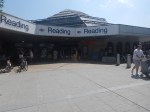
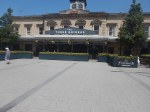

O then bought a ticket in a machine and then re-entered the station.
Great Western Railway can do better.
In Germany, there would be a ticket machine inside the barriers for those changing trains. But we never do that!
In the end, I missed my train and had to wait thirty minutes for a very crowded London Paddington to Oxford train.
Electrification At Oxford
This map from OpenRailwayMap shows the planned electrification at Oxford station.
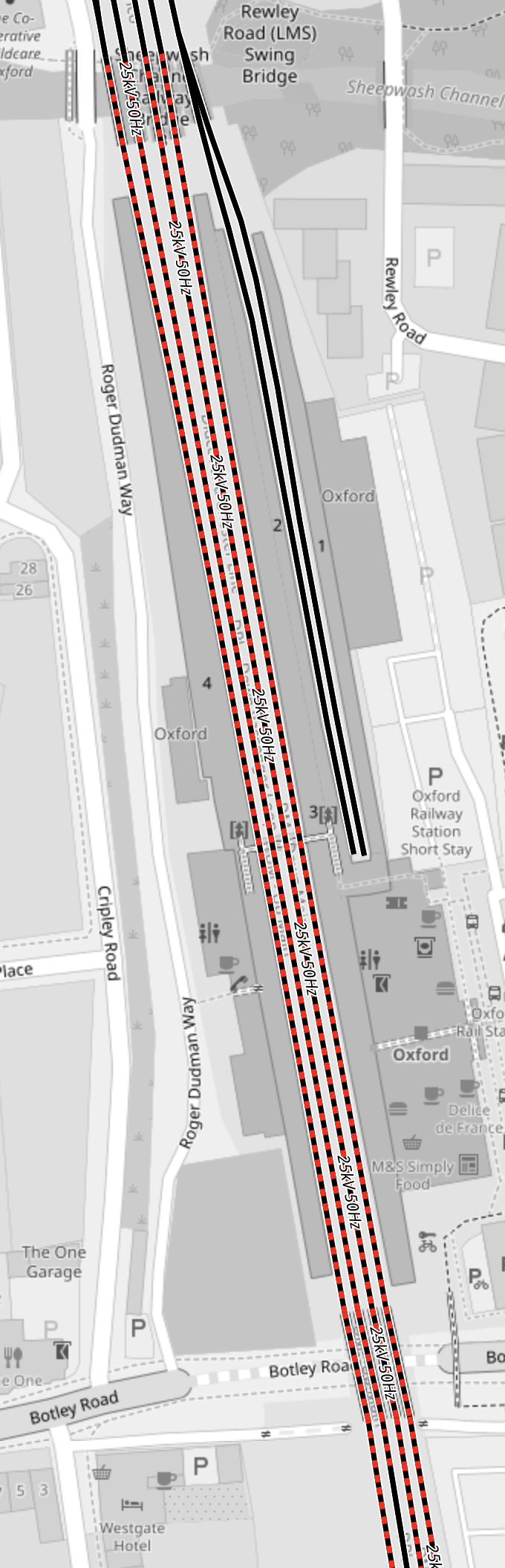
Note.
- The four through lines are shown in dotted red-and-black, which indicates, that they will be electrified with 25 KVAC overhead electrification.
- The proposed electrification continues all the way to Didcot Parkway station on the map.
- The two black tracks are the unelectrified platforms for Chiltern and East West Railway services.
But the proposed electrification stops just outside the station. Why?
Great Western Railway Services Beyond Oxford
Great Western Railway run an hourly service to Great Malvern, which according to Wikipedia terminates as follows.
- 4 trains per day continue to Hereford calling at Colwall and Ledbury.
- 1 train per day terminates at Worcester Shrub Hill.
- 4 trains per day terminate at Worcester Foregate Street.
So what are the distances of these stations from Oxford?
- Great Malvern – 65.6 miles
- Hereford – 86.3 miles
- Worcester Foregate Street – 57.6 miles
- Worcester Shrub Hill – 57.2 miles
I suspect that one version of the Hitachi Intercity Tri-Mode Battery Train, which is shown in the infographic below
could handle all these distances.

After the Oxford and Didcot Parkway electrification is complete, trains will arrive at Oxford station with a full battery.
But how would the batteries be recharged for the journey back to Oxford?
This map from OpenRailwayMap shows the tracks at Worcester.
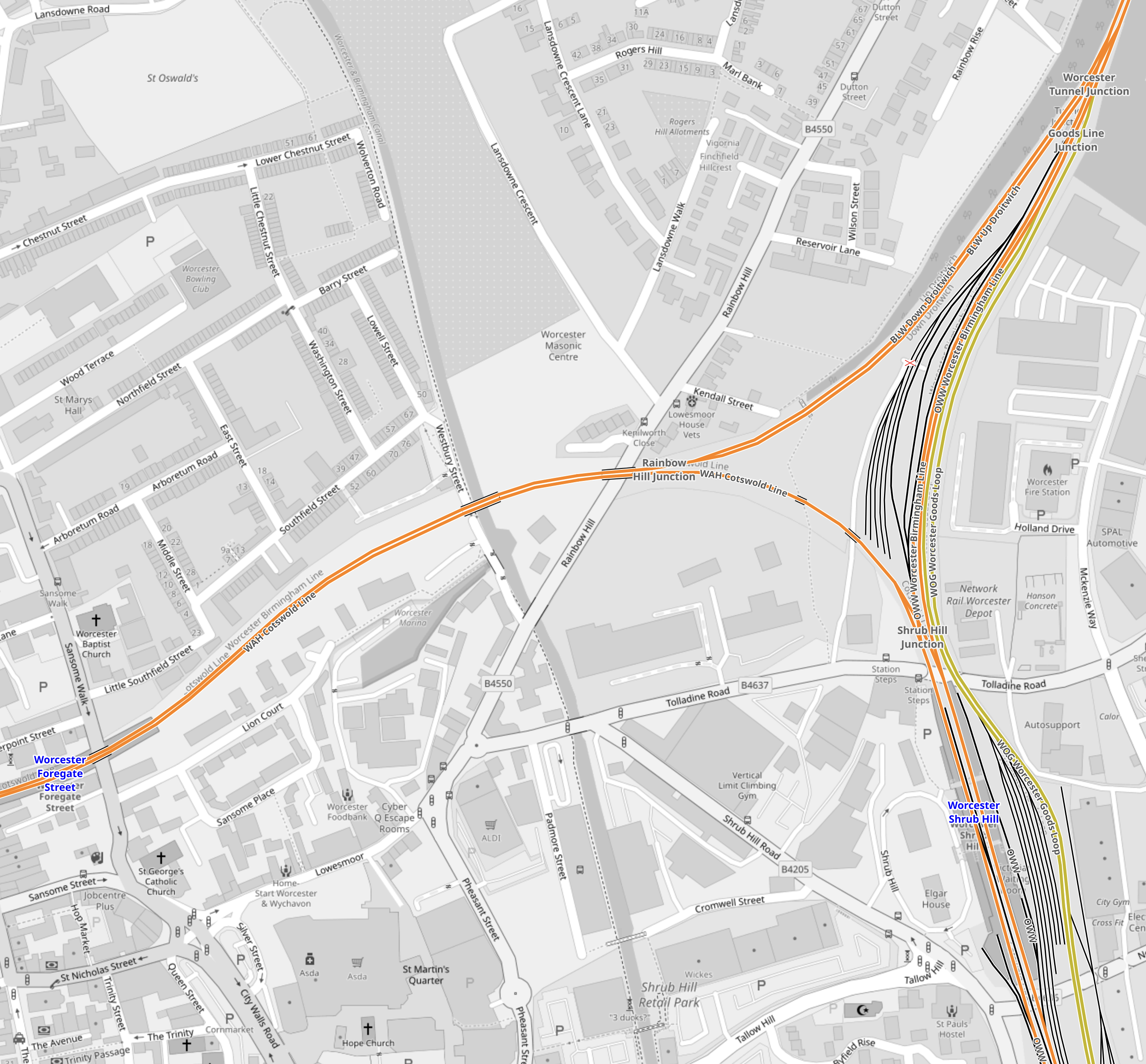
Note.
- Trains to and from Oxford, use the tracks in the South-East corner of the map.
- Trains to and from Birmingham, use the tracks in the North -East corner of the map.
- Trains to and from Great Malvern and Hereford, use the tracks in the South-West corner of the map.
I suspect that some selective electrification would be able to charge the trains.
Trains take around twenty minutes to go between Great Malvern and Worcester Shrub Hill via Worcester Foregate Street.
Electrifying this 8.5 mile section would surely enable the following.
- Trains to leave Worcester Shrub Hill for Oxford with a full battery.
- Trains to leave Great Malvern for Hereford with a full battery.
- As Hereford and Great Malvern are only 20.7 miles apart, I suspect a return trip without a recharge is possible.
- Trains terminating at Worcester Shrub Hill and Worcester Foregate Street to be fully recharged before travelling back to Oxford.
Other services to and from the Worcester stations could also be run by battery-electric trains.
As Worcester Shrub Hill and Oxford stations are only 57.2 miles and well within the capabilities of most battery-electric trains, there would be no need to electrify the route.
I may of course, be wrong about the length and position of the electrification at Worcester, but this could be just one of many solutions using partial electrification.
Does this explain the stopping of the proposed electrification at Oxford?
In addition, there must be marketing opportunities in running a battery-electric service to Hereford and Worcester.
The Bay Platforms At Oxford Station
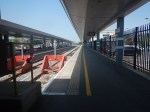
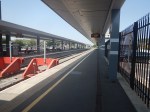
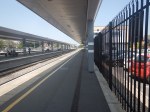
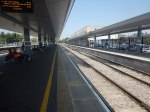
These pictures show the two North facing bay platforms 1 and 2 at Oxford station.
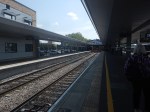
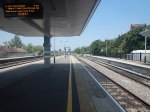
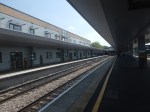
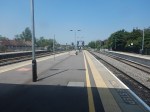
Note.
- The platforms are not electrified.
- They appear to be easily updated with electrification to be able to charge Chiltern and East West Railway trains.
- Marylebone is only 66.7 miles from Oxford.
- Milton Keynes Central is just over 40 miles from Oxford.
- Bedford is just under 60 miles from Oxford.
I suspect that services from Oxford to Bedford, Marylebone and Milton Keynes can all be run by battery-electric trains.
Very Busy Lizzie
Yesterday, I took the Elizabeth Line, back from Reading to Moorgate.
- When, I got on at Reading, there were perhaps fifty empty seats and I was able to have three seats to myself.
- But by Slough, It was standing room only!
- It cleared a bit at Paddington, but by Moorgate there were only a few seats left.
Currently, there are two trains per hour (tph) between Abbey Wood and Reading stations.
As other passengers said it’s always busy, I suspect that Transport for London need to tweak the signalling, so that four tph run to Reading.
This section called Planned Service in the Wikipedia entry for the Elizabeth Line says this.
In May 2023, it is planned to allow trains to run from both eastern branches to west of Paddington. This will allow both more flexible, and higher frequency, services: 24 tph peak, 20 tph off-peak, and direct services between Shenfield and Heathrow. In the longer term, when Old Oak Common opens, all trains will serve Old Oak Common, with those not serving the Reading or Heathrow branches reversing there.
The service changes for May 2023 were confirmed in February 2023. The peak timetable will increase to 24 trains per hour. Off-peak service level will remain at 16 trains per hour, with two Shenfield–Paddington trains extended to Heathrow Airport Terminal 5 and two Abbey Wood–Terminal 5 trains switching to Terminal 4.
This will give an Off Peak schedule as follows.
- Reading and Abbey Wood – 2 tph
- Maidenhead and Abbey Wood – 2 tph
- Heathrow Terminal 4 and Abbey Wood – 4 tph
- Heathrow Terminal 5 and Abbey Wood – 0 tph
- Heathrow Terminal 5 and Shenfield – 2 tph
- Paddington and Shenfield – 6 tph
I don’t believe it is good enough.
- There is no direct Heathrow Terminal 5 and Abbey Wood service.
- Reading needs four tph to Central London.
- See Elizabeth Line: Commuters Say Service ‘Not What Was Promised’
- See So Many Cases On A Train!
I suspect passenger congestion and reaction will force a rethink by the Mayor and Transport for London.
Reading To Heathrow On The Lizzie Line
Last week, I took the Lizzie Line to Reading and came back with a diversion to Heathrow.
I took the train from Reading as far as Hayes and Harlington, where I crossed over the tracks on the footbridge to get the train to Heathrow.
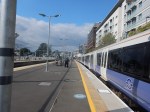
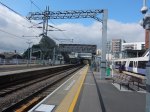
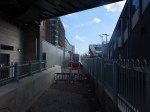
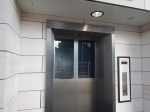
There are two bridges at Hayes & Harlington station, as these pictures show.

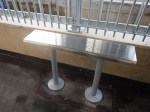
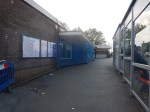

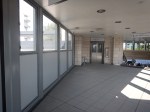

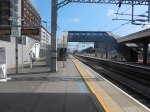
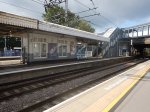
Note.
- Only the Western bridge has lifts.
- The Western bridge will be at the very back of the train from Reading.
- It is a long walk from the front of the train to the lifts.
This map from Cartometro shows the tracks through Hayes and Harlington station.

Note.
- The Great Western fast lines, which are shown in black on the South side going through platforms 1 & 2.
- The Elizabeth Line and the Great Western slow lines, which are shown in black and purple on the North side going through platforms 3 & 4.
- The Reading and Heathrow branches are to the West.
- London Paddington is to the East.
- Elizabeth Line Trains from the Reading or Heathrow branches to Paddington use Platform 4.
- Elizabeth Line Trains from Paddington to the Reading or Heathrow branches use Platform 3.
It should also be noted that if you are travelling between Heathrow Airport and any of the Elizabeth Line stations between Hayes and Harlington and Reading stations, you have to cross from Platform 4 to Platform 3 at Hayes and Harlington station.
All passengers will be travelling in the same direction at Hayes and Harlington station.
I feel it is absolutely essential, if you are travelling between Reading and Heathrow Airport using the Elizabeth Line, that you travel in the last carriage of the train from both Heathrow Airport or Reading.
When travelling to Heathrow in Where Should You Travel On An Elizabeth Line Train?, I said these were the positions to travel on the train.
- Heathrow Central – Eastern end
- Heathrow Terminal 4 – Western end
- Heathrow Terminal 5 – Eastern end
It looks like there could be some walking to do if you’re travelling between Reading and Heathrow Central or Heathrow Terminal 5.
I feel that Hayes and Harlington station could possibly have been better designed.
Would it have been better if Platforms 3 and 4 had been designed as an island platform, so that passengers going between the Reading and Heathrow branches would just walk across to the other side of the platform?
- The tracks would have had to be realigned.
- There would have been less lifts needed.
- The Eastern bridge might not have been needed.
I suspect, it would have been the more expensive option.
Could An Oxford And Cambridge Service Be Run Via The Lizzie Line?
This article on the BBC is entitled East-West Rail: Part Of £5bn Scheme ‘Appears To Be Unachievable’.
These are the first four paragraphs.
A £5bn rail project “appears to be unachievable” in parts, a government report said.
The East-West Rail scheme will create a link from Oxford to Cambridge, with services being introduced in stages.
Stage two, between Oxford and Bedford, and stage three, between Bedford and Cambridge, have “major issues”, the Infrastructure and Projects Authority said.
A spokesman for East-West Rail said the delivery programme was “under review”.
As someone, who used to live near Cambridge, I have seen the transport routes improve in East Anglia, but not the area’s connections to the rest of the country.
The article describes Stage 2 and 3 of the East West Railway like this.
Stage two involves predominantly upgrading existing infrastructure, between Bletchley and Bedford, to allow services between Oxford and Bedford.
Stage three involves building a new line, between Bedford and Cambridge, to extend the railway and facilitate services from Oxford to Cambridge.
So if the Government feel that the major issues and opposition should lead to cancellation of the scheme to the East of Bedford or even Bletchley, what are the problems and alternatives?
Freight
The Port of Felixstowe is the UK’s busiest container port and it handles 48% of Britain’s containerised trade.
Having lived as a teenager in Felixstowe and in Suffolk for probably half my life, there is only one certainty about the port in my mind. It will get bigger and will generate more rail and road traffic in East Anglia.
- The roads have improved greatly, since the 1960s, when I used to cycle between Ipswich and Felixstowe, along a two-lane single carriageway road.
- The renamed A14 has replaced the A45 and now connects the port to the M1 and the M6.
- Tens of long freight trains every day now connect Felixstowe with the rest of the country.
- The East West Railway will be a very useful link between Felixstowe and South Wales and the West of England.
- Global warming will mean the decarbonisation of heavy freight, with more traffic on an electrified railway.
Felixstowe’s connections to the North and Midlands may have improved greatly, but they will need to be improved a lot more.
The Port of Southampton is the UK’s second busiest container port.
- Most freight trains from Southampton go North via Basingstoke, Reading and Oxford.
- A plan some years ago was for an Electric Spine, that would have connected the Port of Southampton to the Northern cities.
- The Electric Spine would have envisaged electrification of the East West Railway to the West of Bedford and electrified connections with the West Coast Main Line and the Midland Main Line.
- The Midland Main Line is now planned to be fully electrified, under the the Integrated Rail Plan for the North and Midlands.
Southampton, like Felixstowe will be in need of improved transport connections.
In an ideal world, an electrified East West Railway, would improve freight connections between the UK’s two busiest container ports and major cities in the UK.
Problems With Freight
Could this be the major problem East of Bletchley, where the residents living along the route, don’t want to see large numbers of freight trains running close by?
In this document on the East-West Rail Consortium web site, this is said.
Note that doubling of Warren Hill Tunnel at Newmarket and
redoubling between Coldham Lane Junction and Chippenham Junction is included
in the infrastructure requirements. It is assumed that most freight would operate
via Newmarket, with a new north chord at Coldham Lane Junction, rather than
pursuing further doubling of the route via Soham.
Will the residents of Newmarket object to a double-track freight railway through the town? Freight trains and horses are not a good mix.
I do wonder, if freight trains hauled by noisy and unfriendly diesel locomotives are one of the reasons a full Oxford and Cambridge railway is losing its appeal and becoming a vote loser for the Government.
Cambridge Has An Accommodation And Commuting Problem
There is a shortage of accommodation in Cambridge for offices, laboratories, workshop and above all workers.
So it looks to the surrounding towns and cities to provide help.
London and Ely have good links, but the city needs better links to Bedford, Bury St. Edmunds, Haverhill, Ipswich, Norwich, Kings Lynn, Peterborough, Soham, Stansted Airport, Stevenage, Sudbury and Thetford.
Cambridge may be the place in the South East with the largest numbers of commuters from London.
Cambridge Needs A Decent Rail Network
In my view Cambridge needs at least the following services in trains per hour (tph)
- Colchester via Haverhill, Sudbury and Marks Tey – 2 tph
- Ipswich via Newmarket, A14 Parkway, Bury St. Edmunds, Stowmarket and Needham Market – 2 tph
- King’s Lynn via Cambridge North, Ely and Downham Market – 2 tph
- Oxford via Bedford, Milton Keynes/Bletchley and Bicester – 2 tph
- London King’s Cross via Cambridge South – 2 tph
- Norwich via Cambridge North, Ely, Thetford, Attleborough and Wymondham – 2 tph
- Peterborough via Cambridge North, Ely and March – 2 tph
- Stansted Airport via Cambridge South and Audley End – 2 tph
- Stevenage via Royston and Hitchin – 2 tph
- Wisbech via Cambridge North, Ely and March – 2 tph
Note.
- Some services already exist.
- Some of these services duplicate each other to give 4 tph or even 6 tph on certain routes.
- Some services could be back-to-back through Cambridge.
- A 14 Parkway station is a new station proposed by the East West Railway. I wrote about it in detail in Soham Station – 14th December 2021.
- Haverhill would be served by a rebuilt Stour Valley Railway.
- Wisbech would be served by restoring the railway to March.
To complete the network there would be a two tph service between Peterborough and Ipswich, which would go via March, Ely, Soham, A 14 Parkway, Bury St. Edmunds, Stowmarket and Needham Market.
Oxford Could Probably Argue that It Needs A Decent Rail Network Like Cambridge
Oxford would argue this and they have a point.
The East West Railway Is The Odd Line Out
Looking at the rail networks at Cambridge and Oxford, it appears, that with the exception of Cotswold services at Oxford and a few CrossCountry services, it appears that the East West Railway is a bit of an odd line out, as everything else is a local service.
The Effects Of Not Building The Bedford And Cambridge Section Of The East-West Railway
What will it mean, if the Bedford and Cambridge Section of The East-West Railway is not built?
- Cambourne will not get the promised station.
- Bedford and Cambridge journeys will be by bus, train via London or private car.
- Commuting into Cambridge from the West will be difficult.
- Milton Keynes and Cambridge journeys will be by bus, train via London or private car.
- Oxford and Cambridge journeys will be by bus, train via London or private car.
- Train journeys between Cambridge and much of the rest of the UK, will need to go via London.
It would appear that by not building the third section of the East West Railway, a lot of potential passengers will be denied a rail service.
Could Services Be Run Using Existing Infrastructure Through London?
The Elizabeth Line will eventually be able to handle a lot more services than it does at present.
Would Extending The Elizabeth Line To Oxford Be A Good Start?
Consider.
- Oxford has two services to London; Chiltern to Marylebone and Great Western Railway (GWR) to Paddington.
- The GWR service to Paddington stops only at Reading and Slough, has a frequency of two tph and takes under an hour.
- The fastest journey between Oxford and Liverpool Street using a fast GWR train and the Elizabeth Line takes one hour and 20 minutes.
- Only 10.6 miles of the route between Oxford and Paddington is without electrification.
- There is also a two tph stopping shuttle train between Oxford and Didcot Parkway stations and a two tph stopping train between Paddington and Didcot Parkway.
I feel that combining the two Didcot Parkway services and moving them to the Elizabeth Line would be an experiment worth trying.
This would give 2 tph direct to the following stations.
- Bond Street for the West End
- Canary Wharf for finance.
- Farringdon for Cambridge, Gatwick and Brighton.
- Hayes & Harlington for Heathrow.
- Liverpool Street for the City of London, Cambridge and Stansted
- Reading for Wales and the West.
Note.
- No-one would have a worse service than currently, but many passengers would avoid a change on their journey.
- Services could terminate at either Abbey Wood or Shenfield stations.
- Services could be an extension of the two tph to Reading or additional services.
- Between Didcot Parkway and Oxford is shown on OpenRailwayMap, as proposed for electrification.
- There may need to be some new platforms at Didcot Parkway station.
- I estimate that between Oxford and Liverpool Street would take one hour and fifty minutes.
It certainly looks, that it would be possible to replace the current GWR service between Oxford and Paddington, with an all-electric Elizabeth Line service.
The direct stopping service between Oxford and Liverpool Street would be thirty minutes slower, than the current fastest train.
The current fastest train between Liverpool Street and Cambridge takes 71 minutes, so with a change at Liverpool Street Oxford and Cambridge would probably be just over three hours.
Google Maps estimate a driving time of two hours between the two University Cities.
Could The Elizabeth Line Be Extended To Cambridge?
There is no train connection between the Elizabeth Line and the West Anglia Main Line at Liverpool Street station, although the walk for passengers is not that long.
In Extending The Elizabeth Line – Connecting West Anglia Main Line Services To The Central Tunnel, I describe how it could be possible to connect the West Anglia Main Line to the Elizabeth Line at Stratford station.
This connection would allow services from Cambridge, Harlow and Stansted to anywhere on the Elizabeth Line to the West of Stratford.
Oxford and Cambridge and Heathrow and Stansted would be distinct possibilities.
Could A High Speed Limited Stop Service Run Between Oxford And Cambridge?
In Extending The Elizabeth Line – High Speed Trains On The Elizabeth Line, I proposed running faster long-distance trains through the Central Tunnel of the Elizabeth Line.
- They would have to be dimensionally identical to the Class 345 trains to fit the platform edge doors.
- They would have a long-distance interiors.
- In the Central Tunnel, they would behave like 345 trains. with Paddington to Stratford taking 19 minutes.
- But on main lines like the Great Western Main Line, they could rattle along at 125 mph.
If the trains could keep up with Class 802 train performance between Oxford and Paddington and enter the Central Tunnel quickly, these times could be possible.
- Oxford and Paddington – 55 minutes
- Paddington and Stratford – 19 minutes
- Stratford and Tottenham Hale – 14 minutes
- Tottenham Hale and Cambridge – 65 minutes
Just over two-and-a-half hours, without a change of train, sounds fine to me.
What About The Trains From Great Malvern?
The fast services between Paddington and Oxford, run twice an hour, with the service formed of one hourly Paddington and Oxford service and another hourly Paddington and Great Malvern service.
- If Oxford gets electrified soon, this will mean that the Oxford and Paddington service would be all-electric.
- But the Great Malvern service would need to be able to handle 65.5 miles of line without electrification each way.
- The speed limits between Oxford and Great Malvern vary between 70 and 100 mph.
I’m certain that Stadler could design and build a train, with the following characteristics.
- Class 345 dimensions.
- 125 mph performance.
- Ninety miles range on battery power.
The trains would be charged between Paddington and Oxford and by a charger at Great Malvern.
Conclusion
Would an Oxford and Cambridge service through Central London be an alternative to the East-West Railway?
Perhaps not an alternative, but an addition?
Redhill To Ashford International Via Tonbridge
I did this trip to find out what the current service was like after writing Gatwick Rail Service Could Link Far Reaches Of The South East.
The journey can be broken into sections.
Changing At Redhill Station
I arrived at Redhill station and took these pictures as I changed to the train for Tonbridge station.
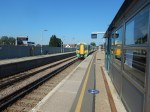
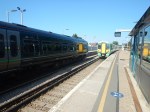
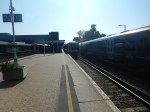
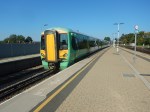
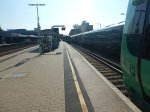
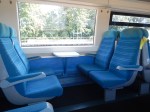
The three services are in Redhill station at approximately the same time.
- The Southern service to and from Tonbridge used Platform 1a.
- The GWR service from Reading to Gatwick used Platform 1.
- The GWR service from Gatwick to Reading used Platform 0.
I think if you’re nippy on the stairs, travellers wanting to go between Reading and Ashford or vice-versa could manage the train, but a direct through service would be preferred by some travellers.
Between Redhill And Tonbridge Stations
I took these pictures as the train ran between Redhill and Tonbridge.





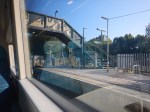



Note.
- The train was a smart three-car Class 377 train.
- It is a route with a quiet calm along the Downs.
- There are new housing and commercial developments along the route.
Some of the stations could do with improvement, which should probably include step-free access, as at Redhill and Tonbridge stations.
Changing At Tonbridge Station
These pictures show Tonbridge station.

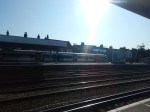
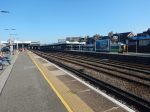
Note.
- The station is step-free with lifts.
- I had to use the bridge to get from one side of the station to the other to catch my next train.
- There seemed to be several passengers, who continued their journey from Tonbridge.
After a wait of nearly thirty minutes I was on my way to Ashford International station.
Thoughts On The Service
These are my thoughts on the service.
Battery Electric Trains
Having seen this service in operation, I feel that this must be one of the most suitable services for battery electric trains in the UK.
In Gatwick Rail Service Could Link Far Reaches Of The South East, I broke the route down into electrified and non-electrified sections.
- Ashford and Tonbridge – Electrified – 26.5 miles – 38 minutes
- Tonbridge and Redhill – Electrified – 20 miles – 35 minutes
- Redhill and Gatwick – Electrified – 7 miles – 8 minutes
- Gatwick and Redhill – Electrified – 7 miles – 8 minutes
- Redhill and Reigate – Electrified – 2 miles – 4 minutes
- Reigate and Shalford Junction – Not Electrified – 17 miles – 20 minutes
- Shalford Junction and North Camp – Electrified – 9 miles – 11 minutes
- North Camp and Wokingham – Not Electrified – 11 miles – 14 minutes
- Wokingham and Reading – Electrified – 7 miles and 9 minutes
Note.
- Ashford, Tonbridge, Redhill, Gatwick, Guildford, Wokingham and Reading are all fully-electrified main line stations.
- Most of the route and the two ends are electrified.
- All electrification is 750 VDC third rail.
- All sections without electrification are less than twenty miles.
- The route is more than 75 % electrified.
There are several trains, which have been fitted with batteries, plans to fit them with batteries exist or would be suitable to be fitted with batteries.
- Class 379 trains – Have already been fitted with batteries for experimental purposes.
- Class 387 trains – Similar to Class 379 trains.
- Class 377 trains – Similar to Class 379 trains.
- Class 350 trains – Being converted to battery operation by Porterbrook
- Class 450 trains – Similar to Class 350 trains.
All trains have similar specifications.
- Four cars.
- 100 mph operating speed.
- All are modern trains.
- They either have third-rail shoes or can be fitted with them.
In addition, no infrastructure changes would be needed.
I also feel, that the same class of train could be used on these services in the South-East.
- Oxted and Uckfield
- Ashford International and Hastings
Why not use one class of battery electric trains for all these routes?
The Three Reverses
The full service between Reading and Ashford International stations will require three reverses at Gatwick and Redhill (twice).
Having seen the current system in operation at Redhill station, I feel the following operation would work, using a version of London Underground’s stepping-up.
From Reading to Ashford International the following sequence would apply.
- The train from Reading would stop in Platform 1 at Redhill, as they do now.
- A second driver would step-up into the rear cab and take control of the train.
- The original or first driver, who’d driven the train from Reading would stay in the cab.
- The second driver would drive the train to Gatwick.
- When, the train is ready to leave, the first driver takes control from his cab.
- The second driver, who’d driven the train from Redhill would stay in the cab.
- The first driver would drive the train back to Platform 0 at Redhill, as they do now.
- When, the train is ready to leave, the second driver takes control from his cab.
- The first driver would step down and probably have a break, before he is needed to drive another train.
- The second driver would drive the train to Ashford International.
Trains going the other way would do a similar sequence in reverse.
Other than the battery system, the trains may need a communication and safety system between the two cabs.
Hydrogen Trains
Consider these points about using a hydrogen-powered train between Reading and Ashford International.
- The maximum distance without electrification is just 20 miles.
- The route is over 75 % electrified.
- Hydrogen fuelling and supply systems would need to be provided.
- Hydrogen trains would require changes to maintenance.
In my view, using a hydrogen-powered train would be like using a sledgehammer to crack a nut.
Gatwick Connect
Could the service be considered to be a Gatwick Connect service?
The full Reading and Ashford International service would call at these major locations
- In the West – Reading, Winnersh, Wokingham, Crowthorne, Farnborough, Guildford, Dorking and Reigate
- In the East – Ashford International, Paddock Wood and Tonbridge.
Both the Eastern and Western legs also call at Redhill.
Could the service be extended in the West?
The obvious destination would be Heathrow.
Once the future of Heathrow is sorted, there will probably be some form of Southern or South-Western access into Heathrow.
Could this service connect Gatwick and Heathrow?
- Perhaps there would be a reverse at Reading!
- Or it might use one of numerous schemes put forward to access Heathrow from the West.
In any case, as Reading is one of the best-connected stations in England, passengers will use this connectivity to get to Gatwick.
Could the service be extended in the East?
Like Reading, Ashford International is a well-connected station.
It would be possible to extend the service to perhaps Canterbury or Dover?
There must also be the possibility of running a service to Maidstone West or Strood in the East!
Conclusion
There could be a lot of possibilities for this route.
I also feel, that it is one of the best routes to be run by battery trains in the UK. These trains could also be the same, as those working Oxted-Uckfield and Ashford International-Hastings.
There would be no need for any new infrastructure, as there is electrification at both ends of the route.
Gatwick Rail Service Could Link Far Reaches Of The South East
The title of this post, is the same as that of this article on Surrey Live.
Despite being reported on Surrey Live and the fact that Gatwick is in Sussex, the plan has been proposed by Kent County Council’s Rail Project Manager.
The plan would extend the existing Great Western railway line – which runs from Reading to Gatwick via Redhill – to mid and east Kent.
The article suggests the service could go between Reading and Canterbury West stations.
This table sums up the connectivity.
- Reading – West and South West England, Wales, Oxford, Hereford and Worcester and the West Midlands – Future – East West Rail
- Guildford – Portsmouth Direct Line
- Dorking – Mole Valley Line
- Redhill – Brighton Main Line
- Gatwick Airport – Brighton Main Line
- Tonbridge – South Eastern Main Line
- Ashford International – Amsterdam, Brussels and Paris – Future – Bordeaux, Cologne, Frankfurt and Geneva
I have a few thoughts.
The Terminal Stations
The suitability of the two proposed terminals can be summed up.
- Reading has been designed as a terminal station, with five bay platforms, three of which can be used by Gatwick services.
- Canterbury West has not been designed as a terminal station and has no bay platforms.
Perhaps Ashford International station would be a better Eastern terminal?
- It has Eurostar services.
- Trains can terminate in Platform 1 and go to Tonbridge.
- It has lots of car parking.
Dover Priority and Ramsgate could also be possibilities as they have terminal platforms.
Connecting At Gatwick Airport
It looks like a combined service might get complicated in the Redhill/Gatwick area.
- Trains between Reading and Gatwick go via Redhill station, where they reverse.
- There is no direct route between Tonbridge and Gatwick, so trains will probably have to reverse at Redhill, to go between Tonbridge and Gatwick.
Would a service between Reading and Ashford, that reversed twice at Redhill and once at Gatwick, be rather tricky to operate? Or even unpopular with passengers?
This Google Map shows Redhill station and the lines leading South from the station.
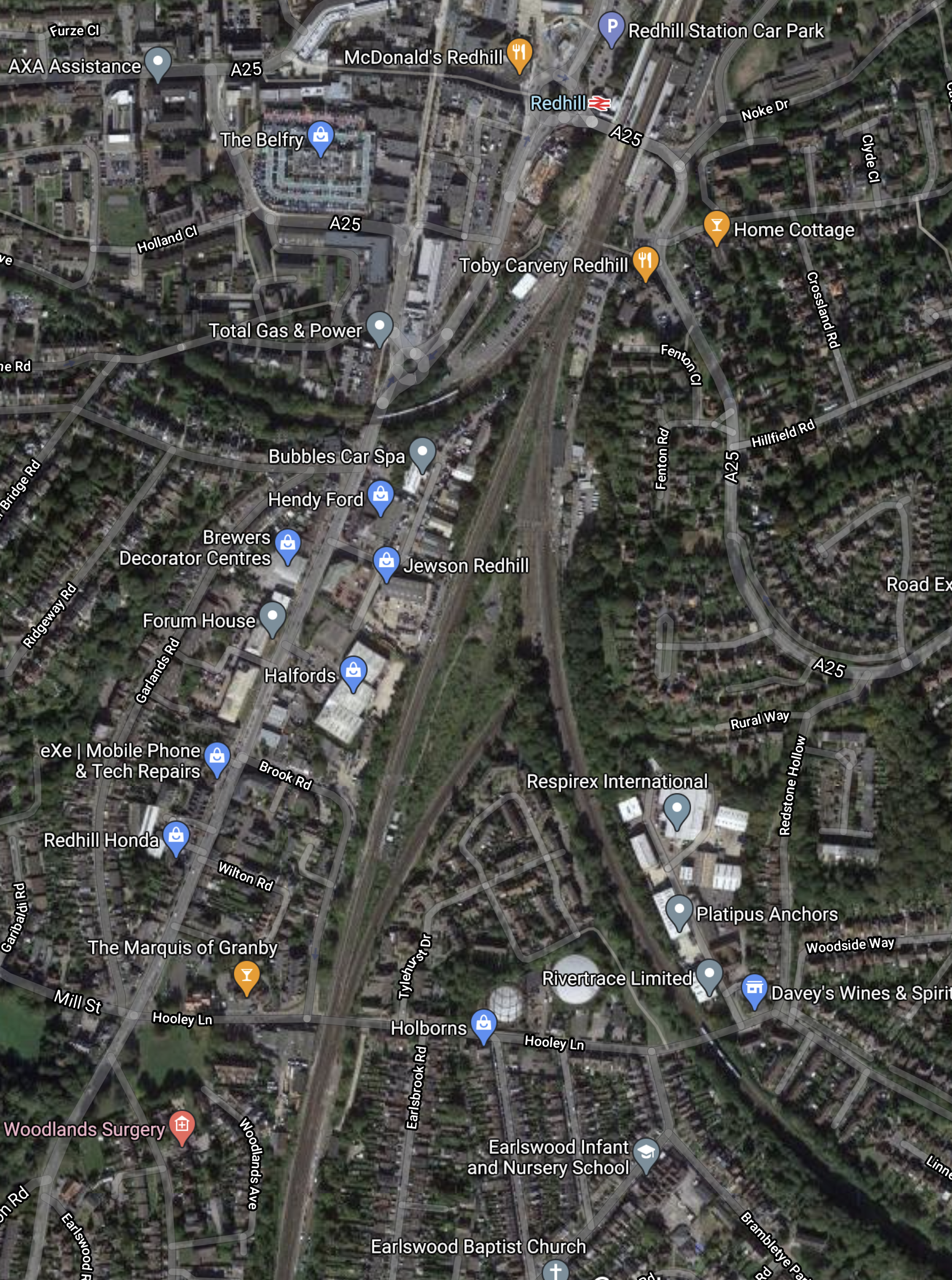
Note.
- Redhill station at the top of the map.
- The Brighton Main Line running North-South in the middle of the map.
- The North Downs Line to Guildford and Reading curving West from the station.
- The Redhill and Tonbridge Line to Tonbridge and Ashford leaving the map in the South-East corner.
I suspect that adding extra tracks in a very crowded area will be very difficult.
What Do The Timings Show?
A quick calculation, which is based on current timings, can give a journey time for between Ashford and Gatwick Airport.
- Ashford and Tonbridge – Southeastern timing – 38 minutes
- Tonbridge and Redhill – Southern timing – 35 minutes
- Reverse at Redhill – GWR timing – 4 minutes
- Redhill and Gatwick – GWR timing – 8 minutes
This gives a total of eighty-five minutes.
- Google says that you can drive it in sixty-three minutes.
- If you took the train today, between Ashford International and Gatwick Airport stations, the fastest rail journey is around 110 minutes with a change at St. Pancras International.
It does look though that a faster train between Kent and Gatwick Airport could be competitive, as going via London certainly isn’t!
Could Simplification And Automation Provide A Solution?
Consider.
- The Ashford International and Tonbridge timing, that I have used includes five stops.
- The Tonbridge and Redhill timing, that I have used includes five stops.
- How much time would be saved by only stopping at Tonbridge between Ashford International and Gatwick?
- Could automation handle a fast reverse at Redhill, where passengers couldn’t board or leave the train?
- Would a driver in each cab, allow the reverses to be done faster?
Trains going between Reading and Ashford International, would call at the following stations between Guildford and Tonbridge.
- Dorking Deepdene
- Reigate
- Redhill
- Gatwick Airport
- Redhill – A quick Touch-And-Go.
- Tonbridge
- Paddock Wood
If two minutes a stop could be saved at each of the nine omitted stops and at each reverse, this would save twenty minutes East of Gatwick, which would give the following timings.
- Gatwick and Tonbridge – 27 minutes
- Gatwick and Ashford International – 65 minutes
Timings would be compatible with driving.
West of Gatwick, the service would be as the current GWR service.
- After arriving at Gatwick from Ashford, the train would reverse.
- En route it would reverse at Redhill, to continue to Reading.
Passengers wanting to go between say Tonbridge and Redhill, would use this reverse at Redhill to join and leave the train.
It would be an unusual way to operate a train service, but I feel it could be made to work, especially with the right automation and/or a second driver.
Trains For The Service
The service can be split into various legs between Ashford and Reading.
- Ashford and Tonbridge – Electrified – 26.5 miles – 38 minutes
- Tonbridge and Redhill – Electrified – 20 miles – 35 minutes
- Redhill and Gatwick – Electrified – 7 miles – 8 minutes
- Gatwick and Redhill – Electrified – 7 miles – 8 minutes
- Redhill and Reigate – Electrified – 2 miles – 4 minutes
- Reigate and Shalford Junction – Not Electrified – 17 miles – 20 minutes
- Shalford Junction and North Camp – Electrified – 9 miles – 11 minutes
- North Camp and Wokingham – Not Electrified – 11 miles – 14 minutes
- Wokingham and Reading – Electrified – 7 miles and 9 minutes
Note.
- Ashford, Tonbridge, Redhill, Gatwick, Guildford, Wokingham and Reading are all fully-electrified main line stations.
- Most of the route and the two ends are electrified.
- All electrification is 750 VDC third rail.
- All sections without electrification are less than twenty miles.
This route would surely be ideal for a battery electric train.
As both the Heathrow and Gatwick Express services are run using Class 387 trains and the Stansted Express has used Class 379 trains for the last few years, similar trains to these might be an ideal choice, if they could be fitted with battery power and the ability to use 750 VDC third-rail electrification.
The facts seem to be on the side of this service.
- There are spare Class 387 trains and some more will be released by c2c in the next few years.
- Greater Anglia will be replacing their Class 379 trains with new Class 745 trains.
- A Class 379 train was used to test the concept of battery electric trains.
- Both class of trains could be fitted with third-rail gear.
Either of these trains could be used for the service.
As they are 100 or 110 mph trains with good acceleration, they might even save a few minutes on the journey.
Infrastructure Changes
I suspect they could be minimal, once it was worked out how to handle the three reverses in the Gatwick and Redhill area.
Conclusion
I think it would be a feasible plan to run an Ashford and Reading service via Gatwick.
I would also decarbonise the route at the same time, as it must be one of the easiest routes in the country to run using battery electric trains.
- There is electrification at both ends and in the middle.
- The longest stretch of track without electrification is just seventeen miles.
- All charging could be done using existing electrification.
- There are platforms at both ends, where trains can get a full charge.
- There are trains available, that are suitable for conversion to battery trains for the route.
- No extra infrastructure would be needed.
- Battery electric trains would allow extension of the route to Oxford in the West.
How many extra passengers would be persuaded to take the train to Gatwick, by the novelty of a battery electric Aurport Express?
Marketing men and women would love the last point!
Beeching Reversal – Unlocking Capacity And Services Through Bramley (Hants)
This is one of the Beeching Reversal projects that the Government and Network Rail are proposing to reverse some of the Beeching cuts.
Bramley Station
Bramley (Hants) station is on the Reading-Basingstoke Line, which is 15.5 miles long.
- The line is double-track.
- Bramley station is the nearest one to Basingstoke station.
- The two stations are about five miles apart.
- The basic local service is two trains per hour (tph), with trains taking a few minutes under half-an-hour.
- The speed limit is listed in Wikipedia at 75 mph and my Class 165 train was travelling at about 60 mph on both journeys between Basingstoke and Bramley stations.
This Google Map shows Bramley station.
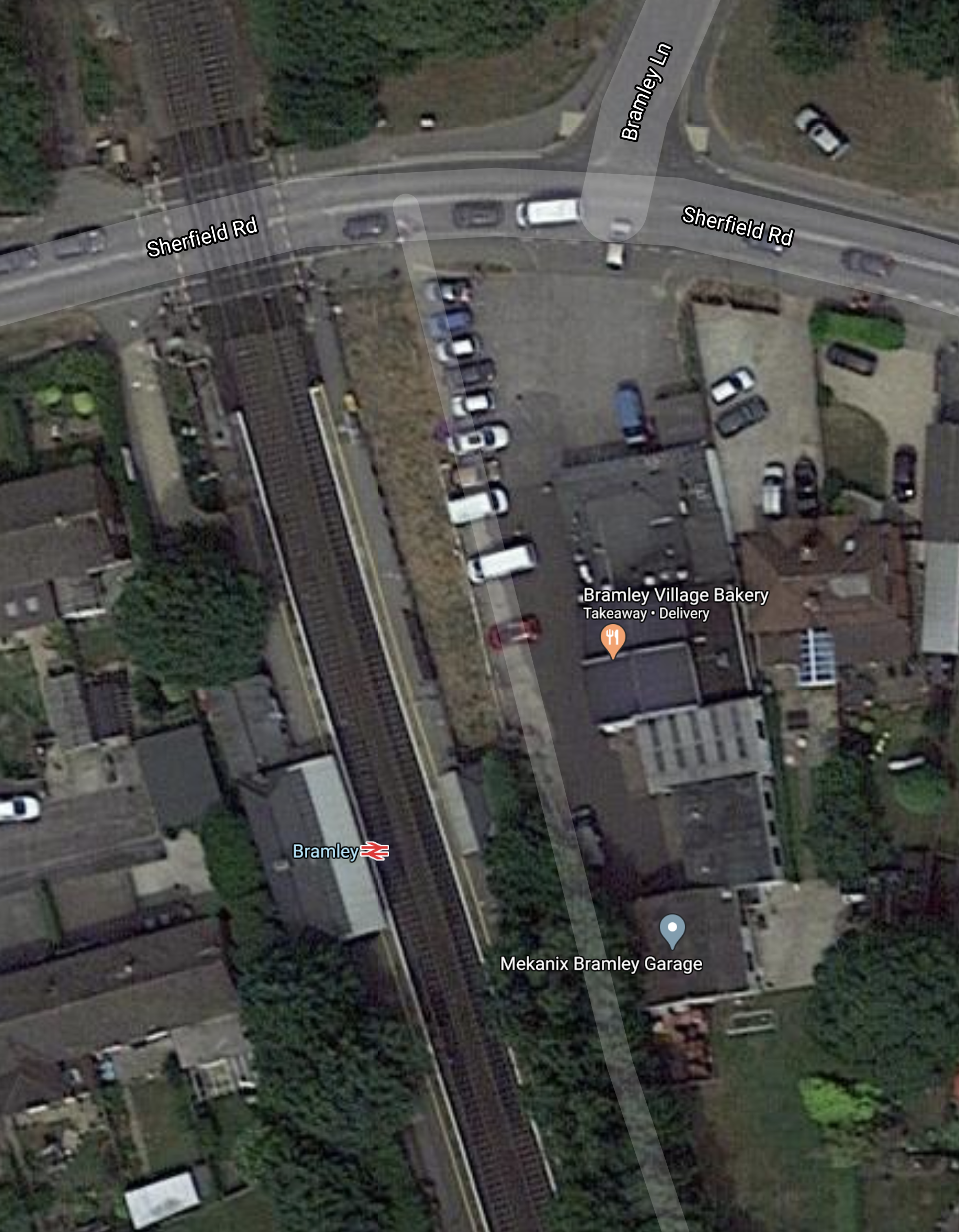
Note the level crossing, just to the North of the station.
These are some pictures, that I took, whilst I spent about thirty minutes at Bramley station.

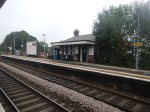


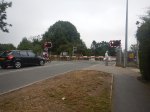


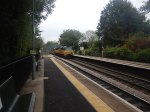
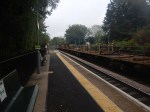



Note
- In the thirty minutes, I was at the station, two long freight trains and three passenger trains came through.
- The level crossing barriers were going up and down like a whore’s drawers.
- Each level crossing closure resulted in long queues at the barriers.
It reminded me how bad the level crossing at Brimsdown station used to be in the Peak in 1966, when I crossed it twice every day to go to and from work at Enfield Rolling Mills. At least I was on two wheels and it gave me a break from pedalling!
There is more on the problems of the level crossing on this article on the Bramley Parish Council web site, which is entitled Living With Our Level Crossing.
Current Future Plans For the Reading-Basingstoke Line
The Wikipedia entry for the Reading-Basingstoke Line has a Future section, where this is said.
The railway is listed with Network Rail as part of route 13, the Great Western main line, and was due to be electrified with 25 kV overhead wiring by 2017 as part of the modernisation of the main line.[8] In July 2007, plans were agreed to build a station in Reading south of Southcote Junction in the Green Park business park, serving the southern suburbs of Reading and also the Madejski Stadium. Construction of Reading Green Park railway station was expected to be completed in 2010; the plans were suspended in 2011, but were reinstated in 2013. It is now set to open by the end of 2020[9], with electrification along the line at a later date.
It is my view, that the new Reading Green Park station will probably mean that four tph between Reading and Basingstoke stations will be needed. especially if a second new station were to be built at Chineham.
But four tph would probably be impossible, without improving the traffic of both rail and road through Bramley.
Solving The Level Crossing Problem
Ideally, the level crossing should be closed and the road diverted or put on a bridge,
If you look at a wider map of the area, building a by-pass to enable road traffic to avoid the crossing will be difficult if not impossible.
But this is not an untypical problem on rail networks and not just in the UK.
I suspect that with precise train control using digital ERTMS signalling, trains and level crossing closures can be timed to improve traffic on both road and rail.
Consider.
- If trains crossed on the level crossing and they were under precise control, this would reduce the number of level crossing closures per hour.
- If the line speed was higher and the trains ran faster, this should ease timetabling, as there could be more train paths per hour.
- Faster accelerating electric trains would save time too, by shortening station dwell times.
- A third track might be laid in places.
- The signalling could possibly drive the train or tell the driver exactly what speed to travel, so trains passed on the crossing or in the station.
As Network Rail and their contractors roll-out ERTMS, they’ll discover better and more intelligent ways to deploy the system.
Electric Trains Would Help
Electric trains accelerate faster and if they use regenerative braking to batteries, this cuts station dwell times.
But powering them by electrification would mean the connecting lines between the Reading and Basingstoke Lines and the nearest electrified lines would also have to be electrified. This would make the scheme excessively expensive.
But Battery Electric Trains Could Be Better!
I believe that battery electric trains, would be a more-than-viable alternative.
- You still get the performance advantages of electric trains.
- With charging at just one end of the route, a battery electric train could run a round trip on battery power.
The big advantage, would be that the only new electrification infrastructure needed would be to charge the trains.
Charging Battery Electric Trains At Reading Station
Reading is a fully electrified station and the shuttle trains to and from Basingstoke station, appear to use Platform 2.
This Google Map shows electrification gantries over Platforms 1, 2 and 3 at Reading station.
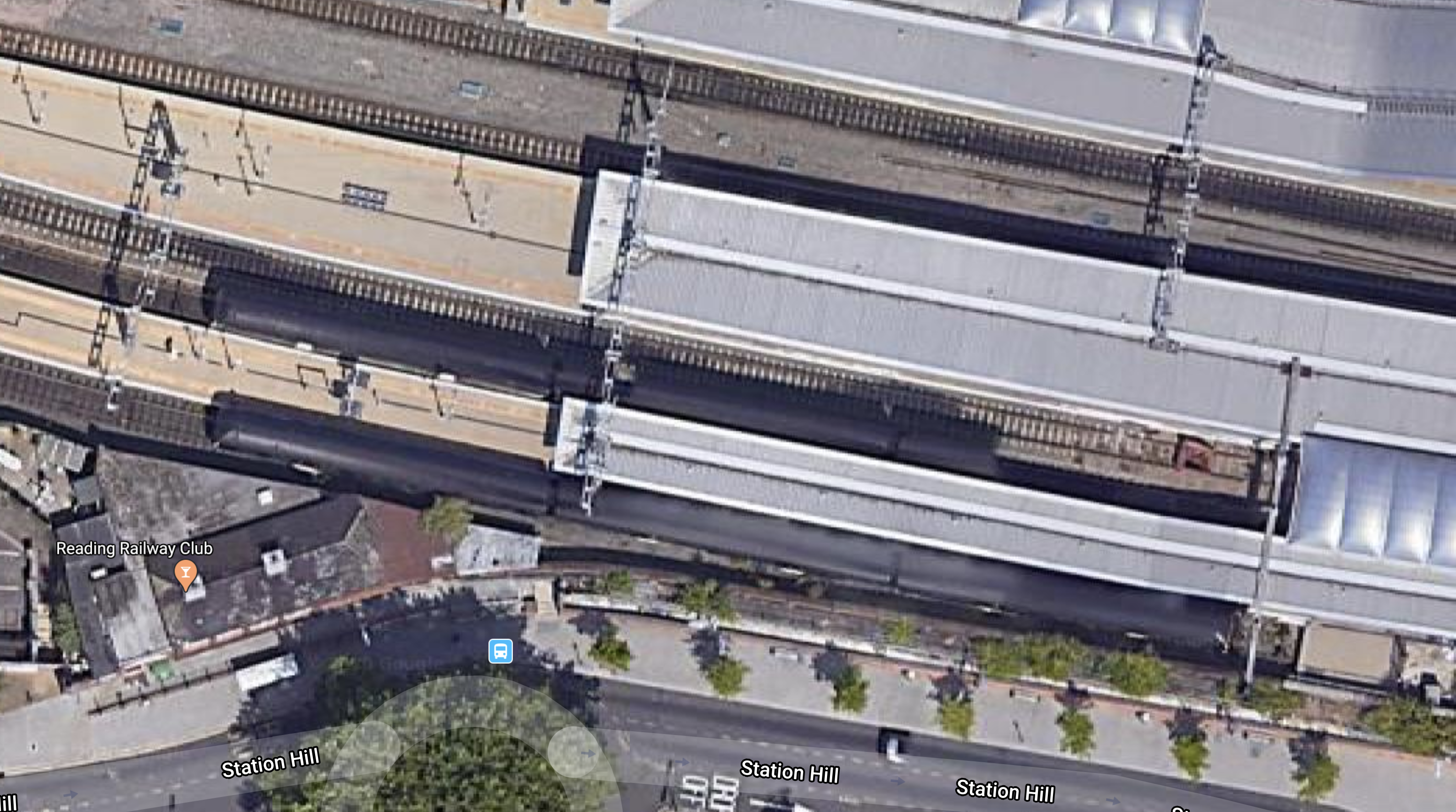
Note.
- The route between Reading station and Southcote junction, where the Basingstoke and Newbury routes divide, may be under two miles, but it is fully electrified.
- Trains take three minutes to travel between Reading station and Southcote junction.
- Trains wait for up to twenty minutes in the platform at Reading station.
It would appear that trains get enough time at Reading to fully charge the batteries.
Charging Battery Electric Trains At Basingstoke Station
The shuttle trains between Reading and Basingstoke stations, appear to use Platform 5 in Basingstoke station.
This Google Map shows Platform 5 at Basingstoke station.
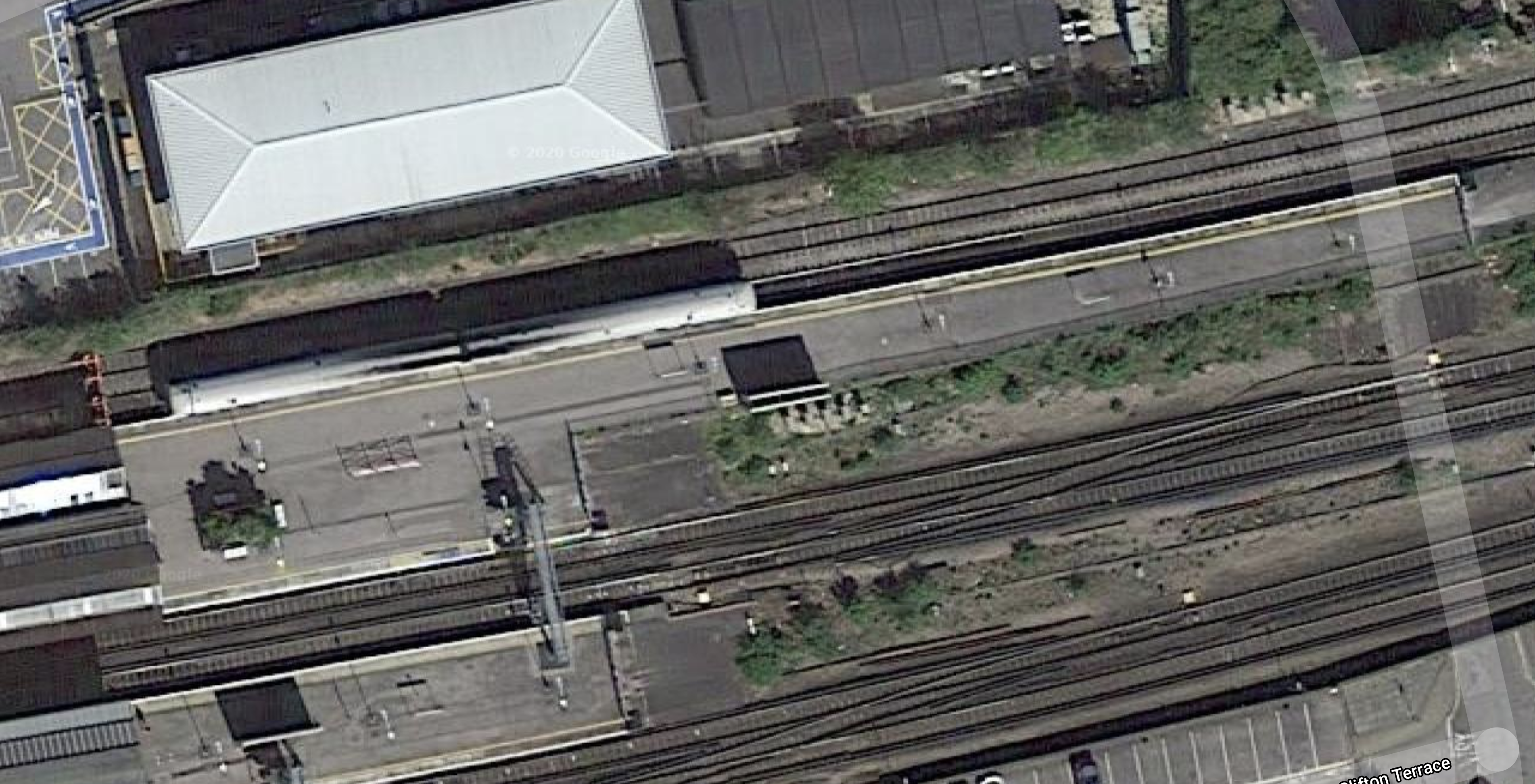
Platform 5 is towards the top of the map and contains a two-car train.
These pictures show the platform.


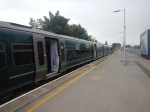

Note.
- There would appear to be space on the North side of Platform 5 to install another platform, if one should be needed.
- It appears from the Google Map, that Platform 5 could take a four-car train.
- The platform is wide and spacious for passengers.
- I suspect a Fast Charge system of some sort could be installed in this platform.
As at Reading, trains can take around twenty minutes to turn back at Basingstoke, which would be ideal for a battery charge.
What Trains Could Work The Shuttle?
After South Western Railway‘s interim Managing Director; Mark Hopwood’s comments, that led me to write Converting Class 456 Trains Into Two-Car Battery Electric Trains, these trains must be a possibility.
I also think, that as both South Western Railway and Great Western Railway are both First Group companies, there won’t be too much argument about who supplies the trains for the shuttle.
CrossCountry Trains Between Reading And Basingstoke
CrossCountry will need to replace their Class 220 trains with electric or bi-mode trains soon, to meet the dates for decarbonisation.
The prime candidate must be a dual-voltage version of Hitachi’s Regional Battery Train, which could easily work the 15.5 miles between Reading and Basingstoke on battery power, after charging up on the electrification at both ends.
The trains could also be easily fitted with the ERTMS signalling equipment that will be required to go smoothly along the line.
Freight Trains Between Reading And Basingstoke
We might see this section of the UK rail network, electrified for freight, but as it would require lots of connecting electrification, I think it is more likely that freight locomotives will be powered by an alternative fuel like hydrogen or bio-diesel. This would cut electrification needs, but still reduce carbon emissions.
Freight locomotives are already being fitted with the required ERTMS signalling equipment.
Conclusion
I am absolutely sure, that there’s a technological solution in there, that can increase the number of trains through Bramley.
But diverting the road traffic and clossing the level crossing would appear to be difficult.
Birmingham Airport Connectivity
On the Midlands Connect web site, they have a page, which is entitled Birmingham Airport Connectivity.
This is the introductory paragraph.
By using capacity released by HS2 and investing in new track south of Birmingham Airport, we can improve connections from the south of England, East Midlands, Yorkshire and the North East.
The page contains this helpful map.
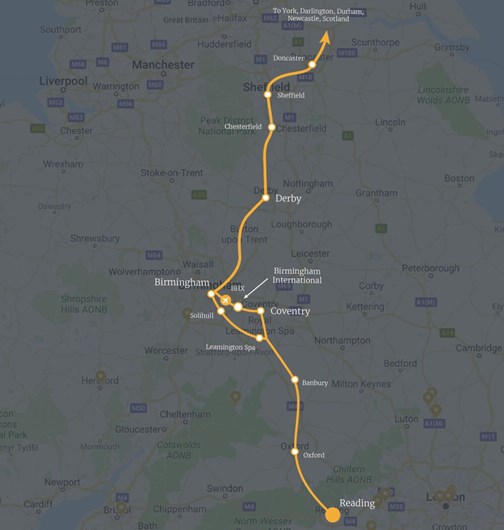
It looks like Midlands Connect are thinking about improving the Reading and Newcastle service.
Points made on the page and related articles, like this one on Rail News include.
- Birmingham Airport has plans to increase passenger numbers to 18 million by 2033.
- Coventry and Leamington Spa via Kenilworth will be double-tracked.
- High Speed Two will release capacity in the area.
- It will open up rail capacity between Birmingham and Solihull.
- There will be a new service between Birmingham Moor Street and Oxford via Solihull and Warwick Parkway.
- It will improve local connections to Birmingham Airport.
- Birmingham and Reading services will be increased to two trains per hour (tph)
- The Government is being asked to chip in £20 million.
These are my thoughts.
Birmingham Airport
Birmingham Airport can become a true Heart of England Airport.
I feel that the future of aviation will be very different to the past.
- COVID-19 and the future pandemics, that we will endure from the East and the Americas, will mean that flying will be a very different experience with hygiene and social distancing to the fore.
- Smaller aircraft, for flights up to 500 miles, will be odd-looking zero-carbon machines with exotic power systems.
- Larger aircraft will be energy efficient planes powered by aviation biofuels produced from household and industrial waste, and biomass.
- Boeing 747s and Airbus A380s will only be talked about in tales from older people to the young.
- Airports will be important rail hubs to more than just the local area.
Wikipedia also says this about expansion of Birmingham Airport.
Plans for a second runway (a third when demand requires) on the other side of the M42 and a new terminal complex and business park have been published, and they could help to create around 250,000 jobs. It has been estimated that if these plans went ahead, the airport could handle around 70,000,000 passengers annually, and around 500,000 aircraft movements.
This Google Map shows the Airport.
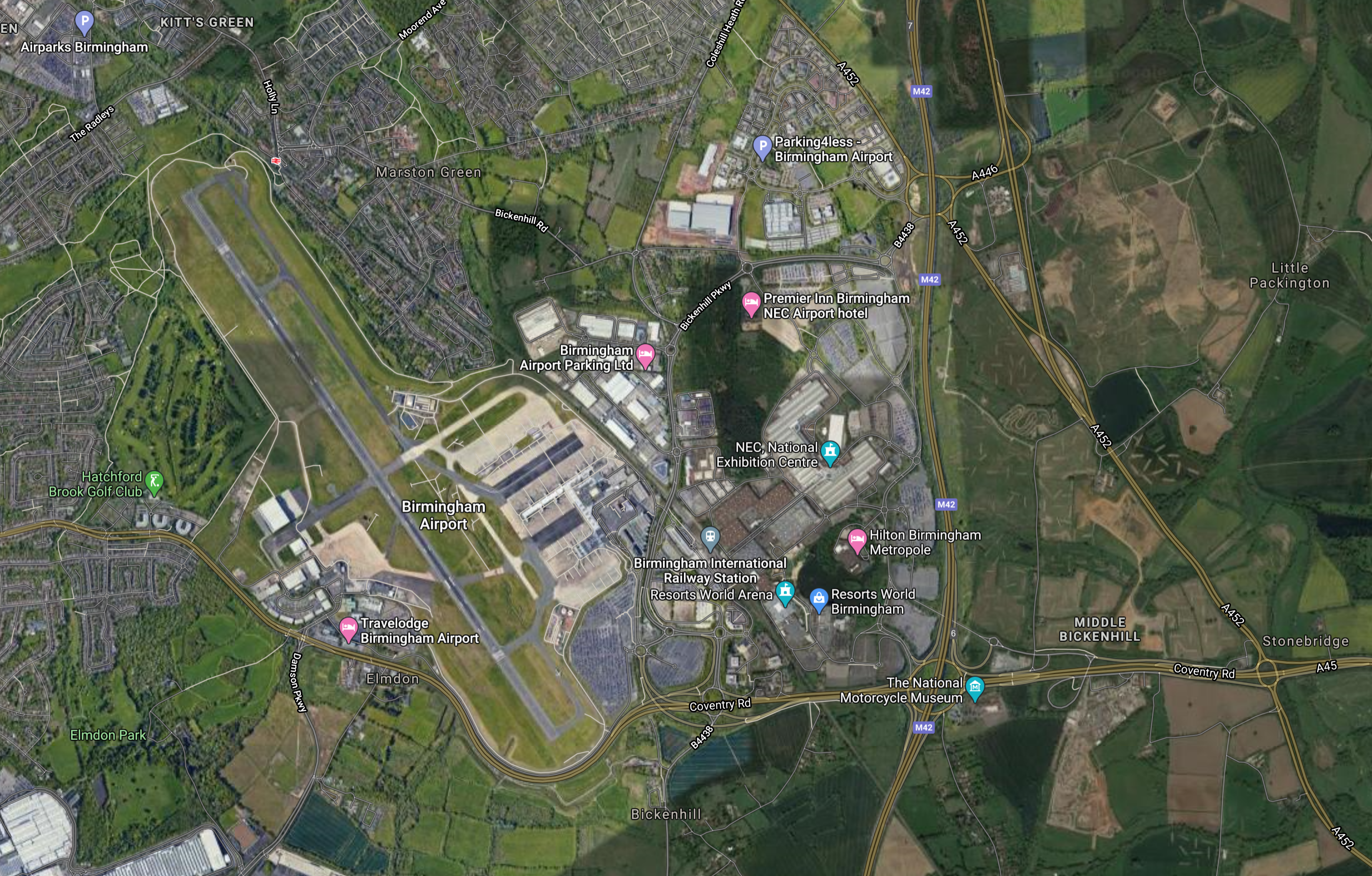
Note the M42 motorway passing North-South to the East of the Airport.
Could Birmingham Airport develop towards Birmingham Interchange and High Speed Two?
It is worth looking at the distance to other airports.
- Aberdeen – 328 miles
- Amsterdam – 280 miles
- Dublin – 199 miles
- Frankfurt – 478 miles
- Geneva – 558 miles
- Paris – 304 miles
All could be within range of an electric aircraft like the under-development Eviation Alice.
I believe that large airports will develop low-noise zero-carbon secondary runways.
Birmingham Airport is well-situated to take advantage.
Adding A Second Track Between Leamington Spa And Coventry
This section of track is about ten miles long, with probably under half only single-track.
This Google Map shows the single-track through the new Kenilworth station.

And these are pictures I took soon after the station opened.


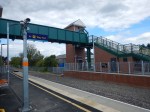
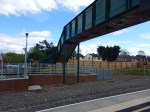
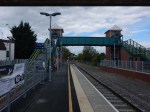
It is certainly one of the best of the current crop of new small stations.
I don’t think that adding a second track will be the most challenging of projects.
It should be noted that the Leamington Spa and Nuneaton service could be a candidate for a battery electric train.
- The route is twenty miles long
- Nuneaton and Coventry stations are fully electrified.
- There might be possibilities to extend this service at either or both ends.
- Nuneaton and Leicester are nineteen miles apart and a new Nuneaton Parkway station is proposed for the route. I wrote about this station in New Railway Station Between Hinckley And Nuneaton Receives Backing.
- Leamington Spa and Stratford-upon-Avon are fifteen miles apart and would need a reverse at Leamington Spa.
A battery electric train might give a faster and more passenger-friendly service, if the passenger numbers and forecasts would support an extended service.
A Birmingham Moor Street And Oxford Service
This Google Map shows Birmingham Moor Street station.
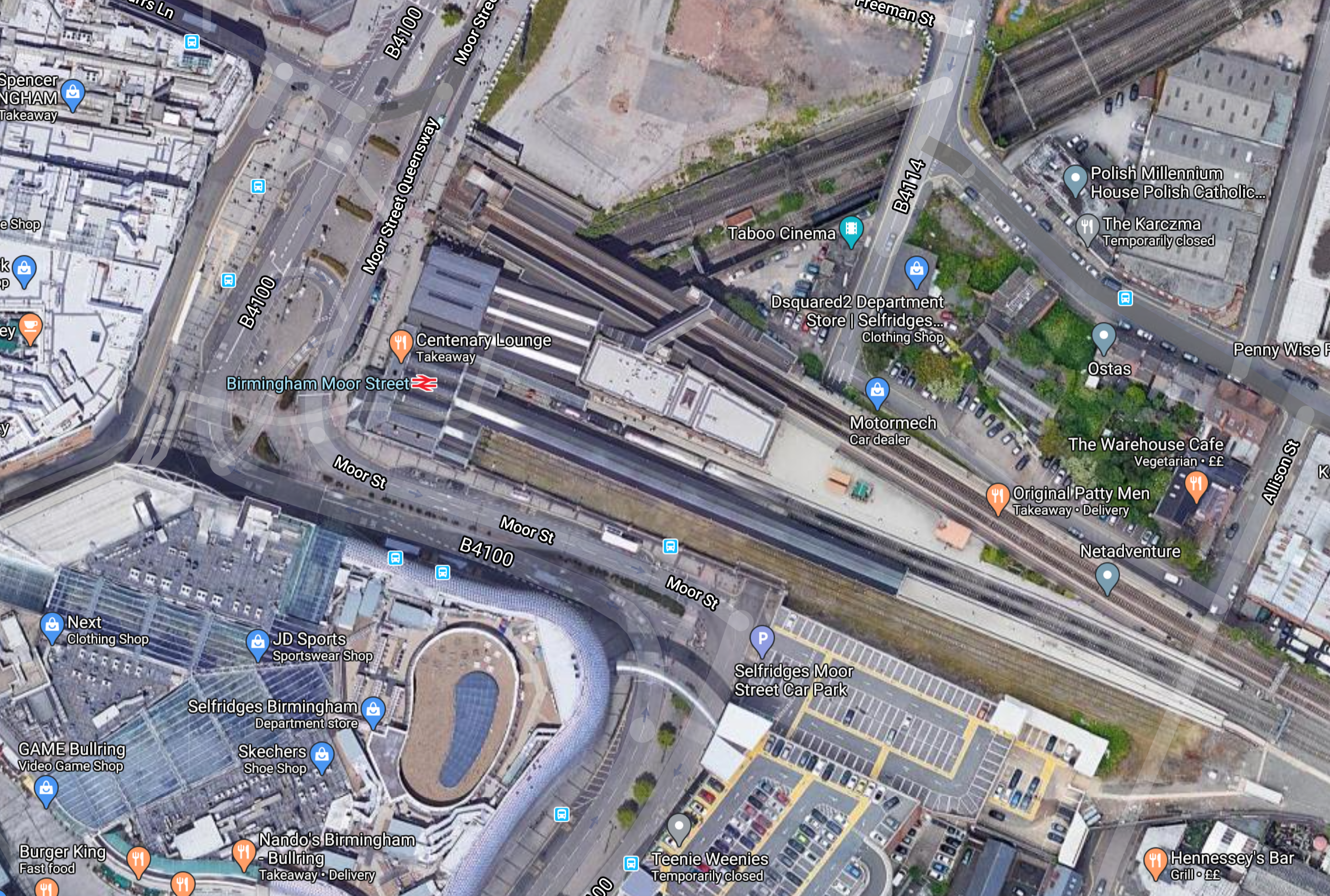
Note.
- The two Northern through platforms on the Snow Hill Lines, that continue under Birmingham to Birmingham Snow Hill station.
- At least two, but possibly three bay platforms, that can take Chiltern Railway’s longest trains.
- There is more space for possibly another two bay platforms to be reinstated or built.
Birmingham Moor Street station will also be a short walk from High Speed Two’s Birmingham Curzon Street station.
This Google Map shows Oxford station.
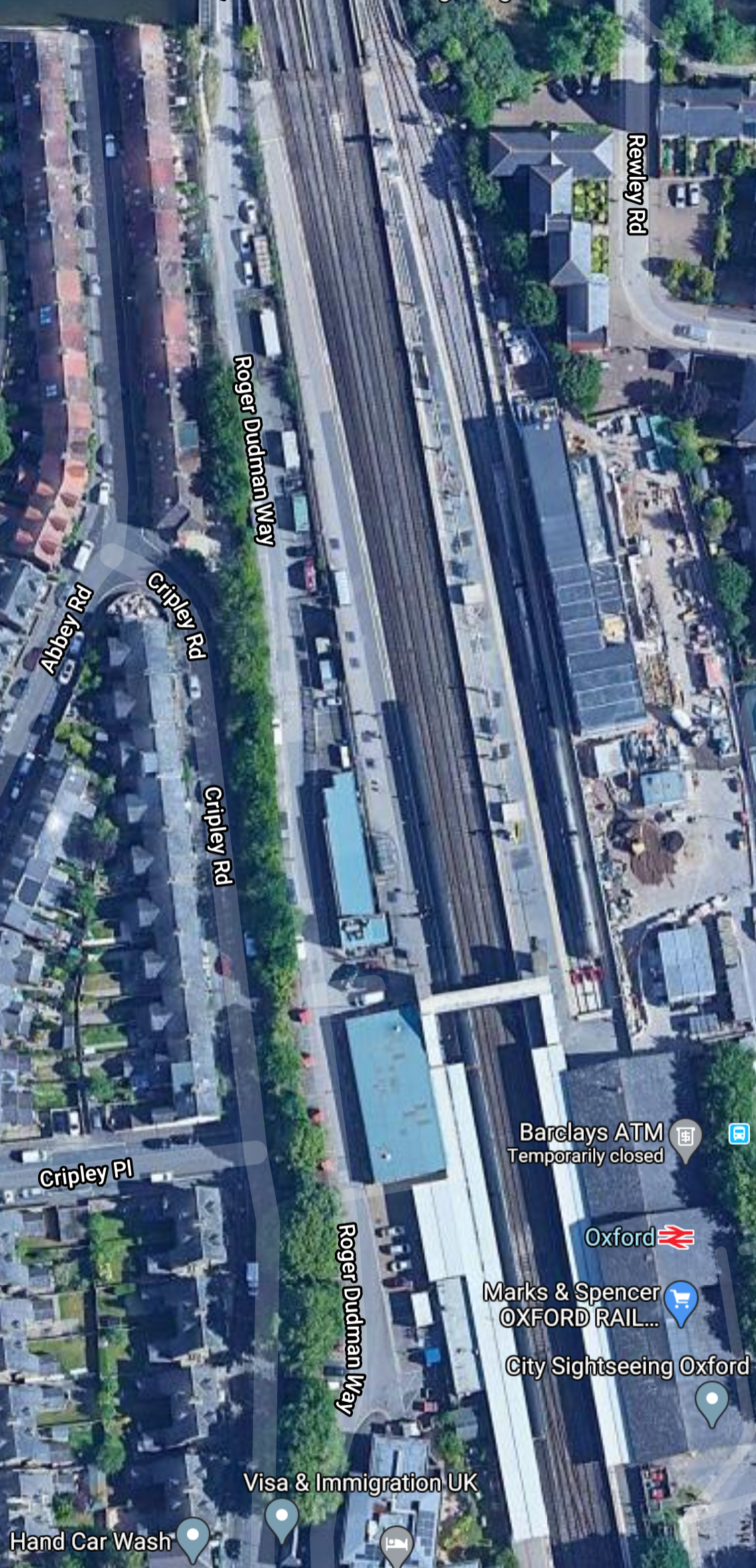
Note.
- Birmingham Moor Street station is to the North via Banbury and Warwick Parkway stations.
- The two long through platforms capable of taking a nine-car train.
- There are two bay platforms to the East of the two through platforms, at the Northern end of the station.
- The bay platforms handle Chiltern’s services from London Marylebone and could also handle the proposed service to Birmingham Moor Street.
Consider this about the proposed Birmingham Moor Street and Oxford service.
- The service could stop at Solihull, Warwick Parkway, Warwick, Leamington Spar and Banbury, as was thought necessary.
- I estimate that Birmingham Moor Street and Oxford are 66 miles apart and that a 100 mph train would take around 66 minutes.
- Birmingham Moor Street and Banbury are 43 miles apart.
- Oxford and Banbury are 23 miles apart.
With these timings and a few minutes to reverse at each end of the route, I would estimate that a 2.5 hour round trip would be possible.
But, I also think, that with charging facilities or short lengths of electrification at Birmingham Moor Street, Banbury and Oxford stations, this service could be run by battery electric trains.
- A three hour round trip should be possible.
- Three trains would be needed to provide an hourly service.
- Oxford, Banbury, Leamington Spa and Warwick would have a direct connection to High Speed Two.
It should also be noted
- Birmingham Moor Street and Stratford-upon-Avon stations are only 25 miles apart and the journey rakes 46 minutes
- Banbury and Stratford-upon-Avon are 35 miles apart. and the journey takes 57 minutes.
- Leamington Spa and Nuneaton are 20 miles apart and the journey takes 36 minutes.
There would appear to be tremendous potential for battery electric services between Birmingham and Oxford.
How many tourists would a Birmingham and Oxford service via Stratford-upon-Avon attract?
Improving The Reading And Newcastle Service
Currently, this is a one tph service between Reading and Newcastle stations.
- It is run by CrossCountry.
- Intermediate stops include Oxford, Banbury, Leamington Spa, Birmingham New Street, Derby, Sheffield, Doncaster, York, Darlington and Durham.
- It appears that the full journey takes four-and-a-half hours.
It looks like to run a two tph service would need as many as twenty trains.
There is an alternative route after High Speed Two opens.
- High Speed Two – Newcastle and Birmingham Curzon Street – 118 minutes
- Walk – Curzon Street and New Street – 10 minutes
- CrossCountry – Birmingham New Street and Reading – 90 minutes
This saves about forty-five minutes.
You could even do a double change.
- High Speed Two – Newcastle and East Midlands Hub – 96 minutes
- High Speed Two – East Midlands Hub and Birmingham Interchange – 17 minutes
- Walk – Birmingham Interchange and Birmingham International – 10 minutes
- CrossCountry – Birmingham International and Reading – 78 minutes
This gives a time of around three hours and twenty minutes.
High Speed Two certainly saves time.
But look at this map clipped from the High Speed Two web site.
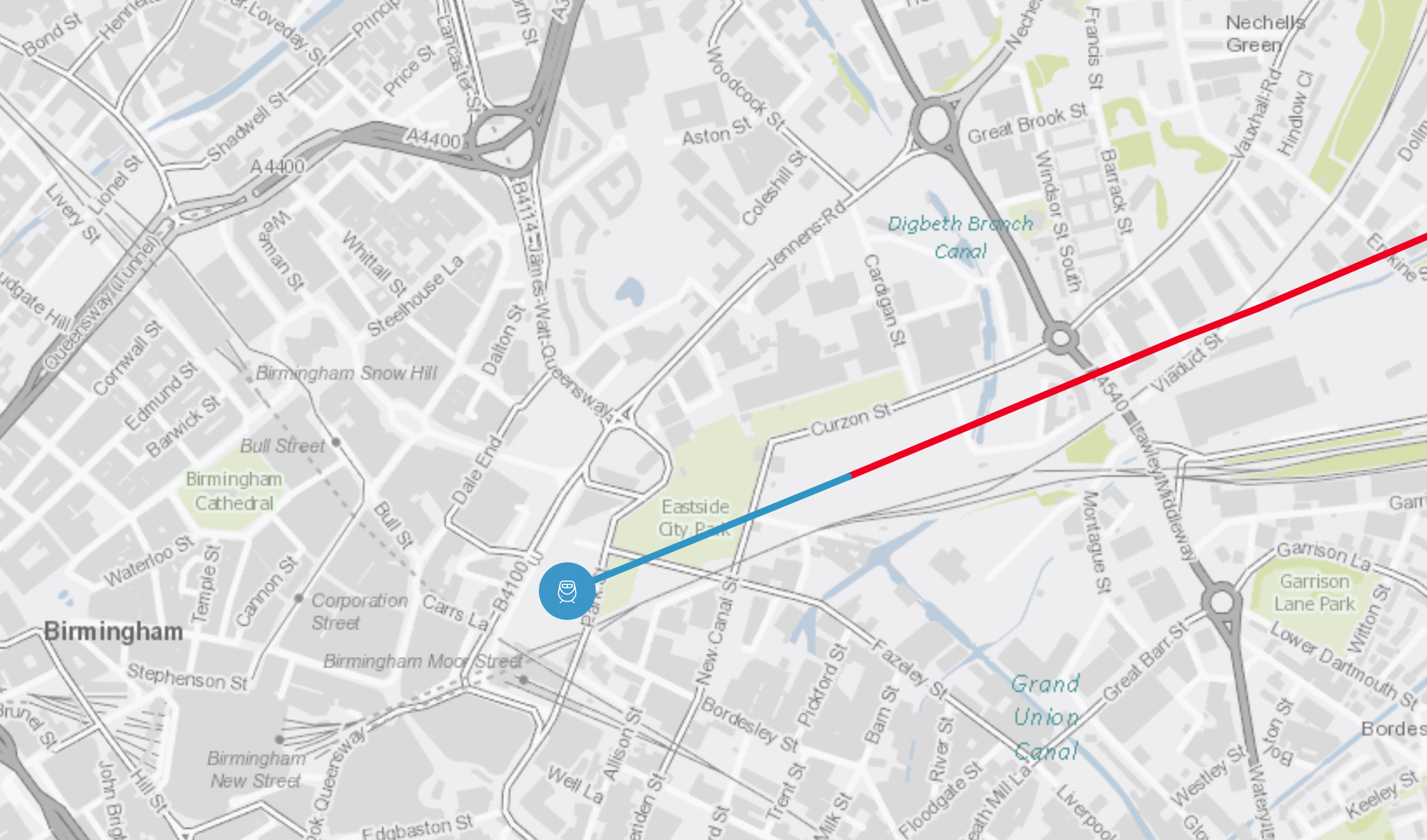
Note.
- The blue dot shows the location of Curzon Street station.
The West Coast Main Line running into New Street station, is just to the South of Curzon Street station.
New Street station can be picked out to the West of Curzon Street station.
This Google Map shows a close-up of the current Curzon Street station site.
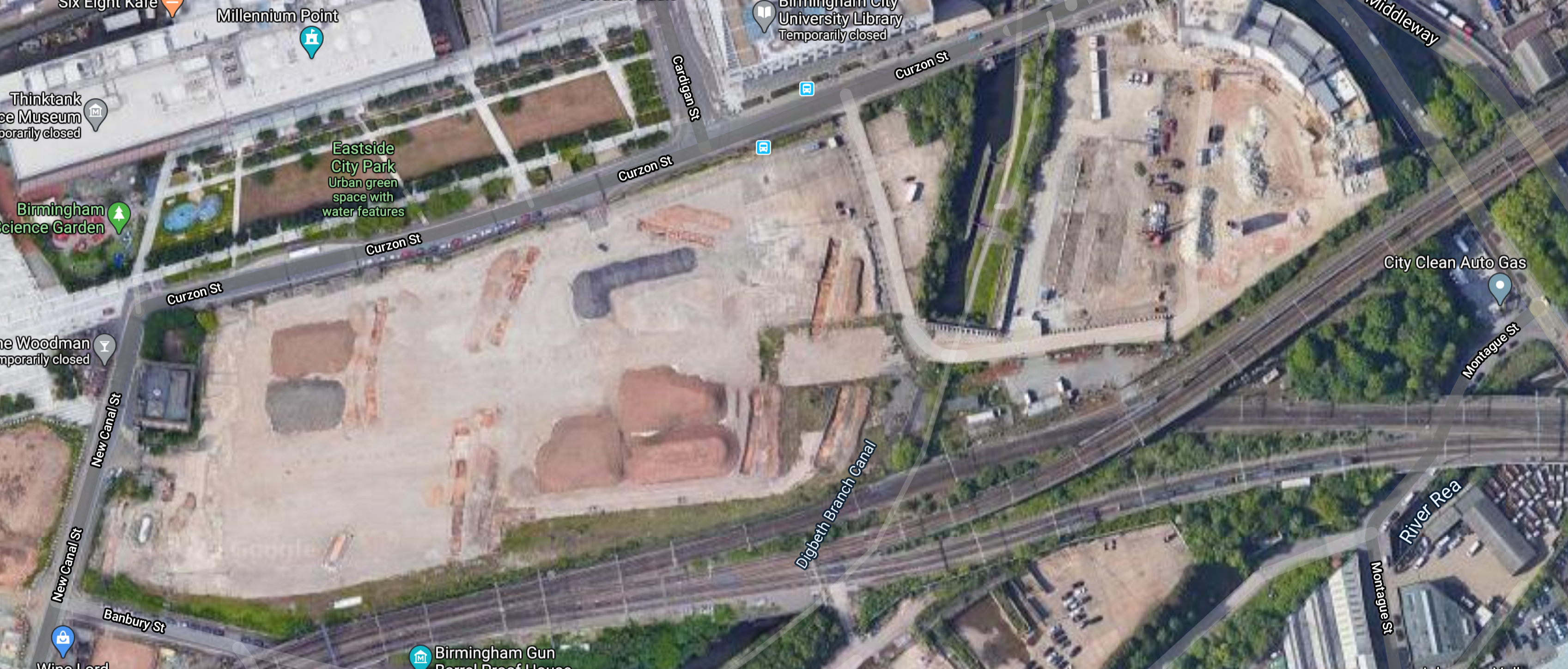
The same pattern of rail lines going past the Curzon Street site into New Street station can be picked out.
Surely, a connection could be made to allow trains from a couple of platforms in Curzon Street station to terminate trains from the West Coast Main Line.
To improve services between Newcastle and Reading, trains would do the following.
- Run on the current East Coast Main Line infrastructure between Newcastle and York. Station stops could be Durham, Darlington and York.
- Switch to new High Speed Two infrastructure South of York.
- Run on High Speed Two infrastructure to Birmingham Curzon Street station. Station stops could be Sheffield, Chesterfield and East Midlands Hub.
- The train would reverse at Birmingham Curzon Street station.
- Switch to the West Coast Main Line outside Birmingham Curzon Street station.
- Run on the West Coast Main Line to Birmingham International station.
- Take the route currently used by CrossCountry between Birmingham International and Reading. Station stops could be Leamington Spa, Warwick Parkway, Banbury and Oxford stations.
Timings would be as follows.
- Newcastle and Birmingham Curzon Street – 118 minutes – From High Speed Two web site.
- Birmingham Curzon Street and Reading – 90 minutes – Current CrossCountry timing.
Note.
- This saves about an hour over the current CrossCountry timings.
- It could use classic-compatible High Speed Two trains.
- Between Birmingham Curzon Street and Newcastle, it follows the same route as one of the current proposed High Speed Two services.
- The service could be extended to Edinburgh from Newcastle.
- The service could be extended to Southampton from Reading
- As there are only twelve tph planned to be running on the Eastern leg of High Speed Two, against a total capacity of eighteen tph, it should be possible to accommodate the extra service or services.
This would surely be a very useful High Speed Two service.
Conclusion
It is a comprehensive package of measures, some of which could have a high cost benefit ratio.
Manchester Piccadilly, Liverpool Lime Street And Some Other Stations Compared
I am doing this exercise to get a handle on the scale of the problem at Platforms 13 and 14 at Manchester Piccadilly station.
In 2018/19, these were some passenger statistics for the two stations and some others.
- Birmingham New Street station handled 47.928 million passengers on its thirteen platforms or 3.62 million per platform per year.
- Brighton station handled 17.385 million passengers on its eight platforms or 2.17 million per platform per year.
- Bristol Temple Meads station handled 11.368 million passengers on its thirteen platforms or 0.87 million per platform per year.
- Cardiff station handled 14.205 million passengers on its eight platforms or 1.78 million per platform per year.
- Chelmsford station handled 8.927 million passengers on two platforms of 4.46 million per platform per year.
- Crewe station handled 3.318 million passengers on its twelve platforms or 0.28 million per platform per year.
- Deansgate station handled 0.458 million passengers on its two platforms or 0.23 million per platform per year.
- Doncaster station handled 3,918 million passengers on its nine platforms or 0.44 million per platform per year.
- East Croydon station handled 24.770 million passengers on its six platforms or 4.12 million per platform per year.
- Exeter St. Davids station handled 2.620 million passengers on its six platforms or 0.44 million per platform per year.
- Gatwick Airport station handled 21.225 million passengers on its seven platforms or 3.03 million per platform per year.
- Leeds station handled 30.839 million passengers on its seventeen train platforms or 1.81 million per platform per year.
- Leicester station handled 5.582 million passengers on its four platforms or 1.40 million per platform per year.
- Liverpool Lime Street station handled 14.221 million passengers on its eleven platforms or 1.29 million per platform per year.
- London Bridge station handled 61.308 million passengers on its fifteen platforms or 4.08 million per platform per year.
- London Fenchurch Street station handled 18.508 million passengers on its four platforms or 4.63 million per platform per year.
- London Paddington station handled 38.18 million passengers on its thirteen platforms or 2,94 million per platform per year.
- Manchester Oxford Road station handled 9.338 million passengers on its five platforms or 1.87 million per platform per year.
- Manchester Piccadilly station handled 30.252 million passengers on its fourteen platforms and two tram platforms or 1.89 million per platform per year.
- Manchester Victoria station handled 8.950 million passengers on its eight platforms or 1.12 million per platform per year.
- Newcastle station handled 8,914 million passengers on its twelve platforms or 0.74 million per platform per year.
- Nottingham station handled 8.005 million passengers on its nine platforms or 0.89 million per platform per year.
- Peterborough station handled 5.060 million passengers on its seven platforms or 0.72 million per platform per year.
- Preston station handled 4.646 million passengers on its nine platforms or 0.52 million per platform per year.
- Reading station handled 17.081 million passengers on its fifteen platforms or 1.14 million per platform per year.
- York station handled 9.991 million passengers on its eleven platforms or 0.90 million per platform per year.
These figures have given rise to a few thoughts.
Brighton
Brighton station is an eight platform terminal station, that handles a lot of passengers, considering that the City doesn’t have any mass transit system and passengers rely on walking, bicycles, buses and private cars for onward travel.
- There are upwards of eight trains per hour (tph) at the station to and from London, all of which can be up to twelve cars.
- The West Coastway and East Coastway Lines have at least six tph in the Off Peak.
- Arriving passengers can walk straight through the wide gate line and out to walking routes and the buses, with leaving passengers walking the other way.
I wouldn’t be surprised to hear that Brighton station is at capacity.
Chelmsford
It is truly remarkable that Chelmsford station is the second busiest station in terms of passengers per platform per year on my list.
- The station has two separate platforms on either side of the tracks.
- Access is via wide stairs and lifts.
- The station appears to handle five tph in both directions in the Off Peak, with up to twice that number in the Peak.
- Most trains calling at the station are between eight and twelve cars.
- Chelmsford station could get even busier in terms of passengers when the new longer Class 720 trains and Class 745 trains are brought into service in the next twelve months, as these trains have higher capacities, than the current trains.
- It is aimed, that the new trains though will have level access between train and platform, at some point in the future.
I very much feel, that Chelmsford shows what can be done at an ordinary two platform station with the application of good simple design.
London Fenchurch Street
London Fenchurch Street is the busiest station on my list.
- The limited number of platforms will increase the number of passengers per platform per year.
- The station has two entrances to each platform.
- Arriving passengers can walk straight through the wide gate line at the main entrance and down escalators to walking routes at street level, with leaving passengers walking the other way.
- Many trains in the Peak are twelve cars.
- Adding extra platforms would be difficult.
It does appear, that work has been done to maximise the station’s capacity.
Crewe, Doncaster, Exeter St. Davids, Newcastle, Peterborough, Preston and York
All these stations are interchange stations on the main lines, that may have been improved, but have not been substantially rebuilt.
They all manage to handle between 0.5 million and 1 million passengers per platform per year.
Leeds
Leeds station has been improved over the last few years.
- There are six through platforms and eleven where trains can terminate.
- After passing through the gate line, passengers are in a concourse from where long distance services to London and the North and local services to Bradford, Harrogate, Ilkley and Skipton can be boarded.
- A new wide bridge with escalators, a lift and steps leads from this concourse across the through lines and platforms to the other side of the station.
- There are lifts and escalators from the bridge to some of the through platforms and the terminating platforms beyond them.
- At the far side of the bridge, a new Southern entrance has been added.
<The bridge works well and shows how a wide bridge over or a wide concourse under the tracks, can improve circulation in a station.
If you compare the bridge at Leeds, with the bridge at Reading, which was designed at around the same time, the Reading one is better in that it is wider and has more escalators, with one up and one down escalator to each pair of platforms.
Was a certain amount of design at Leeds station performed by accountants?
London Bridge
London Bridge station shows what can be done by applying good design in a new or rebuilt station.
- There are nine through and six terminal platforms.
- All platforms can take full-length twelve-car trains.
- There is a massive concourse underneath all fifteen platforms.
- There are lots of escalators and lifts between the concourse and the platforms.
- Steps provide additional and reserve capacity.
- Passengers changing between routes can take an escalator or lift to the concourse and another one to their new route.
- Arriving passengers can walk straight through the wide gate lines and out to walking routes, the Underground and the buses, with leaving passengers walking the other way.
- London Bridge station was designed by Grimshaw Architects
It is a design with a wow factor that works very well.
Reading
Reading station is another good design applied to a rebuilt station.
- There are nine through platforms, three East-facing bay platforms and three West-facing bay platforms.
- All through platforms can take full-length trains.
- All bay platforms are a level walk from the Southernmost through platform and the main entrance gate line to the station.
- There is a massive bridge over all nine through platforms.
- There are lots of escalators and lifts between the bridge and the through platforms.
- Steps provide additional and reserve capacity.
- Passengers changing between routes can take an escalator or lift to the bridge and another one to their new route.
- Arriving passengers can walk straight through the wide gate lines and out to walking routes, the car-parks and the buses, with leaving passengers walking the other way.
- Reading station was designed by Grimshaw architects.
It is a design with a wow factor that works very well.
Redesigning Manchester Piccadilly
Could some of the principles of these stations be applied to rebuilding Manchester Piccadilly station?
There are currently twelve terminal platforms numbered 1-12 in the main part of the station.
- Platforms 1 to 4 are used for services to Marple, New Mills, Rose Hill and Sheffield via the Hope Valley Line, and services on the Glossop Line.
- Platforms 5 to 9 are the longest and used by Avanti West Coast and CrossCountry services.
- Platforms 10 to 12 are shorter than the others and are usually used to accommodate local trains to Crewe and Manchester Airport, plus Mid-Cheshire line, Buxton Line and South Wales services.
The two through platforms 13 and 14 are on the Southern side of the station.
These ideas might be possible.
A Wide Bridge Or Concourse Connecting The Platforms At The London End
Currently, there is a bridge over the platforms 1 to 12 at the London end, but compared to the bridges at Leeds or Reading stations, it is a rather feeble affair.
- It is narrow.
- It doesn’t have any kiosks or shops.
- It is only connected to the platforms by steps.
Could this be replaced by a wide bridge, like say the one at Reading?
It would certainly give advantages if it could!
- Passengers arriving in Manchester Piccadilly needing to change to another service, might find it more convenient to use the bridge, rather than exit on to the main concourse.
- The bridge could be designed as a waiting area, with kiosks, shops, cafes and other facilities.
- The bridge would be connected to all platforms by escalators and lifts.
- Steps would provide additional and reserve capacity.
Note that if you buy a ticket to Manchester stations, that allows you to go to either Manchester Piccadilly, Manchester Oxford Road, Deansgate or Manchester Victoria stations, So a quick route up and down an escalator at the London end of Piccadilly station to Platform 14 would be very convenient.
Access To Platforms 13 And 14
Compared to the wide island platforms at Leeds and Reading, platform 13 and 14 are a bit narrow, but I’m fairly sure, that a good layout for escalators and lifts could be designed, so that access to these two platforms can be improved.
Trains Through Platforms 13 and 14
These must be arranged, so that they are all similar with wide double doors and step-free access between platform and train.
Improvement Along The Castlefield Corridor
Various improvements need to be done on the Castlefield Corridor.
- Deansgate can be improved to provide better access to the Metrolink at Castlefield.
- Manchester Oxford Road station needs a complete rebuilt and a better track layout.
- The Liverpool Lime Street and Manchester Airport service via Warrington and Manchester Oxford Road needs a strong rethink.
It appears that it has already been decided to reduce the number of trains, as I wrote about in Castlefield Corridor Trade-Off Plan For Fewer Trains.
Wide Gate Lines
Passengers arriving at Manchester Piccadilly station in the main part of the station should be able to walk forward to a gate line stretching right across all the platforms.
- The present gate line isn’t continuous.
- There is still a lot of manual checking of tickets.
The current layout can certainly be improved.
Access To Metrolink
I also wonder if better access to the Metrolink could be provided, so that passengers access the Metrolink station from inside the gate line. Now that the Metrolink allows contactless ticketing, this might be easier.
Conclusion
I believe there’s a solution in there somewhere!

