Council Invests £16m In Hydrogen Buses
The title of this post, is the same as that of this article on the BBC.
This is the sub-heading.
There are now 34 hydrogen buses on the streets of Surrey, the council has announced.
These two paragraphs add more details.
Surrey County Council (SCC) said it has invested £16m and partnered with Metrobus to provide greener commuting options.
The fleet is now made up of 23 single-deck buses and 11 double-deckers, the council said.
I wrote about a ride on one of these buses to Gatwick Airport in Sutton Station To Gatwick Airport By Hydrogen-Powered Bus.
From the comments in the article, by a Surrey County Council councillor, the council seems very pleased with their hydrogen buses.
From Reading To Gatwick Airport Along The North Downs Line
After writing Connecting Reading And The West To Gatwick Airport And Eurostar, I decided to go and look at the reality of the North Downs Line between Reading and Gatwick Airport stations.
I took my usual route to Reading, which is to go to Moorgate and get the Elizabeth Line direct to Reading using my Freedom Pass, after having breakfast in the Leon on Moorgate.
- I then had to leave the station at Reading, so that I could buy my ticket to Gatwick Airport.
- It would be so much easier, if there ere a couple of ticket machines on the bridge or platform at Reading station, so that passengers, who were changing trains could buy tickets quickly and easily.
In the end, I caught the 11:24 train to Gatwick with only a few minutes to spare.
From Reading To Gatwick Airport Along The North Downs Line
Along the North Downs Line, the train was a well-refreshed Great Western Railway Class 165 train.
These are some of the pictures, that I took on the route.
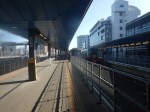

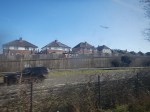





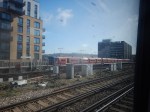
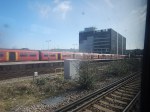
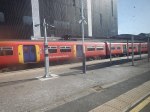




























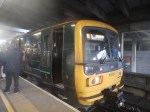
Note.
- The route goes through a lot of typical Surrey heathland.
- I noticed several pubs along the way.
- I suspect that there are some good walks from the stations.
- Reading and Guildford are university cities.
- Sandhurst is home to the Royal Military Academy.
- Farnborough Airport used to be home to the Royal Aircraft Establishment.
- Most of the seats on the train were taken.
I would expect that for a mainly rural route it is fairly busy.
Hitachi’s Intercity Battery Trains
Hitachi have developed an Intercity battery train and it is described on this page on their web site, where this is said about converting the trains to battery-electric operation.
A quick and easy application of battery technology is to install it on existing or future Hitachi intercity trains. Hitachi Rail’s modular design means this can be done without the need to re-engineer or rebuild the train and return them to service as quickly as possible for passengers.
Replacing one diesel engine with just one battery reduces emissions by more than 20% and offers cost savings of 20-30%. Our intercity battery powered trains can cover 70km on non-electrified routes, operating at intercity speeds at the same or increased performance.
That performance is certainly enough for Reading and Ashford via Gatwick, as only 37.7 miles in total, is not electrified.
Does The North Downs Line Mirror The East-West Rail?
Consider.
- The East West Rail will encircle London to the North, between Oxford and Cambridge.
- The North Downs Line encircles London to the South, between Reading and Ashford.
They could be considered two complimentary rail lines.
A Milton Keynes And Ashford International Service
Looking at the track layout on OpenRailwayMap, it would appear that one of Hitachi’s proposed Intercity Battery Trains fitted with dual voltage could pick its way elegantly along the East West Rail and the North Downs Line between Milton Keynes and Ashford International via Oxford, Reading and Gatwick Airport.
An Occasional Sheffield And Ashford International Service
If you could run a service between Milton Keynes and Ashford International, why not extend it to Bedford or even Sheffield in the North?
I believe if you put these Hitachi’s proposed Intercity Battery Trains on a cross-country route, that they will quickly suffer from London Overground Syndrome. This is my definition of the syndrome.
This benign disease, which is probably a modern version of the Victorian railway mania, was first identified in East London in 2011, when it was found that the newly-refurbished East London Line and North London Line were inadequate due to high passenger satisfaction and much increased usage. It has now spread across other parts of the capital, despite various eradication programs.
Put simply, it can probably be summed up as Quality Attracts Passengers.
Serving Heathrow
There have been various plans to get rail access into Heathrow from the West, but none have so far got off the starting blocks.
It is my view, that in the interim period, after my trip last weekend in the superb Wrightbus hydrogen double deck bus from Sutton to Gatwick, that I wrote about in Sutton Station To Gatwick Airport By Hydrogen-Powered Bus, that we should ask Wrightbus, who are designing a hydrogen-powered coach, to design the ultimate coach to connect rail hubs to major airports.
I would then run these coaches every ten minutes between Reading station and Heathrow Airport.
Serving Attractions
I believe that pairing Hitachi’s proposed Intercity Battery Trains with Wrightbus’s hydrogen coach could be a winner for passengers and operators.
As an example, Lumo are hoping to run an open access service between Paddington and Carmarthen, if Heidi the Spoilsport permits. Would it not be sensible, if one of Wrightbus’s hydrogen coaches did the last mile duties to the ferry for Ireland at Fishguard harbour.
Sutton Station To Gatwick Airport By Hydrogen-Powered Bus
In Central London and Gatwick Airport For Free On A Freedom Pass, I indicated it was possible to go to Gatwick Airport for nothing, if you had a Freedom Pass, which is also a free bus pass for England.
This morning I took public transport to Gatwick Airport by this route.
- I took a 43 bus to London Bridge station.
- This bus terminates in the bus station in front of the train station, so it was a simple step-free entry into the part of the station, where Southern Trains terminate.
- I took a Southern Train to Sutton station.
- I then took a Metrobus 420 bus from Sutton station to Gatwick Airport.
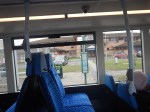
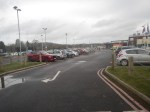
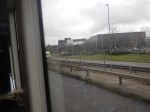
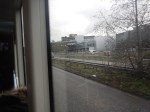
These pictures show the journey.

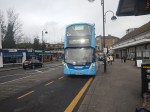


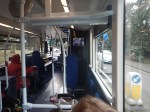

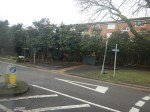









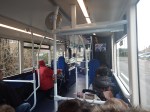

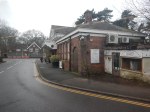







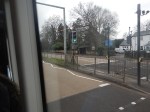












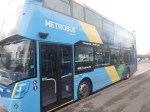
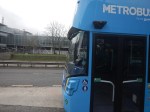
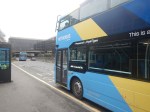

Note.
- The bus stop is directly outside the entrance to Sutton station.
- Sutton station is step-free.
- The information on the Metrobus’s buses at Sutton station is poor.
- The bus had a 74 number plate, so was registered after September 1st, 2024.
- The bus said it was a hydrogen bus.
- The seats were comfortable with leather facings.
- The route was mainly through rural Surrey.
- There were sections of dual-carriageway road with continuous 40 mph running.
- There were a number of steep hills.
- Previously, I have been told by a Bradford Councillor, that the City of Bradford is going for hydrogen-powered buses , as the city has lots of steep hills.
- The unusual Reigate and Redhill War Memorial on the A25.
- The route goes past Hadworth, Reigate and Redhill stations.
- Just before Gatwick Airport, the bus called at East Surrey Hospital.
I have some thoughts.
Does This Hydrogen Bus Have Almost The Quality Passengers Would Expect From A Coach?
Consider.
- I was very impressed with the quality of the bus and its fittings.
- But its biggest assets were the ride and mouse-quiet noise and being vibration-free.
- It was certainly up there, with the best British buses on UK roads.
- Strangely, I never rode in any of London’s Green Line coaches of the 1950s and 1960s.
But as Wrightbus are selling hydrogen-powered single-decker buses to the Germans, the quality must be of a certain standard.
The Performance Of The Bus
I would sum up the bus as follows.
- The bus didn’t hang around and it was well-driven.
- On much of the dual-carriageway, the bus appeared to be at the maximum speed limit of 40 mph
- Ride and seats were comfortable.
- There was virtually no vibration.
- At times, you almost felt you were in a top-of-the-range coach.
- The running gear is from German company ZF, which certainly doesn’t hinder the ride.
- The journey from Sutton to Gatwick Airport is twenty miles and took about ninety minutes.
I would feel that if Wrightbus design their CoachH2 chassis to the same standard of this bus, they’ll have a difficulty to meet sales demand.
Wrightbus Hydrogen Buses For My Local Bus Route 141
Consider.
- The 141 bus route is my local bus, which gets me to Moorgate, Bank, London Bridge and Manor House.
- The length of the full route is twenty miles and it takes about an hour to go from London Bridge station to Palmers Green.
- The route is currently run by older Wrightbus hybrid diesel-electric buses.
- I suspect that modern hydrogen buses could last almost all day on one fill of hydrogen, with perhaps a top-up at lunchtime.
They would have no difficulty handling the route and would greatly increase the customers current rock-bottom satisfaction.
Hydrogen Buses In Leafy Suburbs
- Where I live, is not particularly leafy or a suburb.
- But I seems to remember, when I moved here, that some of my neighbours complained about the noise of the 76 bus route.
- So Transport for London put on some quieter buses.
I would expect, that Metrobus might use the mouse quieter hydrogen buses in post areas, to avoid annoyance.
Hydrogen Buses As Route Extenders
Effectively, the Metrobus route 420 is acting as a route extender for Southern and Thameslink services coming South from London.
As it is a quality bus, that gets a move on, I suspect that some travellers, who previously took a train to Sutton, Tadworth, Reigate, Redhill or other stations and were then picked up, may take a hydrogen bus to a more convenient bus stop.
Because of the long range of a hydrogen bus or coach, zero-carbon performance, should be achieved without any range anxiety for passengers, driver or bus company.
Onward From Oakhampton Parkway Station
Consider.
- In 2014, storms destroyed the railway at Dawlish in Devon.
- As there was no alternative route, the storms cut everything west of Dawlish off from the rest of the UK.
- It is now likely, that a Park-and-Ride station will be built close to Okehanpton, which commuters would use for travel to Exeter.
- The main road to the South-West ; the A 30 will pass nearby.
It would appear, that Okehampton Interchange station could be used, if Nepture decided to show his power again.
Hopefully, the emergency plan will scare Nepture away.
Lumo To The Scottish Borders
Consider.
- Lumo have applied to extend some of their Edinburgh services to Glasgow.
- Talking to a friend in the Scottish Borders, they said, that travelers drive to Newcastle or Morpeth to catch Lumo for London.
- Four or five Lumo services every day stop in each direction at Morpeth station.
- So would it be sensible to run a bus or coach through the Scottish Borders to connect with the Lumo services?
This Google Map shows Morpeth in relation to the Border towns.
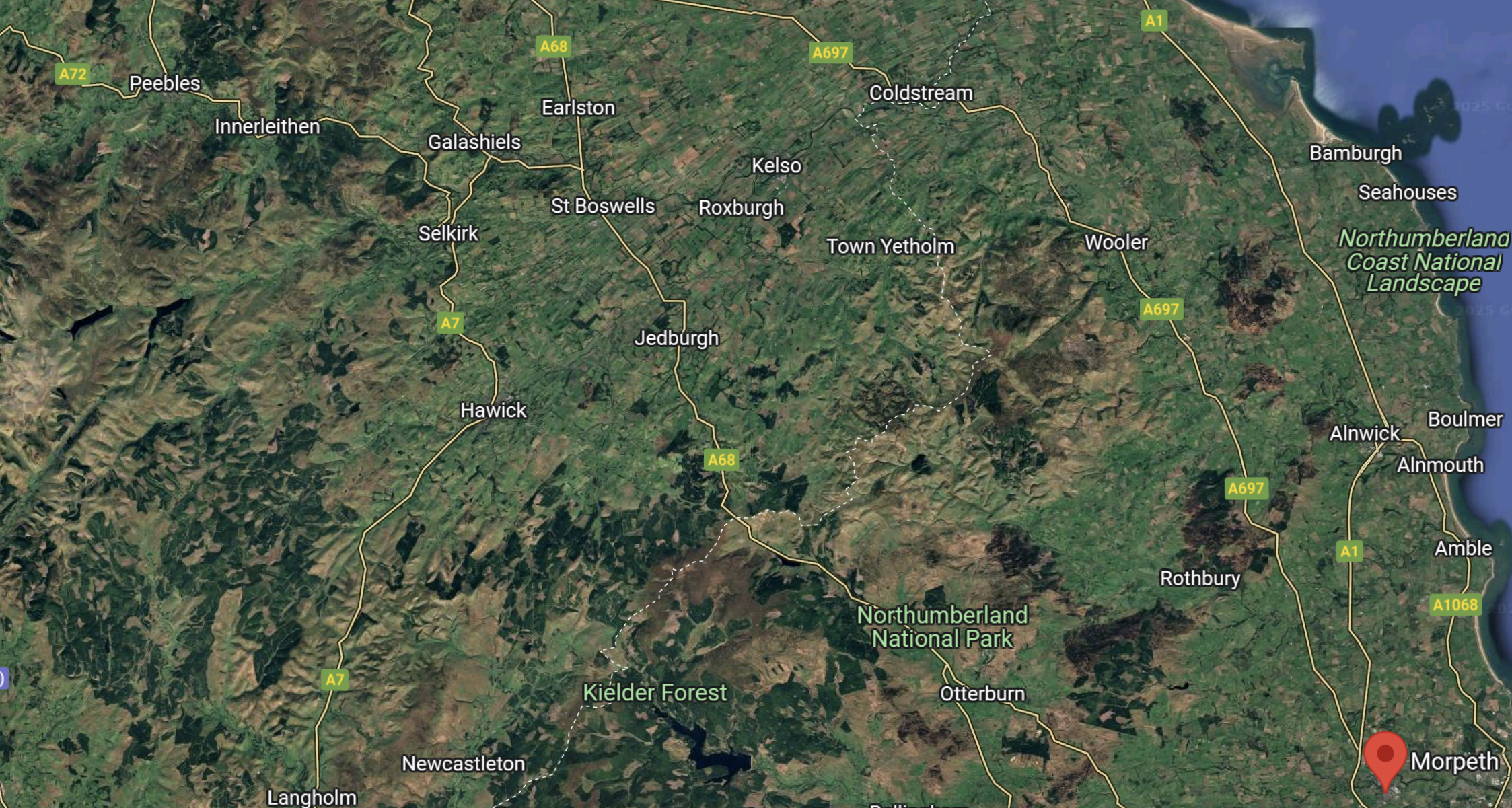
Note.
- Morpeth is marked by the red arrow in the South-East corner of the map.
- Galashiels, Galashiels, Hawick, Jedburgh, Peebles, Saint Boswells and Selkirk can be picked out on the map.
- The coach service would probably terminate at Galashiels, as it has a large bus terminal and and a railway station.
- Click the map to show it to a larger scale.
Morpeth to Galashiels is 69 miles and it should take about an hour and a half.
Hydrogen Buses As Rail Replacement Buses
Consider.
- I have had Rail Replacement Coaches as opposed to buses a few times in the UK.
- Once on the East Coast Main Line but usually on the Great Eastern Main Line to Ipswich or Norwich.
- They are generally more suited to their task. as they are faster and more luxurious.
- Many of our major rail lines run alongside trunk roads or motorways or fast dual carriageways.
So because hydrogen buses and coaches a have superior performance, than their diesel cousins, will hydrogen be the better fuel for a Rail Replacement Bus.
Metrobus’s Hydrogen Buses
This press release on the Metrobus web site is entitled Hydrogen Buses.
This is the sub-heading.
Our commitment to Zero Emissions
As part of our commitment to reducing emissions, twenty new hydrogen fuelled buses will operate on Fastway routes 10 & 20. These new buses demonstrate an ongoing commitment to reducing our local emissions. They deliver against science-based targets set by Metrobus and its parent company, The Go-Ahead Group, of becoming a net zero business by 2045 and decarbonising our bus fleet by 2035.
Conclusion
This bus is the best I’ve ridden in.
Surrey Has A Budget Crisis
This article on the BBC is entitled Conservative-led Surrey County Council plans 15% council tax hike.
This is said.
A Conservative-run council wants to raise its tax by 15% in the next financial year, blaming government cuts and increased demand for social care.
Surrey County Council leader David Hodge said the government had cut its annual grant by £170m since 2010.
Surrey definitely has a budget crisis.
An old friend of mine was a senior executive in a FTSE-listed mining and resources company.
We were having lunch and he said that of all the areas in the UK, Surrey was the most likely to find a sizeable oil-field.
He also said, that Oil Exploration would be transformed if there was a Local Extraction Tax.
So why aren’t Surrey encouraging the Oil Companies to foind the black gold to pay for all those services that the County needs?
In fact, if you type “fracking Surrey” into Google, you’ll find nothing but hostility..
After all they’ve already found one sizeable field recently at Horse Hill, as I wrote about inThe Oil Find That Will Settle The Result Of The Election.
I’m afraid, you can’t have your cake and eat it!
Should Crossrail 2 Be Extended?
In the gestation of Crossrail, alternative proposals were made including the ambitious Superlink, which would have linked Ipswich, Cambridge and many other places into the network.
Even as Crossrail was being built, in March 2014, it was decided to extend the line to Reading.
As the plans for Crossrail 2 are being developed, various councils are proposing that Crossrail 2 serve their area.Here’s three of those proposals!
- This article on the BBC is entitled Call to extend Crossrail 2 further into Surrey.
- This article on Your Harlow is entitled Crossrail could benefit Harlow economy says council.
- This article on Hertfordshire Mercury is entitled Railway station in Turnford could be part of Crossrail 2 plans.
There will probably be a few others too!
I think that during the consultation process one or two small extensions or additional stations might be incorporated.
The Ideal Cross City Line
A lot of my working life has been spent in writing scheduling software for large projects and sometimes it is just too complicated.
For this reason, a rail line like Crossrail, where services are queuing up to go through a series of stations, needs to have scheduling policy that is simple and easily understood, by passengers.
The classic cross-city line is London’s Victoria Line, which was built simple with no junctions and has now been reduced by cutting out the Seven Sisters turnback to a line where thirty-six trains per hour shuttle between Walthamstow Central and Brixton.
London’s Jubilee Line is another line that has been built simple. After signalling upgrades, this line will be able to run at thirty-six trains per hour from 2019.
London has a long-term objective in splitting the Northern Line into two separate 30-36 trains per hour lines. Perhaps, these could be.
- Edgware to Morden via Bank
- High Barnet to Battersea via Charing Cross.
This can only happen once the Northern Line Extension to Battersea and the rebuilding of Camden Town station are complete.
London’s Piccadilly Line is a simple continuous line, that splits at Acton Town in the west into two branches. The line needs resignalling and currently can only operate at twenty-one trains per hour through Central London. It could appear that new trains and resignalling could increase the capacity of this line substantially. According to Wikipedia, the resignalling could start in 2019 and new trains could start to be delivered in 2022.
Looking at these deep-level Underground lines in London, it would appear, that this type of metro line, has a top frequency of over thirty trains per hour, when running under modern signalling with partial automatic train control. It could be full automatic train control, like the Docklands Light Railway, if the Mayor and London’s population decided to give the unions a good kicking!
At the present time, the heavy-rail Thameslink Programme is underway and this will give it twenty-four trains per hour through a central core line from St. Pancras to Blackfriars.
Crossrail will be designed with a central-core frequency of twenty-four trains per hour
London’s other high-capacity cross-city heavy-rail line is the East London Line of the London Overground, where the core section from Dalston Junction to Surrey Quays has been designed to handle twenty-four trains per hour, with aspirations to make all trains six-car. That would be a capacity upgrade of eighty percent on the current five-car sixteen trains per hour.
The East London Line has a simple route structure, where four dedicated platforms in the North serve four separate destinations in the South, through the central core on a four trains per hour basis.
I think the simple concept copes better with things like train or power failures, but it will be interesting to review this statement over the years and especially, when Crossrail and Thameslink are fully open.
The question has to be asked, why London’s Underground lines are moving upwards to frequencies over thirty trains per hour and that the heavy rail lines seem to be aiming for a pathetic twenty-four trains per hour.
The biggest difference between the two sets of lines are the increasing automation of the Underground and the over-complicated nature of heavy-rail lines.
If the farce of the Sutton loop on Thameslink is anything to go by, then passenger conservatism is probably to blame as well.
My engineering and scheduling experience, tells me, that a well-designed partially-automated heavy rail line through a major city, should be capable of thirty trains per hour. This is said under usage for the Paris RER.
Despite a frequency of more than one train every two minutes, made possible by the installation of digital signalling in 1989, and the partial introduction of double-decker trains since 1998, the central stations of Line A are critically crowded at peak times.
London’s cross-city lines have a lot of improvement to catch up with Paris.
Crossrail
In Crossrail the original terminals were.
- Abbey Wood
- Heathrow
- Maidenhead
- Shenfield
Maidenhead has since been changed to Reading. In my view this was a sensible change, as Maidenhead is not a large station and Reading is one of the busiest interchanges in England.
These are my thoughts on the terminals in a bit more detail.
- Abbey Wood has only two Crossrail platforms and two for North Kent Line services. I was disappointed that the station wasn’t designed with cross-platform interchange between the two sets of lines.
- Heathrow is rather a cobbled-together station, that doesn’t serve Terminal 5 directly.
- Reading is a proper terminus and I suspect that when it becomes operational, changing between Crossrail and longer-distance services will be easy.
- Shenfield is getting an extra platform and will have three Crossrail platforms and two for longer distance services.
I think that all terminals need a touch of the Readings about them.
- A larger station in a town or city centre, that is a destination in its own right, with lots of shops and restaurants.
- More than two Crossrail platforms.
- Easy access, which preferably should be cross-platform, to longer-distance services.
- The ability to be a terminus for services coming from the other direction.
In some terminal stations, the ability to run Crossrail or cross-city services, to another terminal a few miles further out could be useful. Reading probably doesn’t need that, but Shenfield services could run to Southend Victoria and Abbey Wood services to Ebbsfleet International.
I doubt we’ll see Shenfield services extended, but Abbey Wood to Gravesend is safe-guarded.
On the other hand, I suspect that Crossrail could handle thirty trains per hour and possibly thirty-six, through the central core.
As plans have been mentioned to extend Crossrail up the West Coast Main Line, surely a route like Ebbsfleet International to Milton Keynes would be possible.
- It would provide a high capacity north-west to south-east cross-London link from Abbey Wood to Old Oak Common and Watford.
- It would link the West Coast Main Line and HS2 directly to Continental train services at Ebbsfleet International.
- If services in South East London were organised around a hub at Abbey Wood, it would improve transport links substantially in the area.
- Old Oak Common, Watford and Milton Keyns could become hubs linked to St. Albans, Amersham and large parts of North West London, Hertfordshire and Bucks.
- Could suburban services be removed or substantially reduced out of Euston to ease HS2 construction?
- Could services be semi-fast perhaps only stopping at Old Oak Common, Paddington, Bond Street, Farringdon, Liverpool Street, Whitechapel, Canary Wharf and Abbey Wood?
The vision of up to a dozen trains an hour from Milton Keynes to Ebbsfleet International is truly mind-blowing.
Crossrail 2
Crossrail 2 is similar to Crossrail.
- It has a high-capacity central tunnel under London.
- It probably is being designed to a pathetic twenty-four trains per hour.
- There is good connectivity with other lines.
- The two main northern branches or Crossrail 2 to New Southgate and Broxbourne, which join at Dalston Junction, mirror Crossrail, where the eastern branches to Shenfield and Abbey Wood, join at Whitechapel.
But the southern end of Crossrail 2 seems to have been designed like the western end of Crossrail on a see-what-we-can-join-up basis.
In the north the two terminals of New Southgate and Broxbourne could certainly be mini-Readings, that collect passengers for the line and provide access to longer-distance services.
But there is no terminal in the South that does a similar job.
Wimbledon is more of a Stratford than a Shenfield and I’m not saying, it won’t work, but building it will be horrendous upheaval for the area.
So to return to the reports of places wanting Crossrail2 extensions.
Harlow
Harlow Town is just a big station on a section of line between Broxbourne and Cambridge, that needs better services to serve Cambridge, Stansted Airport and the increasing population.
Perhaps, a tram-train or metro network centred on Cambridge, with links to Broxbourne, Harlow and Stansted Airport in the South, Ely and Peterborough in the North and perhaps Bury St. Edmunds, Haverhill and Newmarket in the East would be much better.
If tram-trains were to be used, they could go walkabout in the larger towns and cities, like Cambridge, Harlow and Peterborough. Tram-trains would also be an ideal replacenment for the guided bus.
Turnford
This Google Map shows it all.
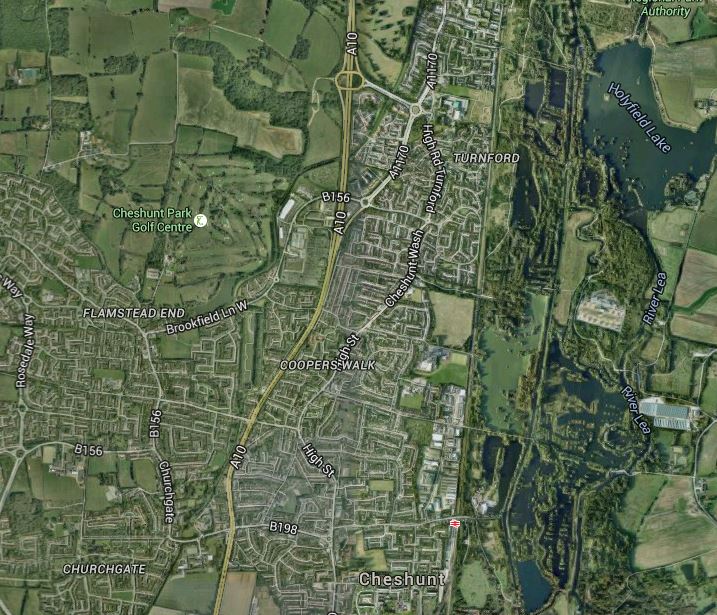
The Area Of The Proposed Turnford Station
Note.
- Cheshunt station is the station towards the bottom of the map.
- The Broxbourne Campus of Hertfordshire Regional College is surrounded by playing fields just off the roundabout on the A10.
- The plans call for the station to be built close to the College.
- The station would also be close to Holyfield Lake.
- Because of the links to the A10, would it make a good Park-and-Ride station?
I think that a station here, could open up the area for residential and leisure purposes.
Woking and Dorking
The BBC article about Surrey, mentioned earlier says this.
A new rail route running crossing from north London into Surrey should extend as far as Woking and Dorking, according the the county council.
Plans for Crossrail 2 currently include Shepperton, Surbiton, Epsom, Hampton Court and Chessington South stations.
But Surrey County Council (SCC) said extending it further south would bring significant benefits to commuters and businesses in the county.
I think that the Crossrail 2 designers have laboured long and hard at the southern end of the route.
The current design effectively combines all the suburban services from Waterloo to Shepperton, Surbiton, Epsom, Hampton Court and Chessington South stations, comines them and sends them in a new tunnel to Clapham Junction, Victoria.
This takes twenty-four trains an hour out of Waterloo, but means passengers wanting to travel to and from Waterloo will have to change trains at Wimbleon or Raynes Park.
I will look at important stations in detail, but before let’s consider 2012-13 passenger numbers at Crossrail 2’s chosen terminal stations and others mentioned as possibilities.
- Chessington South – 493,000
- Dorking – 1,234,000
- Epsom – 3,741,000
- Hampton Court – 2,238,000
- Shepperton – 427,000
- Surbiton – 9,031,000
- Woking – 7,463,000
Also consider the following points.
- Woking and Dorking to Waterloo are 36 and 48 minutes respectively, which are quicker journeys that both Reading and Shenfield to Central London on Crossrail.
- The South Western Main Line is at full capacity.
- Crossrail 2 adds up to another twenty-four train per hour between Central London and Wimbledon/Raynes Park
- Crossrail 2 frees up terminal platforms in Waterloo.
- Extra tracks may be possible between Surbiton and Clapham Junction according to Wikipedia on the future of the South Western Main Line.
- Crossrail’s two hundred metre long Class 345 trains or similar may give the capacity increase needed between London and Woking to Dorking.
- The mess that is Raynes Park station could be rebuilt to create a better interchange, between the line through Surbiton and Working and that through Epsom and Dorking.
- Space is available at both Dorking and Woking station for extra platforms, some of which could face out of London.
- Could it result in a simpler Wimbledon station?
- Dorking could be properly connected to the North Downs Line.
So I do wonder if Surrey County Council has a point.
I do think that Wimbledon and Raynes Park stations are the key, that could unlock a much better Southern end to Crossrail 2.
Wimbledon Station
There is a lot of opposition to the rebuilding of Wimbledon station, so could it be simplified if the following was done.
- Crossrail 2 serves the station in underground platforms.
- The Crossrail 2 tunnels would surface between Wimbledon and Raynes Park
- The trams cross over the main lines on a flyover and meet the District Line platforms head on.
- The station is rebuilt within its current boundaries.
Three other developments could have effects on Wimbledon station.
- Transport for London have plans for a Streatham Common hub. I wrote about that in Puzzled Over Streatham Common Station
- Transport for London’s Transport Plan for 2050 talks about improving the Overground, by using existing lines to create a circular railway based on the Gospel Oak to Barking Line. It could be routed via the Dudding Hill Line to Hounslow and then via Twickenham, Wimbledon and Peckham Rye to Abbey Wood, from where a new Thames Crossing would take the line to Barking to complete the circle.
- The Tramlink could be extended.
All could be built before Crossrail 2, to take pressure off Wimbledon.
I certainly believe that there is a better design to Wimbledon station, that would cause less disruption during the construction and might even cost no more than the current design.
Raynes Park Station
This Google Map sums up Raynes Park station.
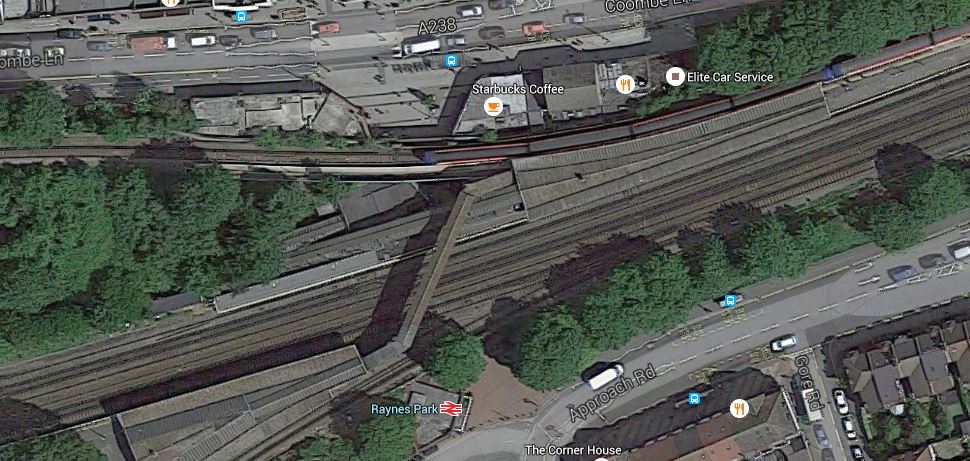
Raynes Park Station
And these are some pictures of the station.
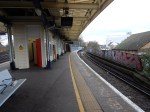
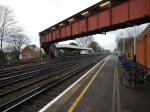
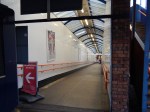
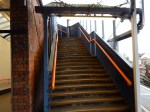
Topsy certainly had a hand in the design.
- Effectively the station has two island platforms; the eastbound 1/2 and the westbound 3/4, which are connected by the footbridge across the fast lines between them.
- All trains from platforms 1 and 2 go to Waterloo, which seems unusual.
- Platform 3 serves services via the South Western Main Line, including Hampton Court, the Kingston Loop and Shepperton.
- Platform 4 serves services via the Mole Valley Line, including Chessington South, Dorking, Epsom and Guildford.
- I think all of the current services that stop at Raynes Park, will transfer to Crossrail 2.
Whitechapel station on Crossrail has a similar problem, where the two eastern branches of the line must be joined or split to the east of the station.
Whitechapel will use only two platforms both handling twenty-four trains per hour, to give walk across interchange between passengers wanting to reverse direction, in perhaps a journey between Romford and Canary Wharf.
As there is plenty of space around Raynes Park station, which will handle only twelve Crossrail 2 trains per hour in both directions, I’m sure that there must be a solution to providing a much better layout at this station.
Look at this map of the lines from carto.metro.free.fr.
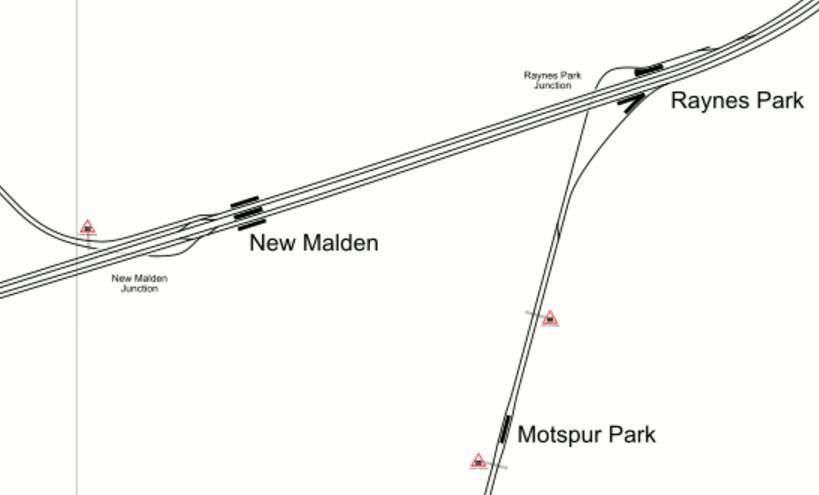
Lines Through Raynes Park Station
Note.
- How close to the east of the station, the lines split and join.
- The level crossings bracketing Motspur Park station. These need to be removed.
- New Malden station to the West has platforms on both slow and fast lines, although those on the fast lines can’t be used.
I think it would be possible to do the following.
- Move the junction to the west of single platforms on the single slow lines.
- If Crossrail 2 is built, the two slow lines would go into tunnels and platforms under Wimbledon at a convenient point.
- All crossings from the fast to slow lines between Wimbledon and Raynes Park would be eliminated.
- Move the two platforms opposite each other.
- Connect the platforms by an updated subway or even a spectacular wide bridge with a cafe above the lines.
- The platforms would be served by escalators and lifts.
Surely if the number of platforms devoted to stopping services could be reduced from four to two, would this mean it would be easier to increase the capacity of the main lines through the station?
After my brief look and a think, I’m sure that there is a very cost effective solution to Rayne Park station, whether Crossrail 2 is built or not. It just needs an architect, engineer or railway professional with imagination.
Dorking Station
Dorking station is one of the alternative termini put forward by Surrey County Council, probably as an alternative to Epsom, which I wrote about in Before Crossrail 2 – Epsom.
Compare this Google Map of Epsom station.

Epsom Station
With this one of the two stations in the centre of Dorking.
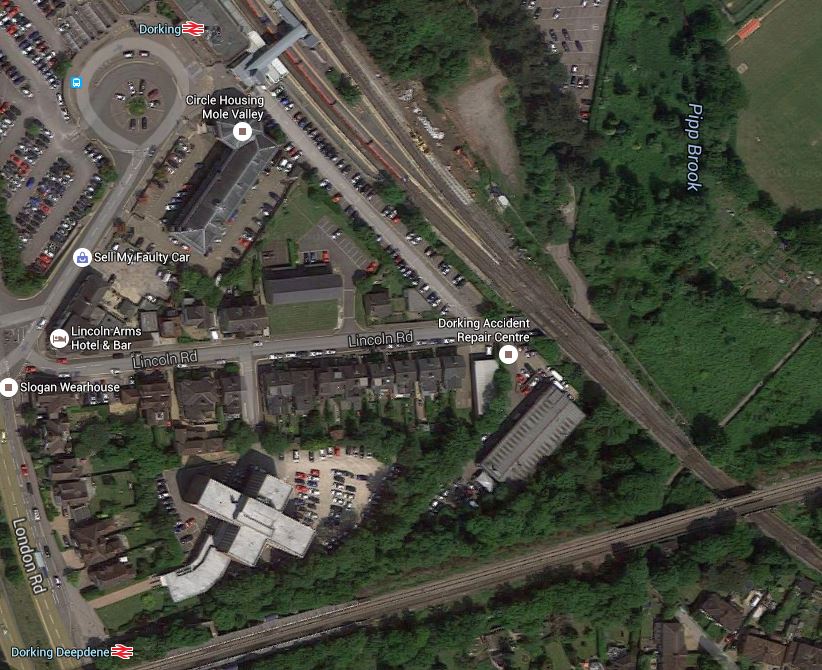
Dorking And Dorking Deepdene Stations
Dorking Deepdene station is on the North Downs Line from Reading to Gatwick Airport.
The big advantage of Dorking over Epsom, is that, it is surrounded by so much space and not crowded round with buildings and rail bridges.
I also feel that a good architect could extend and upgrade Dorking station so that it connected to the North Downs Line , which crosses about two hundred metres or so south of the station.
Dorking station is shown in these pictures.

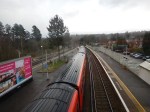
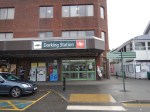
I feel that Crossrail 2’s engineers will look seriously at extending the Epsom branch to Dorking.
Woking Station
Woking station is an important one in a town of around a hundred thousand people.
This Google Map shows the station.
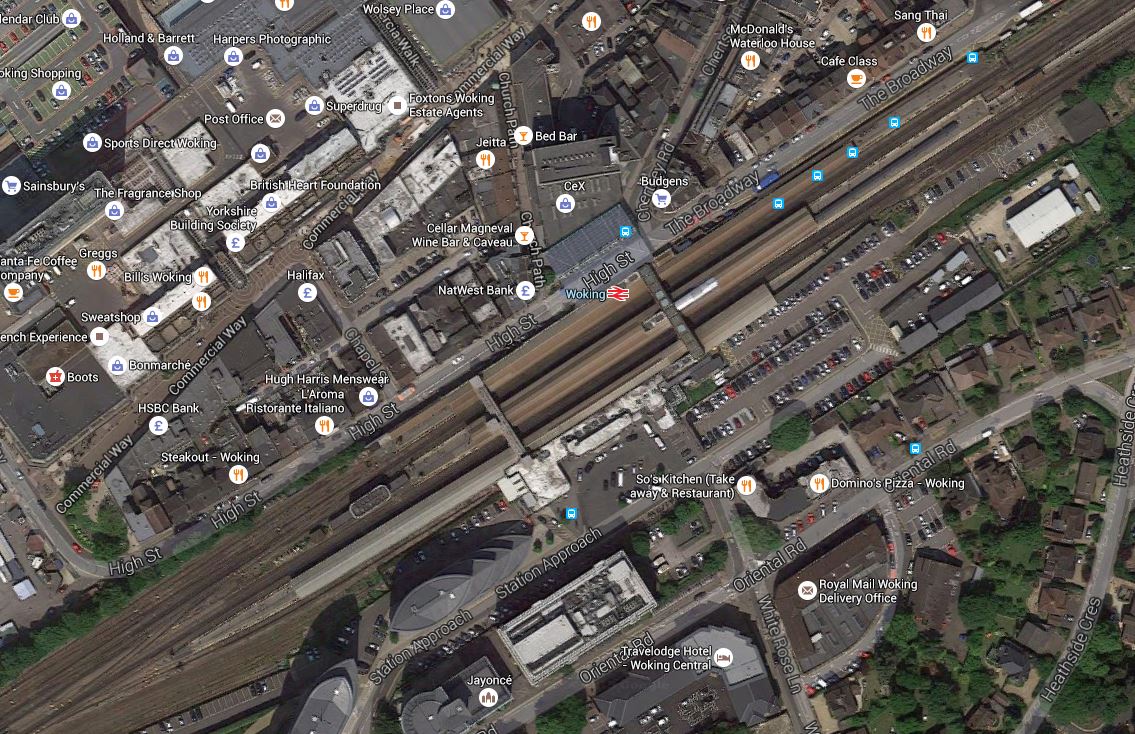
WokingStation
Note how the railway line goes right through the town centre.
It would be difficult, but not impossible, to put a sensible number of new platforms for Crossrail 2 in the station.
These are some pictures of the station.
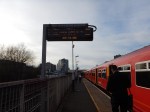



I believe Working has possibilities to provide a busy terminus in the South West to match Broxbourne in the North and Reading and Shenfield on Crossrail.
Conventional solutions are possible with bay terminal platforms replacing the car parks to the south-east.
Other radical solutions might be implemented.
As the fast main lines are the middle two of the four lines, could they not be dropped into a cut and cover tunnel, which had the terminal platforms for Crossrail 2 on top? I wrote about Antwerp Central station in A Triple Decker Station. So it wouldn’t be a first!
Land is an expensive resource in a railway station and we must make it work harder with-over station developments and innovative station layouts.
Flat land used for car parking is a waste of space.
Other Stations
The other stations from Raynes Park outwards are a bit of a mixed bunch, with only a few having step-free access. These are some pictures, I took on the way to Woking.



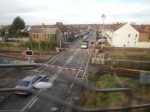

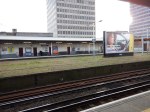
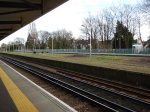
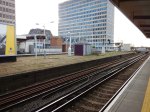
Whether Crossrail 2 is built or not, some of these stations must be updated to a modern standard.
Conclusions
As to Crossrail 2 being extended north and south, I’ll leave that to the planners.
But if Crossrail 2 is built or not, this will not affect the fact, that there are a lot of stations on this line, that need updating to a modern standard.
I also feel that there is scope to create local metro networks, based on large towns and cities served by Crossrail, Crossrail 2 and Thameslink.
For Crossrail these might be based on.
- Abbey Wood and Dartford.
- Milton Keynes, Reading, Slough and Basingstoke.
- Shenfield, Billericay, Basildon and Southend.
- Watford, Amersham and St. Albans.
For Crossrail 2 these might be based on.
- Broxbourne, Harlow and Cambridge.
- New Southgate.
- Wimbledon, Surbiton and Raynes Park.
For Thameslink these might be based on.
- Brighton and the East and West Coastways.
- Croydon, where Tramlink already exists.
- Cambridge
- St. Albans and Hatfield
- Peterborough
These metro networks could be a mixture of trains, trams and tram-trains. Add tram-trains to the Tramlink and you would have a good model to start from.
Crossrail, Crossrail 2 and Thameslink are just the long distance string, that would connect everything together.
One action that would help capacity in London, would be to screw as much increase in frequency out of the cross-London routes. Compared to the Victoria Line, Jubilee Line and Paris, twenty-four trains per house is a very poor frequency.
Before Crossrail 2 – Surrey County Council Think Crossrail 2 Should Go To Guidford
Chelsea may not want Crossrail 2, but according to this article on a Guildford web site, Surrey wants Crossrail 2 to be extended extended to Guildford and Woking to take pressure off their overcrowded services into Waterloo.
Although it could be a good idea, Crossrail 2 is getting submissions from many places to be included in the network like Stansted.
I think it would be better for Crossrail 2 to have good cross platform interchanges at places like Tottenham Hale, Cheshunt, Broxbourne and New Southgate in the North and Clapham Junction, Epson and Wimbledon in the South West, so that passengers can transfer easily to longer-distance services.
These improvements should raise the stations to a similar standard of say Stratford on Crossrail and they will be needed whether Crossrail 2 is built or not.
1. Wimbledon station must be a prime candidate for rebuilding, especially as eventually it could have an underground station for Crossrail 2. There is a Future section in the Wikipedua entry, which in addition to talking about Crossrail 2, details improvements to Tramlink. In my view the station needs a complete rebuild now, which although would be a challenge for architects, builders and passengers alike could bring capacity, access, operational and other improvements.
As I don’t want to repeat myself, there are more of my thoughts on this dreadful station in Crossrail 2 at Wimbledon.
2. Epsom station would appear to have been redeveloped. But will this be enough to handle Crossrail 2 and improve connectvity into Surrey?
I shall extend this post.
Hospital Closure Protests
Yesterday’s BBC London local news led with a story about how the hospitals of Epsom and St. Helier NHS Trust will be redeveloped.
They currently have three hospitals at Epsom, St. Helier and Sutton and consultants overhead on a train, are saying that a new hospital will be developed on one of the sites.
From what the report said, the locals want to keep all hospitals, which may not be the most economic or practical solutions.
I have looked at Google Earth images and the details on how you get to these hospitals and I suspect that the only practical way to get to these hospitals is by car or taxi. But as they probably charge an arm and a leg for parking, this is probably something that gets protested about all the time.
If they do build a new hospital it must be easily accessible by public transport. At present all sites need a long walk to all except Epsom, which is obviously a policy designed to discourage poorly and elderly patients and visitors without their own transport. There have been plans to link St. Helier hospital on the Tramlink, but nothing seems to be happening in that area. This is the Google Earth image for the hospital.
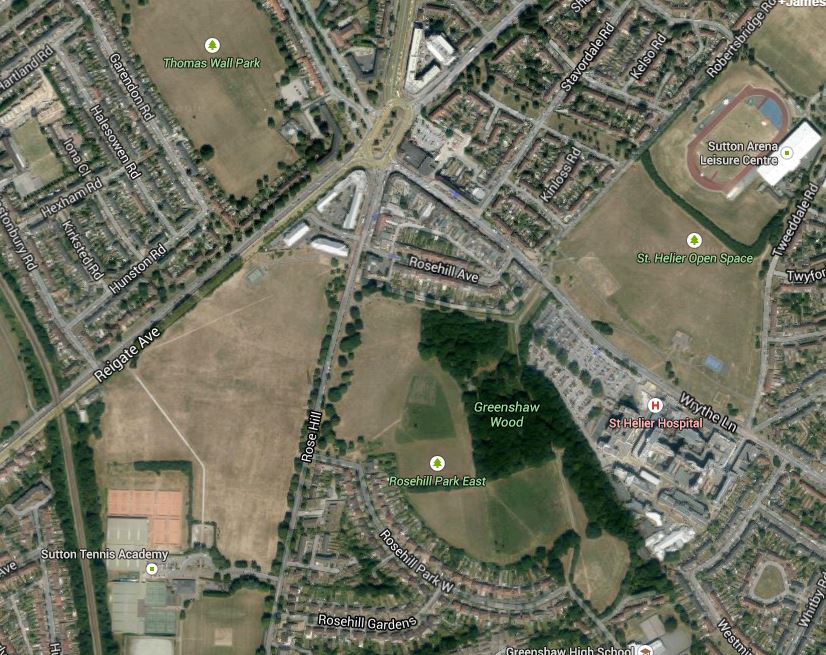
St. Helier Hospital
Surely, if you are going to create a new super-hospital it must have first-class public transport links. This article in the Local Guardian shows the route of the proposed Tramlink extension.
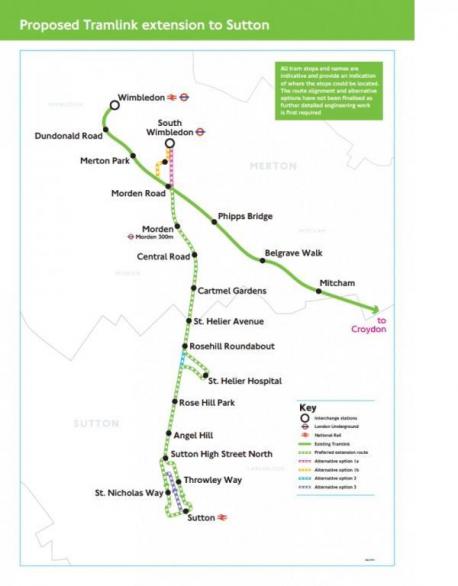
St. Helier Tramlink
I would assume that the loop to St. Helier Hospital includes street running or goes through Rose Hill Park. This a Google Earth image of the area.

St. Helier Tramlink Detail
The roundabout at the top left is Rosehill roundabout, which is planned to have a tram stop and the hospital is at the bottom right.
It would seem feasible to run the Tramlink to the hospital, but would the street running and/or possible loss of green space, create a lot of opposition?
A survey on the Merton Council web site is very supportive of Tramlink going to the hospital.
An interesting fact is that there is a frequent train service, that takes just ten minutes between Epsom and Sutton stations, so if a super-hospital was built on the St. Helier site, getting there from Epsom wouldn’t be difficult, provided of course the Tramlink extension was built.
If we look at Epsom Hospital becoming the super-hospital, then here is a Google Earth image that shows both Epsom station and the hospital.
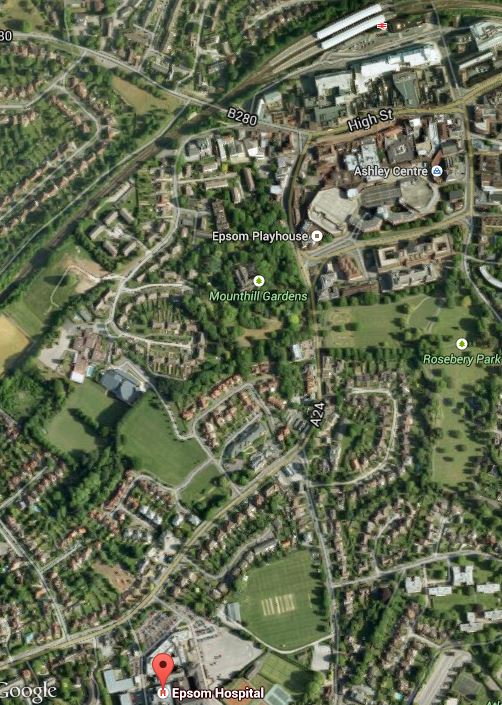
Epsom Station And Hospital
The station is at the top and the hospital is indicated by the red arrow at the bottom.
From experience of the area years ago, it is not an easy walk and should a super-hospital be served by buses alone?
The other site is to build it on the old Sutton Hospital. But this is only served by buses from Sutton station, as is the nearby world-class Royal Marsden Hospital. This Google Earth image shows the two hospitals and the nearest rail station at Belmont.
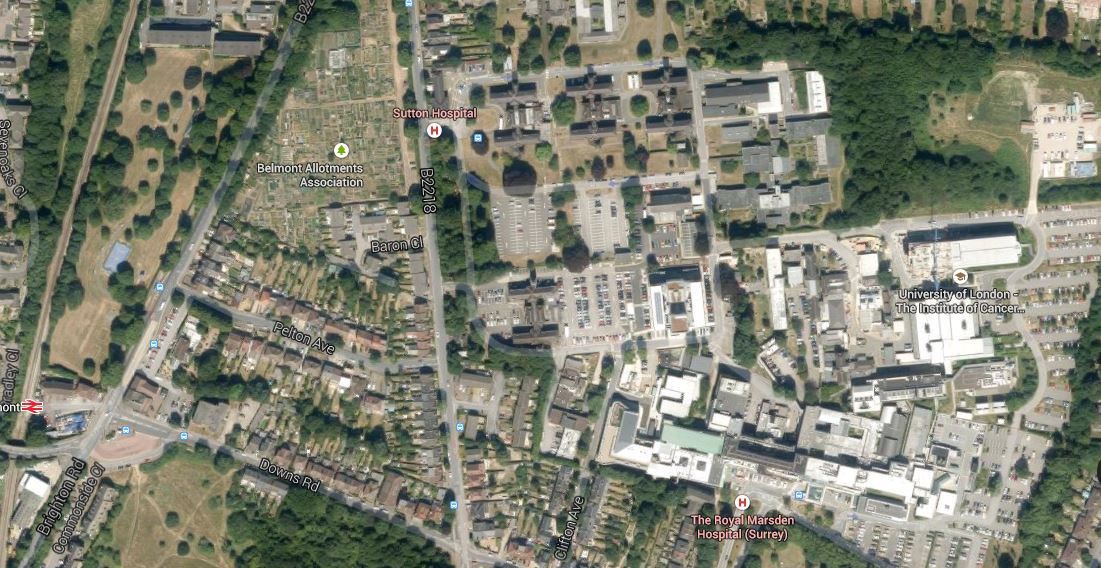
Sutton Hospitals And Belmont Station
There could be possibilities to sort out the transport links in some way to Belmont station, but it only has an infrequent service with nothing on a Sunday.
I have a feeling that if the Tramlink extension is built between Wimbledon and Sutton stations, that if tram-trains were used they could extend down the Epsom Downs branch, with perhaps a loop to serve the developing Health Campus based on the Royal Marsden and perhaps a super-hospital built at Sutton.
The Oil Find That Will Settle The Result Of The Election
I’ve believed for some time, that which ever party wins the election in a few weeks time should win the next election in 2020.
This belief is based on the fact, that so many large rail and other transport projects are due for completion in the later years of this decade.
The report on the BBC of the large oil find at Horse Hill in Surrey, is one of many that describe the find as of national significance. This is said in the BBC’s report.
“We think we’ve found a very significant discovery here, probably the largest [onshore in the UK] in the last 30 years, and we think it has national significance,” Stephen Sanderson, UKOG’s chief executive told the BBC.
Many will worry that developing an oil field in rural Surrey could be an environmental disaster.
A friend of mine had a lot to do with the development of the last major onshore oilfield in the UK at Wytch Farm, which is the largest onshore oil-field in Western Europe. The new field could be bigger, but all reports get their millions and billions mixed up.
Wytch Farm is not your average oilfield, as it is in the heart of rural Dorset by Corfe Castle. Wikipedia says this about the environment of the field.
Most of the field is protected by various conservation laws, including the Jurassic Coast world heritage site, Purbeck Heritage Coast and a number of sites of special scientific interest, areas of outstanding natural beauty and nature reserves (including Studland and Brownsea Island), so the gathering centre and most of the well sites are small and well screened by trees. Directional drilling has also contributed to reducing the impact on the local environment, with extended reach drilling from the Goathorn Peninsula attaining distances in excess of 10 km.
But the field would appear to have been an impeccable neighbour, more conspicuous by its absence in the media.
So I think the UK has good form in the development of oilfields in sensitive areas and there is no reason to expect that the development of Horse Hill will be any more disruptive than that at Wytch Farm.
The field’s biggest effect will be on the UK economy, if as reports are saying, production will start in a few years time, it will be producing revenues and cutting imports by the next election in 2020.
Circumstances have left the incoming government with a very large dowry.
They will have to be really stupid to lose in 2020. But then that’s normal for politicians.
 The Anonymous Widower