Potential Tram Builders Announced For New London Trams
The title of this post, is the same as that of this article on RailAdvent.
These three paragraphs outline the design of the new trams.
Transport for London has issued an Invitation to Tender for four manufacturers to design and build a new fleet of trams.
Alstom UK, CAF, Hitachi and Stadler are the four manufacturers who can now proceed to the next stage of the procurement process with Transport for London to design and build the new trams.
The new trams are expected to feature air-conditioning, real time travel info and charging points, along with areas designed for wheelchair users and those with pushchairs and luggage.
It sounds that the new trams will be to a higher standard with more comfort and interior space.
These are my observations and thoughts.
Will There Be The Same Number of Trams?
These two paragraphs indicate the number of trams.
The initial contract will be for 24 new trams to replace the oldest trams on the network – which are now nearly 25 years old.
There is an option in the contract to replace the trams that were introduced from 2012.
Could this mean, that each tram would be replaced on a one-to-one basis?
It would surely make it easy to introduce the new fleet.
Will The New Trams Be Longer?
To me, the most significant words in the article are “areas designed for wheelchair users and those with pushchairs and luggage”.
As passengers seem to want to carry more and more with them on buses, trains and probably trams in London, I believe the new trams will probably need more interior space.
Increasing the width of the tram, would probably mean gauging difficulties, but with the lengthening of some platforms longer trams might be possible.
The current trams are as follows.
- 24 x Bombardier CR4000 – 30.1 metres – 70+138=208 = 6.9 pass/metre
- 12 x Stadler Variobahn – 32 metres – 72+134 = 206 = 6.4 pass/metre
Note.
- The total number of each tram type is at the left.
- Seats+Standing=Total Passengers.
- The Bombardier trams only have a single articulation, but it looks like the Stadler ones have four.
The longer Stadler trams seem less crowded, despite carrying two fewer passengers.
I have looked at the terminal platforms on maps and it appears, that 35 metre and possibly 40 metre trams would be possible.
At least in London, passengers are used to being told not to use the end door.
A 40 metre tram could probably handle over 250 passengers based on the Stadler passenger density.
Longer Trams Could Increase Capacity By Up To 25 %
I believe my figures show this could be possible.
More Articulations Should Mean A Tighter Turning Circle
This could help operation on some existing or new sections of London Tramlink.
Would Battery Tram-Train Operation Be Useful?
CAF’s trams in the West Midlands already have batteries and Stadler’s tram-trains in Cardiff will have batteries to extend routes on rail tracks, that don’t have electrification.
In Could Beckenham Junction To Birkbeck Be Run Using Third-Rail Tram-Trains?, I detailed how third-rail tram-trains could be used between Harrington Lane tram stop and Beckenham Junction station to create more capacity.
I believe that third-rail tram-trains would work, but that Health and Safety would outlaw the concept.
On the other hand, battery-electric tram trains could probably handle the link between train and tram routes.
If I was bidding for the TramLink contract, I’d make sure the trams could be updated with a battery-electric tram-train capability.
Increasing Capacity At Elmers End Tram Stop
Elmers End tram stop, is the only terminal on the London Tramlink with a single platform.
This map from OpenRailwayMap shows the platform layout at Elmers End station.
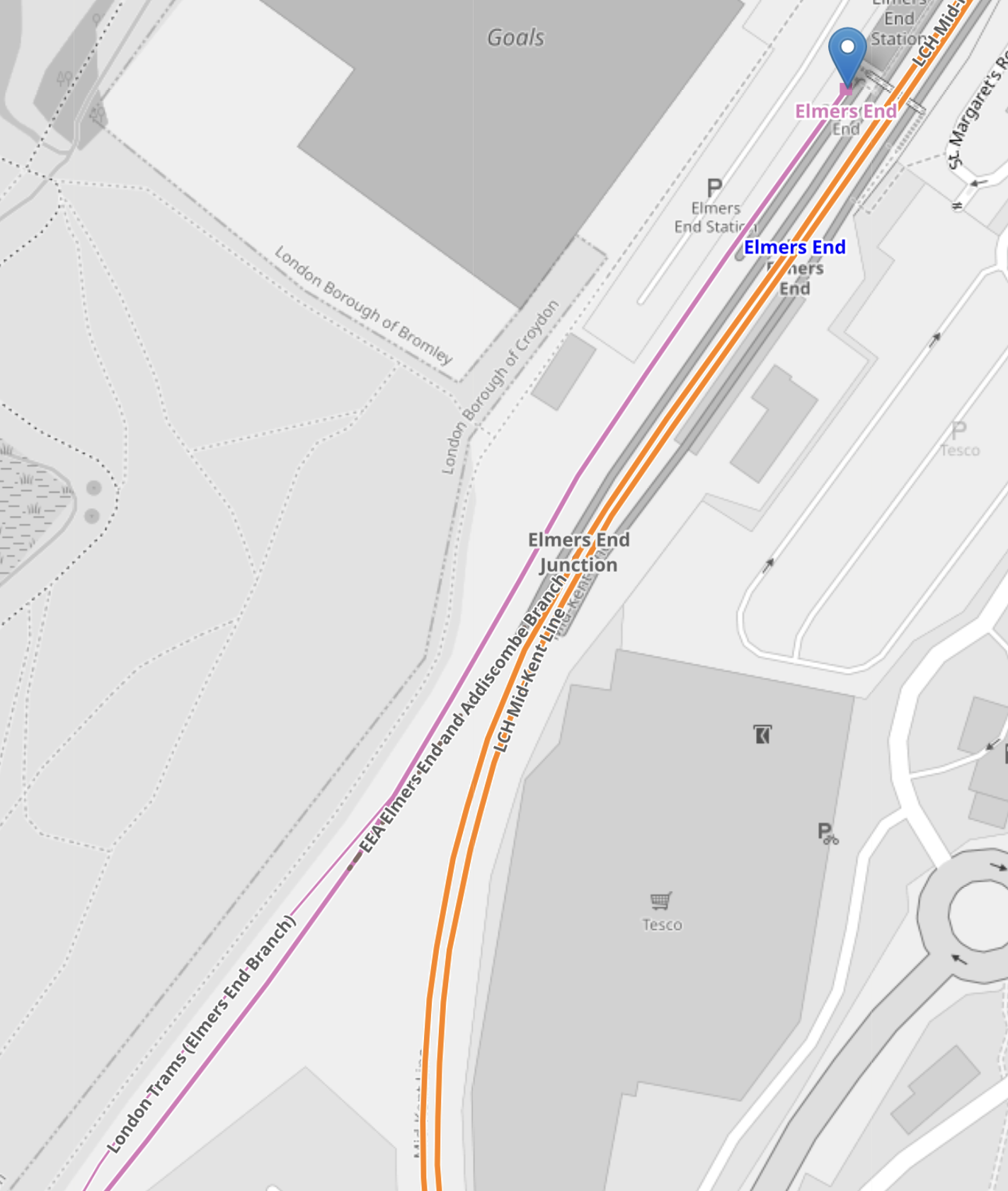
Note.
- The orange lines are the Hayes Line.
- The mauve line is the London Tramlink.
- The London Tramlink has a single platform on the North-West side of the Hayes Line.
These pictures show Elmers End station and a tram in the London Tramlink platform.
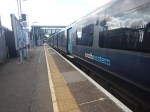
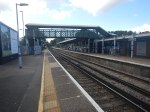
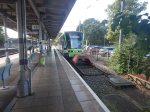
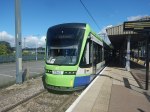
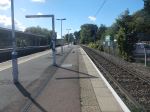
Note.
- The bridge in the station is not step-free.
- The tram is a five-section Stadler Variobahn.
- The tram platform would appear to be able to handle a tram, that is several metres longer than the 32.0 metre Stadler Variobahn.
- The London Tramlink has a typical off-peak service to Wimbledon every ten minutes from Elmers End tram stop.
The Wikipedia entry for Elmers End station, says this about Tramlink developments at the station.
Work is underway to open a second tram platform and double the tram line to Arena to increase capacity. As of March 2019, vegetation has been cleared to make way for the new line. The platform was due to open in December 2020, but has been delayed.
My pictures show no ongoing work or evidence of the second Tramlink platform.
There are two main ways, that capacity can be increased at Elmers End station.
- Install a second platform and run more trams to the station.
- Run longer trams with a higher capacity.
Perhaps, Transport for London have decided, that the second way, is the best, especially, if the money saved, allows them to build a much-needed step-free footbridge at Elmers End station.
From my observations, I would estimate that Elmers End tram stop could accommodate a forty metre tram and possibly, one that was even longer.
Arena Tram Stop
The Arena tram stop, is where the Beckenham Junction and Elmers End branches join and split.
This map from OpenRailwayMap shows the platform layout at Arena tram stop.
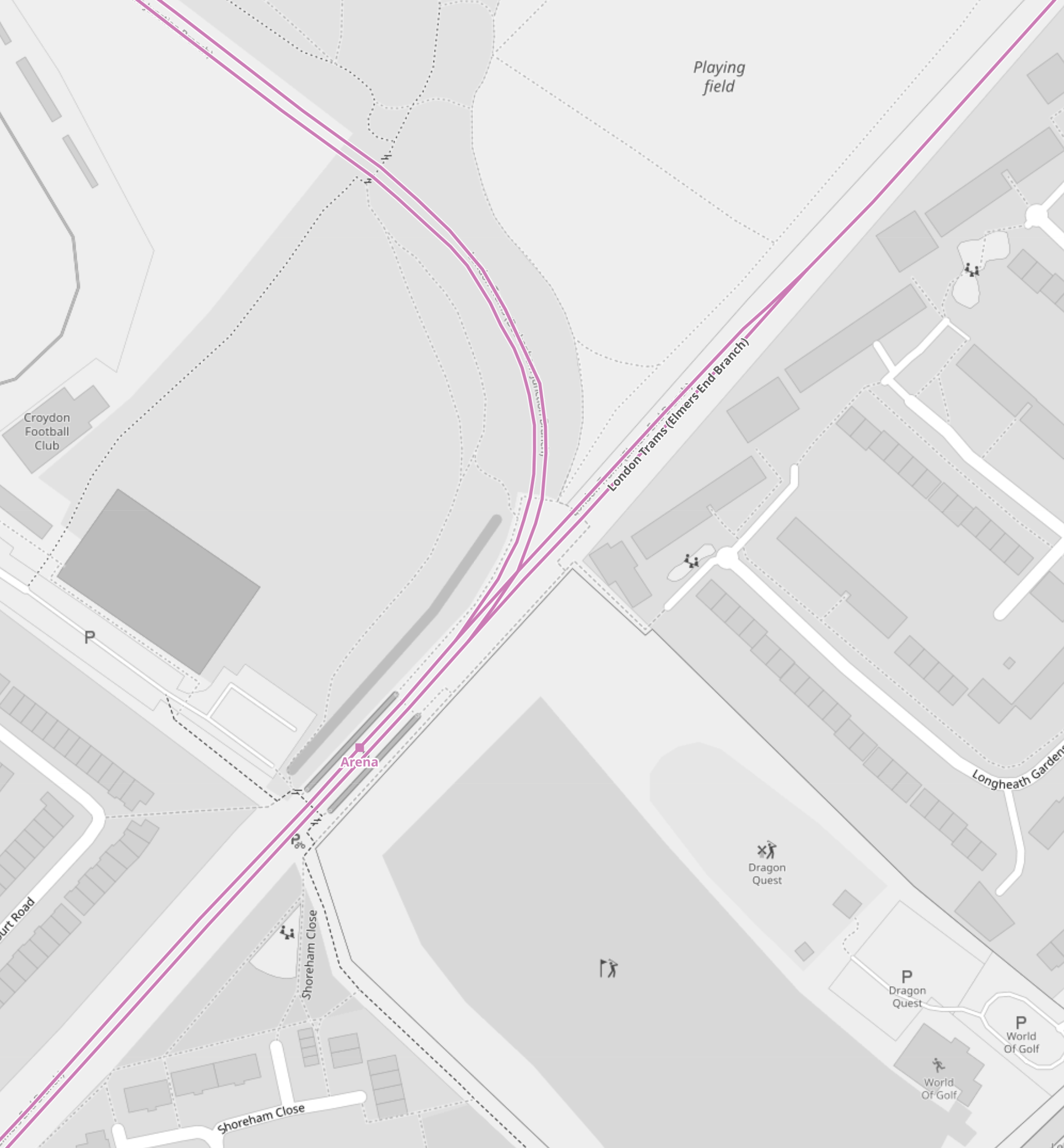
Note.
- The mauve lines are the London Tramlink.
- The line going North-East runs to Elmers End. It starts off as double-track at Arena tram stop and quickly becomes single track all the way to Elmers End. tram stop.
- The line going North-West runs to Beckenham Junction.
- The line going South-West runs to East Croydon and Wimbledon.
- The platforms are on the outside of both tracks.
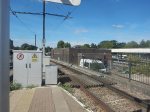
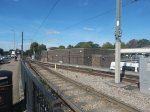
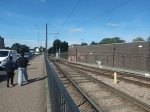
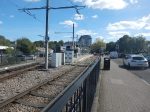
These pictures show Arena tram stop and some trams passing through.
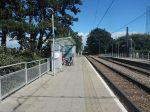
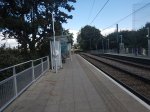
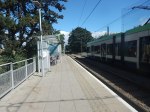
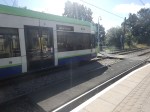
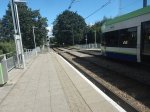
Note.
- The tram platforms are generally a few metres longer than the trams.
- All tram doors are step-free to the platform.
- Passengers walk across the line in front or behind the trams.
- The platform is wide, so that passengers can stay well clear of the occasional passing tram. One picture shows a tram is signed “Not In Service”
I believe, that with some judicial platform lengthening, some selective door opening and trams stopping automatically in the right place on the platform, that longer trams could be handled in a stop like Arena.
As with Elmers End, I believe a forty metre tram will be possible, but this might not be the limit with clever design.
Handling Longer Trams At Beckenham Junction Tram Stop
This map from OpenRailwayMap shows the platform layout at Beckenham Junction tram stop.
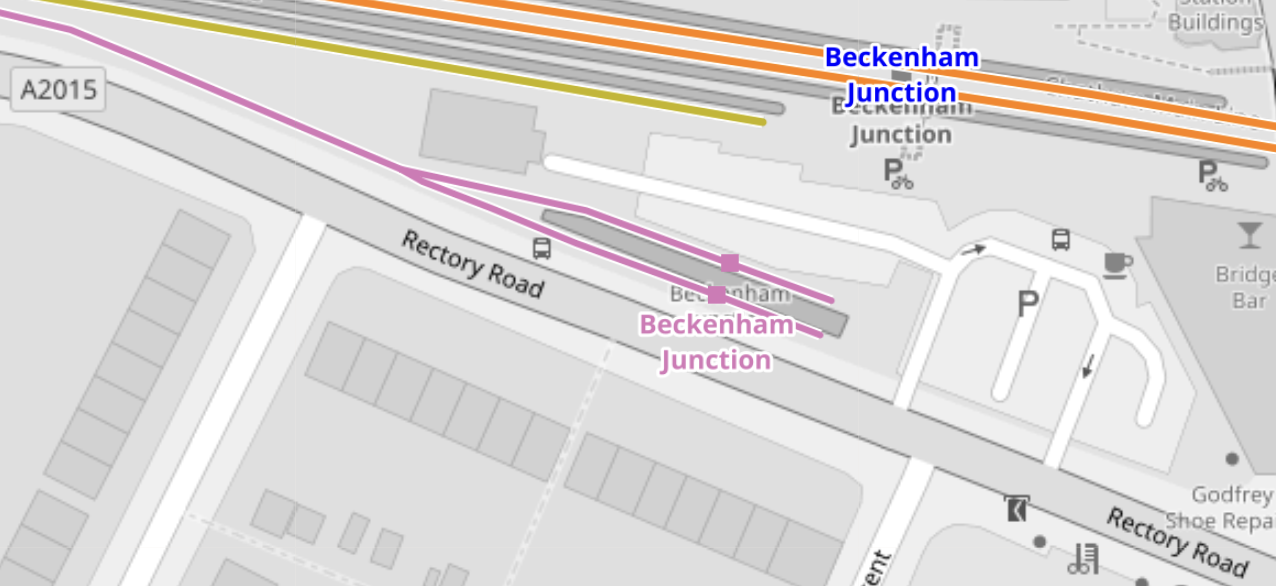
Note.
- The orange lines are the Chatham Main Line.
- The mauve line is the London Tramlink.
- There are a pair of short platforms for the London Tramlink.
- The platforms would be difficult to extend to the East.
- The platforms would be difficult to extend to the West, as the map above shows a building, just to the North of the junction of the two Tramlink platforms.
These pictures show Beckenham Junction station and the London Tramlink platforms.
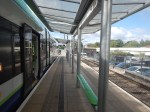
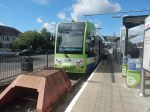
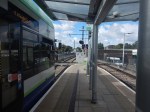
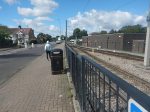
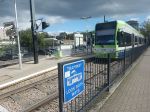
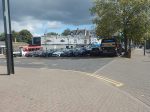
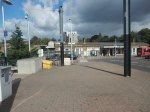
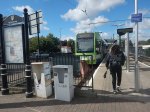
The Wikipedia entry for Beckenham Junction tram stop, says this about the Tramlink service.
Tram services at Beckenham Junction are operated by Tramlink. The tram stop is served by trams every 10 minutes to Wimbledon via Croydon. This is reduced to a tram every 15 minutes on Saturday evenings and Sundays.
Perhaps, the solution to lengthen Tramlink platforms at Beckenham Junction is to do the following.
- Rebuild the building to the North of the junction of the two Tramlink platforms.
- Extend the two Tramlink platforms to the West.
- Move the junction between the two Tramlink platforms to the West.
These pictures show the building in detail.
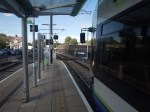
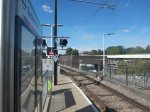
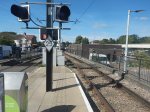


Note.
- There is a Network Rail van outside the building.
- The building looks like it dates from about 2000, when the Tramlink was built.
- Perhaps, the building houses power supply or signalling equipment for the Tramlink.
After the modifications, operation would be the same, but longer trams could be handled.
Trams And Trains Between Birkbeck And Beckenham Junction Stations
This short section of track must be one of the most unusual and complicated in the UK.
- There are three dual National Rail and Tramlink stations; Birkbeck, Avenue Road and Beckenham Road.
- Each station has a single bi-directional National Rail track and/or platform.
- Birkbeck has a single bi-directional Tramlink platform.
- Avenue Road and Beckenham Road each have two Tramlink platforms.
Engineer; Baldrick was obviously having one of his cunning phases.
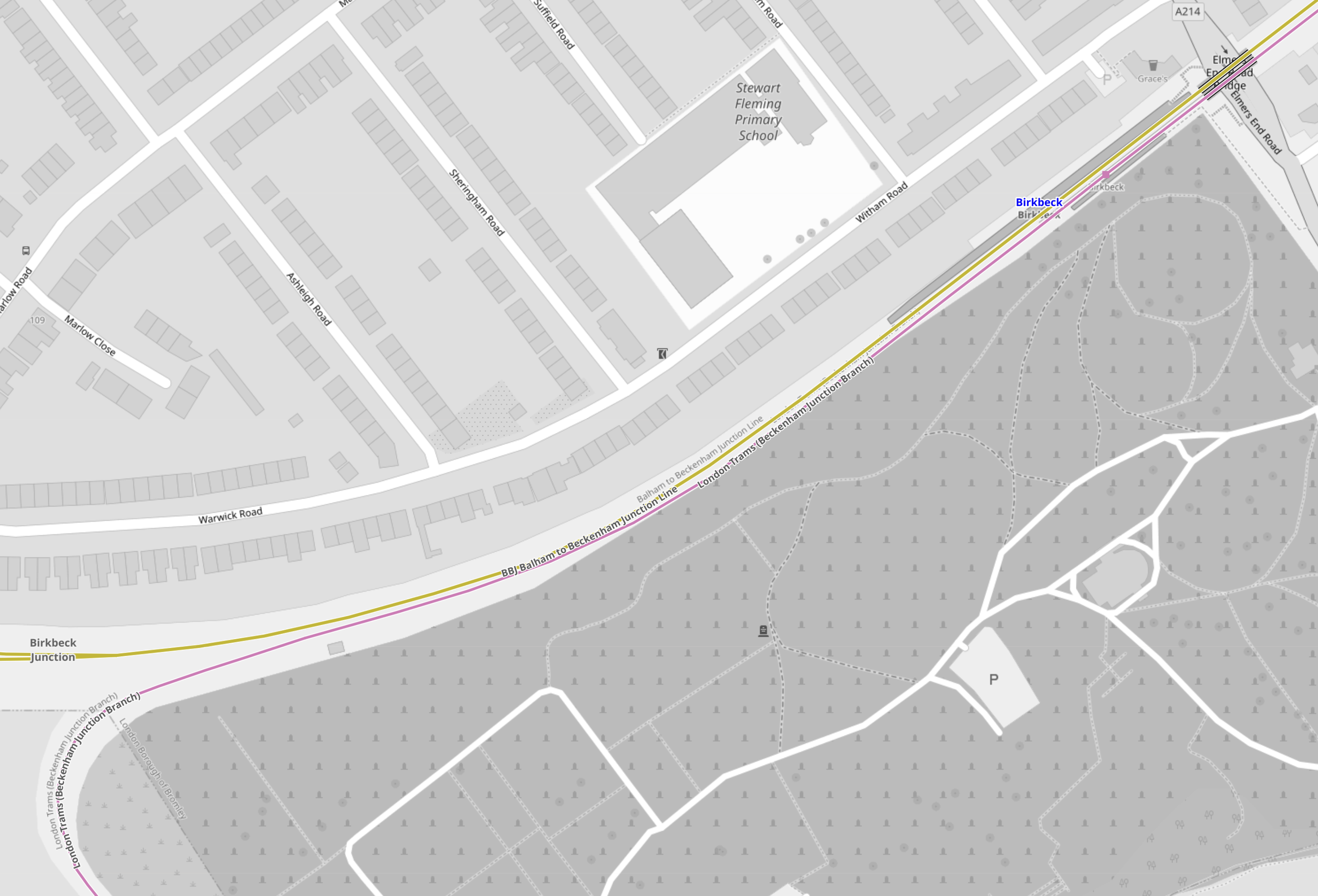
This map from OpenRailwayMap shows the track/platform layout at Birkbeck station/tram stop.
Note.
- The yellow line is the National Rail line between Crystal Palace and Beckenham Junction.
- The mauve line is the London Tramlink between Croydon and Beckenham Junction.
- There is no rail connection between the two lines.
Birkbeck station/tram stop has bi-directional platforms on both National Rail and London Tramlink.
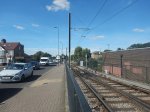
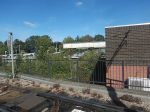
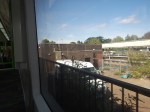
These pictures were taken at the Birkbeck station/tram stop.

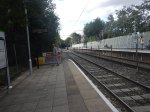
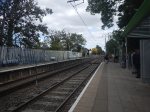
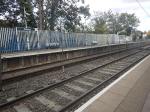
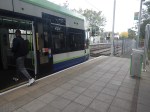
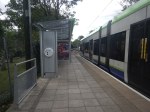
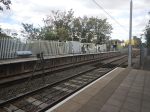
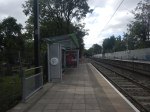
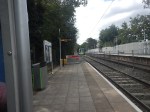
Note.
- The two bi-directional platforms.
- The wire fence between the tracks.
- The two tracks appear to be the same level, but the National Rail platforms seem quite a bit higher.
From the pictures, I would estimate that the Birkbeck tram stop platform is currently about thirty-five metres and could probably handle a forty metre tram with selective door opening.
This map from OpenRailwayMap shows the track/platform layout at Avenue Road station/tram stop.
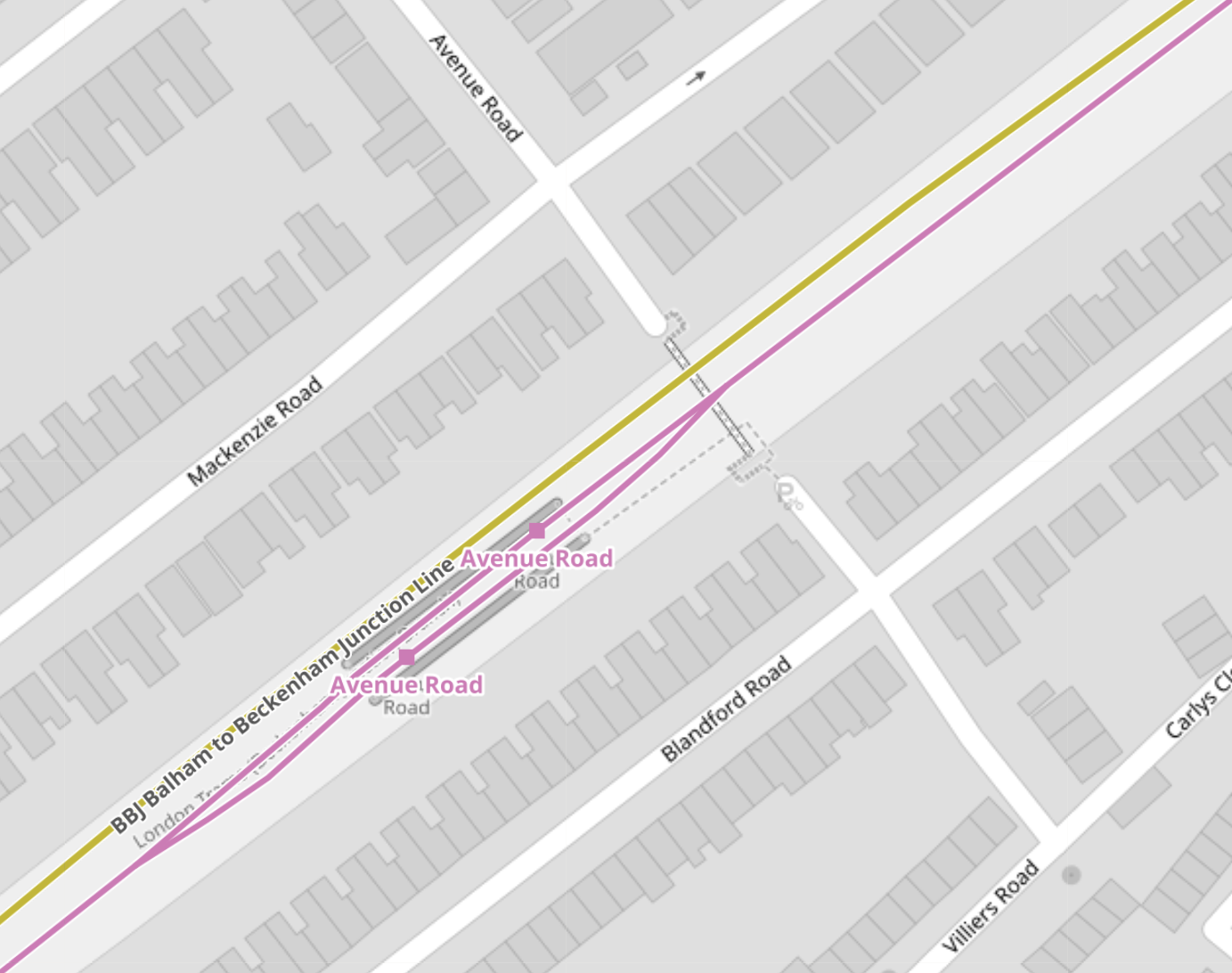
Note.
- The yellow line is the National Rail line between Crystal Palace and Beckenham Junction.
- The National Rail line isn’t shown to have a platform.
- The mauve line is the London Tramlink between Croydon and Beckenham Junction.
- There is no rail connection between the two lines.
London Tramlink has a loop through the tram stop and each branch has a platform.
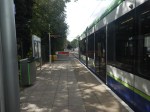
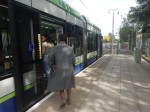
These pictures were taken at the Avenue Road tram stop.
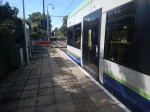
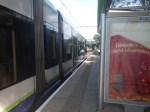
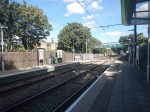
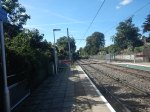
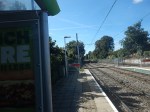
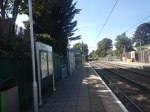
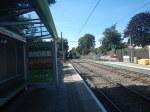
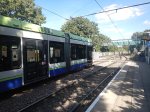
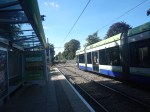
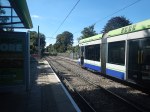
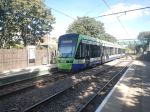
I would estimate the the loop at Avenue Road tram stop could handle a forty metre tram and possibly one of forty-five metres, judging the loop against this thirty-two metre Stadler tram.
This map from OpenRailwayMap shows the track/platform layout at Beckenham Road station/tram stop.
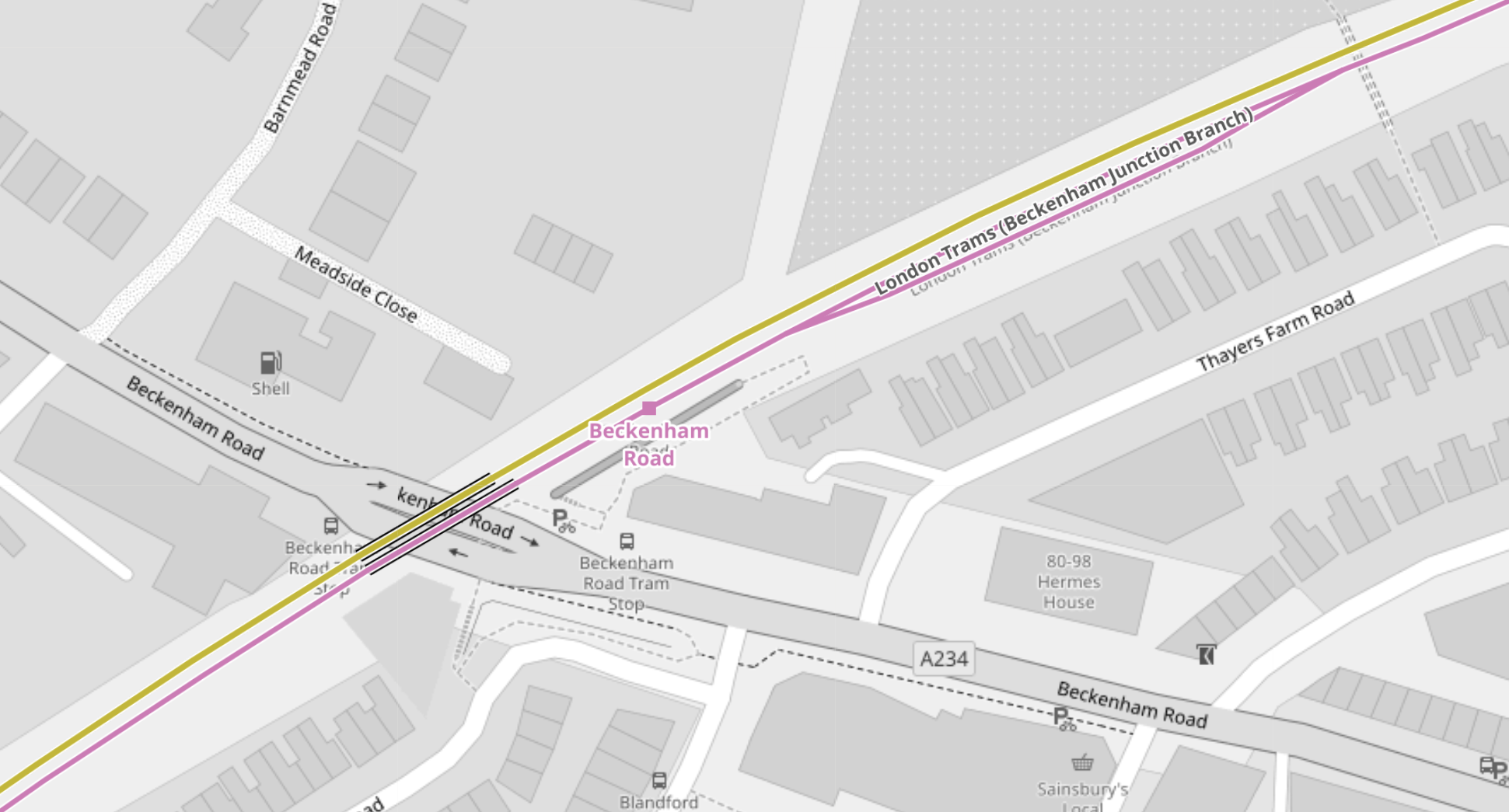
Note.
- The yellow line is the National Rail line between Crystal Palace and Beckenham Junction.
- The National Rail line isn’t shown to have a platform.
- The mauve line is the London Tramlink between Croydon and Beckenham Junction.
- There is no rail connection between the two lines.
The London Tramlink has a single bi-directional platform.
There is also a loop in the London Tramlink to the East of Beckenham Road station/tram stop to allow trams to pass.
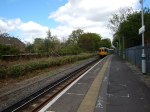
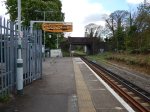
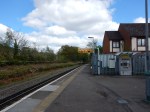
These pictures were taken at the Beckenham Road tram stop.
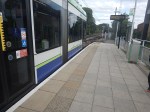
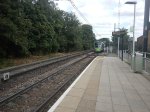
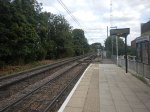
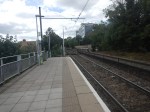
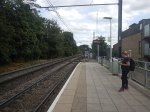
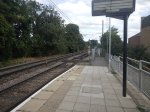
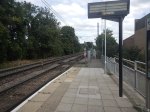
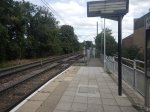
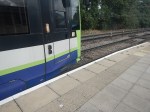
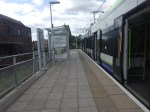
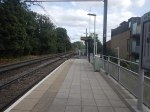
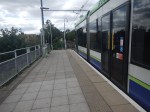
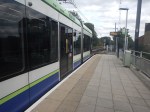
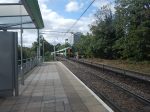
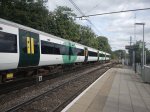
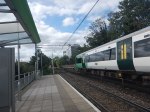
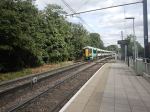
Note.
- A train conveniently came through from London Bridge to Beckenham Junction, when I was taking pictures.
- Several pictures show trams using the loop to the East of the tram stop.
- Both types of tram were pictured in the tram stop.
- The platform in the tram stop is wide.
From the pictures, I would estimate that the Beckenham Road tram stop platform is currently about thirty-five metres and could probably handle a forty metre tram with selective door opening.
Tram-Train Operation Between Birkbeck And Beckenham Junction Stations
I am certain that if this track was being designed today, tram-train operation would be used.
- There would be two tracks, with one for each direction, through Birkbeck, Avenue Road and Beckenham Road stations.
- Both tracks would have dual-height platform at each station/tram stop, so tram and train passengers got level boarding.
- Trains would use third-rail power and trams would use battery-power.
Unfortunately, tram-trains didn’t exist, when the London Tramlink was designed.
Handling Longer Trams At New Addington Tram Stop
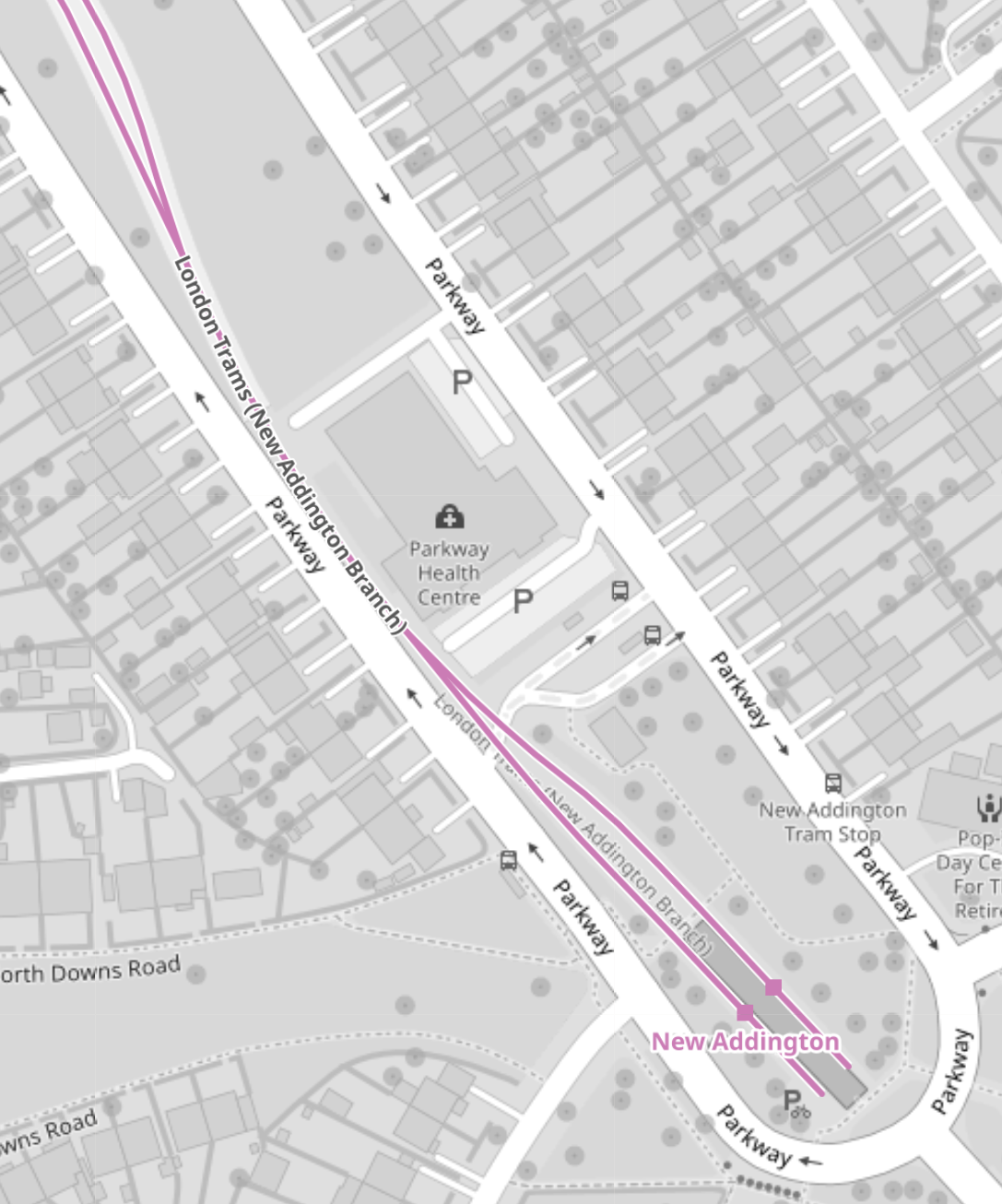
This map from OpenRailwayMap shows the platform layout at New Addington tram stop.
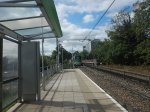
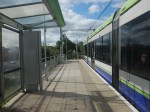
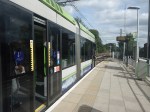
These pictures show the New Addington tram stop and the London Tramlink platforms.
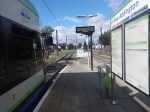
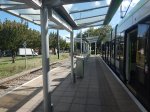
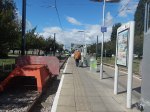

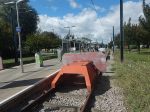
If some of the grassland around the platforms was allocated to the tram stop, I suspect the platforms could be lengthened.
Handling Longer Trams At Wimbledon Station
This map from OpenRailwayMap shows the platform layout at Wimbledon station.
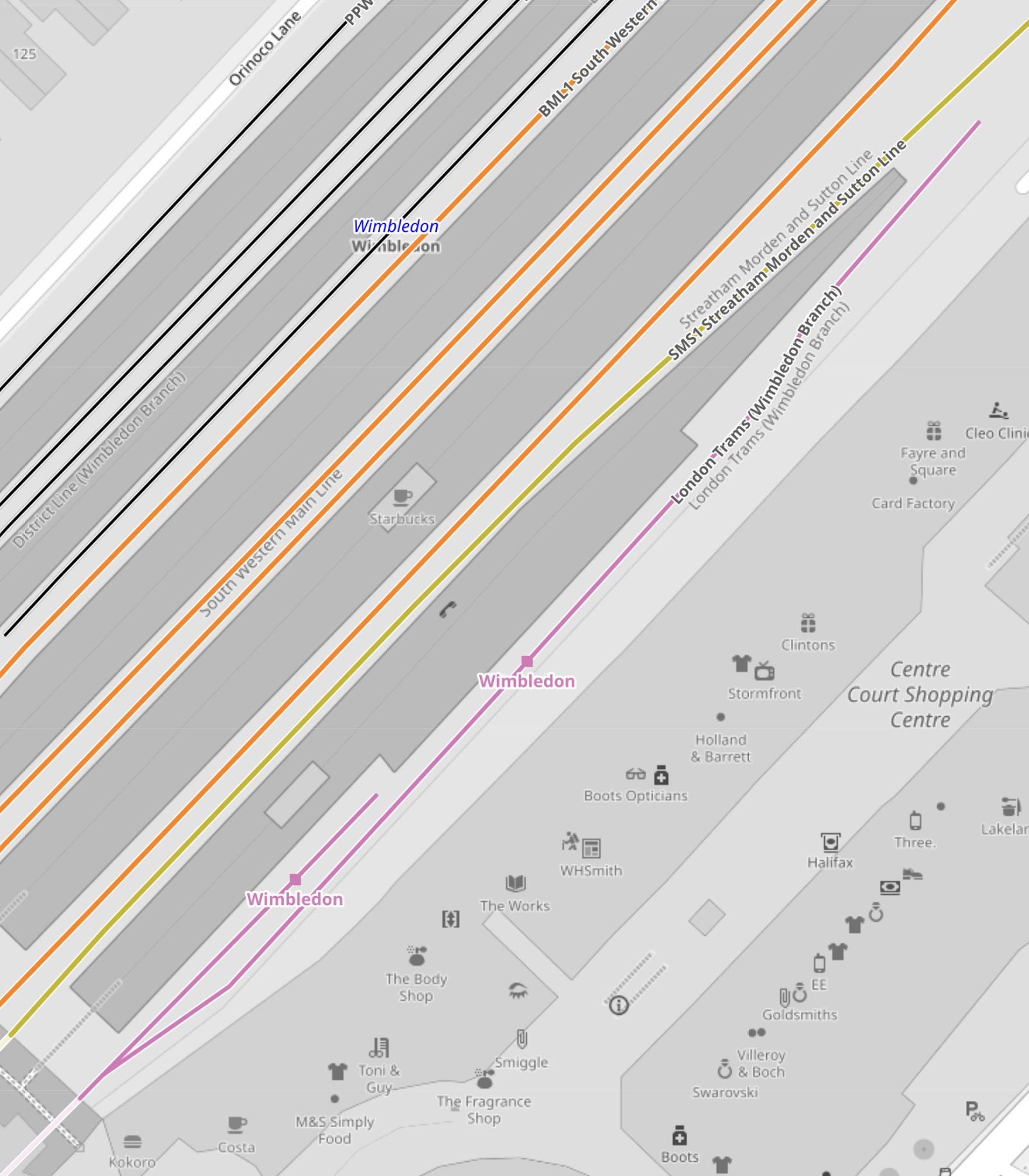
Note.
- The mauve line is the London Tramlink.
- There are two platforms; 10A and 10B, which are indicated with a separate dot.
- Platform 9, which is used by Thameslink, is the other side of Platform 10, so interchange to Thameslink is excellent.
- The main tram platform 9/10 is wide.
- The platforms are step-free to the trams, with lifts to the station bridge and the other platforms and Way Out.
I suspect that when the second platform was built, both platforms were made longer than the thirty-two metres needed for the Stadler trams.
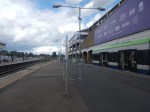
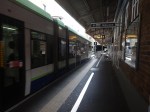
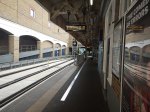
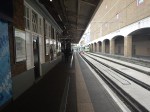
These pictures show the two platforms.
Could another platform be created on the other side of the tracks to give better access to the tracks?
Conclusions
My first conclusion is that the London Tramlink could be run by a new fleet of the same number of trams, that were a few metres longer than the current 30.7/32 metres of the current trams.
- I suspect that forty metre trams would be possible, with a few modifications to platforms.
- It might even be possible to have forty-five metre trams, with a more substantial rebuild at Beckenham Junction.
- Trams could overhang platforms and selective door opening could be used.
- Forty metre trams would carry 25 % more passengers than the current trams.
- The Elmers End and Wimbledon terminals already seem to be capable of handling forty metre long trams and possibly could take trams a few metres longer.
I suspect that Elmers End and Wimbledon, could be the first route, where the longer trams were introduced, as the trams should be able to shuttle between the two end terminals to the current timetable.
The New Addington tram stop would be brought into operation next.
- Platforms would be lengthened as required.
- Trams operate a frying pan loop from New Addington to Croydon, with an Off Peak frequency of 7-8 minutes.
- I suspect that one platform won’t be able to handle this frequency.
- The last point probably means that the two platforms will need to be lengthened.
Works at the New Addington tram stop could be tricky, but not substantial.
Initially, the service to Beckenham Junction could be run by the existing Stadler Variobahn trams.
I believe that a lot of work will need to be done to get Beckenham Junction ready for the new trams if they are longer, which I suspect they are.
- The Network Rail installation will have to be relocated.
- The two platforms will have to be lengthened.
I suspect the works will be substantial.
But I do believe, that there is scope to plan all the works at the terminals, so they can be done efficiently, whilst at least maintaining a partial service.
My second conclusion, is that it will be possible to build a financial model, which shows infrastructure costs against tram lengths.
Longer trams will cost more and cost more for infrastructure, but they will carry more passengers and collect more fare revenue.
Riding Into the Future: Germany’s Pioneering Hydrogen-Powered Tram Project
The title of this post, is the same as that as this article on bnn Breaking.
This is the sub-heading.
Explore Germany’s groundbreaking project to develop a fuel cell-powered tram, leading the charge in sustainable urban mobility and reimagining the future of public transportation.
These are the first two paragraphs.
In the quiet, industrious corners of Germany, a revolution is unfolding on the tracks of public transportation. A consortium led by Hörmann Vehicle Engineering, alongside partners Heiterblick, Flexiva Automation & Robotik, and Technische Universität Chemnitz, has embarked on a groundbreaking journey to conceptualize, design, and test what could be the world’s next leap in eco-friendly mass transit: a hydrogen-powered tram. The project, aptly named the Hydrogen Tram for Next Generation, merges the realms of innovation, sustainability, and practicality, aiming to redefine urban mobility in ways we’ve only begun to imagine.
The project’s heart beats with a simple yet ambitious goal: to create a fuel cell-powered tram that doesn’t just exist as a prototype but thrives as a model for future public transportation. This initiative isn’t just about building a tram; it’s about reimagining the entire ecosystem surrounding urban mobility. From devising a robust refueling strategy to simulating operations and testing the fuel cell system, the collaborators are leaving no stone unturned. The project, with a generous €8 million budget, is buoyed by support from the federal government’s national hydrogen and fuel cell technology innovation program. This isn’t merely an experiment; it’s a statement of intent by Germany to lead the charge in sustainable transit solutions.
I have a few thoughts.
Chemnitz
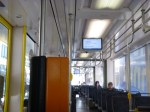
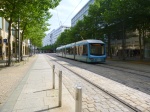
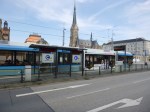
These pictures show Chemnitz and its trams.

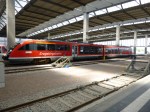
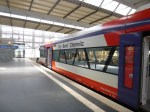
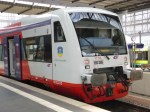
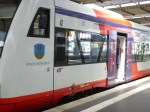















Note.
- Chemnitz used to be called Karl Marx Stadt.
- Chemnitz has some hybrid trams and tram-trains.
- I described how the Chemnitz trams work in Chemnitz Trams And The Chemnitz Model.
Chemnitz could be a very suitable place to try out the technology.
Hence, the involvement of Chemnitz University in the project doesn’t surprise me.
Tram-Trains
This article on Railway Gazette International, which is entitled Hydrogen Tram Development Project Underway, is also about the same project.
This is the first paragraph.
The Hydrogen Tram for Next Generation project has been launched to develop a fuel cell-powered vehicle which would enable services to be extended into new areas and tram-train routes created without the need for electrification.
It looks like this was added in the translation.
Tram Trains In South London
In The Third-Rail Tram-Train, I postulated using third-rail tram trains to extend the London Tramlink.
Since then Merseyrail have tried to extend, their third-rail electrified network and been told they couldn’t.
I have written these posts about using tram-trains to extend the London Tramlink.
- Could There Be A Tram-Train Connection At Reeve’s Corner?
- Would Third-Rail Tram-Trains Affect The Design Of The Proposed Streatham Interchange Station?
- The Cranleigh Line
- Thoughts On The Sutton Loop Line
- Could Third-Rail Tram-Trains Work The Epsom Downs Branch?
- Could Third-Rail Tram-Trains Be Used To Increase Services In South London?
- Could Beckenham Junction To Birkbeck Be Run Using Third-Rail Tram-Trains?
- Could Tram-Trains Be Used To Advantage In Croydon?
So would a hydrogen-powered tram-train be useful technology to extend the London Tramlink?
It just could be!
Zero-Carbon Between Manchester and Sheffield
This OpenRailwayMap shows the electrification across the Pennines.

Note.
- Red lines are electrified with 25 KVAC overhead.
- Mauve lines are tram lines electrified with 750 VDC overhead.
- The mauve lines in the West are the Manchester Metrolink.
- The mauve lines in the East are the Sheffield Supertram
- Black lines are not electrified.
- Red and black lines are currently being electrified.
- The blue arrow at the bottom of the map indicates Buxton.
- To the North of Buxton, the line linking Manchester and Sheffield is the Hope Valley Line.
- Running North-East from Manchester is the main TransPennine route between Leeds and Manchester via Dewsbury and Huddersfield.
This OpenRailwayMap shows the TransPennine route between Morley and Mossley stations.
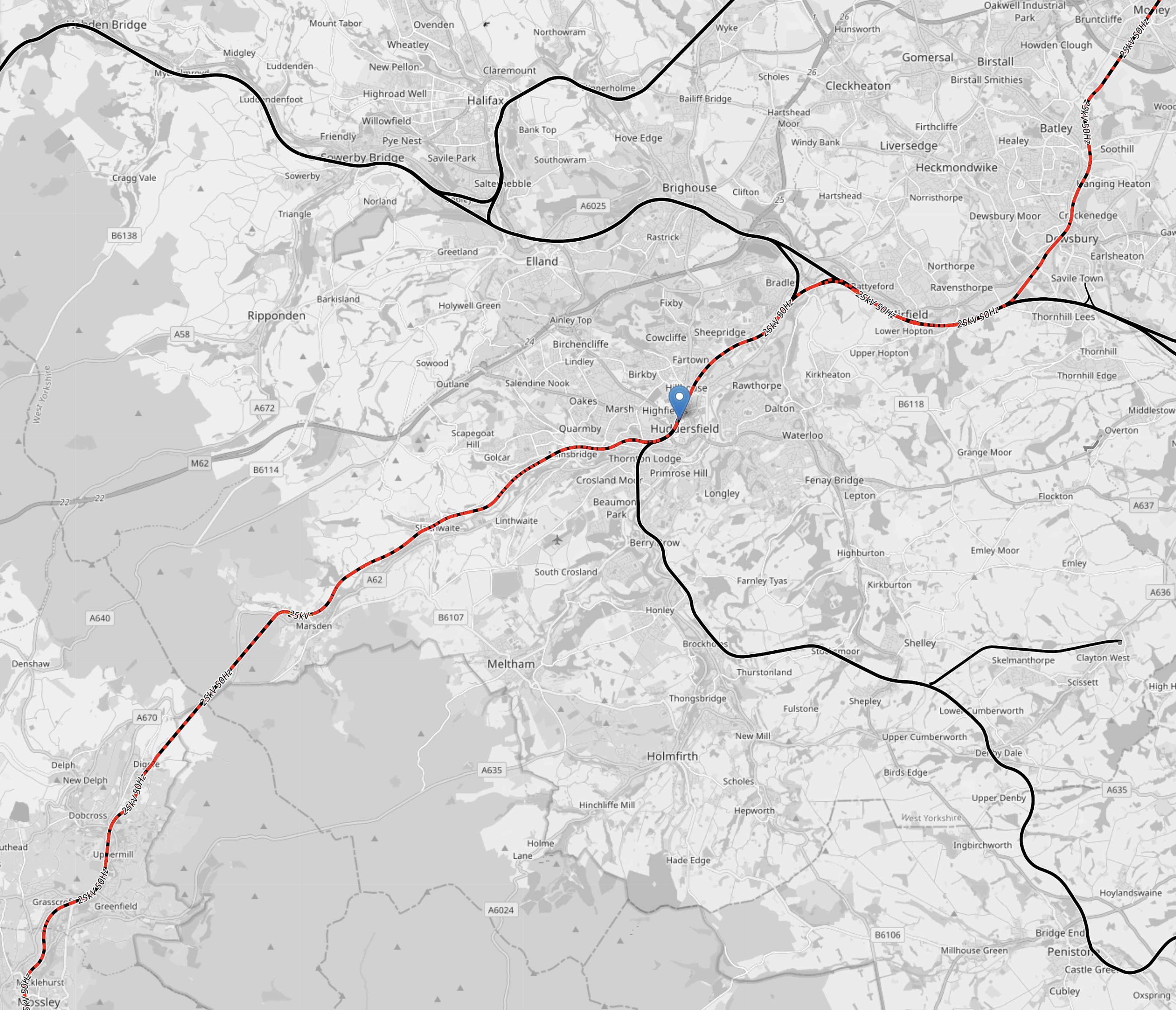
Note.
- Colours are as before.
- Morley station is in the North-East corner of the map.
- Huddersfield station is indicated by the blue arrow in the middle of the map.
- Mossley station is in the South-West corner of the map.
In a few years time, there will be 25 KVAC overhead electrification all the way between Leeds and Manchester via Dewsbury and Huddersfield.
This OpenRailwayMap shows the routes around Manchester and Sheffield and the connecting routes between Barnsley, Huddersfield, Manchester and Sheffield.
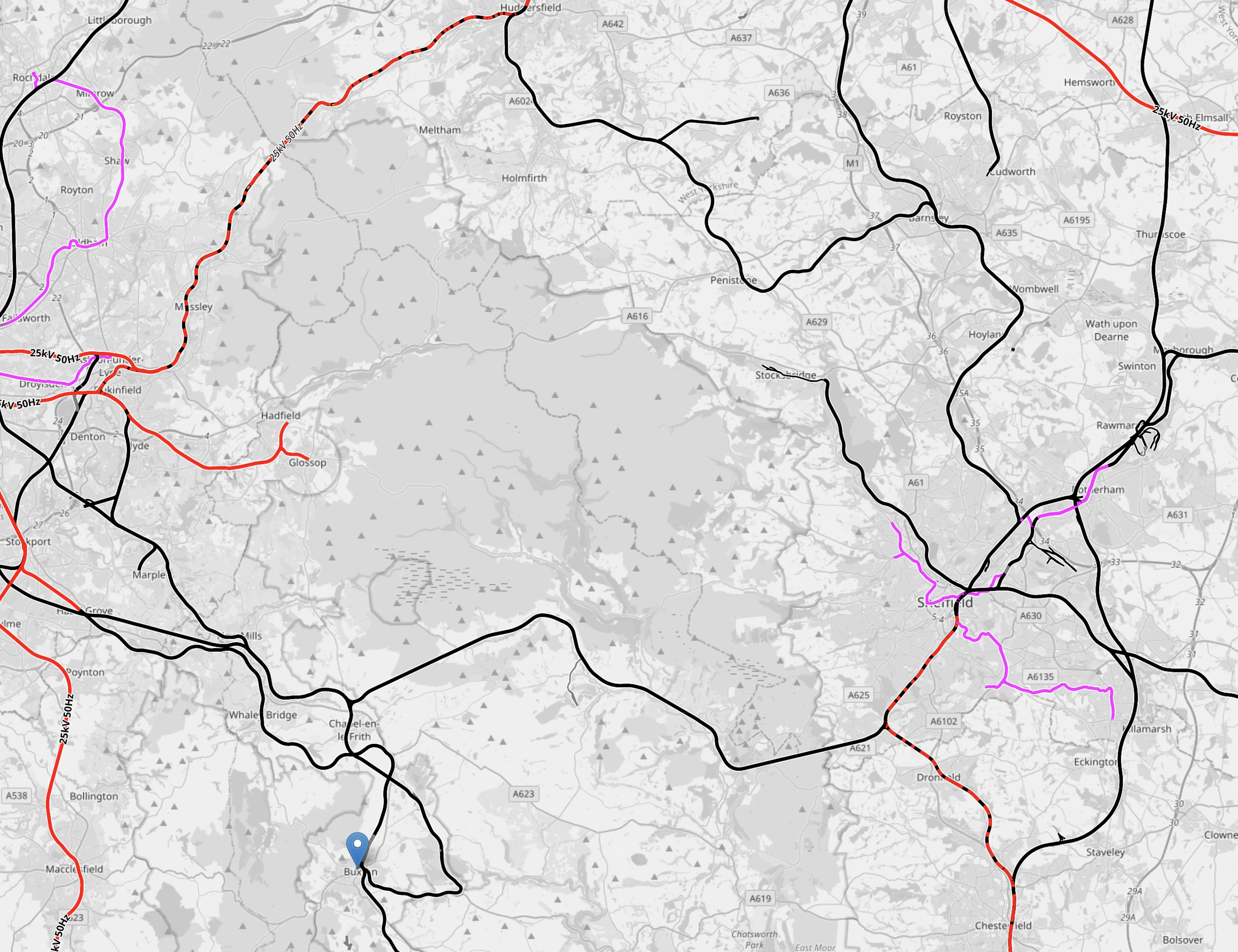
Note.
- Colours are as before.
- The blue arrow at the bottom of the map indicates Buxton.
- The line to Stocksbridge runs North-West from Sheffield.
- To its East the Penistone Line runs to Huddersfield via Barnsley.
- Manchester has a series of lines to the East that need to be electrified.
How many of these lines could be integrated into the tram systems of Manchester and Sheffield, by the use of hydrogen-powered tram-trains?
Hydrogen-powered tram-trains could share lines with battery-electric trains.
Tram-trains could run from say Cathedral in Sheffield to Piccadilly Gardens in Manchester.
Using self-powered trains would cut the need for expensive infrastructure.
The possibilities are endless and carbon free.
Conclusion
Hydrogen-powered trams and tram-trains could be a valuable tool for decarbonising trams and trains.
Could There Be A Tram-Train Connection At Reeve’s Corner?
A few day’s ago I took the tram from Croydon to IKEA. Coming back, I got off the tram at the Reeve’s Corner stop and took these pictures.

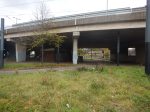
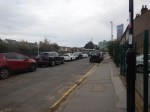
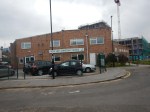
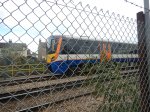
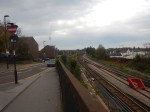
Note how close the trams are to the rail lines just to the West of West Croydon station.
This Google Map shows the area.
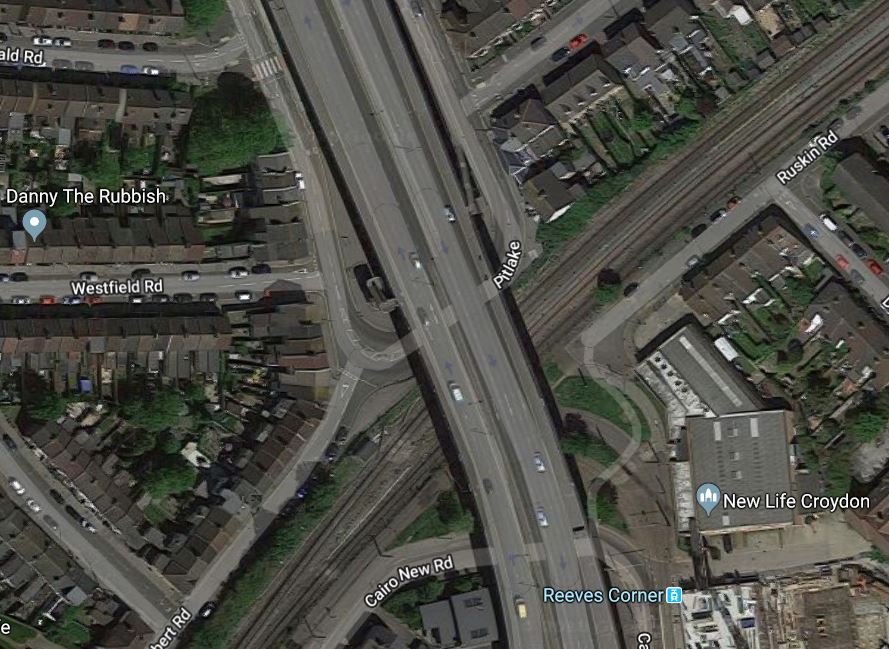
Note.
- The road bridge appears in several of the pictures.
- The rail lines appear to have plenty of space to accomodate an updated layout.
- The Reeve’s Corner tram stop is only used by trams going to Croydon.
- The trams share a single-track section between Reeve’s Corner and Wandle Park tram stop.
The single-track layout must be a restriction on the number of trams that can run between Croydon and Wimbledon.
This map from carto.metro.free.fr, shows the layout of the tracks in the area.
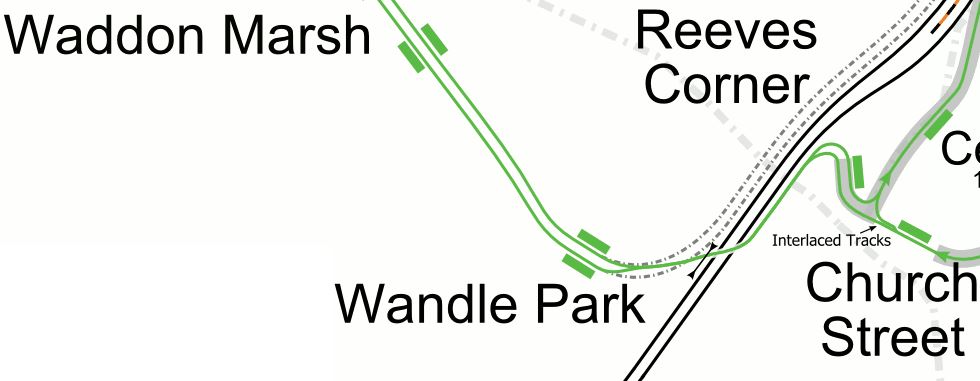
This map shows why there is plenty of space, as there are the dotted-lines of the West Croydon to Wimbledon Line, which was closed in 1997 to be converted into the London Tramlink.
This Google Map shows the route between Wandle Park and Revve’s Corner and how it crosses the rail lines.
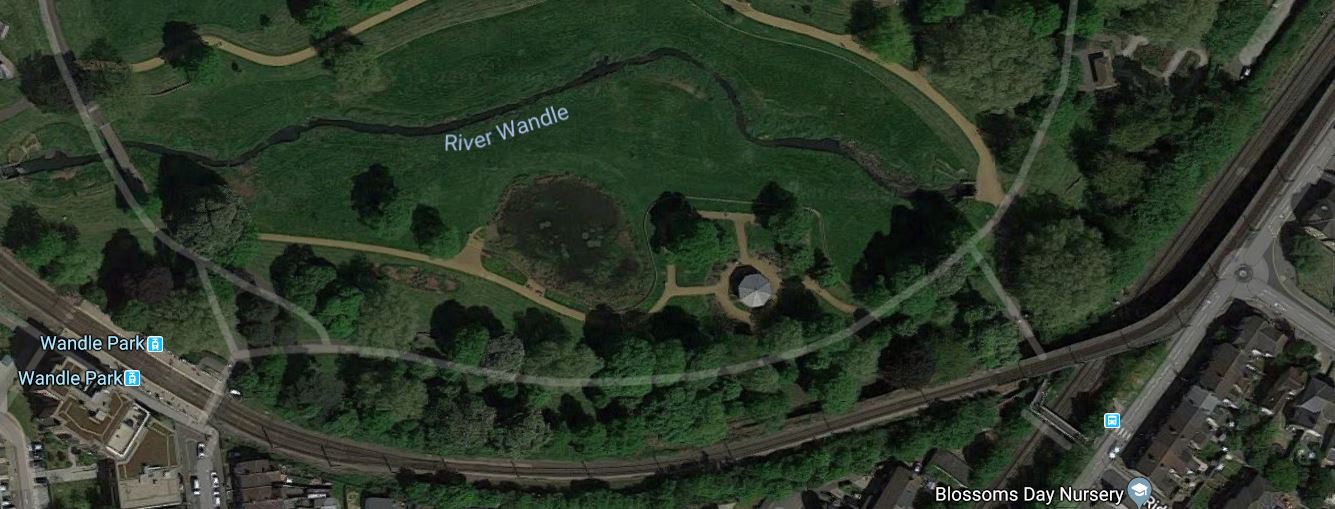
Note that Reeve’s Corner is just beyond the North-East corner of this map.
Third-Rail Tram-Trains And The London Tramlink
The London Tramlink was designed twenty years ago, well before we had modern tram-trains, like those that are running all over Karlsruhe and have just started services between Sheffield and Rotherham.
I believe that third-rail tram-trains, as I proposed in The Third-Rail Tram-Train, are a viable concept, if they only use third-rail electrification, when running as a train.
Why Create A Tram-Train Connection At Reeve’s Corner?
The obvious reason, is that it would allow tram-trains to run between Wimbledon and West Croydon stations.
To the East of West Croydon, they could go to places like the proposed Steatham Interchange or the existing Crystal Palace, Beckenham Junction or Bromley stations.
Conclusion
Creating a tram-train connection at Reeve’s Corner is one of a number of places, where the trams and South London’s third-rail network can be connected.
I believe that developing these connections could enable several useful routes.
- Extra train and tram services to Beckenham Junction station.
- Tram-trains to Bromley South station.
- Extending the Bromley North Branch using tram-trains to Bromley South station, by street running through Bromley Town Centre.
Tram-trains could even serve Gatwick Airport and provide services around the wider Airport site.
Would Third-Rail Tram-Trains Affect The Design Of The Proposed Streatham Interchange Station?
Transport for London’s proposal for the Bakerloo Line Extension comes with a very nice map of the various projects that will be carried out to improve rail services in South London.
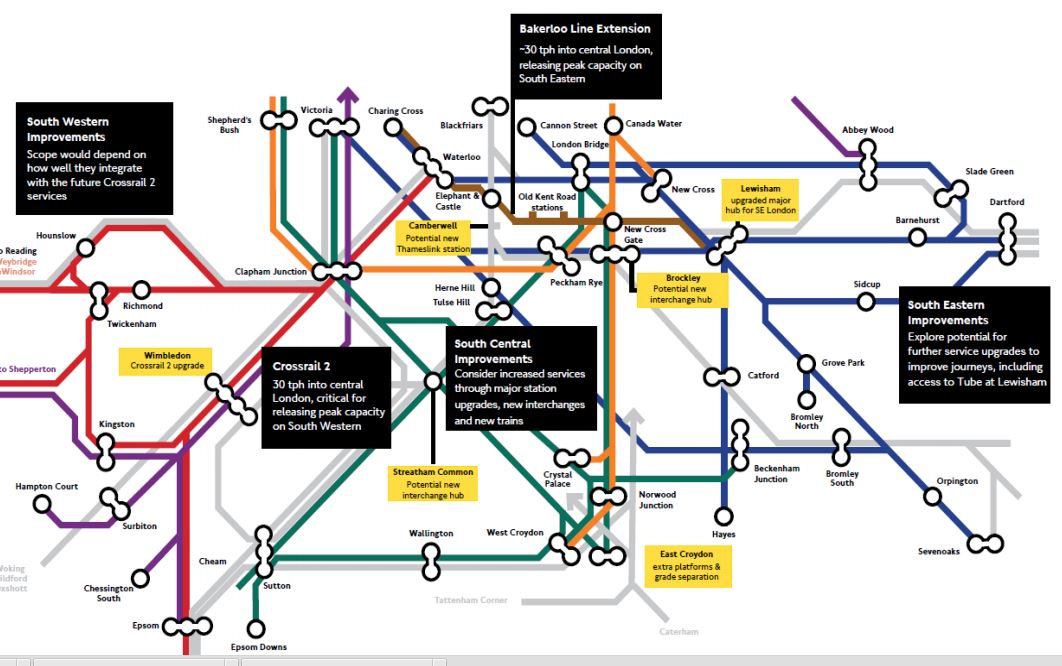
It is all good stuff and most is easily explained.
There is a little yellow box, which has a title of Streatham Common and contains the words.
Potential new interchange hub.
This map from carto.metro.free.fr shows the rail lines around Streatham and Streatham Common stations.
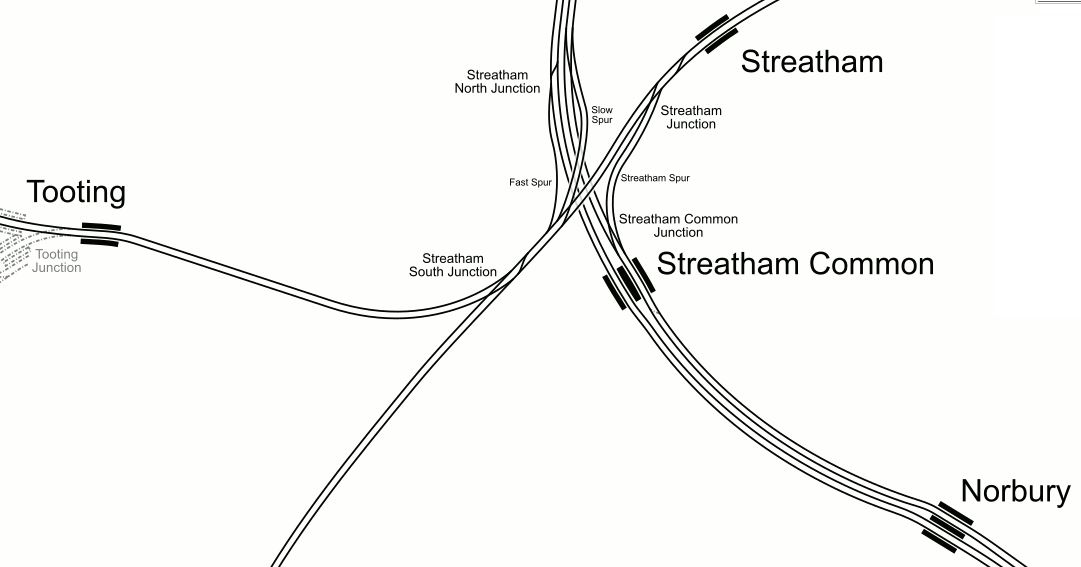
Streatham Interchange station has been proposed and could be at the major junction to the North of Streatham Common station.
Trains on the following routes could call.
- Thameslink services on the Sutton Loop Line, through Wimbledon and Sutton.
- Various Southern services between London Bridge and Victoria in the North and Caterham, Croydon, Epsom and Sutton in the South.
- Fast services between Victoria and the Brighton Main Line pass through.
I have also seen speculation on respected web sites, that the Overground will be extended to the new Streatham Common Interchange.
I suspect Transport for London’s plans will improve the lot of many travellers.
Third-Rail Tram-Trains To Streatham
If Streatham Interchange is going to be an important hub, then surely, it should be served by the Tramlink.
Third-Rail tram-trains would be able to run from any of these power sources.
- Overhead electrification on tramways.
- Third-rail electrification on rail tracks.
- Batteries on any tracks, including those without any electrification.
Most power changeovers would take place at tram-stops or stations. Although, I suspect that changing bertween battery and third-rail power would be automatic.
Third-rail tram-trains could run into Streatham Interchange on any standard third-rail track and could use any platform, be it a through platform or a bay one, that is used by standard trains.
These are the two obvious routes.
Use The Sutton Loop Line From Mitcham Junction Station
This map from carto.metro.free.fr shows the track layout at Mitcham Junction station and Tramlink between Mitcham and Beddington Lane tram stops.
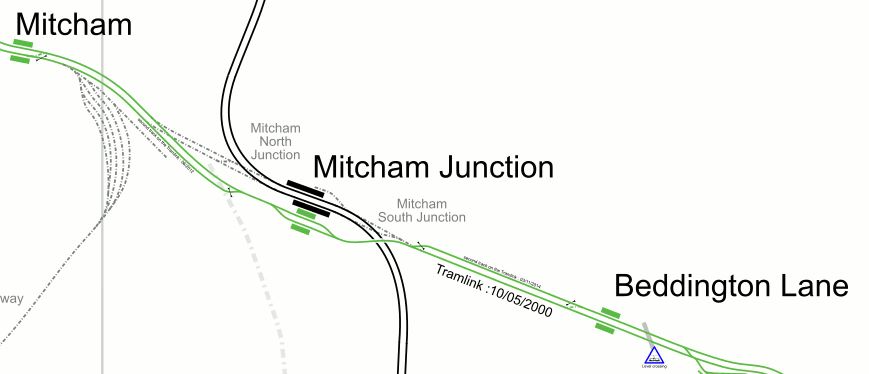
Note that the black tracks are the Sutton Loop Line with Mitcham Eastfields station to the North and Hackbridge station to the South.
I think it would be possible, from what I have seen on other tram-train systems, to link the Sutton Loop Line to Tramlink, so that tram-trains could go between Bedddington Lane and a proposed Streatham Interchange.
A tram-train going between Croydon and Streatham Interchange would do the following.
- Stop in Beddington Lane tram stop.
- Drop the pantograph and change to battery power.
- Proceed to Mitcham Junction station.
- Connect to third-rail electrification.
- Run as a train to Streatham Interchange.
In the opposite direction, the sequence would be reversed.
Use The Sutton Loop Line From Wimbledon Station
This map from carto.metro.free.fr shows the track layout at Wimbledon station.
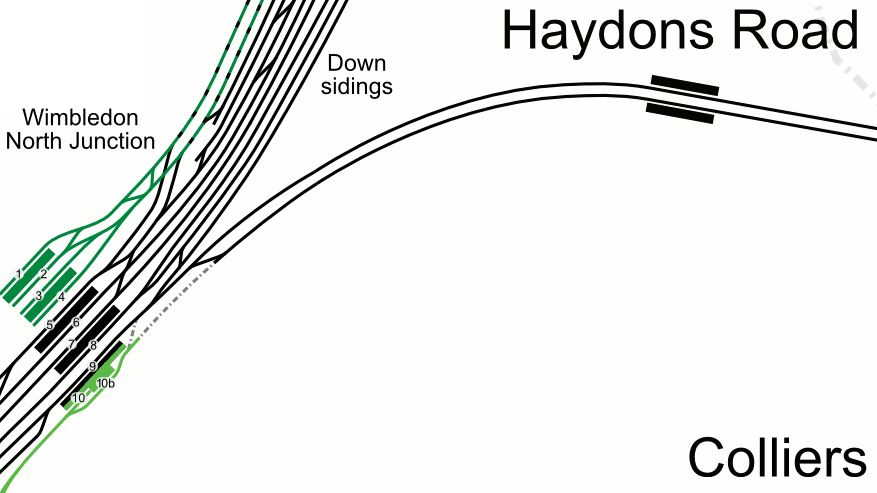
Haydons Road station is on the Sutton Loop Line going towards the proposed Streatham Interchange.
This picture shows a Thameslink train in Platform 9 and a tram in Platform 10b at Wimbledon station.
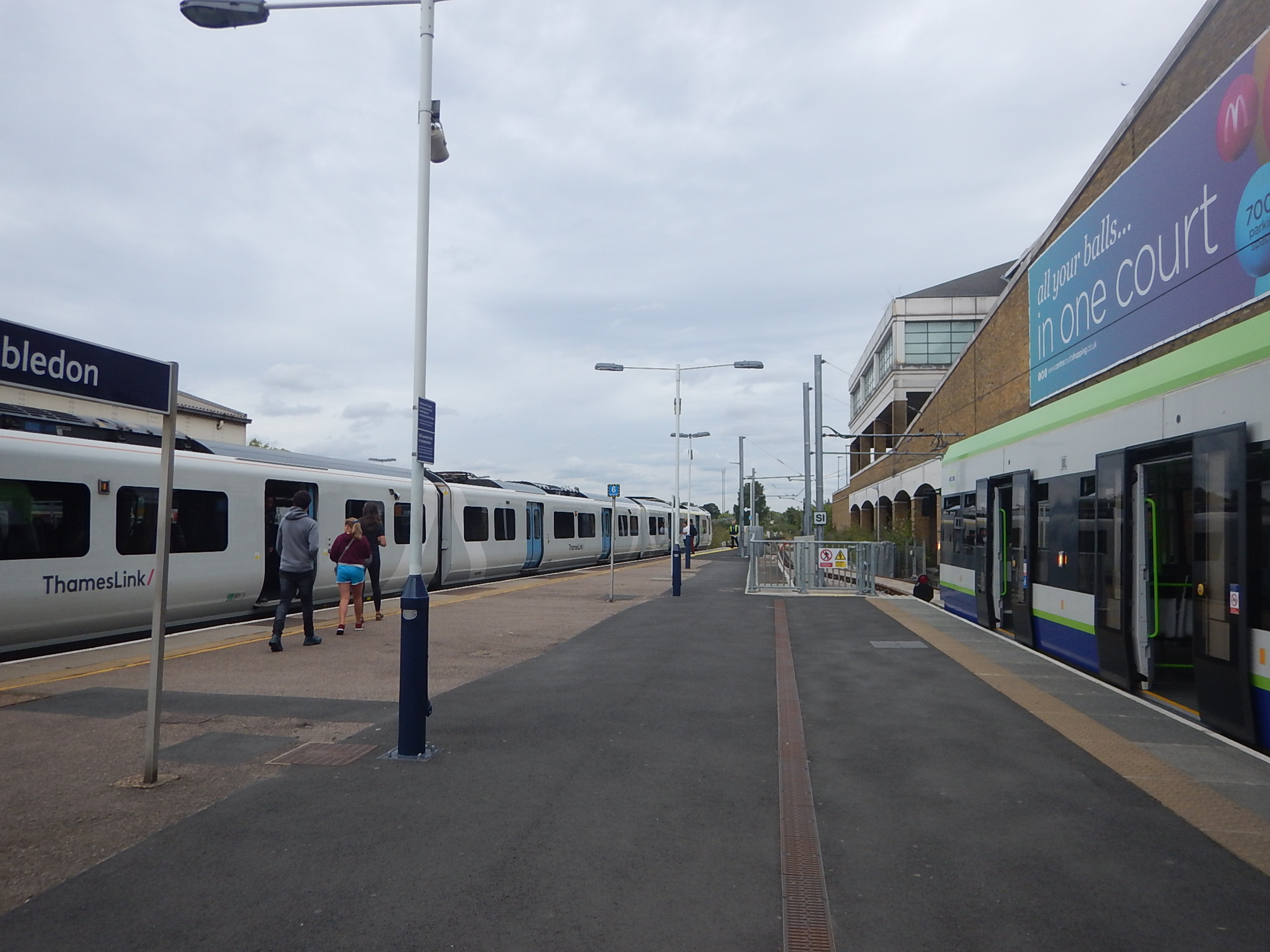
I think it could be possible to make Platform 10b into a bi-directional Tramlink platform to connect to Streatham Interchange.
Currently, twelve trams per hour turn at Wimbledon and I suspect that this needs two terminating platforms.
Conclusion
Connecting tram-trains at Wimbledon to the Sutton Loop Line may be tricky, but it should be easier at Mitcham Junction.
However, so long as Streatham Interchange has enough capacity for Tramlink services, there shouldn’t be a problem.
The Cranleigh Line
Looking for possible privately-funded rail projects, I have come across the Cranleigh Line on Wikipedia.
This is part of what is said on Wikipedia about Possible Reopening, in a eport by Buchanan and Partners in 1994.
The report estimated that around 500 car users could transfer to rail each day. The cost of reinstating the line between Guildford and Cranleigh was projected at £24 million which would include the base, civil, electrical, engineering and signalling works. It did not include land acquisition costs, legal costs and bridge works. The reinstatement of the bridge over the River Wey was costed at £750,000.
The report concluded that, based on a preliminary analysis of the line’s potential returns, re-opening would not be feasible. The line was, according to the report, likely to recoup only 3% of the capital investment in the first year of re-opening, and this without taking into account its operating costs. British Rail usually insisted on a figure of at least 8% before investing capital into re-opening a line. Nevertheless, the County Council decided to commission a detailed economic feasibility study by British Rail into the line’s potential for re-opening, and looked into the possibility of using a light railway or tramway substitute.
What would a report say now?
Given that the line runs between the busy stations at Guildford and Horsham, the latter of which has a Thameslink frequency of two trains per hour, I think that the answers would be very different.
The route would also be one, that could be run by a third-rail tram-train!
Consider.
- The tram-trains would use battery power, where there is no third-rail electrification.
- The route between Guildford and Peasmarsh Junction is electrified and has no stations.
- The route between Horsham and Stammerham Junction is electrified and has no stations.
- Between Peasmarsh Junction and Stammerham Junction, there were stations at Bramley & Wonersh, Cranleigh, Baynards, Rudgwick and Slinford.
- Stations could be rebuilt and added to as required.
- Between Peasmarsh Junction and Stammerham Junction, the new line would be without electrification.
Could the new line share the route with walkers and cyclists?
I think there is a chance here to create a new type of light rail link!
Thoughts On The Sutton Loop Line
The Sutton Loop Line is a bit of a problem.
- It runs two trains per hour (tph) in both directions.
- Trains are eight-cars.
- It is not the most heavily-used of lines.
It is deeply political and difficult to make any changes.
Network Rail’s original plan is described under Political Developments in the Thameslink entry in Wikipedia. This is said.
Network Rail had planned to terminate Sutton Loop Thameslink trains at Blackfriars station, rather than have them continue through central London as at present. This would increase the capacity of the central core as the Sutton Loop could only accommodate shorter trains. This upset many residents in South London and their local politicians, who saw it as a reduction in services rather than an improvement. In response to pressure, government has ordered Network Rail to reverse the decision.
Was this design by those, who don’t understand the complexity of designing and running a train service?
On the other hand, the line has some strengths.
- It is a double-track railway.
- It is fully-electrified using 750 VDC third-rail.
- Stations have long platforms.
- There seems to be quite a bit of housing and other development.
But in some ways, the line’s biggest strength, is the wide margins at both sides of the tracks.
This section between Hackbridge and Carshalton stations is not untypical.
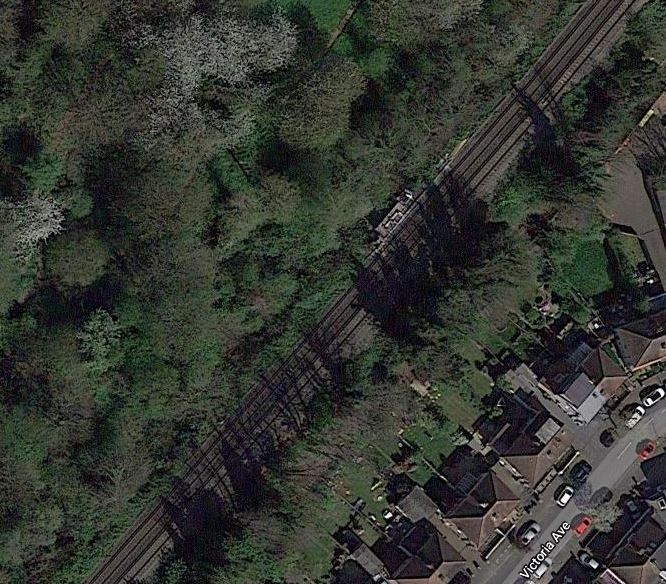
Adding extra platforms or complete stations would not be difficult.
What solutions are available to improve train services on the Sutton Loop Line, for both passengers and train operators?
Splitting And Joining Trains
In Has Thameslink Got The Wrong Length Of Train?, I proposed the following.
- Using twelve- and six-car trains on Thameslink.
- Allowing two six-car trains to work as a twelve-car unit.
- Trains would be able to join and split automatically, as Hitachi’s Class 395 trains are able to do.
I also proposed the following method of operation for the Sutton Loop Line.
The Sutton Loop Line could be run by using six-car trains that split and join in the area of Streatham station.
This map from carto.metro.free.fr shows the track layout at Streatham, at the start of the loop.
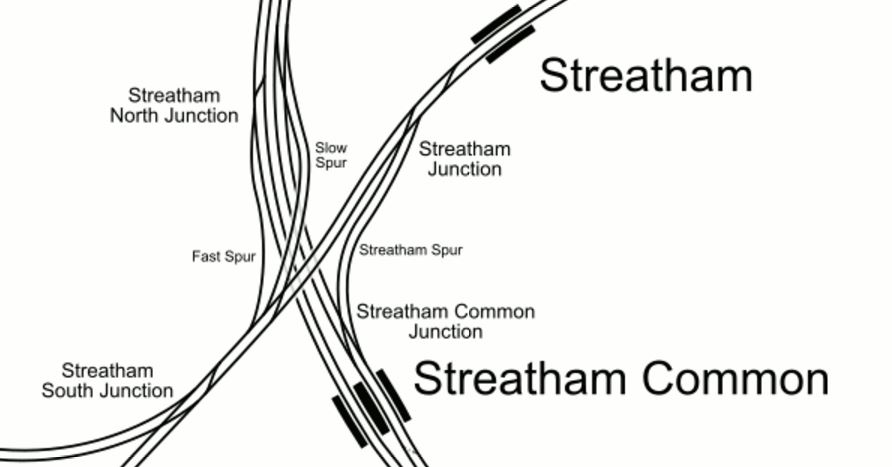
Note.
- Streatham South Junction is the gateway to the Sutton Loop, with the tracks to the West going via Tooting station and those to the South via Mitcham Eastfields station.
- There is a lot of spare land in this area.
- Transport for London keep talking about creating an interchange at this point.
I think, if and when the interchange is built, it could be designed, so that it increased traffic around the Sutton Loop Line.
- Two six-car trains running as a twelve-car could split at the interchange.
- One train would go round the loop clockwise and the other anti-clockwise.
- The trains would rejoin together at the interchange.
The same procedure could be done at Streatham, without creating the interchange, but it would block the station, if trains got delayed on the loop.
Currently, two trains per hour (tph) are proposed to run in both directions on the Sutton Loop Line.
This requires four eight-car trains and four paths through the central core.
If four six-car trains were to be used, running in pairs splitting at Streatham station or a new Streatham Common interchange, there would still be two tph in both directions round the Sutton Loop, but only two paths would be needed in the central core.
Travellers to and from stations on the loop would see six-car, rather than the current eight-car.
If the number of six-car trains were to be doubled and four paths used in the central core, the Sutton Loop Line would see four tph in both directions.
It sounds complicated but it would work and it has the following advantages.
- Train frequency could be increased as required.
- Paths are released in the central core.
- Twelve-car trains would go through the central core, where the capacity is needed.
The service would need a few more drivers and other staff.
Loop Only Services To A New Streatham Common Interchange
If a new interchange station is built at Streatham Common, then extra services could easily be run round the loop.
- Thameslink services could be reduced to perhaps one tph in each direction.
- These would be augmented by perhaps a four tph shuttle around the loop starting and finishing at Streatham Common.
- The shuttle trains could be any suitable unit, but surely a four-car would suffice.
I suspect that this wouldn’t work, as it would upset the natives.
The German Solution
I can’t help feeling that the Germans and especially those in Karlsruhe would look at the Sutton Loop Line and because there are both trams and trains, in the area, they would come up with a solution based on trains and tram-trains.
As fsr as I know, no-one has ever built a third-rail-powered tram-train!
But I don’t think that a tram-train powered by third-rail electrification, when running as a train is an impossibility. I lay out my ideas in The Third-Rail Tram-Train.
Safety
As to safety, look at this picture taken at Mitcham Junction station.
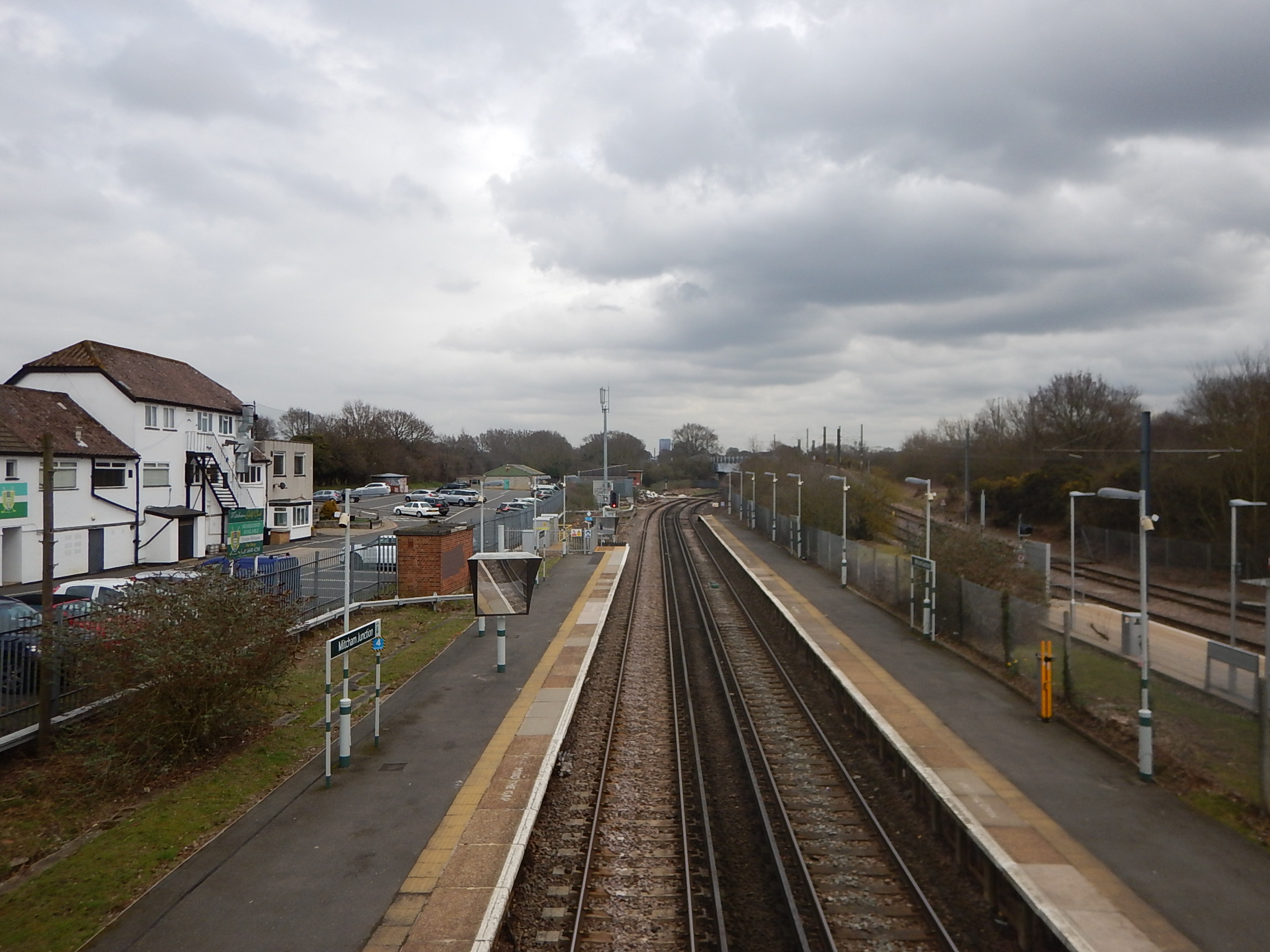
Note how the third electrified rails are in the middle away from the platforms. This is standard practice with this form of electrification.
So if it is deemed to be safe for trains now, it will surely be safe for third-rail train-trams.
When running as trams, the tram-trains will use 750 VDC overhead electrification.
Changing Networks
Tram-trains will need to change between the tram and rail networks.
This map from carto.metro.free.fr shows the track layout at Mitcham Junction station.
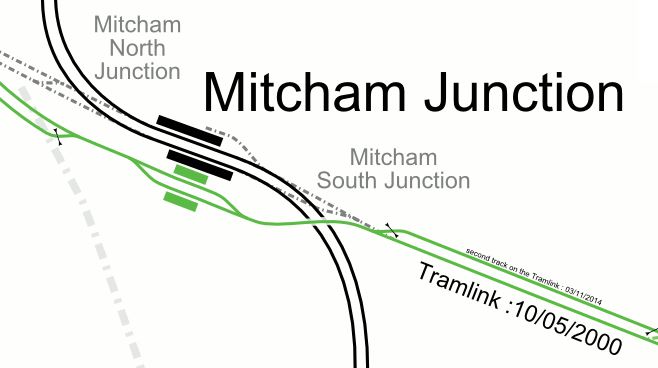
Note.
- Wimbledon is to the West and Croydon is to the East.
- With the addition of some extra tracks, it should be possible for tram-trains to pass between the networks.
- As trams can take tight curves, a chord could allow Westbound tram-trains from Croydon to turn South to Sutton.
- Tram-trains will probably change networks using a couple of ininutes of battery power.
I doubt any of the engineering will be too difficult.
Adding The Sutton Loop Line To Tramlink Using Tram-Trains
Tram-trains would take the following route.
- Arrive from Croydon at Mitcham Junction, where they would turn South onto the Sutton Loop Line.
- Pass through Hackbridge and Carshalton stations.
- Call in Sutton station for interchange with trams and National Rail.
- Continue to Wimbledon station calling in Platform 9 for interchange with trams in Platform 10 and 10b and National Rail.
- Pass through Hatdons Road and Tooting.
- Take new chord to cross to the other leg of the Sutton Loop Line.
- Pass through Itcham Eastfields station.
- Rejoin the tram route at Micham Junction station.
Tram-trains could also travel in the reverse direction.
Trams And Tram-Trains At Wimbledon
This map from carto.metro.free.fr shows the track and platform layout at Wimbledon station.
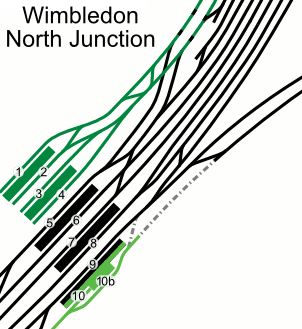
Note.
- Currently, Thameslink services on the Sutton Loop Line use Platform 9 in both directions.
- Hayons Road station is to the North-East and |Wimbledon Chase station is to the South.
- Tram-trains on the Sutton Loop Line would do the same.
- Platform 9 probably defines the capacity of the Sutton Loop Line.
Access to the trams in Platforms 10 and 10b, is just a walk across the platform.
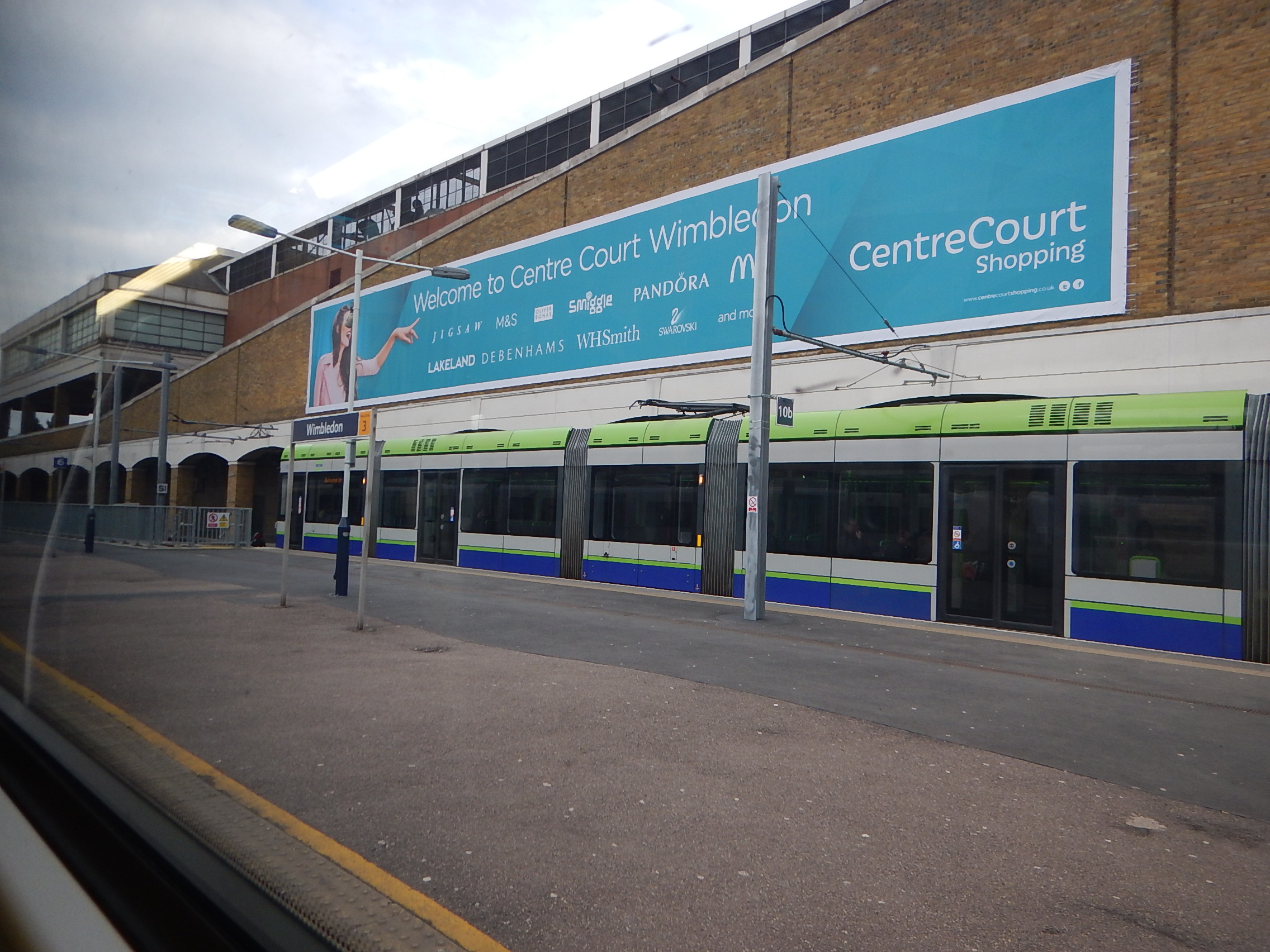
The picture was taken from a Thameslink train.
There might even be space for another tram platform, that can be accessed from the Haydons Road direction.
Trams And Tram-Trains At Sutton
This map from carto.metro.free.fr shows the track and platform layout at Sutton station.
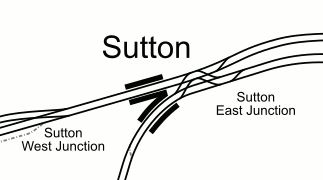
Note.
- The Sutton Loop Line is the Northernmost pair of tracks.
- Carshalton station is to the East and West Sutton station is to the West.
- It could be possible for tram-trains to by-pass Sutton station and run on the streets of Sutton.
This picture shows Sutton High Street.
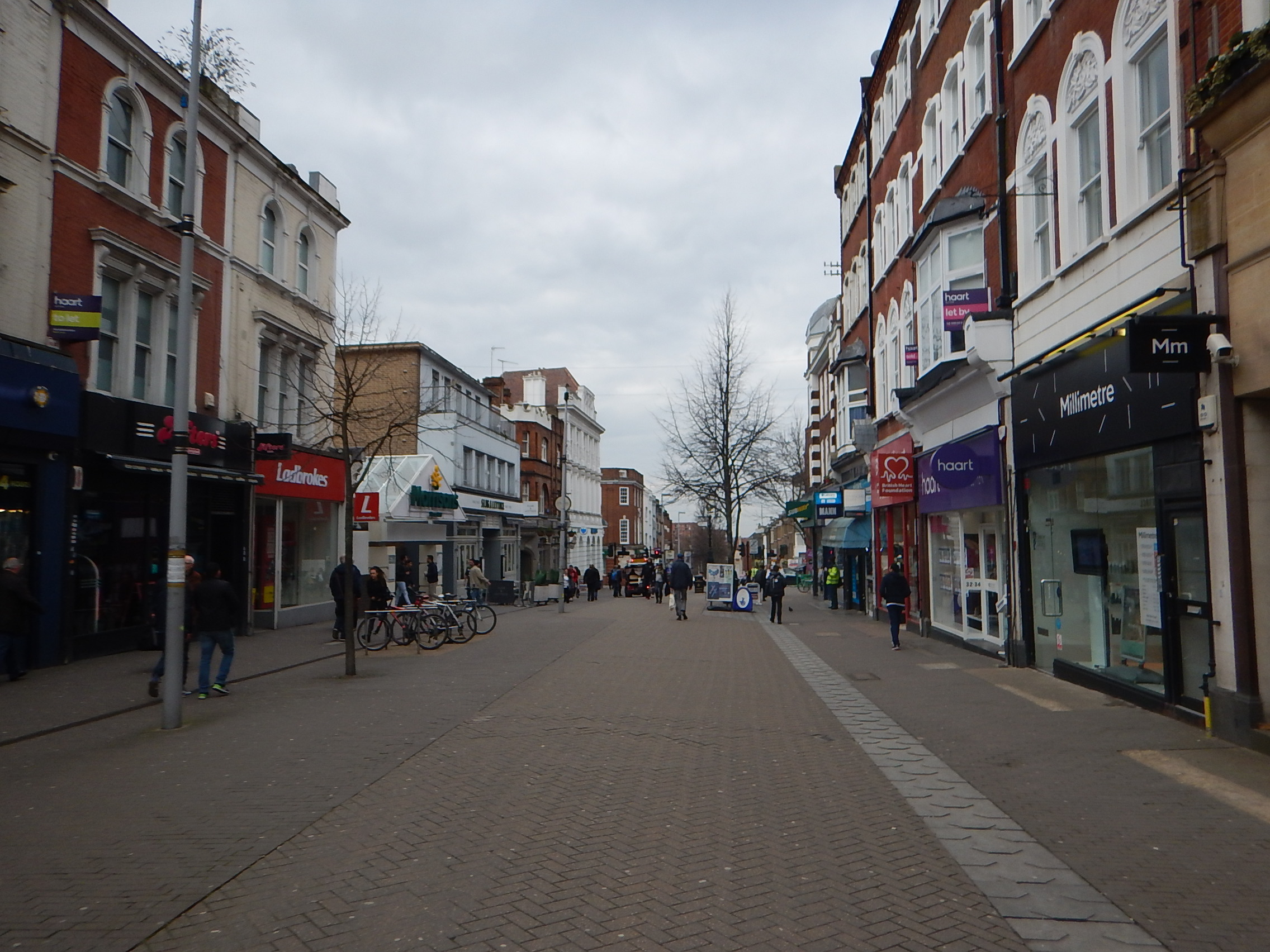
Is it going to be easy to bring the planned tram extension from Wimbledon to Sutton?
Dual Platform Issues
Platforms at the stations on the Sutton Loop Line are long and are certainly capable of taking eight-car trains.
But are they long enough to have a lower section of platform, so that tram-trains can have step-free access?
This is one of the problems, that should be solved in the tram-train trial in Sheffield.
The Split At Streatham Common
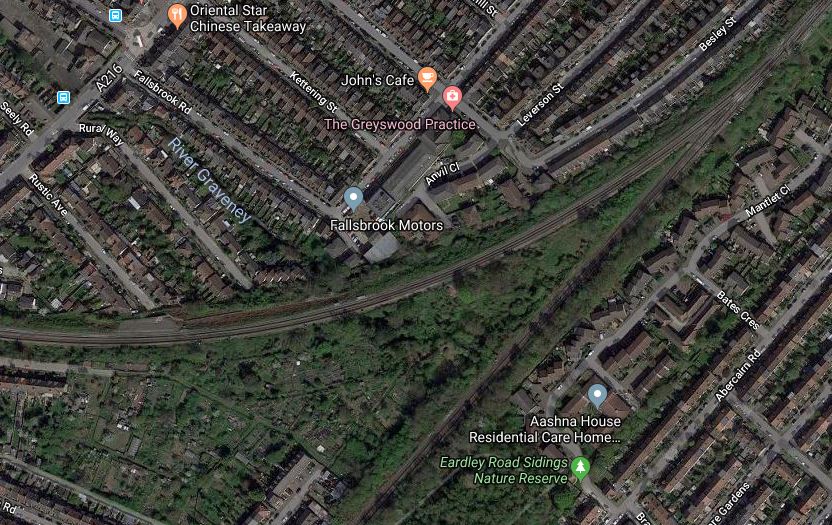
This Google Map shows, where the two routes of the Sutton Loop Line meet near Streatham Common station.
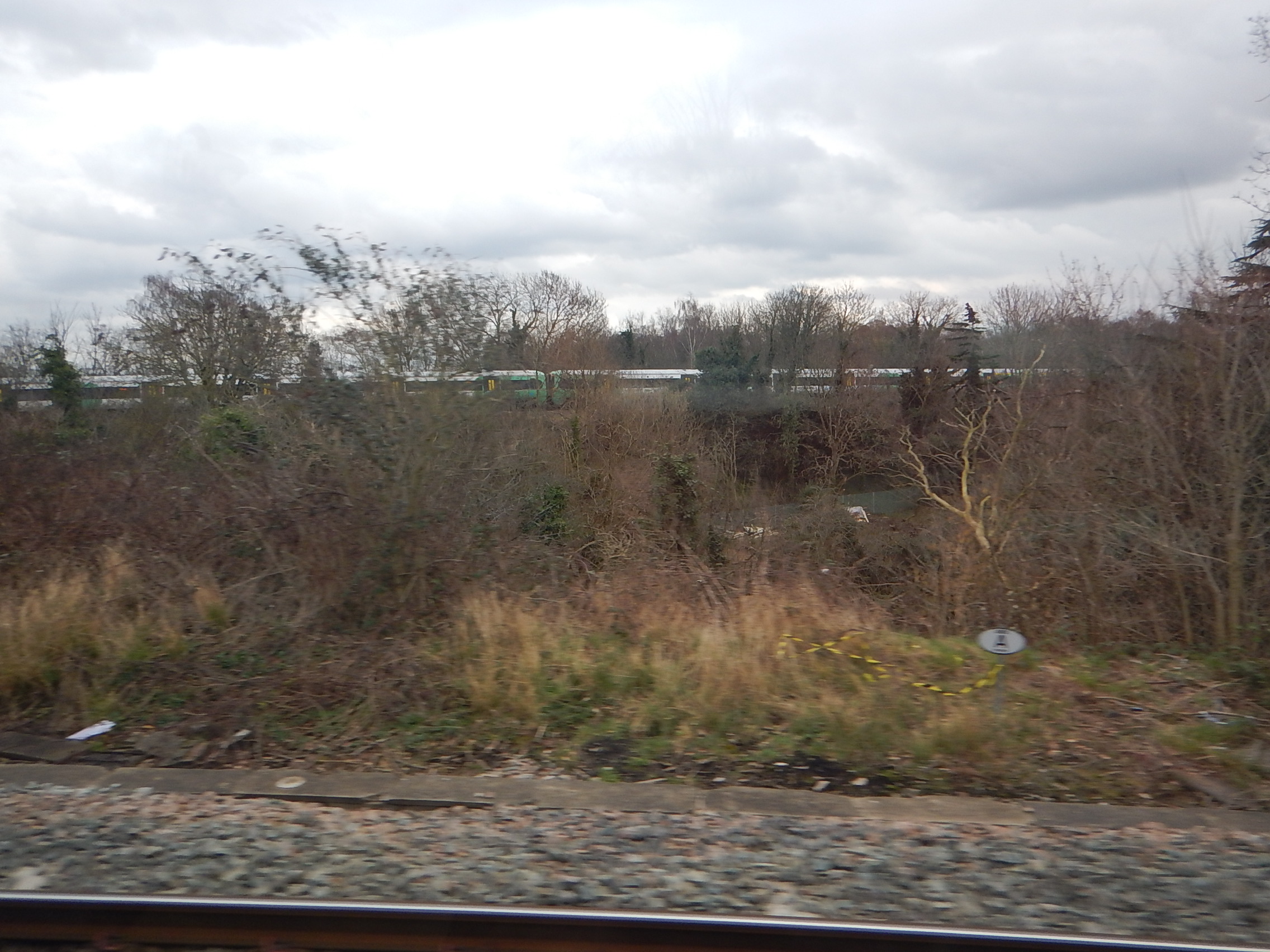
This picture shows a train going towards Mitcham, from one having passed through Tooting station.
I don’t think it would be the most difficult engineering project to create a chord, that would allow tram-trains to go directly between Tooting and Mitcham Eastfields stations.
A Possible Service
As I said earlier, Platform 9 at Wimbledon station. is probably the limiting factor on services round the Sutton Loop Line.
Thameslink is planning two tph in both directions.
I suspect that this could be supplemented by two tph services run by tram-trains, if a signalling solution can be implemented to allow four tph in each direction, through the platform.
Conclusion
There are several ways to improve the Sutton Loop Line.
Could Third-Rail Tram-Trains Work The Epsom Downs Branch?
The Epsom Downs Branch is a single-track branch line from Sutton to Epsom Downs station.
Currently, it has a service to Victoria of around two trains per hour (tph), but it doesn’t seem to generate much business.
In 2015-16, Epsom Downs station had 112,000 passengers, whereas Sutton station had 7,111,000.
As the three stations on the branch are all single-platform stations with few facilities, can it be viable to run Class 377 and Class 455 trains on the branch?
When the London Tramlink arrives in Sutton, I wonder if the branch would be more suited to be running by trams.
But as the line is electrified with the standard 750 VDC third-rail system, is it one of those places, that could it be served by a third-rail tram-train, as I proposed in The Third-Rail Tram-Train?
I think the answer is in the affirmative.
Consider.
- The tram service could terminate at the proposed Streatham Common Interchange station.
- It takes less than ten minutes to go between Sutton and Epsom Downs
- In the Peak or when more capacity is needed, Class 377 trains could still run the service.
- The tram-trains could provide a step-free service.
Running the service with tram-trains, would give one big advantage; the ability to run a service to the Royal Marsden Hospital, which according to this document from the hospital is not the best, when it comes to public transport.
A single-track branch from the Epsom Downs Branch could start South of Belmont station and tram-trains running on batteries could serve both the Royal Marsden Hospital and the Institute of Cancer Research.
This Google Map shows Belmont station and the hospital.
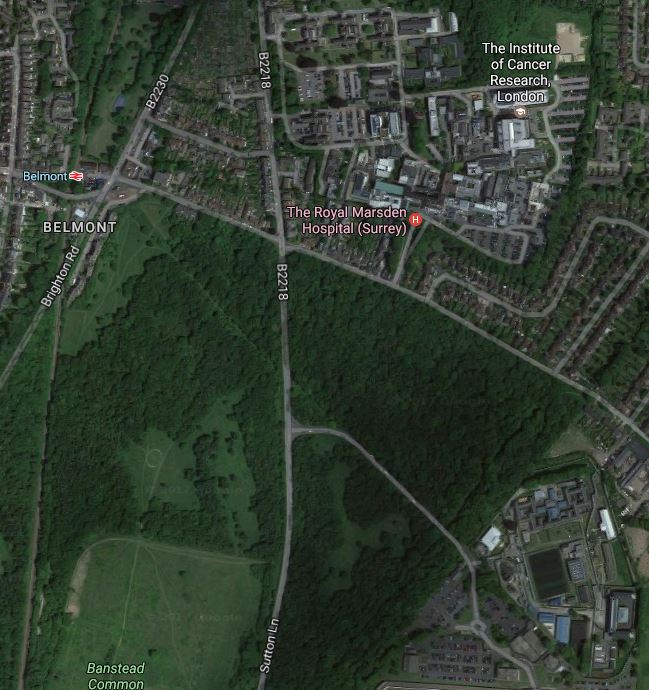
Note.
- The rail line from Belmont station to Epsom Downs station running down the West side of the map.
- There are two prisons in the South East corner of the map.
- The road from Belmont to the Hospital may only be half a mile, but it is up a steep hill.
- Why is every train arriving at Belmont station, not met by a shuttle bus to the Royal Marsden Hospital?
- There is one train per hour through Belmont station in both directions.
A silent battery tram-train without any overhead wires, climbing up on the railway line and then turning East across Banstead Common calling at the prisons en route to the Hospital, might be acceptable to the Planning Authorities. It would surely be less intrusive than some of cars and vans, I saw rushing through the Downs.
I would think that the hospital needs a frequency of four trains per hour to Sutton, in addition to the current sewrvices between Sutton and Epsom Downs.
A charging station, like a Railbaar, at the end of the short branch might be needed, to make sure that the gradients were conquered.
These pictures show Belmont station and the walk to the Royal Marsden Hospital.
Knowing, what I now know of the Royal Masrsden Hospital, it wouldn’t be my choice of hospital.
I don’t think, I’vw seen a hospital with such terrible access by public transport!
Could Third-Rail Tram-Trains Be Used To Increase Services In South London?
I ask this question, as some of the frequencies on suburban lines in South London aren’t up to their equivalent in the North.
Sutton Loop Line
As an example, Sutton Common station on the Sutton Loop Line of Thameslink, has this Off Peak service according to Wikipedia.
The typical off-peak service from the station is 2 trains per hour to Wimbledon (clockwise around the loop) and 2 trains per hour to Sutton (anticlockwise).
Other stations on the loop with this level of service include Haydons Road, Morden South, St. Helier, South Merton, Tooting, West Sutton and Wimbledon Chase.
On the other side of the loop via Mitcham Junction station, the service is augmented by London Victoria to Epsom services, running at two trains per hour (tph).
People might say, that the solution to the poor service at stations on the Sutton Loop Line is just to run four tph in both directions round the loop.
But that would probably mean the Snow Hill Tunnel with its capacity of 24 tph, will become overloaded.
Thameslink’s Route To Sevenoaks
Crofton Park station on Thameslink’s route to Sevenoaks station has this Off Peak service according to Wikipedia.
Two trains per hour to West Hampstead Thameslink and Sevenoaks.
The passengers moan about it as I wrote in The Natives Are Getting Restless In Crofton Park.
They want four tph now!
But again they can’t have them, as it’s the capacity of the Snow Hill Tunnel.
Transport For London’s Philosophy
Transport for London, have released a report on the Bakerloo Line Extension that they call the Option Selection Summary Report.
It is one of those worthy documents, you get from analysing the data from consultations.
But it is full of several nuggets, which although not directly associated with the Bakerloo Line could be very important for passengers coming from or venturing to South London.
They have also provided this helpful map, which lays out possible actions and improvements.
It seems to me that TfL are following a plan to add more transport hubs to their network South of the Thames.
Currently, the following are important interchanges between Underground, Overground, trains, Tramlink and buses.
- Bromley South
- Clapham Junction
- East Croydon
- Greenwich
- Lewisham
- Wimbledon
- Woolwich
Note.
- East Croydon will benefit in a large way from Thameslink, but so will Greenwich and Woolwich in a smaller way.
- Clamham Junction and Wimbledon will be stations on from Crossrail 2, if it’s ever built.
- Lewisham will become the terminus of the Bakerloo Line.
The map and other sources also show other stations becoming important transport hubs or connections.
- Brixton, where all the lines in the area are in a single station.
- Brockley
- Catford, where the current Catford and Catford Bridge stations become one station.
- Crystal Palace, which will soon get extra services from Whitechapel and Highbury and Islington stations.
- Orpington
- Penge
- Streatham Common
- Sutton
London Bridge station shouldn’t be ignored, as after Thameslink is completed, it will be an efficient interchange between the North-South Thameslink services and the Southeastern services between Charing Cross/Cannon Street and the wider South-East.
Put all of these proposals together and could third-rail tram-trains be a useful addition to transport in South London?
I will detail a few possible routes.
Onward From Beckenham Junction To Bromley South or Orpington
In Could Beckenham Junction To Birkbeck Be Run Using Third-Rail Tram-Trains?, I detailed how third-rail tram-trains could be used between Harrington Lane tram stop and Beckenham Junction station to create more capacity.
If run by tram-trains, this service could be extended to Bromley South or Orpington.
Orpington station has four bay platforms facing towards London and Beckenham Junction.
This map from carto.metro.free.fr shows the track layout at the station.
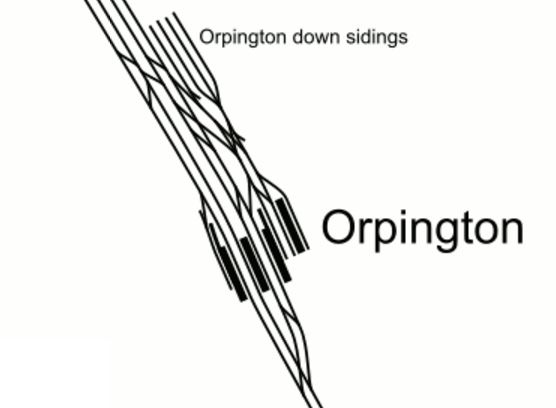
The tracks reduce from four to two at Orpington station, which probably means that tram-trains should probably not go further than Orpington station.
Bromley South station is another possibility for a terminus for tram-trains and this map from carto.metro.free.fr, shows the station layout.
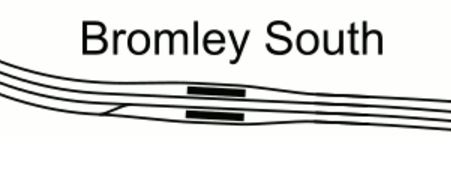
The tram-trains would probably use the two Northern tracks.
At present there are the following services between Birkbeck and Beckenham Junction stations.
- 2 trains per hour between London Bridge and Beckenham Junction
- 6 trams per hour between East Croydon and Beckenham Junction
Looking at the frequencies, I suspect that if two of the trams per hour, were tram-trains and ran to Bromley South and Orpington, this could be accommodated in the timetable.
I think that this route would have the following advantages.
- Bromley South and Orpington stations would be valuable interchanges to Southeastern’s and Thameslink’s Kentish destinations.
- Running tram-trains between Birkbeck and Beckenham Junction stations as tram-trains on a double-track line, must improve capacity and reliability.
- Bromley town centre has been touted as an extension to Tramlink.
Bromley South station, might not be Bromley town centre, but it is only a short walk.
However, if it were needed, I suspect that a single-track spur to serve the town centre could be created to the West of Bromley South station.
This Google Map shows the Southern end of Bromley High Street and Bromley South station.
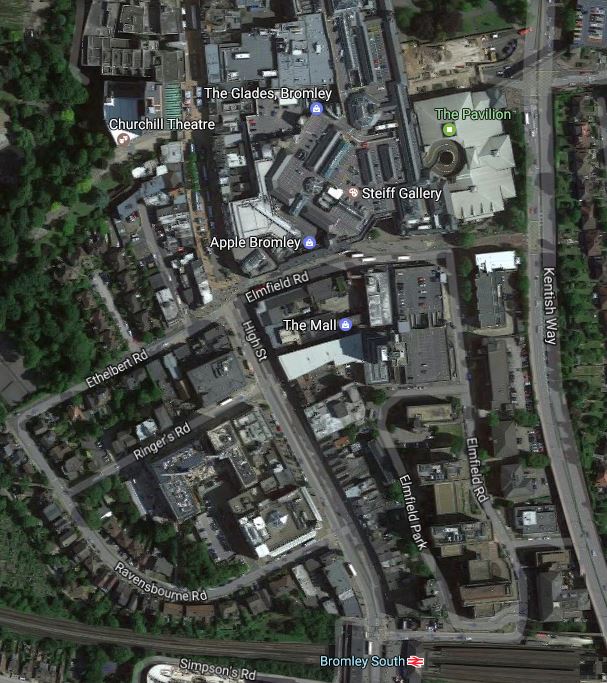
It could probably use battery power to pull up the short hill to Bromley town centre.
- The terminal tram stop could be at the South end of the pedestrianised area.
- The on-street route would be single-track, bi-directional and electrically dead.
- A second tram stop could be provided by Bromley South station.
- The maximum frequency to a single platform would probably be two trams per hour.
In some ways, the town centre tram stop is a bay platform for Bromley South station, that can only be used by tram-trains with a battery capability.
Onward From Harrington Road To Crystal Palace
It was always hoped that Tramlink could be extended to Crystal Palace station and this has been developed as Route 5.
The Wikipedia entry for Harrington Road tram-stop says this.
Transport for London once had plans to extend the Tramlink system to Crystal Palace. These plans were known as Extension D or Tramlink route 4, and would have involved a junction to the north of Harrington Road, with the extension joining the existing railway in the opposite direction to the current line 2.
The planned extension to Crystal Palace was formally dropped by Transport for London in 2008.
But using tram-trains could make this a more flexible low-cost option.
- Battery power could be used to go to the terminus at Crystal Palace Parade.
- Battery trams would be very easy to install in a park, if required.
- A charging station, like a Railbaar, could be provided at the terminus, if the battery running looked like needing assistance.
- Tram-trains could go past Crystal Palace to a station with a suitable bay platform.
This Google Map shows the route.
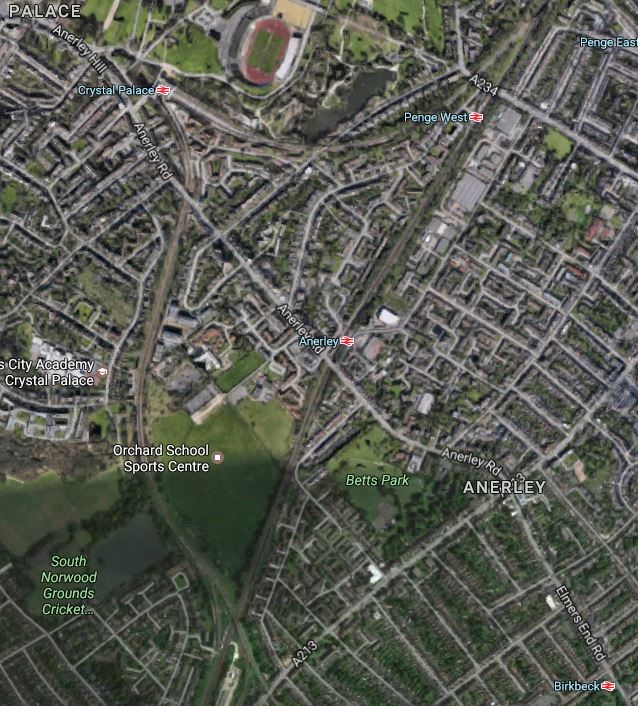
Note Crystal Palace in the North West corner, by the running track and Birkbeck station in the South East.
New tram stops have been proposed at Penge Road and Anerley Road and as the lroute will be run by tram-trains, I suspect that an innovative island station design could serve both tram-trains and trains.
Crystal Palace station, which in a couple of years will have six tph from the well-connected Whitechapel, would benefit from a Tramlink connection.
Onward From Elmers End To Catford
Elmers End station has six trams per house from East Croydon.
This Google Map shows the station.
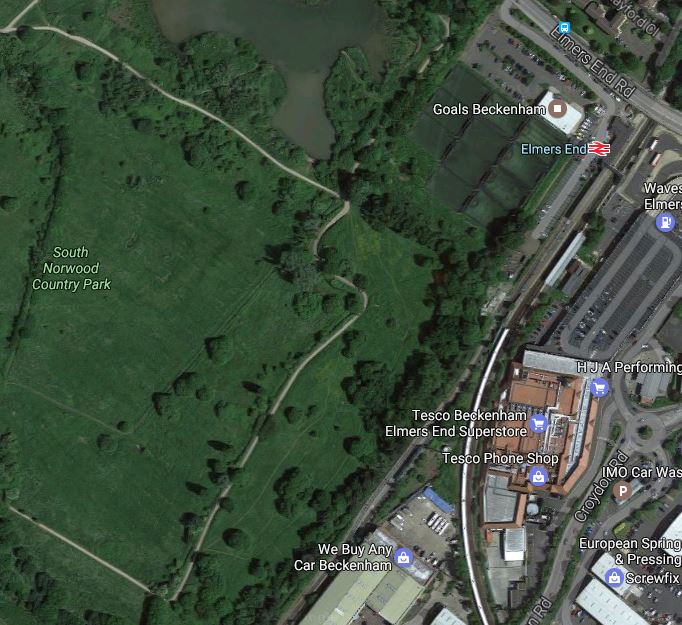
Note how it connects to the Hayes Line and I doubt if it would be difficult to allow through running of tram-trains between East Croydon and stations to the North on the Hayes Line.
The logical Northern terminus would probably be in a new Catford Interchange, which Transport for London have talked about to combine Catford and Catford Bridge stations.
This Google Map shows the two stations and Catford town centre.
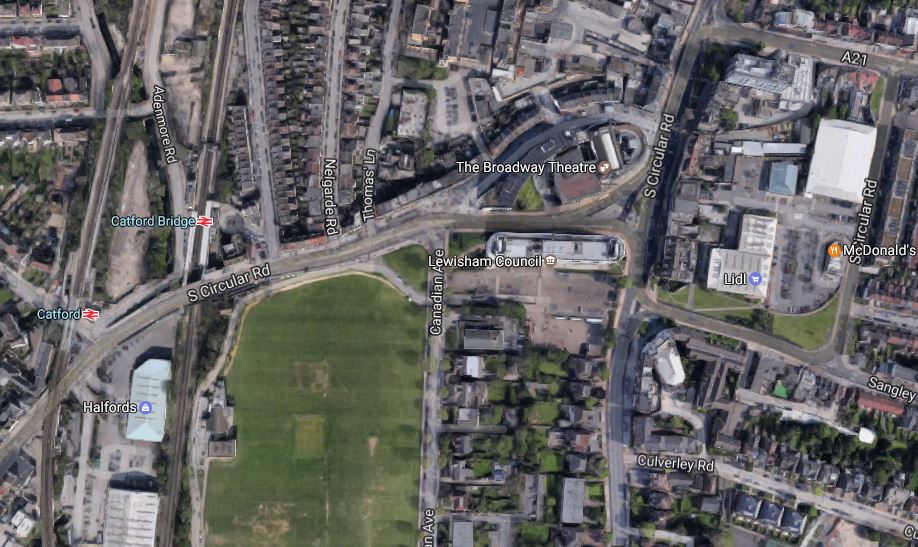
A tram-train could probably run on batteries to the town centre, perhaps with a terminus at Catford Broadway by Lewisham Town Hall and the Broadway Theatre.
But with the right design of the new interchange, the tram-train could go further North to a station with a handy bay platform, if that was deemed necessary.
Increasing The Frequency On The Sutton Loop Line
As I said earlier stations on the Western side of the loop, generally get about two tph in both directions, but those on the Eastern side get an extra two tph going between Victoria and Epsom.
The trains on the line are typically eight-car trains of a variety of types. Capacity may be a problem, but a line like this needs at least four tph all day.
There could also be a case for an extra station to serve St. George’s Hospital and perhaps another as part of the development at Hackbridge.
There is a Hackbridge Masterplan on Wikipedia. This is the first paragraph.
The London Borough of Sutton is working to make Hackbridge the ‘UK’s first truly sustainable suburb’. There has been a regeneration scheme in Hackbridge which has a number of developments on many sites. These are mentioned as part of the Hackbridge Regeneration. Detailed plans include proposals for new eco-friendly homes, more shops, leisure and community facilities, jobs, sustainable transport and pedestrian/ cycle initiatives, improved networks and open spaces.
It all sounds good to me. This is a Google Map of the area.
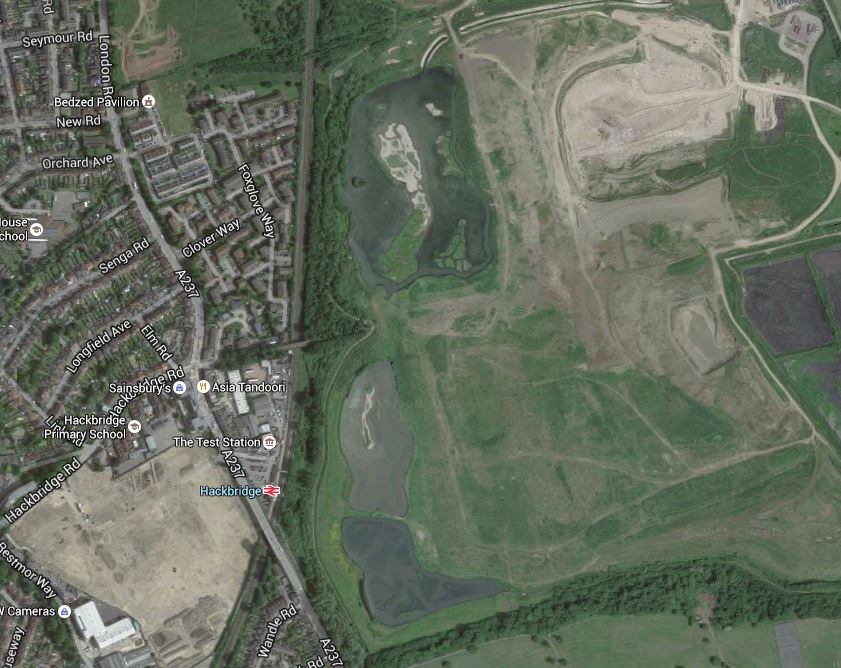
Hackbridge
Note the rail line going up the map with Hackbridge station about a quarter of the way up.At the top of the map, is an icon indicating the BedZed Pavilion.
If they are truly into green transport, it strikes me, that there needs to be another station between Hackbridge station and Mitcham Junction station, which is the next one to the North. As the Tramlink through Mitcham Junction runs down the eastern side of the site and has a stop at Beddington Lane on the north east corner, I would also feel that there scope for extensions to the through Hackbridge.
So for frequency and environmental reasons, I think there is a strong case to improve the Sutton Loop Line.
The obvious way to increase the service would be to have two tph start and finish in a bay platform, at the proposed Streatham Common transport interchange. Not only would it provide four tph on the whole loop, but if the trains were scheduled correctly, all stations on the loop would have the following services to Blackfriars.
- 2 tph direct.
- 2 tph with a change at Streatham Common.
- 2 tph direct via Sutton
- 2 tph via Sutton with a change at Streatham Common.
With good design the change at Streatham Common could be a walk across the platform.
I don’t think that the extra services would need to be eight-car trains, but why use tram-trains?
The tram-trains major advantage is that they could go walkabout to perhaps serve some of the new developments or hospitals like St. Helier or the Royal Marsden.
Using The Sutton Loop Line As A Reversing Loop For Trams From Croydon
This Google Map shows Mitcham Junction station.
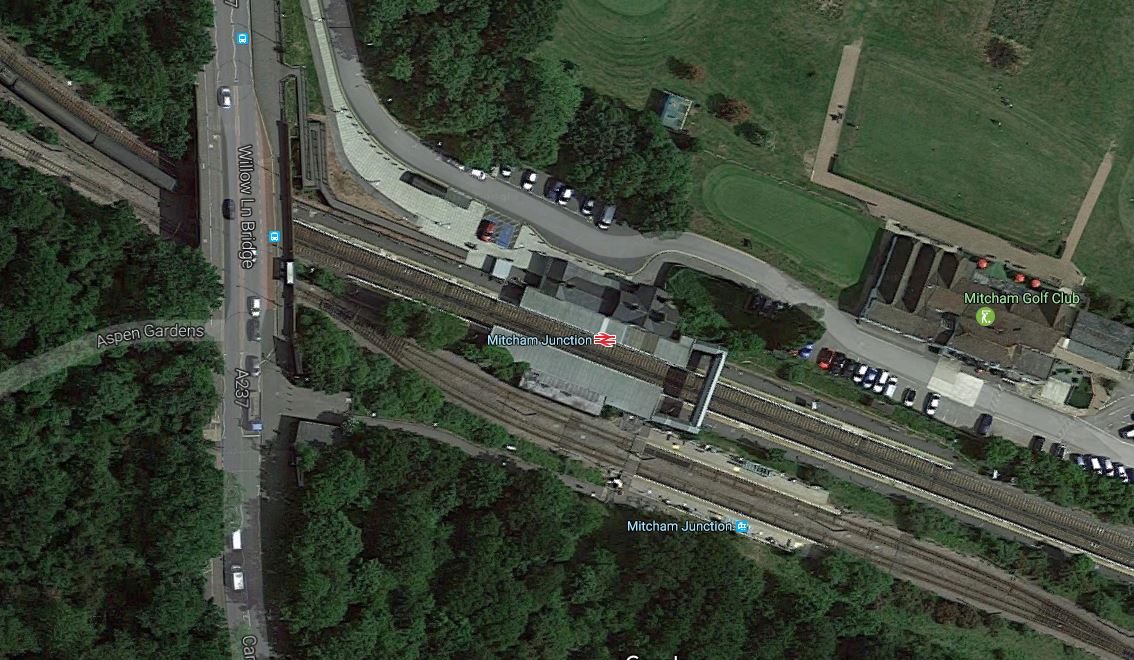
I don’t think it would be too difficult to add chords to the junction, so that a tram-train coming from Croydon could transfer from Tramlink to the Sutton Loop Line. The tram-train would then go round the loop including passing through Wimbledon station on the opposite face of the Tramlink platform.
After returning to Mitcham Junction, the tram-train would return to Croydon.
It may seem a long way round, but there’s probably only a couple of minutes in it.
But it would need a chord at Streatham Common for the tram-trains to by-pass the station.
This Google Map shows the location of the proposed Streatham Common interchange.
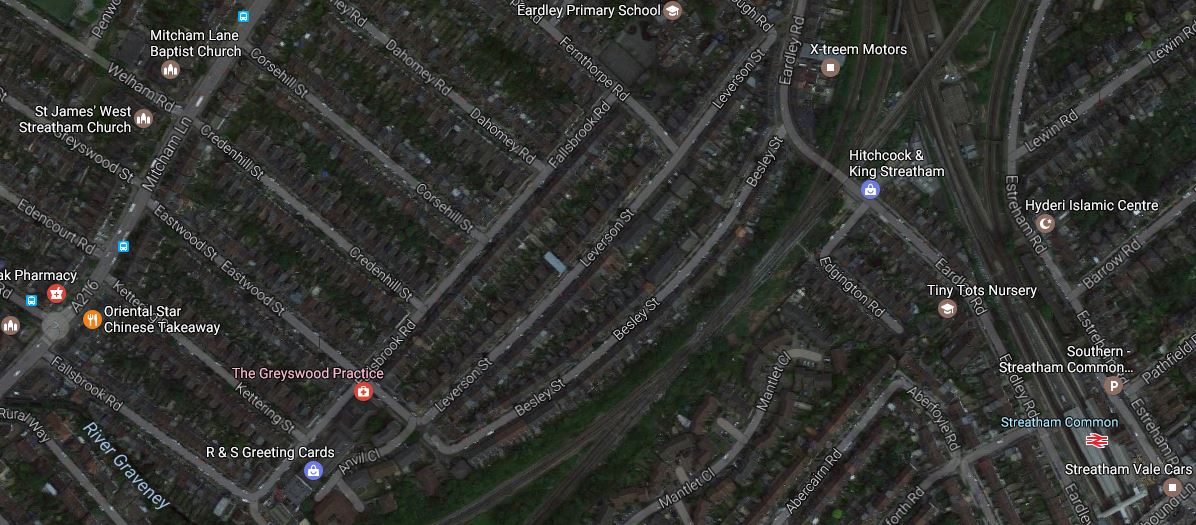
The current Streatham Common station is in the East, The interchange would be built, where the lines cross.
The chord would be built to the South of where the two lines of the Sutton Loop meet, at the bottom of the map.
The track could be adjusted, so that tram-trains could go round the loop both ways.
Will The Victoria-Epsom Service Call At Streatham Common Interchange?
Stops with modern trains are much quicker than they used to be only a few years ago.
So If the design of Streatham Common station and the timetable could allow a fast interchange, it might improve journey times for those living on the Wimbledon side of the Sutton Loop Line, which don’t get direct services from Victoria.
The Proposed Tramlink Extension To Sutton
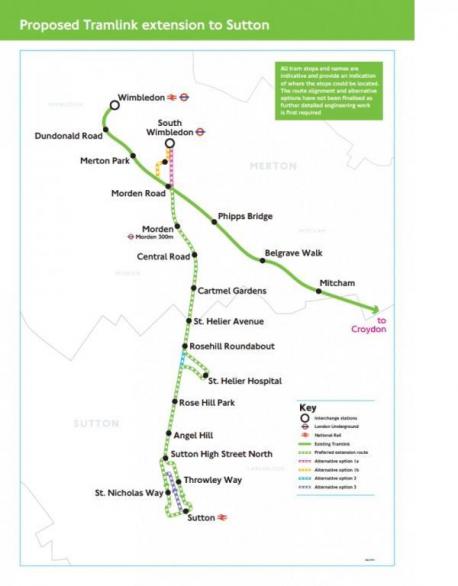
The proposed Tramlink route Between South Wimbledon And Sutton is possibly a worthwhile extra public transport link to throw into the mix. It is described under Extension A in the Wikipedia entry for Tramlink. This is said.
In July 2013, Mayor Boris Johnson affirmed that there is a reasonable business case for Tramlink to cover the Wimbledon – Sutton corridor. A map has been released showing the planned route. It would leave the existing route just to the east of Morden Road and head along the A24 and A297 to Rosehill Roundabout, then the B2230 through Sutton town centre, ending at the station. A loop via St Helier Hospital and a possible extension to Royal Marsden Hospital also are shown.
This is a map of the route.
So how would third-rail tram-trains using the Sutton Loop Line affect the proposed Tranlink Extension to Sutton?
- There are at least four tph in both directions on the Sutton Loop Line.
- The trams will reach Sutton, but only running as trains.
- St. Helier Hospital is not served.
- Tram-trains could possibly serve the Epsom Downs Branch, in addition to the direct services to Victoria.
I describe how third-rail tram-trains could serve the Epsom Downs Branch and the Royal Marsden Hospital in Could Third-Rail Tram-Trains Work The Epsom Downs Branch?
Could Beckenham Junction To Birkbeck Be Run Using Third-Rail Tram-Trains?
Look at this map from carto.metro.free.fr, which shows the lines to the west of Beckenham Junction station.
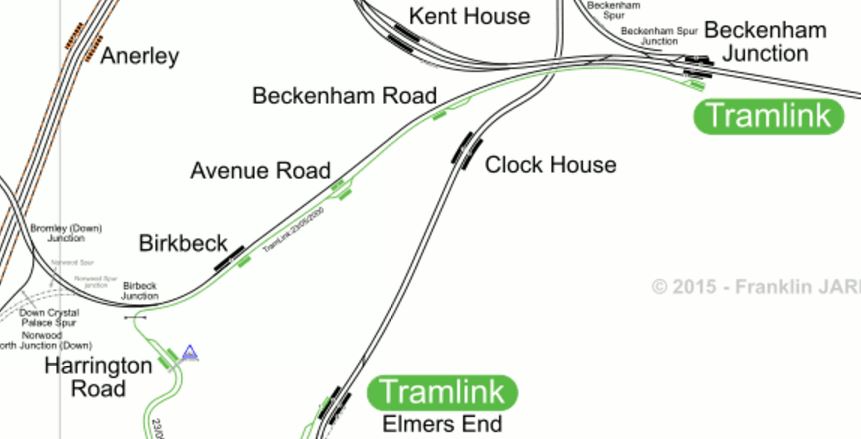
Lines To The West Of Beckhenham Junction Station
At Beckenham Junction station, there are the following platforms.
- Two through platforms.
- Two Westward-facing bay platforms for trains.
- Two Westward-facing bay platforms for the Tramlink.
But the real problem of operation of the section of line through Beckenham Junction station is that, both the main line and tram line to Birkbeck station are bi-directional, which must limit capacity.
Running Using Third-Rail Tram-Trains
Suppose that the trams going to Beckenham Junction were tram-trains capable of running on both 750 VDC overhead and third-rail electrification, with a limited range of perhaps 2 km. on batteries.
The following would be done.
- The current Tramlink line would be for all Westbound tram-trains and trains.
- The current heavy rail line would be for all Eastbound tram-trains and trains.
- Both tracks betweeen Birkbeck and Beckenham Junction would have third rail electrification.
- There would be no electrification of any sort between Harrington Road tram stop and Birkbeck station.
- All trams using the line would have a tram-train capability, dual 750 VDC pick-up and batteries.
- All trains using the line would be as now.
- Birkbeck, Avenue Road and Beckenham Road stations would revert to traditional stations.
- All platforms would need to be adjusted to give step-free access to the two types of vehicles.
I suspect that Beckenham Junction station could also be remodelled to have bay platforms, that could accept both trains and tram-trains.
The Current Services
The typical off-peak service frequency is:
- 4tph (trains per hour) to London Victoria (Southeastern)
- 2tph to London Bridge via Crystal Palace (Southern)
- 4tph to Orpington (Southeastern)
These train services would be unaffected, except that they could stop in Birkbeck, Avenue Road and Beckenham Road stations, if required.
The tram services would be generally unaffected, although they would need to cross over from the Eastbound line into Beckenham Junction, as trains do now.
Tram-Train Operation
Consider how a third-rail tram-train would operate between Croydon and Beckenham Junction.
- It would run as a normal tram using the overhead electrification to Harrington Road tram stop.
- At Harrington Road tram stop, the pantograph would be lowered and the tram-train would run to Birkbeck station on battery power.
- The tram-train would then lower the third-rail shoe and run to Beckenham Junction on the third rail electrification.
This Google Map shows Harrington Road tram stop and Birkbeck station.
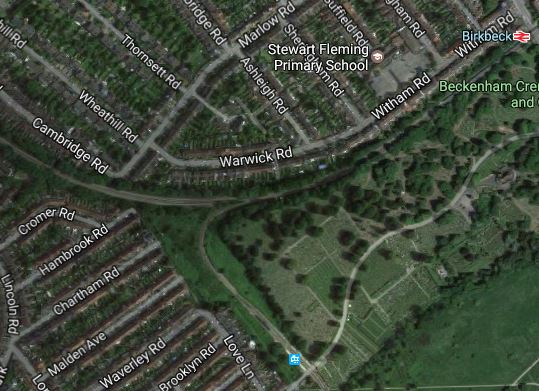
The distance between the two is probably under a kilometre.
Advantages
I can’t believe that creating a double-track railway, that can be used by both tram-trains and say Class 377 trains, doesn’t have advantages.
- The passing loops on the tram line would not be needed, as Eastbound and Westbound trams would be on different lines.
- The double-tracking should reduce train delays.
- It would allow the tram frequency to Beckenham Junction to be increased., which might enable a whole lot of possibilities.
- Tram-train services could be extended to Bromley South station.
I do feel though that the biggest advantages might be enabled, if Birkbeck, Avenue Road and Beckenham Road became single island platforms between the tracks. This would enable.
- Same platform interchange.
- Train passengers going East could change to a tram-train going West and vice-versa.
- A single lift could be installed at Birkbeck, Avenue Road and Beckenham Road stations for step-free access.
There are certainly possibilities to improve the line.
The Bakerloo Line Extension To Hayes and Beckenham Junction Stations
If this happens, which is looking inreasingly likely, there may be advantages in using tram-trains to Beckhenham Junction and Bromley.
Conclusion
By replacing the trams to Beckenham Junction station with tram-trains, capable of running on both 750 VDC types of electrification and with a limited battery capabilty, would simplify operation at Beckhenham Junction and enable Tramlink services to be extended to Bromley South station.
The Third-Rail Tram-Train
I’ve never seen anybody propose a third-rail powered tram-train, but that is probably because everybody has assumed quite rightly, that you couldn’t power a tram by using third-rail electrification. It’s just too dangerous! But is it so dangerous on a segregated track?
In February 2016 I wrote Brummies Go For Battery Trams and it is now ienvisaged that Midland Metro‘s trams will be running services under battery power in 2019.
Battery power is used for trams in several places around Europe and the rest of the World and is becoming a proven technology. Is there any reason why a battery tram-train, can’t be powered by third-rail electrification, when it is running as a train?
The Class 399 Tram-Train
The Class 399 tram-train is under test in Sheffield, to prove that it can run passenger services in the UK.
These tram-trains can handle either 25 KVAC or 750 VDC from overhead wiring. I also think, they are also clever enough to work out what voltage they are getting and configure themselves accordingly.
Since, I originally wrote this post, KeolisAmey Wales have ordered thirty-six tram-trains from the same Citylink family as the Class 399 trains.
Stadler, whose Valemcia factory built the Class 399 tram-trains, will also be building trains for Merseyrail’s network, which will run using 750 VDC third-rail electrification.
Would it be reasonable to assume, that Stadler will be able to design an appropriate pick-up shoe for the Class 399 tram-train, so that it can run on a 750 VDC third-rail network?
Batteries
A battery system would also be needed, but I believe that this will be generally offered by all tram and tram-train manufacturers, as trams and tram-trains will be running increasingly in heritage or sensitive areas.
Charging The Batteries
Batteries would normally be charged, when the tram-train is running on an electrified line, under power from the third-rail system.
The MetroCentro in Seville, works without catenary and has a fast charging system at the two end stops.
There is no reason to believe that a Class 399 tram-train with batteries, couldn’t work with a fast charging station like a Railbaar.
Tram-Trains For The South Wales Metro
Since, I originally wrote this post, KeolisAmey Wales have ordered thirty-six tram-trains from the same Citylink family as the Class 399 trains, for running on the South Wales Metro.
These tram-trains will be fitted with batteries.
Would A Third-Rail Tram-Train Have A Pantograph?
This would be a matter for the operator.
But there is one UK tram network; the London Tramlink in Croydon, which is surrounded by an extensive third-rail electrified network.
The ability to run on both types of 750 VDC systems might be an asset and enable new services to be created without any extra electrification, by using a small amount of battery power to change from one system to another.
Changing Between Third-Rail And Overhead Electrification
This map from carto.metro.free.fr shows the track layout at Mitcham Junction station.
Suppose a link were to be provided, so that tram-trains could come from the South, pass through Mitcham Junction station and then cross over to the tram tracks for Wimbledon.
These pictures show the area.
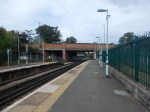
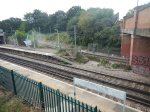


As the link would have no electrification, the power changeover would be as follows.
- Arrive in Mitcham Junction station, using third-rail power.
- Raise and isolate the third-rail shoe.
- Switch to battery power.
- Proceed using the link to Mitcham tram stop.
- Raise the pantograph and switch to overhead power.
A reversed procedure would be used in the opposite direction.
Range On Third-Rail Power
The range of a Class 399 tram-train running on third-rail power, would be more limited by the train-tram’s speed of 100 kph and interaction with other services, rather than any electrification issues.
The range will probably be the same as the German cousins of the Class 399 tram-trains on the Karlsruhe Stadtbahn. These trams run on both 750 VDC and 15 KVAC, to places up to fifty kilometres from the Centre of Karlsruhe.
As a simple example, a third-rail tram-train running on the London Tramlink, could certainly use third-rail lines to access Gatwick Airport.
Range On Battery Power
In Out Of The Mouths Of Brummies, which describes an interview with those involved in the Midland Metro battery train project, I published this quote about battery trams.
Since then there has been lots of work and we’re now comfortable that battery technology has advanced sufficiently for it to be viable.
Under test conditions with plain straight track a tram could travel 20 km catenary-free. In practice, this would be rather less for a fully laden tram ascending the 9% gradient on Penfold Street. The longest catenary-free run we’ve envisaged is around 2 km, and we’re comfortable we can achieve that.
I think until Birmingham proves otherwise, 2 km. would be a sensible range for a tram or tram-train running on a full battery.
Compatibility Issues With Other Rail Vehicles And Platforms
This to me is a matter of design, but after the Sheffield tram-train trial and the analysis of platform solutions in Europe, I suspect that we’ll come up with a solution that works.
I think it is true to say, that many of our trains are badly matched to the platforms, but as this picture of a Class 378 train on the London Overground shows, the gap is becoming easier to mind.
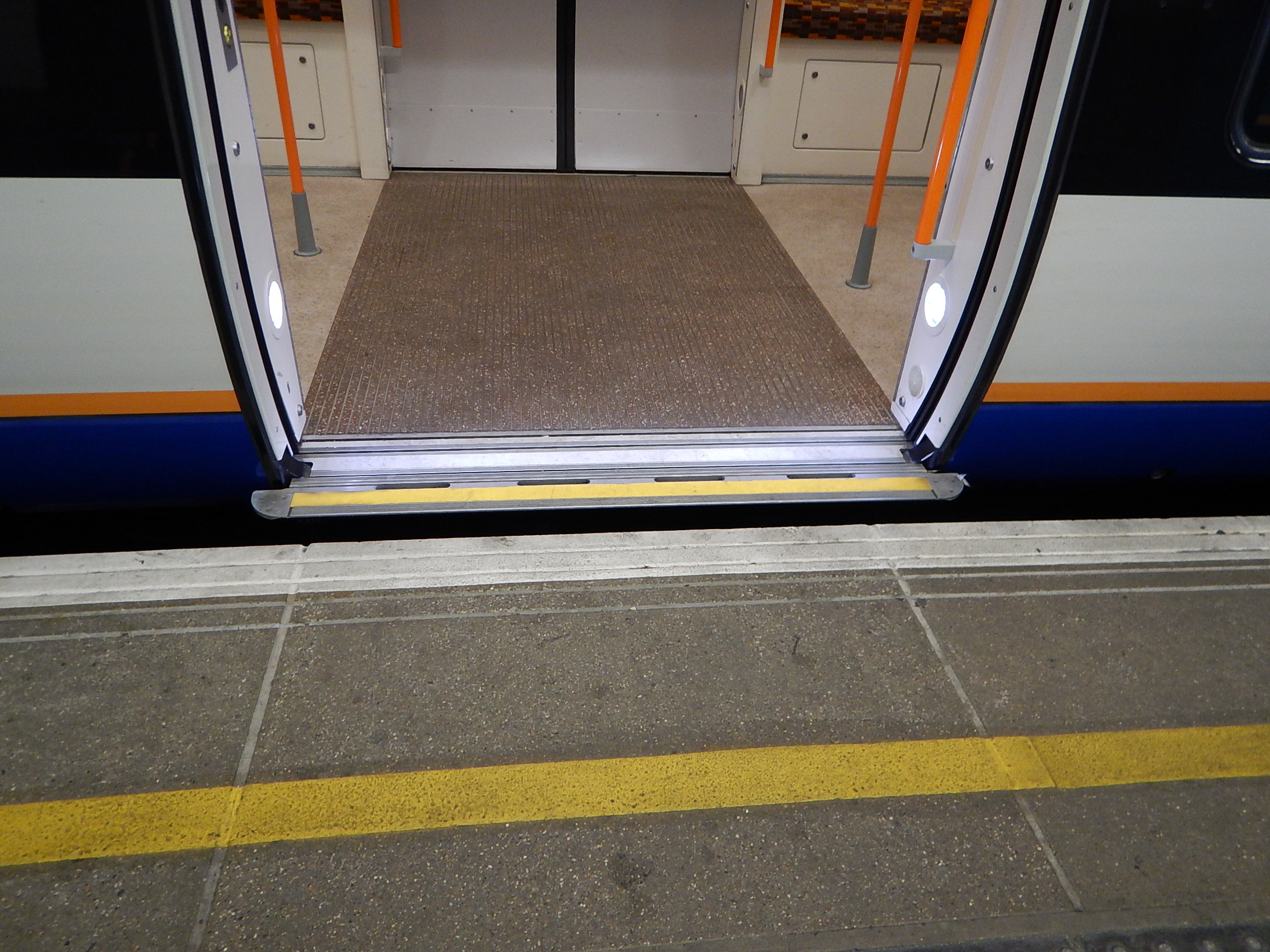
I think too, we have an advantage over Europe, in that our loading gauge is smaller and our trains are closer in size to a modern tram or tram-train.
We are also good at innovative access solutions, as this picture from Canonbury station shows.
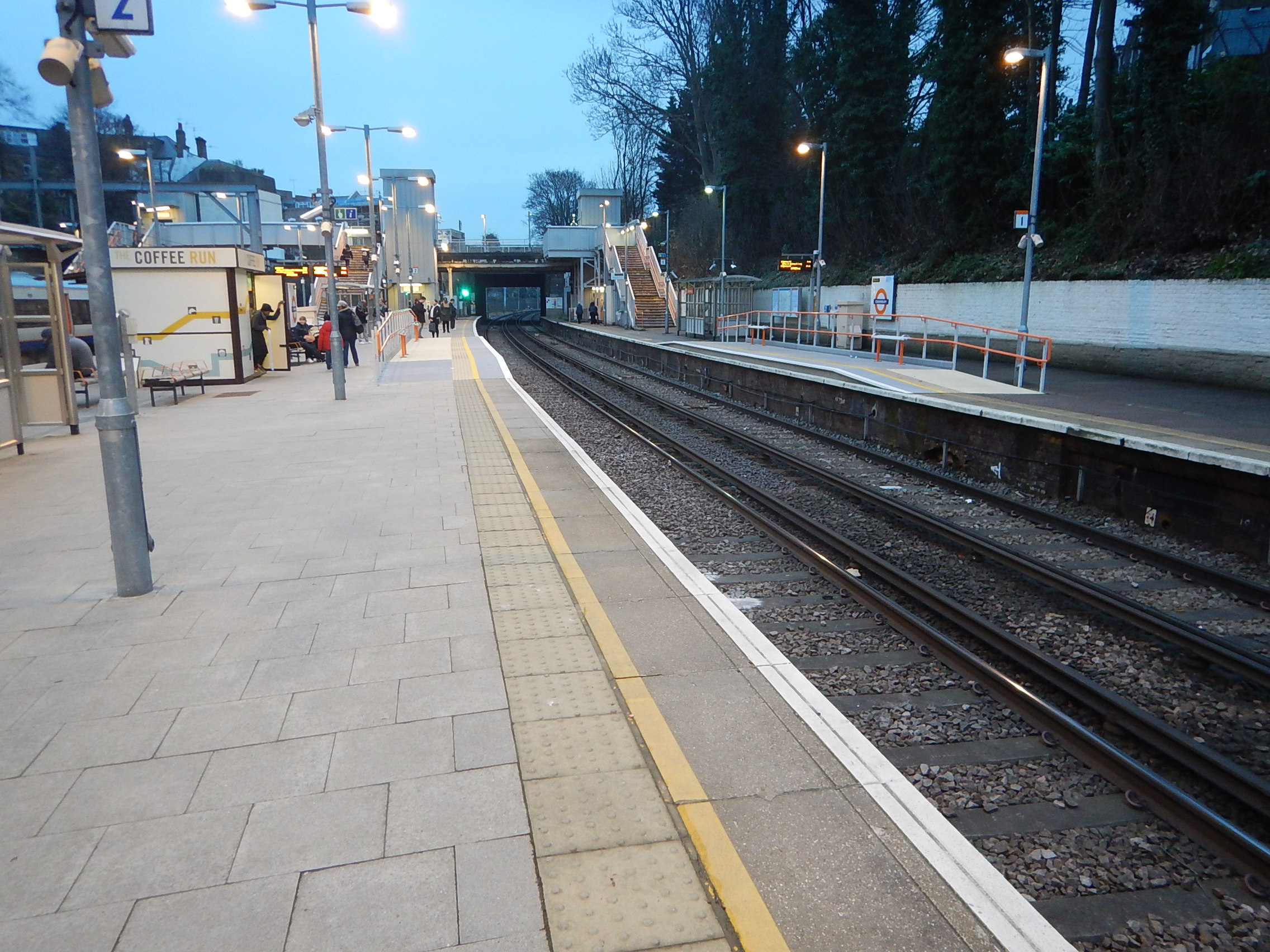
We may have a problem with using double-deck trains, but I believe that good design can minimise the problems of good access to both trains and tram-trains at the same platform.
Applications
The applications will be limited by battery range and by the gradients of the line.
In Southampton – A City Built For Cars, I describe how if they built their proposed Solent Metro around third-rail tram-train technology, they could transform the city.
In Could Beckenham Junction To Birkbeck Be Run Using Third-Rail Tram-Trains?, I show how third-rail tram train-technology , could be used to create more capacity at Beckenham Junction station.
In Could Third-Rail Tram-Trains Be Used To Increase Services In South London?, I show how third-rail tram-train technology, could be used to expand the London Tramlink.
In Could Third-Rail Tram-Trains Work The Epsom Downs Branch?, I show how third-rail tram-train technology, could serve the Royal Marsden Hospital.
In The Cranleigh Line, I suggest that third-rail tram-train technology could be used on this route.
Conclusion
Technically, I feel that a Class 399 tram-train capable of running on third-rail electrified lines is possible.
But it would have to run on battery power or 750 VDC overhead, when running as a tram.
 The Anonymous Widower