Offshore Solar Farm Ready For Tow Out To Hollandse Kust Noord Wind Project
The title of this post, is the same as that of this article on offshoreWIND.biz.
This is the sub-heading.
What is described as the “world’s first” offshore solar farm integrated within a wind farm has completed assembly at the Port of Amsterdam and is ready for deployment at the Hollandse Kust Noord (HKN) offshore wind farm in the North Sea.
These two paragraphs give more details about the project.
Dutch company Oceans of Energy assembled the floating solar farm in three days. The system will be towed 18.5 kilometres offshore this summer to be installed at the HKN site, operated by CrossWind, a joint venture (JV) between Shell and Eneco.
According to Oceans of Energy, the project uses prefabricated floating solar units designed for offshore conditions and is seen as a step toward scaling hybrid wind-solar developments.
There are several ways to generate renewable energy.
As wind, solar, tidal and wave power are often out of phase with each other, if you are using two together in a hybrid setup, then it is probably not a bad idea to add a BESS or other form of storage to the mix.
In Oceans of Energy To Build Offshore Solar Array At Hollandse Kust Noord Offshore Wind Park, I said that the Dutch were putting batteries in the design of Hollanse Kust Noord offshore wind farm.
MP Pushes For Tidal Lagoon In Bristol Channel
The title of this post, is the same as that of this article on the BBC.
This is the sub-heading.
Building a tidal lagoon in the Bristol Channel could provide clean energy for 120 years, an MP has said.
These three paragraphs give more details.
The proposed West Somerset Lagoon, which would cost £10bn to build, would run nine miles (14km) from Minehead to Watchet in Somerset.
Its lifespan would be twice that of a nuclear power plant, said Tiverton and Minehead MP Rachel Gilmour.
Mrs Gilmour said she will soon be discussing the proposal with ministers. If the project is pursued, it could be up and running by 2038 – bringing jobs and financial benefits to the area.
The project already has a web site, with this mission statement.
The West Somerset Tidal Lagoon is a proposed Tidal Range power scheme, that aims to harness the energy of the tides to provide zero carbon renewable energy. It is strategically located on the southern coast of the Bristol Channel Basin between Minehead and Watchet to take advantage of the world’s second highest tidal range and will become the UK’s largest sustainable energy project.
This map from OpenRailwayMap shows the coast between Minehead and Watchet.
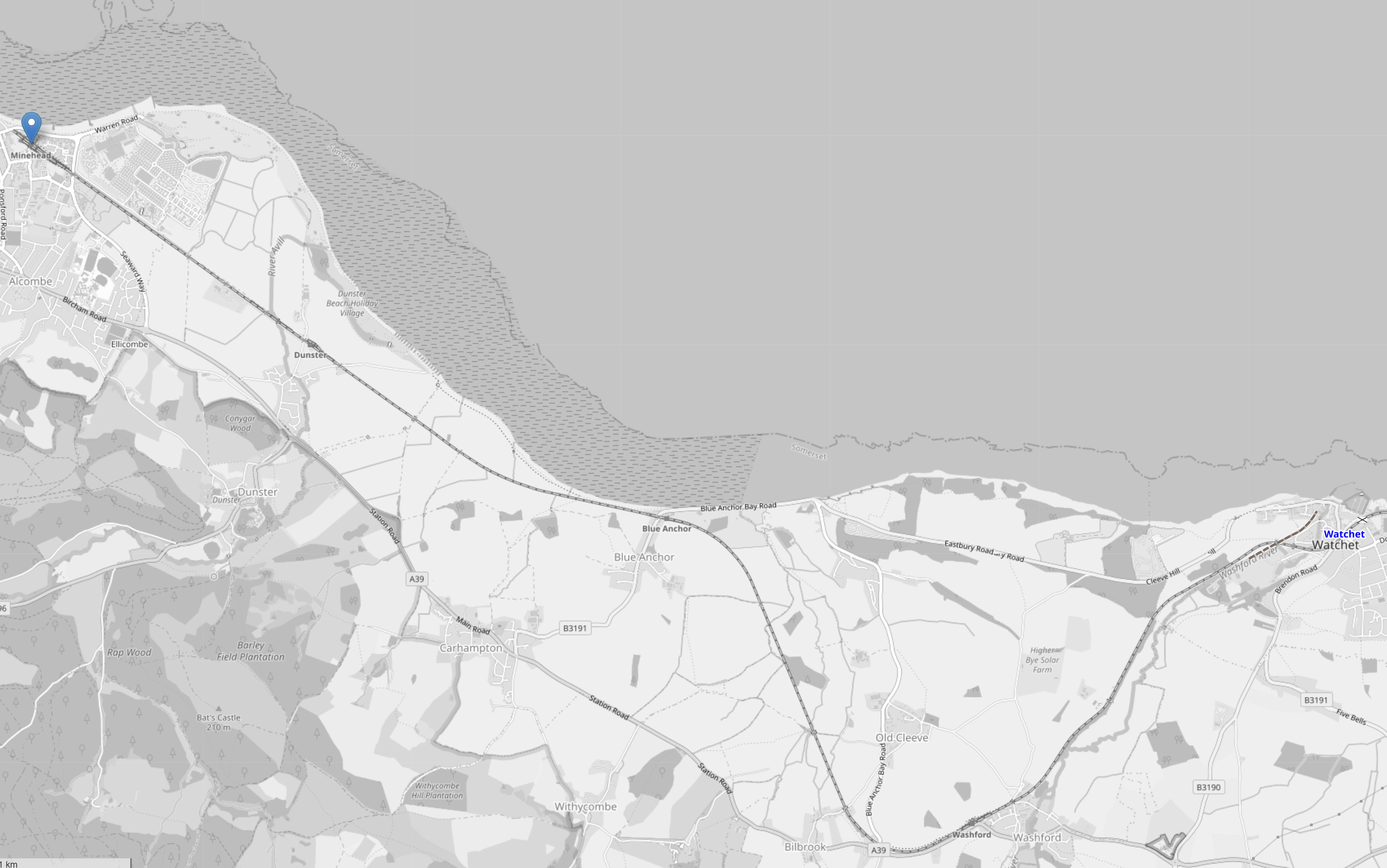
Note.
- Minehead station is indicated by the blue arrow in the North-West of the map.
- Watchet station is indicated by the blue lettering on the Eastern edge of the map.
- The West Somerset Railway links the two stations and connects them to the Bristol and Exeter Line at Norton Fitzwarren station.
It looks like the sea wall of the lagoon will curve between Minehead and Watchet.
The West Somerset Railway
This OpenRailwayMap shows the whole West Somerset Railway.
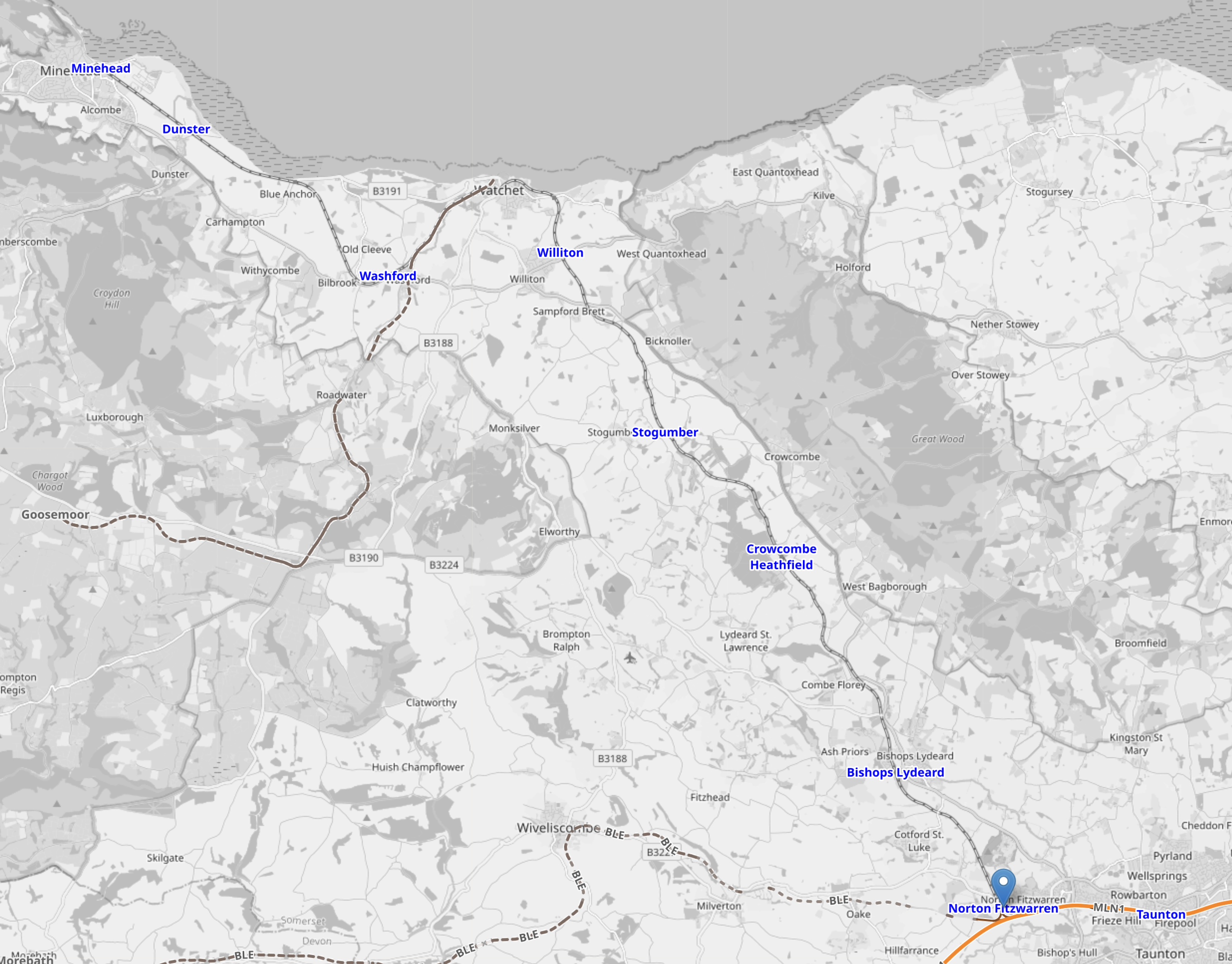
Note.
- Minehead station is in the North-West corner of the map.
- Norton Fitzwarren station is indicated by the blue arrow in the South-East corner of the map, where the West Somerset Railway joins the main line between Exeter and Bristol.
- Taunton station on the main line with trains all over the country is a few miles to the East of Norton Fitzwarren station.
I believe that for the lagoon project to be completed, the West Somerset Railway needs to be turned into a fully-operational branch line from Taunton to improve access for residents, visitors and workers to Minehead and other places in West Somerset.
Large projects like these need large numbers of workers to be completed.
Less disruption to local residents and businesses is caused if a park and ride site is set up. Sizewell C is setting up two from the nearby East Suffolk Line, using hydrogen-powered buses.
Sizewell C also intends to bring in heavy equipment and construction materials by rail from Ipswich and Lowestoft.
The West Somerset Tidal Lagoon could use the railway to bring in heavy loads.
If the West Somerset Railway is going to be used to ease the construction of the lagoon , then this should be properly to connected to Taunton first.
9.58 GW of Renewable Energy Contracts Signed In UK’s Latest CfD Auction
The title of this post, is the same as that of this article on offshoreWIND.biz.
This is the sub-heading.
The Low Carbon Contracts Company (LCCC), a UK government-owned company, has signed 130 contracts for a total of 9.58 GW of renewable energy generation, covering the projects that were successful in the country’s latest Contracts for Difference (CfD) allocation round 6 (AR6).
These three paragraphs give more detail.
AR6 secured a broad range of technologies from wind and solar to emerging, innovative projects like tidal and floating offshore wind.
Offshore wind developers were awarded contracts for approximately 5.3 GW of capacity.
In the Round 6 auction, nine contracts for fixed-bottom projects were awarded, totalling 4.9 GW, while a single contract was granted for a floating wind project to Green Volt Offshore Windfarm, a consortium of Flotation Energy and Vårgrønn.
Once operational, AR6 projects will see 9.58 GW of renewable generation coming online, bringing the total CfD capacity to 34.74 GW. According to LCCC, this is the highest number of contracts ever signed in a single round.
Note that this will add nearly a third to the UK’s current renewable capacity.
South Korean Firm To Supply Power Equipment For Ørsted’s Hornsea 4 Offshore Wind Farm
The title of this post, is the same as that of this article on offshoreWIND.biz.
This is the sub-heading.
Denmark’s Ørsted has awarded a contract to Hyosung Heavy Industries for the supply of ultra-high voltage power equipment for the Hornsea 4 offshore wind farm in the UK
These two paragraphs add a bit of detail.
Under the contract, the South Korean company will supply 400 kV ultra-high voltage transformers and reactors, essential components for improving power quality for the 2.4 GW Hornsea 4 offshore wind project.
The most recent contract further strengthens the company’s presence in Europe, where it has accumulated over 1 trillion won (about EUR 667 million) in orders this year, as reported by the company.
Hyosung Heavy Industries seem to be doing rather well at supplying electrical gubbins in Europe.
But then Korean companies seem to be doing well in Europe and especially the UK, after the state visit of the Korean President and his wife in November 2023.
In the last century, we did very well dealing with Korean companies with Artemis; the project management computer system, that I wrote.
In Hyundai Heavy Sets Sights On Scottish Floating Offshore Wind, I describe some of our dealings there.
Conclusion
From other posts, I have written, it looks like the UK and Korea are building a strong partnership with offshore wind, and a secondary one with tidal power might be emerging. We also shouldn’t forget the partnership in North London over football.
Could Liverpool Develop A Massive Zero-Carbon Data Centre?
There is an article in The Sunday Times today, which is entitled Google Signs Nuclear Deal To Power AI Data Centres.
These are the first three paragraphs of the article.
Google has struck a deal with a nuclear power start-up to provide low-carbon energy for its data centres and AI operations, marking a world-first in the tech industry.
The California-based company said the agreement to buy energy from multiple small modular reactors developed by Kairos Power could help spur a nuclear revival in America.
The first reactor is scheduled to come online in America by 2030, followed by additional deployments through 2035.
I am not against nuclear-powered data centres, but could Liverpool build a massive zero-carbon data centre?
This Google Map shows Liverpool Bay, which is a vast expanse of water that stretches along the North Wales coast to Anglesey and all the way to the Isle of Man.
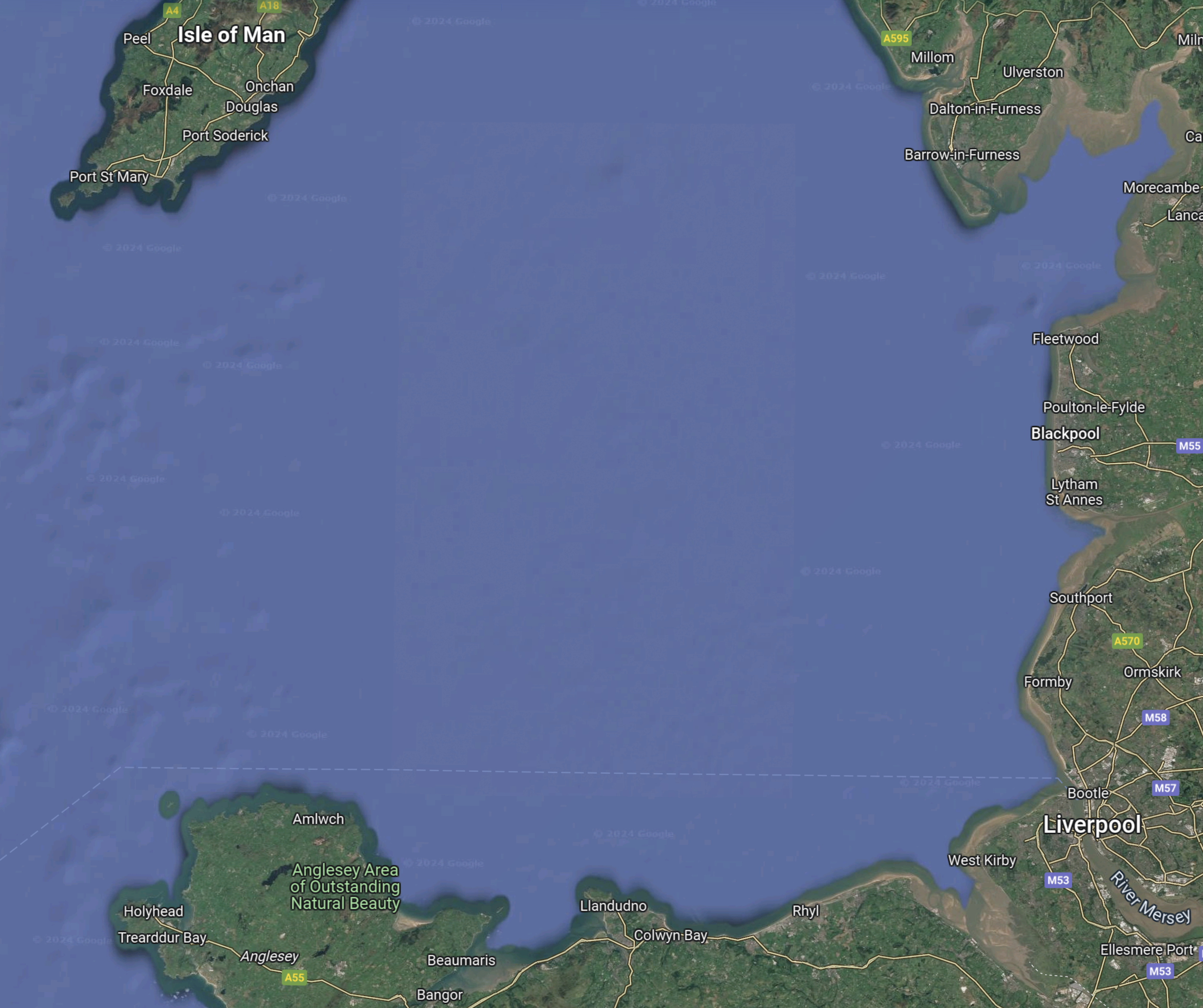
Note.
- The Isle of Man in the North-West corner.
- Liverpool, Birkenhead and the River Mersey in the South-East corner.
- Anglesey in the South-West corner.
- Blackpool with Morecambe Bay to its North in the North-East corner.
Liverpool Bay could be one of Europe’s zero-carbon energy powerhouses.
Wind Farms In Liverpool Bay
At the present time, these wind farms are producing electricity or planned in Liverpool Bay.
- Barrow – 90 MW – Commissioned in 2006
- Burbo Bank – 90 MW – Commissioned in 2007
- Burbo Bank Extension – 258 MW – Commissioned in 2017
- Gwynt y Môr – 576 MW – Commissioned in 2015
- North Hoyle – 60 MW – Commissioned in 2003
- Ormonde – 150 MW – Commissioned in 2012
- Rhyl Flats – 90 MW – Commissioned in 2009
- Walney – 367 MW – Commissioned in 2010
- Walney Extension – 659 MW – Commissioned in 2018
- West if Duddon Sands – 389 MW – Commissioned in 2014
- Awel y Môr – 500 MW – Planned
- Morecambe – 480 MW – Planned
- Mona – 1500 MW – Planned
- Morgan – 1500 MW – Planned
Note.
- 2509 MW has been commissioned.
- 3980 MW is being planned.
- That is a total of 6489 MW
I suspect more space in Liverpool Bay could be developed with wind farms.
Mersey Tidal Power
The Mersey Tidal Power project has a web site.
If it is built, it will probably be built by the South Korean company; K-Water and use some of the design principles of the Sihwa Lake Tidal Power Station.
It will likely have an output of around 1 GW and take ten years to build.
In the 1970s, I did some project management consultancy for Frederick Snow and Partners, and they showed me their plans for a Severn Barrage.
Their futuristic vision for the Severn Estuary was never built, as the Prime Minister of the time; Harold Wilson, felt coal was the future. See Last Of The Many!
I suspect that the Mersey Tidal Power project will be another variation on a proven theme.
Morecambe Bay Bridge And Tidal Barrage Proposal
In the Wikipedia entry for Morecambe Bay, there is a proposal for a bridge and tidal barrage across the bay, where this is said.
In 2004, a proposal was made to build a bridge across the bay flanked by wind turbines and using tidal power. Proposals from Northern Tidal Power Gateways in 2019 outlined a tidal barrage with a road running along on top.
If the Mersey Tidal Power project is a success, then why wouldn’t one across Morecambe Bay, be one too?
500 MW of zero-carbon tidal power would do nicely!
Nuclear Sites At Calder Hall, Heysham And Wylfa
These three nuclear stations have supplied electricity to the North-West of England.
- Calder Hall was the original Magnox site, which the Wikipedia entry says had a nameplate capacity of 240 MW and was decommissioned in 2003, after running for 47 years.
- Heysham is a powerful site which the Wikipedia entry says has a nameplate capacity of 2452 MW and will be decommissioned in 2028.
- Wylfa is an older, smaller Magnox site which the Wikipedia entry says had a nameplate capacity of 1190MW and was decommissioned in 2015.
As the sites are cleared, I am sure that we’ll see more nuclear power stations built on the sites.
How Much Electricity Does A Data Centre Use?
I found this paragraph in an NESO document.
Regardless of this, if we were to use existing market data and modelling projections, this could point to annual data centre electricity consumptions of between 3.6 TWh in 2020 to as much as 35 TWh by 2050.
Dividing by the hours in a year, indicates that an individual data centre could use between 0.4 and 4 GW of electricity.
Using my rough figures here from wind, tidal and nuclear, I suspect that the power on the Mersey will generate enough power for at least one data centre.
Liverpool Is On The Right Side Of The Country For Cables To North America
Cables will go straight out of Liverpool Bay, pass to the North of Ireland and across the Atlantic to somewhere like Puget Sound.
Liverpool has a superb location for a Transatlantic data centre, that connects to networks on both sides of the pond.
Could Underwater Data Centres Be Developed In Liverpool Bay?
This page on the Microsoft web site is entitled Microsoft Finds Underwater Datacenters Are Reliable, Practical And Use Energy Sustainably
These three paragraphs detail the research.
Earlier this summer, marine specialists reeled up a shipping-container-size datacenter coated in algae, barnacles and sea anemones from the seafloor off Scotland’s Orkney Islands.
The retrieval launched the final phase of a years-long effort that proved the concept of underwater datacenters is feasible, as well as logistically, environmentally and economically practical.
Microsoft’s Project Natick team deployed the Northern Isles datacenter 117 feet deep to the seafloor in spring 2018. For the next two years, team members tested and monitored the performance and reliability of the datacenter’s servers.
I would assume that Microsoft have continued the research, as with something like this you can’t be too careful.
But it would appear, that data centres and their servers could be submerged under the waters of Liverpool Bay.
London And Liverpool Will Be Under Two Hours By Train Within A Year
New Class 807 trains, which will be delivered within a year, will improve the train service between the two cities.
- Train times will be brought to around or even below two hours.
- , The extra trains will allow a second hourly service to be added.
- The extra service will additionally stop at Liverpool South Parkway station, for the airport.
- High Speed Two is claiming one hour and fifty minutes, between London and Liverpool.
Liverpool already has one of the best rail terminals in the North of England, as these pictures show.

































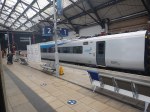

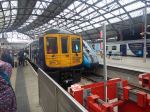







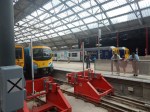



















With these service improvements, it will have a service to London and the South, that will be second to no other Northern station.
Liverpool Has A Refurbished Partly-Underground Suburban Railway With New Trains
Liverpool’s Metro is one of the best in Europe for a medium-sized city.
The Metro is also expanding with new routes and stations.

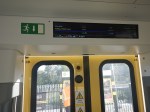











These pictures show the new Headbolt Lane station, which is swerved by the UK’s first battery-electric trains.
Liverpool Has Easy Access To Two International Airports
There are two international airports close by; Liverpool John Lennon and Manchester International.
- For Liverpool Airport, it’s a bus from Liverpool South Parkway station or an express bus from Liverpool city centre.
- For Manchester Airport, it’s a train from Lime Street station.
I am fairly sure, that a hydrofoil could connect Liverpool’s Waterfront and the Tidal Barrier to the airport.
North-West England Has A Rich University Tradition
Liverpool, Manchester and the surrounding area has several world-class universities and research establishments.
Some like The Pandemic Institute would be able to find uses for all the computing power and artificial intelligence on offer at a powerful data centre.
Liverpool Is A World City
Liverpool is a World City, where there is plenty of sport, entertainment and things to do.
Conclusion
Liverpool is installing the power infrastructure for a very large data centre, that will be able to handle the world’s largest and most difficult problems.
Public Views Sought Over Mersey Tidal Barrier Plan
The title of this post, is the same as that of this article on the BBC.
This is the sub-heading.
More details have been revealed about plans to build the world’s largest tidal barrier in the River Mersey.
These two paragraphs outline the project.
A dam-like structure would be constructed between Wirral and Liverpool, with the possibility of cyclists and pedestrians being able to walk across it.
Liverpool City Region Combined Authority believes the project could generate enough clean, predictable energy to power hundreds of thousands of homes for 120 years.
Note.
- A six-week public consultation on the scheme will begin on 1 October, offering local people and organisations the chance to comment on the plans.
- Steve Rotherham, who is the Mayor, has said it will be within ten years.
As Rotherham has called in the Korean experts, he could likely be right.
This is a flythrough of the barrage.
Mersey Tidal Power Flythrough
Liverpool City Region Combined Authority have released a flythrough of the proposed tidal barrage across the Mersey.
Plans Progress To Build World’s Largest Tidal Scheme On The Banks Of The River Mersey
The title of this post, is the same as that of this press release from the Liverpool City Region.
These four bullet points, act as sub-headings.
- Mersey Tidal Power has the potential to become the world’s largest tidal scheme
- Formal planning process for UK’s “first of a kind” Mersey Tidal Power set to begin
- Potential to manage environmental issues associated with climate change
- Scheme would need government backing to complete development stage
These three paragraphs introduce the project.
Advanced proposals to build the world’s largest tidal scheme on the banks of the River Mersey have been unveiled by the Liverpool City Region’s Mayor Steve Rotheram.
Mayor Rotheram has revealed that the city region will pursue a barrage between the Wirral and Liverpool as the preferred option for the city region’s flagship Mersey Tidal Power project.
The barrage scheme – the “first of a kind” in the UK – could generate clean, predictable energy for 120 years and create thousands of jobs in its construction and operation.
Note.
- This page on the Liverpool City Region, has this explanatory video.
- This brochure can also be downloaded.
At a first glance all the documentation is very professional.
These are my thoughts.
How Much Power Will The Mersey Tidal Project Generate?
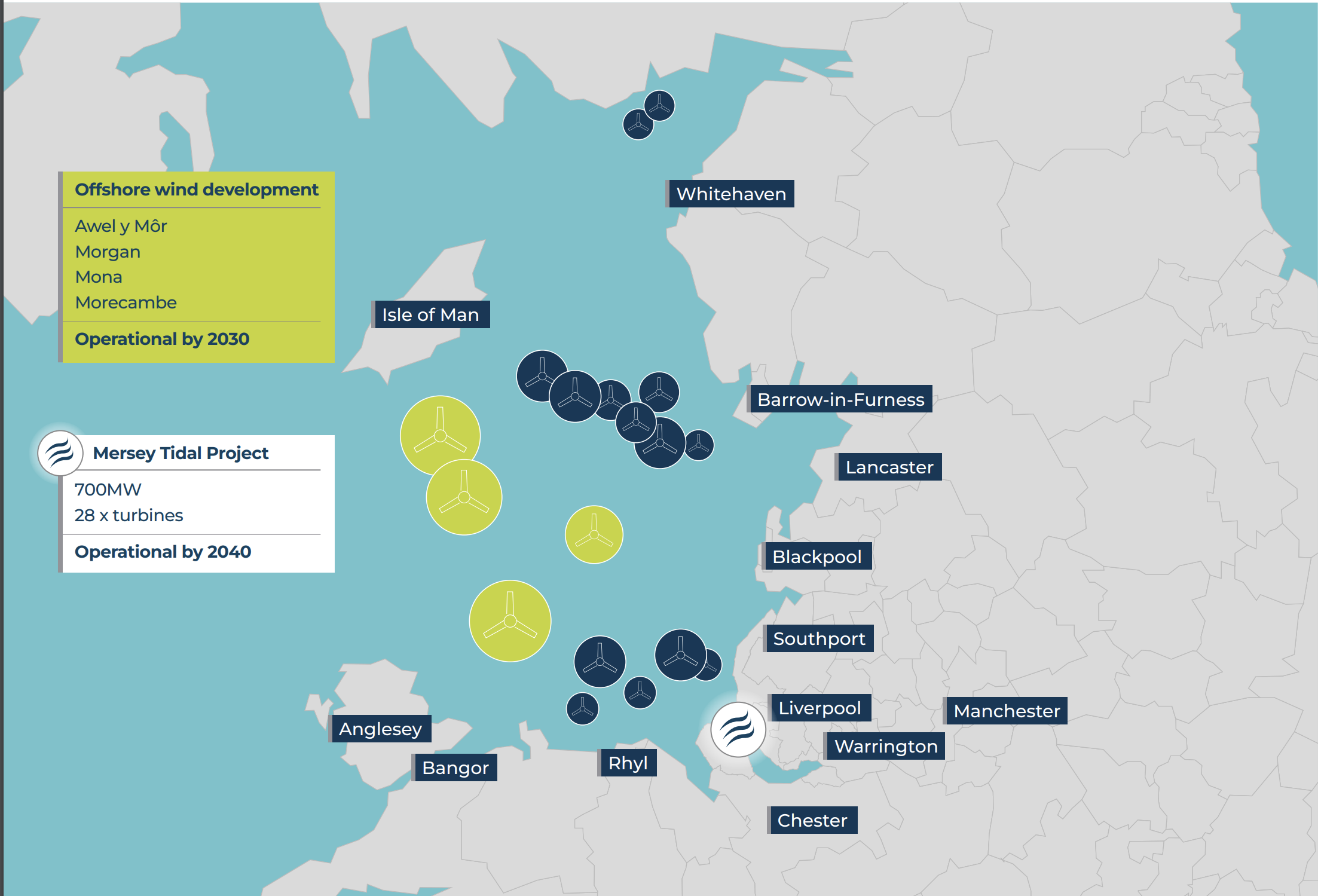
This graphic from the brochure shows electricity generation in Liverpool Bay.
Note.
- The dark blue circles are the thirteen existing wind farms, that have a total capacity of 3 GW.
- The yellow circles are four new wind farms, that will be built by 2030 and will have a total capacity of 4 GW.
- The Mersey Tidal Project will have 28 x 25 MW turbines and generate 700 MW.
I also suspect that the power generation will be supplemented by a large battery, that will smooth out the electricity, when the wind isn’t blowing and the tides are at the wrong cycle.
Access For Ships To The Tranmere Oil Terminal And The Manchester Ship Canal
This article on the Liverpool Business News is entitled £6bn ‘Barrage Across The Mersey’ Takes Step Forward.
This is the introductory paragraph.
Steve Rotheram says his £6bn Mersey Tidal Power project will see a barrage across the river, with locks to allow ships through, but original 2030 switch-on now looks unlikely.
The article has a picture which could show locks on the Wirral side of the Mersey.
This Google Map shows the location of the Tranmere Oil Terminal and the Manchester Ship Canal.

Note.
- Birkenhead is in the North-West corner of the map.
- The line of white squares running parallel to the River Mersey, indicate the stations of the Wirral Line to Chester and Ellesmere Port.
- The Tranmere Oil Terminal is indicated by the red arrow at the top of the map.
This second Google Map expands the area on the West bank of the Mersey, at the bottom of the map.
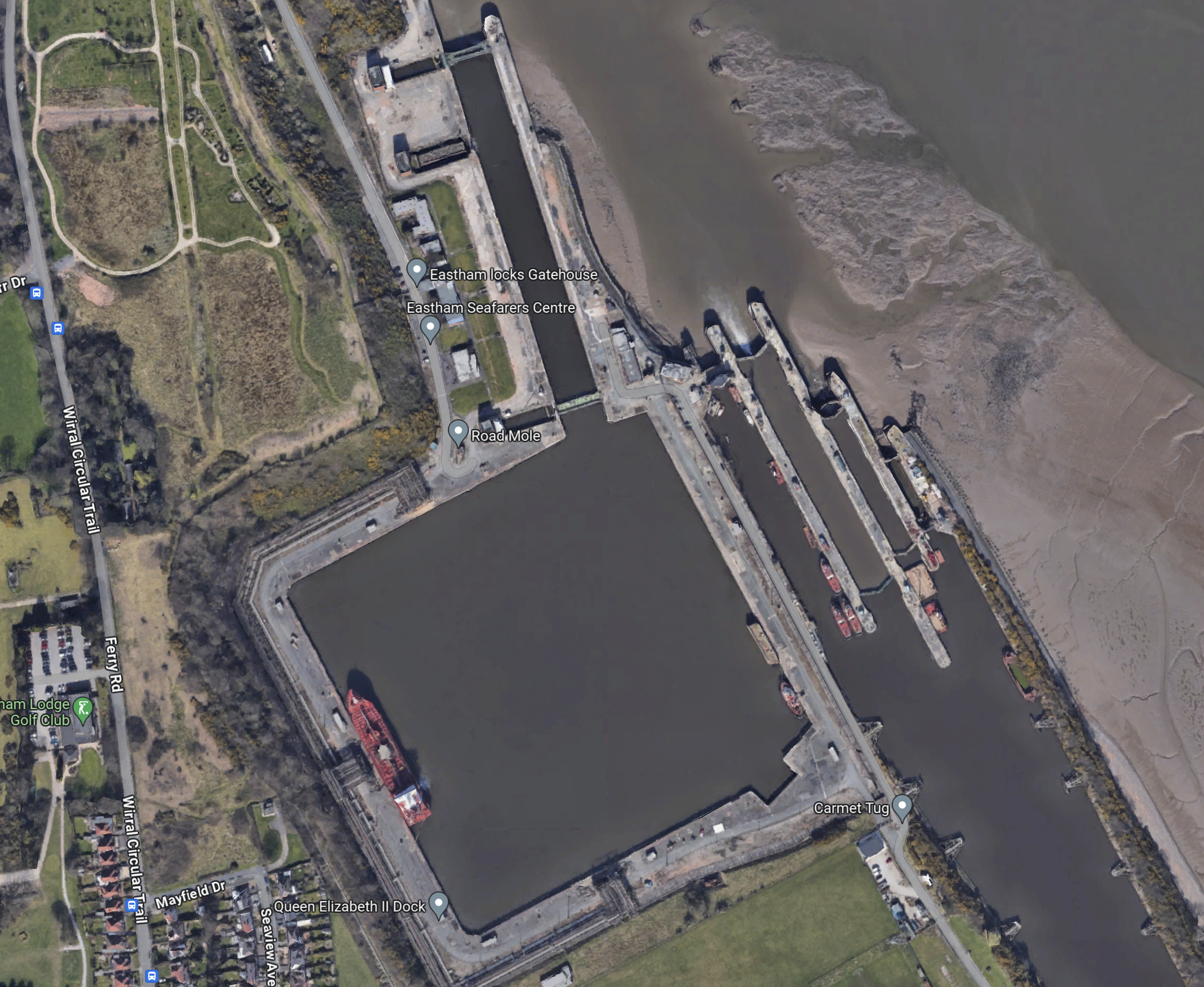
These are Eastham Locks, which allow ships to enter and leave the Manchester Ship Canal.
This third Google Map shows the area around the Tranmere Oil Terminal.
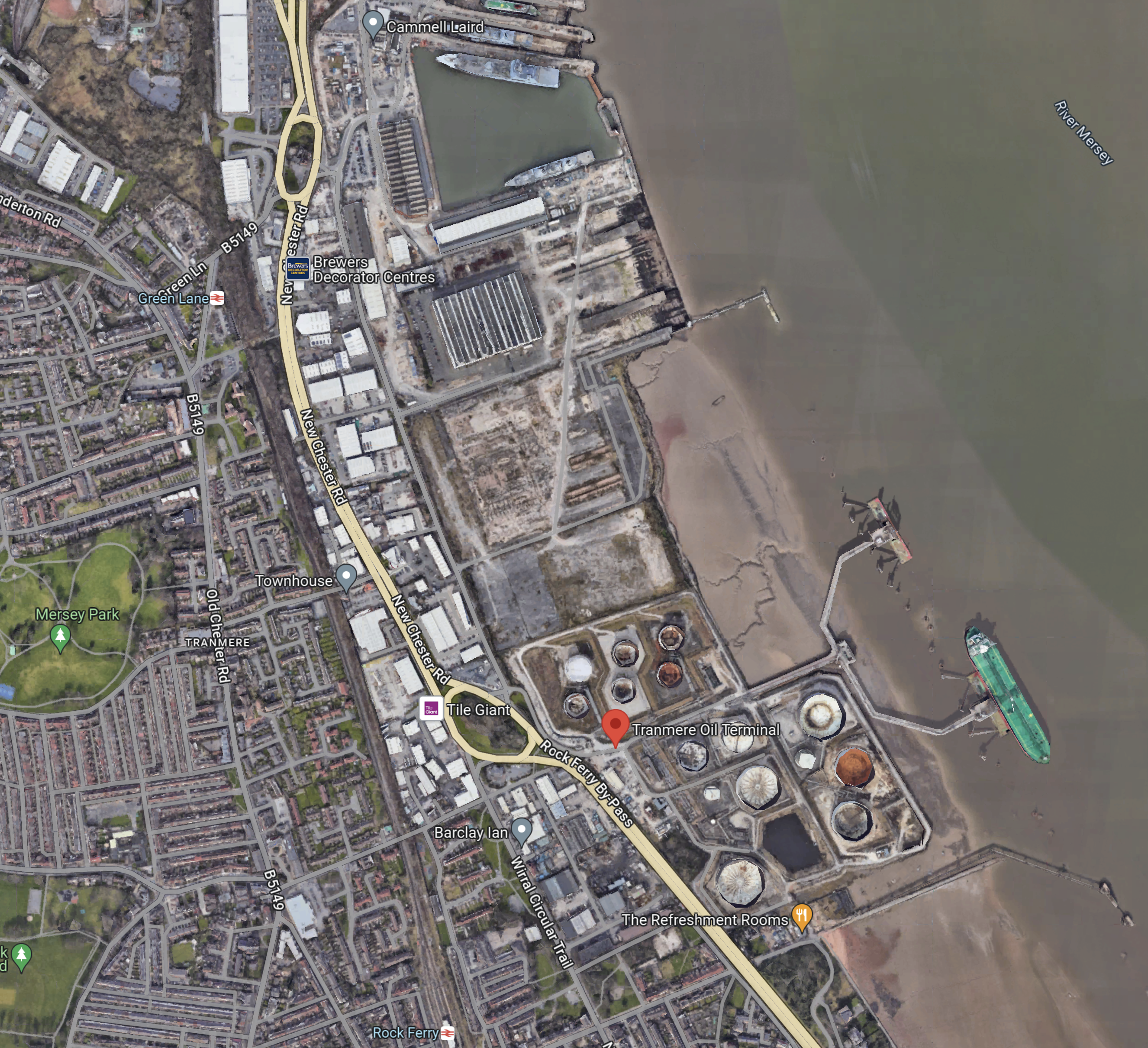
As before the Tranmere Oil Terminal is indicated by the red arrow, with Cammell Laird to the North.
The Liverpool Business News article says this about oil tankers, that use the Mersey.
In terms of oil tankers alone, there are more than 700 vessels coming in and out of the Mersey every year. Supertankers berth at the Tranmere Oil Terminal next to the Cammell Laird shipyard and around 500 smaller vessels berth at Stanlow at Ellesmere Port.
LBN understands that some form of lock system will be incorporated into the barrage to allow ships in and out. That might prove tricky for supertankers which suggests the barrage would be down river from the Tranmere terminal.
This Google Map shows the Manchester Ship Canal as it goes East from Eastham Locks.
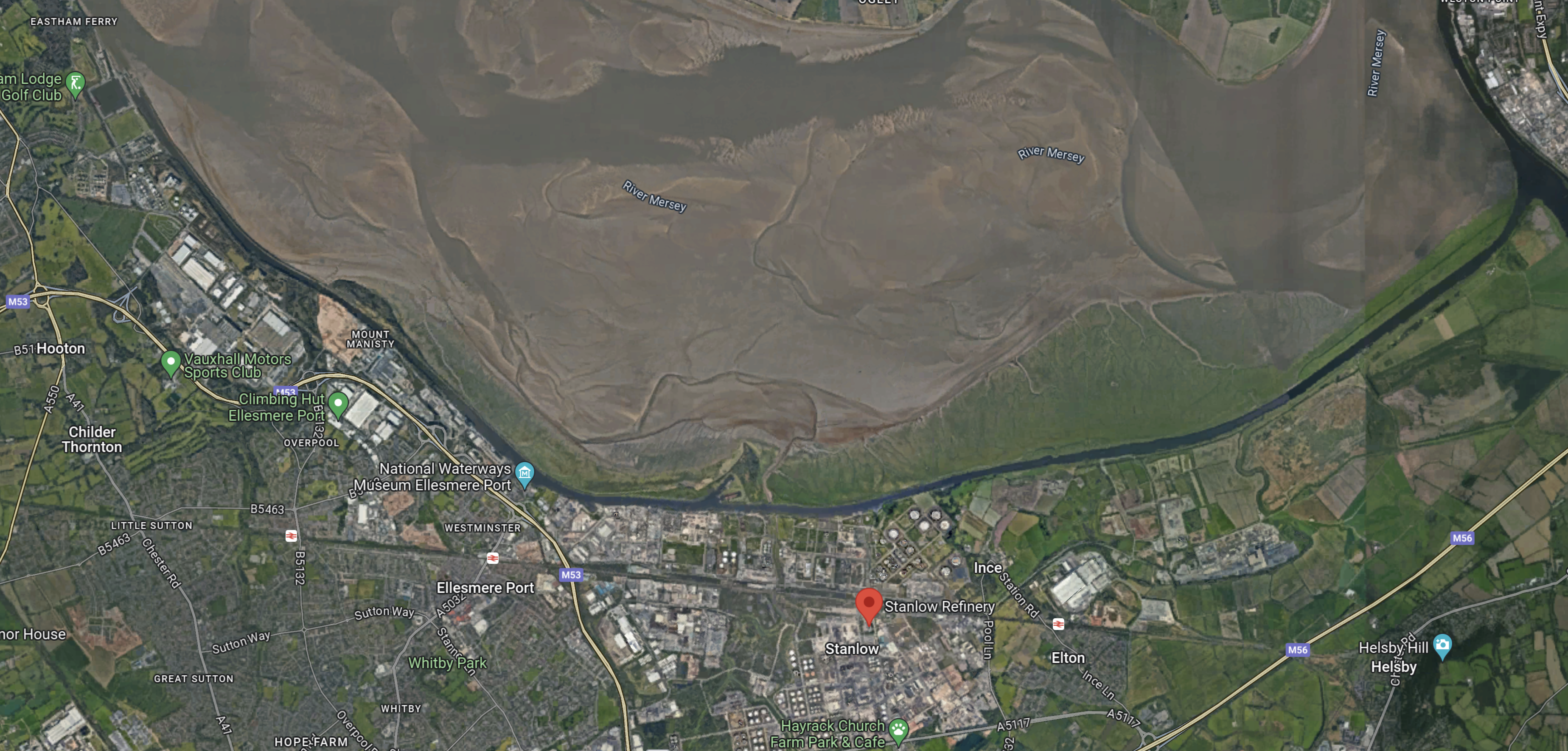
Note.
- The Manchester Ship Canal clings to the South Bank of the Mersey.
- The red arrow indicates Stanlow Refinery,
- There is a lot of industry on the South Bank of the Manchester Ship Canal.
It would appear that access to the Manchester Ship Canal gives access to several important places other than Manchester.
Access To Garston Docks
This Google Map shows the Liverpool Bank of the Mersey.
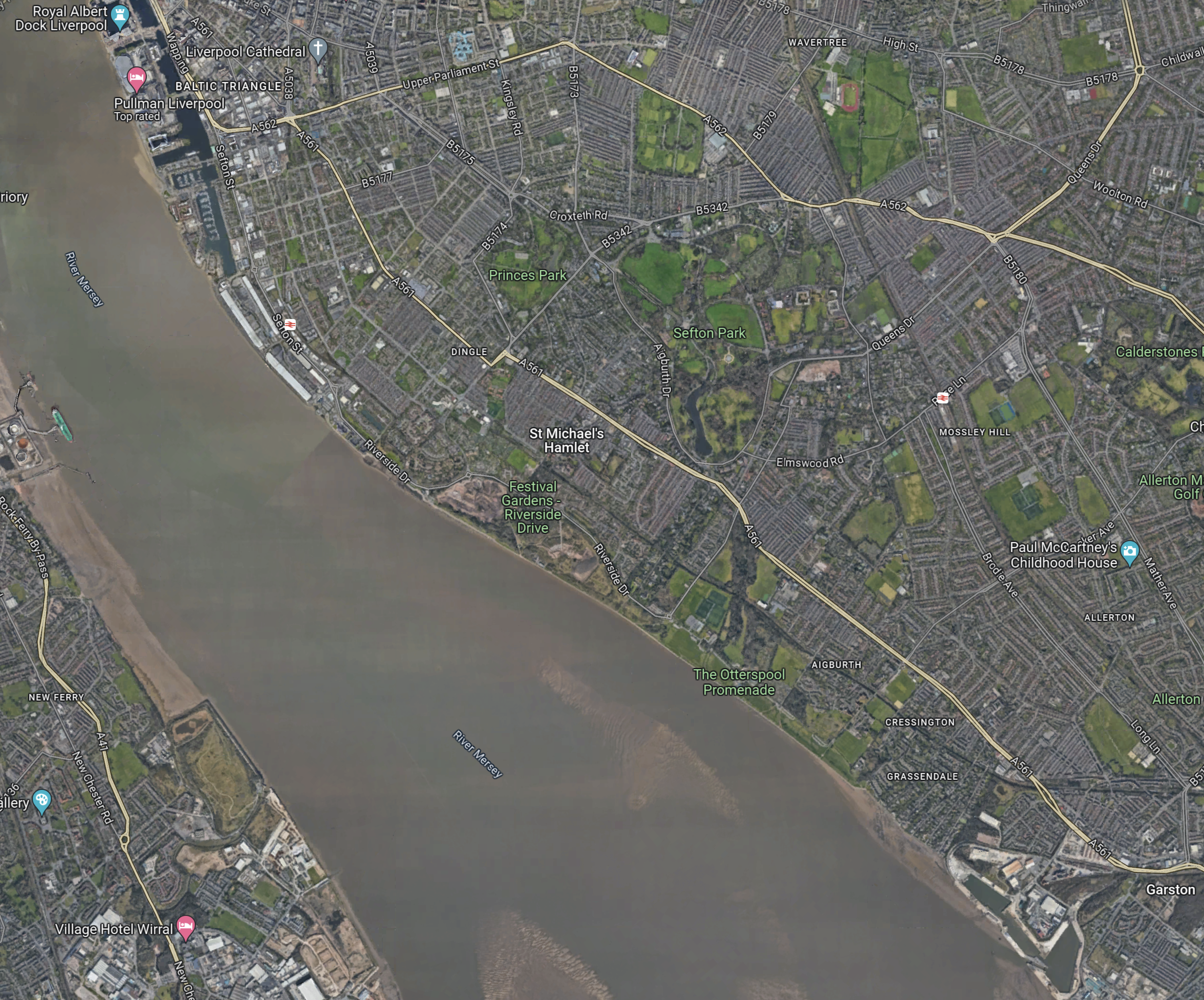
Note.
- The blue marker in the North-West corner of the map indicates the Royal Albert Dock.
- Garston Docks are in the South-East corner of the map
- There are no docks between Liverpool and Garston and much of the route can be walked along the Mersey.
- On the other bank of the Mersey, note the green ship at the Tranmere Oil Terminal, that can be seen in other maps.
This second Google Map shows Garston Docks.
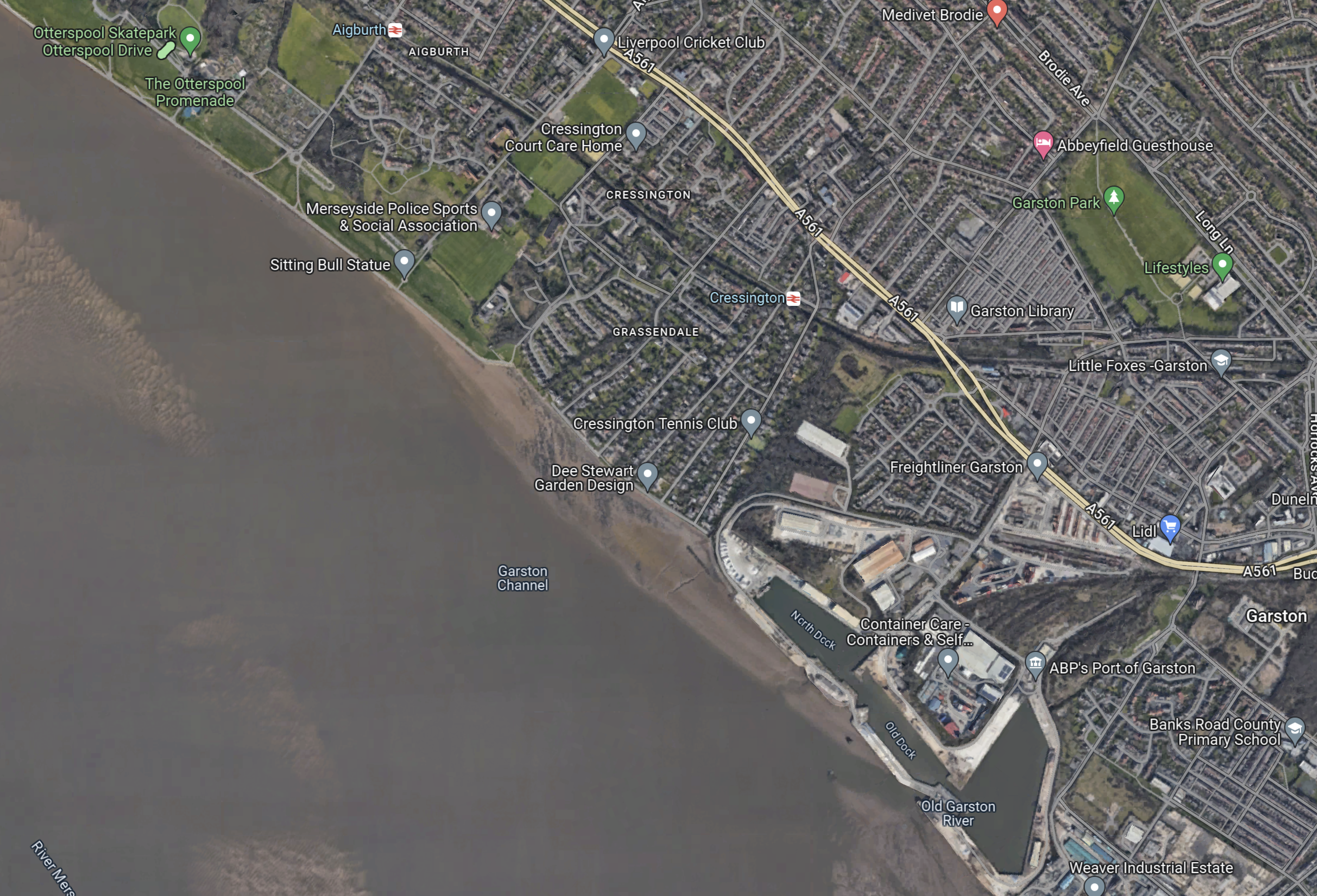
Note.
- There are three docks.
- The Garston Channel and the Old Garston River provide a route for ships to enter or leave the docks.
The Wikipedia entry for the Port of Garston, indicates that the port is rather run-down and a shadow of its former self.
It would appear that ships would have to pass through the locks in the barrier, which would likely be on the Wirral bank, to gain access to the Manchester Ship Canal and then cross the Mersey for Garston.
However, the barrier is built, it must have a route to both the Tranmere Oil Terminal and the Manchester Ship Canal at Eastham Locks.
The barrier could be built either North or South of the Tranmere Oil Terminal.
- If built North of the oil terminal, the locks in the barrier will have to accommodate the largest supertanker that calls at the terminal.
- If built South of the oil terminal, the locks in the barrier would only have to accommodate the largest ship that needed to use the Manchester Ship Canal or visit Garston.
One option would probably be more affordable.
Barrage Cross The Mersey
The very informative Liverpool Business News article, explains why a barrage was chosen, in this paragraph.
After pondering whether to build a barrage across the river from Liverpool to Wirral, or a floating lagoon, the Combined Authority has chosen the former as it would be cheaper and also creates a bridge that could have a pedestrian and cycle link.
The choice of a barrage sounds sensible on grounds of cost and accessibility.
 The Anonymous Widower