Class 319 Flex Trains Could Be In Service By December 2017
I have just seen a an early copy of Porterbrook’s brochure for their new Class 319 Flex train.
On the summary page, the following is said.
4 units in service by December 2017
On the North-West Electrification page of the Network Rail web site, these electrification milestones are given.
- December 2017 – Preston to Manchester and Manchester Victoria to Stalybridge
- Early 2018 – Preston to Blackpool
It would appear that the delivery of the trains and the availability of electrified lines are not a bad fit.
I estimate that three Class 319 Flex trains will be needed to provide an hourly service to Blackpool from either Liverpool or Manchester, before Preston to Blackpool is electrified.
But once Blackpool to Preston is electrified, Blackpool, Liverpool, Manchester and Preston would be linked by standard Class 319 trains, releasing the Class 319 Flex trains to develop other routes from the core electrified network.
- Barrow-in-Furness – Electrified to Carnforth
- Buxton – Electrified to Hazel Grove
- Huddersfield – Electrified to Stalybridge
- Kirkby – Electrified to Bolton
- Southport – Electrified to Bolton
- Windermere – Electrified to Oxenholme Lake District
Places like Blackburn, Burnley, Clitheroe and even Hebden Bridge and Todmorden could be reached from the electrification at Bolton, Manchester or Preston.
The electrified network will be grown, by the selective addition of electrification and/or trains.
Is There Anywhere A Class 319 Flex Train Can’t Go?
I have just seen an early copy of Porterbrook’s brochure for their new Class 319 Flex train.
This is an extract.
Porterbrook determined that the most arduous route would be Manchester Piccadilly to Buxton, which has a steep gradient and multiple stops along its 25 mile route 9(8 miles of which is electrified). This anlysis was included to give confidence that the Class 319 Flex would be comparable to existing Diesel Multiple Unit (DMU) technology across a range of different routes, stopping patterns and gradients.
So I took a quick look at the Buxton Line on Wikipedia.
This is said.
Due to steep gradients on this line, Class 142 and Class 153 DMUs are banned from the section of line between Hazel Grove and Buxton. Therefore, services to Buxton are worked by Class 150 and Class 156 DMUs. Also Class 158 DMUs were once blocked from operating on the line to Buxton due to the possibility of the large roof-mounted air vents striking low bridges on the route.
Note the two extracts both say “to Buxton”, as obviously, the trains can use the free power boost of gravity on the way down.
To back this up, trains are currently timed to take 37 minutes to climb from Hazel Grove station to Buxton and 33 minutes for the gravity-assisted return.
A driver once told me, that the brakes on a Class 319 train are up there with the best. So there’s little chance of runaway train syndrome.
Train Services To And From Buxton And Hazel Grove
Under Services in the Wikipedia entry for Buxton, this is said.
There is generally an hourly service daily (including Sundays) between Buxton and Manchester Piccadilly, taking about one hour. The service frequency is enhanced to about half-hourly in the morning and evening peaks. A limited number of trains (currently seven on weekdays in total) work through beyond Manchester, with one train each of to/from Blackpool North, Clitheroe, Barrow-in-Furness, Wigan North Western, Wigan Wallgate, Preston and Bolton.
Note.
- Of these destinations, several are not likely to be electrified in the near future, but could be reached by a Class 319 Flex.
- Some would also allow the trains to stretch their legs under the wires of the West Coast Main Line or the Manchester to Preston Line.
- As the Buxton Line is double-tracked would a more powerful train enable more frequent trains?
- Buxton station may have had improvements to ease turning trains.
- At present, Northern don’t seem to run any trains further than between Manchester Piccadilly and Buxton stations, but with the opening of the Ordsall Chord at the end of 2017, running trains past Piccadilly could ease the load on one of Manchester’s main stations.
- Despite Manchester Piccadilly to Hazel Grove being electrified, at present, no electric trains serve the route.
- ,Clitheroe station is probably the most interesting destination, as like the Buxton Line, the Ribble Valley Line needs trains with some qualities common in mountain goats.
It looks like Buxton is going to get a much improved train service.
It should also be noted, that once the Manchester to Preston line is electrified, all services from Hazel Grove to Manchester and Preston could be run by Class 319 trains, whether they are the Electric or Flex variant.
Can and will the service between Manchester and Hazel Grove via Stockport be a Turn-Up-And-Go four tph electric service from the December 2017 Timetable change?
Range On A Full Tank Of Diesel
Or that might be two tanks, as is there one in each driver car for each engine?
The brochure says.
The Class 319 Flex unit would have the capacity to make five return trips per day for two days before refuelling is required.
That surely is more than adequate.
Could The Buxton Line Be Electrified?
It would be assumed that the Germans, French or Italians would electrify a line like the Buxton Line.
But this is not always the case and I’ve used lines in Germany to reach towns the size of Buxton and the lines are not all electrified.
Electric trains on an electrified line have the advantage of bags of grunt and would handle the route with ease.
But it would cost and it wouldn’t be the easiest of engineering projects. I suspect too, that there would be objections to gantries marching sall over the Peak District
I think with modern technology there might be a better and more affordable way.
The Class 319 Flex is just a first solution.
Comparison With The New Class 195 Trains
I suspect it is unlikely that the new Class 195 trains ordered by Northern will be unable to reach Buxton, but they won’t be in service for a few years.
Comparing the two train types, it would appear.
- Installed power is about the same.
- But what about the weight?
- The Class 319 Flex has 12 First Class seats and 255 Standard Class seats in the brochure, as against 204 seats in a three-car Class 195 train.
- The Class 319 Flex is a bi-mode that can use electric power, between Manchester and Hazel Grove.
It will be an fascinating comparison: A thirty-year-old British Rail-built train with a bi-mode upgrade against a new Spanish-built diesel multiple unit.
Along The Hope Valley Line To Sheffield
The Hope Valley Line between Manchester and Sheffield has two electrified links at the Manchester end to Piccadilly.
- Via Hazel Grove and Stockport, where electrification reaches to Hazel Grove
- Via Guide Bridge, where electrification reaches almost to Hyde North, to serve the electrified Glossop Line.
Theis important route between Manchester and Sheffield has been marked down for new Class 195 trains, but I suspect that the distance is within range of a Class 319 Flex.
The Manchester end of this route could be a fertile area for using Class 319 Flex trains. As a simple example, they could be used to bridge the gap between the electrification on the Glossop Line and Rose Hill Marple station.
Conclusion
Manchester Piccadilly and Buxton may be a tough route, but if a train can can climb to Buxton crush loaded with passengers, there are a lot of benefits to the operator.
- Electric trains between Manchester Piccadilly and Hazel Grove.
- Releasing of platform space in Piccadilly when the Ordsall Chord opens.
- Back-to back services between Buxton and Blackpool, Barrow, Clitheroe and Wigan. I suspect there’s a lot more.
- A possible two trains per hour to Buxton.
- Two electric trains per hour to Rose Hill Marple.
And that’s just for starters!
West Anglia Route Improvement – The Closure Of Northumberland Park Level Crossing
This letter on the Department of Transport web site is a very long-winded way of saying that Network Rail can close the level crossing at Northumberland Park station.
Ironically, when Greater Anglia received their new trains on this route, their increased performance and reduced station dwell time, might mean they could do the required extra stops for STAR at Angel Road station, without the closure of Northumberland Park level crossing.
But it will have to be closed at some time.
West Anglia Route Improvement – Meridian Water, Road Traffic And Level Crossings – 1st March 2017
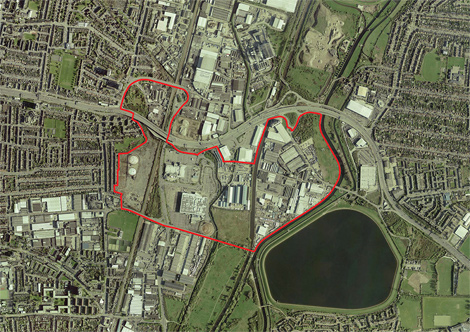
This map from the Meridian Water web site shows the area of Meridian Water outlined in red.
And this Google Map shows the Lea Valley from the North Circular Road in the North almost to Tottenhsm Hale in the South.
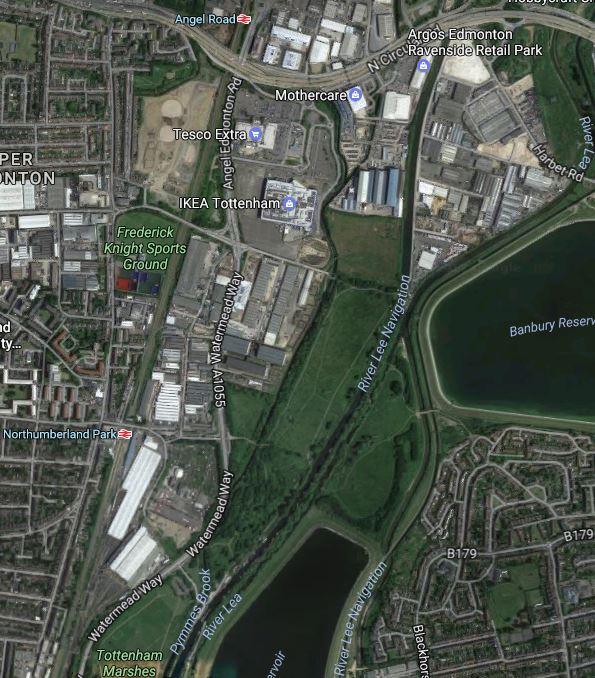
Note.
- Tesco and IKEA are in the middle of the Meridian Water site with the West Anglia Main Line and the main North South road to their West.
- The River Lea and the River Lea Navigation Canal pass between the Meridian Water site and the Banbury Reservoir.
With the building of Meridian Water, traffic in the area is only going to get worse.
The main North-South route shown in the second map starts North of Enfield Lock, where it has rather dodgy connections to the M25 and is generally a single carriageway road, all the way to the Tottenham Hale Gyratory, where traffic is heavy at all times.
One problem is going or coming West from this North-South route, as vehicles need to cross the West Anglia Main Line.
Starting from the North, the crossings of the railway are as follows.
- A level crossing at Enfield Lock station.
- A level crossing at Brimsdown station.
- A bridge for the A110
- A bridge at Conduit Lane, just North of the current Angel Road station.
- The North Circular Road, which is not well-connected to the North-South route.
- A bridge at Leeside Road, just South of the proposed site of Meridian Water station.
- A level crossing at Northumberland Park station.
Another bridge over the railway delivers you into the jams at Topttenham Hale.
STAR is currently envisaged to provide a seven-day-a-week services of four trains per hour (tph) between Angel Road and Stratford with calls at Northumberland Park, Tottenham Hale and Lea Bridge stations.
However the current local service up the Lea Valley from Stratford goes to Hertford East and Bishops Stortford stations with a rather erratic stopping pattern at stations North of Tottenham Hale.
So will STAR be based on these services or a separate train turning back at Meridian Water station?
But whatever happens it will increase the number of trains through Northumberland Park station.

It has now been announced in the last few weeks, that the level crossing will be closed.
Drivers wanting to go across the level crossing, following the closure will now do one of the following.
- Go South and over the railway to Tottenham Hale.
- Go North and cross the railway on the Leeside Road bridge.
They could always use the train.
I think the following would help mitigate the loss of the crossing.
- Some road improvement at the junction of Leeside Road and the North-South road.
- A decent pedestrian route between the new Meridian Water station and Glover Drive for Tesco and IKEA.
- The STAR service going North from Meridian Water station, as well as South to Stratford.
Hopefully, it will all be clear by the end of 2018.
West Anglia Route Improvement – Meridian Water Station – 1st March 2017
After reading Colin’s comment to the recent Angel Road station post and looking at the FAQ on the Meridian Water web site., I created this Google Map of the area along Willoughby Lane, from Northumberland Park station to the other side of the railway from IKEA.
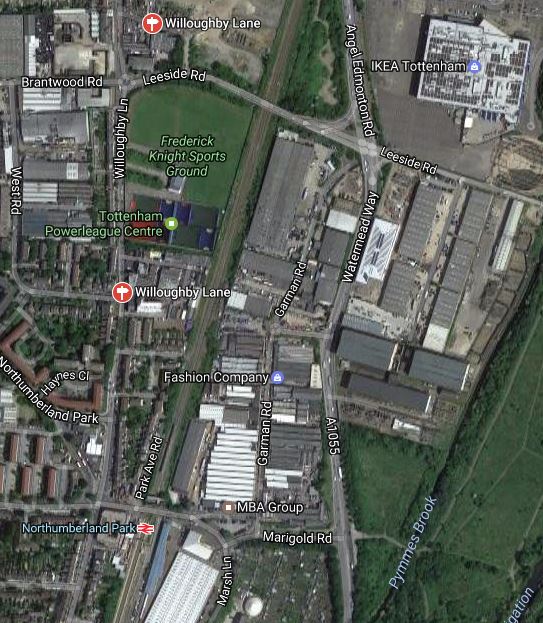
Willoughby Lane is actually a road that starts at Northumberland Park station and then goes Northwards to the two bus stops.
I feel that the new station, which will be called Meridian Water will be built on the large clear site, between the Northernmost bus stop and the railway.
These are some pictures of the that site taken on 1st March 2017.
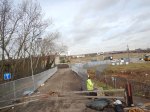
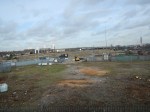
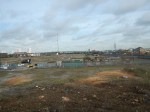
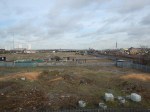
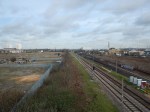




This is a Google Map of the site.
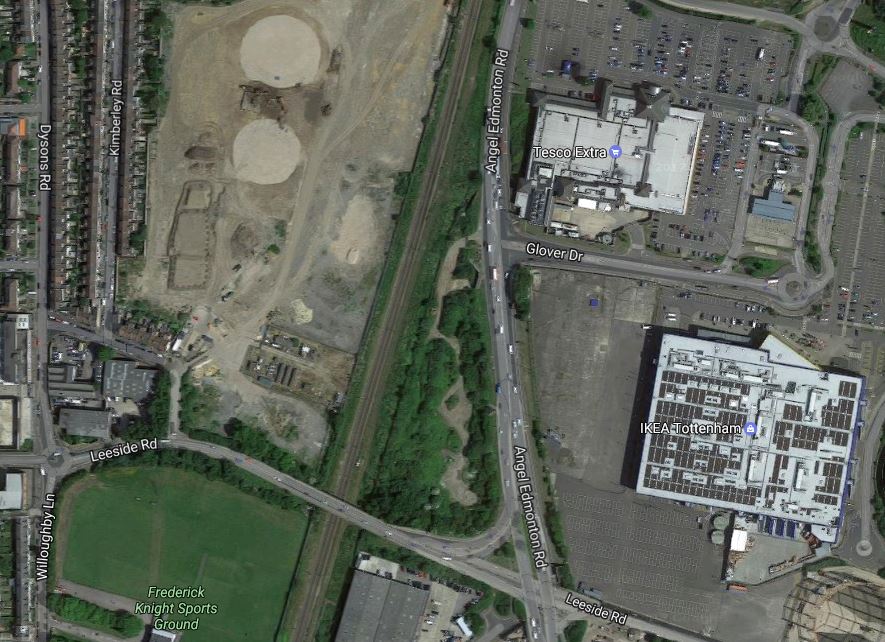
Note.
- I used a private helicopter flying low over the area or in more common parlance the top deck of a 341 bus going to IKEA.
- The entrance to the site is off Leeside Road.
- The railway runs North-South.
- Fences leading from the entrance road go right up to the West side of the railway.
- The works to create the third track for STAR are clearly visible.
- A large area seemed to be fenced off off on the East side of the Railway.
- The Leeside Bridge seems a substantial modern structure.
- IKEA and Tesco to the East of the railway and the Angel Edmonton Road.
I remember the station site as a gas works and these sites are often very polluted. So perhaps building a station on the top and adding car parking might be easier than building houses, unless it’s a few signature tower blocks, which would have superb views of the Lea Valley.
It’s certainly going to be profitable for the developers.
This is from the Infrastructure page on the Meridian Water web site.
It is not very often London gets a brand new rail station, but Meridian Water Station will open in 2019, unlocking the area for commuters, taking passengers south directly to Stratford London and London Liverpool Street and north to Stansted and Cambridge.
The station, which will be built on the Willoughby Lane site and replace the existing and poorly accessible Angel Road station, will provide a much improved rail connection for Enfield residents with a more frequent service into central London.
This site North of Leeside Road is probably a much better-located site than that of the current station.
- There is a lot of space, which might enable car parking and a turnback platform.
- It is just off the main North-South road.
- It is close to IKEA and Tesco and pedestrian access between the two would surely be possible.
This visualisation is from the Meridian Water web site.

Note.
- It doesn’t look to be a station built on the cheap.
- The Crossrail symbol on the station.
- Are we looking North or South in the visualisation.
I suspect that what gets built could be rather different and a lot better with perhaps a continuous garden bridge from West of railway to Glover Drive, where Tesco and IKEA are situated.
Worcestershire Parkway Station Under Way
This article in the Worcester News is entitled PICTURES: Lift off! Clearance work underway for Worcestershire Parkway.
Enough said! Especially as the pictures are informative!
But with similar signs of a new station at Meridian Water, it seems to be good news for those who want new stations.
What Is Most Important In A Train Service?
I am prompted to ask this question after my trips on the reopened Gospel Oak to Barking Line (GOBlin), which I wrote about in Along The Reopened Gospel Oak To Barking Line.
These are my thoughts on what is important in a train service.
Clean And Tidy Trains And Stations
London Overground is a network of nine lines and 112 stations and the operator makes sure that everything is clean and tidy.
Also unlike many rail lines in the world, it is very rare to find any graffiti on trains or inside stations on the Big Orange.
I’ve only ever seen one example of spray paint on a train, in the seven years, that I’ve used the Overground.
So what is it, that enforces the good behaviour?
I don’t know, but even on a crowded train, I’ve never seen any anti-social behaviour.
Could it be that the clean, practical environment of the trains and stations discourages it? Perhaps it has just been designed out?
Remember that stations are the marketing or retail face of the trains.
Would you buy your supper, clothes or household goods from a badly-designed and scruffy shop?
You wouldn’t!
And you didn’t buy much from BHS, Blockbuster, Comet or Woolworths either!
The Size, Quality And Type Of Trains
My fellow passengers on my GOBlin trips, didn’t seem bothered about the quality of the Class 172 trains., but a couple did say that four-car trains would be welcome, as overcrowding on the line can be a problem.
But I do wonder if you have a quality train of the right size and performance, does it matter what method is used to power the train, so long as it is reliable.
I also think that if you asked a selection of users and residents by the line, that electric trains would be fasvoured on noise grounds, but some would object to gantries marching along the line in a sensitive area.
It should be noted, that one of the reasons for electrifying the GOBlin, is so that freight trains can be electric-hauled, which is preferable for environmental reasons, of which diesel locomotive noise is very prominent.
The Number And Quality Of The Stations
More and higher quality stations are a sound policy, that is only limited by the budget.
Many recently opened stations, like Dalston Junction, Galashiels, James Cook, Oxford Parkway and Southend Airport have been a success, as like most new stations, they’ve built to fulfil a perceived need!
In addition, stations like Deptford, Hampstead Heath and Lower Edmonton have also shown an increase in patronage after upgrading with lifts and a refurbished building.
A cynic might say, that Network Rail’s Access for All program is not just about passenger needs but more about getting more people to ride in trains to generate revenue.
But the outcome is the same for those with special travelling needs.
A Turn-Up-And-Go Service
One lady of a certain age, I met yesterday, said she’d never used the GOBlin before and as she’d heard it was running again, she thought she’d give it a try, as she fancied a walk on Hampstead Heath.
Since, it was taken over by London Overground, the short line has been running four trains per hour (tph) in both directions, which is what London Overground, Merseyrail and other operators would consider a Turn-Up-And-Go-Service for an urban route.
If you just miss a train, then you only have to wait a maximum of fifteen minutes for another train.
But to be an efficient Turn-Up-And-Go Service other things are needed.
Contactless Ticketing
My fellow traveller was like me, travelling on a free Frredom Pass, which means we just touched in and went on our way. But in London, I actually carry two other valid tickets as two of my credit/debit cards are contactless. I use one of these, when I’m travelling to Gatwick Airport, as it is outside the Freedom Pass area, but inside London’s contactless ticketing area.
, Surely when you use a line like the GOBlin, be it in London, Birmingham, Glasgow, Liverpool, Leeds, Manchester, Newcastle, Paris or Zurich, you shouldn’t have to buy a ticket if you have a contactless debit or credit card.
These days with modern technology, no-one should not have to do anything more than touch in and touch-out with a contactless bank card to use a local transport network; based on bus, tram or train.
Operators that don’t embrace this contactless bank card route and insist you buy a separate card or download an app to your new Nokia 3310 are Luddites of the worst kind.
Getting To And From The Station
Efficient Turn-Up-And-Go also needs enough car and bike parking and/or well-documented bus links.
Tea And Coffee Kiosks
London Overground also like to add good tea and coffee kiosks into their Turn-Up-And-Go mix, often using very independent operators.
If you do miss that train, you might as well take your caffeine fix!
A Wildlife Problem That Network Rail Don’t Have
Network Rail might get trouble with newts and bats, when they try to build a station, but at least they don’t get this problem that happened in India.
How do you make elephant-proof level crossings?
West Anglia Route Improvement – The High Meads Loop
This map from carto.metro.free.fr shows the lines at Stratford.
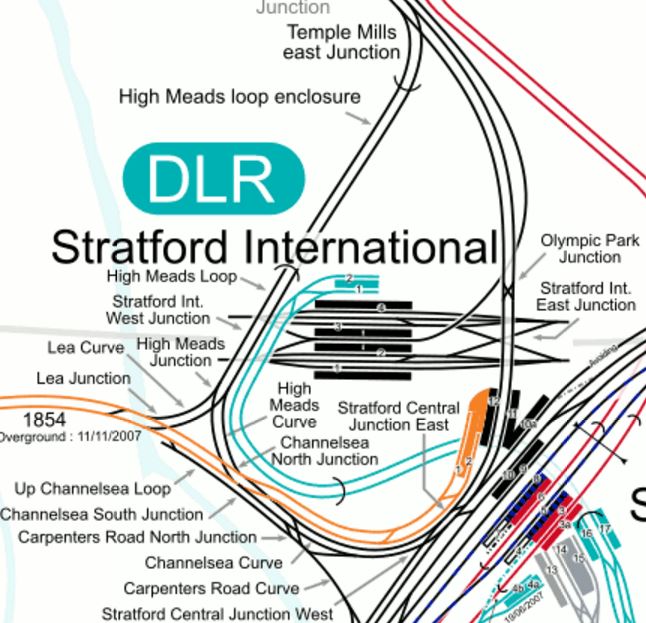
Note Temple Mills East Junction at the Northern (top) end of the map.
If you go North from here, you are on the Temple Mills Branch of the West Anglia Main Line and you will pass through Lea Bridge station and Coppermill Junction before you reach Tottenham Hale station.
Go South from that Junction and you pass the crossover of Olympic Park Junction, cross over the Eastern End of Stratford International station and then arrive in Platforms 11 and 12 at Stratford station.
Platform 11 is used for the current two trains per hour (tph) that go up and down the West Anglia Main Line, but Platform 12 is currently just giving out messages saying “I’m Free!”
Platforms like these can generally handle four tph, as they do at stations like Highbury and Islington or Dalston Junction. But is a capacity of eight tph enough if some Stansted and Cambridge services are added to the mix at Stratford?
But there may be other possibilities!
On the map in this post, look at the lines to the North-West of Platform 11 and 12 at Stratford station and how they curve round the Eastfield Shopping Centre and Stratford International station.
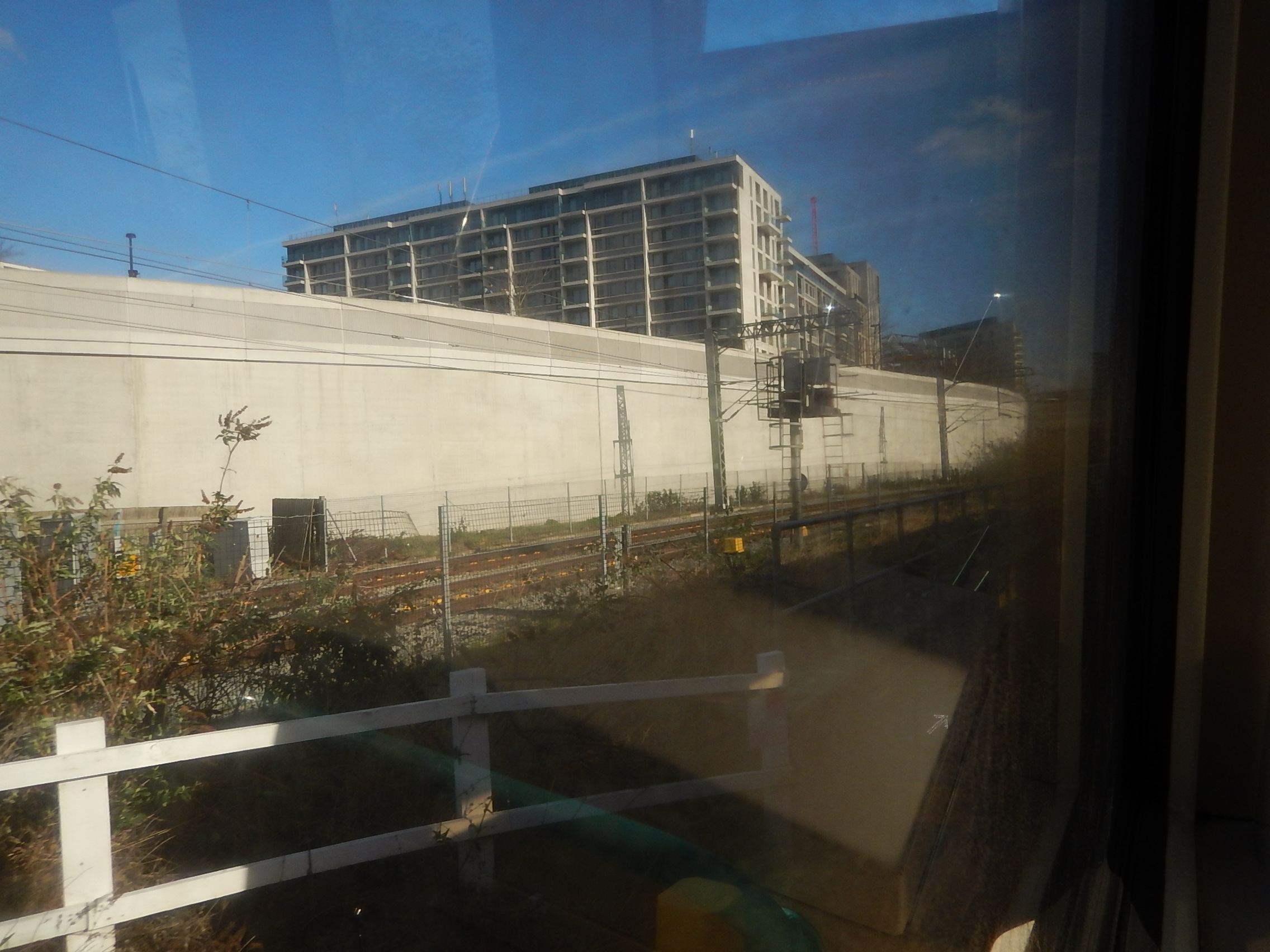
The main route is called the High Meads Loop and this picture taken from a Docklands Light Railway train to Stratford Internation station, shows the twin-track loop.
Southbound trains from Tottenham Hale could do the following.
- Call at Platform 1 in Lea Bridge station.
- Call in Plastform 11 at Stratford station.
- Go round the High Meads Loop and past the Stratford International DLR station.
- Rejoin the Temple Mills Branch on the Down Line at Temple Mills East Junction.
- Call at Platform 2 in Lea Bridge station.
The train has been turned round using the High Meads Loop, after a stop at Platform 11 in Stratford station.
So do trains currently take this route?
On this page in RailForums, this was said in a post made in 2006.
Another option is the use of Channelsea Junction and the High Meads loop to turn trains at Stratford. I’ve managed to go from Stansted Airport to Stratford and back again without changing ends using that particular route before now.
I would assume from the words, the poster of the information is a driver. So they should know!
Channelsea Junction is clearly shown on the map in this post.
I have a few questions, that should be answered.
Is The Route Bi-Directional?
I suspect it is and trains would call in the unused Platform 12 at Stratford station. As I said in Platforms 11 and 12 At Stratford,
Trains stopping in Platform 12, will have a very simple step-free access to the London Overground services in Platforms 1 and 2.
My personal view, would be that services using the loop called in Platform 12, as that would give me easy access from the North London Line from where I live.
But going round this way through Platform 12 at Stratford would mean that trains would have to cross on the flat at Temple Mills East Junction.
How Long Are Platforms 11 and 12 at Stratford?
They certainly accept an eight-car train as they do now, but would they accept a twelve-car one?
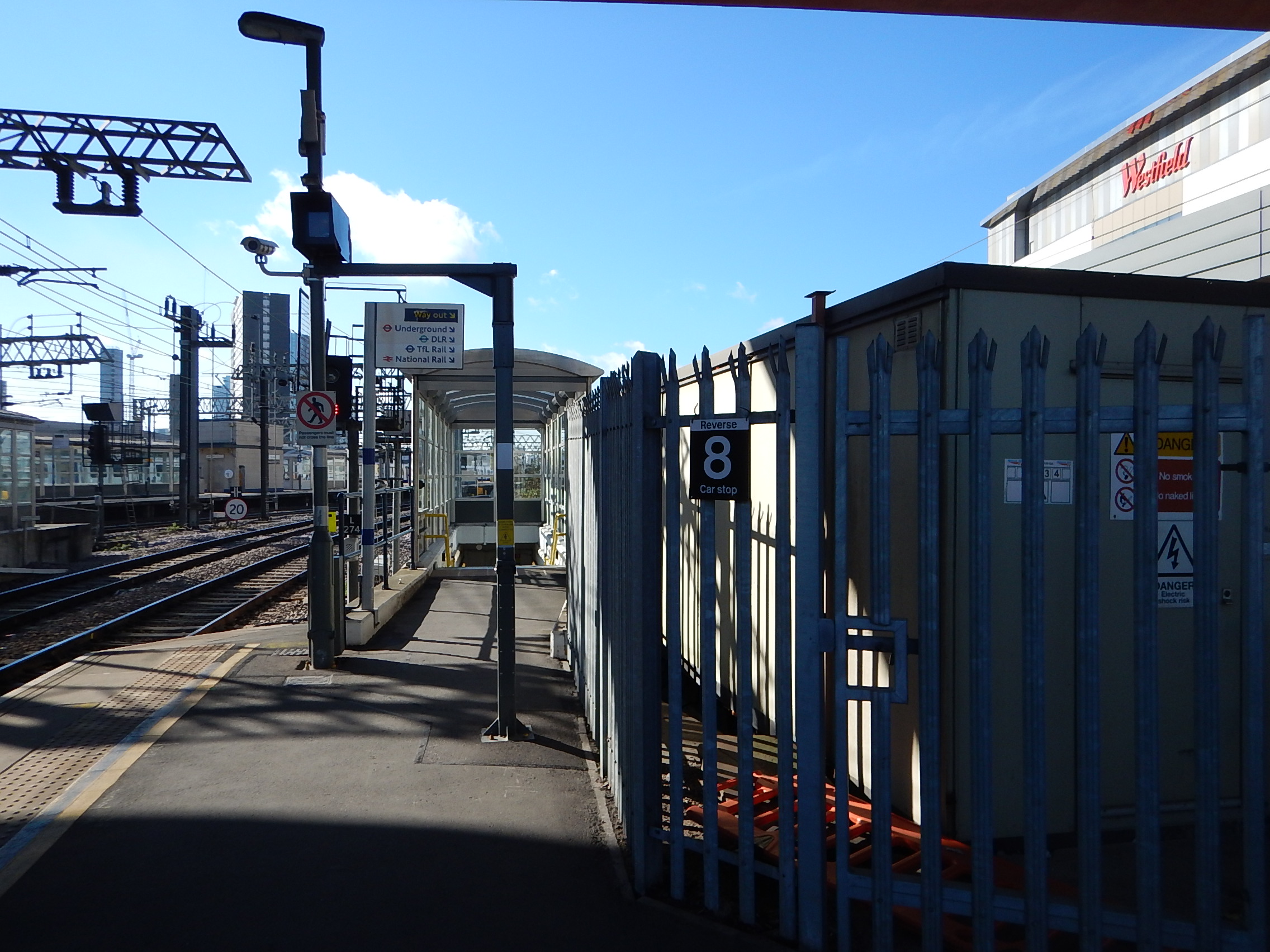
The Picture Says 8
If they can’t and it would be needed to accept Greater Anglia’s new Stadler Flirts for the Stansted Express, there would appear to be space to lengthen the platforms, at the Temple Mills End.
It has to be asked if Platforms 11 and 12 have enough capacity.
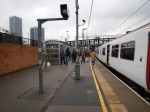


I would appear that they have been built reasonably wide to accept high passenger numbers.
What Services Could Use This Loop?
I suspect any service arriving at Stratford from the West Anglia Main Line, that needed to be turned back, could use this route.
- Angel Road using the new STAR service.
- Bishops Stortford
- Broxbourne
- Cambridge
- Chingford using the Hall Farm Curve.
- Hertford East
- Stansted Airport
That is a very comprehensive list.
How Many Trains Per Hour Could Use The Loop?
The capacity of the loop could be at least as high as the similar Wirral Loop in Liverpool, which handles 12 tph or just one train every five minutes.
Modern signalling with a measure of Automatic Train Control could probably raise this figure substantially.
In addition, Platform 11 could probably handle four tph as it does now.
Could A Station Be Built On The High Meads Loop To Serve Stratford International?
If it could, it would ease one of London’s truly dreadful transport issues. How do you get to Stratford International station without walking a long way or going through Eastfield?
Can Services Using Platforms 11 and 12 At Stratford Access The North London Line?
As there is a triangular junction connecting the North London Line, the High Meads Loop and Platforms 11 and 12 at Stratford, a lot of services are possible, if they are needed.
But for the time being a good step-free interchange between Angel Road, Chingford and other services from the West Anglia Main Line to the North London Line services at Stratford is all that could be needed.
If High Meads Loop services called in Platform 12 at Stratford, that would be an ideal solution.
A short walk would connect North London Line services to Stanstead Airport services and local trains up and down the West Anglia Main Line.
Note the sign in this pictuire.

It directs passengers to Platform 12 for Stansted Airport services.
How Many Trains Per Hour Could Use The Loop?
The capacity of the loop could be at least as high as the similar Wirral Loop in Liverpool, which handles 12 tph or just one train every five minutes.
Modern trains and signalling with a measure of Automatic Train Control could probably rise this figure substantially.
So perhaps there could be twelve to fifteen tph through platform 12.
In addition, Platform 11 could probably handle four tph as a traditional terminal platform.
Do Any Other Services Use The Temple Mills Branch?
I’m not saying they don’t, but I’ve never a freight train go through Platform 11 or 12 at |Stratford or Tottenham Hale or Lea Bridge station.
But I have seen an engineering train at Coppermill Junction and empty stock needs to get in and out of Temple Mills Depot.
Conclusion
Trains arriving at Stratford station on the Temple Mills Branch of the West Anglia Main Line can call at Stratford station and go straight back from whence they came using the High Meads Loop.
One positive effect would be that however many trains went round the High Meads Loop, all could call at the following stations.
- Platform 1 at Lea Bridge station
- Platform 11 or 12 at Stratford station
- A platform at Stratford International station, if it were to be built.
- Platform 2 at Lea Bridge station
Look at the service that Lea Bridge station gets to and from Stratford.
Bedwyn Station
I had to go to a meeting in Marlborough, so I took a train to Bedyn station for the first time in my life.
I took these pictures.
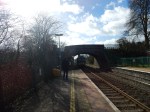
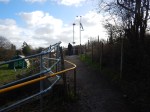
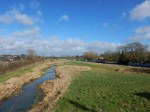
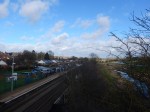
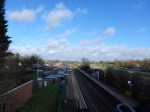
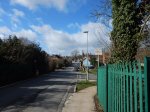
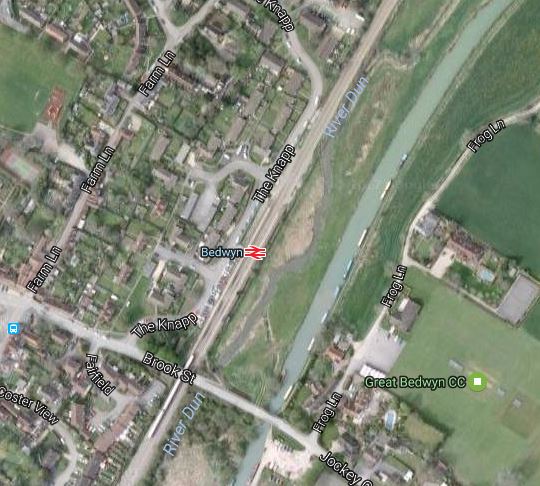
This Google Map shows the layout of the station.
I have commuted from a couple of stations like this in Suffolk over the years and Bedwyn doesn’t impress me.
It is not a question of what the station has, but what it hasn’t.
- No local catchment area as Great Bedwyn only has a population of 1353 according to the 2011 Census.
- No car parking.
- No good road access.
- No step-free access.
- No welcoming facilities.
- No pub within walking distance.
- No mobile phone signal.
- No possibility of electrifying past Bedwyn, because of the need to demolish the bridge at the station.
I am surprised that GWR have kept it going so long!
Near where I lived in Suffolk was a station called Dullingham, which is just as welcoming as Bedwyn, but at least it had enough car parking for someone, who wanted to pop up to London and not drive.
There are only a few reasons, why GWR keep this station going.
- Historically, as they’ve always done it this way.
- Bedwyn is the best station to turn trains and has a convenient reversing siding.
- The guy, who decides the route lives in Bedwyn.
But I think they use Bedwyn to turn trains for one of the best reasons; to cut costs.
If you look at train timings from London, they are as follows.
Newbury – 52 minutes
Hungerford – 63 minutes
Bedwyn – 73 minutes
As they want to run an hourly service, turning the train at Bedwyn might mean that they can use a train less than doing it at say Pewsey, as timings work out well.
I think that as they need time to turn a train and give the driver a rest, that a journey time of 73 minutes means that a round trip to Bedwyn takes three hours with an allowance for a small delay.
After all it can’t be unprofitable as this article in the Marlborough News is entitled Back on track: Bedwyn to keep direct London trains after 2018.
This is said.
Great Western Railway announced today (February 24) that investment has been agreed with the Department for Transport that will, from 2018, bring brand new hybrid trains capable of switching between diesel and electric power to replace the diesel turbo fleet now serving Bedwyn travellers.
I think that the only reason they wouldn’t turn the trains at Bedwyn, is that there was a better alternative down the line., like perhaps at Westbury.
Incidentally, as the new trains could be faster, it might be that the turnback point could be further out
But both these scenarios would mean that Bedwyn will still get at least the same service it does now.
A Station For Marlborough
I wrote a post called A Station For Marlborough, a couple of weeks ago and this might be a possibility for a new terminus.
- It is a town of nearly 10,000 people.
- A lot of people in the town commute to Reading or London.
- The town has identified a place for a new station, which is on the old railway alignment from Bedwyn.
- If the train terminated at Marlborough, the timetable from Bedwyn could be the same.
- The train would need to be self-powered, as is Great Wstern Railway’s bi-mode trains.
It might even be better value-for-money to create the rail link to Marlborough, than rebuild Bedwyn station for electrification and with a car park and step-free access.
 The Anonymous Widower