Would A Train Manufacturer Save CrossCountry’s Iconic Aberdeen And Penzance Route?
The article in The Times about the cancelling of CrossCountry’s iconic Aberdeen and Penzance route was entitled After 104 Years UK’s Longest Train Route Is Cancelled For Ever, I gave my post the same name and both received a number of nostalgic comments, from those, who had ridden the route or wished they had.
The Characteristics Of The Line
This article on the BBC is entitled We Had To Be On Last Run Of UK’s Longest Train Route.
This is said in the BBC article.
The connection – first established back in 1921 – is 775 miles (1,247km) long.
But electrification is rather thin on the ground.
Between Leeds and Edinburgh stations is electrified and I suspect that some of the route through Birmingham New Street and Bristol Parkway stations are also electrified, so perhaps, a battery-electric train could get a top-up on the way.
But as Leeds and Edinburgh is around 220 miles, there’s about 550 miles of the route or 70 % without electrification.
Battery Power, Hydrogen Power Or Both?
If diesel is ruled out on environmental grounds, it means that only battery or hydrogen power could be used for the route.
Despite some of the progress made by battery-electric trains in the last few years, I feel that unless the route has a large number of charging stations, then battery-electric trains will not be a practical solution.
This is a paragraph from The Times article.
Rail bosses said one of the reasons for ending the train was the difficulty keeping such a long journey on time. The fact that most customers made only short journeys along the route was also a consideration.
And this is another.
As an “express” service it was severely challenged, partly because of the long waits at a number of stations along the way, including 14 minutes at both Edinburgh Waverley and Bristol Temple Meads, and seven minutes at Birmingham New Street and Exeter St Davids.
Stopping regularly to charge the batteries, is going to make timekeeping more difficult and will probably end up with irritable passengers, after all the waiting.
So I suspect, hydrogen would be the ideal power for such a long service over a route with such sparse electrification.
But the trains, would be fitted with regenerative breaking to battery, so that kinetic energy is conserved as much as possible in the station stops.
I believe, that the trains should effectively be tri-mode or hydrogen-hybrid trains, but then many drivers praise the frugality of their hybrid cars.
Would Efficient Hydrogen-Hybrid Trains Attract More Passengers?
Consider.
- All the battery and hydrogen trains and buses, with one exception, that I have ridden on, have been mouse-quiet.
- The exception was a German hydrogen train, that had a very noisy mechanical transmission.
- I also would expect that the trains would be capable of keeping up a cruising speed of 100 mph or perhaps even 125 mph.
- This would enable them to handle the current timetable, which is written for 125 mph Class 222 diesel trains.
An efficient, unobtrusive, reliable and speedy service would surely attract passengers.
What’s In It For The Manufacturer?
Consider.
- There are not many 775 mile routes in the UK.
- But, there are many long rail around the world, that need decarbonising or even creating.
- Some countries, like China, India and France are creating more electrified high speed long-distance lines.
- Others countries, like Australia and the United States are planning and building high speed long-distance lines.
Perhaps, what is needed is a drop-in solution to decarbonise and/or create new high speed long-distance railways.
Could Aberdeen and Penzance be an ideal test bed to trial and demonstrate, your drop-in hydrogen solution?
I am reminded of a story, told to me, by a guy, who was selling an expensive air traffic control radar to an Arab state.
The initial presentations were done in the company’s offices in London.
The only working radar was installed at Prestwick Airport and had been working successfully for a couple of years, so the Arabs would be taken on a visit.
As they were very important clients, the salesman was told, that he was entitled to borrow the chairman’s executive jet for the trip.
The flight to Scotland was uneventful, but as they left the plane, the pilot said to the salesman. “There’s no finer view, than the Scottish Highlands at this time of year, I could fix it, that I gave them the view of a lifetime on the way home.”
After thinking about it for a few seconds, the salesman asked the pilot to fix it.
When they returned to the plane after a successful demonstration, the pilot said. “It’s on if you want it?”
The tale had a very happy ending, in that the Arabs bought an Air Traffic Control radar.
To return to the hydrogen trains; What better route is there to show off the capabilities of your high speed hydrogen-hybrid trains?
- There is the spectacular scenery of the North of Scotland, The Pennines and Cornwall.
- The Firth of Forth is crossed on the Forth Rail Bridge.
- There is running on the wires between Edinburgh and Leeds.
- There is the spectacular views of Durham and York from the train.
- There will be several hours of running on hydrogen.
- The Saltash Bridge is crossed.
What better route is there to sell trains?
Could CrossCountry Customer Service Be Improved?
I’ve never done a long journey on CrossCountry.
But surely, if the trains were designed for the route and the manufacturer was showing them off, the trains could have a top-of-the-range specification and high-quality service?
If you’re going to be stuck on a train for over a dozen hours the service must be good.
Conclusion
Get everything right and the train service would be an unquestionable asset to the UK and extremely good for the manufacturer.
Could The New Northumberland Line Be Used As A Diversion For The East Coast Main Line?
This question was asked by a friend, so I thought I’d investigate.
This OpenRailwayMap shows the Southern end of the Northumberland Line.
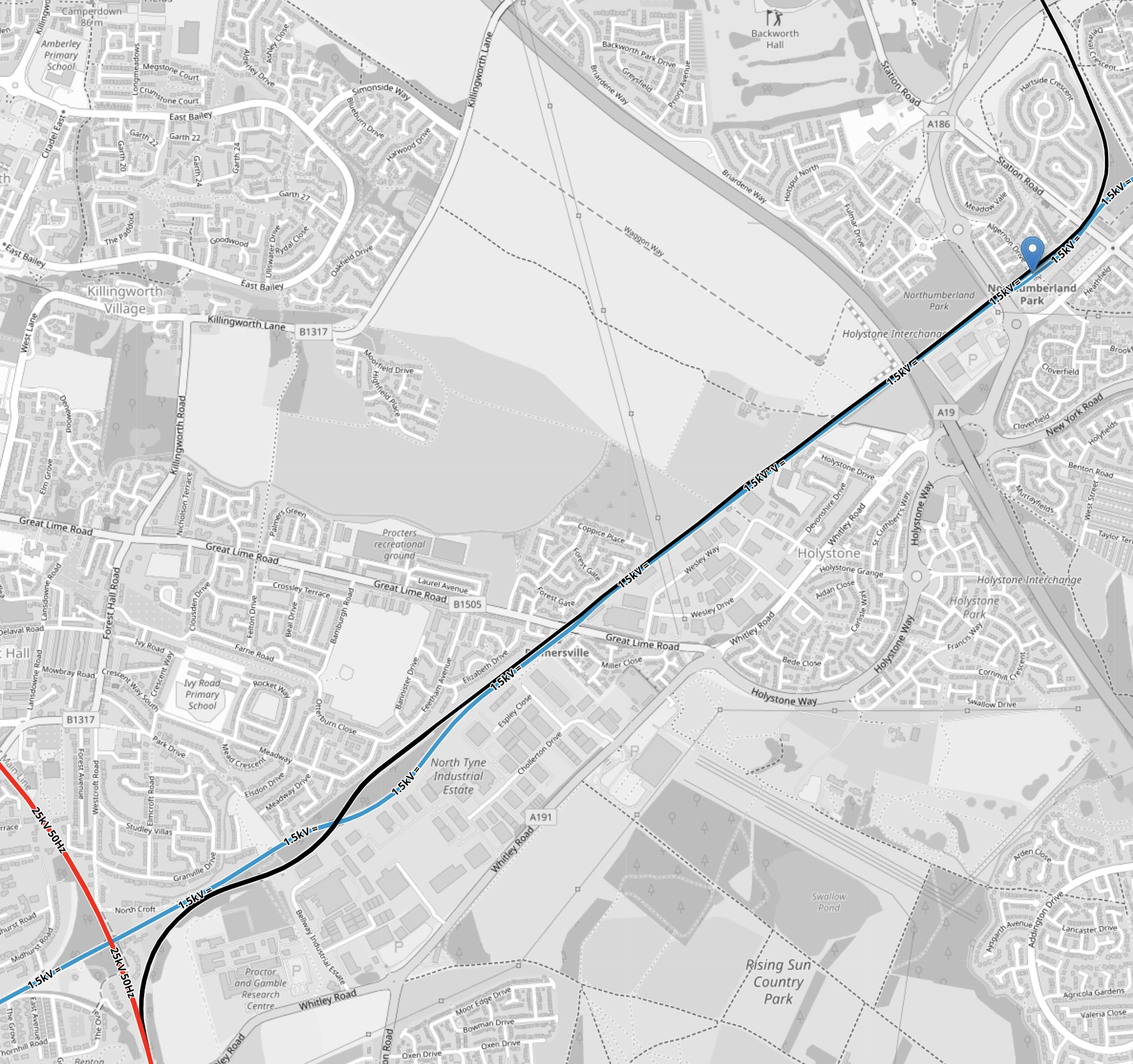
Note.
- Tracks in red are the 25 KVAC overhead electrified East Coast Main Line.
- Tracks in blue are the 1.5 kV overhead electrified Tyne and Wear Metro.
- The track in black running alongside the Metro and then turning North is the Northumberland Line.
- The Northumberland Line is mainly double track, with some single-track sections.
- The blue arrow indicates Northumberland Park station.
At Benton Junction junction in the South-West corner of the map, trains can be handled in the following directions.
- Trains going North on the East Coast Main Line can go North on the Northumberland Line.
- Trains going South on the Northumberland Line can go South on the East Coast Main Line.
Currently, only the occasional freight train uses the junction.
When the Northumberland Line opens, there will be two trains per hour (tph) in each direction.
This second OpenRailwayMap shows the Northern end of the Northumberland Line.
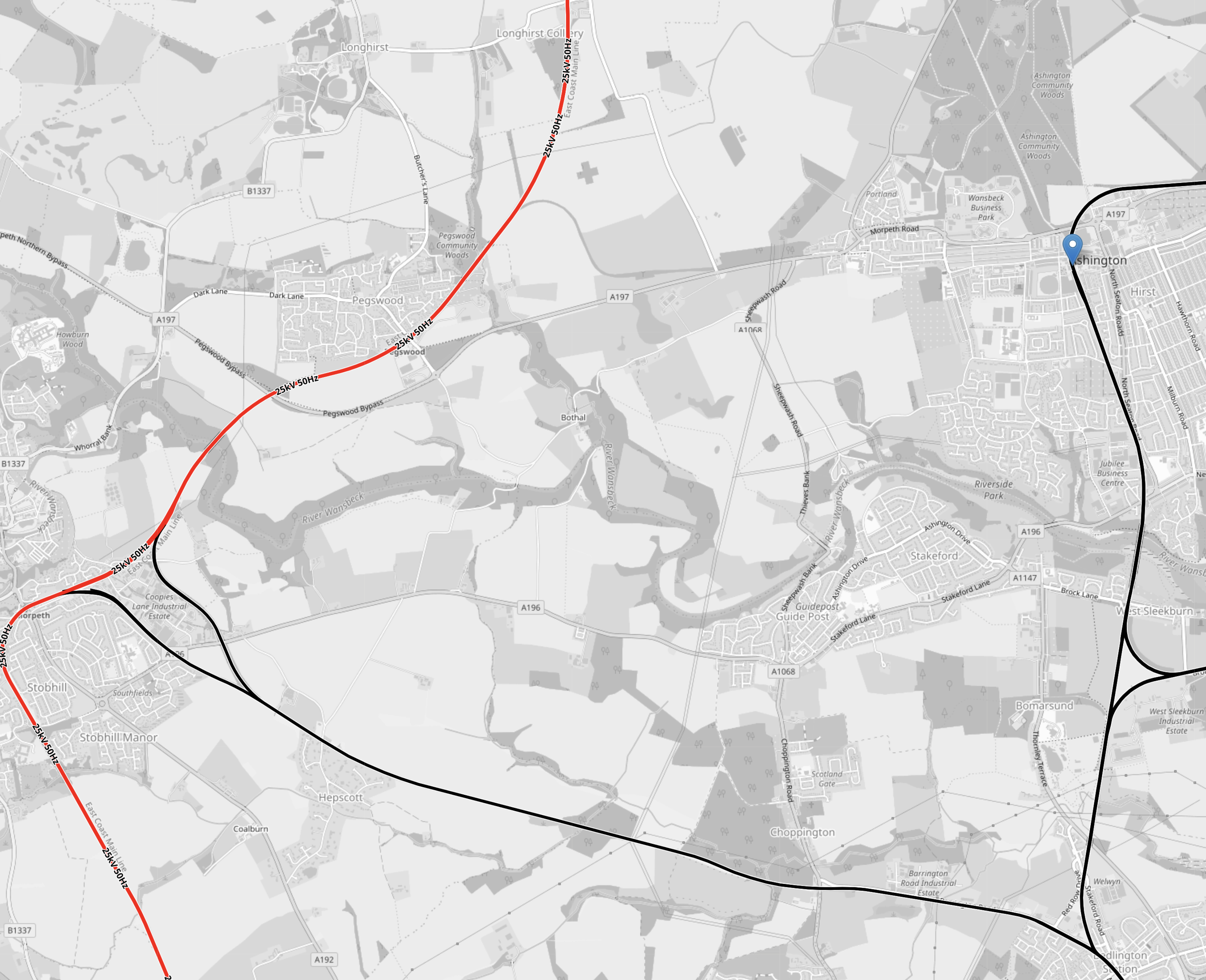
Note.
- Tracks in red are the 25 KVAC overhead electrified East Coast Main Line.
- The blue arrow indicates the Ashington station, which will be the Northern terminus of Northumberland Line services.
- The Northumberland Line runs down the Eastern side of the map.
- The village of Bedlington, which will have a station on the Northumberland Line is in the South-East corner of the map.
- A second track connects Bedlington on the Northumberland Line to the East Coast Main Line, where trains can go North or South.
It does appear that because of the track layout at both ends of the Northumberland Line, the following is possible.
A train going in either direction on the East Coast Main Line can use the Northumberland Line as a diversion.
Passenger services between Newcastle and Morpeth could use the Northumberland Line.
Passenger services between Newcastle and North of Morpeth could use the Northumberland Line.
Note.
- Although High Speed Two through Newcastle is probably dead, there is still a need to increase capacity through the area.
- I suspect diversions could be useful, when there were problems between Newcastle and Morpeth.
- Could the Northumberland Line be used for freight trains to increase capacity through Newcastle?
- We shouldn’t ignored the possibilities offered by a reopened Leamside Line.
But I suspect that as housing and other developments get proposed in Northumberland, that more passenger services will be developed.
Conclusion
The Northumberland Line will have limited use for diversions, but could general other services.
My First Ride In A Class 397 Train – 15th November 2023
I took these pictures during my first ride in a Class 397 train, between Wigan North Western and Liverpool Lime Street stations.
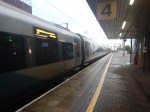
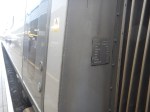
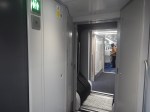
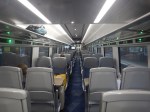
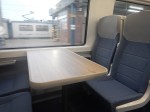

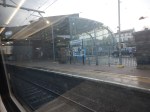
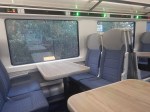
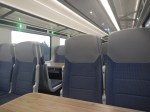
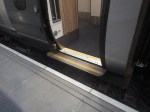
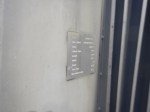
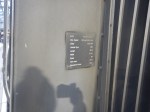
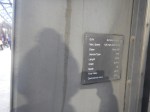
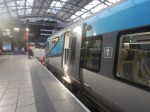
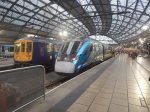
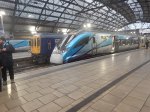
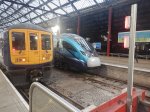
Note.
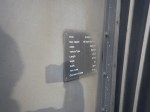
- Reading the plates, the total weight of the train is 188.4 tonnes.
- There are 268 seats.
- The ride wasn’t bad at all.
- Seats were comfortable.
Build quality was about the same as a Hitachi train.
First Tri-Mode Long Distance Trains For The East Coast Main Line
The title of this post, is the same as that of this press release from LNER.
This is the sub-heading.
London North Eastern Railway (LNER) is pleased to confirm that CAF has been named as the successful bidder to deliver a fleet of 10 new tri-mode trains for LNER. Porterbrook has been chosen as the financier of the new fleet. The trains will be able to operate in electric, battery or diesel mode.
These are the first two paragraphs.
Benefits of tri-mode trains range from a reduction in emissions, particulates, noise and vibration pollution, lower maintenance and operating costs and upgradeable technology, with an expected increase in range and performance as technology develops further. Battery power reduces the need to use diesel traction in areas where overhead powerlines are not available.
Complementing the modern Azuma fleet of 65 trains, the new ten-coach trains will help LNER achieve its vision of becoming the most loved, progressive and trusted train operator in the UK, delivering an exceptional service for the customers and communities served along its 956-mile network.
I have a few thoughts.
Will The Trains Have Rolls-Royce mtu Diesel Engines?
Consider.
- CAF’s Class 195, 196 and 197 Civity trains for the UK all have Rolls-Royce mtu diesel engines.
- Porterbrook are headquartered in Derby.
- Rolls-Royce are headquartered in Derby.
- In Rolls-Royce And Porterbrook Agreement Will Drive Rail Decarbonisation, I talked about how the two companies were planning to decarbonise trains using techniques like mtu Hybrid PowerPacks and hydrogen fuel cells.
I would think it very likely that the new trains will have Rolls-Royce mtu engines.
Will The Trains Have Rolls-Royce mtu Hybrid PowerPacks?
It was in 2018, that I first wrote about mtu Hybrid PowerPacks in Rolls-Royce And Porterbrook Launch First Hybrid Rail Project In The UK With MTU Hybrid PowerPacks.
- Examples of these power packs are now running in Germany, Ireland and the UK.
- The mtu Hybrid PowerPack how has its own web site.
- There is also this YouTube video.
- If CAF use off-the-shelf mtu Hybrid PowerPacks in their Civity trains, there is one big massive plus – They don’t have to develop the complicated control software to get a combination of diesel engines and batteries to perform as immaculately as Busby Berkeley’s dancers or a Brigade of Guards.
- The mtu Hybrid PowerPacks also have a big plus for operators – The batteries don’t need separate charging infrastructure.
- In Rolls-Royce Releases mtu Rail Engines For Sustainable Fuels, I talk about how mtu engines can run on sustainable fuels, such as biodiesel or HVO.
I think it is extremely likely that CAF’s new trains for LNER will be powered by mtu Hybrid PowerPacks.
Class 800 And Class 397 Trains Compared
The Class 800 train is LNER’s workhorse to Scotland from London.
The Class 397 train used by TransPennine Express, is a 125 mph Civity train.
Differences include.
- The Class 800 train can run at 140 mph, where the signalling allows, but is the Class 397 train only capable of 125 mph?
- The Class 397 train accelerate at 0.92 m/s², whereas the Class 800 train can only manage 0.7 m/s².
- The Hitachi train has 14 % more seats, 36 First and 290 Standard as opposed to 22 First and 264 Standard in five-car trains.
I will add to this list.
Will The New Trains Be Capable Of 140 mph Running?
As the East Coast Main Line is being fully digitally signalled to allow 140 mph running of the numerous Hitachi expresses on the route, I wouldn’t be surprised to see, that the new CAF trains will be capable of 140 mph.
In this article on Modern Railways, which is entitled LNER Orders CAF Tri-mode Sets, this is said.
The new fleet will be equipped with CAF Signalling’s European Rail Traffic Management System digital signalling. This will align with the East Coast Digital Programme, which aims to introduce European Train Control System (ETCS) on the southern stretch of the East Coast main line from King’s Cross to Stoke Tunnel by 2029.
Later in the article this is said.
LNER has retained 12 ‘91s’ hauling eight rakes of Mk 4s, and the rollout of ETCS is another reason the operator has sought to order the replacement fleet. LNER’s passenger numbers have rebounded more quickly than other operators post-Covid, which has helped make the case for confirming the order.
This does seem sensible.
What Will Be The Range Of The CAF Trains Without Electrification?
The longest LNER route without electrification is the Northern section of the Inverness service between Inverness and Dunblane, which is 146.1 miles. There are also eight stops and some hills.
In Edinburgh to Inverness in the Cab of an HST, there’s a video of the route.
I’m sure that even, if they don’t normally run the new trains to Inverness, being able to do so, could be useful at some point.
It should be noted that the Guinness World Record for battery-electric trains is 139 miles, which is held by a Stadler Akku.
I am left with the conclusion that London and Inverness needs a tri-mode train or lots of electrification. Did this rule out Hitachi?
The Number Of Trains Ordered
The Modern Railways article says this about the number of trains.
The contract includes an eight-year maintenance services agreement with an option to extend; CAF says the order value, including maintenance, exceeds €500 million. When the tender was published the intention was to include an option for five additional sets; LNER confirmed to Modern Railways there is an option to purchase additional sets on top of the base order of 10.
Can we assume this means that other trains will be ordered, if the trains are a success?
Can These New CAF Trains Be Made Net Zero?
This is a paragraph, in the LNER press release.
This new fleet of trains will keep LNER on track to reduce its emissions by 67 per cent by 2035 and be net zero by 2045. LNER has already reduced carbon emissions by 50 per cent compared with 2018/19. Per mile, LNER trains produce 15 times less carbon emissions than a domestic flight.
As the new CAF trains will probably have a service life of at least forty years, there must be some way, that these new trains can be made net zero.
Consider.
- I am absolutely certain, that the new CAF trains will have Rolls-Royce mtu diesel engines.
- LNER’s existing Class 800 and 801 trains have Rolls-Royce mtu diesel engines.
Rolls-Royce mtu according to some of Rolls-Royce’s press releases appear to be developing net zero solutions based on hydrogen or net zero fuels.
This press release from Rolls-Royce is entitled Rolls-Royce Successfully Tests mtu Engines With Pure Hydrogen, suggests that Rolls-Royce mtu are working on a solution.
Routes They Will Serve
The Modern Railways article says this about the routes to be served.
Modern Railways understands the new fleet will be maintained at Neville Hill depot in Leeds and, like the ‘225’ sets, will be used predominantly on services between London and Yorkshire, although unlike the ‘225s’ the tri-modes, with their self-power capability, will be able to serve destinations away from the electrified network such as Harrogate and Hull.
Note.
- This surprised me, as I’d always expected the Yorkshire routes will be served by Hitachi battery-electric trains.
- But it does look that both Harrogate and Hull stations, have long enough platforms to hold a ten-car train.
- With their tri-mode technology, it also looks like the CAF trains won’t be needed to be charged before returning to London.
The last point would enable them to try out new routes.
These are distances from the electrification of the East Coast Main Line of the destinations that LNER served, where there is not full electrification.
- Aberdeen via Ladybank – 91.4 miles
- Carlisle via Skipton – 86.8 miles
- Cleethorpes via Newark and Lincoln – 63.9 miles
- Harrogate via Leeds – 18.3 miles
- Huddersfield via Leeds – 17.2 miles
- Hull via Temple Hirst junction – 36.1 miles
- Inverness via Dunblane – 146.1 miles
- Lincoln via Newark – 16.7 miles
- Middlesbrough via Northallerton – 22.2 miles
- Scarborough via York – 42.1 miles
- Sunderland via Northallerton – 47.4 miles
Note.
- The first place after the ‘via’ is where the electrification ends.
- Carlisle could be a possibility during High Speed Two upgrading of the West Coast Main Line or for an enthusiasts’ special or tourist train.
- Cleethorpes is a possible new service for LNER. I wrote about this in LNER To Serve Cleethorpes.
- Scarborough must be a possible new service for LNER.
- All stations can take ten-car trains, with the possible exception of Middlesbrough, which is currently being upgraded.
- Huddersfield and Leeds is being electrified under the TransPennine Upgrade.
This would appear to show that LNER need enough bi-mode or tri-mode trains to run services to Aberdeen, Cleethorpes, Harrogate, Hull, Inverness, Lincoln, Middlesbrough and Sunderland.
But.
- It would appear that the initial batch of trains, will not be serving the North of Scotland.
- Aberdeen and Inverness could be served, when there is enough electrification at the Southern end.
I am also fairly sure, that no significant infrastructure is required.
Do Hitachi Have A Problem?
I am starting to wonder, if Hitachi are having trouble with the designing and building of their battery packs.
- It’s not like Hitachi to allow someone to run off with a €500 million contract from under their nose.
- Are they short of capacity to build the trains at Newton Aycliffe?
But then they’re probably up to their elbows in work on the High Speed Two Classic-Compatible trains.
Are There Any Other Routes, Where The New CAF Trains Could Be Employed?
The trains would certainly be suitable for these routes.
- Chiltern – InterCity services.
- CrossCountry Trains – Fleet replacement
- Grand Central Trains – Fleet replacement
- Grand Union Trains – For Carmarthen and Stirling open access services.
- Great Western Railway – Replacing Castles in the South West.
- ScotRail – Replacing Inter7City trains.
- South Western Railway – Basingstoke and Exeter St. Davids and other routes.
Note.
- CAF could sell a lot of trains.
- I estimate that fleet replacement for Grand Central Trans would cost around €350 million
- The specification would vary according to the route.
Could CAF have got the LNER order, because they have the capacity in the Newport factory?
Conclusion
It looks like CAF have done a good job in designing the trains.
I’m also fairly sure that CAF are using Rolls-Royce mtu PowerPacks.
Porterbrook Launch A Tri-Mode Train
In Bi-Mode Ate My Electrification, I asked this question.
Could We See A Tri-Mode Train?
Little did I suspect that just a few hours later, one would arrive.
This article on Global Rail News is entitled Northern and Porterbrook to convert electric trains to bi-mode.
This is the opening paragraph.
Leasing company Porterbrook is developing a bi-mode variant of Northern’s Class 319 EMU.
But that is not all, as this is said later.
Porterbrook said the design requires minimal modifications to the train. Additional batteries could also be fitted to improve performance on non-electrified sections.
So Northern will have a Class 319 Flex train that can run from electric, diesel or battery power.
That sounds like tri-mode to me.
Is It A Quad-Mode?
Some might even think it a quad-mode, as it could also run using 750 VDC third-rail electrification. It would help the trains charge the batteries at Southport, Ormskirk and Kirkby stations, which are terminals of Merseyrail’s third-rail network.
Will A Class 319 Flex Work Like A Hybrid Bus?
Several types of hybrid buses work, by driving the wheels using electric motors powered from a battery, that is charged from a small diesel engine.
When the battery is full, the engine is switched off.
So could, the Class 319 Flex be using hybrid bus methods to power the train?
The power-packs would keep the battery charged and the train would be driven from the battery or the external electrification.
One advantage of doing this, is that say on arrival at Blackpool with batteries without much power, the power-packs could charge the batteries before the train left for Preston and the overhead wires.
The driver would drive the train as an electric train, using electrification or battery automatically. The control system would cut the power-packs in to charge the batteries as necessary.
If they do go this route, could they be raiding the parts bin of the UK’s hybrid-bus manufacturers?
The 4.5 litre diesel engine and a 75 kW-hour battery, used by London’s Routemaster would surely be certified for use in a rail application and their performance and reliability will be well-documented.
Why Convert A Class 319 Train?
Who’d have thought that they’d convert a Class 319 train.
Consider.
- The class was built in the late-1980s.
- They are not the most stylish of trains, with all the panache of a house built by a Local Authority in the 1950s.
But over the last year or so, Northern have been refurbishing the trains and have probably found that under the skin, there are no serious problems and they have solutions for the minor ones.
They also scrub up pretty well and I suspect that if a bit more was spent on the interior, they could probably be better.
In my travels to Liverpool over the last year, I have talked to several drivers of Class 319 trains.
- Generally, they seem to like them.
- One told me, that on the West Coast Main Line, they will still hold 100 mph, so they are no suburban trundler!
- I have heard lavish praise for the brakes.
The only complaint, was that because of the softish suspension, the first few trains didn’t ride too well over Chat Moss.
They also have other things in their favour.
- There are 86 of the four-car trains, of which Northern has 32.
- The creation of a prototype, shouldn’t be a long process, unless Network Rail take forever to certify the train.
It should also be noted, that some of the similar Class 321 trains are having their traction equipment updated. So there may be some lessons from each program that can be applied to the other, especially as Wabtec are involved in both projects.
Will The Class 319 Flex Have Regenerative Braking?
The one problem with the Class 319 is that the trains don’t have regenerative braking.
If they did and they had onboard energy storage then the braking energy could be stored when a train stops at a station and recycled to get the train started after passengers have left and joined the train.
This would improve the energy efficiency and extend the range of the train, when running on lines without electrification.
How Will A Class 319 Flex Perform On Inclines?
Some of Northern’s routes like the Ribble Valley Line, climb into the hills.
Will the performance of the trains be sufficient to work these lines?
How Much Automation Will There Be On A Class 319 Flex?
The trains aren’t particularly complex, but with at least three power sources, it would probably help the driver, if changeover from one system to another was an automatically controlled.
It would also probably help if pantograph raising and lowering was automatic and could be at line speed.
Could A Class 319 Flex Be Able To Run Under Tram Rules?
In Zwickau in Germany, diesel multiple units, run through the town at slow speed under rules similar to those used by trams.
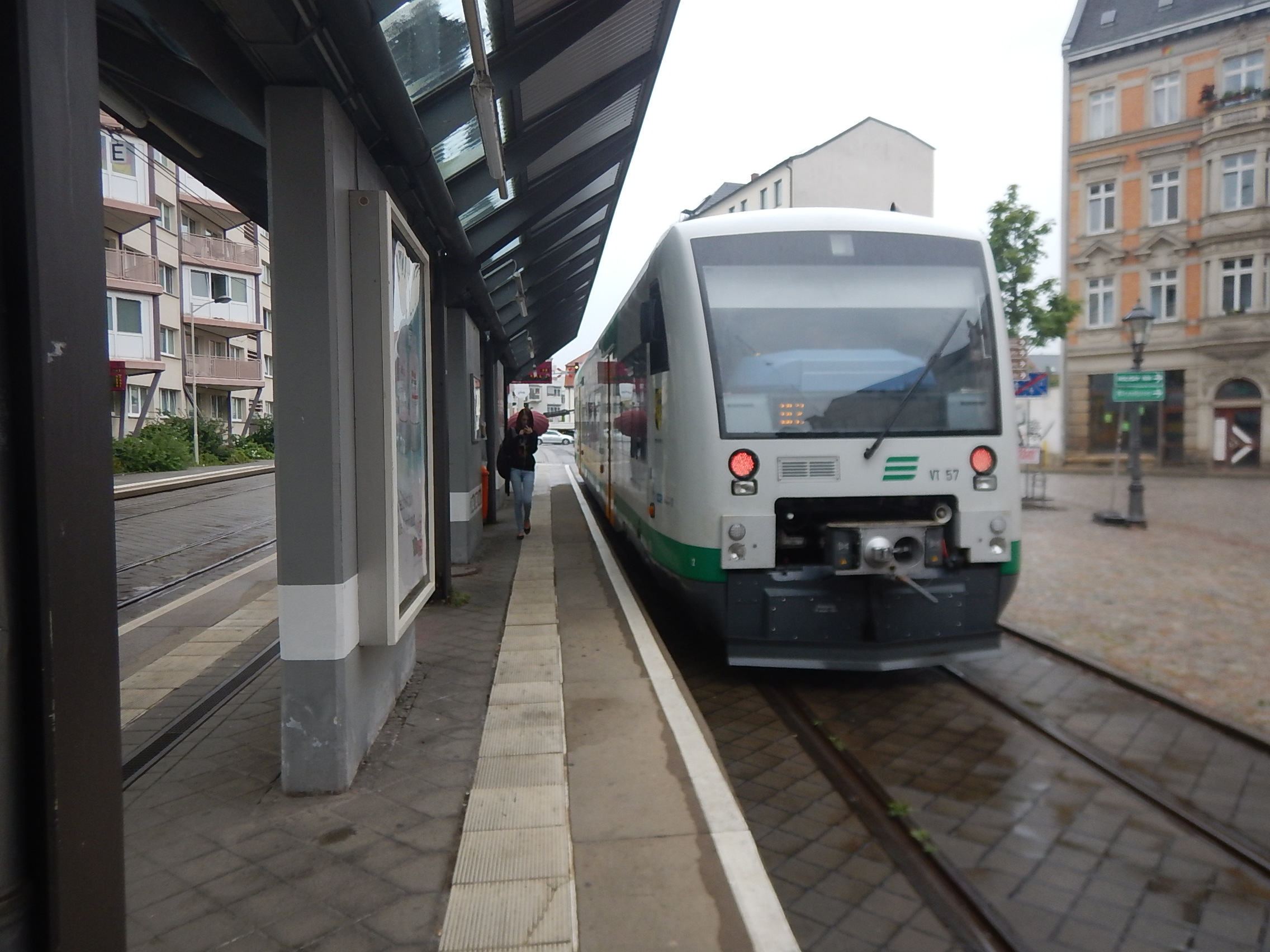
A DMU at the train stop in the centre of Zwickau
From Zwickau HbF to the Zwickau Zentrum stop, the diesel multiple units run on a line designed to the following rules.
- Slow tram-like maximum speed.
- A track with electrification just for the trams with which the trains share the line.
- Rail signalling.
- Simple stations, designed to fit the trams and trains working the line.
- Passengers can walk across the lines, as they can on any tramway.
- There’s even a couple of level crossings.
Zwickau’s system is more complicated than would be needed in the UK, as the trams and trains are of different gauges, so there is an unusual three-rail track, to accommodate standard- and metre-gauge vehicles.
Note that the system in Zwickau does not use a purpose-built tram-train, as the trains are standard Deutsche Bahn diesel multiple units, which were built by Stadler. They are very much like Class 172 trains. They just behave like trams away from the main line.
They are best described as Train-trams!
Will a Class 319 Flex be certified to do the same?
In a simple example, a Class 319 Flex could go through the buffers at Blackpool South station and continue through the car parks to a stop by the football ground.
Where Will Northern Use A Class 319 Flex?
Windermere To Manchester
When the franchise responsible for Windermere station changed from TransPennine to Northern, there was talk of electrifying the Windermere Branch Line , so that it could have an electric train service to Manchester or Manchester Airport.
But Network Rail’s electrification performance, stopped that, so passengers between Windermere and Manchester have to change at somewhere like Oxenholme Lake District station.
From Windermere, there is one direct train per day to Manchester Piccadilly and Manchester Airport, which takes two and a half hours and an hourly shuttle to Oxenholme.
I’m sure that Windermere to Manchester is the sort of route that Northern would like to cover with a direct hourly electric train. From December 2017 if Network Rail perform, the only part of the route from Windermere to Manchester Airport, that will not be electrified will be the ten miles of the Windermere Branch Line.
If Network Rail haven’t performed, the trains could use the electrified route via Nreton-le-Willows and the West Coast Main Line.
As it will take something like five hours to go from Windermere to Manchester Airport and back, it will need five trains yo provide an hourly service all day. Alternative power sources would only be used on the Windermere Branch.
Blackpool To Manchester And Liverpool
I would suspect that an early objective of the design of the Class 319 Flex, would be the ability to do a return trip between Preston and Blackpool, as this would enable services between Blackpool and Crewe, Liverpool, Manchester and Warrington.
The Blackpool Branch has the following characteristics.
- It is without electrification.
- It is only about fifteen miles long.
- It is has two current termini in Blackpool North and Blackpool South stations.
- There have been proposals in the last few years to reinstate services on the Fleetwood Branch Line to a new Fleetwood station.
The return trip would be about 30 miles on to each terminus, but trains could use their power-packs if needed to charge their on-board energy storage before returning to Preston.
Blackpool North to Liverpool Lime Street would only need a Class 319 Flex train to be delivered.
Blackpool to Manchester Victoria, Piccadilly or Airport, would need the Preston to Manchester electrification to be completed, unless they could sneak down the West Coast Main Line.
It looks to my simple mind, that as regards Liverpool, Manchester and Prestojn to Windermere and Blackpool, the Class 319 Flex is a very workable solution, whether Network Rail finish the electrification of Manchester to Preston or not!
As the residents and visitors of Blackpool should understand trams, I could see Class 319 Flex trains running to Blackpool South and Fleetwood through simplified stations without any electrification, under rules similar to trams.
If the Germans can do it in Zwickau, then surely Lancastraians can do it in Blackpool.
Being able to run four-car Class 319 Flex trains to Blackpool South would also help to increase services to the area, if the Open Championship were to be held at Royal Lytham. A simple station could even be built adjacent to the course.
Blackpool South To Colne
The East Lancashire Line spans the Preston between Blackpool South and Colne stations.
After a long chat with an off-duty conductor on a crowded train in Summer 2016 on this line, I’ve thought it was a line , that could do with an improved level of service and more capacity.
Since then I’ve experienced severe overcrowding after Ipswich played at Blackburn on the same day that Blackpool played at Accrington.
Consider.
- Blackpool South to Preston is about fifteen miles.
- Preston station is electrified.
- Blackburn station has recently been rebuilt.
- Trains going between the Manchester to Preston Line and the East Lancashire Line can bypass Preston station.
- Blackburn station has a West-facing bay platform.
- Preston to Blackburn is about ten miles.
- Preston to Burnley is about twenty-five miles
- Preston to Colne is about thirty miles.
It would certainly appear that the following services would be possible using Class 319 Flex trains.
- Blackburn to Blackpool South
- Blackburn to Blackpool North
- Blackburn to Manchester via Bolton
- Blackburn to Manchester via the West Coast Main Line
- Blackburn to Liverpool.
This opens up all sorts of possibilities for integrated services centred on Preston.
If Blackburn to Preston were to be electrified, this would probably bring Colne and Burnley into the operational range of Class 319 Flex trains.
Northern could have tremendous fun planning those services!
Colne To Skipton
This missing link in Northern’s network could be a worthwhile line to reinstate.
So why not create a single-track line without electrification between Colne and Skipton stations?
Consider.
- The missing track between the two stations is just 11.5 miles.
- The reinstatement would probably only need one expensive bridge, that would be North of Colne station.
- The line could be a valuable piece of tourist infrastructure.
- A Leeds to Blackpool service via Burnley and Blackburn through the Pennines would be possible.
It could be designed to be easily worked by Class 319 Flex trains.
I somehow like the concept of 1980s British Rail electric multiple units, built to bring commuters to and from London, being redeveloped as a tourist train, through some of the most beautiful parts of The North.
The Ribble Valley Line
The Ribble Valley Line could be an interesting challenge to run using Class 319 Flex trains.
Consider.
- The Southern section of the line is twelve miles between a hopefully electrified Bolton station and Blackburn.
- The Northern section is ten miles between Blackburn and Clitheroe stations.
- The Northern section is a climb into the hills.
- The Ribble Valley and East Lancashire Lines share tracks sround Blackburn station.
I think that if Preston to Blackburn were to be electrified, Class 319 Flex trains, might be able to reach Clitheroe.
Stalybridge
In the January 2017 Edition of Modern Railways, there is an article entitled Extra Platforms At Piccadilly Abandoned?.
In this article it suggests that electrification between Manchester Victoria and |Stalybridge might be late. This is also said.
However, any delay in wiring the section crates problems for Northern in that its plans for the move to additional electric services sees them terminating at Stalybridge rather than at Manchester Victoria, freeing up -platform capacity.
But Stalybridge is under nine miles to the East of Manchester Victoria, so a Class 319 Flex could be used to bridge the gap.
So do we have the bizarre result of obtaining some bi-mode trains freeing up platform space?
Manchester Victoria To Huddersfield
Once Network Rail get Manchester Victoria to Stalybridge electrified, Huddersfield is only another twenty miles, so could be in reach of a Class 319 Flex.
Southport And Kirkby To Manchester
North of Liverpool, there are two routes, which go between Wigan Wallgate station and Southport and Kirkby stations.
There are also three routes from Wigan Wallgate to Manchester.
The line between Bolton and Wigan Wallgate was supposed to be electrified by December 2017, but no work appears to be ongoing yet.
But when Manchester to Preston and Wigan to Bolton are electrified, there will be an electric route to Manchester Victoria, Piccadilly and Airport stations from Wigan Wallgate.
So could Wigan Wallgate to Southport (20 miles) and Wigan Wallgate to Kirkby (16m iles) be bridged by a Class 319 Flex?
One great advantage at Southport and Kirkby is that 750 CDC third-rail electrification is available. So could the batteries be charged using this electrification, whilst the train is turned back..
A Train Designed For A Specific Route
It seems that one of the great features of the Class 319 Flex trains, is that the number of different power sources will mean that trains can be designed for a particular route.
So if say on a route, like the Ribble Valley Line to Clitheroe, more power might be needed, then an extra battery might be added, as has been stated in some of the various Press Releases for the train.
Routes In The East
I have only looked at the routes I know in the West of the Northern franchise.
But as it is an extensive franchise providing services over a wide area, there could be routes in the East, where the Class 319 Flex could provide an increase in capacity and quality of service.
Porterbrook
I must say something about Porterbrook’s involvement in this development.
Porterbrook are a leasing company and they are not participating in this venture out of charity.
By financing the increase in the capabilities of this train, they are doing themselves a big favour by turning a Class 319 train of limited use and value into a more desirable asset for a train operating company, that they can lease for a higher price.
- Northern get a train they need to increase capacity and expand electric services.
- Passengers travel in a refurbished faster four-car electric train instead of a two-car diesel train of possibly dubious quality.
- Hopefully, the better train service will create economic activity and jobs.
Porterbrook will of course expect to make a return on their investment.
Other Customers
This article on the European Railway Review is entitled Porterbrook and Northern to jointly develop bi-mode Class 319 Flex trains. It says the following.
The first Bi-mode Class 319 Flex trains will be in Northern passenger service by 2018. The units will then become available to operators who wish to make full use of electrically powered rolling stock on partially electrified routes.
It will be interesting to see, who leases the trains.
Conclusions
I am drawn to the following conclusions.
- Nothing about the technicalities of the Class 319 Train is difficult and with my limited experience of project management in railway engineering , if Wabtec give a delivery date, it will likely be achieved.
- There are lots of ways to run these trains, especially if modes can be switched automatically.
- The trains would be more efficient and have a longer range, if they had regenerative braking.
- The trains will be incredibly useful in providing electric services across the Northern franchise.
- I believe that used on a line like Harrogate Line, they will also show whether a line should be electrified.
I think the concept is very sound and good for Porterbrook, Northern and their passengers. It will also create economic ctivity and jobs.
If the Class 319 Flex proves to be a success, I feel that other trains will be upgraded in this way.
 The Anonymous Widower