Could A Mega-Station Be Built For The Channel Tunnel?
This article on Railway Gazette International, is entitled Start-Up Announces Amsterdam To London And Paris High Speed Train Ambitions.
It talks about how Dutch start-up; Heuro wants to run fifteen trains per day (tpg) between London and Amsterdam.
The article then has this paragraph, which details other operators, who are wanting to run services between London and the near Continent.
Heuro’s announcement comes after Spanish start-up Evolyn announced plans in October for a Paris – London service, while on November 11 British newspaper The Daily Telegraph reported that Sir Richard Branson and Phil Whittingham, former head of Virgin Trains and Avanti West Coast, were also drawing up plans to compete with Eurostar and had held discussions with infrastructure managers.
This leads me to the conclusion, that there will be a need for more capacity for trains and/or passengers at some time in the future.
- There are six International platforms at St. Panvcras International station, which can each probably handle four trains per hour (tph), so I suspect the station could handle 24 International tph.
- As a modern high speed train can carry over 500 passengers, that is 12000 passengers per hour.
- Visit St. Pancras station in the morning and it is often crammed with travellers coming from and going to Europe.
I suspect that the number of trains may not be a problem, but the number of passengers will.
We could always join Shengen, but then that would be an open door to all the would-be migrants to the UK.
This Google Map shows Stratford International station.
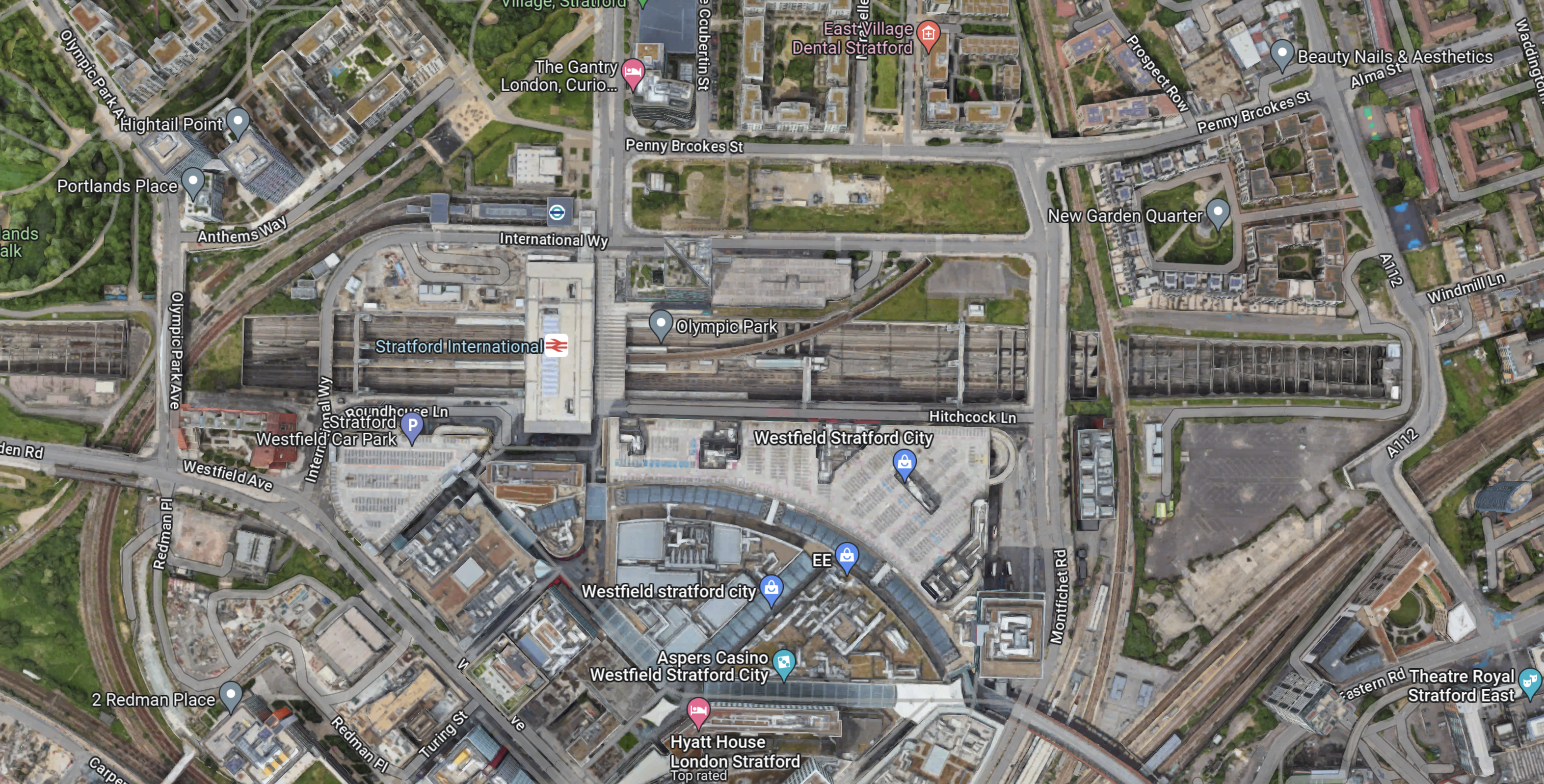
Stratford International station is in a soulless concrete cavern, that lies across the middle of the map.
In Platforms 1 And 4 At Stratford International Station, there are a lot of pictures of the station.
I think it would be extremely difficult to add extra platforms and passenger facilities to the station.
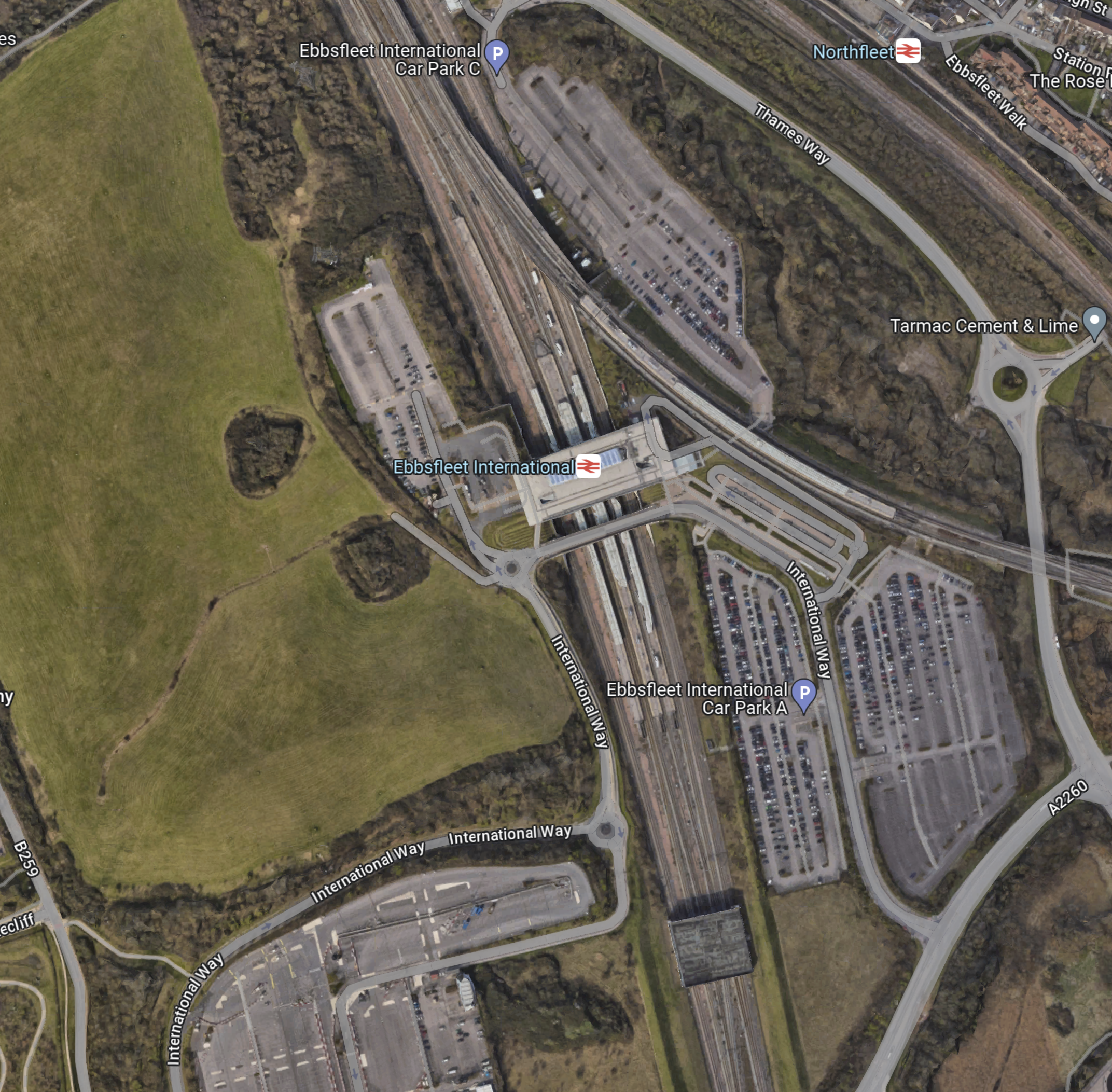
This Google Map shows Ebbsfleet International station.
Note.
- Ebbsfleet International station, with its two International and four domestic platforms is in the middle of the map.
- The station is surrounded by car parks with a total of 5,000 spaces.
- Northfleet station is in the North-East corner of the map.
There is a lot of land, without any buildings on it.
These are my thoughts.
Enough Extra Bay Platforms To Handle The Additional Trains
There would appear to be space for perhaps two bay platforms to terminate trains.
But would passengers we happy being dumped outside Central London?
Would An Elizabeth Line Extension To Ebbsfleet Be Needed?
There are various plans to link the Elizabeth Line tp Ebbsfleet International.
In Elizabeth Line To Ebbsfleet Extension Could Cost £3.2 Billion, I showed this map from the Abbeywood2Ebbsfleet consultation.
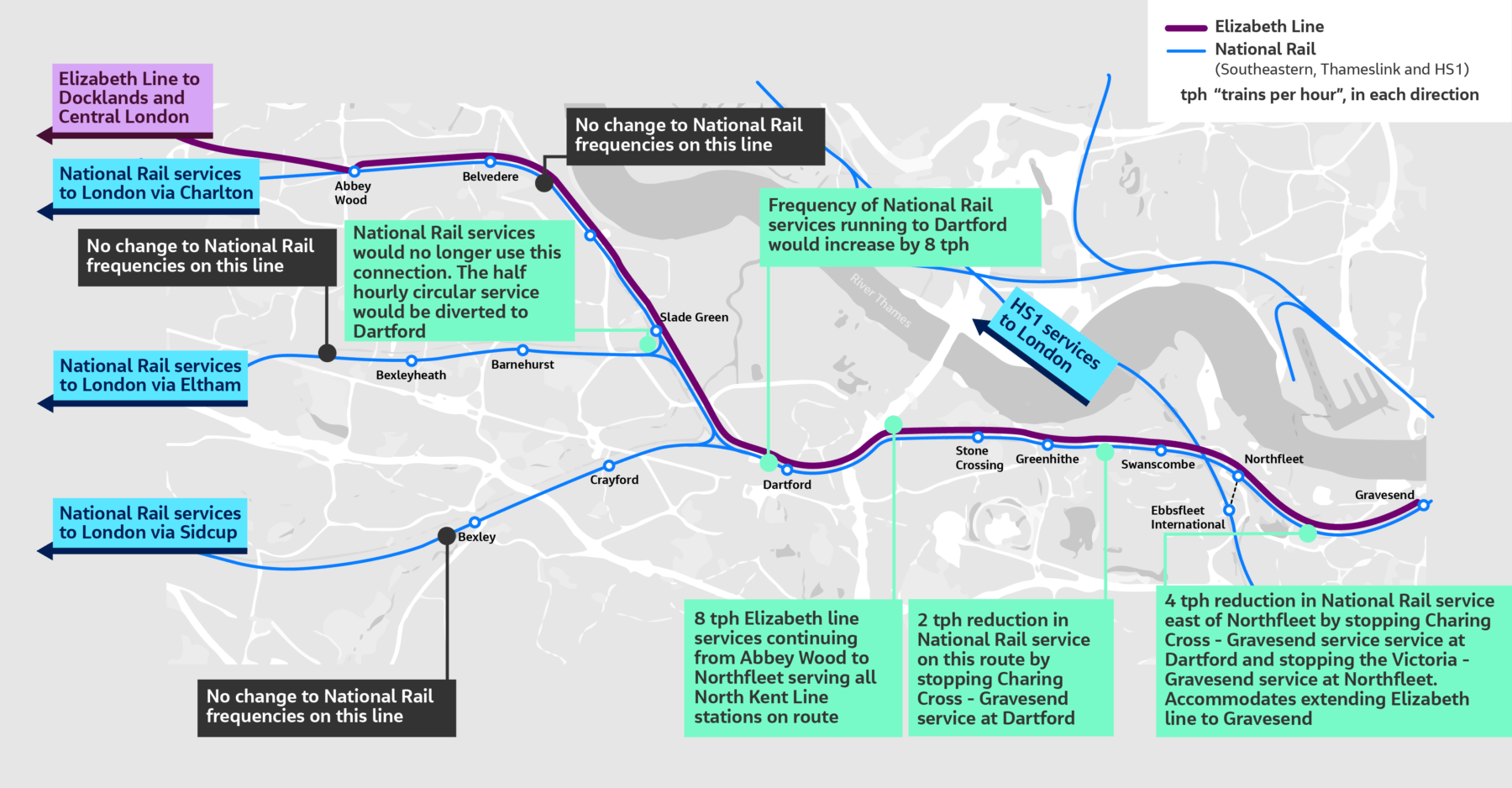
There doesn’t appear to be too much new infrastructure, except for a proper connection between Northfleet and Ebbsfleet stations. References on the Internet, say that the similar-sized Luton DART connection at Luton Airport, cost around £225 million.
The Elizabeth Line connects to the following.
- Bond Street
- Canary Wharf
- City of London
- Farringdon for Thameslink
- Heathrow Airport
- Old Oak Common for High Speed Two
- Liverpool Street station
- Oxford Street
- Paddington station
- Slough for Windsor
- Tottenham Court Road for the British Museum, Oxford Street, Soho, Theatreland and the Underground.
- West End of London
- Whitechapel for the Overground and Underground
For many people like me, the Elizabeth Line at Ebbsfleet will provide one of the quickest ways to get to and from European trains.
Ebbsfleet Has Space For A Bus Station
A bus station with comprehensive routes could be built at Ebbsfleet station, which I don’t think will be possible at St. Pancras.
It would also be possible to provide an easy route to Gatwick Airport along the M25.
Hotel Accommodation
This is surely necessary.
It would make an ideal base for tourists and business people, who wanted to visit several of the large cities connected to Ebbsfleet.
A Very Large Car Park
Consider.
- Heathrow Airport is looking at providing upwards of 50,000 car parking spaces.
- Some travellers are seriously allergic to public transport and will always use their car.
- Many travellers these days want to take a severely outside case with them, when they’re only having a weekend in Paris.
I feel that a mega-station for Europe will need upwards of 10,000 car parking spaces. All of them with vehicle-to-grid chargers.
A Very Large Storage Battery
According to this page on the E-on web site, the average size of the battery in an electric vehicle is 40 kWh.
If 5,000 car parking spaces were to be fitted with vehicle-to-grid charging (V2G), that would be 2 MWh of energy storage, that could be used by National Grid, to store surplus electricity.
Get V2G right and it could make a serious contribution to your parking costs.
Pictures Of Ebbsfleet Station
These are some pictures I took at Ebbsfleet station today.















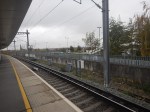



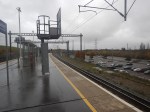
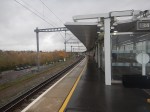


Note.
- The station is a fairly boring concrete, glass and steel construction.
- The SouthEastern HighSpeed services also go to St. Pancras, so they don’t offer any different connectivity towards the capital.
In addition, the SouthEastern HighSpeed Class 395 trains aren’t step-free at the platforms, as these pictures shows.




As I came back into St. Pancras International station, staff were struggling to load a wheelchair onto a train using a ramp.
Would A Two-Station Solution Increase Capacity?
High Speed Rail lines have high capacity trains and there are examples of more than one station at the end of a route.
- The London end of High Speed Two will have stations at Old Oak Common and Euston.
- The Manchester end of High Speed Two will have stations at Manchester Airport and Manchester Piccadilly.
- The Edinburgh end of the East Coast Main Line has stations at Waverley and Haymarket.
- The Amsterdam end of Eurostar and Thalys has stations at Rotterdam, Schipol Airport and Amsterdam.
A selection of stations gives choice and convenience for travellers.
Conclusion
I believe that selective development of Ebbsfleet International station could be used to take the pressure away from St. Pancras International station.
These developments could include.
- A comprehensive bus station
- Elizabeth Line to Northfleet
- Hotel Accommodation
- Lots Of Car Parking
Birth Of A Station
Thanet Parkway station is under construction and should be opened in May next year.
Work is progressing as this Google Map shows.
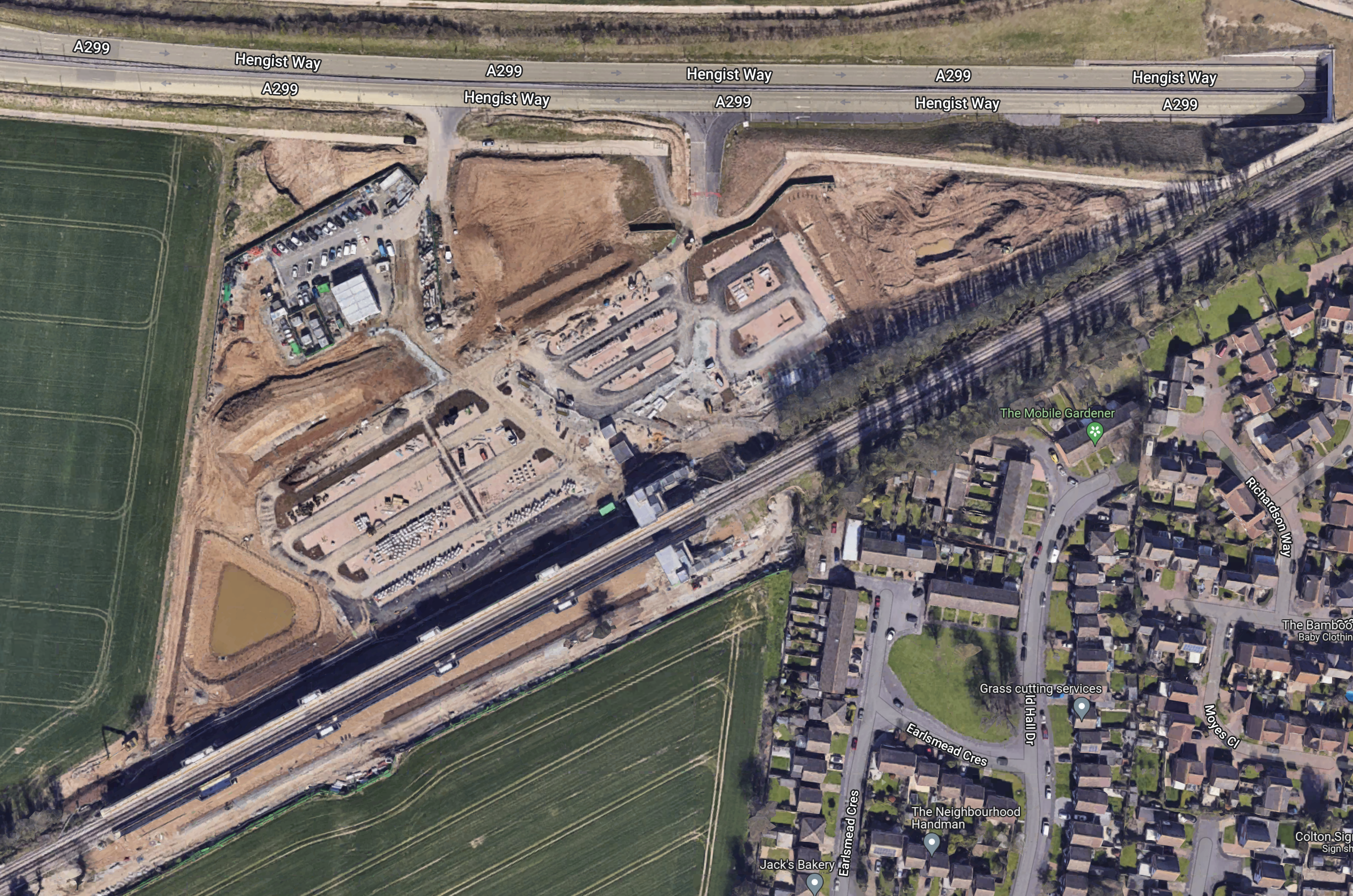
Note.
- The A299 goes across the top of the map.
- The Ashford – Canterbury – Ramsgate Line runs diagonally from South-West to North-East across the map.
- Ashford and Canterbury are to the South-West.
- Ramsgate is to the North-East.
The new Thanet Parkway station appears to be being built on the triangular site between the A299 and the railway.
- There appear to be two entrances/exits to the station from the A299.
- The pedestrian bridge over the railway is under construction.
- The roads and walkways around the station are being laid.
This video gives more details of the station.
Parking At Thanet Parkway
According to the video, there are nearly three hundred parking spaces, with a number of disabled spaces and spaces with charging for electric cars.
Is that going to be enough spaces?
But at least, there may be fields around the station, that could be used to provide additional parking.
Richborough Energy Park
This Google Map shows the area around the station and to the South towards Richborough.
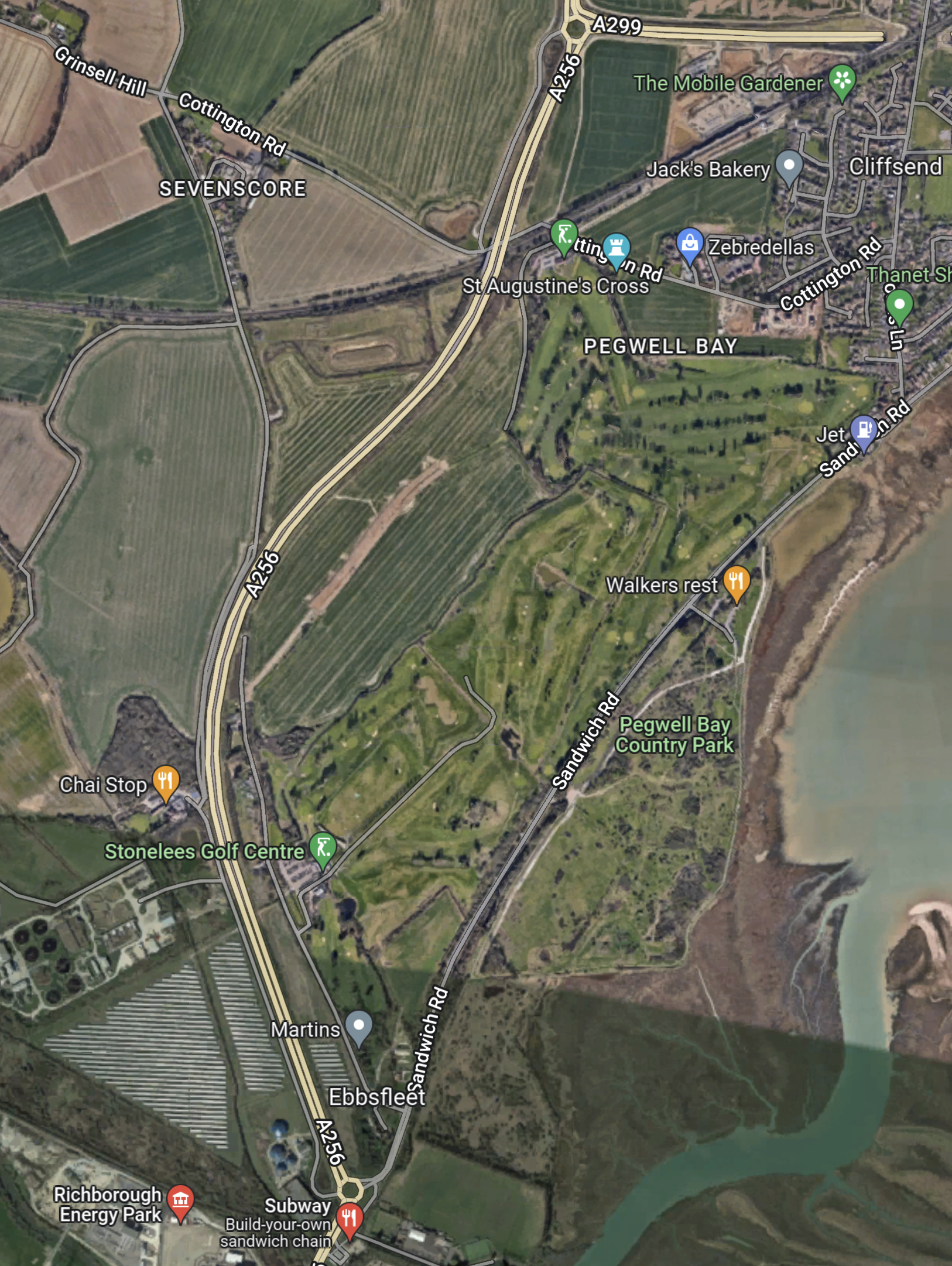
Note.
- The under-construction Thanet Parkway station is in the North-East corner of this map to the West of the village of Cliffsend.
- The dual-carriageway of the A256 runs North-South down the map to a roundabout.
- To the West of the roundabout is Richborough Energy Park.
This Google Map shows the are round the energy park and the roundabout in more detail.
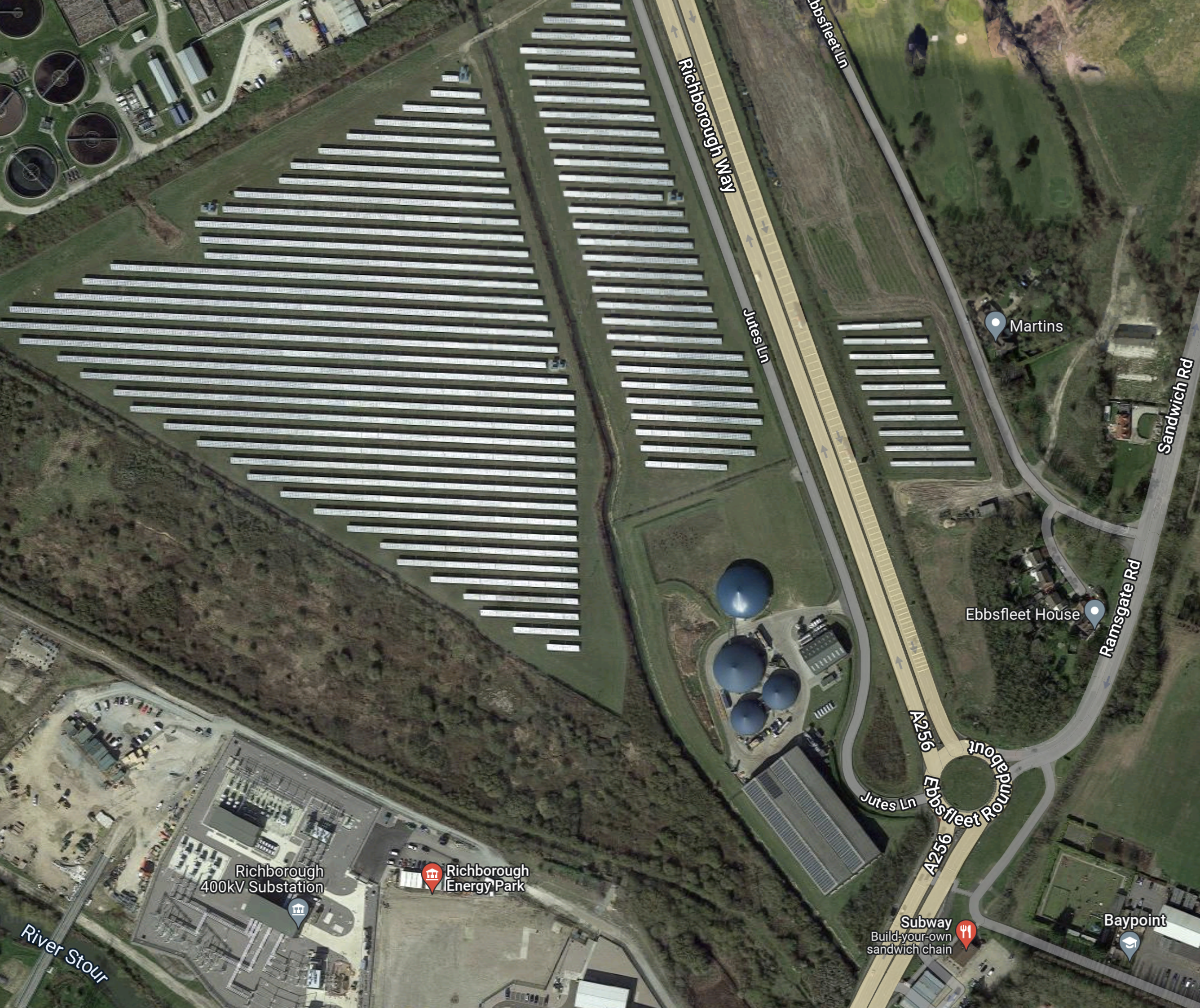
Note.
- The Richborough substation in the South-West corner of the map.
- The Richborough Energy Park sits to the East of the substation.
- The solar panels to the North of the roundabout are the 4.9 MW Ebbsfleet Solar Farm, which is part of Richborough Energy Park.
Richborough Energy Park is an ongoing project.
The national grid interconnector from the original power station is still in place, and is now the grid link for the 300 MW offshore Thanet Wind Farm.
It is the terminal for the NemoLink interconnector to Belgium.
Wikipedia says this about future plans.
The current owner of the site, BFL Management Ltd, plan to bring the site back into use as a £750 million green energy park. There are additional plans to create additional recycling and green energy facilities on site, including an anaerobic digester, a waste processing plant, a biomass combined heat and power generator, a pyrolysis plant and a peak demand 30MW diesel generator. When fully operational, the park could provide up to 1,400MW of power, employing 100 full-time equivalent, with up to 500 jobs in the construction phase.
I am surprised, that there is no mention of batteries or energy storage.
This press release from Network Rail is entitled Charge While You Travel With New Electric Vehicle Charging Points At Network Rail Stations.
This the body of the press release
Rail passengers with electric vehicles will be able to charge while they travel thanks to the introduction of 450 new electric vehicle charging points at Network Rail-managed car parks at railway stations.
The charging points, powered by guaranteed renewable energy, provide enough power to fully charge a vehicle in as little as 3-4 hours.
In this phase, Network Rail has powered: 160 charging points in Reading, 111 in Manchester, 84 in Edinburgh, 56 at Leeds and 41 in Welwyn Garden City.
Electric vehicle charging points will be installed across 10% of car parking spaces (approximately 779 spaces) at car parks managed by Network Rail by March 2024.
Rail is already the leading form of green public transport and this marks another milestone in Network Rail’s commitment to a low-emission railway – making sure rail is environmentally-friendly, resilient to climate change and able to provide an excellent service for years to come.
The new Compleo charging points are marked with green parking bays and passengers can pay for what they need quickly and easily via the APCOA Connect app.
Note, that there is no mention, if these are vehicle-to grid (V2G) chargers.
In Airport Plans World’s Biggest Car Parks For 50,000 Cars, I stated my belief that car parks, with hundreds or even thousands of vehicles could be turned into giant grid batteries.
- All electric vehicles, when they are parked would be plugged in to V2G chargers.
- The vehicle and the grid, would know your expected return time and how much power you would need. Probably from a parking app, assisted by AI!
- If the grid borrowed your electricity, whilst you were away, you wouldn’t know, until you received the payment for the loan.
- If your car runs on hydrogen, the parking could also handle the battery, that all hydrogen-powered vehicles have.
Thanet Parkway station would be an ideal station for such a parking system for electric vehicles.
Airport Plans World’s Biggest Car Parks For 50,000 Cars
The title of this post, is the same as that of an article in Wednesday’s copy of The Times.
This is the first two paragraphs.
The biggest car parks in the world will be built as part of a £14 billion expansion of Heathrow amid fresh claims that the scheme will be an “environmental disaster”.
Parking for almost 53,000 vehicles will be built as part of a 30-year masterplan, even though the airport insists that expansion can be achieved without any extra cars on the road.
This sounds to be contradictory, as why would you need to build extra car parking, if there were no more extra cars on the road?
Perhaps there is a clue later in the article, where this is is a paragraph.
Heathrow said that the overall number of parking spaces would “not change materially from today”, insisting that spaces were simply being consolidated on bigger sites. It pointed out that car parks would allow for 100 per cent electric vehicle usage in the future. In total, the number of parking spaces, including those for staff and spaces at nearby offices, will grow from 64,000 today to 67,000.
Admittedly, it only says allow, but Heathrow are future-proofing themselves for the day when everyone is driving electric cars.
Heathrow and others are also planning to do the following.
- Charge a congestion charge of up to £15 a day will be imposed by 2026 to dissuade passengers from travelling to the airport by car.
- A “green loop” — a 12-mile pedestrian and cycle network — will also circle the airport.
- Finish Crossrail.
- Improve Heathrow Express.
- There will be a rail link to Reading.
- There will be a second rail link to Waterloo via Clapham Junction.
- There could be a rail link to Basingstoke, Guildford and Woking, possibly by extending Heathrow Express.
Will these measures nudge travellers in one of two positive directions?
- Using public transport to get to the Airport.
- Cycling or walking to the airport.
- Using an electric car to get to and from the Airport.
I am a Control Engineer, who spent a working life of nearly fifty years analysing data and doing mathematical calculations, hopefully to improve little bits of the world.
So What Would I Do?
It is absolutely essential that it is known, where all the vehicles to the airport are travelling to and from.
No-one is going to stop using their car, if there is no creditable alternative.
The ultimate aim must also be that, all transport within a certain distance of the Airport must be zero-carbon.
- All vehicles used by travellers and workers to get to and from the Airport.
- All vehicles bringing supplies to the Airport.
- All airside vehicles.
What will happen to those that lived in the zone?
This Google Map shows Hanwell Village to the South-West of the Airport.
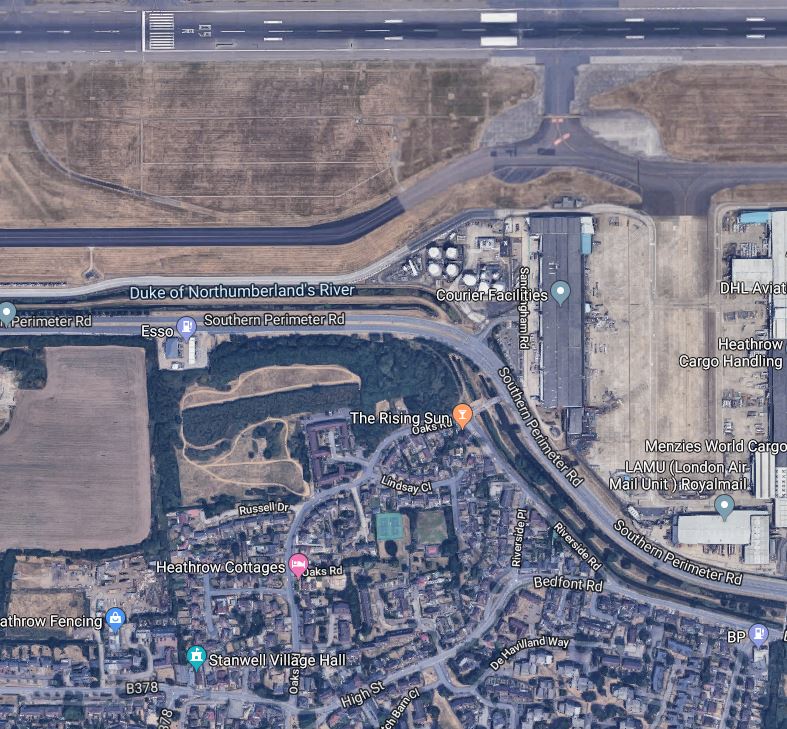
Will all those residents pay the congestion charge?
But suppose Heathrow could get ninety percent of all cars travelling to the Airport and using the car parks, to be electric vehicles.
This would be 45,000 vehicles, each with a battery of between 30-60 kWh. Let’s call it, 30 kWh.
This would mean that the total of energy storage on a typical day at the Airport would be 1.35 GWh.
Compare that to the 9.1 GWh capacity of Electric Mountain.
Electric Mountain would be bigger, but intelligent control of the batteries of these electric vehicles could create a massive electricity storage resource at the Airport.
- Vehicles would be connected to a two-way vehicle-to-grid charger (V2G), when the driver went about their business at the Airport, after telling the vehicle when they would return.
- On return to the vehicle, it would have enough charge for the next journey.
- The driver would also have an app on their phone, so they could alter their expected return time.
- Whilst the driver was away, the grid would borrow electricity from the vehicle’s battery if required.
All the technology exists and National Grid are looking at ways to use electric vehicle batteries for energy storage.
National Grid have suggested, that they might even pay for the use of your battery.
I suspect that all parking for electric vehicles in the future, will work using something like this model.
Note the following calculation.
In December 2018, there were 31.5 million cars and four million light goods vehicles in the UK.
In a few years time, suppose half of these vehicles are electric with a 20 KWh battery.
That works out at an astronomical 355 GWh or nearly forty Electric Mountains.
- Electric Mountain cost £425 million in 1984.
- Applying a web inflation calculator means it would cost around £1350 million today.
- So forty Electric Mountains would cost £54 billion.
That is a lot of money and we have no place to put them.
But we have this massive storage capability in the millions of electric vehicles, that will be on the roads in a few years.
Conclusion
All future large car parks must be built to be large storage batteries, when drivers plug in their electric cars using vehicle-to-grid (V2G) technology.
If you were to be paid for the use of your car’s battery, would that ease the expense of owning an electric car?
Existing EVs Could Steer Energy To 300,000 Homes
The title of this post, is the same as this article on the Utility Week web site.
This is the opening two paragraphs.
Existing electric vehicles (EVs) in the UK could contribute more than 114MW to the National Grid, enough to power over 300,000 homes.
Research commissioned by Ovo Energy suggests the figure could be achieved based on the current 19,000 Nissan Leaf EVs registered in the UK using new vehicle-to-grid (V2G) chargers.
The article goes on to discuss this in detail.
So what is vehicle-to-grid?
Wikipedia has this summary.
Vehicle-to-grid (V2G) describes a system in which plug-in electric vehicles, such as electric cars (BEV), plug-in hybrids (PHEV) or hydrogen Fuel Cell Electric Vehicles (FCEV), communicate with the power grid to sell demand response services by either returning electricity to the grid or by throttling their charging rate.
Vehicle-to-grid can be used with gridable vehicles, that is, plug-in electric vehicles (BEV and PHEV), with grid capacity. Since at any given time 95 percent of cars are parked, the batteries in electric vehicles could be used to let electricity flow from the car to the electric distribution network and back. This represents an estimated value to the utilities of up to $4,000 per year per car.
If you are thinking about buying an electric car or van, read the article and other sources. Wikipedia seems a good start.
At its simplest, it would appear that if you buy an electric vehicle, it would be prudent to fit a V2G charger in your garage or parking space.
I would expect, that the charging system is sophisticated, so that if you want to use the car, there is sufficient charge and the power hasn’t been sold back to the grid.
It will be very interesting to see how this technology develops.
 The Anonymous Widower