Interview: Rethinking ‘Unusual And Special’ CrossCountry
The title of this post, is the same as that of this article on Railway Gazette.
This is the sub-heading.
CrossCountry’s National Rail Contract came into force on October 15, giving the business some medium-term certainty and Managing Director Tom Joyner a chance to reflect with Rail Business UK on its evolving role as a truly national train operator.
These are thoughts based on what is said in the article.
Unusual And Special
This paragraph is Tom Joyner’s explanation of what he meant.
‘CrossCountry is unusual and special. The fact that we’re a long-distance operator that connects so many places means we can be there for something different’, believes Managing Director Tom Joyner as he reflects on the operator’s short and medium-term future following the award on September 20 of its National Rail Contract.
I have found CrossCountry useful in the past to efficiently visit some towns and cities in the past, when Ipswich Town are playing away.
Arriva UK’s Contract To Run CrossCountry
This paragraph details the operating contract.
Under the NRC, incumbent Arriva UK Trains will continue to run the non-London inter-city passenger business as it has since November 2007. Commencing on October 15, the contract has a guaranteed core term of four years and an option for this to be extended to eight. The government will take the revenue risk, as it has done since the pandemic, with Arriva receiving a fixed fee to operate the business, with limited bonuses on offer if certain performance targets are met.
As a resident of London, I rarely use CrossCountry. But my only obvious improvement would be that CrossCountry ran trains with a smaller carbon footprint.
Post Pandemic Purpose
This paragraph details their post-pandemic purpose.
‘CrossCountry hasn’t benefitted from re-franchising in the last 10 years and this has presented challenges, particularly from a rolling stock perspective. We’ve been working closely with DfT to agree the post-pandemic purpose and vision for CrossCountry and how these fit into our railway network’, Joyner reports.
Most rail operators in the UK are London-centric or regional. Perhaps CrossCountry should become more ‘Unusual And Special’ to serve the important places, that other rail operators cannot reach.
One place would be the National Memorial Arboretum, which I wrote about in New Station Proposed For National Arboretum.
There must be lots of other places.
It could surely be the transport network for those who wanted to roam the UK on a holiday.
Could it be at the heart of levelling up the regions of the UK?
Fleet Under Pressure
This paragraph describes the current fleet and its condition.
Perhaps most reassuring for regular users of CrossCountry is news that the NRC will allow the operator to deliver some improvements to its train fleet, the backbone of which are the Class 220 and 221 DEMUs Arriva inherited from Virgin Trains in 2007. Other than some minor cosmetic work, these have not been refurbished since they were introduced in 2001. These 200 km/h Voyager trainsets are augmented by a fleet of Class 170 Turbostar DMUs for 160 km/h operation on regional routes to Cardiff and Stansted Airport; CrossCountry withdrew its last ex-British Rail IC125 High Speed Trains on September 18.
I do think, that some way must be found to reduce the operators large carbon footprint.
Are Battery Trains The Answer?
This paragraph gives Tom Joyner’s view on battery trains.
He is equally sceptical about the prospects for alternative traction technology to replace diesel. ‘I keep hearing views from industry colleagues who say, “electrification isn’t the answer, battery is the answer”. But you can’t get a battery that’s got the range that we need, even on the regional services currently worked by Class 170s.’
Birmingham New Street and Leicester is only 39.8 miles, so this route for a Class 170 train, might be possible for battery-electric trains, when there is electrification or charging at Leicester.
Perhaps the plan would be to run battery-electric trains between Birmingham and Leicester and see how the passengers react and how this will change the economics of the other Class 170 services?
A Lot More Food For Thought
There are some more sections in the article, that are worth a read.
- Sustainability Challenge
- Service Offering
- Commuters’ ‘Coventry Conundrum’
- Doing Something Different
This paragraph towards the end of the article makes the levelling up case, that CrossCountry can fulfil.
He suggests that the operator may not need as structured a timetable, and that its operating model could involve serving more destinations rather than the current largely fixed hourly axes crossing in Birmingham. ‘We serve regional Britain and when we talk about levelling up, the railway company best placed to level up in terms of connecting the whole of Britain is us’, he insists. This ethos is reflected in the daily Cardiff – Edinburgh service, with Joyner noting that this will not be a repeating service through the day.
Read the whole article.
I wish Tom Joyner the best of luck!
Could The Bombardier Voyagers Be Converted To Hydrogen Power?
Avanti West Coast, CrossCountry and East Midlands Trains all run versions of Bombardier Voyager trains.
- There are 103 sets in service.
- Lengths are four, five and seven cars.
- They are 125 mph trains.
- They are powered by one Cummins QSK19 diesel engine in each car.
Given Cummins’s enthusiasm for hydrogen could these diesel engines be converted to hydrogen power, so the trains could run long distance routes on zero-carbon power?
If there is no need for them in the UK, there are probably lots of places in the world that would like them!
Thor Point
In his Informed Sources column in the August 2021 Edition of Modern Railways, Roger Ford has a section with the same sub-title as this post.
He discusses what is to happen to the Class 22x fleets of 125 mph diesel trains and then says this about Project Thor, which was an idea of a few years back.
I still believe the addition of a pantograph transformer car to convert a ‘22x’ to a bi-mode has even more potential than the first time round. Routes operated by the CrossCountry ‘22x’ should be early candidates for electrification, and bi-modes are a simple way of boosting the benefits of electrification.
Project Thor is described in a section in the Wikipedia entry for the Voyager train, which is entitled Proposed Conversion To Electrical Operation. This is said.
In 2010 Bombardier proposed the conversion of several Voyager multiple units into hybrid electric and diesel vehicles capable of taking power from an overhead pantograph (electro-diesels EDMUs). The proposal was named Project Thor.
It appears that, one of the reasons the project foundered was that Bombardier had no capability to make steel carriages in the UK.
In the July 2018 Edition of Modern Railways, there is an article entitled Bi-Mode Aventra Details Revealed.
A lot of the article takes the form of reporting an interview with Des McKeon, who is Bombardier’s Commercial |Director and Global Head of Regional and Intercity.
This is a paragraph.
He also confirmed Bombardier is examining the option of fitting batteries to Voyager DEMUs for use in stations.
Nothing more was said.
In the three years since that brief sentence, technology has moved on.
Perhaps most significantly, Hitachi have launched the Hitachi Intercity Tri-Mode Battery Train, which is described in this Hitachi infographic.

Note that one engine is replaced with batteries.
My engineering experience, leads me to believe that Hitachi’s battery pack supplier; Hyperdrive Innovation, is developing a battery-pack that is plug-compatible with the MTU diesel engine, so that batteries and diesel engines can be swapped as required.
For this to be possible, there needs to be a power bus connecting all carriages of the train.
- This is common practice in the design of electric multiple units.
- I am certain this power bus exists on the Hitachi Class 800 trains as they have pantographs on both driver cars and all the motor cars are between the driver cars. So it is needed to supply power to the train.
- A power-bus could be used in a diesel-electric multiple unit like the Voyager, to ensure that in the case of engine failure in one of the cars, the car would still be supplied with hotel power.
Are the Bombardier Voyagers designed with a similar power bus?
If they are, I wonder, if one of the intermediate cars could be converted as follows.
- Replace the diesel engine and electrical generator with a plug-compatible battery pack of an appropriate size.
- Fit a lightweight pantograph in the roof of the train.
- Squeeze in all the electrical gubbins like a transformer underneath the train.
It would probably be a challenging piece of engineering, but if there is sufficient space under the train it should be possible.
But the outcome would be a genuine 125 mph bi-mode multiple unit.
DfT and Arriva CrossCountry Sign Agreement
The title of this post, is the same as that of this article on Railway News.
This is the introductory paragraph.
The franchisee CrossCountry, which is owned by Arriva, has signed a three-year agreement with the Department for Transport to bring the franchise in line with the Emergency Recovery Measures Agreements (ERMAs).
CrossCountry has the following trains in its fleet.
34 x Class 220 trains
24 x Class 221 trains
This gallery shows Class 220 trains and the closely related Class 222 trains, which are in service with East Midlands Railways.


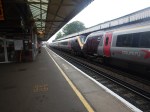
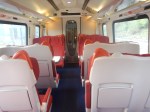
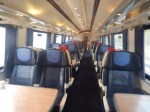
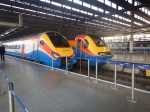
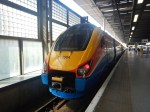
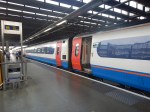
Note that these three fleets of Bombadier Voyager trains are now twenty years old and will probably need a makeover soon.
If they have a problem it is that they are diesel multiple units and create a lot of noise and pollution in stations and depots.
This is said in the Railway News article.
One element of this new contract is a focus on reducing the environmental impact of the operator’s diesel fleet.
, Two separate projects are mentioned.
- Using a separate electrical supply to Turbostars during cleaning.
- Use of on-train batteries on the Voyagers in stations.
In Have Bombardier Got A Cunning Plan For Voyagers?, I gave my thoughts on the second project, when Bombardier proposed it in 2018.
I can see the following scenario happening.
- When the new Class 805 trains are delivered, Avanti West Coast’s Class 220 trains are transferred to Arriva CrossCountry.
- When the new Class 810 trains are delivered, East Midland Railway’s Class 222 trains are transferred to Arriva CrossCountry.
- CrossCountry update their Voyagers with batteries.
- CrossCountry retire their InterCity 125 trains.
CrossCountry may have enough trains to run a mainly Voyager fleet, backed up by a few Turbostars.
Could Bombardier’s Plan Be Revived In A Different Form?
If CrossCountry had all the Voyages, they would have the following fleet.
- 34 x four-car Class 220 trains – Currently with CrossCountry.
- 20 x five-car Class 221 trains – Currently with Avanti West Coast
- 20 x five-car Class 221 trains – Currently with CrossCountry
- 4 x four-car Class 221 trains – Currently with CrossCountry
- 6 x seven-car Class 222 trains – Currently with East Midlands Trains
- 17 x five-car Class 222 trains – Currently with East Midlands Trains
- 4 x four-car Class 222 trains – Currently with East Midlands Trains
This totals to eighty-five trains with a total of 285 intermediate cars, of which 128 were built with tilt for Class 221 trains.
Currently CrossCountry has a total of 58 four- and five-car Voyagers and enough Class 43 power cars for six InterCity 125 trains.
If they rearranged the non-tilting intermediate cars of the Voyagers, 157 intermediate cars is enough for one of the following.
- 78 – four-car trains
- 52 – five-car trains
- 39 – six-car trains
- 26 – eight-car trains
- 22 – nine-car trains
Add in forty five-car Class 221 trains and there is more than enough trains for CrossCountry to run their current services without the retired InterCity 125s.
CrossCountry would also be able to form the trains into the lengths they needed for efficient services.

This formation photographed at Basingstoke could be formed of a single train, if they wished, as they have more than enough coaches.
I suspect in true design engineering fashion, engineers at CrossCountry have got the toy trains or Lego bricks out to shuffle the coaches on a big table to see what are the best train lengths for their network.
If they decided to go the eight-car route, which could give up to twenty-six trains, this would be more than enough to be able to retire the InterCity 125s.
Could one of the Intermediate cars be converted into a pantograph and battery car?
- If the diesel engine and the associated gubbins were to be removed, this would save around two tonnes in weight.
- A two-tonne battery could probably have a capacity of 200 kWh.
- Bombardier probably have ideas about how a car could be converted.
Someone could have a lot of fun playing musical carriages and the following trains could be created.
- A fleet of Voyager bi-mode trains of optimum length for CrossCountry’s route network.
- Most services would be run by single trains, which must give advantages to the operator, their staff and passengers.
- All braking would be regenerative braking to battery to save energy.
- Where electrification exists, the trains could use it.
- All station stops would be performed on battery power.
There might even be some left over driving cars and some intermediate cars to be converted into battery electric trains for another route.
Conclusion
There is a route there for CrossCountry to have a much more environmentally-friendly fleet, better suited to their needs
- The Turbostars would be given a local electricity supply to cut noise and pollution during overnight cleaning.
- The InterCity 125s would be retired.
- CrossCountry acquires as many Voyagers as it needs after Avanti West Coast and East Midlands Railway get their new trains.
- The Voyagers carriages would be shuffled so that they could handle all routes and replace the InterCity 125s.
- The design exists to convert the Voyagers into diesel-electric-battery tri-mode high speed trains.
Note.
- There are enough trains to do a gradual conversion, with CrossCountry having enough trains for a full service at all times.
- All trains will probably have been built this century or nearly so!
I also feel, that the fleet would be a marketing asset, rather than a bit of a discouragement to use CrossCountry’s services again.
East Midlands Class 222 Trains
The Class 222 train is the workhorse of the Midland Main Line.
Where will they go, when they are replaced by new bi-mode trains in 20222?
They have some good properties.
- Built in 2003-2005 and refurbished in 2011-2012.
- 125 mph capability
- Lots of tables.
- Meet all the access reguilations.
- Good ride on FLEX-Eco bogies.
But there is the annoying noise of the under-floor diesel engines.
In Have Bombardier Got A Cunning Plan For Voyagers?, I commented on a statement by Bombardier to upgrade these trains with batteries, to give full regenerative braking, improve their efficiency and require less running of the engines in stations.
Batteries In Class 378 Trains Revisited
Two and a half years ago, I wrote Will London Overground Fit On-board Energy Storage To Class 378 Trains?.
This post effectively updates that post, with what we now know.
As far as I know, batteries have not been fitted to the Class 378 trains, but there have been other developments involving Bombardier since.
Aventras
The linked post was based on statements by Marc Phillips of Bombardier in this article in Rail Technology Magazine entitled Bombardier enters key analysis phase of IPEMU. He also said about Aventras.
Bombardier is also looking at battery options on new builds, including its Aventra platform.
I have stated several times including in Rail Magazine, that the Class 345 trains for Crossrail must have batteries and no-one has told me that I’m wrong.
Battery Train Applications
The Rail Technology article also says this.
Bombardier has started assessing potential customers for battery-powered trains, looking first at branch line applications. Batteries could be a solution allowing non-continuous electrified infrastructure, and emergency rescue and last-mile opportunities.
The article was written three and a half years ago and I suspect Bombardier have been busy researching the technology and its applications.
The High-Speed Bi-Mode Aventra With Batteries
This train was first reported to be in development in this article in Rail Magazine, which was entitled Bombardier Bi-Mode Aventra Could Feature Battery Power.
The article stated the following.
- Battery power could be used for Last-Mile applications.
- The bi-mode would have a maximum speed of 125 mph under both electric and diesel power.
- Bombardier’s spokesman said that the ambience will be better, than other bi-modes.
I very much believe that the key to the performance of this train is using batteries to handle regenerative braking in both electric and diesel modes.
In Mathematics Of A Bi-Mode Aventra With Batteries, I looked at how the train might operate.
Bombardier with better data and the latest mathematical modelling techniques have obviously extensively modelled the proposed trains and prospective routes.
No sane company listed on a Stock Exchange would launch such a product, if it didn’t know that the mathematics of the dynamics and the numbers for the accountants didn’t add up.
Voyagers With Batteries
In Have Bombardier Got A Cunning Plan For Voyagers?, I discuss a snippet found in the July 2018 Edition of Modern Railways, in an article entitled Bi-Mode Aventra Details Revealed.
In a report of an interview with Bombardier’s Des McKeon, this is said.
He also confirmed Bombardier is examining the option of fitting batteries to Voyager DEMUs for use in stations.
Batteries appear to be being proposed to make the trains more environmentally-friemdly and less-noisy.
Talent 3 With Batteries
Bombardier have launched a version of their Talent 3 train with batteries. This is the launch video.
Some of Bombardier’s points from the video.
- Emission-free
- The current range is forty kilometres
- The range will be extended to a hundred kilometres by 2020.
- Charging for forty kilometres takes between seven and ten minutes from overhead electrification.
This looks to be a serious train with orders from German train operators.
It would appear that Bombardier are very serious about the application of batteries to both new and existing trains.
Class 378 Trains And Batteries
What could batteries do for the Class 378 trains?
It looks like over the next few years, the Class 378 trains will be increasingly used on the East London Line, as they have the required evacuation capability for the Thames Tunnel.
Various documents indicate that to maximise capacity on the line, the following may happen.
- Some or all services may go to six trains per hour (tph)
- Trains may be lengthened to six-cars from five-cars.
Extra destinations might be added, but although this could be easy in South London, it would probably require a lot of station or platform development in the North.
Trains Required For The East London Line
If you look at the timing of the East London Line, you get the following journey times for the four routes.
- Highbury & Islington to West Croydon – 52-57 minutes
- Dalston Junction to New Cross – 24 minutes
- Highbury & Islington to Crystal Palace – 46 minutes
- Dalston Junction to Clapham Junction – 47-48 minutes
It could almost have been choreographed by Busby Berkeley.
This means that to run four tph on the routes needs the following number of trains.
- Highbury & Islington to West Croydon – 8 trains
- Dalston Junction to New Cross – 4 trains
- Highbury & Islington to Crystal Palace – 8 trains
- Dalston Junction to Clapham Junction – 8 trains
Which gives a total of 28 trains.
To make all these services six tph, would require the following number of trains.
- Highbury & Islington to West Croydon – 12 trains
- Dalston Junction to New Cross – 6 trains
- Highbury & Islington to Crystal Palace – 12 trains
- Dalston Junction to Clapham Junction – 12 trains
Which gives a total of 42 trains.
At present only the Crystal Palace and Clapham Junction routes have dates for the extra trains and if only these routes were increased in frequency, there would be a need for 36 trains.
Six-Car Trains
The trains might also go to six cars to increase capacity on the East London Line.
As I indicated in Will The East London Line Ever Get Six Car Trains?, cars could be used from the five-car trains not needed for the East London Line.
You would just end up with a number of three- and four-car Class 378 trains, that could be used on other routes with less passengers.
My conclusion in Will The East London Line Ever Get Six Car Trains? was this.
It will be interesting to see how London Overground, increase capacity in the coming years.
There are fifty-seven Class 378 trains in total, which have the following formation.
DMOS-MOS(B)-PTOS-MOS-DMOS
They can be lengthened and shortened, by adding or removing MOS cars.
As an extra MOS car was added to convert all trains from four-cars to five-cars a few years ago, I suspect it is not the most difficult of processes.
It should also be noted that the original three-car trains for the North London Line had the following formation.
DMOS-PTOS-DMOS
If all East London Line routes go to six tph, the required number of trains would be forty-two.
This would leave a surplus of fifteen trains to act as donors for lengthening.
To make all trains six-cars would require a further forty-two MOS cars.
Reducing the trains not needed for the East London Line to three-cars, would yield thirty MOS cars.
This could give the following fleet.
- Thirty six-car trains.
- Twelve five-car trains
- Fifteen three-car trains
To lengthen all trains needed for six-cars would require another twelve MOS cars to be obtained.
Some services could be run with five-car trains, but I don’t think that be a good idea.
I am inevitably led to the conclusion, that if the the Class 378 trains need to be extended to six-cars, then Bombardier will have to produce some more cars.
Adding Batteries To A Six-Car Class 378 Trains
Batteries would be added to Class 378 trains for all the usual reasons.
- Handling energy from regenerative braking.
- Health and safety in depots and sidings.
- Short movements on lines without electrification
- Emergency train recovery
But there might also be another important use.
The Thames Tunnel is under five hundred metres long.
As the only trains running through the tunnel are Class 378 trains, it might be possible and advantageous to run services on battery power through the tunnel.
I will estimate the kinetic energy of a six-car Class 378 train, as the batteries must be able to handle the energy of a full train, stopping from maximum speed.
- The empty train will weigh around 192 tonnes
- The maximum speed of the train is 75 mph.
- The train will hold 1050 passengers, who I will assume each weigh 90 Kg with baggage, bikes and buggies.
- This gives a fully loaded train weight of 286.5 tonnes.
Using the Omni Kinetic Energy calculator gives an kinetic energy of 45 kWh.
If four 100 kWh batteries can be fitted under a two-car Class 230 train, then surely a reasonable amount o capacity can be fitted under a six-car Class 378 train.
These pictures show the under-floor space on a dual-voltage Class 378/2 train.
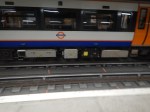
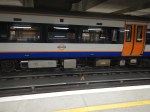
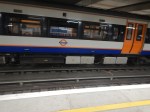
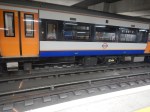
As a six-car train will have five motored cars, why not put one 50 kWh battery in each motored car, to give a capacity of 250 kWh.
In an article in the October 2017 Edition of Modern Railways, which is entitled Celling England By The Pound, Ian Walmsley says this in relation to trains running on the Uckfield Branch, which is not very challenging.
A modern EMU needs between 3 and 5 kWh per vehicle mile for this sort of service.
So how far would a six-car Class 378 train go with a fully-charged 250 kWh battery?
- 5 kWh per vehicle mile – 8 miles
- 4 kWh per vehicle mile – 10 miles
- 3 kWh per vehicle mile – 14 miles
- 2 kWh per vehicle mile – 20 miles
This is only a crude estimate, but it shows that fitting batteries to a Class 378 train with batteries could give a useful range.
Adding Batteries To A Three-Car Class 378 Trains
The same calculation can be performed for a three-car train created by removing the two MOS cars.
- The empty train will weigh around 96 tonnes
- The maximum speed of the train is 75 mph.
- The train will hold 525 passengers, who I will assume each weigh 90 Kg with baggage, bikes and buggies.
- This gives a fully loaded train weight of 143.3 tonnes.
Using the Omni Kinetic Energy calculator gives an kinetic energy of 22.4 kWh.
Unsurprisingly, the kinetic energy of the three-car train is around half that of a six-car train.
As a three-car train will have two motored cars, why not put one 50 kWh battery in each motored car, to give a capacity of 100 kWh.
Using the Ian Walmsley formula gives the following ranges.
- 5 kWh per vehicle mile – 7 miles
- 4 kWh per vehicle mile – 8 miles
- 3 kWh per vehicle mile – 11 miles
- 2 kWh per vehicle mile – 17 miles
When you consider that the length of the Greenford Branch Line is 2.5 miles, these ranges are very useful.
Routes For Three-Car Class 378 Trains With Batteries
I would suspect that these trains will have the following specification.
- Dual-voltage with ability to use either 25 KVAC overhead or 750 VDC third-rail electrification.
- A maximum speed of 75 mph
- Three cars
- Passenger capacity of 525 passengers.
- Range of between seven and fifteen miles
So for what routes would the train be suitable?
Brentford Branch Line
There have been various ideas for reopening the freight-only Brentford Branch Line to passenger traffic.
The simplest proposal would be to run a two tph shurttle train Southwards from Southall station.
As the branch is only four miles long, I believe that a three-car Class 378 train, which ran on battery-power and charged at Southall station could work the branch.
Greenford Branch Line
I’ve already mentioned the 2.5 mile long Greenford Branch Line.
The following work would need to be done before the trains could be used.
- Electrification of the bay platform at West Ealing with 25 KVAC overhead wires.
- Electrification of the bay platform at Greenford with 750 VDC third-rail.
- Minor lengthening of the bay platform at Greenford to allow sixty metre long trains.
- An extra crossover at the West Ealing end of the branch.
With these modifications it might be possible to run four tph on the branch.
Romford To Upminster Line
Currently, the Romford-Upminster Line uses a single train to shuttle the three miles at a frequency of two tph.
If the passing loop were to be reinstated, I believe that two trains could run a four tph service.
Using battery-power on the line and charging on the existing electrification at either end of the line might be a more affordable option.
It should be noted that increasing the current two x four-car tph to four x three-car tph, would be a doubling of frequency and a fifty percent increase in capacity.
West London Orbital Railway
The West London Orbital Railway is outlined like this in Wikipedia.
The West London Orbital is a proposed extension to the London Overground that makes use of a combination of existing freight and passenger lines including the Dudding Hill Line, North London Line, and the Hounslow Loop. The route runs for approximately 11 miles from West Hampstead and Hendon at the northern end to Hounslow at the Western end via Brent Cross West, Neasden, Harlesden, Old Oak Common, Acton and Brentford.
This is one of those plans, which ticks a lot of boxes.
- The tracks are already in existence.
- There is a proven need.
- Passenger numbers would support at least four tph.
- The route connects to Crossrail and HS2.
- Changing at Old Oak Common to and from Crossrail gives a quicker route to Heathrow for many in West London.
- There is electrification at both ends of the route, with only four miles without any electrification.
- At only eleven miles, it could be run by electric trains under battery power.
- The cost is quoted at around £250 million.
- Studies show it has a benefit cost ratio of 2.2:1.
As the route is now being promoted by the Mayor of London, I have a feeling this route will be created in time for the opening of HS2 in 2025.
If you want to know more about the proposals, this document on the Brent Council web site, which is entitled West London Orbital Rail, was written by consultants WSP to analyse the proposals and give a cost.
This is paragraph 5.4.38
At this stage we are assuming that the railway will be operated by diesel traction, or possibly battery or hybrid traction. While the Kew – Acton and Dudding Hill Line sections are not electrified, all the rest of the line is and battery technology may have developed sufficiently by the time of opening to be a viable option. Therefore, potential subsequent phases of the
enhancement plans could electrify the non-electrified sections.
The consultants go on to say, that stabling for diesel trains is more difficult to find in London than for electric..
The route would be suitable for Class 378 trains with batteries, but the consultants say that four-car trains will be needed.
So four-car Class 378 trains with a battery capability will be needed.
Alternatively, new four-car Class 710 trains, which I’m certain are built around a battery capability could be used instead.
A rough estimate says that for the full service of two four tph routes will need a total of eight four-car trains.
This is a much-needed route with definite possibilities.
Should A Battery MOS Car Be Designed?
If the Class 378 trains are lengthened to six cars, it looks like there will be a need for at least twelve new MOS cars.
I wonder, if it would be better to design a new BMOS car with batteries, that could either be created from an existing MOS car or newly-built.
The car would have the following specification
- It would be able to replace any current MOS car.
- It would contain the appropriate size of battery.
The advantages of a compatible new BMOS car are.
It would not require any modifications to the PTOS or DMOS cars, although the train software would need to be updated.
It would make it possible to easily create trains with a battery option with a length of four and five cars.
Could The PTOS Car Be Updated With Batteries?
This could be a logical way to go, if a battery of sufficient size can be fitted in the limited space available with all the other electrical gubbins under the floor of a PTOS car.
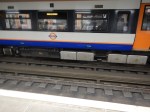
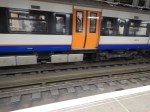
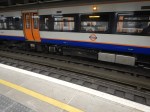
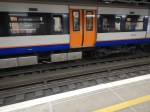
These pictures show a Class 378/2 PTOS car.
Modifying only the PTOS cars would give the following advantages.
- Only the PTOS car would need to be modified.
- PTOS cars for Class 378/1 trains would be 750 VDC only.
- PTOS cars for Class 378/2 trains, would be dual-voltage.
- Only PTOS cars for Class 378/2 trains would have a pantograph.
I will propose that the PTOS car is fiited a 100 kWh battery.
This would be sufficient for the six-car East London Line services, as all it would do was handle the regenerative braking energy, which has a maximum value of just 45 kWh. Battery range of the train would be between three and five miles, which would be enough to recover the train if power failed.
For three-car trains, the 100 kWh ranges would be as I calculated earlier.
- 5 kWh per vehicle mile – 7 miles
- 4 kWh per vehicle mile – 8 miles
- 3 kWh per vehicle mile – 11 miles
- 2 kWh per vehicle mile – 17 miles
Which is a very useful range.
If some four-car trains, were built by adding a new MOS car, the ranges on 100 kWh batteries would be.
- 5 kWh per vehicle mile – 5 miles
- 4 kWh per vehicle mile – 6 miles
- 3 kWh per vehicle mile – 8 miles
- 2 kWh per vehicle mile – 12.5 miles
As the Dudding Hill Line is only four miles long with electrification at both ends, these four-car Class 378 trains would be able to work the routes of the West London Orbital Railway.
Conclusion
Fitting batteries to Class 378 trains opens up a lot of possibilities.
One scenario could be.
- Forty-two six-car trains for the East and |South London Lines.
- One three-car train for the Brentford Branch Line
- Two three-car trains for the Greenford Branch Line.
- Two three-car trains for the Romford to Upminster Line.
- Eight four-car trains for the West London Orbital Railway.
There would be two spare three-car trains and another twenty MOS cars would be required.
.
Would Electrically-Driven Trains Benefit From Batteries To Handle Regenerative Braking?
There are two basic types of electrically-driven trains.
Electric trains, which include electrical multiple units and trains hauled by electric locomotives like the InterCity 225.
Diesel-electric trains, which include multiple units like Voyagers and the InterCity 125.
Regenerative Braking
In an electrically-driven train, the traction motors can be turned into generators to slow the train, by turning the train’s kinetic energy into electricity.
Many electric trains can do this and the generated electricity is returned through the electrification system, so that it can power other trains nearby.
This all sounds fine and dandy, but there is the disadvantage that all the electrification system must be able to handle the reverse currents, which increases the capital cost of the electrification.
Batteries For Regenerative Braking
Fitting batteries to a train, to handle the electricity that is generated by regenerative braking is an alternative.
A Station Stop
Suppose a four-car train that weighs 200 tonnes is travelling at 125 mph and needs to stop at a station.
My example train would according to Omni’s Kinetic Energy Calculator would have a kinetic energy of 86.7 kWh.
To put that amount of energy into context, the traction battery in a New Routemaster bus is 55 kWh.
So if a battery of this size was put into each car, there is more than enough capacity to store the energy of the train, when it stops at a station.
When the train leaves the station, a proportion of this energy can be used to accelerate the train back to 125 mph.
As regenerative braking is perhaps only eighty percent efficient at present, additional energy will need to be provided.
But even with today’s primitive batteries and less-than-efficient traction motors, there are still substantial energy savings to be achieved.
Hitachi Class 800/801/802 Trains
In Do Class 800/801/802 Trains Use Batteries For Regenerative Braking?, I looked at the question in the title.
I found this document on the Hitachi Rail web site, which is entitled Development of Class 800/801 High-speed Rolling Stock for UK Intercity Express Programme.
It was written in 2013 and I suspect every train designer has read it, as it gives a deep insight into the design of Hitachi’s trains.
The document provides this schematic of the traction system.

Note
- BC which is described as battery charger.
- The battery size is not disclosed.
- The APS supplies the hotel power for the train in two different voltages.
- Can the APS with the battery supply power to the Drive Converter?
After a lot of reasoning, I came to this conclusion.
I will be very surprised if Class 800/801/802 trains don’t have batteries.
Looking at the schematic of the electrical system, the energy captured will at least be used for hotel power on the train.
Hitachi have not said, if the batteries on the Class 800/801/802 trains can be used for traction purposes.
Storing the regenerative energy in a battery can be used for one of two purposes.
Hotel Power
Hitachi’s Class 800 trains certainly use the electricity in the battery to power the hotel functions of the train like air-conditioning, doors, lights, power-sockets, toilets and wi-fi.
In a diesel-electric train, this could give benefits.
- The engines generally won’t need to run in a station to provide hotel power.
- Less fuel will need to be expended to provide hotel power.
- If say the train has to halt perhaps because of a signalling or track fault, hotel power can be provided without running the engines.
- If batteries are supplying the hotel power, the train may have more power for traction.
Overall, the diesel-electric train would be more efficient and would emit less carbon dioxide and pollutants.
Traction Power
There is no engineering reason, why the energy in the battery can’t be used to actually move the train.
But to implement it, could be complicated and expensive on an existing train.
Some Worked Examples
I’ll look at a few examples.
InterCity 125
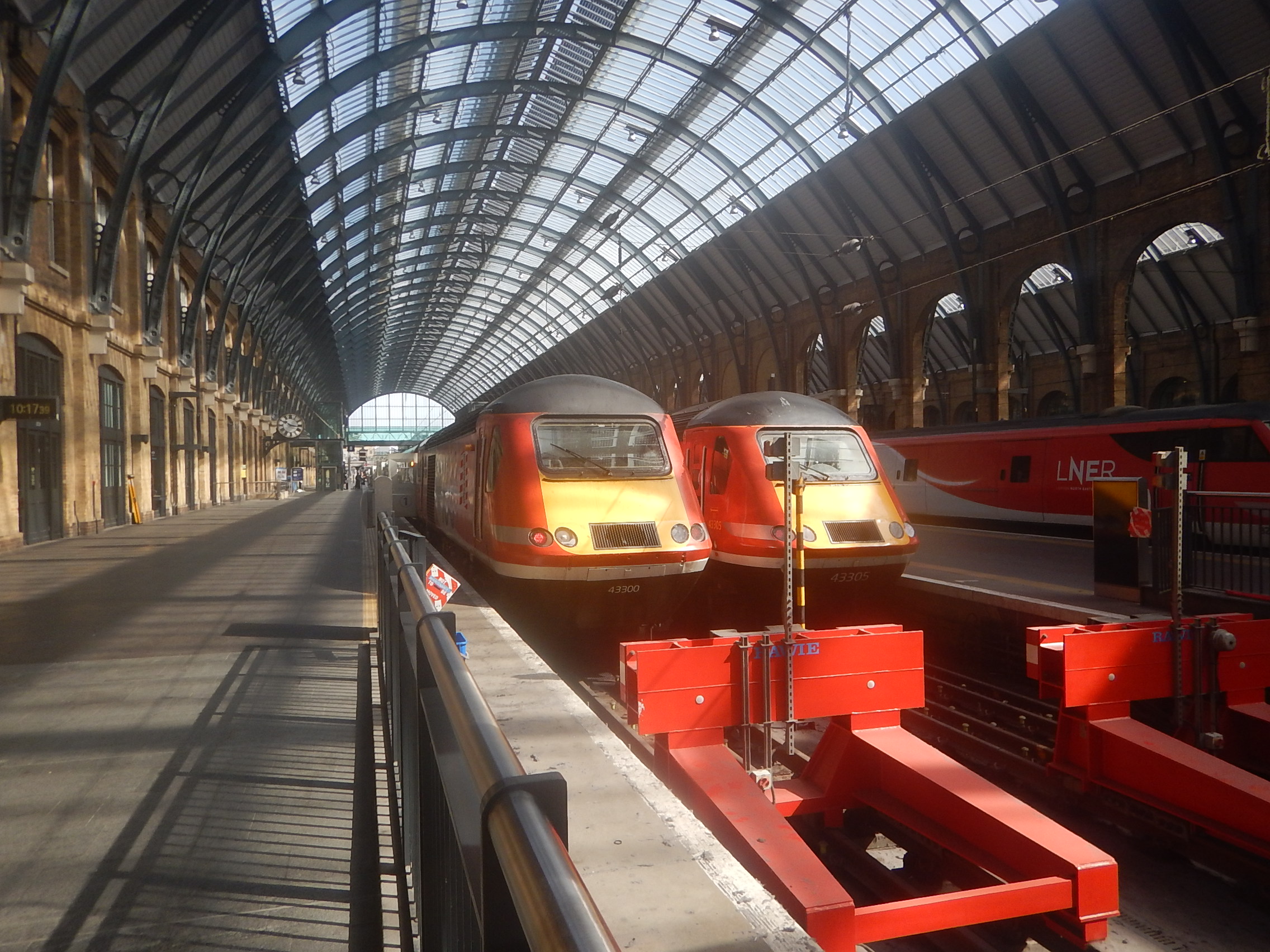
The iconic InterCity 125s are unique, in that they are impossible to scrap. Just as they seem to be approaching the end of their life, a devious engineer or marketing man comes up with a plan to keep them running.
As I write this, Great Western Railway and Abellio ScotRail are testing short-formation InterCity 125s and training drivers for services in the South West of England and Scotland. Both train operating companies appreciate the marketing advantages of Terry Miller‘s world-famous train, that was built as a stop-gap, after the failure of the Advanced Passenger Train.
So what size of battery would need to be fitted to each locomotive to handle the braking energy of a short-formation InterCity 125 with four passenger cars?
Consider.
- Each Class 43 locomotive weighs 70.25 tonnes.
- Each Mark 3 coach weighs 33.60 tonnes.
- An eight car InterCity 125 can carry about 500 passengers.
- I will assume that a four-car InterCity 125 can carry 250 passengers.
- If each passenger weighs 90 Kg with all their bikes, buggies and baggage, that adds up to 22.50 tonnes.
This gives a total train weight of 297.40 tonnes.
Calculating the kinetic energy using Omni’s Kinetic Energy Calculator for various speeds gives.
- 50 mph – 20.6 kWh
- 75 mph – 46.4 kWh
- 90 mph – 66.9 kWh
- 100 mph – 82.5 kWh
A fifty kWh battery in each locomotive would be able to handle the braking energy of the train.
The only problem, is that Class 43 locomotives have DC traction motors, no regenerative braking and air brakes.
But if any operator or rolling stock owner were bonkers enough to fit a new traction system, a diesel/electric/battery Class 43 locomotive is possible for a four-car InterCity 125.
This page on the Hitachi web site is entitled V-TRAIN 2.
Hitachi used a Class 43 power car to prove that diesel/electric/battery trains were feasible, before getting the order for the Class 800 trains.
So fitting batteries to Class 43 locomotives has been done before!
The simplest thing to do would be to use the batteries to provide hotel power for the train.
Class 375 Train
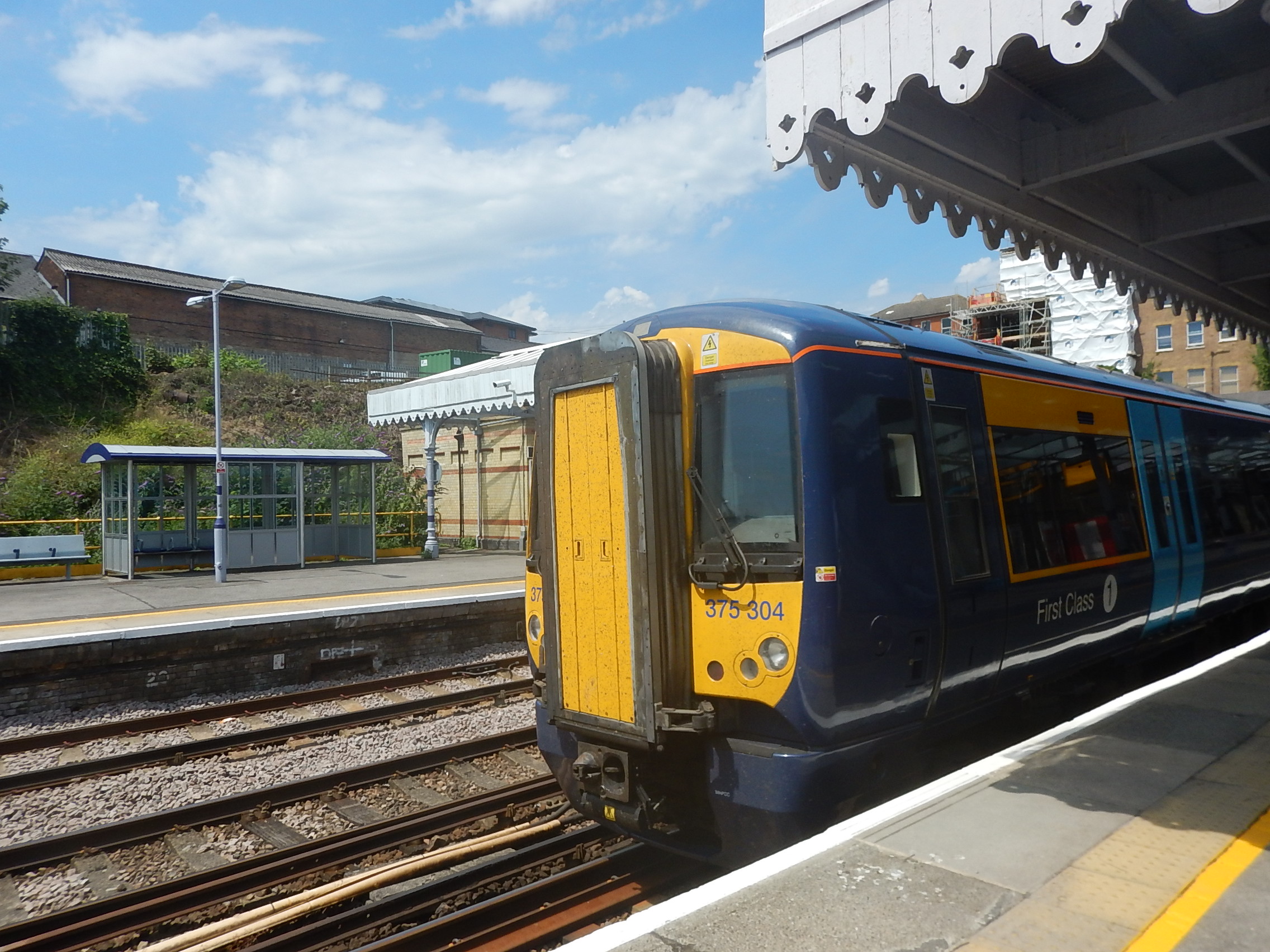
In this exercise, I shall consider a Class 375/6 train, with the following characteristics.
- Four cars
- Three cars are motored.
- Regenerative braking
- A weight of 173.6 tonnes.
- A capacity of 236 seated passengers
- An operating speed of 100 mph.
I will now go through my standard train kinetic energy calculation.
- I will assume three hundred passengers including standees.
- If each passenger weighs 90 Kg with all their bikes, buggies and baggage, that adds up to 27 tonnes.
This gives a total train weight of 200.60 tonnes.
Calculating the kinetic energy using Omni’s Kinetic Energy Calculator for various speeds gives.
- 50 mph – 13.9 kWh
- 80 mph – 35.6 kWh
- 100 mph – 55.7 kWh
It would appear that adding batteries to a Class 375 train would not involve large capacity batteries, especially if one was added to each of the three cars with motors.
As a Control Engineer by training, blending battery and electrification power could run the train more efficiently.
Probably naively on my part, I suspect that using batteries on Class 375 trains to handle regenerative braking, would be one of the easier installations.
Other Electrostars
All Electrostars are fairly similar, so if Class 375 trains could be updated, then I wouldn’t be surprised if all could.
InterCity 225
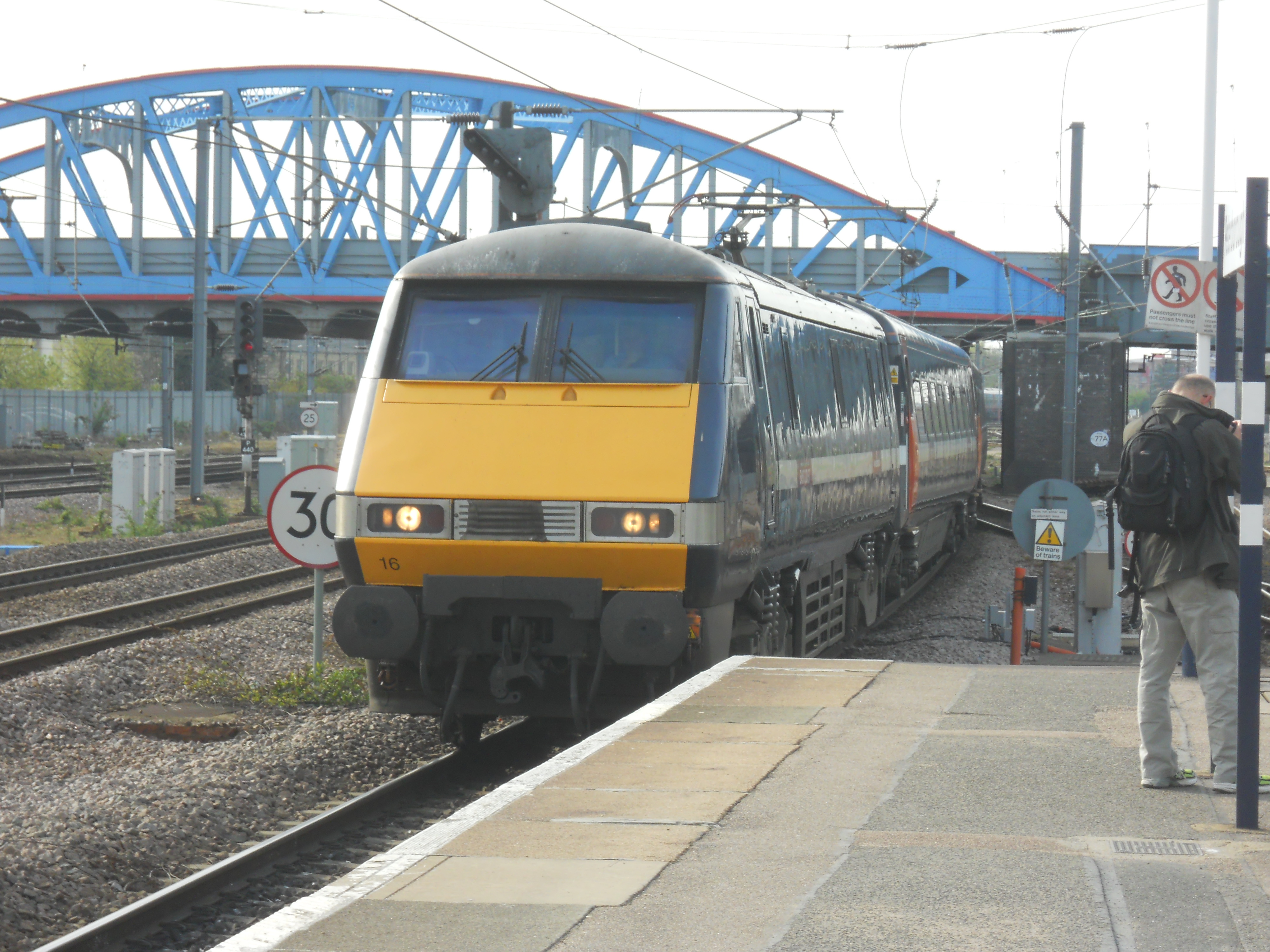
It looks like InterCity 225 trains will be used between London and Blackpool by Alliance Rail Holdings.
Other commentators have suggested that shortened sets run on the Midland Main Line between a diesel locomotive and a Driving Van Trailer (DVT) or two Class 43 locomotives.
I shall do the energy calculation for a five-car InterCity 225.
- A Class 91 locomotive weighs 81.5 tonnes.
- A Mark 4 coach weighs between 40 and 43.5 tonnes.
- A nine-car InterCity 225 seats 535 passengers.
- I will assume that a five-car InterCity 225 will seat around 300 passengers.
- I will assume each passenger weighs 90 Kg. with all their baggage, bikes and buggies.
- A DVT weighs 42.7 tonnes.
For a current nine-car train this gives the following.
- The empty train weight is almost exactly 500 tonnes.
- The passengers weigh 48 tonnes.
- This gives a total weight of 548 tonnes.
At 125 mph, the nine-car InterCity 225 has a kinetic energy of 238 kWh.
For a proposed five-car train this gives the following.
- The empty train weight is almost exactly 333 tonnes.
- The passengers weigh 27 tonnes.
- This gives a total weight of 360 tonnes.
At 125 mph, the five-car InterCity 225 has a kinetic energy of 156 kWh.
Reduce the speed to 110 mph and the kinetic energy drops to 121 kWh.
I suspect that using current technologies, there is not enough space in a Class 91 locomotive for the batteries.
Perhaps a short section of the coach next to the engine could be converted to hold a large enough battery.
Five Mark 4 Coaches And Two Class 43 Locomotives
This has been suggested in Modern Railways by Ian Walmsley and I wrote about it in Midland Mark 4.
Consider.
- A Class 43 locomotive weighs 70.25 tonnes.
- A Mark 4 coach weighs between 40 and 43.5 tonnes.
- A nine-car InterCity 225 seats 535 passengers.
- I will assume that a five-car InterCity 225 will seat around 300 passengers.
This gives the following.
- The empty train weight is 349 tonnes
- The passengers weigh 27 tonnes
- The train weight is 376 tonnes.
At 125 mph this train would have a kinetic energy of 163 kWh.
I’m sure that it would be possible to put a 100 kWh battery in the space behind the engine of a Class 43 locomotive, so I suspect that all the engineering solutions exist to create a train with the following characteristics.
- Two Class 43 locomotives with new traction motors to enable regenerative braking and a 100 kWh battery.
- Five Mark 4 coaches meeting all the regulations.
- The batteries would provide hotel power for the train.
- 125 mph operating speed.
It may be a fantasy, as the economics might not stack up.
Five Mark 4 Coaches, A Driving Van Trailer And A Stadler UKLight Locomotive
I wrote about this combination in Five Mark 4 Coaches, A Driving Van Trailer And A Stadler UKLight Locomotive.
I came to this conclusion.
Using the Mark 4 coaches or new Mark 5A coaches with a new 125 mph diesel/electric/battery hybrid Stadler UKLight locomotive could create an efficient tri-mode train for the UK rail network.
The concept would have lots of worldwide applications in countries that like the UK, are only partially electrified.
The concept or something like it, has possibilities.
Voyagers
In the July 2018 Edition of Modern Railways, there is an article entitled Bi-Mode Aventra Details Revealed.
A lot of the article takes the form of reporting an interview with Des McKeon, who is Bombardier’s Commercial |Director and Global Head of Regional and Intercity.
This is a paragraph.
He also confirmed Bombardier is examining the option of fitting batteries to Voyager DEMUs for use in stations.
The Voyager family of trains has three members.
- Class 220 trains – Voyagers – 34 trains of four cars – operated by CrossCountry.
- Class 221 trains – Super Voyagers – 44 trains of four or five cars – operated by CrossCountry
- Class 222 trains – Meridians – 27 trains of four, five or seven cars – operated by East Midlands Trains.
The trains are diesel-electric and I explore the possibility of using batteries in these trains in Have Bombardier Got A Cunning Plan For Voyagers?.
I felt is was a good plan.
Conclusion
In answer to the question, that I posed in the title of this post, I feel that handling regenerative braking in batteries on the train could be of benefit.
Have Bombardier Got A Cunning Plan For Voyagers?
In the July 2018 Edition of Modern Railways, there is an article entitled Bi-Mode Aventra Details Revealed.
A lot of the article takes the form of reporting an interview with Des McKeon, who is Bombardier’s Commercial |Director and Global Head of Regional and Intercity.
This is a paragraph.
He also confirmed Bombardier is examining the option of fitting batteries to Voyager DEMUs for use in stations.
The Voyager family of trains has three members.
- Class 220 trains – Voyagers – 34 trains of four cars – operated by CrossCountry.
- Class 221 trains – Super Voyagers – 44 trains of four or five cars – operated by CrossCountry
- Class 222 trains – Meridians – 27 trains of four, five or seven cars – operated by East Midlands Trains.
The trains have the following characteristics in common.
- They are diesel electric multiple units.
- Each car is powered by an underfloor Cummins QSK19 diesel engine of 750 hp/560 kW.
- They are capable of 125 mph running.
- Some trains are fitted with tilting, which isn’t used.
- The trains have rheostatic braking.
- They meet or could easily meet the latest accessibility regulations for passengers of reduced mobility.
- Train length appears to be flexible and cars seem to be able to be swapped around in a particular class.
I think it is true to say that the operators have a few problems with these trains.
- Some passengers think the trains are rather cramped.
- There is also a noise and vibration problem when the engines are working hard.
- There have been problems with seawater getting in the resistor banks for the rheostatic braking on Class 220 trains at Dawlish.
- CrossCpuntry would welcome extra capacity.
- Both operators would probably welcome better fuel consumption on the trains.
How Would You Fit A Battery To A Voyager?
All these trains seem to be fitted with rheostatic braking.
Effectively, the traction motors generate electricity when they work in reverse to slow the train. On a modern train this electricity is either returned through the electrification to power other trains or stored in a battery.
But on these Voyagers, it is passed through resistors on the roof and used to heat the sky.
Consider these facts for a four-car Class 220 train.
- The train has an operating speed of 125 mph.
- Each car has its own diesel engine.
- The train has a weight of 185.6 tonnes.
- The train has seats for two hundred passengers.
- If we assume that each passenger weighs 90 Kg. with their baggage this gives a total train weight of 203.6 tonnes.
Calculating the kinetic energy of the train for various speeds gives
- 75 mph – 32 kWh
- 90 mph – 46 kWh
- 100 mph – 56 kWh
- 125 mph – 89 kWh.
Every time a train stops, this energy goes to waste.
The simplest thing to do, would be to divert this energy to an appropriately sized battery in each car. As there is four cars in the train, a battery of 50 kWh in each car would probably be sufficient.
If the battery was full, then the energy would still go to the resistors on the roof.
You’ve now got a full battery, but how would you use the energy in a productive manner?
The easiest and probably best thing to do with it, is to power the hotel functions of the train like air-conditioning, lights, doors and toilets. This is an approach taken by Hitachi on their Class 800 trains, as this diagram confirms.
The diagram is contained in this document on the Hitachi Rail web site, which is entitled Development of Class 800/801 High-speed Rolling Stock for UK Intercity Express Programme.
The document is a fascinating read.
Using the energy to power the traction motors and move the train might be possible, but I suspect it might be too complicated and expensive.
The simple system of the braking energy charging the battery and then using this energy for hotel power has advantages, both for Hitachi and Voyagers.
- The engines generally won’t need to run in a station to provide hotel power,as Des McKeon noted.
- The control electronics would be reasonably simple.
- Many of the existing expensive components like engines and traction motors probably wouldn’t need to be changed.
- There might be maintenance savings on the brakes.
- Less fuel will need to be expended to provide hotel power.
- If say the train has to halt perhaps because of a signalling or track fault, hotel power can be provided without running the engines.
- If batteries are supplying the hotel power, the train may have more power for traction.
I obviously don’t know how independent each car is from the next, but if each is independent, then there could be further advantages in converting, testing and maintaining the cars.
Conclusion
It looks to be a good plan.
In
 The Anonymous Widower