How Did South East Water Become Such A Disaster?
The title of this post, is the same as that of this article in The Times.
This is the sub-heading.
As tens of thousands of homes in Kent and Sussex lose supply the company and its well-remunerated boss, David Hinton, face a torrent of anger
These two paragraphs add some detail.
Perhaps the worst moment for South East Water was when it opened a bottled water station in the wrong town. Staff set up in Tonbridge, Kent, and not Tunbridge Wells five miles away, where the company had left some 24,000 properties without drinking water for two weeks.
Or maybe it was when David Hinton, the chief executive, repeatedly called the local MP one evening not to apologise but to berate him about the crisis — not, Hinton later admitted, “my finest moment”. Or it could have been when more properties lost their supply only hours after Hinton had told MPs his company’s response to the incident should score eight out of ten.
It wasn’t exactly the water industry’s finest moment.
I played a small and hopefully professional and a hundred-percent scientifically correct manner in the formation of the modern water industry in the UK.
In the 1970s, I wrote the software, that WS Atkins rented from their time-sharing computer to the Water Resources Board at Reading to model water supply in all or part of the UK.
My differential equation solving software had been designed to handle up to around a million equations and the contact at the WRB was a Dr. David Dimeloe.
I was never given details of their model and the conclusions, but I assume they must have done a good job, as there haven’t been too many problems with actual water supply, but mainly with management, ownership and failure of ancient infrastructure.
In my 79 years in the UK, I’ve never had a problem with water supply.
Searching for the WRB on the Internet finds one in Sri Lanka.
It would be good to get a copy of that report or even talk to one of the engineers on the project.
Exceptionally Low River Levels Raise Fears Over Water Supplies
The title of this post is the same as that of this article on the BBC.
This is the sub-heading.
Many of the UK’s rivers have hit exceptionally low levels and that could worsen in the next three months, according to the Centre for Ecology & Hydrology (CEH), raising questions over supplies to households, farmers and businesses.
These three introductory paragraphs add more details.
The warning comes after the driest spring in England since 1961, with northern regions experiencing the driest start to the year in nearly a century.
Almost all of the UK is expected to have below normal or low river levels in May, apart from the south-west of England.
The Environment Agency has said that the UK is at medium risk of drought and warned households of the risk of water restrictions.
In the 1970s, I was involved in a marginal way, in the planning of the water supply network in the UK, by the then Water Resources Board. My software called SPEED was used to solve the hundreds of differential equations involved.
Since the 1970s, I have felt, that as water supply in the UK has been fairly good, that the engineers, planners and mathematicians of the Water Resources Board didn’t do a bad job.
I don’t think, I can remember a period as long as this without rain.
I am drinking heavily to keep hydrated and I’m already today on my second bottle of Adnams Ghost Ship 0.5 % Beer.
But it just seems to go straight out through my skin, which I talked about in My Strange Skin.
I am Jewish in my father’s male line and Huguenot in my mother’s, so I have lots of ancestors, who lived in poor living conditions. So did Darwinian selection produce my leaky skin, that also heals itself quickly, in the harsh living conditions.
But on the other hand does it make me dehydrated all the time? And also create lots of red spots all over my body?
It’s not something new, as I can remember feeling this this as a child and helping my mother to count all the spots.
I hope that I will be fine, when we get some rain.
Avacon And Rolls-Royce Are Testing The Contribution Of Battery Storage And PV Systems To Grid Stability
The title of this post, is the same as that of this press release from Rolls-Royce.
These two bullet points act as sub-headings.
- Field tests are investigating the intelligent integration of renewable energies with home storage systems and larger mtu battery storage systems
- Objective: to contribute to the efficient energy supply of energy communities and grid support
This introductory paragraph adds more detail.
German energy supplier Avacon and Rolls-Royce together are driving forward the integration of battery storage into the power grid as part of a research project. Based on a field test, the aim is to show how energy communities, PV systems and mtu battery storage can be intelligently linked to contribute to an efficient energy supply and to stabilize the energy system. Avacon and Rolls-Royce are already collaborating on a second research project. The aim is to use battery storage to moderate generation peaks from PV systems and bring them into line with electricity consumption.
This all takes me back to the early 1970s, when my software was used by the Water Resources Board to plan future water supply in the South of England.
Given, that we don’t seem to suffer supply problems with water in the South, I feel that Dr. Dave Dimeloe and his team did a good job.
Some of the techniques, that I used fifty years ago, would allow an accurate model to be made of what Rolls-Royce call an energy community.
But my experience with water and later with the flow of money in peer-to-peer lending, lead to my thinking that energy communities will be stable.
But that is for Rolls-Royce to prove or disprove.
UK Government Sets 8-Hour Minimum For LDES Cap-And-Floor Sheme
The title of this post, is the sa,e as that of this article on Energy Storage News.
This is the sub-heading.
The UK government has published a Technical Decision Document confirming crucial aspects of its long duration electricity storage (LDES) cap-and-floor scheme, which includes increasing the minimum duration required from six hours to eight
These paragraphs give full details.
The document, released by regulator Ofgem on 11 March, details the final overarching rules and requirements for the scheme as well as how it will be implemented, though significant detail still remains to be worked out.
The scheme will provide a cap-and-floor revenue protection for 20-25 years that will allow all capital costs to be recoverable, and is effectively a subsidy for LDES projects that may not be commercially viable without it. Most energy storage projects being deployed in the UK today are lithium-ion battery energy storage systems (BESS) of somewhere between 1-hour and 3-hour in duration (very occasionally higher).
One of the most significant new details of the scheme is that, following industry feedback, the minimum duration for projects to qualify has been increased from six hours to eight hours of continuous rated power.
The ‘continuous rated power’ aspect prevents shorter duration projects from bidding in a smaller section of their MW capacity in order to act like an 8-hour system.
Another interesting detail pointed out by several commentators is that the cap is a ‘soft’ one, meaning it will allow extra revenue to be shared between developers and consumers. Exact details on the ratio are yet to be determined.
As a Graduate Control Engineer from Liverpool University in the 1960s, I hope that the move from a six to eight hours minimum duration is feasible.
I wasn’t dealing with power systems, but with multi-vessel chemical plants.
These are my thoughts.
The biggest project, I was dealing with a few years later in the 1970s, was the modeling of all the the reservoirs and pipelines by the Water Resoures Board.
As the supply side of the water industry hasn’t had too many issues with the volume of water supplied, I feel that the main modelers must have done a reasonable job.
Six To Eight Hours Of Continuous Operation
The article says this about uprating from six to eight hours of continuous operations.
All the systems that have been proposed for cap-and-floor operation, seem to have some form of physical storage.
- Energy Dome appears to have tents of carbon dioxide.
- Energy Vault uses stacks of heavy weights.
- Form Energy has tanks of rust.
- Gravitricity has huge weights in disued mine shafts.
- Highview Power has large tanks of liquid air.
- Pumped storage hydro has two lakes, that hold water.
- Rheenergise has two large tanks, of a water-based slurry.
So to go from six to eight hours will hopefully just need some more storage.
Highview Power appears to use similar gas tanks to those used to store natural gas or hydrogen.
This image clipped from Highview’s web site, shows large tanks for liquified gas storage.
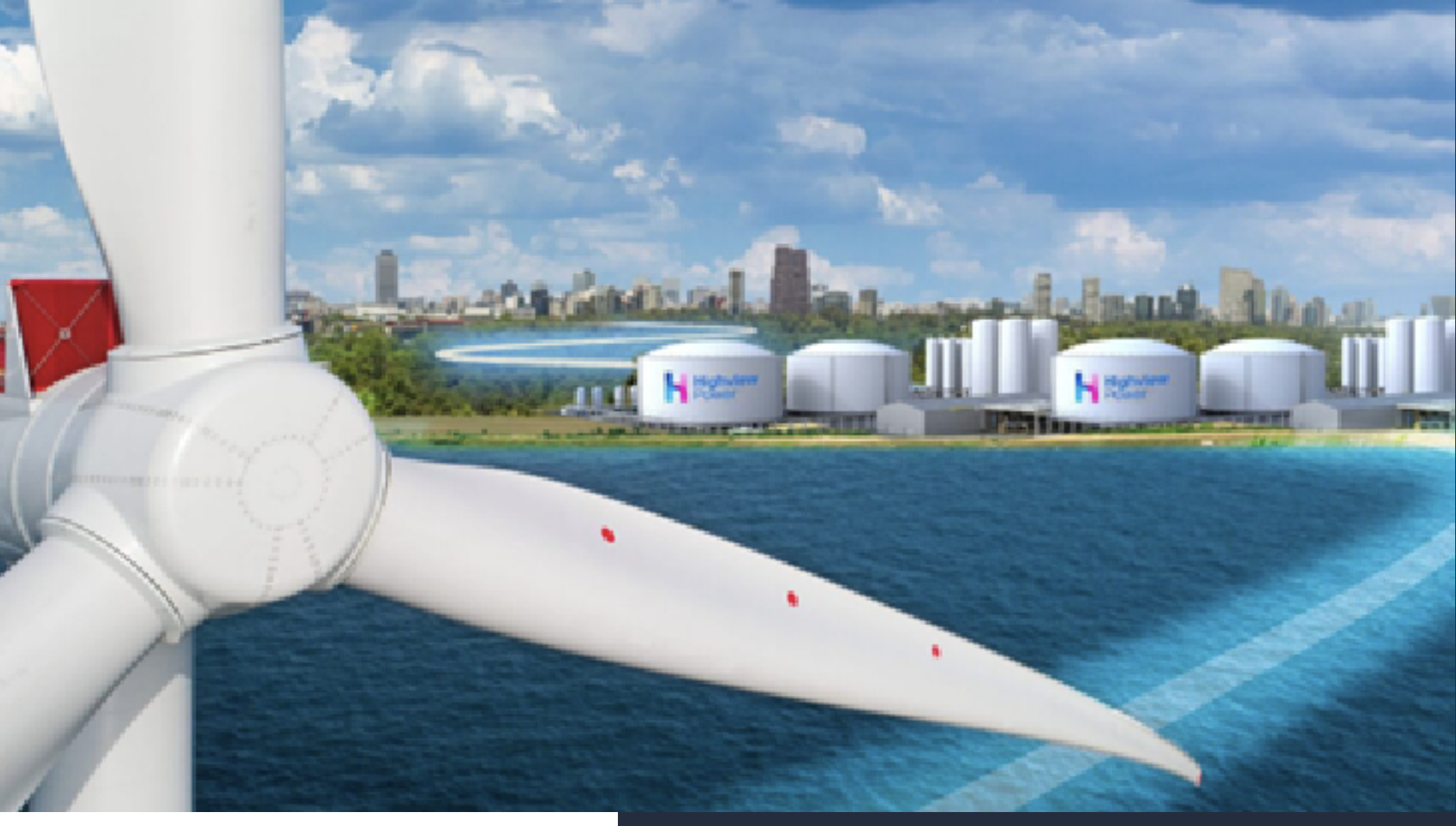
With tanks like these, which can hold GW-equivalents of liquid air, Highview could be building batteries with storage to rival the smaller pumped storage hydroelectric power stations. They are already talking of 200 MW/2.5 GWh systems, which would have a 12.5 hour continuous rating and would probably need two to three tanks.
Coire Glas Pumped Storage
I’ll use Coire Glas pumped storage hydro electric power station as an example.
As currently planned SSE’s Cioire Glas pumped storage hydroelectric power station is 1.5 GW/30 GWh, so it has a a 20 hour continuous rating.
In The UK’s Pumped Storage Hydroelectricity, I gave a rough estimate of the pumped storage hydroelectricity systems in operation or planed as nearly 11 GW/224GWh.
The Soft Cap
The article says this about a soft cap.
Another interesting detail pointed out by several commentators is that the cap is a ‘soft’ one, meaning it will allow extra revenue to be shared between developers and consumers. Exact details on the ratio are yet to be determined.
I seem to remember that when I was modeling a larger multi-vessel chemical plant at ICI, I was using sharing between vessels, to get the system to operate on a PACE-231R analog computer.
So I suspect a soft cap is possible.
National Grid To Accelerate Up To 20GW Of Grid Connections Across Its Transmission And Distribution Networks
The title of this post, is the same as that of this press release from National Grid.
These four bullet points, act as sub-headings.
- Connection dates of 10GW of battery projects accelerated at transmission level, and 10GW of capacity unlocked at distribution level, both part of the Electricity System Operator (ESO)’s connections five-point plan.
- Battery energy storage projects connecting to the transmission network to be offered new connection dates averaging four years earlier than their current agreement.
- The accelerated 20GW equates to the capacity of six Hinkley Point C nuclear power stations.
- Work is part of ongoing collaborative industry efforts, together with Ofgem and government, to speed up and reform connections.
This is the opening paragraph.
National Grid is accelerating the connection of up to 20GW of clean energy projects to its electricity transmission and distribution networks in England and Wales as part of ongoing collaborative work across industry.
As I write this, the UK is generating 38.5 GW of electricity, so another 20 GW will be a large increase in capacity.
I shall look at what National Grid are proposing in sections.
10 GW Of Battery Power
These two paragraphs, outline the plan for 10 GW of battery power.
On its transmission network, 19 battery energy storage projects worth around 10GW will be offered dates to plug in averaging four years earlier than their current agreement, based on a new approach which removes the need for non-essential engineering works prior to connecting storage.
The new policy is part of National Grid’s connections reform initiative targeting transmission capacity, spearheaded by the ESO – which owns the contractual relationship with connecting projects – and actioned jointly with National Grid Electricity Transmission (ET), the part of the business which designs and builds the transmission infrastructure needed in England and Wales to plug projects in.
It looks to me that someone has been doing some serious mathematical modelling of the UK’s electricity network.
Fifty years ago, I provided the differential equation solving software, that enabled the Water Resources Board to plan, where reservoirs and pipelines were to be built. I have no idea how successful it was, but we don’t seem to have any serious water supply problems, except when there is equipment failures or serious drought.
But modelling water and electrical networks is mathematically similar, with rainfall, pipelines and reservoirs in the water network and power generation, transmission lines and batteries and pumped storage hydroelectricity in the electricity network.
I’d be interesting to know what software was used to solve the mathematical model.
I certainly agree with the solution.
Two of our modern sources of renewable energy; solar and wind are not very predictable, but cost a lot of capital investment to build.
So it is very wrong not to do something positive with any excess electricity generated. And what better place to put it than in a battery, so it can be retrieved later.
The earlier, the batteries come on stream, the earlier, the batteries can save all the excess electricity.
So moving the plug in dates for battery storage four years earlier is a very positive thing to do.
A simple calculation shows that for 10 GW, we would need nineteen batteries of about 526 MW.
Ideally, like power stations, they would be spread around the country.
Could Pumped-Storage Hydroelectricity Be Used?
The largest battery in the UK is the Dinorwig pumped-storage hydroelectric power station, which is commonly known as Electric Mountain or Mynydd Gwefru if you’re Welsh.
- It opened in 1984, after a ten years of construction.
- It has a power output of 1.8 GW.
- The energy storage capacity of the station is around 9.1 GWh.
Roughly, every gigawatt of output is backed up by 5 GWh of storage.
If the proposed nineteen new batteries have the same power to storage ratio as Electric Mountain, then each battery will have a storage capacity of 2.63 GWh
SSE Renewables are planning two large pumped-storage hydroelectric power stations in Scotland.
- Coire Glas – 1.5 GW/30 GWh – Possible completion in 2031.
- Loch Sloy – 152.5 MW/25 GWh – See SSE Unveils Redevelopment Plans For Sloy Hydro-Electric Power Station.
A quick calculation, says we’d need seven pumped-storage hydroelectric power stations, which need a lot of space and a handy mountain.
I don’t think pumped-storage hydroelectric would be feasible.
Could Lithium-Ion Batteries Be Used?
My mathematical jottings have shown we need nineteen batteries with this specification.
- An output of about 526 MW.
- A storage capacity of around 2.63 GWh
This Wikipedia entry gives a list of the world’s largest battery power stations.
The current largest is Vistra Moss Landing battery in California, which has this specification.
- An output of 750 MW.
- A storage capacity of 3 GWh
Reading the Wikipedia entry for Vistra Moss Landing, it appears to have taken five years to construct.
I believe that nineteen lithium-ion batteries could handle National Grid’s need and they could be built in a reasonable time.
Could Any Other Batteries Be Used?
Rounding the battery size, I feel it would be better have twenty batteries with this specification.
- An output of 500 MW.
- A storage capacity of 2.5 GWh
Are there any companies that could produce a battery of that size?
Form Energy
Form Energy are well-backed with an MIT heritage, but their largest proposed battery is only 10 MW/1 GWh.
They could be a possibility, but I feel it’s only a small chance.
Highview Power
Highview Power say this about their next projects on this page of their web site.
Highview Power’s next projects will be located in Scotland and the North East and each will be 200MW/2.5GWh capacity. These will be located on the national transmission network where the wind is being generated and therefore will enable these regions to unleash their untapped renewable energy potential and store excess wind power at scale.
Note.
- This is more like the size.
- Work is now underway at Carrington – a 50MW / 300MWh plant at Trafford Energy Park near Manchester.
- Highview’s technology uses liquid air to store energy and well-proven turbo-machinery.
- Highview have a co-operation agreement with Ørsted
They are a definite possibility.
10 GW Of Extra Unlocked Capacity
These two paragraphs, outline the plan for 10 GW of extra unlocked capacity.
On its distribution network in the Midlands, South West of England and South Wales, the additional 10GW of unlocked capacity announced recently is set to accelerate the connection of scores of low carbon technology projects, bringing forward some ‘shovel ready’ schemes by up to five years.
National Grid has already been in contact with more than 200 projects interested in fast tracking their distribution connection dates in the first wave of the capacity release, with 16 expressing an interest in connecting in the next 12 months and another 180 looking to connect within two to five years.
This page from National Grid ESO, lists the actions that were taken to release the extra grid capacity.
Conclusion
This looks to be a very good plan from National Grid.
 The Anonymous Widower