Hyundai Heavy Sets Sights On Scottish Floating Offshore Wind
The title of this post, is the same as that of this article on offshoreWIND.biz.
This is the sub-heading.
Major South Korean shipbuilder, HD Hyundai Heavy Industries, has signed a Memorandum of Understanding with two Scottish enterprise agencies which is expected to unlock expertise in the design and manufacture of floating offshore wind substructures.
These are the first three paragraphs.
Scottish Enterprise (SE) and Highlands & Islands Enterprise (HIE) signed the MoU with Hyundai Heavy in Edinburgh, described as a “vote of confidence” in Scotland, committing each other to pursue opportunities for floating offshore wind projects in Scotland.
This is the South Korean company’s first agreement in Europe on floating offshore wind manufacturing.
HD Hyundai Heavy Industries is the world’s largest shipbuilding company and a major manufacturer of equipment such as the floating substructures that form a critical part of the multi-billion offshore wind supply chain.
To say this is a big deal, could be a massive understatement, as my history with large Korean companies could say otherwise.
Around 1980, one of the first prestigious overseas projects, that was managed by Artemis was in Saudi Arabia.
- This may have been something like the King Khaled City, but I can’t be sure.
- Most of the hard work on the project was done by labour imported by Hyundai from South Korea.
After a few years, the Korean running Hyundai’s part of the project returned to Korea and he indicated that he would help us break into the Korean market.
Our salesman; Paul, with responsibility for Korea, who sadly passed away last year, told me this tale of doing business in the country.
Our Korean friend had bought a system for Hyundai in Korea and he organised a meeting for important Korean companies, so that Paul could present the system.
Everything went well, with our friend doing the necessary pieces of translation.
When he had finished, Paul asked if there were any questions.
The most common one was “Can we see the contract?”
Contracts were given out and after a cursory read, the leaders of Korean industry, all started signing the contracts.
So Paul asked our Korean friend, what was going on.
After a brief discussion, Paul was told. “If it’s good enough for Hyundai, it’s good enough for my company!”
And that was how we broke the Korean market.
Conclusion
In UK And South Korea Help Secure Millions For World’s Largest Monopile Factory, I talked about Korean company; SeAH Wind’s new monopile factory on Teesside.
In South Korea, UK Strengthen Offshore Wind Ties, I talk about a developing partnership.
In Mersey Tidal Project And Where It Is Up To Now, I talk about Korean involvement in the Mersey Tidal Project.
The Koreans are coming and Hyundai’s endorsement will help.
North Sea, Baltic Sea Countries Enter Pacts To Protect Offshore Energy Infrastructure Amid Concerns Over Russian Sabotage
The title of this post, is the same as that of this article on offshoreWIND.biz.
This is the sub-heading.
Eight Baltic Sea countries signed a joint declaration on collaborating closer to secure critical offshore energy infrastructure in the region on 10 April, only a day after six North Sea countries entered into a similar agreement. Both are a result of security concerns arising from the Russian invasion of Ukraine and reports of possible sabotage of offshore and subsea energy infrastructure in the North and Baltic Seas.
These are the first two paragraphs.
Concerns over Russia sabotaging offshore energy assets came into the spotlight after four gas leaks were found in September 2022 on the twin Nord Stream pipeline system in the Baltic Sea.
Following national investigations into the incident initiated by Germany, Sweden and Denmark, and studies by the Norwegian and Swedish seismic institutes, European authorities said that the incident could have been the result of “deliberate actions”.
Hopefully, mutual defence will see off, the Evil Vlad!
Canadian Pension Fund To Consolidate Its Offshore Wind Holdings Into UK-Based Reventus Power
The title of this post, is the same as that of this article on offshoreWIND.biz.
This is the sub-heading.
Canada Pension Plan Investment Board (CPP Investments) will consolidate its existing direct and indirect offshore wind holdings into Reventus Power, its UK-based portfolio company, which will become its dedicated global offshore wind platform.
This first paragraph gives more details.
Subject to customary approvals, the move will see Reventus Power growing its teams in the UK, Germany, Poland and Portugal to form a team of approximately 50 offshore wind specialists, according to CPP Investments, whose current exposure to offshore wind is more than CAD 1 billion (approximately EUR 678 million; USD 737 million).
According to their web site, the Reventus HQ is in London.
There is nothing on the web to indicate a special reason, so it must have been one of the following.
- Canadians like investing in the UK.
- The UK is good for tax reasons.
- London has all the lawyers, accountants and other services they will need.
- I suspect several wind farms, that they will develop will be in UK waters.
- Many of the extra staff, they have said they will recruit will be UK-based or UK-educated.
But overall, it must be a feather in its cap for London.
With Wind Turbines Is It Bigger Are Better?
The offshoreWIND.biz web site has two stories today, with a similar theme.
- Scots Greenlight Slimmed-Down Turbine Plan For 100 MW Pentland Floating Offshore Wind Farm, which described how the Pentland wind farm is reducing the number of turbines from ten to seven, but increasing their size from 10 to 14 MW, to produce the same power output.
- Fred. Olsen Seawind, EDF Slash Turbine Count For Codling Wind Park, described how in the Irish wind farm; Codling wind farm, the number of turbines are being reduced from hundred to seventy-five.
There are also some wind farms, where capacity has the potential to be increased.
- Ossian Floating Wind Farm Could Have Capacity Of 3.6 GW
- Crown Estate Mulls Adding 4 GW Of Capacity From Existing Offshore Wind Projects
Note.
- With the exception of the floating Pentland wind farm, all wind farms have fixed foundations.
- It certainly does look, that larger turbines may have reasons to be used.
- Perhaps installing a large turbine is very much the same as a small turbine.
It looks like a victory for the accountants.
SSE Partners With Bord na Móna On 800MW Onshore Wind JV In Ireland
The title of this post, is the same as that of this press release from SSE.
These four bullet points, act as sub-headings.
- Leading low-carbon energy companies SSE Renewables and Bord na Móna continue to progress their respective portfolios in Ireland, by partnering to develop new onshore wind energy projects across the Midlands.
- More than €1 billion could be invested by the joint venture partnership to develop up to 800MW of new renewable energy projects, enough to provide power to over 450,000 homes.
- Onshore wind farm projects to be developed as part of the portfolio will include Lemanaghan Wind Farm in north-west Offaly, Littleton Wind Farm in Tipperary, and Garryhinch Wind Farm on the Laois Offaly border.
- The partnership has the potential to support hundreds of jobs across the Midlands during construction and operation of the onshore wind projects.
Note.
- It is a 50:50 project between SSE Renewables and Bord na Móna.
- It will deliver 800 MW of onshore wind energy.
These link to the three web sites for the wind farms.
- Lemanaghan Wind Farm will be 80-100 MW
- Littleton Wind Farm will be 60-80 MW
- Garryhinch Wind Farm will be 60-80 MW
These must be the first phases, as they are nowhere near 800 MW.
There is an interesting comparison to be made here.
- As I said in Wind Farm: Yorkshire Moors Could Get England’s Biggest Wind Farm, it looks like a 304 MW wind farm on England will be controversial.
- The 539 MW Whitelee Wind Farm near Glasgow is the largest onshore wind farm in the UK.
- The republic of Ireland is building three schemes totalling 800 MW in the Irish Midlands.
So why does England object?
Wind Farm: Yorkshire Moors Could Get England’s Biggest Wind Farm
The title of this post, is the same as that, of this article on the BBC.
This is the sub-heading.
The largest onshore wind farm in England could be built on moorland in the Pennines if plans get the go-ahead.
These are the first two paragraphs.
Calderdale Windfarm Ltd is exploring options for 65 turbines on Walshaw Moor, near the Walshaw Dean reservoirs above Hebden Bridge in Calderdale.
The company said the scheme would generate enough electricity to power more than 286,000 homes a year.
The Calderdale Wind Farm has a web site, which adds these details about the proposals.
- The 65 wind turbines will generate up to 302 MW of electricity.
- There will be a 150 MW battery on site.
- £2.5 million per year will be put in a Community Benefit Fund.
- Up to 300,000 trees will be planted across the site.
This Google Map shows the Walshaw Dean reservoirs and Hebden Bridge.
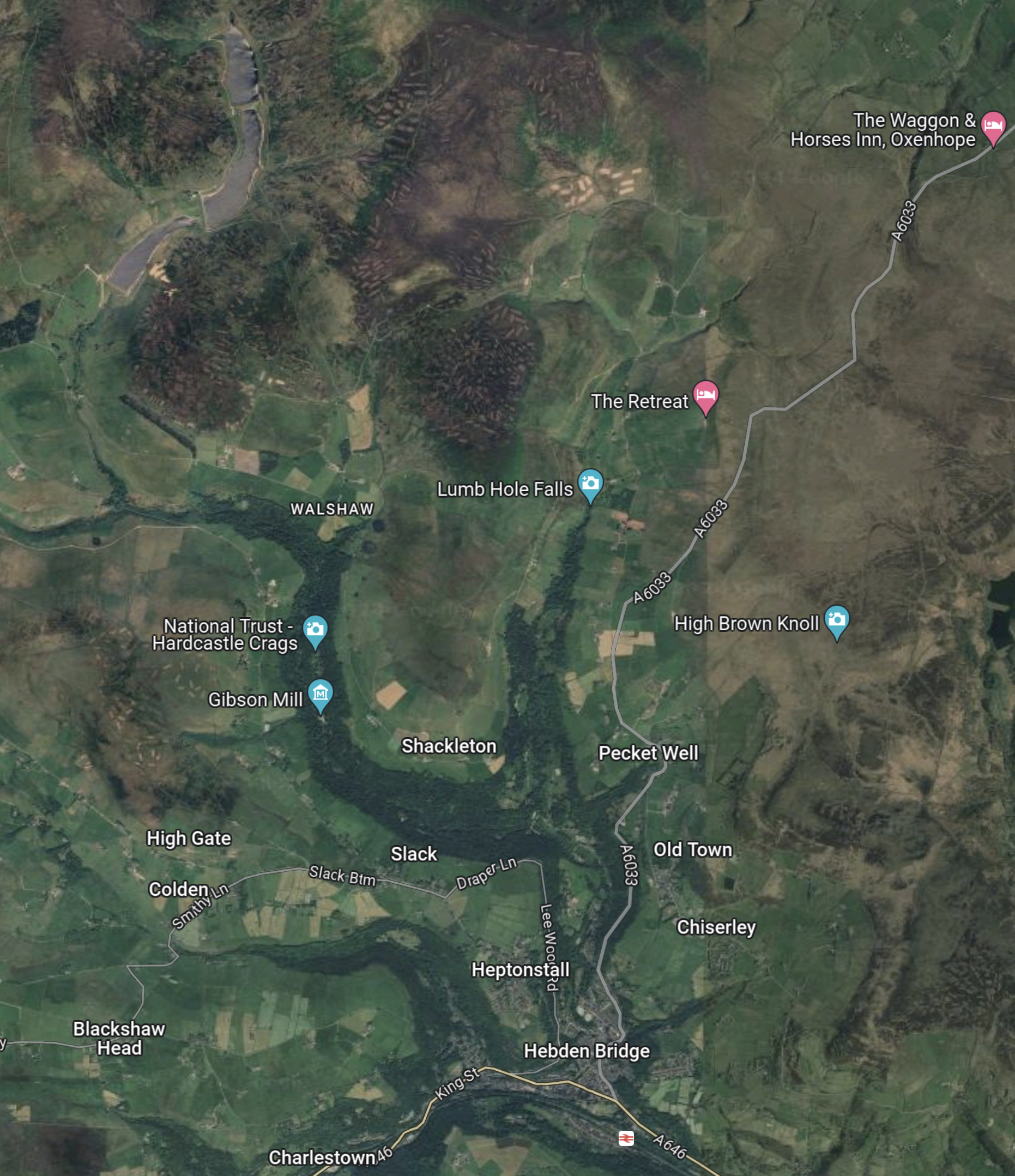
Note.
- Walshaw Dean reservoirs are in the North-West corner of the map.
- Hebden Bridge is at the bottom of the map.
- Hebden Bridge station on the Calder Valley Line is also marked.
- This will be a very unusual wind farm for England.
It could also be a controversial wind farm.
These are some of my thoughts and those of the BBC article.
Environmental Opinions
These five paragraphs indicate both sides of the environmental argument.
Environmental campaigners warned the development would disturb peat bogs, releasing carbon into the atmosphere.
A spokesperson for Calderdale Windfarm, which is backed by Worldwide Renewable Energy (WWRE), said the proposal was an “incredibly exciting opportunity”.
“During a cost-of-living crisis, with ongoing energy security challenges and the climate emergency, the UK needs to explore how it can generate more carbon-free renewable electricity,” the firm said.
“But our proposals are at a very early stage and we recognise there will be a range of views about the merits of our proposal.
“We look forward to continuing to work with the local community, environmental groups, local councillors and others over the coming months to help shape the final design of the project.”
The £2.5 million per year Community Benefit Fund could be the clincher.
The Site Has A Battery
In my view, it is good practice to fit every wind farm with a battery, if this is practical and cost-effective.
As most batteries associated with wind farms, seem to be able to replace the wind farm for two hours, I wouldn’t be surprised to see the battery specified as a 150 MW/300 MWh unit.
A battery this size would improve the stability of the electricity supply in the area.
How Will Calderdale Wind Farm Be Connected To The Grid?
This question is answered in the page of FAQs.
We already have an offer from the Distribution Network Operator Energy North West to connect into the local electricity network substation at Padiham. Negotiations are also ongoing about an alternative connection via a new substation and that would go into National Grid which would connect into existing 440 KV pylons.
Padiham is a few miles away to the West, so the second option may need a smaller number of pylons.
The grid connection and associated infrastructure would be subject to a separate planning application to the wind farm.
Is Calderdale Wind Farm Just Wind Turbines?
This question is answered in the page of FAQs.
- No. Alongside our proposals for onshore wind we are also exploring the potential for the inclusion of battery storage and solar panels on southern slopes.
- As we develop the proposals further, we will be able to confirm whether we will be including other renewable technologies as part of the proposals.
I wouldn’t be surprised to see solar panels floated on the reservoirs. This also has the secondary benefit of reducing evaporation.
How Will Calderdale Wind Farm Benefit Calderdale?
This question is answered in the page of FAQs.
If consented, Calderdale Wind Farm would represent an investment of circa £500m into the local economy. Calderdale Wind Farm will support the local economy and present many opportunities for years to come.
Community Benefit Fund
Around 16,500 households in Calderdale are living in fuel poverty, with around 1,200 of these being in the HX7 postcode area. As part of our proposals for Calderdale we are exploring a community benefit fund to provide support to these households across the 30-year operational lifetime of Calderdale Wind Farm.
This fund would represent £75m worth of funding across a 30-year timeframe that would be paid to Calderdale Council to help relieve fuel poverty for the operational lifetime of the Calderdale Wind Farm.
We want to work closely with the communities in and around Calderdale to ensure they benefit from the project to help address identified local challenges such as the current energy and cost of living crisis.
Socio Economic Impacts
A socio-economic report produced by Biggar Economics suggests that the project would be a significant boost to both the Calderdale and wider regional economy if it goes ahead. The report estimates that Calderdale Wind Farm would generate at least £2.2million GVA for Calderdale through the design, build and operational lifetime of the windfarm.
This is surely going to level-up Calderdale.
Is This Going To Impact My Walking Route?
This question is answered in the page of FAQs.
As we develop our proposals, we will design the scheme and placement of the wind turbines and associated infrastructure to minimise any disruption to existing paths and trails. Our team has taken into consideration the importance of preserving the natural beauty and accessibility of the area in our early stage designs, which will evolve as we undertake further work ahead of a planning submission.
While there might be temporary adjustments or diversions to certain paths during the construction phase to ensure safety, these changes will be communicated well in advance, and we will strive to keep any inconveniences to a minimum.
Once operational the moor will continue to be accessible to members of the public.
As part of our commitment to community consultation, we want to hear your thoughts on the proposals, if you have any specific concerns about how the wind farm might affect your walking routes please let us now, community input is vital to designing a scheme that works seamlessly with the local environment.
It does look like the impact will not be all that great.
Is Grouse Shooting On Walshaw Moor Expected To Continue If Calderdale Wind Farm Is Approved?
This question is answered in the page of FAQs.
WWRE and Calderdale Wind Farm Ltd are pleased to confirm that the approval of the wind farm would result in the end of grouse shooting on Walshaw Moor.
This could face a lot of opposition from the shooting lobby.
Who Are WWRE?
The Calderdale wind farm has a page of FAQs.
In response to who are the funding partners of the project, this is said.
WWRE Global is a UK based company that was looking at projects in Spain and registered with Companies House in Gibraltar. With its investors and opportunities its current operations are focused on helping to deliver new renewable energy infrastructure in locations across the UK, which is why the business is now listed at Companies House in London.
WWRE Global is responsible for delivering investment opportunities for Energy Horizon II Investment Company and managing the planning and consenting process.
WWRE Global has a web site.
When Will The Wind Farm Be Built?
This question is answered in the page of FAQs.
Calderdale Wind Farm is a fully funded project, and it is envisaged the construction would commence within 12 months of any planning permission being granted and conditions being discharged. At this stage it is expected that construction could take up to two years.
WWRE Global certainly seem to want to get on with it.
Objectors
Use Google to search for news about Calderdale wind farm and you get a lot of objectors.
Conclusion
This is a bold and scientifically-correct proposal and it will be a close decision, as to whether the wind farm gets built or not!
SeaTwirl Partners With Local Firm To Bring Vertical-Axis Floating Wind Turbine To Japan
The title of this post, is the same as that of this article on offshoreWIND.biz.
This is the sub-heading.
Sweden-based SeaTwirl has signed a Memorandum of Understanding (MoU) with Sumitomo Corporation Power & Mobility (SCPM) to promote its vertical-axis offshore floating wind turbine in the Japanese market.
These two paragraphs detail the responsibilities.
Under the MoU, SCPM will be responsible for identifying, marketing, negotiating, and contracting potential clients.
The Swedish company will be in charge of promoting and offering the products and services to potential clients.
Note.
- In SeaTwirl And Verlume Join Forces To Drive Decarbonisation Of Offshore Assets, I talk about their MoU with Verlume.
- In SeaTwirl, Kontiki Winds To Explore Powering Oil & Gas Assets With Floating Wind, I talk about their MoU with Kontiki Winds.
SeaTwirl either likes using Memoranda of Understanding (MoU) or their technology is very good.
The article says this about the applicability of SeaTwirl to Japanese waters.
Japan has over 4,000 islands, and according to the Global Wind Energy Council (GWEC), it has approximately 128 GW of fixed-bottom offshore wind potential and 424 GW of floating offshore wind potential.
SeaTwirl said that its vertical-axis wind turbine is well-suited for the conditions in the Japanese offshore environment with its robust and flexible design and high serviceability.
That certainly looks to be a good match and I wonder, if this could end up as a three-way co-operation, with the inclusion of Verlume’s underwater batteries.
Will SeaTwirl and Sumitomo target other island nations or those with lots of islands like Croatia, Greece, the Caribbean, Italy, Micronesia and the Philippines?
UK’s Sixth Contracts For Difference Round Open
The title of this post, is the same as that of this article on offshoreWIND.biz.
This is the sub-heading.
The UK Government has opened the sixth allocation round (AR6) of the Contracts for Difference (CfD) scheme on 27 March and will continue until 19 April 2024. The round will see a range of renewable technologies, including offshore wind compete for the government’s support.
This paragraph outlines how to apply and when the results will be published.
Applications may be submitted via National Grid ESO’s EMR Portal. The results are expected to be published at some point this summer.
The fifth round was a bit of a disaster for offshore wind and hopefully, it will be better this time, as the government will be upping prices.
At least it appears that Iberdrola will be bidding for two wind farm in their East Anglia Array, as I wrote about in Iberdrola Preparing Two East Anglia Offshore Wind Projects For UK’s Sixth CfD Round.
In The Crown Estate Refines Plans For Celtic Sea Floating Wind, I wrote about developments in the Celtic Sea, where contracts should be signed this year.
2024 could be a bumper year for new wind farm contracts.
Centrica And Moog Inc. Agree Major Solar Power Purchase Agreement
The title of this post is the same as that of this press release from Centrica.
This is the sub-heading.
Centrica Business Solutions has completed a long-term solar power purchase agreement (PPA) with aerospace defence designer and manufacturer, Moog Inc. The solar array will accelerate the decarbonisation of its aerospace manufacturing site in Wolverhampton and help the business achieve its net zero goals.
These three paragraphs introduce the project.
The agreement sees Centrica lease roof space from Moog Inc. to install a 2,200 solar panel array capable of generating circa 1MW. The energy company will finance the project and have agreed on a PPA with Moog Inc. for the renewable electricity generated on site.
Construction is set to complete in the spring and the panels will provide Moog Inc. with 800 MWh of renewable, reliable energy every year for the next 25 years – around 10 per cent of the site’s existing electricity requirements.
This gives Moog Inc. price certainty and access to green electricity without any upfront costs, and it will reduce operational CO2 emissions by 175 tonnes every year.
Note.
- The roof is one of Centrica’s biggest roof top solar arrays to date.
- It’s the first retrofit on an existing manufacturing plant of a solar array for Moog Inc. and wthe’re looking forward to doing more.
The Wikipedia entry for Moog Inc. starts with this paragraph.
Moog is an American-based designer and manufacturer of electric, electro-hydraulic and hydraulic motion, controls and systems for applications in aerospace, defense, industrial and medical devices. The company operates under four segments: aircraft controls, space and defense controls, industrial controls, and components. Moog is headquartered in Elma, New York and has sales, engineering, and manufacturing facilities in twenty-six countries.
Bill Moog, who founded the company, was a cousin of the guy who invented the Moog synthesizer.
Their products feature on the Airbus A 350, the Boeing 787, the Lockheed Martin F 35 and are used to operate the roofs on Centre Court and Court One at Wimbledon.
Conclusion
We will see a lot more solar installations like these.
I am not sure of the type of solar panels used on Moog’s Wolverhampton factory, but these roofs must be an ideal place to use BIPVco steel solar panels as Network Rail used at Denmark Hill station.
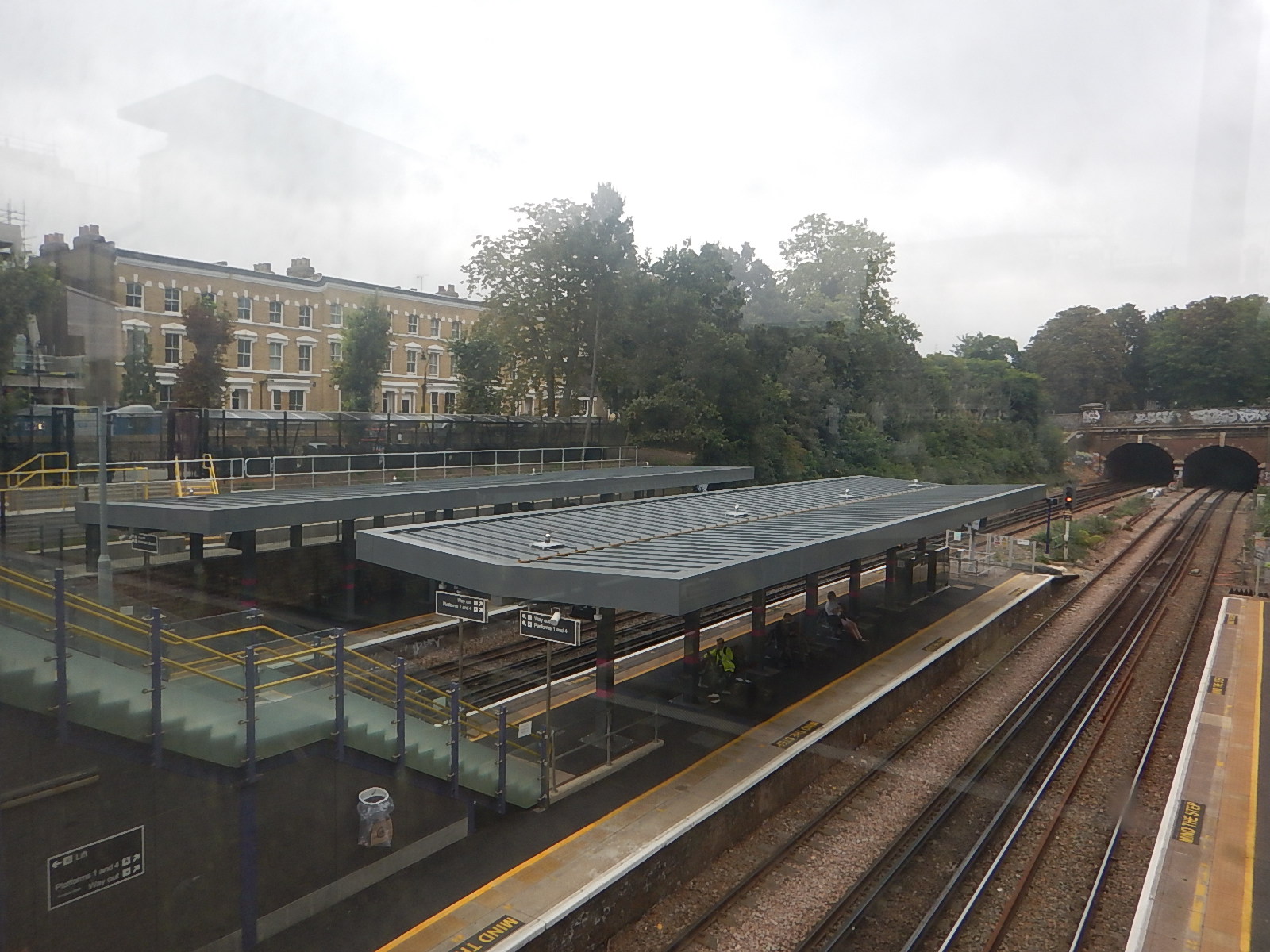
This roof became operational in 2021.
This picture shows a Ventum Dynamics turbine on Skegness Pier.
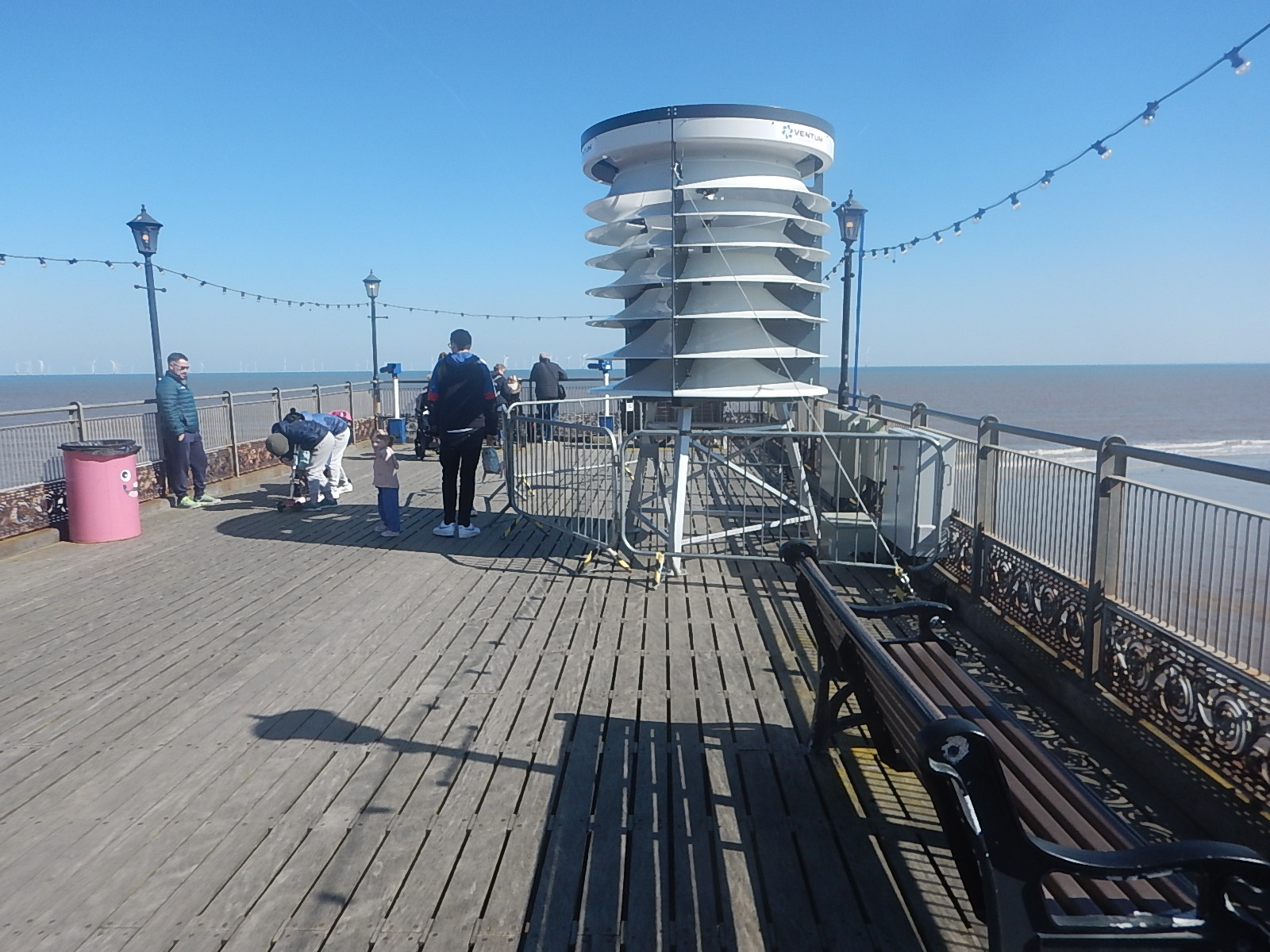
On the Ventum Dynamics web site, there are several pictures of buildings with flat roofs, that have several turbines on each.
I believe these turbines would fit neatly on some large industrial roofs with solar panels to form an efficient wind/solar application.
How Germany Is Dominating Hydrogen Market
The title of this post, is the same as that of this article on Hydrogen Fuel News.
This is the sub heading.
With 3827 kilometers of pipeline across the country, Germany is blazing a trail through the continent in terms of hydrogen infrastructure growth.
These are the first two paragraphs.
Indeed, plans within the country are so far advanced that Germany is set to become the biggest importer of hydrogen in Europe and the third biggest in the world, behind global leaders China and Japan.
All this leaves the German transport sector in good stead, with a strong infrastructure supporting clean fuel adoption, while the country transitions towards net zero.
So where are the Germans going to get their hydrogen from?
One possibility is the UK.
- The UK has vast amounts of renewable energy.
- We’re only hundreds of kilometres, instead of thousands of kilometres away.
- RWE; the German energy giant has full or partial interests in about 12,3 GW of UK wind farms.
- RWE is building the Pembroke Net Zero Centre which will generate green and blue hydrogen.
Hydrogen could be exported from the UK to Germany by tanker.
Conclusion
Production and exporting of green hydrogen will become significant industry in the UK.
 The Anonymous Widower